

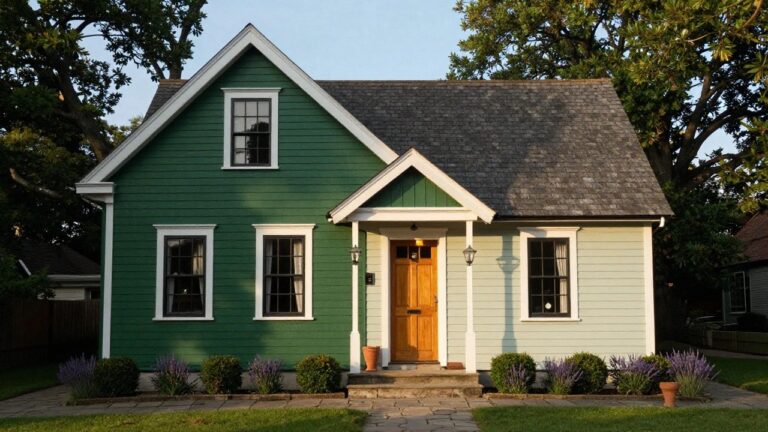
I’ve always noticed how a two-tone green exterior can transform a house’s curb appeal from flat to dynamic as you pull up.
The key lies in pairing a deeper shade on the base or accents with a lighter one across the main facade, letting shadows play off the roofline and entry.
I tried something similar on our garage years back, and it grounded the whole front without overwhelming the street view.
These setups shine when materials like siding and stone reinforce the contrast instead of fighting it.
Some pairings here balance scale so well they are worth sketching for your next update.
Green Cottage with White Trim Contrast
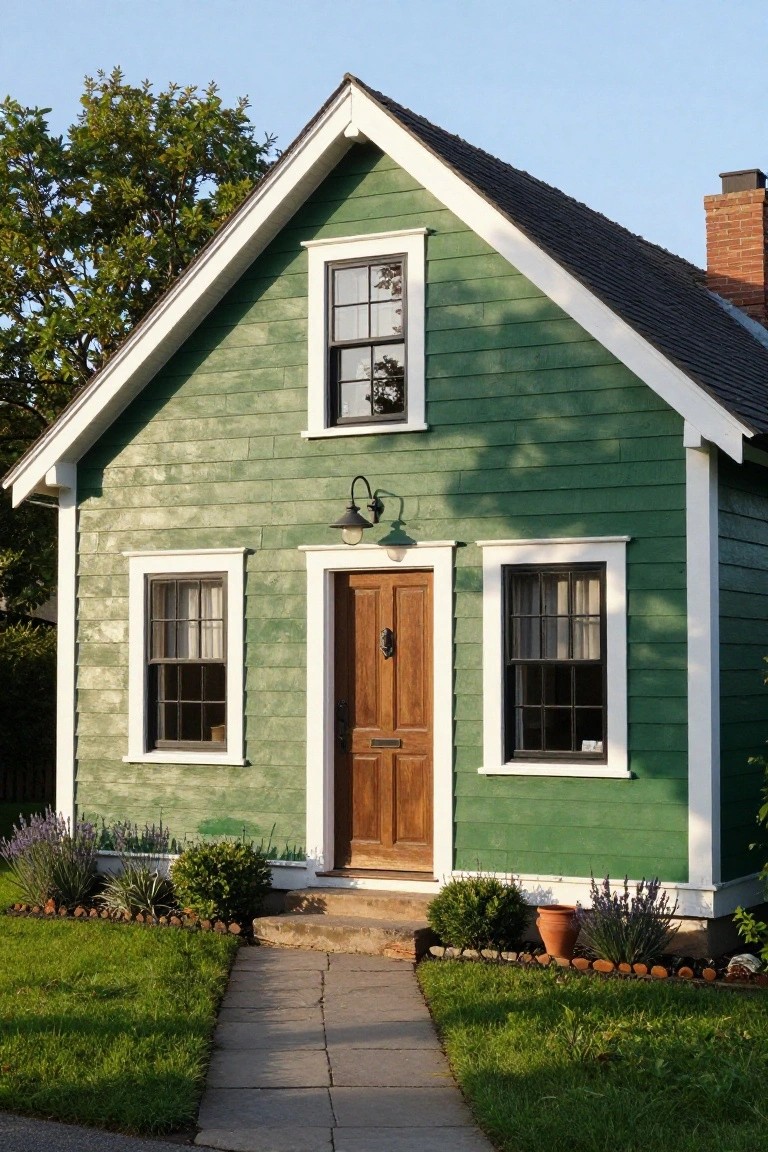
This little cottage shows how a soft green siding paired with crisp white trim can make a simple house stand out. The green gives it a cozy, nature feel while the white outlines the gables, windows, and door to sharpen everything up. That back-and-forth contrast keeps the look fresh and pulls your eye right to the entry without overwhelming the yard.
Try this on older homes or bungalows where you want curb appeal that lasts year-round. It suits shady spots or tree-lined streets best, since the green blends with foliage. Just stick to a darker wood door, like here, to ground it. Avoid super glossy paints, though. They can make the trim too shiny.
Sage Green Siding with White Trim
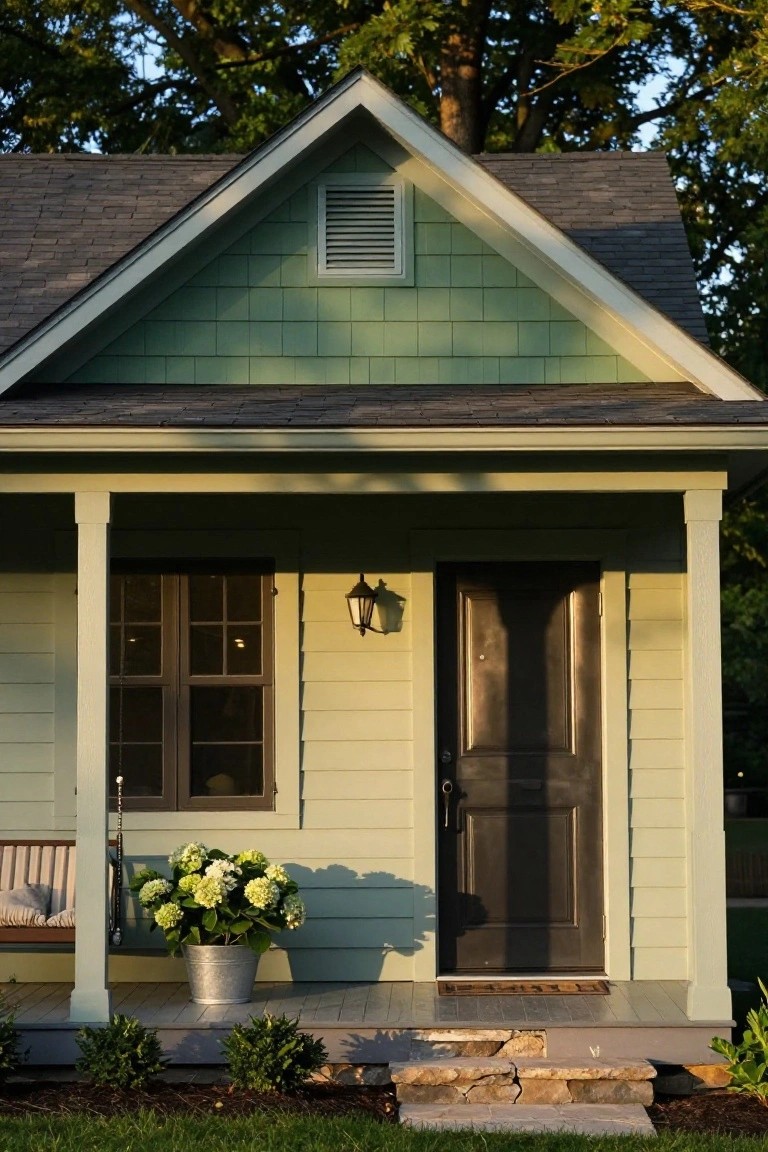
A soft sage green on the siding gives this house a calm, natural feel, while the white trim on the porch columns and roof edges adds clean contrast. That two-tone setup keeps things fresh and not too matchy. The dark front door pulls it together without overpowering the greens.
This look suits cottage-style homes or older bungalows, especially where you want curb appeal that blends with trees and lawns. Paint the body a muted green like this, then hit the trim bright white for pop. Add plants near the steps to soften it more… just skip anything too fussy.
Two-Tone Green Shingle Cottage
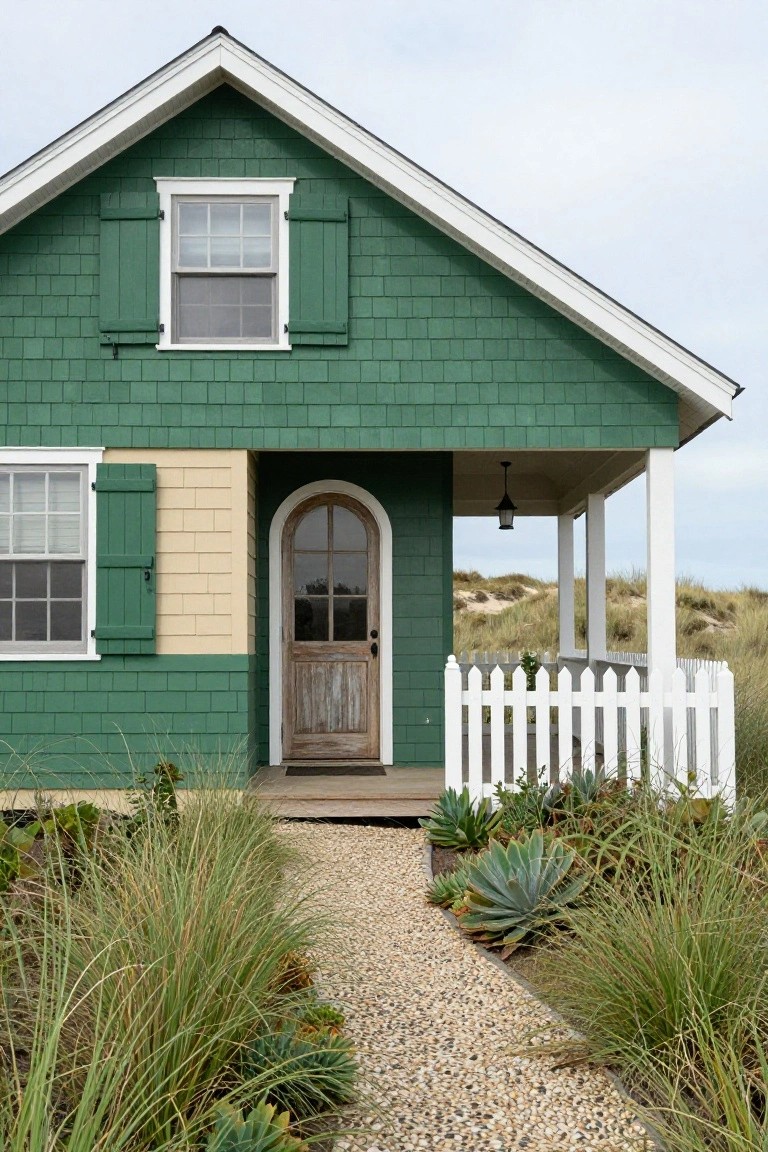
A darker green covers the shingles on this little cottage while a lighter cream siding wraps the entry area. That simple switch adds contrast right where you notice it most, around the door and porch. White trim on the shutters and railing keeps things crisp, and it all fits a beachy spot with dunes nearby.
This setup works great on compact homes in coastal areas or cottage-style neighborhoods. Pick shades that are close but different enough to stand out, like deep forest green with pale sage. Pair it with gravel paths and native plants to blend the house into the yard. Just avoid going too light on the main body or it loses punch.
Bold Green Corrugated Siding
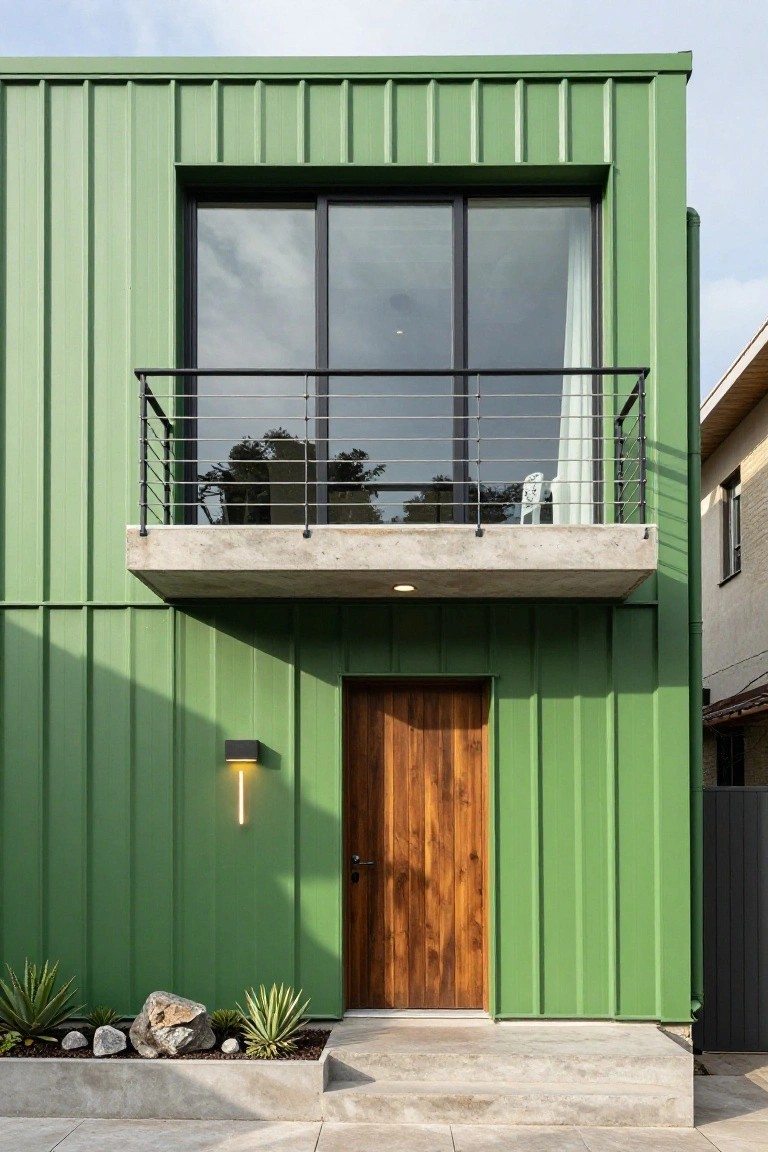
Bright green corrugated metal siding wraps this modern house like a shipping container, but warmer. The panels catch the light in ribs that add texture without much fuss. A simple wood door pulls it together, giving some natural feel to balance the bold color.
This look fits boxy new builds or backyard studios. Metal holds up to weather and needs little upkeep, good for rainy spots. Pick a door stain that offsets the green, and keep plantings low-key like these succulents so the siding stays the star.
Recommended Products

[High-Quality Material]: The multi-functional metal roof panels are made from premium galvanized steel sheets, featuring UV resistance, colorfastness, sturdiness, durability, corrosion resistance, and adaptability to various climates

Product Specifications: Each corrugated panel measures 60.2×22inches, with a thickness of 0.04inches. The package includes 25 roof panels and 200 matching installation screws. The resin panels can be easily cut, processed, and installed, making it easy for both DIY enthusiasts and professional construction workers to get started quickly. Lightweight design effectively shortens construction time and greatly improves on-site installation efficiency.

Heavy-Duty Galvanized Steel Construction: Featuring a robust 0.013-inch thickness, our panels exceed common market standards for superior strength and rigidity. The galvanized steel substrate provides exceptional resistance to corrosion and rust.
Light Green Siding with Dark Green Porch Trim
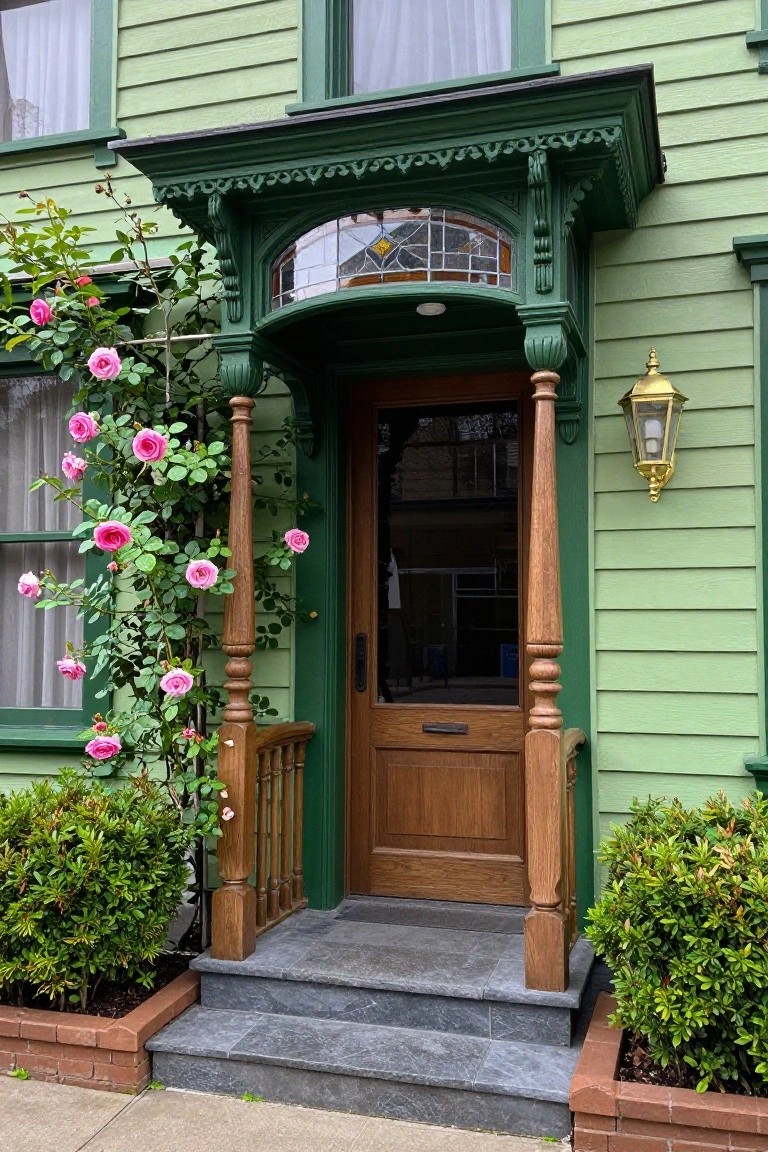
A pale green siding sets a soft base for this house. Then darker green paint on the porch posts trim and overhang adds just enough punch to pull your eye to the door. Those climbing pink roses along the columns tie it together without stealing the show.
This setup suits older homes with some architectural detail like gingerbread edges. Use it where you want curb appeal that doesn’t shout. Stick to natural wood on the door and simple plants nearby. It holds up well in shady spots too.
Black Trim Defines Green Brick
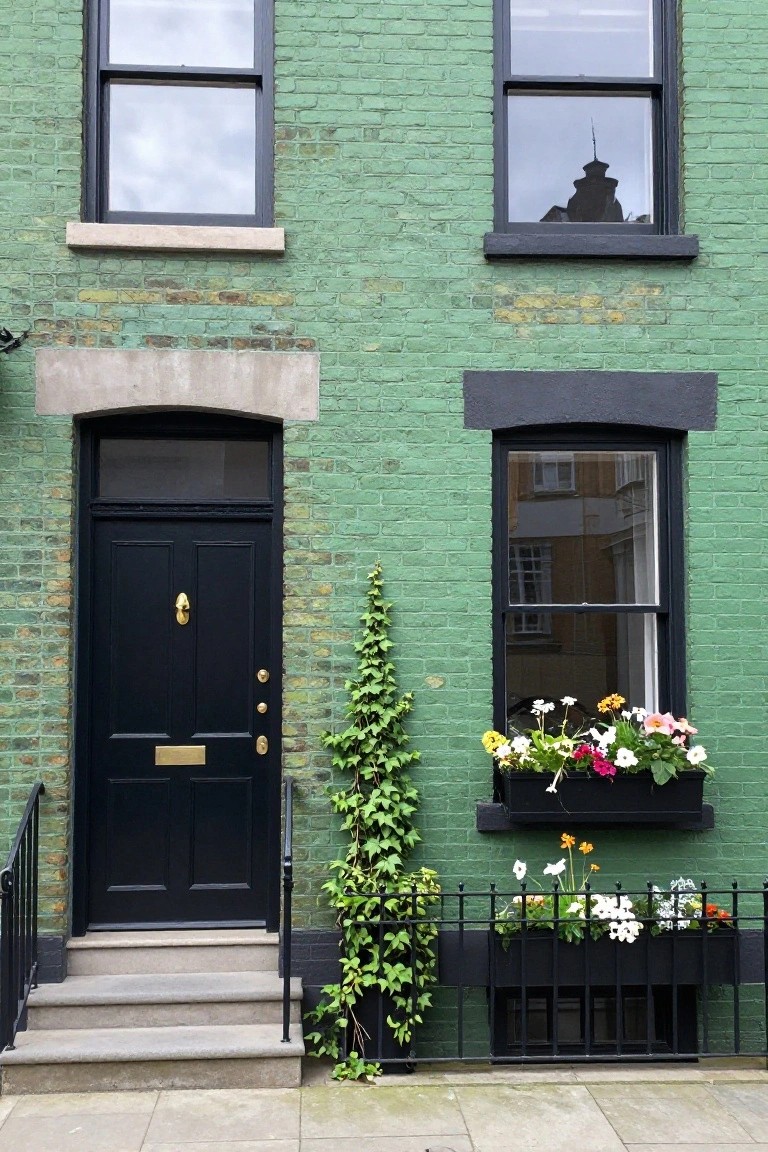
A soft green brick facade really comes alive when you add black trim around the windows and door. Here the dark frames outline each opening sharply, giving the house structure and focus. That contrast keeps the green from feeling too muted, while the gold knocker on the black door adds just a touch of shine.
This look suits older townhouses or any street-facing home with brick or painted siding. Pick a true black paint for the sashes and frames to make it crisp. It works best on lighter greens… pair it with simple planters if you want extra life along the base.
Green Shingle Siding with Wood Entry
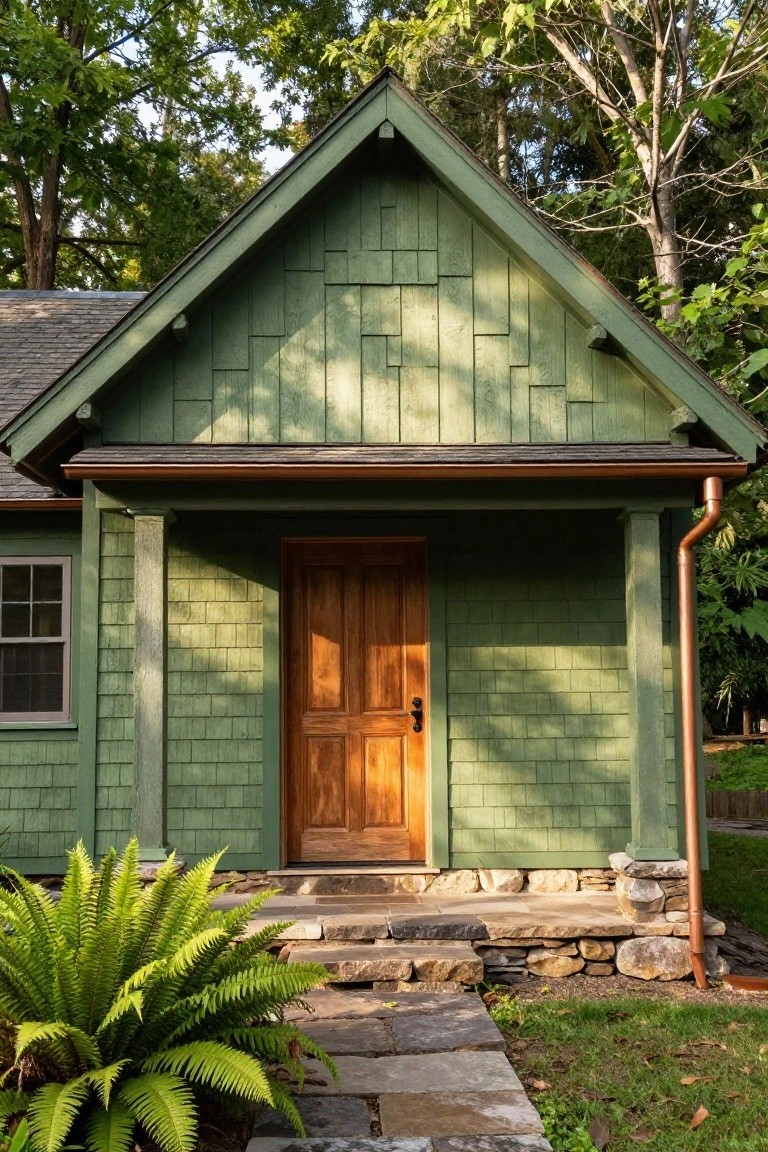
Painted shingle siding in a soft green covers this cottage-style house, giving the front a textured, layered look that catches the light nicely. The wood door stands out against it, pulling the eye right to the entrance without much fuss. That simple contrast keeps things interesting but not busy.
You can pull this off on homes tucked into trees or with some yard around them. Go for muted green paint on cedar shakes, then add a plain wood door and maybe copper gutters if you want a bit more patina over time. It suits older places or new builds aiming for that cozy feel. Just keep the porch straightforward so the siding does the main work.
Two Shades of Green on the Facade
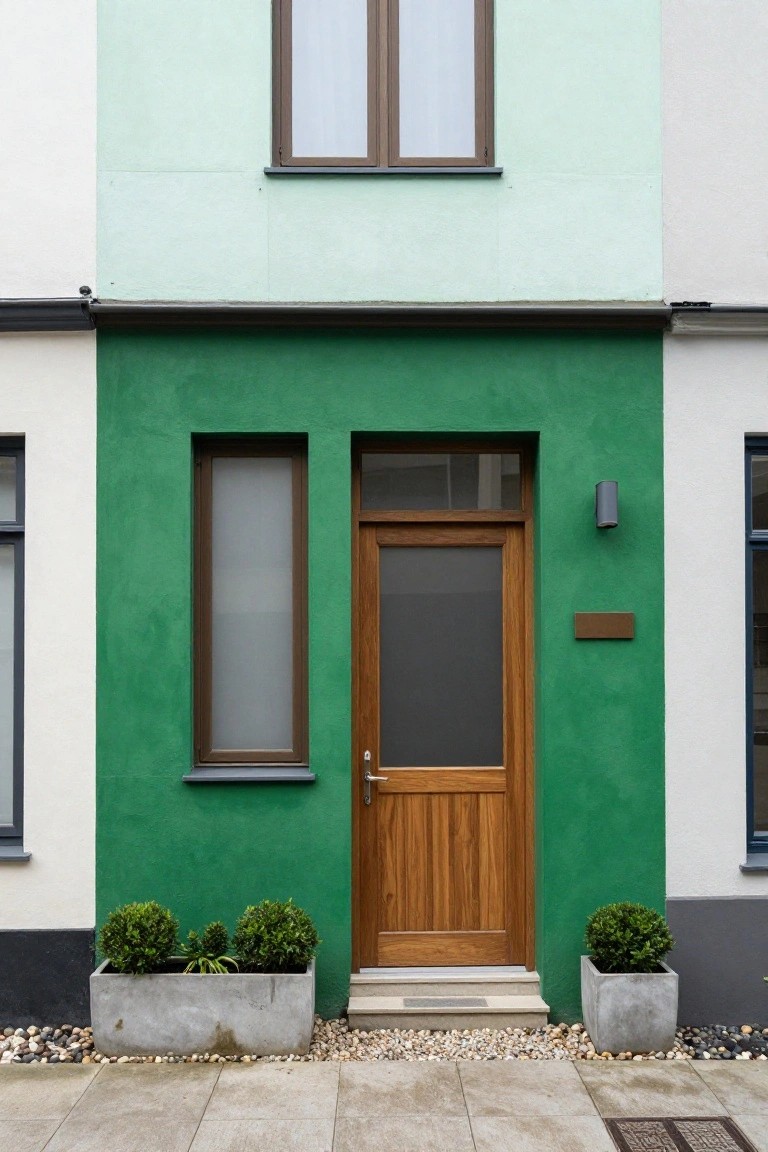
This narrow house pulls off a simple two-tone green look. The upper walls go light and airy, almost minty, while the lower section around the door dips into a richer green. White walls on the sides keep it from feeling closed in. That shift in shades draws the eye right to the wooden entry without any fuss.
It works best on townhouses or row homes where you want some color play but not a full paint job. Stick to matte finishes so it stays calm. Add boxwood planters like these for a touch of green that ties in. Skip it on super sunny spots, though. The deeper tone might fade faster there.
Sage Green Stucco with Terracotta Roof
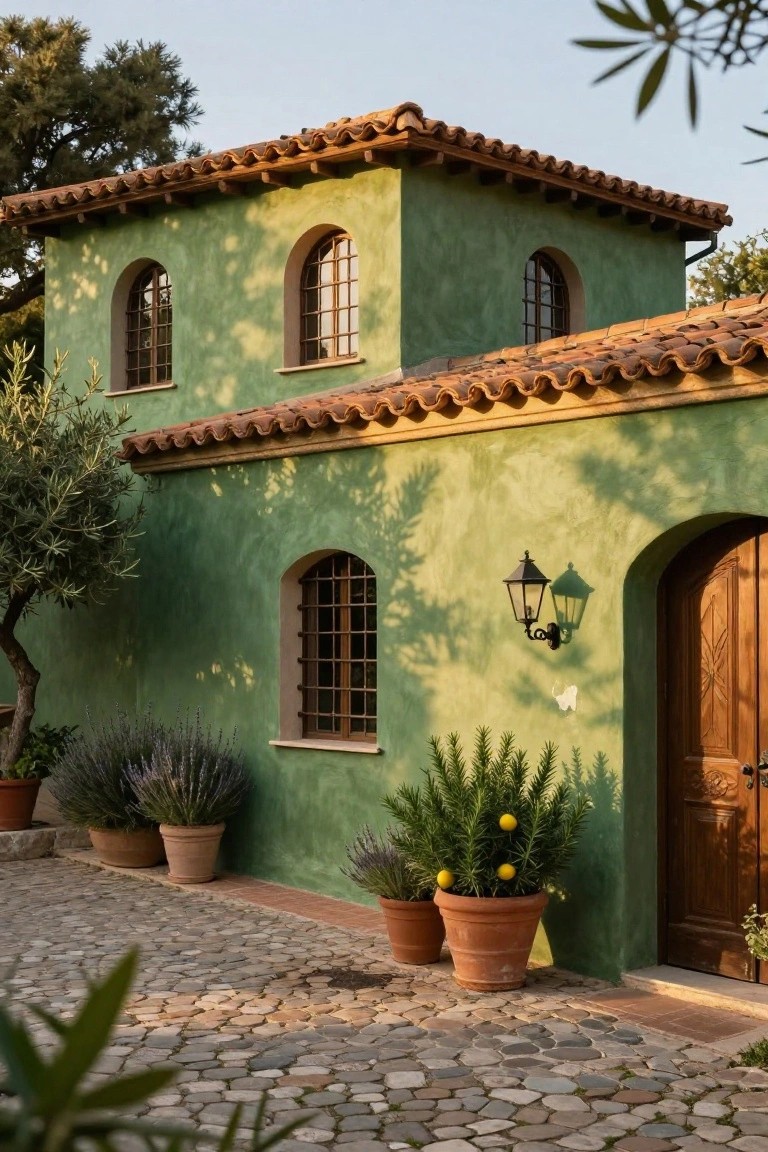
This look uses soft sage green stucco walls topped by classic terracotta roof tiles. The green keeps things calm and earthy. The warm reddish tiles add just enough contrast without overwhelming the house. It’s a simple way to make a plain facade feel more alive, especially in sunny spots where the light plays off both colors.
Try it on ranch or Mediterranean style homes in warm climates. The stucco holds up well and lets you paint over it if needed. Pair the entry with a wooden arched door and a couple lanterns like this one. Skip bold trim colors though. Let the roof and walls do the talking. Works best where you want low key curb appeal.
Green Siding with Black Roof
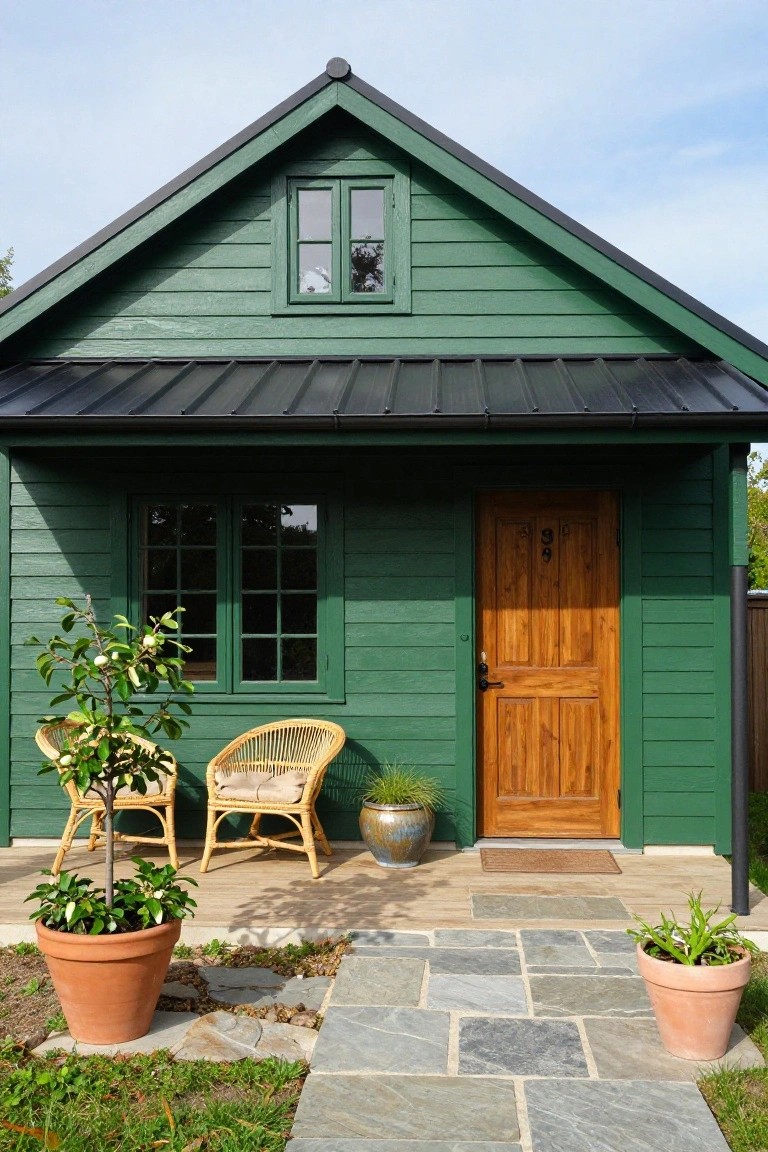
A deep green clapboard siding like this one looks right at home with a black metal roof overhead. The two tones set up a clean contrast that gives the house some punch. It keeps things simple too. No need for extra colors fighting each other.
Try this on a small cottage or backyard guest house. The black roof handles weather well and stays low key. Just add a wood door for warmth and a couple chairs out front. Skip it on bigger homes where the roof might overwhelm.
Green Brick Facade with Black Frames
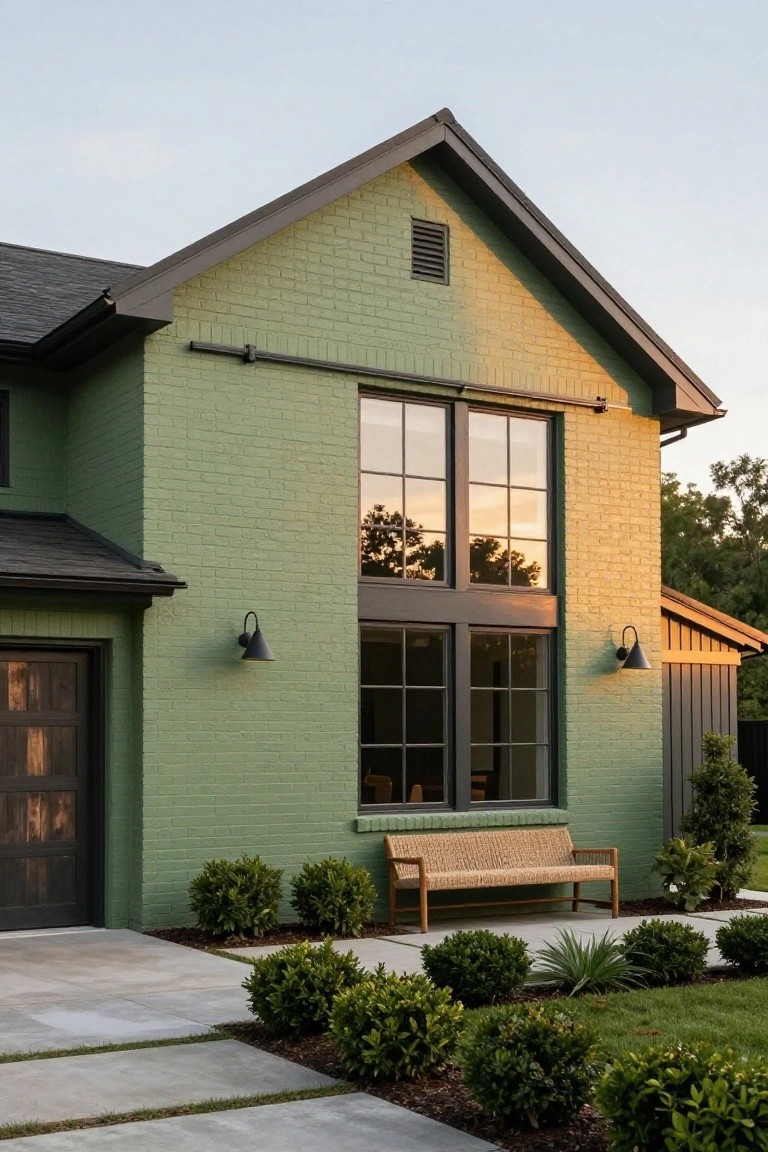
Soft green brick covers the walls here, punched up by those big black window frames and matching sconces. The dark lines pull your eye right to the glass without overwhelming the gentle brick color. It’s a clean way to mix old-school brick with something more current.
Try this on a side entry or garage wall where you want contrast but not fuss. It suits ranch or craftsman styles in milder climates… just stick to matte black finishes so it stays grounded. Add a bench nearby for everyday use.
Mint Green Shingles with White Trim
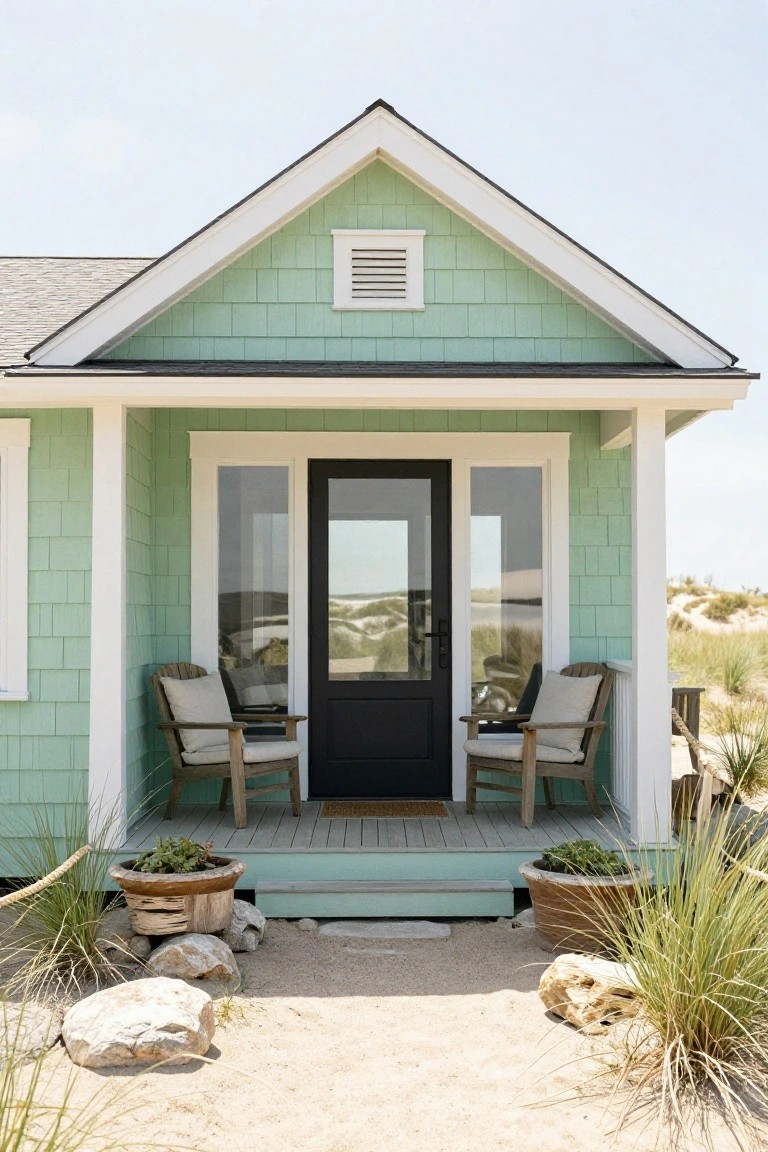
A soft mint green on shingle siding looks fresh when you pair it with clean white trim. The green stays light and beachy while the white edges sharpen everything up around the windows, porch posts, and roofline. It gives the house a welcoming feel that fits right into a sandy spot like this.
This setup works best on cottages or bungalows near the coast. Pick a quality shingle paint that holds up to salt air. And keep that trim painted bright… faded white muddies the whole look.
Two-Tone Green Siding with Dark Shutters
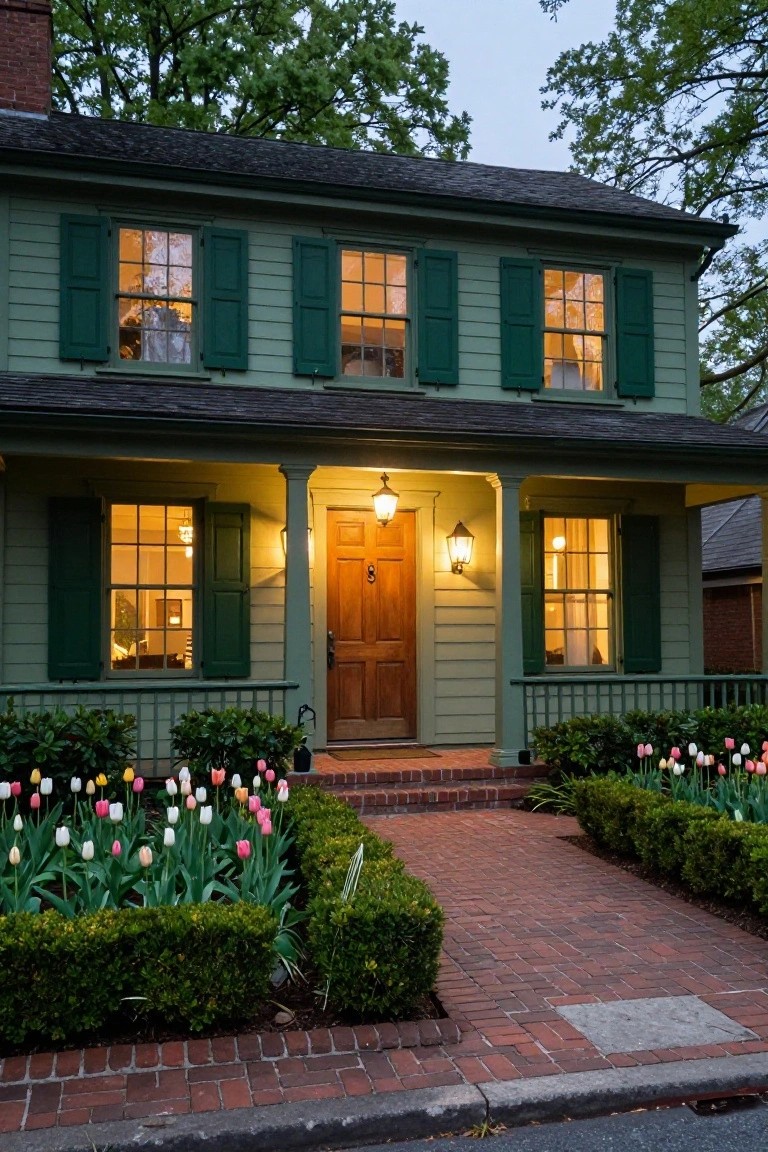
This setup takes a soft sage green siding and adds dark green shutters for some real contrast. It keeps the house looking fresh and classic, especially with the warm glow from inside the windows at dusk. The shutters pull the eye to those big multipaned windows without overwhelming the lighter body color.
Try it on older homes with porches or simple rooflines. It suits spots with trees nearby, where the greens tie into nature a bit. Just stick to shades in the same family, and add a stained wood door to warm things up.
Sage Green Walls with Darker Door Trim
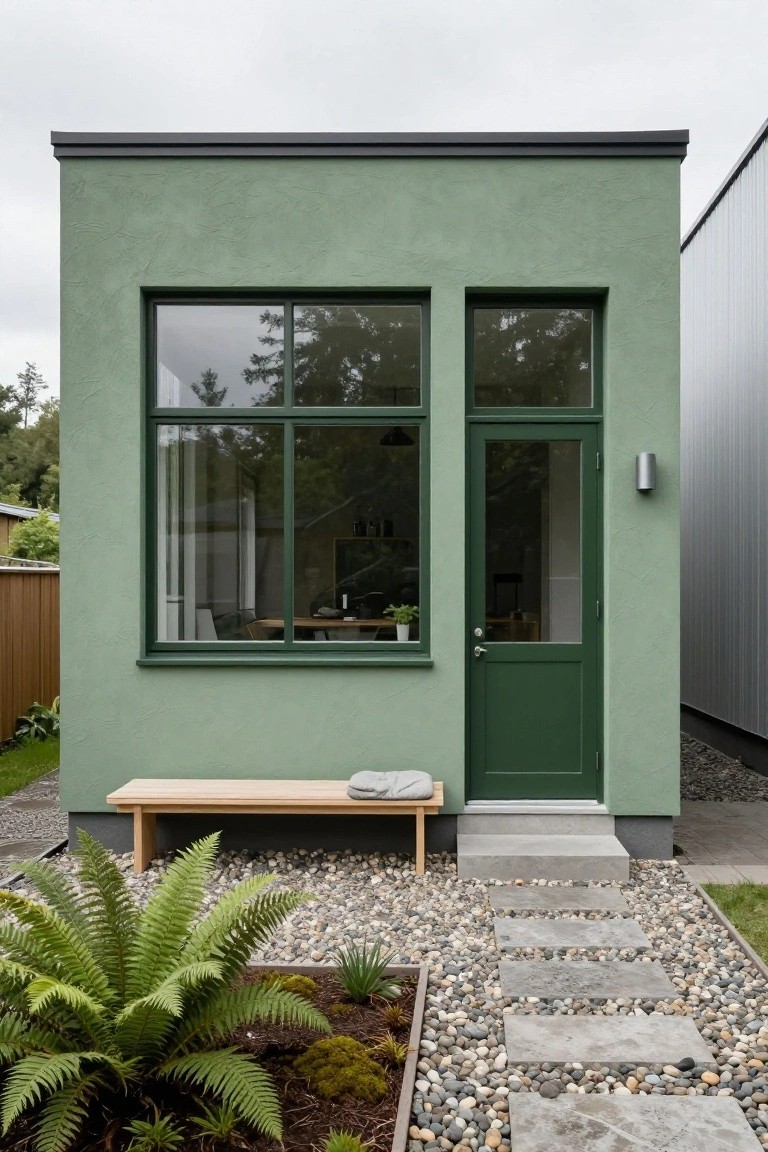
This little house pulls off a simple two-tone green look by painting the stucco walls in a soft sage shade and using a deeper green on the door and window frames. That contrast keeps things interesting without overwhelming the clean boxy shape. A plain bench out front ties it together nicely.
You can use this setup on smaller homes or additions where you want subtle curb appeal. It suits wooded spots or cooler climates best, since the greens blend right into the surroundings. Just make sure the darker trim is bold enough to stand out on overcast days.
Green Corrugated Panels Over White Siding
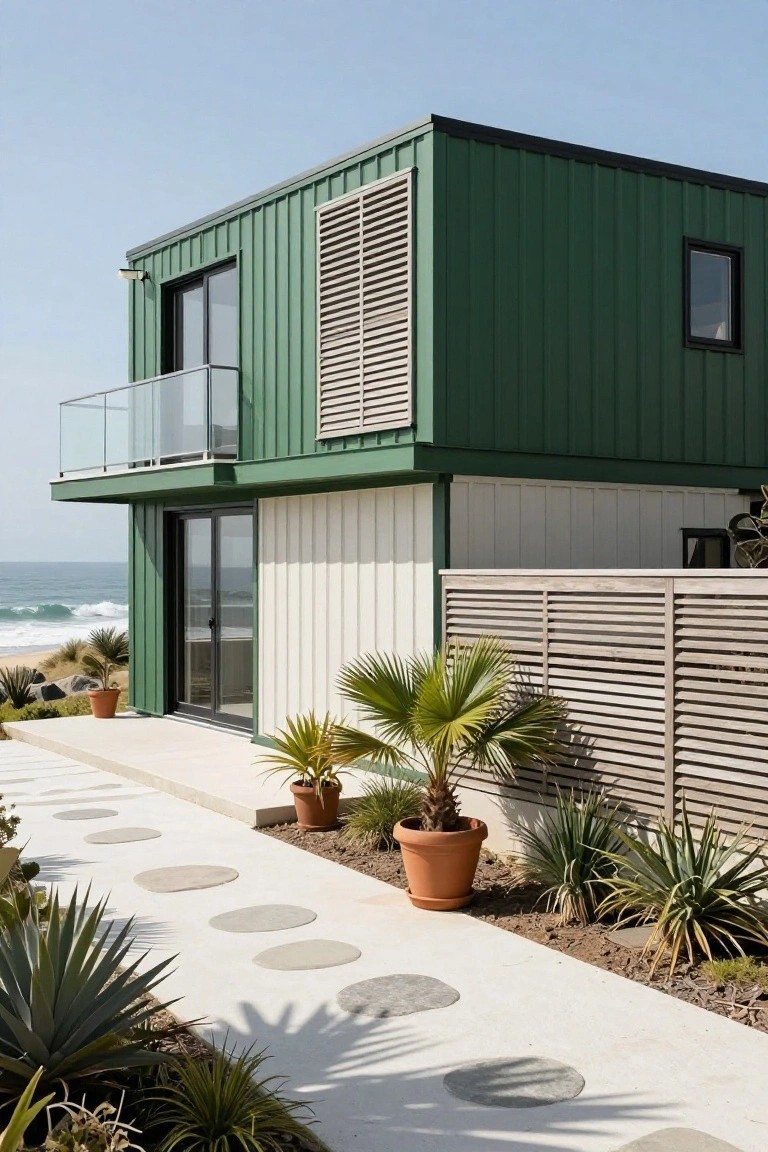
A simple way to get contrast on a house exterior is to use green corrugated metal panels up top and white vertical siding down below. This setup gives the front a strong look without much fuss. The green feels fresh near the ocean, and the white siding keeps the base grounded and clean. That balcony railing adds a light touch too.
It works best on smaller homes or beach houses where you want modern lines but not a cold feel. Pick a weathered green to blend with nature, and pair it with simple paths or low plants in front. Watch the scale though. Too much metal can overwhelm a plain yard.
Cozy Two-Tone Green Cottage
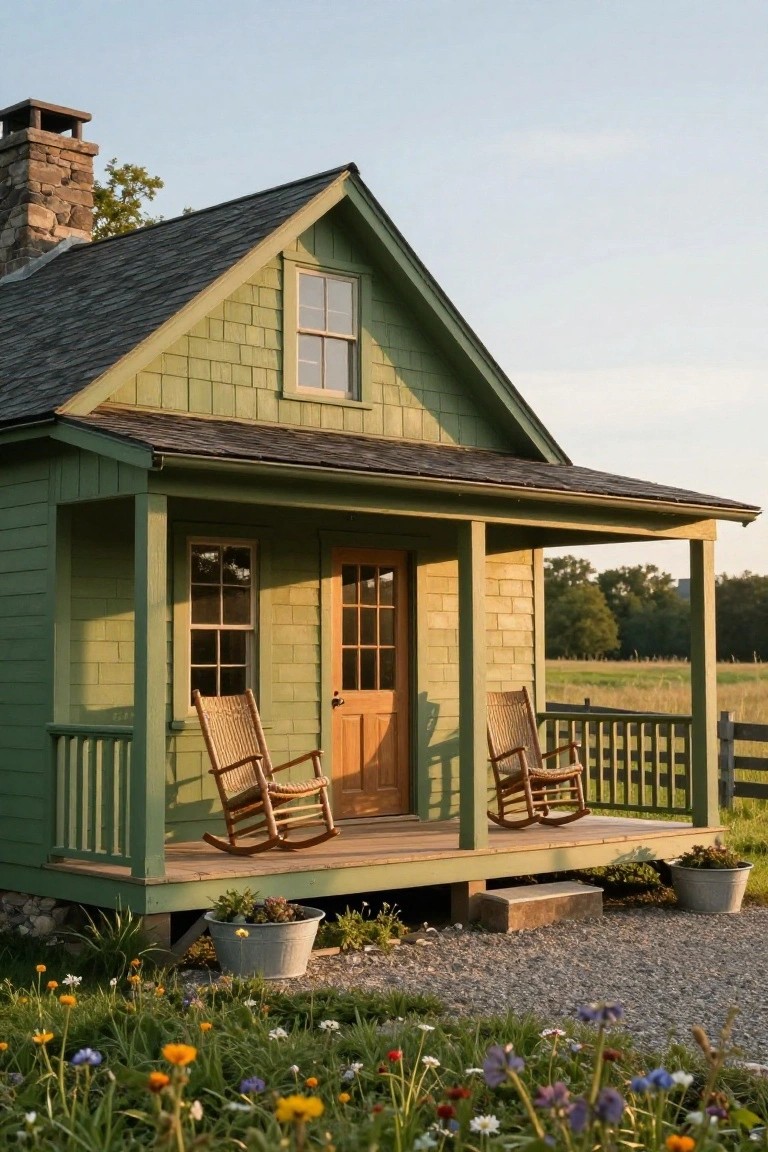
This cottage pulls off a simple two-tone green look that fits right into a country setting. The roof and upper shingles go darker green, while the siding and porch stay lighter, creating just enough contrast to add shape to the whole facade. It keeps things calm and ties into the surrounding fields without shouting.
Try this on smaller homes like cabins or farmhouses, especially with shingle or vertical siding. The porch setup with rockers makes it welcoming, and it works well where you want low-key curb appeal. Skip it on super modern boxes, though. It shines in rural or wooded spots.
Corrugated Green Metal Siding
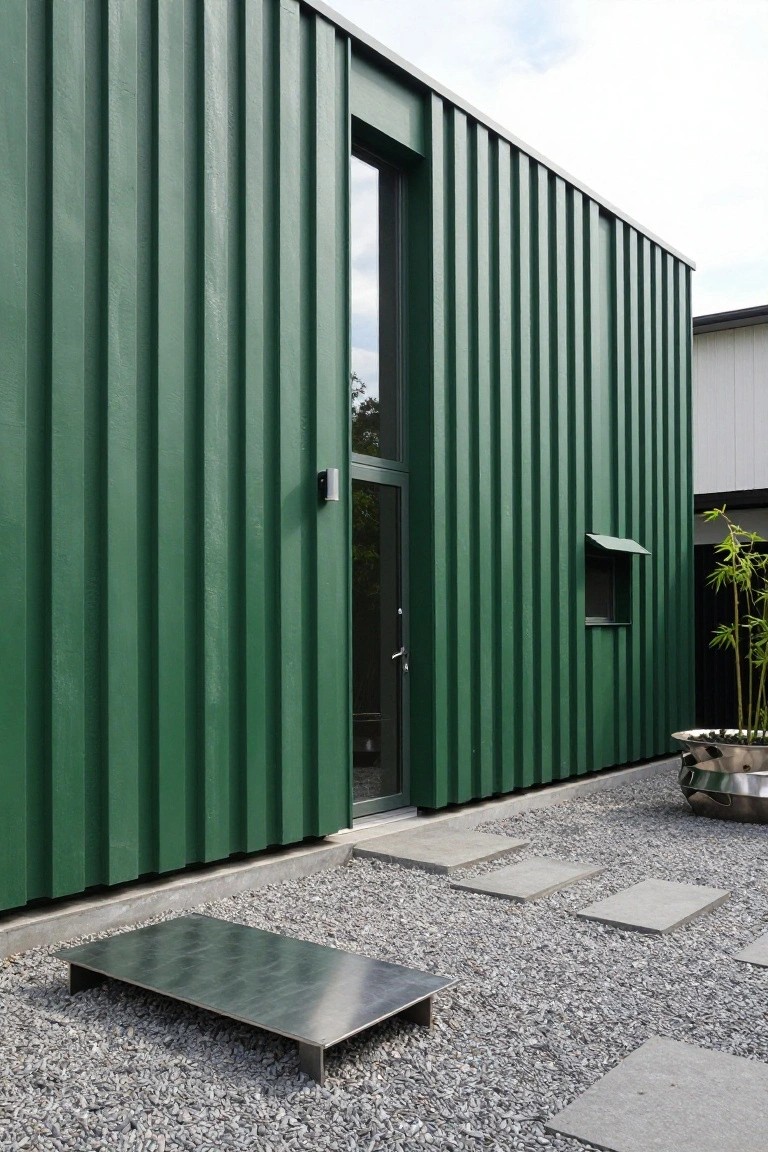
Corrugated metal siding in a deep green shade covers this house exterior. The vertical ridges add texture and height to the plain wall. It pairs nicely with the gravel yard and stone pavers out front. That green feels fresh against a white neighbor building too.
Use this siding on sheds, garages, or small additions. It holds up outdoors without much upkeep. Go for a bold color like this green if your yard has neutral tones. Skip it on big houses unless you want that industrial edge.
Two-Tone Green Craftsman Exterior
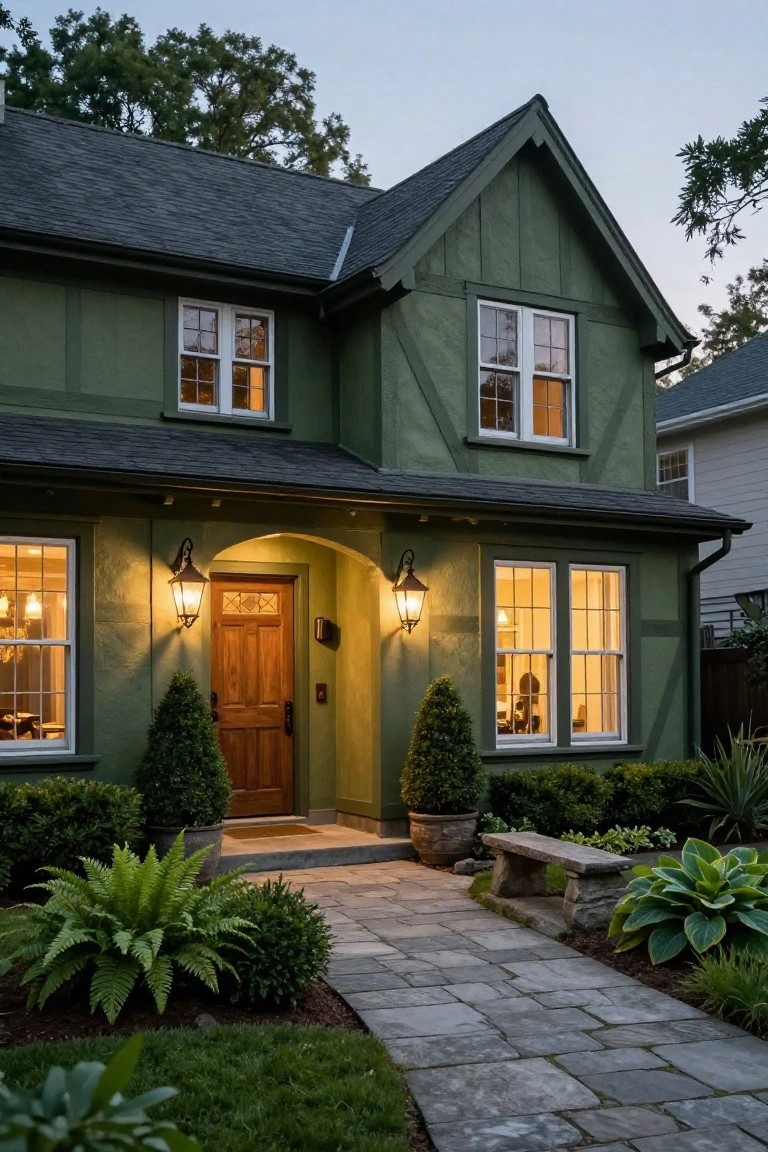
This Craftsman house uses two shades of green to set up a nice contrast on the facade. The main siding is a deeper olive green, while the stucco around the entry arch pulls in a lighter sage tone. Paired with a dark slate roof and warm lantern lights, it gives the front a layered look without going overboard. That subtle shift between shades makes the house feel more interesting up close, especially in the evening glow.
You can pull this off on homes with some architectural texture, like bungalows or Tudors where stucco or plaster meets wood siding. Stick to greens in the same family to keep it calm, and let the roof or door add the darker punch. It works well in shady yards or tree-lined streets, where the tones blend right into the landscape. Just test samples at different times of day, since green can shift a lot with light.
Wooden Entry Doors Warm Up Green Siding
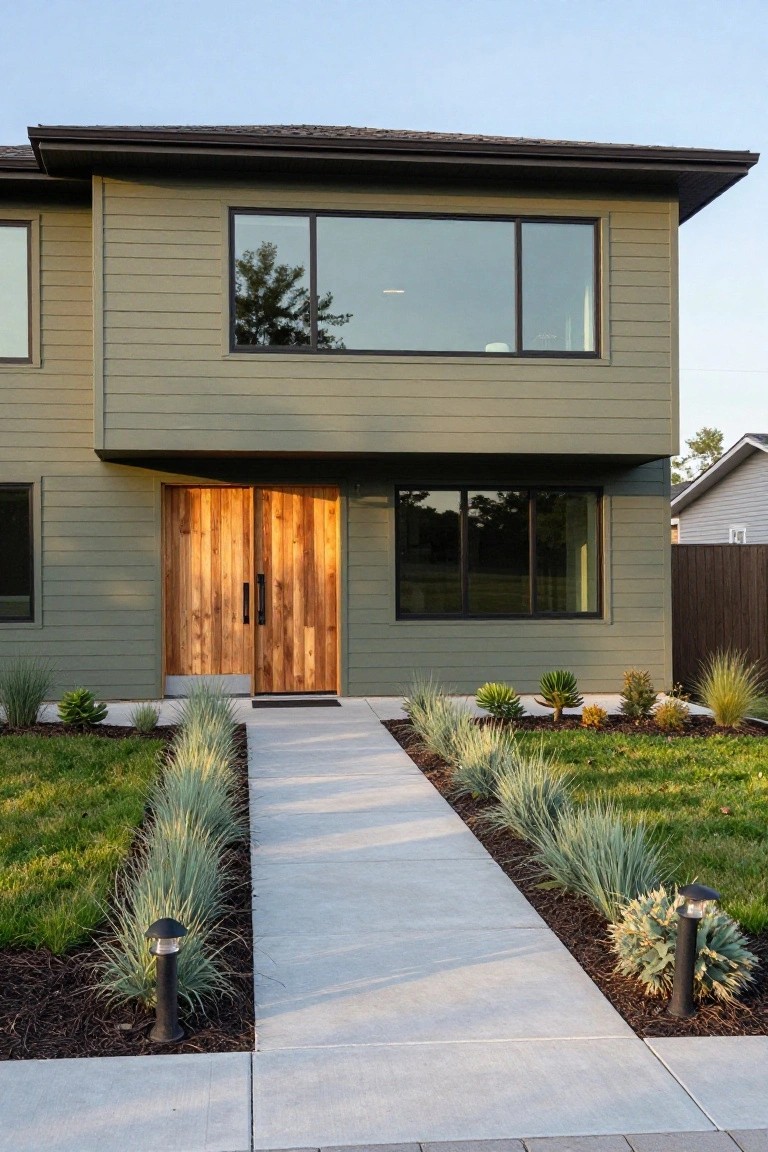
One simple way to add life to a green house exterior is with wooden front doors. Here the double doors in warm tones stand right out against the cool sage green siding. They pull the eye to the entry and make the whole front feel more welcoming without much fuss. The dark window frames help frame it all too.
These doors work best on modern homes with clean lines like this one. Go for reclaimed or textured wood to get that natural contrast. They suit milder climates where wood holds up well. Just seal them properly to avoid weathering and keep the look fresh year round.
Recommended Products

【Furniture Style, Wider Usage】Minimalist warm brown design matches your home decor perfectly. It is not only a litter box enclosure, but also can be used as a cat house. Meanwhile, thanks to its stylish furniture style, you can also use it as a TV stand or a coffee table next to the sofa!

【Furniture Style, Wider Usage】Minimalist warm brown design matches your home decor perfectly. It is not only a litter box enclosure, but also can be used as a cat house. Meanwhile, thanks to its stylish furniture style, you can also use it as a TV stand or a coffee table next to the sofa!
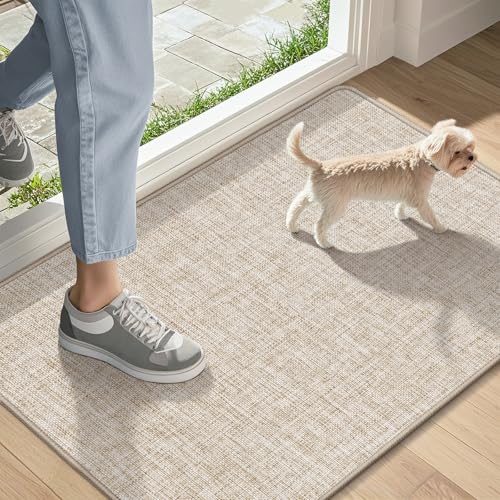
【Premium Material】: LEKEEPGO door mat is made of premium simulated linen material and exquisite hemming technology, The woven texture makes the indoor door mat more fashionable and beautiful. Rugs for entryway are shipped in rolls, without crease worries
Frequently Asked Questions
Q: How do I pick two green shades that actually contrast on my house?
A: Hold paint samples side by side against your siding in morning and afternoon light. Go for a deep forest next to a soft sage. That punchy difference jumps out every time.
Q: Can I pull off two-tone green with a brick or stone base?
A: You bet. The brick warms up the cool greens beautifully. Paint the upper body lighter to lift the whole look.
Q: What’s the smartest spot to start painting if I’m testing this?
A: Hit the front door and a shutter first. Live with them for a week through different weather. You’ll know quick if the combo clicks.
Q: Do these green combos hold up in full sun all day?
A: Pick paints with solid UV blockers. They keep vibrancy for years out there. Deeper shades fade slowest.
Recommended Products
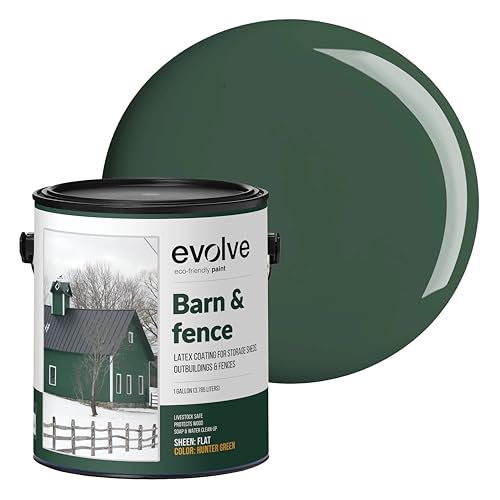
ELEVATE OUTDOOR STRUCTURES: Refresh barns, fences, sheds, and exterior surfaces with durable paint that delivers long-lasting color and protection.

Ready to use, pre-mixed door and trim paint offers a fresh new look on interior or exterior metal, wood and fiberglass

Use for a variety of indoor and outdoor project surfaces including wood, metal, plaster, masonry or unglazed ceramic
