

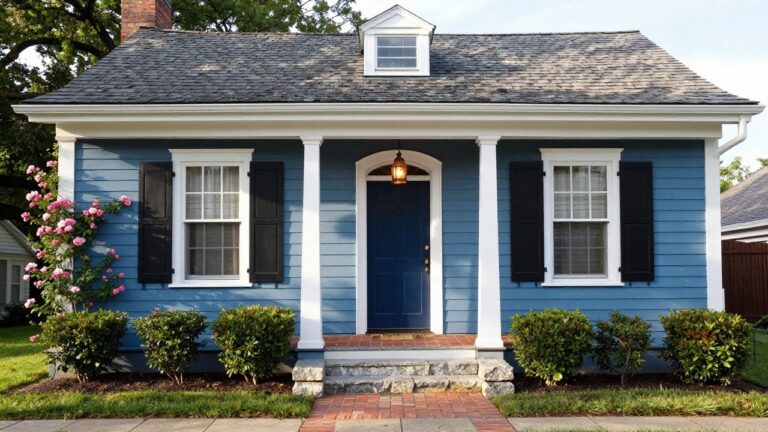
I’ve always noticed how a traditional blue exterior catches the eye from down the street, especially when the shade plays off the roofline and siding just right. Those facades that mix clapboard with stone accents or crisp white trim tend to feel more grounded and lasting in real neighborhoods. I remember repainting our own trim once to match a blue house nearby, and it changed how the whole front read from the road. Details like shutters framing the windows or a sturdy entry portico often make the biggest difference in curb appeal. Certain pairings here are worth sketching out for your own place.
Porch Columns with Climbing Roses
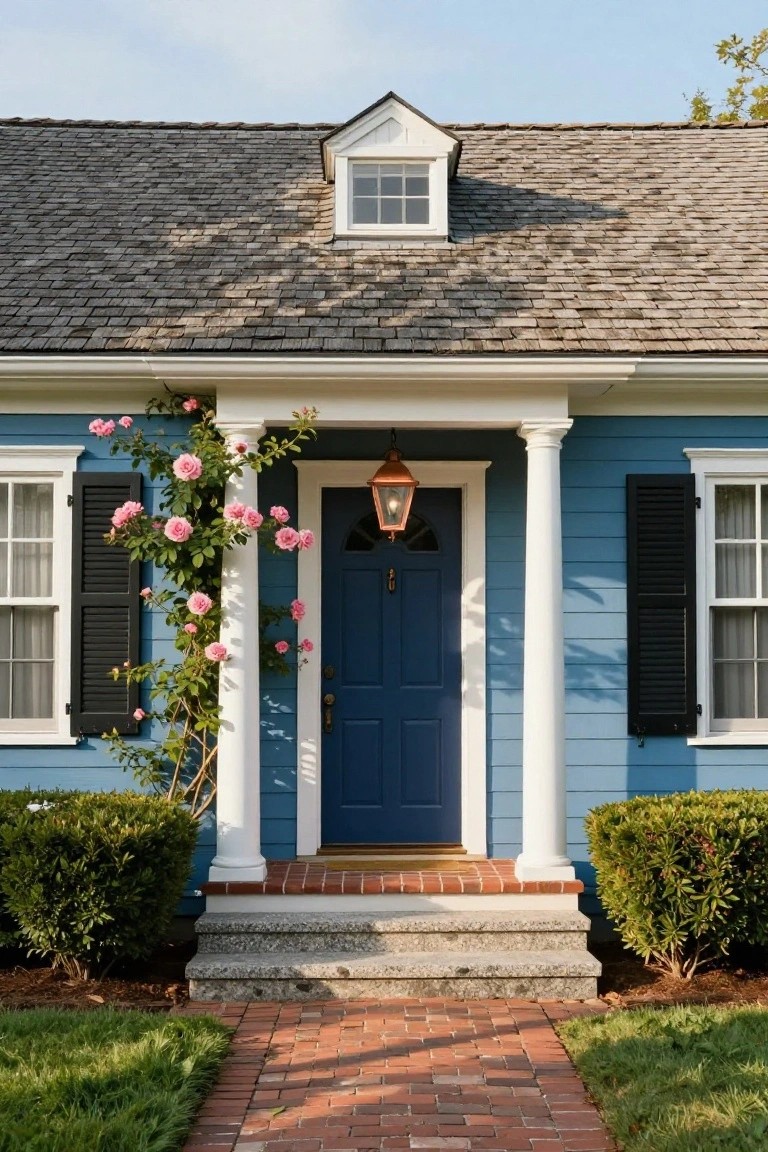
Nothing says traditional charm like roses climbing up your front porch columns. On this blue house, the soft pink blooms wrap loosely around the white columns next to the navy door. They add a bit of life and color without overwhelming the clean lines of the siding and trim.
This works best on classic homes like colonials or capes where you want some softness around the entry. Pick a hardy climbing rose variety for your zone, train it up with ties at first, then let it go. Keep the base clear and pair it with neat shrubs nearby… easy curb appeal that comes back every year.
Charming Blue Brick House Facade
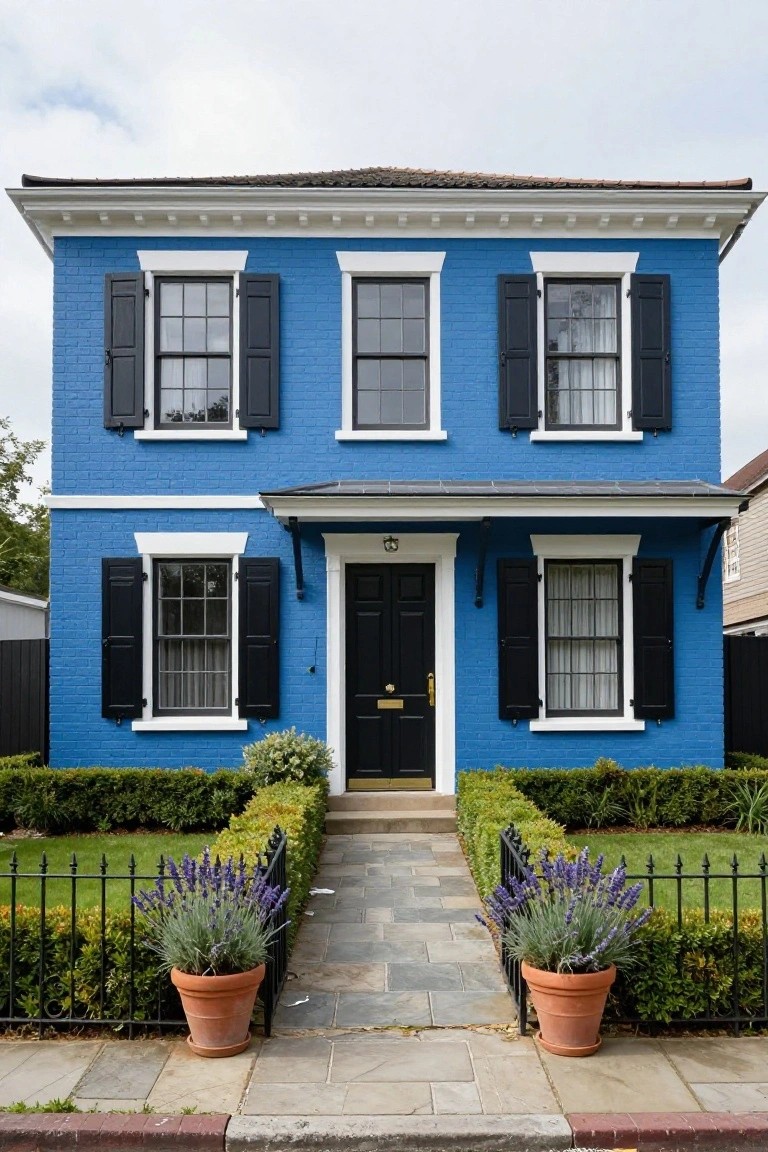
A fresh coat of bright blue paint on brick gives this traditional two-story house a lively yet classic look. Black shutters frame the windows just right, and white trim keeps everything crisp. It’s the kind of setup that stands out on the street without trying too hard.
This works best on older homes with simple lines, like in the South where humidity isn’t an issue for the paint. Pair it with a black door and some potted lavender by the steps for that welcoming touch. Just make sure the brick is prepped well beforehand.
Blue Shingle Cottage Porch
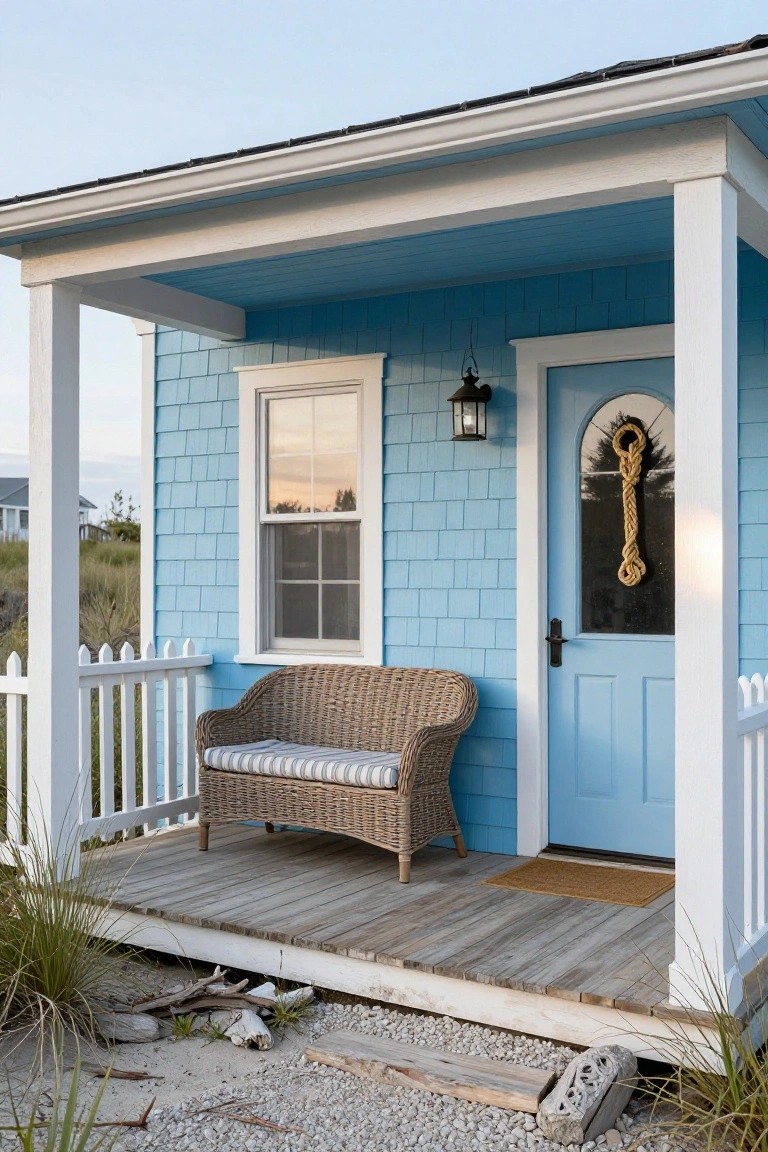
A covered porch like this one takes a simple blue shingled house and makes it feel right at home by the beach. The white posts and railing keep things crisp against the soft blue siding, and that thick rope wreath on the door adds a nautical touch without trying too hard. It’s the kind of setup that says welcome before you even step up.
This works best on smaller cottages or vacation homes where you want easy outdoor sitting space. Pair wicker furniture with striped cushions, add a lantern for evenings, and let driftwood or beach grass frame the edges. Skip it on bigger houses, though. It can look out of scale there.
Recommended Products

[Lambs Ear Front Door Wreath] Hundreds of Fresh and life looking lamb ears leaves evenly arranged on the natural grapevine wreath circle. Starfish and special burlap ribbon add points for the eye-catching part. Hanging this wreath to decor your door to fell the Spring and Summer fresh and energetic.

Decorative nautical rope

【Premium Material & Craftsmanship】 Crafted from high-quality 0.2" thick engineered wood with smooth edges, this beach welcome sign features durable HD UV printing that resists fading, peeling, and water damage—perfect for long-lasting indoor and outdoor display.
Classic Navy Blue with Columned Entry
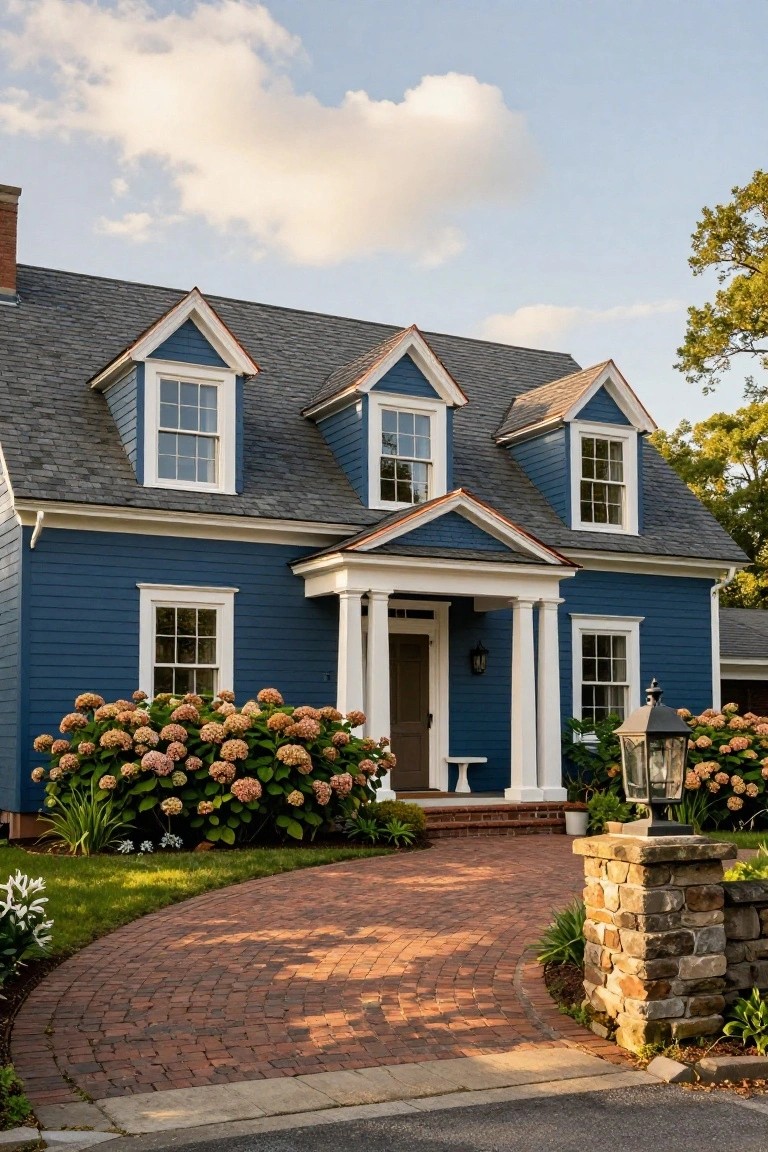
A deep navy blue siding like this brings out the best in a traditional house. It gives the whole facade a steady, classic feel without being too bold. White trim on the windows and that simple columned porch keep everything crisp and welcoming. A few big hydrangea bushes at the base add just enough green to settle it down.
This look fits right on suburban homes with some history, maybe in New England spots or anywhere with four seasons. Use it where you want curb appeal that lasts year-round. Stick to neutral paths like brick to lead folks in. Skip it on super-modern builds, though. It shines best with some roofline interest like those dormers.
Recommended Products

Ready to use, pre-mixed door and trim paint offers a fresh new look on interior or exterior metal, wood and fiberglass

Use for a variety of indoor and outdoor project surfaces including wood, metal, plaster, masonry or unglazed ceramic

Ideal for use on interior/exterior surfaces including wood, plastic, plaster, metal, masonry and unglazed ceramic
Victorian Blue House with White Trim
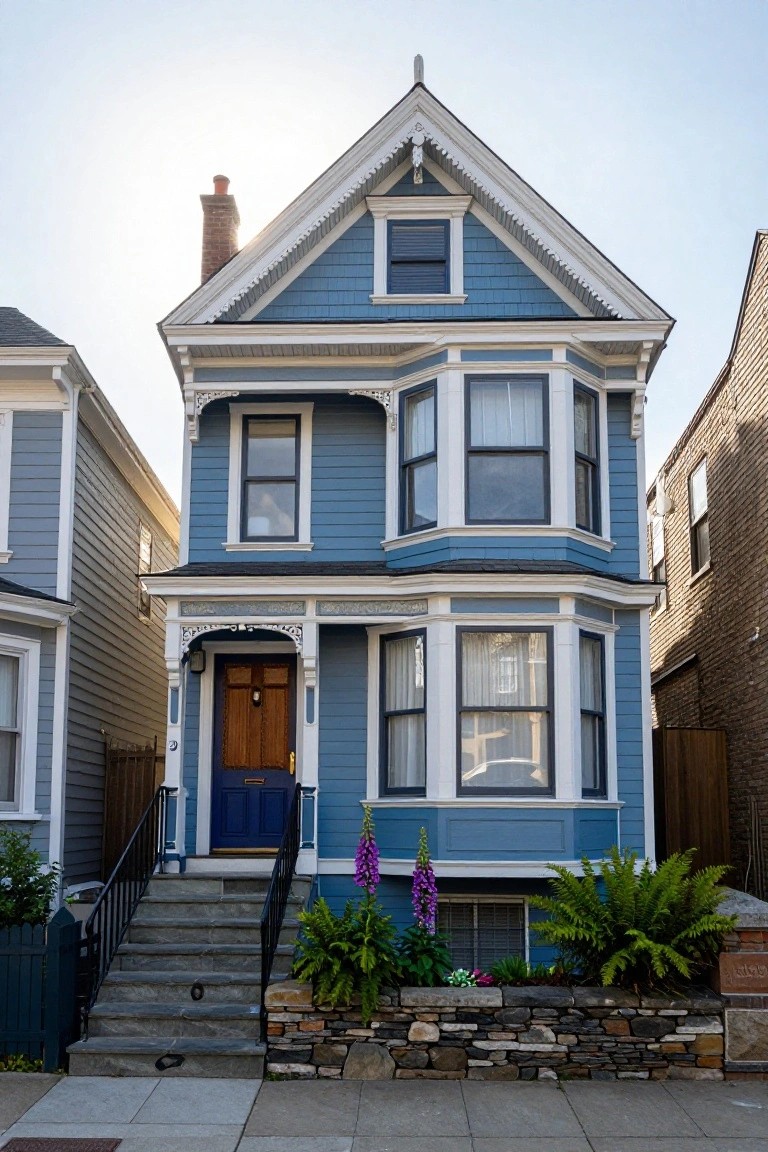
A traditional Victorian house painted blue with crisp white trim always catches the eye. The deep blue siding sets off the ornate details like bay windows and gingerbread edges. That simple color contrast highlights the architecture without overwhelming it.
Try this on a two-story home in an older neighborhood. Keep the trim bright white and the door a darker shade for balance. Stone steps and a few plants at the base finish it nicely. Just make sure the blue shade suits your light… too light fades fast.
Front Porch Swings
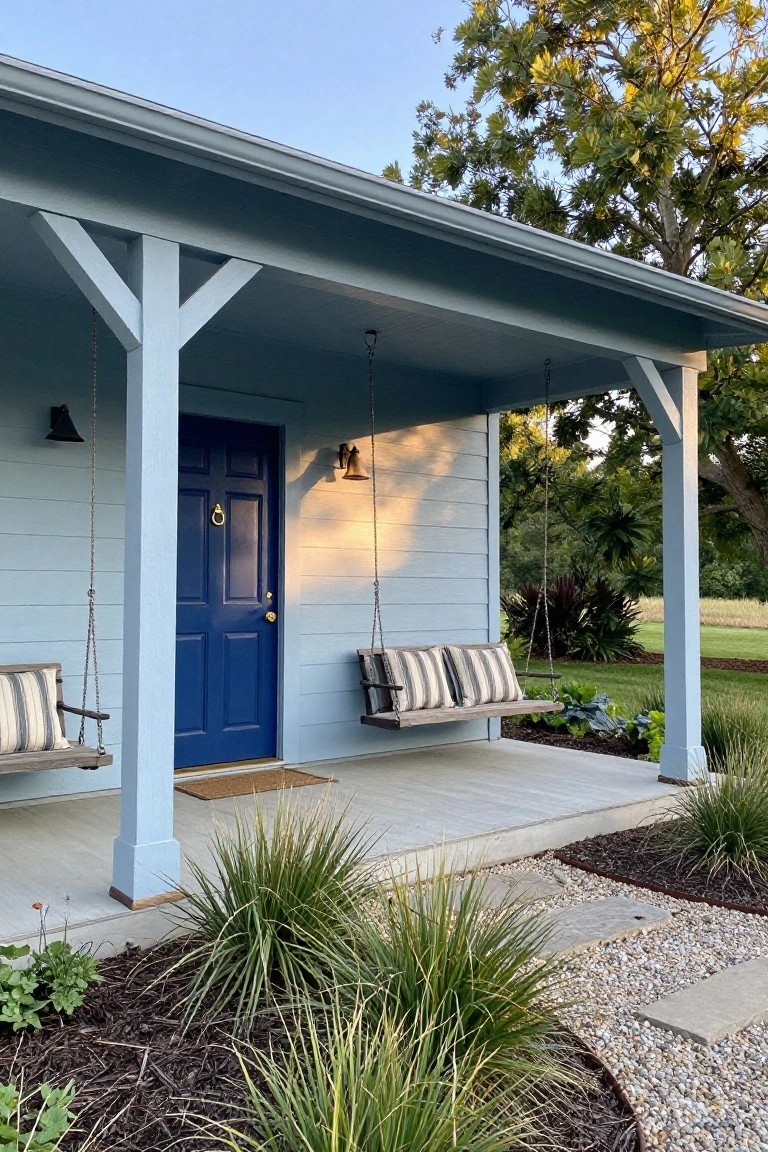
Nothing says traditional charm like a couple of swings hanging from your front porch. On this light blue house, the weathered wood swings with simple striped pillows sit under the covered roof, right by the navy door. They make the whole entry feel easygoing and lived-in, pulling people toward the house without trying too hard.
Hang a swing or two from sturdy porch beams if you have the space. They work best on homes with decent-sized porches, like cottages or farmhouses. Pick cushions that match your siding colors… keeps it cohesive. Watch the chains so they don’t tangle in wind.
Blue Clapboard with White Shutters
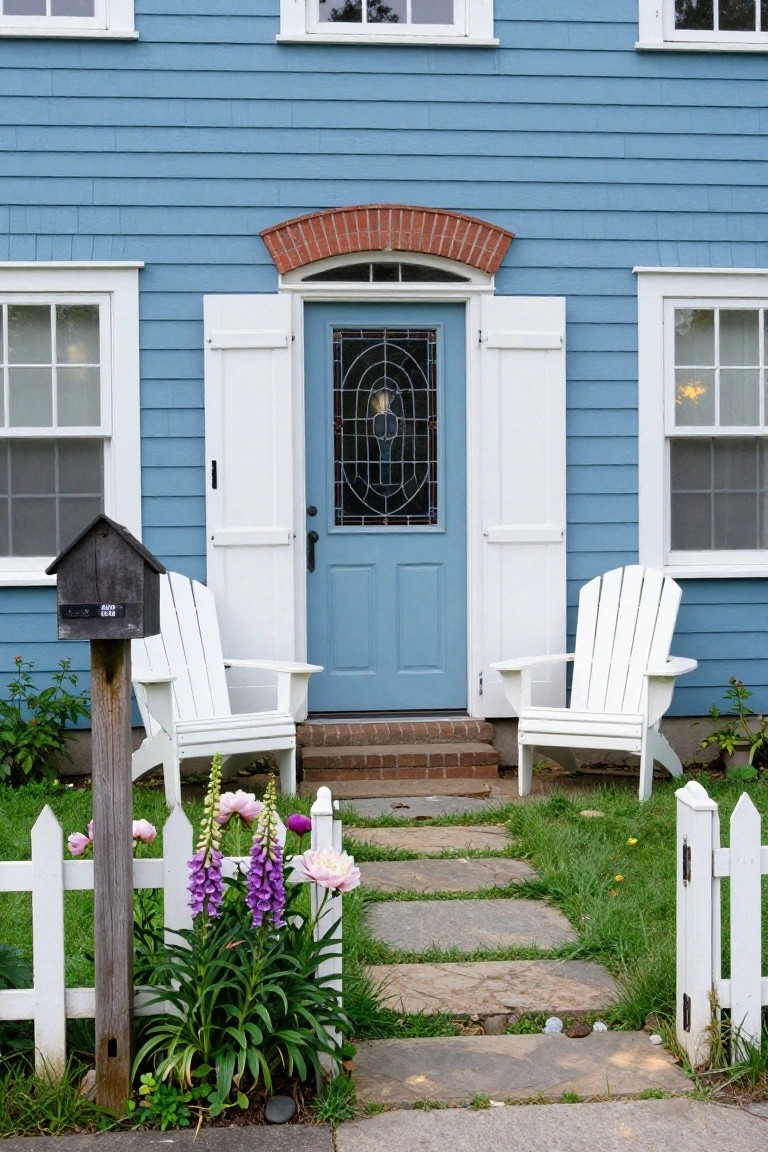
White shutters stand out sharp against blue clapboard siding like this. They give the house a clean traditional look that feels right at home in older neighborhoods. Here the blue door picks up the siding color nicely, and simple chairs sit right by the steps to make folks feel welcome.
This combo works best on straightforward homes with good-sized front entries. Keep the white paint fresh each year so the contrast stays crisp. It suits coastal spots or suburbs where you want charm without a lot of fuss.
Classic Columned Entry Porch
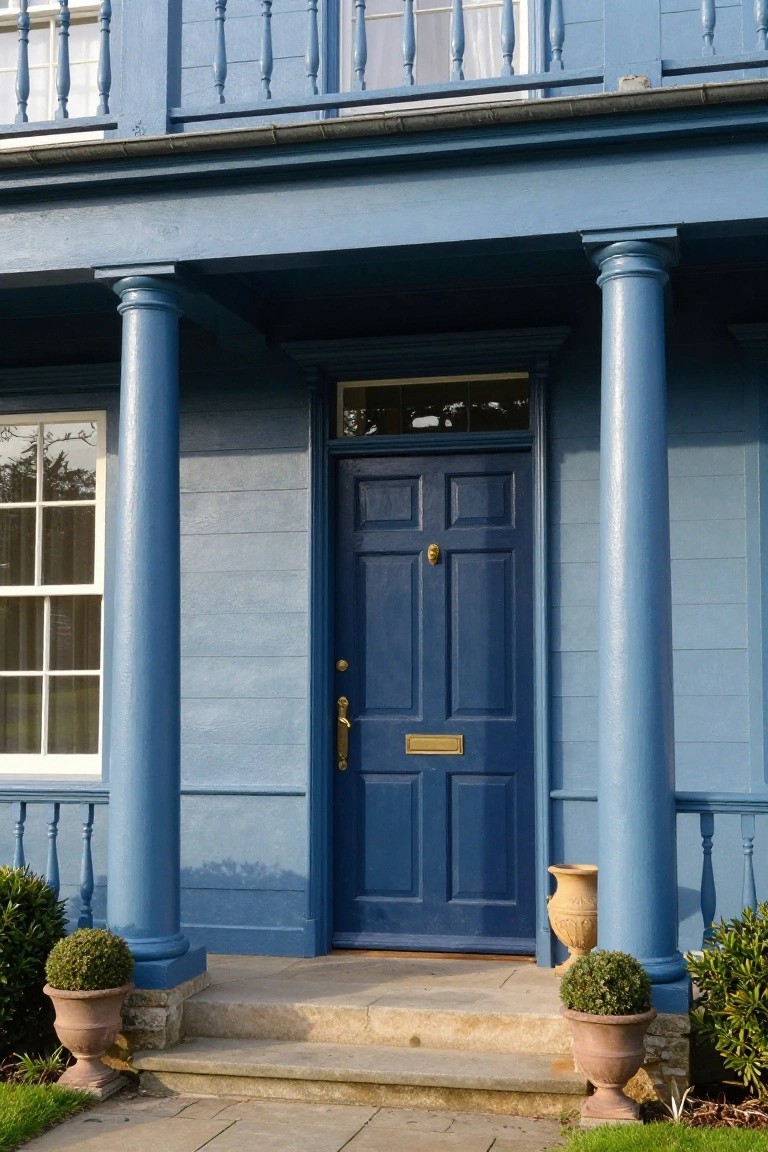
White fluted columns like these give a traditional blue house instant stature. They hold up the porch roof and frame the dark navy door just right, making the whole front feel balanced and welcoming. A brass knocker and letter slot keep it practical without overdoing things.
This look suits older colonials or revivals with clapboard siding. Paint the columns a crisp white against your blue body color for that pop. Add simple potted plants at the base to soften the steps. Skip fancy capitals if you want it straightforward.
Light Blue Coastal Cottage Exterior
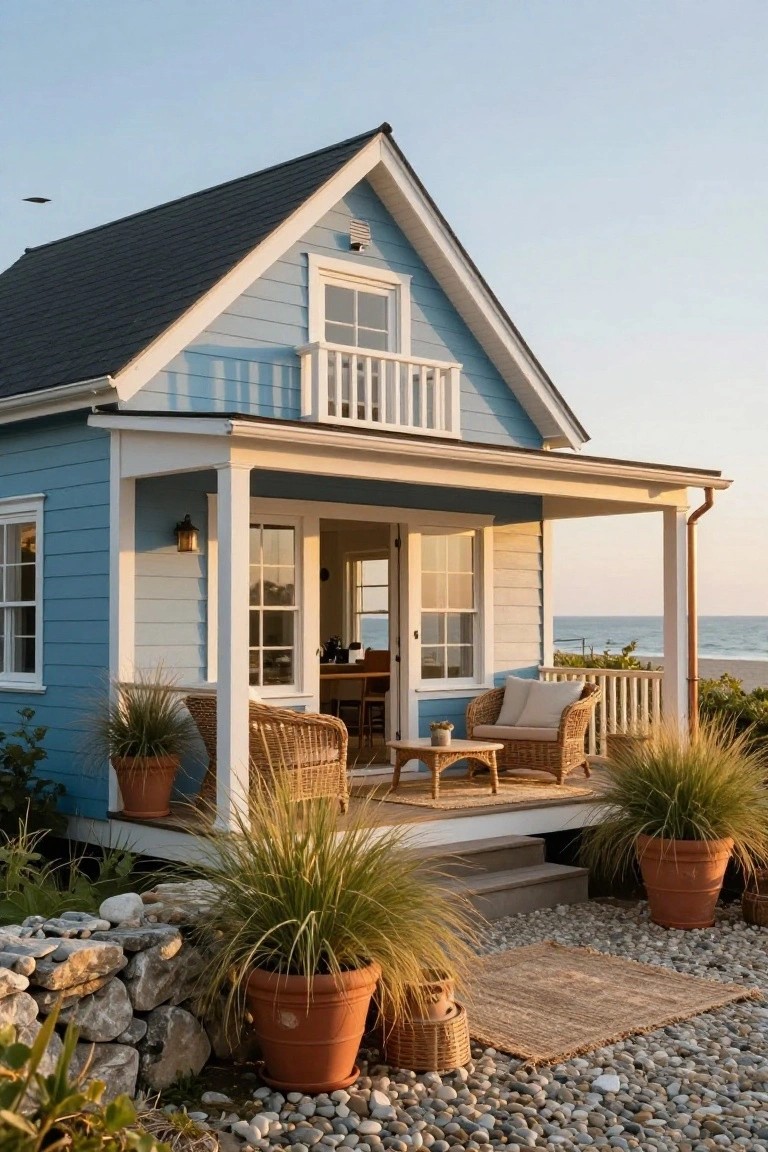
A soft light blue on clapboard siding like this brings out the best in a traditional cottage style. It keeps things fresh and beachy without going too bold. The white trim sharpens everything up. And that simple porch pulls it together as a spot to relax.
This look fits homes near the water or anywhere you want casual curb appeal. Go for a dark roof to balance the blue. Add wicker chairs and potted grasses on the porch for easy seating. It suits smaller houses best. Skip busy details to let the color shine.
Deep Blue Siding with White Picket Fence
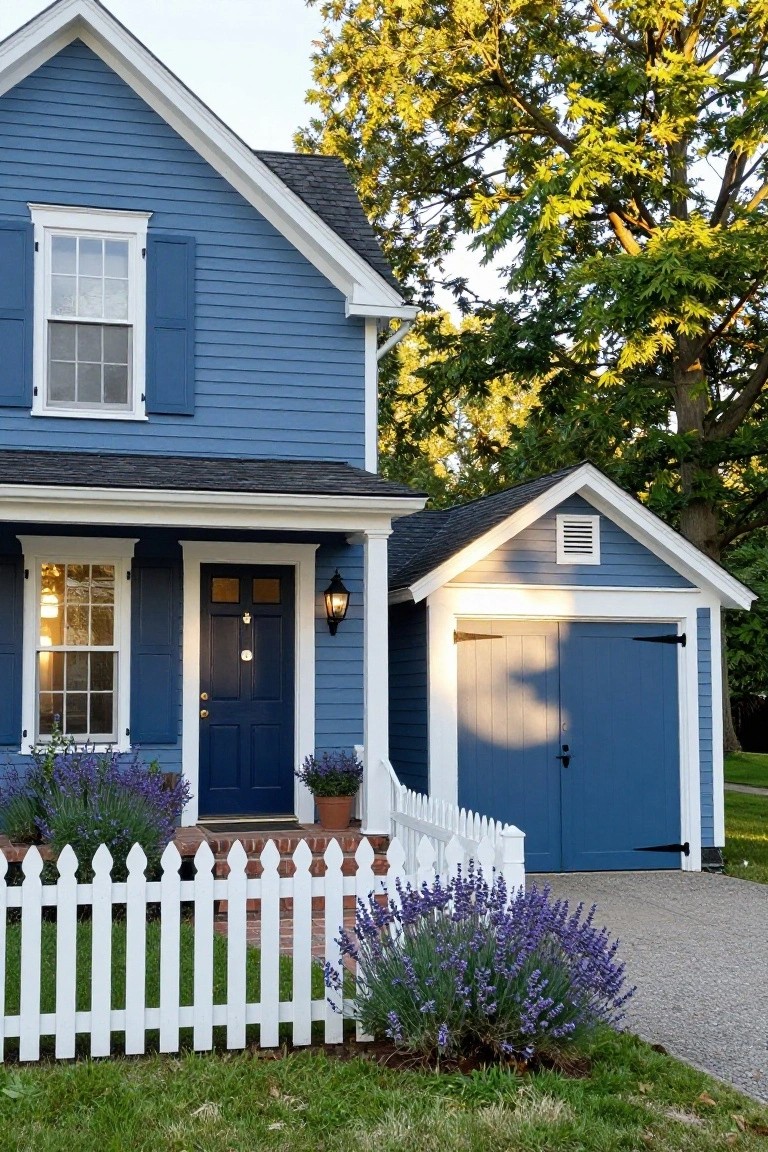
A deep blue clapboard siding like this one brings out the best in traditional homes. Paired with crisp white trim on the porch and windows, plus that simple white picket fence out front, it creates straightforward curb appeal. The few lavender plants along the edge keep it from feeling too stark.
This look suits older neighborhoods or suburban lots where you want charm without upkeep headaches. Pick a weatherproof navy paint for the house and garage doors, bright white for the fence and trim, then add low-growing lavender or similar. It pulls together on homes with a front porch best.
Blue Shingle House with Pergola Porch
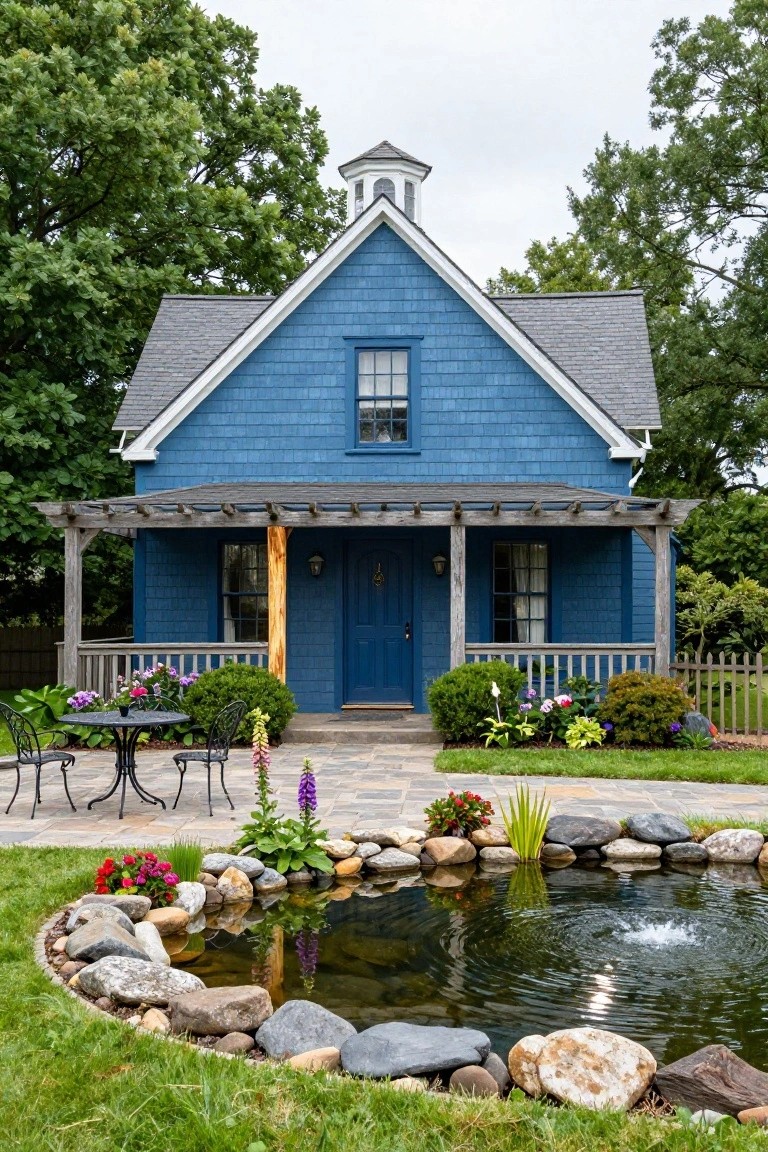
A blue shingle-sided house like this one gets a lot of its charm from the rustic pergola over the front porch. The dark blue paint on the shingles pops against the natural wood posts and beams, giving the whole facade a cozy, lived-in feel. That cupola on the roof adds just a touch of whimsy without overdoing it.
This setup suits older-style homes or cottages in wooded areas, where you want the entry to stand out. Use rough-sawn timber for the pergola to keep the contrast going, and add a few potted plants nearby. It draws folks right to the door, but skip fancy lanterns if you like things simple.
Traditional Blue Clapboard Facade
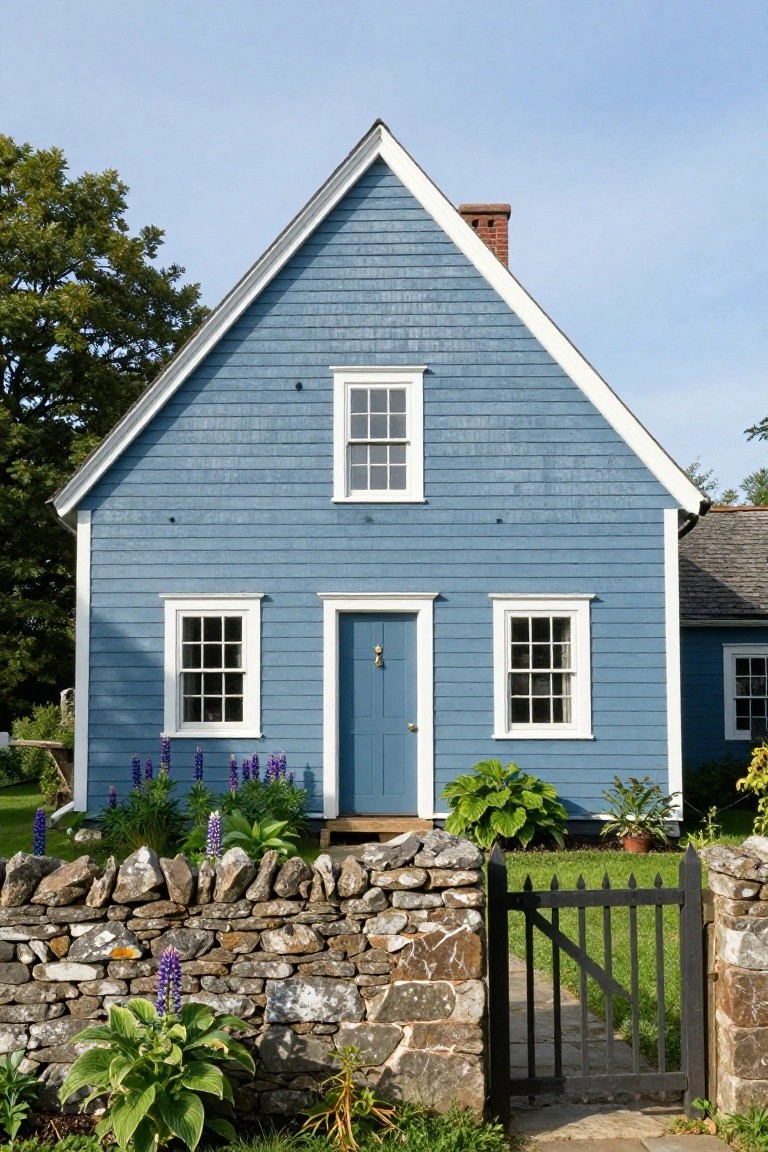
A soft blue clapboard siding like this one brings out the best in a simple gable-front house. The color feels right at home on older styles, especially with white trim around the windows and roofline to keep things crisp. It has that easy charm without trying too hard.
This look suits cottages or farmhouses in cooler climates, maybe near the coast. Paint your siding in a muted blue, add white accents, and keep the entry straightforward with a matching door. Just watch the trim stays bright to avoid a dull fade over time.
Blue Siding Over Brick Base
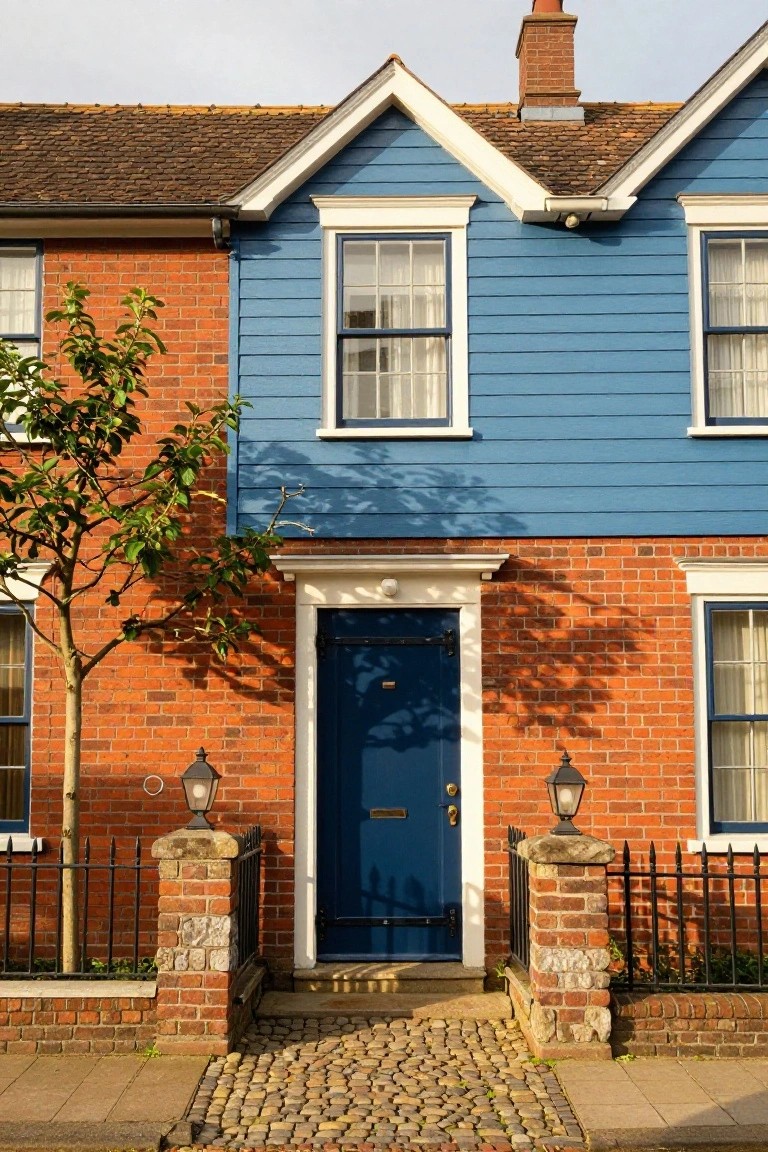
One simple way to give a traditional house real charm is using red brick for the lower walls and blue clapboard siding up top. This mix shows off the brick’s warmth against the crisp blue paint. It feels settled and right, like older coastal homes in England. The dark blue door and white trim pull it together without trying too hard.
This look works best on two-story cottages or semis with a pitched roof. Keep the brick solid and the siding horizontal for that easy rhythm. Add lanterns on brick posts by the entry, like here. It suits spots with some sun to make the colors pop. Just match the blue shade to your roof tiles so nothing fights.
Traditional Blue House with Porch Benches
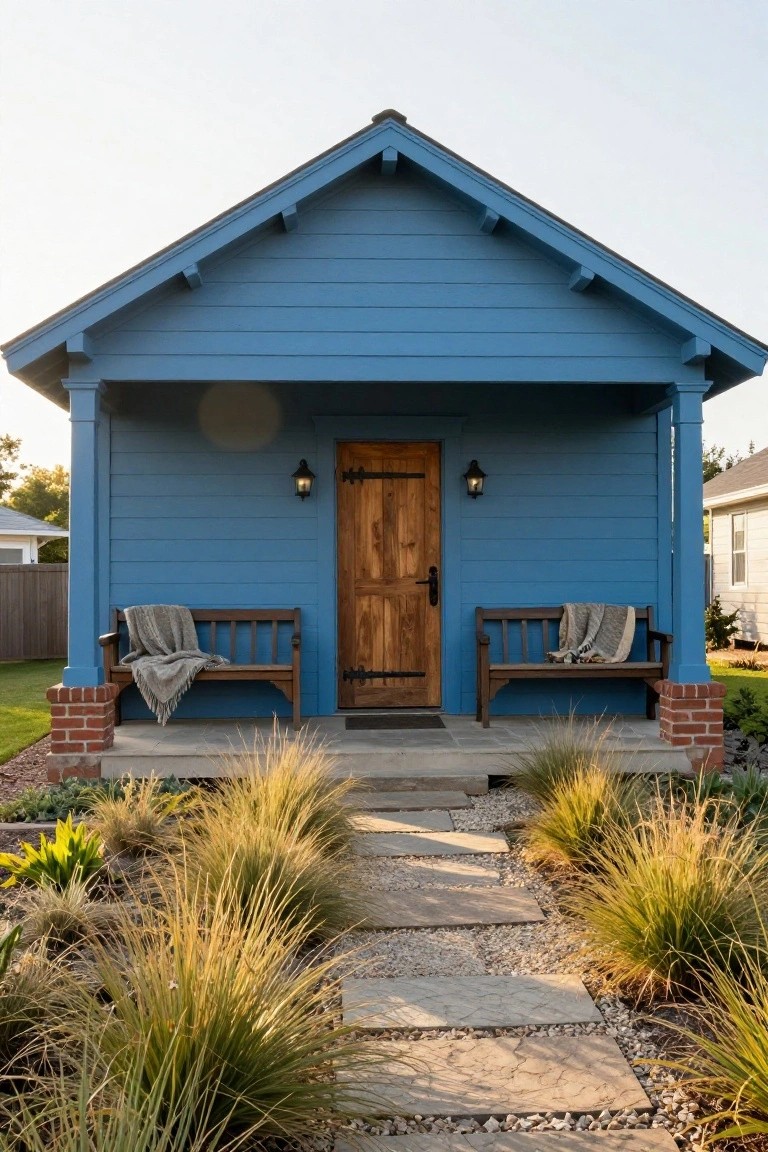
A simple covered porch like this one on a blue house makes the front feel more welcoming right away. The dark blue siding gives a classic cottage look, and those wooden benches with throws add a lived-in touch without much effort. It’s the kind of setup that says home sweet home from the street.
Try this on a smaller house or cottage where you want extra curb appeal. Place matching benches on each side of the door, maybe with some pillows or blankets for color. It works best in milder climates where folks actually sit out there, and pair it with lanterns for evening light.
Window Boxes Bring Life to Blue Exteriors
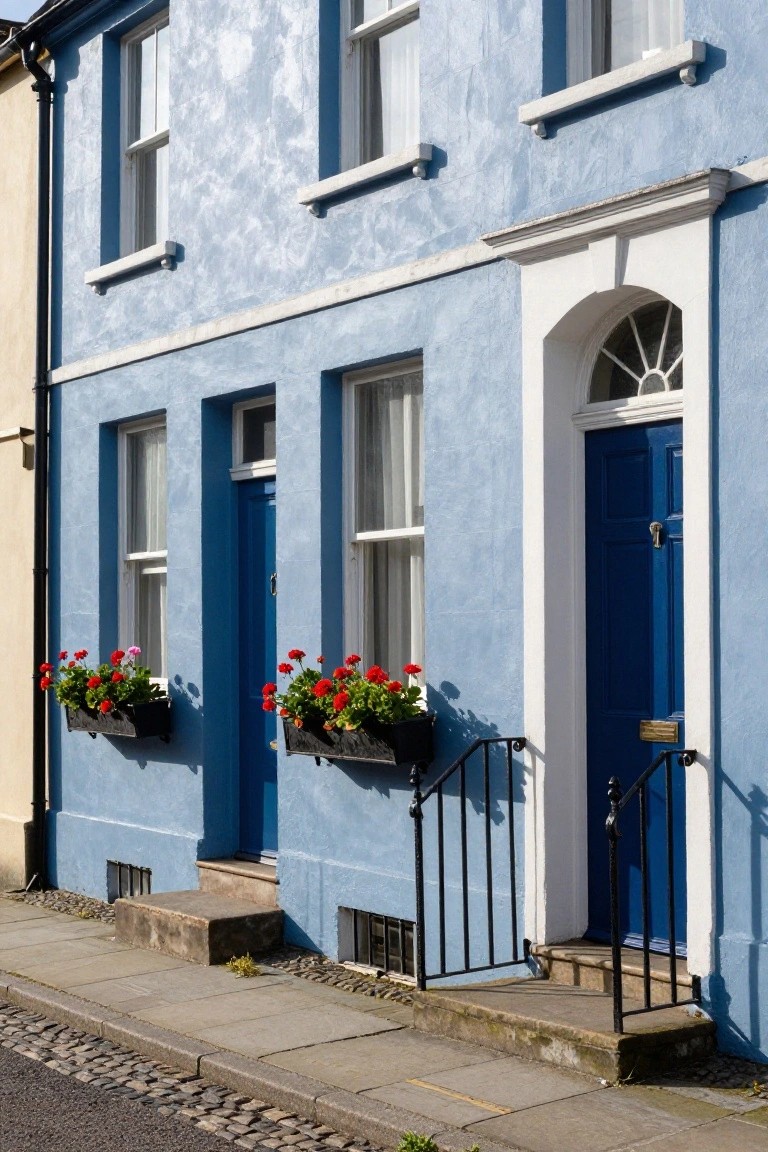
Window boxes full of bright red geraniums look right at home on this traditional blue house. The vivid flowers stand out against the soft blue walls and white trim. They add a welcoming touch that makes the whole facade feel lived-in and cheerful without much effort.
These boxes work best on row houses or older homes with good window ledges. Plant geraniums or similar tough bloomers that handle some sun. Keep them simple. Hang them under second-story windows too if the structure allows. Just watch for dripping water on the walkway below.
Classic Blue Colonial Facade
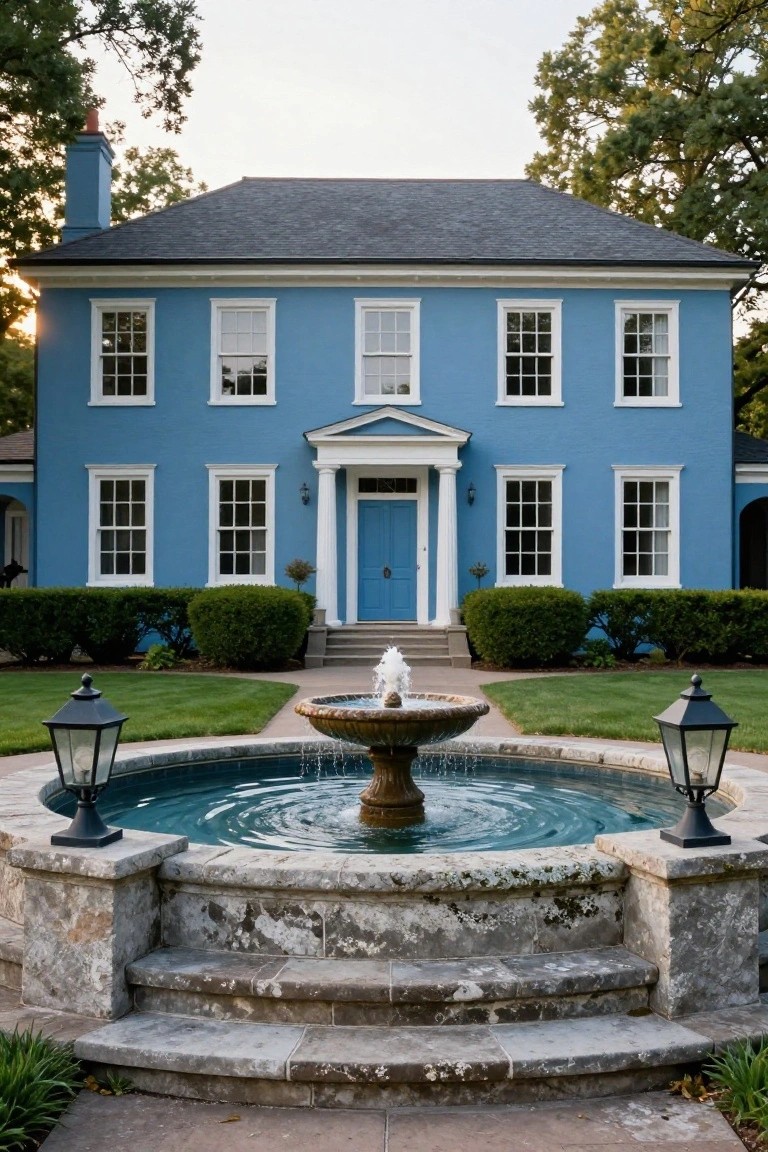
A traditional colonial house painted blue offers real curb appeal without trying too hard. The siding in that deep blue shade pairs nicely with white trim around the windows and door. It keeps the symmetrical look intact, from the evenly spaced multi-pane windows to the centered entry with columns. Folks notice how fresh yet timeless it feels right away.
This setup suits older homes in the suburbs or countryside where you want charm that stands out. Pick a blue that’s not too bright, maybe with some gray undertone, and make sure the trim stays crisp white. A stone fountain out front adds a nice touch for visitors, but keep the landscaping simple so the house stays the focus.
Blue Cottage with Climbing Roses
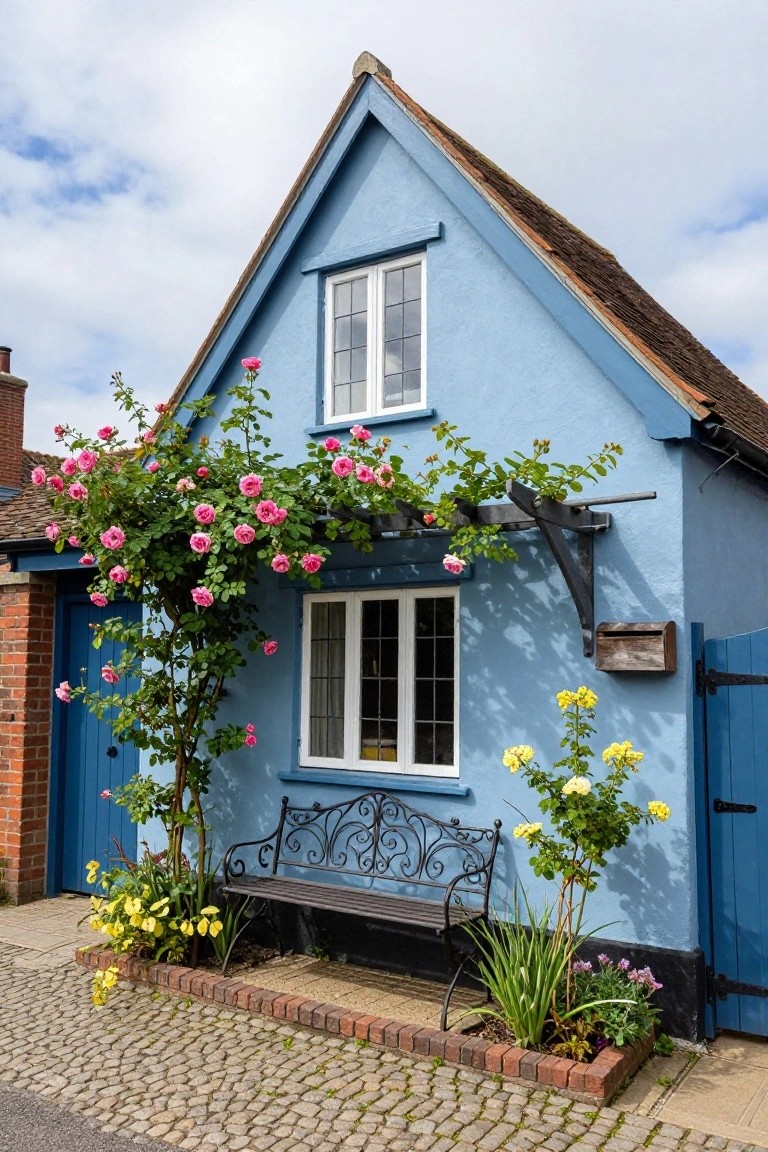
Climbing roses work so well on a traditional blue house like this one. The pink blooms tumble over the light blue walls and metal trellis, softening the facade and adding that storybook cottage feel without much effort. It’s a simple way to bring life to plain siding.
Try this on older homes with pitched roofs or anywhere you want more curb appeal. Plant ramblers like these by the front door or window, let them grow up an arbor, and tuck in a bench underneath. It suits mild spots where roses thrive, but pick disease-resistant kinds and prune yearly to keep things tidy.
Grand Stone Steps to the Porch
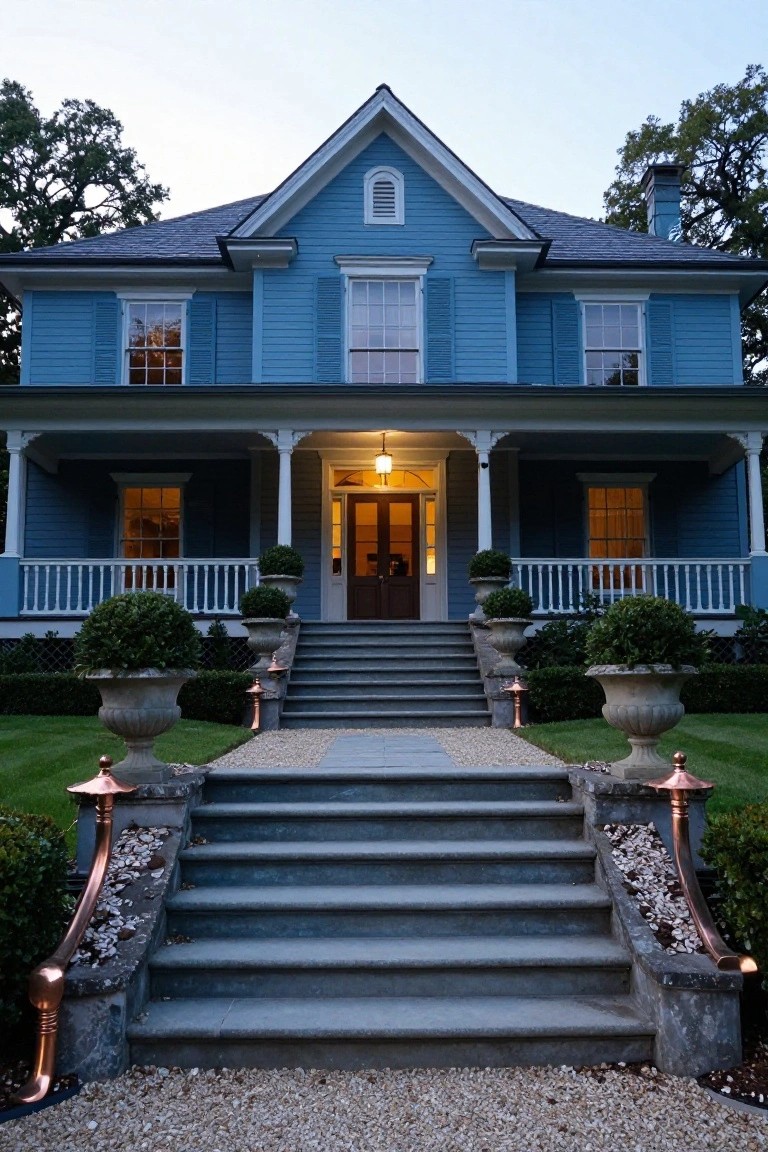
Wide stone steps like these turn a simple front entry into something more formal and welcoming. They lead right up to the porch on this blue house, making the whole facade feel balanced and established. The copper lanterns on either side catch the light just right, especially as evening comes on.
You can pull this off on traditional homes with a raised porch or crawl space foundation. Keep the steps broad, at least five or six feet wide, so they don’t feel squeezed. Pair them with low plantings in urns to frame things without blocking the view. It adds real curb appeal without much upkeep.
Petite Blue Gabled Shed
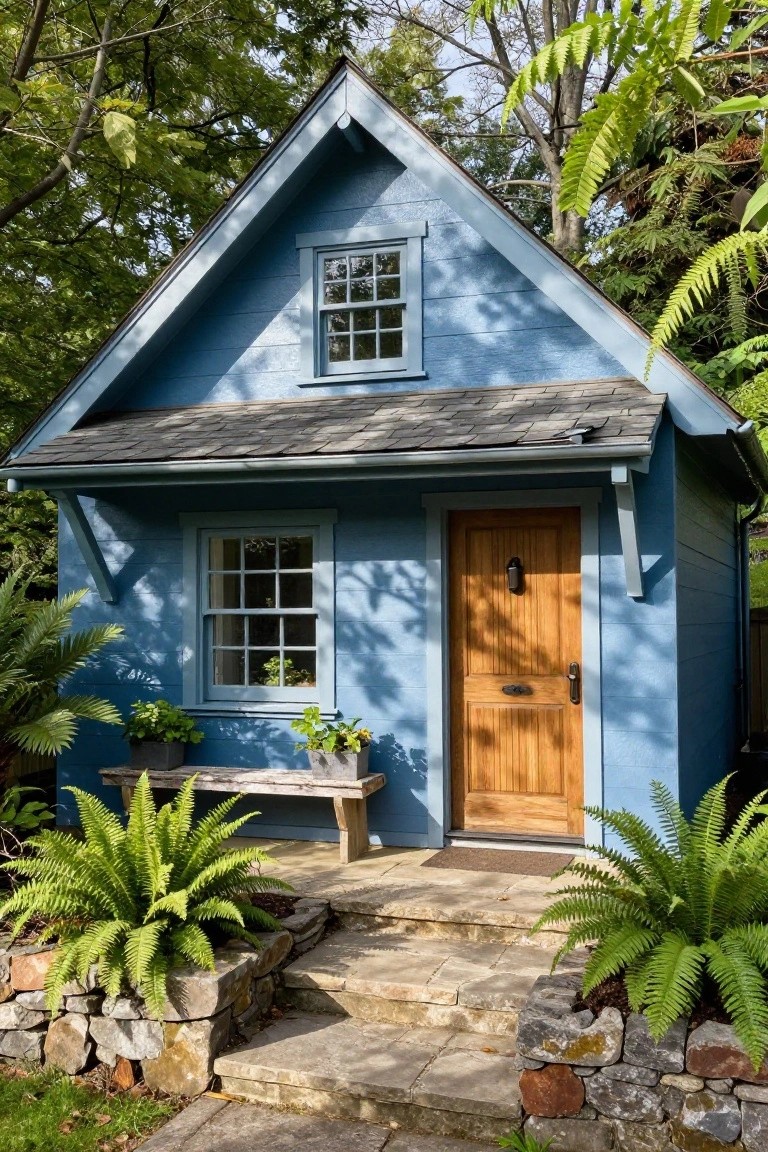
A small gabled shed like this pulls off traditional charm in a compact way. The blue clapboard siding gives it a fresh coastal feel, while the gray shingle roof and warm wood door keep things grounded and classic. Tucked among ferns and stone, it looks like it grew there naturally.
Try this for a backyard studio or potting shed where you want personality without taking up much room. It suits cottage gardens or wooded lots best. Keep the entry steps simple, and let low plants frame the door… nothing fussy.
Classic Navy Blue Cottage Exterior
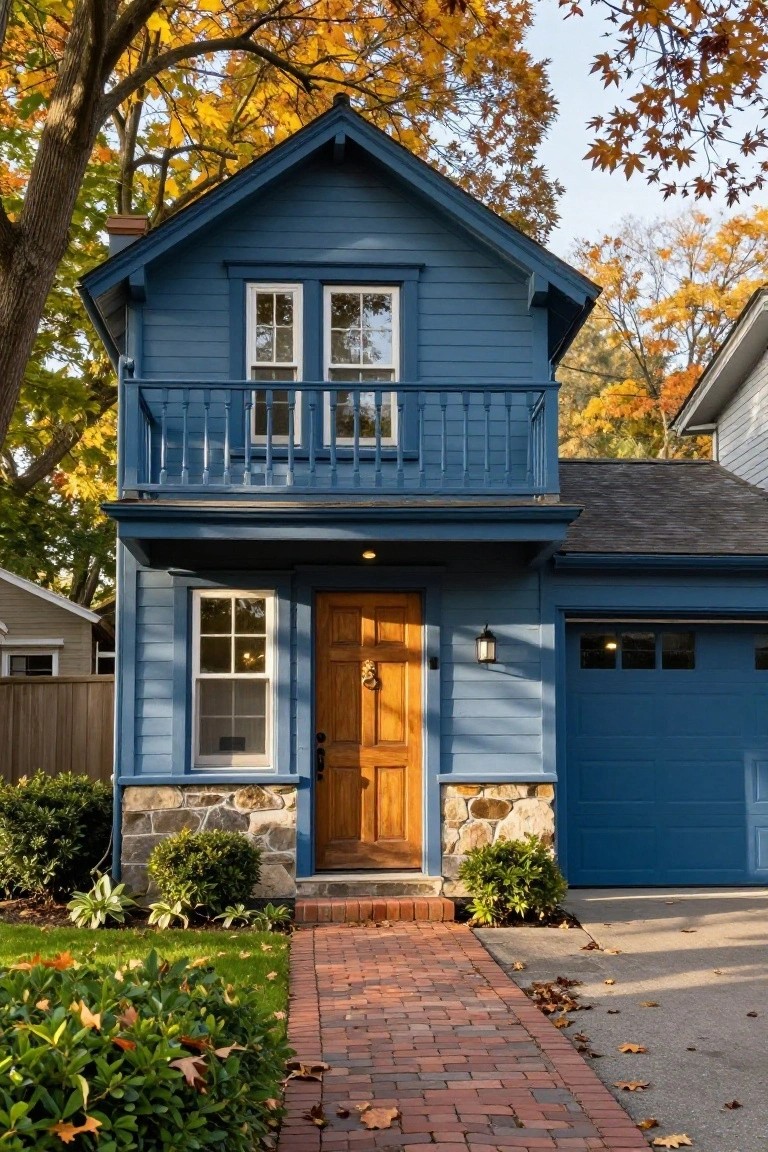
This little two-story cottage pulls off navy blue clapboard siding in a way that feels just right for traditional charm. The matching blue balcony railing up top gives it a bit more height and interest without overwhelming the small scale. Down front, the wooden door in a warm tone stands out nicely, pulling your eye right to the entry.
Try this look on compact lots in older neighborhoods where fall leaves add their own color. White trim around the windows keeps things crisp, and a stone base at the bottom adds some weight. A brick path works well to guide folks in, and low shrubs on the sides frame it without fuss.
Frequently Asked Questions
Q: Which shade of blue nails that classic traditional charm?
A: Stick with muted tones like soft cornflower or faded denim. They wrap your home in cozy nostalgia without shouting. Swatch them on a sunny day and evening to see the magic.
Q: What trim colors pair perfectly with a blue exterior?
A: Crisp white or creamy off-white trim keeps things fresh and timeless. Paint the accents first to test harmony. Black works too if you crave subtle drama.
Q: How do I stop my blue paint from fading too fast?
And here’s the trick. Pick high-quality exterior paint with UV blockers. Clean gently each spring to hold that vibrant charm.
Q: Are shutters a must for a traditional blue house?
A: They add instant personality, especially in a deeper shade like charcoal. Hang them asymmetrically for relaxed appeal. Skip if your porch already steals the show.
