

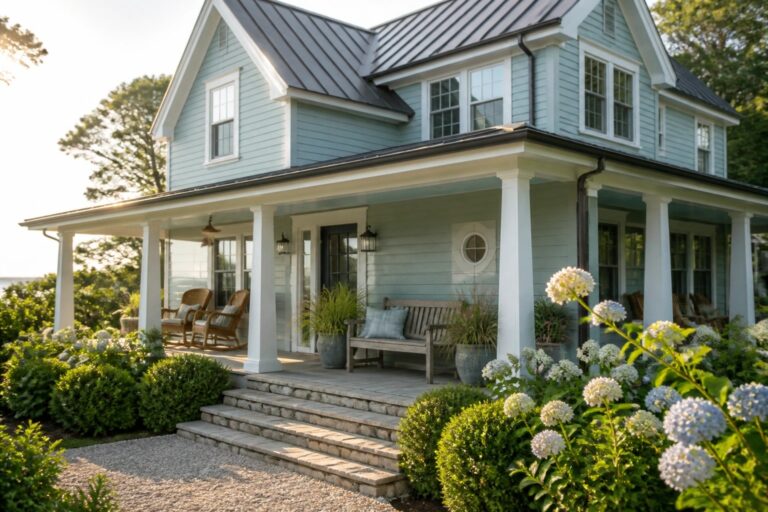
I have always paid attention to how a house color changes the way the whole facade sits against its surroundings once you see it in person.
Picking the right blue requires looking at how it interacts with the roofline, windows, and any wood or stone details that stay in place.
Some shades only reveal their true character once they are on the siding.
I usually paint a few test patches on the actual wall and check them at different times of day before making a final choice.
Coastal and lake homes in particular need blues that stay steady against strong sun and changing weather without looking washed out after a season or two.
Light Blue Siding for a Calm Exterior
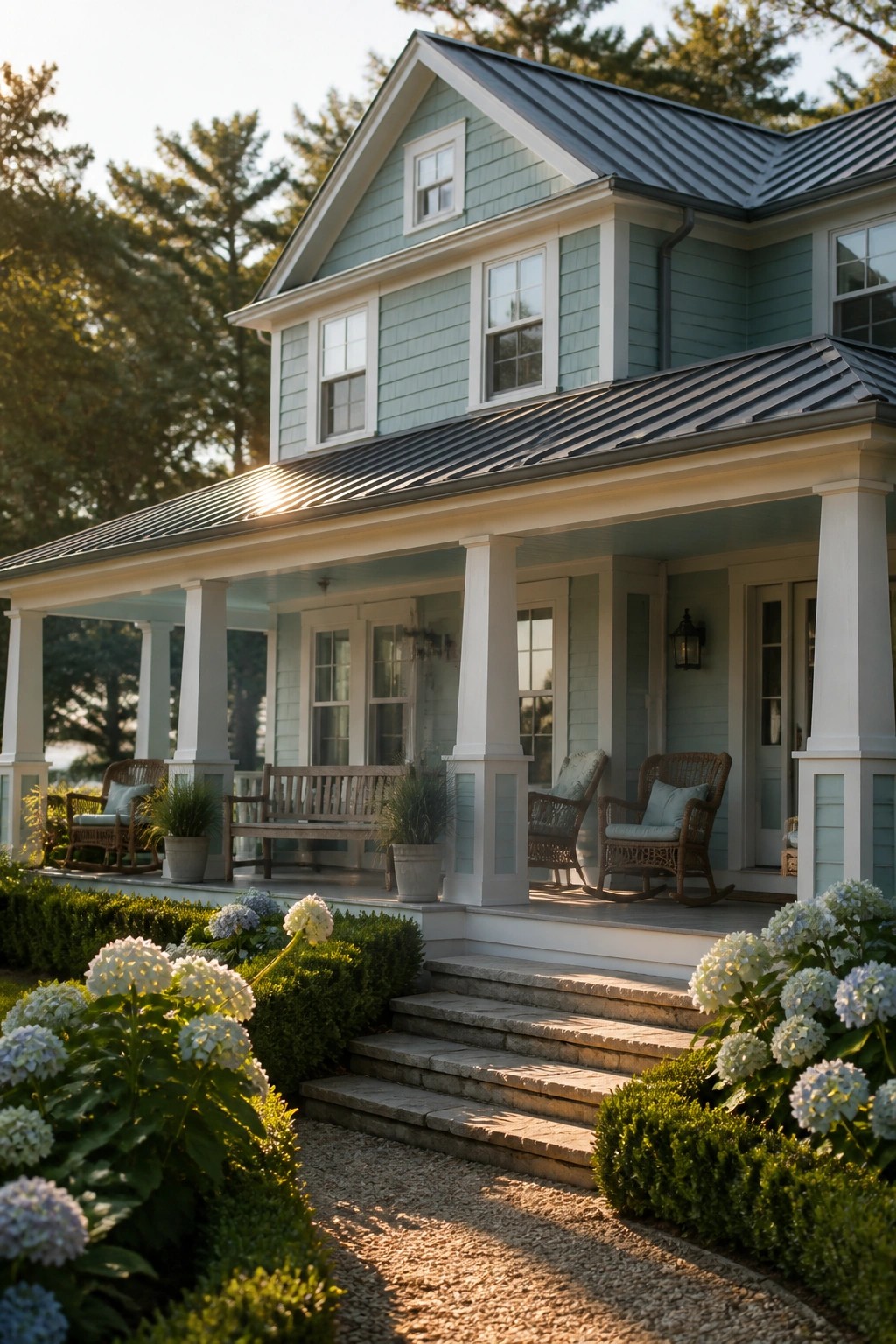
A soft blue like this works well because it feels quiet and blends easily with trees and water. It keeps the house from looking too stark while still standing out in a gentle way. Many people pick this shade when they want something fresh without going too bold.
It suits homes near the coast or lakes especially well. Use it on wood siding with white trim to keep the look clean, and test the color in different lights since blue can shift more than people expect.
Soft Blue Siding for Lake Homes
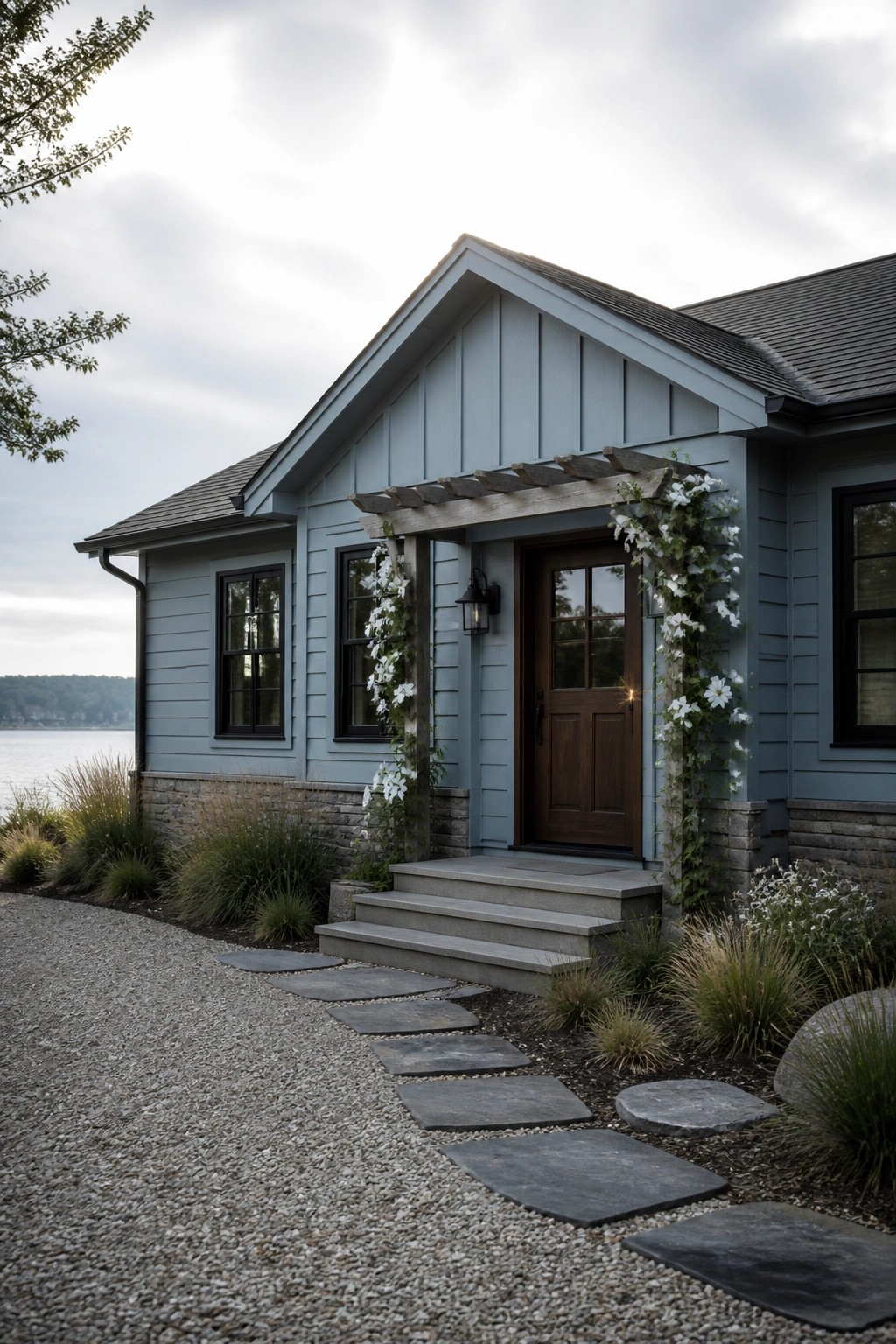
A soft blue like this one gives a house a calm look that feels right at home near water. It stays gentle even when the sky is gray, and it works well with wood trim and stone details without fighting them.
This color suits lake houses or coastal homes that want a relaxed feel rather than something bright. Keep the other materials simple and natural so the blue stays the main quiet note.
Blue Gray for Clean Modern Facades
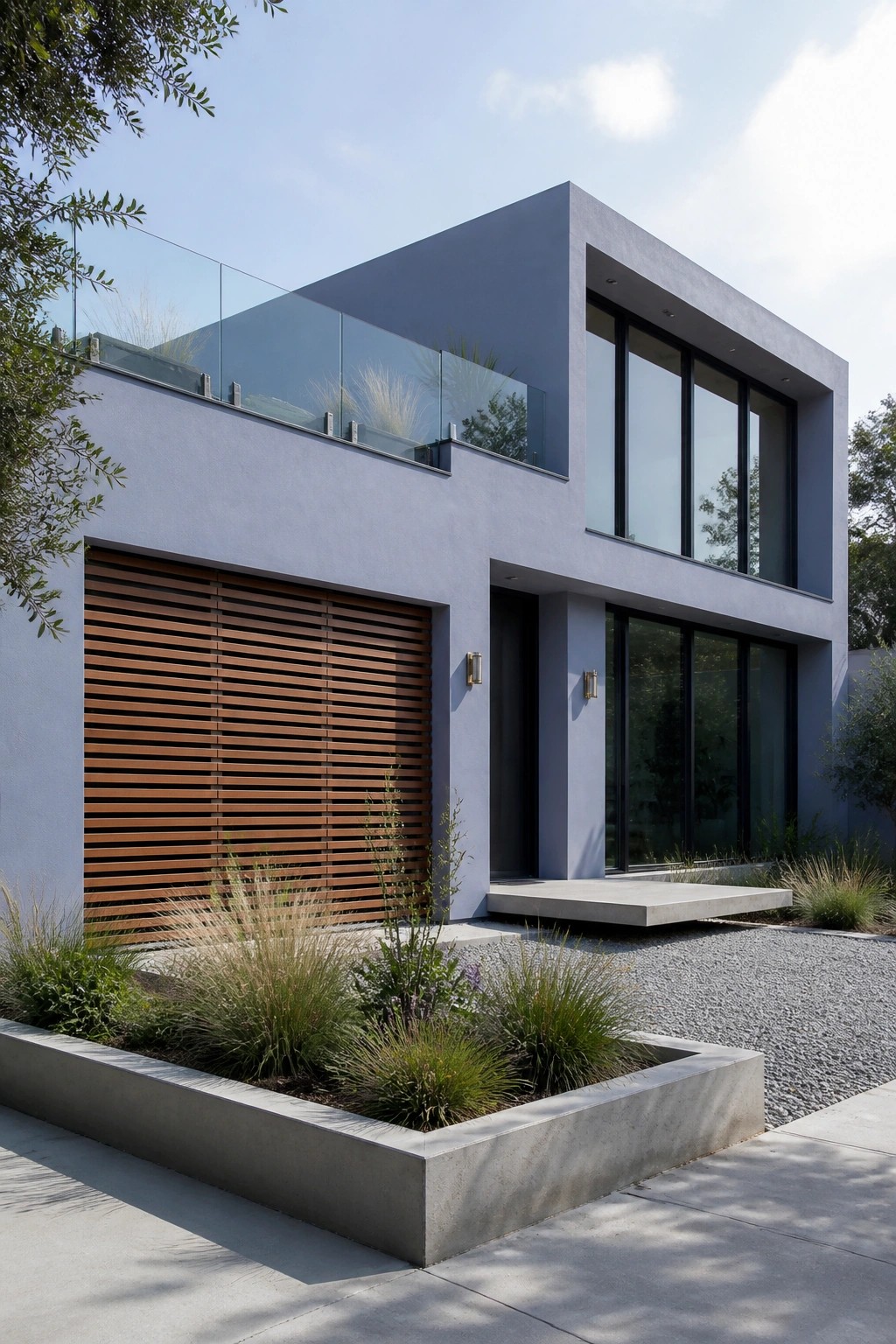
This color sits nicely between gray and blue, giving the house a calm look that still feels current. It works because it stays soft in most lights and does not fight with the sharp lines or large windows.
Use it on homes with simple shapes where you want the color to do the main job. It pairs easily with wood accents and concrete details, and it looks right near water or in open areas where stronger colors might feel out of place.
Soft Blue Siding for Coastal Homes
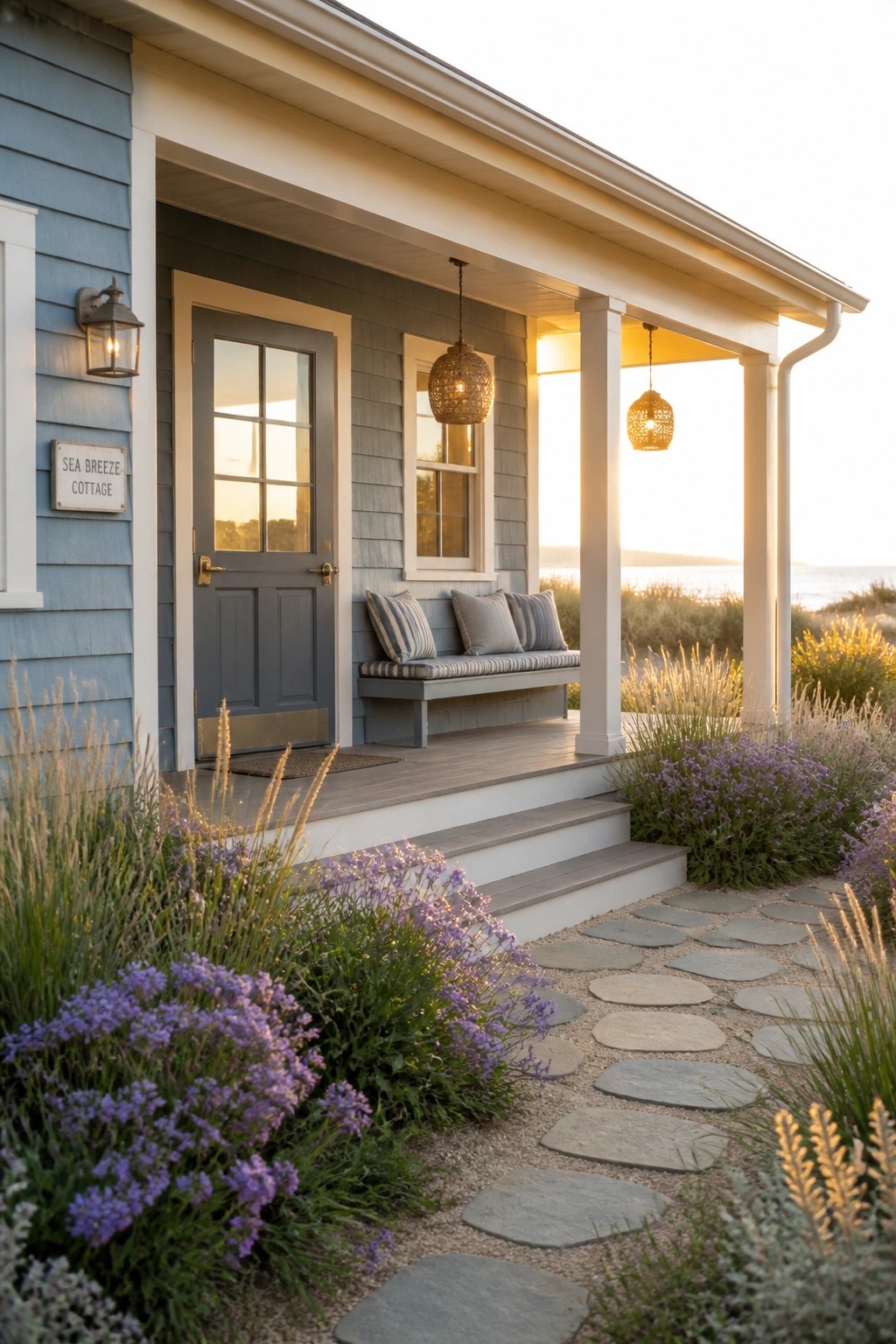
A muted blue like this works well on homes near the water because it feels calm rather than bold. The color sits quietly against white trim and lets the surroundings do more of the talking.
It suits shingle siding on smaller cottages or breezy modern builds. Keep the door a bit darker and the trim crisp so the blue stays the main note without looking washed out.
Dark Blue Siding for Lake Homes
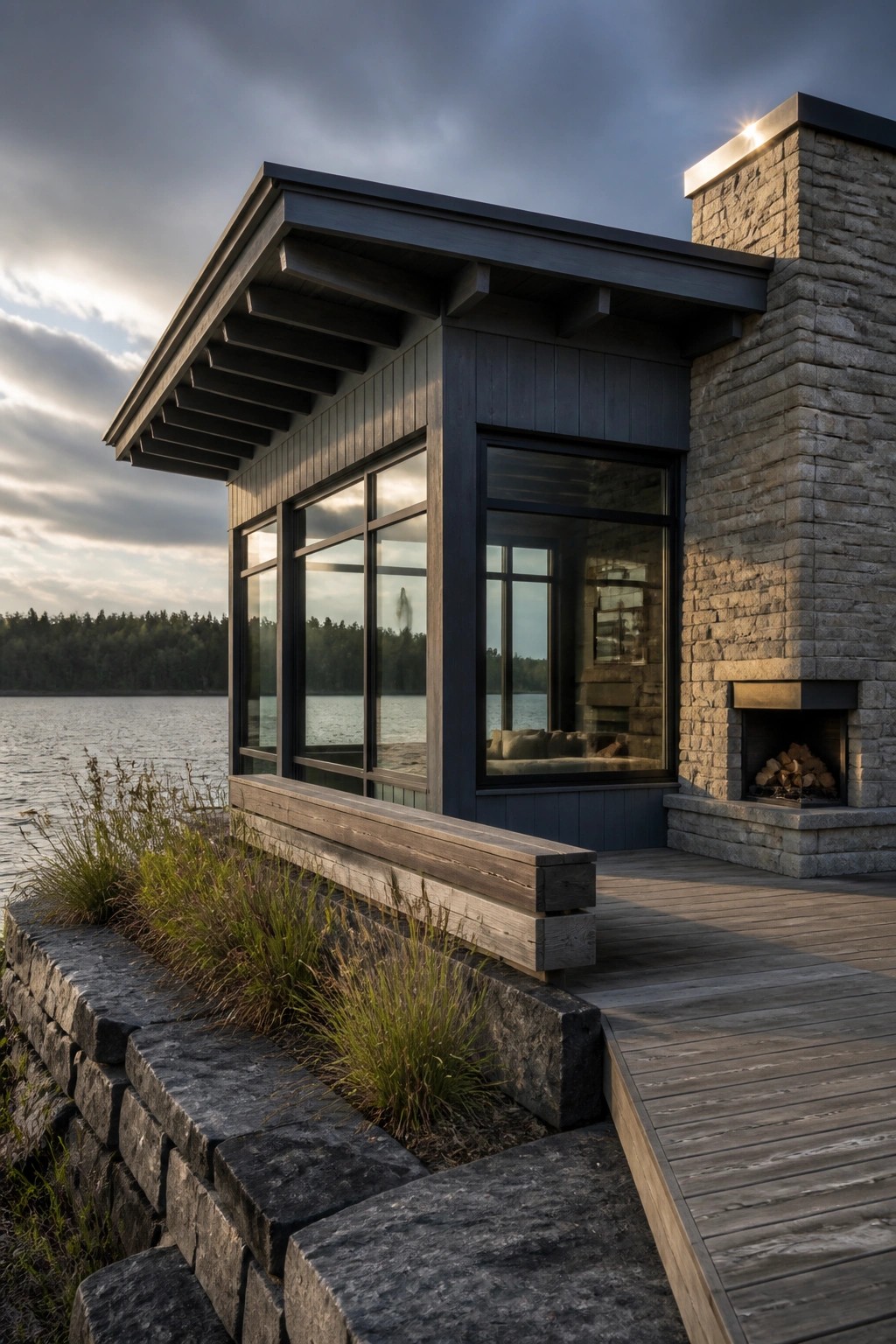
A deep blue exterior gives a modern lake house a quiet connection to the water without trying too hard. The color sits back against the trees and reflections, so the house feels settled rather than showy.
This works well on simple shapes where the siding can sit next to stone and wood. Keep the trim dark and let the natural materials carry the rest of the detail.
Soft Blue Siding for Coastal Homes
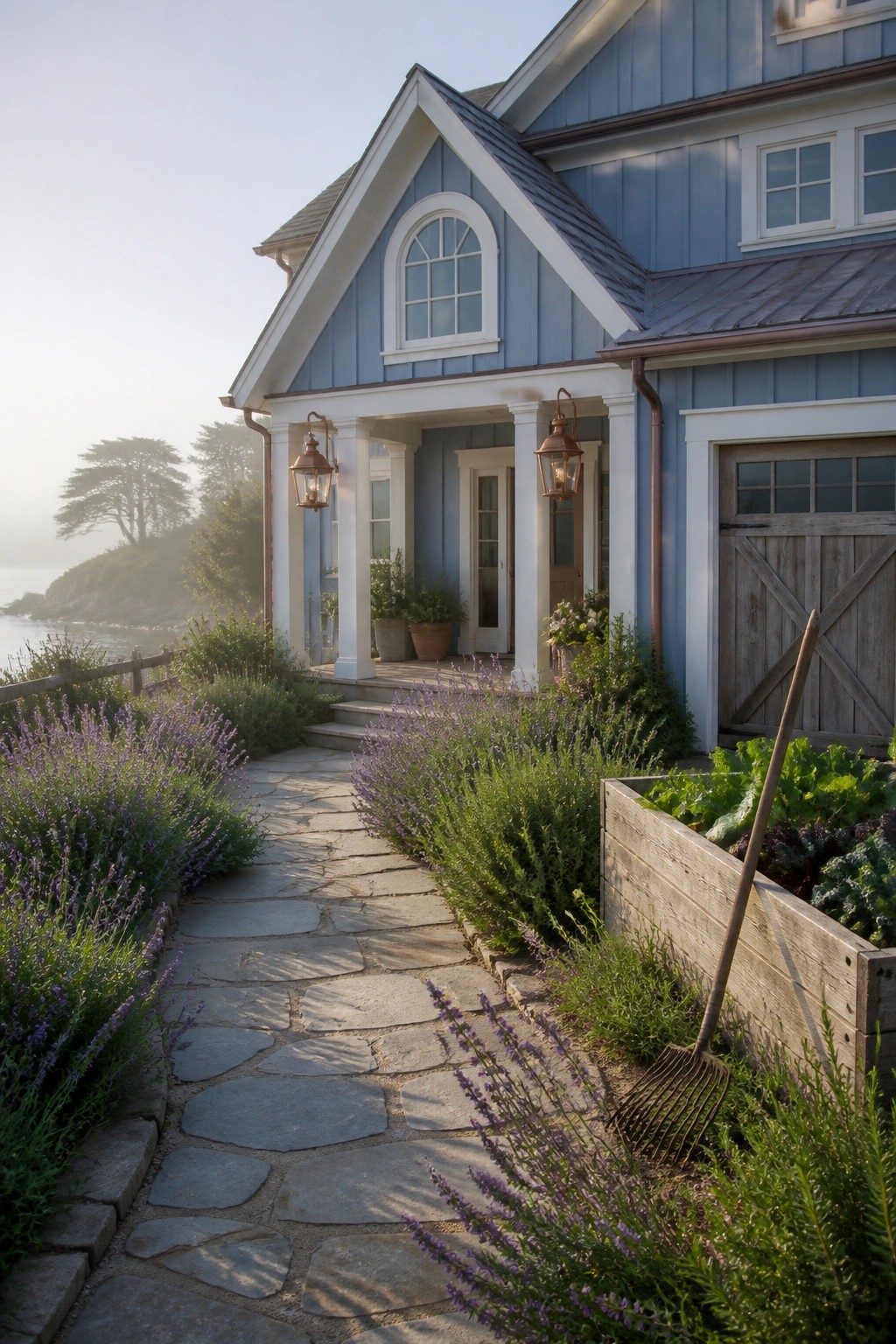
A light blue exterior gives the house a calm presence that fits right in with the water and sky nearby. The color stays gentle even in changing light, and the white trim keeps it from feeling too plain.
This approach works best on homes that sit close to the shore or in areas that often see fog. Keep the trim simple and let the plants around the base add a bit of softness so the color reads as natural rather than bright.
Deep Blue Siding for Lakefront Homes
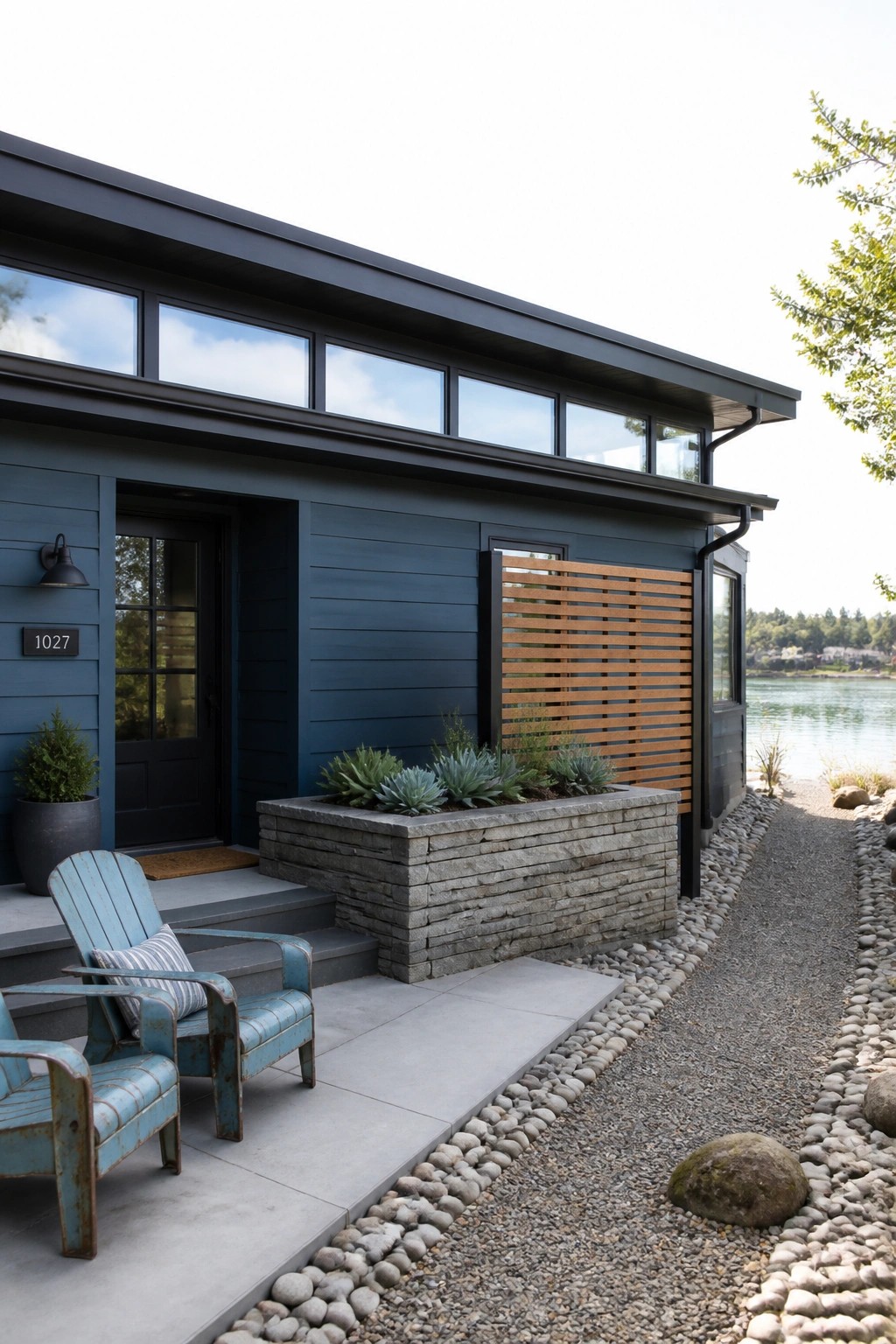
A deep blue exterior gives a house a steady, quiet look next to water. It feels modern without trying too hard, especially when the trim stays dark and the windows stay simple.
This color works best on homes with horizontal siding and a clean roofline. It holds up well in bright sun and still feels calm when the light changes.
Soft Blue Stucco for a Calm Coastal Look
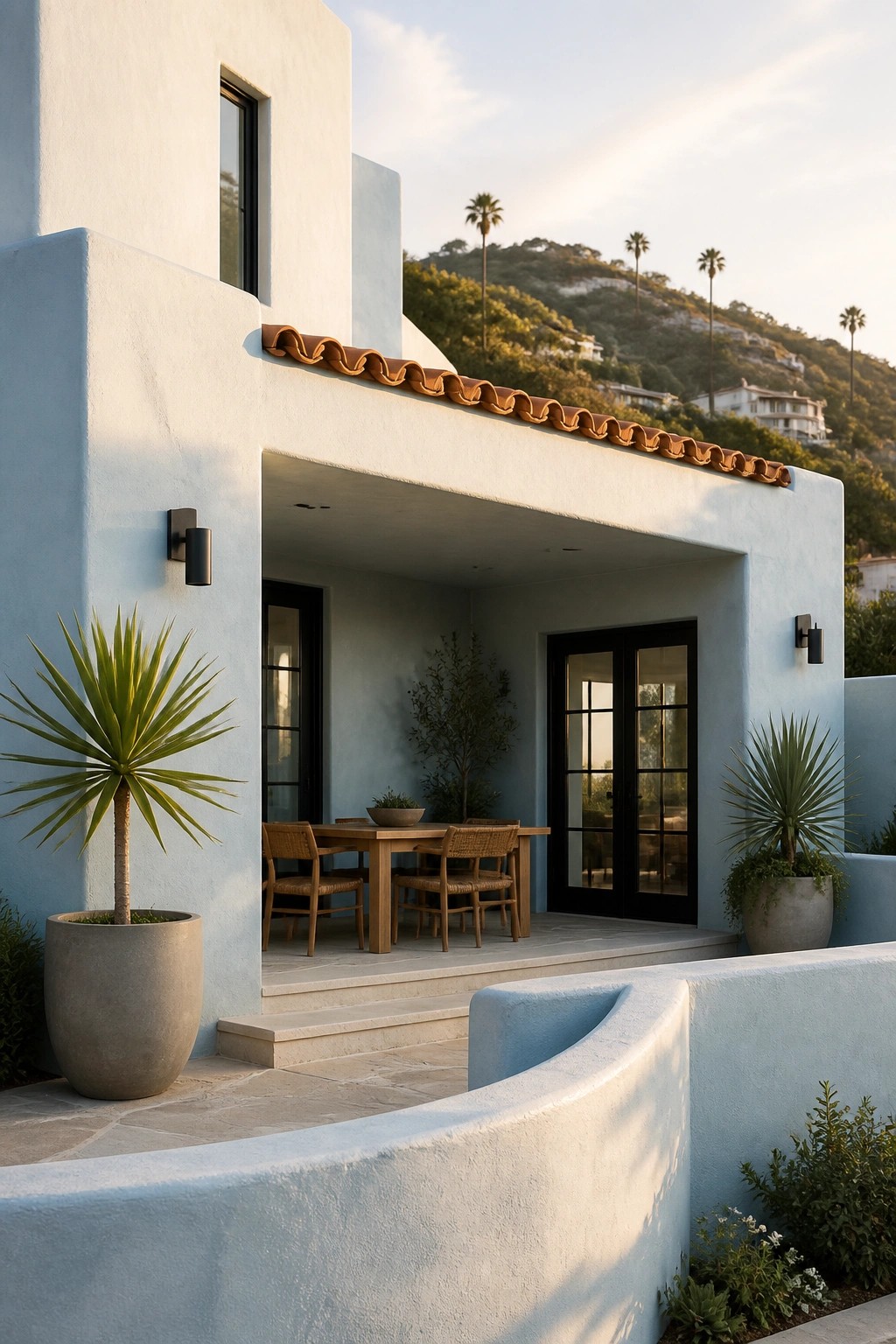
A muted blue on stucco walls gives an exterior a quiet presence without trying too hard. It pairs naturally with warm roof tiles and dark frames, which keeps the whole house from feeling stark or overly bright in strong sunlight.
This approach works best on homes near the coast or in open, breezy spots where you want the color to blend with sky and water rather than compete. Stick with simple trim and low planting so the blue stays the main element instead of getting lost in too many accents.
Blue Gray Paint for Coastal Exteriors
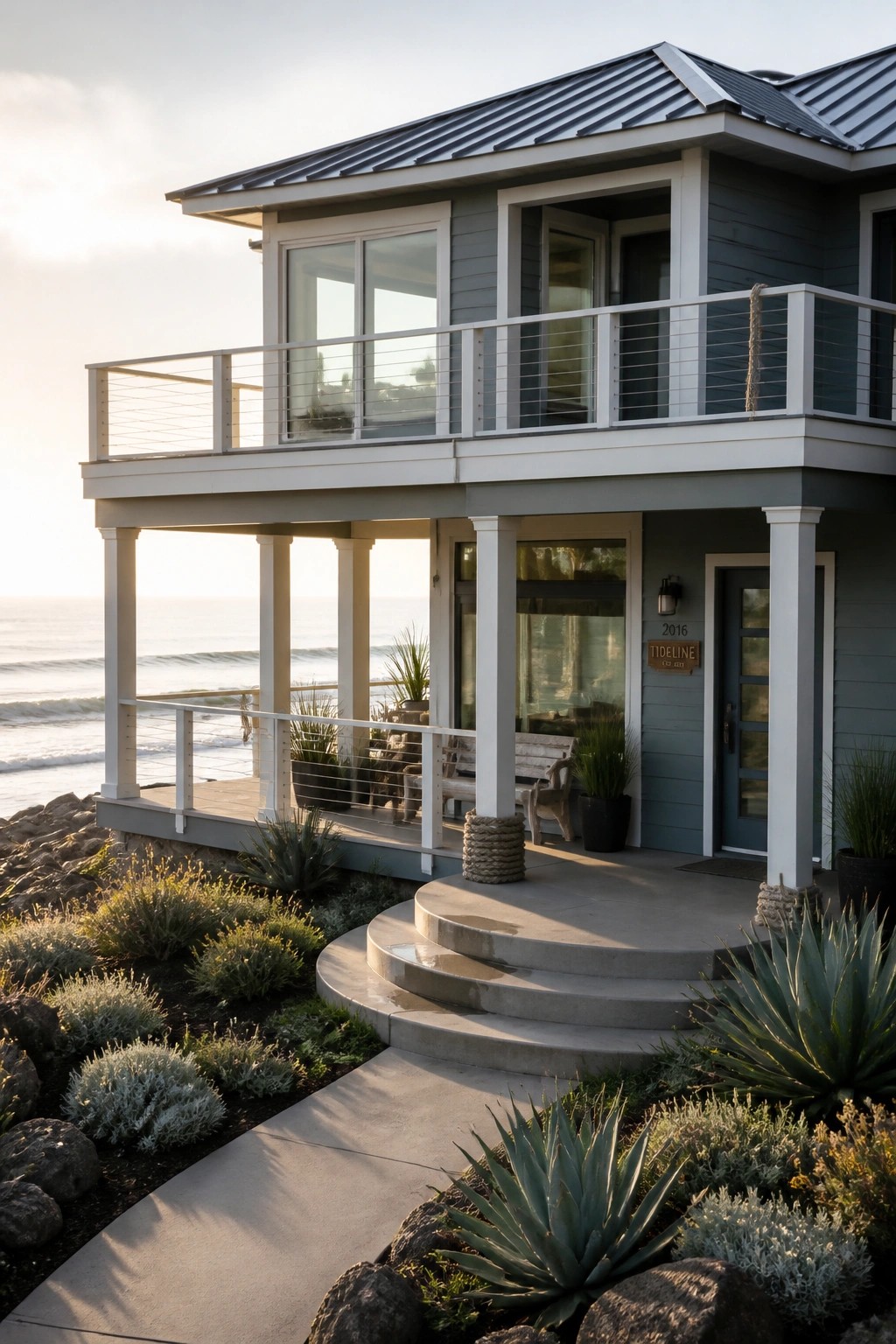
A blue gray shade like this one gives a house a calm look that fits right in by the water. The color echoes the ocean and sky without competing with them.
It works well on homes with clean shapes and white trim. Use it when you want the house to feel settled into its setting rather than trying to stand out.
Soft Blue Siding for Lakeside Homes
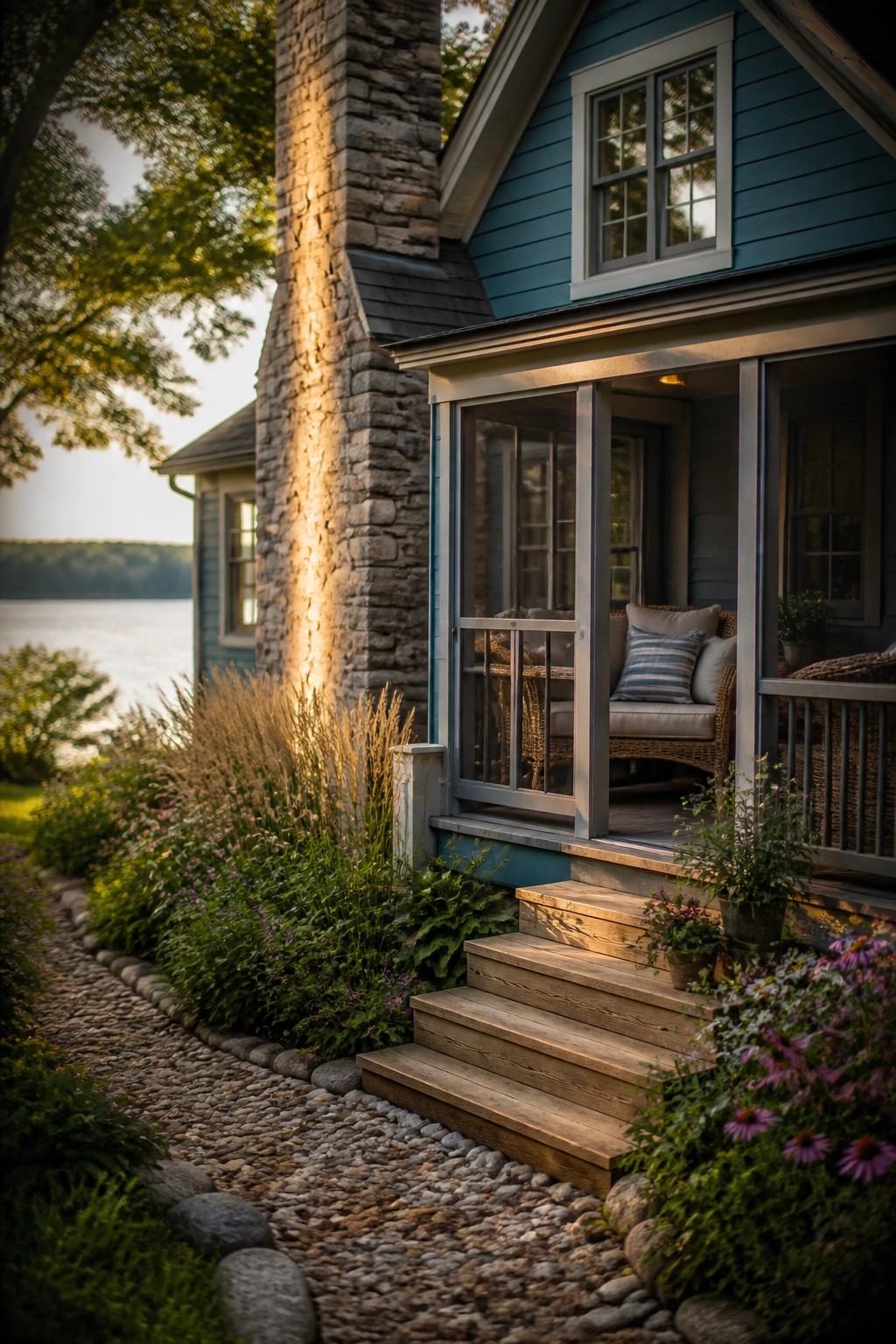
A soft blue on the exterior works especially well for homes near water. It keeps the house feeling calm instead of competing with the view.
This approach suits lake cottages and breezy modern homes when the blue stays muted and pairs with stone details like a chimney. Avoid anything too bright or it can start to feel out of place in a natural setting.
Deep Blue Siding For Lake Homes
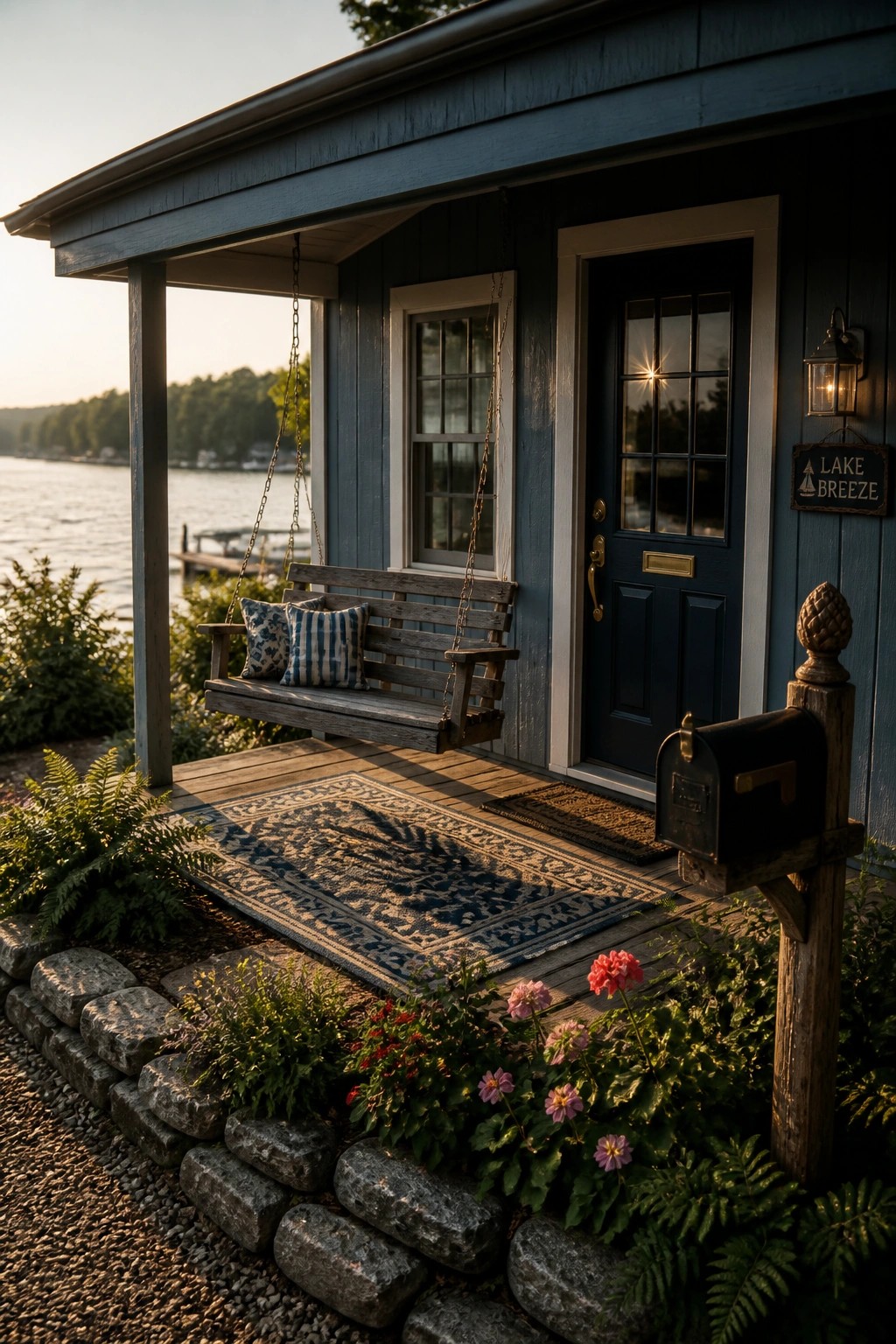
A deep blue works well on homes near water because it feels steady and blends with the surroundings. It gives the house character without standing out too much or feeling too bold.
This color suits wood siding and pairs easily with white trim and a simple porch. It fits lake houses or any spot where you want a calm look that still feels welcoming.
Blue Gray Siding for Coastal Homes
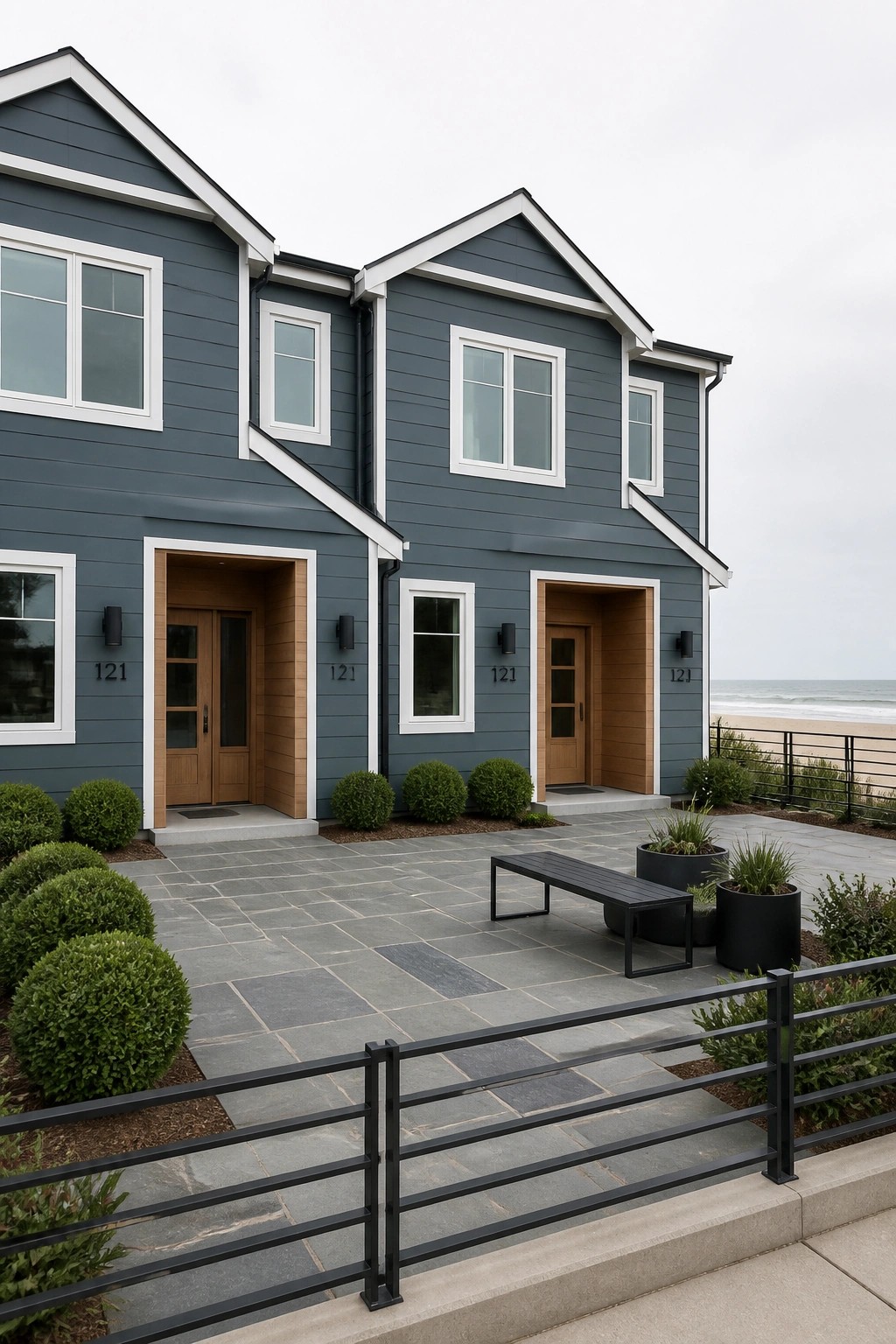
A blue gray exterior works well near the water because it stays calm and blends with the surroundings instead of competing with them. The color gives the house a steady look that feels right for breezy locations without needing a lot of extra detail.
This shade pairs nicely with wood accents around doors and windows. It suits homes that want a clean modern feel while still looking at home by the coast. Just keep the trim light so the blue stays soft rather than heavy.
Deep Blue Siding For Lakeside Decks
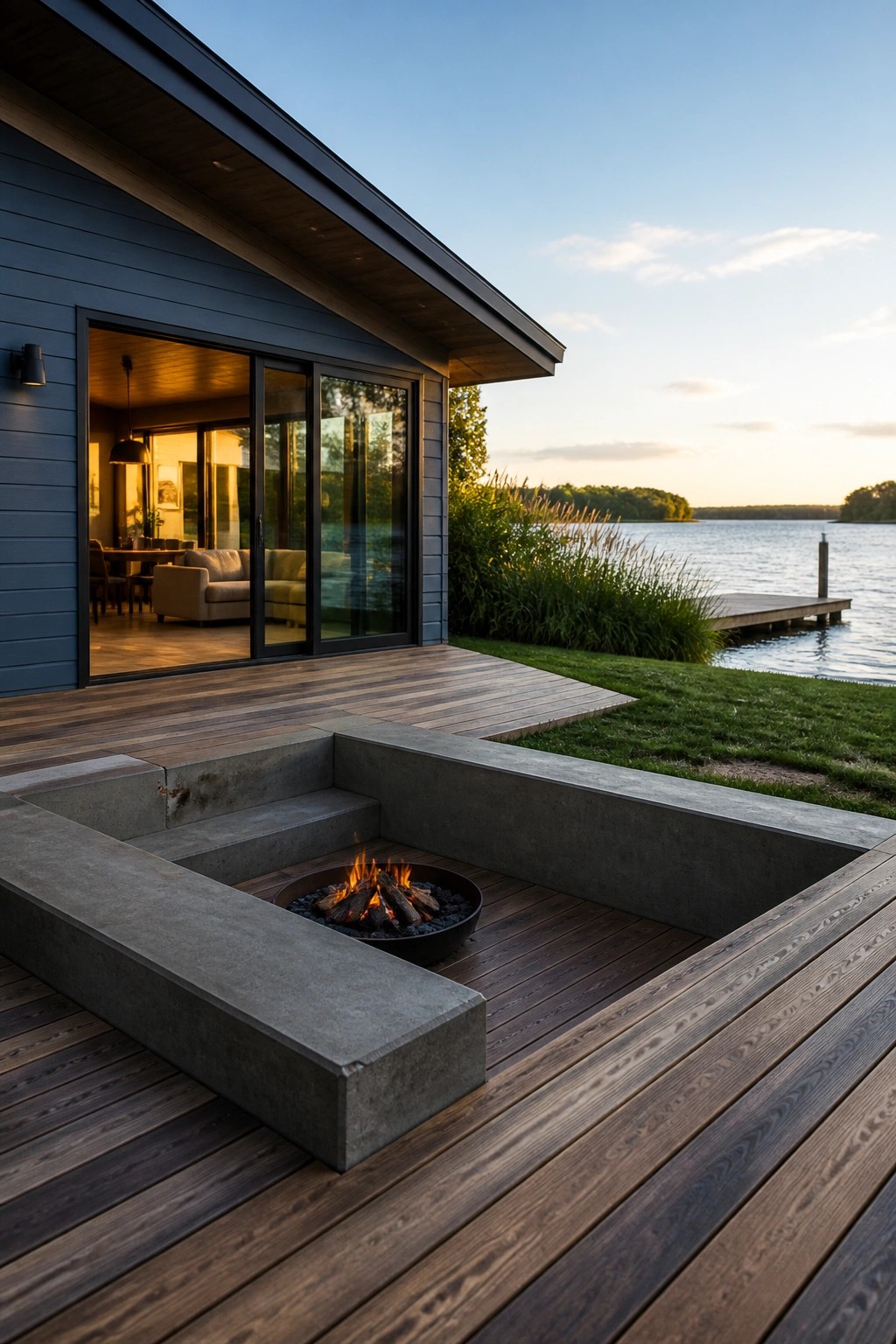
A dark blue exterior works especially well on homes that open right onto a deck and water. It picks up the tones of the lake without competing with the view, and it gives the whole outdoor area a settled look instead of feeling like an afterthought.
This color choice suits simple modern lake houses where the deck gets used year round. Keep the siding matte so it does not glare in the sun, and let the wood tones of the deck do the rest. Just make sure the blue is deep enough that it still reads clearly next to the water instead of washing out.
Soft Blue Siding for Coastal Homes
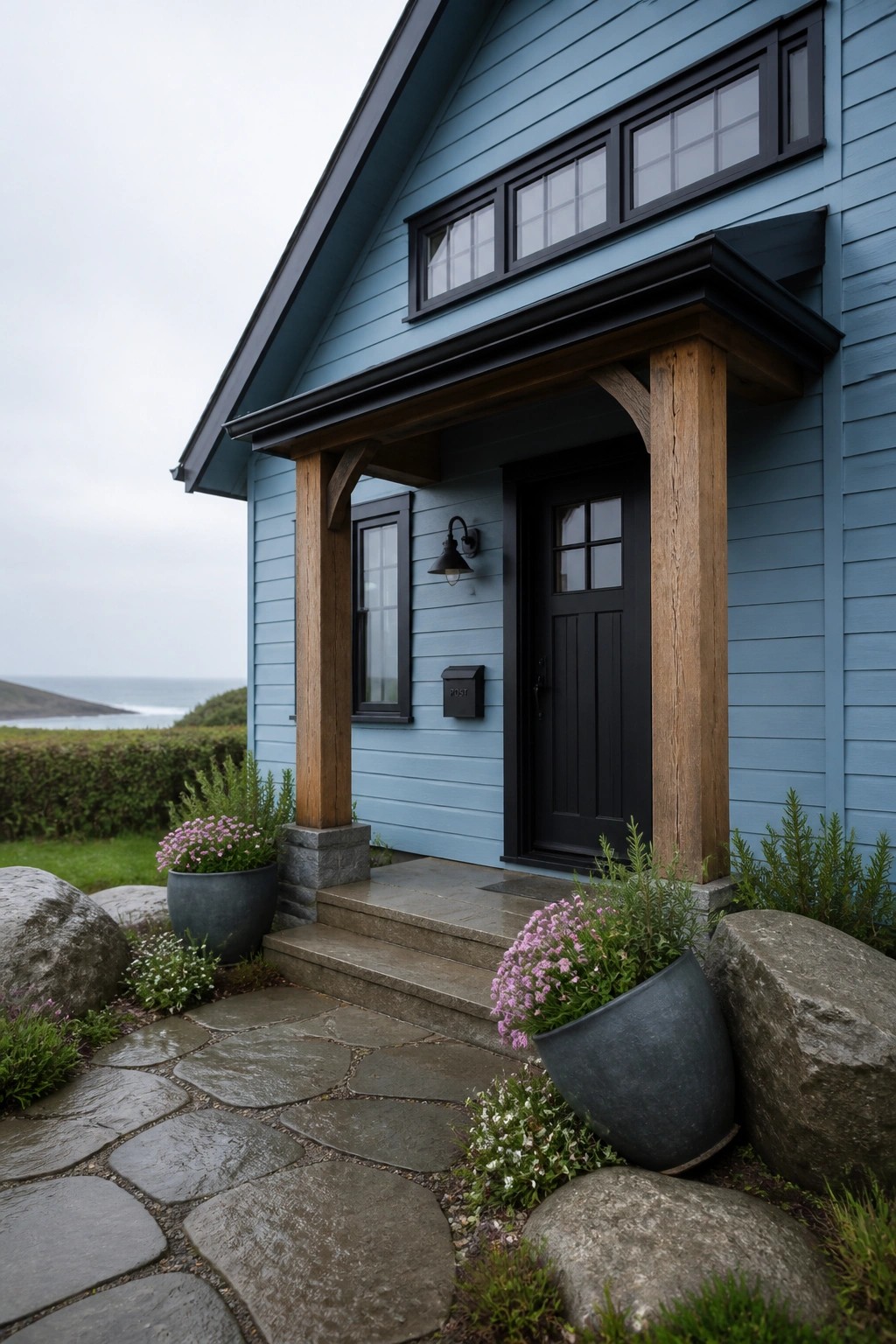
A soft blue exterior gives a house that calm, breezy feeling without trying too hard. It works especially well on simple gable designs where the color can read as an extension of the sky or nearby water. The black windows and door keep the look grounded instead of floating away.
This color choice suits modern or updated coastal homes that want a quiet presence rather than a bold statement. It pairs best with natural wood beams and dark trim to add just enough contrast. On overcast days the blue still feels steady, and it holds up nicely against stone paths or simple plantings around the entry.
Soft Blue For Breezy Modern Exteriors
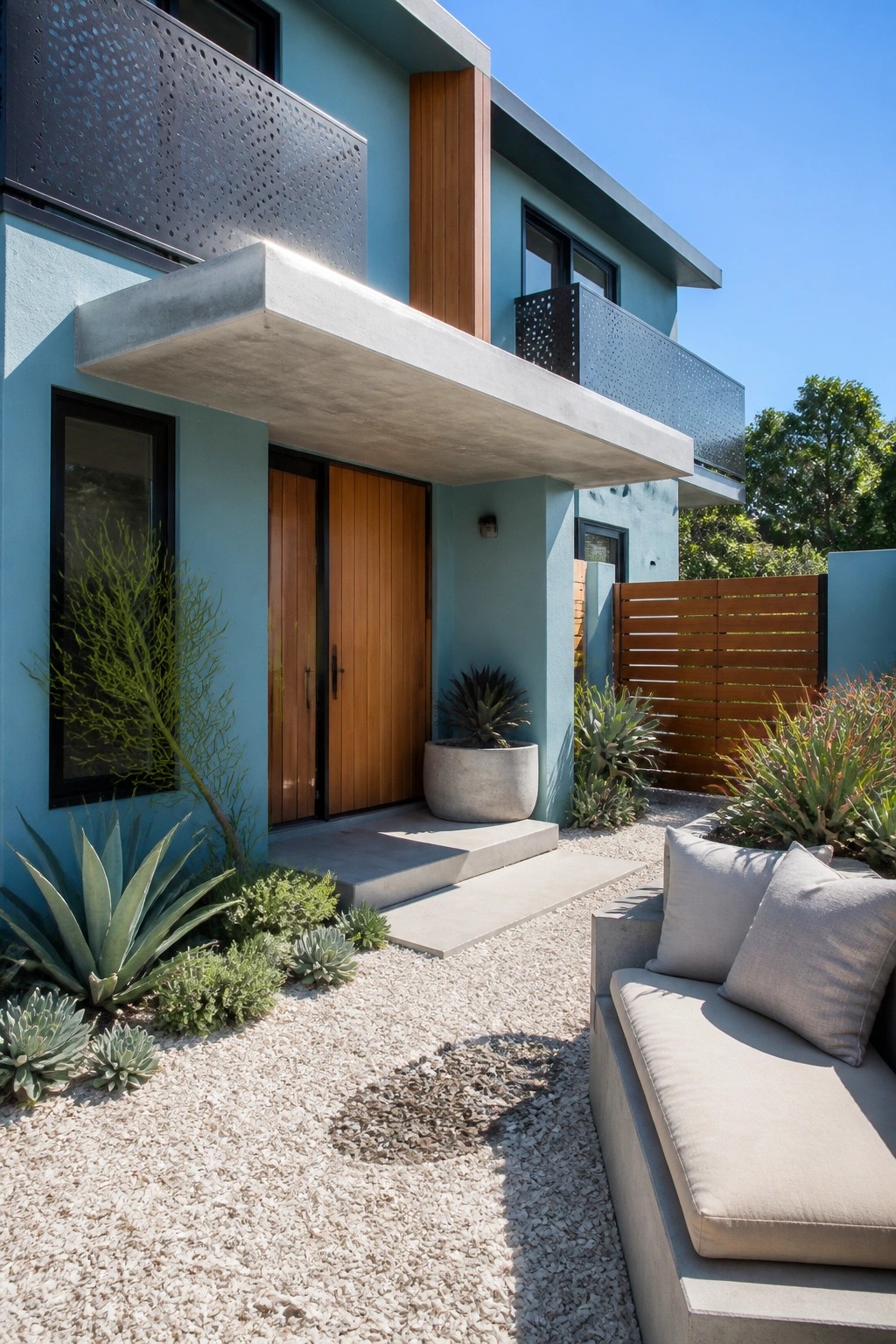
A light blue exterior can give a modern home a calm, coastal feel without looking too bold. The color reflects light nicely and pairs well with wood doors and concrete details, which helps keep the look grounded rather than stark.
This approach works best on homes with clean lines and some natural material accents. It suits sunny or waterfront settings where you want the house to feel relaxed but still current. Just make sure the blue has enough gray in it so it does not turn too bright in strong sunlight.
Blue Siding for Lake Homes
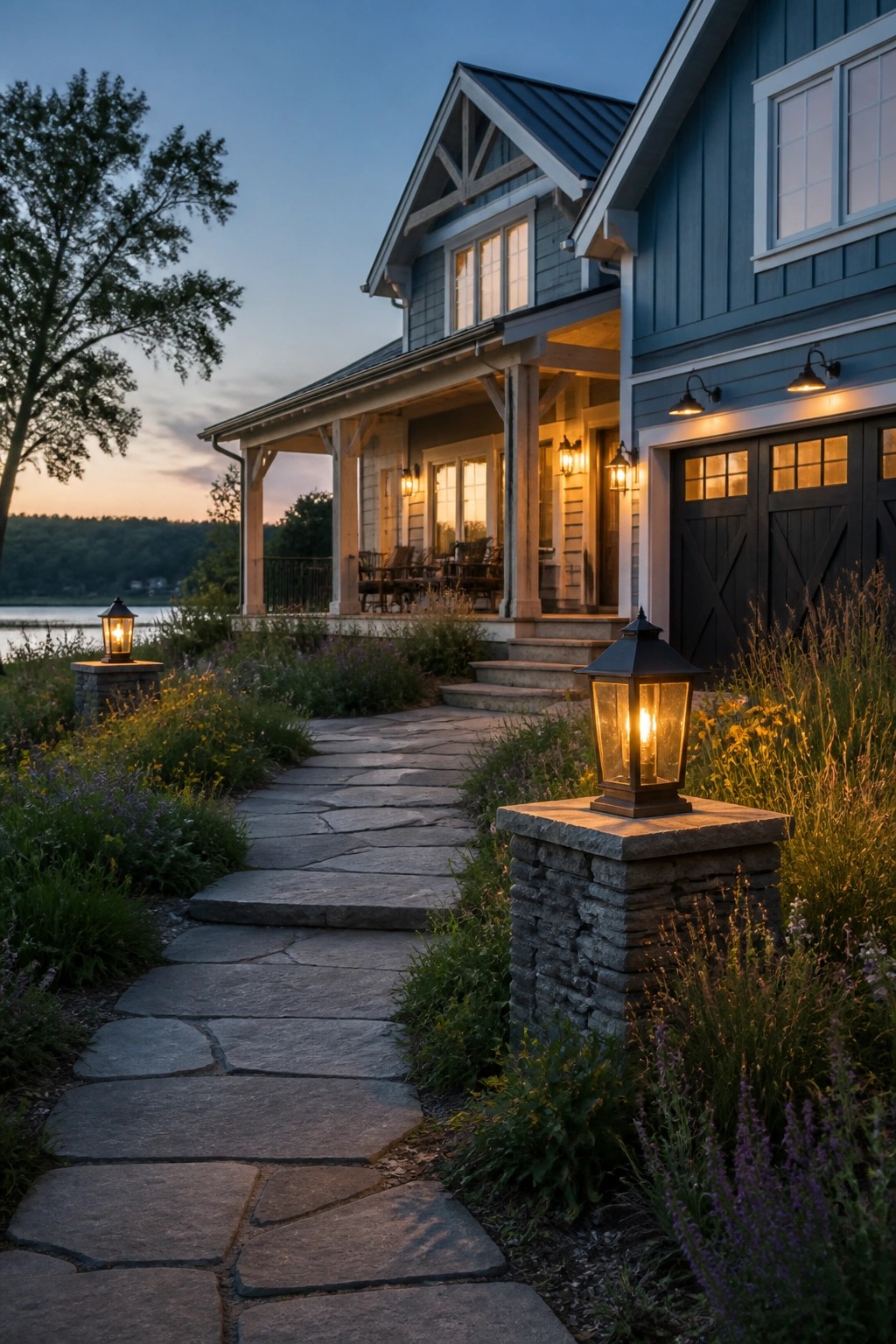
A soft blue exterior works well on homes near water because it picks up the colors around it instead of fighting them. The shade shown here stays calm even as the light changes, which helps the house feel settled into its setting rather than placed on top of it.
This color pairs easily with wood trim and stone details, so the whole look stays simple. It suits lake houses or any home that wants a quiet presence without needing constant upkeep or bold accents.
Soft Blue With Deep Navy Trim
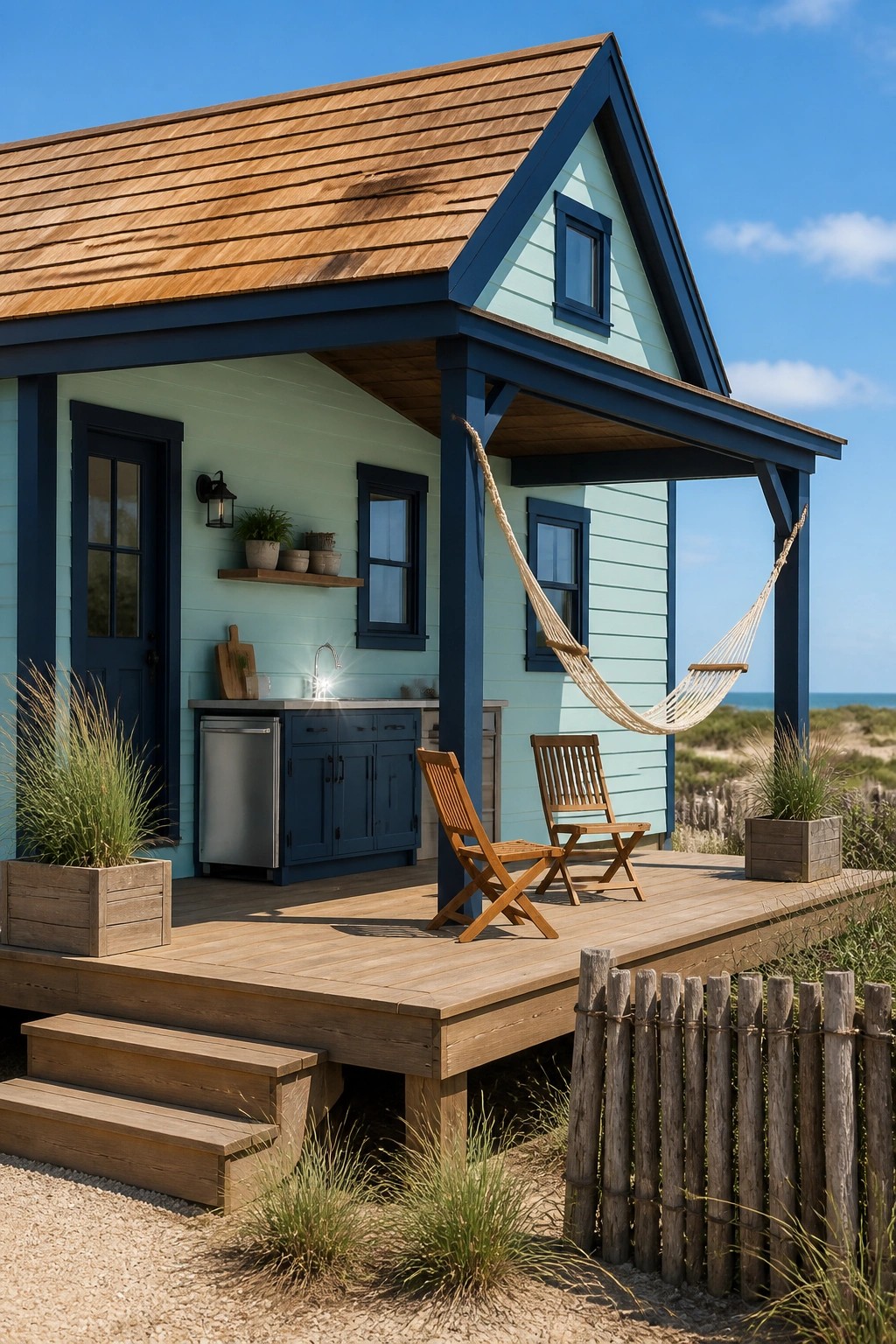
A light blue exterior paired with navy trim gives a house that calm coastal feel without trying too hard. The color sits nicely against wood tones and weathered materials, and it works especially well on smaller homes or cottages where you want the place to feel breezy rather than heavy.
This combination suits homes near water or in open landscapes where strong sunlight can make bolder colors look harsh. Keep the trim color consistent on windows, doors, and porch posts so the look stays simple and pulled together.
Built-In Bench Seating On The Patio
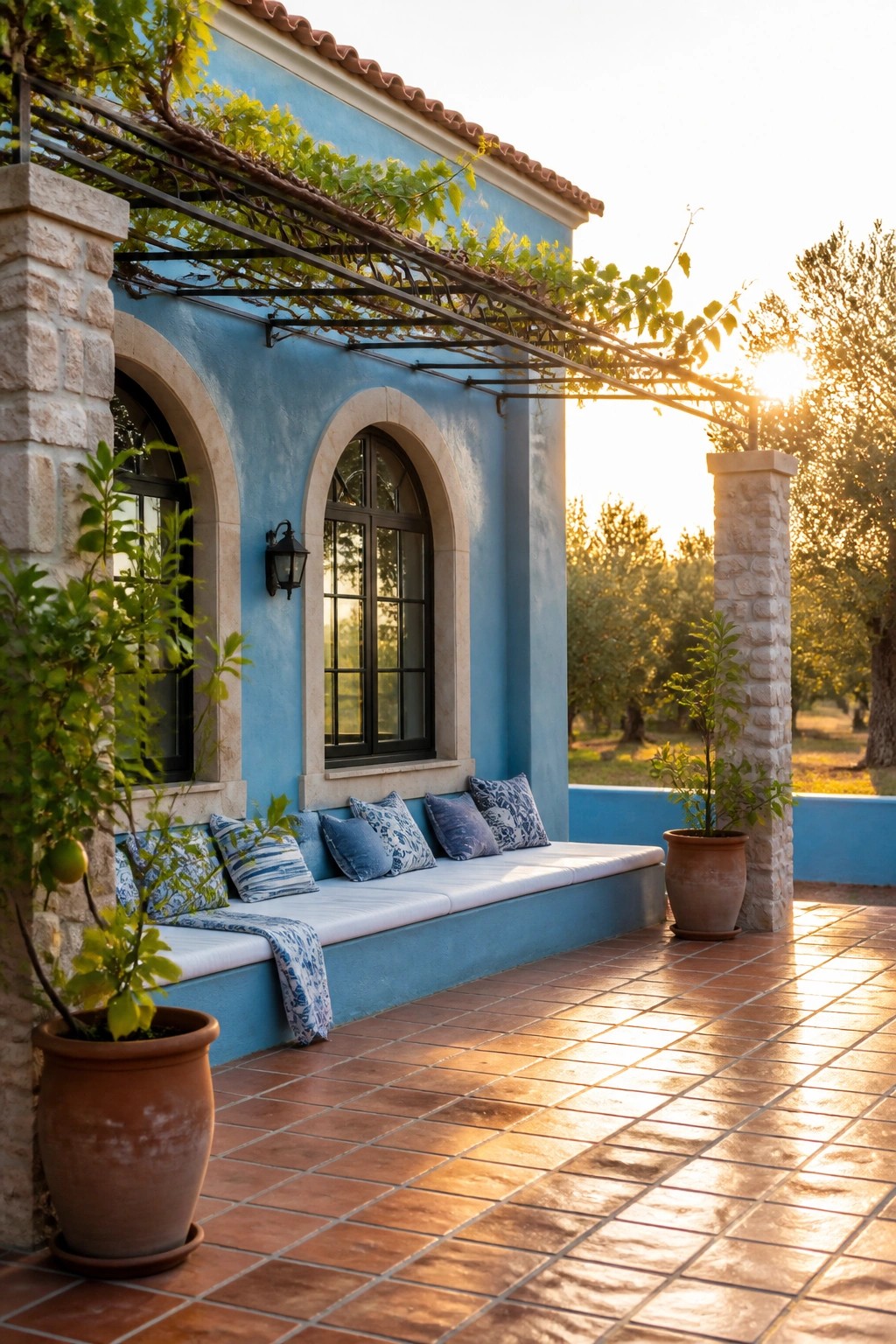
A built-in bench along the house wall gives you seating without taking up extra floor space or adding loose furniture. It turns the area right outside into a spot people actually use instead of just walking past.
This setup works best on homes with a covered side or back area where the bench can sit under windows. Keep the cushions simple and in colors that pick up the wall tone so the whole thing feels connected rather than added on later.
Soft Blue Green Siding Suits Lakeside Settings
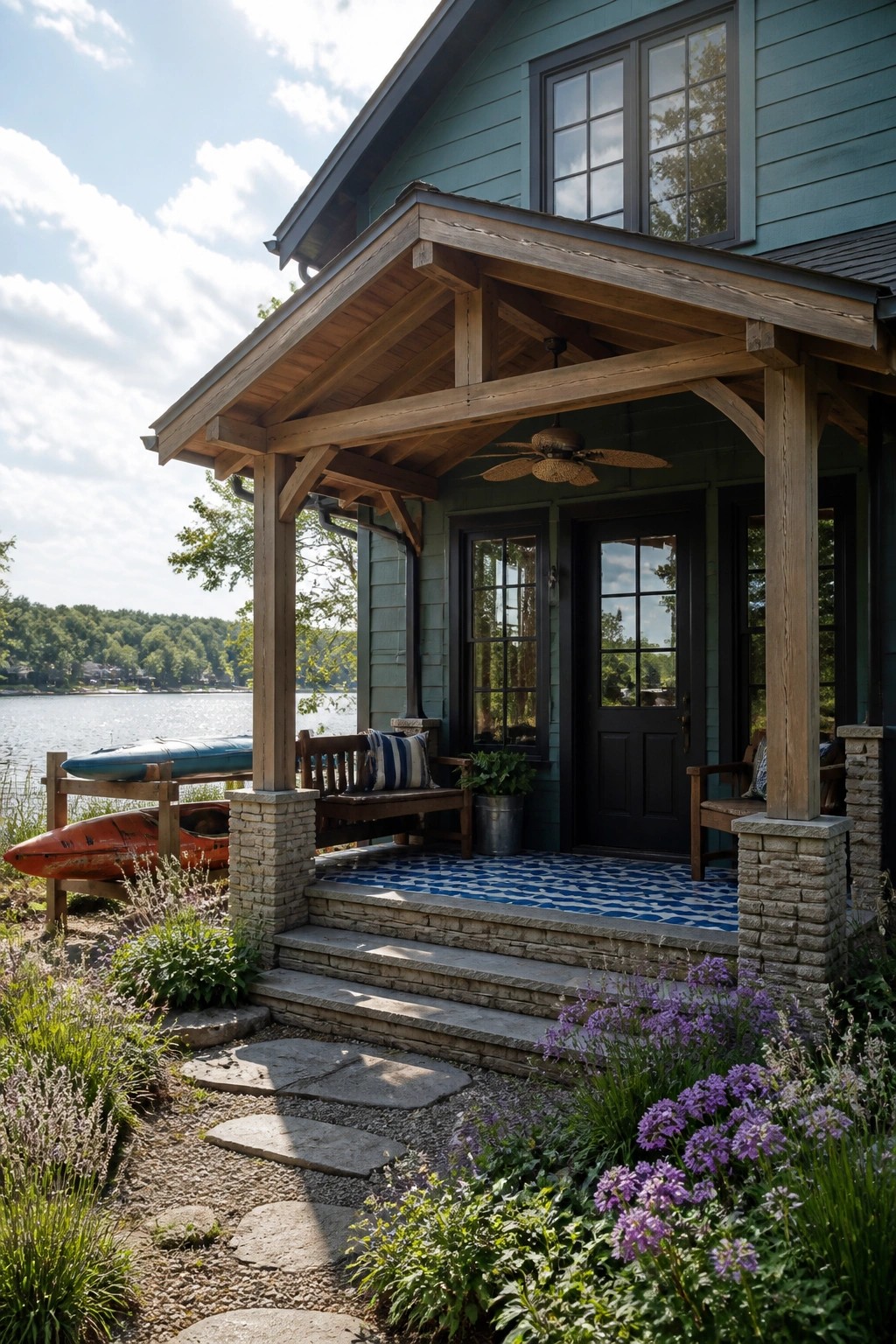
A blue green color on the exterior gives a house a calm look that feels right next to water. It picks up tones from the lake and surrounding trees without trying too hard.
This shade works best when paired with wood beams and stone details that keep the house from feeling too cool. It suits simple lake homes that want to blend in rather than stand out.
Soft Blue Paint For the House Exterior
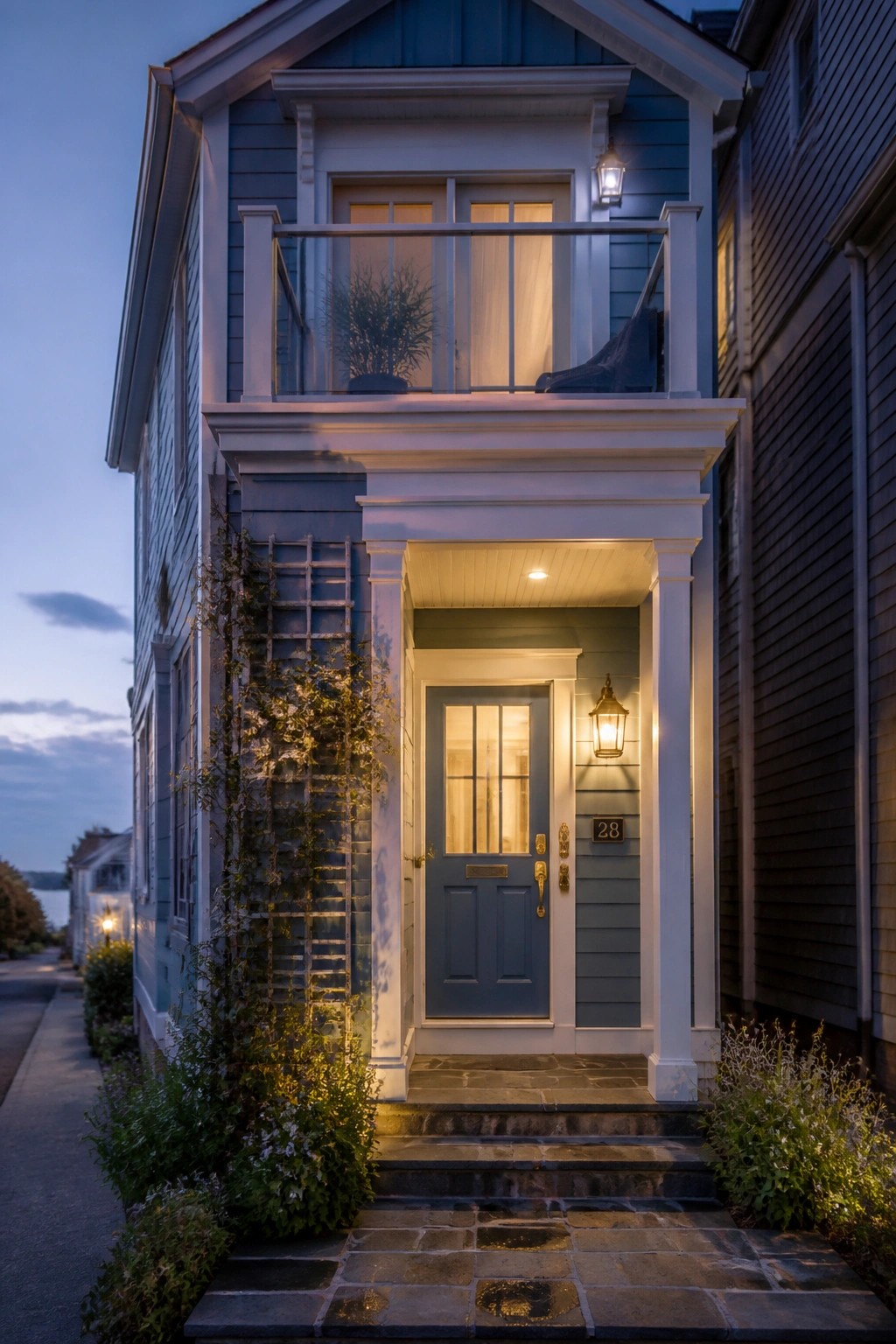
A soft blue on the siding gives the whole house a calm, relaxed feel that works especially well near water or in open areas. It keeps the look light while still providing enough color to stand out from the street.
This color choice suits smaller or narrow homes best because it avoids feeling heavy. Pair it with white trim and a slightly deeper blue on the door to hold the scheme together without extra contrast.
A Soft Blue for the House Exterior
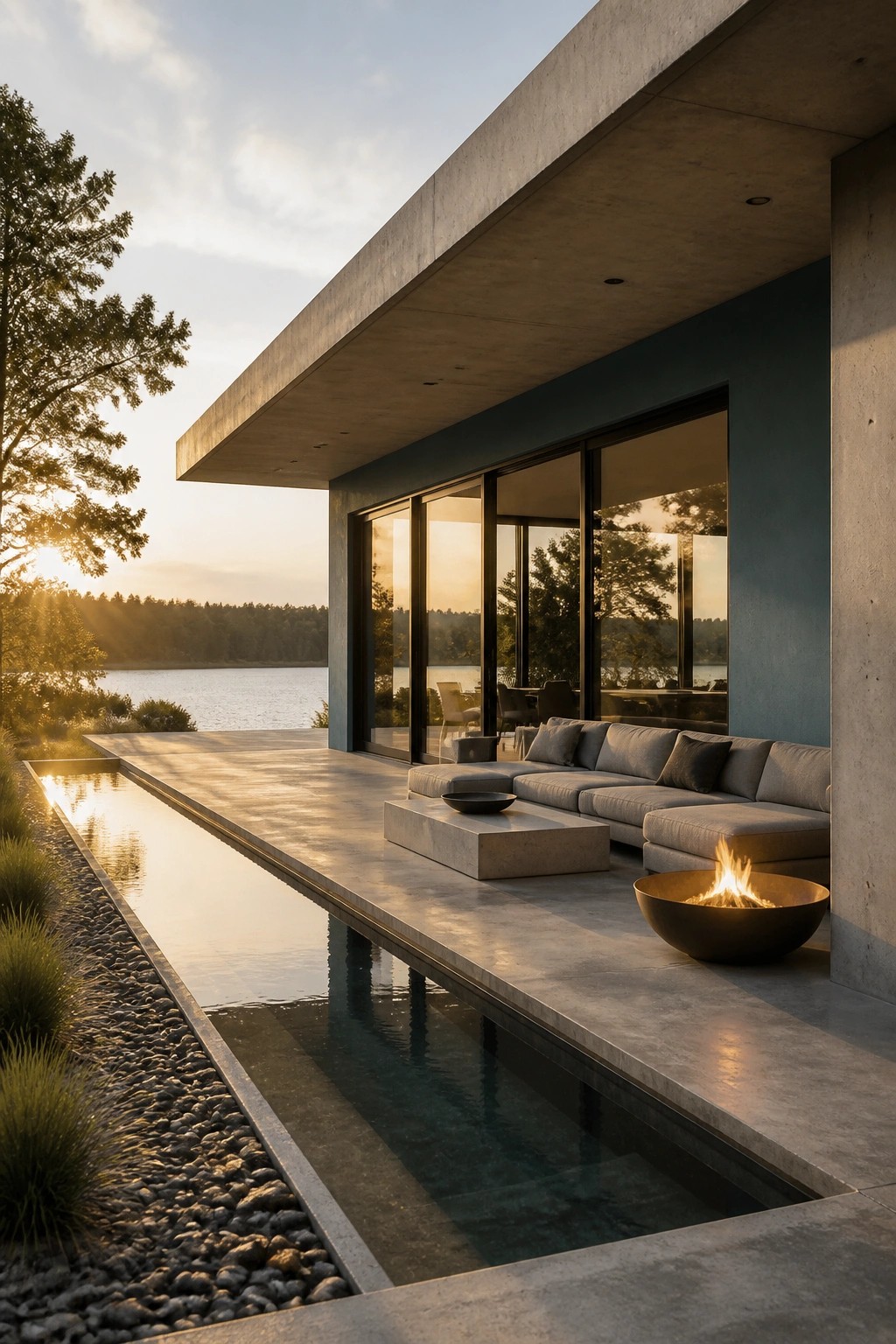
A muted blue on the exterior wall gives the whole outdoor area a calm connection to the water. It keeps the concrete and glass from feeling too stark while still letting the modern lines stand out. The color works especially well when the house sits right by a lake or open view.
This shade suits breezy modern homes that want to blend in without disappearing. It pairs easily with natural materials like stone or wood and holds up in changing light. Just keep the tone on the deeper side so it does not wash out against bright sky or water.
Blue Gray Siding With Navy Trim
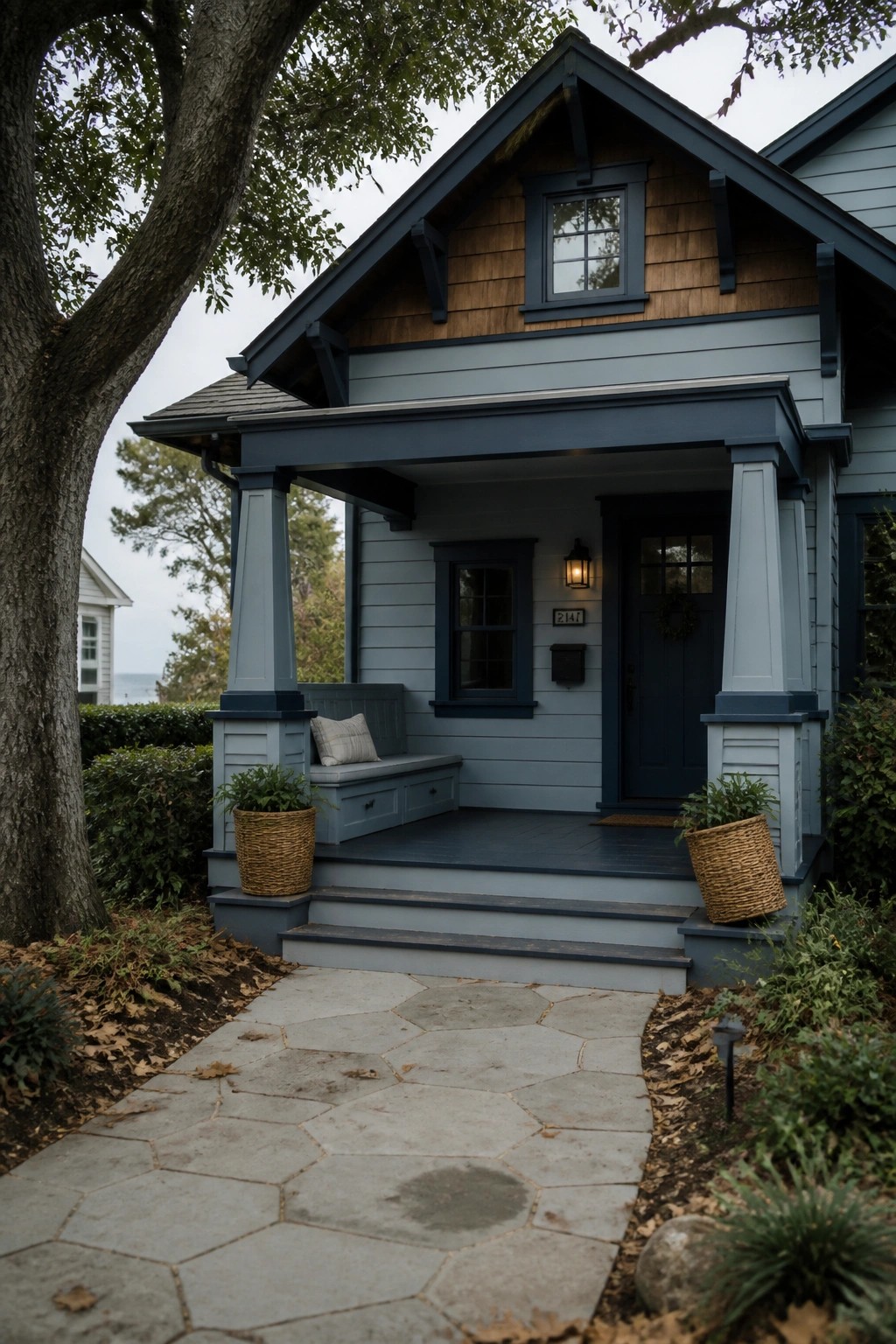
A soft blue gray makes a good choice for the main body of a house when the goal is a calm look that still feels tied to the coast. The color stays quiet on its own and lets the deeper navy on the trim and door give the facade some shape.
This works best on homes that get steady light and wind, where a brighter blue might feel too sharp. Keep the roof and accents dark so the blue gray reads as the main color instead of fading out.
Frequently Asked Questions
Q: How do I know if a blue will still feel calm once the sun hits it all day?
A: Go for a shade with some gray mixed in so it stays soft instead of turning harsh. That keeps the breezy look even when light bounces off the walls. A small test patch on the actual siding shows you right away how it behaves.
Q: Will any of these blues hold up near the water without peeling fast?
A: Choose a paint made for exterior use with good UV protection. The coastal and lake versions in the article already lean toward formulas that resist salt and moisture. Repaint the trim every few years and the main color lasts longer.
Q: What trim color works if I pick a deeper blue for the siding?
A: Keep it simple with white or a light warm gray. The contrast makes the blue feel grounded instead of heavy.
