

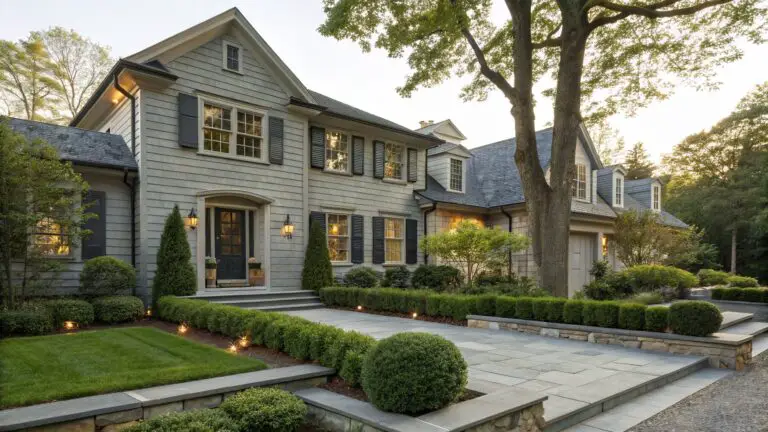
Gray houses pull off that sleek look best when the landscaping frames them with clean structure and subtle contrast.
I’ve found that strong edging along planting beds keeps everything polished without the chaos of overgrowth creeping onto the siding.
Walk up to most homes like this, and your eye hits the pathways first, leading straight to the entry amid layered shrubs and perennials.
What works over time are plantings that mature without swallowing the facade, like low evergreens hugging the base.
A few of these setups caught my eye for how they’d adapt to a real yard’s slope or soil.
Boxwood Borders Guide the Entry Path
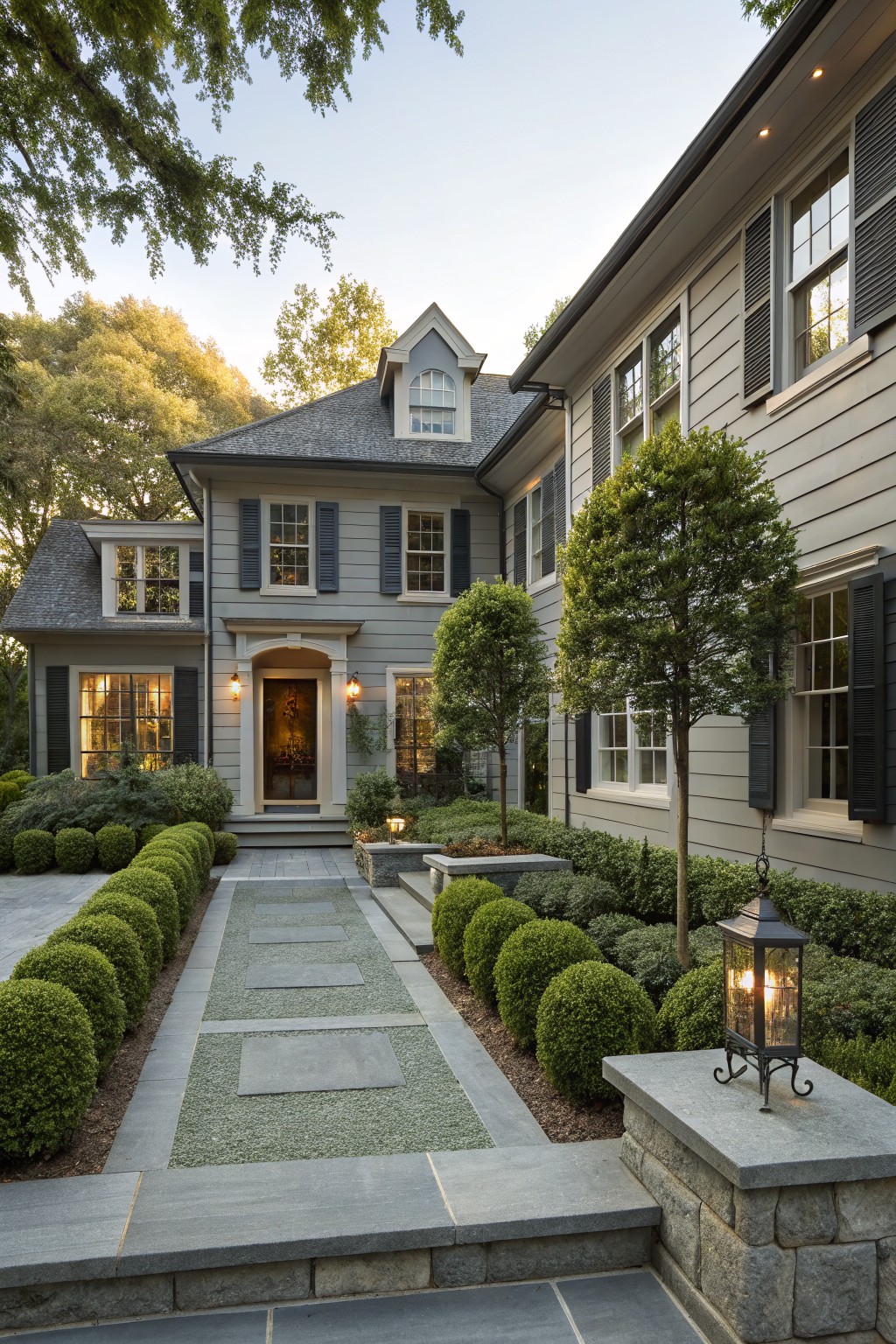
A simple row of round boxwood shrubs lines both sides of this stone walkway, drawing the eye straight to the front door of a gray-shingled house. The neat, low hedges create a formal rhythm that feels polished but not overdone. They frame the entry nicely, especially with the lanterns adding a soft glow at dusk.
This approach suits classic homes with straight facades. Keep the boxwoods trimmed into tight spheres and space the path pavers evenly for clean lines. It works in smaller front yards too… just scale down the hedge size. Avoid overcrowding with too many plants elsewhere.
Recommended Products
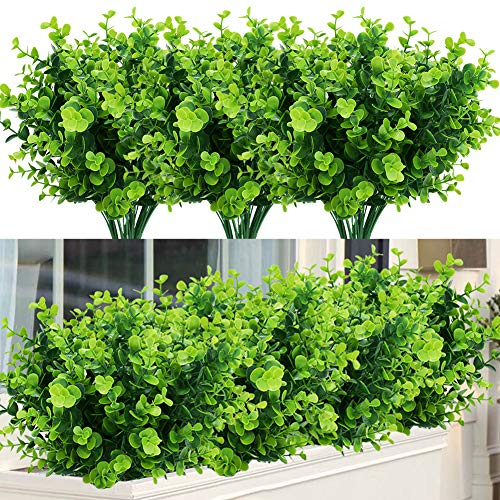
Brighten up Your interior/Exterior Life: Artificial plants boxwood bring the lush beauty of nature into your life without any of the maintenance or mess, realistic in color and texture.

【STABLE GROUND SPIKE DESIGN】Tired of artificial trees blowing over in the wind? LeafVerse 26-inch topiary balls come with reinforced ground spikes that secure the trees firmly into soil or planters. No additional tools or hardware are needed—simply insert the spike for an upright, wind-resistant display that stays in place all year round.

Realistic & Full Appearance Crafted with dense faux boxwood leaves in natural green tones, this artificial topiary ball offers a lush, lifelike look that stays fresh year-round.
Entry Walk with Large Pavers in Gravel
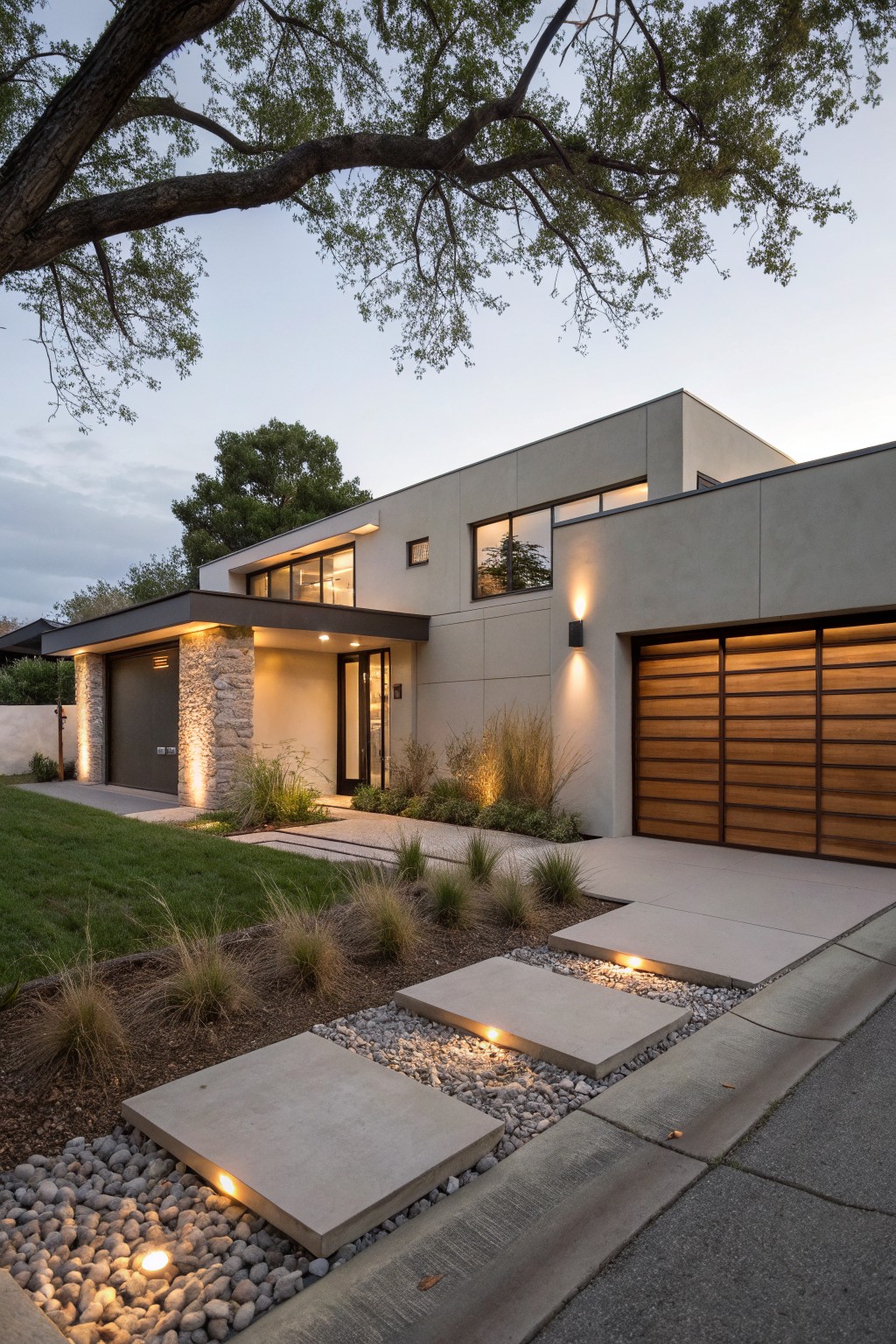
One easy way to guide people right to your door is with big concrete pavers set into a gravel bed. Here they lead across a strip of lawn to the gray stucco house, edged by tall grasses that sway a bit. The low lights tucked under the slabs come on at dusk and make the path feel safe and intentional without much fuss.
This setup works great for modern homes or any place where you want low upkeep. Skip solid concrete or pavers all the way across. Instead, fill around the stones with gravel and add a few grasses for movement. It fits narrow front yards best and keeps mud off shoes on rainy days. Just make sure the gravel drains well so it stays tidy.
Stone Path Lined with Lavender
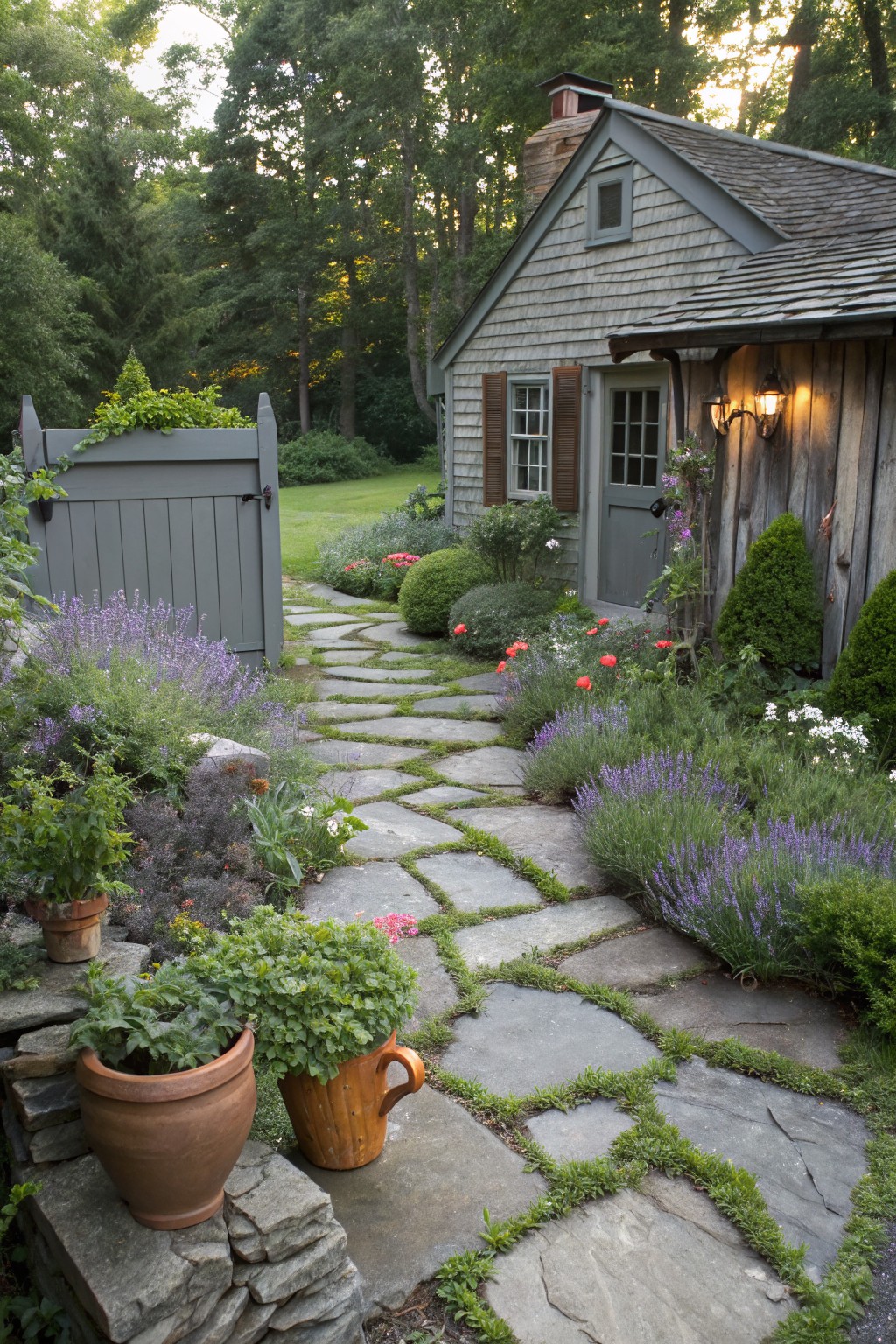
A simple flagstone path like this winds through the garden right up to the house door. The irregular stones set into grass keep it casual, while borders of lavender and low perennials add color and scent without overwhelming the gray siding. It makes the whole approach feel welcoming and lived-in.
You can pull this off in smaller side yards or cottage gardens where you want to guide people naturally to the entry. Stick to drought-tolerant plants like lavender so it stays neat with little work. Pair it with a house that has some texture already, like shingles, to avoid a plain look.
Linear Reflecting Pool Pathway
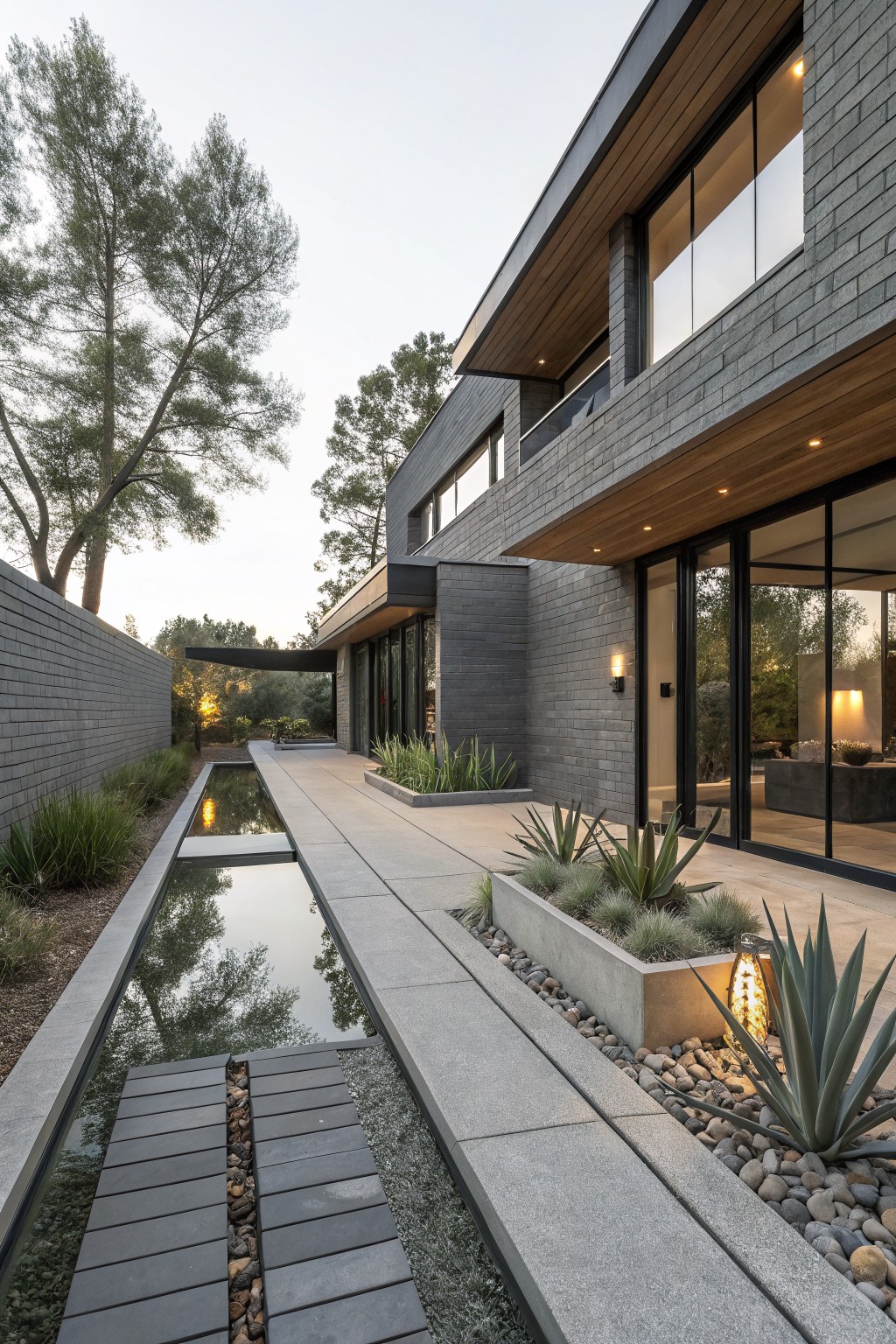
A narrow reflecting pool runs straight down this concrete walkway, turning a simple path into something peaceful. The water picks up trees and sky, and wooden stepping stones let you cross without getting wet. Agave plants tucked into concrete planters add green without much fuss.
This works best in side yards leading to a patio door, especially on modern gray homes in dry areas. Keep the pool slim for tight spaces, line it with gravel or rocks at the end, and use drought plants like agave. Skip it if you have kids or pets who might splash around.
Entry Urns with Boxwood Topiaries
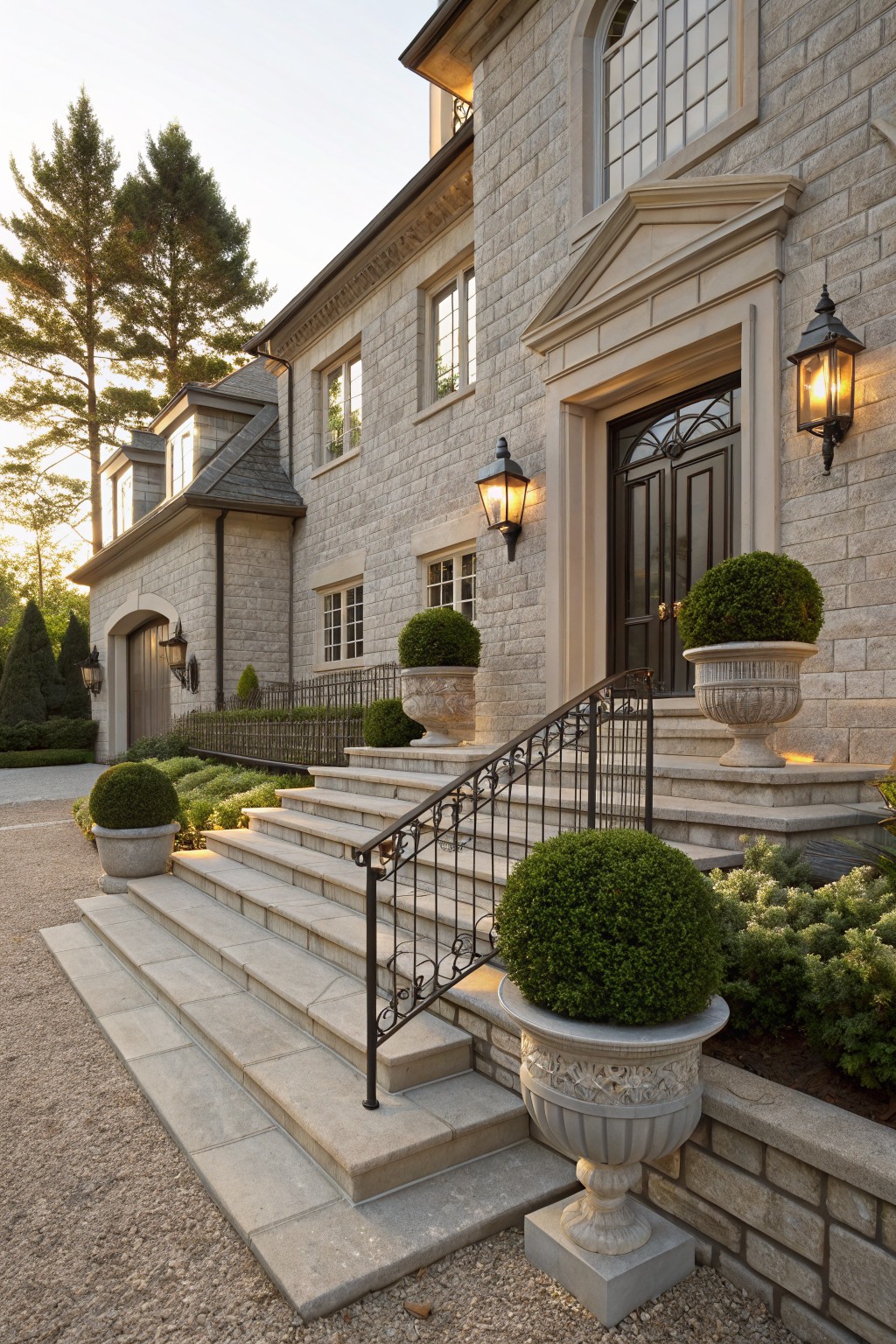
Large urns planted with round boxwood topiaries sit right at the base of these wide stone entry stairs. They match on both sides and give the gray stone house a clean, put-together feel without much color. The lanterns up top help too, lighting the dark wood door at dusk.
This works best on homes with straight-up formal entries or driveways. Pick urns in a light stone color to blend with your siding. Trim the boxwoods a couple times a year to keep the shape. Skip it for super casual places… too fussy there.
Gravel Driveway with Stone Wall Border
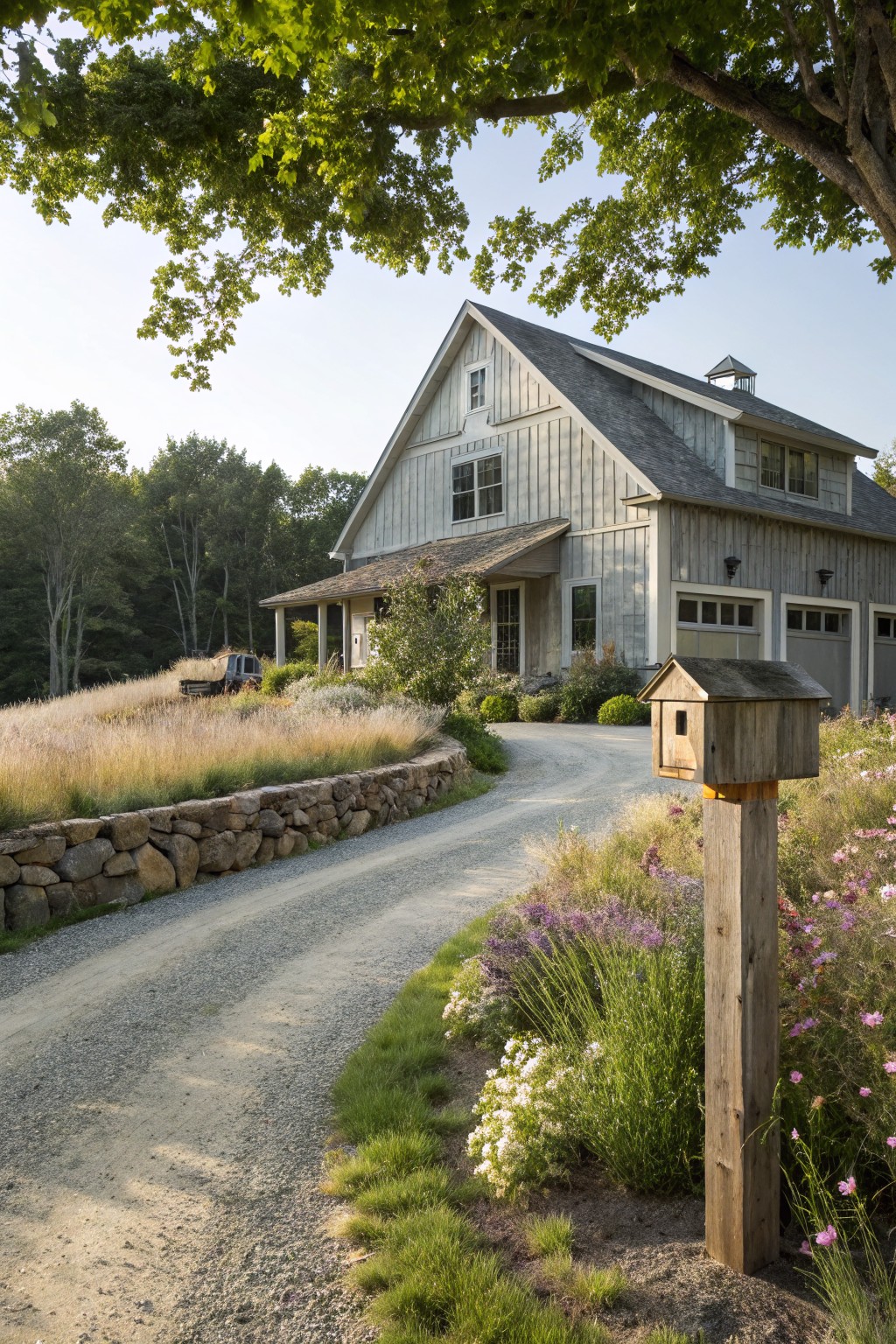
A simple gravel driveway like this one gets a lot from a low fieldstone retaining wall running alongside it. Tall grasses and loose perennials spill over the top, making the whole approach feel casual and settled in. Paired with a gray house, it keeps things from looking stark. The curve pulls you right toward the front door.
Put this on a gently sloped lot where the wall can do some practical work holding soil back. Use local stone for that real fit, and pick grasses that don’t need much fuss. It suits rural spots or bigger lots best. Just keep the gravel topped up so it stays neat.
Patterned Tile Path in a Narrow Side Yard
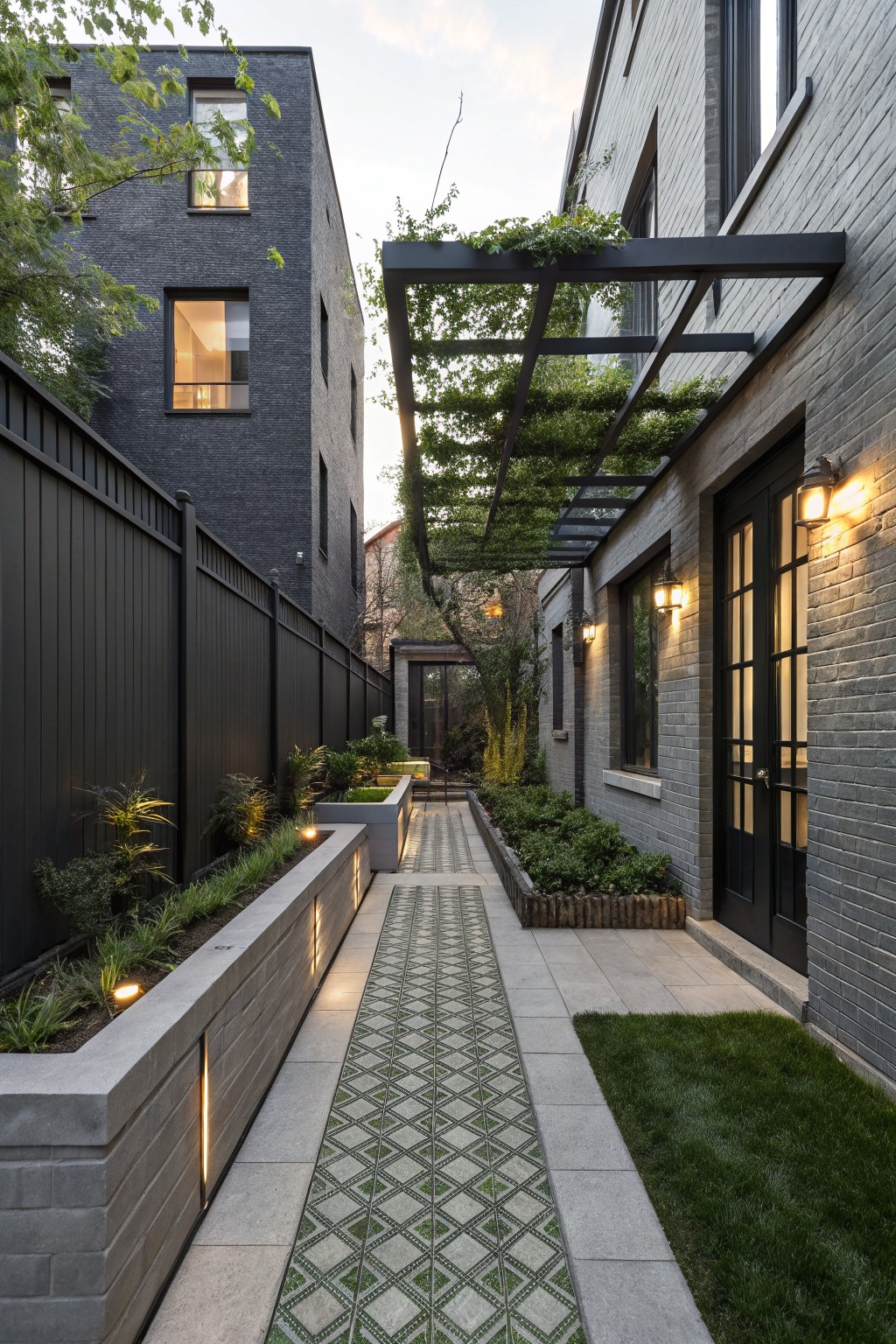
A simple way to make a skinny side yard feel like part of the home is with a bold tile path like this one. The green diamond pattern stands out against plain gray brick walls and concrete planters. It turns what could be a dull walkway into something with real personality. Plus the low plants and soft lighting keep it from feeling too busy.
This works best on urban lots or older homes where space is tight. Lay the tiles right down the center then edge with sturdy planters for greenery. Skip fussy borders. It suits gray or neutral exteriors and leads nicely to a back door or gate.
Olive Tree Against the House Wall
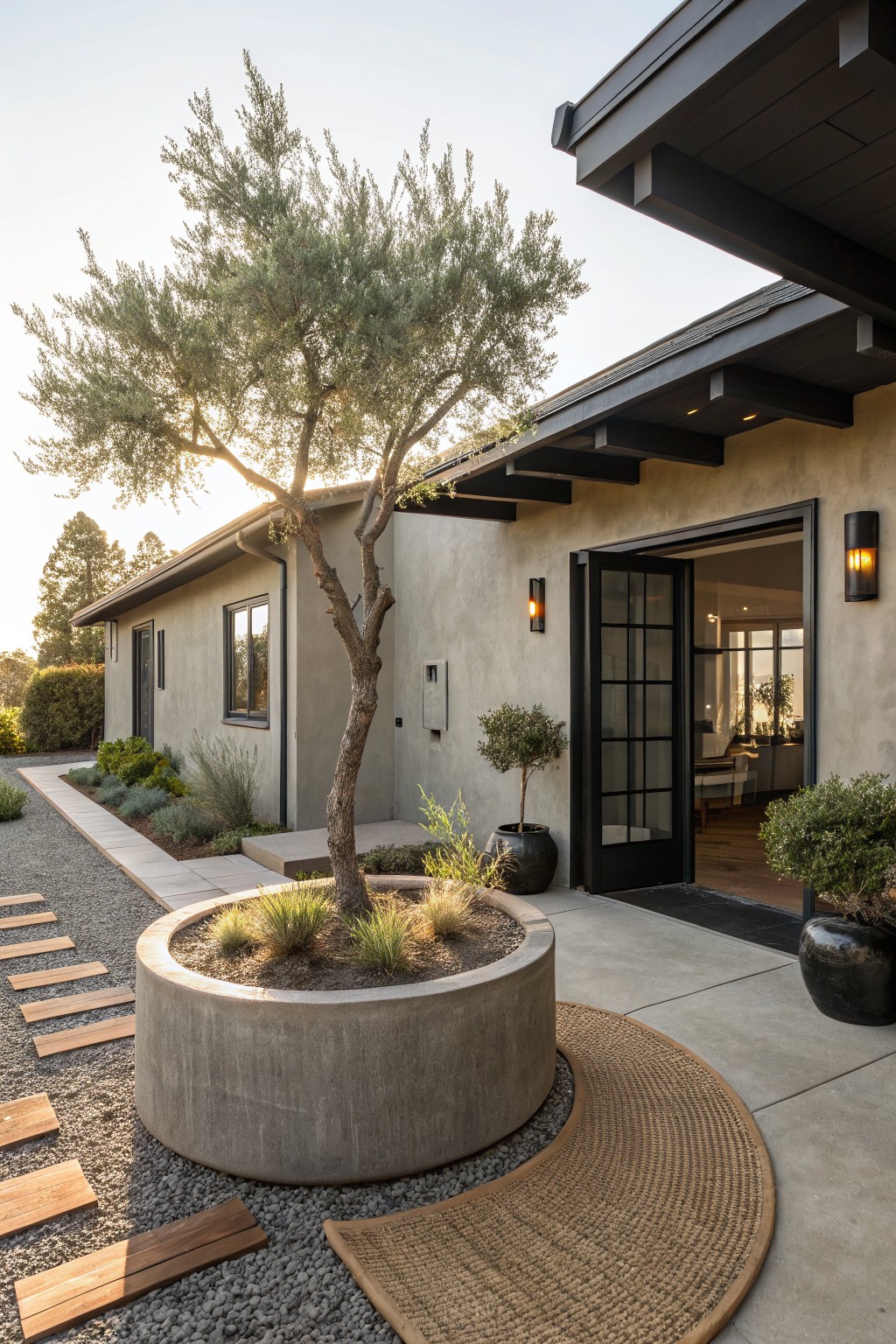
A tall olive tree planted right next to the stucco wall does a nice job framing the house. Its twisty trunk hugs the corner and the silvery leaves catch the light against the gray tones. It softens what could feel boxy. That one tree pulls the landscaping into the architecture without crowding the entry.
This works best on homes with simple lines, like midcentury or modern Mediterranean styles. Go for a mature tree if you want impact right away, or plant small and wait. Pair it with grasses in a big concrete planter nearby for rhythm. Just make sure the roots have room and avoid spots with too much foot traffic.
Tiered Stone Retaining Walls with Stairs
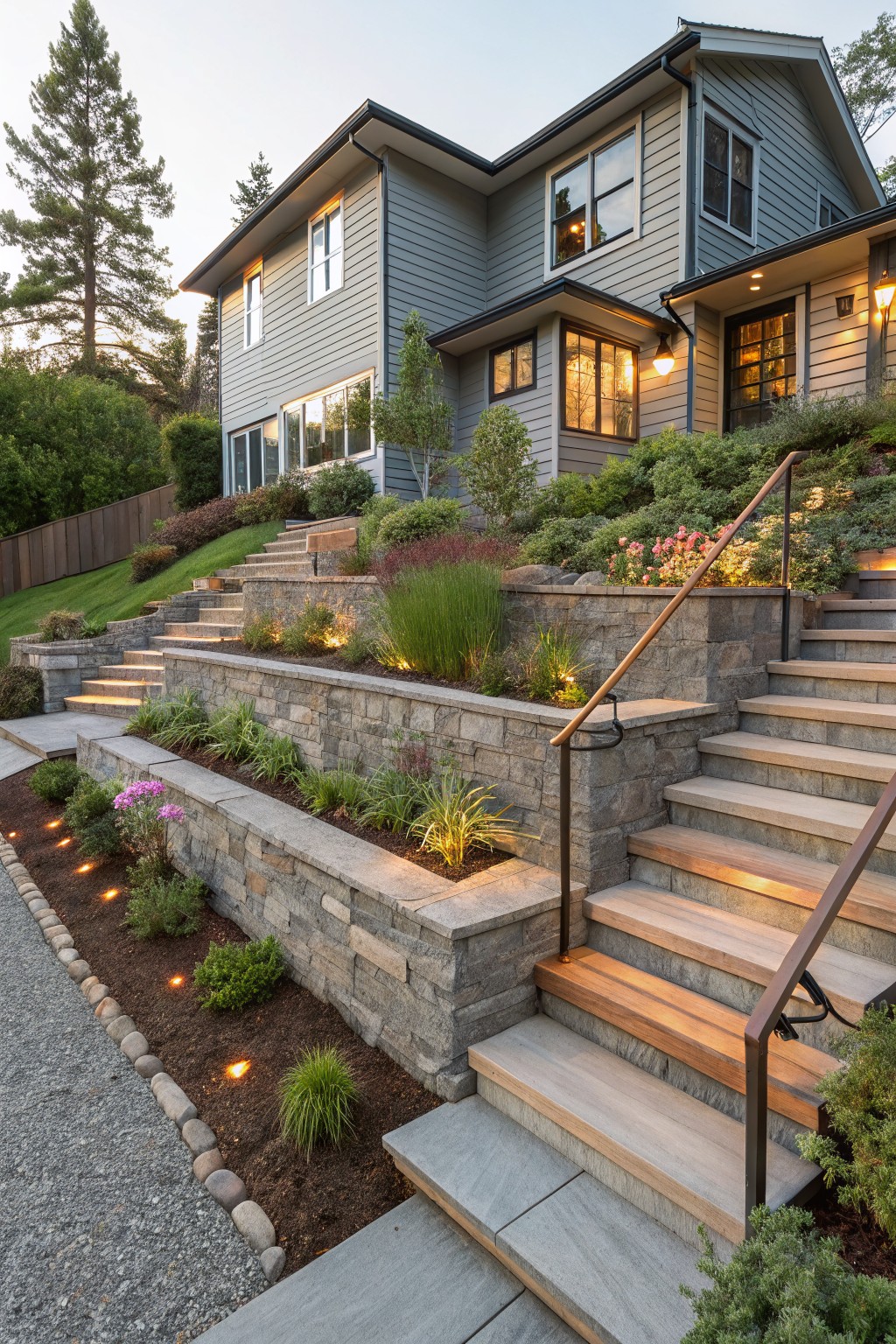
Sloped yards can be tricky to navigate, but tiered stone retaining walls with built-in stairs solve that nicely. They hold back the soil in neat levels, while plants tuck into the pockets between tiers for some green interest. Low lights along the edges make it safe and pretty after dark, leading right up to a gray house like this one without feeling forced.
This setup fits homes on hillsides where you need practical access without a straight ugly staircase. Pick rugged stone that matches your area, keep plantings low-maintenance like grasses and shrubs, and hire someone solid for the build so it stays put over time. It keeps the focus on the house instead of fighting the slope.
Topiary Boxwoods Beside Entry Steps
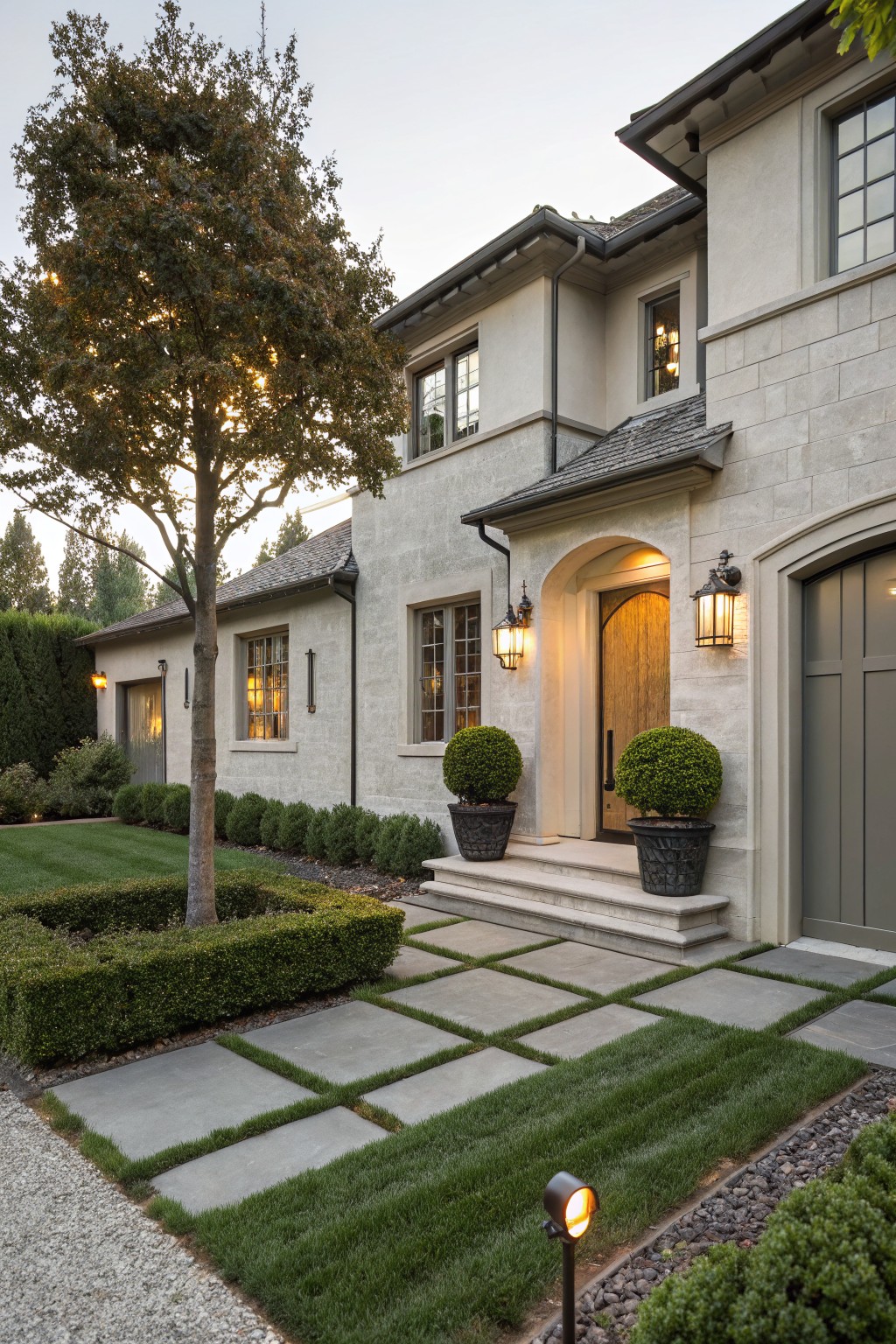
Boxwoods shaped into neat round topiaries work well here in big woven pots placed right on either side of the stone steps. They give the front door a formal touch that matches the house’s light stone walls and arched entry. Low hedges nearby add to that clean structure without taking over.
This setup suits a traditional or transitional style home with a gray or neutral exterior. Plant them in pots so you can move or swap them seasonally. Keep the shapes trimmed a couple times a year… it stays sharp that way. Works best where you want some green presence but not a full garden bed.
Line Entry Steps with Oversized Terracotta Pots
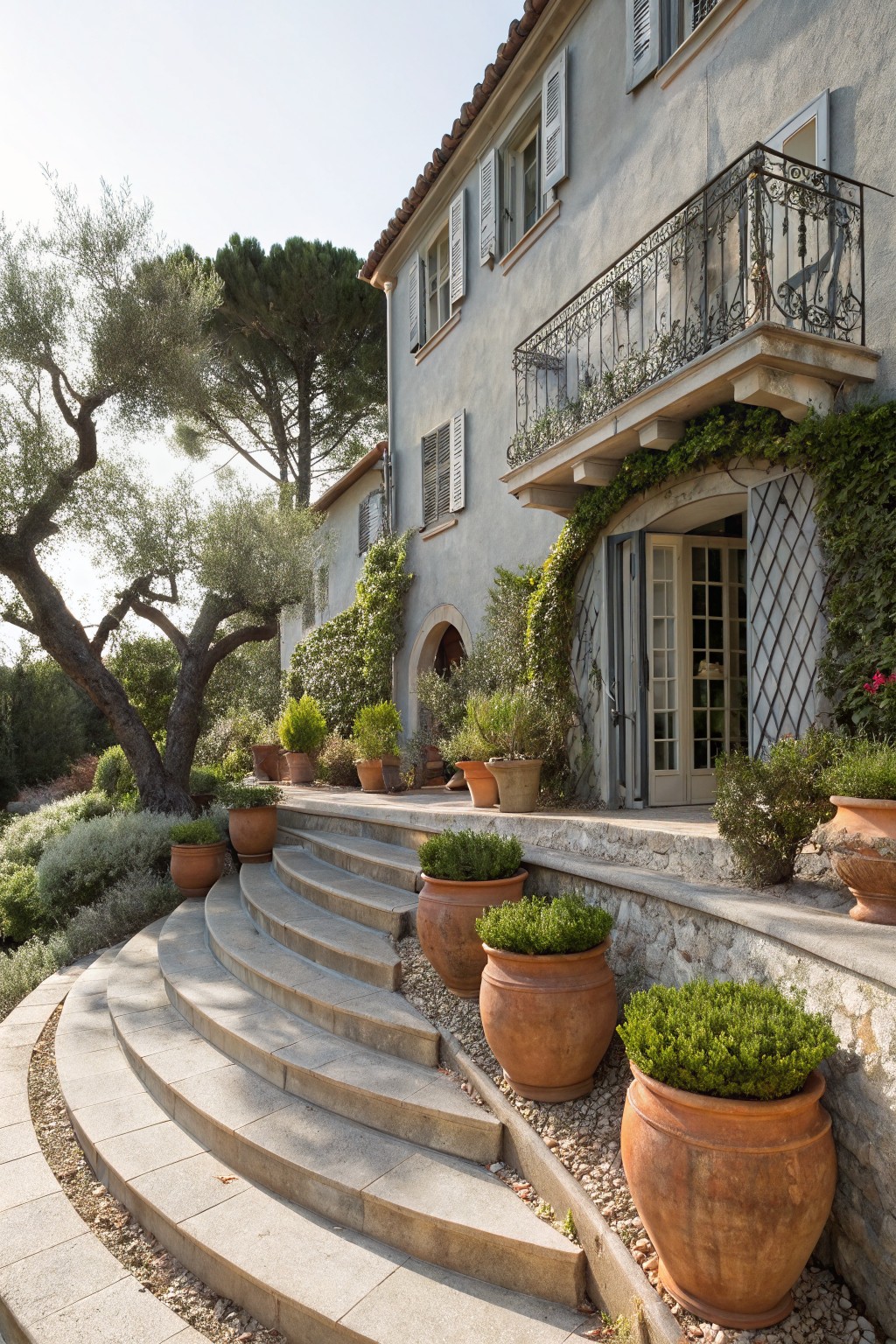
One straightforward way to frame a gray house is by lining the entry steps with big terracotta pots. Those warm clay tones pop against the cool stucco walls, and the greenery spilling out adds life without much fuss. In this setup, the pots sit right on the curved stone stairs, guiding your eye up to the door in a natural flow.
This works best on homes with a bit of slope or terraced entries, like in Mediterranean spots. Pick sturdy boxwoods or similar low plants that stay neat, and group the pots in uneven numbers for rhythm. Skip anything too colorful if you want to keep the gray polished. It holds up year-round with minimal care.
Winding Gravel Path with Boulders
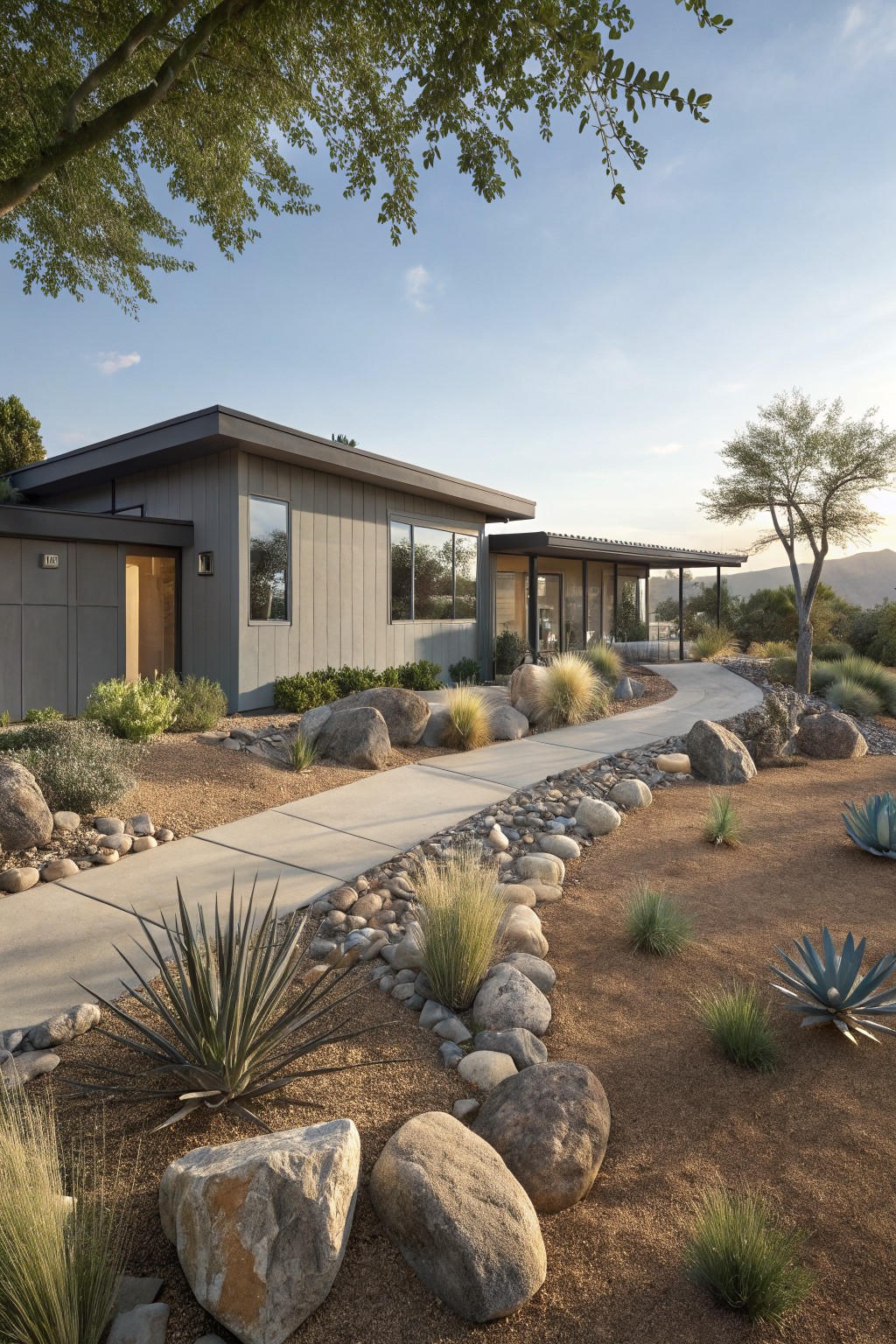
A gentle curving path like this one makes a strong first impression for a gray modern house. It uses simple concrete edged with gravel, then lines it with big boulders and clumps of desert grasses and agave. The whole thing pulls your eye along to the entry door. Nothing fussy. Just clean lines that match the house siding.
You can pull this off in dry yards or anywhere water is at a premium. Stick to local succulents and rocks you source nearby to save time and money. It suits flat lots best, where the path can meander a bit before hitting the steps. Skip it if your front yard slopes too much.
Climbing Roses on the Entry Arbor
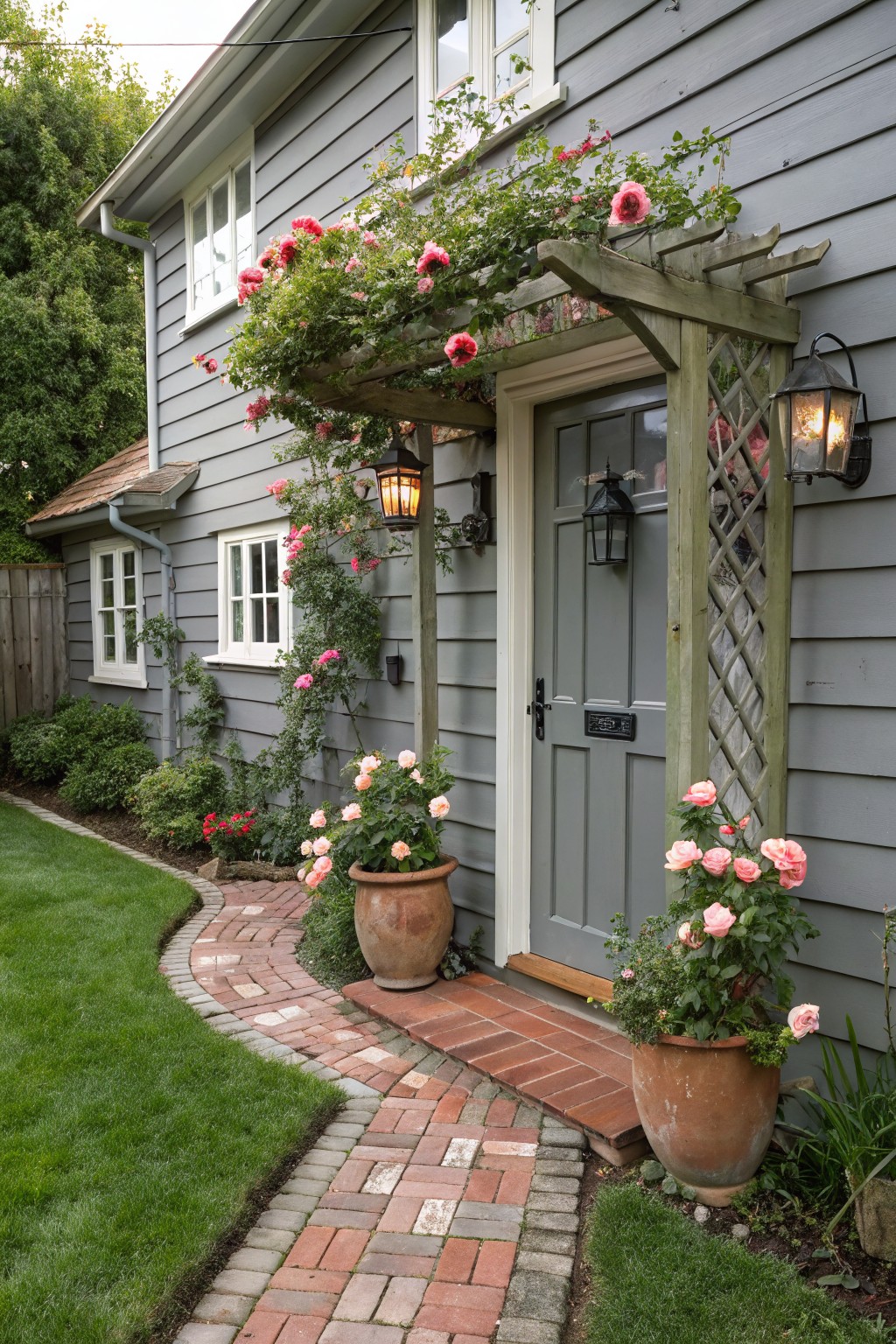
A simple wooden arbor over the front door, draped in pink climbing roses, turns a plain gray house into something welcoming. The roses soften the siding and draw your eye right to the entry. Flanking pots with more roses add that extra touch without much fuss.
This works great on shaker-style homes or anywhere you want curb appeal that feels lived-in. Pick disease-resistant climbers like ‘New Dawn’ for easy care. Keep the path clear, like the brick one here, so it stays practical. Just watch the thorns near the door.
Louvered Pergola Shades the Patio Kitchen
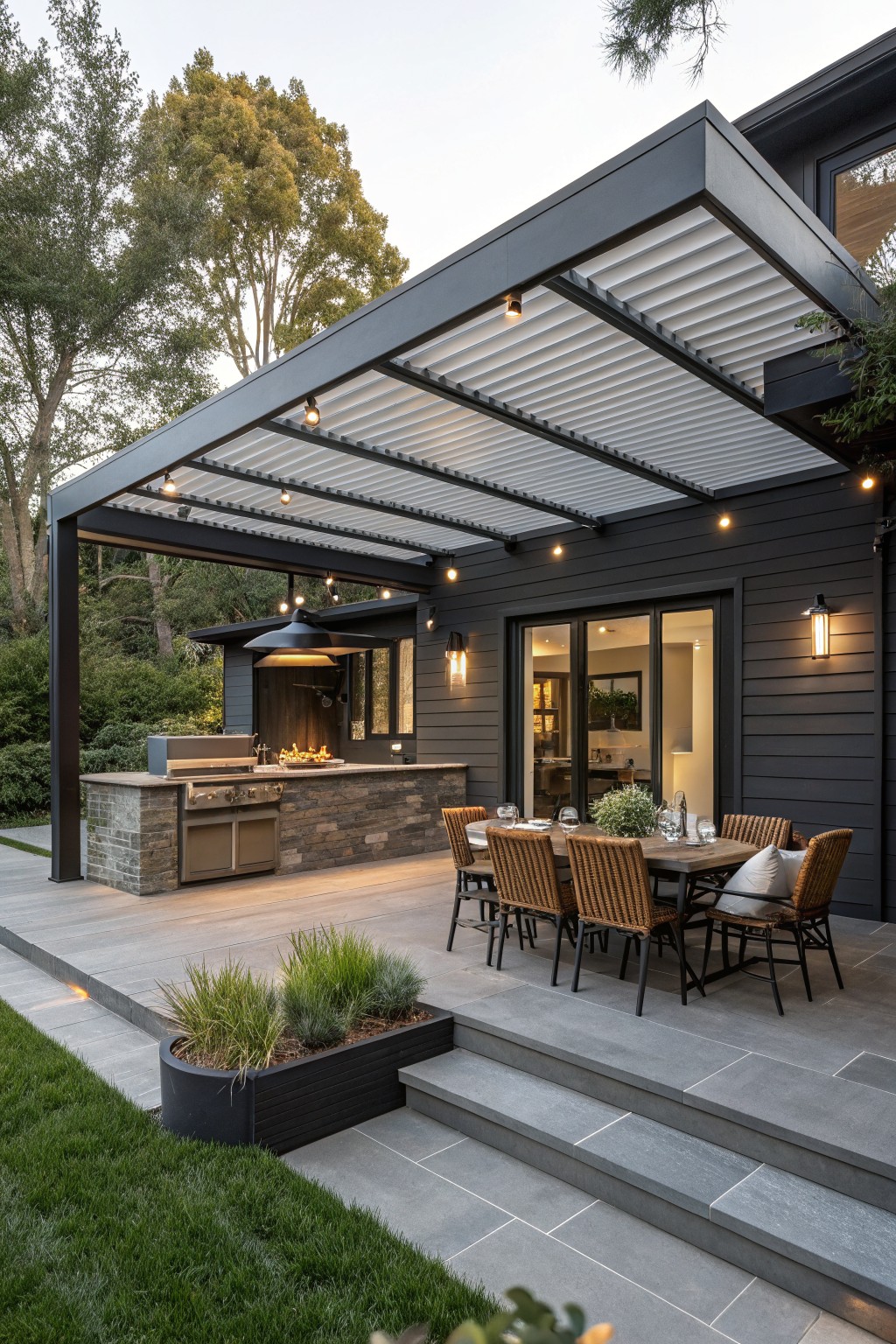
A louvered pergola like this one gives your outdoor kitchen real staying power. The black metal frame matches the house siding, and those adjustable slats open or close to control sun and rain. String lights tucked in add evening glow without fuss, keeping the stone counters and dining table ready for use morning to night.
This works best on a flat patio next to the house, where you want covered cooking and eating without losing the yard view. It suits modern homes with gray tones. Just make sure the posts line up with your layout so steps and plants flow easy. Scale it right, or it might feel too boxy.
Formal Boxwood Parterre with Central Fountain
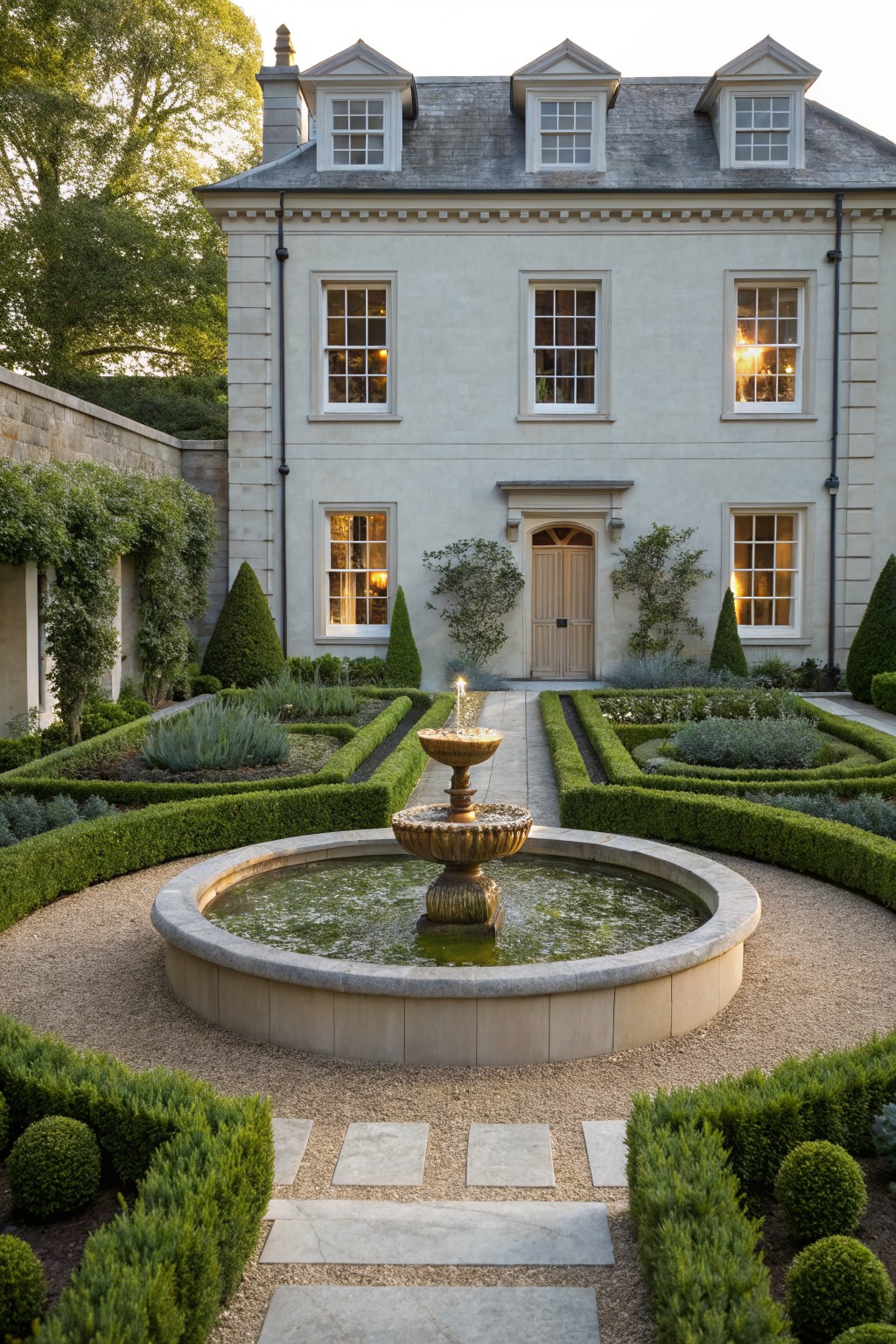
A formal parterre garden like this one uses low-clipped boxwood hedges to form neat geometric beds around a simple stone fountain. The layout pulls everything together in the front yard. It gives a sense of order that makes the house entrance feel like the natural focus without overwhelming the space.
This works best on homes with clean lines and some historic feel, where you have room for the paths and beds. Plant lavender or similar low herbs in the sections for a bit of color and smell. Just keep those hedges trimmed regular, or it can look messy fast. Suits milder climates too, since boxwood holds up well.
Side Yard Path with Grass-Jointed Pavers
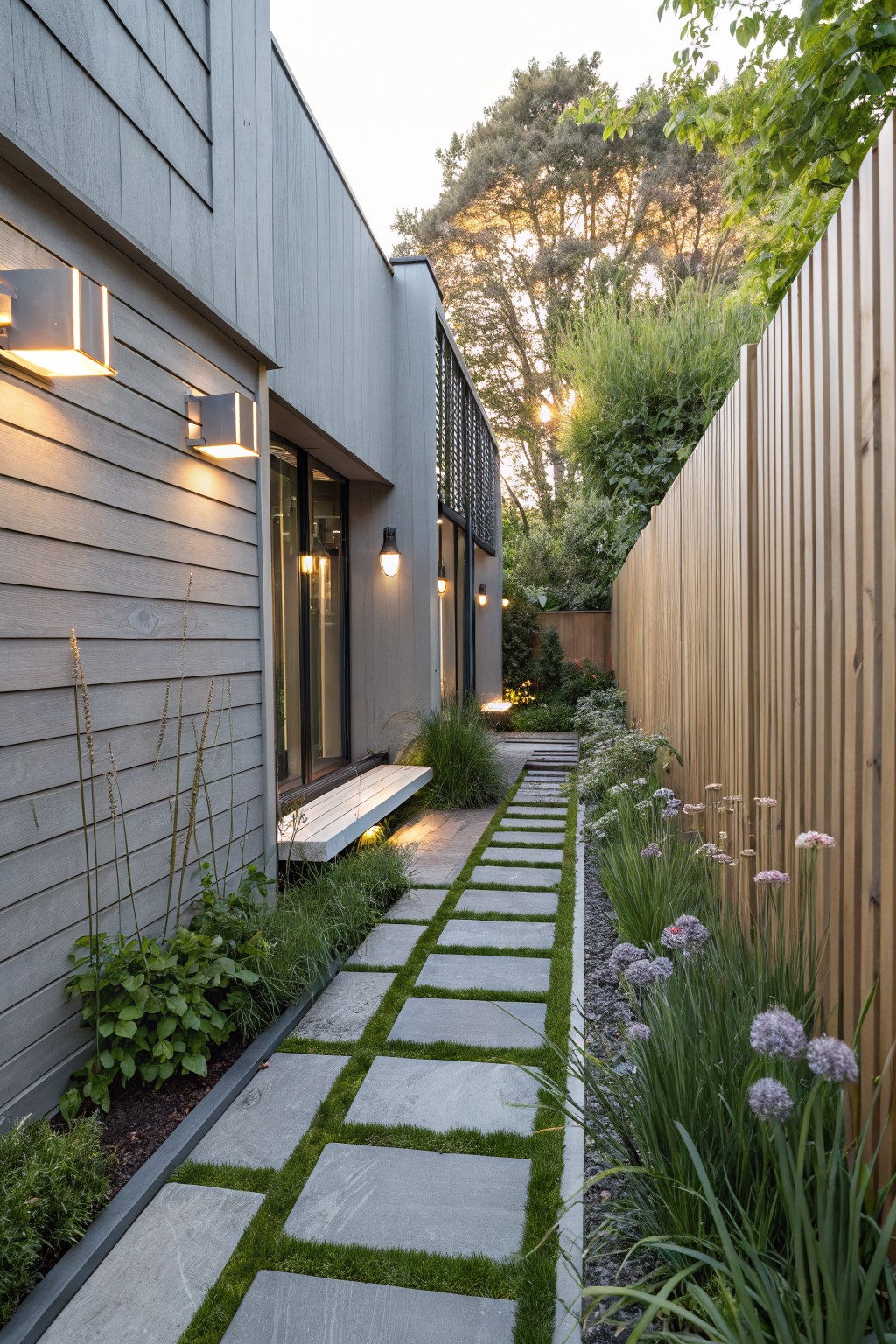
A narrow path like this runs right along the house, using big square pavers set into gravel with grass filling the joints. It keeps things practical for getting to the backyard while the tall grasses and round flower heads nearby add some movement against the plain gray siding. Feet stay mostly dry even after rain, and it just feels easy to walk.
This works best in tight side yards where you need access but not much room. Pick pavers that match your house tones, then plant low-water grasses and perennials that won’t flop over the path. Skip it if your yard floods a lot… gravel drains well, but watch the edges.
Low Hedges Along Pool Edges
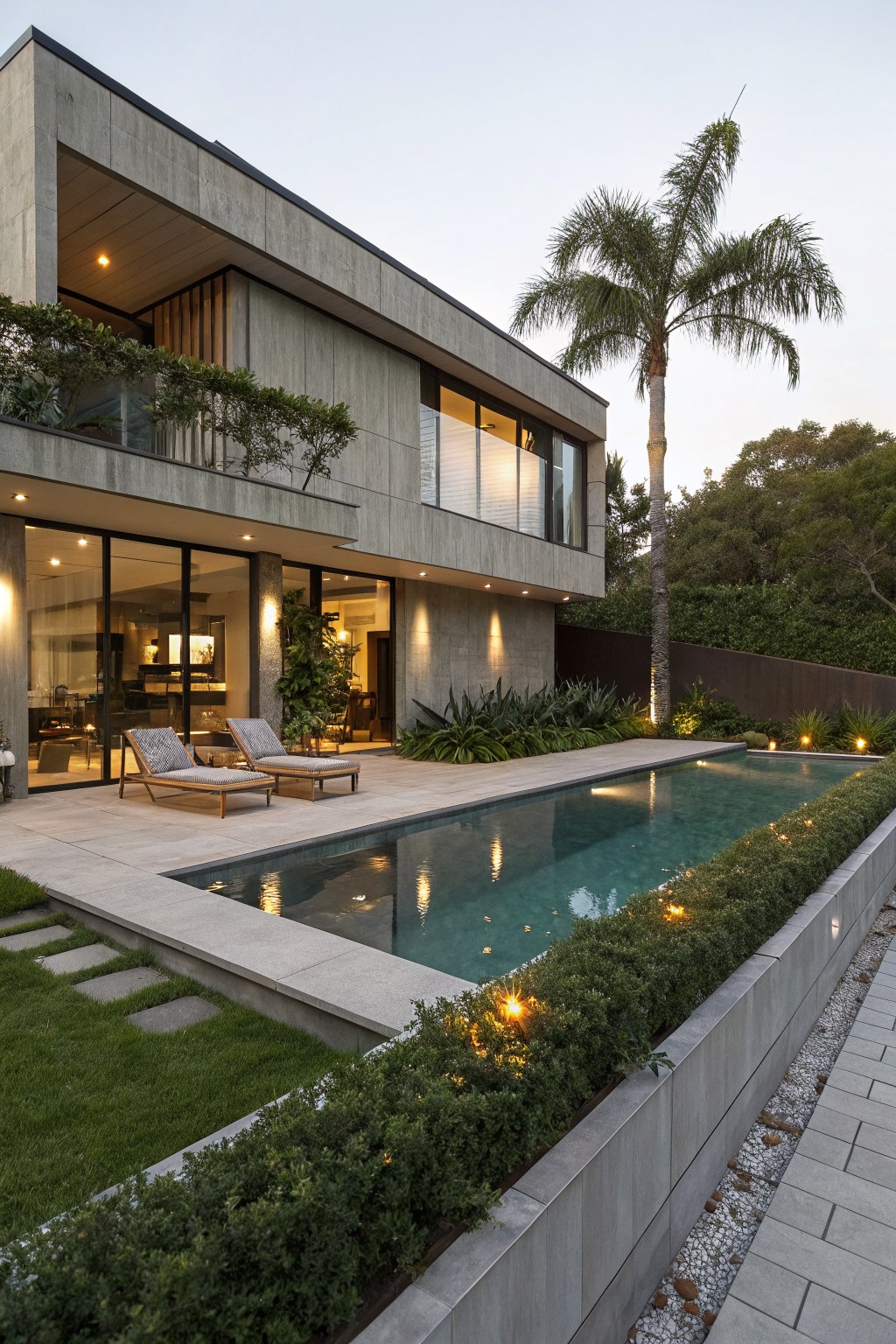
One clean landscaping move here is running low box hedges right along the pool in raised concrete beds. It picks up the gray tones of the house walls while adding that steady green line. Keeps everything looking sharp and contained, especially at dusk with the soft lights kicking in.
This works well on modern homes where the architecture already has straight edges and concrete finishes. Plant something like boxwood that stays dense and low without much trimming. Line it up parallel to the house or pool for that pulled-together feel. Skip it if your yard slopes a lot, since the raised beds need flat ground to look right.
Frequently Asked Questions
Q: Which gravel works best to frame a gray house?
A: Go for light gray or white pea gravel. It echoes the house color without clashing and bounces light around to highlight clean lines. Layer it two inches deep over landscape fabric for that sharp, polished edge.
Q: How do I pick plants that won’t fade against gray siding?
A: Choose plants with silver or blue-green leaves, like lavender or dusty miller. They blend smoothly instead of screaming for attention. Tuck them along walkways to draw the eye right to your front door.
Q: Can I pull off these looks in a shady yard?
A: Sure, lean on hostas and ferns with textured leaves. They thrive without sun and add depth that makes gray siding pop even more.
Q: What’s a quick win if I’m short on time?
A: Line the foundation with boxwoods. Trim them neat once a year, and they frame the house like they were built for it.
