

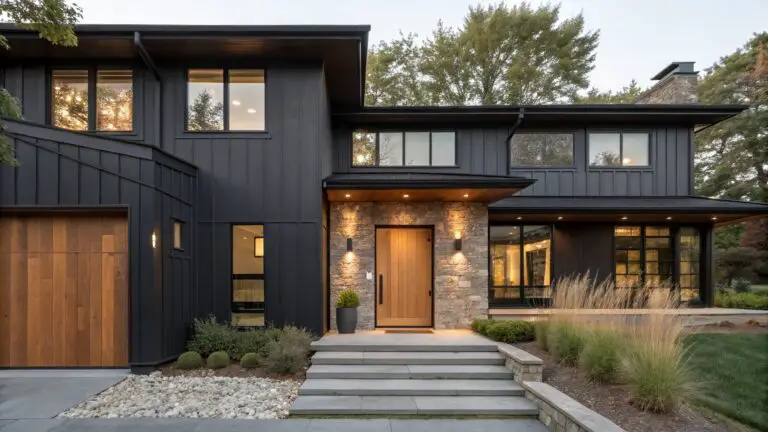
When I spot a dark gray house from the street, it often pulls me in because the color grounds the whole facade so steadily against the sky and trees.
These exteriors shine when builders layer on contrasting materials like rugged siding or smooth stucco, letting shadows play across the surface all day long.
I once watched a neighbor test a few shades on their trim boards before committing, and it showed me how the wrong undertone can flatten even a strong roofline.
Curb appeal hits hardest at the entry.
You’ll find some practical tweaks in these ideas worth noting down for your own setup, like swapping hardware to sharpen that front-door focus.
Dark Gray Board-and-Batten Siding
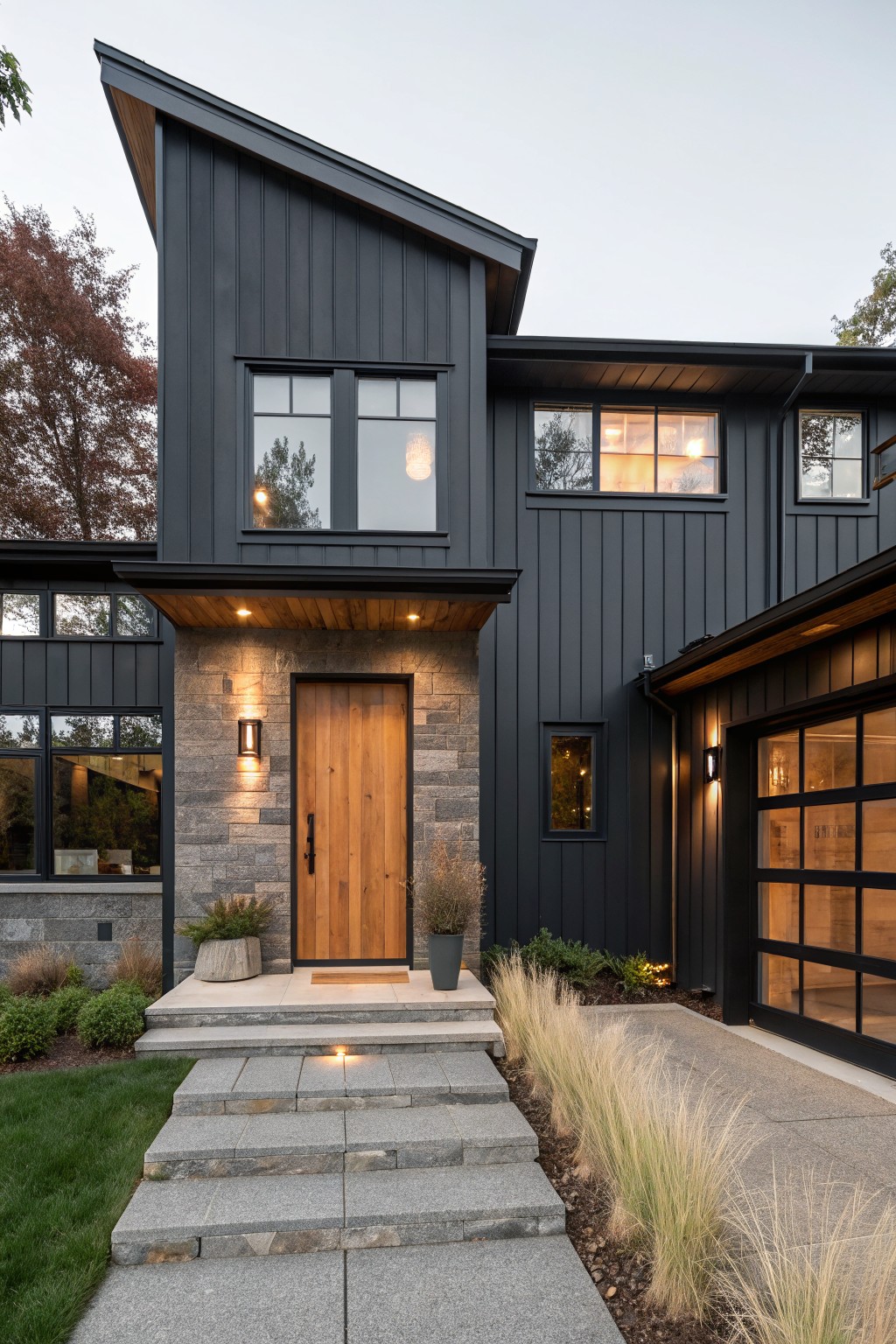
Dark gray board-and-batten siding like this turns a simple modern house into something with real presence. The vertical planks run up the full height, making the facade feel taller and more structured. It fits right into moody exteriors, especially with that sharp angled roofline pulling everything together.
You can pull this off on ranch-style homes or new builds with clean geometry. Add a warm wood door and stone accents around the entry to keep it from feeling too cold. Just make sure the trim stays crisp black or matching gray, or it starts to look busy.
Recommended Products
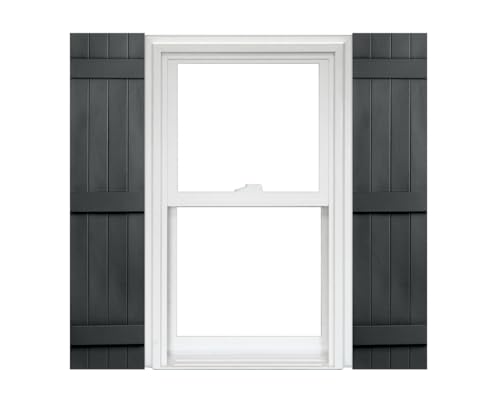
Available in various color options
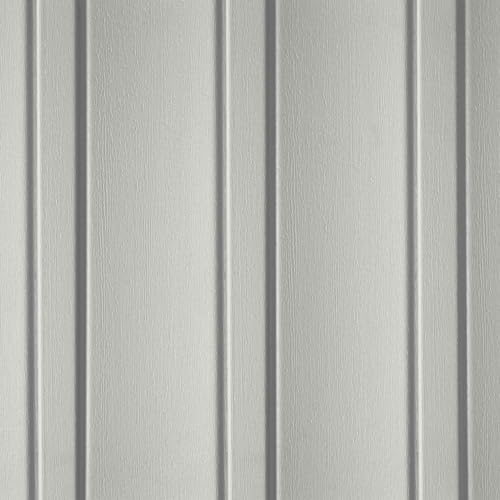
Most commonly used for whole house or accent applications
Available in various color options
Stone Corners on Dark Gray Facades
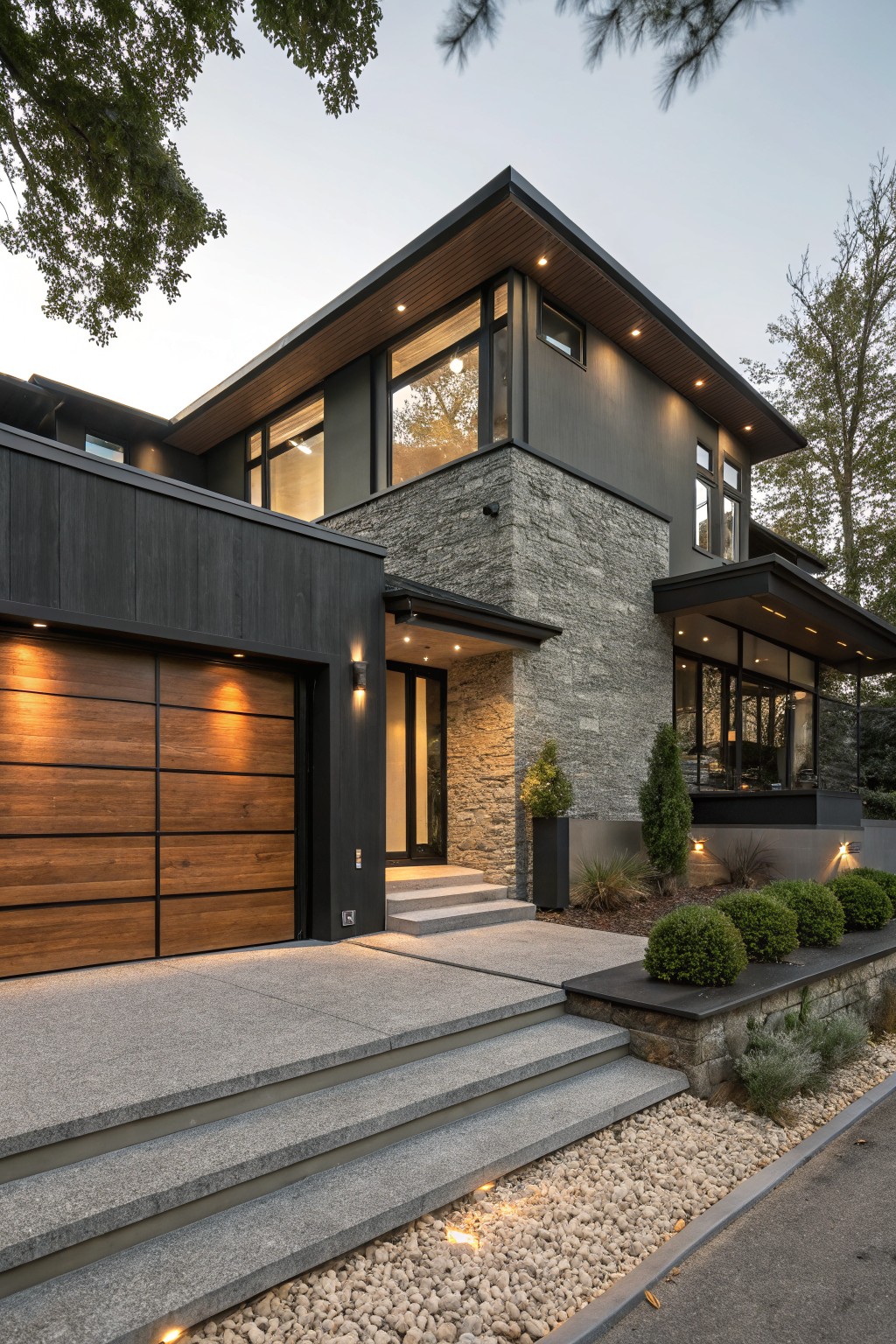
Rugged stone blocks wrapping the corners of this house add real texture to the smooth dark gray siding. That contrast makes the whole front feel solid and interesting, especially with the big windows pulling light in. It’s a simple way to give a modern exterior some heft.
Put stone like this on houses with flat panels or vertical boards. It suits spots with trees around, where you want the home to blend but still stand out. Keep the stone light-toned so it pops against the dark without clashing.
Dark Gray Exterior with Sloped Roof
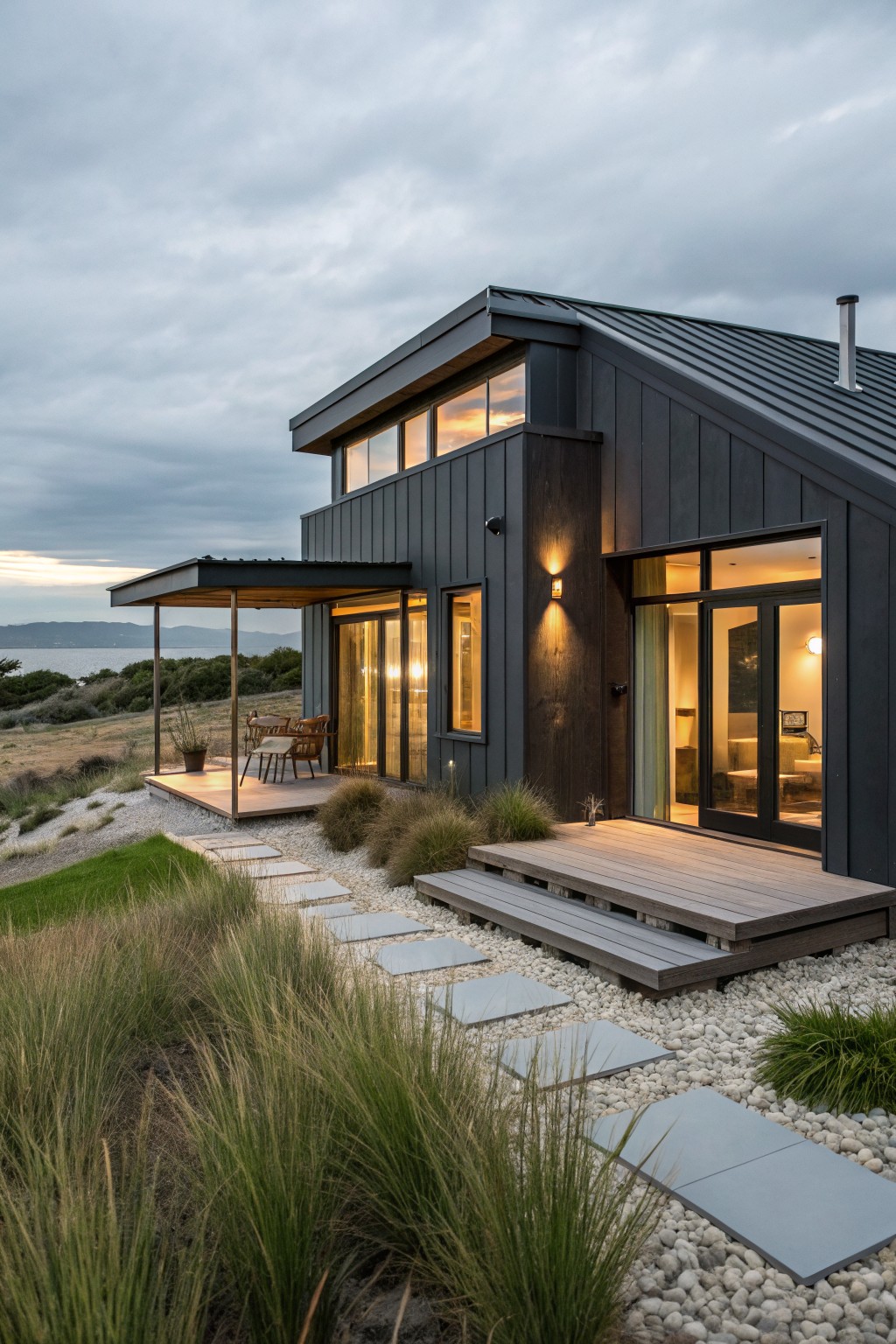
A sloped roof in dark metal gives this gray house a sharp, modern edge. The dark cladding below it picks up the color, so the whole front feels unified and bold. Large windows let light pour out at dusk, making the place look alive without extra lights everywhere.
This setup works best on homes in open spots, like near water or fields. It holds up to wind and weather too. Just make sure the slope isn’t too steep if you want a deck underneath. Pair it with simple paths and grasses to keep the look clean.
Dark Gray House with Wood-Beamed Portico
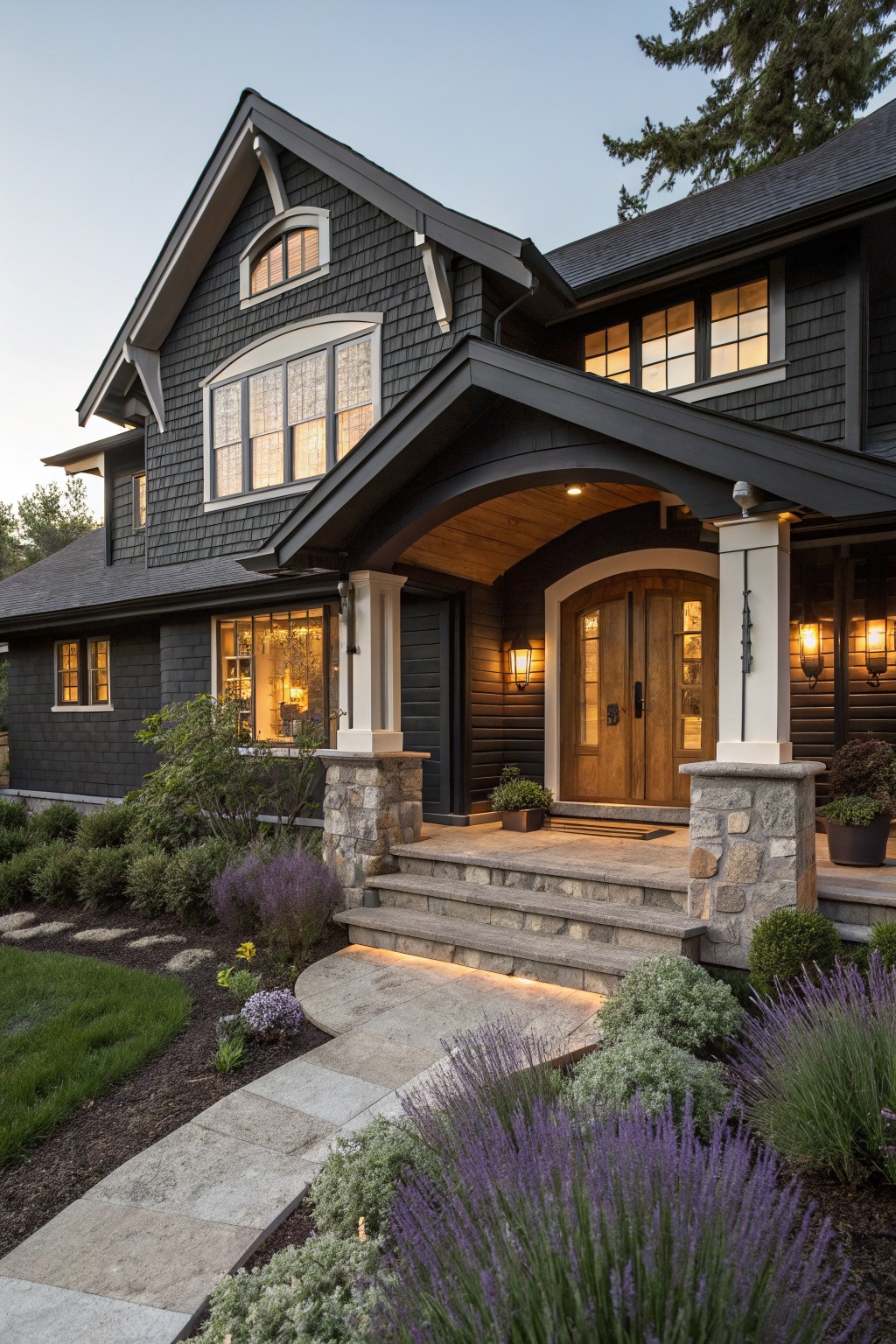
A wood-beamed portico like this one makes a dark gray house feel less stark right at the front door. The warm cedar tones overhead pull your eye in, while stone pillars on the sides add some solid footing. It turns a moody exterior into something that says come on up without trying too hard.
Try this on a two-story home where the gray shakes cover most of the facade. It fits Craftsman or modern farm styles best, especially with a path leading straight to the steps. Just keep the wood natural, no stain needed, and watch that the roofline ties in clean.
Cantilevered Metal Awning Over the Entry
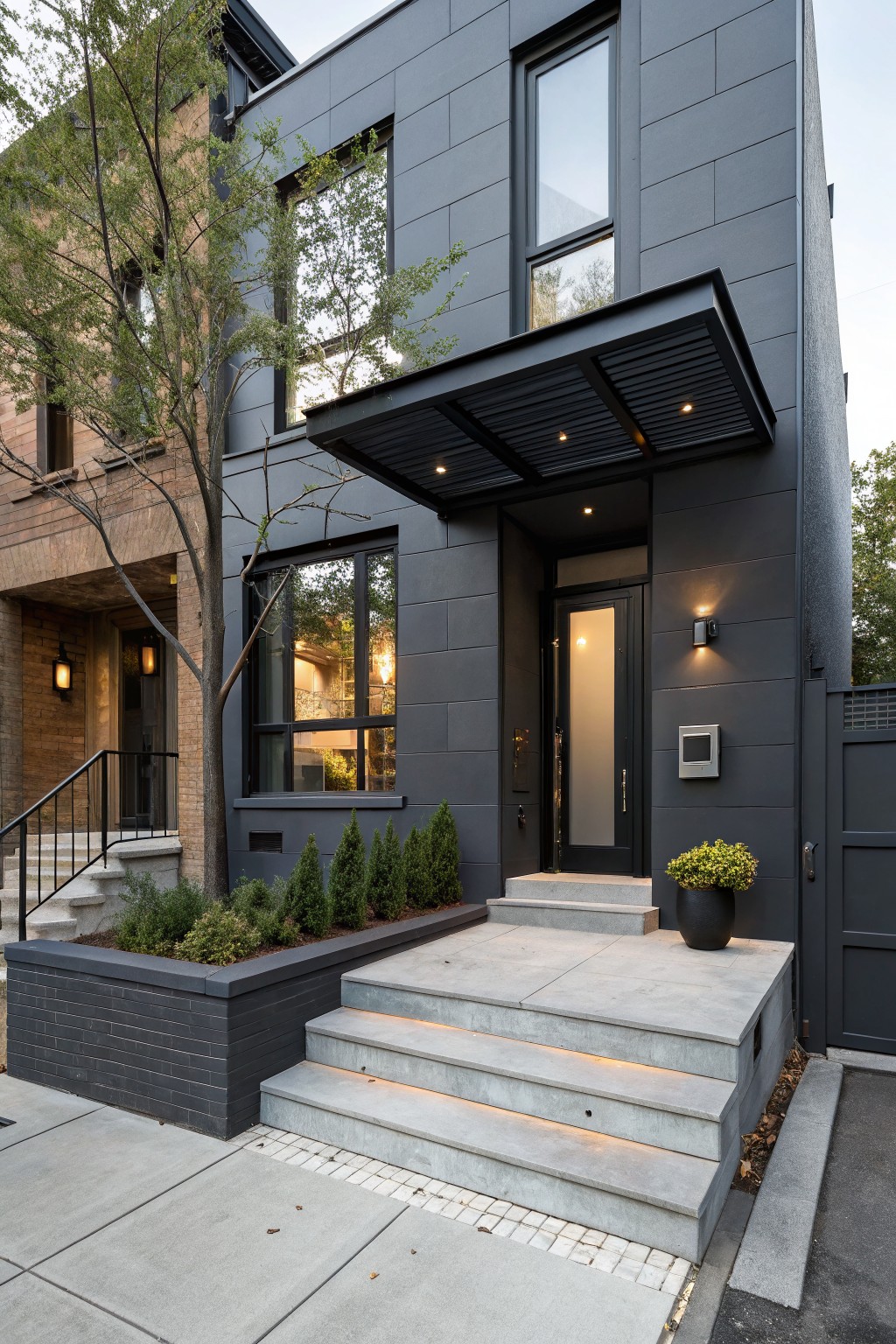
A cantilevered metal awning like this one gives a dark gray house that sharp, modern punch right at the front door. It juts out over the frosted glass entry, with slats that let in light but keep off rain. Against the matte panels and simple concrete steps, it pulls focus without trying too hard. Neighbors the brick house next door, but stands out on its own.
You can add one like this to rowhouses or urban homes where space is tight. Bolt it to the facade above a recessed door, and run low lights under the steps for night curb appeal. Keeps the look moody but welcoming. Size it to match your door width, and it fits most budgets since metal lasts.
Stone Entry Pillar on Dark Gray Siding
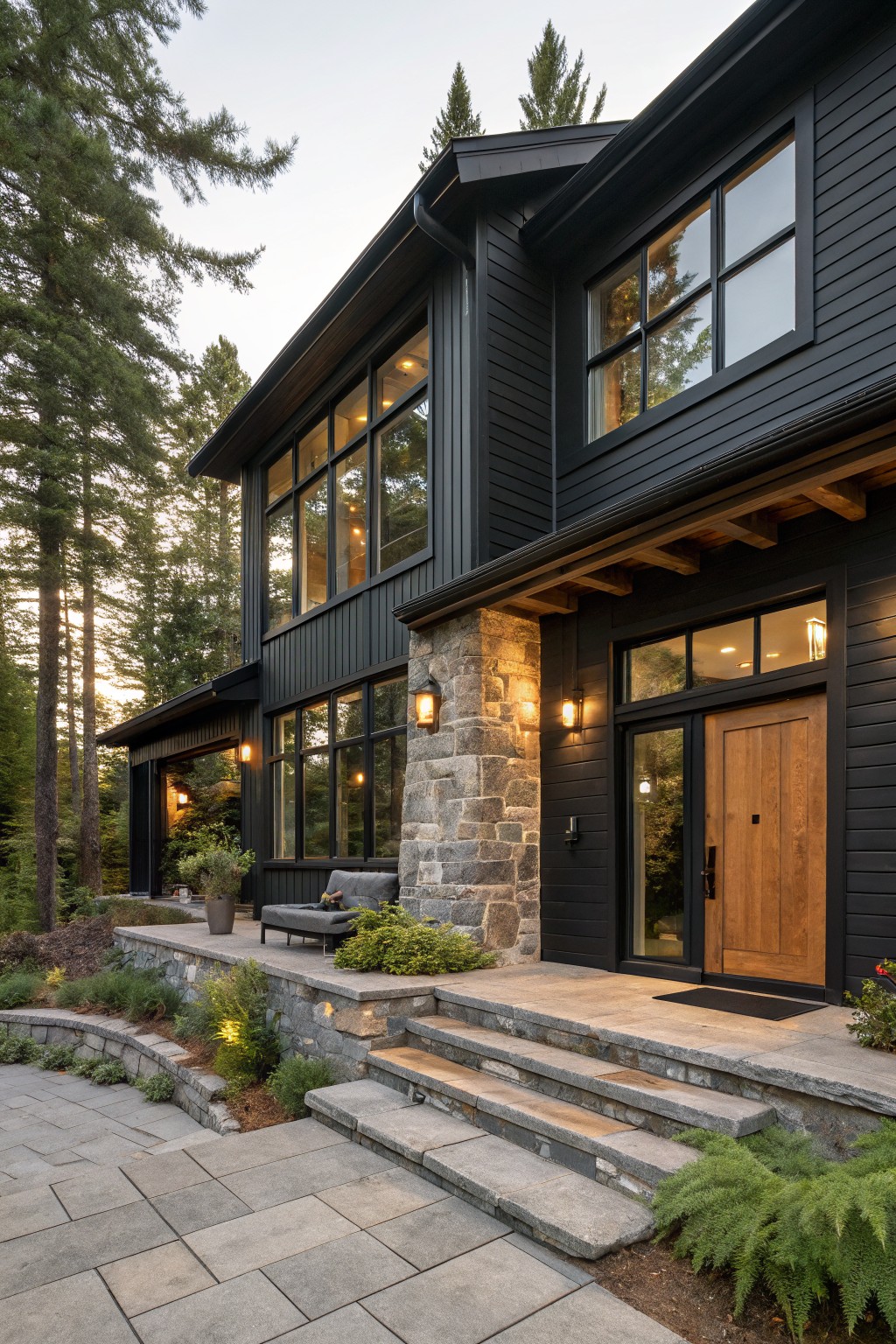
A stone pillar like this one next to the front door gives the whole dark gray house a solid base. It pulls in some natural texture against all that smooth siding, and the wood door fits right in without much fuss. People notice the entry first, and this setup makes it feel sturdy yet simple.
Try this on a two-story home tucked into trees or hills. Keep the stone rough-cut to match the siding’s matte look, and add matching lanterns for evenings. It works best where you want contrast without bright colors, but size the pillar to your door height so it doesn’t look off.
Dark Gray Facade with Wood and Stone Accents
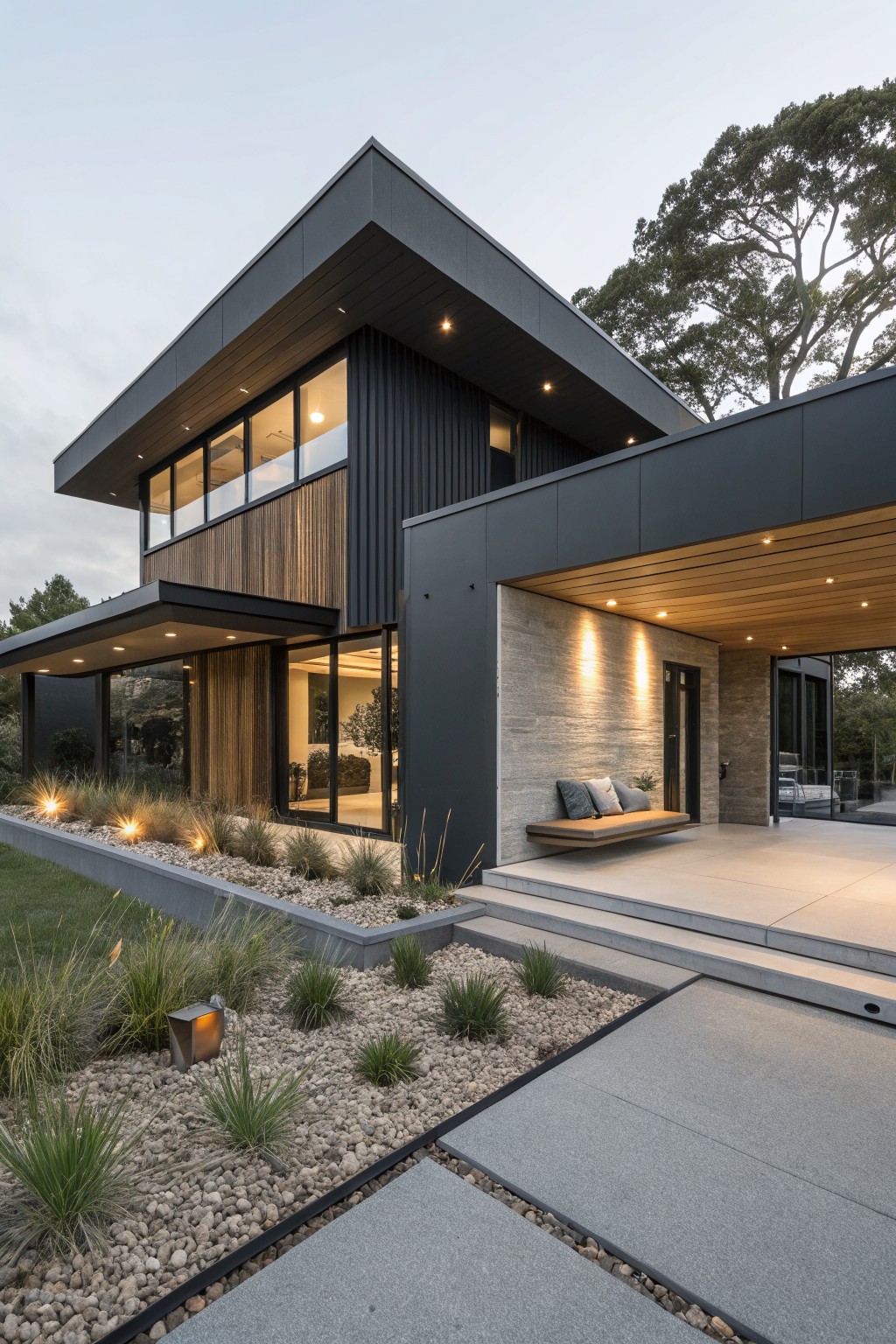
This exterior pulls off a moody look using dark gray corrugated cladding across the main walls and roof overhangs. Vertical wood slats on one side add warmth and break up the gray tones. A stone wall at the entry ties it together, making the whole front feel solid and modern without being cold.
You can try this on homes that sit back from the street or blend into trees. Keep the wood to vertical lines for height, and limit stone to the entry area so it doesn’t compete. It suits low-slung or two-story designs best… just watch the scale on smaller houses.
Dark Timber Framing on Stone Facade
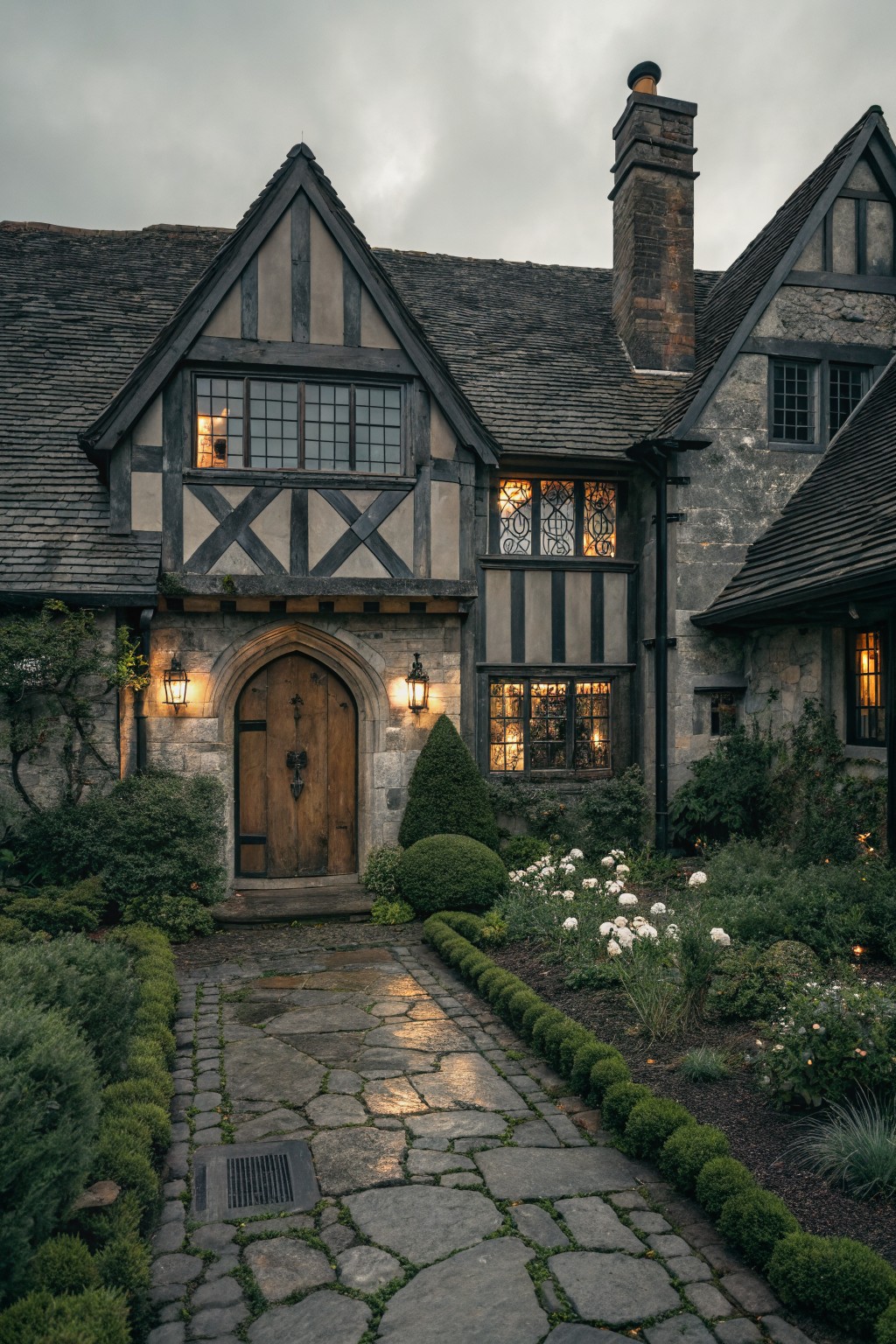
Dark timber framing like this stands out on a house exterior. It mixes heavy black beams with lighter stone and stucco walls. That contrast builds a moody look right away. Add lanterns by the arched door, and you get real curb appeal without much fuss.
This setup suits bigger homes in older neighborhoods. It pulls the eye up to the steep roofline and windows. Use it where you want some history feel but keep things simple. Just make sure the timbers are bold enough to read from the street.
Warm Wood Door on Dark Gray Exterior
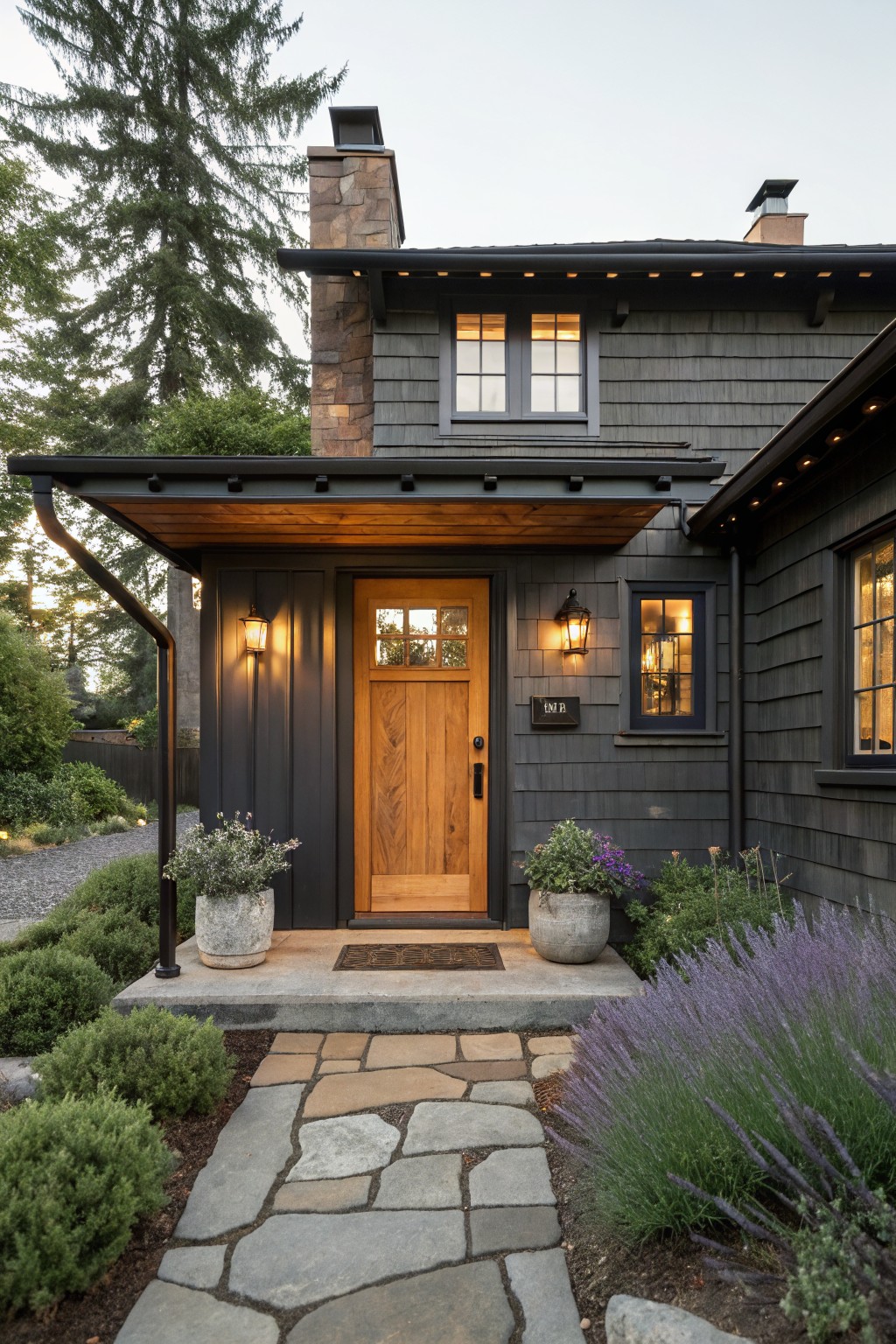
A simple wooden front door can make all the difference on a moody dark gray house. Here the rich oak door sits under a covered porch with cedar planks overhead, pulling your eye right to the entry. That warm tone cuts through the charcoal shakes and stone chimney without overwhelming things. It keeps the look strong but adds a bit of everyday welcome.
Try this on craftsman or modern farmhouses where the gray siding already sets a bold tone. Go for a plank-style door with glass panels for light, and add lanterns on either side like these black ones. Stone steps and a few pots nearby tie it in. Just make sure the wood finish matches your climate so it doesn’t fade fast.
Navy Door Pop on Dark Gray Shingles
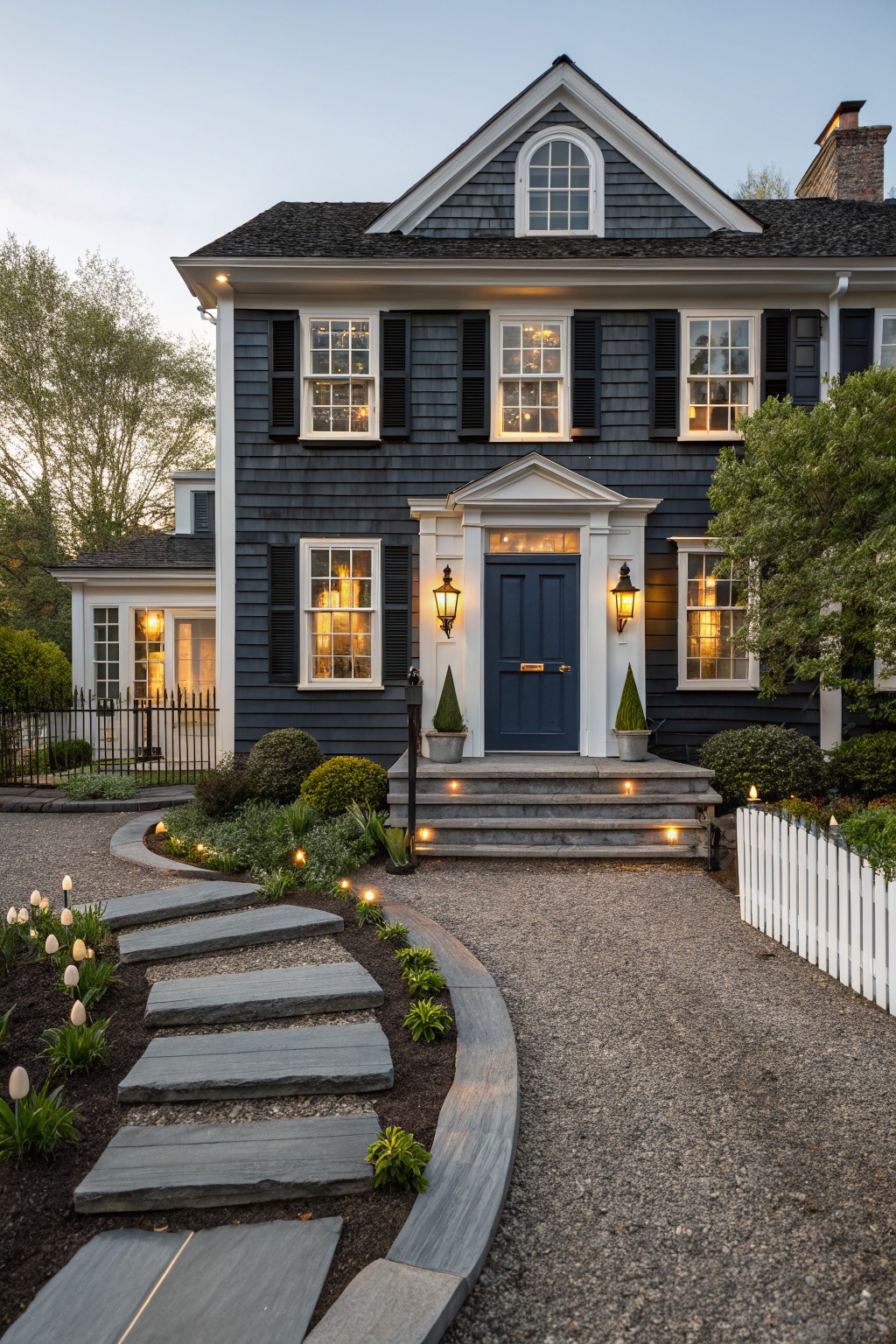
A navy blue front door gives this dark gray shingle house real punch right at the entry. It stands out against the moody siding without overwhelming things. The lanterns flanking it warm up the look at dusk, drawing your eye straight to the door.
Try this on classic colonials or new builds aiming for curb appeal. White trim keeps it crisp. Add path lights or spring bulbs nearby for extra welcome. Works best where you want subtle drama, not full modern edge.
Dark Gray Garage Doors on Brick Houses
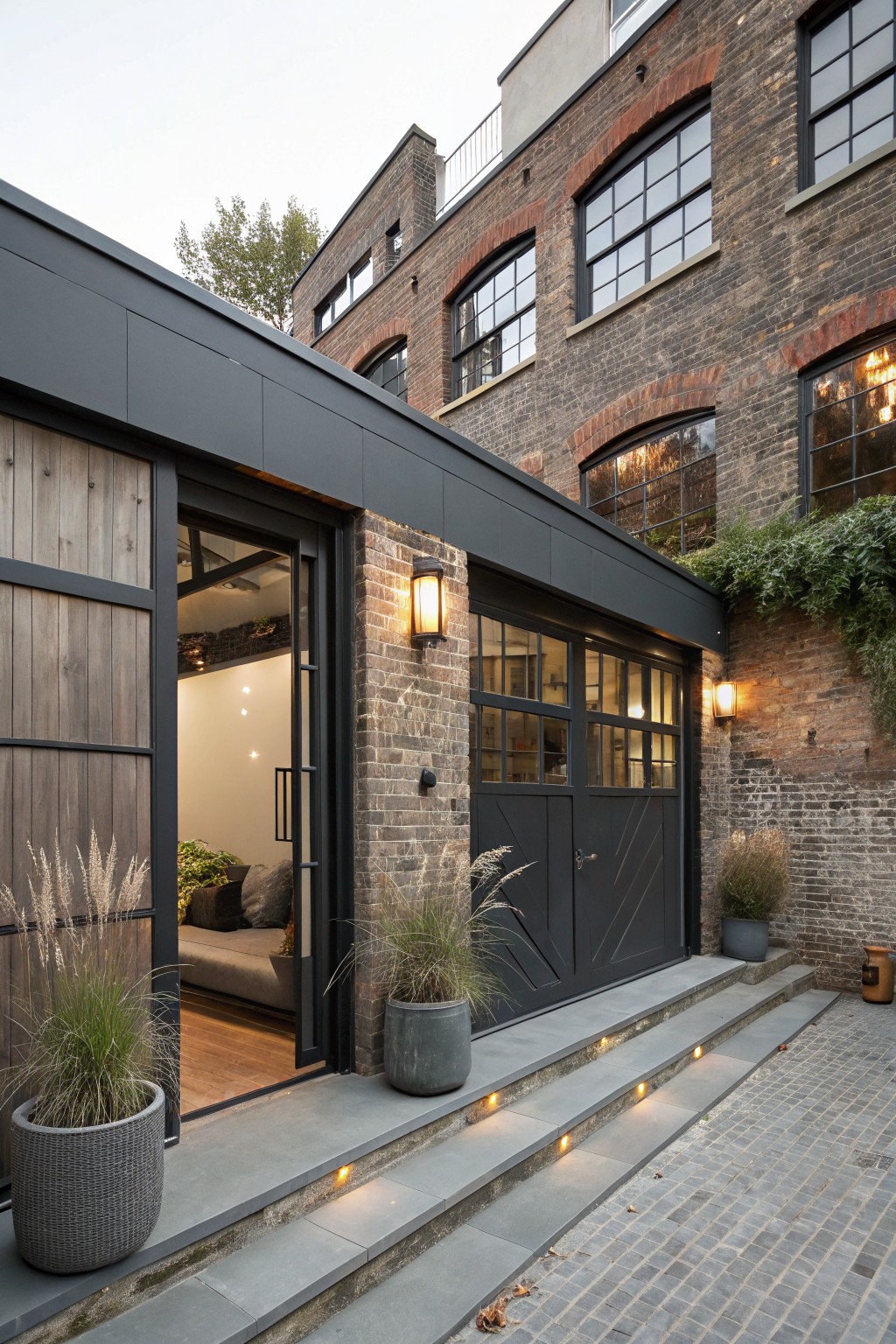
Dark gray garage doors like these give an old brick house a sharp modern edge. The matte gray panels stand out against the rough brick texture, creating that moody vibe the article is all about. It’s a simple switch that pulls the eye right to the entrance without messing up the historic feel.
This look fits row houses or warehouse conversions in the city. Go for chevron patterns if you want subtle interest, and flank the doors with potted grasses to soften things a bit. Skip glossy finishes though. They can look too flashy next to aged brick.
Dark Gray Cladding with Wood Beam Accents
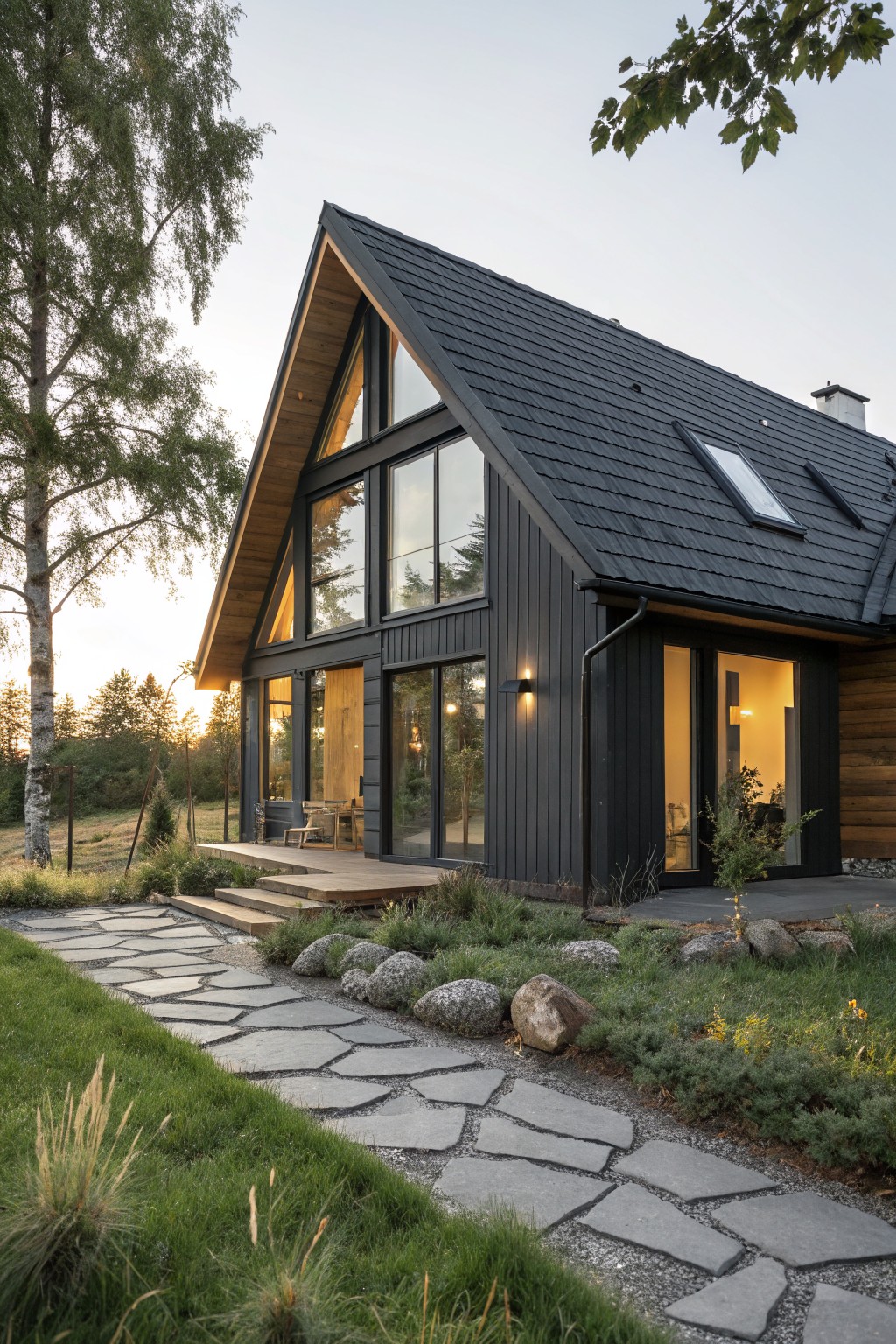
This look uses dark gray siding over a steep gabled roof, with natural wood beams showing along the edges and around those big glass walls. It gives the house a strong, cabin-like presence that pulls your eye right up to the peak. The gray keeps things moody and modern, while the wood adds just enough warmth to avoid feeling cold.
You can pull this off on a wooded lot or anywhere you want curb appeal without bright colors. Stick to vertical siding for height, and frame large windows with the wood to let light spill out at night. Works best on two-story homes. Watch the scale though, tiny houses might get lost in all that drama.
Arched Wrought-Iron Entry Door
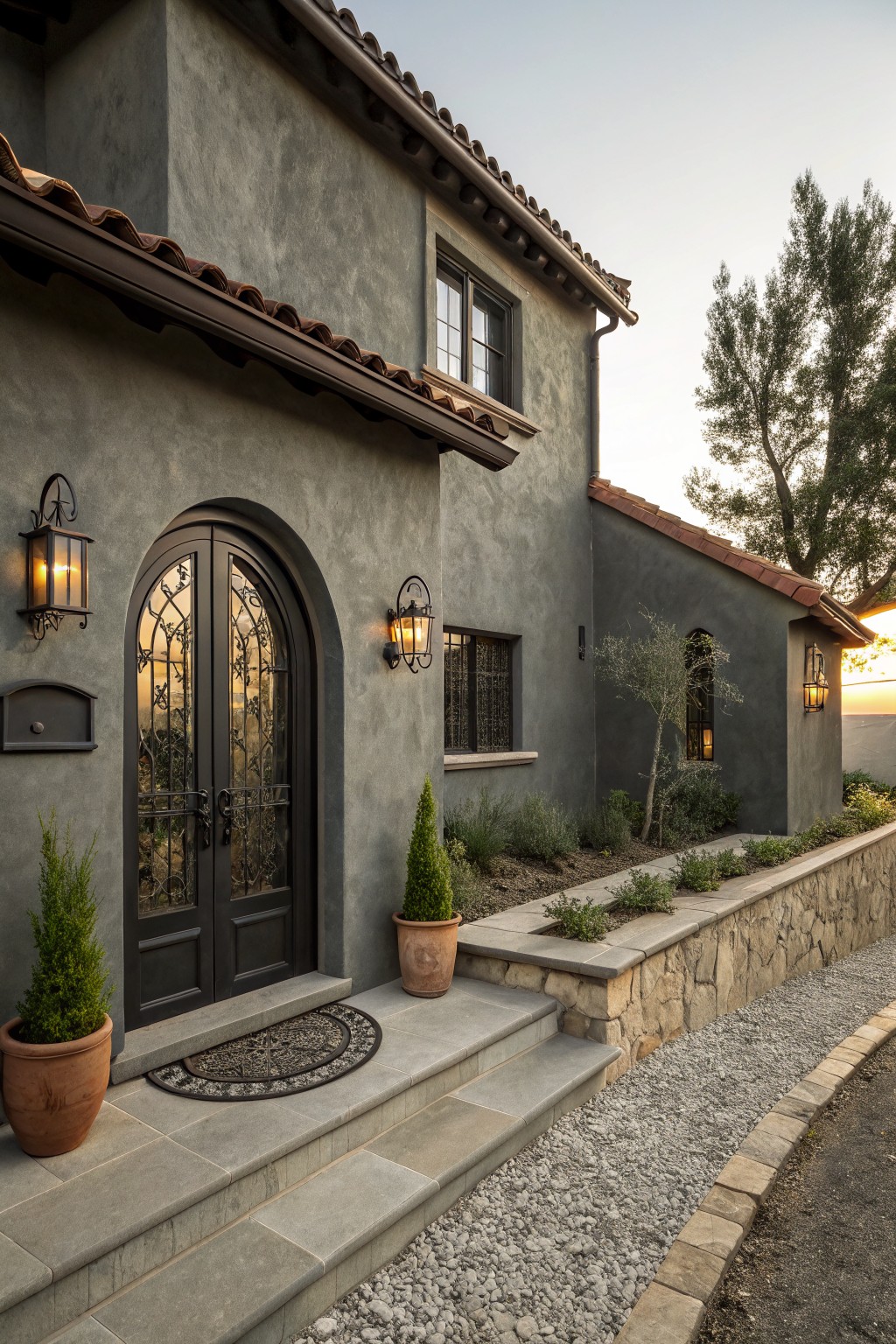
A double arched door like this one pulls the whole front of the house together. Made from dark wrought iron with a subtle vine pattern, it sits right in an arched opening on the smooth gray stucco wall. Flanked by lanterns that glow at dusk, it gives off that moody vibe without feeling cold. Folks notice it right away from the street.
Try this on homes with a bit of Spanish or Mediterranean style, especially where you want some privacy but still a welcoming feel. Add matching topiary plants in pots by the steps, and keep the path simple with gravel or stone. It holds up well in dry areas, but check that the finish protects against rust.
Warm Wood Porch on Dark Gray House
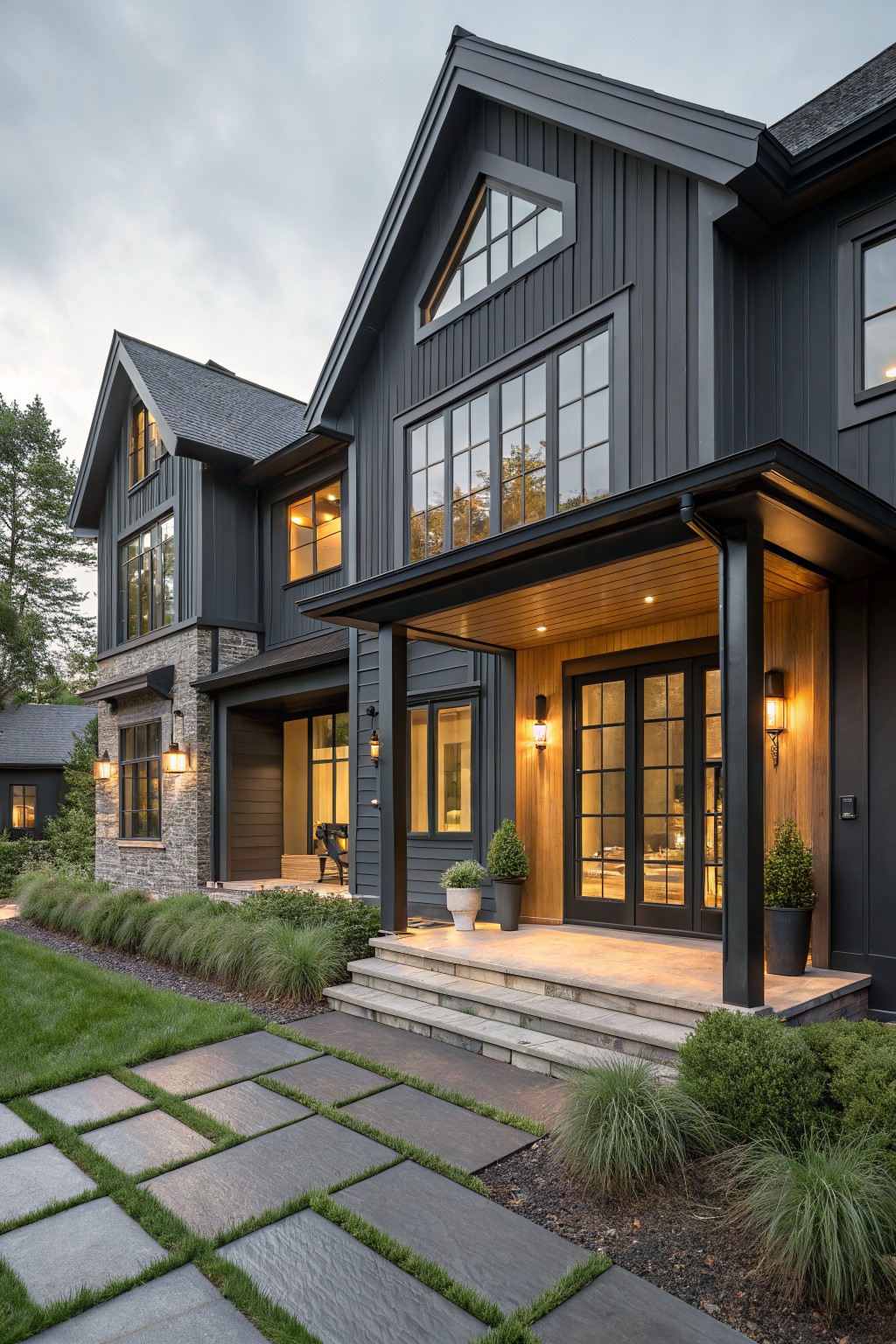
Dark gray siding sets a strong, moody tone for the house exterior. A covered porch in natural wood tones changes everything at the entry. Those beams and ceiling pull warmth right to the front door, balancing the bold color without overpowering it.
This setup fits two-story homes with a modern farmhouse feel, especially in wooded spots. Use it over double doors with black frames, and add stone steps for easy access. Pick durable wood like cedar… it holds up outdoors but needs sealing now and then.
Angular Dark Gray Cladding for Modern Edge
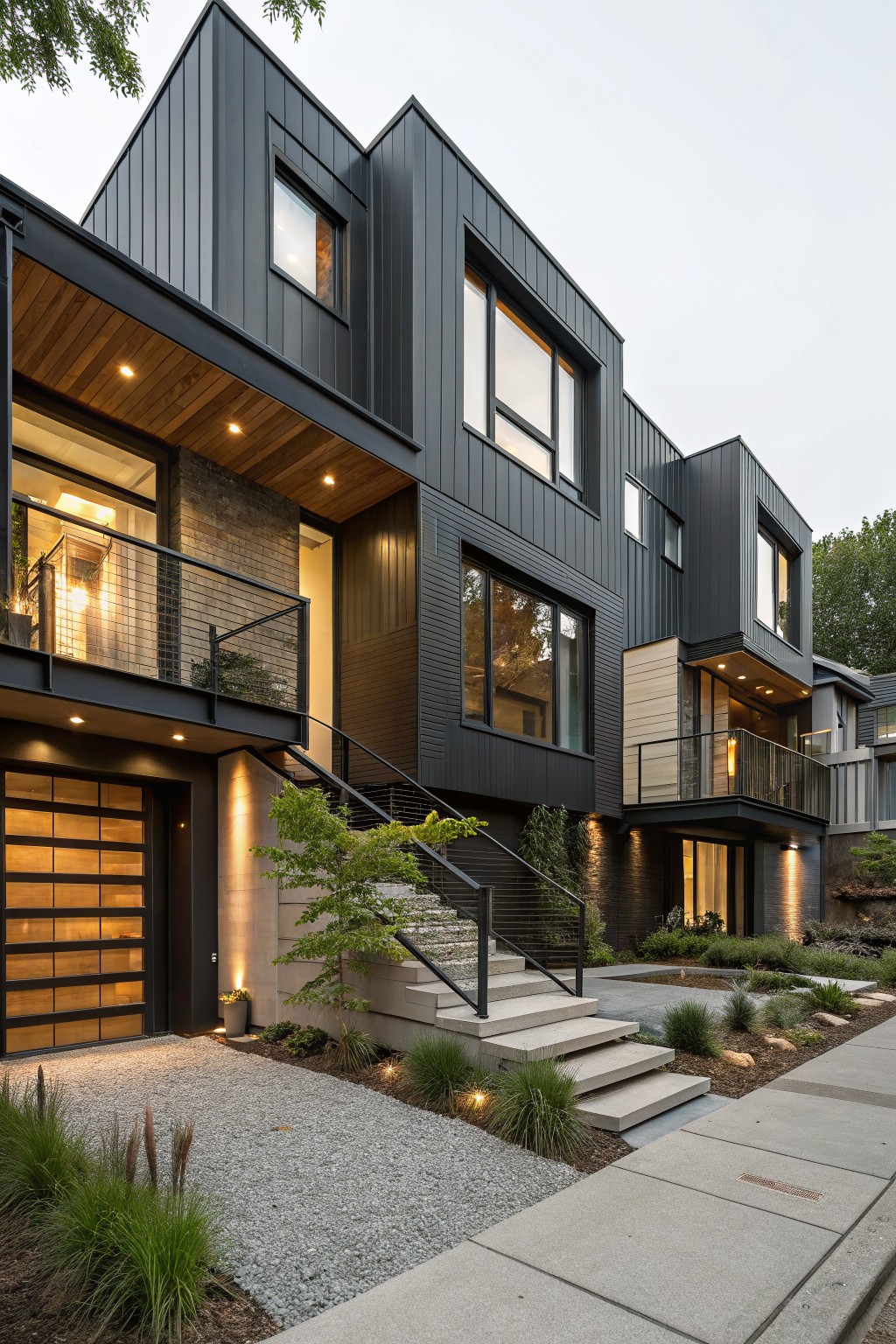
Dark gray metal panels cut into sharp angles give this house a sculptural feel that grabs attention right from the curb. The standing seam siding wraps the faceted forms cleanly, while wood overhangs and a brick base add just enough warmth to keep it from feeling stark. Large windows punch through the gray for light play during the day.
This works great on lots with some slope or in neighborhoods full of boxy homes, where the angles make your place pop. Stick to matte gray panels like corten or zinc, mix in cedar trim, and light the edges at night. Skip busy landscaping. Keep it to gravel paths and low plants so the facade does the heavy lifting.
Dark Gray Siding with Stone Chimney
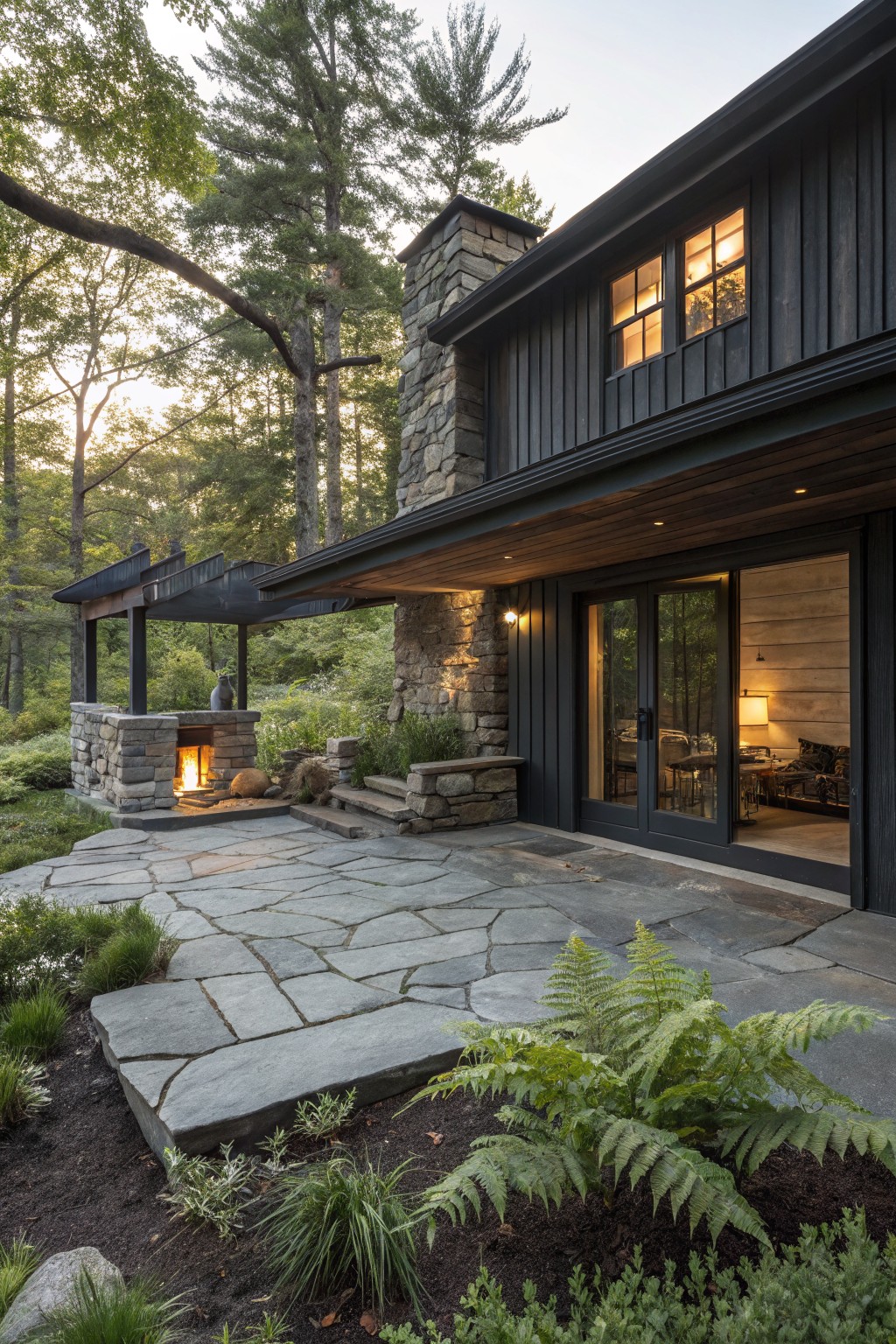
There’s something about dark gray siding on a house that just pulls it right into the woods around it. Here the blackened wood covers most of the walls, but a tall stone chimney breaks it up and adds real weight. That mix keeps the look moody without going flat, especially with the big glass doors sliding open to the patio below. It’s a simple way to make a house feel sturdy and tied to its spot.
You can pull this off on sloped lots or wooded properties where you want the house to blend in but still stand out. Use local stone for the chimney to match the ground, and keep the siding matte to avoid shine. It works best on two-story homes like this one, but watch the scale, the stone needs room to breathe or it can overwhelm a smaller build.
Dark Gray Brick Townhouse Facade
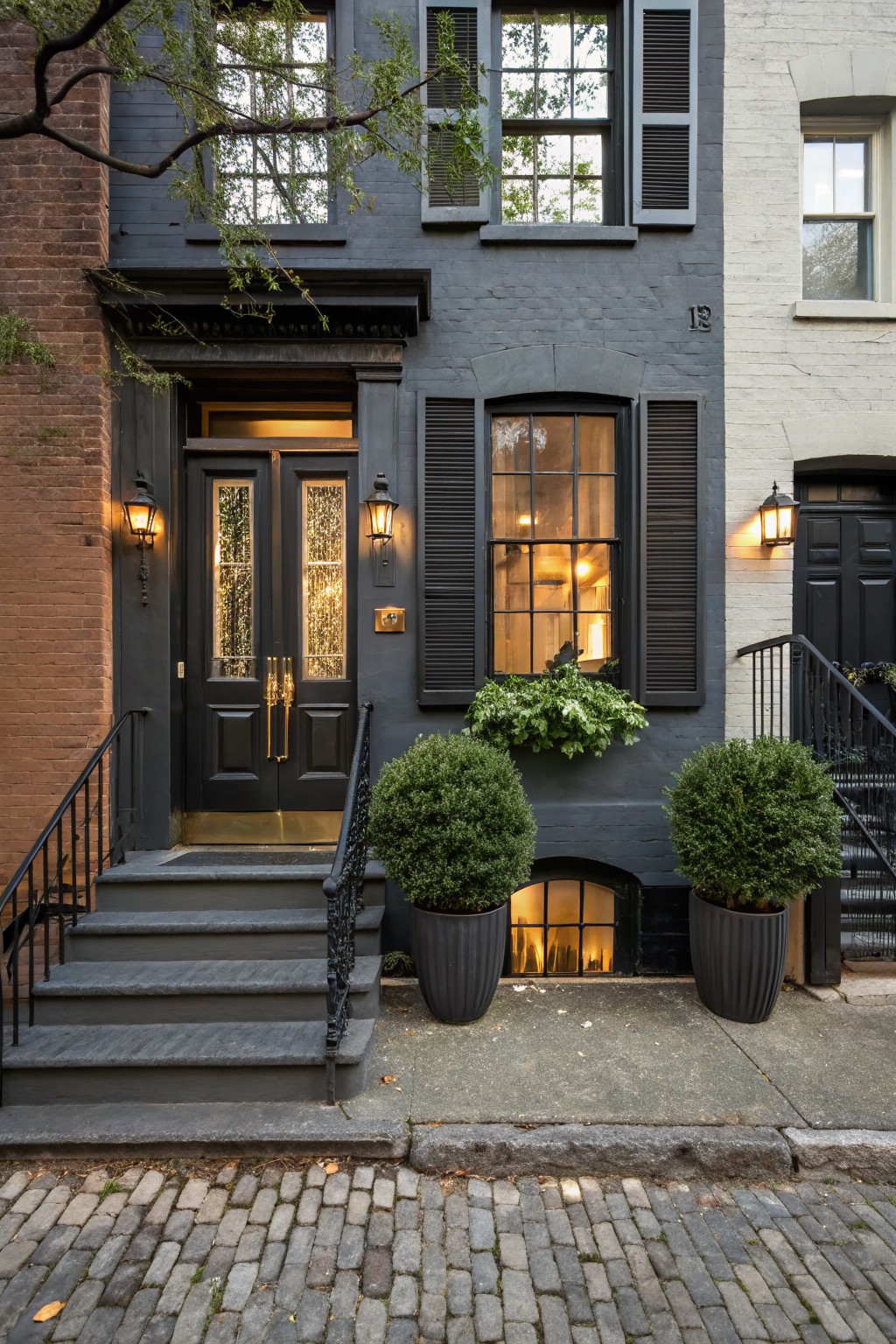
A dark gray paint job on brick turns a classic rowhouse into something moody and strong. You see it here with those tall black double doors, brass hardware catching the light, and lanterns glowing on either side. It pulls the eye right to the entry. Next to a plain white house, the gray really pops without trying too hard.
Paint your brick this way if you have a narrow urban townhouse or something historic. Add boxwood pots by the steps for a touch of green that keeps it from feeling cold. Brass details warm things up at night. Skip it on super sunny spots, though. The drama fades in bright light.
Dark Gray Facade with Vertical Slats
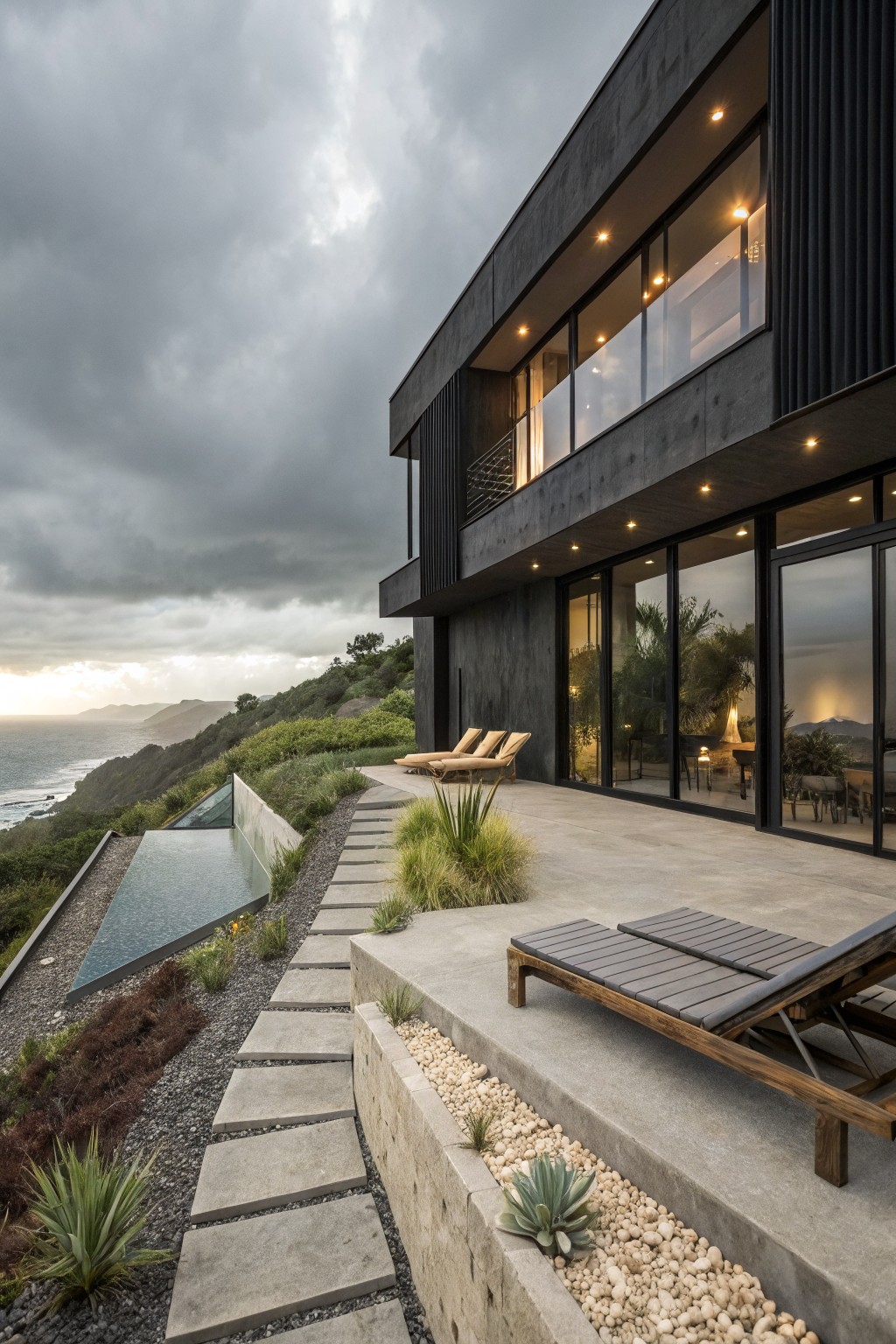
Vertical slats on a dark gray house like this give the exterior some real texture without much fuss. They run up the side of the building in tight rows, breaking up the flat concrete look and making the whole thing feel more solid against a rugged hillside. Paired with those big glass walls, it pulls in the view and keeps the moody vibe strong.
This works best on homes with a modern edge, especially where you want curb appeal that stands up to dramatic spots like cliffs or ocean fronts. Go for slats in charred wood or metal to handle weather, and keep the spacing even so it doesn’t look busy. Skip it on smaller houses though. It can overwhelm if the scale is off.
Dark Timber Framing on Gray Stone
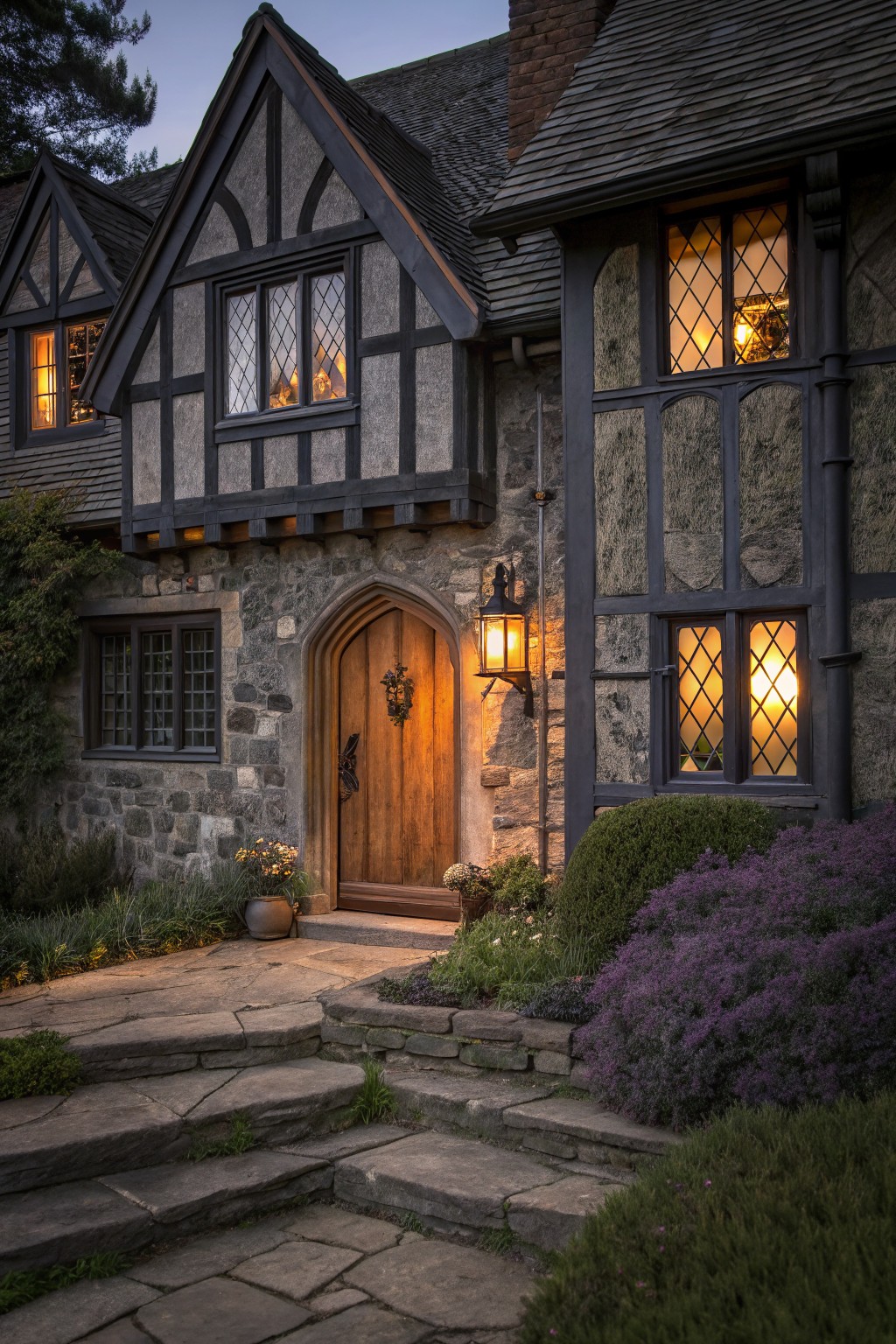
Dark timber framing over gray stone walls gives a house that moody, almost medieval vibe. It’s bold without being fussy, especially around the entry where an arched wooden door pulls everything together. The black beams stand out sharp against the rugged stone, and at dusk those lantern lights make it feel welcoming yet mysterious.
This setup suits bigger homes in wooded spots or cooler climates where the dark tones won’t clash. Keep landscaping simple, like low shrubs along stone steps, so the facade does the heavy visual work. Just watch the scale, smaller houses might feel swallowed by it.
Frequently Asked Questions
Q: Does dark gray siding hide dirt better than lighter colors?
A: Dark gray brushes off dust, pollen, and everyday grime without showing it much. Just hose it down a couple times a year. You’ll save hours compared to scrubbing white siding.
Q: What front door color stands out most against moody dark gray?
A: Fire up the curb appeal with a bold red or mustard yellow door. They pull focus and add instant energy. Black keeps things sleek if you prefer subtle punch.
Q: Can dark gray work on a smaller house without overwhelming it?
A: Scale back with lighter gray on upper sections or trim. And mix in wood elements for balance. It slims the profile while keeping that moody vibe.
Q: How do I add warmth to a dark gray exterior?
A: Tuck in natural wood accents around the entry or garage. Warm terracotta planters pull it together nicely. That softens the edge just right.
