

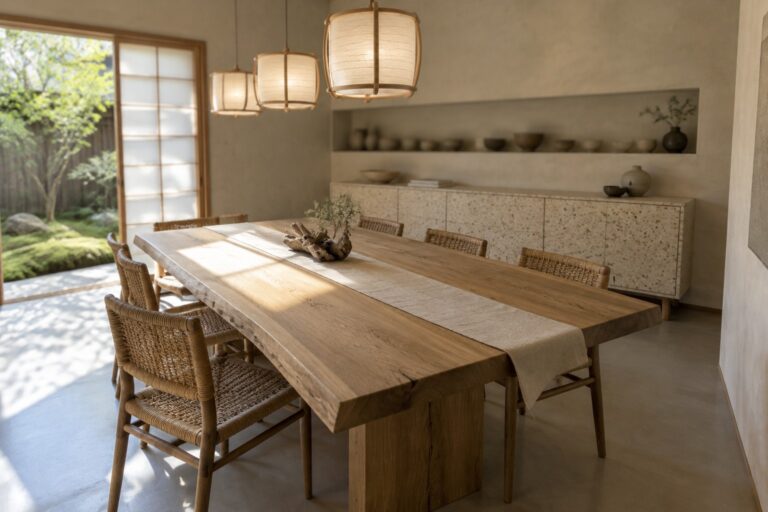
Pendant lights can shape how a room feels long before you notice the smaller decor details.
I find that wood-framed shades work best when their natural texture connects with other materials in the room, rather than standing apart as a feature on its own.
In a dining area, they can bring warmth above the table, while in a living room they help define a cozy corner without adding visual clutter.
Scale and placement matter too, since a shade that looks balanced in a photo may feel oversized or dim once it is hanging at home.
The ideas ahead offer different ways to bring this calm mix of Japanese simplicity and Scandinavian warmth into a real space.
Choose Pendant Lights That Suit the Room
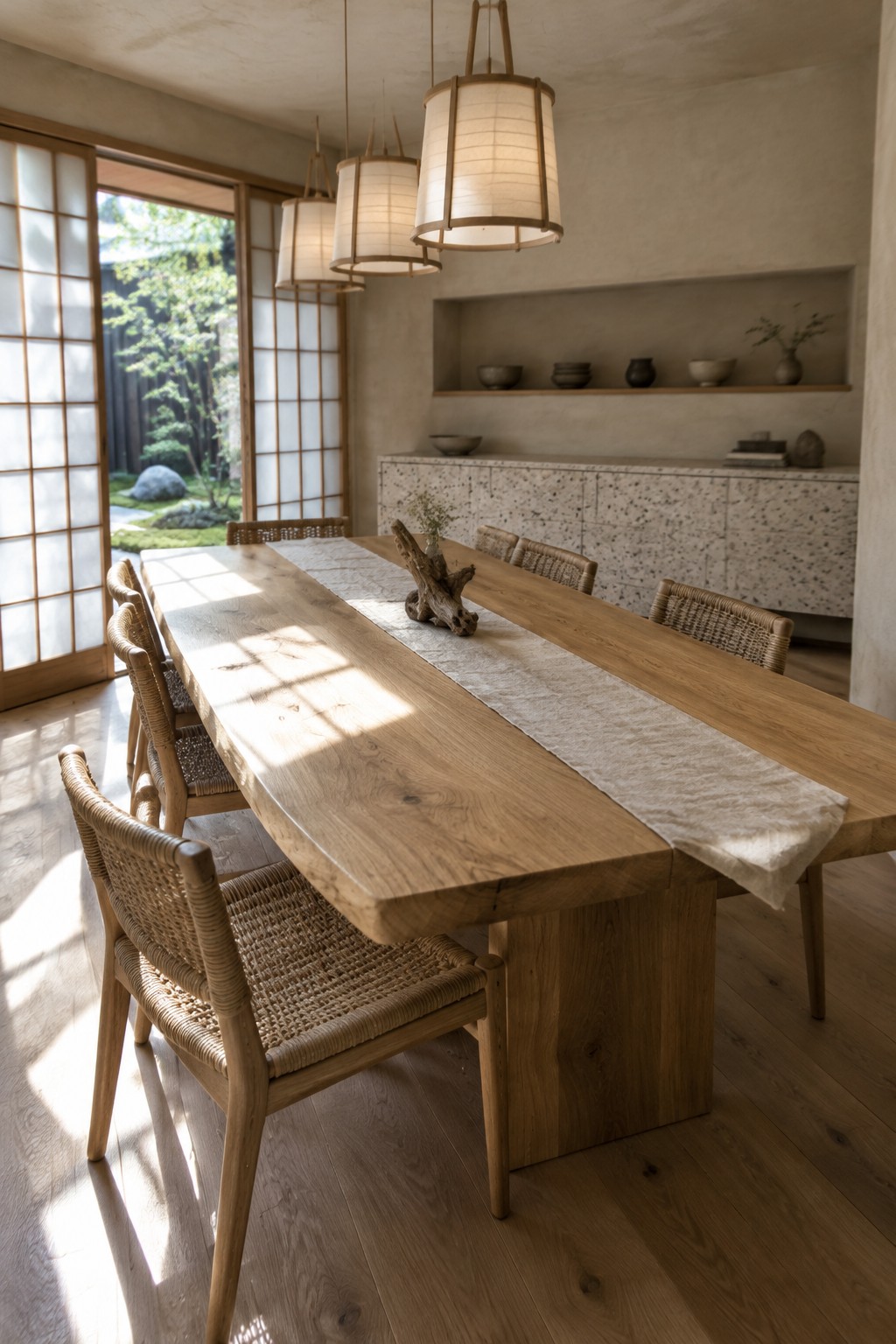
In a Japandi dining room, pendant lights can bring a natural, simple look to the space. Paper shades held by wood frames work especially well above a solid wood table, where their open, un-fussy shape fits the furniture rather than competing with it.
Hang the lights low enough to define the dining area, but high enough that people can see across the table comfortably. A group of three suits a long table, while a smaller room may need just one shade.
Use Wood-Framed Pendants In An Open Kitchen
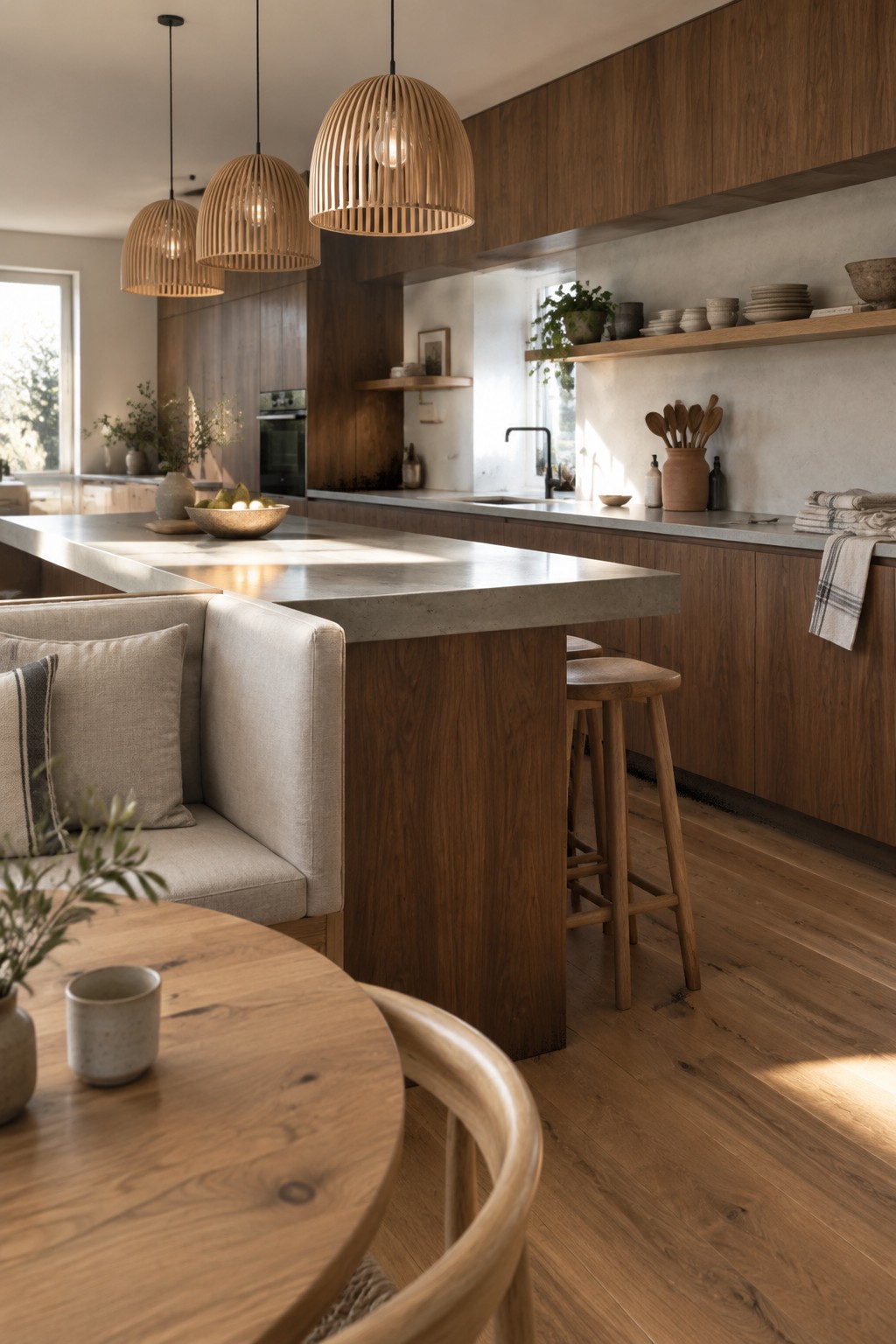
Wood-framed pendant lights are a simple way to bring a softer, more natural look to a kitchen. Their open shades let the bulbs show through, while the wood relates easily to nearby cabinetry and furniture.
They work especially well above an island, where a row of pendants can provide focused light without feeling too heavy. Leave enough space between each fixture, and choose shades that suit the island’s size.
Use Pendant Lights to Warm Up a Calm Living Room
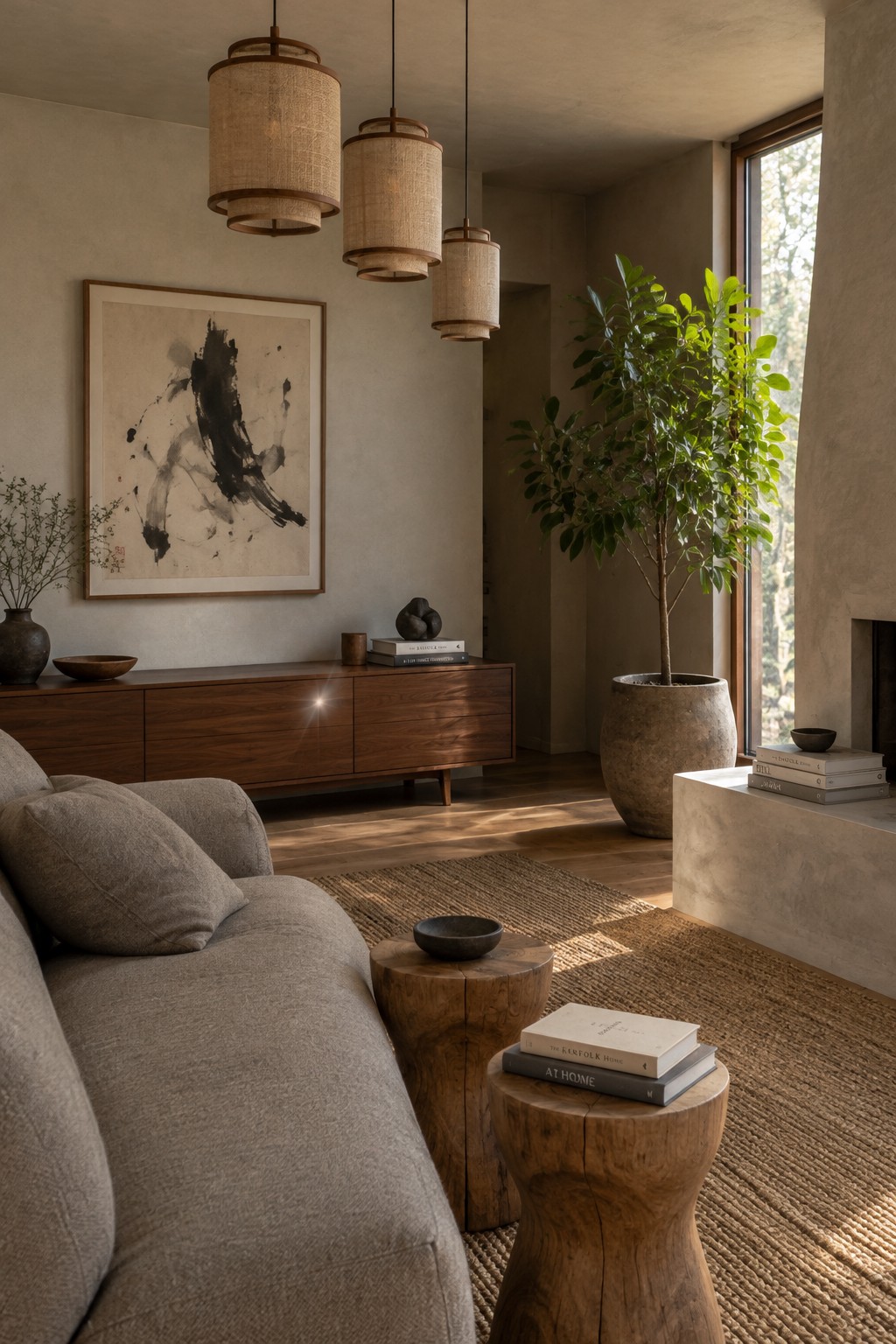
Organic pendant lights can bring a softer, more natural feel to a room with simple finishes. Here, woven shades and wood frames add texture without making the lighting feel too formal.
This style works well above a seating area, especially in a room with neutral walls and wood furniture. Choose shades that suit the ceiling height, and vary their hanging lengths slightly if you want a more relaxed arrangement.
Use Pendant Lights to Frame the Bed
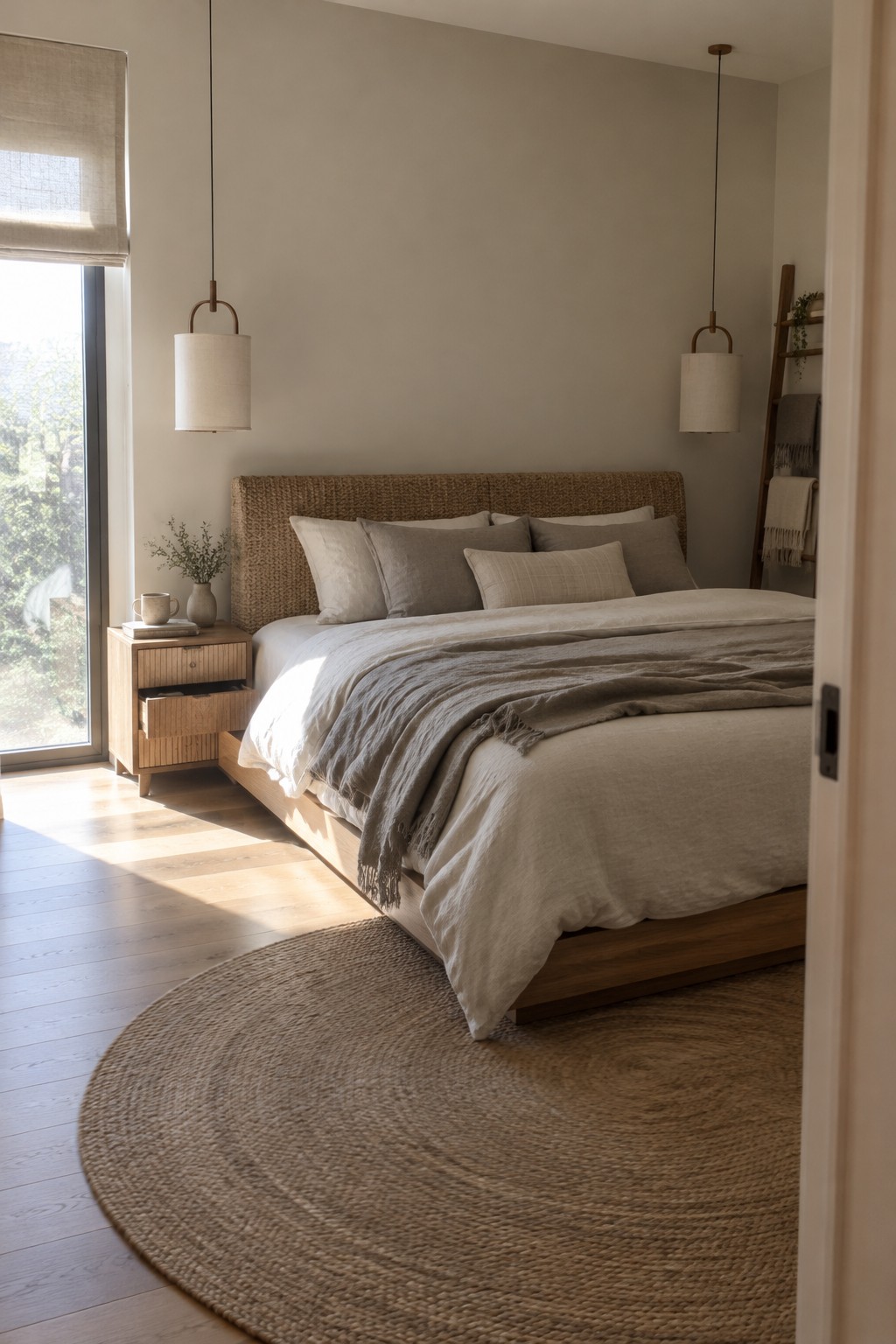
Matching pendants can take the place of bedside lamps and keep a nightstand clear for the things you use every day. Hanging one on each side of the bed also gives the room a settled, balanced look.
Choose shades that suit the scale of the bed, and hang them low enough to work as reading lights without blocking the view across the room. In this bedroom, the simple fabric shades and wood details fit naturally with the woven headboard.
Use Wood-Framed Pendants In A Bathroom
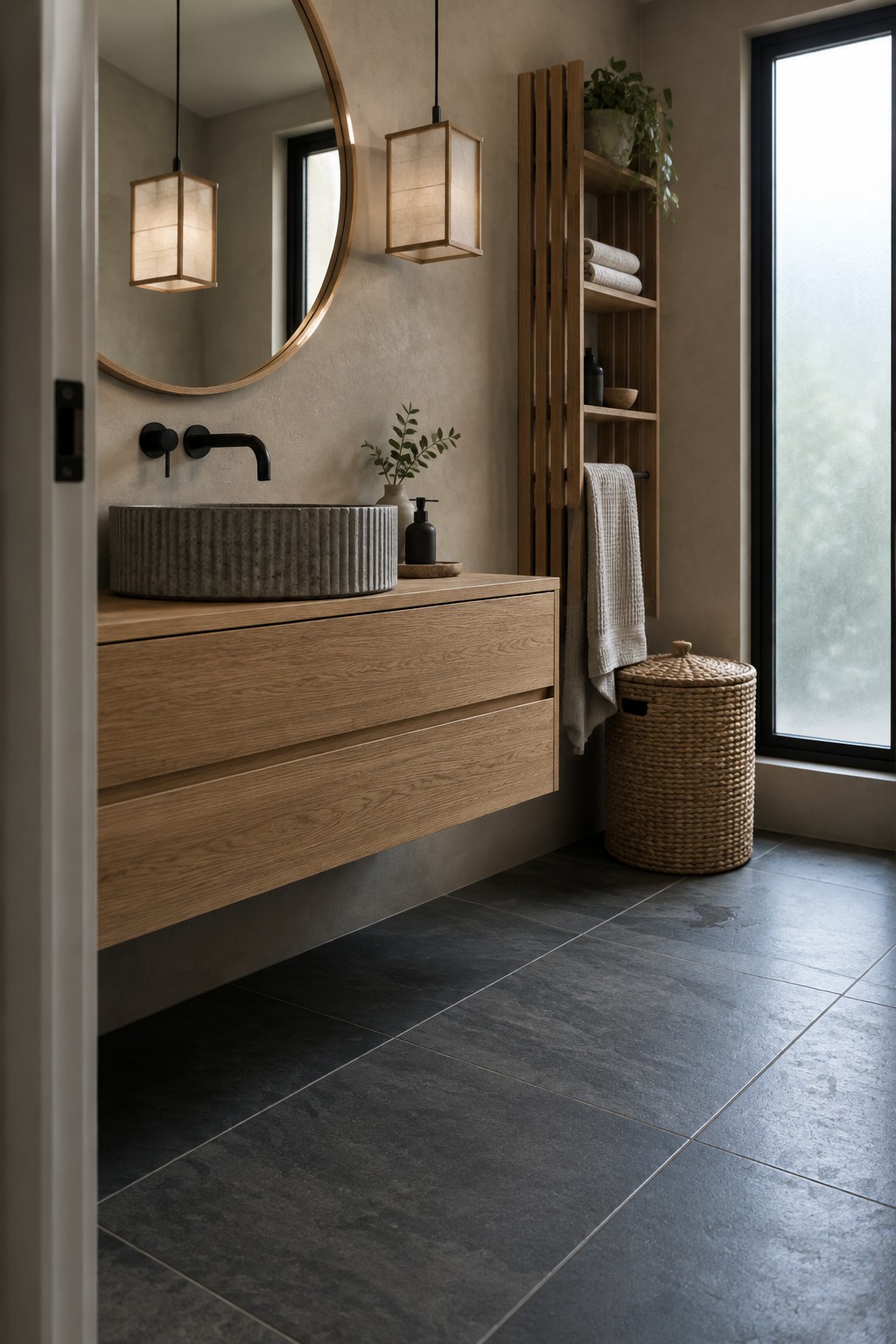
Wood-framed pendant shades can make a bathroom feel less stark. Their simple shape and natural material suit a room with warm wood cabinetry, while a fabric shade gives the light a softer look.
Hang one beside a mirror or above a vanity where it can provide useful light without crowding the counter. In a bathroom, check that the fixture is rated for the dampness of its location and keep it clear of splashing water.
Use a Pendant to Set the Tone in an Entry

A pendant can make an entry feel considered without adding much furniture or decor. A wood-framed shade suits a simple console and natural finishes, giving the space a softer, more settled look.
This approach works well in an entry with a high ceiling or a clear spot above a narrow table. Choose a fixture that leaves enough room to walk beneath it, and keep the rest of the styling fairly simple.
Choose a Natural Pendant Shade for a Home Office
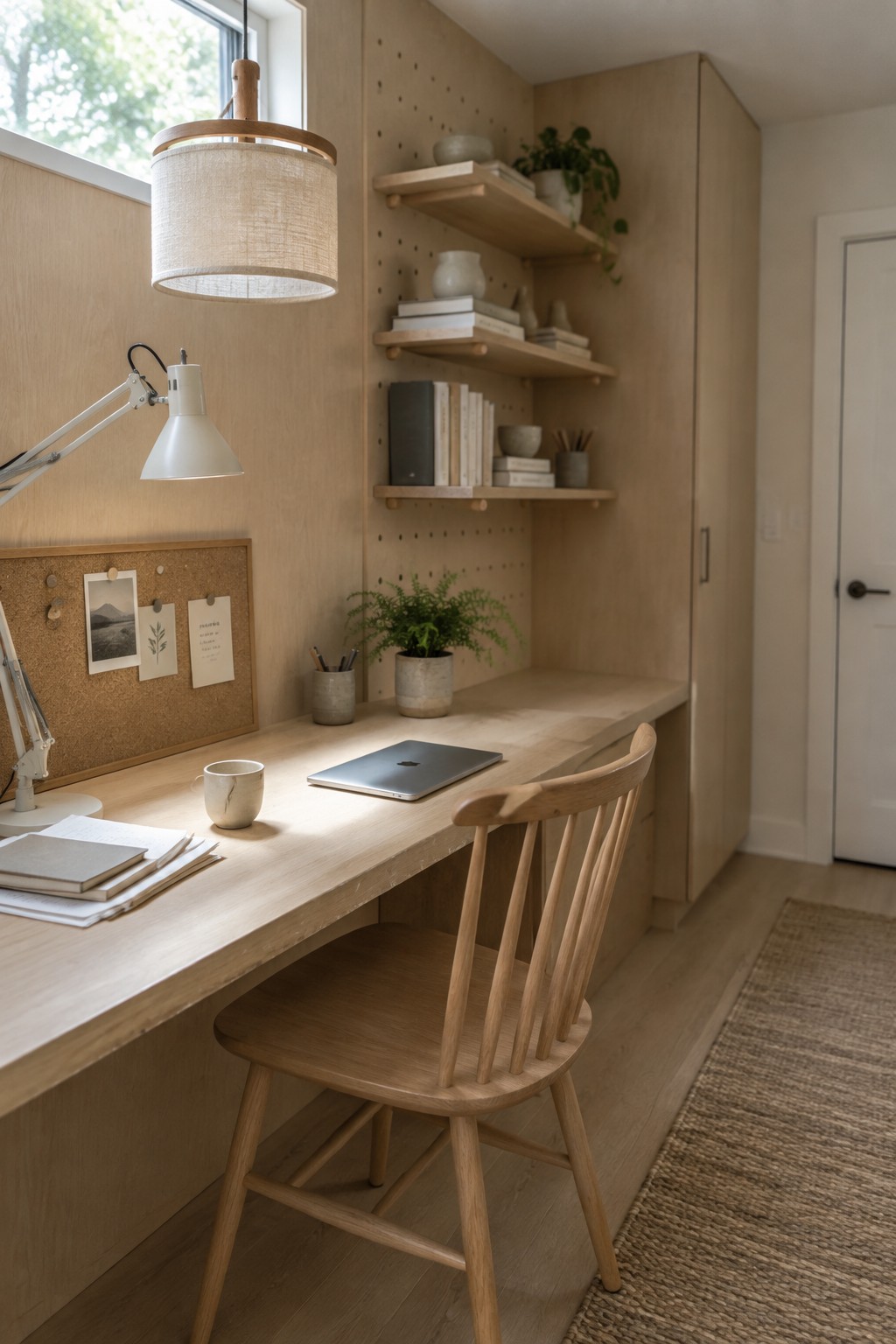
A pendant with a wood rim and a woven shade can bring a softer look to a work area without making it feel fussy. The pale materials suit a simple built-in desk, while the shade helps the light feel less stark.
This style works well above a desk or in a small reading nook, especially when the rest of the room is kept fairly simple. Check the pendant’s size and hang height so it lights the work surface without getting in the way.
Choose Wood-Framed Pendants for a Nursery

Wood-framed pendant lights can bring a gentle, natural look to a nursery without making the room feel fussy. Here, the pale shades and wood trim suit the simple crib and neutral finishes.
This style works well in a nursery or another quiet room with light wood furniture. Hang pendants where they provide useful ambient light, and keep them well out of reach of the crib.
Use Pendant Lights To Make A Laundry Room Feel Finished

Wood-framed pendant lights can make a practical laundry room feel more considered without taking up counter or storage space. In this room, the simple wood frames relate naturally to the worktop and cabinetry, while the light fabric shades keep the fixtures from looking too heavy.
This approach works well in laundry rooms with a high ceiling or a clear spot above the counter. Choose pendants sized to suit the room, and hang them high enough that they do not get in the way of folding or moving around.
Use Pendant Lights to Warm a Long Hallway
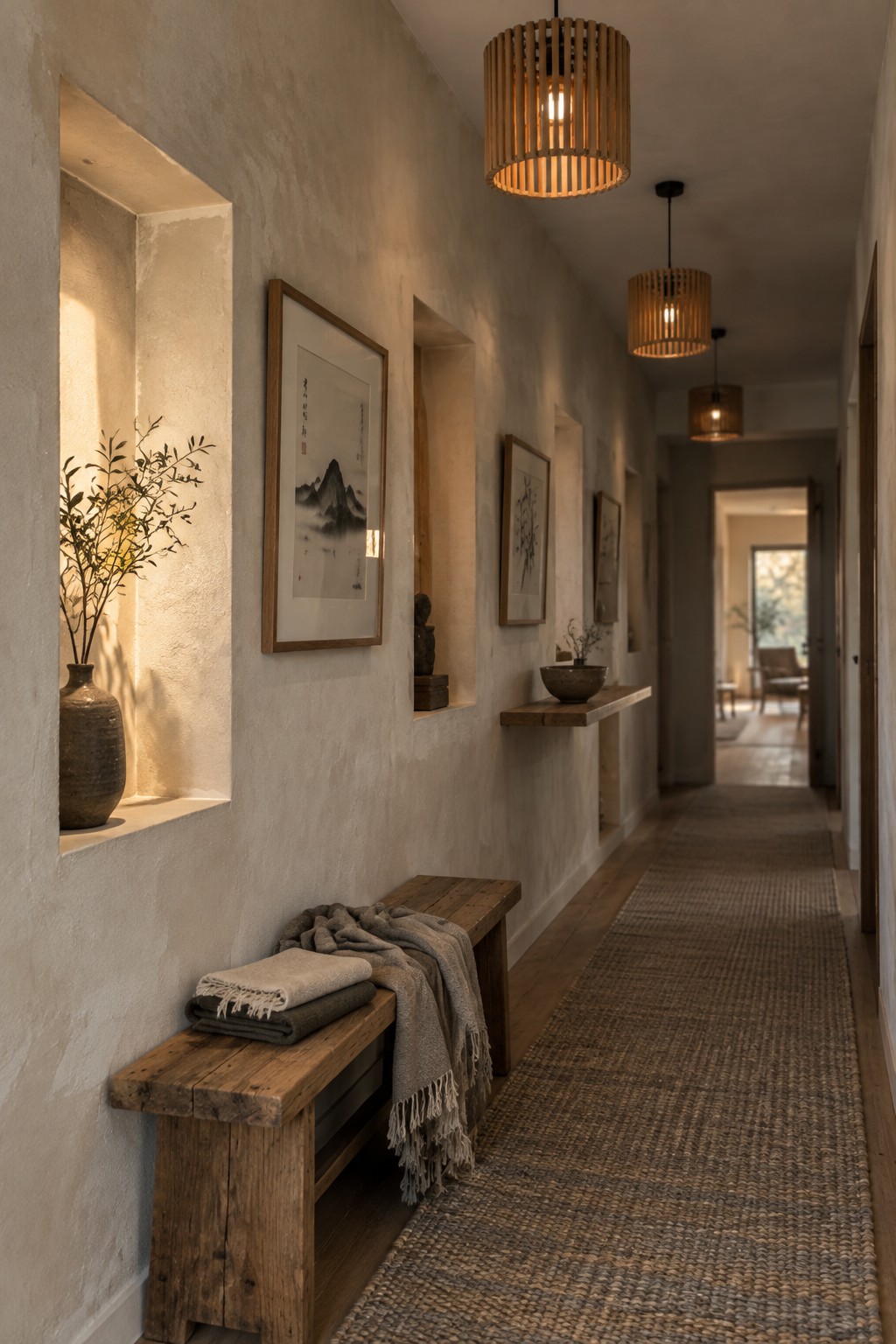
Wood-framed pendant lights can make a long hallway feel less bare and more settled. Their open slats let the light spread gently, while the natural wood suits simple, textured finishes.
For a similar effect, hang a few pendants in a straight line and leave enough space between them so the corridor stays easy to walk through. This works especially well in a narrow hall with warm-toned walls and wood floors.
Use a Woven Pendant to Warm Up a Bedroom
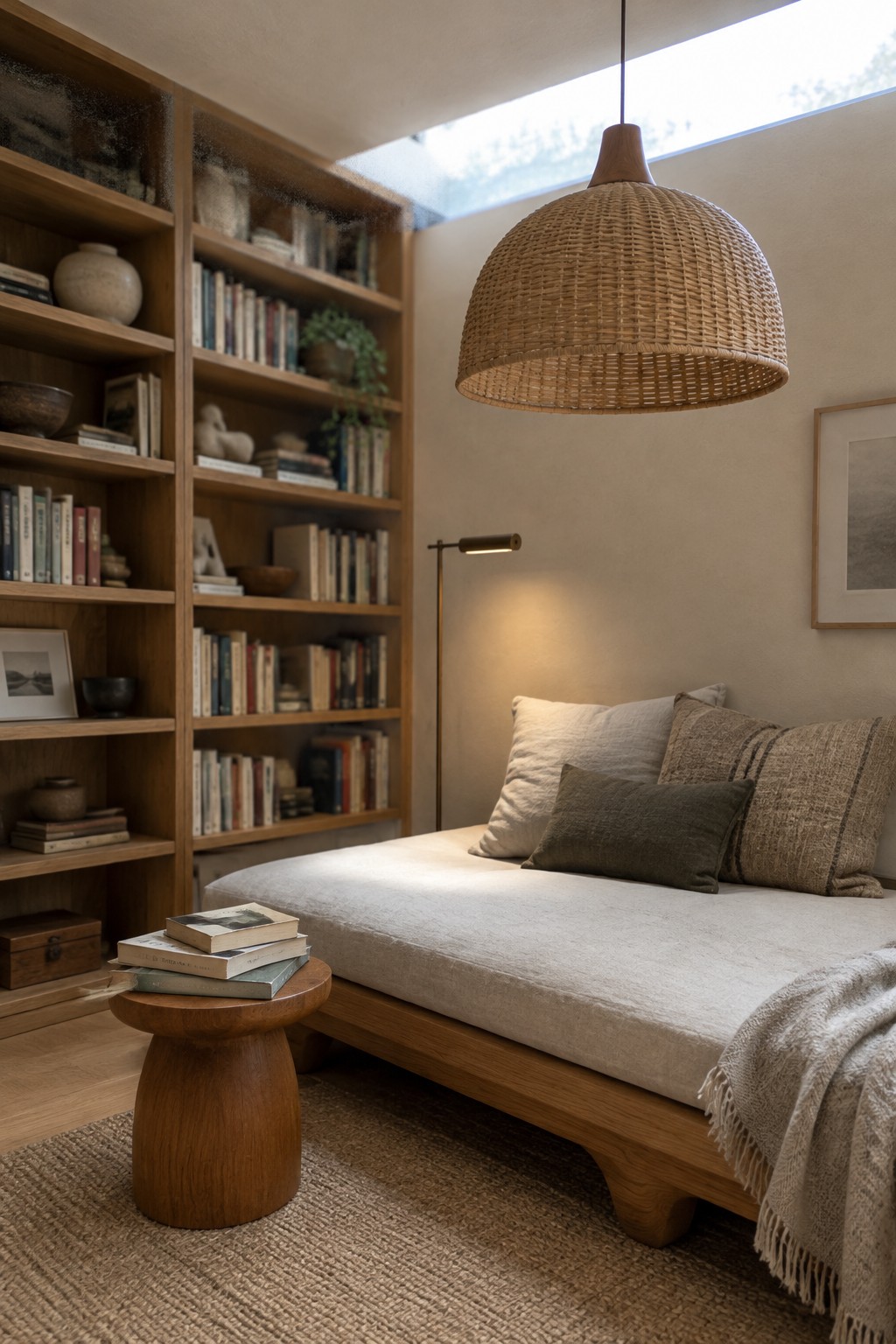
A woven pendant can bring a relaxed, natural feel to a bedroom without adding more furniture or decor. Its textured shade stands out against plain walls and bedding, while still fitting easily into a calm, neutral scheme.
Hang one over a bed or in a reading corner, and make sure the bottom sits high enough to leave clear headroom. A broad shade works best where it will not block sightlines or crowd a smaller room.
Use Wood-Framed Pendants in a Dining Nook

Wood-framed pendant lights can make a dining nook feel warmer without adding much visual clutter. Their open shades let light spread across the table, while the natural material suits a relaxed, pared-back room.
In a small dining area, hang the lights low enough to define the table, but high enough to keep sightlines clear. A few shades grouped together work well above an oval table, especially when the rest of the room stays simple.
Use a Paper Pendant to Warm Up a Bathroom
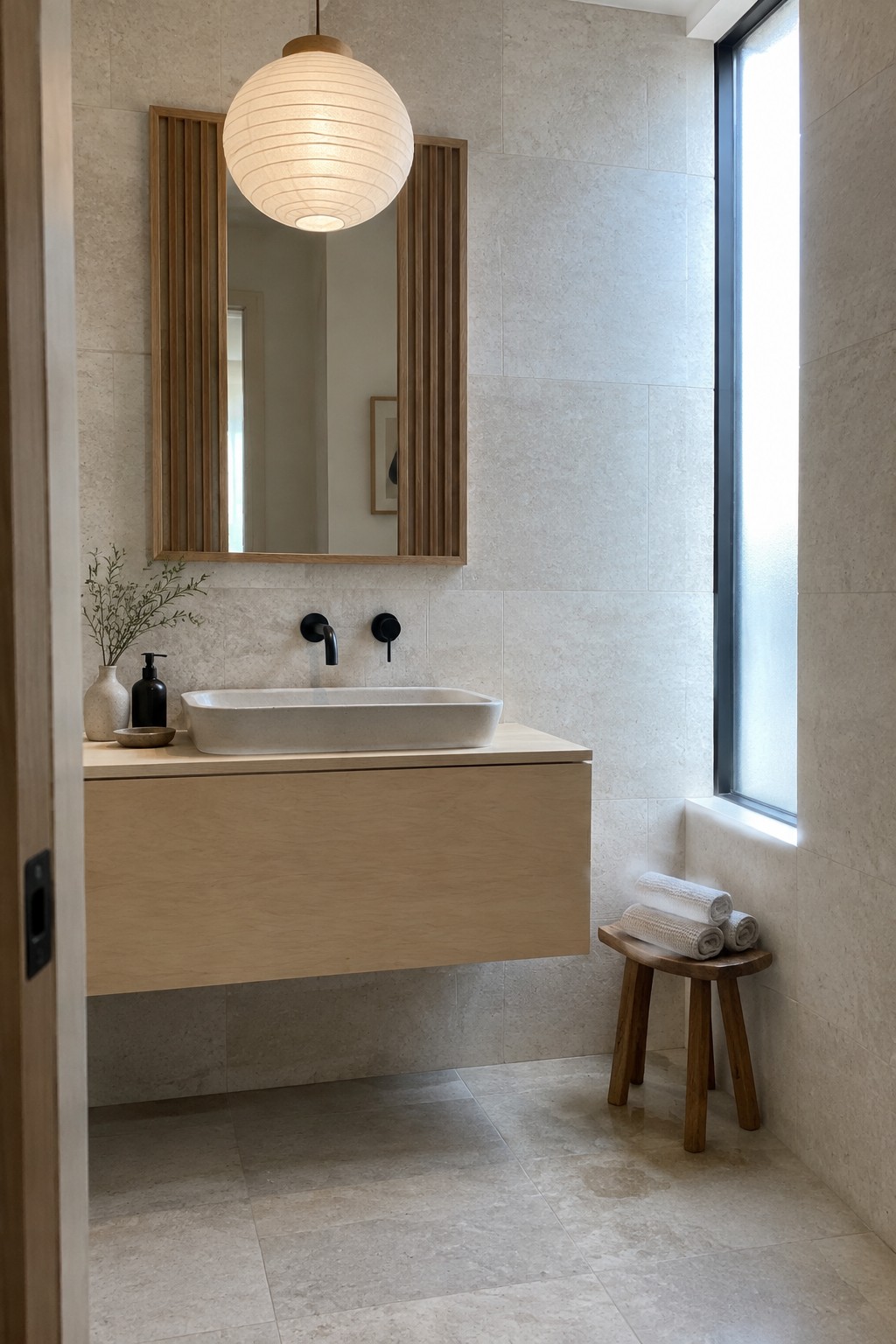
A paper pendant can make a tiled bathroom feel less stark. Its rounded shape and soft, filtered light bring a gentler feel to a room with hard surfaces, while a wood detail at the top ties in easily with a wood vanity or mirror frame.
This style works best where the pendant can hang clear of the sink and does not need to handle splashes. Check that the fixture is rated for the bathroom location, and choose a size that leaves the mirror easy to see.
Let Pendant Lights Set the Mood in a Living Room
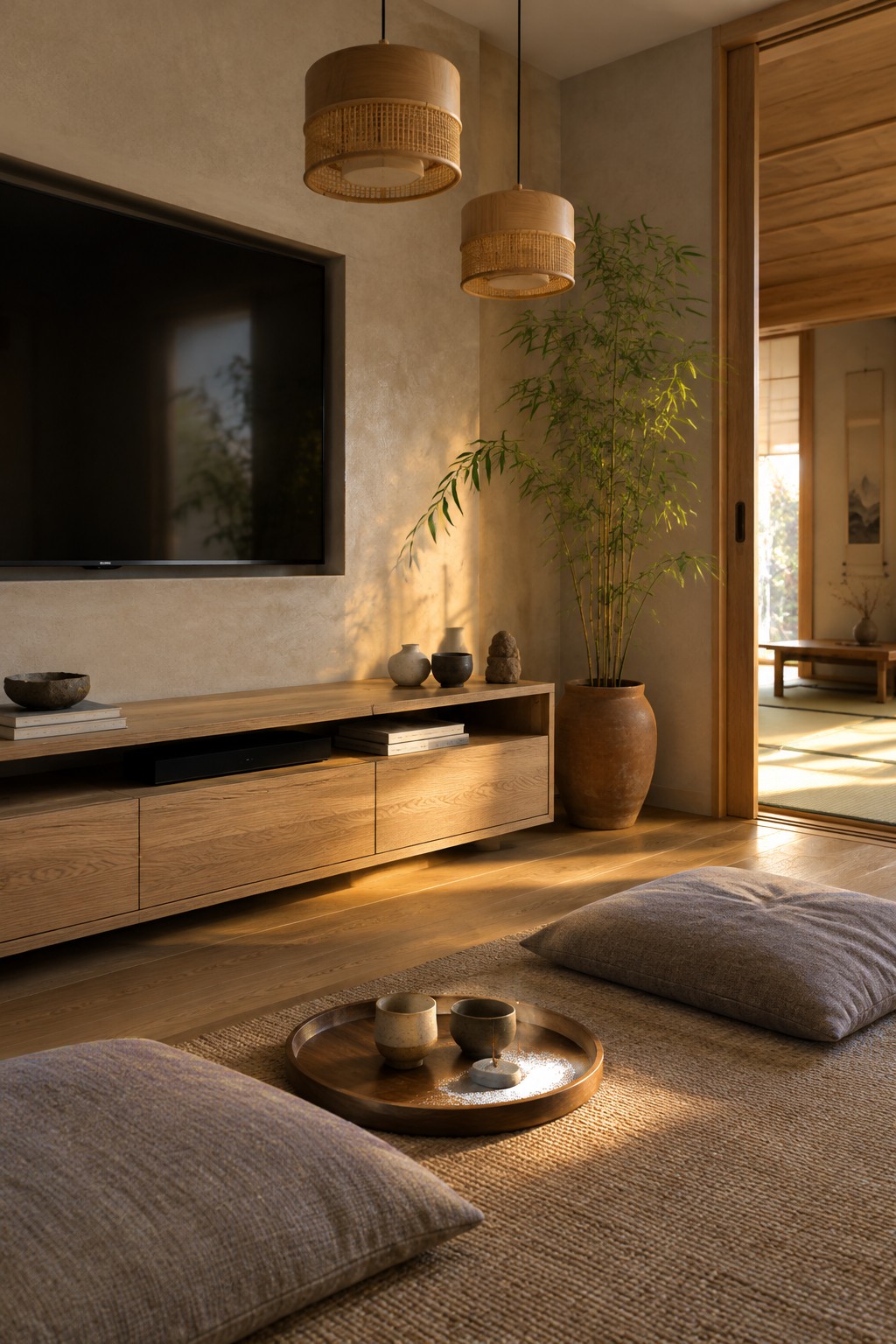
Pendant lights can help a living room feel calm and settled without adding more furniture or decor. Wood and woven shades bring a natural touch, while their soft, downward light suits a room meant for quiet evenings.
Hang pendants where they won’t block the view or get in the way of conversation. In this room, two shades give the seating area a gentle rhythm, but one well-placed fixture can work just as well in a smaller space.
Use a Woven Pendant to Warm Up a Dressing Area

A natural pendant shade can make a dressing area feel less like a row of storage and more like a comfortable part of the home. Its woven texture works especially well beside simple wood cabinetry, adding a softer note without needing much extra decoration.
Keep the shade in proportion to the space, and hang it where it gives useful light without getting in the way of doors or movement. This idea suits a walk-in closet or dressing corner, particularly when the finishes are simple and natural.
Use a Wood-Framed Pendant to Warm a Kitchen Work Area
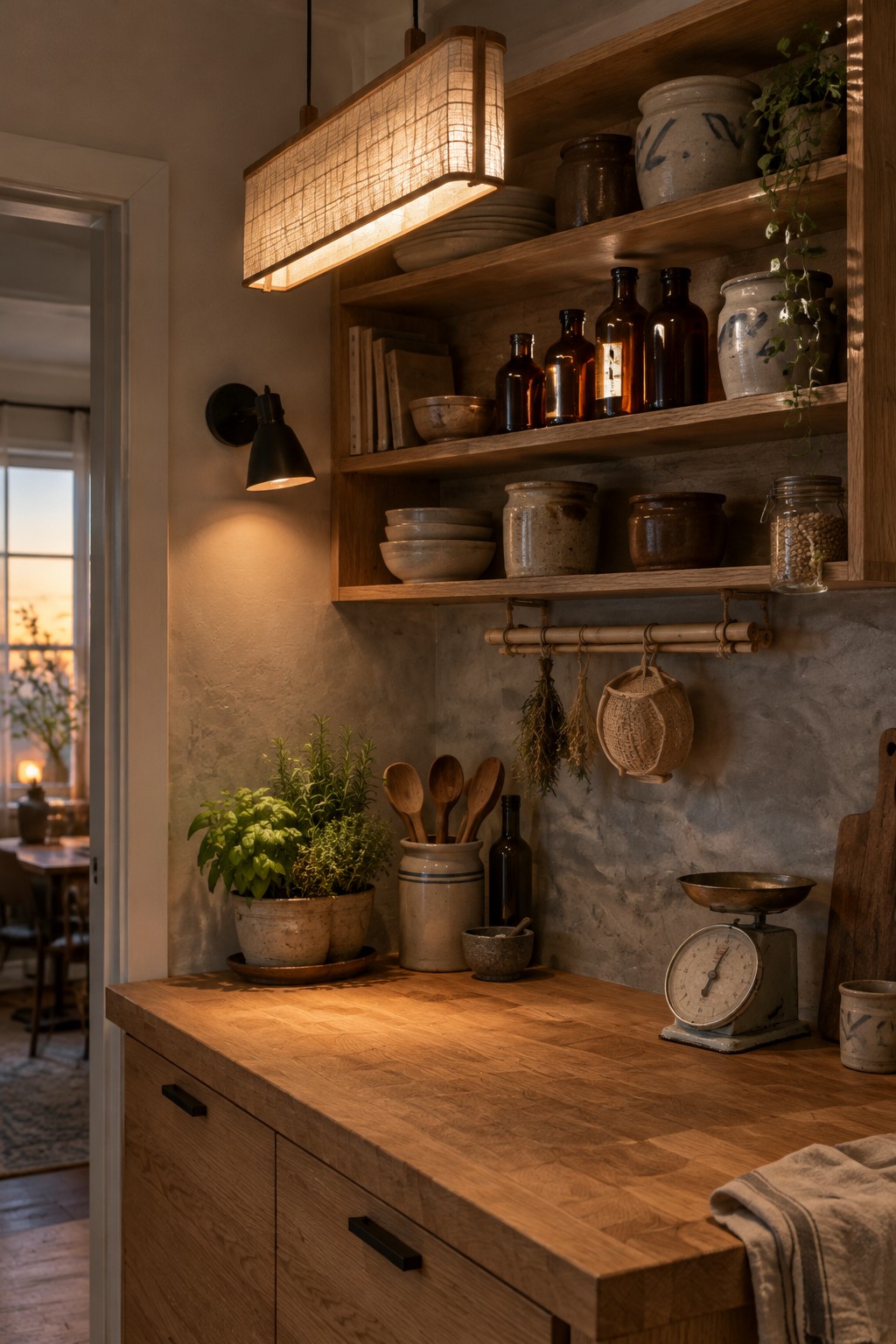
A wood-framed pendant can make a kitchen work area feel more welcoming without adding extra decoration. Here, the woven shade gives off a softer light that suits the natural wood counter and open shelving.
This style works well above a prep counter or island, especially in a kitchen with simple finishes and natural materials. Choose a shade sized for the work area, and make sure it hangs high enough to leave room to chop and move comfortably.
Use Woven Pendants to Define a Small Kitchen Nook
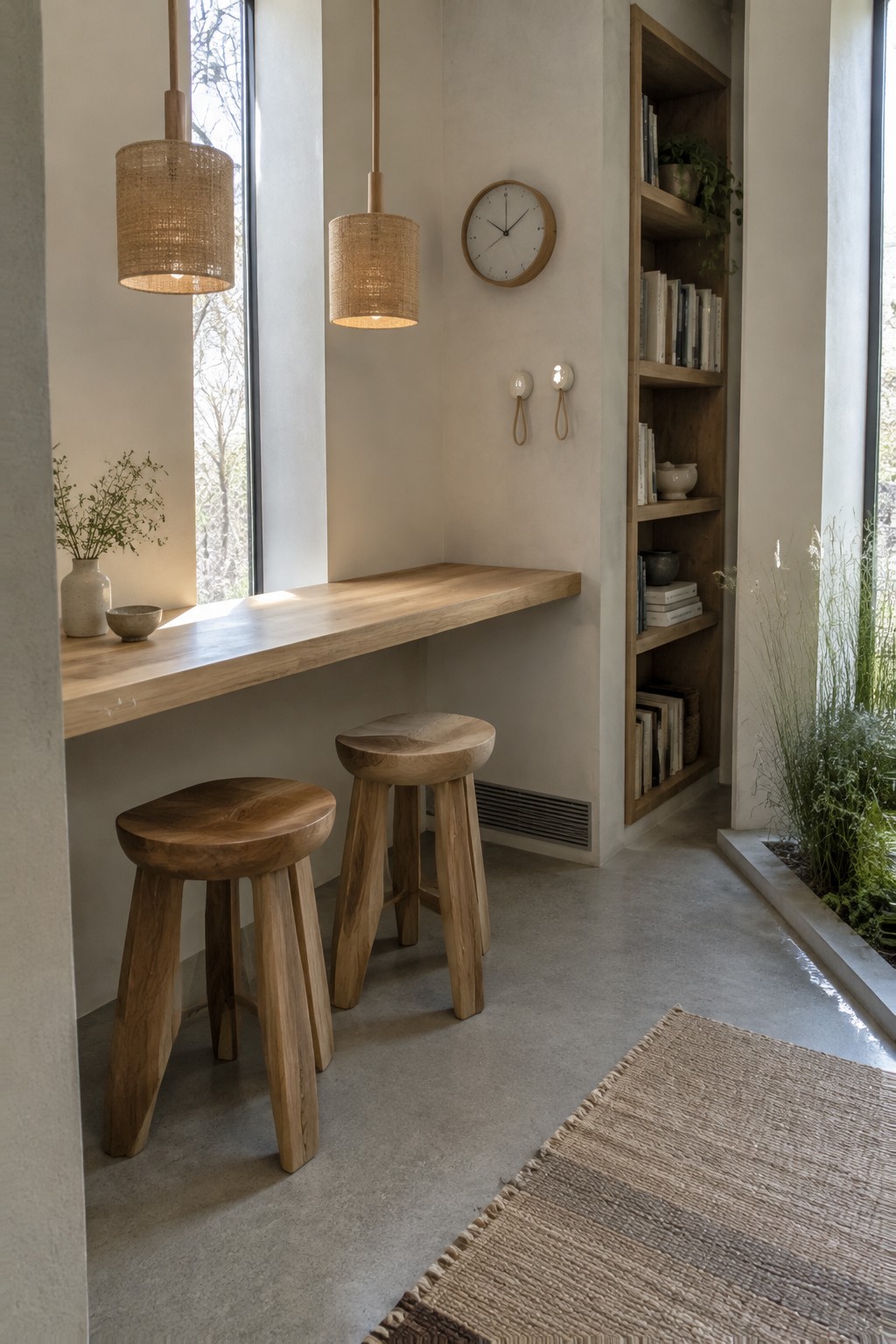
Woven pendant shades can make a simple counter nook feel like a place to sit and linger. Their natural texture suits a pared-back interior, while the light they filter feels gentler than a bare bulb.
Hang pendants above a breakfast bar or narrow built-in counter, and check that they leave enough room for people to see one another across the space. Two shades can work well along a longer counter, as shown here.
Frequently Asked Questions
Q: What size pendant works over a dining table?
A: Choose a shade that feels substantial without crowding the table. A single pendant often suits a smaller table, while a longer table may look better with two or three spaced evenly.
Q: Do wood-framed shades give off enough light?
A: They can, but the frame and shade may soften or direct the light. Check whether the design is open or enclosed, and choose a bulb that fits the room’s needs.
Q: How do I keep the wood from clashing with my furniture?
A: Look for a wood tone that echoes something already in the room, such as a table or floor. It doesn’t need to match exactly. A little contrast can feel natural with Japandi style.
Q: Are these pendants a good fit for a low ceiling?
A: They can be, if you choose a compact fixture and hang it high enough to leave clear headroom. For a dining table, you can hang it lower above the tabletop without blocking the room’s main path.
