

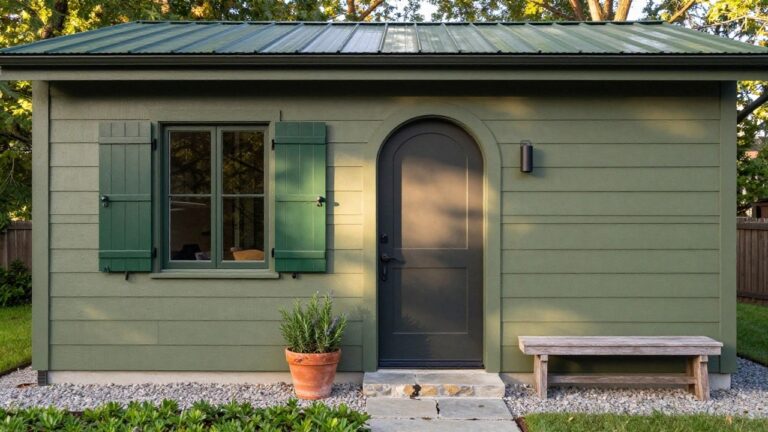
I’ve driven by my share of green houses over the years, but the ones that go all-in on monochromatic shades often surprise me with how artistic they end up looking from the street.
They pull off curb appeal by letting facade materials like shingles, stucco, or clapboard take center stage through subtle texture shifts.
What stands out first is usually the roofline or entryway, where a slightly darker green adds just enough shadow play to make the whole thing read as intentional.
I once parked across from a place like that and realized how those details hold up better in person than most color renderings suggest.
A few of these exteriors have tweaks worth noting down for adapting to your own home’s scale.
Black Arched Door on Green Exterior
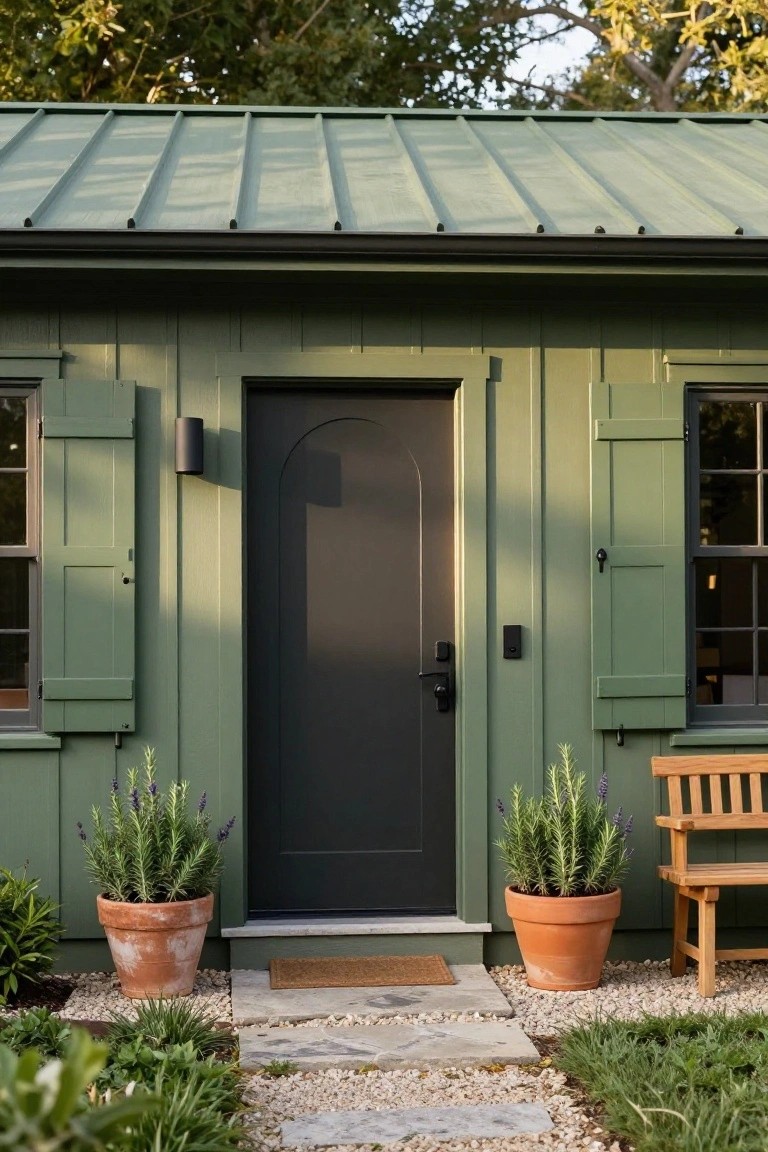
A soft green siding covers this little house, all board-and-batten style with matching shutters. But that black arched door right at the entry changes everything. It stands out without trying too hard, giving the whole facade a bit more personality and drawing folks right to the front.
This kind of contrast fits small outbuildings like sheds or guest spots. Keep the green tones muted so the door pops, and add a couple pots of rosemary or lavender nearby for balance. It works on any simple structure where you want the entry to feel like the main event.
Green Arched Entry Door
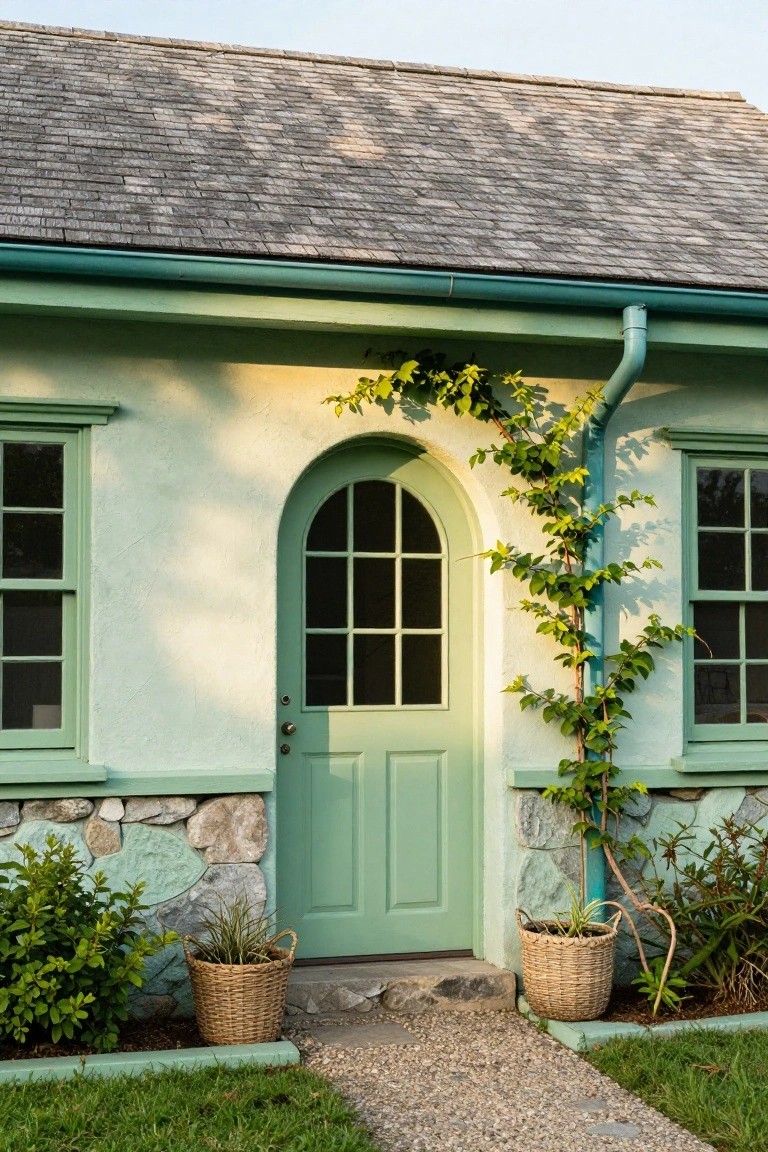
A green arched door like this one makes a small house feel more inviting right from the street. The soft green paint pulls from the trim and gutters, blending everything into one calm shade range. Ivy climbing up beside it adds just enough life without overwhelming the clean lines.
Try this on a cottage or bungalow where you want subtle curb appeal. Pick a sage or mint green for the door to echo your house color, then plant a hardy vine nearby to grow up naturally. It suits shady yards best, and watch that the ivy doesn’t creep onto the roof.
Sage Green Facade with Matching Planters
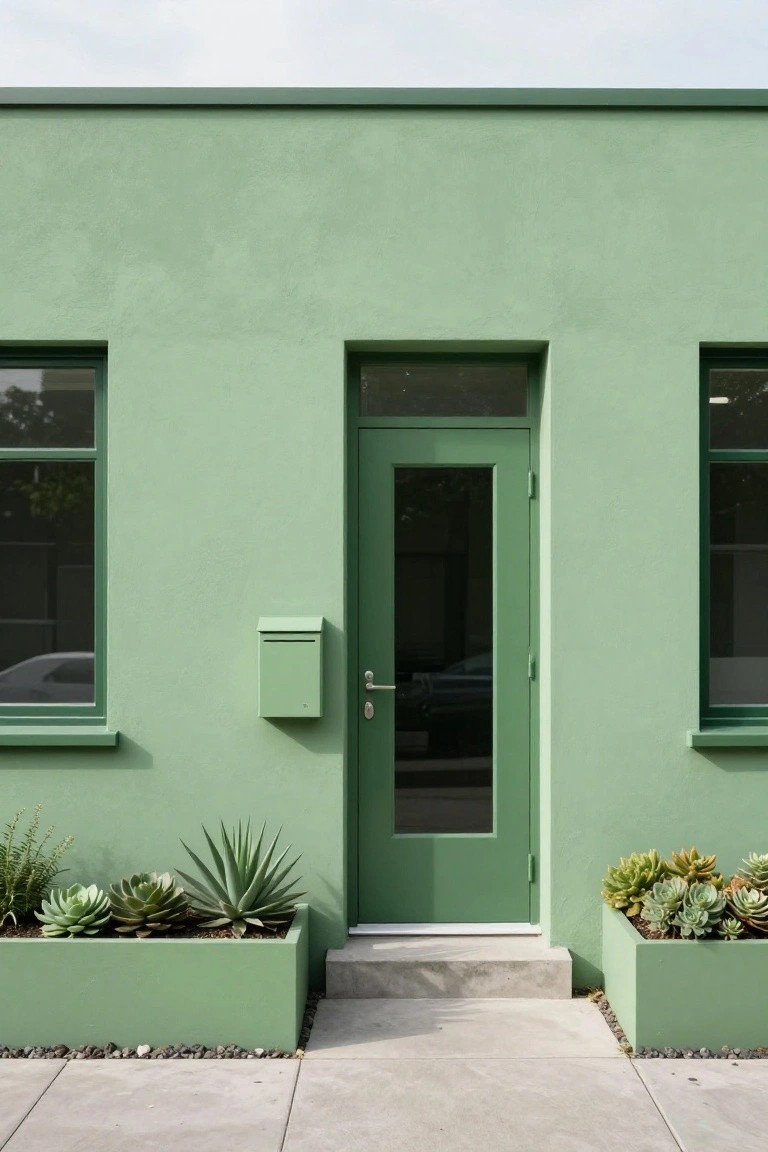
This exterior pulls off a full monochromatic look by painting the walls, door, window frames, mailbox, and planters all in the same soft sage green. It gives the house a calm, artistic feel that stands out quietly from the street. No clashing colors. Just one shade doing its thing.
Try this on a simple boxy house where you want curb appeal without fuss. The matching planters with succulents add life right at the entry, keeping maintenance low. It suits milder climates best… keeps things fresh year-round.
Green Shingle Cottage Facade
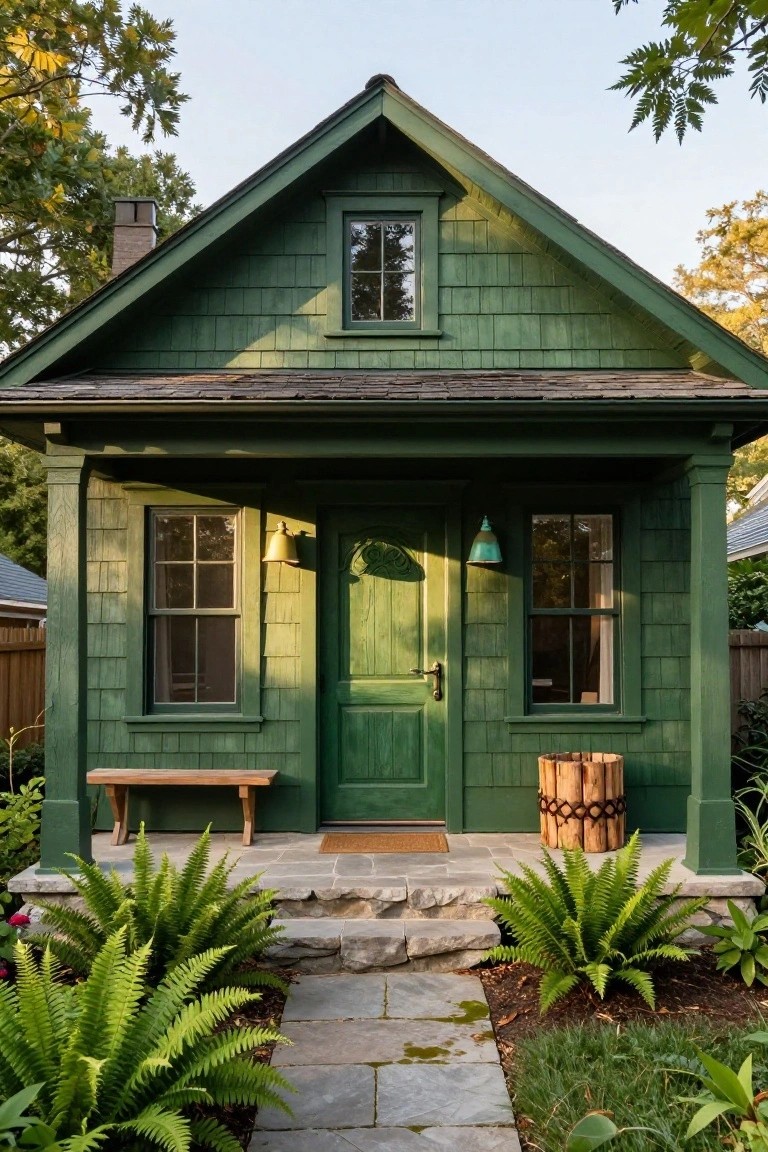
Deep green shingles cover this cottage from roof to porch, giving the whole front a unified, artistic look that feels right at home in a garden setting. The color picks up on nearby trees and plants without any extra trim to distract. It makes the house seem smaller and cozier, almost like part of the landscape.
You can pull this off on modest homes or backyard structures where you want curb appeal without big changes. Stick to one shade of green across siding, door, and porch rails, then add ferns or simple stone steps out front. It suits shady spots or wooded yards best. Just keep the paint fresh, since green shows dirt over time.
Green Facade with Matching Door
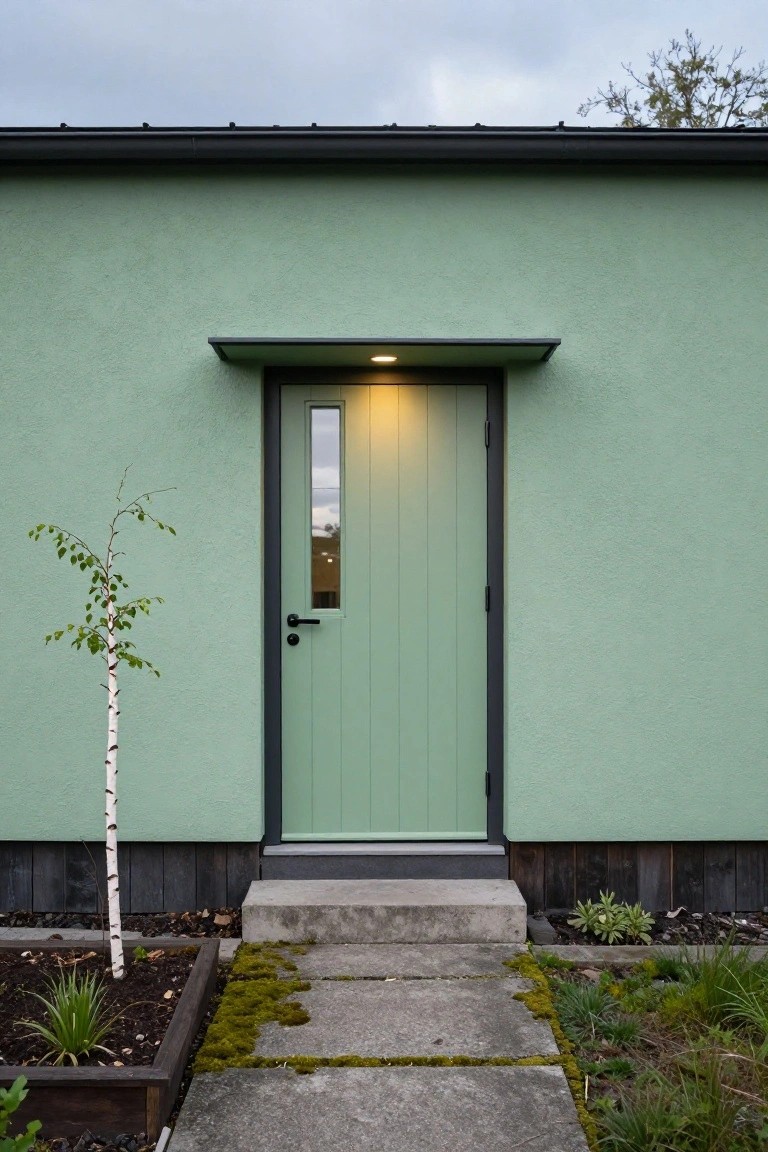
This exterior goes all green, from the soft minty walls right down to the paneled front door. That matching color pulls everything together into one smooth, artistic whole. No distractions. Just a quiet, cohesive vibe that makes the house feel put-together from the street.
Paint your door the same shade as the siding if you want that seamless effect. It suits simpler modern homes or bungalows best, especially with a slim black frame for subtle contrast. Skip it on busier streets where bolder accents might get lost.
Green Doors and Shutters on Pale Walls
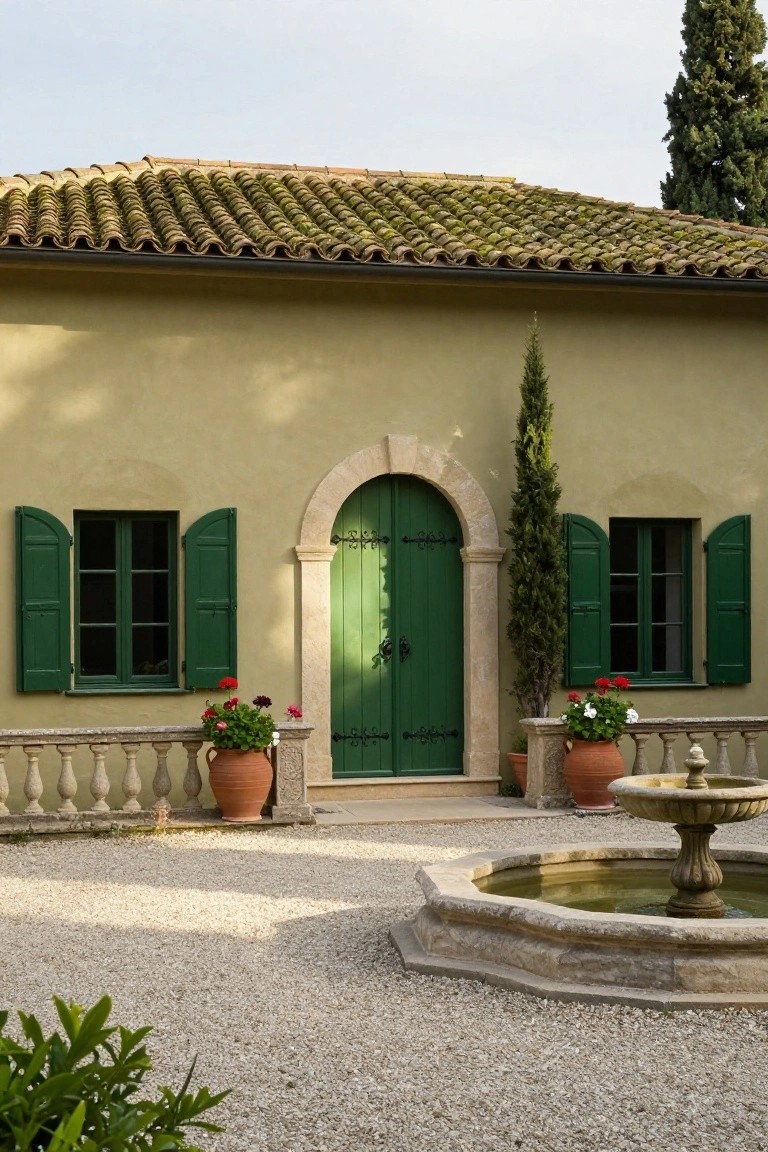
A green front door and matching shutters stand out nicely against these pale stucco walls. The color pulls the eye right to the arched entry, giving the whole facade a fresh, unified look. It’s simple but pulls together the rustic roof tiles and stone details without much fuss.
This setup suits older homes with a Mediterranean vibe, like villas in Italy or France. Use the same green on doors and shutters, then keep walls in a soft ochre or cream. Add gravel ground and a few potted plants nearby… it keeps things low-key and artistic. Just don’t mix in competing colors on trim.
Victorian House in Solid Green
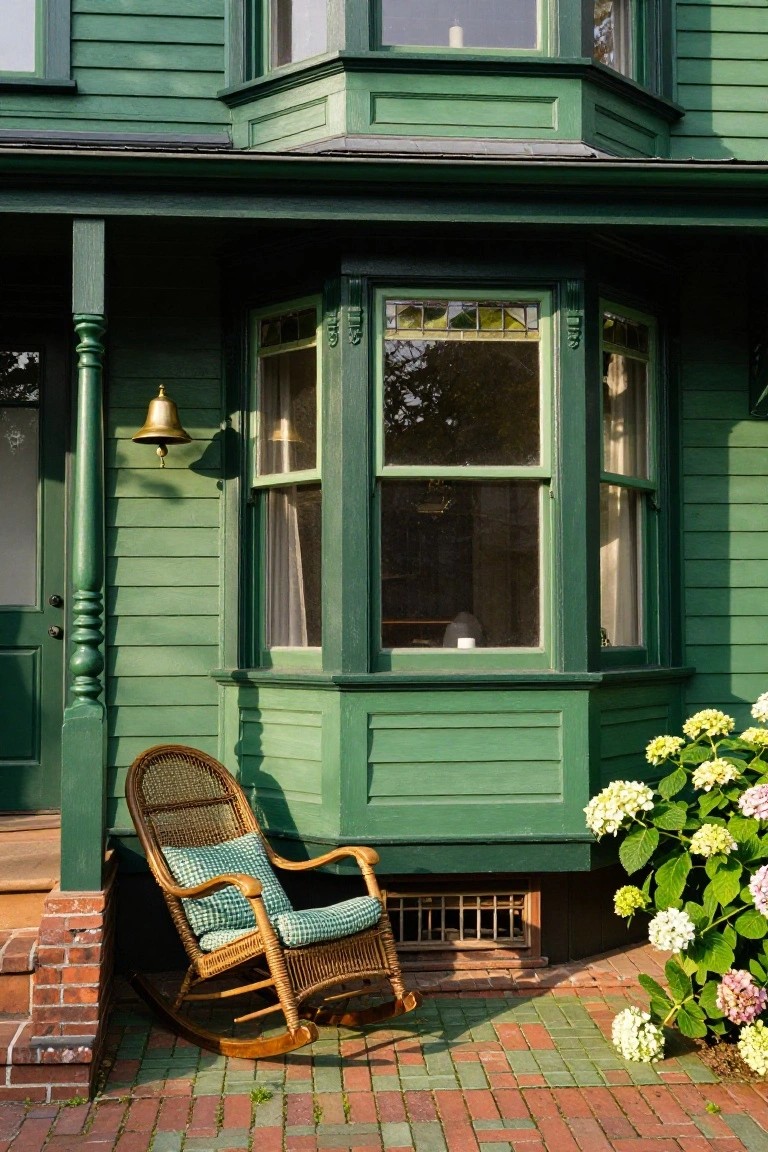
A Victorian house painted top to bottom in one green shade pulls together all the classic details into something artistic and calm. The siding matches the trim, porch posts, and even window frames, so the bay window and turned columns stand out without extra colors fighting for attention. That single tone makes the whole facade feel like a piece of folk art, especially with sunlight hitting it just right.
This approach suits older homes with busy architecture, where too many colors would look messy. Pick a soft, muted green that fades into the yard a bit. It pairs well with natural porch seating like a wicker rocker and simple plantings nearby. Just keep the shade consistent across all wood surfaces for that clean effect.
Green Facade with Planted Entry Canopy
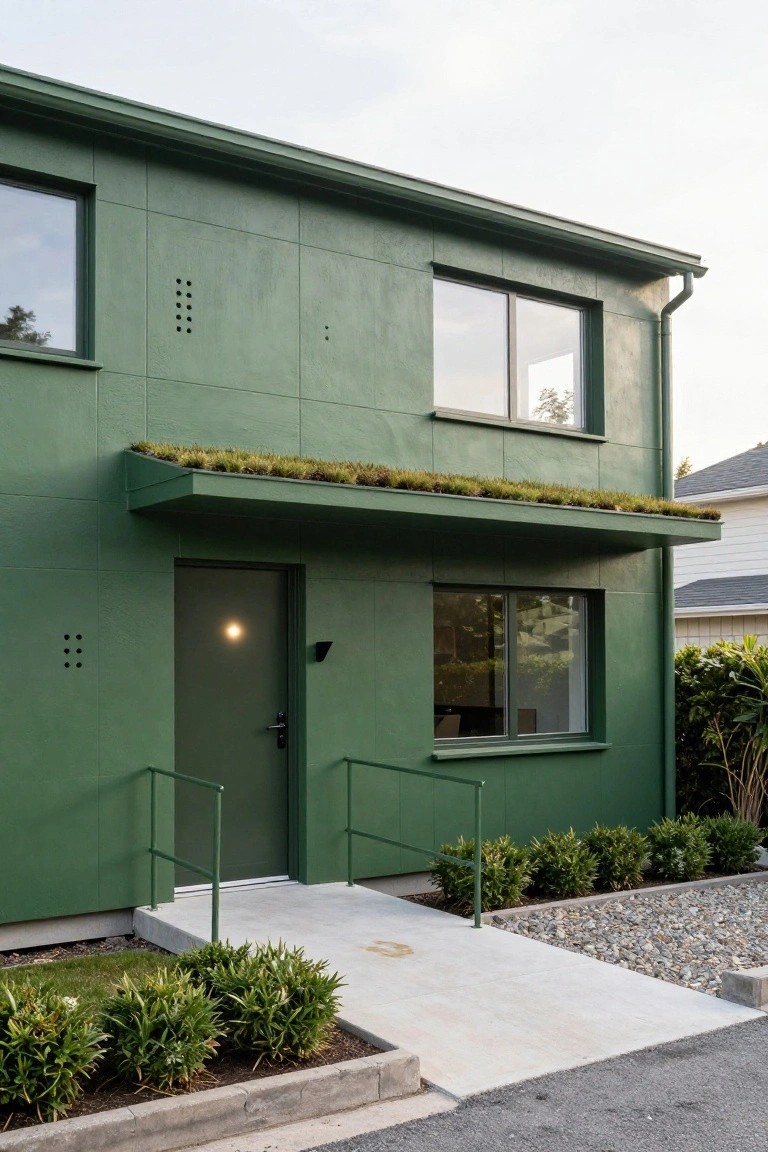
This exterior pulls off a full green look by coating the walls, door, and canopy in the same shade. The real standout is the thin layer of low plants growing right on top of the entry canopy. It keeps everything matching while adding a bit of nature that feels built right in.
You can do this on a simple modern house facing the street. Pick tough sedum plants that don’t need much water, and build the canopy strong enough to hold the soil. It fits milder spots where the green won’t fade too fast… just check your local rules for any green roof permits.
Green Shingle Cottage Facade
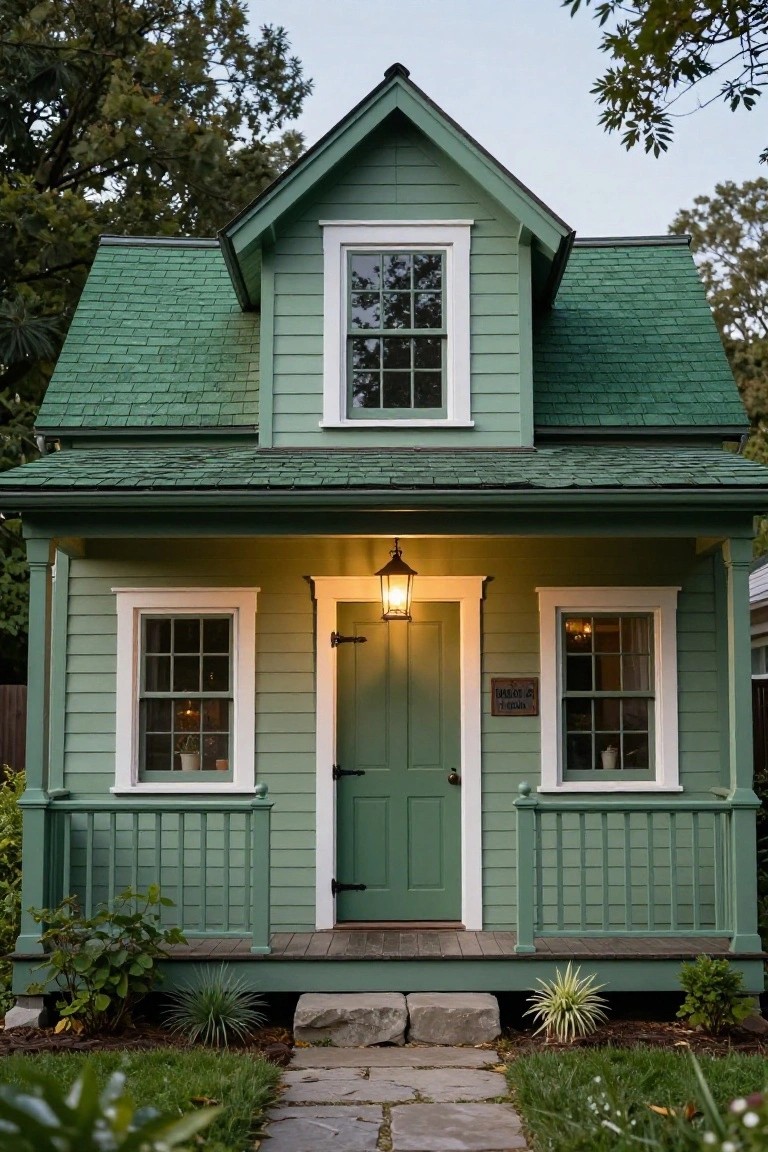
This cottage pulls off a full monochromatic green look with its shingle siding, steep roof, and even the front door all in similar tones. It stands out because the greens blend together so smoothly, giving the house a quiet artistic feel that ties right into the yard. That single lantern by the door keeps things simple and warm at dusk.
You can use this approach on older bungalows or small homes in wooded spots. Pick a few green shades that shift with the light, like sage on the body and deeper on the roof. It suits places wanting low-key charm… just avoid flat tones that might wash out on sunny days.
Rustic Green Shingle Exterior
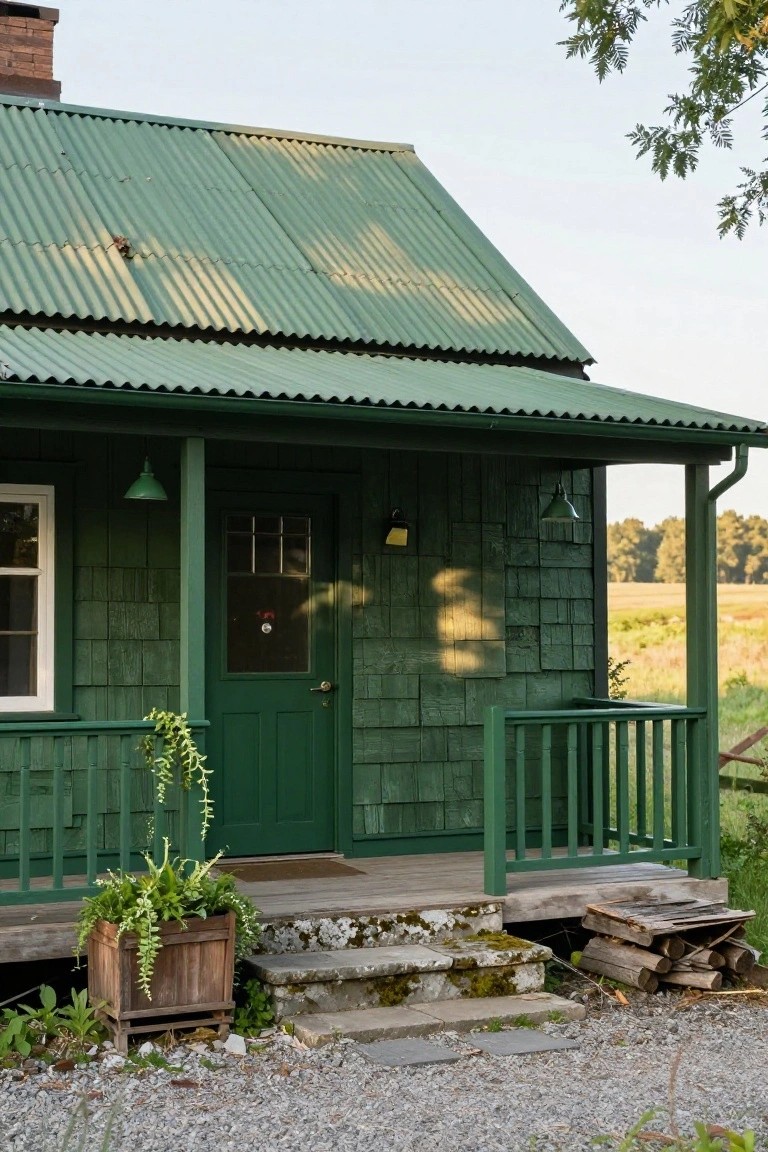
Green shingles cover this cottage from siding to porch rails, all painted the same shade to pull off a full monochromatic look. The corrugated metal roof in matching green ties it together without any breaks in color. That texture from the shingles adds interest up close, while from the road it just reads as a solid, artistic green shape against the fields.
This works best on rural homes or cabins where you want the house to settle into the landscape. Pick a durable paint for the wood, and pair it with simple plantings at the entry so nothing fights the green. Avoid busier trim colors, or it loses that quiet unity.
Sage Green Shingle Siding
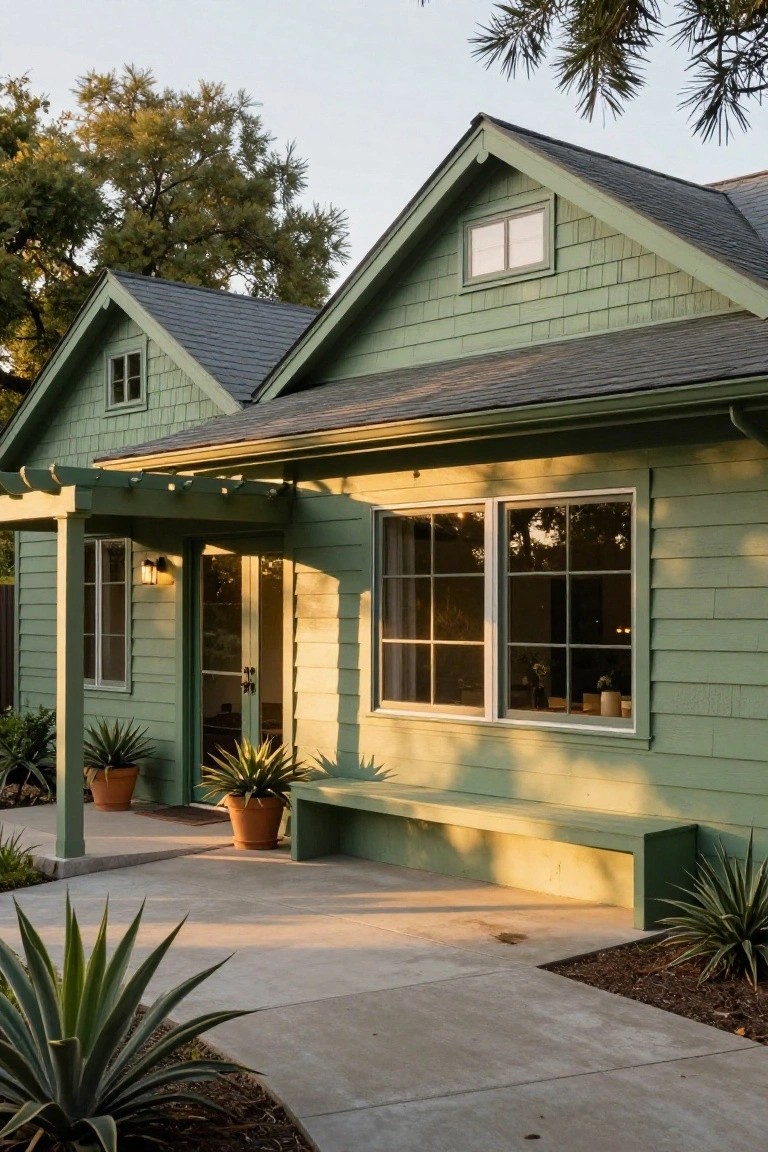
Painting shingle siding in a muted sage green gives this bungalow a calm, artistic vibe. The color washes over the textured shakes evenly, picking up shadows from the gabled roof and pergola. It feels tied to the oaks and succulents nearby, without shouting for attention.
This approach suits Craftsman or cottage homes in wooded spots. Keep landscaping simple, like agaves in pots by the entry bench. Avoid brighter greens… they can look too bold on busy siding.
Shades of Green Build a Unified Facade
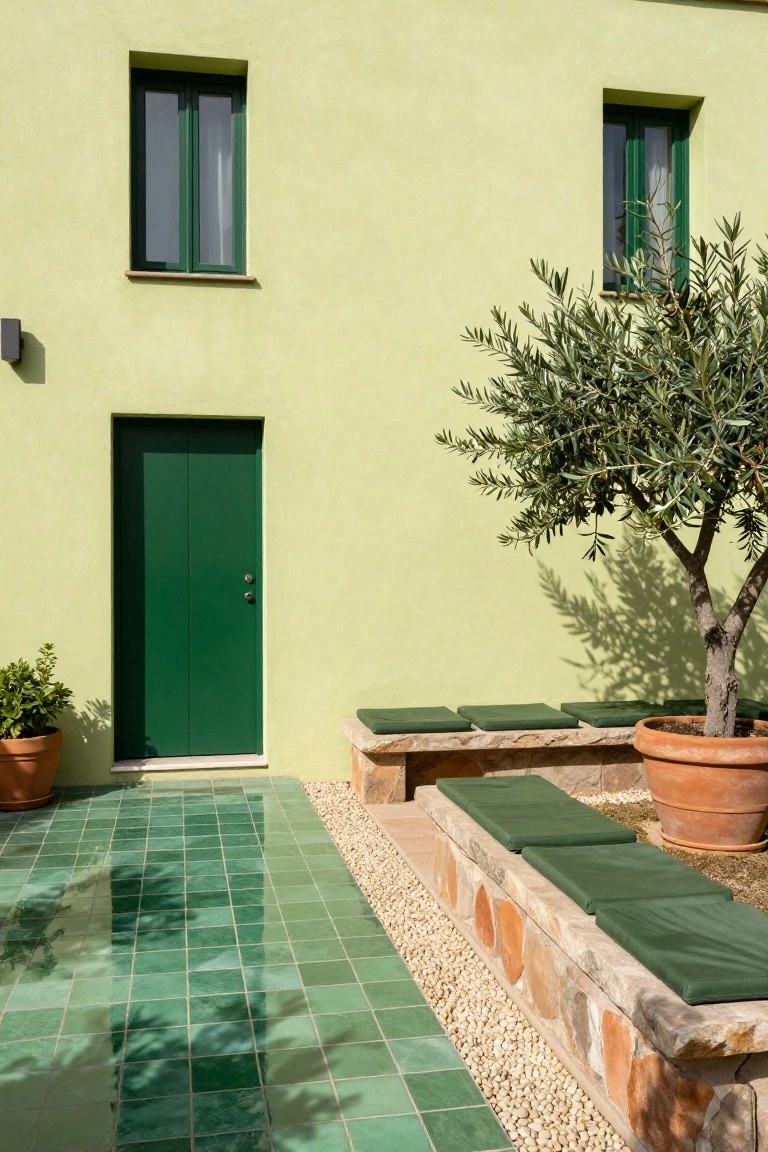
This exterior pulls off a full monochromatic green look by layering pale lime walls with deeper green on the door, window frames, and entry tiles. That repeat of tones ties everything together without needing other colors to break it up. The olive tree nearby just slots in naturally, like it was always part of the plan.
Homes with clean lines do best with this approach. Pick your shades carefully, starting light on big walls and going darker on doors or trim for some depth. It suits warmer climates where green feels at home, but watch the sun fade on cheaper paints.
Green Vertical Siding Exterior
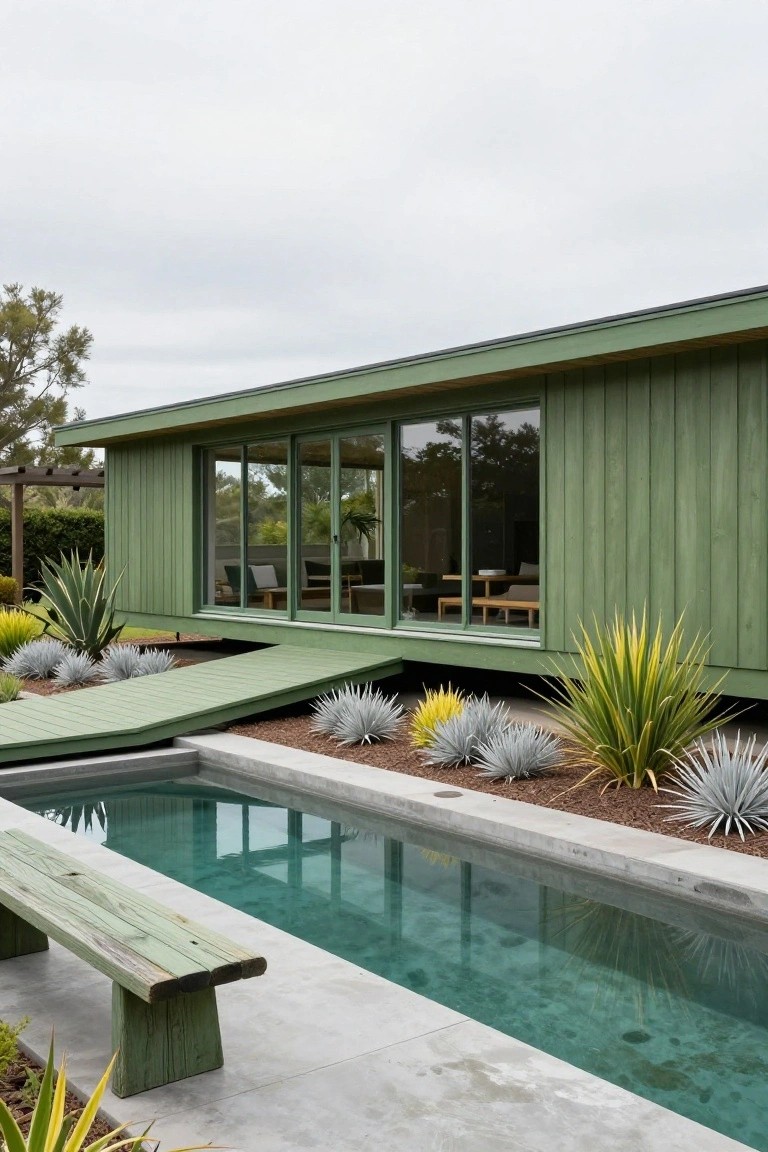
One straightforward way to go all-green on a house exterior is vertical wood siding painted in a soft green tone. It gives the place a clean, modern feel without looking too boxy. Here, the siding covers the whole facade, from the overhanging roof down to the ramp leading to the pool. That consistent color pulls everything together nicely, especially with the green bench nearby.
This works best on low-slung homes in mild climates, where you can echo the green in nearby plants like agaves or yuccas. Just make sure the wood is treated well upfront, since green paint can show dirt over time. It’s a low-key choice that lets the house sit comfortably in its yard.
Green Shingled Cottage Exterior
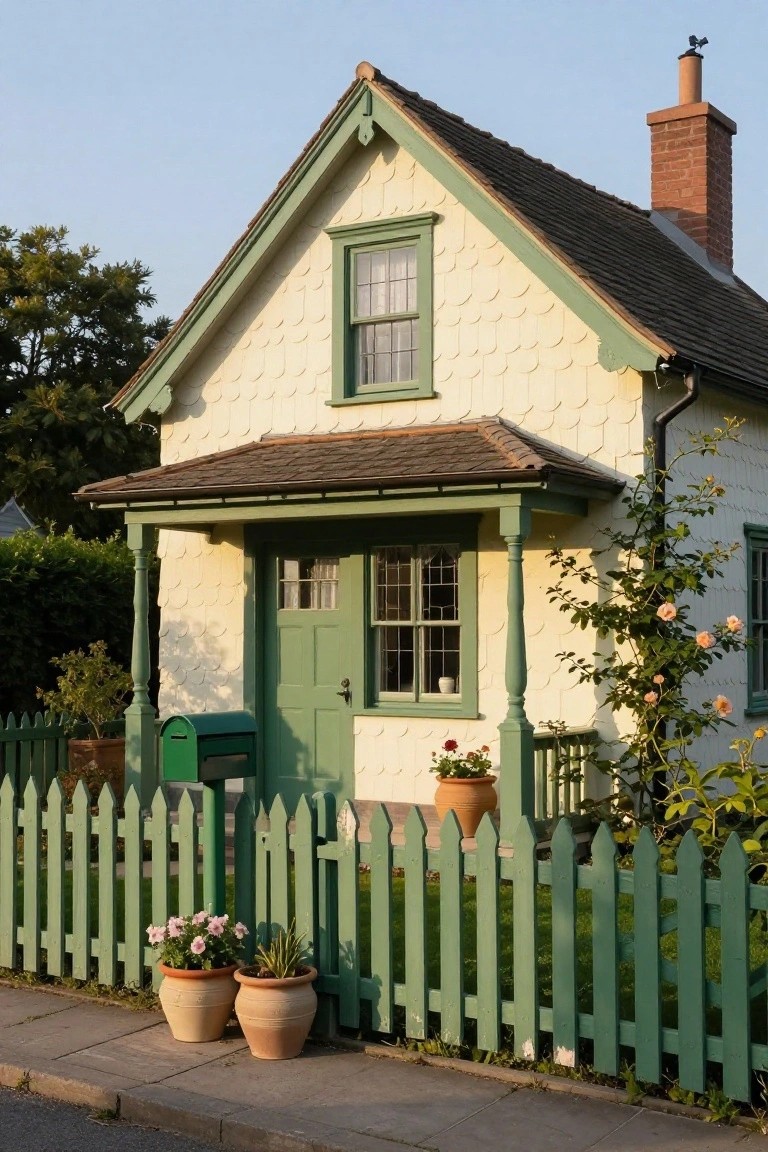
Soft scalloped shingles in a pale green cover this cottage, giving the whole facade a gentle, wavy texture that feels artistic right away. The matching green trim on the windows, door, and porch ties everything together into one calm color story. It’s a simple way to make a house look put-together and a bit whimsical.
This approach suits older-style homes or bungalows in a garden setting. Paint or choose shingles in a light washable green, then echo it on the fence or pots nearby. Skip darker shades unless you want more drama. It keeps curb appeal high without much upkeep.
Green Corrugated Metal Siding
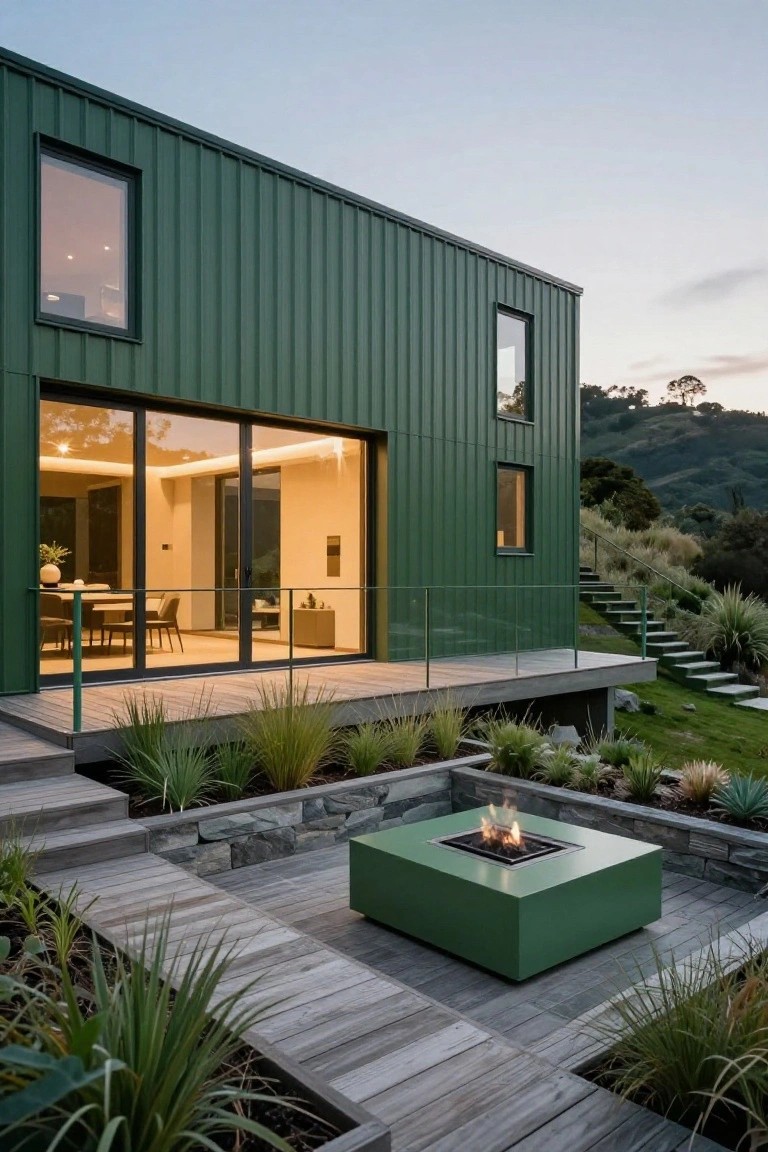
Corrugated metal siding in a deep green shade wraps this modern home nicely. It picks up on the surrounding hills and plants without trying too hard. The texture adds some interest up close, while the color keeps the whole exterior feeling calm and tied together.
This siding works well on sloped sites where you want the house to step back a bit. Use it on side walls or full facades, especially with big glass doors that open to a deck. Go for powder-coated panels to stand up to rain and sun. It suits homes that lean modern but still nod to farm-style roots.
Whimsical All-Green Cottage Exterior
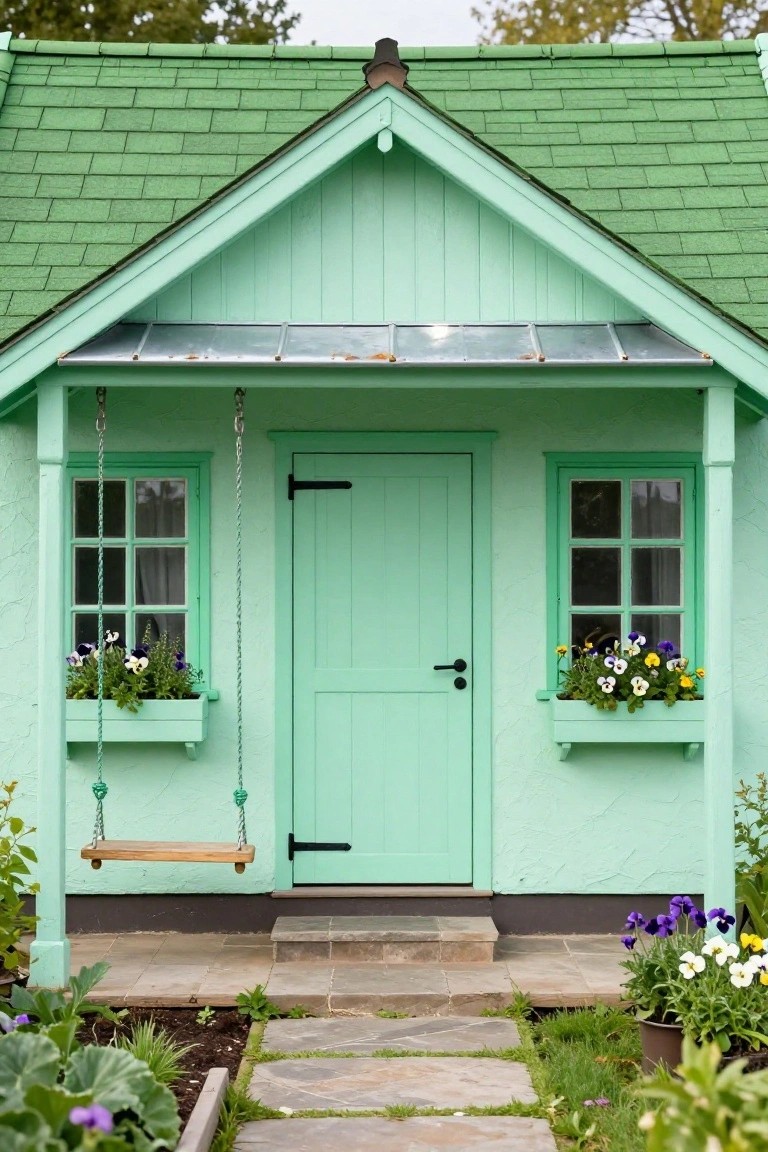
This setup takes monochromatic green to a sweet, storybook level. The pale mint siding flows right into the matching roof shingles, door, window frames, and even the porch swing. Flower boxes full of purple pansies add just the right pop without breaking the green theme. It feels artistic and lighthearted, like a fairy garden house come to life.
Try this on a playhouse, garden shed, or small backyard cabin where space is tight. It suits casual family yards or spots needing a fun focal point. Stick to soft greens for that gentle look, and keep plantings colorful but simple so the house stays the star.
Frequently Asked Questions
Q: How do I pick a green that won’t wash out my house?
A: Walk around your home at different times of day. Grab sample boards and hold them up against the light. You want a shade that shifts with the sun for that artistic glow.
Q: Should the trim and doors match the green siding exactly?
A: Paint them a tone or two off, like olive against sage. This keeps the monochrome flow but adds quiet rhythm. Test it small first.
Q: What’s the best way to keep green paint looking fresh?
A: Rinse off dirt with a garden hose every few months. Spot treat mildew right away with a vinegar mix.
Q: Can I mix textures to make all-green pop more?
And yeah. Pair smooth stucco with rough cedar shakes. Shadows play across them beautifully.
