

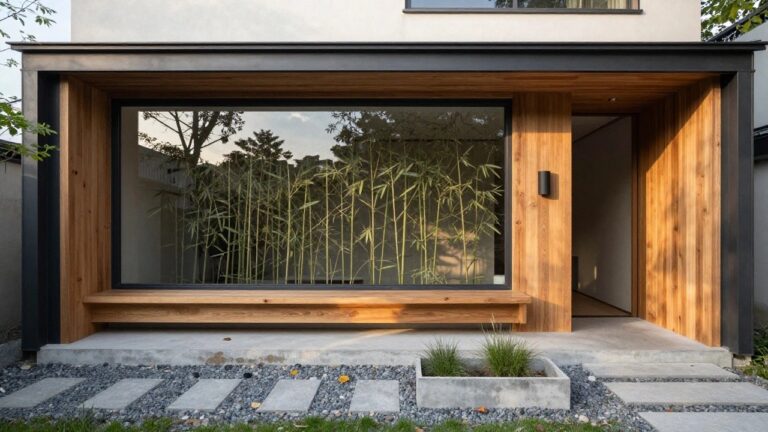
I remember eyeing a neighbor’s facade last summer, where mismatched window sizes threw off the clean lines of their otherwise minimal siding. Getting the proportions right on exterior windows changes how the whole house reads from the street, drawing the eye without shouting. Japandi style nails this by pairing slim frames with natural wood or matte black trim that echoes the roofline and entry details. Those subtle choices boost curb appeal while keeping things calm and grounded in real materials. Test a couple that fit your setup; they’ll make passersby pause in the best way.
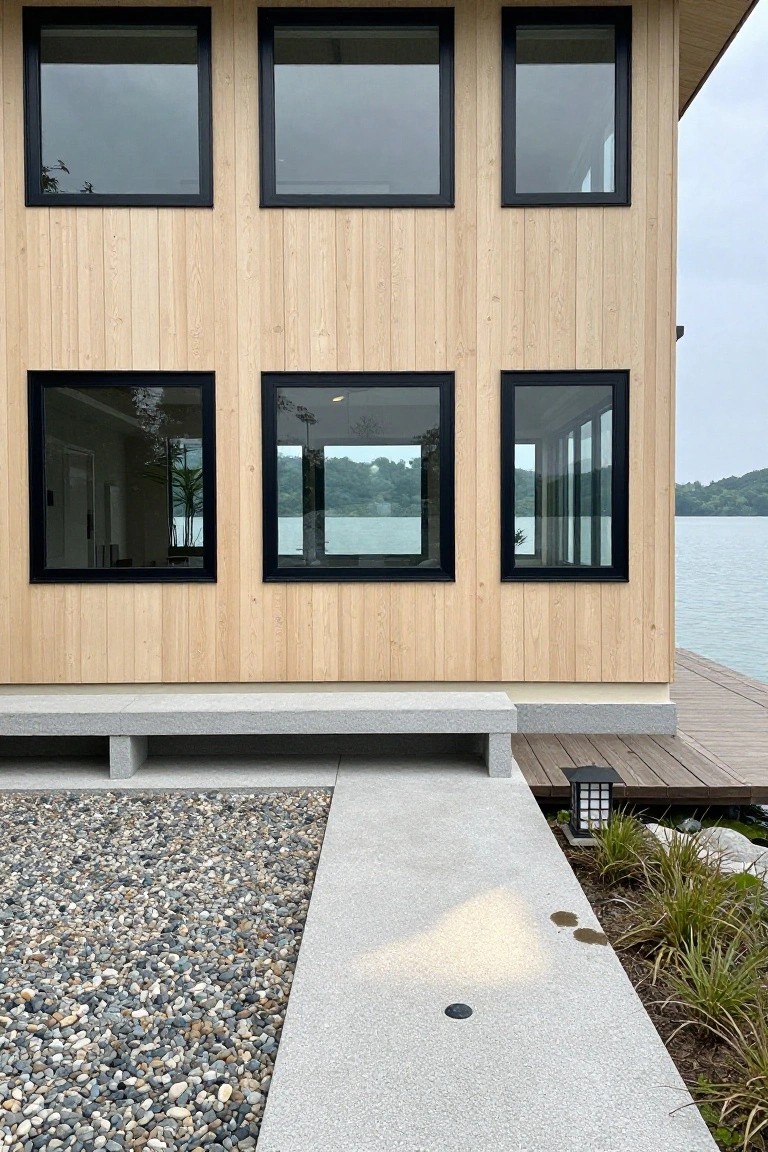
Built-In Bench Under the Window
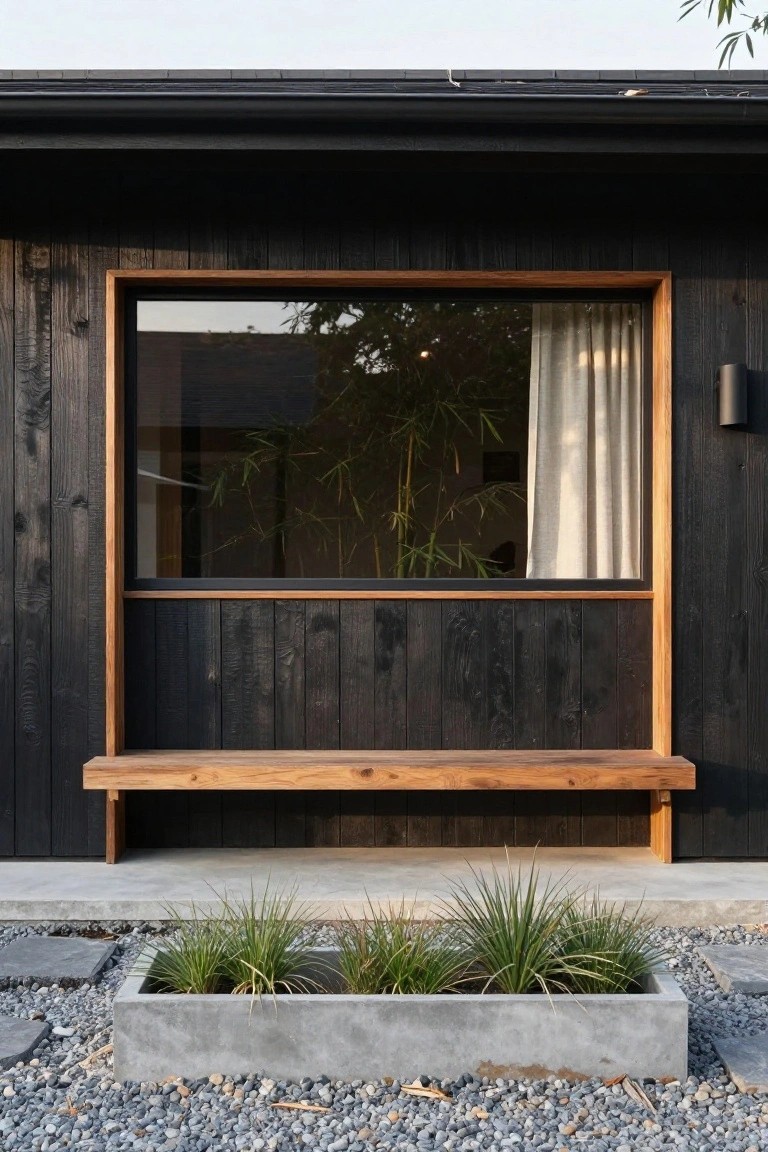
A simple wooden bench tucked right under a large window like this one makes a plain exterior wall feel more welcoming. The natural wood tone picks up on the frame around the glass and stands out against the dark cladding. It turns that spot into a natural pause point without much fuss.
This works best on a quiet side of the house or near an entry where you want a bit of outdoor seating. Use untreated or lightly oiled wood to keep the Japandi look calm and low-key. Just make sure it’s sturdy enough for everyday use, and pair it with gravel or simple plants out front so it doesn’t get lost.
Wood Accents on a Clean White Facade
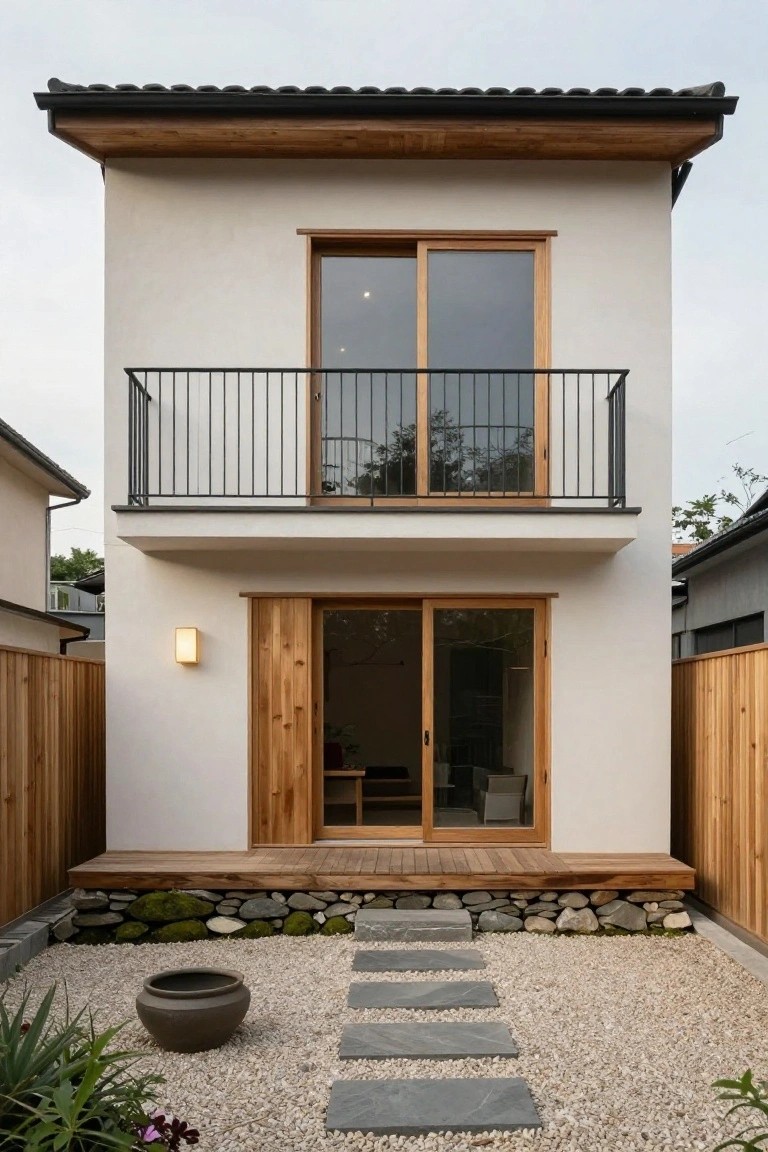
A white plaster house like this one stays simple and calm, but wood accents make it feel lived in. The horizontal cedar on the balcony doors and lower entry pulls your eye up without cluttering things. That bit of warmth fits right into Japandi style… keeps the minimal look from going cold.
Put this on a two-story backyard view where space is tight. It works for city homes or mild climates, blending house with garden deck and gravel yard. Pick durable wood, match the tones, and skip busy trim to hold the quiet feel.
Large Glass Doors on Dark Wood Exteriors
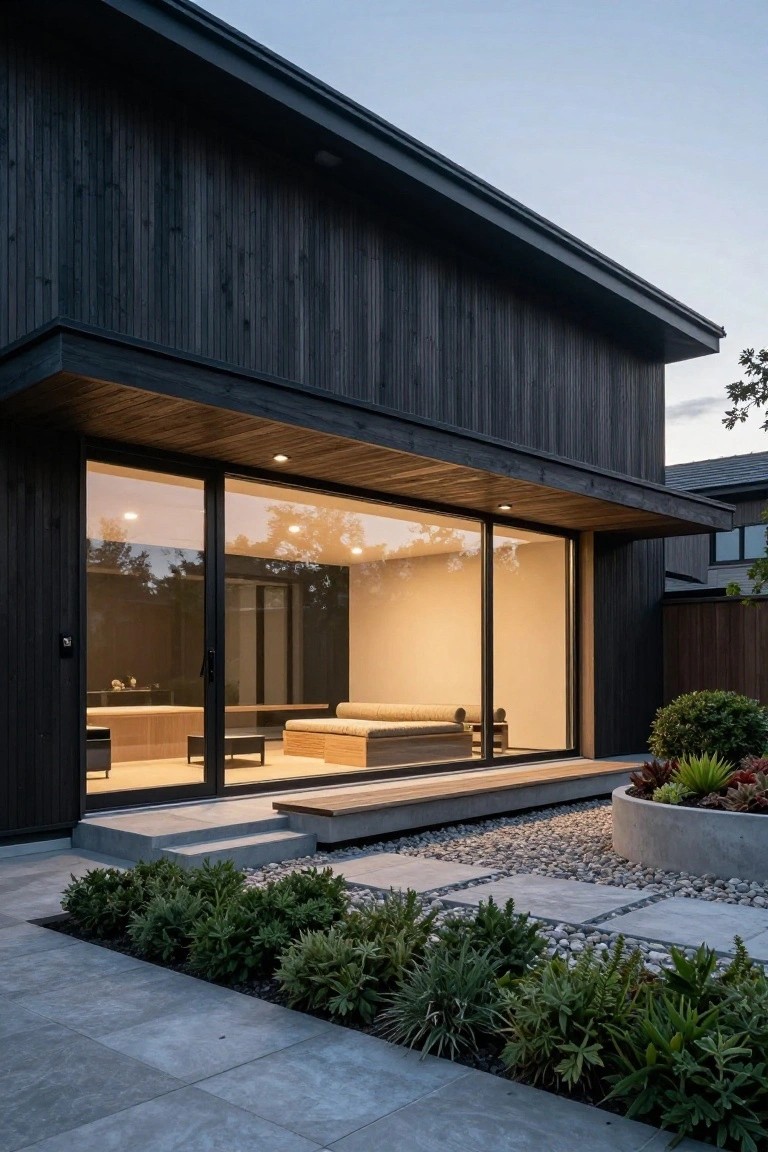
Large sliding glass doors like these make a dark wood house feel open and connected to the yard. The vertical black siding sets off the wide glass panels, letting you peek into a simple beige room with a low couch. It keeps things calm and minimal without much fuss.
Put them on a side wall where the yard stays private. They suit flat lots or modern homes that need more flow between inside and out. Just pick strong glass for wind and rain, and keep plants trimmed low nearby.
Low Wooden Bench Under Window
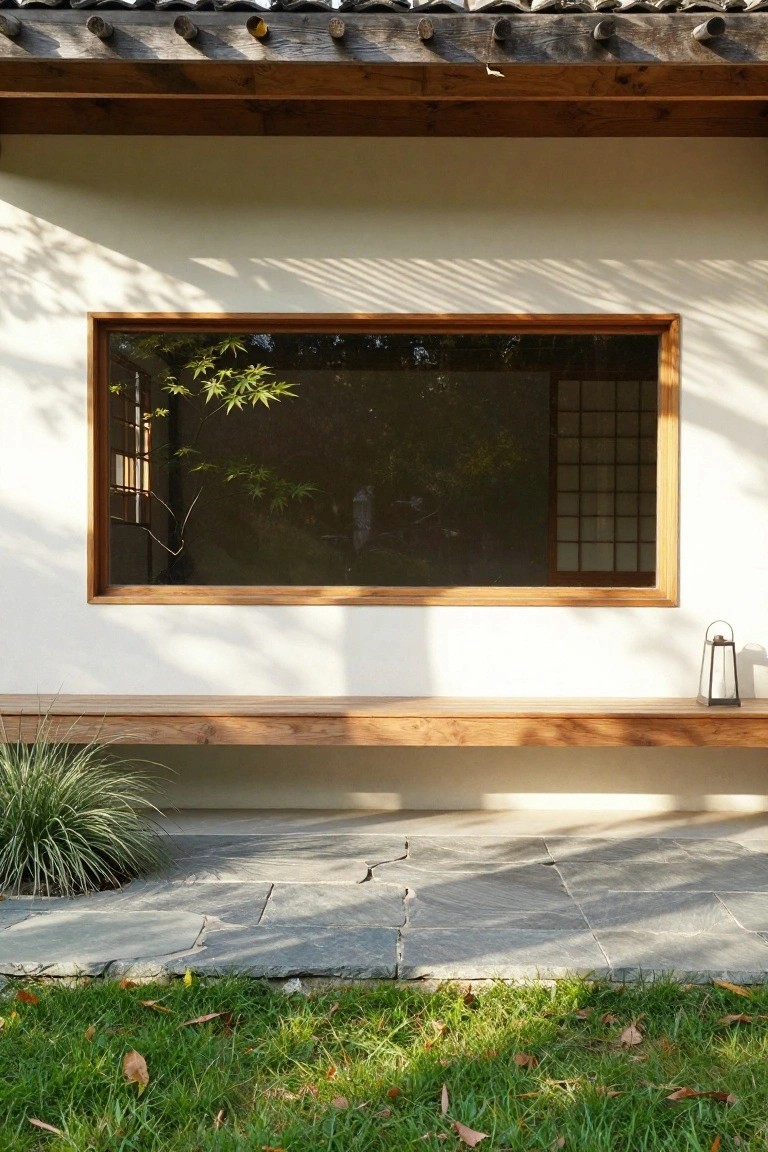
A low wooden bench running right along the base of the wall catches the eye here. It sits snug under that big window, making a natural spot to pause and take in the view. The wood tone pulls right from the frame, keeping everything calm and tied together in classic Japandi style.
Put one like this on a quiet side of the house, away from the main entry. It suits homes with simple white or plaster walls where you want easy outdoor seating without extra furniture. Just seal the wood well if it’s exposed to weather, and add a lantern or plant for a little life.
Simple Wooden Bench by the Window
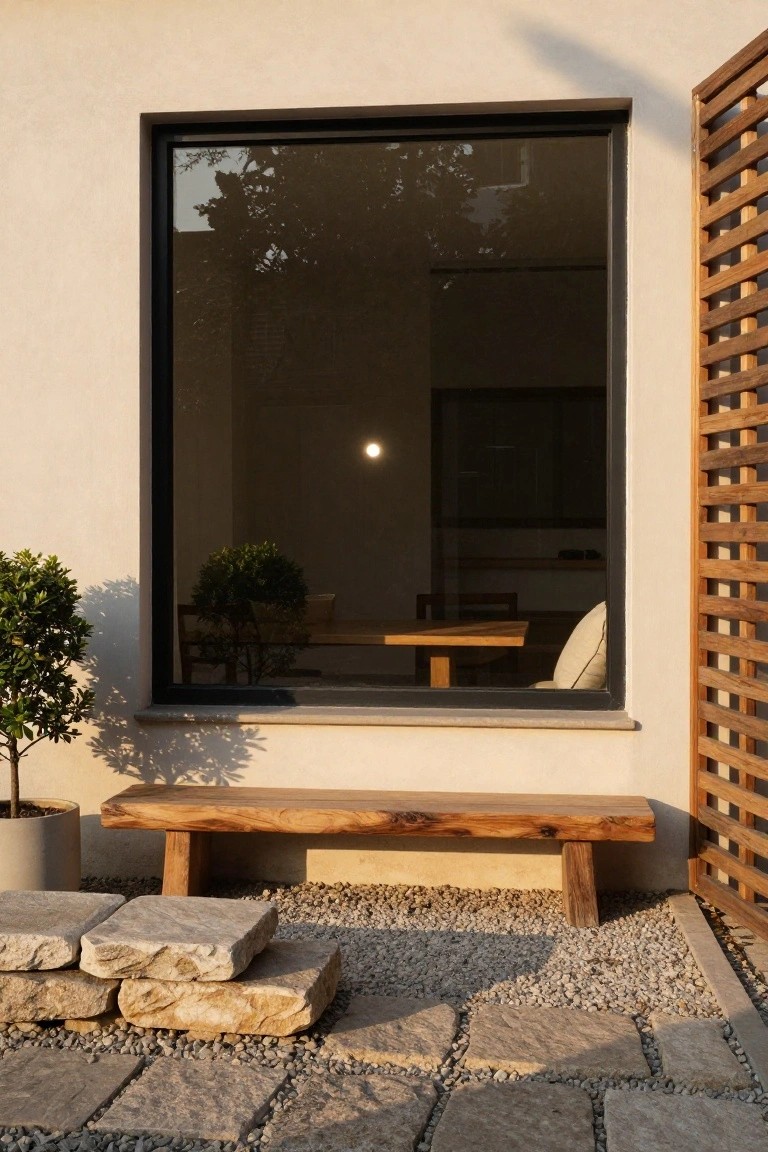
One easy way to make a large window feel more welcoming from outside is to set a plain wooden bench right in front. Here it’s a thick slab of natural wood on sturdy legs, sitting on gravel amid a few stones and potted boxwoods. That rough texture picks up on Japandi style nicely, without any fuss. It turns the spot into a natural pause point, especially when the glass reflects the trees and soft light inside.
Put something like this on a small terrace or along a side wall where you want low-key seating. It works best in modern homes with clean lines, keeping the scale modest so the bench doesn’t overwhelm. Just make sure the wood gets some protection from weather, since live-edge pieces show wear over time.
Textured Wood on Smooth Plaster Walls
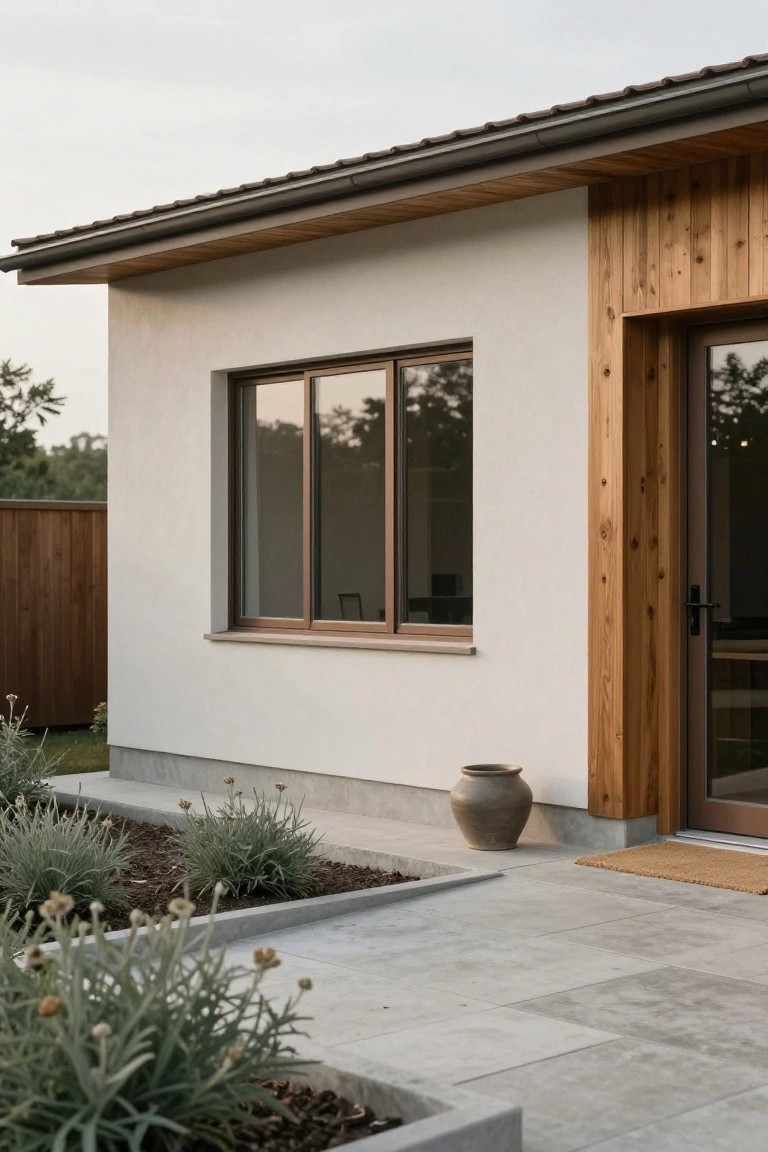
One simple way to add calm interest to a plain exterior is mixing smooth white plaster with vertical wood boards. In this setup, the light plaster keeps things bright and open. The wood siding runs along one edge, framing the window and door without overwhelming the look. It brings a touch of natural warmth that fits right into Japandi style.
This works best on low-slung homes or modern additions where you want subtle texture. Pick cedar or similar boards that weather nicely over time. Use it near entries or windows to draw the eye gently. Skip it if your climate is too wet, though. Keeps maintenance low while making the house feel more alive.
Large Sliding Windows Pull in the Landscape
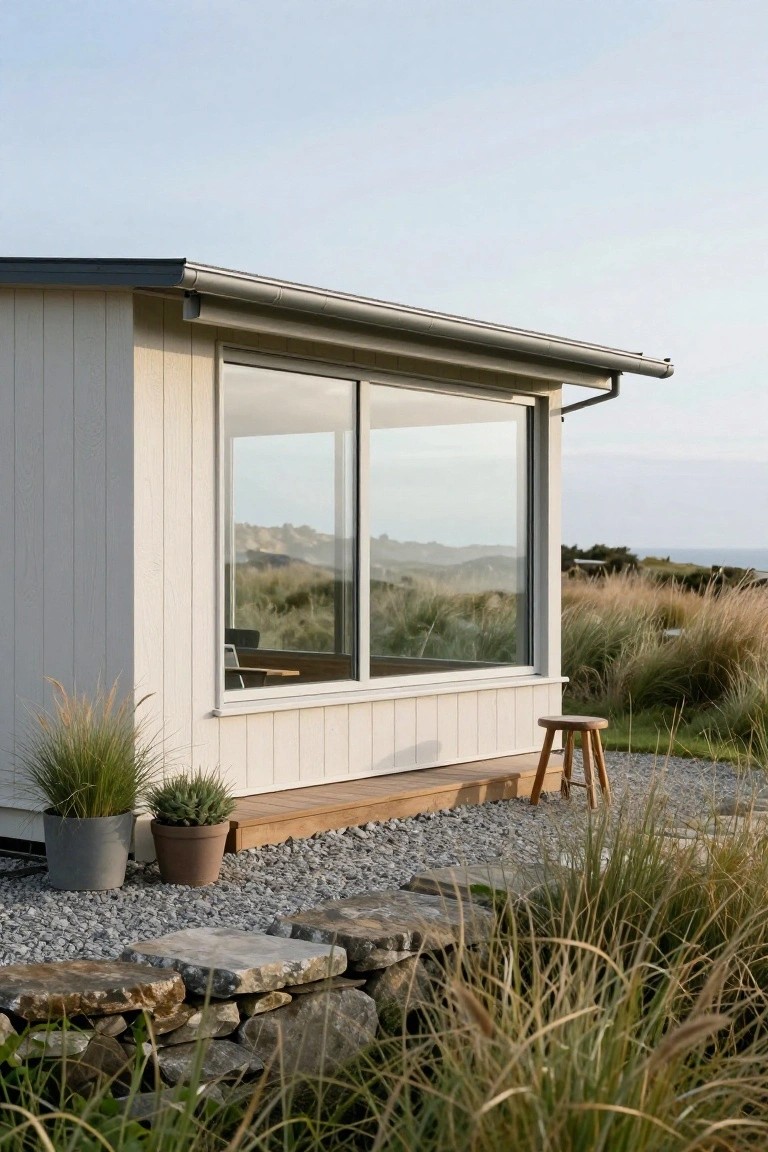
A big sliding window like this one dominates the side of a plain wood cabin. It stretches almost floor to ceiling, letting you see straight out to dunes and sea without much frame in the way. That setup makes even a small space feel open and tied to nature. The pale vertical boards on the house keep things quiet, so the view does the talking.
Put these windows on homes tucked into scenic spots, like coastal lots or rural edges. They suit compact cabins especially well, where every inch counts. Go for slim frames and pair with simple siding. One thing… add operable shades if winds kick up or sun gets strong.
Full-Height Sliding Doors in Cedar Siding
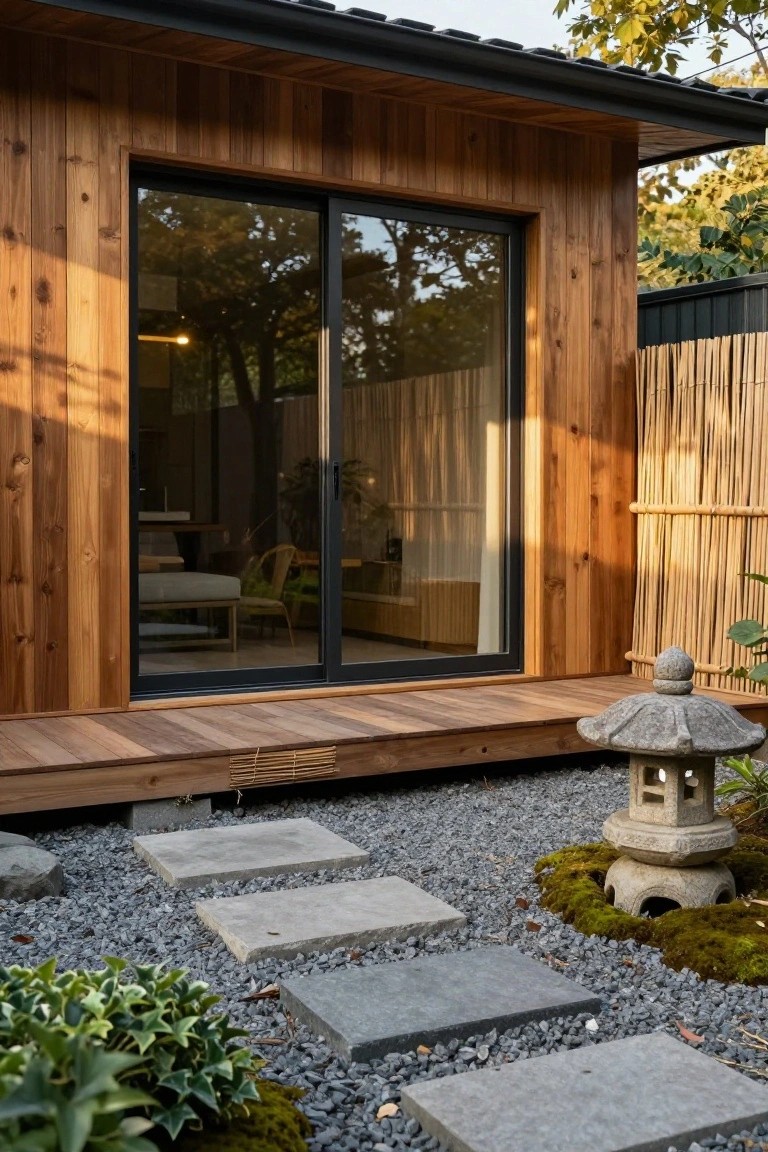
Large sliding glass doors like these take up most of one wall on this compact wooden cabin. They let in plenty of light and make the inside feel connected to the garden outside. The black frames stand out nicely against the warm cedar siding, keeping things simple and calm. A short wooden deck right there pulls it all together without much fuss.
You can pull this off on smaller homes or backyard studios where you want that open feel. It works best facing a quiet yard or patio setup. Just make sure the doors slide smoothly and you have screens for bugs. Pair it with some gravel and stepping stones out front, like here, to lead right up without overwhelming the look.
Built-In Firewood Storage Niche
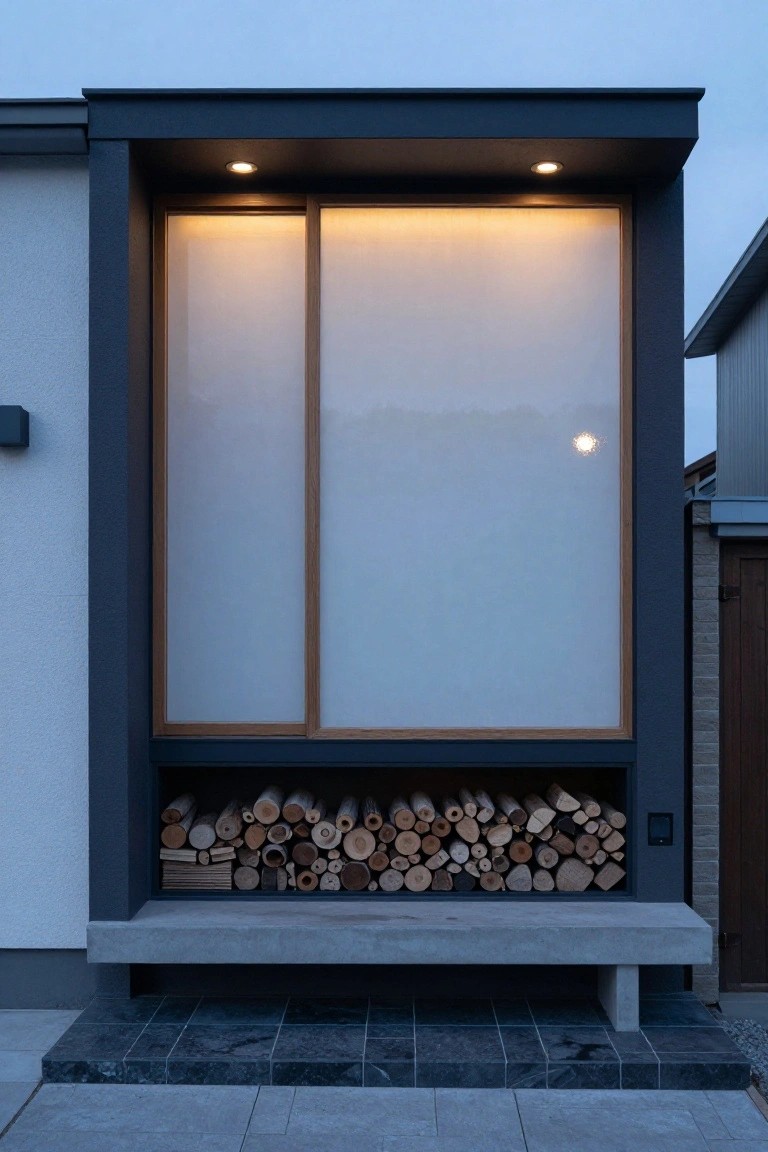
A recessed niche in the exterior wall holds firewood stacks neatly right under a tall window. The logs add texture without mess, and a concrete bench caps it off for sitting. This setup keeps wood handy for indoor fires while fitting into a clean, minimal house design.
Put one like this near a side door or patio on homes with simple lines. It works best where you want practical storage that doesn’t take extra yard space. Use weatherproof materials around the wood… and stack it tight to stay neat.
Linear Succulent Planters Under Large Windows
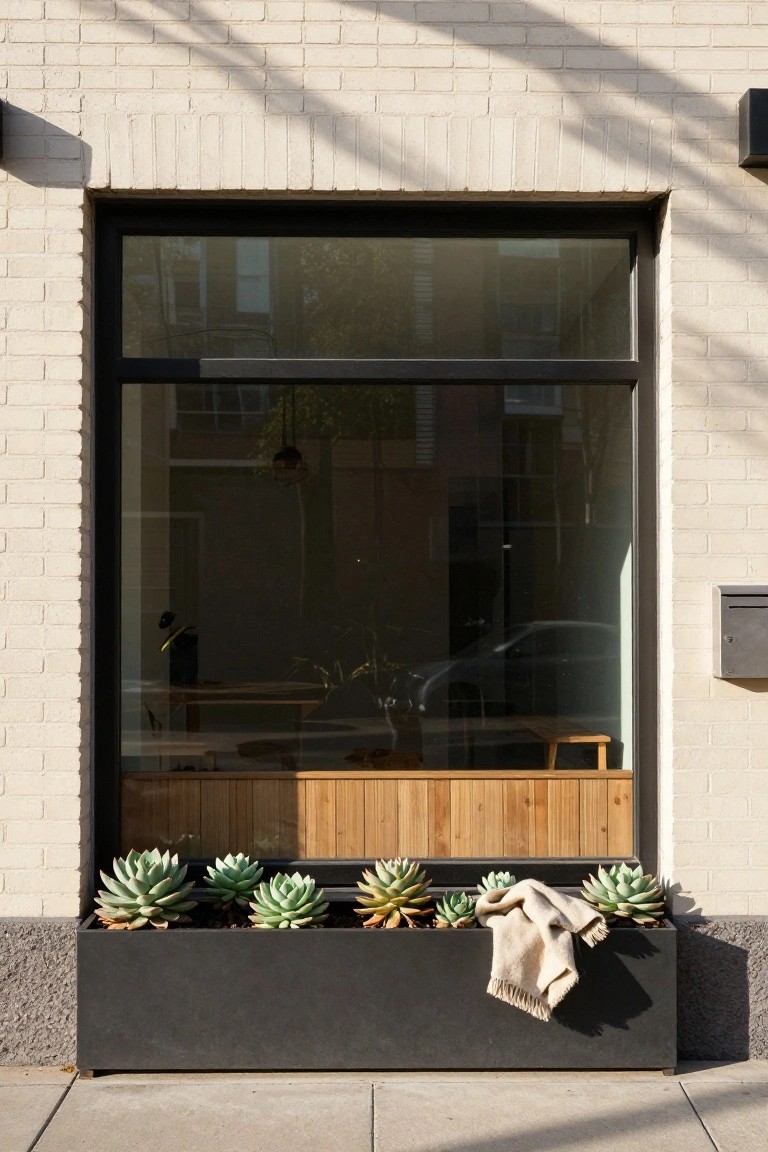
One straightforward way to add life to a plain facade is with a long, low planter box right under your picture window. Here, a black metal trough holds clusters of chunky succulents like echeveria against a light brick wall and dark window frame. It keeps things calm and structured without much upkeep, fitting that Japandi feel of clean lines mixed with a touch of green.
These work best on urban row houses or modern additions where you want subtle curb appeal. Plant them with drought-tolerant varieties that stay tidy, and set the box flush against the base so it reads like part of the architecture. Skip flowering plants that need deadheading. Just watch the scale, matching the planter length to the window for balance.
Frosted Windows with Indoor Bamboo
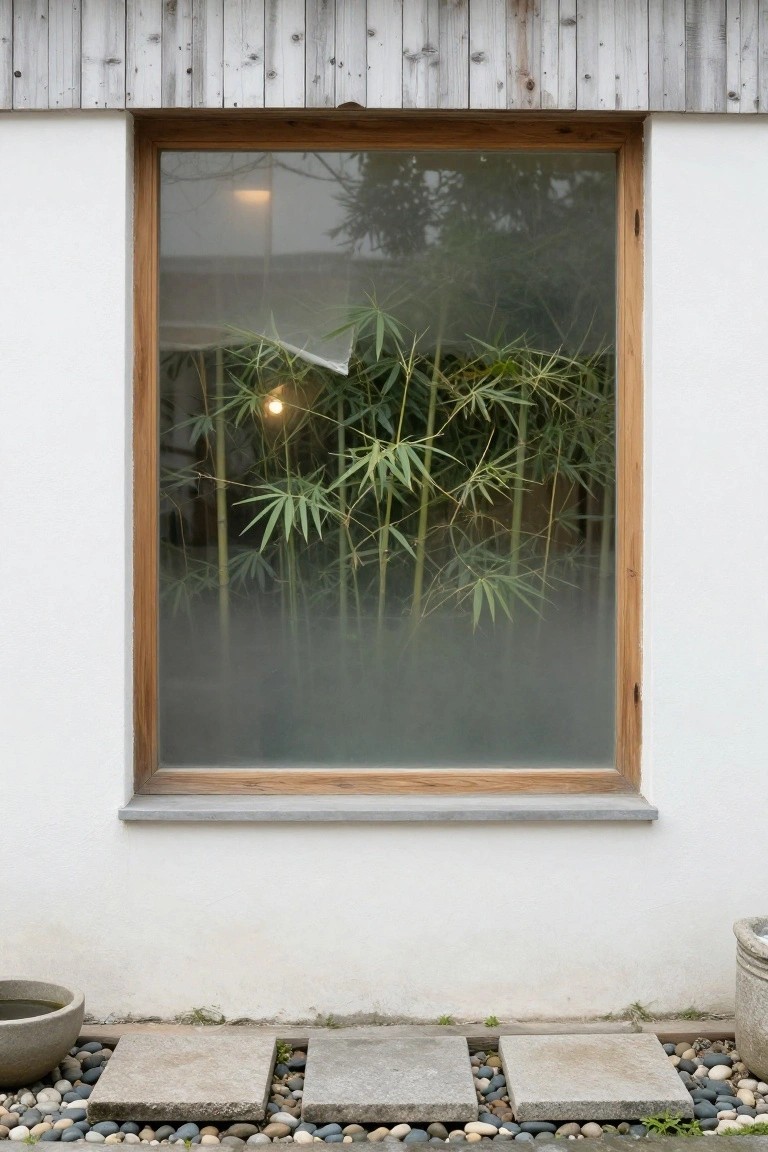
Large frosted windows like this one let soft light in while keeping things private. You can see the bamboo inside, just enough to hint at a calm space beyond the glass. The wood frame fits right with the white wall, making the whole side of the house feel quiet and natural. It’s a simple way to add life to a plain exterior without much effort.
Try this on a side wall or entry area where you want some mystery. It works best in homes with a bit of Asian influence or just clean lines. Pick sturdy plants like bamboo that don’t need constant care, and use frosted film if you can’t replace the glass. Keep the outside simple, like with pebbles or flat stones, so the window stays the focus.
Wood-Clad Facade with Oversized Picture Window
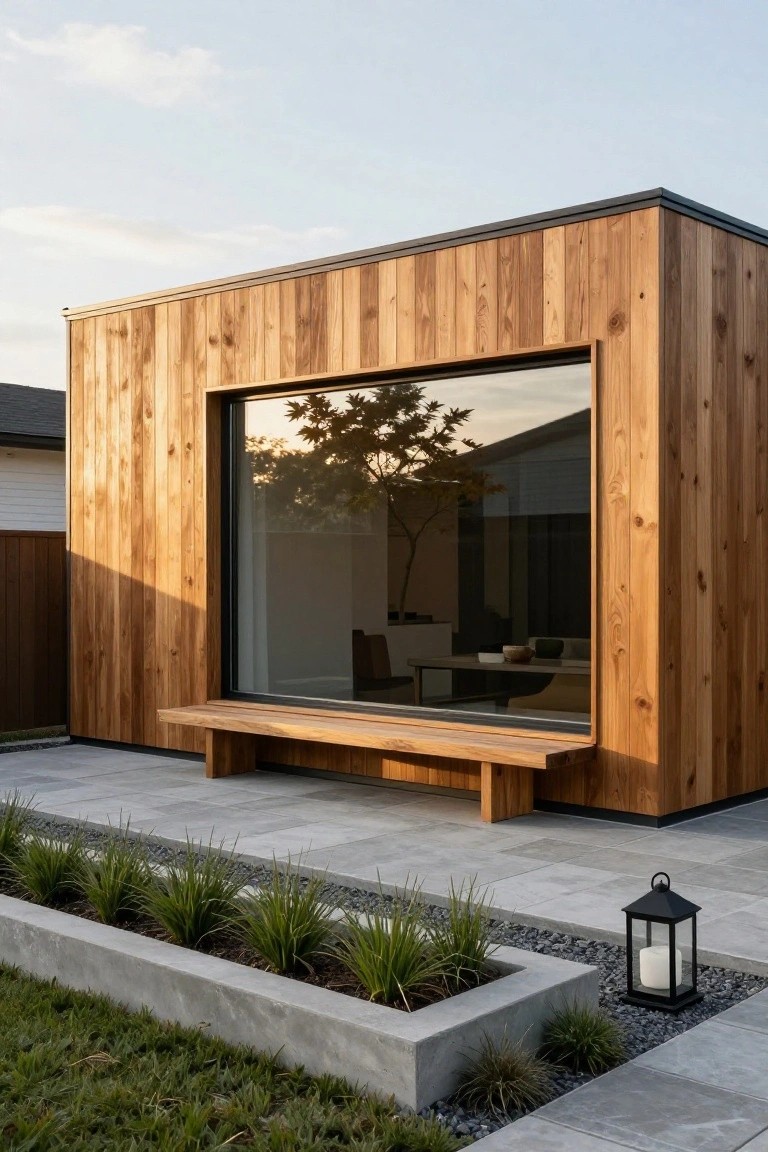
A warm cedar exterior wraps this simple pavilion, with wide horizontal planks setting off a huge recessed picture window. That big glass pulls the inside out, making the space feel open and connected to the yard. It’s a quiet way to add character without fuss, right in line with Japandi’s love for natural materials and clean lines.
Try this on a backyard studio or patio addition where you want views both ways. Match the bench below in the same wood for extra seating… cushions make it usable year-round. Suits smaller homes best, especially if you’re after low-key curb appeal from the side yard.
Plants Framing Window Sills
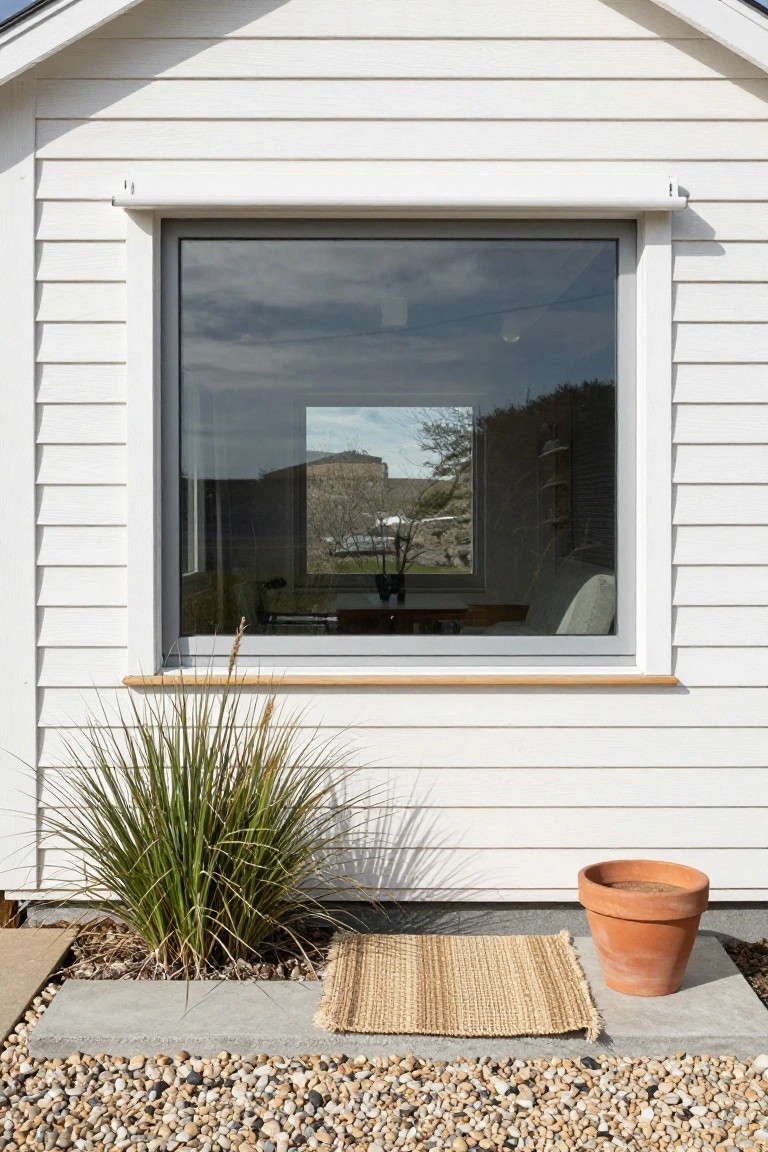
Tucking a simple clump of grasses right under the window sill works well on clean white siding like this. It softens the hard lines of the house without much effort. The tall blades echo the window’s height and catch the eye from the street. That terracotta pot nearby keeps things grounded too.
Try this on low windowsills in smaller homes or rentals where you want calm without big landscaping changes. It fits Japandi style best on modern or coastal houses. Just pick tough grasses that handle dry spots. Avoid overcrowding. One pot and some pebbles fill it out nicely.
Wood-Framed Windows on White Walls
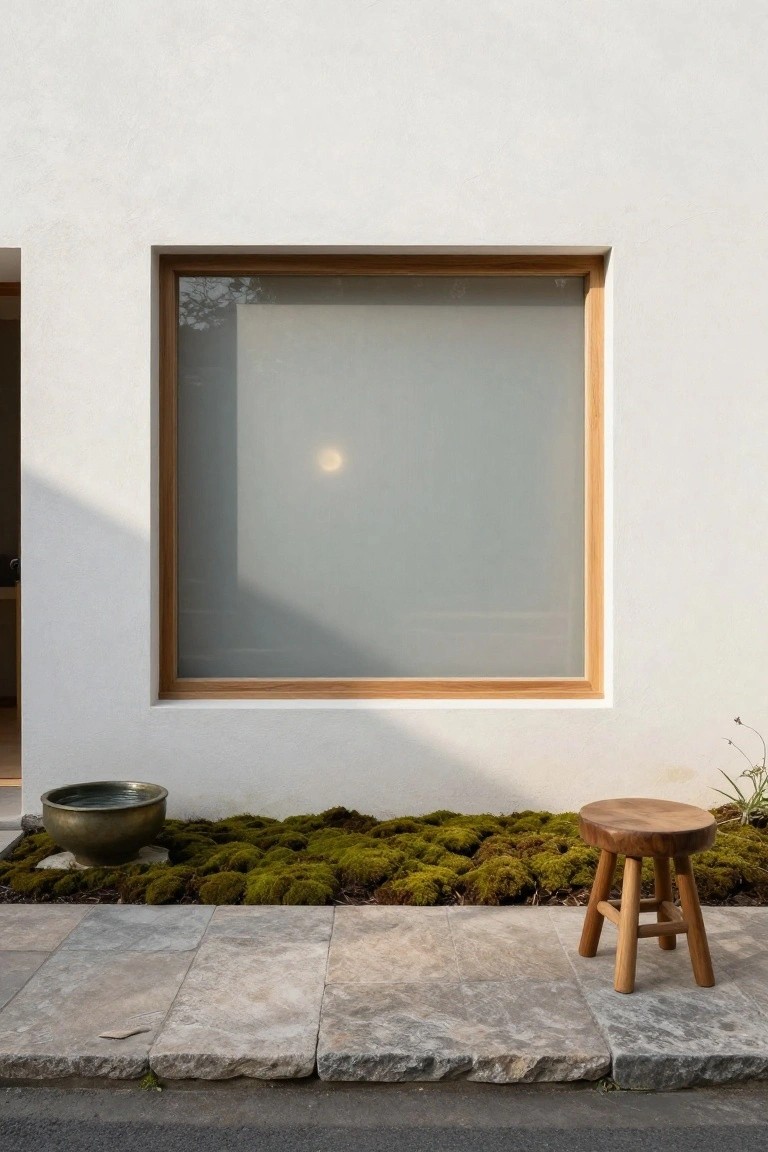
A big square window framed in warm oak sits flush in a plain white wall. That simple setup pulls your eye without trying too hard. The wood brings a bit of natural tone to the cool plaster, keeping things calm and balanced. It’s a quiet way to add interest to a flat facade, especially when the glass is frosted for privacy.
This look works great on smaller homes or additions where you want modern calm without fuss. Place it at eye level near an entry or seating spot outside. Pair the base with low moss or gravel to echo the wood’s texture… just keep plantings simple so the window stays the focus. Avoid busy trim that fights the clean lines.
Wood-Framed Arched Windows
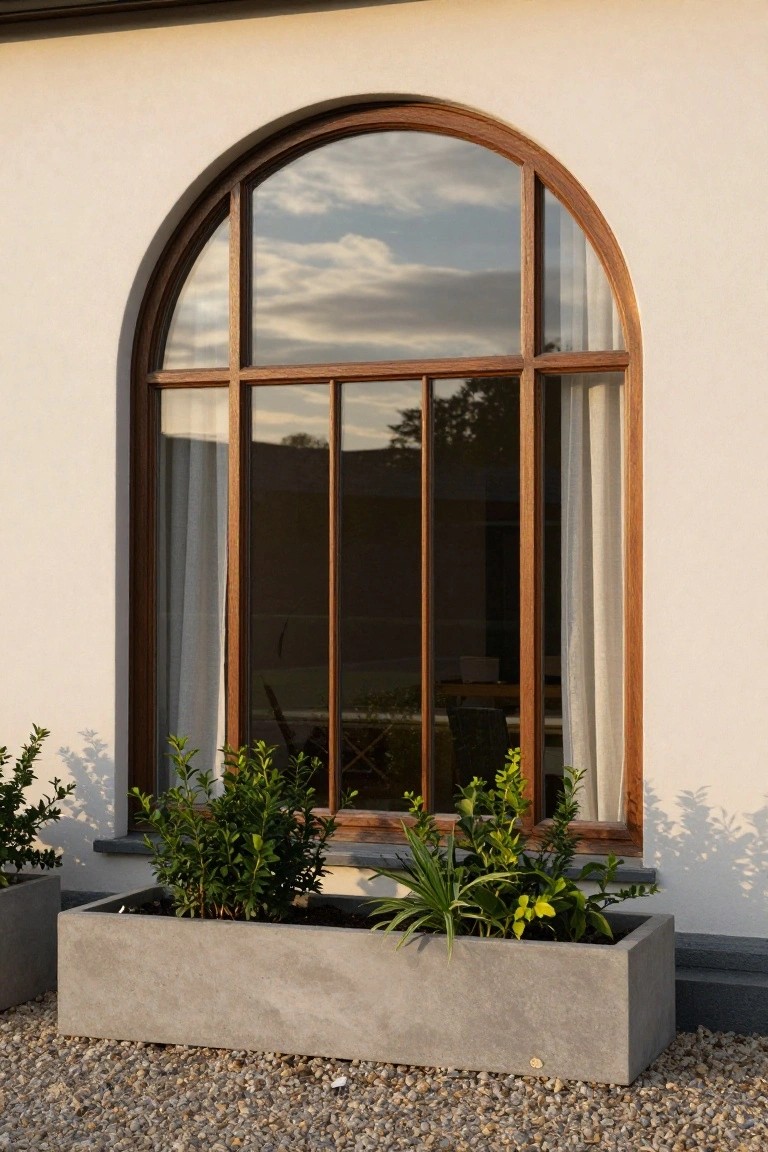
A big arched window like this, framed in natural wood against a clean white wall, brings a quiet character to the house exterior. The gentle curve and divided panes let in light without overwhelming the simple look. That planter of greenery right below ties it in nicely, softening the base just a bit.
This works great on smaller homes or additions where you want subtle elegance. Go for it if your style leans calm and minimal. Pick durable wood tones that weather well, and stick to low plants so they don’t crowd the window view.
Wood Clad Walls with Tall Glass Panels
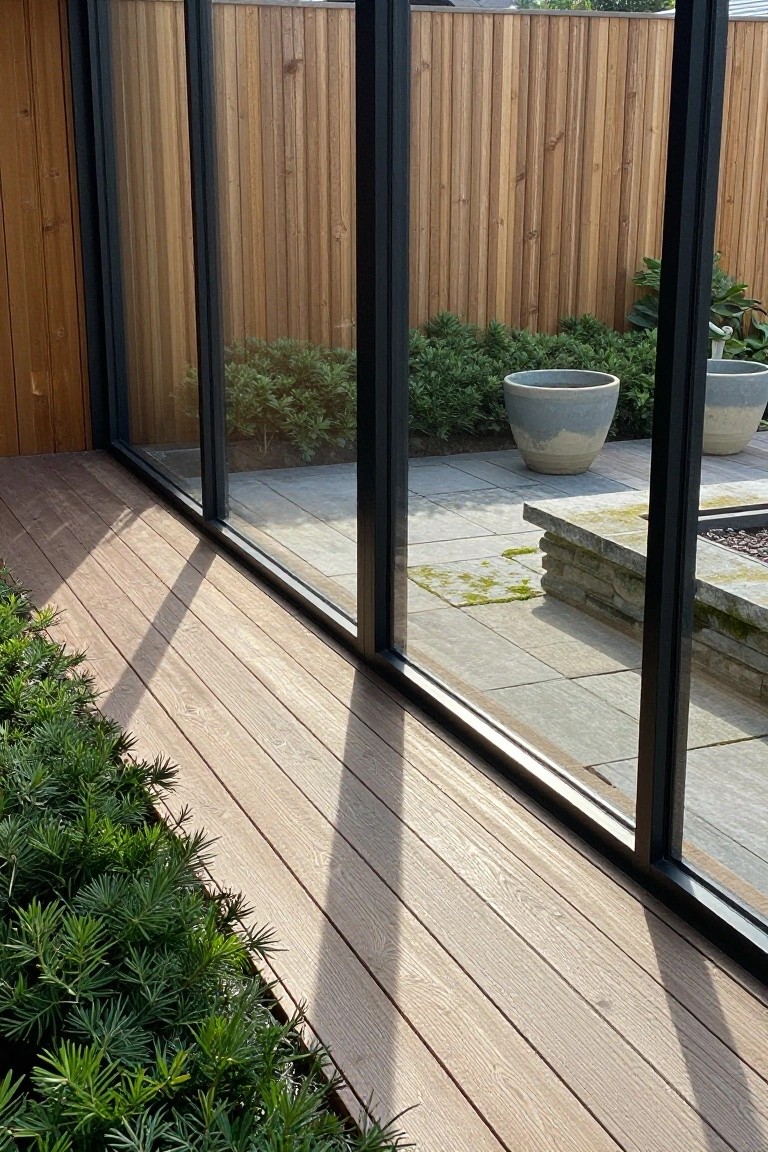
One thing that stands out in Japandi exteriors is pairing natural wood cladding with tall glass panels like this. The vertical cedar boards give a warm, textured backdrop that keeps the look grounded and calm. Those slim black frames on the glass add just enough modern edge without overwhelming the wood tones. It pulls together that quiet balance Japandi is known for, letting light flood in while the wood adds subtle character.
This setup works best on side elevations or deck-adjacent walls where you want to connect the house to the outdoors. It suits low-key homes with private yards, especially if you’re blending indoor spaces with a patio nearby. Keep the wood untreated or lightly oiled for that soft patina over time, and make sure the glass is easy-clean for practical use.
Recessed Windows with Built-In Benches
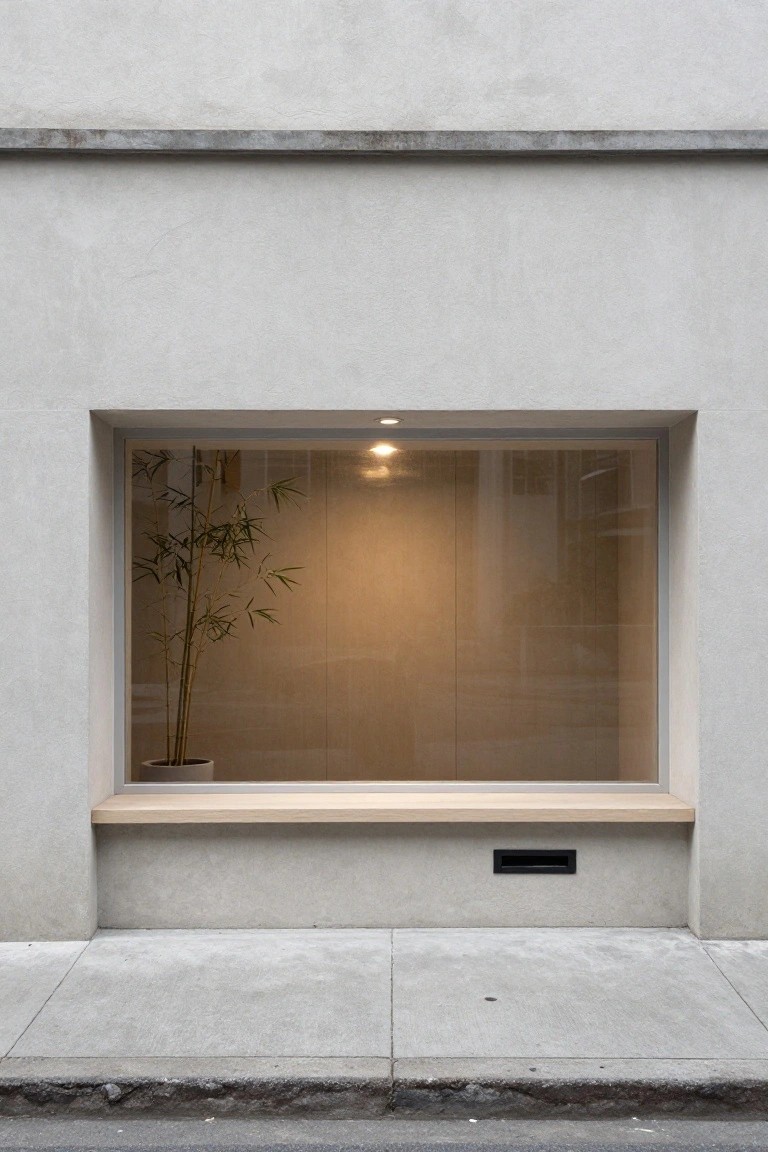
A deep window recess like this turns a plain wall into something worth noticing. Here, the large glass frame holds a simple potted bamboo plant, lit softly from above against warm wood inside. It pulls a bit of calm nature right to the street edge, softening the concrete without any fuss.
Try this on a minimalist front where you need quiet interest. The wooden bench below makes a natural spot to sit and look in, fitting urban spots or narrow lots. It suits homes going for that easy Japandi feel, just keep the plant low-maintenance so it stays neat year-round.
Exterior Window with Fern Drip Planter
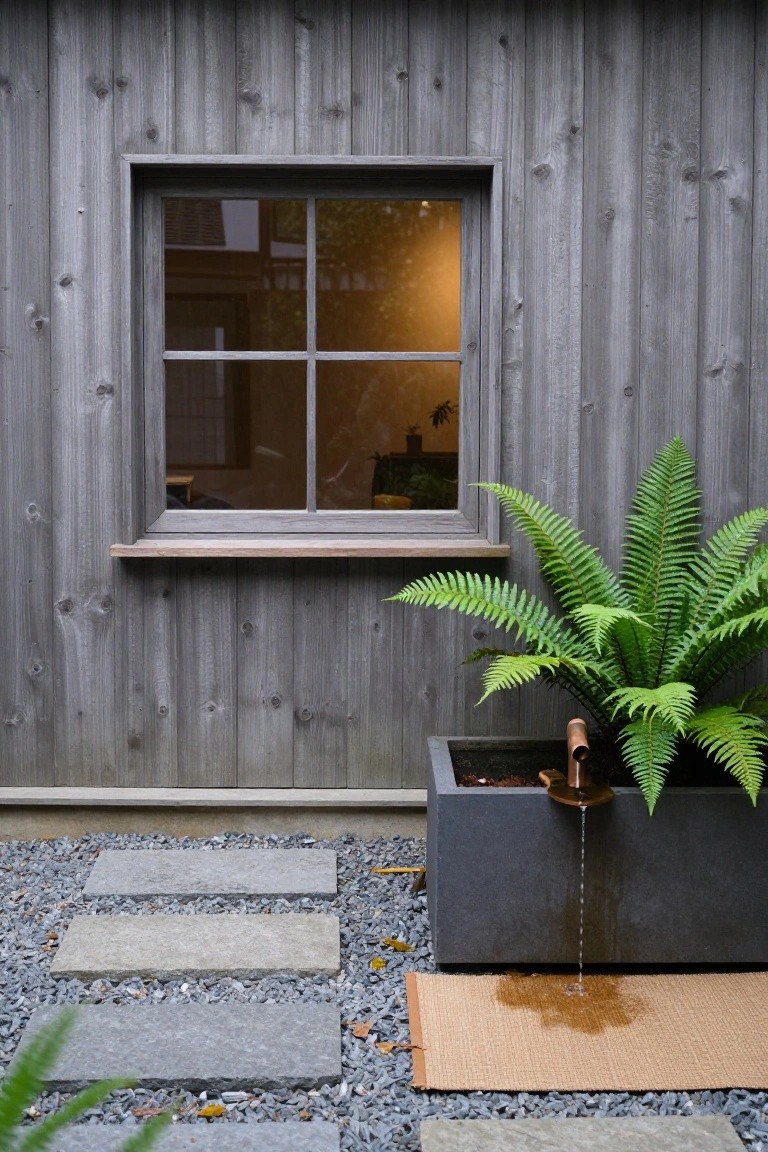
One nice touch here is placing a tall fern in a plain black pot right up against the house, with a slim copper pipe dripping water into the soil. It sits next to a basic divided-light window on gray wood siding, and that little water trickle adds a quiet sound you can hear from inside. The green plant pops without overwhelming the simple wall, and it keeps things feeling alive around a plain exterior spot.
This setup works best in tight side areas or along a back wall where you want subtle interest without a full garden. Pick a sturdy fern that likes moisture, run the pipe from a small pump in the pot, and set it on gravel or stone to catch drips. It suits calm homes like cabins or modern sheds… just watch for mosquitoes if it’s too still.
Stone Walls Framing Wooden Window Sections
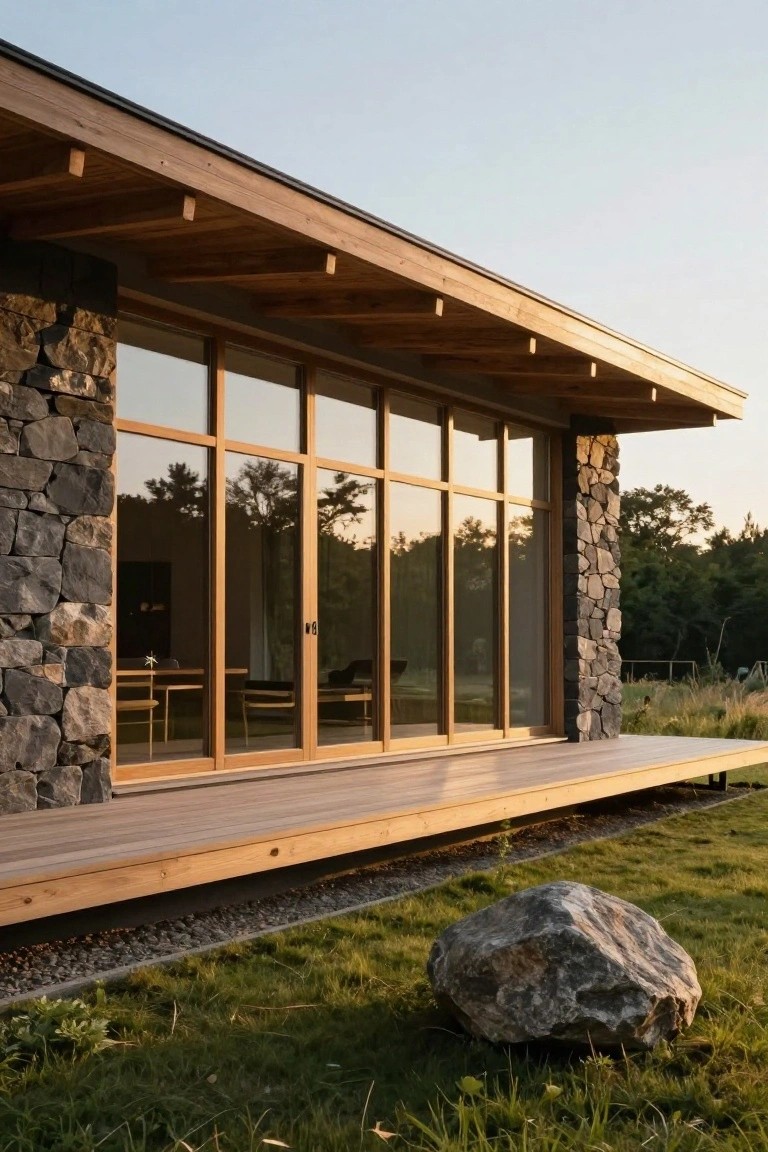
Tall stone walls bookend these large wooden-framed windows and sliding doors. The rough texture of the stone gives a solid base. Meanwhile the warm wood frames let in floods of light. Together they keep things calm and grounded. No fuss, just natural materials doing their thing.
This look fits homes tucked into wooded spots or with views worth showing off. Run a simple wooden deck right out from the base like here. Pick stones that match your site. Go for untreated wood to age nicely over time. It pulls the outdoors closer without trying too hard.
Sliding Glass Pavilion Doors with Sheer Curtains
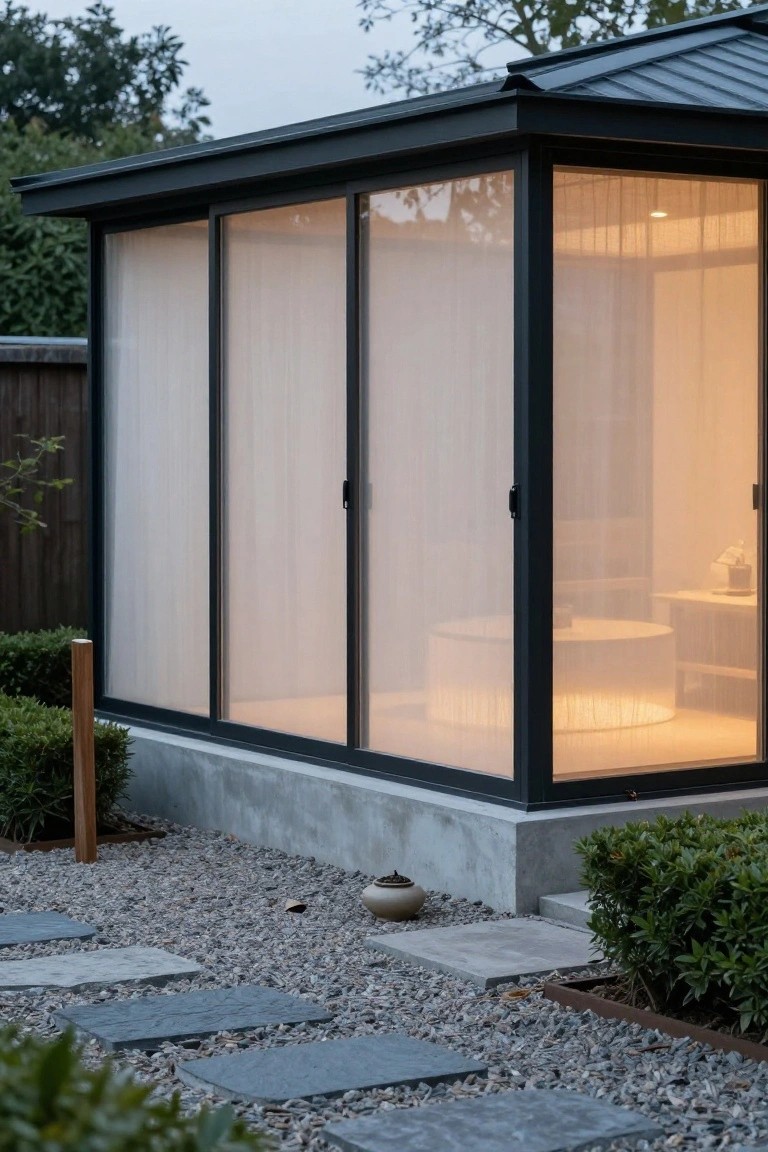
One smart way to handle windows in an outdoor spot like this pavilion is hanging sheer white curtains over the sliding glass doors. They let in soft light from inside while blocking a clear view out there in the garden. That warm glow spilling through at dusk makes the whole setup feel calm and contained, without shutting off the outdoors completely.
You can pull this off in smaller backyards where you want some privacy around a hot tub or seating area. It suits Japandi-style homes that mix clean lines with natural surroundings. Just make sure the frames are slim black metal to keep it simple, and add gravel paths leading up for easy access. Avoid heavy fabrics. They would block too much light.
Wide Horizontal Windows in Wood-Clad Homes
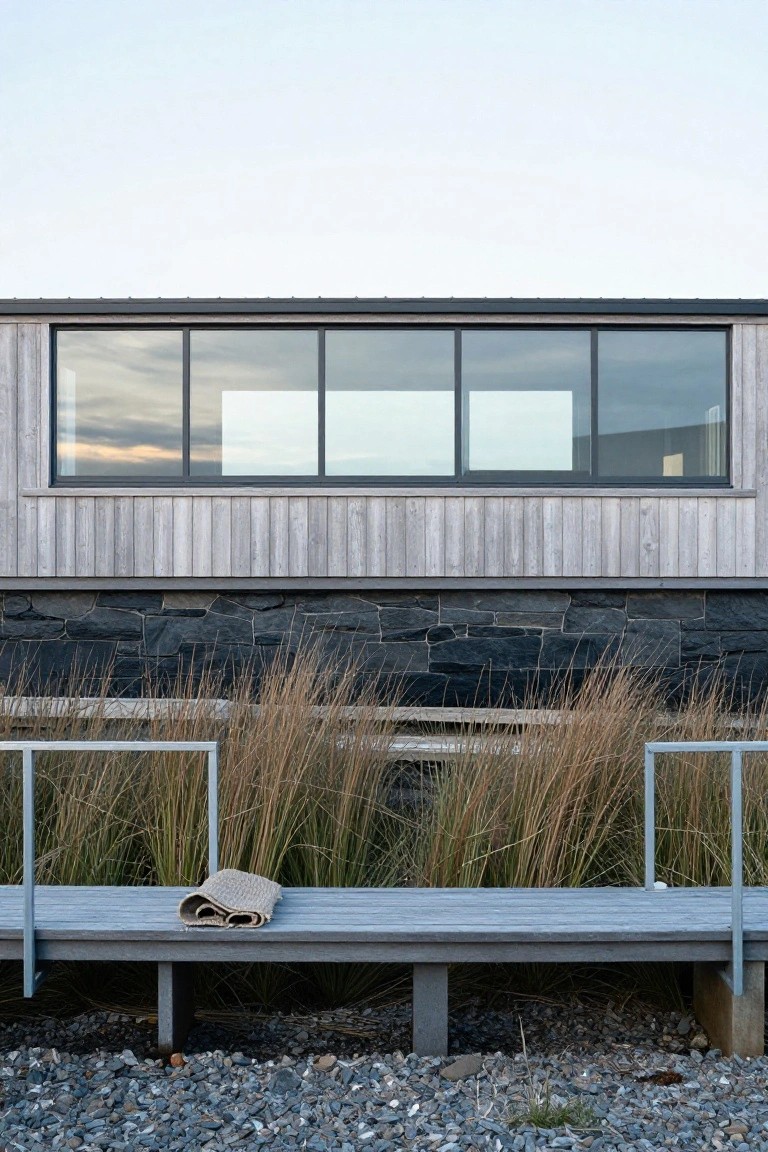
Big stretches of horizontal windows like this pull the outside right into your living space. They work well on a simple wood facade because the light tones let the glass stand out without overwhelming things. That black framing keeps it clean and modern. Paired with the stone base below, it grounds the whole look in nature.
You can pull this off on low single-story homes or additions where you want calm views without busy details. Stick to fixed panes for that seamless feel, and match the wood cladding to local siding like cedar or pine for easy upkeep. It suits coastal spots or quiet yards best, but watch the glare if you’re in full sun.
Vertical Cedar Siding on Compact Cabins
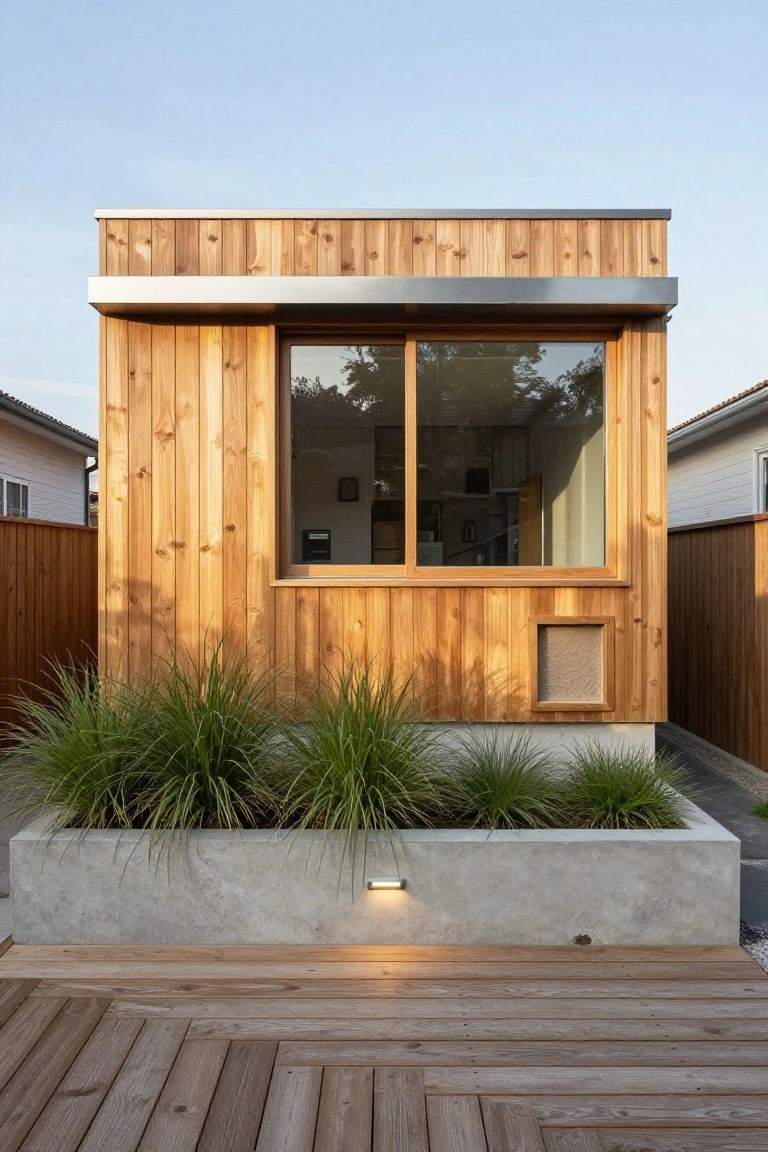
One simple way to give a backyard cabin or small addition that calm Japandi feel is vertical cedar siding. Here the boards run straight up the facade, wrapping around a big wood-framed window without any fuss. It pulls the eye up while keeping the look grounded and natural, especially against plain fences and a low deck.
This works great on tight urban lots or as a garden office setup. Go for untreated cedar to age into silver tones over time. Pair it with grasses in a concrete planter nearby for easy upkeep. Skip busy details around the base though. That keeps the quiet vibe intact.
Wood Cladding on Plaster Facades
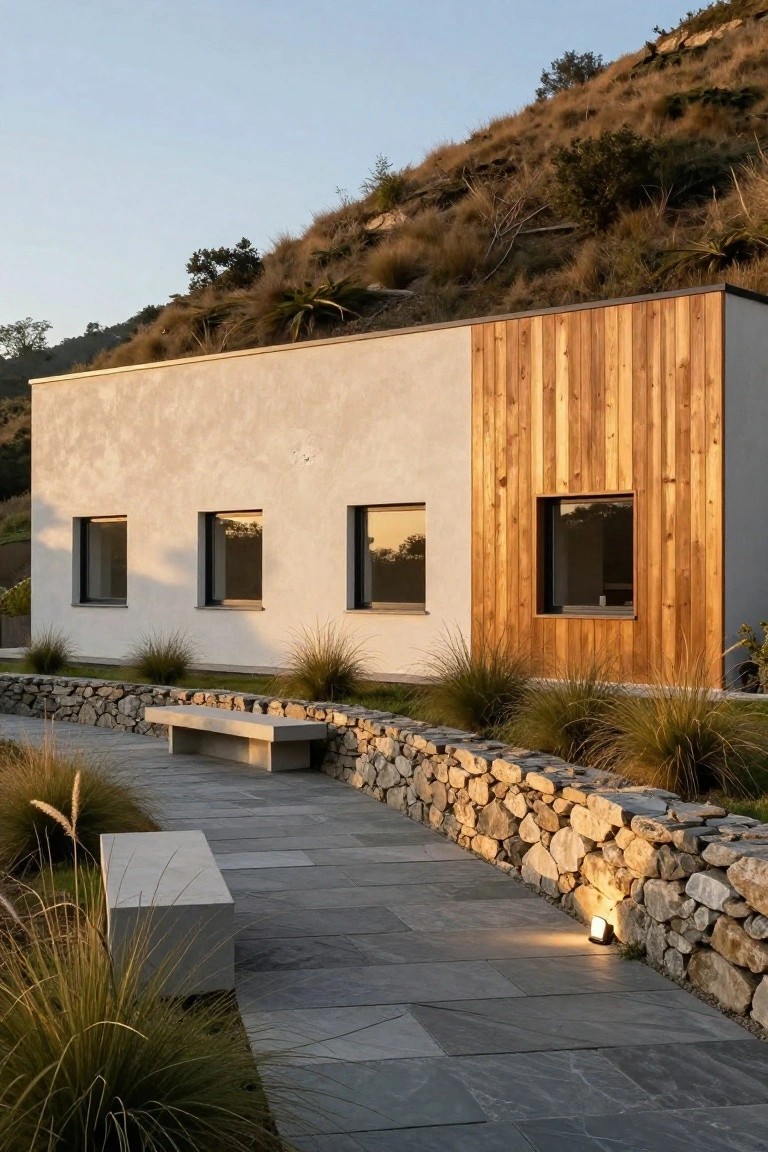
A smooth white plaster wall paired with a section of vertical wood cladding gives this house a quiet, balanced look. The wood adds just enough warmth to keep things from feeling too stark, especially on a hillside spot like this. Those recessed windows sit flush in both materials, letting light in without drawing extra attention.
This setup works great for modern homes that blend into natural surroundings. Use it on one side of the entry or garage to break up long walls. Go for durable woods like cedar that weather nicely, but plan for occasional sealing to hold the color. It suits sloped lots where you want the house to step lightly into the landscape.
Frequently Asked Questions
Q: What frame colors scream Japandi for exterior windows?
A:
Stick to matte black or light-stained wood. These pull the eye gently toward nature without any fuss.
Q: Can I make Japandi work on my older house windows?
A:
Sand down bulky trim and repaint frames in a soft black. Swap out noisy hardware for sleek pulls. You get that fresh minimal calm fast.
Q: Black frames or wood… which wins for Japandi?
A:
Wood edges out if your home sits among trees. It warms up the look naturally.
Q: How do I keep these windows looking sharp year-round?
A:
Grab a soft brush and soapy water weekly. Rinse and dry right away… spots ruin the peace quick.
