

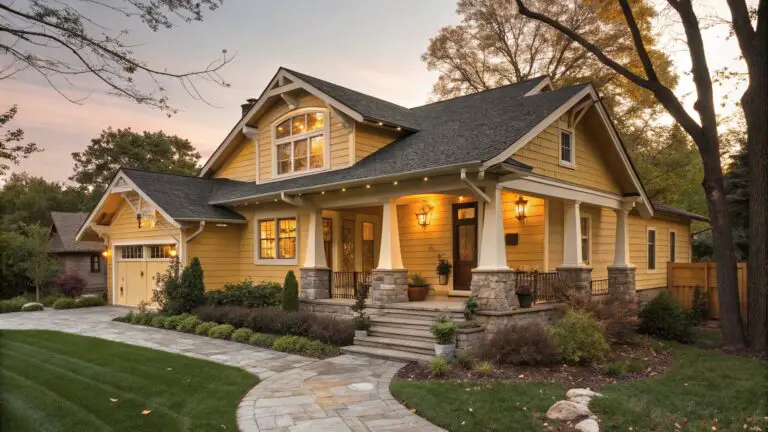
When you drive up to a yellow house, that bold color hits you first from the curb, setting the tone for the whole facade.
Yellow siding works best when it has something sturdy to lean on, like stone accents that keep it from looking too playful up close.
I once thought a plain yellow exterior would brighten our street, but adding rugged stone at the base changed how solid and welcoming it felt in real life.
These stone details often frame doors or wrap corners, creating depth that makes the house read as thoughtful rather than flashy.
You can borrow tweaks from setups like these to test what grounds your own home’s look without a full redo.
Stone Porch Posts on a Yellow House
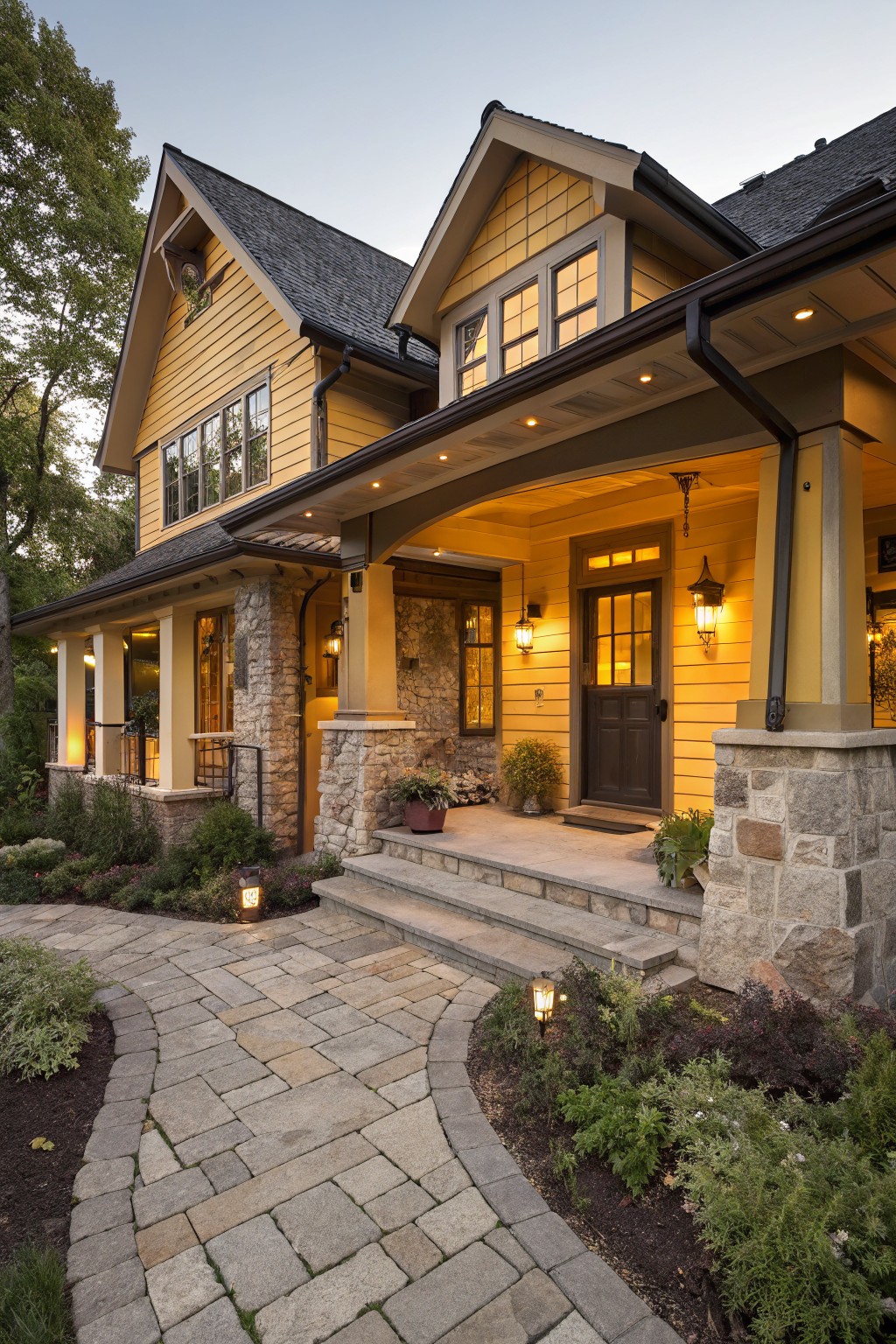
Those thick stone posts holding up the porch roof give this yellow house a solid, settled feel. The siding is a warm yellow that catches the eye, but the natural stone adds enough heft to keep things balanced and real. It’s one of those simple touches that makes a house look like it belongs right where it is.
Put stone posts like these under porch roofs on Craftsman or older-style homes. They work best where you want some texture against painted siding. Pick stone that matches your area’s rocks, and keep the posts tall enough to match the porch height. Skip it if your porch is small, though. It shines on bigger entries.
Stone Base Boosts a Yellow Exterior
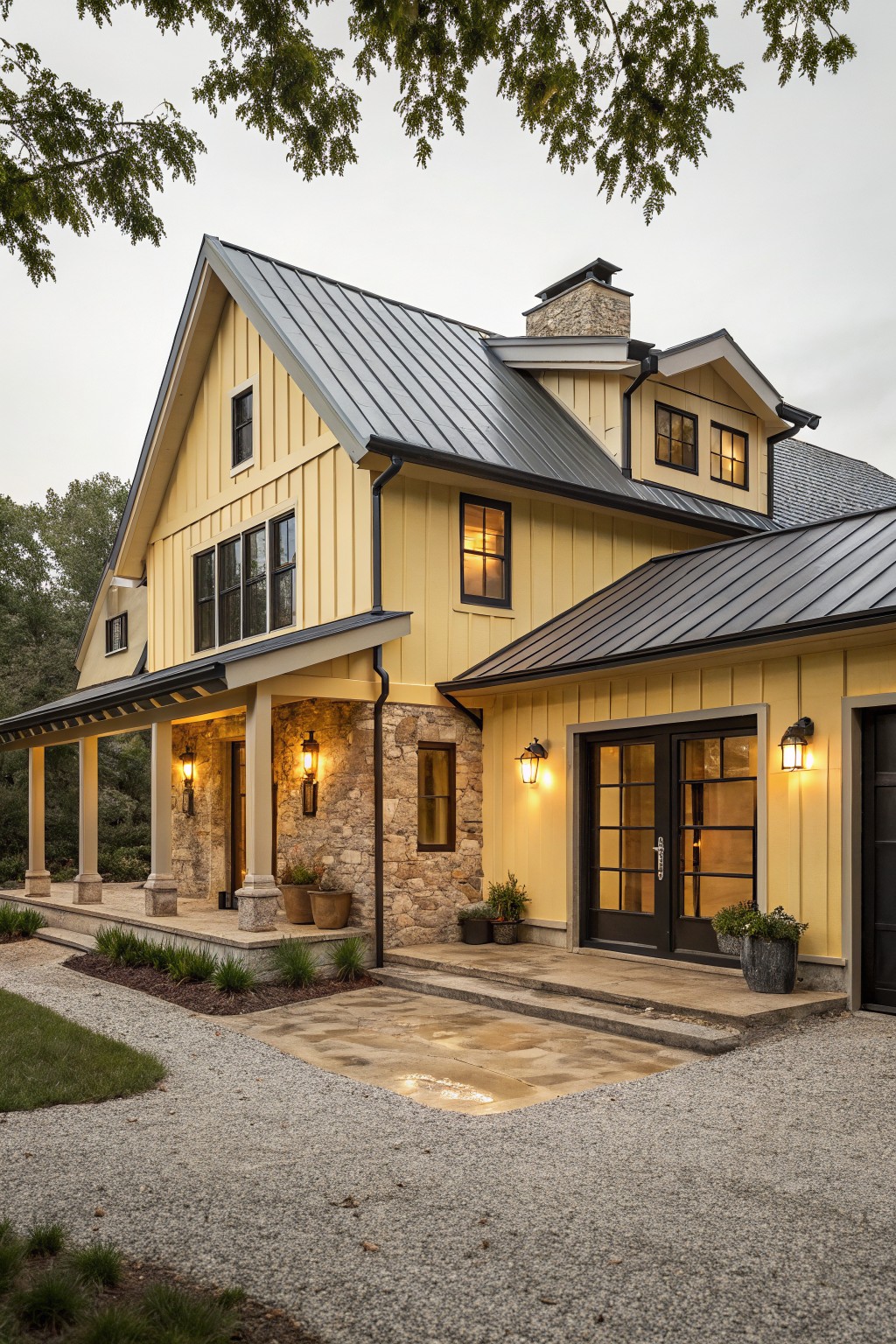
A yellow house like this one gets a lot from its stone base. The pale yellow siding feels cheerful but not too bold thanks to the rugged stone wrapping the foundation, porch columns, and chimney. It adds real texture and weight down low, making the whole front look settled and sturdy.
This setup works well on farmhouses or modern cabins where you want color up top but something solid underneath. Pick stone that matches your area’s natural look, like the rough fieldstone here, and limit it to key spots around doors and the base. It keeps maintenance low and ties the house to the ground nicely.
Stone Arch Entryway
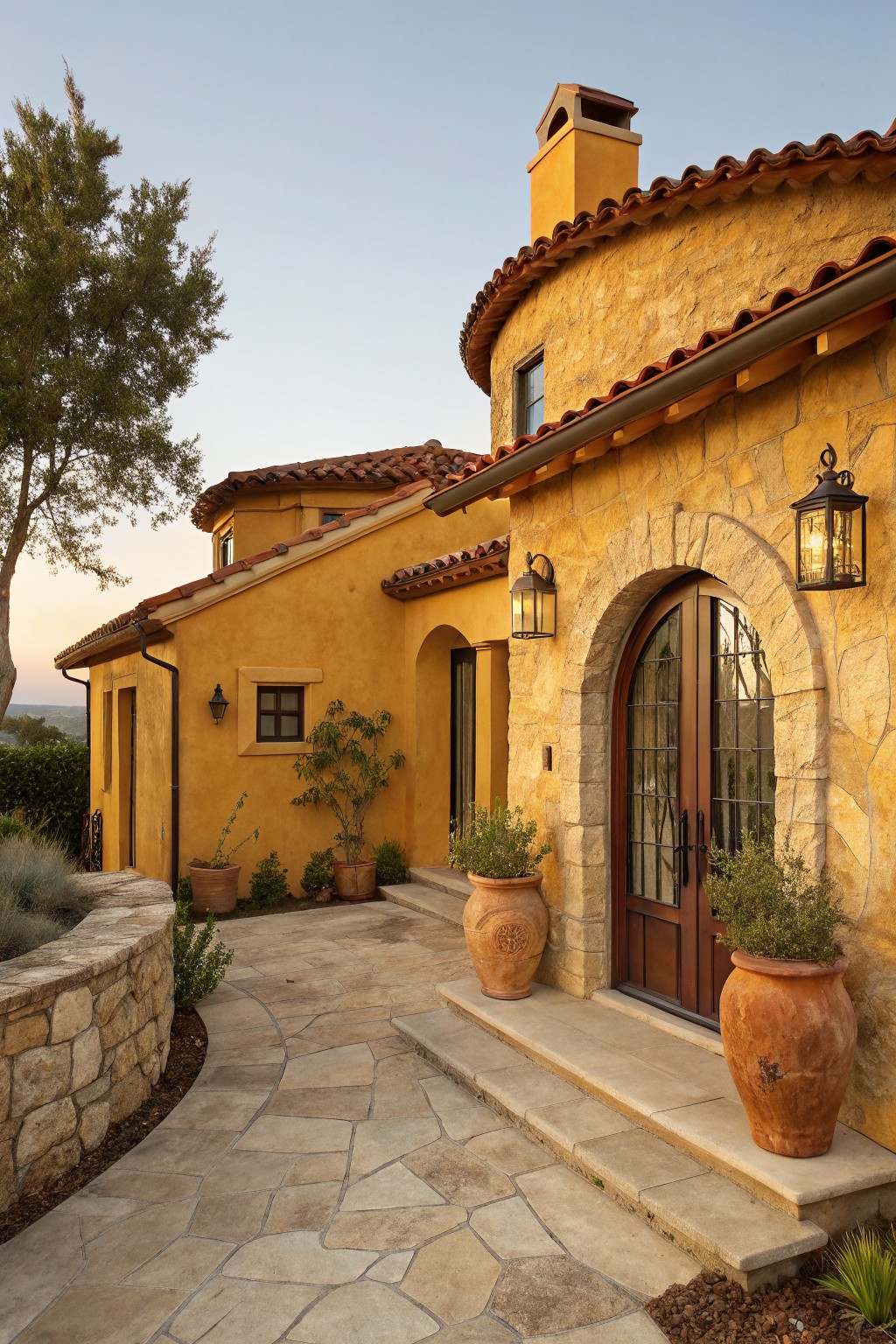
A stone arch around the entry doors gives this yellow stucco house a sturdy, old-world feel. The rough texture of the stone sets off the smooth yellow walls nicely. It makes the front door look more important, like an invitation that says this place has some history to it.
You can add something like this to ranch-style homes or any sunny exterior that needs a bit more weight. Keep the stone in earth tones to match the yellow, and flank the doors with big clay pots for scale. It fits well in dry areas where stone blends with the landscape, but watch the scale on smaller houses so it doesn’t overpower the door.
Stone Steps at the Entry
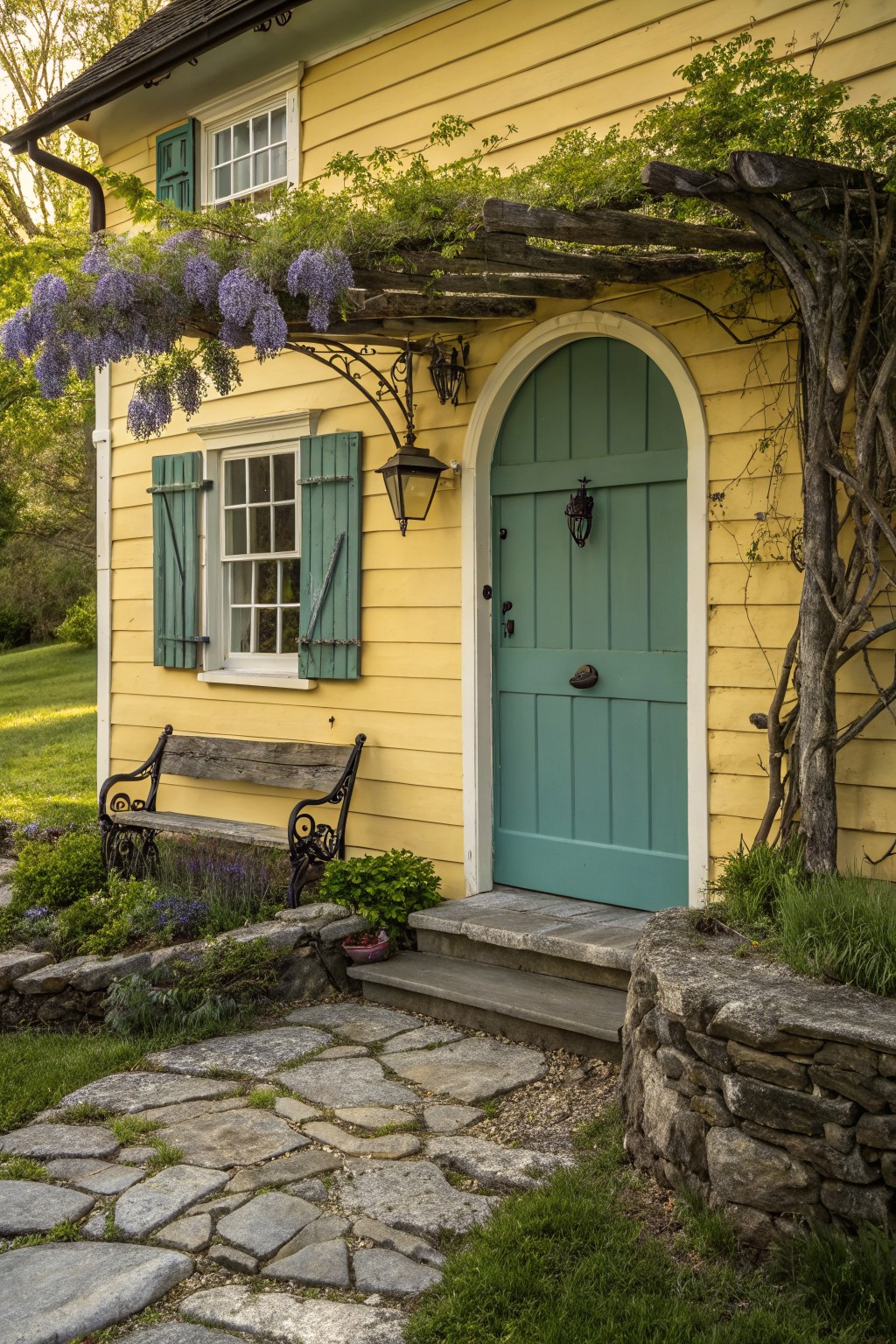
Stone steps like the ones leading to this yellow house’s door give the whole front a steady, rooted look. They stand up well against the bright siding and all that climbing wisteria overhead. It’s a simple way to make the entry feel more solid without taking over.
These steps suit homes with even a small rise at the front, especially older ones with a yard that slopes a bit. Lay them with local stone for a natural tie-in to the landscape, and edge them with low plants. They hold up over time and keep mud off the path too.
Yellow House with Stone Entry Base
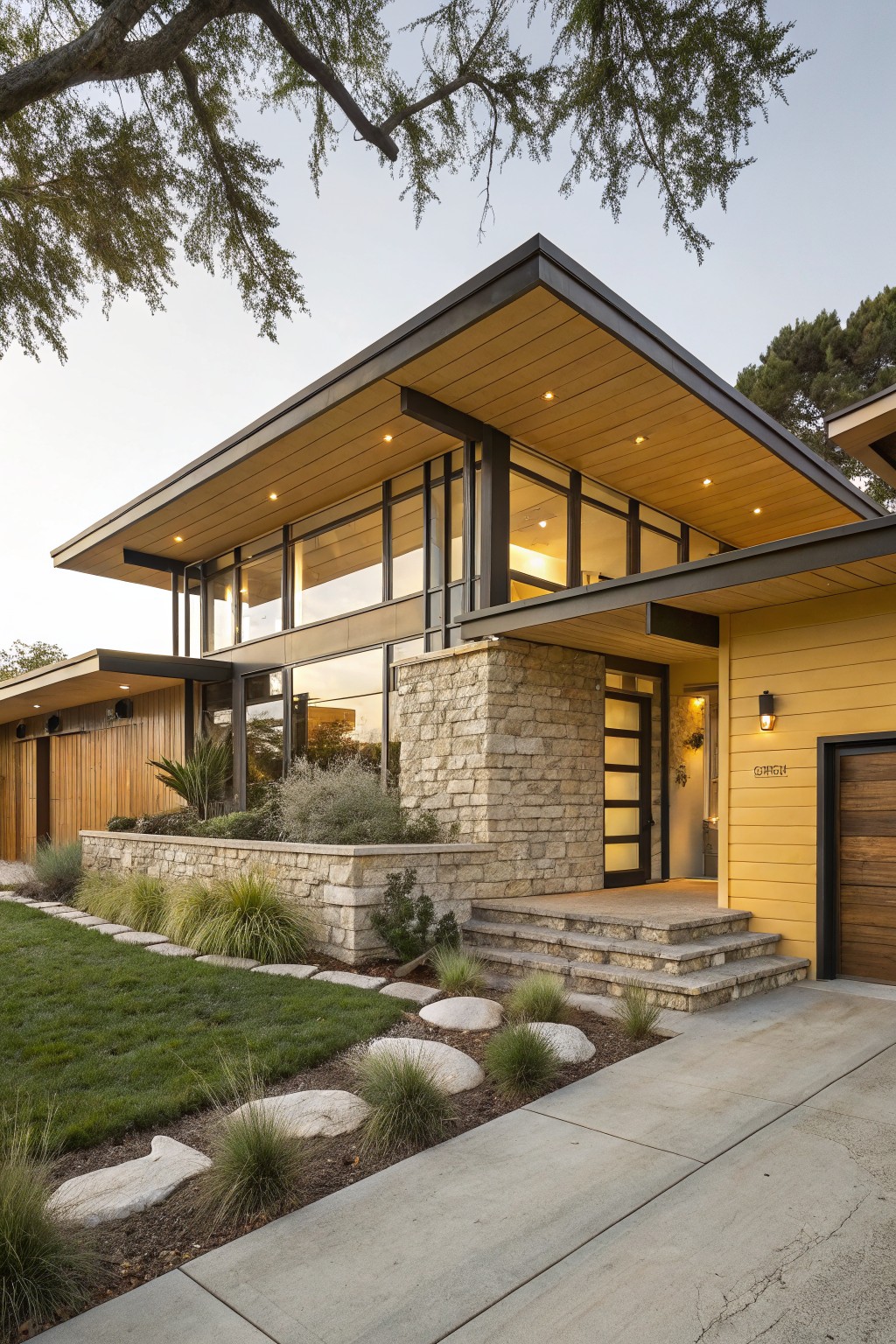
A bright yellow siding like this one really pops against a home’s clean lines and big windows. But what makes it work so well is the rugged stone base wrapping the entryway. It adds solid texture right where you need it, cutting the boldness without dimming the cheer. Those stone steps up to the door feel natural too.
This setup suits modern or mid-century homes in sunny spots. Pick a local limestone or similar for the low walls and base, keeping it low enough not to overwhelm. Pair it with simple plants along the edge, and it boosts curb appeal on a corner lot or any front yard. Just match the stone color to your soil so it blends.
Stone Base Adds Stability to Yellow Shingle Houses
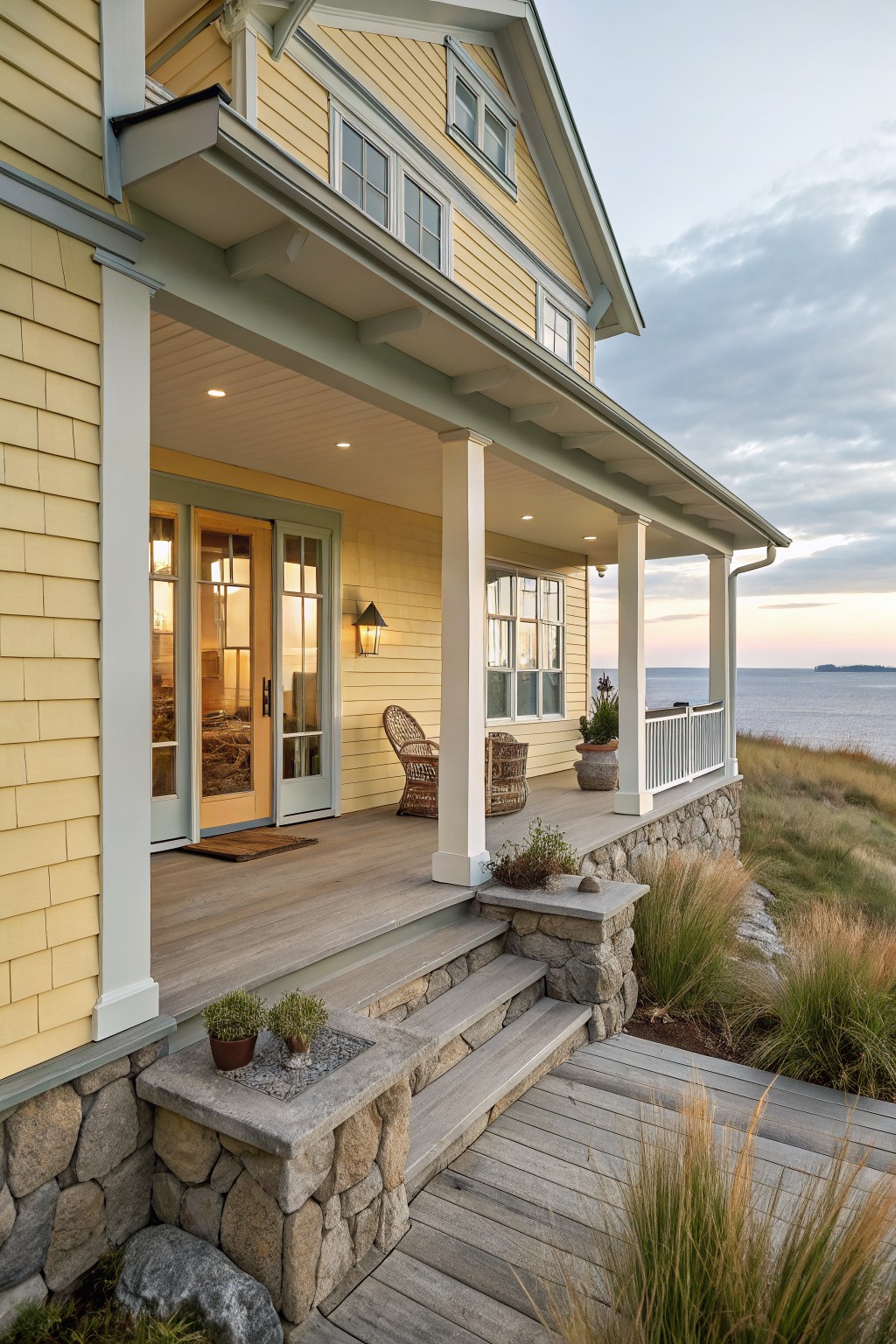
A light yellow shingle siding looks fresh and bright on this house, but the rough stone base and steps keep it from floating above the ground. That mix gives the whole facade a settled, sturdy feel, especially with the porch wrapping around. The stone pulls in the natural rocks nearby too.
You can pull this off on homes with a slope or near water, where you want some weight at the bottom. Pick stones in earth tones that match your site, and build the base wide enough for planters or low seating. It works best when the stone stays rugged, not too polished.
Classic Yellow Stone Exterior
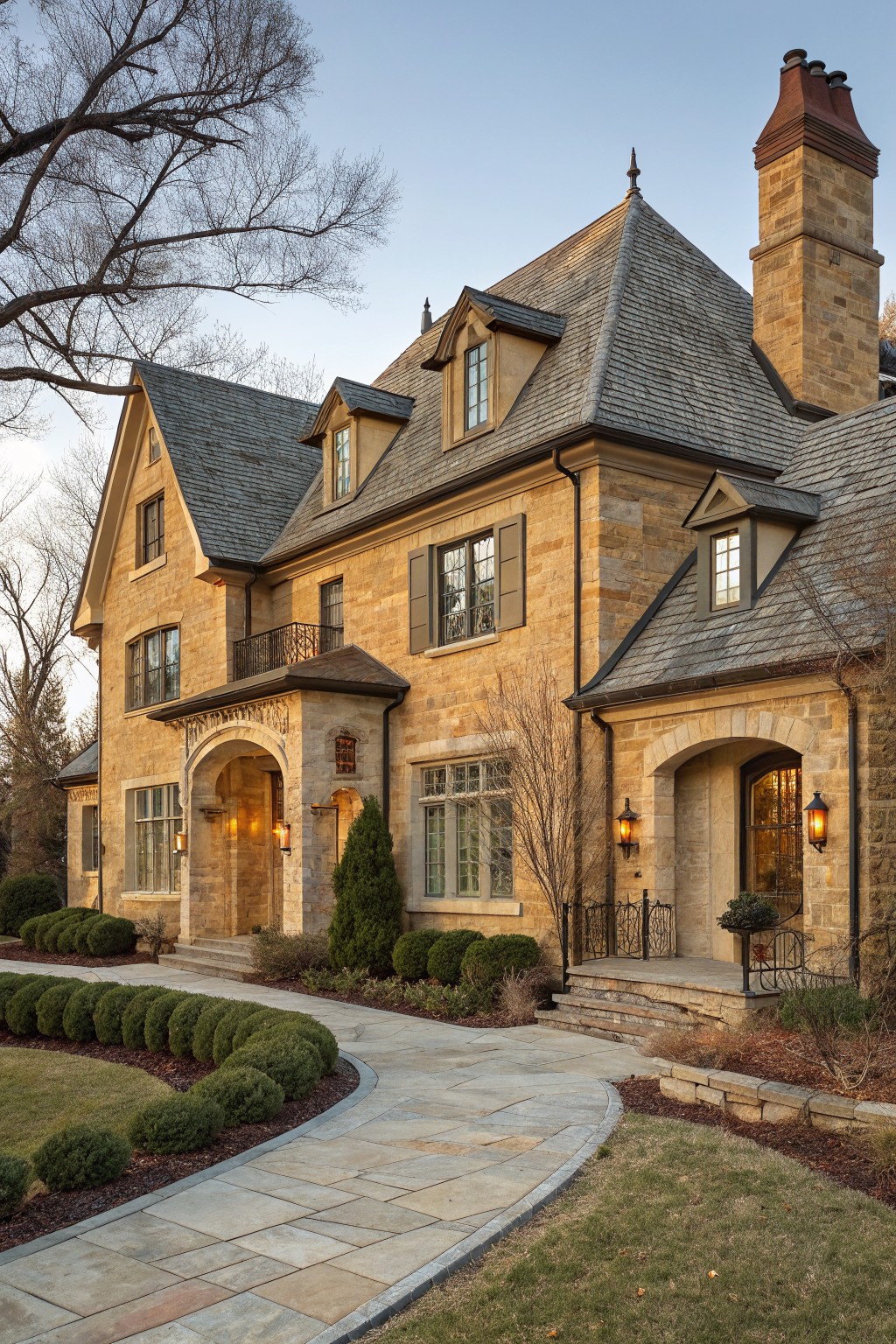
A warm yellow stone like this makes a house feel solid and timeless right away. The color pulls from natural sandstone tones, so it blends with the yard without trying too hard. That dark slate roof up top adds just enough contrast to keep things interesting, and the whole look stays grounded thanks to the simple landscaping around the base.
You can pull this off on a traditional-style home facing the street, especially if your area’s got some rocky terrain. Go for rough-cut stone blocks around the entry arch and lanterns for that welcoming touch, then curve a stone path right up to the door. Keep plantings low like boxwoods so they frame without overwhelming the stone… works best where winters leave things bare half the year.
Tall Stone Chimney on Yellow Siding
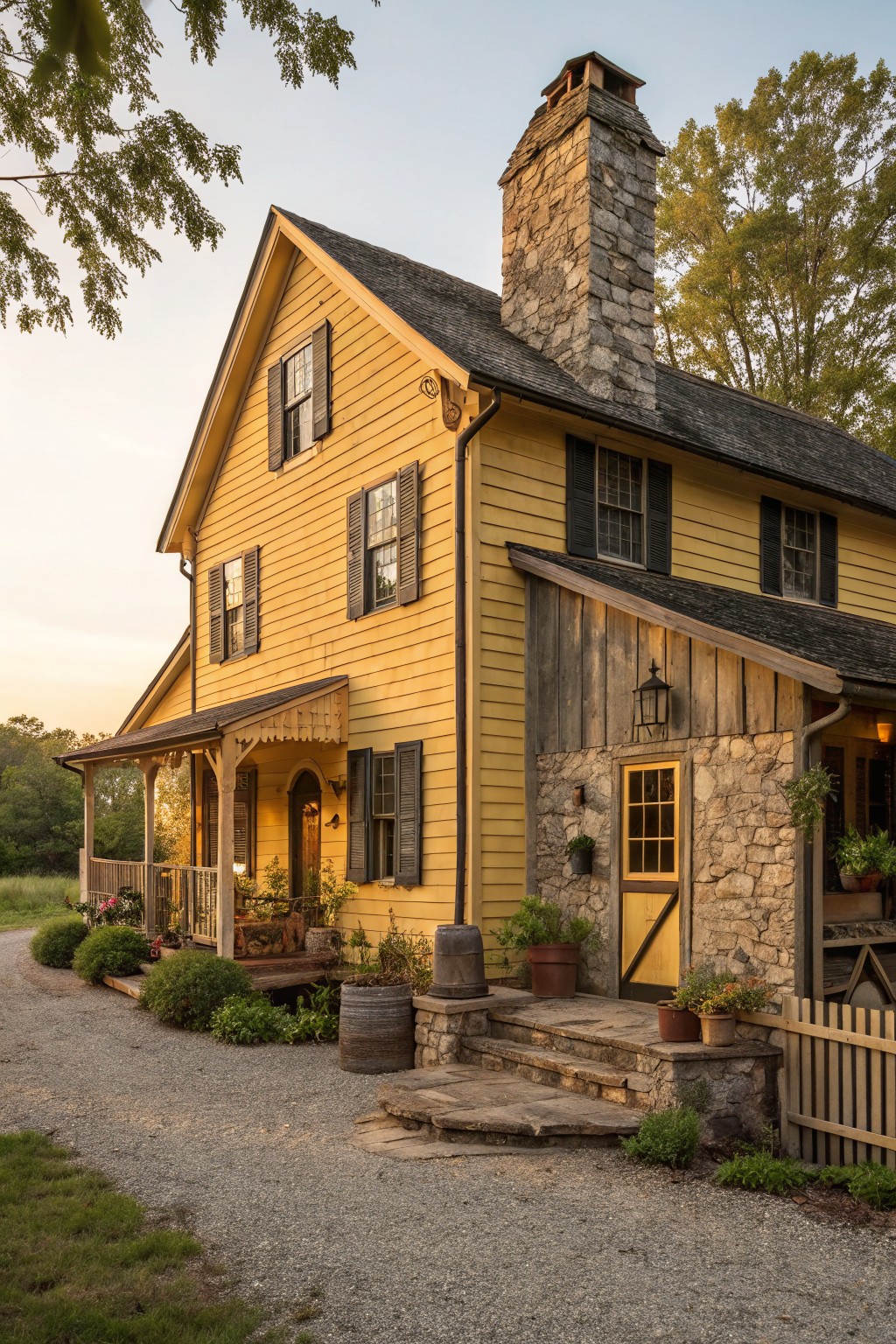
A tall stone chimney rising from the roof gives this yellow house a solid, rooted look. The rough stone stacks up against the smooth clapboard siding in a way that feels natural, not forced. It pulls the eye up while keeping the bright yellow from floating away.
You can add something like this to older homes or new builds that mimic them. It suits country spots with trees around. Just make sure the stone matches the local style so it blends right in.
Recommended Products

{ Size } 3D Faux Brick Panels Eeah Tile: 45x28 In (113x73cm), Thickness 0.4 inch, Come in Box 3 Panels Cover 25.54 Square Feet. Real 3D Wall Panels Like Real Brick.


Wood Canopy Over the Front Entry
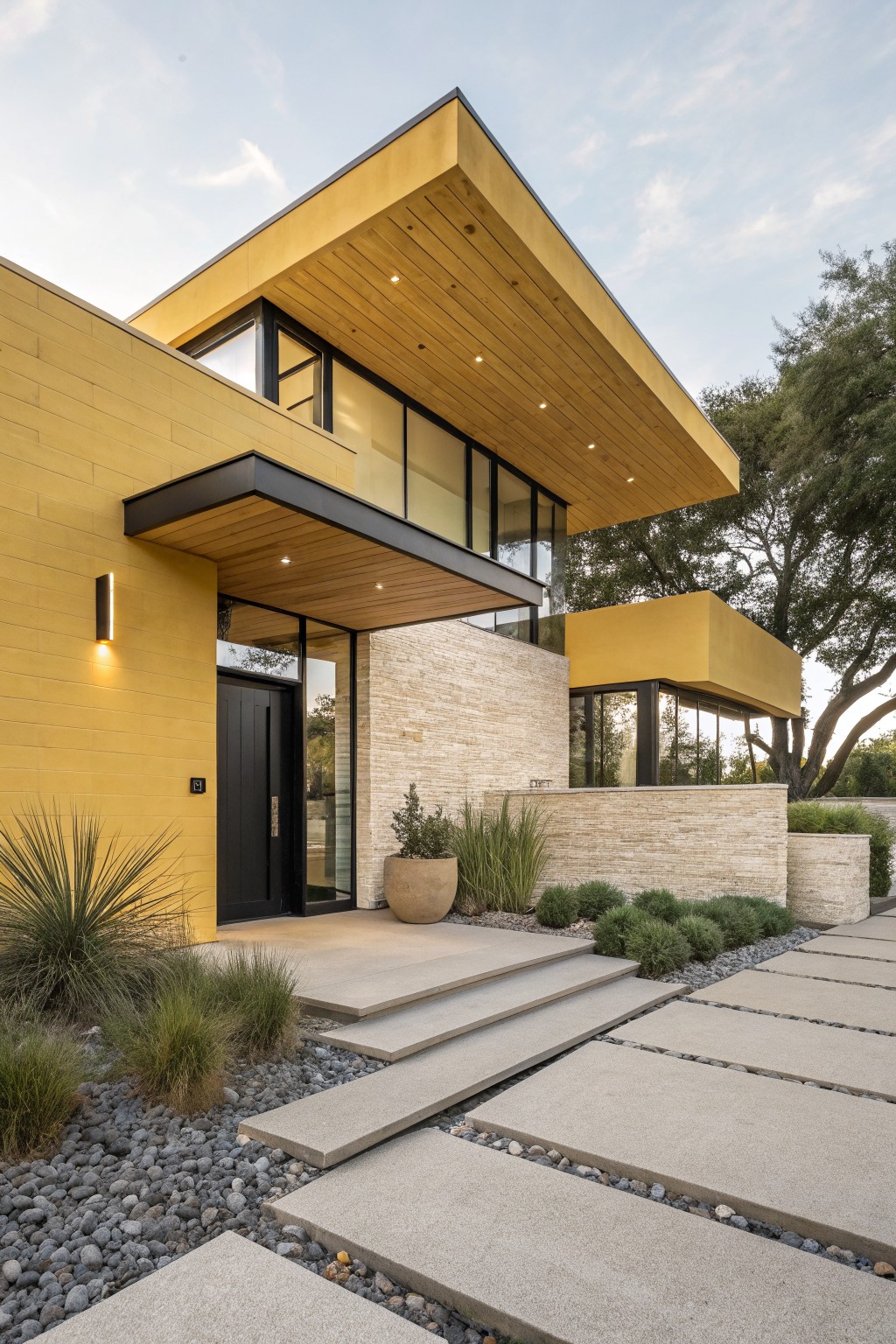
A wood canopy like this one juts out over the entry door on a yellow house. It gives real shelter from the sun or rain. The warm wood ceiling contrasts the yellow wall nicely. Stone on the side adds some rough texture that fits right in.
This works best on modern homes in dry spots. The overhang keeps the door area usable all day. Try it where you want shade without losing light through glass panels nearby. Just make sure the wood matches your roofline.
Teal Door on Yellow Stone House
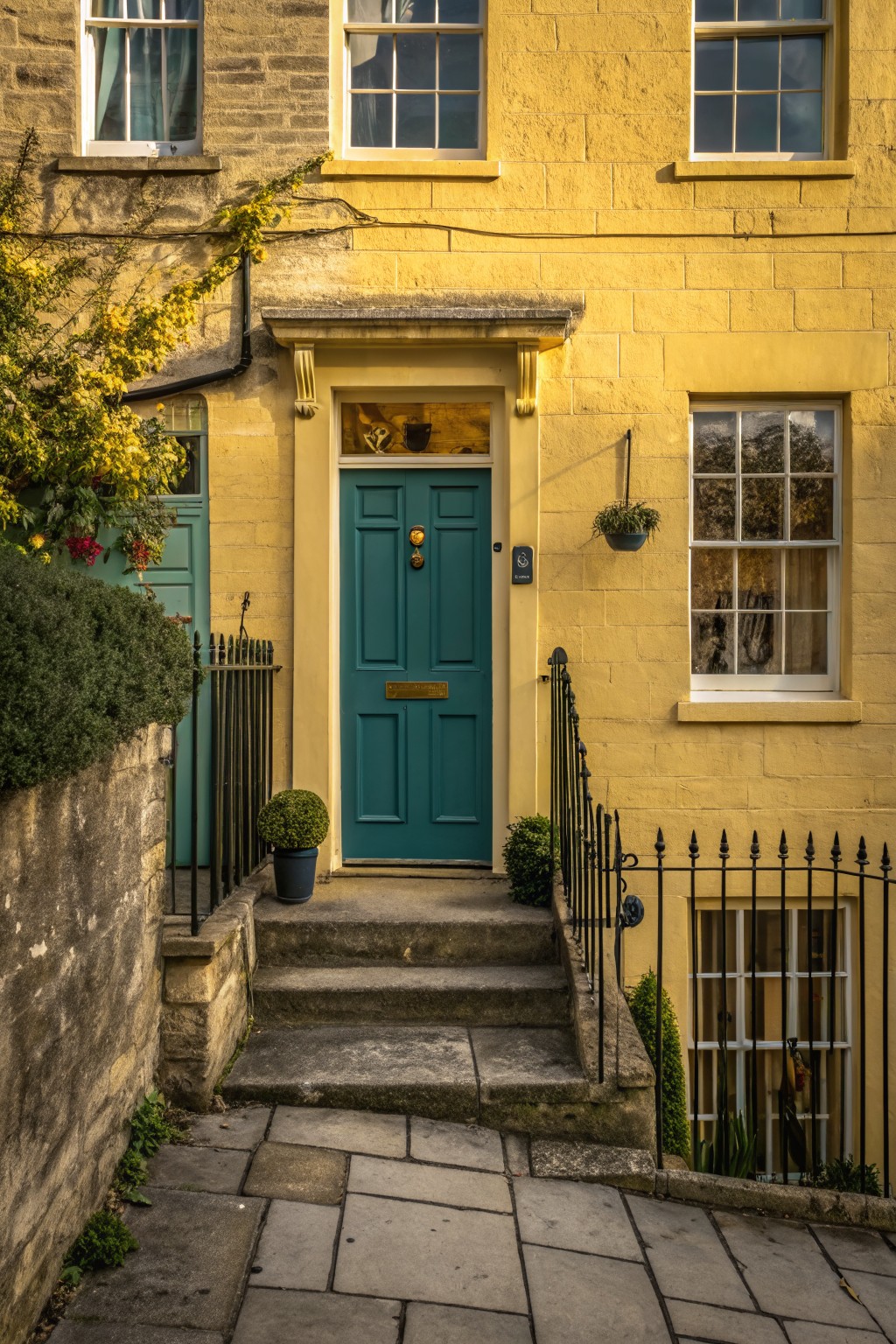
A teal front door stands out nicely against the warm yellow stone of this terrace house. The color contrast draws your eye right to the entry without overwhelming the facade. Black iron railings along the steps and a brass knocker give it a classic feel that fits the stone perfectly.
This look works well on older stone homes in neighborhoods with similar architecture. Pick a teal shade that picks up any green in nearby plants or ivy. It adds personality to a plain entry but keeps things simple—just swap the door and add pots if you want. Avoid super bright teals on larger houses though.
Fieldstone Base Under Yellow Siding
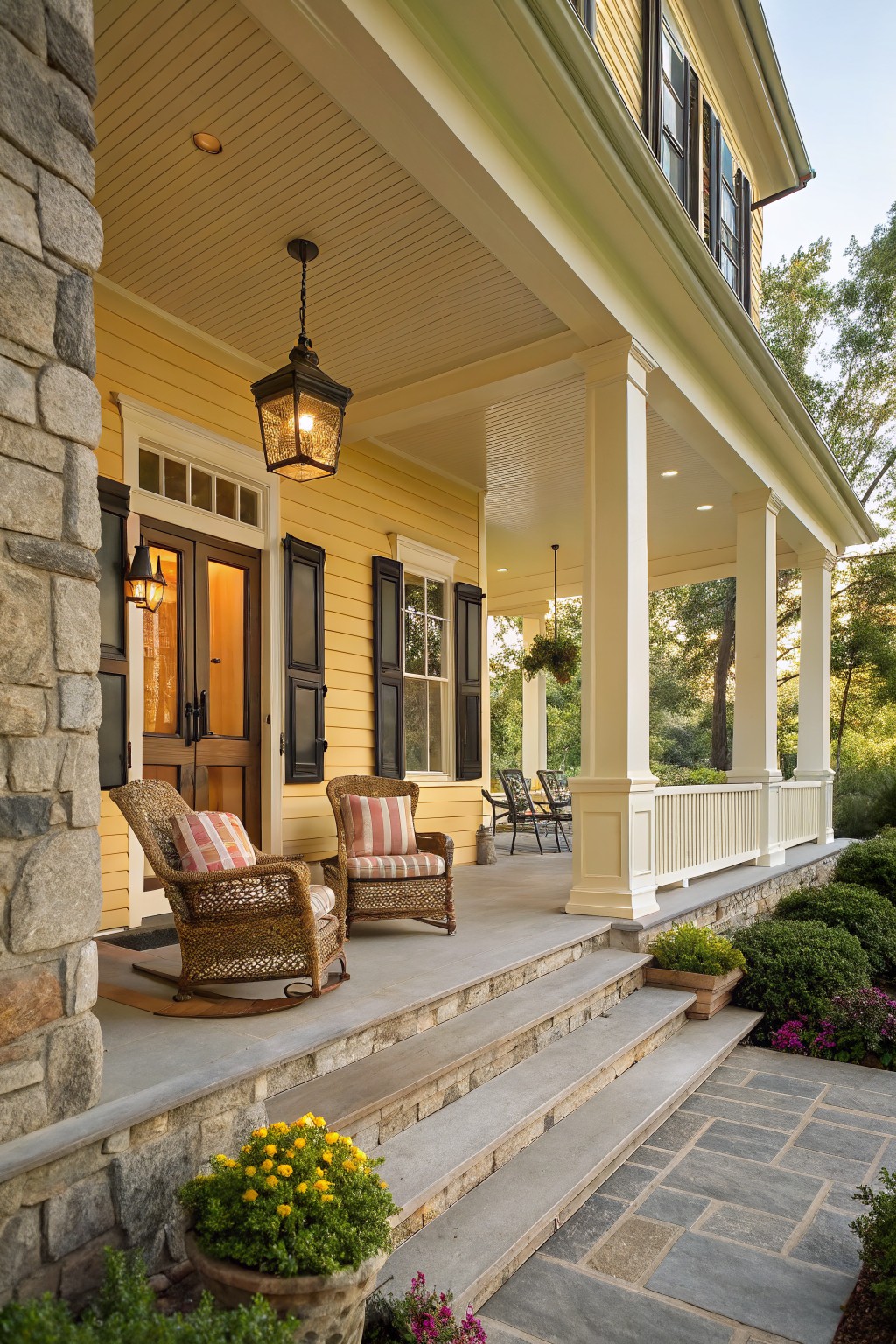
A fieldstone foundation like this one gives a bright yellow house some solid footing. The rough stone texture contrasts nicely with the smooth clapboard siding, adding natural character without overpowering the sunny color. It makes the whole facade feel more rooted and less like a pop of paint.
This setup fits older-style homes or ones in countryside spots where you can source local stone. Pair it with a simple porch like the white columns here, and it welcomes folks right up the steps. Skip it if your lot is super flat or modern, though. Stone needs some presence to shine.
Yellow House with Stone Porch Base
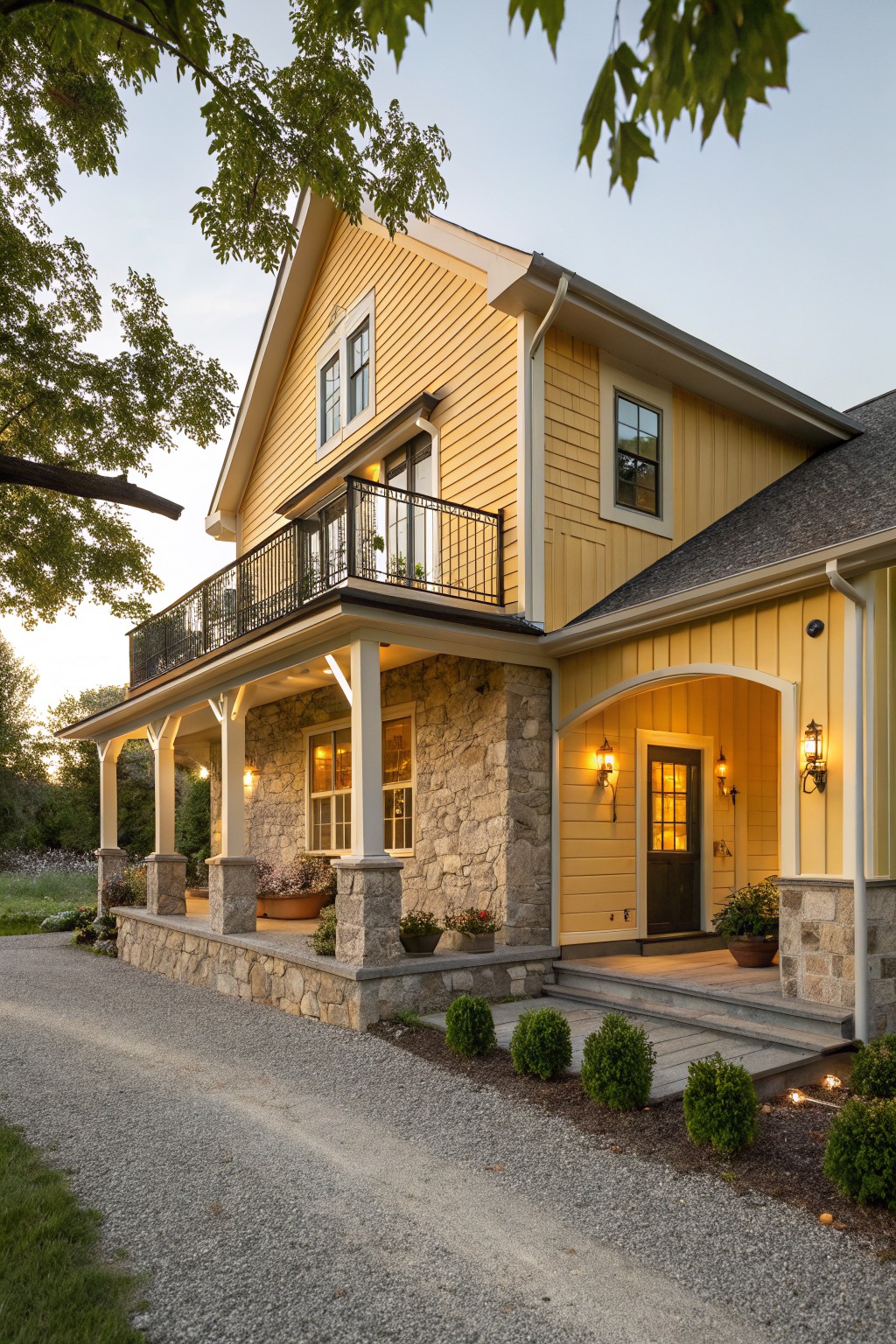
A bright yellow clapboard house like this one gets real staying power from its stone porch base and pillars. The rugged stone sits low and holds everything up, making the sunny siding feel settled instead of floating. It’s a simple way to add that grounded look without overdoing it.
This setup suits farmhouses or older-style homes in the country or suburbs. Pick stones that blend with your area’s rock, keep the porch wide enough for chairs, and let the yellow pop above. Just avoid tiny stones, they can look fussy.
Stone Accents Ground Yellow Stucco Facades
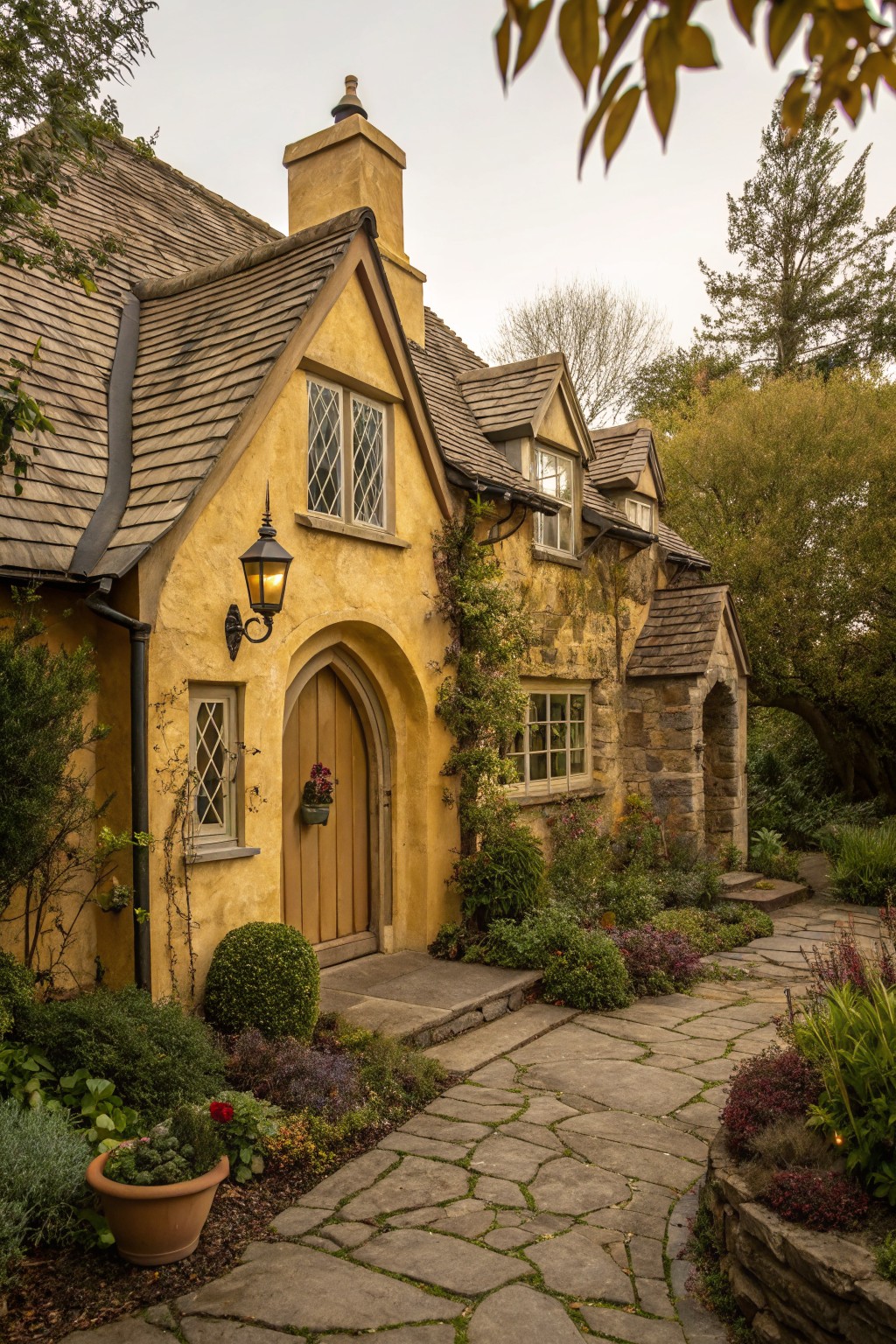
Yellow stucco gives a house a soft, sunny look. Stone accents around the entry take it further by adding weight and texture. Here, rough stone builds out a small porch and frames the arched door. It keeps things from feeling too light or plain.
This setup suits cottage-style homes or older bungalows. Use local stone to blend in, and keep accents focused near the front door. It boosts curb appeal without a big remodel… just right for a welcoming path to the house.
Yellow Siding with Stone Garage Accents
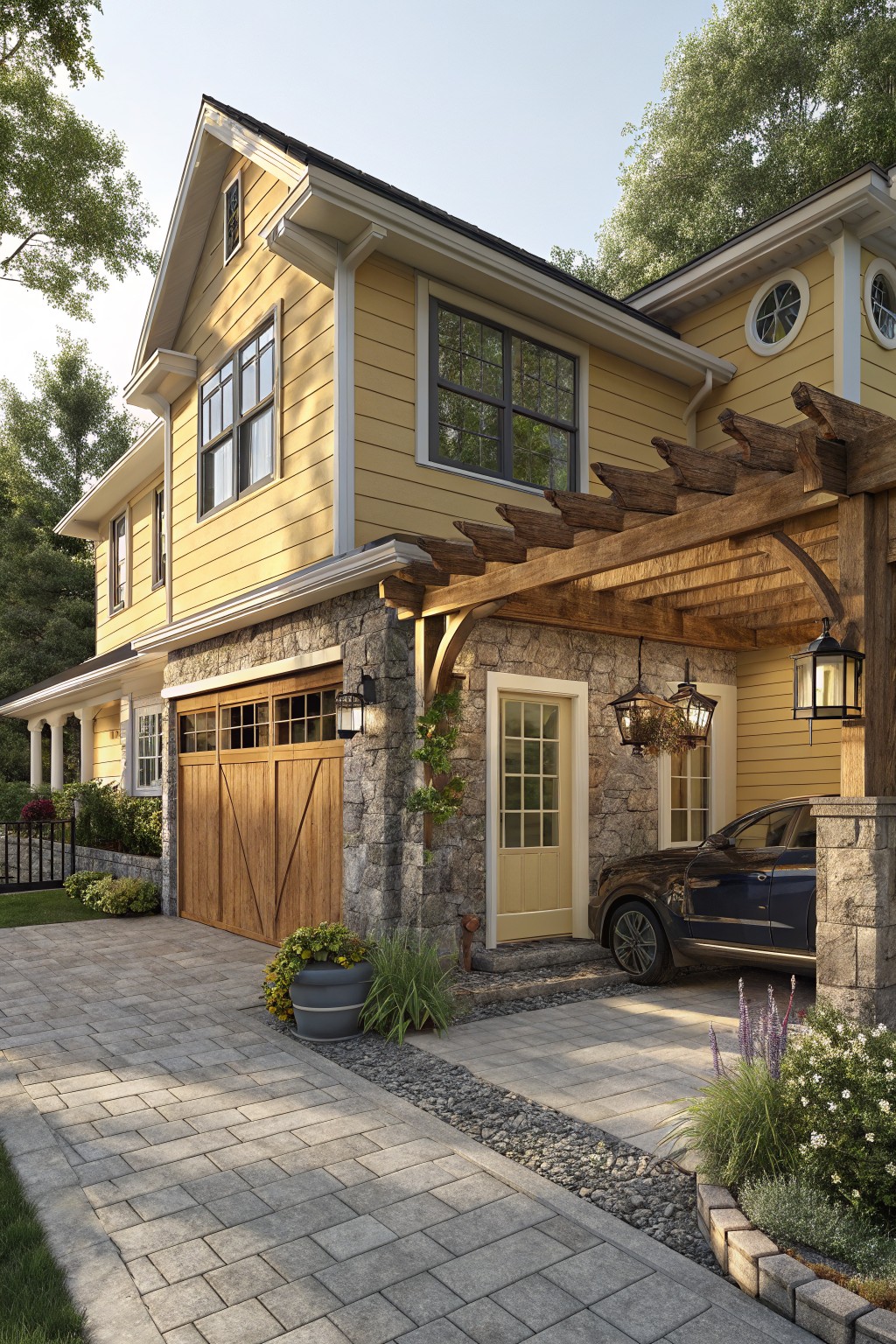
A light yellow clapboard house like this one gets a lot more presence when you add stone around the garage area. The rough stone walls at the base tie right into the wood pergola overhead, giving the whole side a sturdy, lived-in look without overpowering the sunny color. It pulls the eye to the entry and makes the house feel rooted to its spot.
This setup works best on homes with some slope or in casual neighborhoods where you want subtle character. Pick stone that matches your local area, keep the garage door simple wood, and let plants soften the edges. Skip it if your lot is super flat. It might feel too heavy there.
Stone Accents Ground a Yellow Stucco Home
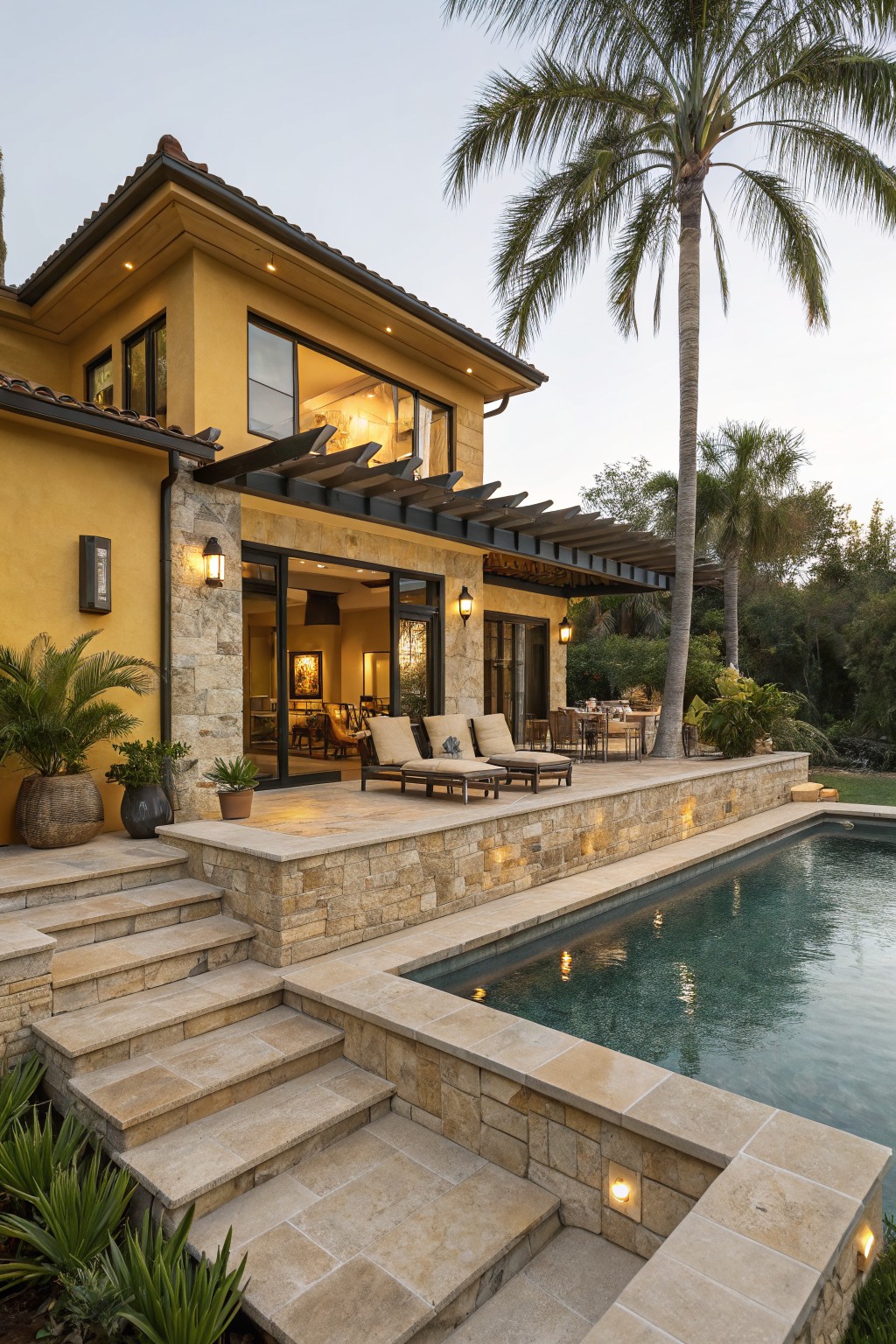
Yellow stucco walls catch the eye on this house, but the real draw is how stone wraps the base and frames the terrace doors. That rough texture down low gives the smooth yellow a solid footing. It turns a bright color into something that feels established and easy on the landscape.
This setup suits homes on slopes or with patios below the main level. Match the stone’s warm tones to your yellow paint, and use it around entries or poolsides. Skip it if your lot is flat and simple. Keeps things from looking top-heavy.
Stone Entry Steps Add Solid Character
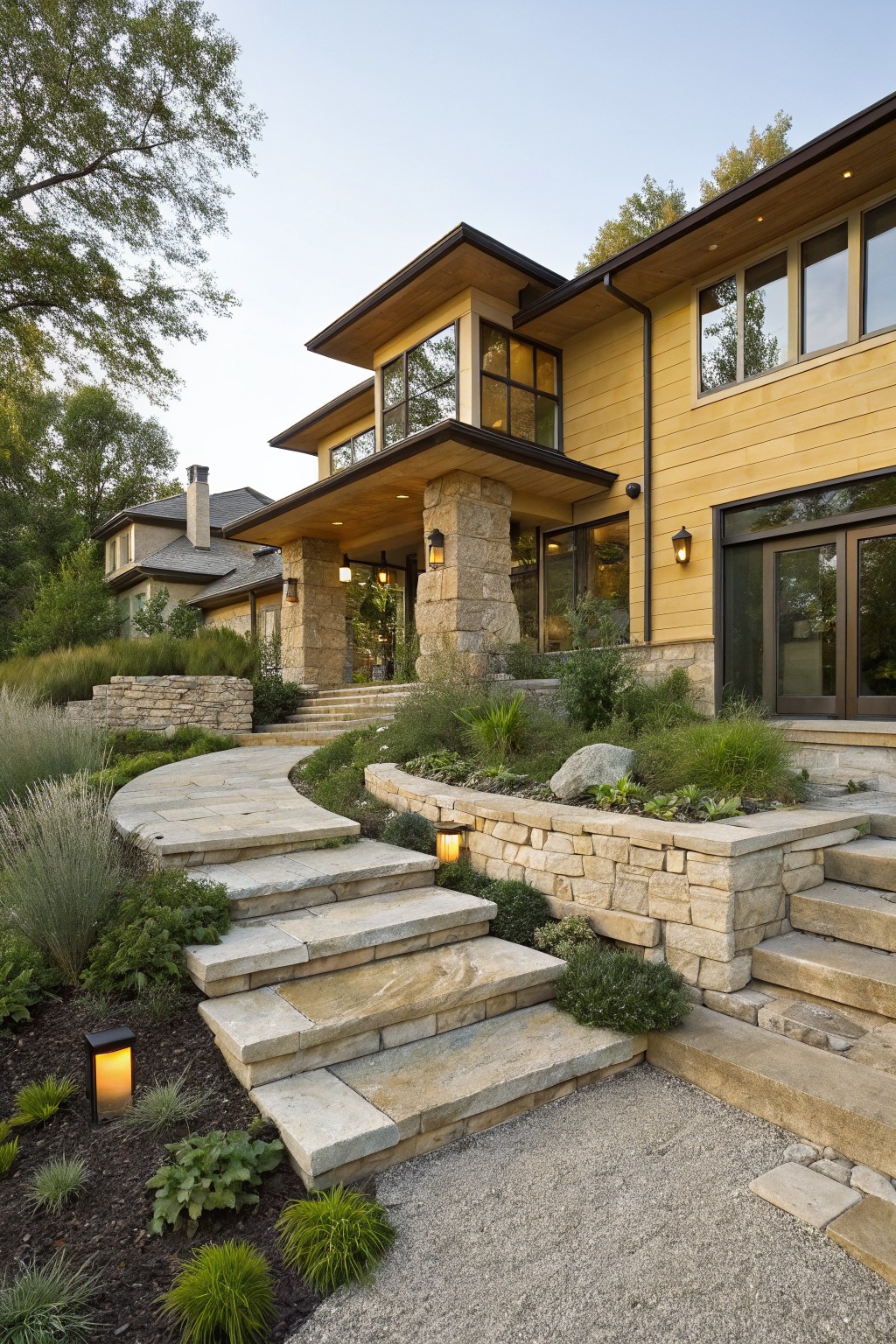
This yellow house pulls off a grounded look with rough-cut stone steps rising to the entry. The pale yellow siding feels lighter up top, but those sturdy stone pieces at the base make everything feel more rooted and real. A few lanterns along the way add just enough light without overdoing it.
Try this on homes with some slope out front, where steps make sense anyway. It suits craftsman or modern farmhouses best, especially if you have native plants nearby to blend it all together. Skip it on flat lots, though. Might feel out of place.
Yellow Facade with Stone Base
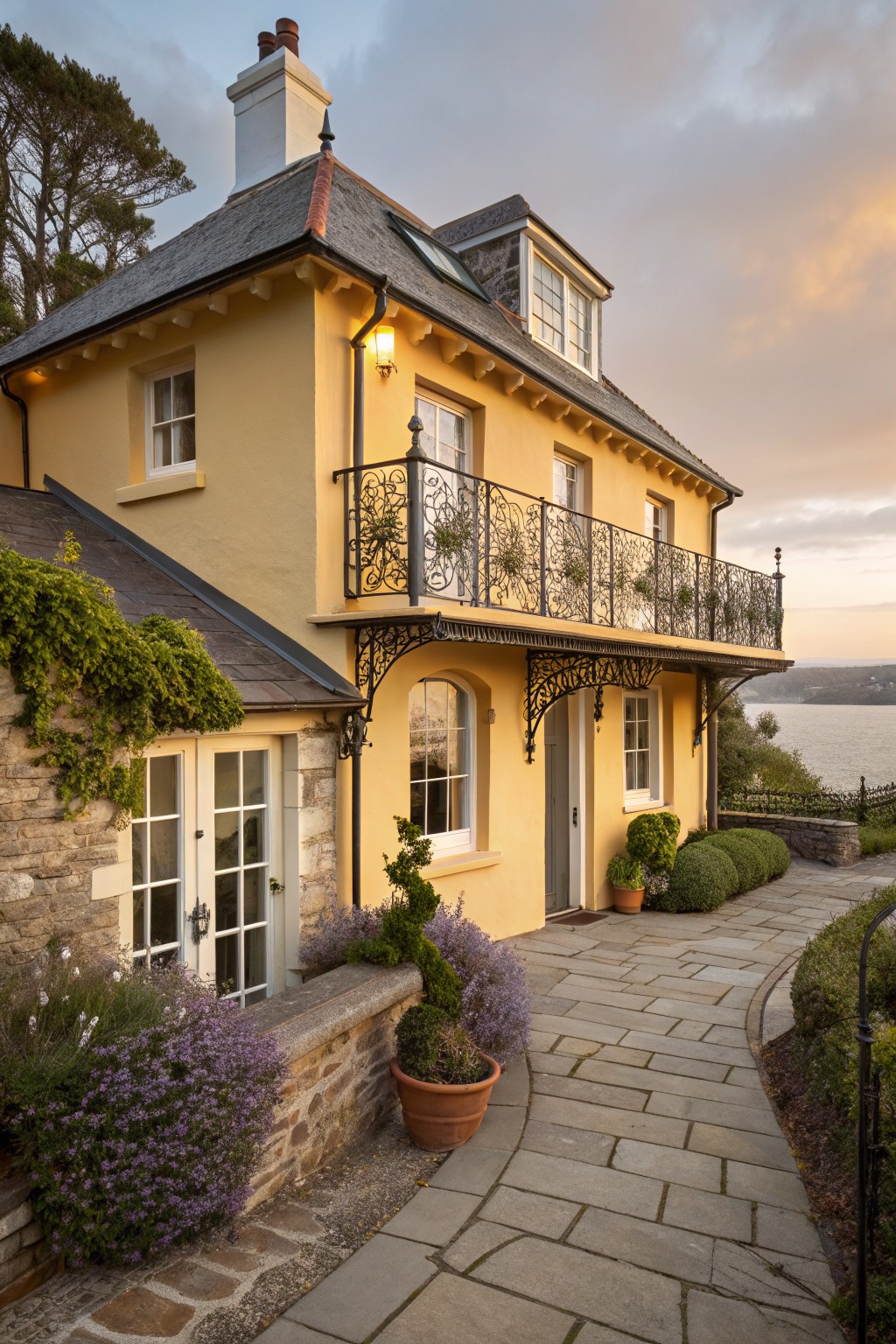
A bright yellow exterior like this one gets a lot of its charm from the stone base wrapping the lower level. That rough stone pulls the eye down and makes the pale yellow walls above feel settled in, not floating. It’s a simple way to add texture and weight without much fuss.
This setup suits homes on sloped lots or near water, where you want color but something sturdy underneath. Match the stone to your site’s rocks if you can, and keep plantings low around it so the contrast stays clear. Works on cottages or larger places aiming for that lived-in look.
Classic Yellow Walls with Stone Base
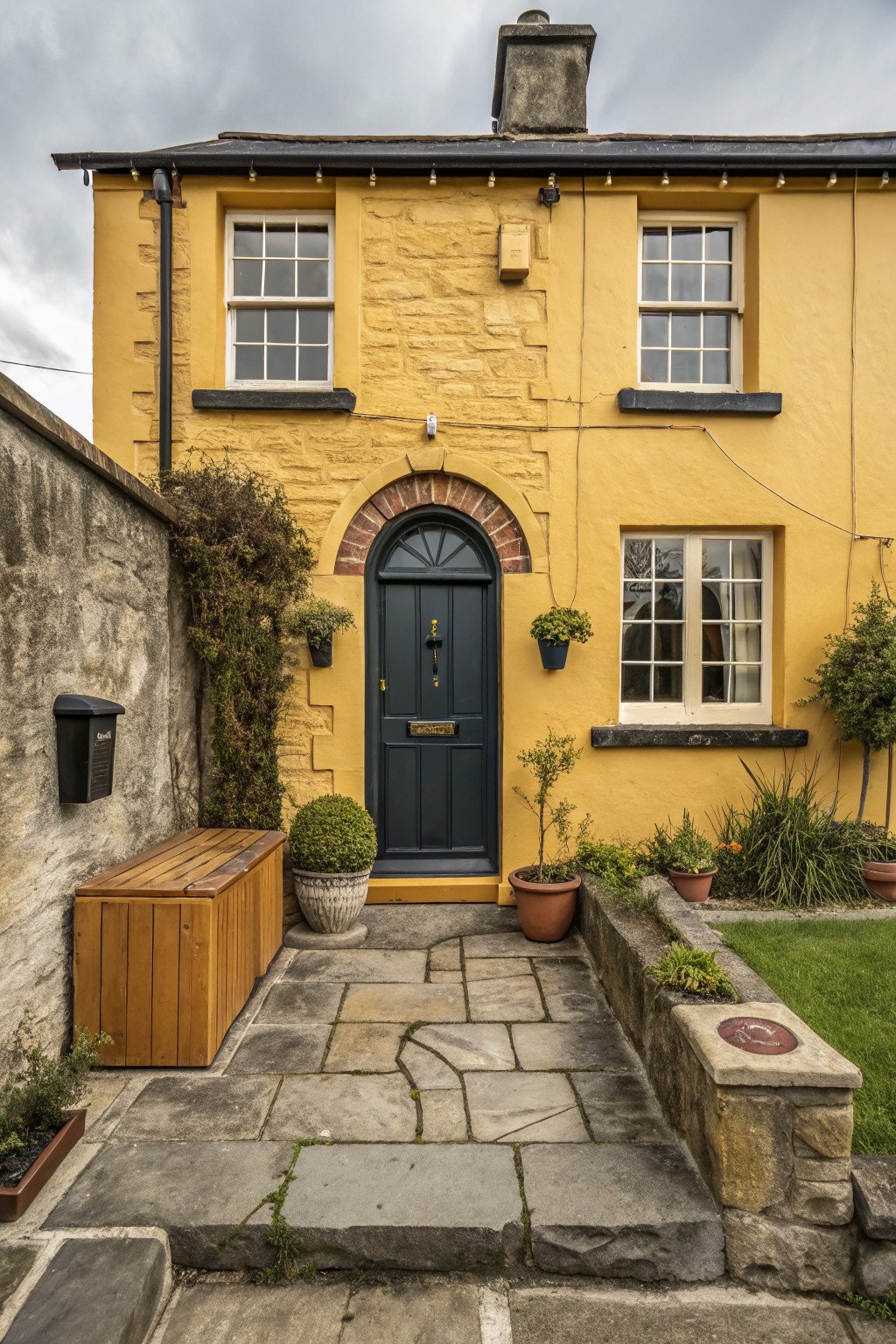
A bright yellow paint on the upper walls pairs nicely with the natural stone base here. That rough stone texture at the bottom keeps the sunny color from feeling too bold. It adds a bit of age and solidity to the whole front. The arched doorway in dark green picks up on it too.
This setup works well on older cottages or row houses with stone foundations already in place. Just clean up the stone and paint above it yellow. Skip it on super modern builds. Add a couple pots by the door for extra welcome… but don’t overplant.
Stone Steps Framing the Entry
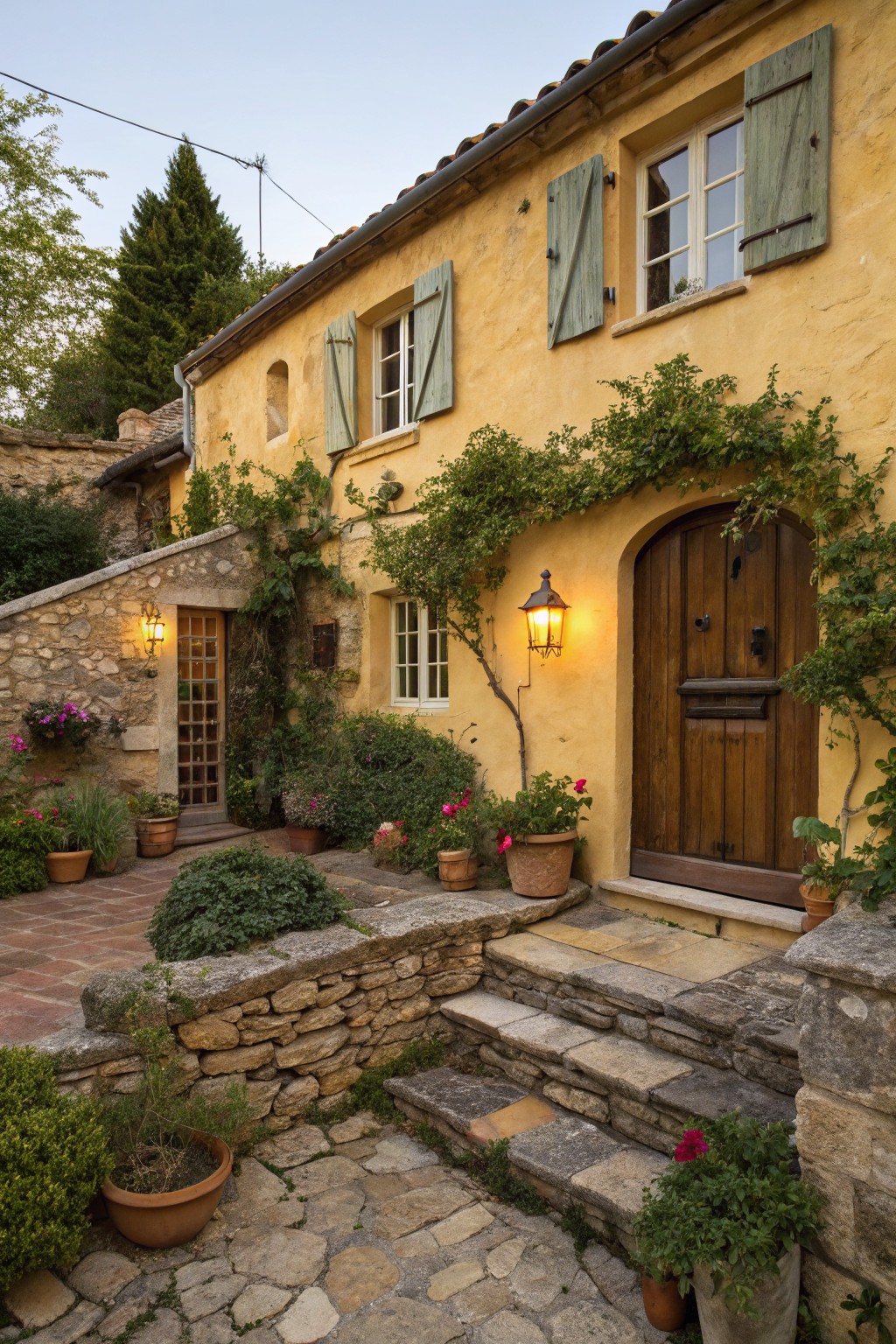
Those rough stone steps leading up to the door do a nice job here. They give the sunny yellow walls a solid base that feels right at home on a slope. The low retaining walls match, pulling in some of that natural ruggedness without overwhelming the soft stucco look.
Try this on any house with a bit of grade change around the front. Local fieldstone works best, keeps things authentic. It suits older cottages or Provençal styles especially well. Watch the height though, nothing steep or uneven.
Yellow House with Stone Base Accents
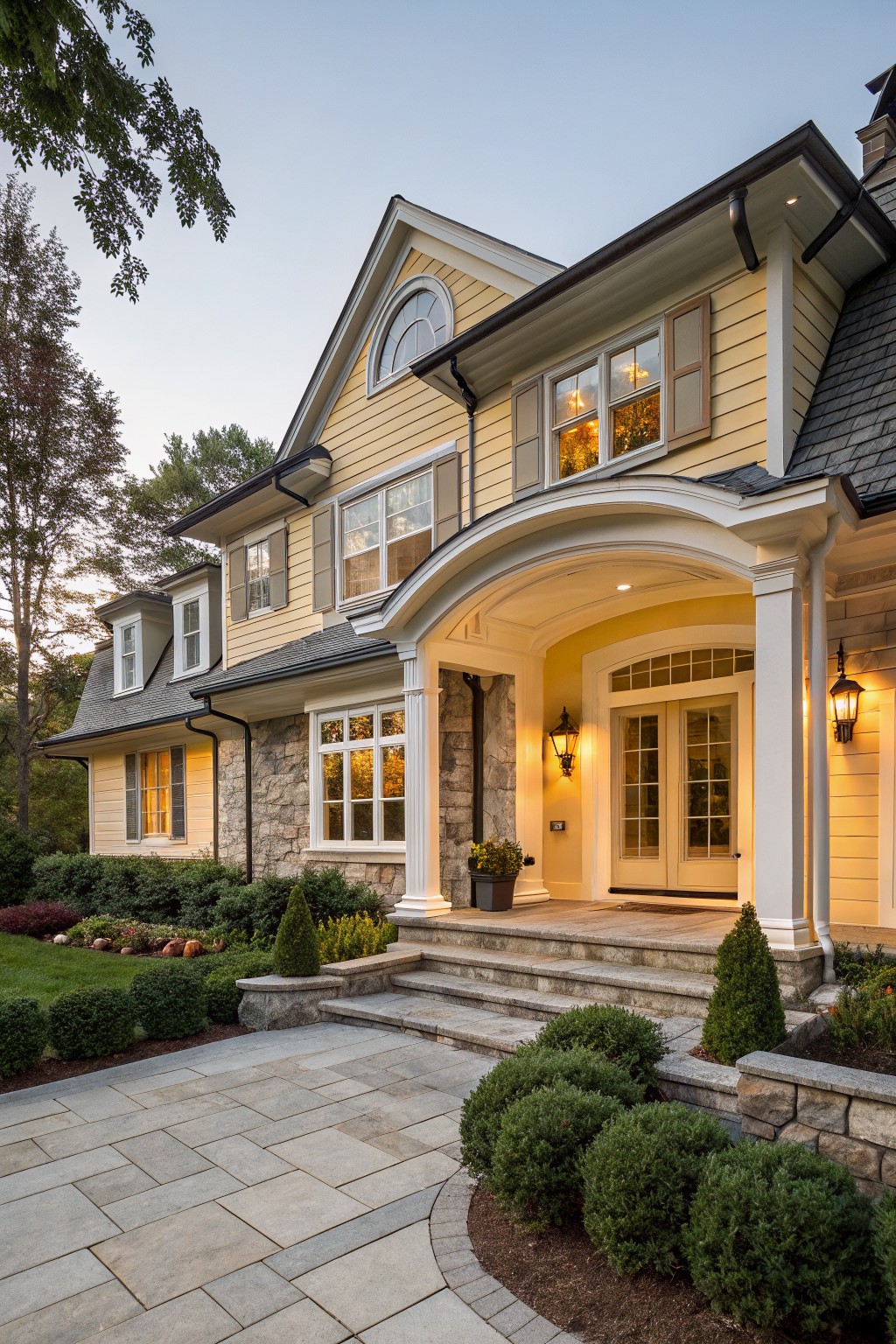
A light yellow siding like this one feels sunny and welcoming on a home’s exterior. Stone at the base adds real character without overpowering it. The rough texture contrasts the smooth clapboards nicely, and it ties right into the stone steps and walls around the entry.
This setup suits traditional homes in wooded or suburban spots. Run the stone along the foundation and up a bit on pillars or corners for balance. Pick a gray or earthy tone that picks up from nearby rocks or soil. It holds up well over time too.
Stone Chimney on a Compact Yellow House
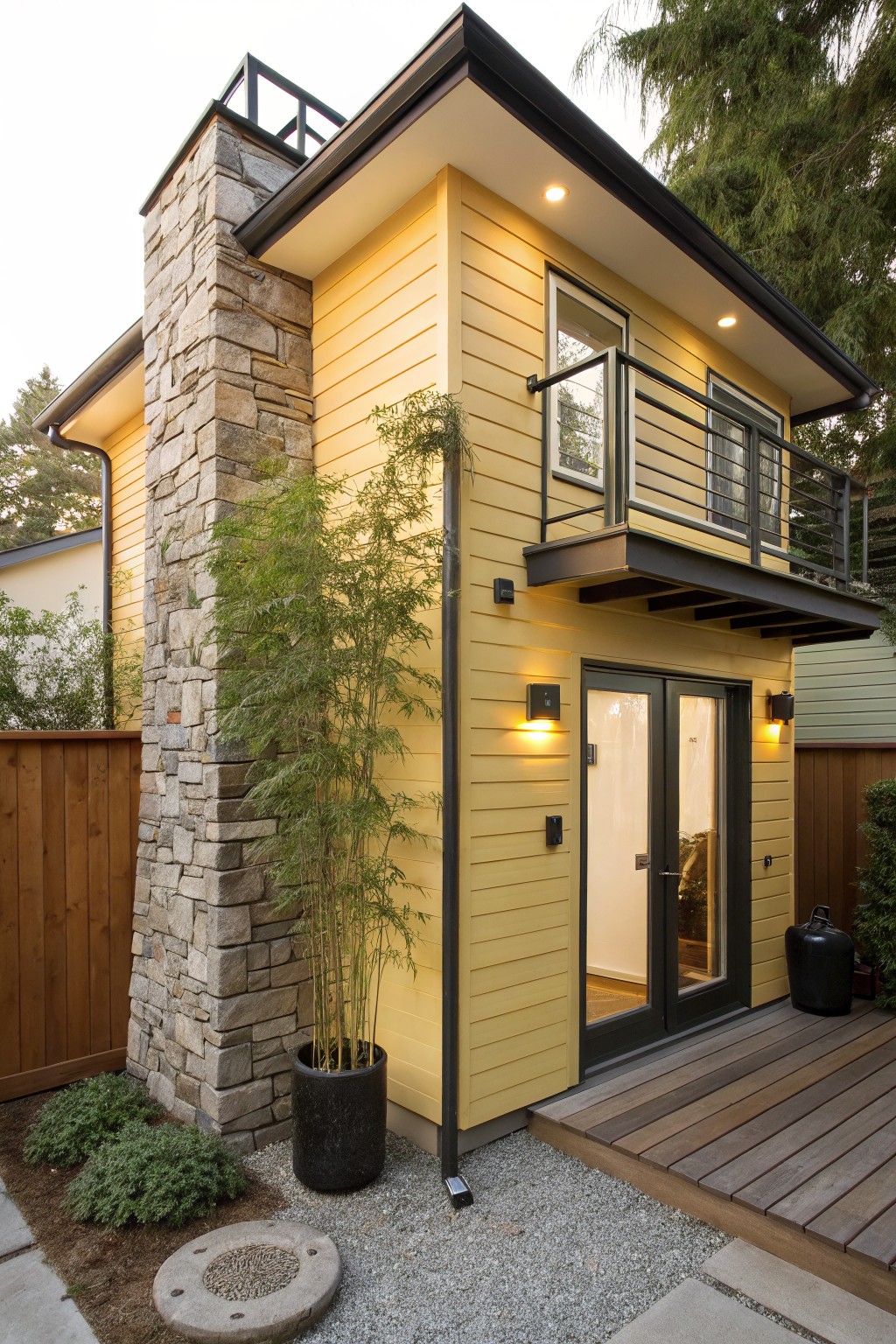
A tall stone chimney runs up one side of this yellow clapboard house. It gives the bright siding some solid footing. The natural stone texture pulls the eye up without overwhelming the sunny walls. That mix feels sturdy yet cheerful, especially on a smaller build like this.
You can pull this off on ranch styles or tiny homes in wooded spots. Stack rugged stone from the base up high for impact. Skip it if your roofline is too busy. Pair with simple wood decks out front to keep things easygoing.
Yellow Siding Paired with Stone Base
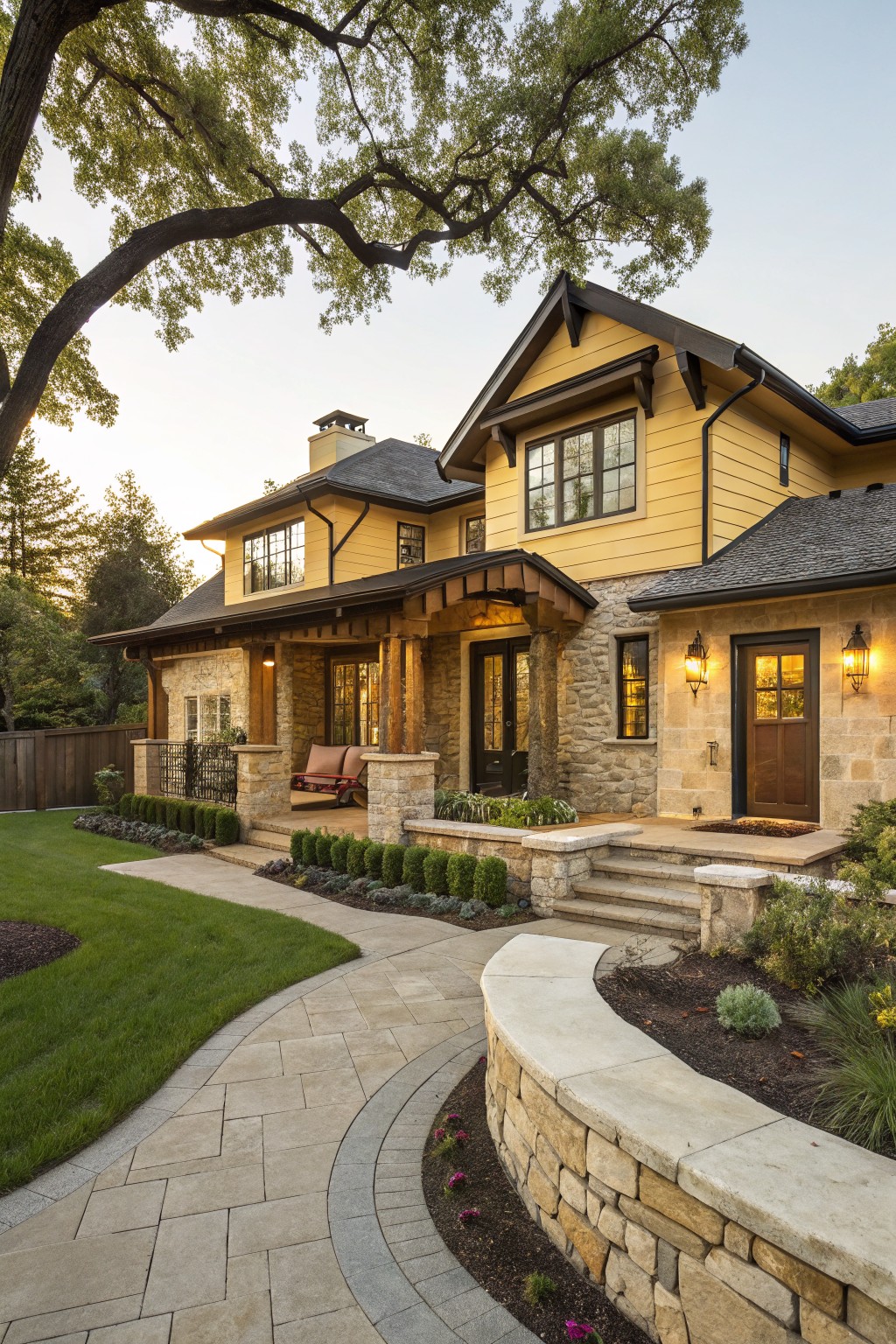
A yellow house like this one gets a lot of its appeal from the stone base that wraps around the lower level. The rugged stone contrasts nicely with the smooth yellow siding up top, making the whole facade feel more solid and rooted in place. That porch with its stone pillars and simple wood swing pulls it all together without overdoing things.
This setup suits homes in greener areas where you want the house to blend a bit with the surroundings. Pick stone that matches local rock for the best look, and keep the yellow on the lighter side so it stays cheerful through the seasons. Just make sure the stone work lines up clean at the corners.
Frequently Asked Questions
Q: How do I pick stone colors that play nice with yellow siding?
A: Go for warm-toned stones like beige, tan, or soft gray. They ground the yellow without stealing the show. Test samples in natural light on your house first.
Q: Can I add stone accents to my existing yellow house without a full redo?
A: Stack real or manufactured stone veneers around your entryway or foundation for quick impact. Prep the surface well and use construction adhesive for a solid hold. Hire a pro if you’re stacking higher than a couple courses.
Q: What’s the easiest way to clean stone accents on a yellow exterior?
A: Mix mild dish soap with water and scrub gently with a soft brush. Rinse thoroughly and let it air dry. Skip pressure washers, they pit the stone.
Q: Will yellow siding with stone hold up in rainy climates?
A: Pick stones with low absorption rates and seal them yearly. Choose fade-resistant yellow paint rated for exteriors. And skip porous natural stones if heavy rain hits your area often.
