

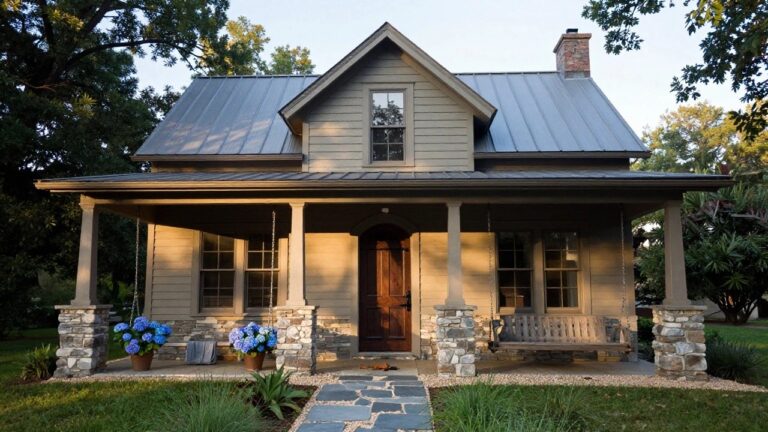
I’ve noticed that green-painted houses often shine when they lean into the landscape around them, but they need grounding elements to avoid looking washed out from the street. Stone accents do that job perfectly, wrapping entries or bases with rough texture that draws the eye and builds visual depth across the facade. In real neighborhoods, those details make a house read as more solid and thoughtful, especially under changing light. I remember eyeing one nearby with rugged stone quoins against soft green siding, and it transformed how the whole front felt from bland to layered. You might spot a couple approaches here worth sketching for your own curb appeal tweaks.
Green House with Stone Porch Pillars
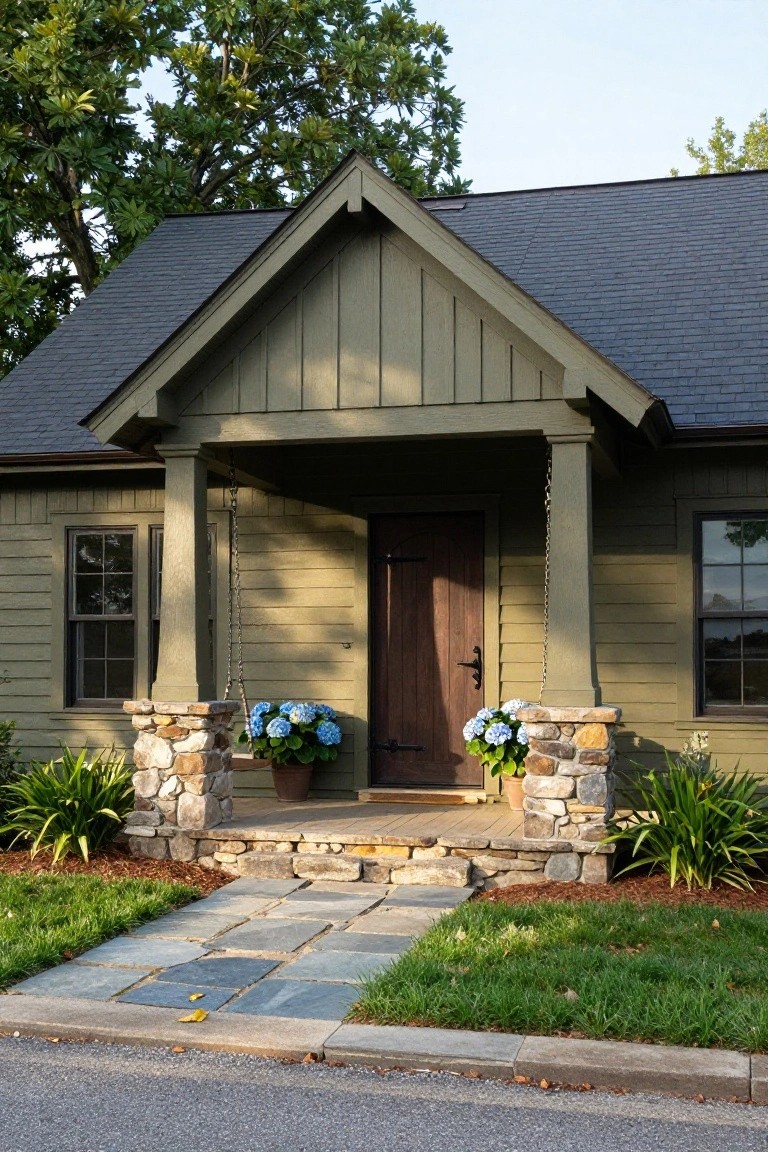
Stone pillars at the base of porch columns give this green house a solid, grounded look. The rough texture of the stacked stones contrasts nicely with the smooth vertical siding painted in a soft green shade. It keeps the house from looking too plain while tying into the natural setting around it.
You can pull this off on smaller homes or cottages where you want some heft without going overboard. Use local fieldstone or similar for the pillars to match your area, and keep the stone low around the porch steps and posts. Works best on homes with covered entries like this one, especially if you add a few plants nearby for a bit more life.
Stone Bases Under Green Siding
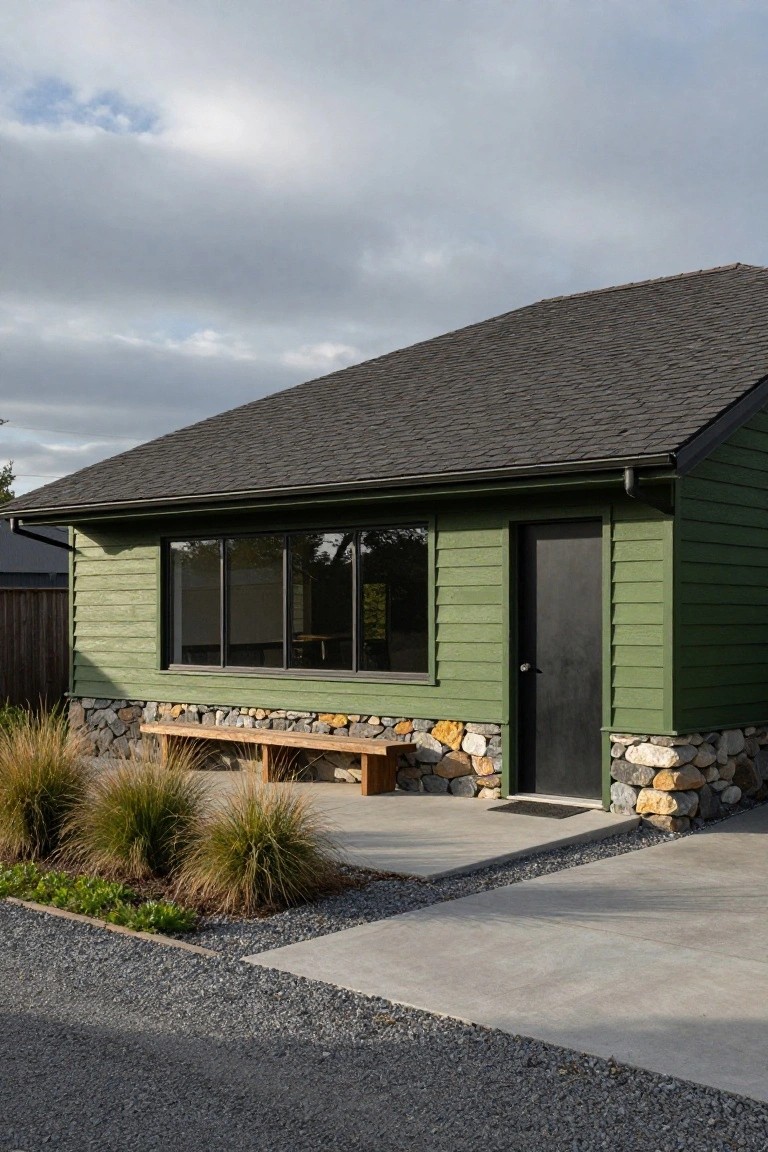
This setup takes a simple green-painted exterior and gives it more interest right at the bottom. Rough stones in different shapes and colors stack up along the foundation, making that lower section feel solid and natural. It pulls the eye down before moving up to the clean lines of the siding and those big windows. The green keeps things fresh while the stone adds some real texture without overdoing it.
You can pull this off on sheds, garages, or even a full house if you want a grounded look. It suits spots with a bit of slope or rocky soil best, since the stones tie right into the landscape. Just make sure the mortar or stacking holds up in wet weather… and pick local stones to keep costs down.
Green House with Stone Chimney Accent
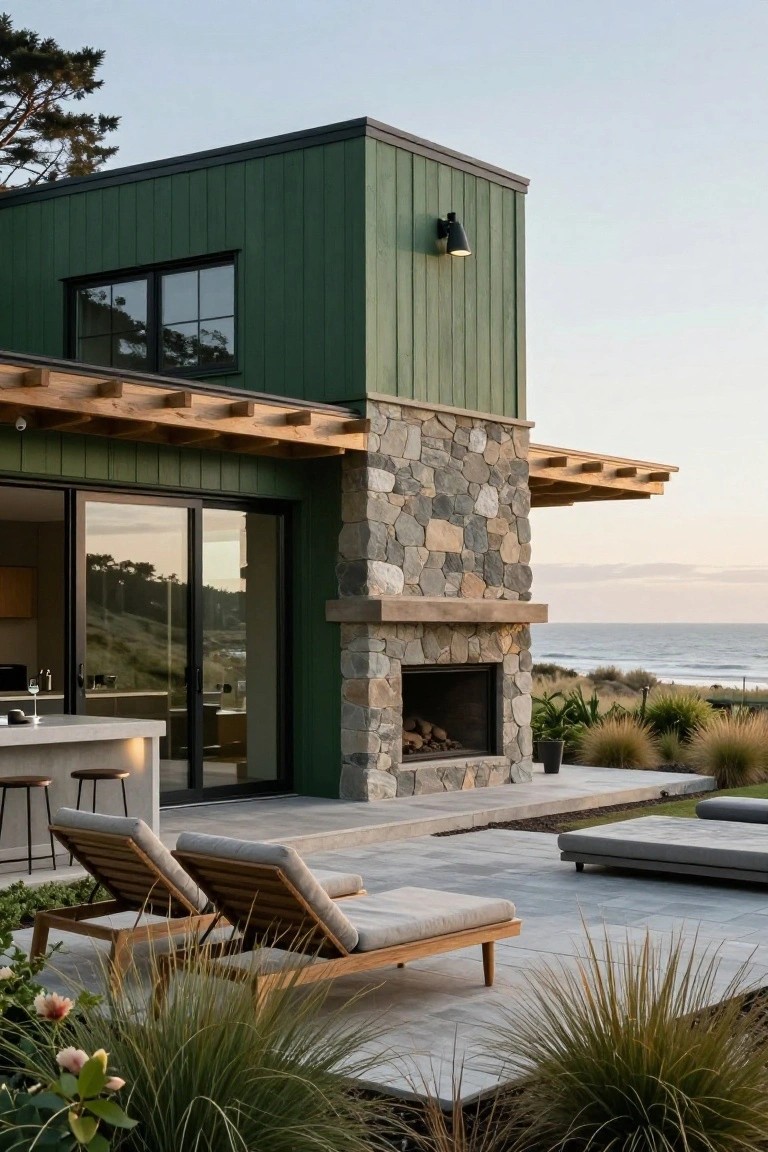
A green-painted wood exterior like this one gets a lot from a single stone chimney running up the side. The rough, stacked stones stand out against the smooth vertical siding. It gives the whole facade more interest without overdoing it. And here, the fireplace inside opens right to the patio, so you get that indoor-outdoor feel on calm evenings.
Try this on homes near the water or in wooded spots where you want some natural texture. Pick stones in grays and earth tones to keep it easygoing. Just scale the chimney to your house height… too big and it overwhelms.
Green Shingle Garage with Stone Base
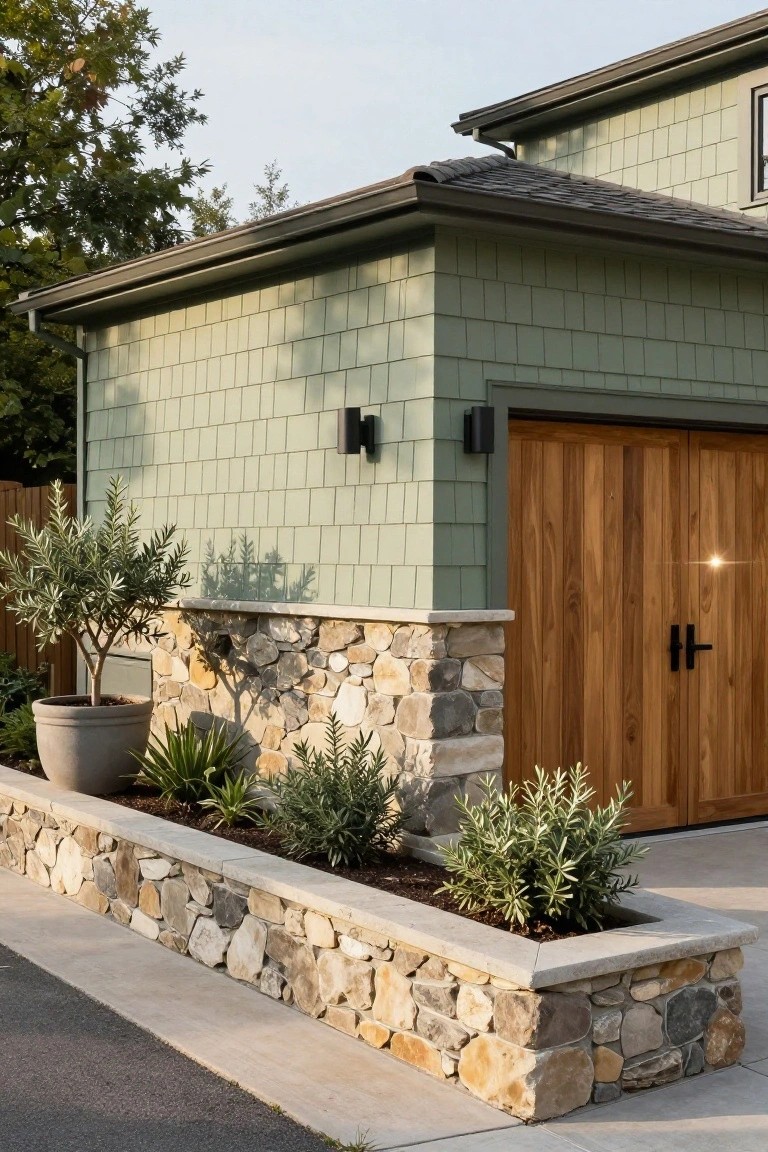
A low stone wall runs along the base of this green shingle garage. It’s stacked with different sizes and colors of rock, and planted with olive trees and succulents right in the top. That rough texture plays off the even green siding up above, giving the whole side more visual weight without any fuss.
This setup works well on homes with a garage that’s a bit exposed to the street. It hides the foundation and adds some planting without needing much space. Try it where you want a sturdy look that ties the house to the yard, especially if your lot has a slight slope. Just keep the stones local if you can, to match the setting.
Stone Arch Entry on Green Stucco
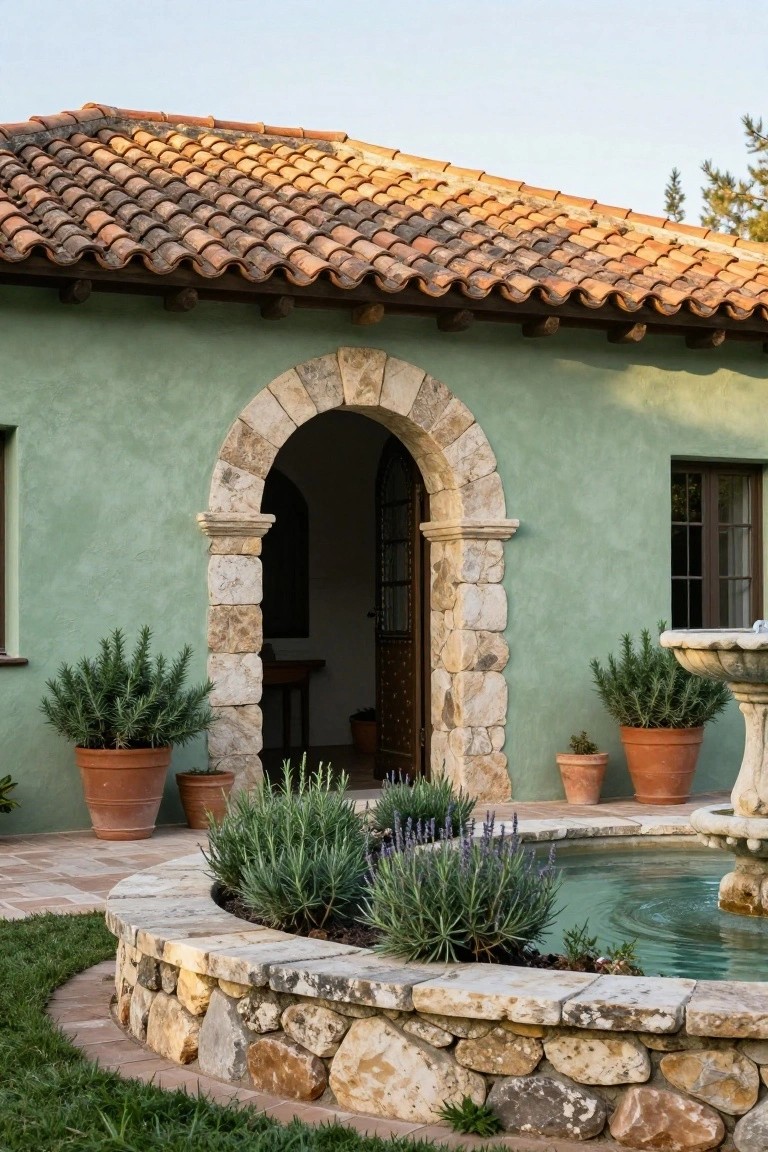
A simple stone arch around the front door gives this green stucco house a lot more character. The rough texture of the stones stands out against the smooth painted walls. It makes the entry feel more solid and welcoming without overdoing it. That contrast pulls your eye right to the door.
You can pull this off on ranch-style or adobe-inspired homes in warmer spots. Pick local stone that matches the area to keep it looking natural. Pair it with potted rosemary or lavender nearby for a casual garden touch. Just make sure the arch scale fits your door height. It works best where you want subtle depth, not a full stone facade.
Stone Pillars with Firewood Stacks at the Entry
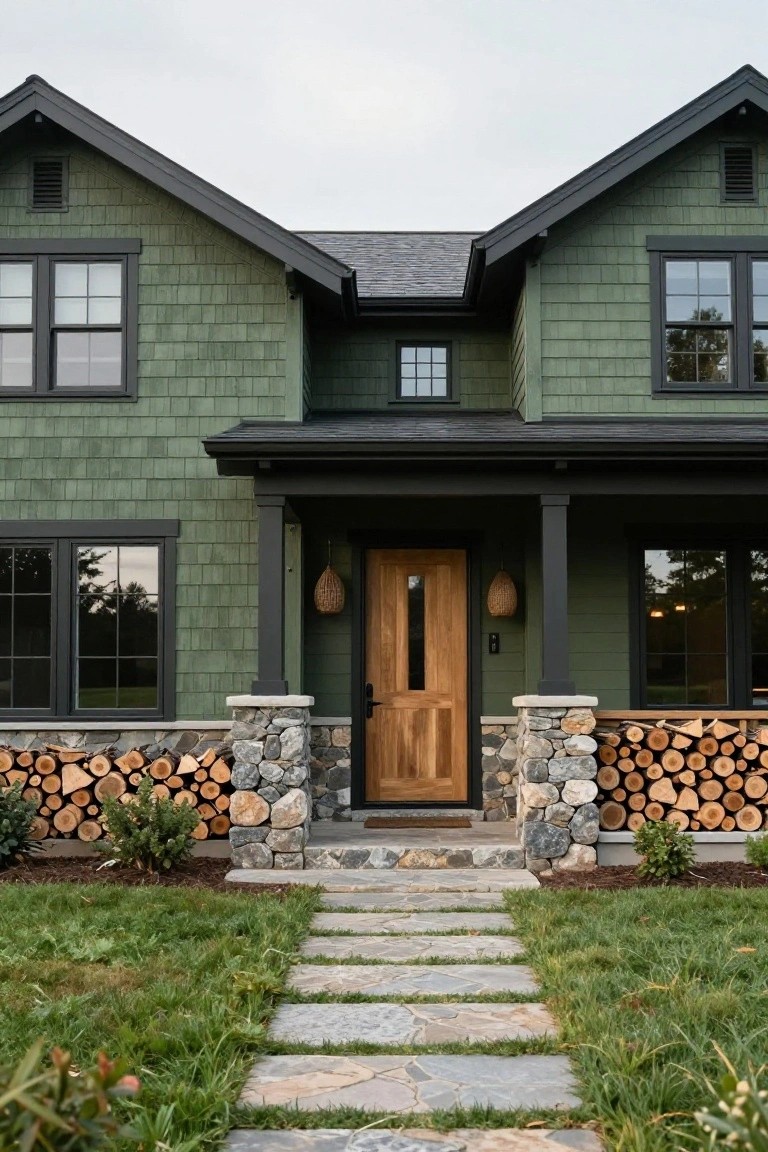
A green shingle house like this one gets a lot of character from the rough stone pillars that frame the front porch. Stacking firewood right up against them turns a simple support into something useful and rugged. It fits the house color perfectly, breaking up the smooth siding without overdoing it.
You can pull this off on homes with a porch or even just wide steps. Use local stone for the bases to match your area, and keep the logs neatly stacked so it looks intentional. Works best where you burn wood regularly… keeps everything handy for cold nights.
Stone Cottage Facade with Climbing Roses
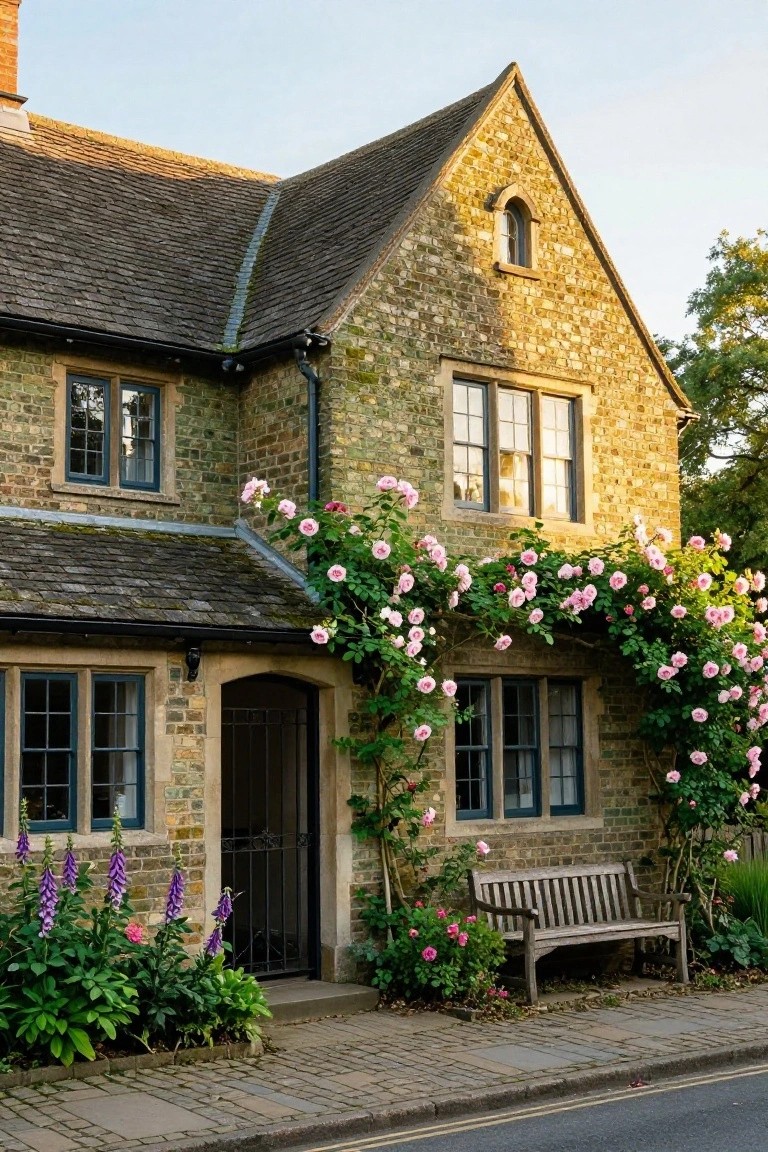
Climbing roses work so well on stone houses like this one. The pink blooms drape right over the textured walls, adding color and a soft layer that makes the stone feel less stark. You get that classic cottage look without much effort, especially with the way the roses frame the windows and door.
Try this on older homes or any place with rough stone or brick. Plant them near arches or entryways where they can climb up without hiding the architecture. Keep the base pruned so the stone still shows through… and pair with simple flowers like foxgloves for ground level interest.
Green Chalet with Stone Base
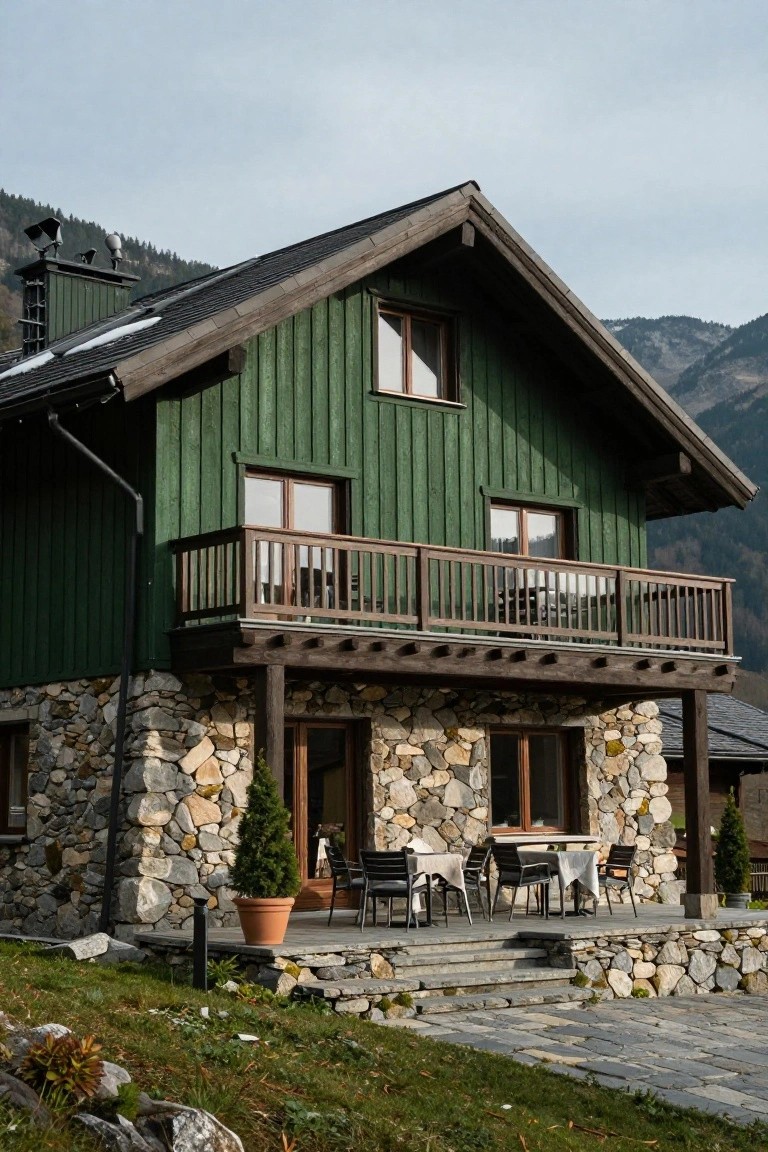
A green chalet like this one uses a sturdy stone foundation to give the facade more character. The rough stones at the bottom mix well with the vertical green wood siding up top. It adds some natural texture right where the house meets the ground, and it helps the place feel more solid against those mountain views.
This setup works best on sloped lots or rural spots where stone is easy to source locally. Keep the stones in earth tones to let the green siding stand out, and it suits cabin-style homes that need a bit more heft without losing that cozy wood look.
Green Door on Brownstone Facade
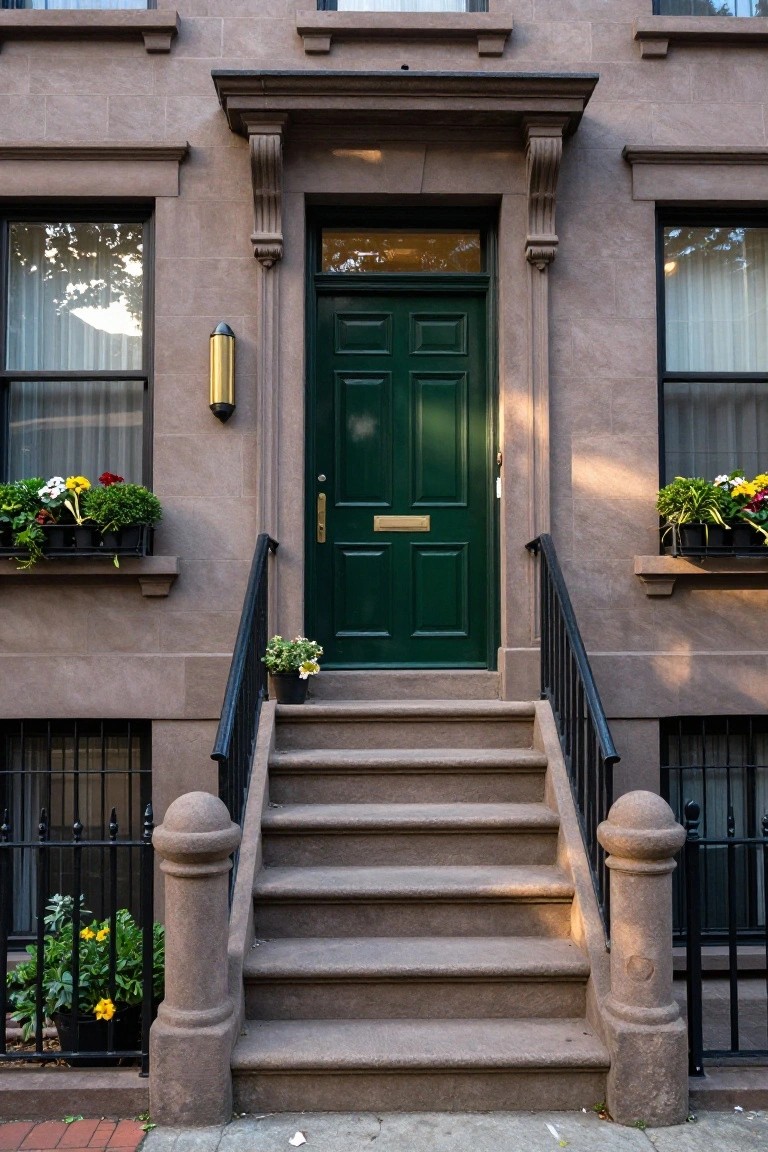
A deep green door like this one turns a simple brownstone entry into something memorable. The stone walls and steps give it a solid, textured base that lets the color shine. It fits right into the neighborhood feel without trying too hard.
This setup suits older urban homes or row houses best. Go for glossy paint on the door, brass hardware, and a few plants nearby to tie it together. Keep an eye on weathering though, especially in damp spots.
Pool Edged with Natural Stone
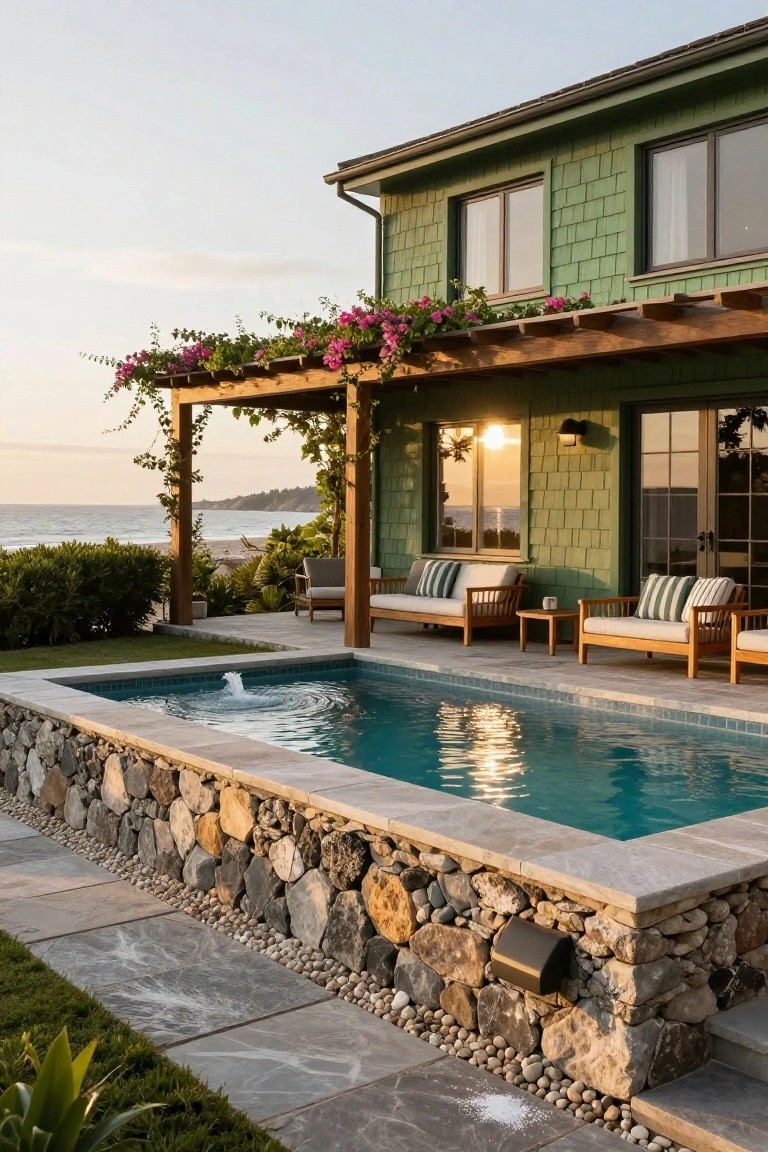
A simple way to add texture to a pool area is building it into a raised stone wall. The rough mix of stones here gives a grounded feel next to the sleek water and green house siding. It pulls the eye without overwhelming the space, and ties right into the nearby landscaping.
This setup suits coastal homes or any spot with a view you don’t want to block. Keep the wall low enough for easy access, maybe two feet high, and let plants spill over the top. Pick local stones if you can. They settle in better over time.
Green House with Stone Entry Pillars
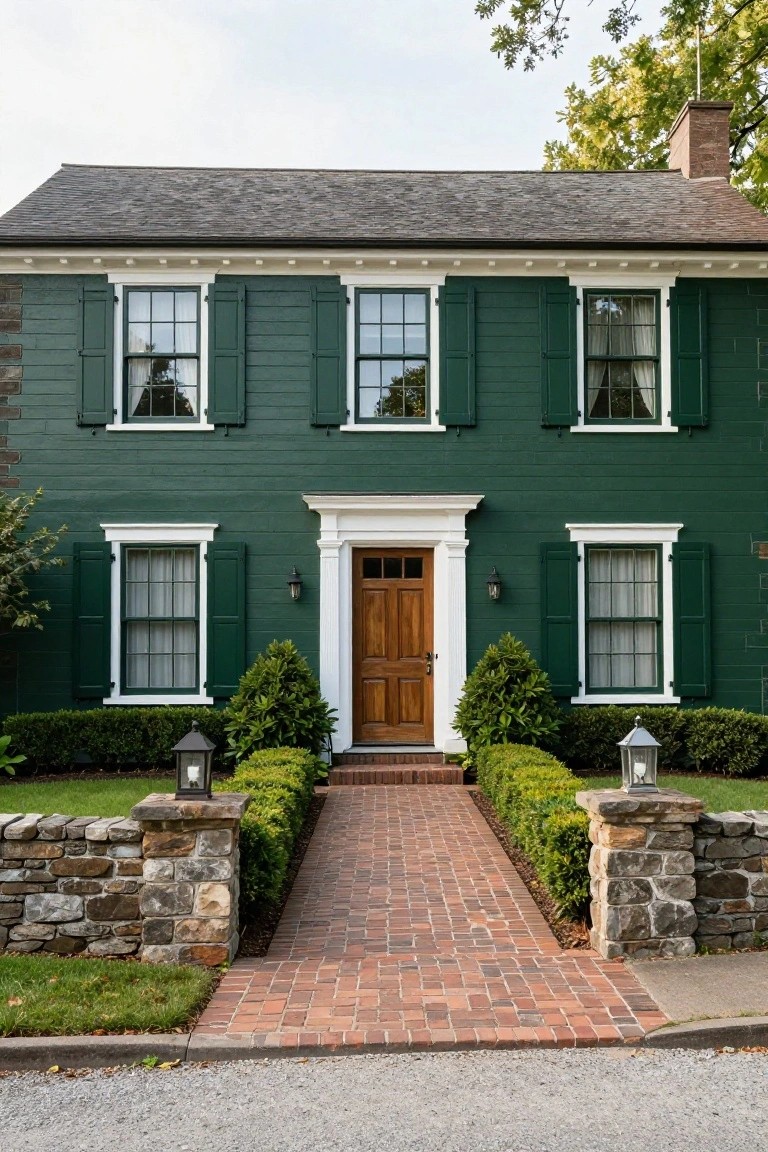
Stone pillars like these give a green house a solid, grounded look right at the front path. The rough texture of the stone stands out against the smooth green clapboard siding, and it pulls your eye straight to the door without overwhelming the whole facade. On this house, the pillars sit on a low stone wall that ties into the foundation, making the entry feel established and a bit formal in a relaxed way.
You can pull this off on older homes or new builds aiming for that classic feel. Pick stone that matches your region’s look, maybe fieldstone or something quarried nearby, and keep the path simple like brick to let the pillars do their job. It suits houses on streets with some traffic, where you want curb appeal that lasts through seasons… just avoid making the pillars too tall or they start competing with the house itself.
Stone Base Grounds a Green House
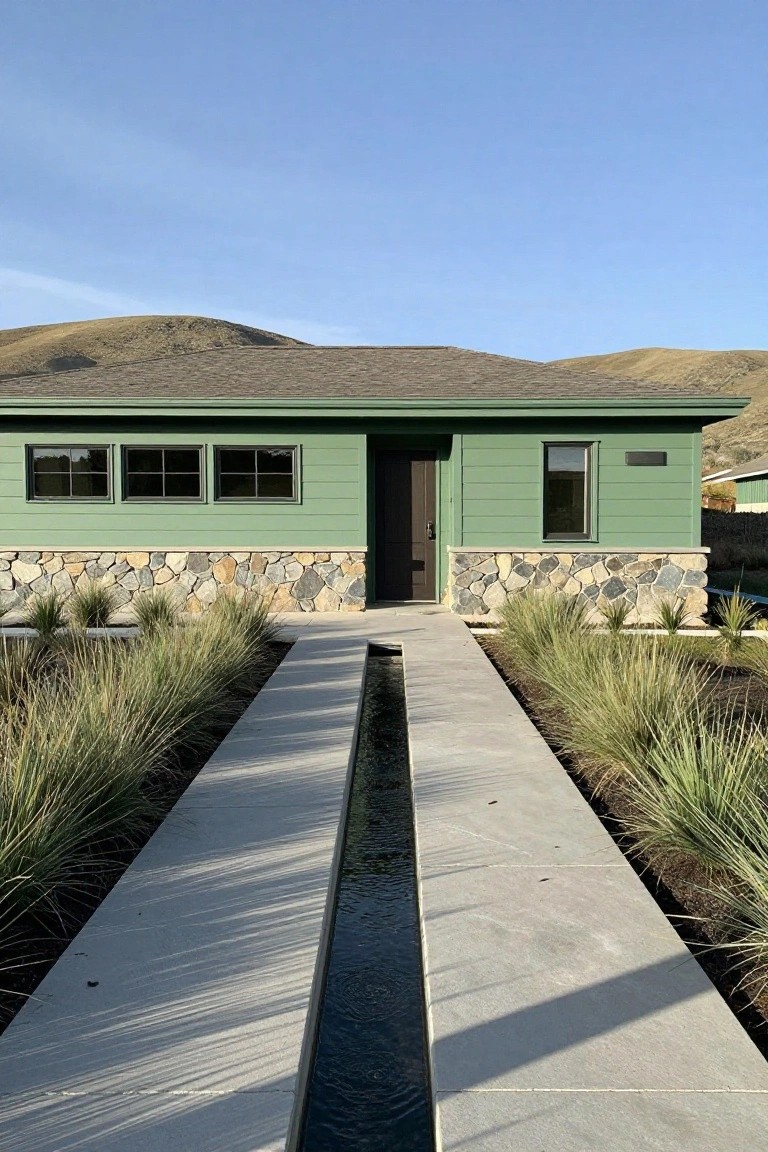
A simple stone base like this one gives a green house some real texture right where it meets the ground. The smooth sage green siding looks clean and modern up top. But those irregular stones at the bottom add a natural, rugged feel that ties the house to its hillside setting. It keeps things from feeling too plain or boxy.
This works great on low-slung homes in rural or semi-rural spots. Pick stones in earth tones that echo your landscape grasses or soil. Layer in some tall plantings along the edges for flow. Just make sure the stone height matches your door setup so steps don’t look off.
Green Cabin with Stone Chimney
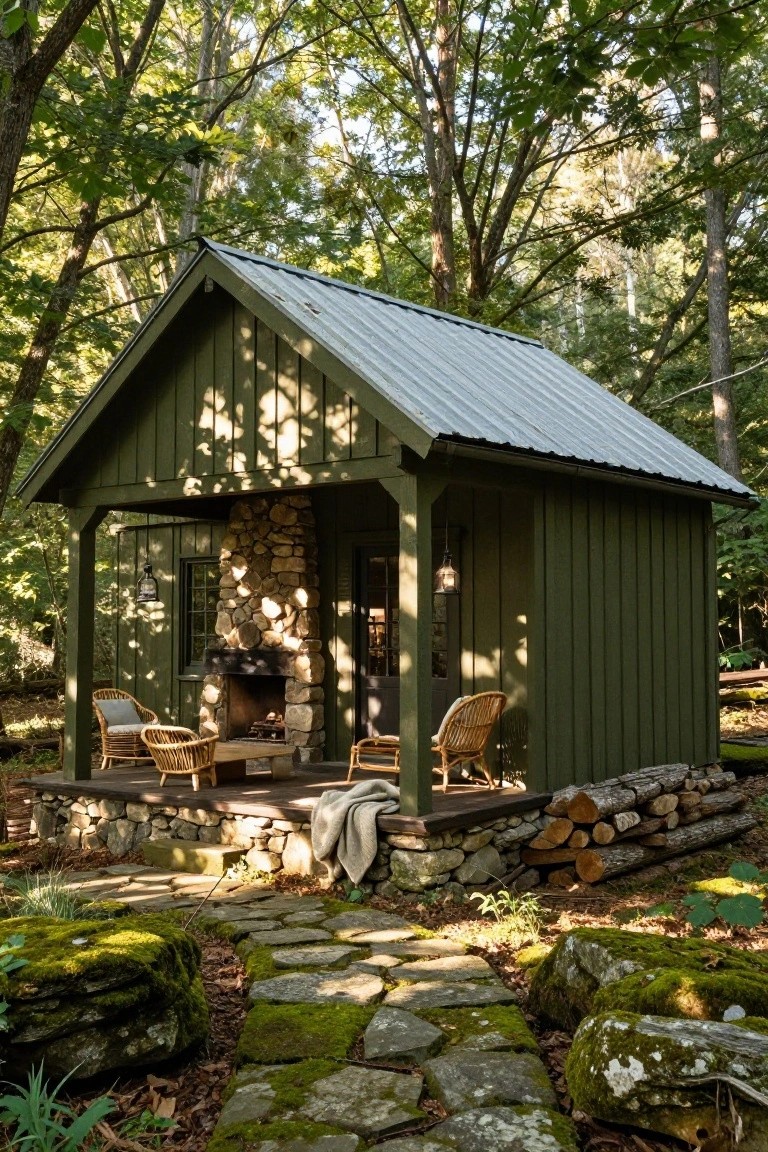
A dark green cabin like this one uses board-and-batten siding to fade right into the woods around it. That big stone chimney sticking out from the side pulls in rough texture that the smooth paint job can’t match. It makes the place feel sturdy and tied to the land, especially with the rocks at the base holding everything steady.
You can pull this off on a small backyard cabin or retreat spot where trees are thick. Pick stone that matches what’s local, maybe fieldstone, and paint the wood a deep green to keep it low-key. Watch the porch scale though. Keep seating simple so the stone stays the real draw.
Stone Pillar Beside the Front Door
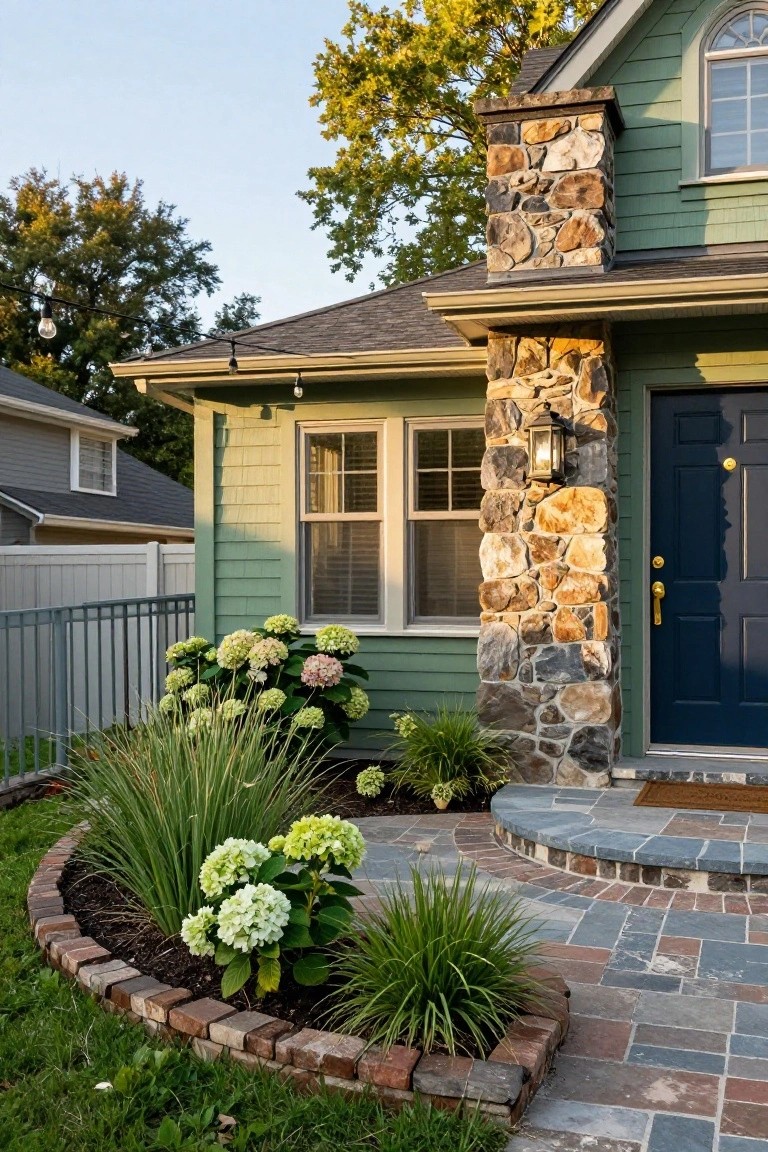
A tall stone pillar like this one sits right next to the entry on a green-sided house. The rough, mixed stones contrast nicely with the smooth siding. It gives the whole facade more texture without much effort. Plus, the dark blue door pops against it all.
This works best on simpler homes, like cottages or ranch styles in the suburbs. Plant some low bushes at the base to tie it in. Just keep the pillar in proportion so it doesn’t overpower the door… aim for one that’s about the height of the sidelight window.
Textured Green Stone on Modern Facades
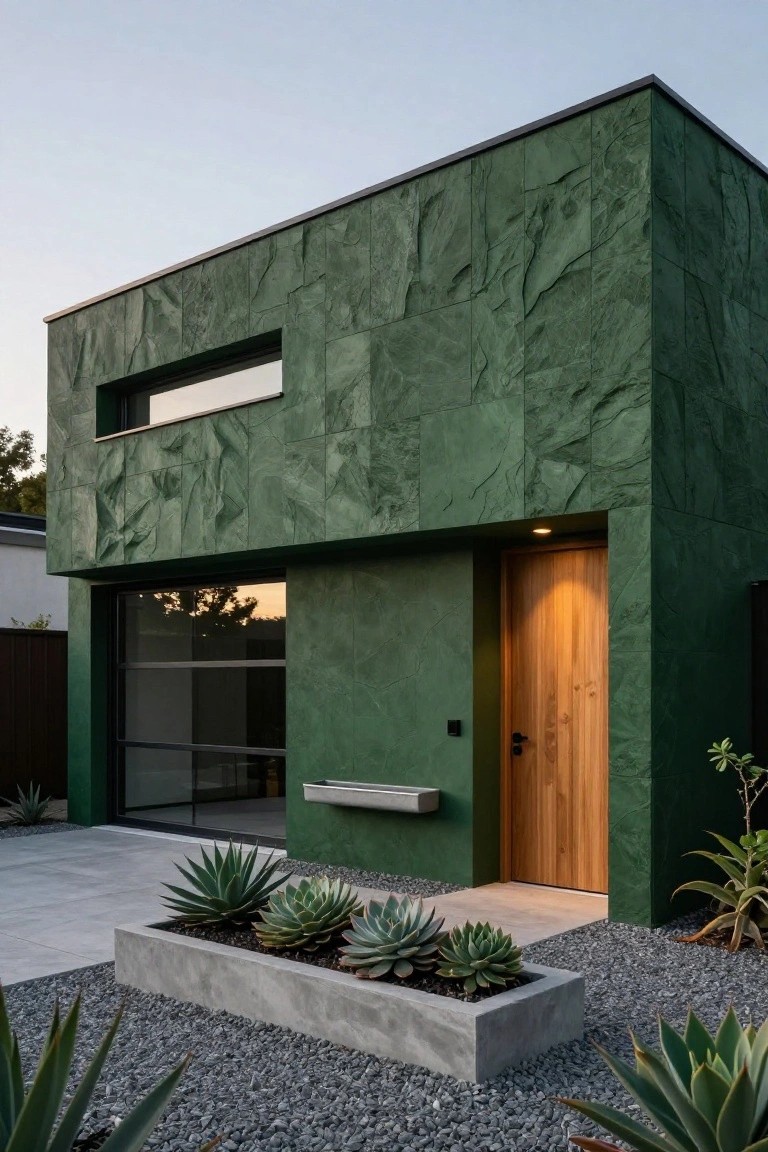
Green stone cladding like this gives a house a rugged, natural feel without going overboard. The panels here mimic rough slabs of rock, catching light in ways that make the walls look deeper and more alive. Paired with a simple wooden door and clean lines, it turns a boxy modern build into something that blends with the landscape.
You can pull this off on any mid-sized home facing a yard or street. Stick to one or two walls to keep costs down, and mix in plants like agaves at the base for contrast. It works best in warmer spots where the green stays bold year-round… just check your local stone suppliers for weatherproof options.
Green Cottage Facade with Wisteria
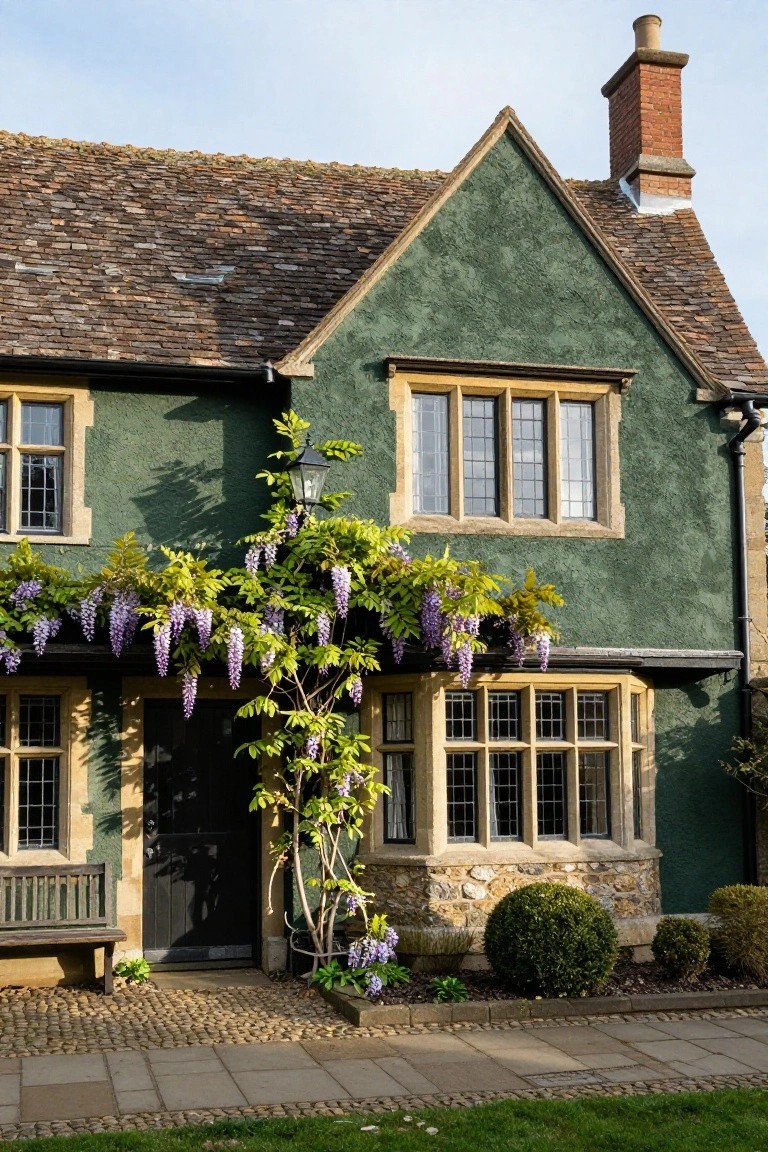
A dark green paint on textured plaster walls gives this house a cozy, settled-in look that fits right into an English village setting. Stone pieces around the base and windows add rough texture without overpowering the soft green. The wisteria vine climbing the front pulls it all together, draping purple blooms over the entry each spring.
This setup works well on older homes with some character already, like timber-framed ones. Plant the vine near the door and train it up over time. Keep the stone clean to let the green and plants stand out. It suits spots with a front path and bit of lawn, not tight urban lots.
Stone Fire Pit in a Coastal Yard
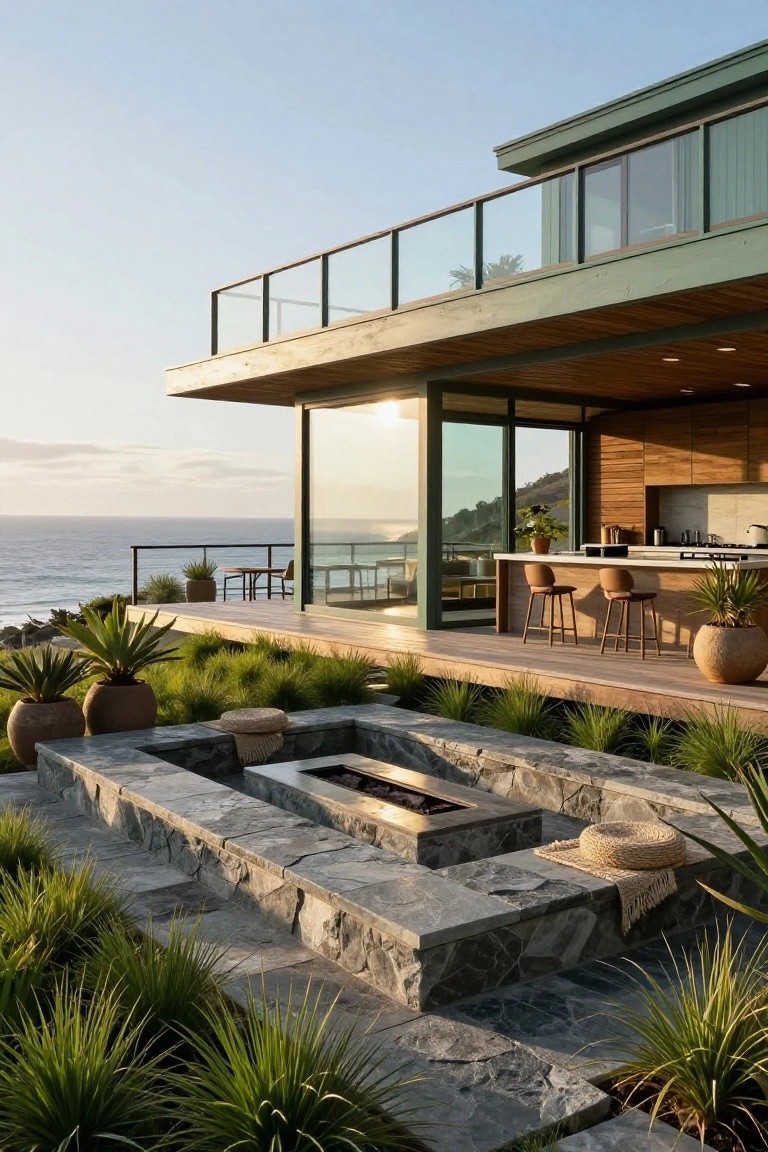
A linear fire pit tucked into rough gray stone walls makes a simple outdoor gathering spot. Here it’s set right below a wooden deck, with grasses and big potted agaves filling in around the edges. The stone adds that bit of texture without overpowering the green plants or the ocean backdrop. It pulls the whole setup together nicely.
Try this on a slope or terraced yard to connect deck level with ground seating. Stone like this holds up to weather and fire, and it suits modern houses with clean lines. Stick to native plants for easy care… just make sure the fire pit meets local codes before building.
Green Porch on Stone Walls
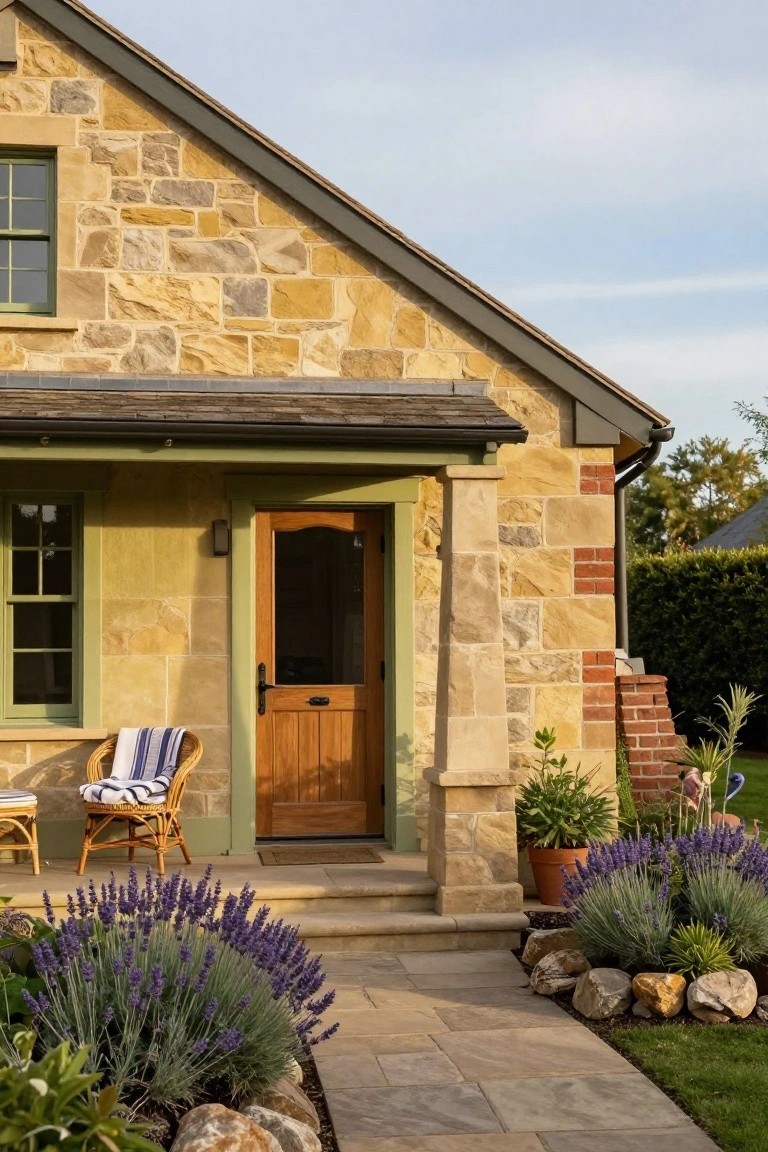
A green porch like this wraps around the stone walls nicely. The rough sandstone pieces mix light and dark tones for texture, while the wood door keeps things simple. It pulls the house together without much fuss.
This look fits older homes or new builds aiming for that settled feel. Paint the porch trim to match nearby plants. Watch the stone scale though. Too big and it dwarfs the door.
Green Stucco Walls with Stone Arch Entry
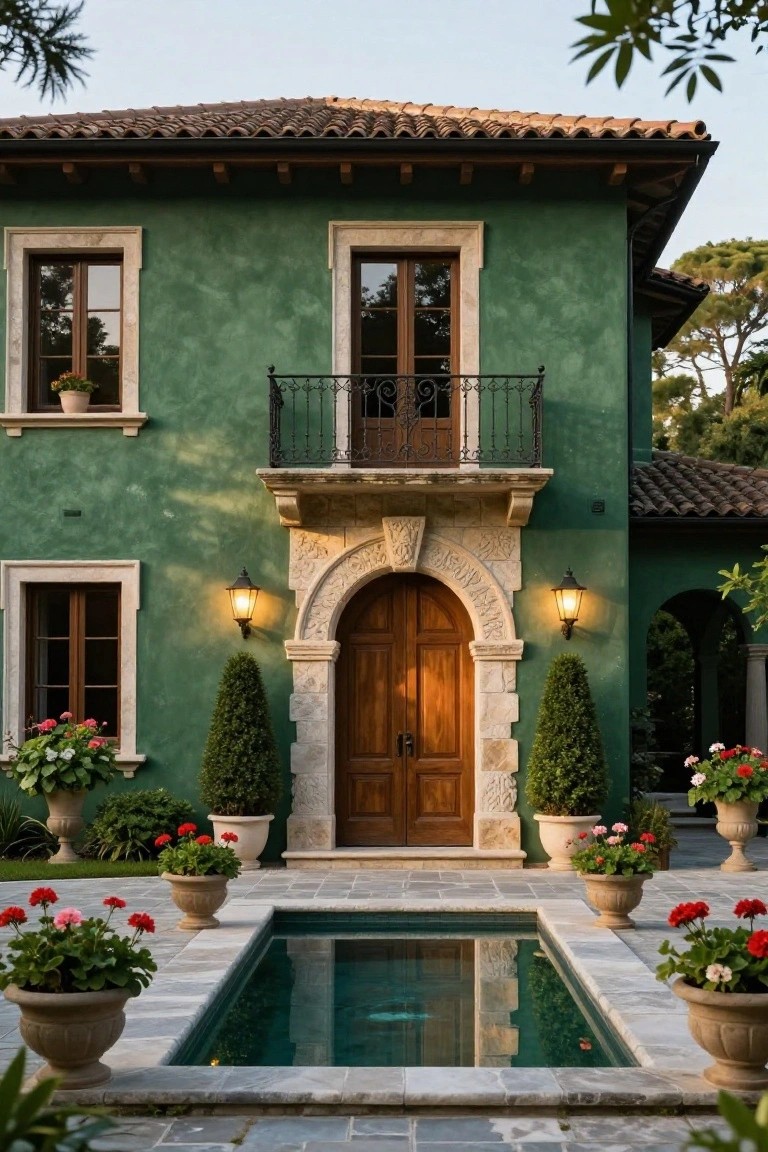
A green stucco exterior gets a lot more interesting when you add a carved stone arch around the front door. The texture from the stone carvings stands out against the smooth green walls. It pulls your eye right to the entry and makes the whole facade feel deeper, almost like the house has more layers to it.
This works best on homes with a courtyard setup or in warmer climates where Mediterranean style fits. Pair it with simple potted plants like boxwoods along the sides to keep things clean. Just make sure the stone scale matches your door height, or it might overwhelm a smaller entry.
Built-In Stone Bench for Patio Seating
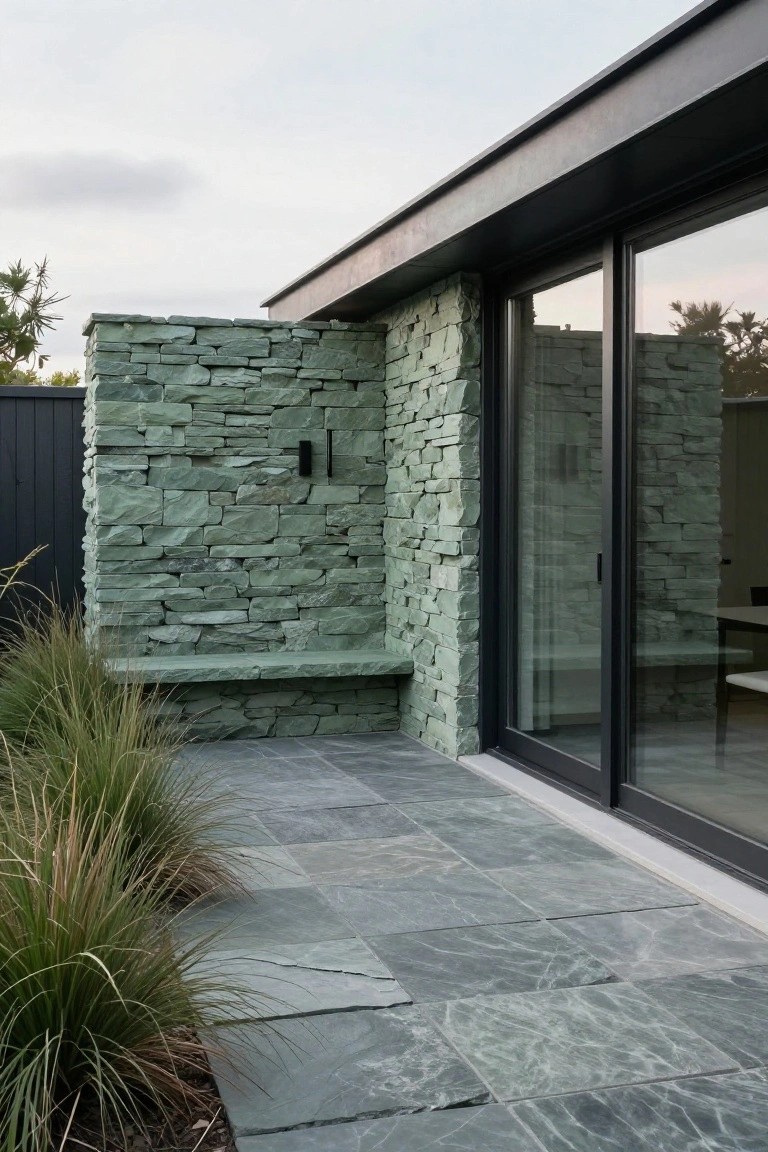
One straightforward way to add seating to a patio is building a bench right into the stone wall. Here the low bench follows the curve of the green slate wall, matching the stone exactly. It sits flush against the house, making the spot feel like a natural extension of the indoors. With sliding glass doors nearby, it’s easy to step out for a quick sit, and the grasses along the edge keep it from feeling too stark.
This works best on smaller patios or courtyards where you want seating without taking up floor space. Use the same local stone for the wall, bench, and even pavers if you can, to tie it all together. It’s practical for modern homes with clean lines… just make sure the bench height suits your crowd, around 18 inches or so.
Frequently Asked Questions
Q: What kind of stone pops best against green siding?
A: Light beige limestones or soft sandstones create sharp contrast that highlights the green’s depth. Test samples next to your house at different times of day. They add warmth without overwhelming the color.
Q: Can I slap stone details on my current green house?
A: Thin stone veneer sticks right over foundations, porches, or door surrounds with minimal hassle. Hire a mason for a clean job that lasts decades. You get that textured look fast.
Q: How do you keep stone and green paint looking good long-term?
A: Rinse stone with a garden hose a couple times a year to knock off dirt. Spot-paint the green where it fades first. And seal the stone every few years, simple as that.
Q: Is this green-and-stone combo pricey to pull off?
A: Expect to spend a few thousand on accents like a chimney or entry pillar. It boosts curb appeal way more than plain paint alone. Save by starting small.
