

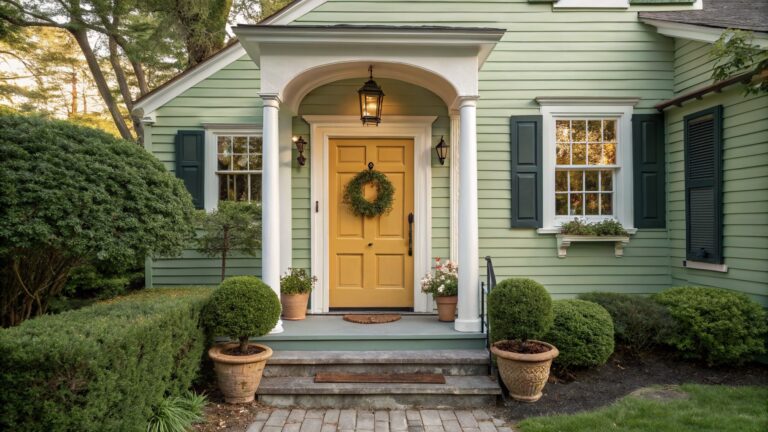
When I spot a green house from the street, the front door color hits me first because it frames the entry and balances the siding’s tone.
A thoughtful pick there boosts curb appeal and makes the facade read as intentional, especially on homes with simple rooflines or brick accents.
Red tones often ground deeper greens nicely.
I’ve tested mustard yellow on a mint-green exterior myself, and it warmed up the approach without clashing.
These suggestions come from houses that draw compliments year-round, so grab a couple to sample in person.
Bright Yellow Door for Green Houses
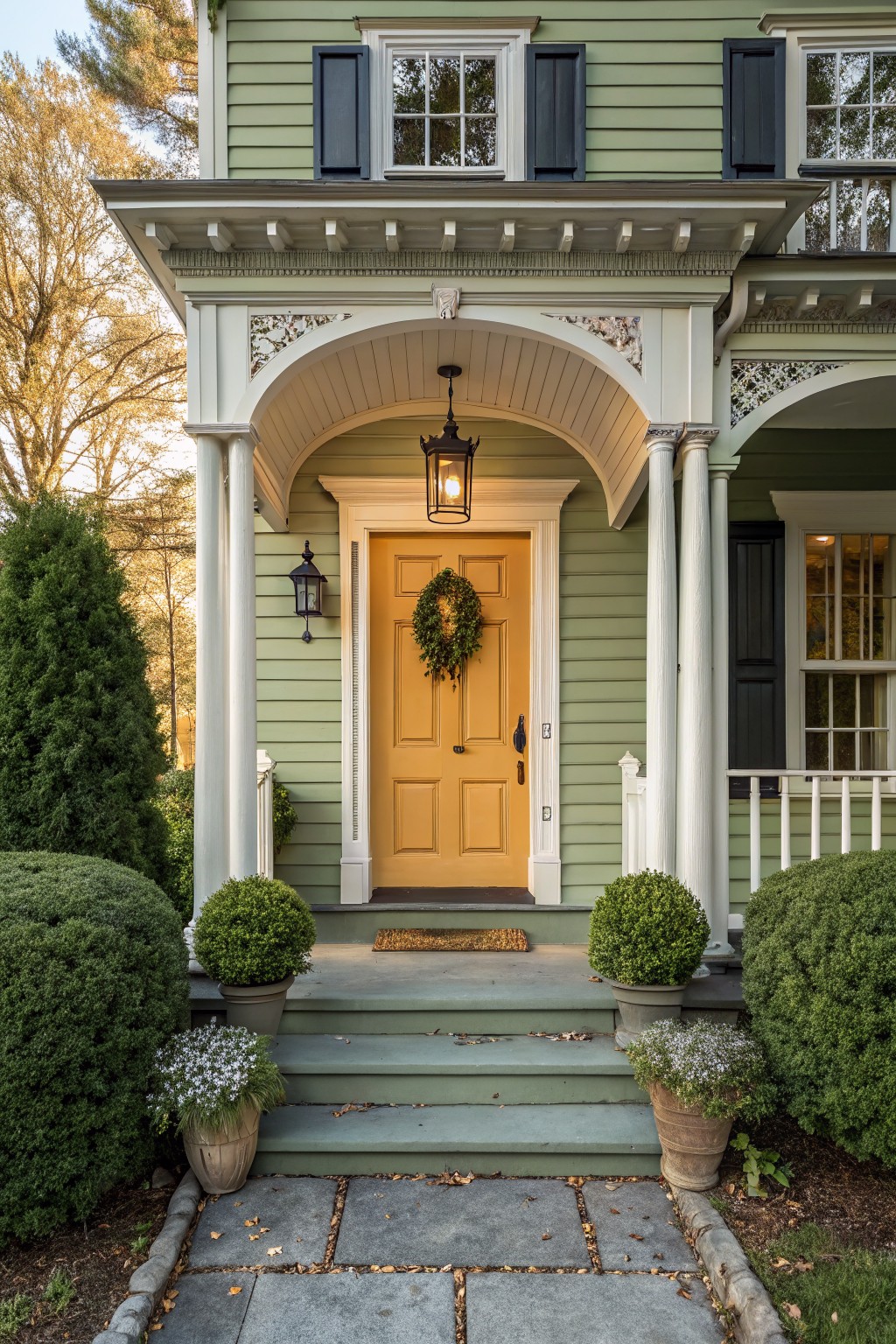
A bright yellow front door stands out nicely against sage green siding. It brings a cheerful lift to the whole front of the house without overwhelming the softer green tones. The color plays well with white trim and black shutters, keeping things classic yet lively. On a house like this with a covered porch, the yellow draws your eye right to the entry.
This works best on traditional or Victorian-style homes where you want more personality up front. Pick a mustard or softened yellow to match fall wreaths or potted plants nearby. It suits shady spots too, since the color holds up in lower light. Just test a sample first, as yellow can shift warmer or cooler depending on your green shade.
Deep Blue Door on Light Green Siding
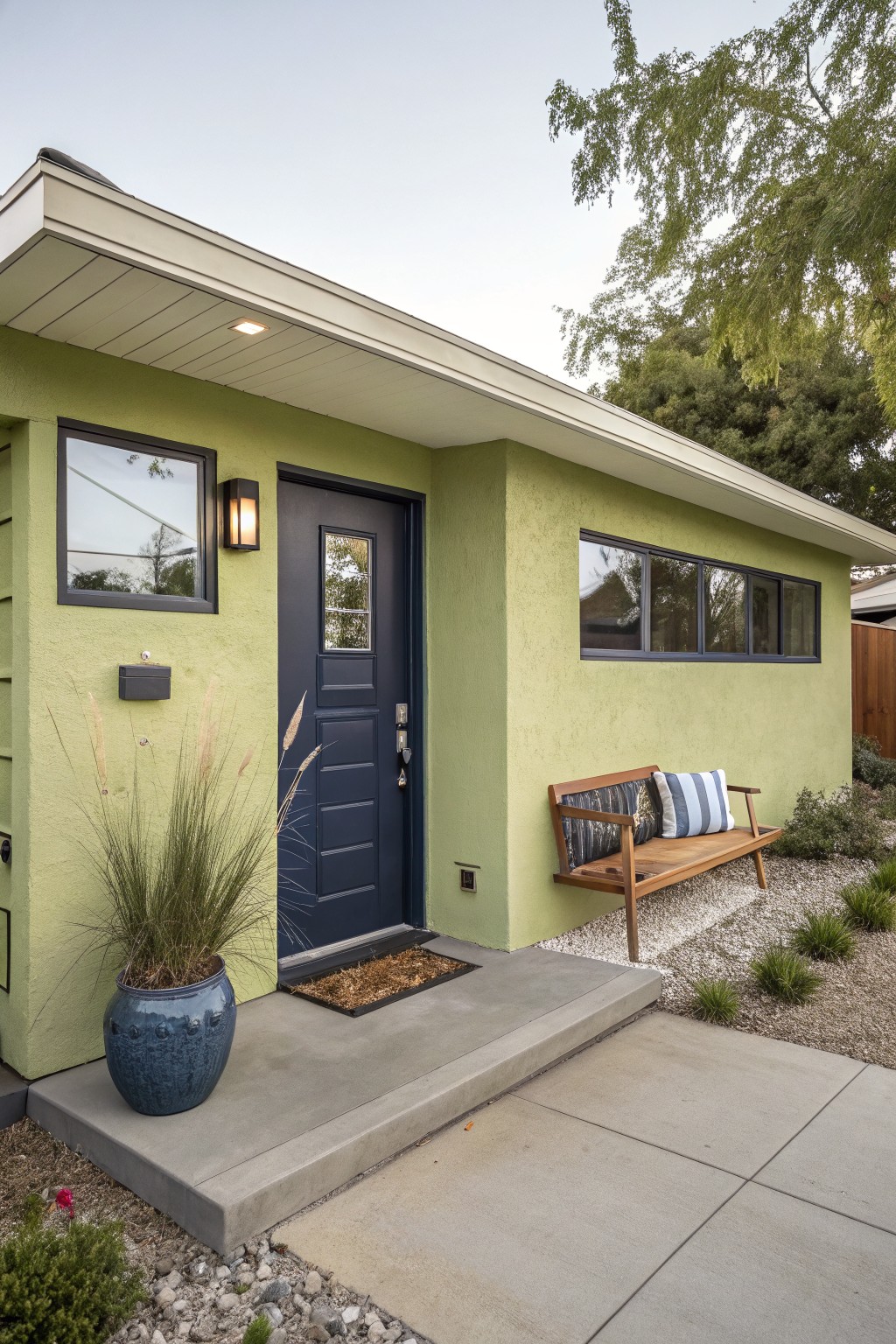
A deep blue front door like this one gives a green house some real personality right at the entry. The navy shade pulls strong contrast against the pale green walls without overwhelming the look. It keeps things calm yet noticeable, especially with that simple sidelight and wall lamp nearby.
This color combo works well on ranch-style or modern homes in mild climates. Paint your door in a semi-gloss navy, then add potted grasses and a plain bench to tie it together. Skip it on super dark greens, though. Lighter tones let the blue shine best.
Orange Front Doors on Green Houses
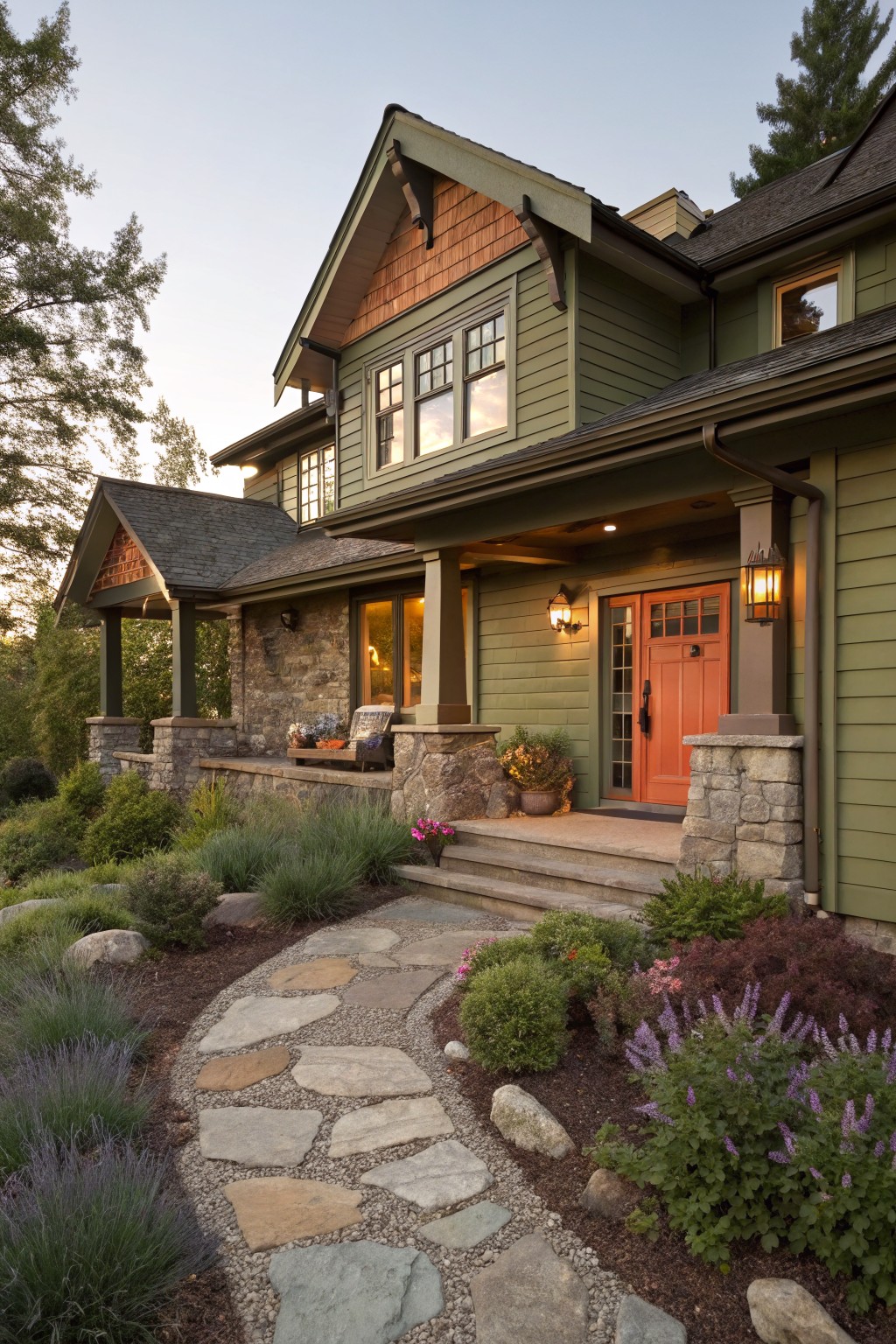
An orange front door gives a green house that extra bit of cheer right at the entry. Here, it sits bold against sage green siding, pulling your eye up the stone porch steps without clashing. The color feels warm and lively, especially with all the natural wood shakes and muted landscaping tones nearby.
This works nicely on homes tucked into wooded spots or with earthy materials like river rock pillars. Go for a muted sage or olive green body so the orange pops clean. Skip it if your green leans too bright, or the door might fight the house instead of welcoming folks in.
Red Front Door on Green Siding
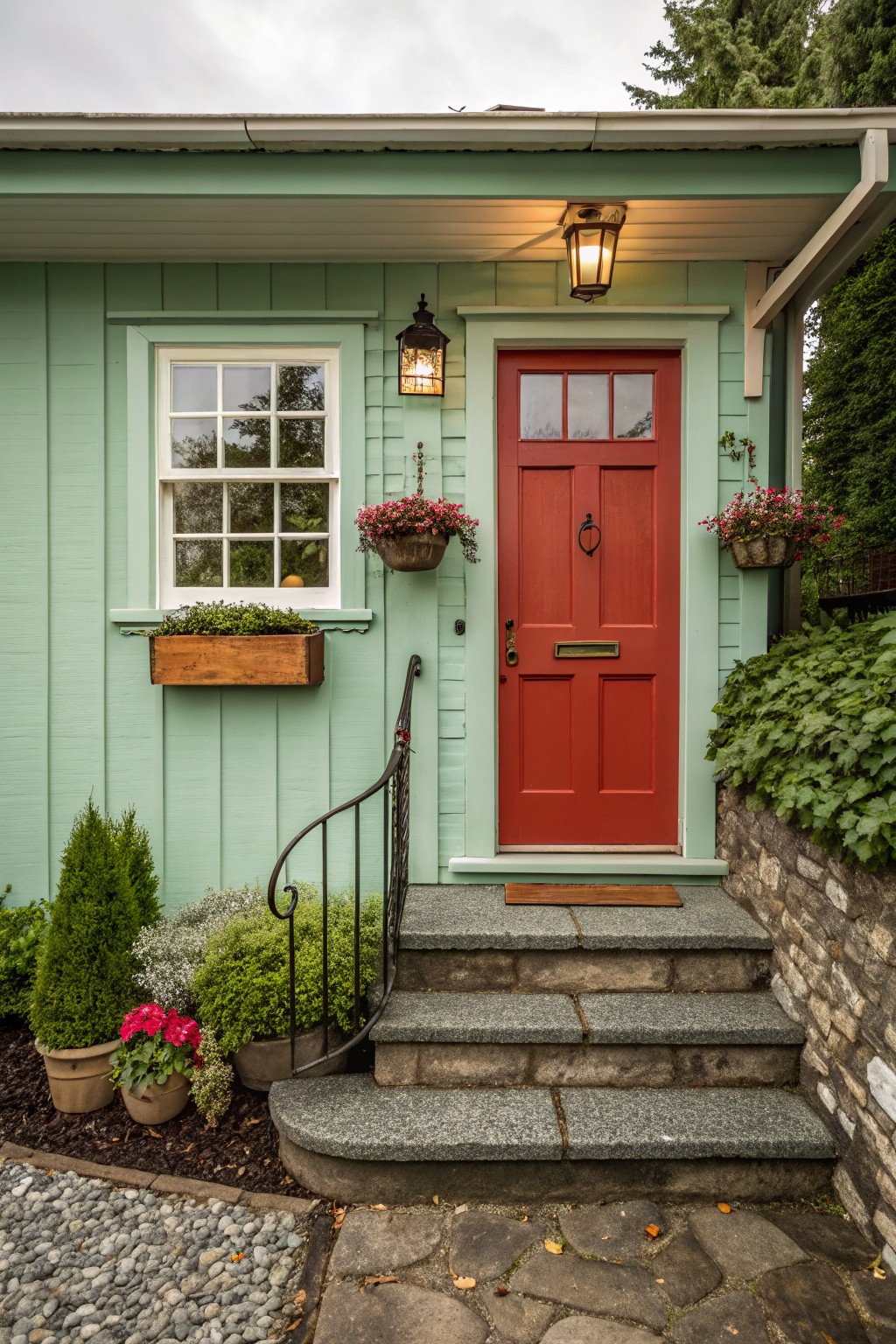
A red front door gives a green house real punch right at the entry. The bright red stands out sharp against pale green siding like this, pulling your eye straight to the door. It wakes up a simple cottage look without much fuss. Those lanterns on either side help too, lighting it up nice at dusk.
This works best on homes with softer green tones, not too dark or bright. Try it on a bungalow or garden shed style where you want folks to notice the welcome. Just make sure the red is glossy enough to hold its own, and keep plantings simple around the steps so the door stays the star.
Mustard Yellow Doors on Dark Green Houses
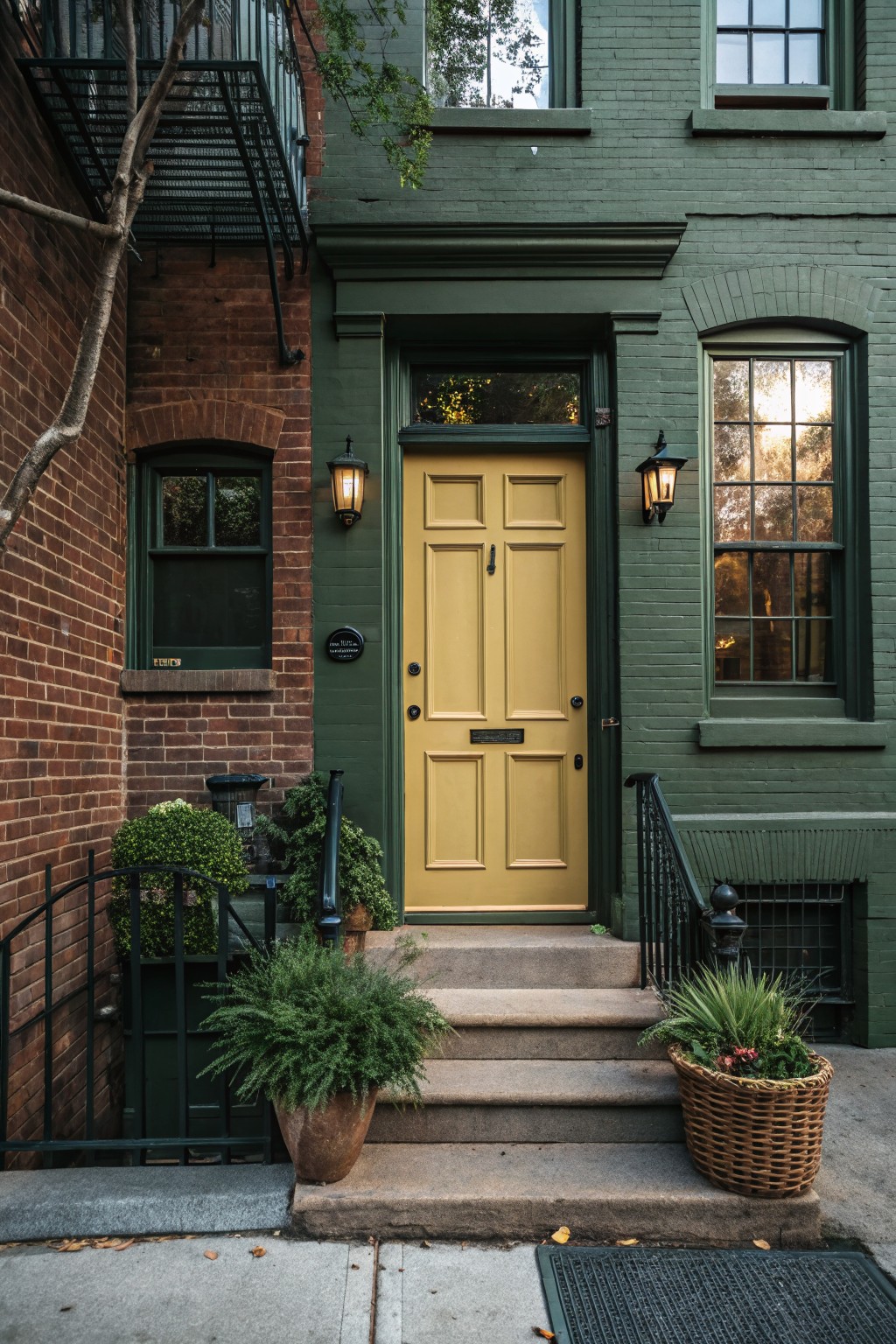
A mustard yellow front door gives a dark green house real personality. The color pops against deep green brick without overwhelming the look. Those lanterns flanking the entry add a nice glow, and it all feels welcoming on a classic townhouse setup.
This works best on older urban homes with brick facades. Pick a softened yellow to keep it grounded. Pair it with simple plants on the steps, and you’ve got curb appeal that lasts year-round.
Turquoise Front Door on Mint Green Siding
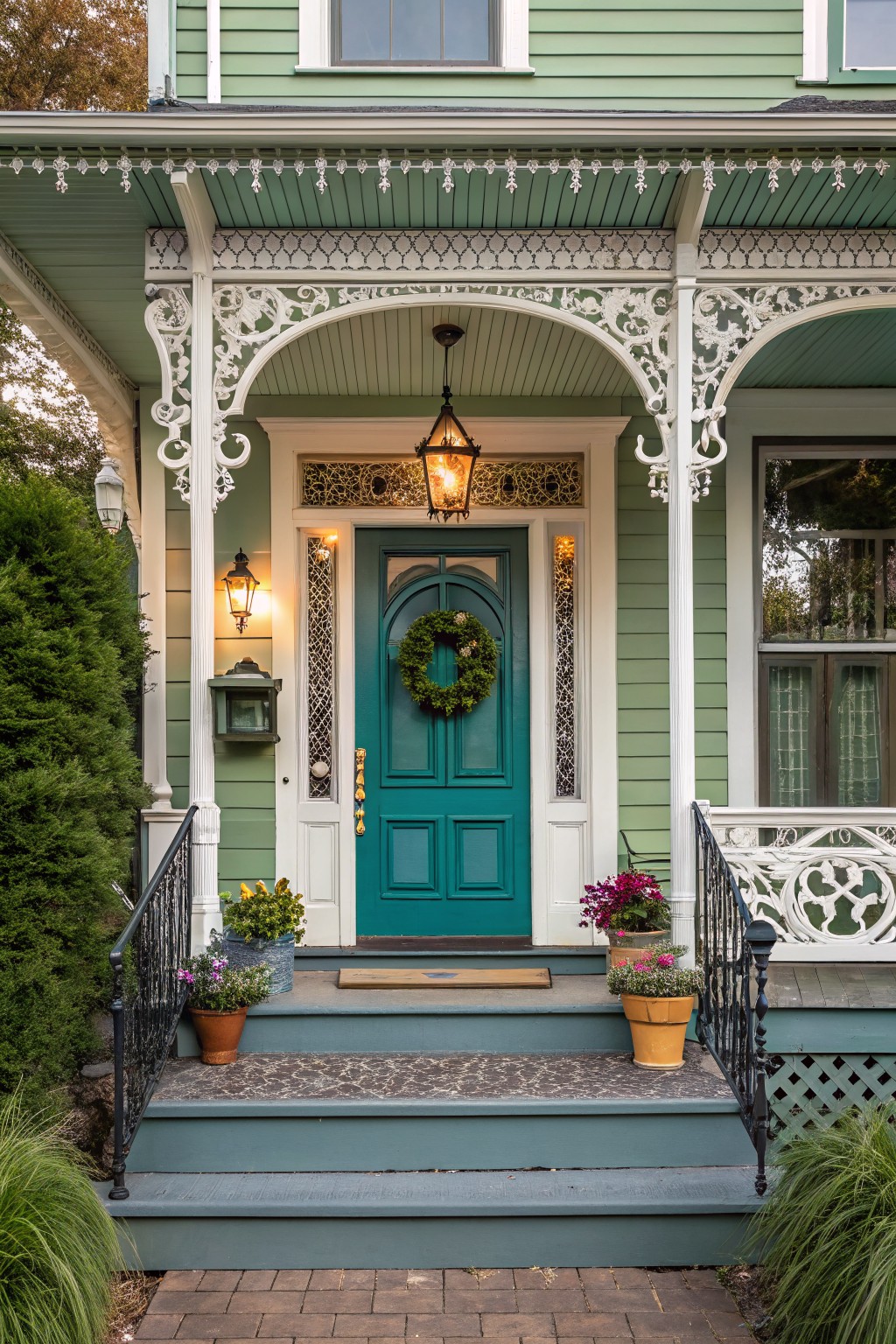
A turquoise front door gives a green house real personality without much effort. On this mint green exterior it stands right out, especially with the white porch trim framing everything. The color feels fresh and a bit playful. It pulls the eye to the entry and makes the whole front porch more welcoming.
This works best on older homes with some architectural detail like gingerbread brackets or columns. Pair it with simple pots of flowers on the steps to keep things grounded. Just make sure the door hardware shines, like brass knobs, so it doesn’t get lost. Avoid it on super modern houses unless you want a quirky twist.
Black Front Door on Green House
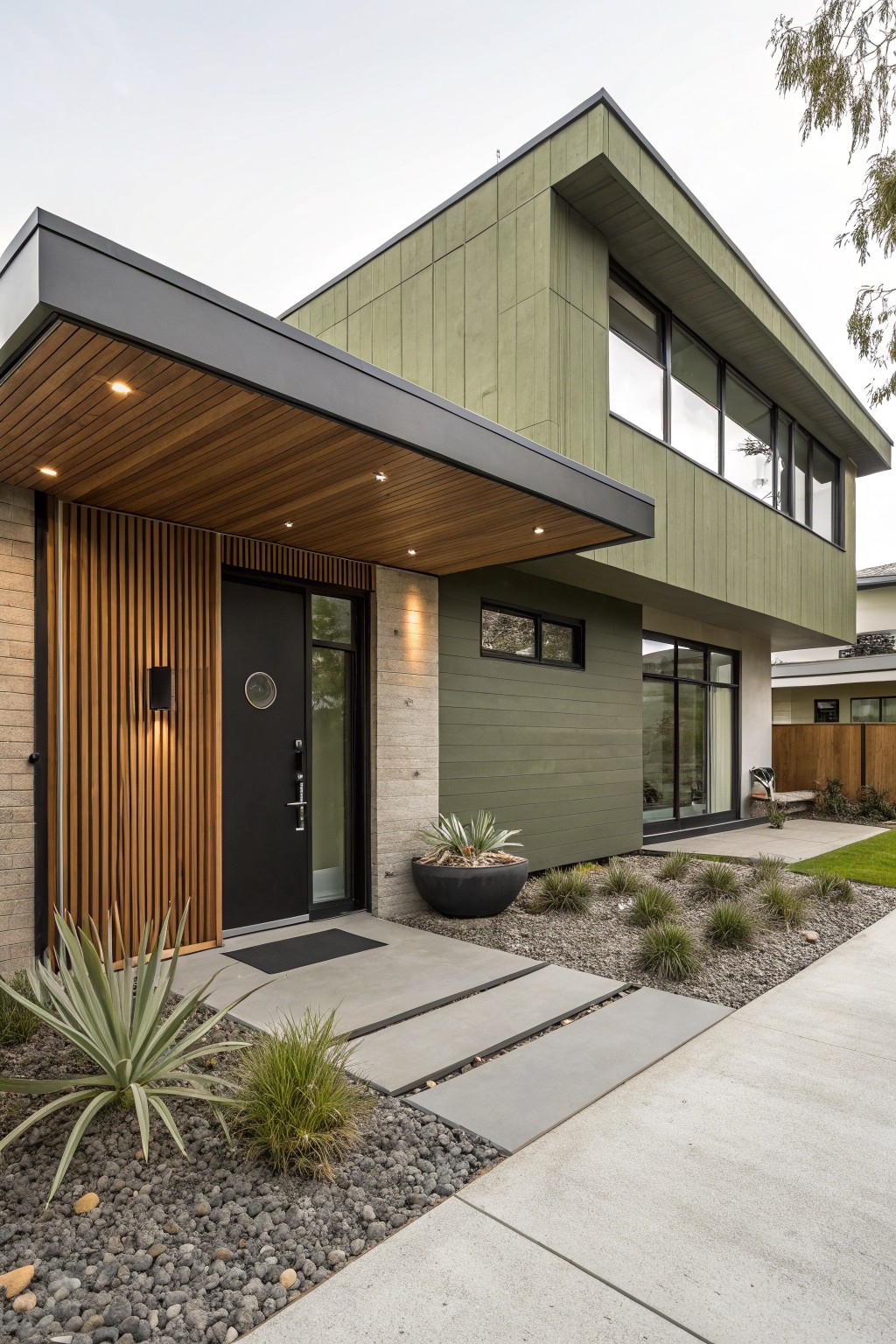
A black front door gives a green house real punch without overdoing it. Here the dark door sits against sage green siding, and that simple contrast makes the entry pop. The wood slats and warm canopy nearby pull it together nicely, keeping things modern but not cold.
This works best on mid-century or contemporary homes where the green is muted, like a soft cedar tone. Pair it with natural accents around the path to warm it up. Skip it if your green is too bright, or it might clash.
Deep Purple Doors on Dark Green Houses
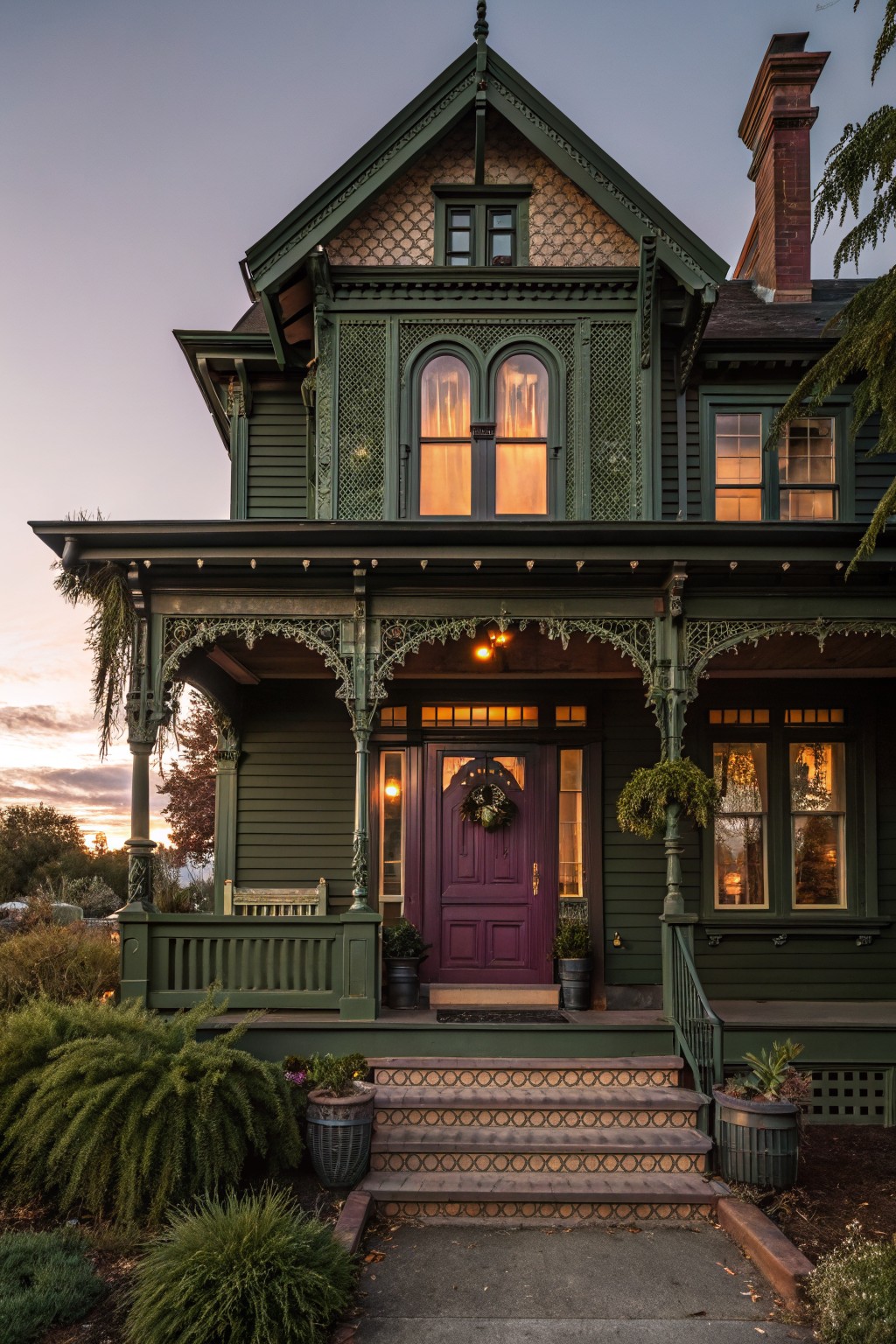
A deep purple front door gives this dark green Victorian house a strong entry point that pulls your eye right up the steps. The color plays off the green siding and ornate trim without overwhelming the architecture. It’s bold but grounded, especially with a simple wreath for holidays or seasons.
This works best on historic homes or those with lots of woodwork details. Pick a muted purple to keep it from feeling too modern on traditional paint. Steer clear of super glossy finishes, though. They can make the door fight the house’s softer vibe.
Wood Doors Warm Up Green Houses
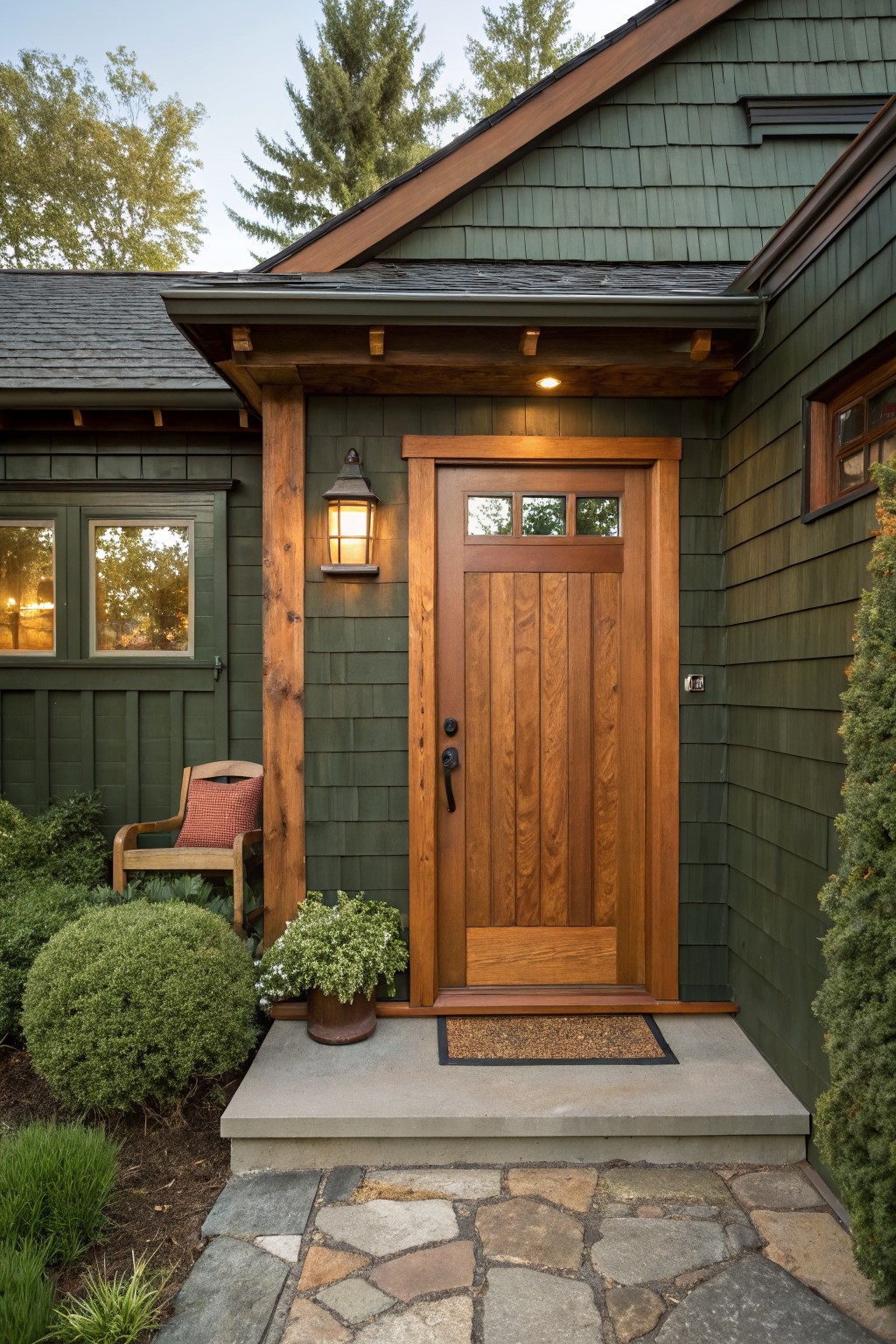
A solid wood front door in a rich walnut tone looks right at home against deep green siding. The natural grain pulls some earthiness into the mix and cuts through the cool shade of the house without clashing. Folks like how it nods to the woods around a place like this.
Try it on craftsman bungalows or cabins where the style already leans rustic. Seal the door every couple years to keep moisture out. A lantern light by the entry ties it together nicely… keeps things practical too.
Bright Orange Front Door
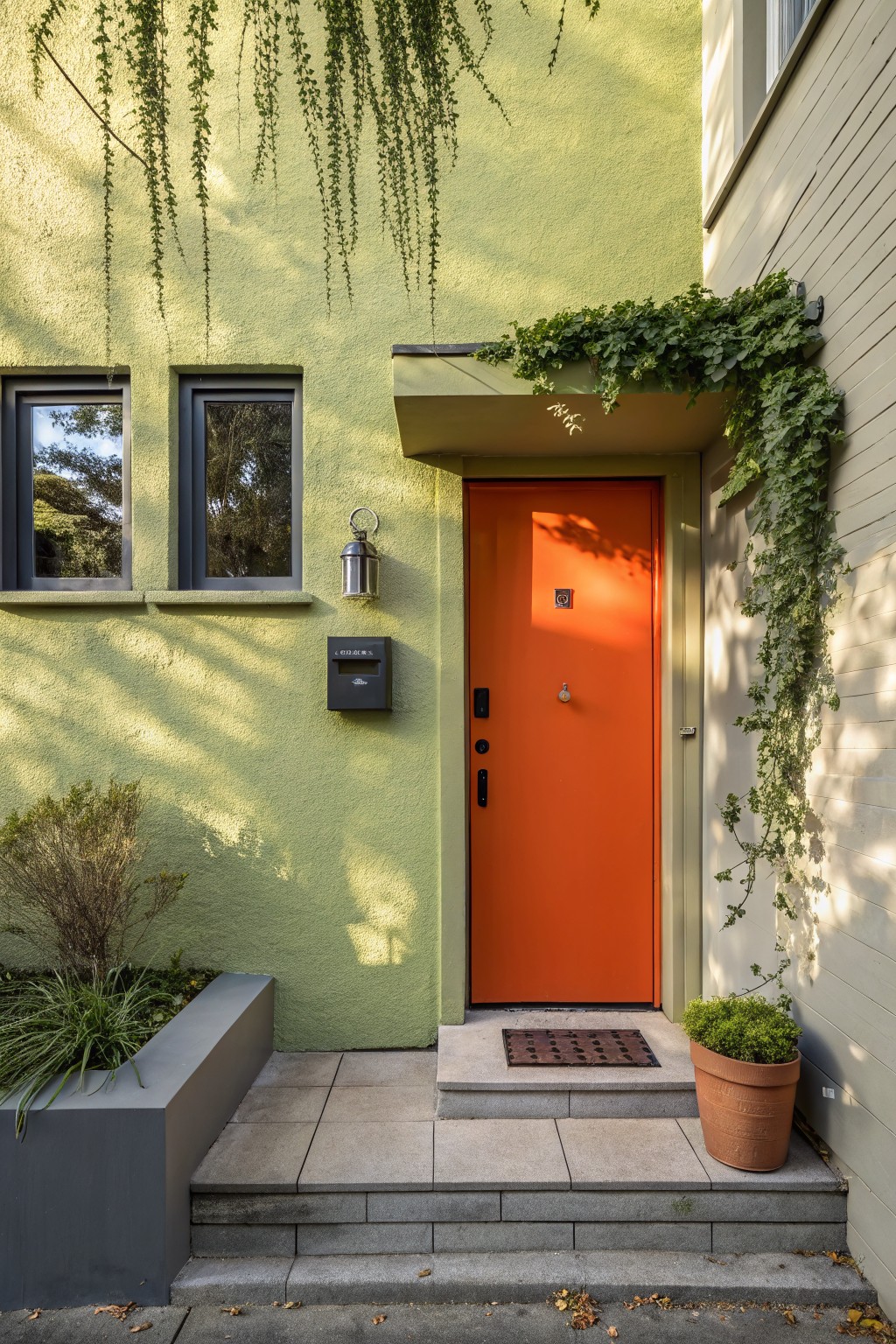
A bright orange front door grabs attention right away on this lime green house. The color contrast makes the entry feel welcoming and fun, especially with the soft ivy draping nearby. It turns a simple facade into something with real personality, without needing much else.
This works best on homes with muted green siding, like pale lime or sage tones. Go for a solid matte orange to keep it from looking too flashy. It’s great for sunny spots where the colors really pop, and pairs well with neutral steps or plantings around the base.
Red Door on Sage Green Siding
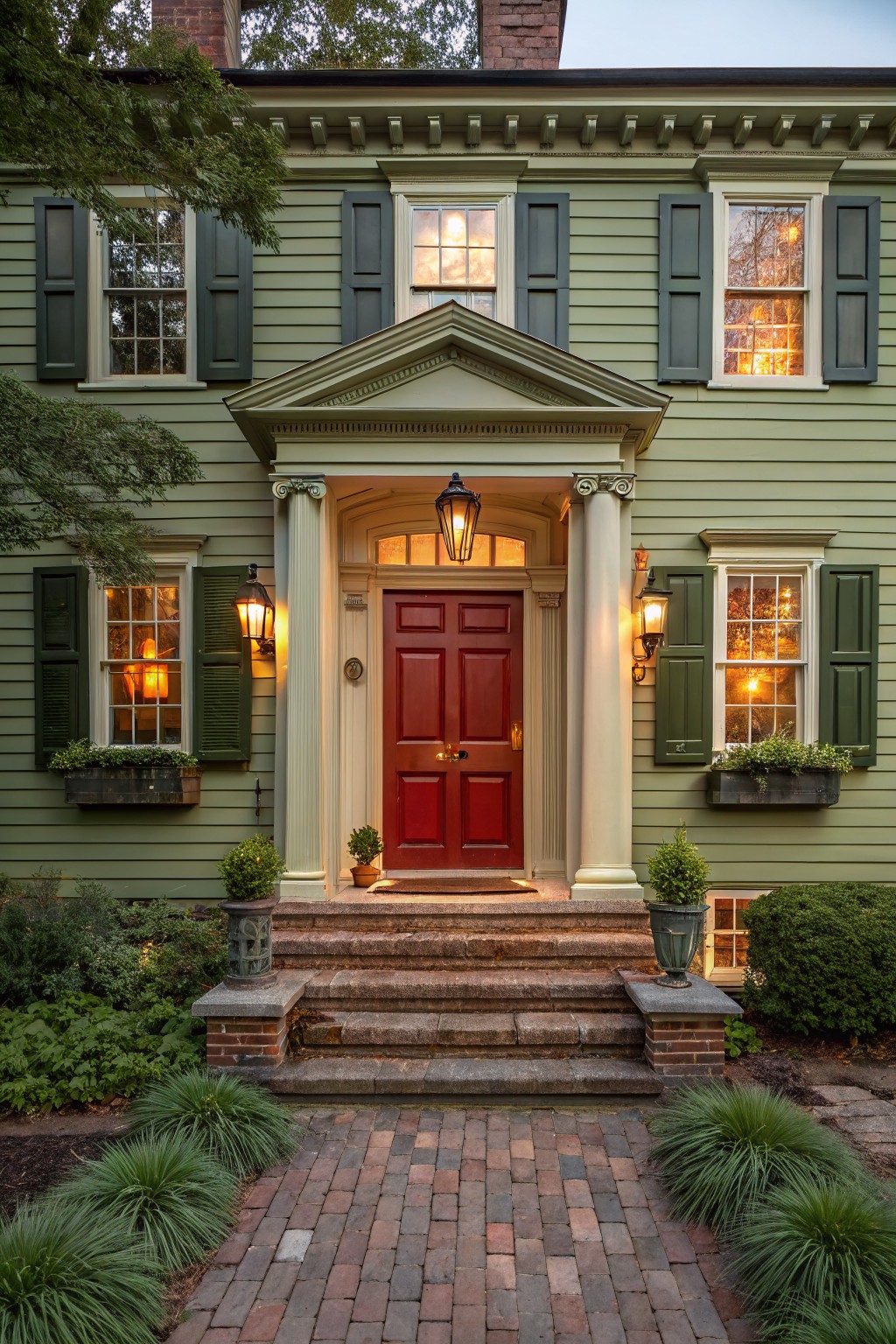
A bright red front door gives this sage green house a welcoming pop right at the entry. The soft green paint on the clapboard siding sets up a classic backdrop, and that red pulls the eye straight to the door without clashing. Flanking lanterns add a bit of glow that makes it feel lived-in and friendly, especially in the evening light.
This combo works best on traditional homes like colonials or farmhouses where you want some color but not too much. Pick a true red with some depth, like barn red, and pair it with neutral trim. Skip it if your green is too yellow; the contrast might fight then. Just a fresh coat every few years keeps the personality sharp.
Navy Blue Door on Sage Green Siding
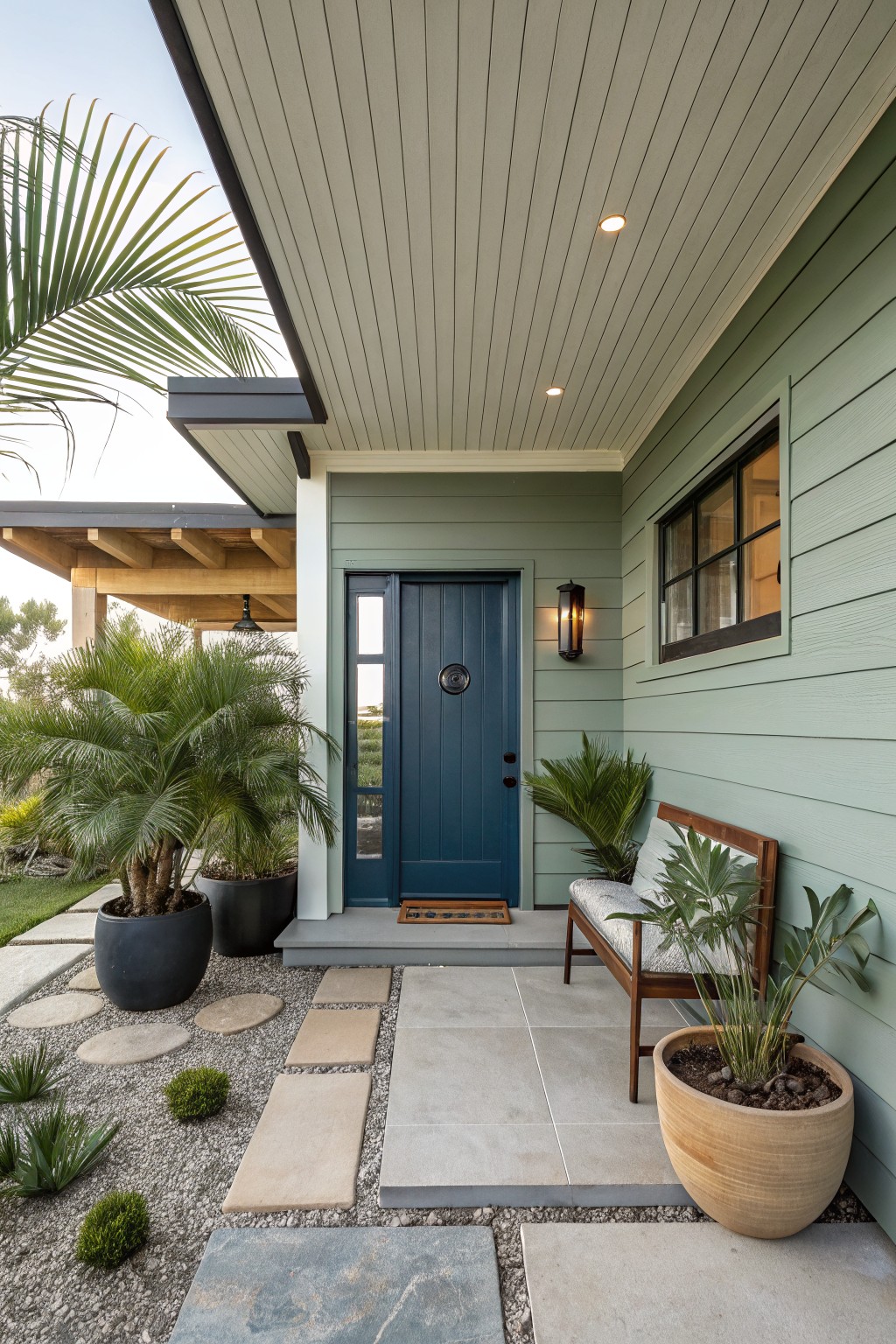
A deep navy front door stands out nicely against soft sage green siding like this. The color combo gives the house some real personality at the entry without going overboard. That blue pulls your eye right to the door, and the subtle green keeps things calm around it.
This works best on houses with clean lines or a bit of modern farmhouse feel. Go for matte navy paint and pair it with black hardware or lanterns. It suits coastal areas or suburbs fine… just test the shades first since navy can look different in shade.
Warm Wooden Front Door on Green Exterior
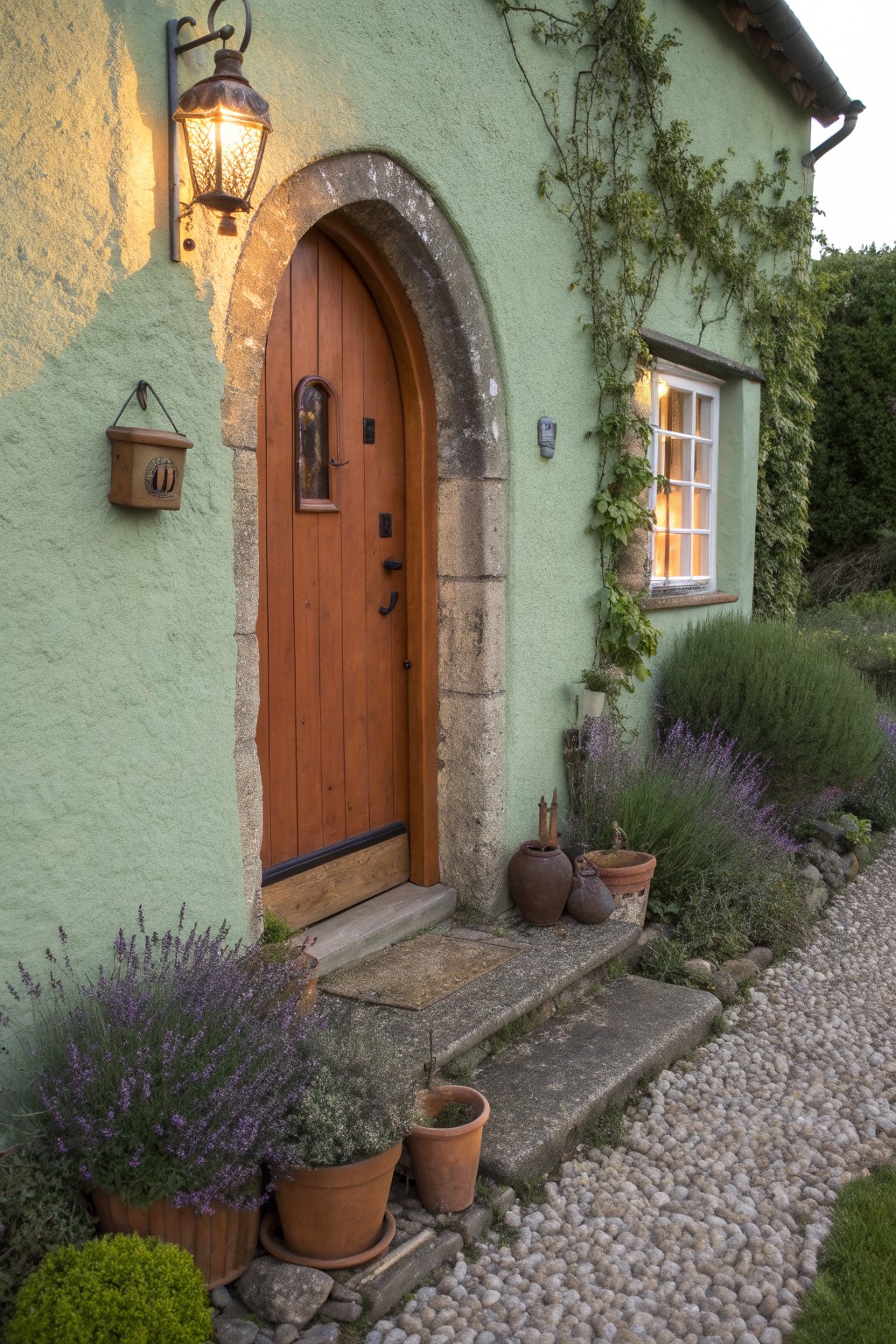
A wooden front door in a rich orange-brown tone stands out nicely against pale green stucco walls. It adds a bit of natural warmth and rustic charm without overpowering the soft house color. That stone arch around the door pulls everything together, giving the entry a cozy cottage look that’s easy on the eyes.
This works best on older-style homes or ones in a garden setting. Go for a sturdy oak or similar wood, stained deeply, and keep the hardware simple like a black knob. Pair it with low plants along the path to blend the door into the yard. Skip glossy finishes though, they can look too modern here.
Mustard Yellow Front Doors
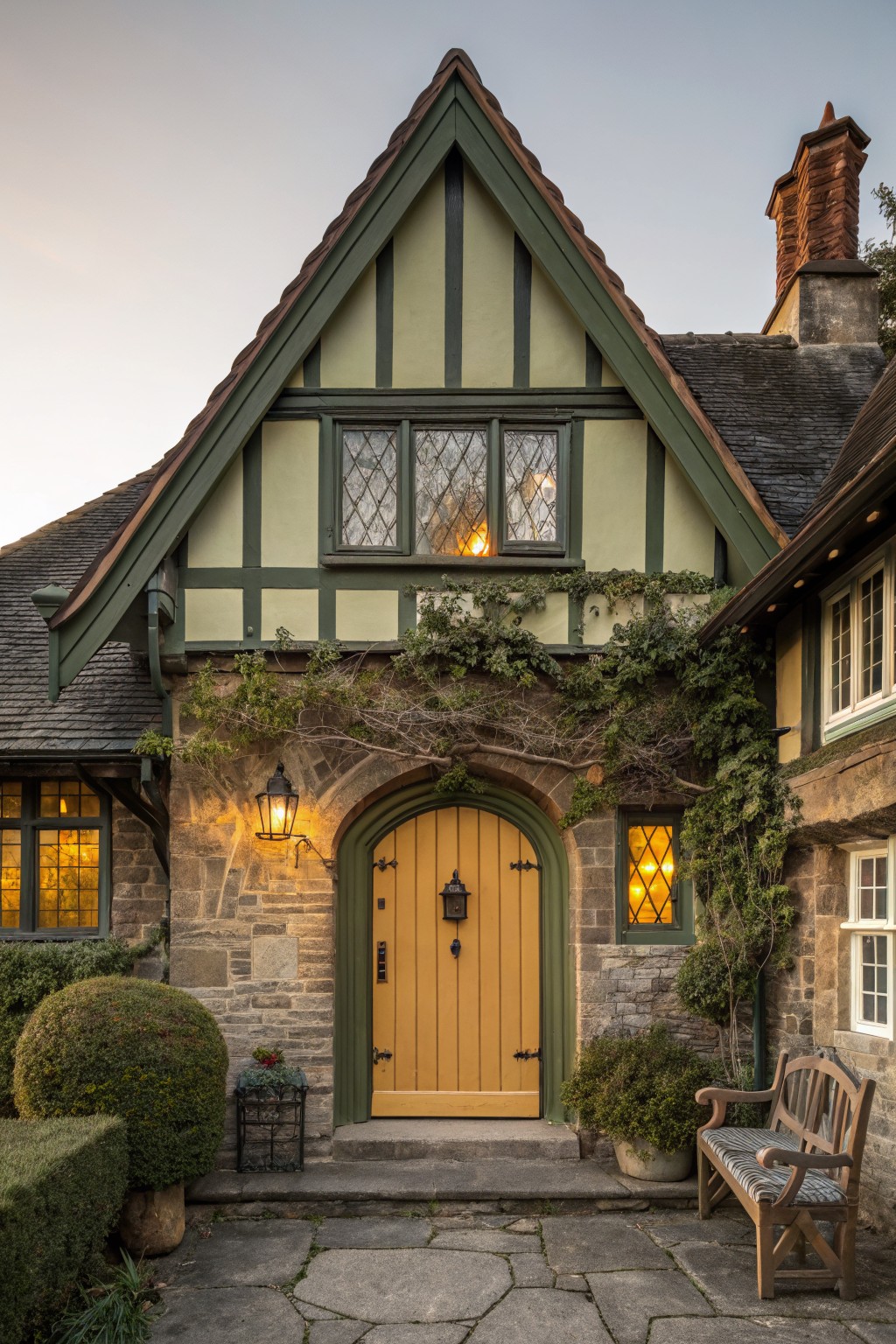
A mustard yellow door gives a green house real personality without trying too hard. On this kind of timber-framed exterior, the warm tone picks up the stone walls and softens the green paint. It pulls your eye right to the entry, especially with simple lanterns on either side.
This works best on traditional homes like Tudors or Craftsman styles. Go for matte paint and black hardware to keep it grounded. Skip it if your house has too much modern trim… it shines more on older facades.
Chartreuse Front Door on Sage Green
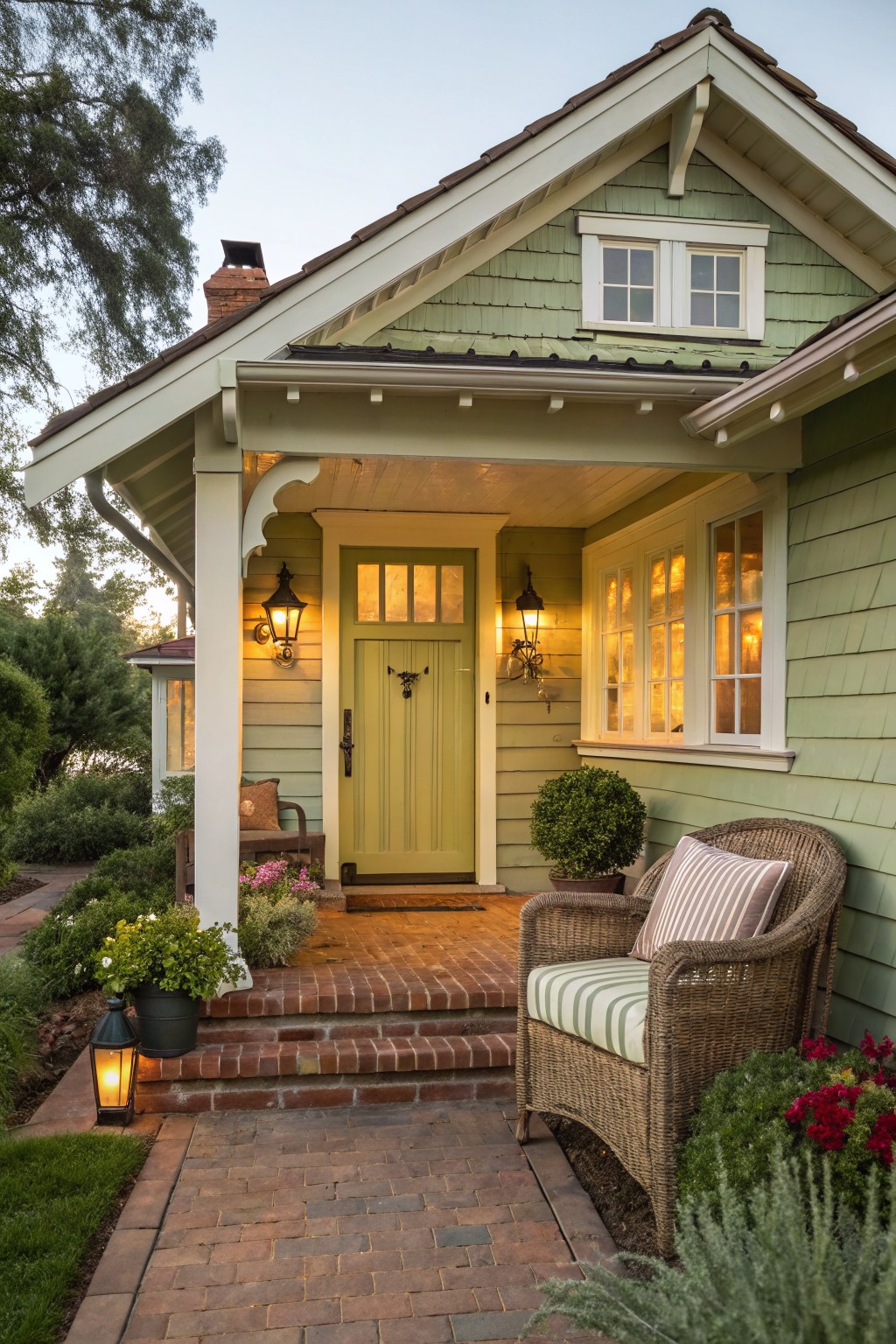
A chartreuse front door like this one brings a bit of cheer to a pale sage green house without going overboard. The brighter yellow-green shade picks up the house color just enough to tie things together, but it still stands out as the main entry point. Paired with simple lanterns and a porch chair, it keeps the look cottagey and easygoing.
This works best on older bungalows or shaker-style homes where you want some personality up front. Go for a glossy finish on the door to catch the light, especially if your spot gets afternoon shade. Just keep the rest of the trim white or cream so it doesn’t compete.
Burnt Orange Front Doors
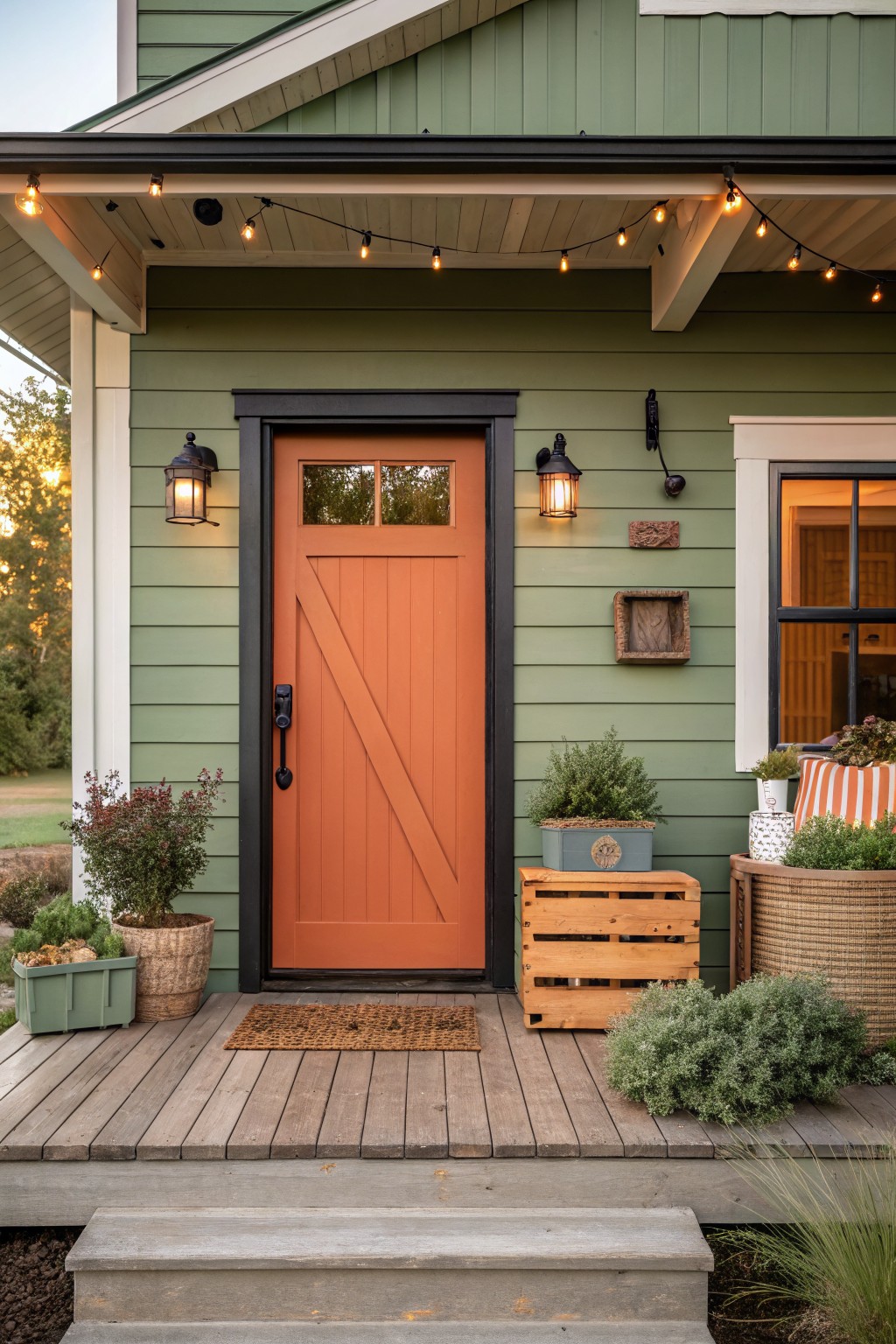
A burnt orange front door gives a green house real personality without trying too hard. The warm tone next to sage green siding creates nice contrast that feels friendly and a bit rustic. In this setup, the black door frame keeps things sharp, and the barn-style panels add some character right at the entry.
This color works best on houses with a craftsman or farmhouse vibe, especially if you have a covered porch. Test a sample in different lights first, since orange can shift from cozy to too bright. Pair it with simple plants and lanterns like these to keep the focus on the door.
Turquoise Door on Mint Green Siding
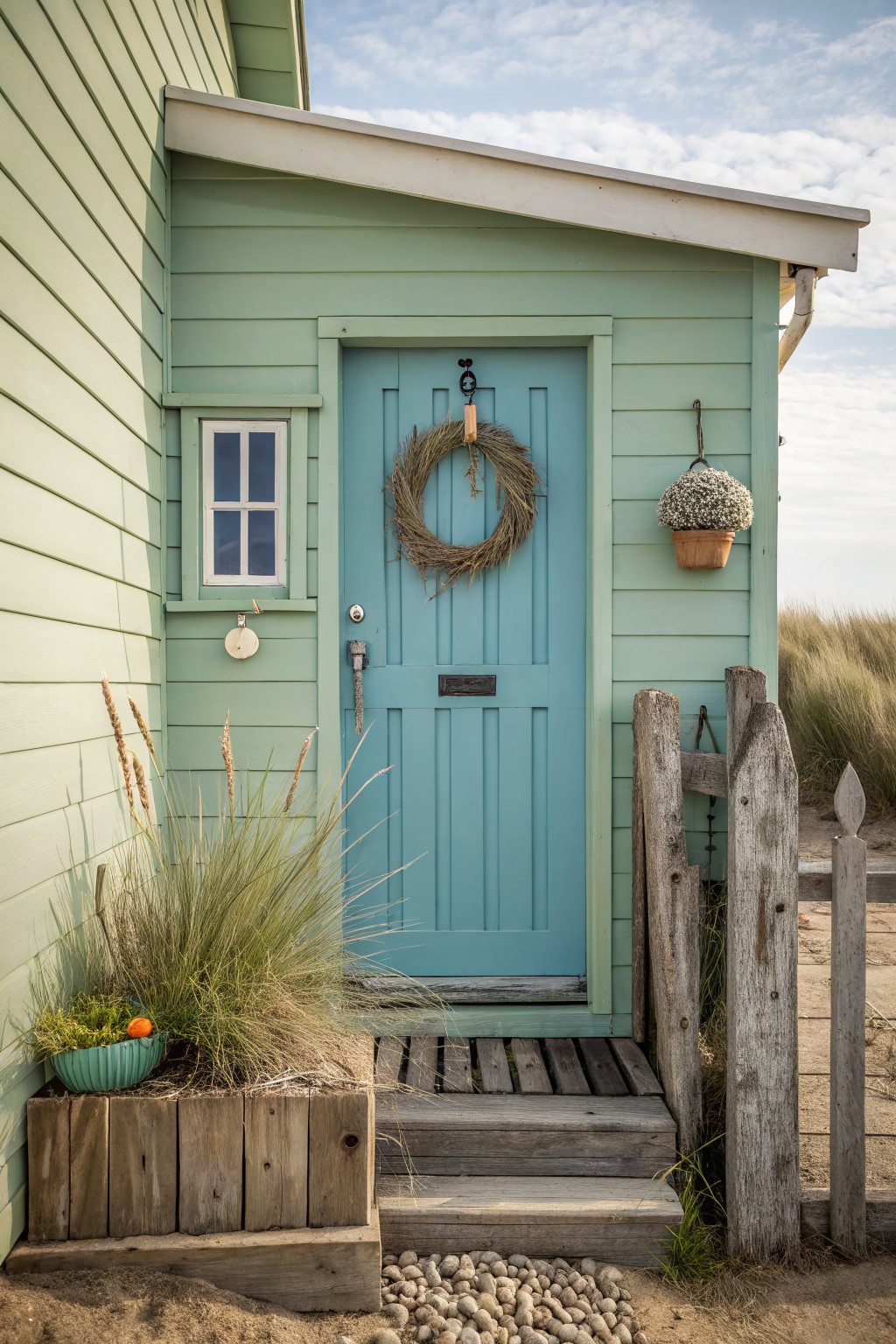
A turquoise front door like this one brings real life to a pale mint green house. The color contrast jumps out right away but stays easy on the eyes. It fits that beachy feel with the soft siding and simple wood details around the entry.
This works best on cottages or smaller homes near the water or in casual neighborhoods. Keep plants and a wreath simple to let the door do its thing. Skip it if your house has too much trim already, or the blue might fight it.
Sunny Yellow Front Door
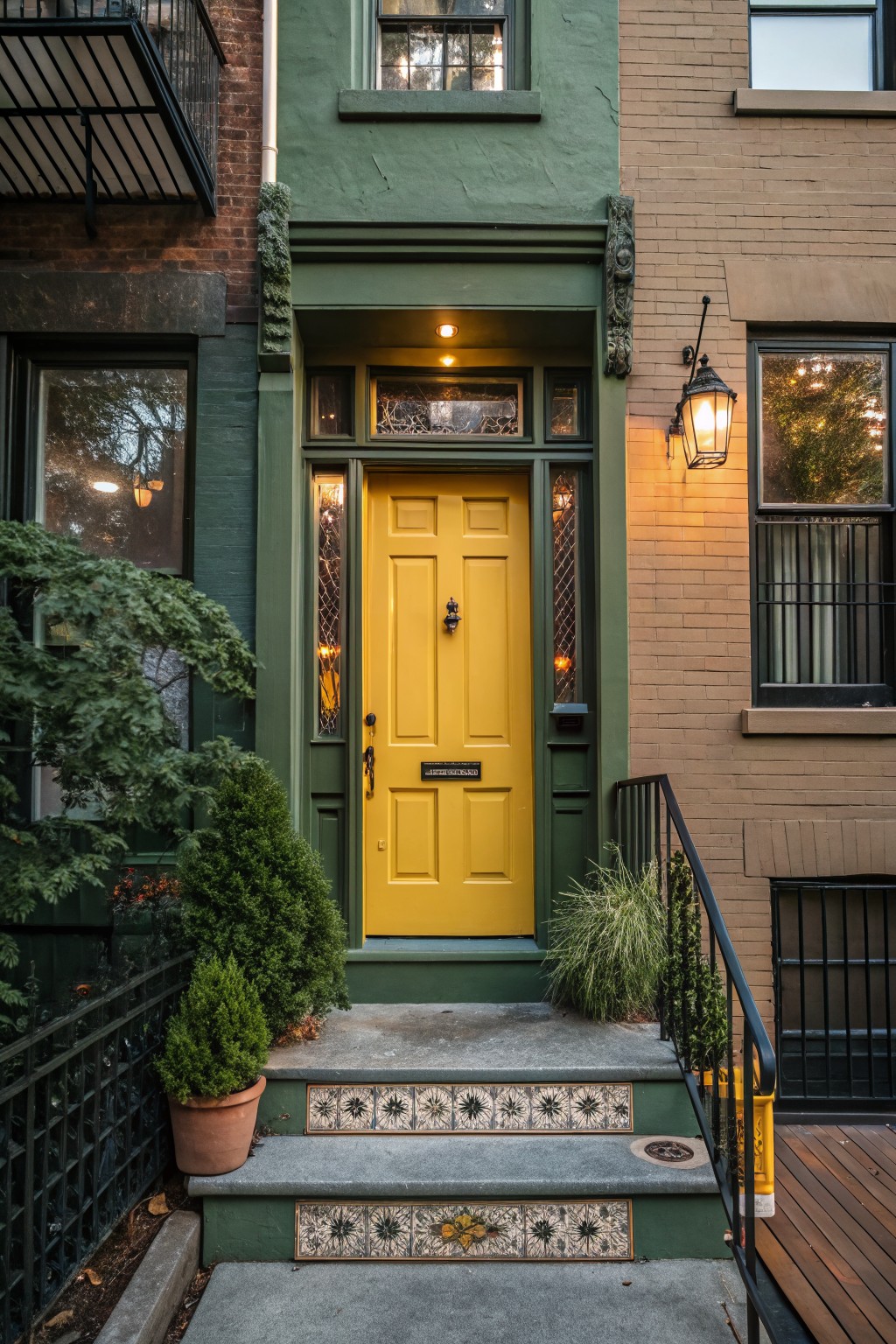
A sunny yellow front door gives a green house that extra bit of cheer. It stands out right away against the deeper green paint, making the entry feel welcoming and full of life. Those classic sidelights and a brass knocker keep things traditional, but the color choice turns a plain facade into something with real personality.
This works best on older brick or row houses where the green siding already sets a solid base. Go for a bright but not screaming shade, and keep plantings simple like boxwoods in pots nearby. It suits city streets or neighborhood walks, just make sure the door trim stays dark to let the yellow shine.
Frequently Asked Questions
Q: My house is a deep forest green. Will lighter door colors wash out?
A: Lighter colors like soft cream or pale blue stand out beautifully against deep green. They add fresh contrast without overwhelming the siding. Slap a sample up and check it at different times of day.
Q: How do I make sure the door color doesn’t clash with my plants or landscaping?
A: Lean into earthy tones that echo your greenery, like mustard or rusty orange. These blend right in while giving the door its own spark. Skip anything too icy if you’ve got lots of warm foliage.
Q: Should I paint the door the same color as the shutters?
A: Keep the door bolder and let shutters play support. Match shutters to trim for balance, then let the door shine. It pulls the eye exactly where you want.
Q: What’s the easiest way to update my door without a full repaint?
A: Try a high-gloss spray paint in one of these colors. Prep with a quick sand and clean. Boom, personality boost in an afternoon.
