

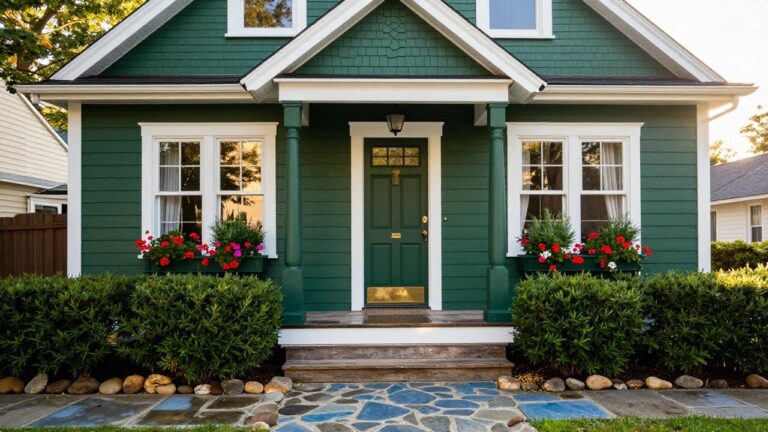
When you approach a house from the street, the facade, roofline, and entryway hit you first, setting whether it feels welcoming or worn out.
I remember eyeing a neighbor’s place that looked flat until they added green siding that echoed the trees around it, pulling the whole exterior together without much fuss.
Choices in materials like shakes or clapboard, paired with the right window placements, make homes read as put-together from afar.
Greenery on exteriors tends to soften hard lines and add depth that lasts through seasons.
A few material shifts like that are easy to adapt and test yourself.
White Porch on Green Shingle Siding
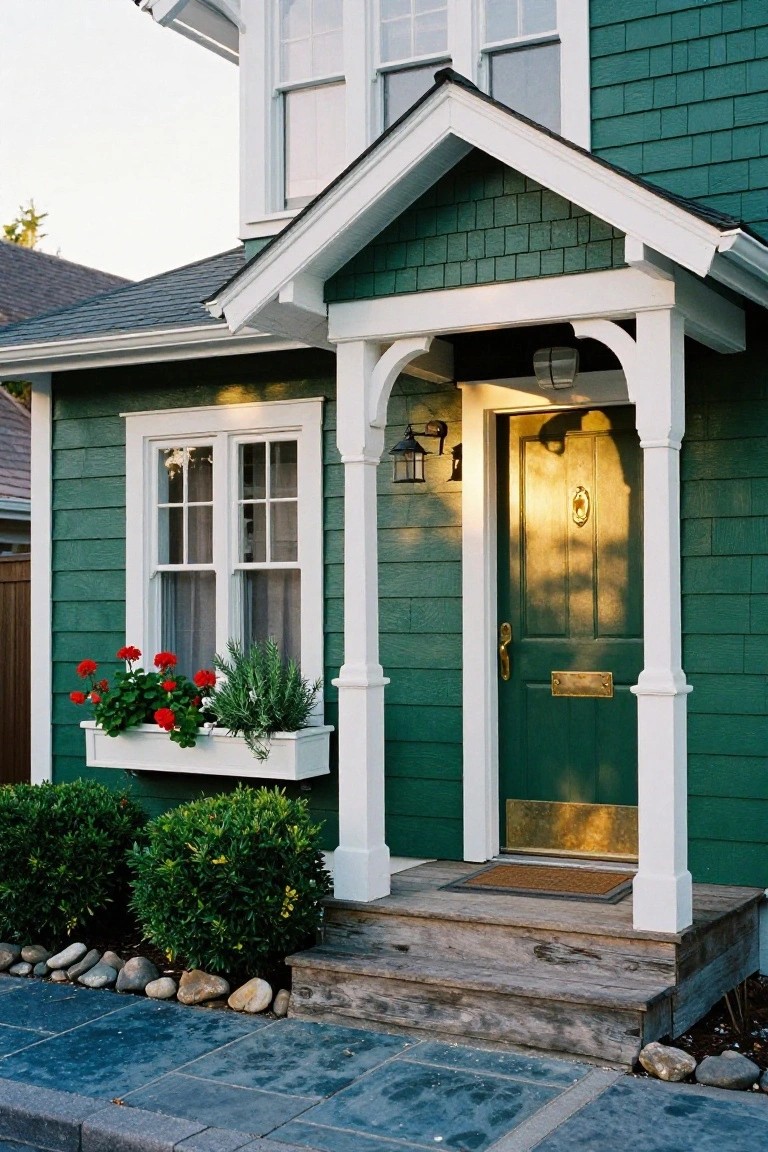
Green shingle siding in a deep shade like this looks solid and grounded. Pair it with a white porch, and you get real pop at the front of the house. The clean columns and trim stand right out against the textured shingles. It pulls your eye to the door without trying too hard. Those lanterns and the brass details just add a bit more welcome.
This setup works best on smaller homes or cottages where you want some classic charm. Keep the porch simple, maybe steps leading up to a green door like here. It suits Craftsman or seaside styles. Watch the scale though. Too big a porch can overwhelm a little house. Add a flower box if you have the light.
Sage Green Garden Shed Exterior
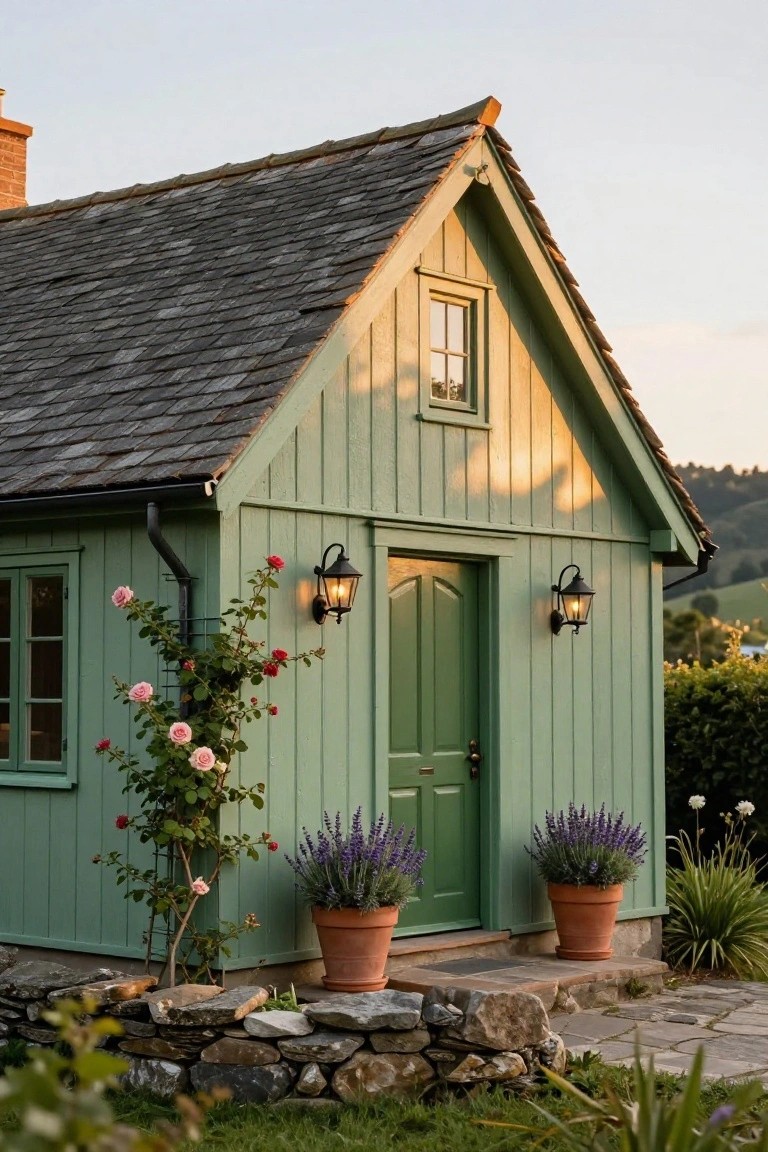
A soft sage green paint on wooden clapboard siding turns a basic garden shed into something that belongs in a storybook cottage. It blends right into the garden without shouting, especially when you add climbing roses up one side and pots of lavender by the door. Those touches make the whole thing feel lived-in and welcoming from the path.
Try this on a shed, potting house, or even a playhouse where you want low-key charm. It suits country or suburban spots with some greenery around. Keep the door the same green but a shade darker, and add lanterns for evening light, but skip it on big garages, it can look too small there.
Mint Green Exterior for Beach Homes
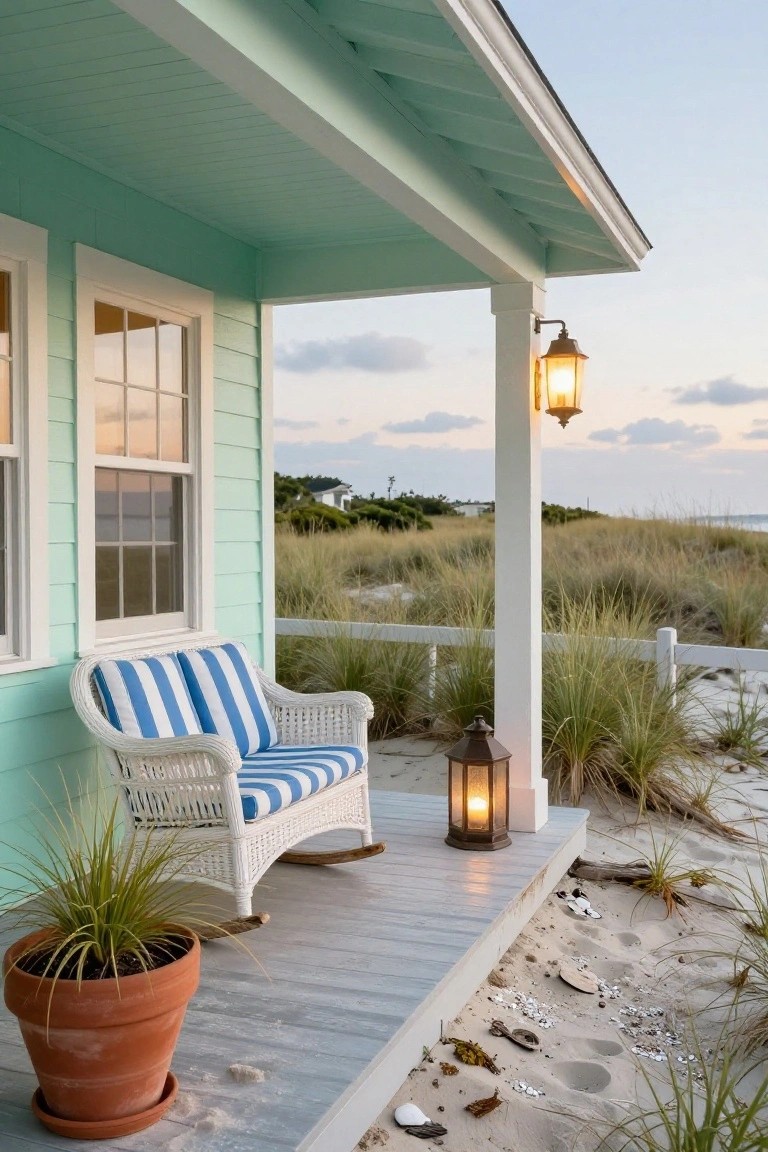
This soft mint green paint on lap siding keeps things light and fresh, especially near the water. It stands out against sandy dunes and sea grass without overwhelming the view. Add a simple porch rocker like the blue-striped wicker one here, and it pulls people right up to the door.
Paint this shade on coastal cottages or vacation houses with covered porches. White trim keeps it crisp. Stick to classic furnishings and lanterns for evenings. Avoid darker greens unless you want more shade.
Classic Green Siding with Black Shutters
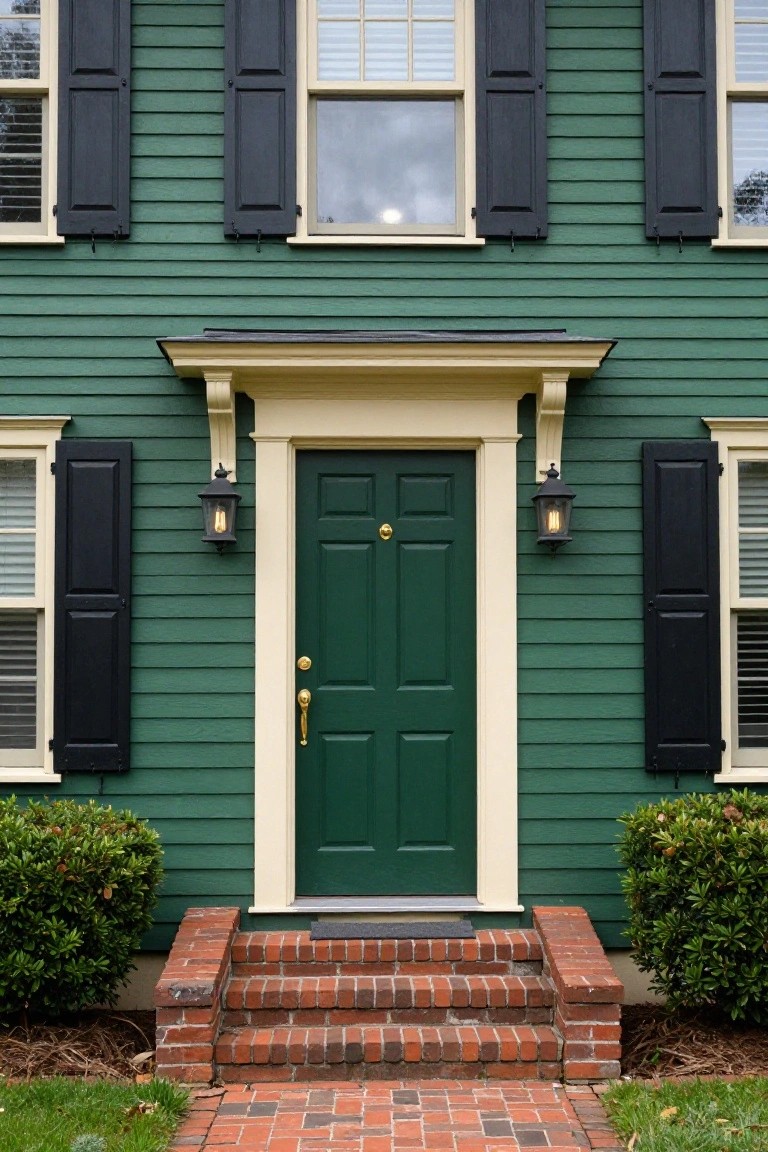
Black shutters stand out sharp against deep green siding like this. That contrast pulls your eye right to the front door and makes the whole house look put-together from the street. It’s a simple move that gives a traditional feel without much fuss. The green door picks up the siding color too, so everything ties in neat.
This setup works best on older-style homes, like colonials or revivals with clapboard siding. Keep the trim white or cream to frame it all. Brick steps like these add some warmth at the base. Just make sure the shutters are true black, not grayed down, or the pop fades.
Recommended Products

【Weather Resistance】The vinyl shutter fasteners are made of vinyl plastic, a weather-resistant plastic that is UV-resistant, waterproof, and not prone to corrosion and rust, making it suitable for long-term outdoor use

Color matching screws
Color matching screws
Green Stucco Facade with Bougainvillea
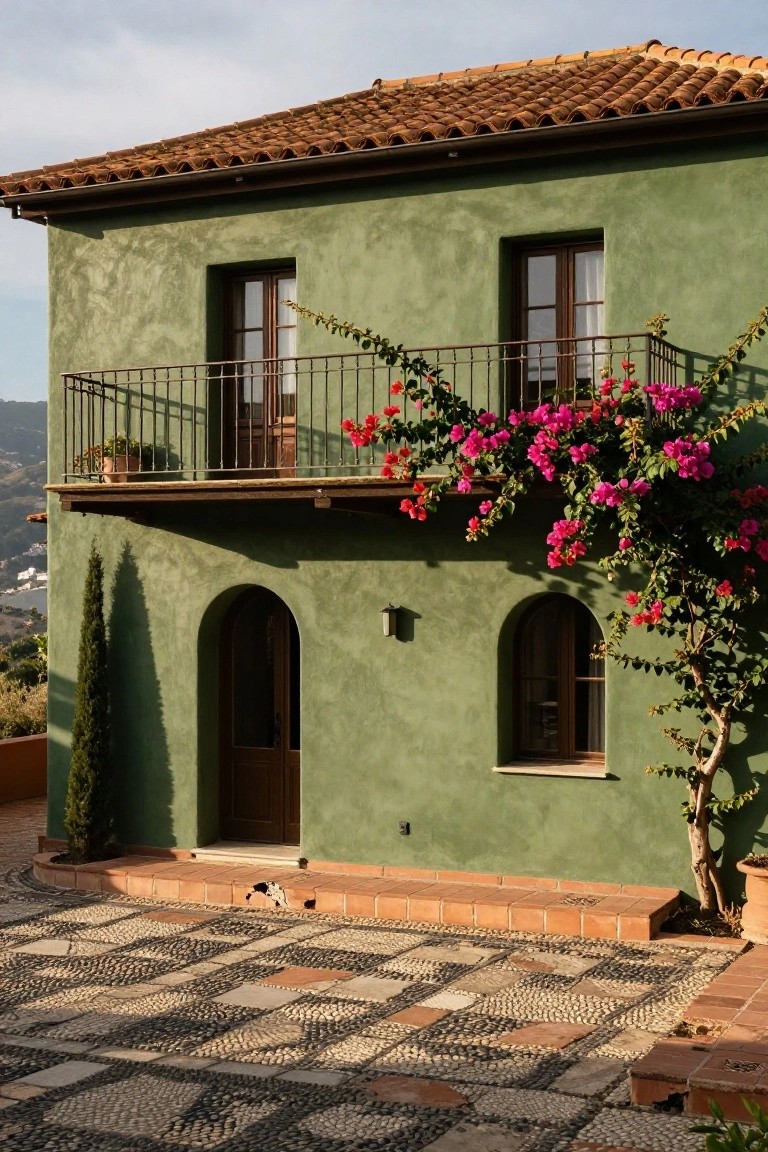
A soft green stucco finish on the house walls gives this exterior a calm, earthy feel that fits right into a hillside spot. The bougainvillea vines spilling over the balcony add bright pink flowers that pull the eye up and make the green pop without much effort. It’s a simple way to get color and life on a plain wall.
This look suits older-style homes in sunny areas, like Mediterranean or Spanish designs. Pick a sage or olive green paint for stucco, then plant hardy vines near a balcony or entry arch. They grow fast and cover up any wall flaws… just trim them back once a year.
Sage Green Board-and-Batten Siding
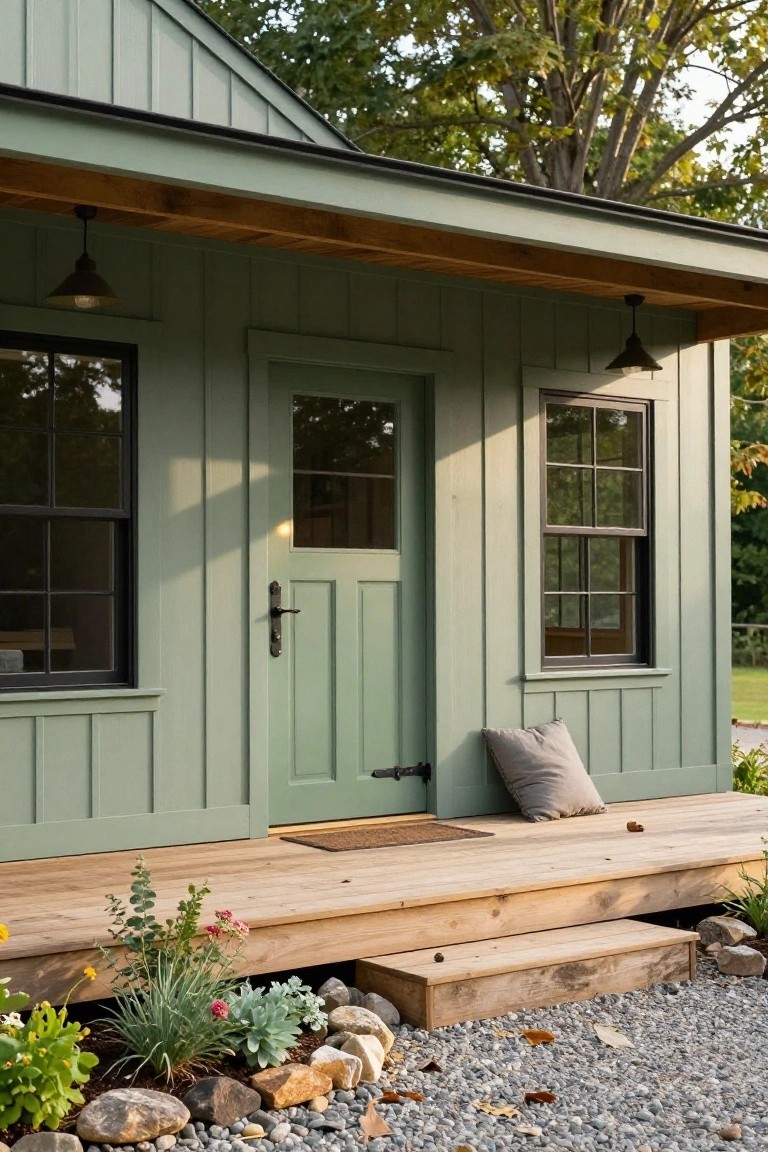
A soft sage green paint on board-and-batten siding gives this cabin a fresh, natural look that pulls you right up to the porch. The vertical lines make the house feel taller and more structured, while the color ties into the surrounding trees and yard. It works because it’s calm, not bold… stands out without trying too hard.
Try this on a small cottage or guest house where you want easy curb appeal. It suits wooded or rural spots best, and pairs well with untreated wood like the porch here. Just stick to quality exterior paint so it holds up through seasons.
Climbing Ivy on Brick Townhouses
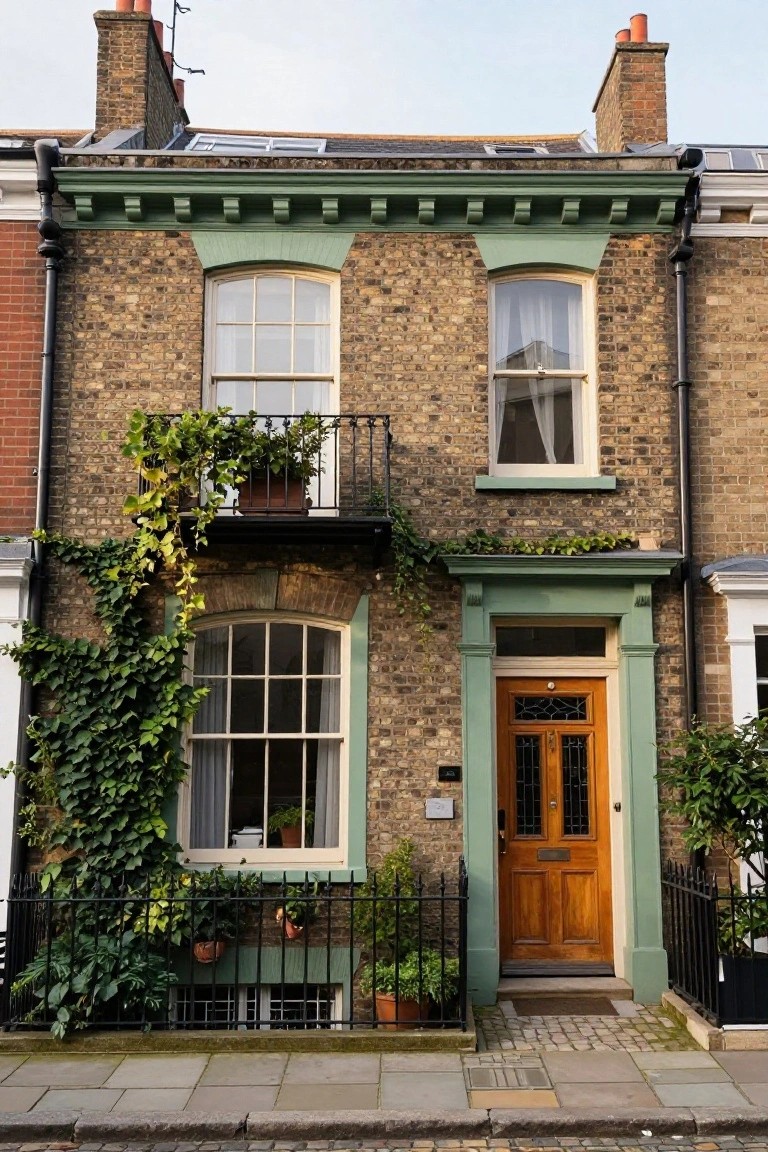
Climbing ivy works well on brick townhouses like this one. It softens the heavy brick look and adds green right where people notice it most, around the windows and balcony. That mix of plant and architecture gives the front a lived-in charm without much extra work.
Try it on narrow urban homes or older row houses. Let the ivy trail up railings and frame the entry, but trim it back once a year to keep windows clear. It suits places with some sun and fits right into classic neighborhoods.
Garden Shed in Soft Green
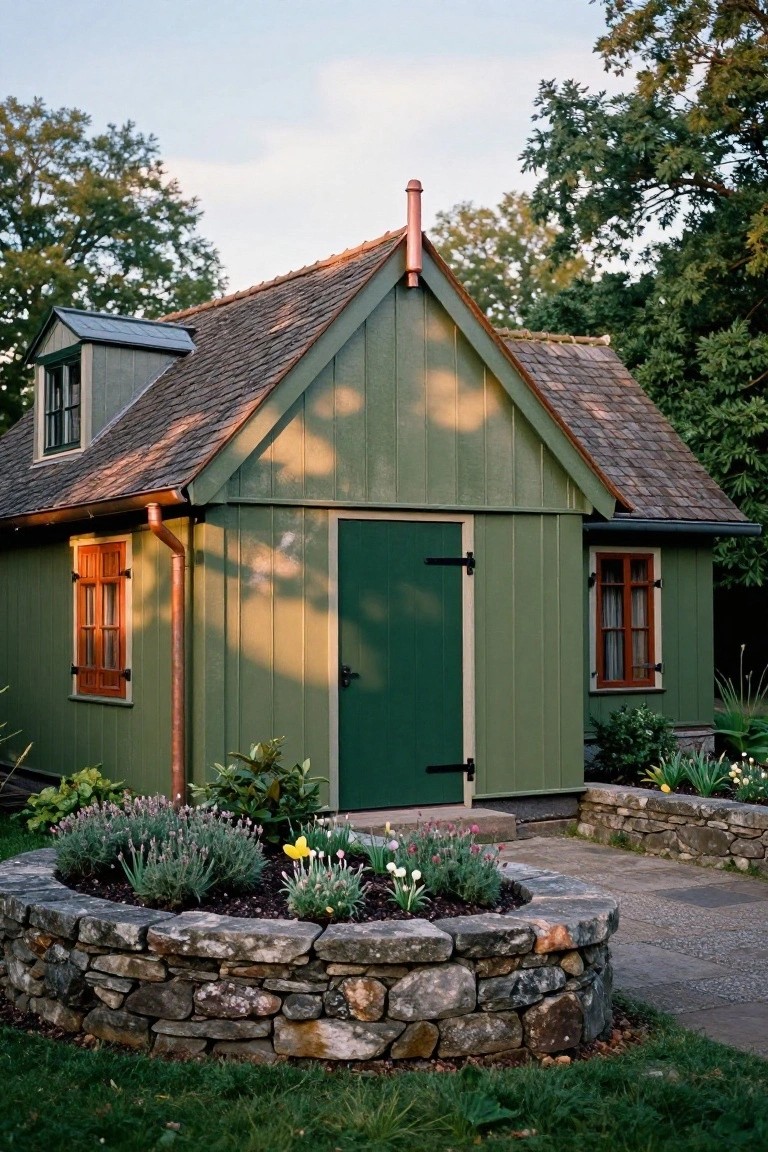
A simple shed like this proves how well a muted green siding works on small outbuildings. The sage shade blends with the yard’s trees and grass without standing out too much. Copper downspouts and a slate roof add just enough detail to make it feel built to last.
Paint one in a backyard with established plantings, maybe as a potting shed or storage spot. Keep the door bold green and frame windows in wood trim. A low stone planter at the base helps root it to the ground. It suits cottage-style homes best.
Green Cottage Siding with White Trim
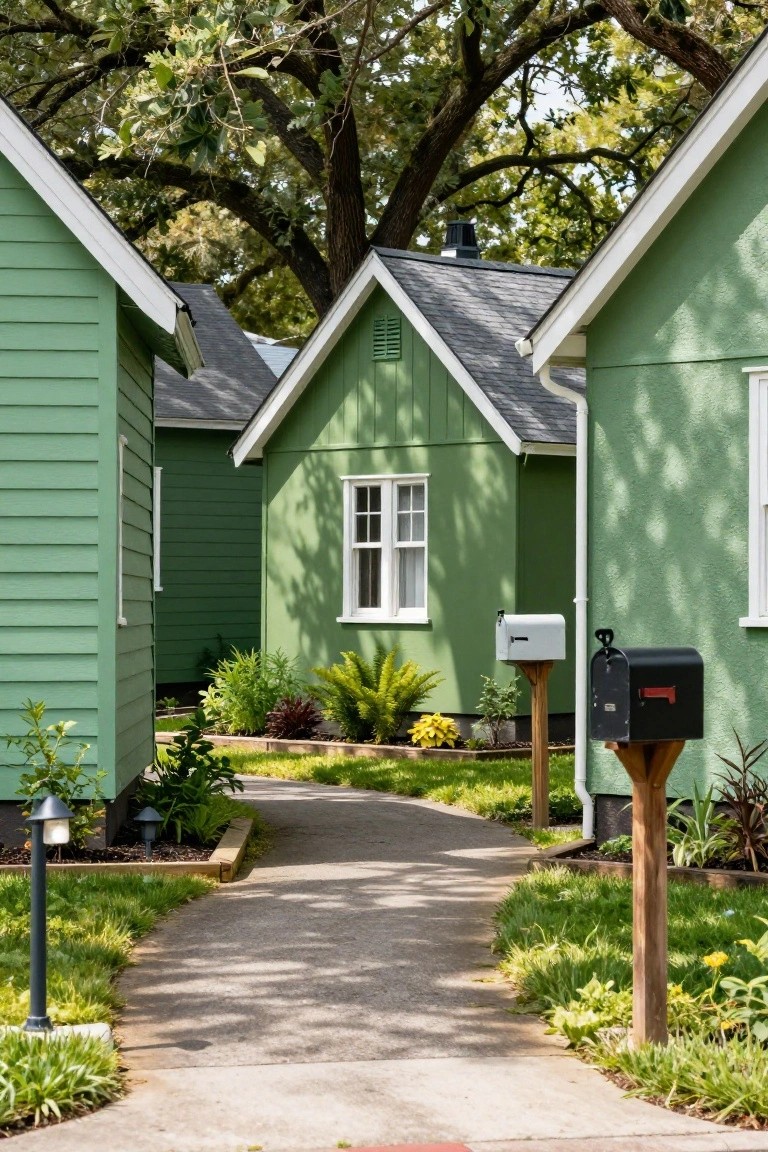
A soft green paint like this on vertical siding gives traditional cottages a fresh, lively look that pulls you right up the path. White trim around the windows and rooflines keeps things crisp and clean. It works especially well under tree shade, where the color stays cool and bright without washing out.
Try it on bungalows or small homes in older neighborhoods. Stick to lighter greens for that open feel, and pair with simple plantings along the base. Just make sure the trim paint is a true bright white to get that nice contrast.
Sage Green Painted Stone Walls
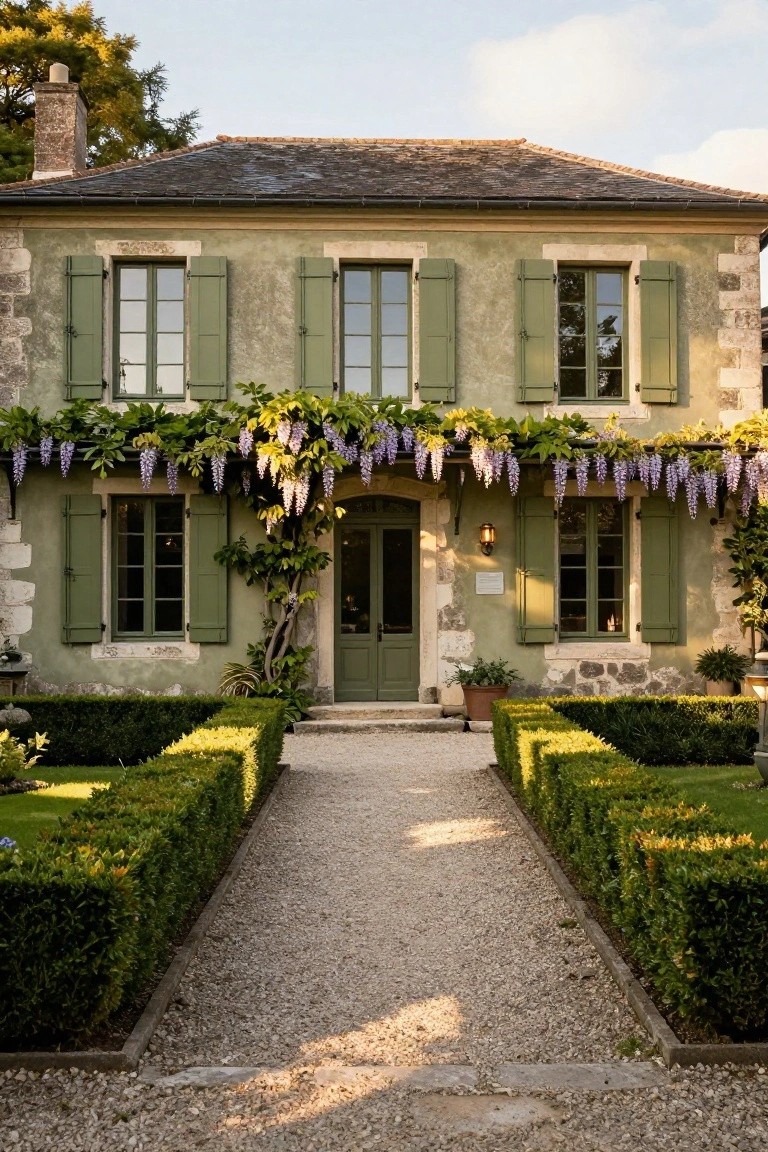
A soft sage green paint over stone walls gives this house a gentle, lived-in feel that pulls you right toward the front door. It softens the rough texture of the limestone base without hiding it, and ties in nicely with the matching green shutters. That color choice makes the whole facade look like it’s grown into the landscape a bit.
This works great on older stone or stucco homes, especially in countryside spots. Go for a limewash or breathable paint so moisture doesn’t get trapped. Pair it with climbing vines like wisteria up top… and you’ve got real curb appeal without much fuss.
Green Roof with Solar Panels
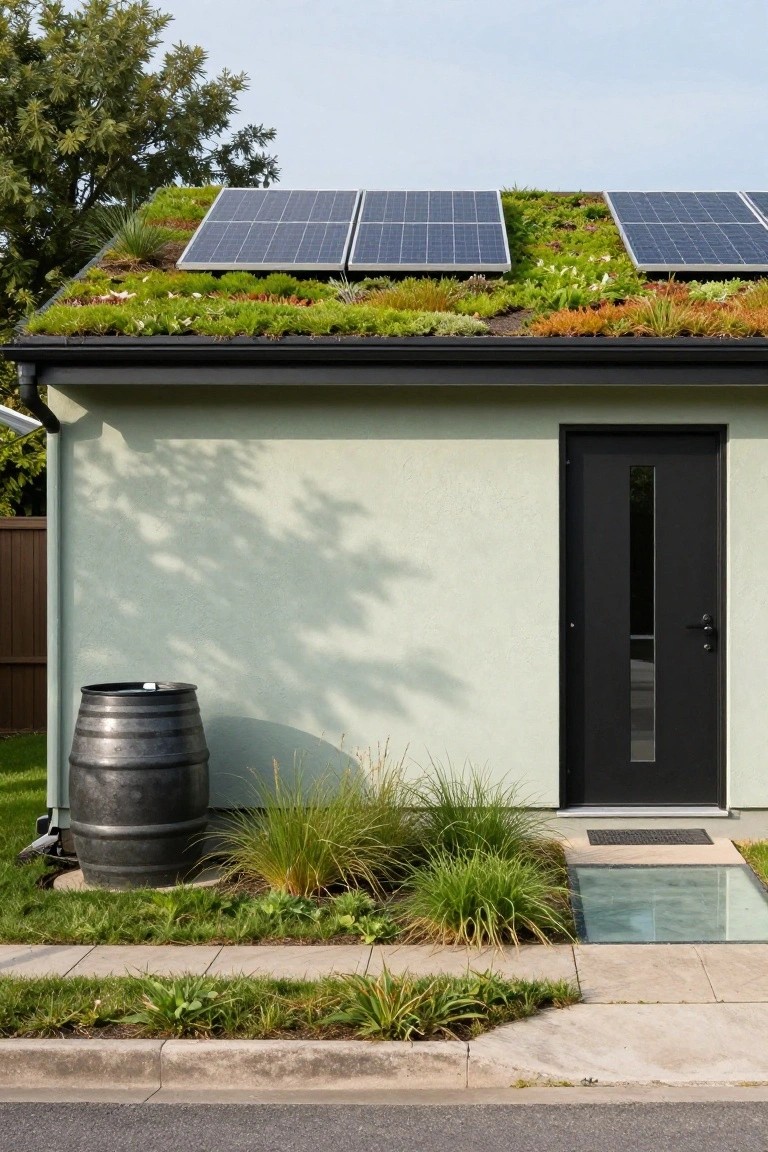
A living green roof like this one takes eco-friendly design up top, literally. The low plants mixed right in with solar panels create a fresh, sustainable look that catches the eye without trying too hard. It softens the roofline on a simple modern house, handles rainwater better, and powers the home all at once. Folks notice it from the curb right away.
You can add this to flat or low-slope roofs on new builds or retrofits, especially in sunny spots. It suits compact urban homes or suburban updates where space is tight. Start with sturdy roof support and sedum plants that stay shallow. Tie in a barrel for runoff collection, like the steel one by the entry here. Just watch local codes for weight and wiring.
Recommended Products

Product Includes: a kit containing 8 L-shaped brackets and flash baffles, complete with bolts and hardware, specifically designed for asphalt shingle and composite tile roofs, compatible with most common photovoltaic rails, meeting the installation needs of residential solar modules

【Upgraded Weatherproof Design】 Solar panel connectors is pre-assembled with 10Ft 10AWG wire, save a pair of waterproof glands, meanwhile,speed up the installation. Built-in screw slot for easy installation to prevent screws from slipping.There is a groove on the bottom, which is convenient for gluing, and improves the fastness and waterproof of the paste.

Green Stained Glass Entry Door
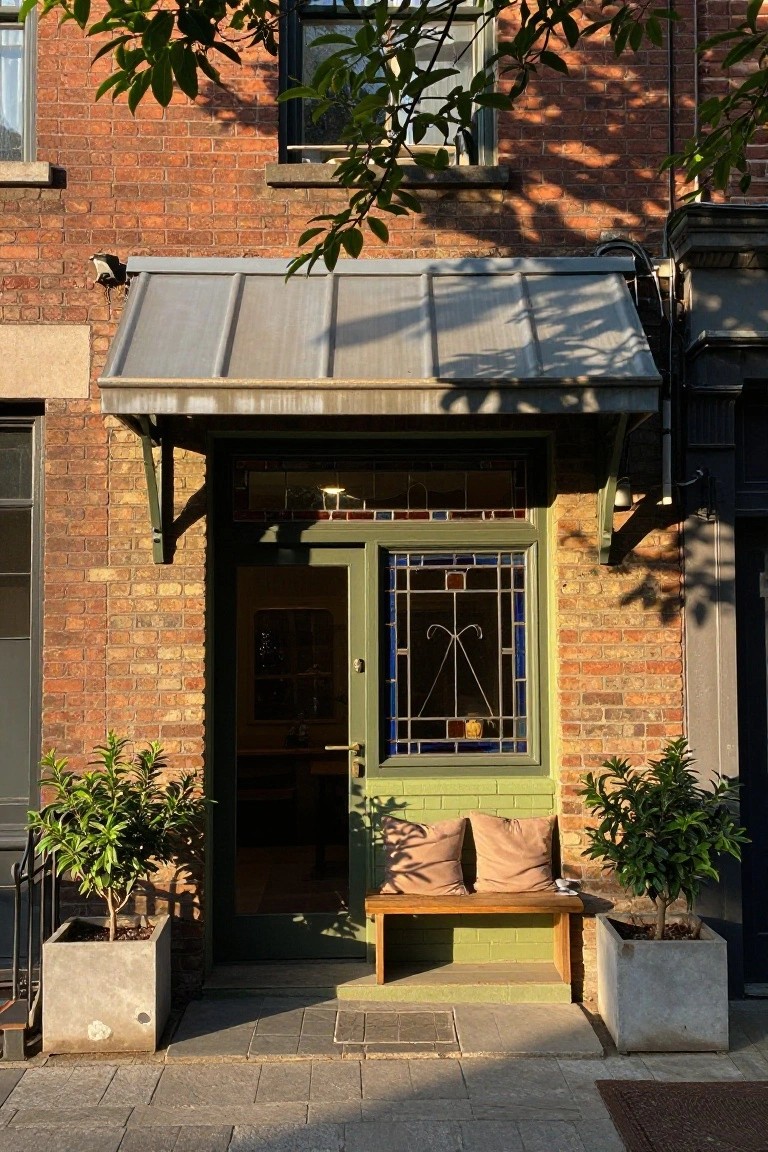
A green front door like this one pulls the eye right to the entrance. The stained glass window set into it adds that old-house charm without trying too hard. Against a brick facade it feels fresh yet classic, and the color ties in nicely with the plants nearby.
Paint your door a deep green if you want something similar. Look for stained glass inserts or even decals if real glass is out of reach. Add matching potted evergreens on each side and a plain bench for sitting. It suits older brick or row houses best, especially where you want to soften a plain exterior. Just keep the plant pots simple so they don’t compete.
Recommended Products

Rainbow Prism Light Effect: Delicate clustered green foliage patterns with fade-resistant ink refract sunlight into soft layered iridescent rainbow glow. On bright days, plain glass becomes elegant botanical suncatchers casting shifting colorful light shadows indoors

2nd Generation Frosted Glass Window Film: With a more delicate frosted texture, it has a better touch than the real frosted glass, and greatly prolongs the service life, up to 10 years

Superior Privacy Protection - Non-transparent frosted design blocks outside views effectively, providing maximum privacy for bathroom, bedroom and office while keeping soft natural light inside.
Green Timbers Refresh a Half-Timbered Facade
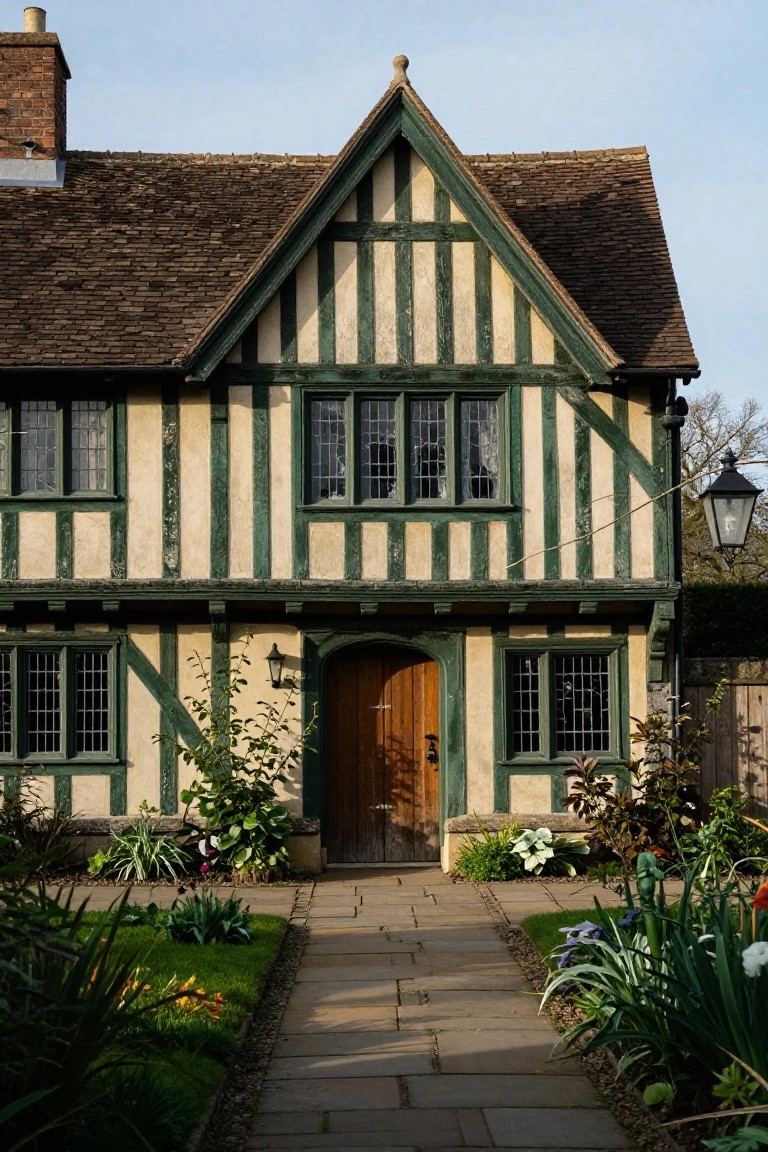
Half-timbered houses have that solid old-world charm. Painting the timbers green, like on this place, wakes up the look without losing the tradition. The cream plaster between the beams stays soft and light. It pulls the eye right to the front door. Folks notice it from the street.
This works great on cottages or storybook-style homes in milder spots. Go for weatherproof paint so it lasts. Add plants along the path to tie in the green. Skip it if your area gets too much harsh sun. Keeps things looking cared for year round.
Concrete Cantilevers for Beach Houses
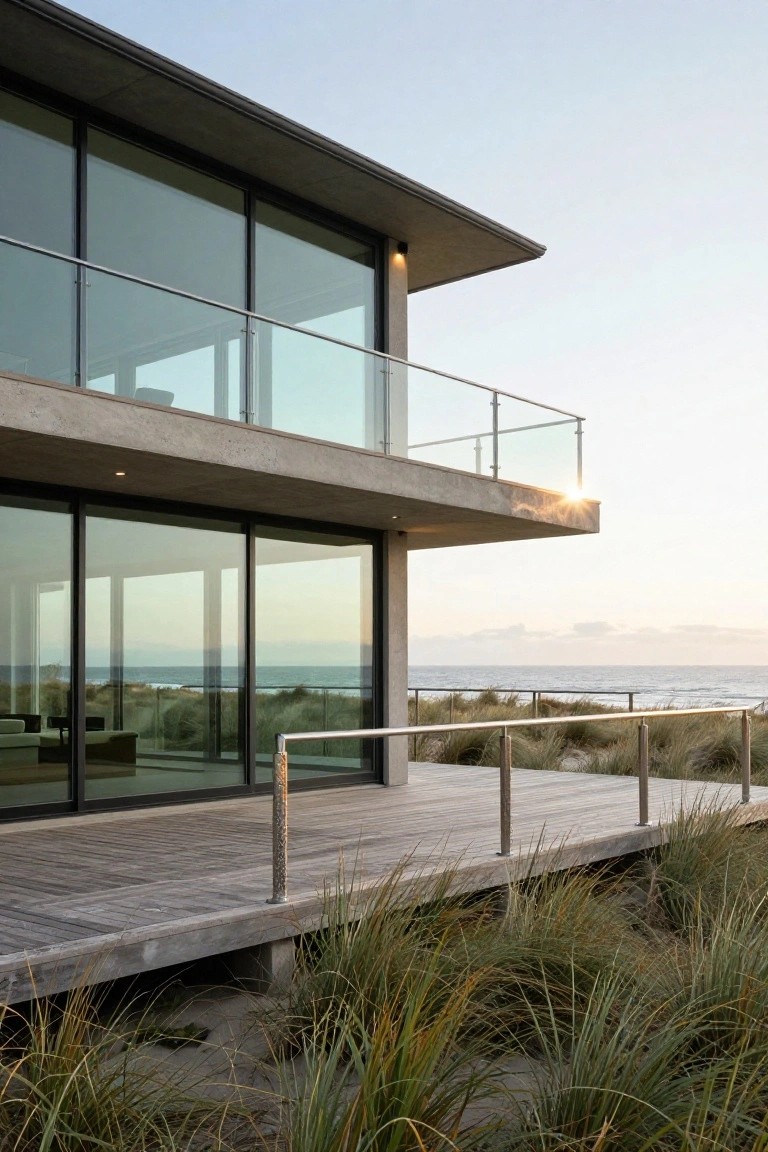
Exposed concrete works well here for the cantilevered balcony and upper structure. It hangs out boldly over the dunes, giving the house a solid yet floating feel against the ocean backdrop. Large glass walls below pull in those sea views, making the whole side feel open and tied to the coast.
This approach suits modern homes on sloped beach lots. Keep the concrete board-formed for texture, and add glass railings to avoid blocking sightlines. It holds up to salt air better than paint or siding. Just balance it with wood decking down low… keeps things from feeling too stark.
Green Brick House with Cantilevered Balcony
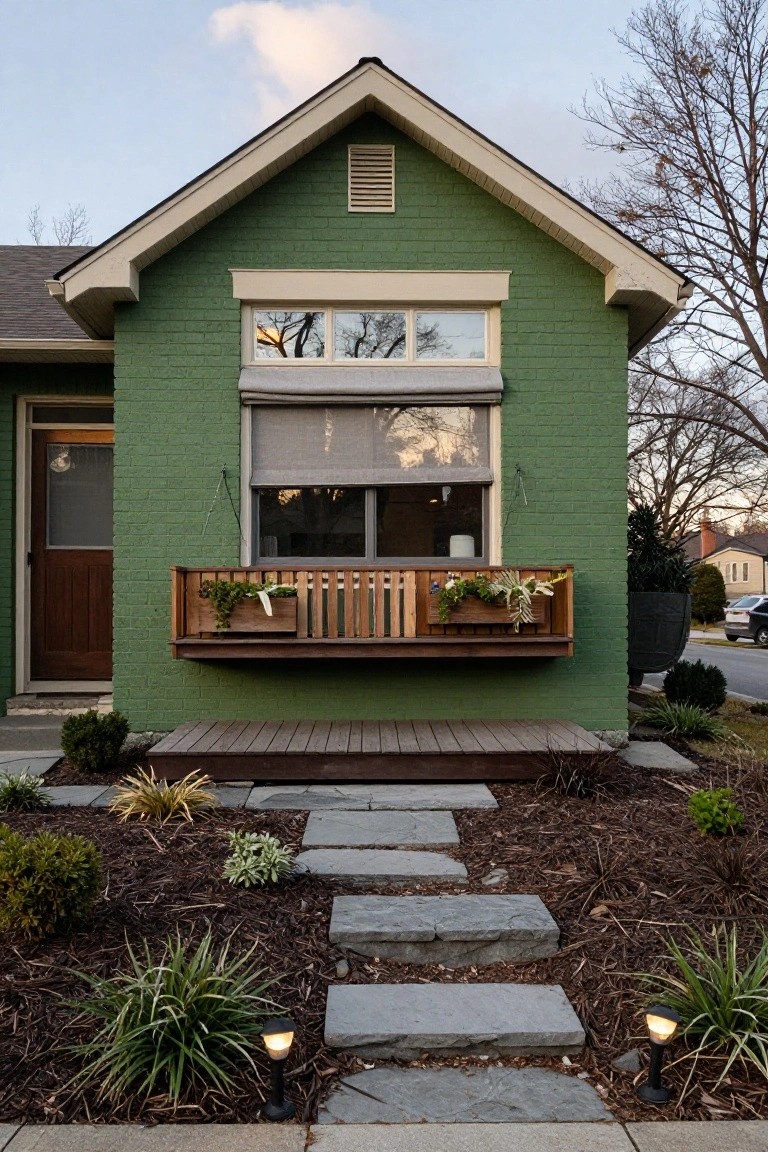
A soft green paint job on brick gives this house a fresh look that feels calm and inviting right from the street. The wooden cantilevered balcony sticks out just enough to add some character without overwhelming the simple lines. Those planters on the balcony rail pull in greenery that matches the facade nicely.
This setup works well on smaller homes or bungalows where you want subtle height and texture. Paint your brick in a muted green first, then build a balcony around existing windows if you can. Keep the wood warm-toned to contrast the cool green, and add low plants that won’t block the view inside.
Frequently Asked Questions
Q: How do I pick a green shade that won’t clash with my brick foundation?
A: Hold paint swatches up against the brick in morning and afternoon light. Pick a green a few tones cooler than the brick’s warm reds or browns. That harmony pulls the whole look together fast.
Q: Can I boost curb appeal with green without painting the entire house?
A: Paint just the front door and shutters a fresh green. It draws eyes right to the entry and refreshes everything instantly. Toss in a couple matching planters for extra punch.
Q: Does green paint hold up in harsh weather?
A: Choose high-quality exterior paint labeled for fade resistance. Prep the surface well by power washing first. You’ll get years of vibrant color that way.
Q: What’s a simple way to test green before committing?
A: Grab sample pints and brush them on cardboard. Prop it on your porch railing for a week… watch how the sun hits it. Nail that step and you’re set.
