

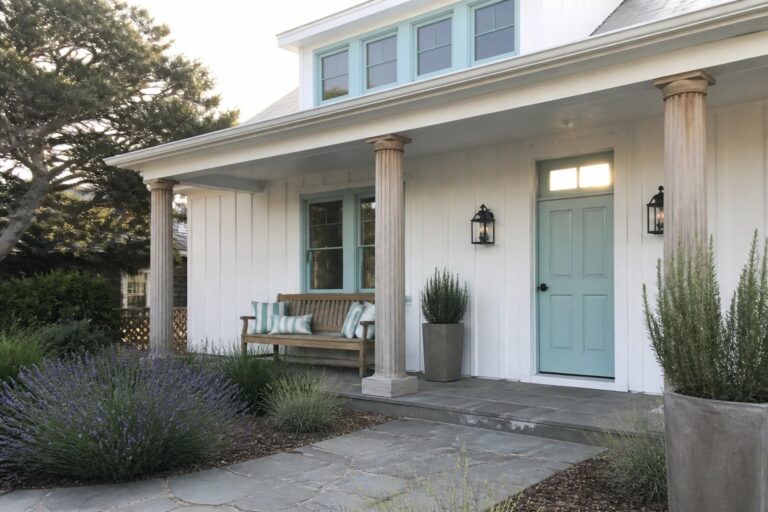
I keep noticing how board and batten siding takes on a different character once a light teal shade replaces the usual gray or white.
The color softens the vertical lines without making the whole facade feel busy, especially when the white trim keeps the edges clean against the roof and foundation.
Over time I have learned that this pairing can shift how a house sits on its lot, sometimes making the entry feel more welcoming from the street than the plans suggested.
The real test comes when you see how the teal reacts to morning light versus late afternoon shade on an actual wall.
A sample board helps more than any swatch.
Light Teal Doors With White Board And Batten
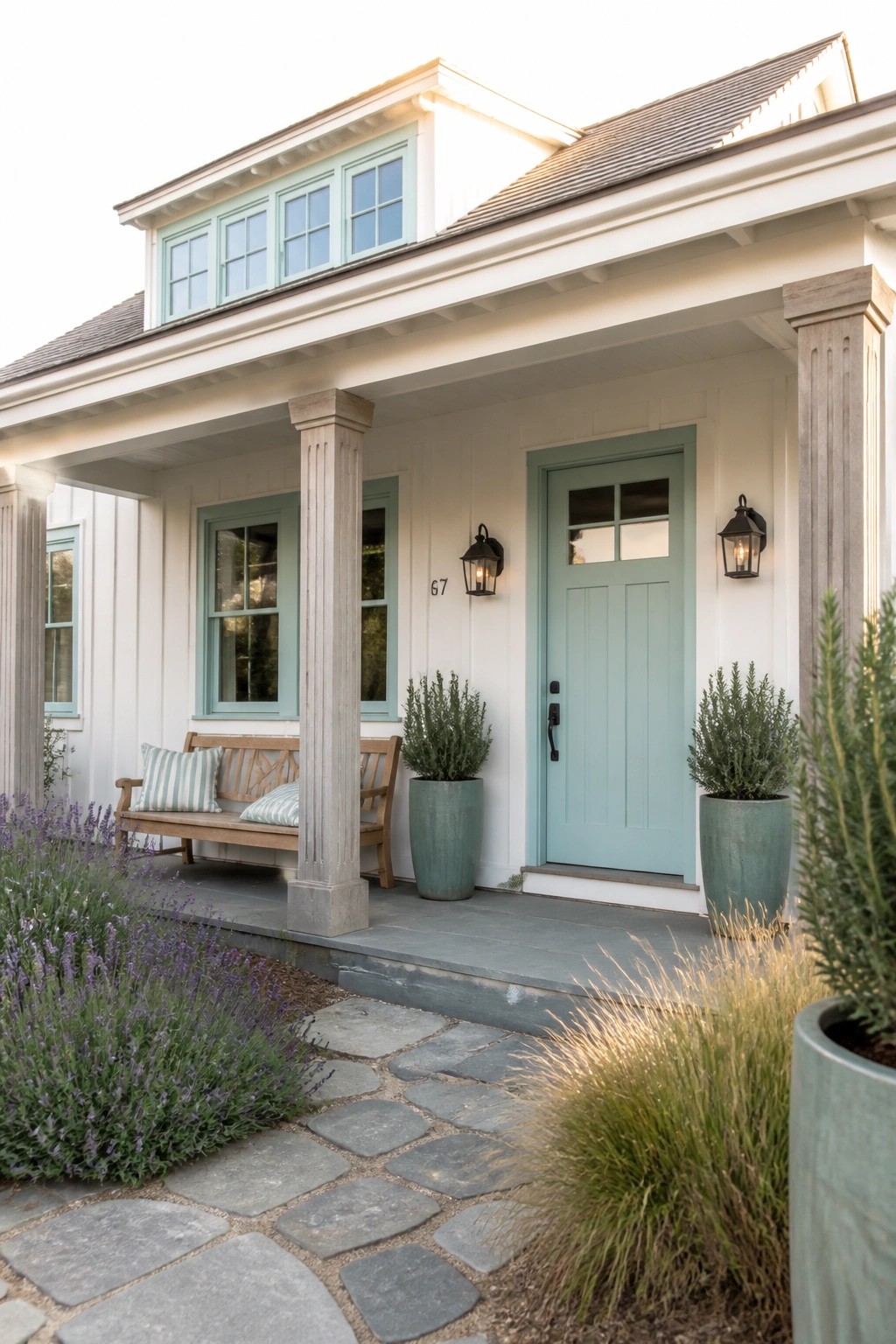
A light teal door and matching trim can give a white board and batten house a quiet bit of color without taking over the whole look. The contrast keeps the siding bright while the soft teal makes the entry feel a little more friendly and distinct.
This approach works best on simpler homes where the roofline stays clean and the porch stays modest. Stick with a muted teal tone and pair it with dark hardware so the color reads calm instead of loud.
Light Teal Garage Doors Against White Board-and-Batten Siding
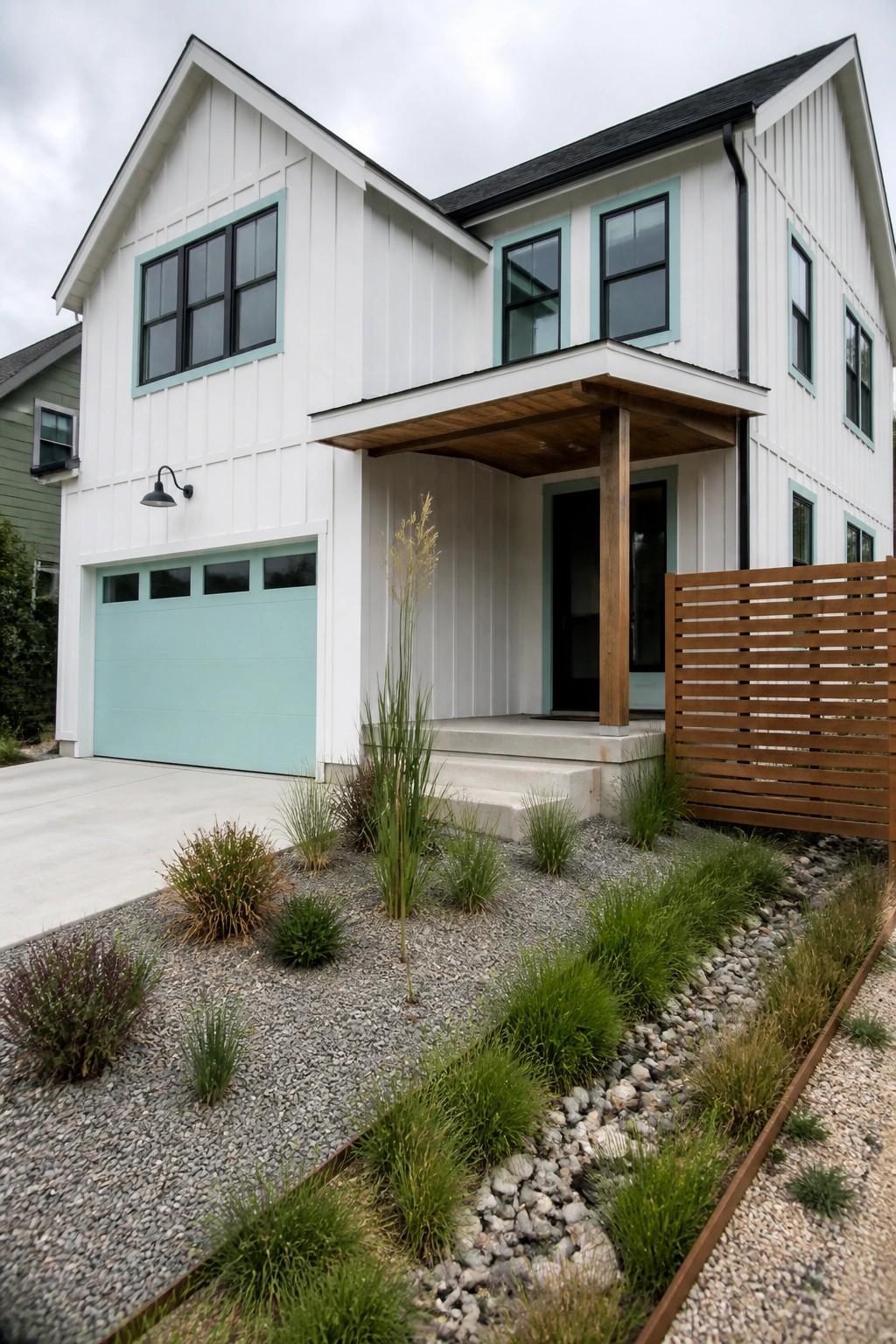
Light teal works well as an accent color on white board and batten because it adds a soft pop without overpowering the clean lines of the siding. The color feels fresh on a simple facade and pairs naturally with wood details like porch posts or overhangs.
This approach suits homes with straightforward shapes and larger flat surfaces such as garage doors. Keep the teal limited to trim, doors, or window frames so the white siding stays the main focus. Too many teal elements can start to feel busy.
Light Teal On The Porch Ceiling And Posts
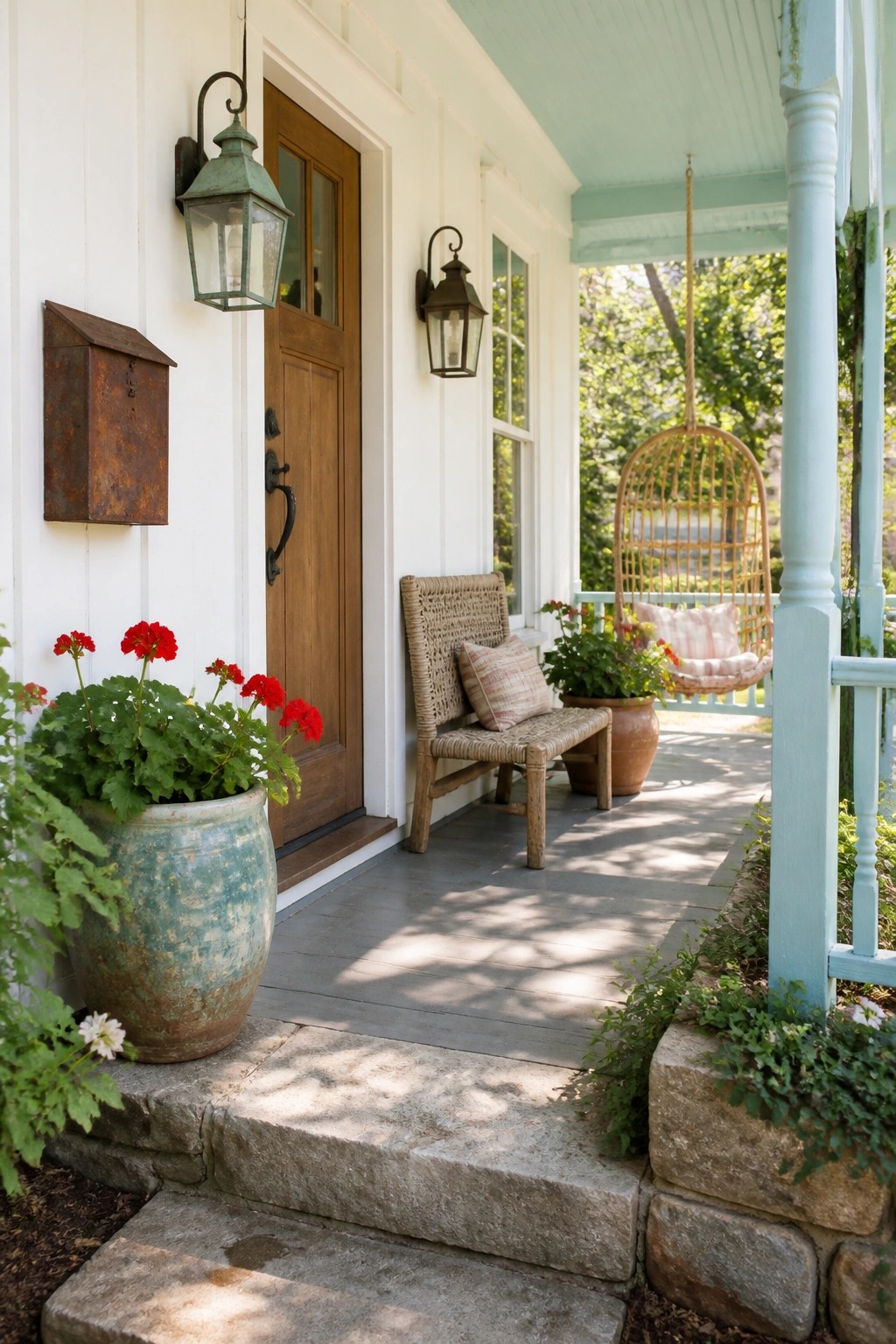
Light teal works nicely on the porch ceiling and posts when the rest of the house stays white. The color adds a soft lift without fighting the board and batten siding or making the entry feel busy.
This approach suits homes that already have a simple white exterior and just need one small change to feel current. Keep the teal limited to the ceiling and a few trim pieces so it stays easy to repaint later if tastes shift.
Light Teal Trim on White Siding
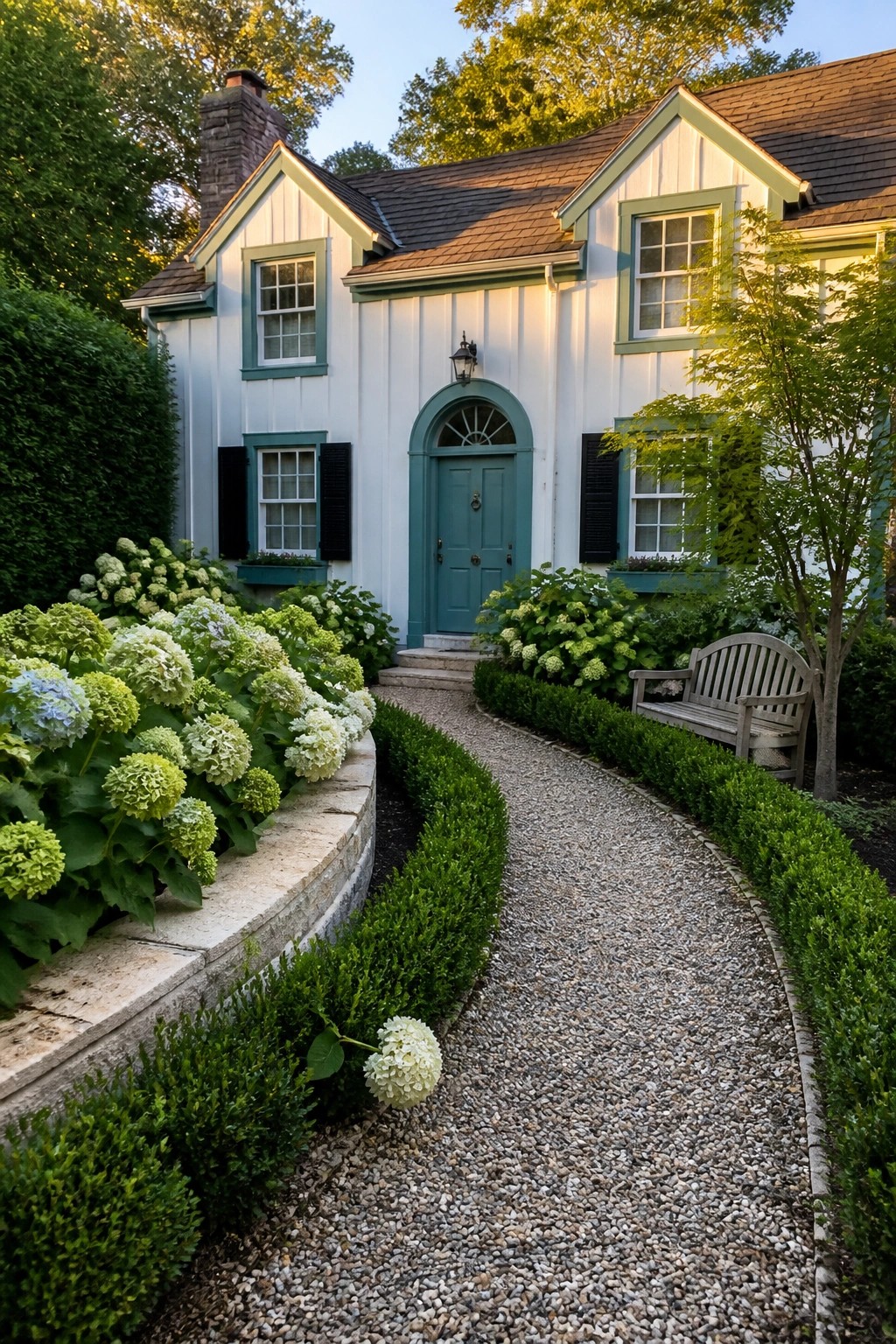
Light teal trim and a matching front door give white board-and-batten siding a clean lift that still feels approachable. The color adds just enough contrast to keep the exterior from looking flat while staying soft enough to work with most roof colors and stone details.
This approach suits smaller homes or cottages that need a bit more personality at the entry. Start with the door and window frames if you want to keep the change simple, and test the teal in natural light first since the shade can shift depending on the time of day.
Matching the Pergola to the House Color
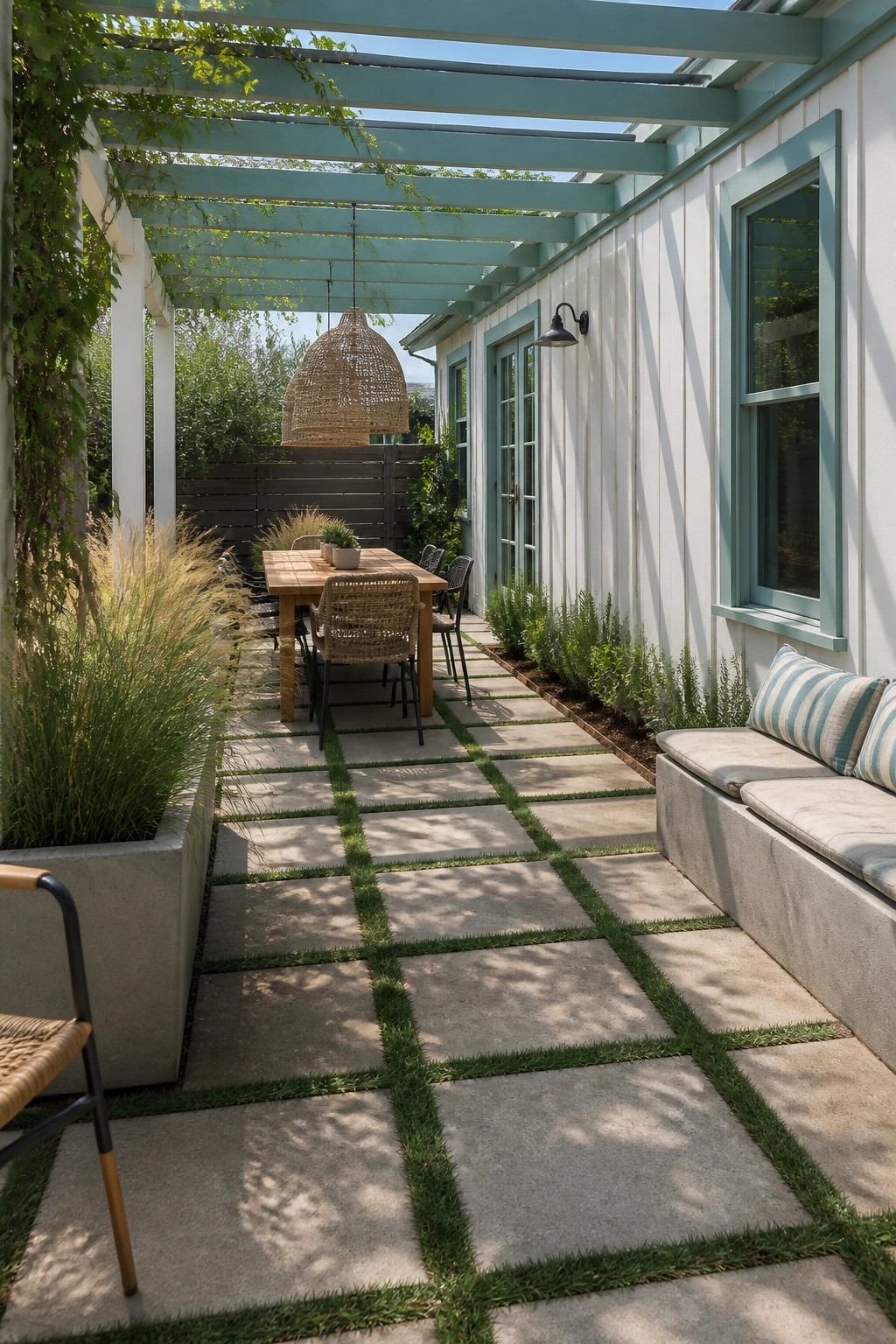
Painting the pergola the same light teal as the trim pulls the whole patio into the look of the house instead of leaving it as a separate add-on. The color connection makes the outdoor area feel more intentional and tied to the main structure.
This approach works best on homes with simple white siding where the teal can stand out cleanly. Keep the structure fairly open so it still feels light, and test the shade on a sample board first since teal can shift a lot in different light.
Light Teal Eaves and Brackets on a White Exterior
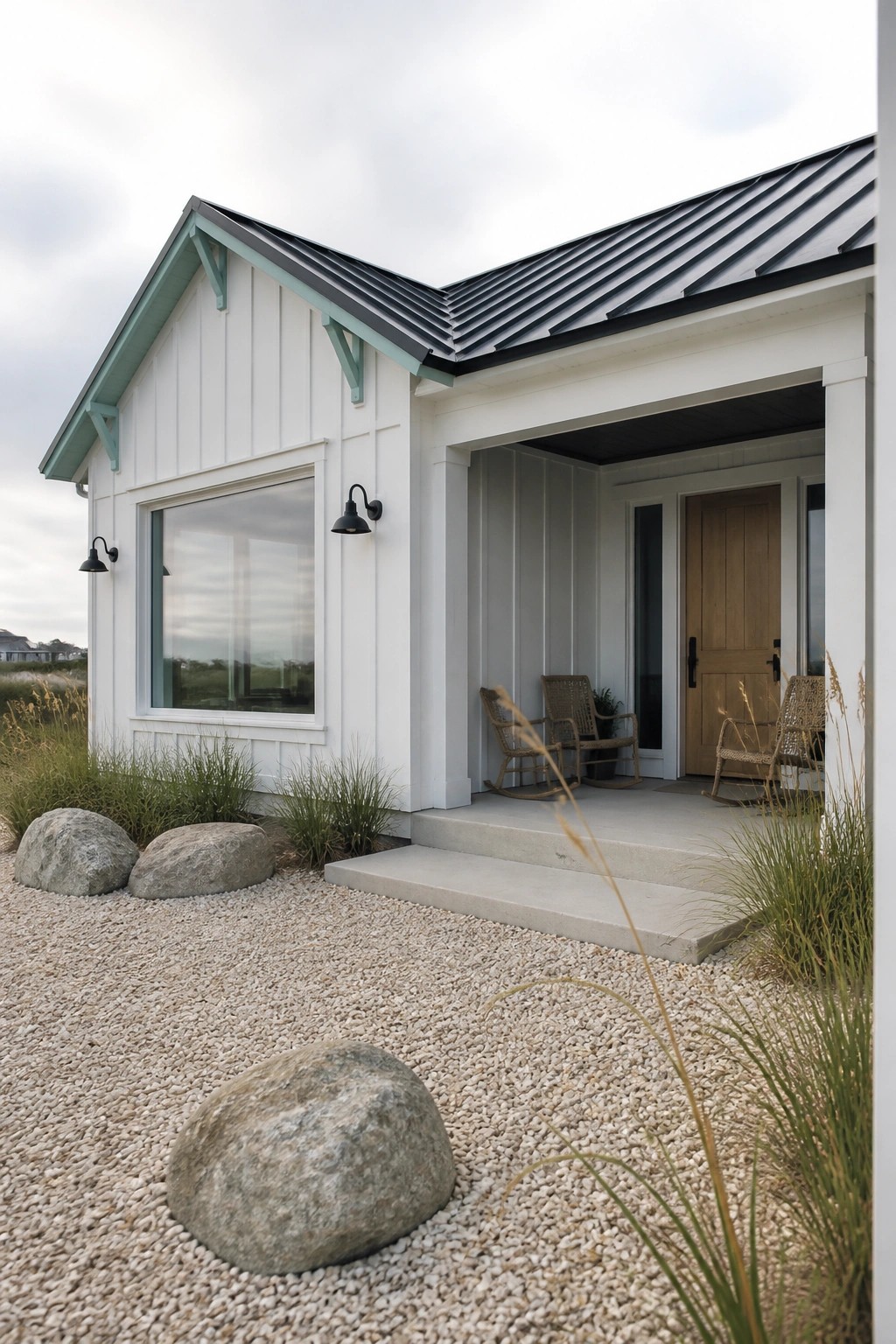
Light teal works well as an accent color because it adds a soft touch without overpowering the white siding. The color shows up nicely on the eaves and brackets, giving the house a bit of personality while still feeling clean and simple.
This approach suits smaller homes or cottages near the coast. Keep the teal limited to the trim details and let a dark roof handle the contrast. It stays easy to maintain and does not require a full repaint if you want to change the look later.
Light Teal Columns and Entry Details on White Siding
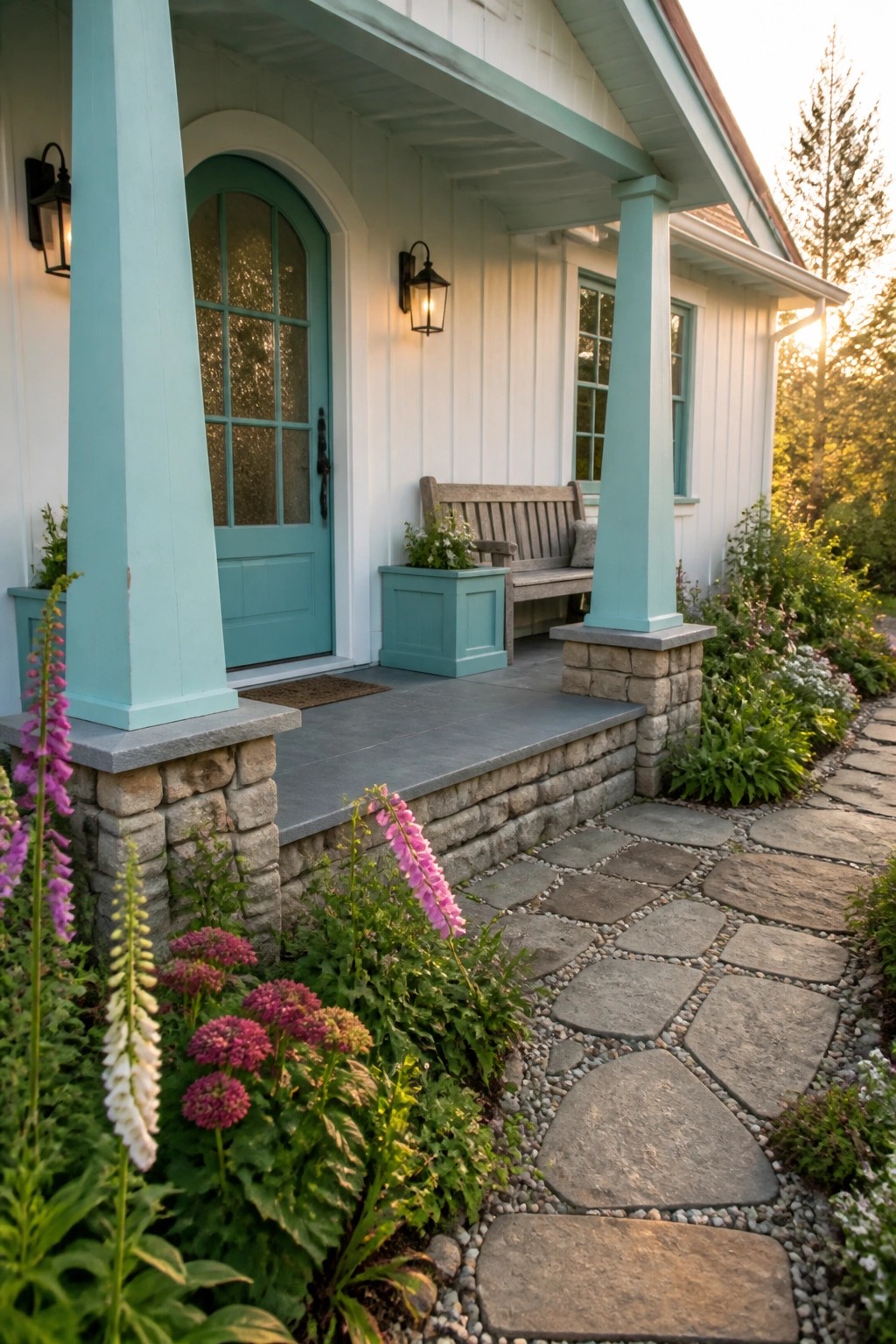
Light teal stands out nicely on a white exterior when it is limited to just a few spots. Using it on columns, the front door, and small trim pieces gives the house a clear focal point without covering the whole facade.
This works best on homes with simple lines and a front porch. Stick to one or two shades of teal and let the white siding do most of the work so the color feels fresh rather than busy.
Light Teal Doors And Shutters
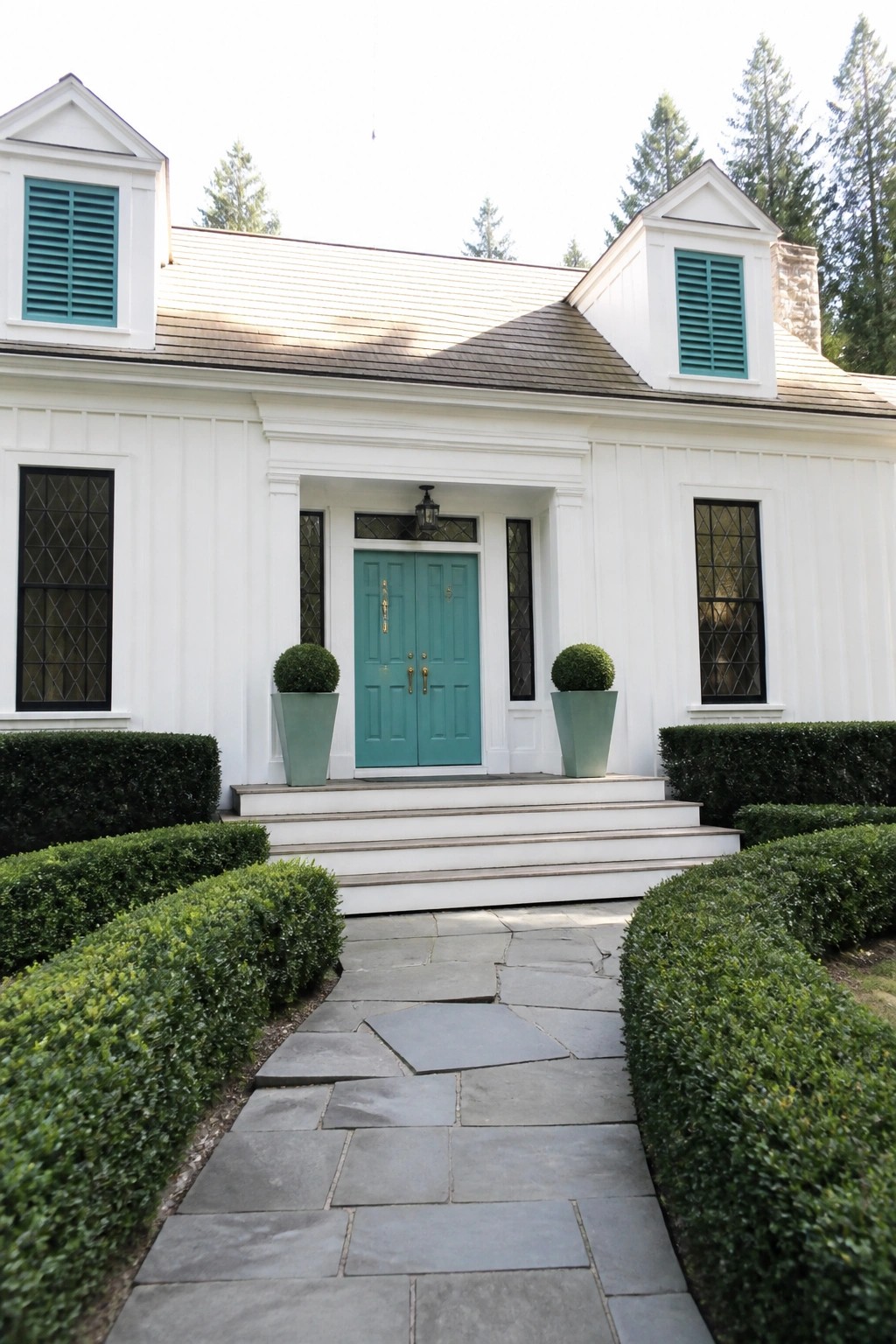
Light teal doors and shutters stand out well against white board and batten siding. The soft color adds a clean accent without overpowering the simple lines of the house.
This approach works best on homes with straightforward roof shapes and gable ends. Keep other trim and hardware minimal so the teal stays the main point of interest.
Light Teal Pergola for a Coordinated Outdoor Seating Area
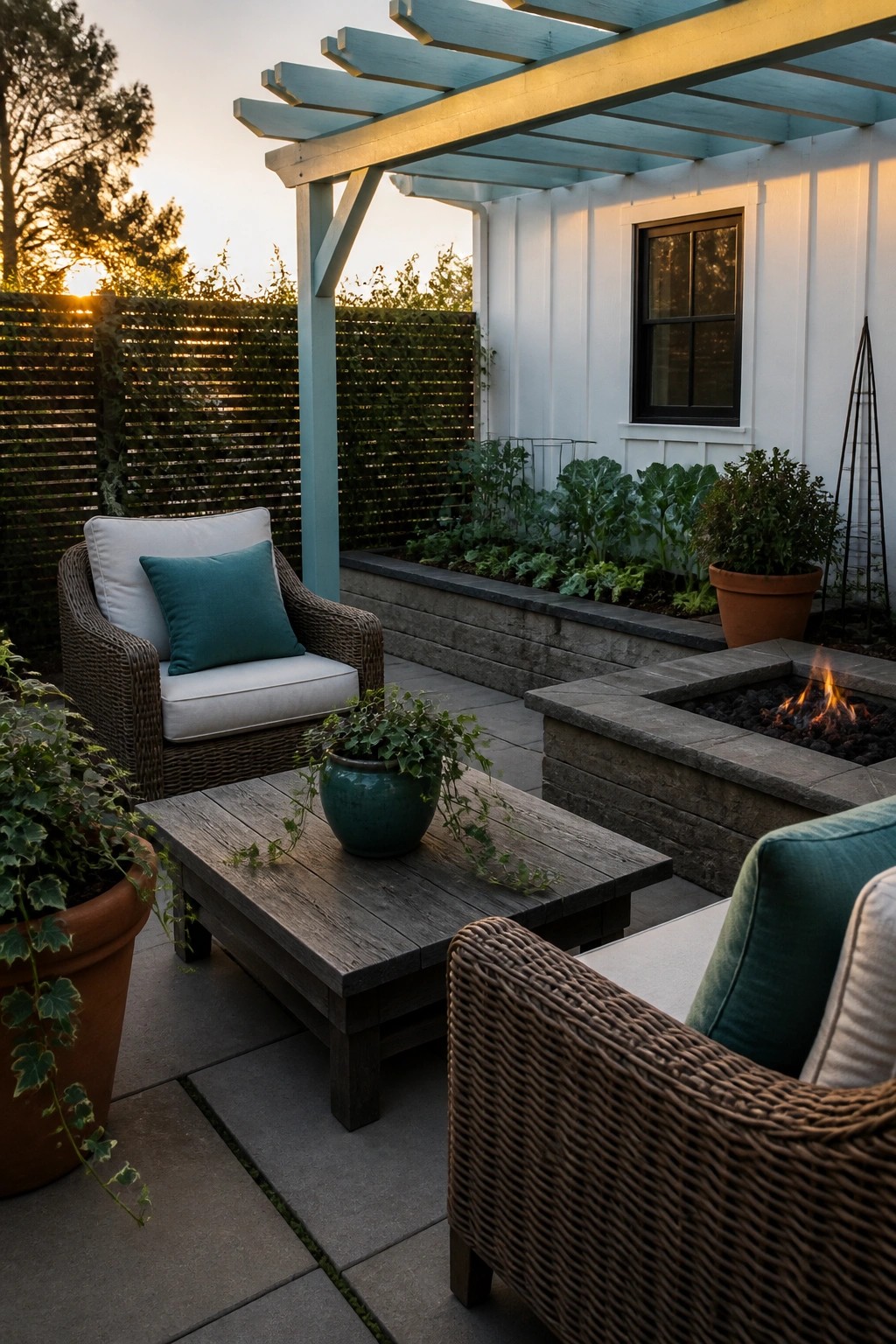
A light teal pergola adds just enough color to an outdoor space without competing with white board and batten siding. It creates a defined seating area while keeping the overall look simple and connected to the house.
This works best on patios that need a bit of shade and structure. Keep the wood tone on tables and fences neutral so the teal stays as the main accent.
Light Teal Front Door as a Focal Point on White Siding
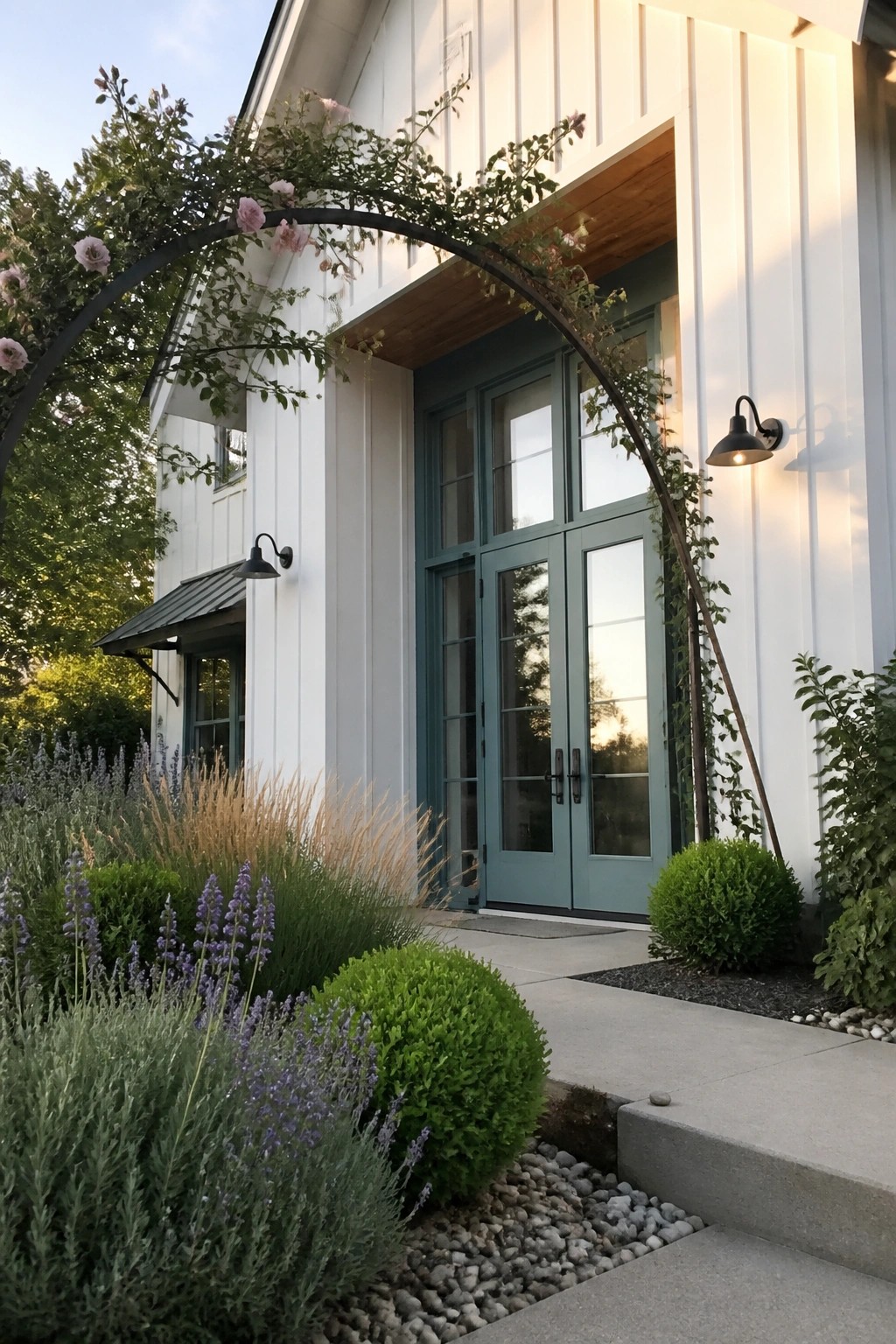
Light teal doors stand out nicely against white board-and-batten because the color stays soft while still creating contrast. It keeps the whole front looking clean and simple instead of too plain.
This approach works well on homes with straight vertical siding and a centered entry. Keep the rest of the trim white and let the doors carry the color so the look stays balanced.
Add a Porch Swing for Simple Outdoor Seating
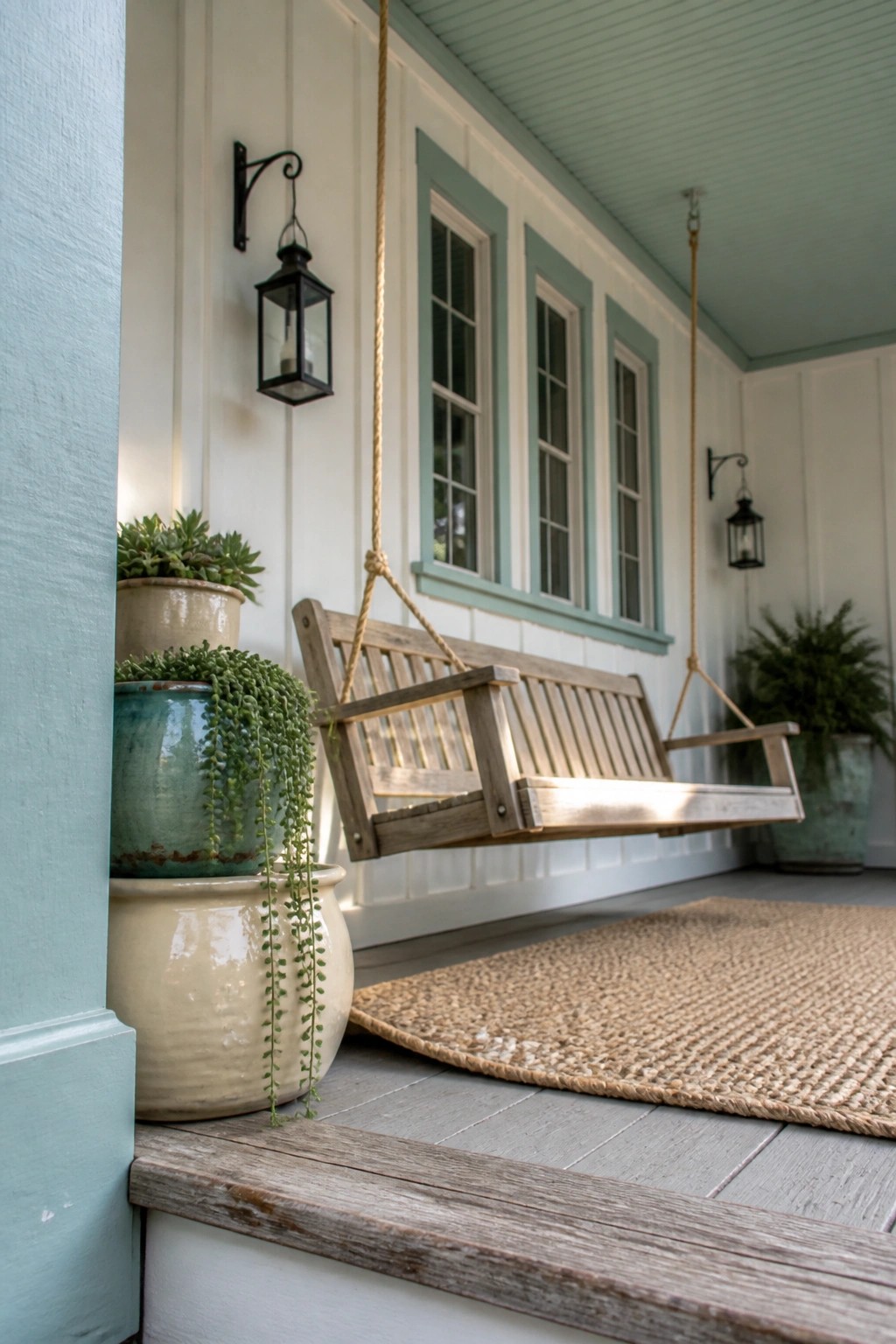
A porch swing gives you an easy place to sit outside without needing a full set of furniture. It fits well with light teal board-and-batten siding because the natural wood brings a bit of warmth to the soft color and keeps the whole front looking relaxed rather than too formal.
Hang the swing from sturdy joists or a solid beam and leave enough room for it to move freely. This works best on homes that already have a covered porch, since the shade helps the wood last longer and makes the spot more comfortable in warmer months.
Light Teal Shutters With a Coordinated Front Entry
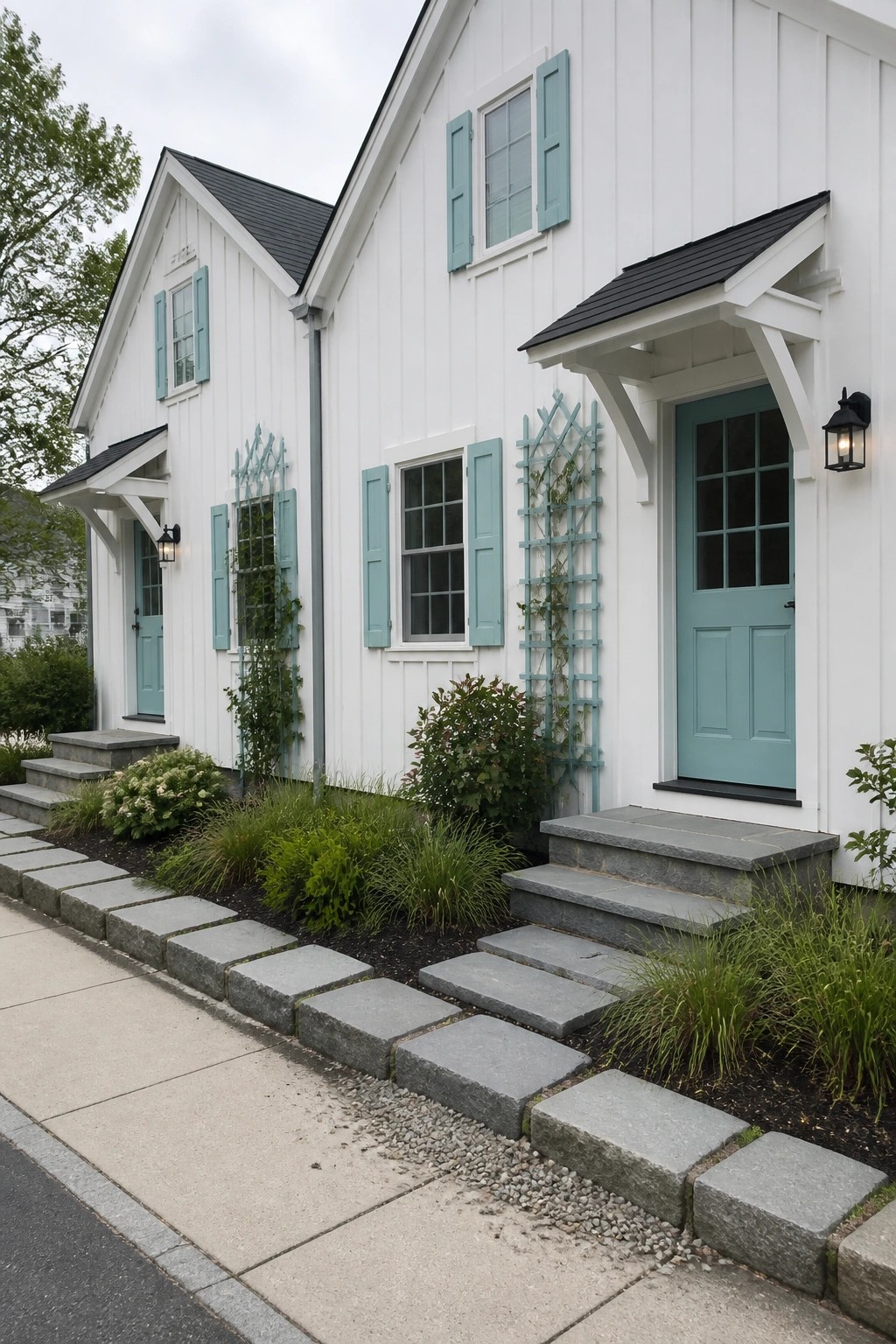
Light teal works nicely as an accent color on white board and batten because it adds just enough color without taking over the look. The shade feels fresh next to the white siding and helps the front door stand out in a simple way.
This works best on homes with a straightforward shape where the siding already does most of the visual work. Keep other trim white and pair it with a dark roof or stone steps if you want a bit more contrast.
Light Teal Garage and Porch Details on White Board-and-Batten
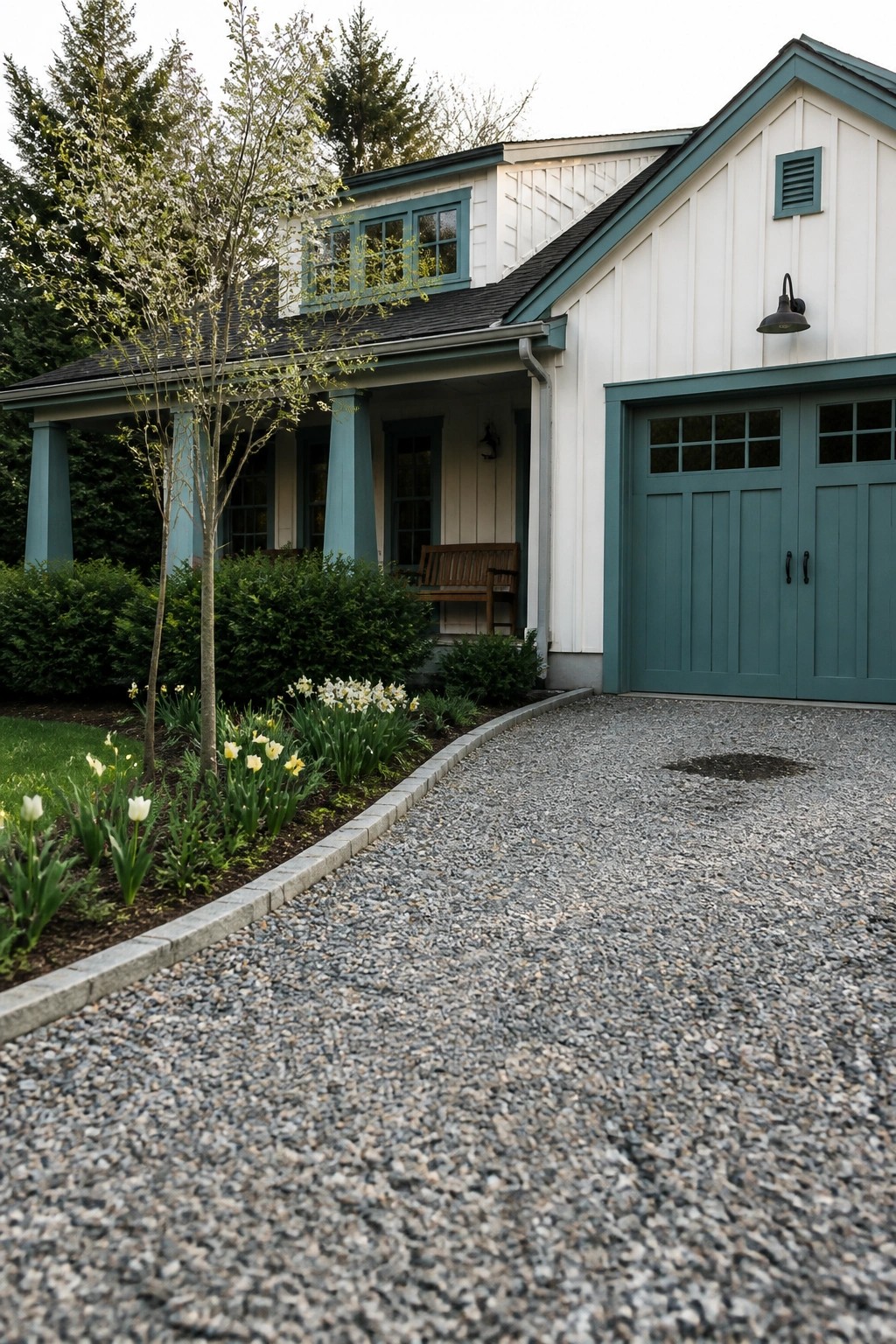
Many people like using a soft teal on the trim and doors when the main siding is white board and batten. It gives the house a bit of color without making it feel too bold or heavy.
This works best on homes that already have a clean shape and a simple porch. Keep the teal to just a few spots like columns and the garage so the white siding stays the main focus.
Light Teal Front Door and Shutters for a Welcoming Cottage Exterior
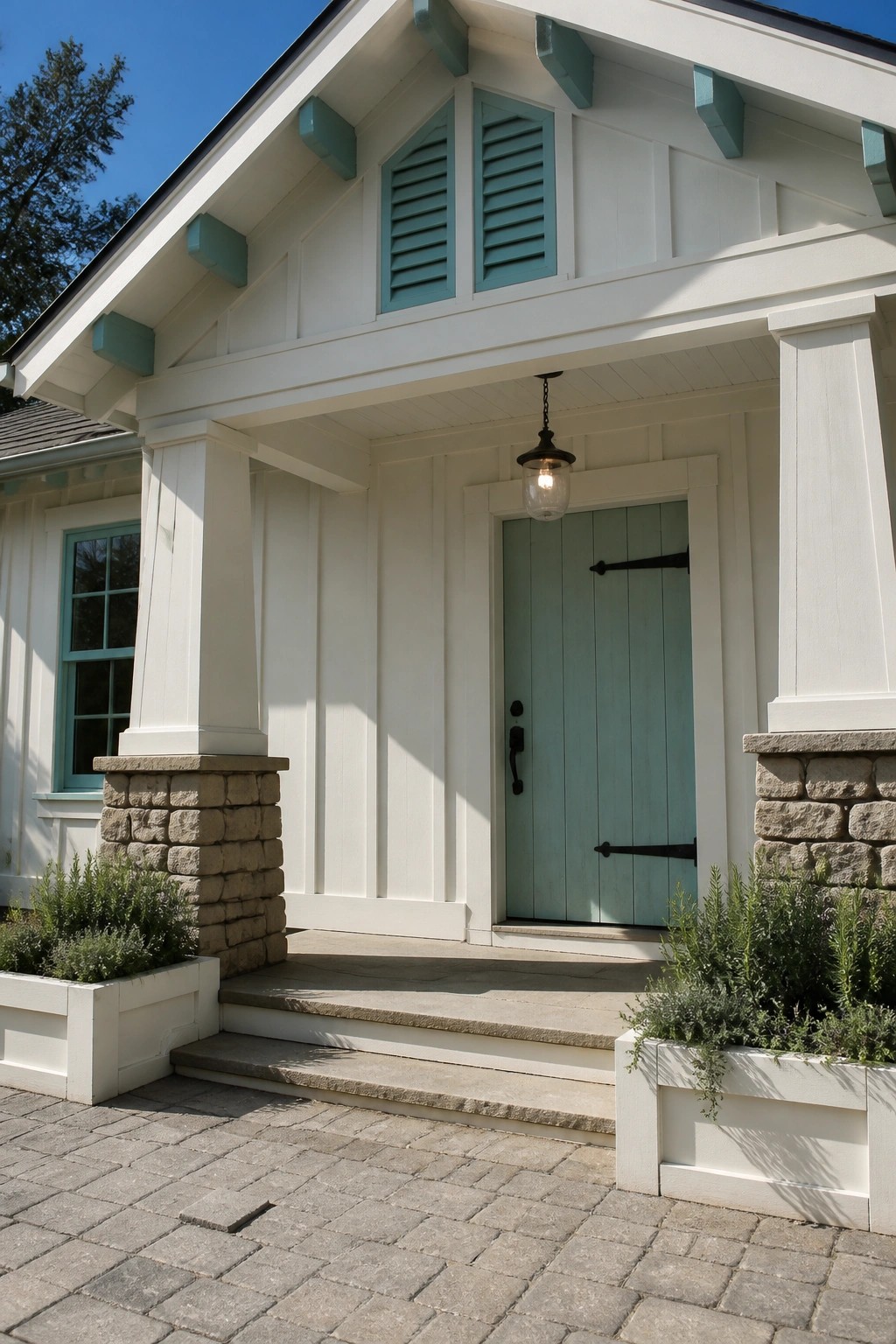
Light teal doors and shutters stand out nicely against white board-and-batten siding. The color adds just enough contrast without overpowering the clean look of the siding. Many people like this combination because it feels fresh while still staying simple.
This approach works well on smaller homes or cottages where you want the entry to feel welcoming. Try it on a front door first, then add matching shutters if the windows need a little more interest. Keep the rest of the trim white so the teal stays the main accent.
Light Teal Window Frames and Entry Accents on White Siding
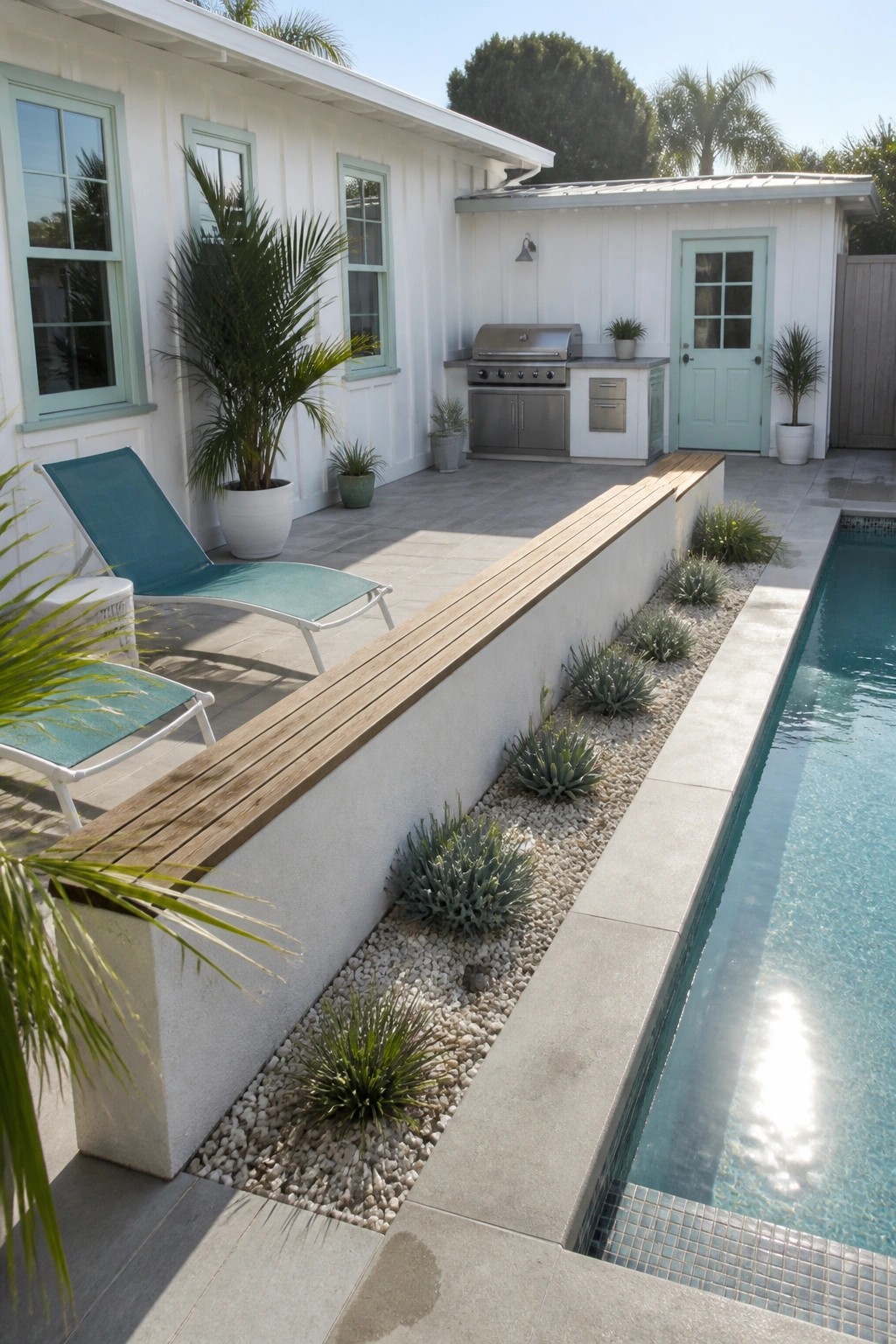
Light teal works well as an accent color because it adds a soft touch of color without overpowering the clean look of white board and batten. The contrast keeps the siding looking fresh while giving the house a bit of personality that feels easy to live with.
This color choice suits homes that already have simple lines and outdoor spaces that get used often. Start with the front door and window frames, then see if the same shade works on other trim. Too many teal elements can start to feel busy, so keep the rest of the exterior quiet.
Light Teal Porch Posts and Railings Against White Siding
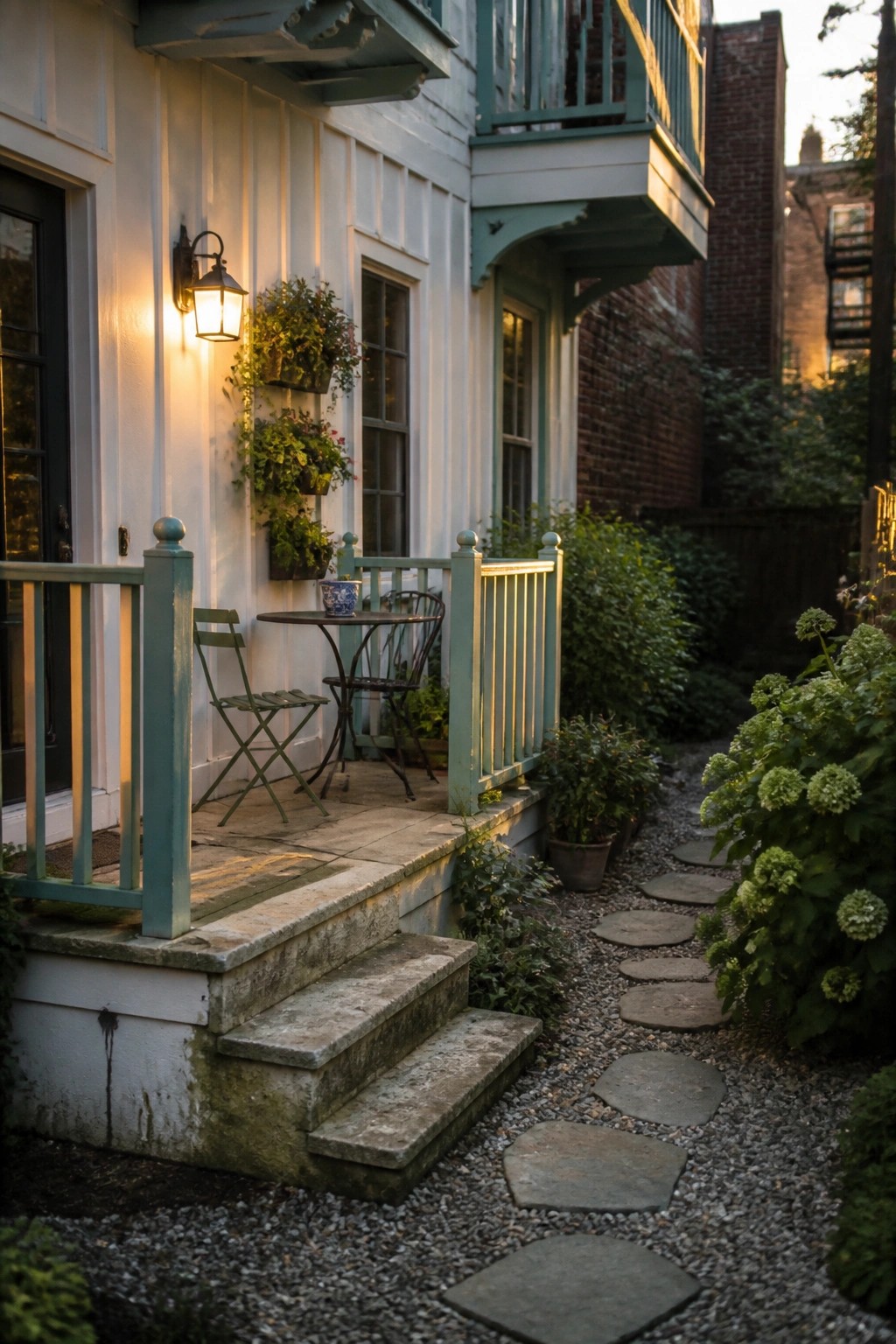
Light teal trim stands out nicely against white board and batten because it adds color without overpowering the clean lines of the siding. The soft shade feels fresh on older homes and helps the trim details like railings and window frames read as intentional accents rather than afterthoughts.
This approach works well on houses that already have simple siding and need a bit of personality at the entry. Keep the teal limited to trim, porch posts, and small accents so the white siding stays the main surface. Too much teal can start to feel busy, so test the color in different light before committing.
Light Teal Gates and Window Frames for Subtle Exterior Contrast
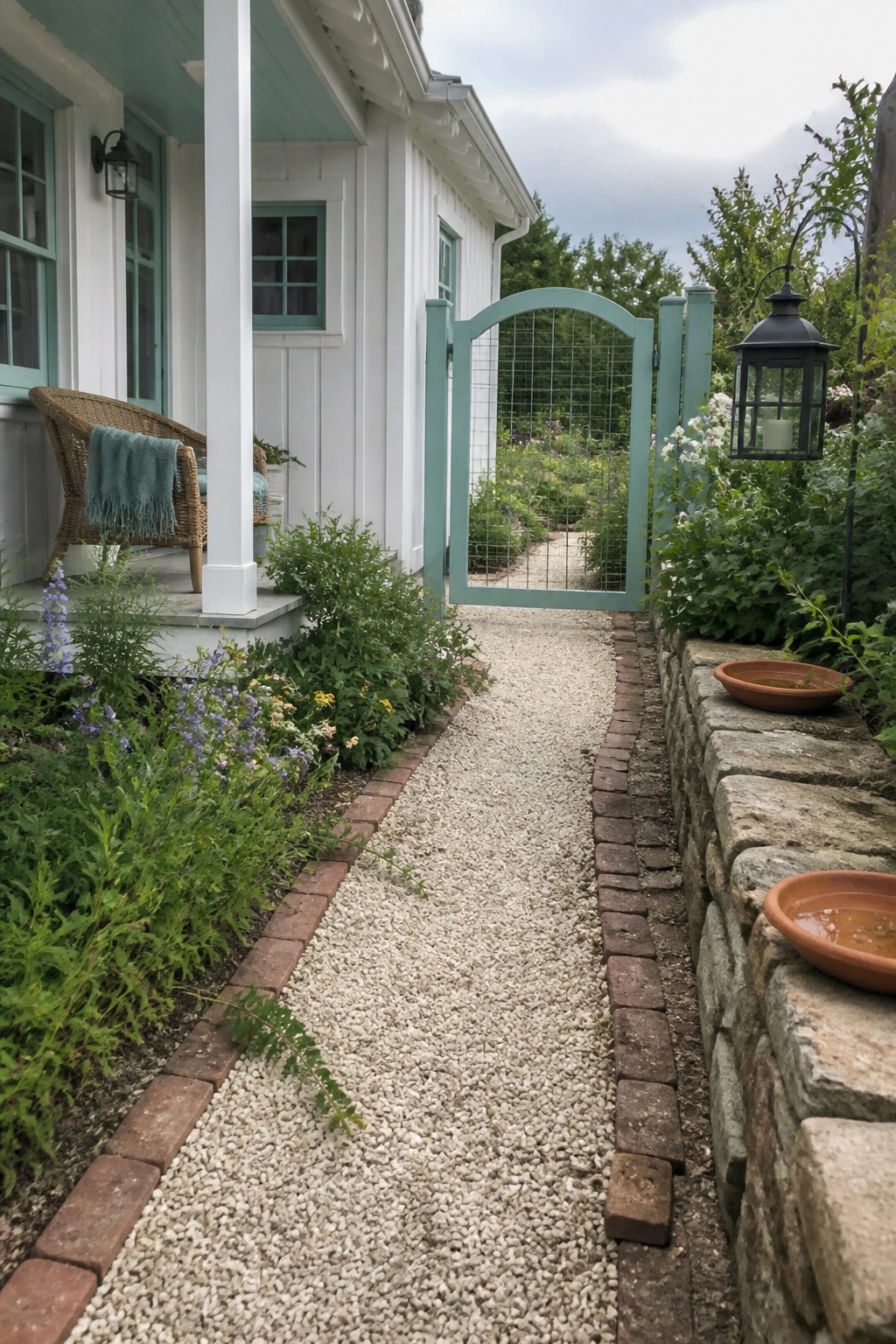
Light teal shows up nicely against white board and batten because it gives the exterior a soft color without taking over. The shade feels calm next to the green plants and still stands out on the trim and gate.
This works best on homes that already have clean siding lines. Keep the teal to smaller areas like gates or window frames so the white stays the main look. Test the color in morning and afternoon light first, since it can shift a bit outdoors.
Frequently Asked Questions
Q: How often should I wash the siding to keep the teal looking fresh? A: Hose down the boards every few months with plain water. A bit of mild soap clears any mildew spots without stripping the finish. This simple step keeps the color bright through seasons.
Q: What roof shade pairs best if I want the teal to pop? A: Go with a dark gray or charcoal roof. It grounds the light teal and lets the white siding stand out cleanly. Test samples on a cloudy day to see the real contrast.
Q: Can I try this on an older house that already has some trim details? A: Yes, just cover the existing trim with new batten strips. The white adds crisp lines that update the whole exterior fast. Focus on one wall first to check the scale.
Q: Does the white need extra coats in sunny spots? A: Two solid coats of exterior paint hold up well. Reapply every five years or so where sun hits hardest. That prevents yellowing without constant work.
