

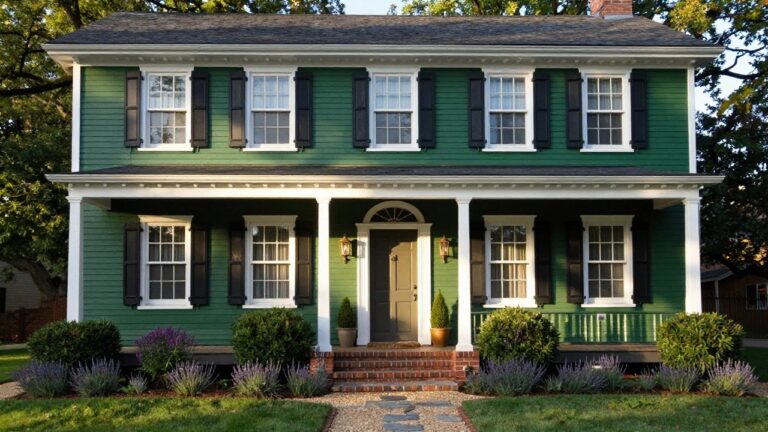
I drive past plenty of Colonial homes and see how the right shade of green can make the whole facade feel grounded and true to its roots. Those balanced proportions, from the pitched rooflines down to the centered entries, draw your eye in a way that flat paint jobs never do. In my experience updating an older place, picking materials like cedar shakes over vinyl really changes how the house reads up close. Curb appeal lives or dies on those details, like how shutters frame the windows without overwhelming the symmetry. A few of these stand out as keepers for adapting to modern lots.
Classic Colonial Green Facade
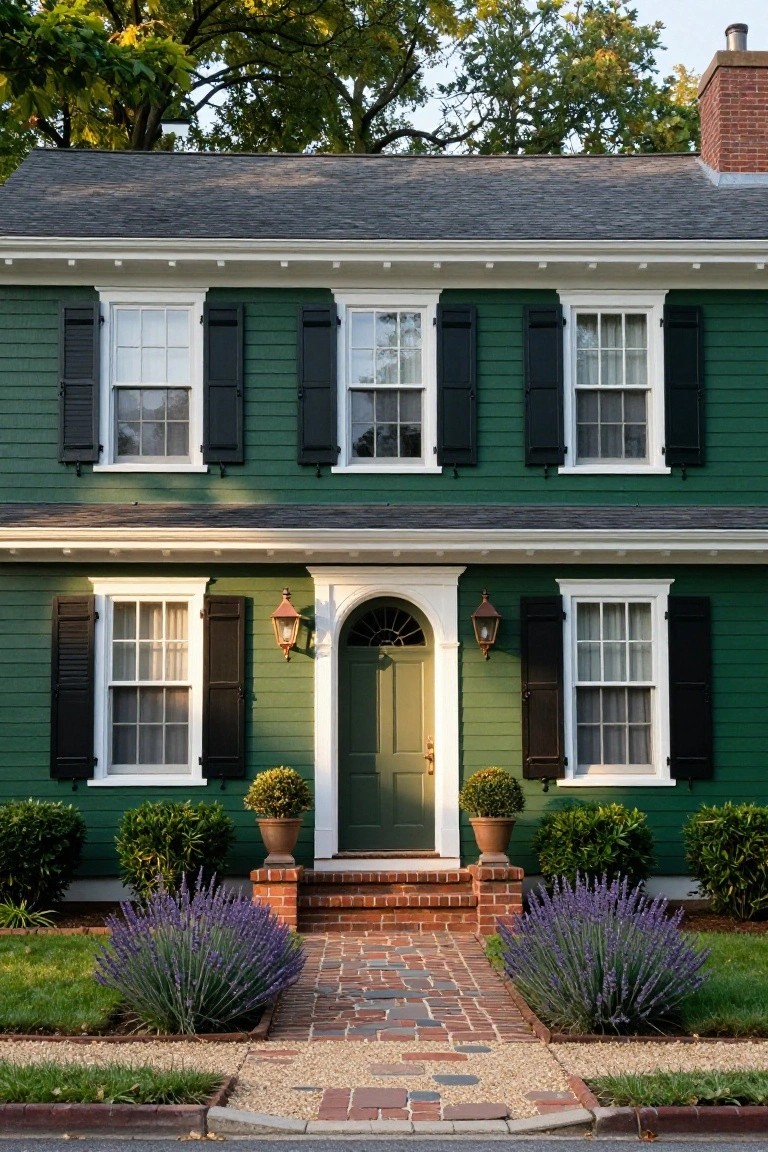
Hunter green siding gives this two-story colonial a strong, traditional feel that stands out without trying too hard. The color works well against the white trim around the windows and door, and those black shutters add just the right contrast. It pulls the whole front together in a way that looks settled and right at home in an older neighborhood.
You can pull this off on most clapboard-style houses facing east or south, where the green won’t fade fast. Frame the entry with simple plants like boxwoods, add lanterns for light, and use a brick path to guide people in. Skip busy details. It suits family homes that need curb appeal without big changes.
Colonial Green Portico Entry
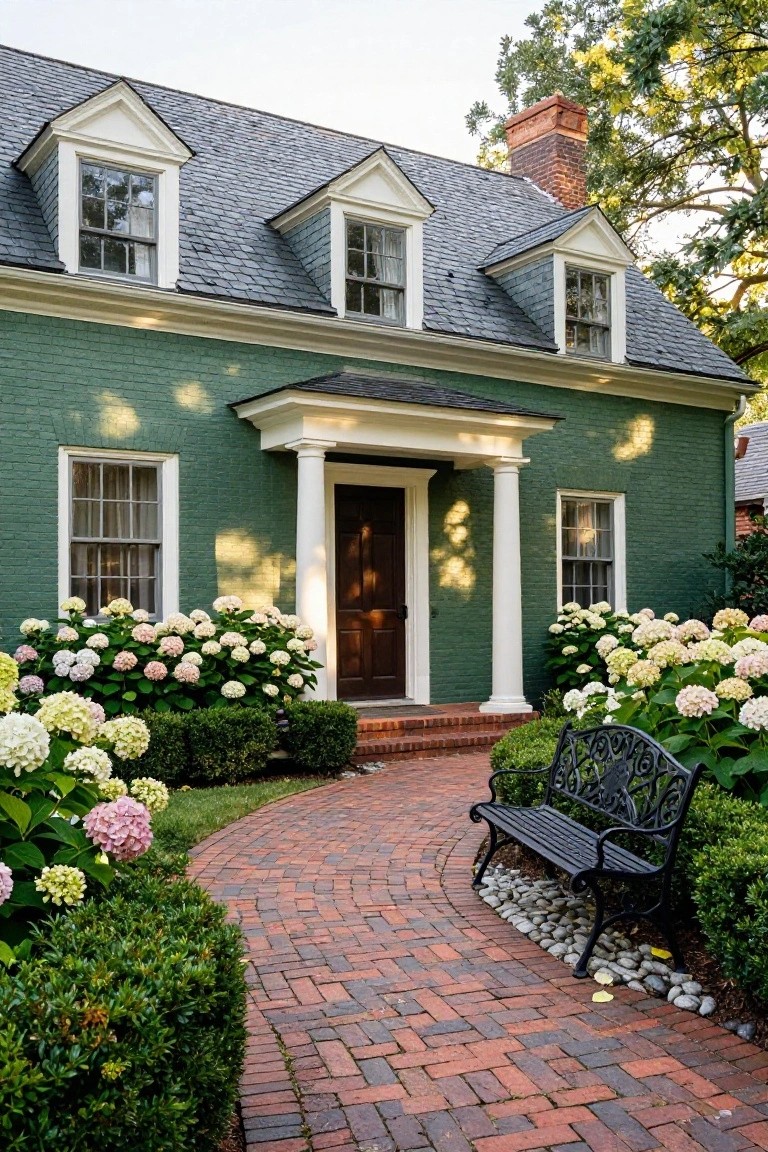
A simple portico with white columns works wonders on this green colonial house. It frames the front door just right, making the whole facade feel balanced and traditional. The green paint ties into the slate roof and dormers up top, while keeping things fresh.
This entry style suits older neighborhoods or revamped colonials best. Pair it with a brick path and some soft plants nearby, but don’t crowd the columns. Skip it on super modern lots, though. It pulls focus without much fuss.
Sage Green Siding on a Colonial Home
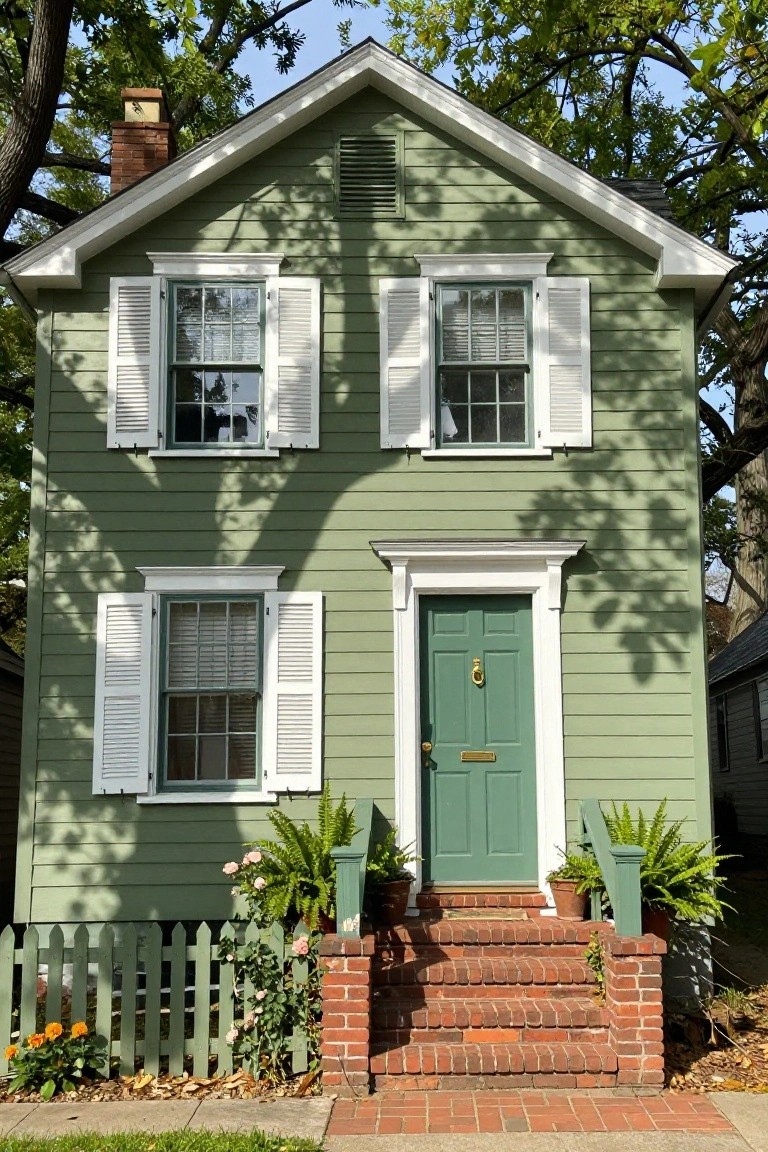
A soft sage green siding like this one keeps the colonial style feeling true to its roots while adding a bit of modern lightness. The color picks up on nature around it, especially with trees casting shadows, and the white trim on the windows and roofline makes everything crisp. White shutters help frame the windows nicely too.
This shade suits older homes with clapboard siding and gabled roofs best. Go for it if your house has good symmetry in the facade. Add a green door at the entry and a few plants along the steps to tie it together. Just stick to lighter greens so the house doesn’t feel too heavy.
Recommended Products

Install Vinyl Shutters Quick & Easy. Use Our Fasteners which are build to hold your shutters even during the most severe windstorms.

One Piece Injection Molded Polypropylene Construction

One Piece Injection Molded Polypropylene Construction
Green Colonial with a Welcoming Porch
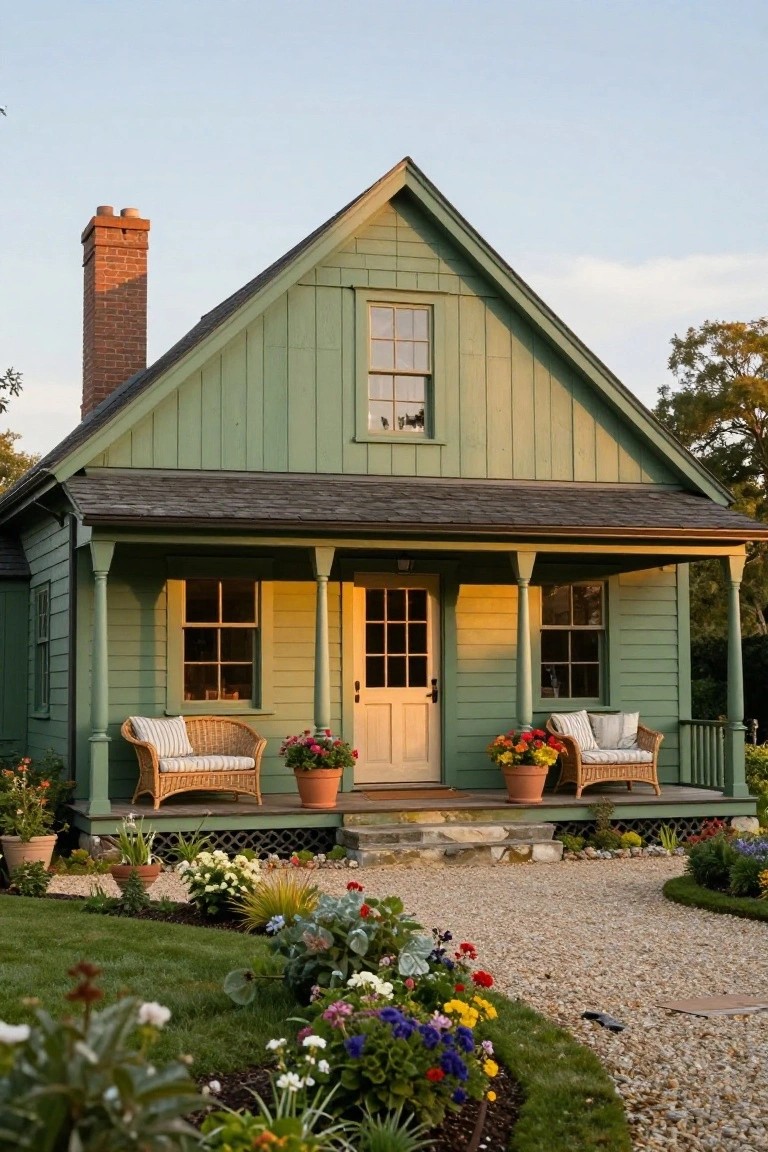
This green colonial house pulls you right up to the front with its deep covered porch. The sage tone on the clapboard siding feels right at home in a traditional setup, and those turned posts add just enough detail without overdoing it. Wicker chairs tucked there make the spot look lived-in and ready for company.
Put a porch like this on homes in older neighborhoods or rural spots where you want that everyday charm. Line up simple seating and a couple pots of flowers to keep the entry soft. It works best facing south or west so the shade helps in afternoons, but watch the railings don’t get too fancy or it’ll lose that straightforward feel.
Colonial Green House with Navy Door Entry
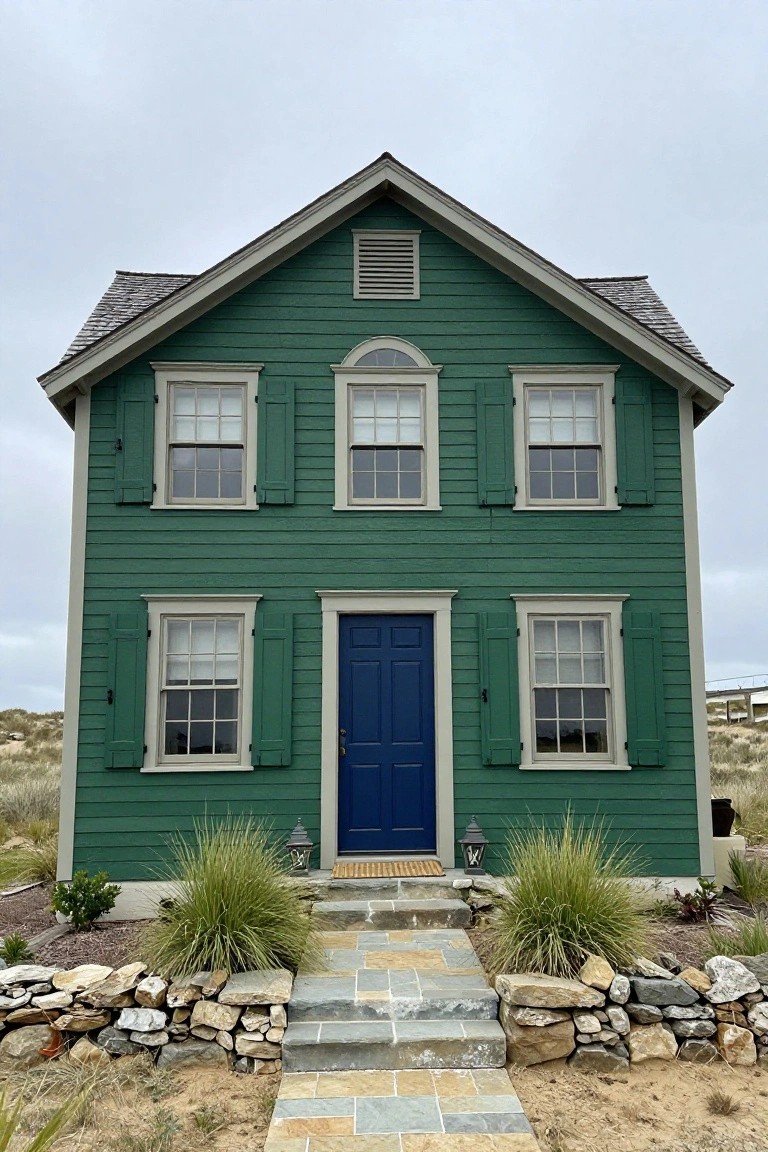
A classic Colonial house like this one uses deep green siding to nod to tradition while keeping things fresh and approachable. The navy blue door stands out as the perfect focal point. It draws attention to the entry without overwhelming the simple symmetry of the windows and shutters. That color combo feels right at home in a coastal spot.
You can pull this off on a compact two-story house, especially where the landscape is sandy and grassy. Pick a muted green paint for the clapboards and a true navy for the door to avoid anything too bright. Add lanterns on each side for evening light. It boosts curb appeal on older homes or beach cottages nicely.
Green Clapboard Siding on a Narrow Colonial
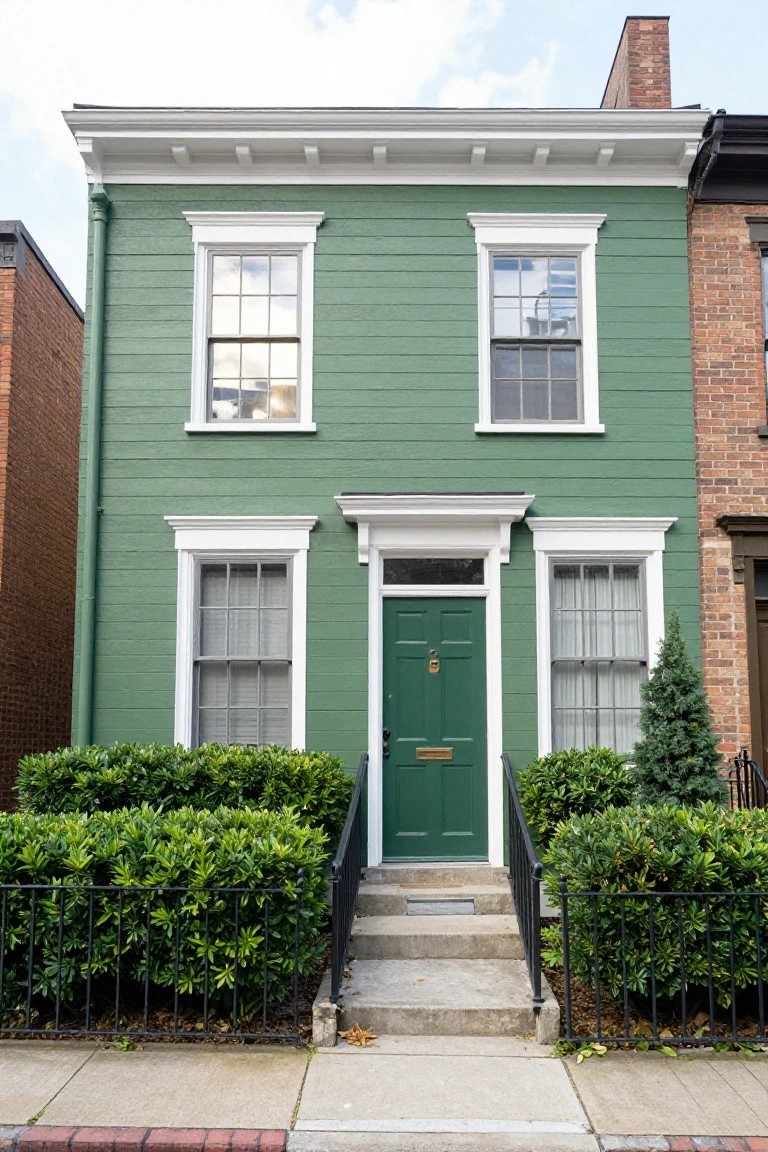
Green clapboard siding gives this classic two-story colonial a fresh yet traditional feel. The paint color picks up on historic shades used in older neighborhoods, while the white trim around the windows and door keeps everything sharp and clean. Symmetrical double-hung windows and a centered entry pull it all together without much fuss.
This setup works best on rowhouses or tight urban lots where you want standout curb appeal. Go for semi-gloss on the trim to handle weather better, and pair it with simple boxwoods out front. Skip busy details. It suits homes from the 1800s or fresh builds nodding to that era.
Soft Green Colonial Facade
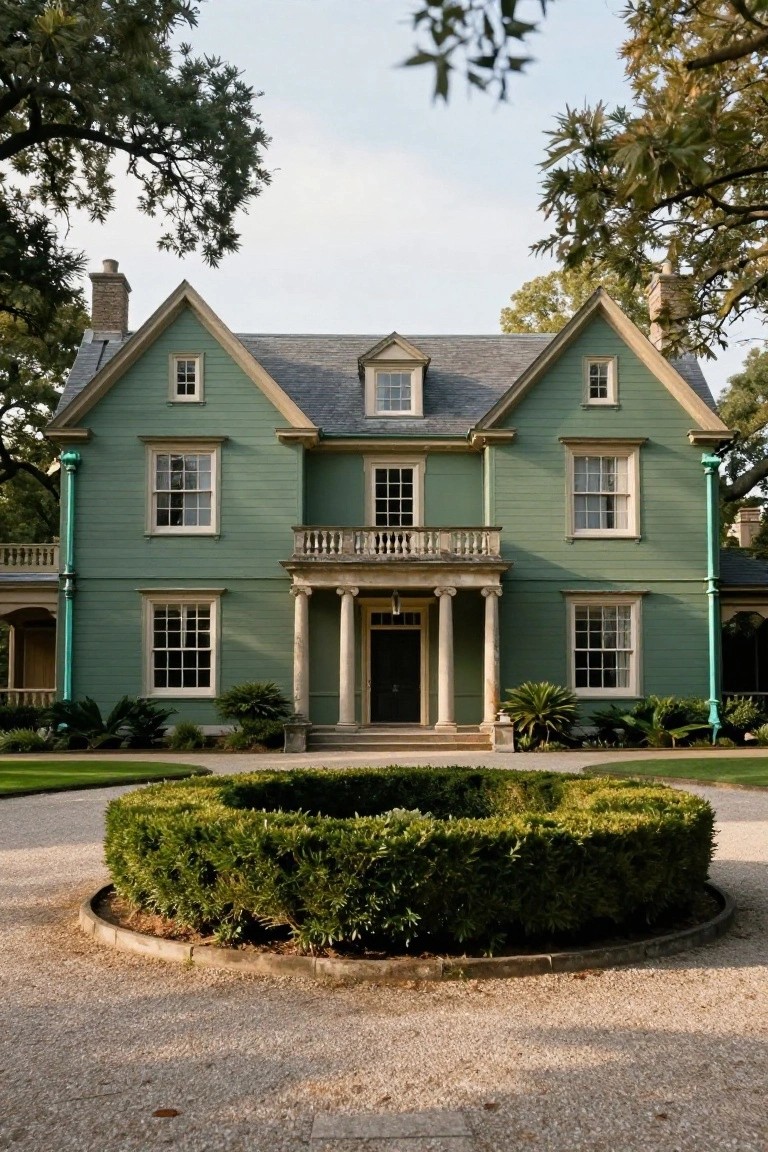
A pale green clapboard siding like this one fits right into traditional colonial homes. It softens the lines of the symmetric facade, with its gabled roof and evenly spaced windows, while the white trim around the portico keeps things crisp. That color pulls from nature around older houses in the South, making the place feel settled and real.
Try it on brick-based colonials or revivals where you want history without heavy upkeep. It suits milder spots with live oaks or palms nearby… just stick to one shade across the whole front and use simple hedges for the drive. Darker greens can weigh it down.
Sage Green Cottage Porch
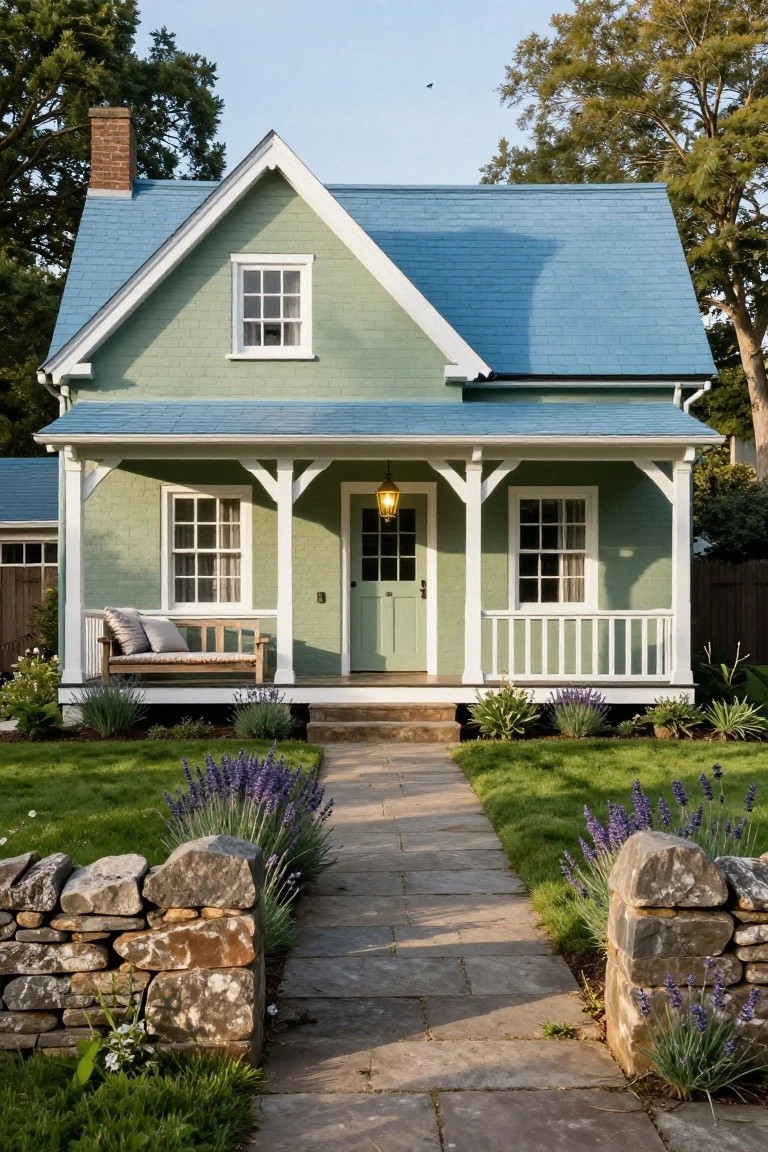
A simple wooden bench tucked against the porch railing turns this sage green house into something extra welcoming. The soft green siding and white trim already give it that classic colonial feel, but the bench adds a spot to sit and enjoy the yard. It’s casual, not fussy.
Try this on smaller homes where you want porch space to feel lived-in without crowding it. Pair the bench with pillows for comfort, and keep plantings like lavender nearby to soften the edges. Works best on homes with good southern light, but watch for weatherproofing the wood.
White Columns on a Green Porch
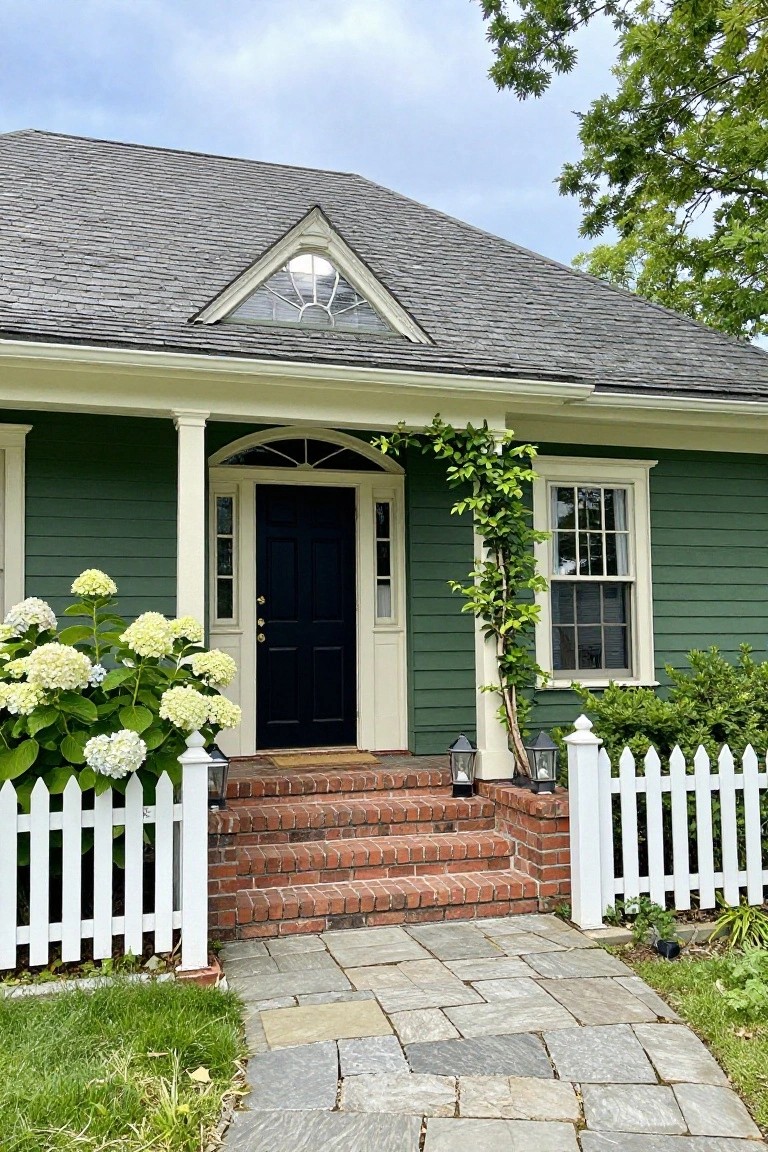
A front porch like this one pulls together the whole Colonial look on a green house. Tall white columns support the roofline, framing the black door and its arched window up top. That setup makes the entry feel open and traditional without much effort. The green siding gets a clean lift from all the white trim too.
You see this kind of porch on older homes in the Northeast a lot. It suits shingle or clapboard siding painted green. Add brick steps up to it and some lanterns for evenings. Skip fussy details. Just keep the contrast sharp and the scale right for your house size.
Classic Front Porch Rocking Chairs
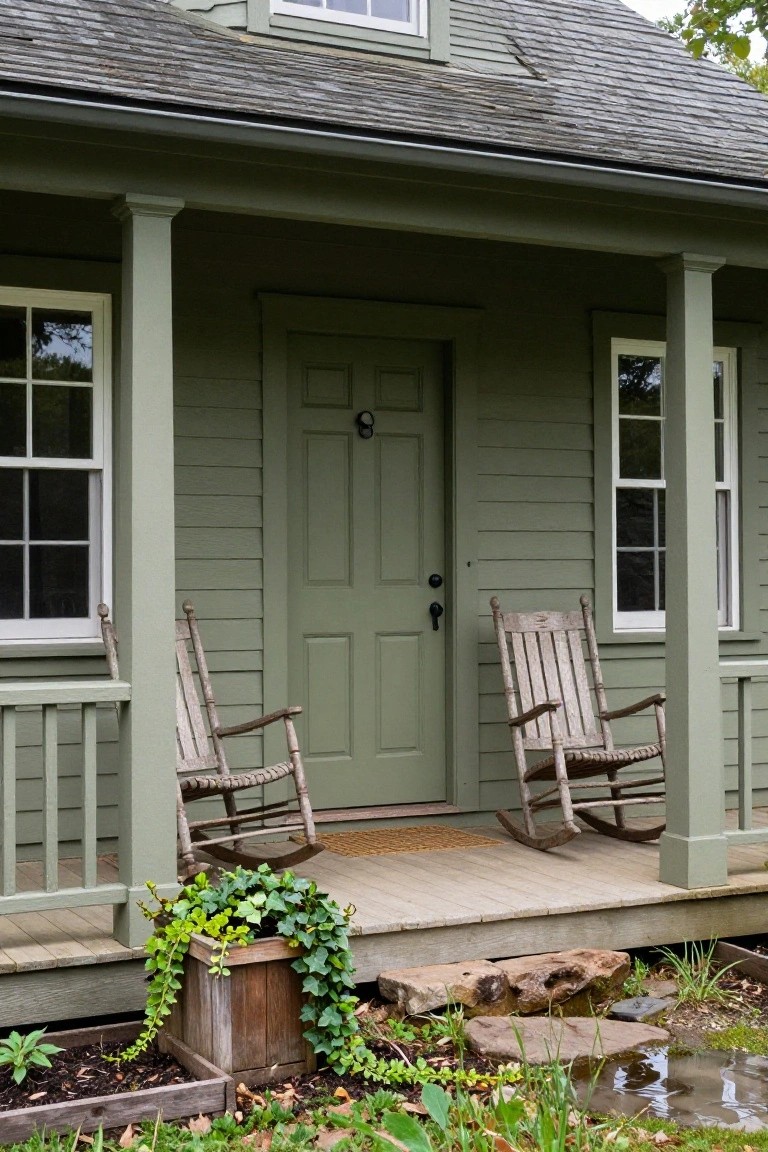
Nothing says traditional colonial quite like a pair of old rocking chairs on the front porch. They sit there easy and worn, right by the green door, making the whole facade feel lived-in and welcoming. That simple setup pulls folks back to simpler times without trying too hard.
Put them on your own porch if you have a covered spot facing the street. They work best on homes with clapboard siding or wood columns, like this one. Skip fancy cushions, just let the wood weather naturally. Keeps the look honest for everyday family houses.
Green Shingle Siding with White Trim
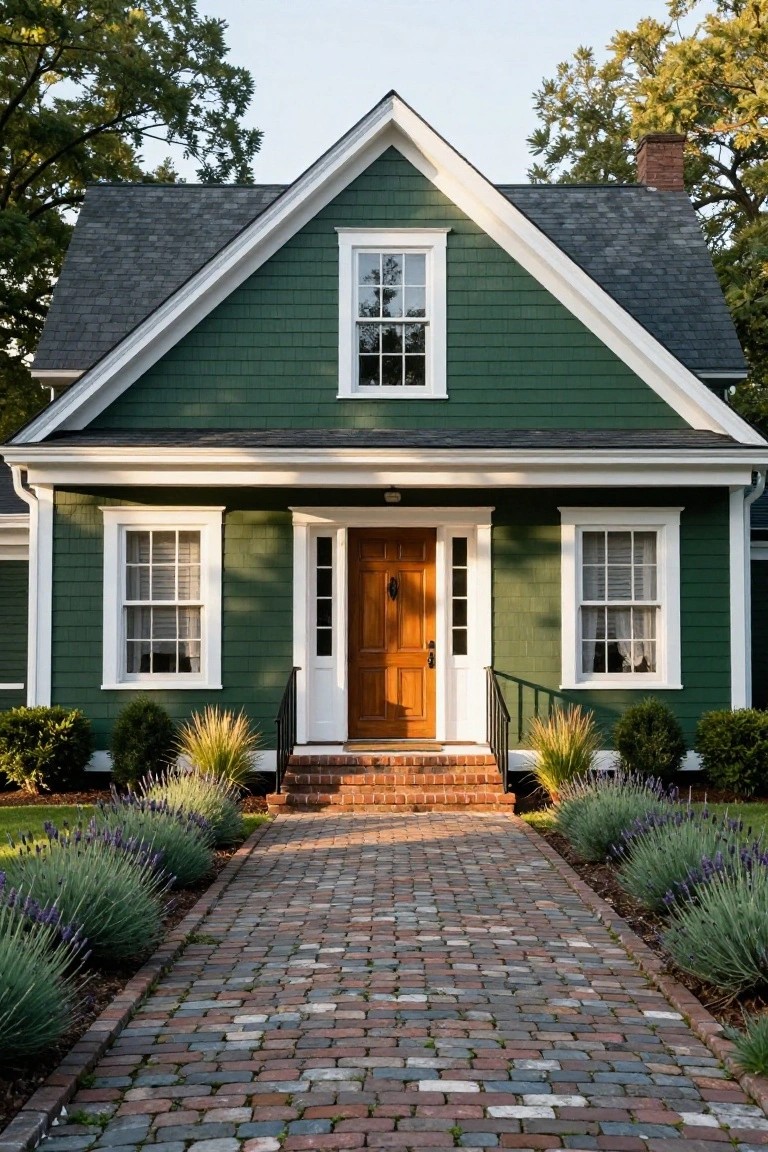
Green shingle siding in a deep colonial shade pairs up nicely with crisp white trim around the windows and roofline. That texture from the shingles gives the house some character without being too busy. It keeps things traditional yet clean, especially on a gable-front style like this.
Try it on compact homes where you want that classic East Coast look. A wood door and brick steps add just enough warmth at the entry. Stick to simple plantings nearby so the siding stays the focus. It suits older neighborhoods fine, as long as the trim stays bright.
Recommended Products

Amish Style painted mailbox

Amish Style painted mailbox

Amish Style painted mailbox
Green Clapboard Siding with White Trim
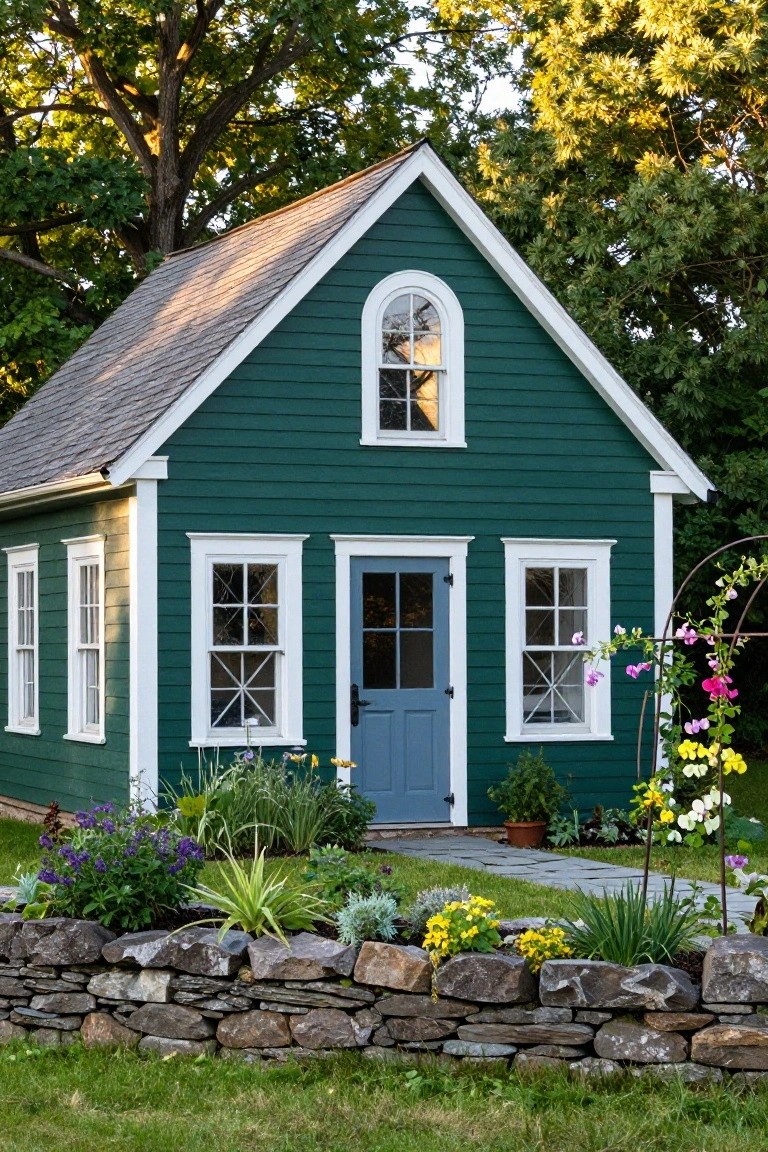
A deep green clapboard siding like this one on a small colonial-style house brings out that old New England feel without trying too hard. The white trim around the windows and door keeps lines crisp and lets the green do the talking. Paired with a stone wall base, it sits steady in the garden.
This setup works great for garden sheds, guest cottages, or even a backyard office. It suits shady spots under trees or places with mixed plantings. Pick a durable exterior paint, though. Cheaper stuff fades fast in the sun.
Navy Shutters on Green Siding
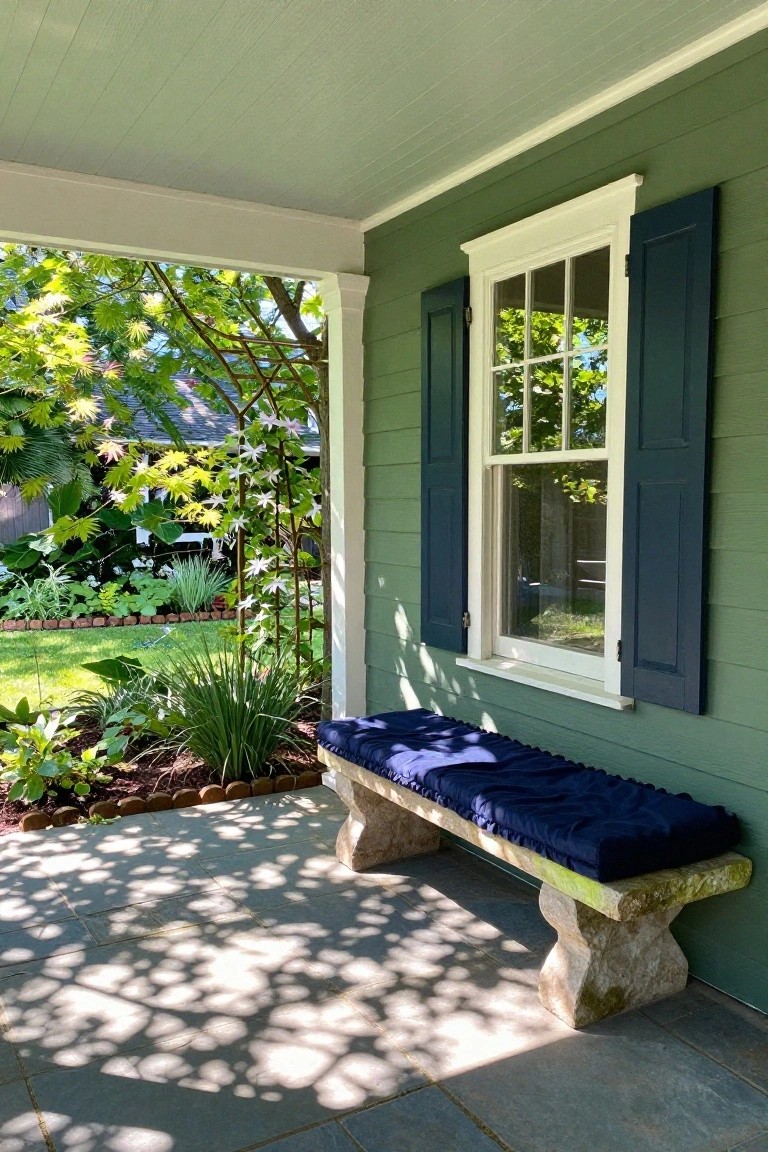
Navy shutters give this green colonial house a sharp, traditional look. They stand out clean against the soft green paint without overpowering it. The double-hung window with white trim pulls the whole side together. It’s a simple choice that nods to older homes.
You see this combo a lot on houses from the East Coast or older neighborhoods. Pick a true navy, not too bright, to keep it grounded. It works best where the siding has some texture, like shingles here. Add a matching cushion on nearby porch seating if you want to echo the color outside. Just make sure the hinges match the trim.
Entry Porch with Pillar Lanterns
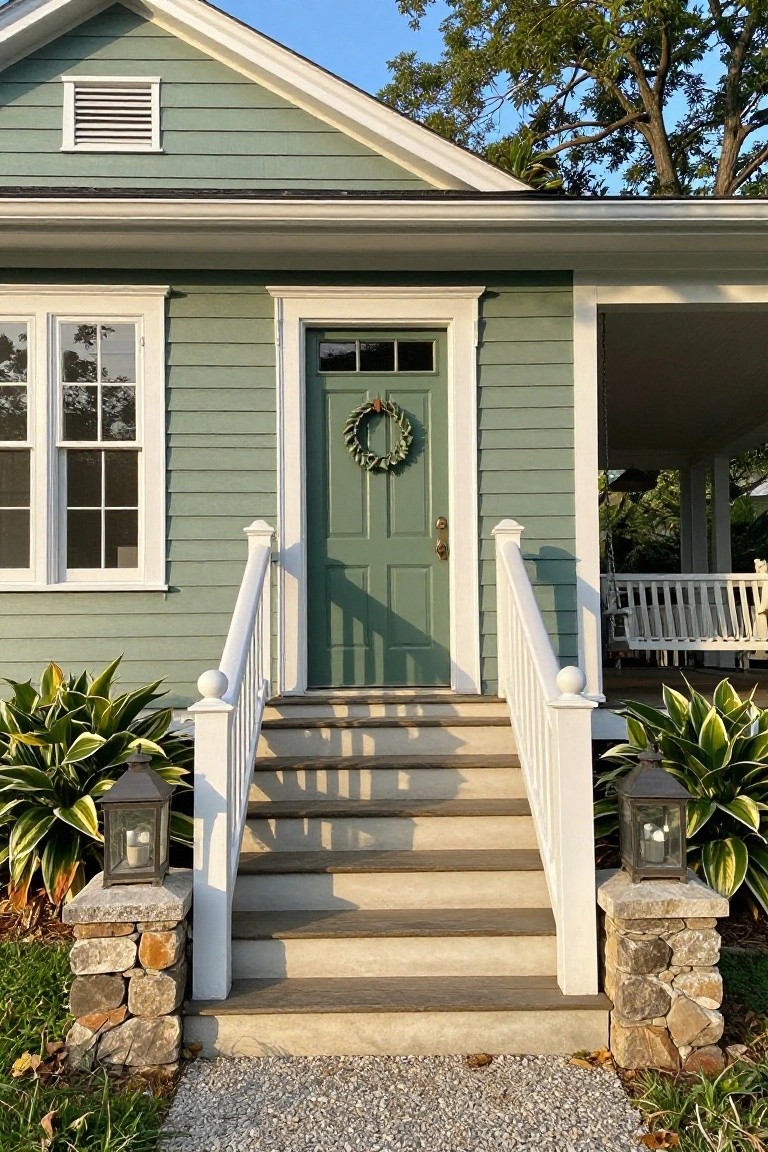
Stone pillars at the base of these porch steps hold simple lanterns that guide the way right up to the green front door. It’s a straightforward way to add some structure and welcome without overdoing it. The white railing keeps everything crisp against the soft green siding, and it fits that classic colonial feel perfectly.
You can pull this off on most traditional homes, especially ones with a bit of front yard space. Tuck in some big-leaf plants on either side for extra life, like the elephant ears here. Skip it if your steps are super narrow, though. Just make sure the lanterns match your door hardware for a pulled-together look.
Soft Green Cottage Porch
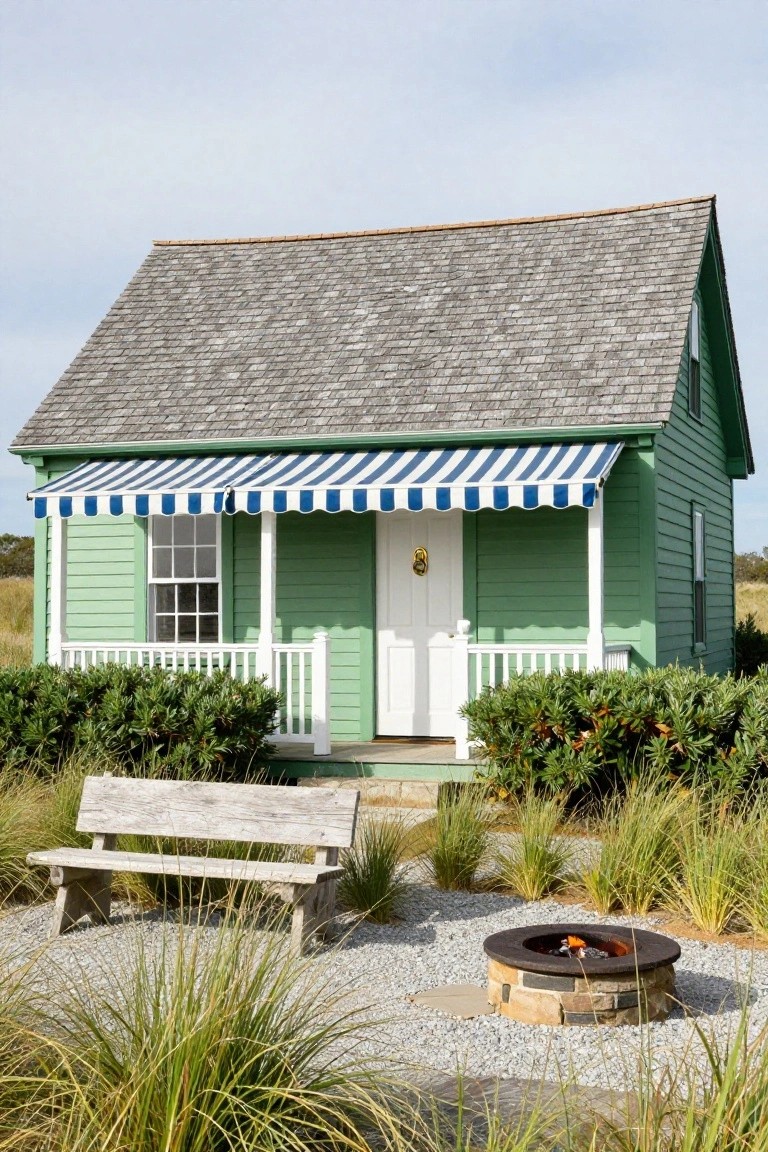
A soft mint green siding gives this little cottage a fresh twist on the classic colonial look. The color plays nice against the gray shingle roof and white trim around the windows and door. That blue and white striped awning over the porch pulls it all together without overdoing things. It’s traditional but feels light and welcoming, especially with the simple brass knocker on the door.
This setup works best on smaller homes in coastal spots or countryside settings where you want curb appeal without fuss. Stick to clean white porch posts and rails to keep the green popping. Add boxwoods or low shrubs along the base like here, and maybe a bench out front. Skip busy colors. Just let the green do its job.
Green Shutters on Cream Colonial Walls
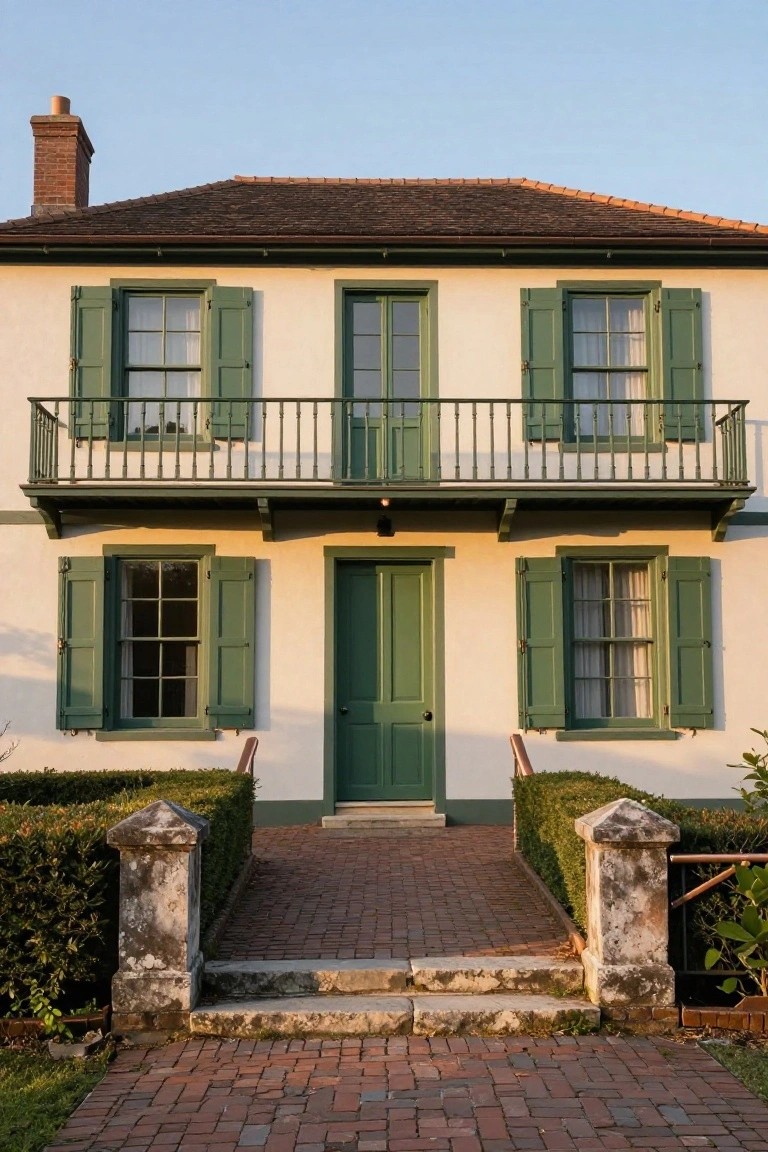
Green shutters like these stand out nicely against cream stucco walls. They give the house that classic colonial feel without much fuss. The matching green door at the entry keeps things simple and pulls the look forward, especially with the upper balcony adding some height.
This setup works best on two-story homes in milder climates where you want curb appeal that lasts. Stick to muted greens so they don’t clash with brick paths or boxwood hedges out front. Avoid brighter shades unless the house sits back from the road.
Classic Green Door Entry
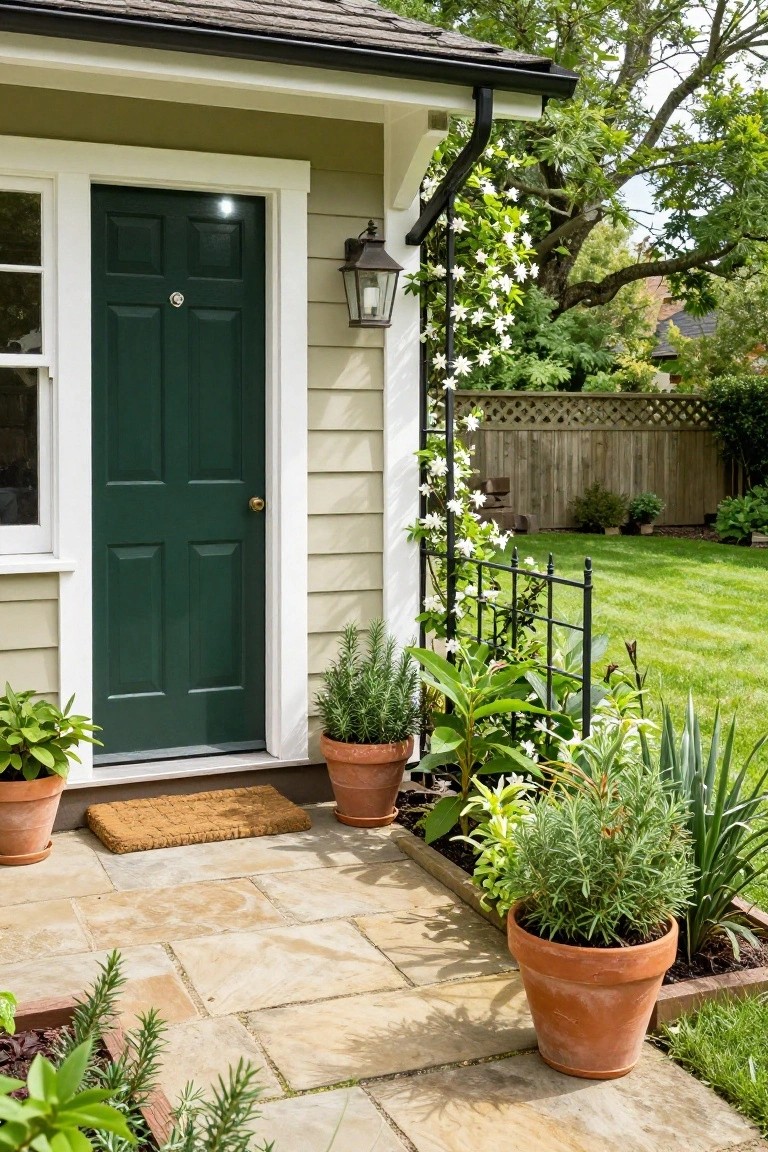
A deep green door like this one pulls your eye right to the entrance on a pale siding house. It brings back that traditional colonial feel in a simple way. The six-panel design stays straightforward and fits older style homes without overpowering the look.
Try it on a garden shed or guest house first if you’re testing the waters. Pair it with neutral walls and a few potted plants out front. It suits spots with some landscaping around, but keep the path clear so the door stays the focus.
Porch Columns Define a Green Colonial Entry
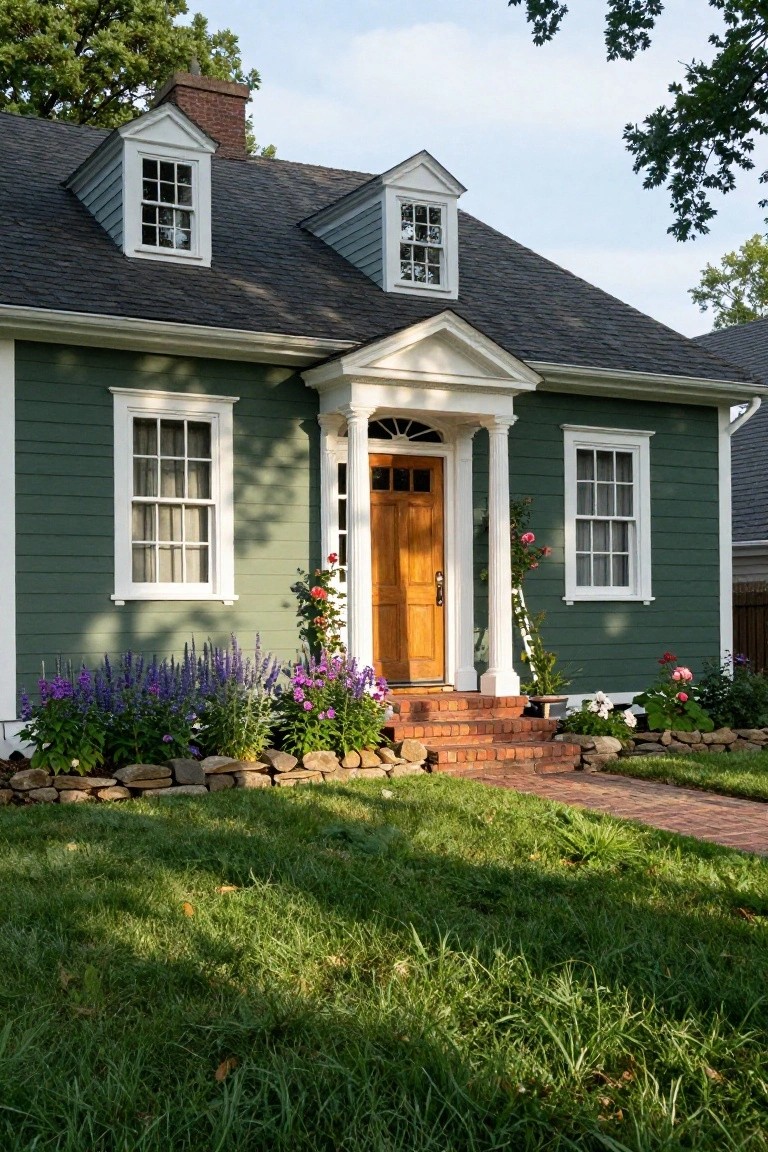
A columned front porch like this stands out on a green colonial house. The white columns and trim pop nicely against the siding, framing the door in a way that feels classic and open. It gives the whole facade that pulled-together look without much fuss.
This setup works well on compact homes where you want some traditional curb appeal. Go for fluted columns if your style leans historic, and pair with brick steps for stability. It suits tree-lined streets best. Just keep scaling right so the porch doesn’t swallow the house.
Frequently Asked Questions
Q: Which green shade fits a classic colonial house best?
A: Sage green nails the traditional feel without overpowering the architecture. It blends with nature and lets details like cornices stand out. Test a sample board outside first to see it in your light.
Q: Can I use colonial green on a house that’s not pure colonial?
A: Add elements like symmetrical windows or a pedimented door. Green pulls it toward tradition fast. You’ll love how it warms up the whole street view.
Q: What trim colors pair well with green siding?
A: White trim gives clean contrast and spotlights every molding. Try cream for a softer touch if your green leans olive. And black? It adds edge on bigger homes.
Q: How do I maintain that fresh green exterior look?
A: Rinse with a hose and soft brush every spring and fall. Spot-paint dings before they spread. Your house stays sharp through seasons.
