

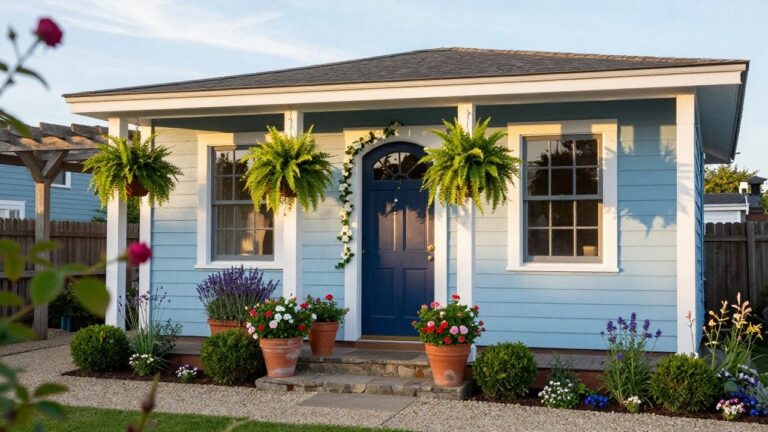
When you paint a house blue, the garden out front decides if it feels bold and welcoming or just a bit stark from the street.
I drive by plenty of homes where mismatched shrubs swallow the siding, making the whole facade lose its punch.
What pulls you in first is usually how greenery frames the roofline or softens the entry without hiding the color.
Blue siding pairs well with layered plantings that add texture, like feathery ferns against the lower walls.
One setup I’d tweak for my own curb is the simple gravel path edged in blue-toned blooms.
Entry Arbor Covered in White Climbers
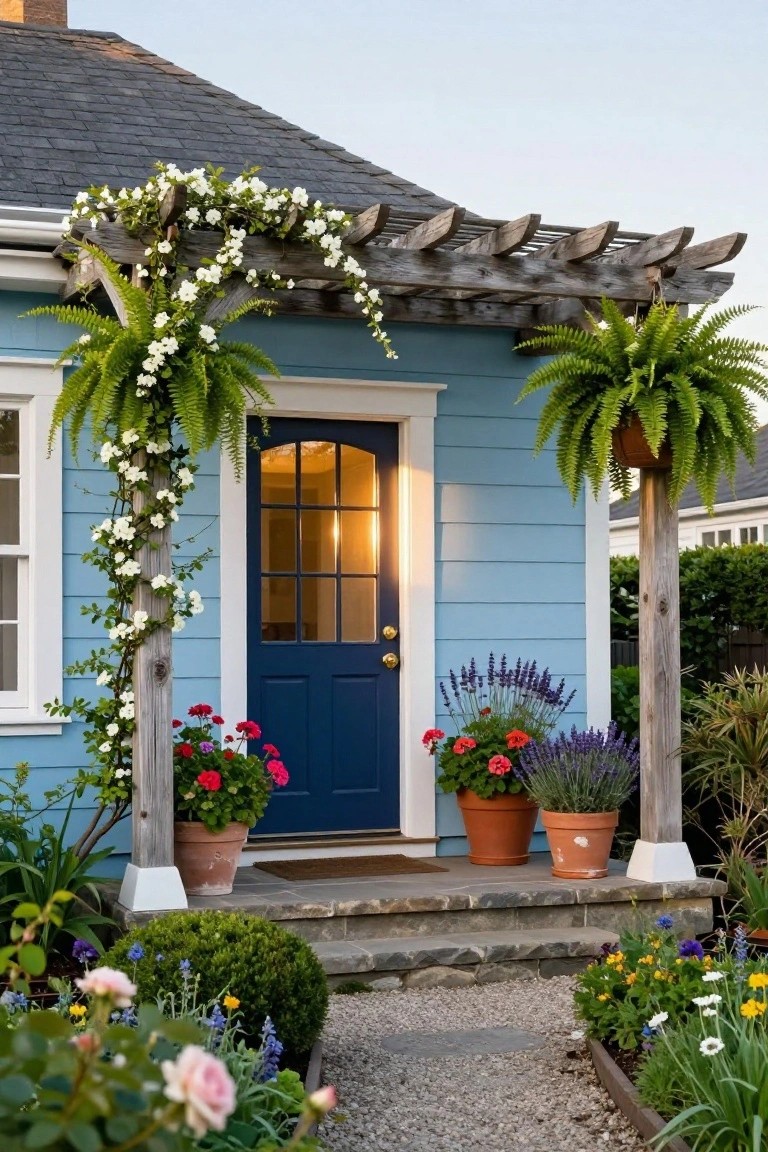
A weathered wooden arbor stretches over this blue house’s front door, draped loosely with small white flowers. It pulls the eye right to the deep blue entry without much fuss. Paired with hanging ferns on the posts, it softens the clapboard siding and gives a lived-in feel that fits older homes well.
Try this on a cottage or coastal place where the house already has some character. Pick easy climbers like star jasmine that won’t take over. Add a couple pots of geraniums or lavender next to the steps for color. Skip it if your spot gets too much shade. Keeps the entry welcoming year-round.
Navy Blue Siding on a Simple Two-Story Home
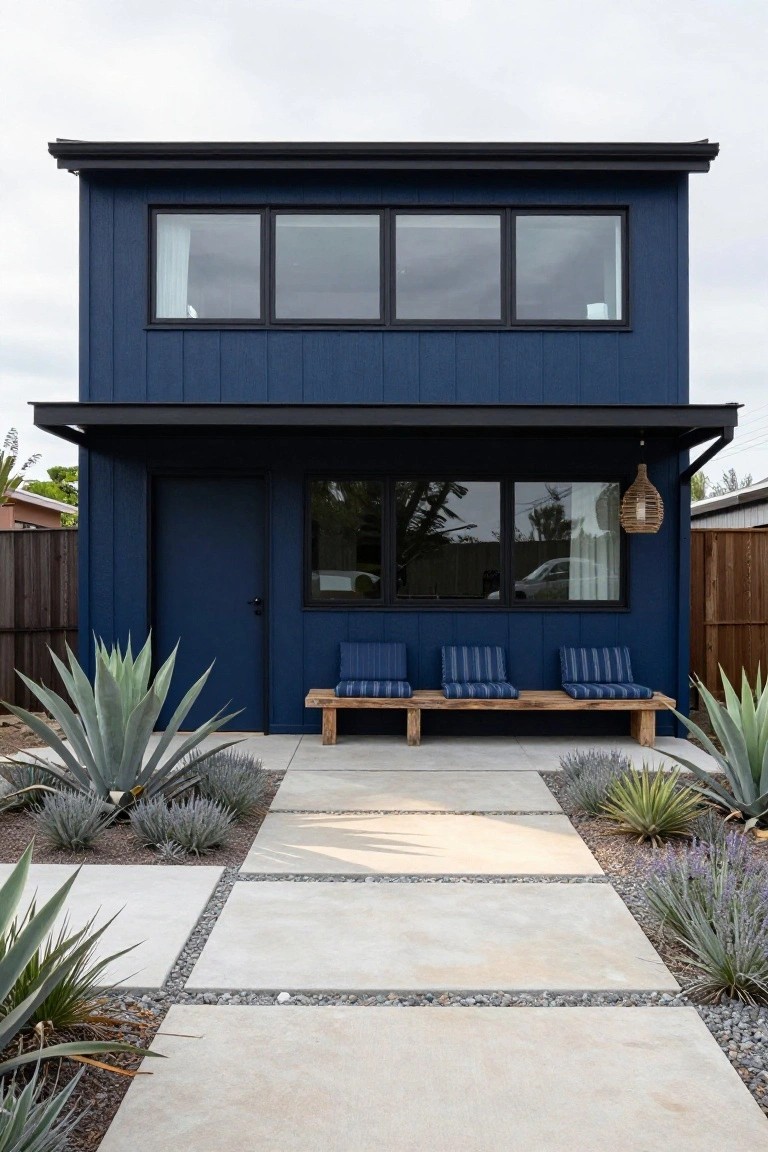
Deep navy blue siding gives this compact two-story house a strong, grounded look. The vertical board-and-batten style keeps things modern without any fuss. It stands out nicely against the lighter path and plants in front, making the whole front yard feel pulled together.
You can pull this off on smaller homes or ADUs where you want bold color but not overwhelming details. Pair it with black window frames and a wood bench or two under the porch overhang. It works best in sunny spots with drought-tolerant plants like agaves nearby. Just make sure the blue shade has enough gray undertone so it doesn’t fade too fast.
Blue Brick House with Flower Window Boxes
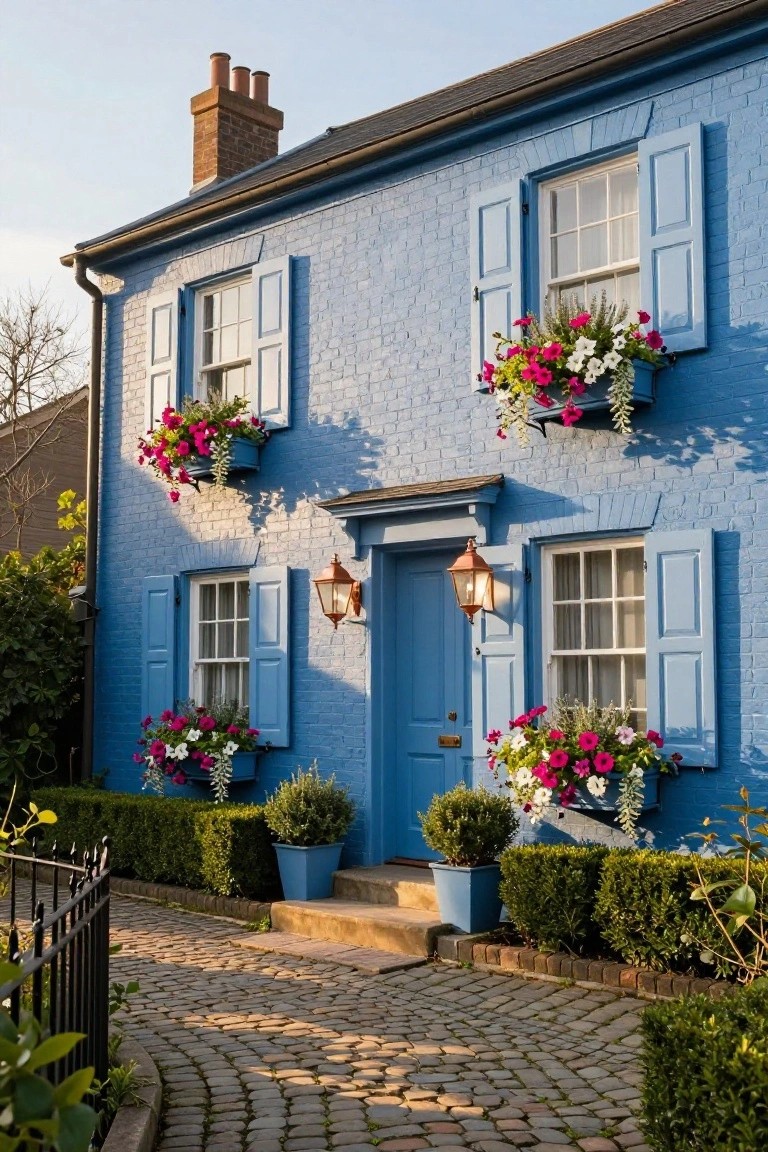
A blue painted brick house like this one gets a big lift from flower boxes stuffed with color. The pinks, whites, and trailing greens hang right out the windows, softening those straight brick lines and pulling your eye to the front door. It’s a simple way to make a solid older home feel more alive without changing the structure.
These work best on two-story homes with good window spacing, like cottages or townhouses. Pick easy bloomers that trail over the edges, and keep the boxes matching the shutters for a clean look. Hang them high enough so they don’t block the view inside, and refresh the plants a couple times a year to keep that fresh feel going.
Teal Stucco Exterior with Entry Bench
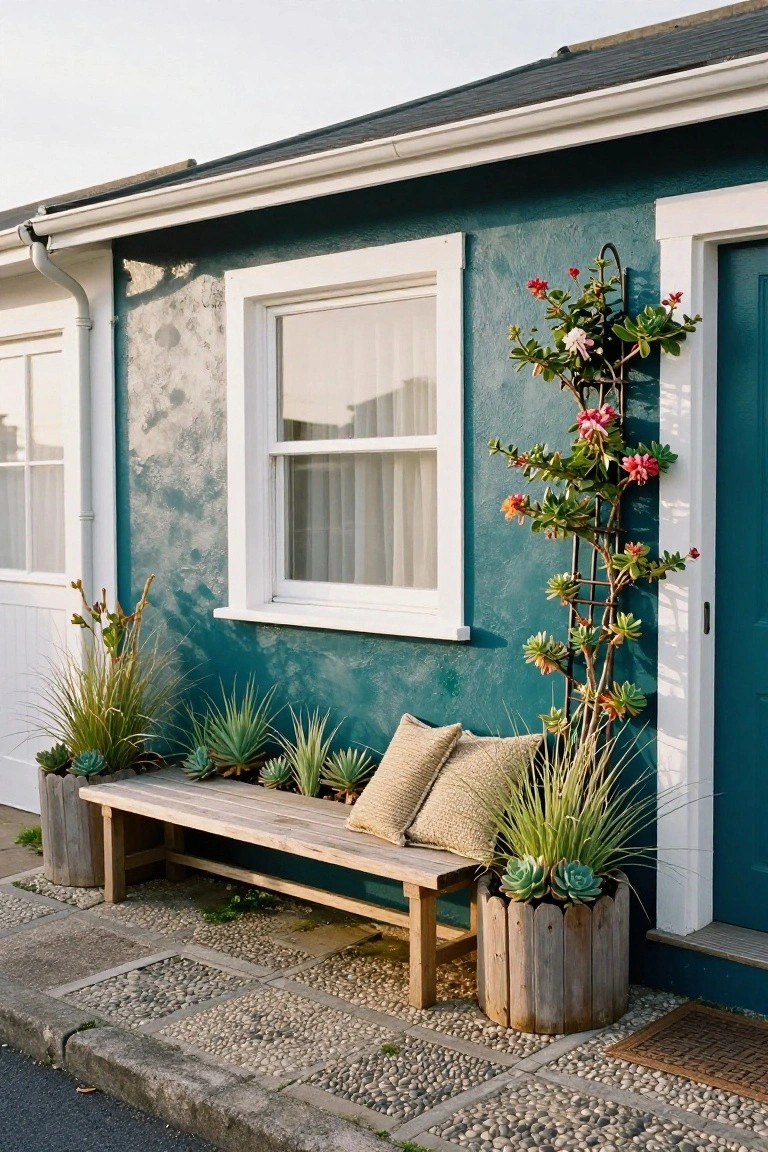
A teal stucco wall like this gives a house real personality. The textured finish catches the light in a nice way, and that bold color pops without being too much. Then there’s the simple wooden bench right there by the plants. It turns the side of the house into a spot where you might actually sit down and wait for someone, or just take a break.
Put this setup on a smaller home or cottage where you want easy curb appeal. Paint the walls in a teal shade that leans green, add a rough wood bench, and tuck in some succulents in pots. It works best on streets with other colorful houses, or coastal spots. Skip it if your yard is too shady, since the color shows up better in good light.
Blue Porch with Cascading Wisteria
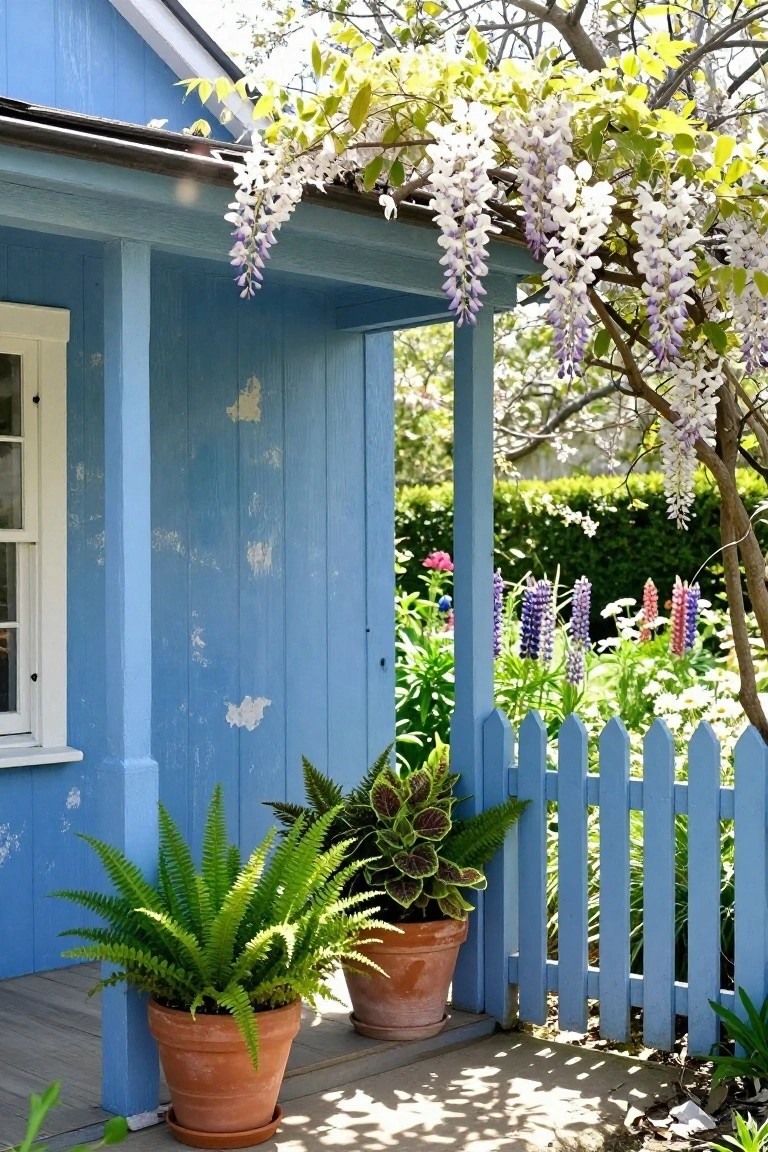
Nothing beats the simple charm of letting wisteria climb over a blue porch roof. The purple and white blooms hang down in clusters, softening that weathered blue siding and pulling the eye right to the entry. It gives the whole front a lively, cottage feel without much fuss.
This works best on smaller homes or garden buildings where you want some romance in the yard. Plant wisteria near the porch edge and train it along the eaves. Add a couple big potted ferns by the steps like here, and let the garden beds spill color nearby. Just keep the vines pruned so they don’t take over.
Soft Blue Facade on a Traditional House
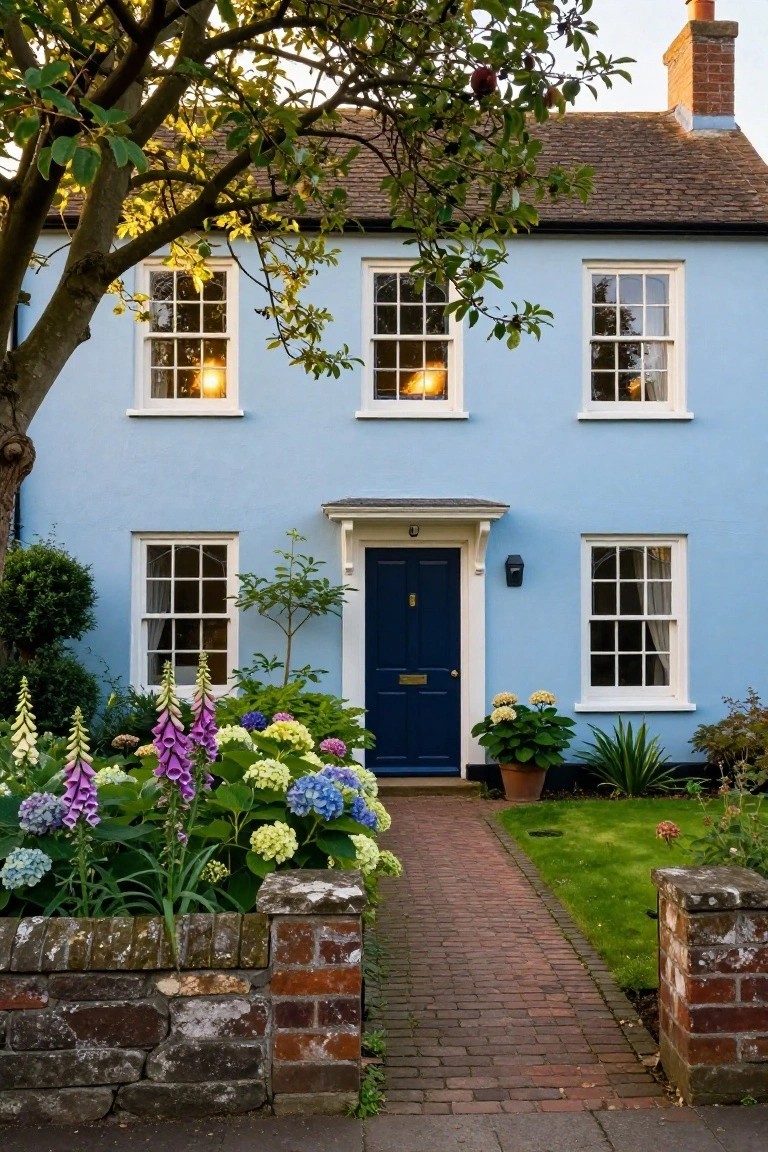
A soft blue paint job like this one freshens up a classic house without overpowering its simple lines. The pale shade keeps things light and airy, especially on rendered walls, while white sash windows stand out clean and crisp. That dark front door pulls it all together for a welcoming entry.
This look suits older homes in town or countryside settings, where you want charm that nods to history but feels alive. Paint in a matte finish to mimic aged plaster, then frame it with cottage garden plants along the path. Skip it on super-modern builds, though. It shines best where some garden softness balances the structure.
Blue Walls with a Gravel Courtyard
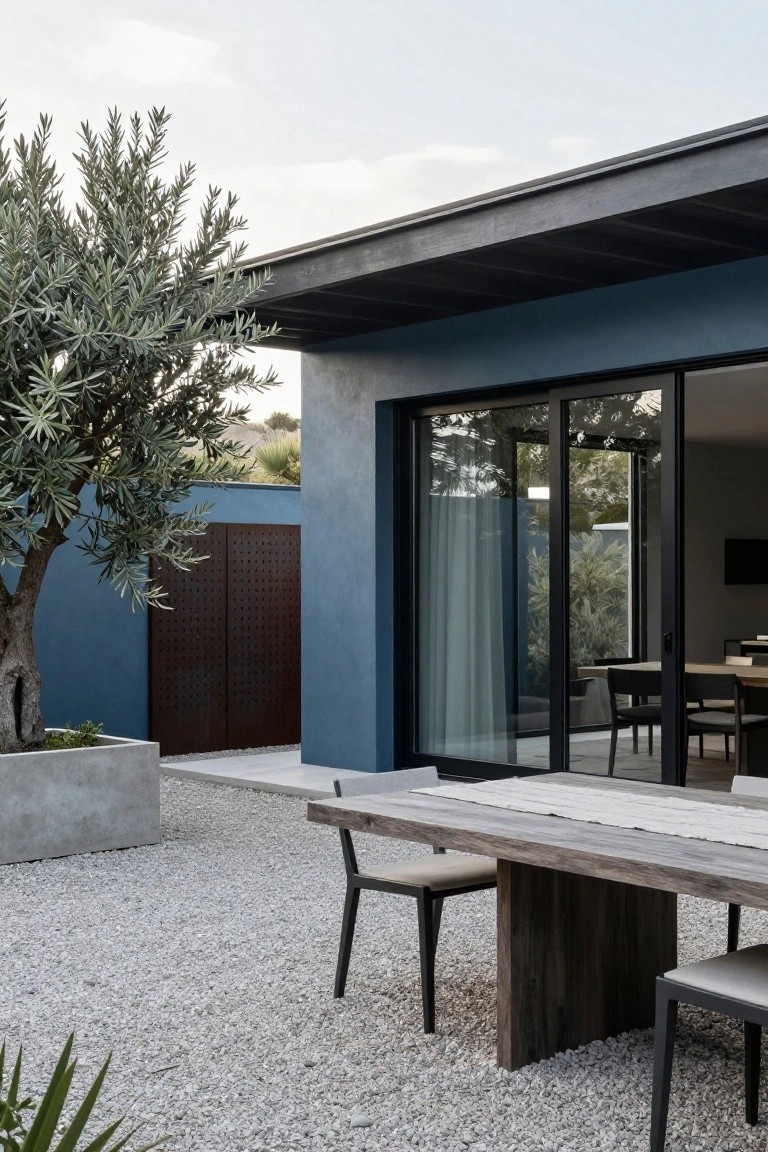
Blue walls like these give a house real presence without trying too hard. The deep color picks up the sky and sea in places like the Mediterranean, and it sets off the simple gravel courtyard nicely. An olive tree in a concrete planter brings in some green life right next to the outdoor table, keeping things fresh.
You can pull this off on any side of the house facing a yard or terrace. Gravel stays low fuss, drains fast after rain, and suits sunny spots where grass might struggle. Go for dark wood furniture to balance the blue… just sweep the stones now and then to keep it neat.
Classic Adirondack Chairs on a House Patio
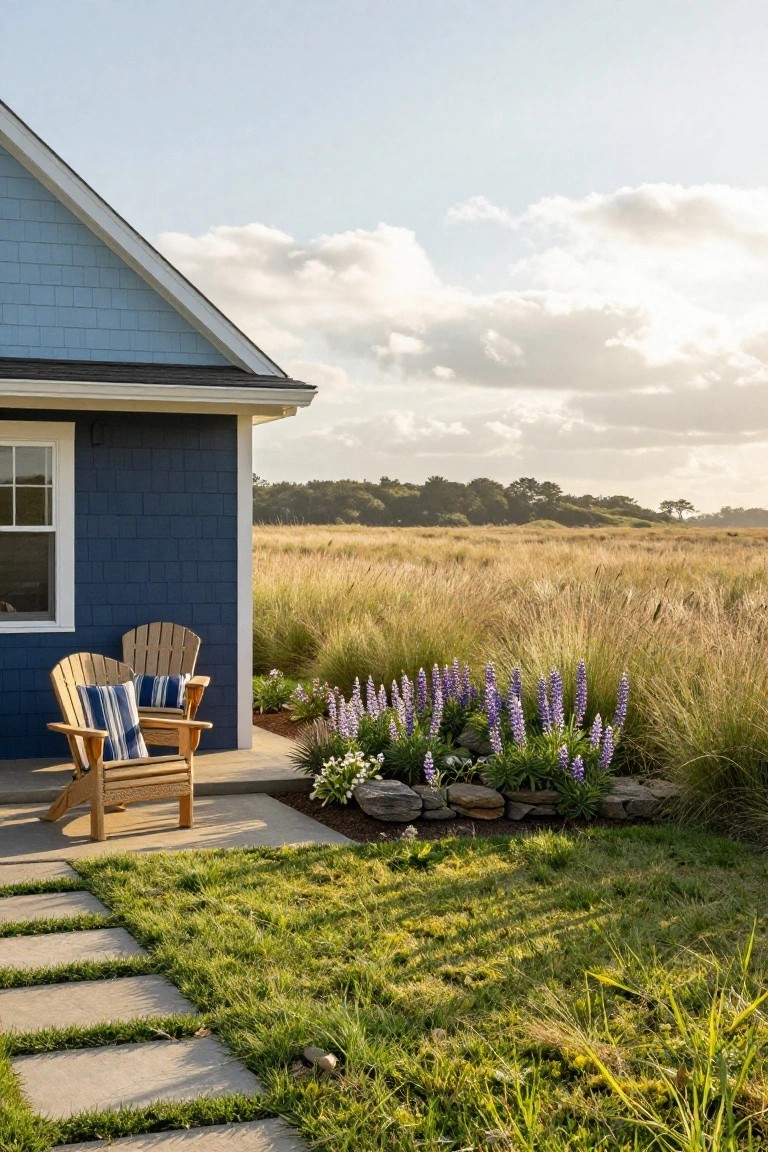
These old-school Adirondack chairs sit right on a plain concrete pad next to the blue siding. With their striped cushions, they look relaxed and ready for company. It’s a no-fuss way to turn a small entry spot into something usable, especially when the garden and fields stretch out in front.
Put them on level concrete or stone where you get a good view. They suit cottage-style homes or coastal places with open land nearby. Wood holds up outside if you seal it now and then. Skip big tables, just chairs keep it simple and open.
Navy Blue House with Classic White Columns
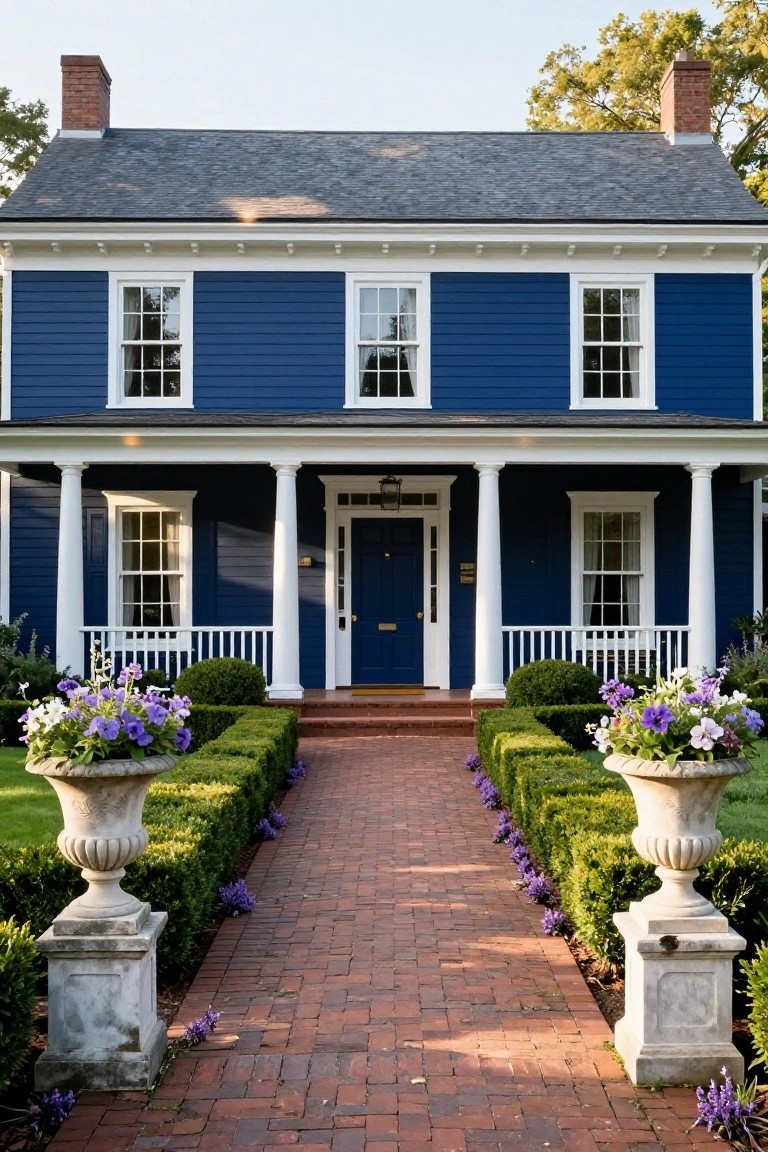
A deep navy blue siding like this one on a clapboard house really pops against the white trim and porch columns. It keeps the look traditional but gives it a bolder edge that feels right at home in a neighborhood setting. Those columns frame the entry nicely and make the whole front feel put-together.
Paint this combo on a two-story colonial or similar style where the architecture supports it. Line the brick path with low boxwoods and add urns of purple blooms for some life along the way. Skip it on super modern homes, though. It suits spots with a bit of lawn and steady sun best.
Blue Brick House with Wood Entryway
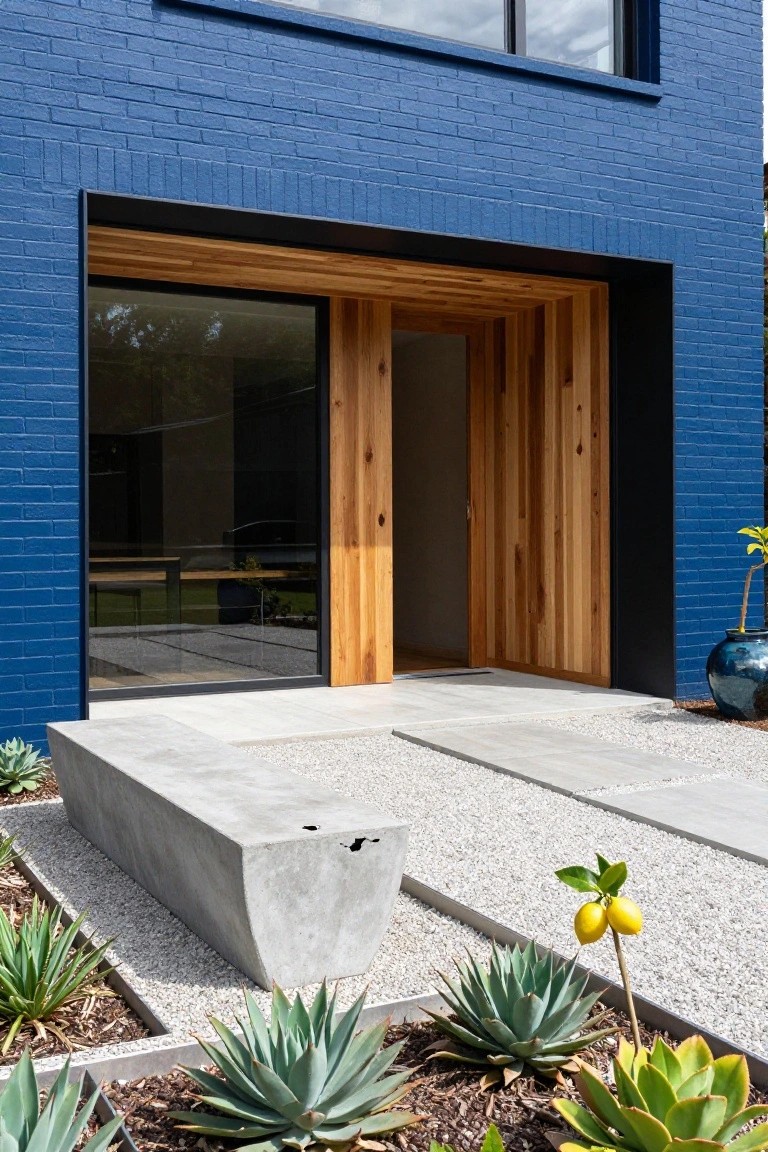
A deep blue brick exterior like this one turns a classic material into something fresh and eye-catching. The bold color grabs attention right away, but the warm timber cladding around the entry keeps it from feeling too stark. It pulls the front of the house together nicely, especially with that big glass panel letting light spill out.
This setup works best on homes with clean lines and a bit of yard space. Paint or stain existing brick blue if you want the look without rebuilding, then add wood accents just at the door area. It suits modern or updated traditional houses in sunny spots, where the blue holds up well and pairs easy with low-water plants out front.
Porch Bench Seating
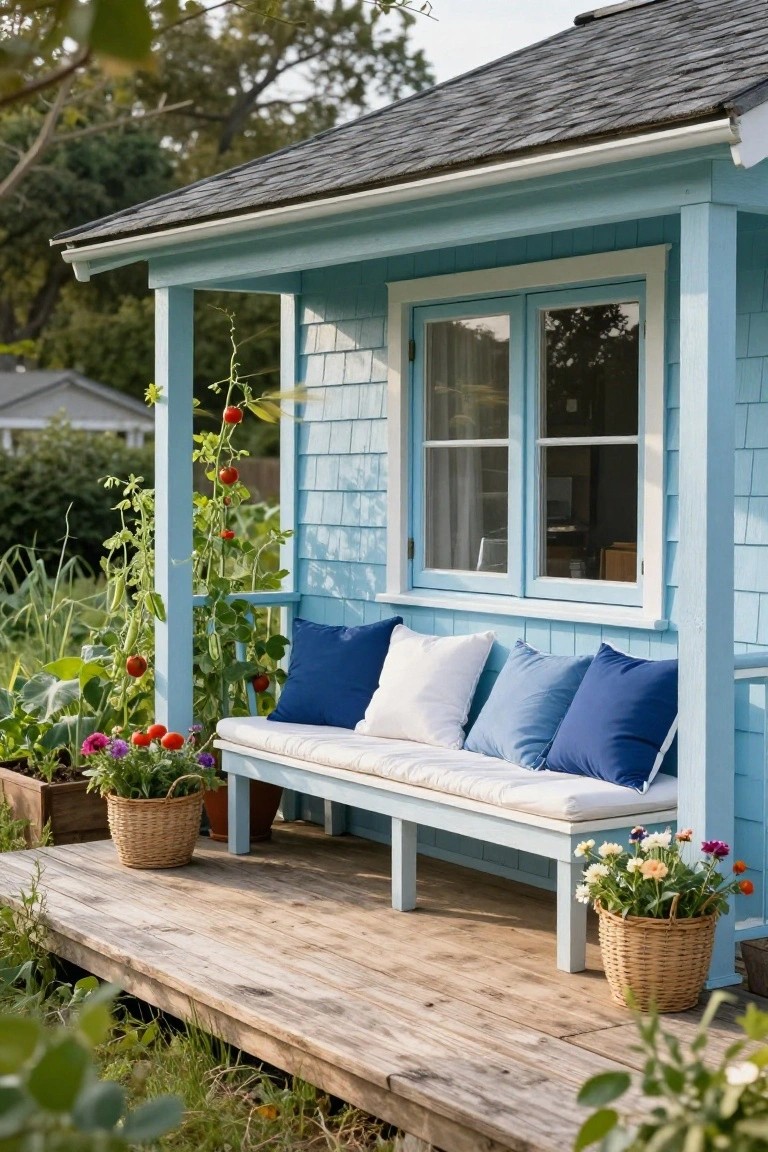
A simple bench on the porch like this one gives you a spot to sit right outside and enjoy the garden up close. The cushions in navy and white pick up the blue house color nicely, and that climbing tomato vine on the post brings in some easy green life. It’s casual and makes the whole area feel used every day.
Put a bench like this on any porch or deck where you want quick seating without taking up much room. It suits garden sheds, cottages, or even bigger house porches. Go for cushioned pillows that handle weather, and tuck in a few pots nearby for that extra touch… just keep plants trimmed so they don’t crowd the seat.
Climbing Roses on a Front Entry Arch
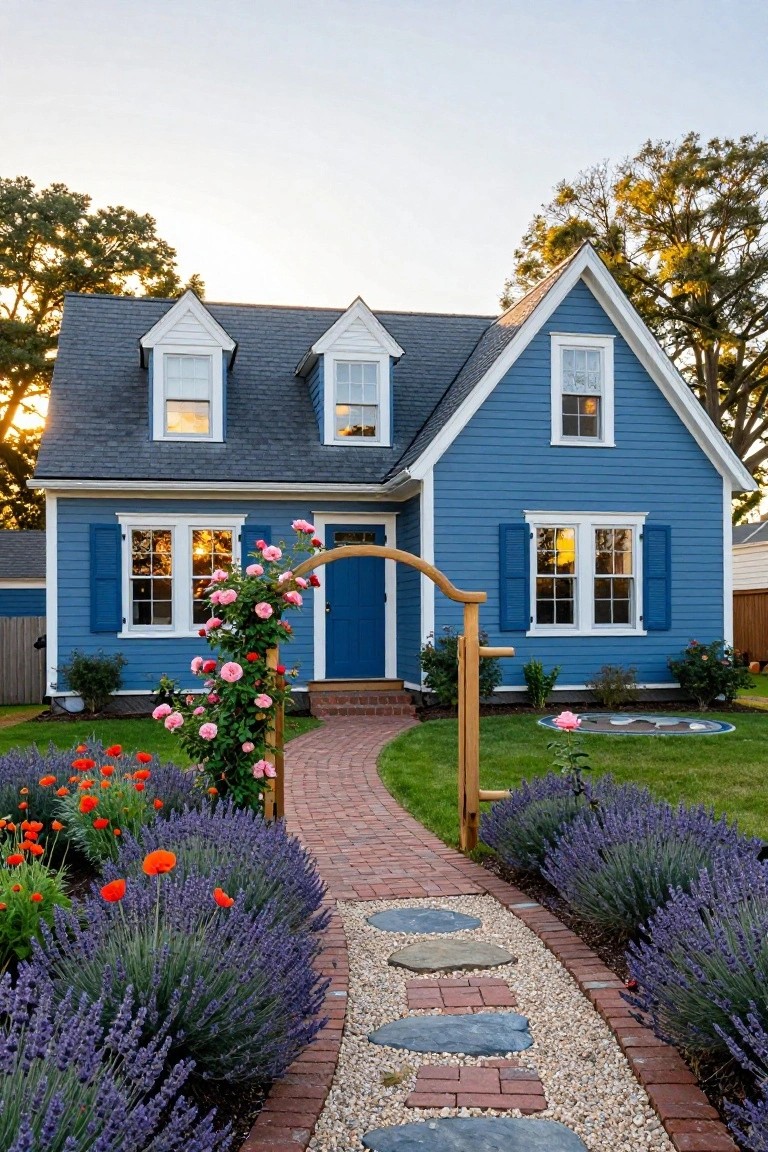
A wooden arch draped in blooming pink roses sits right over the brick path to this blue house door. It pulls your eye straight to the entry and makes the whole front yard feel like part of the welcome. The roses soften that bold blue siding a bit without hiding the house shape.
You can add one like this to most any front walk on a cottage style home or older place with good curb space. Pick a sturdy arch, train climbing roses up it fast, and plant low lavender or poppies along the path edges for color that lasts. Keep the path clear so it stays practical for daily use.
Blue Pots Frame the Entry Door
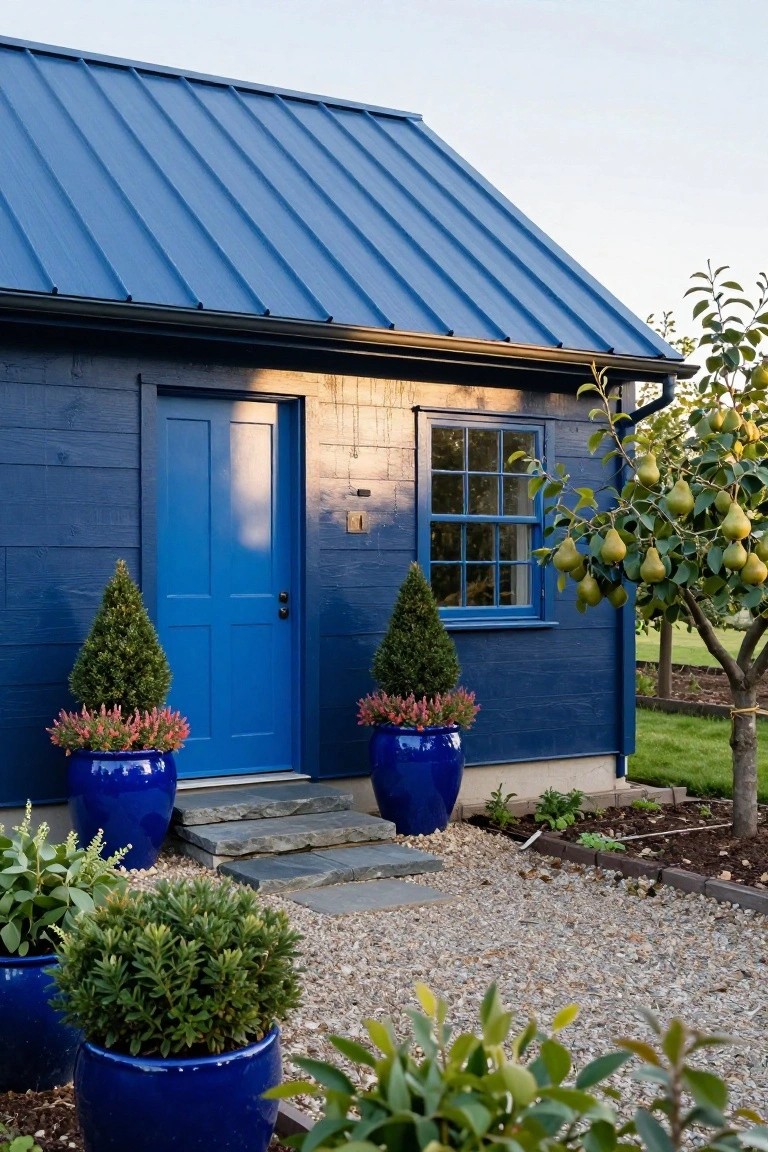
A deep navy house like this one looks sharp when you bring the color right down to the ground with matching blue pots. Here, a pair of tall ceramic ones sit snug on either side of the blue door, holding shaped evergreens that add some height without crowding the space. It ties the whole entry together. No clashing colors. Just blue on blue, making the house feel part of the garden.
Try this on a small outbuilding or garden shed first. It works best where you want quick curb appeal without much planting fuss. Stone steps help lead the eye up. Skip it if your pots might freeze in harsh winters… go for durable glazed ones instead. Fits right into a yard with fruit trees or gravel paths like this.
Frequently Asked Questions
Q: What plants make a blue house exterior really pop with color?
A: Pick bold blooms like fiery orange zinnias or sunny black-eyed Susans. They create sharp contrast against the blue and keep the garden buzzing all season. Tuck them along walkways for that instant wow.
Q: Will a blue exterior fade fast in direct sun?
A: Choose high-quality exterior paint with UV protection. It holds color longer than cheap stuff. Refresh every five years or so to stay vibrant.
Q: How do I garden if my yard stays shady?
A: And hostas or ferns thrive there, with their lush greens softening the blue. Add impatiens for pops of pink or white. They handle low light without fuss.
Q: Can I mix blue shades in my garden setup?
A: Layer lighter sky blues near the house with deeper navy accents on trim. This adds depth without overwhelming. Pair with white shutters for clean lines.
