

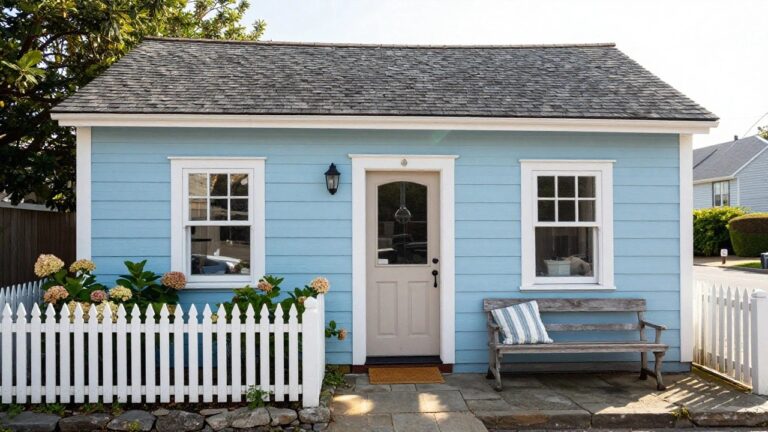
I’ve noticed that blue on a house exterior can transform a plain facade into something that draws you in from the end of the block. When I drive through neighborhoods, it’s often the way blue plays off rooflines and entry doors that sticks with me most. The right shade avoids looking washed out against neighboring greenery or too stark next to stone accents. Pairing it thoughtfully with siding materials keeps the whole front feeling balanced rather than competing for attention. A few tweaks like these have made me rethink how color shapes curb appeal in real backyards.
Arched Wood Door on Light Blue Siding
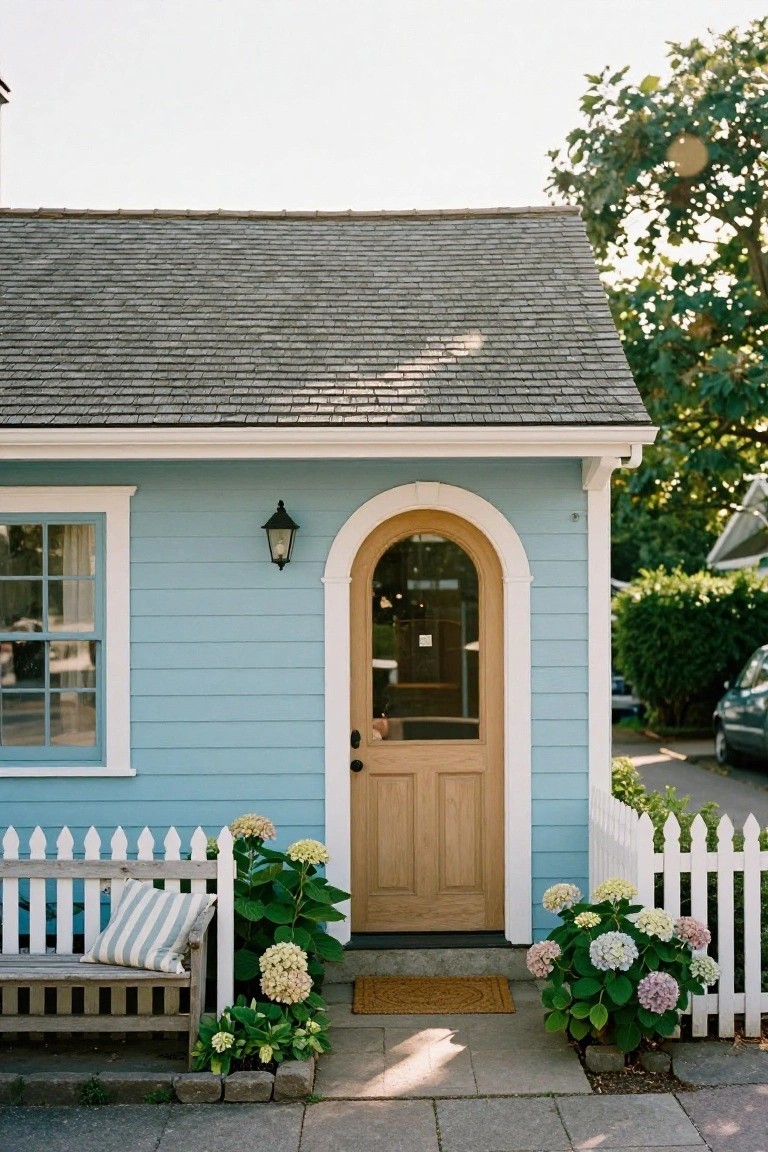
A warm arched wooden door like this one gives a light blue house exterior instant charm. The natural wood grain stands out nicely against the soft blue clapboard, making the entry the clear focal point. It’s an easy way to add some traditional detail that feels right at home on a cottage-style place.
Try this on smaller homes or bungalows where you want to boost curb appeal without big changes. Match the wood tone to nearby trees or trim, and keep plantings simple like hydrangeas along the path. It works best in shady spots… the contrast shows up even better.
Navy Blue House with Wood Garage Door
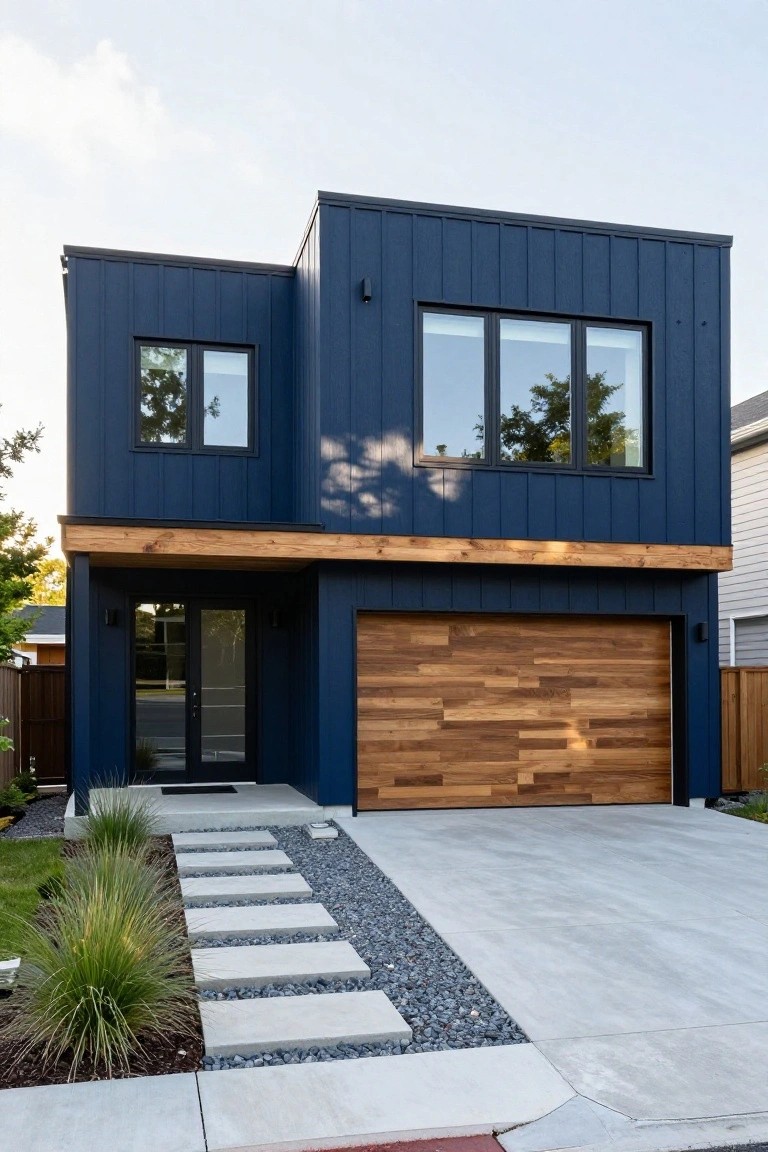
A deep navy blue siding covers this modern house, giving it a clean, bold presence from the street. The large garage door made of warm wooden slats stands out right away. That wood pulls in some natural texture and keeps the blue from feeling too cold. It’s a straightforward combo that adds interest without overdoing it.
This setup works great on boxy, contemporary homes in neighborhoods with some trees around. The wood accents the entry and garage, drawing eyes up to the windows too. Go for sealed cedar or similar for the door so it holds up to rain. Skip it if your style leans more traditional, though.
Recommended Products

【Upgrade Sealing - All-Weather Six-Layer Protection】Upgraded Garage Door Seal Kit features a 2-inch high-density nylon brush combined with a U+O-shaped rubber strip to form a complete barrier. It provides all-weather six-layer protection: insect-proof, wind and snow-proof, rain-proof, dust-proof, noise reduction, and thermal insulation. Keep your garage, warehouse, or factory clean and dry while enhancing energy efficiency

【Enhanced V2.0 Design】Our universal garage door seal kit upgrades traditional garage door bottom seals with a 2-inch brush and L-shaped aluminum track retainer. This innovative combination blocks dust and debris 32% more effectively than standard seals while ensuring a snug, stable fit that protects your garage door from damage and maintains aesthetic appeal.

Classic Navy Blue Clapboard House
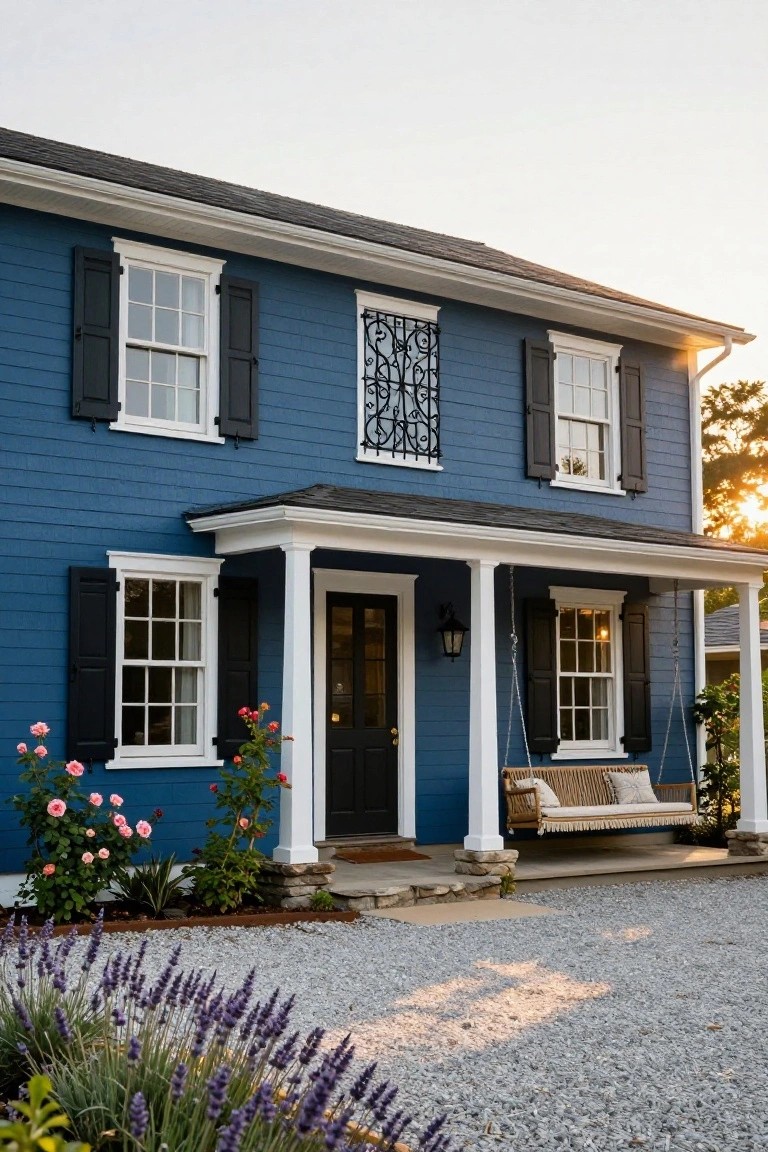
A deep navy blue clapboard siding like this gives a traditional two-story home a fresh, grounded look that stands out without trying too hard. The black shutters pull in some edge against the white window trim and porch columns. It feels right at home in a relaxed setting, especially with that sunset glow hitting the gravel driveway.
This setup suits older frame houses or new builds aiming for coastal or country charm. Stick to white trim for crispness, and add a porch swing for everyday appeal. Works best where you have some yard space for low plantings like roses along the base, but skip it on super modern structures.
Blue Stucco with Succulent Beds
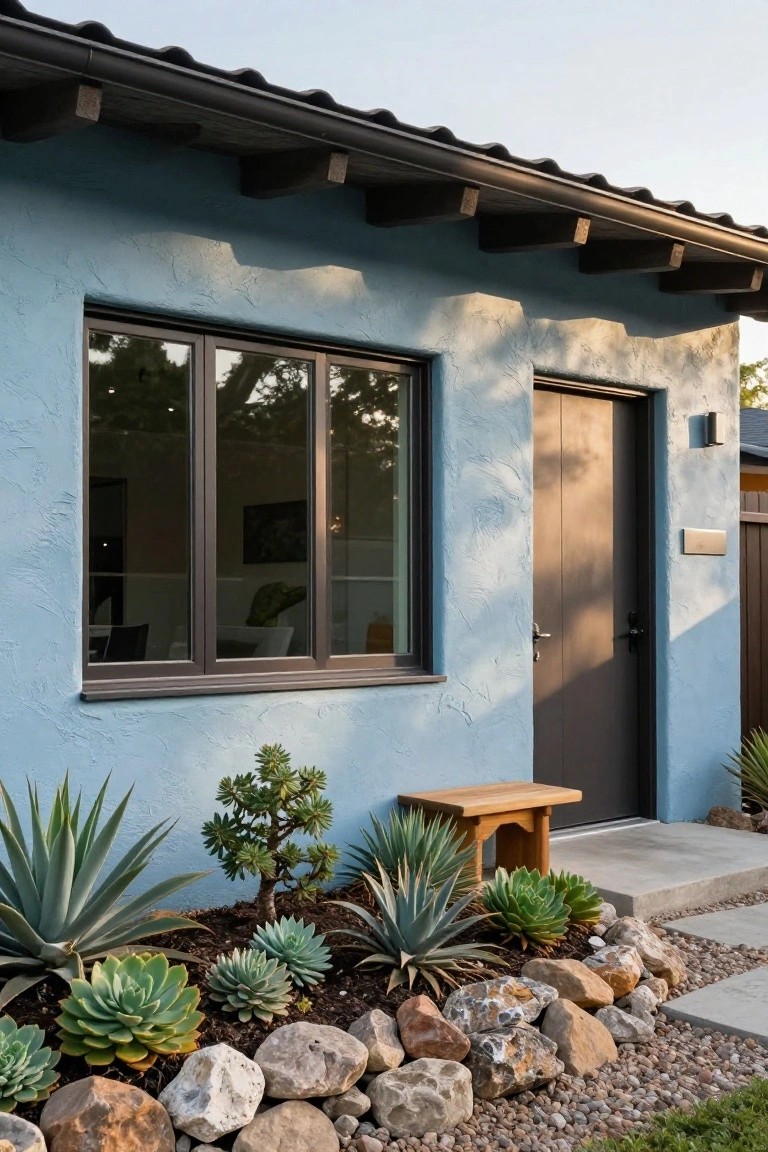
A soft blue stucco finish on the house walls looks calm and fresh, especially when you add a border of tough succulents and agaves right along the base. The texture of the stucco catches the light nicely, and those low-water plants fill in without overwhelming the entry. A simple wooden bench sits there by the dark door, making the whole front feel settled and easy to approach.
This setup works best in sunny, dry spots where you want curb appeal that doesn’t need constant watering or mowing. Line the foundation with the plants, tuck in some river rocks for clean edges, and keep the bench plain wood to match. It suits ranch-style or modern homes in warm climates, but watch the scale, plants shouldn’t creep up the walls.
Navy Front Door on Light Blue Walls
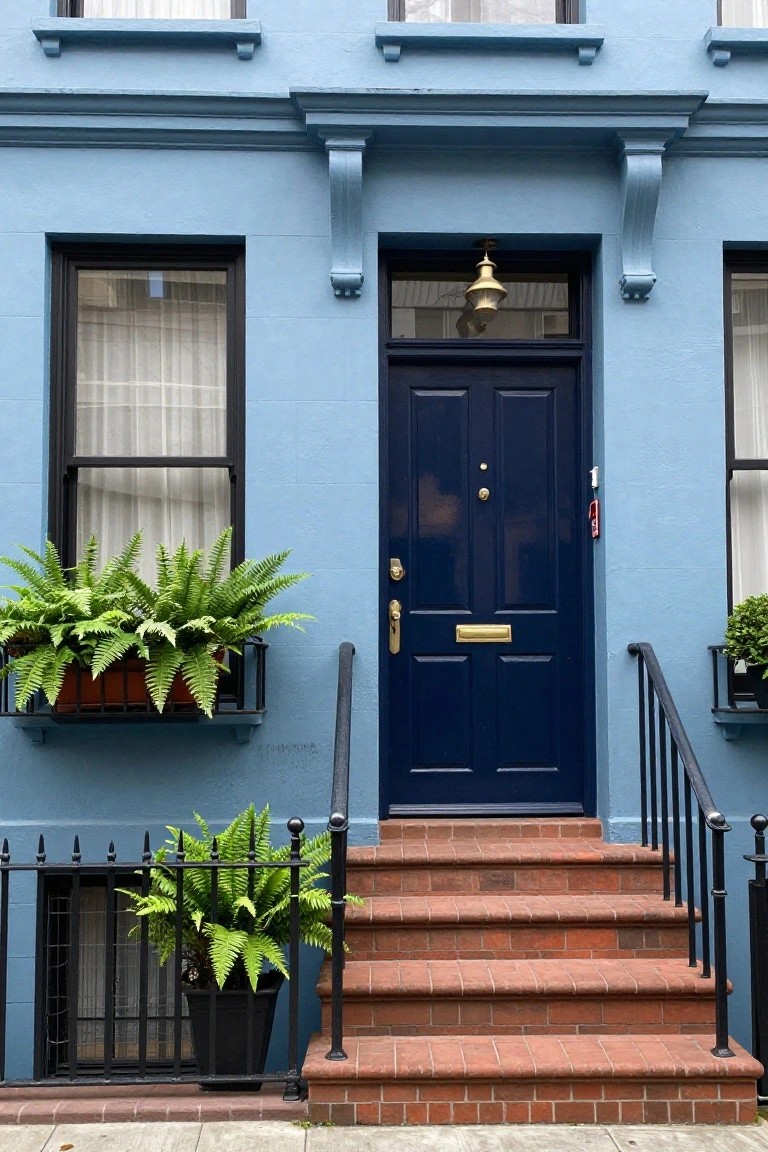
A deep navy front door makes a strong statement against lighter blue house walls. It pulls the eye right to the entry without overwhelming the whole facade. Brass hardware on the knocker and letterbox keeps things classic, while ferns in the window boxes and by the steps add some green life.
This setup works well on narrow townhouses or row homes where you want curb appeal that feels put-together. Go for it on homes with good trim details. Just match the door color to your trim undertones so it doesn’t clash. Plants like ferns help tie it to the street without much fuss.
Soft Blue Siding for Beach Houses
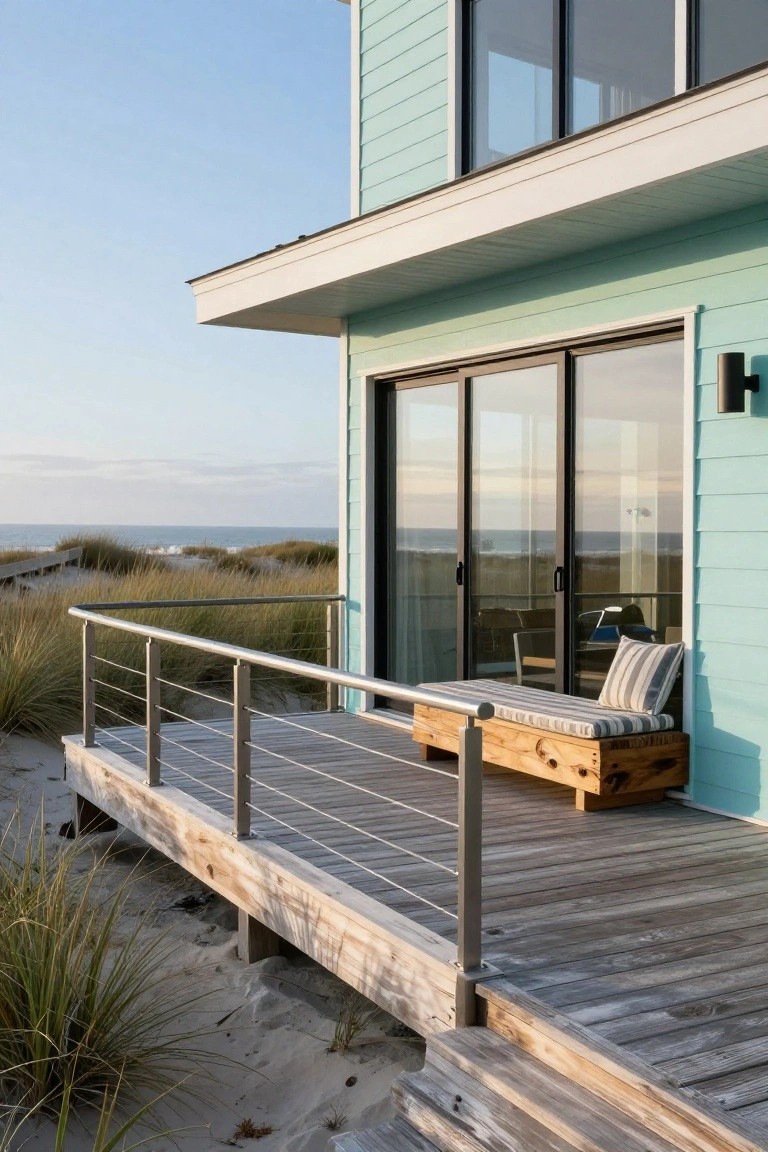
This soft blue siding keeps things light and tied to the coast. It shows up well against the sand and sea grass without overpowering the view. The color feels calm, almost like faded sea glass, and it lets the house blend right into the beach setting. Large sliding doors pull the outside in, making the whole side feel open.
You can pull this off on vacation homes or any spot near water. Stick to horizontal boards for that clapboard look, and add a wood deck underneath to ground it. Watch the shade. Too bright a blue fights the natural light. This pale tone works year-round.
Blue Stucco Walls with Arched Entry
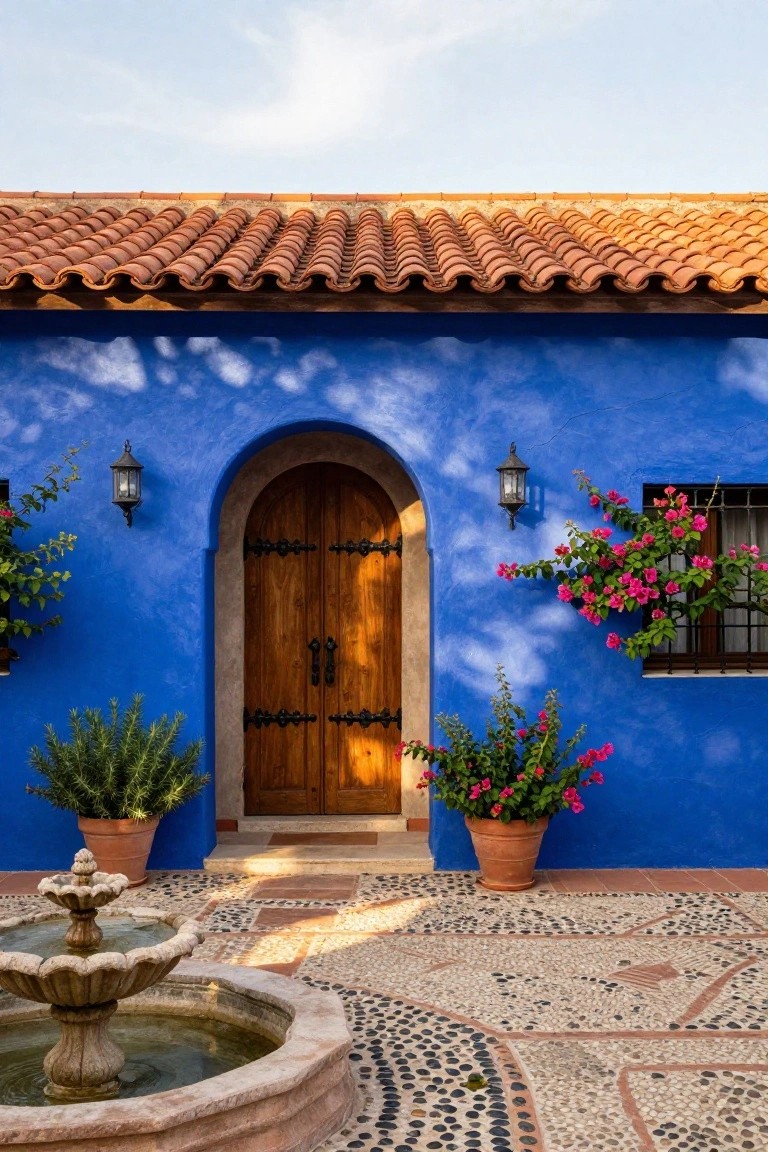
A deep blue stucco finish on an adobe-style house like this one turns a basic facade into something memorable. The color pops against the warm terracotta roof and sets off the heavy wooden door perfectly. It feels fresh but still nods to old hacienda vibes.
This look works best on homes in sunny spots, maybe southwestern or Mediterranean influences. Add lanterns by the door and a few potted plants out front to pull it together. Just keep the plant colors bright to match… nothing muddy. Scale it for smaller houses too, since the arch draws the eye right in.
Classic Covered Porch on Blue Siding
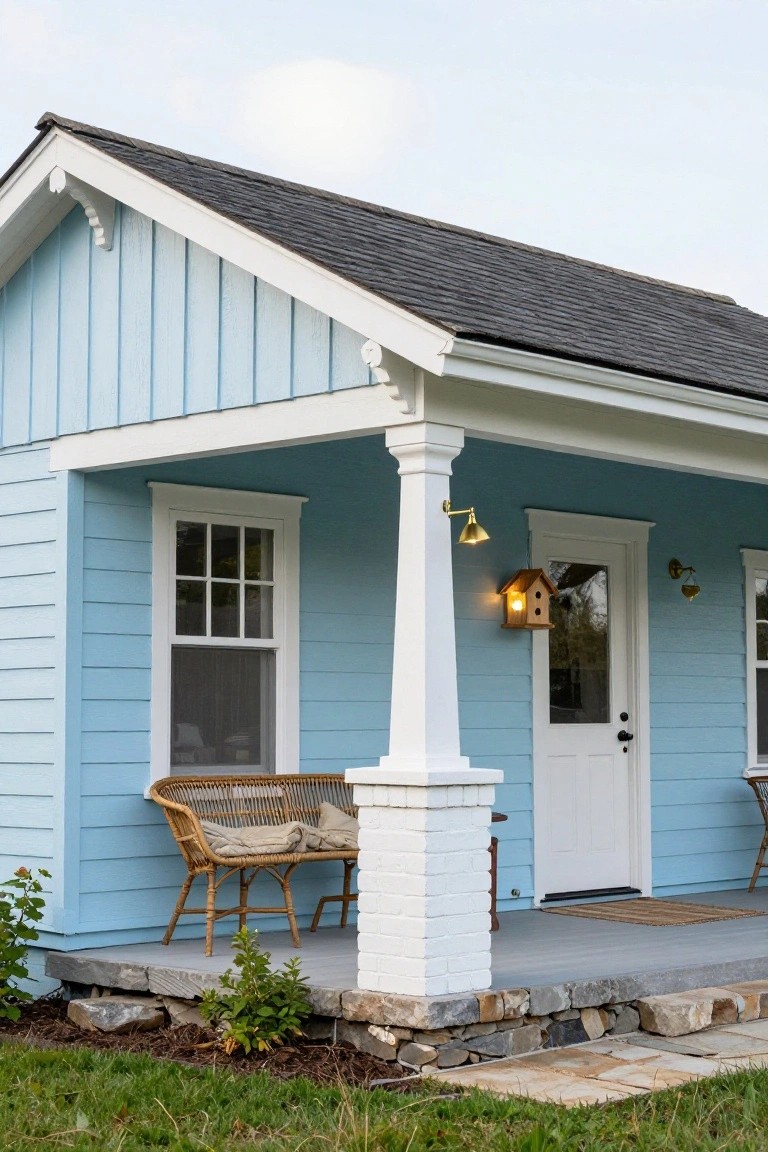
A covered porch like this one takes a simple blue clapboard house and turns it into something that feels more like home right from the street. Those tall white columns stand out clean against the soft blue siding, giving the whole front a balanced, classic look. Toss in a wicker bench and a lantern or two, and you’ve got a spot that says come on up.
This setup shines on smaller homes or cottages where you want extra charm without much fuss. It suits milder climates where you can actually use the porch year-round. Just make sure the columns are sturdy and the roofline matches your house style, or it might look added on later.
Natural Wood Door on Deep Blue Siding
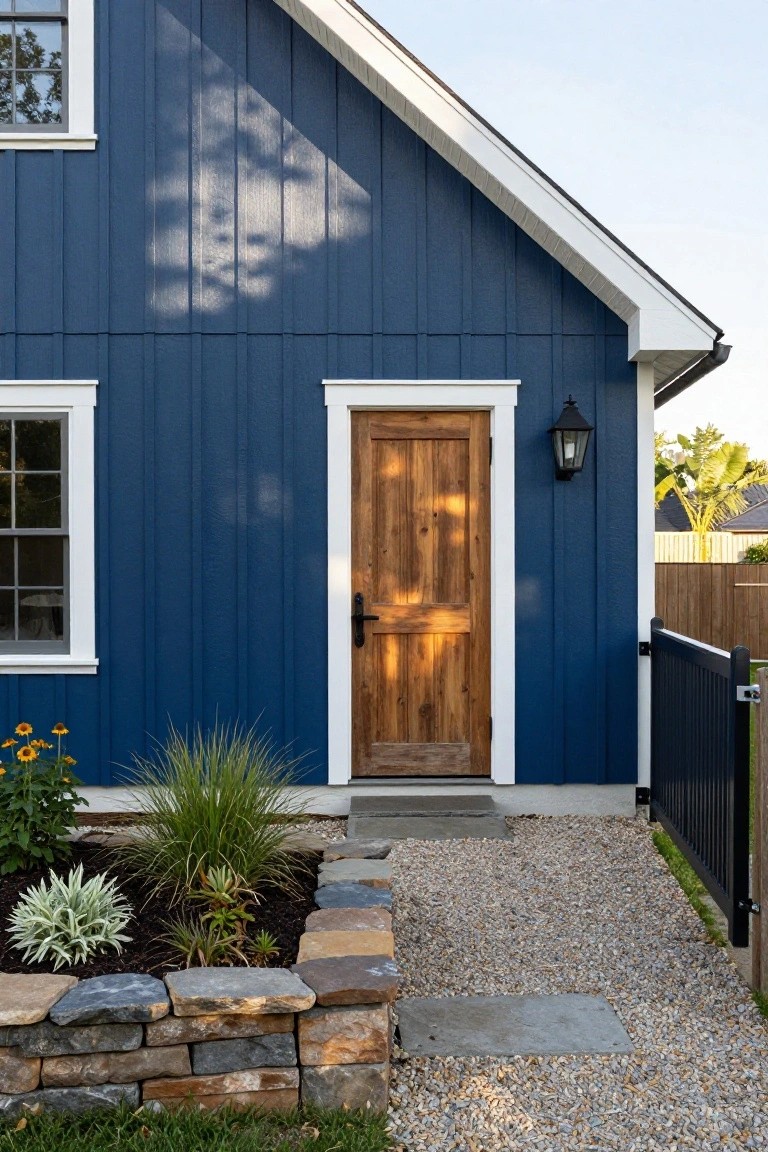
A simple wooden door like this one stands out against deep blue siding. The natural tones in the wood cut through the cool blue paint, pulling your eye straight to the entry. It adds a bit of warmth without much fuss, and that lantern light next to it helps at dusk.
This look fits homes with clean lines, like a modern farmhouse setup. Go for reclaimed barn wood if you want more texture, but keep hardware basic so the contrast does the main work. It pulls together a front path or side entry nicely, especially with some gravel or stone around the base.
Coastal Blue Siding with Navy Door Contrast
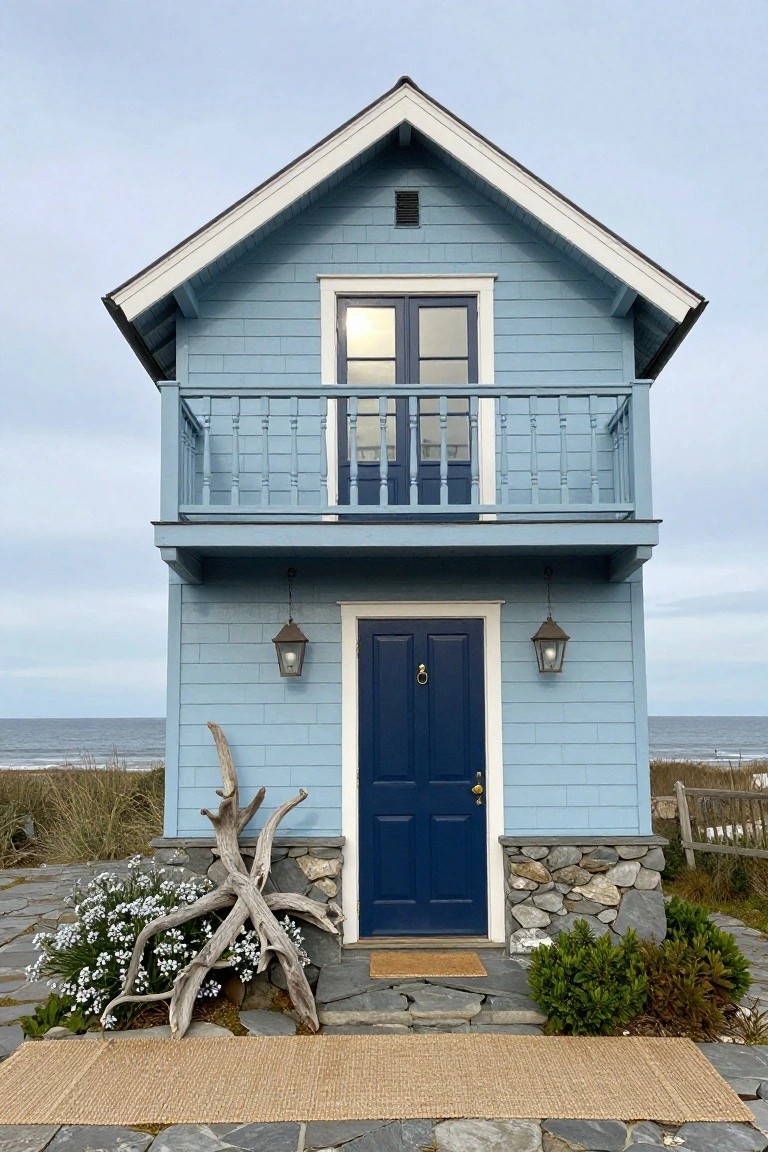
This light blue clapboard siding on a cottage-style house gives off that easy coastal feel. Pair it with a deep navy front door and you get a nice pop of color that draws the eye right to the entry. The soft blue keeps things calm against the beach backdrop while the navy adds some weight and welcome. It’s a simple switch that makes the whole facade look pulled together without much fuss.
Try this on smaller homes near water or in casual neighborhoods where you want charm without going bold. The blue works best in pale shades to stay airy, and keep the door glossy for that crisp look. Stone base and a bit of driftwood nearby tie it to the outdoors… just don’t overdo accents or it gets busy. Fits older bungalows or new builds aiming for relaxed vacation vibes.
Coastal Blue Shingle Siding
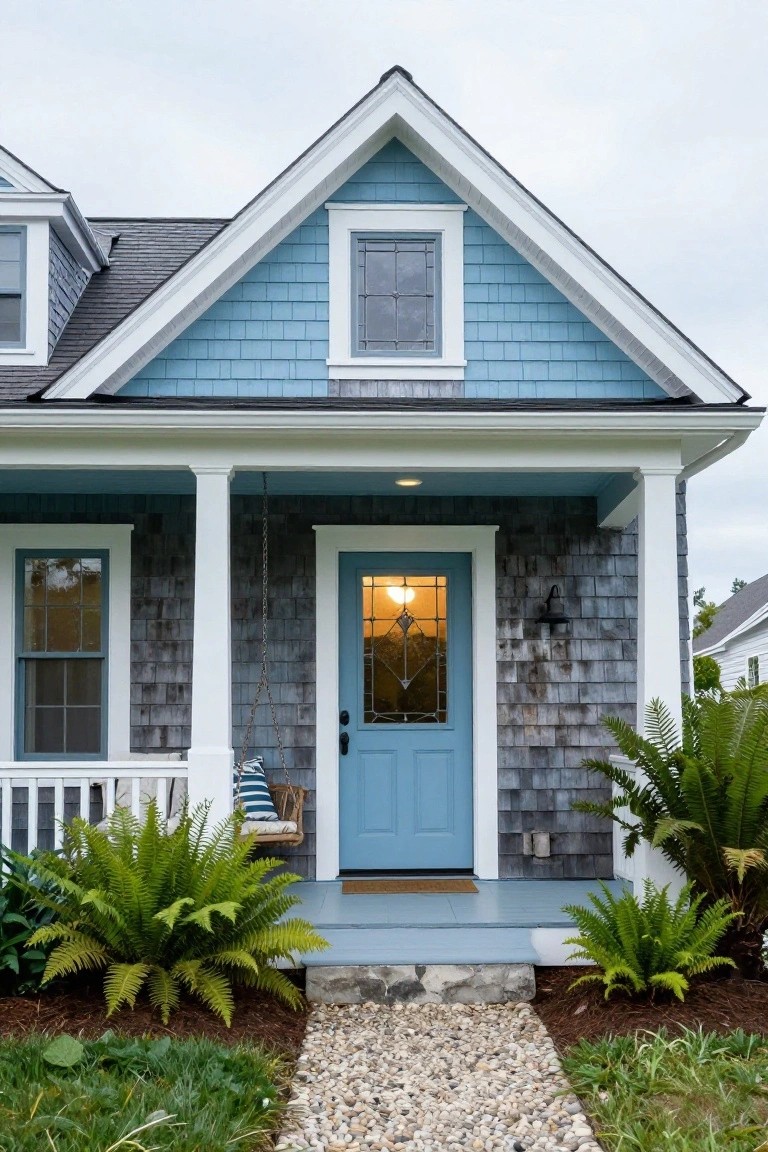
Soft blue shingles like these give a house that easy coastal cottage feel. The rough texture stands out against smooth white trim on the porch columns and gable. A simple porch swing hangs there, making the front door even more welcoming.
This look suits smaller homes in beach towns or suburbs wanting some seaside charm. Use it on gable fronts with deep porches. Stick to lighter blues so the house stays bright. Add ferns or low plants along the steps for a natural frame.
Corrugated Metal Siding on a Boxy Home
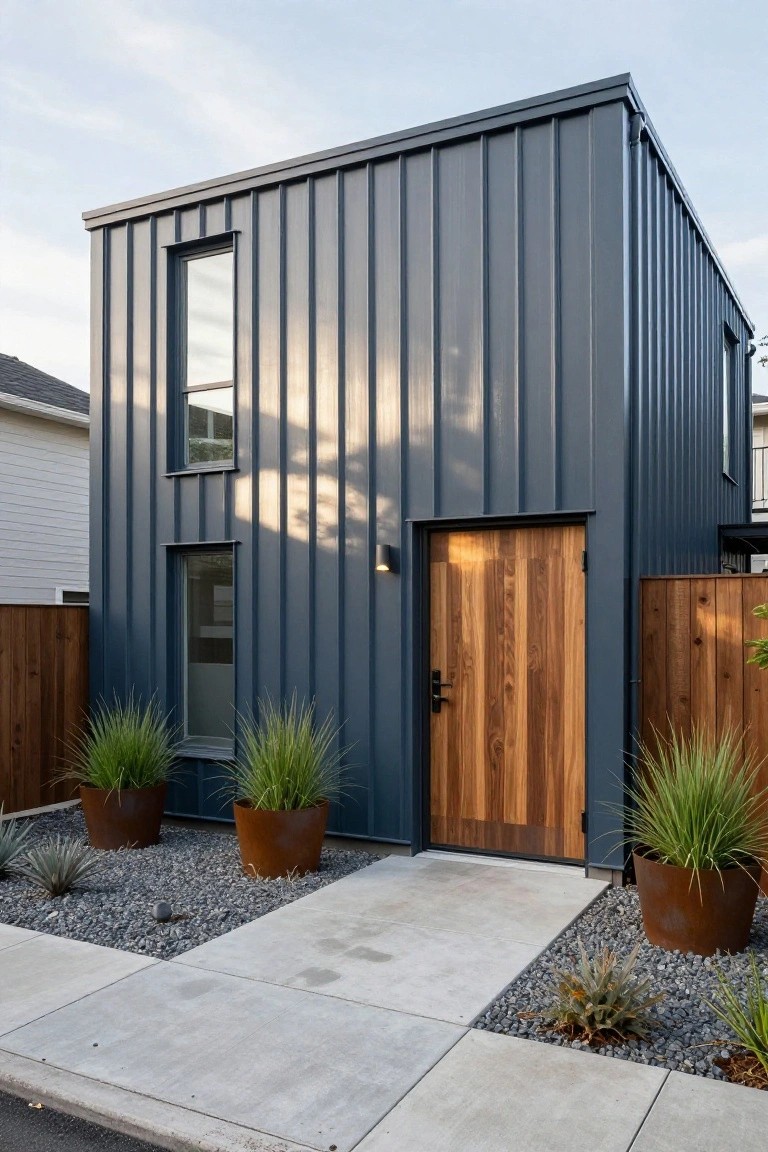
Corrugated metal siding in a deep blue-gray covers this compact house, giving it a straightforward industrial edge. The vertical panels run clean up the cube-like form, making the whole thing feel bold yet simple. A wide wooden door breaks up the metal just right at the entry.
This look fits tight urban lots or modern infill spots where you want low upkeep and quick curb appeal. Stick to minimal plants in big pots nearby, like the tall grasses here, and a plain concrete path. Skip busy details. It suits drier climates best.
Navy Blue House with Wooden Garage Doors
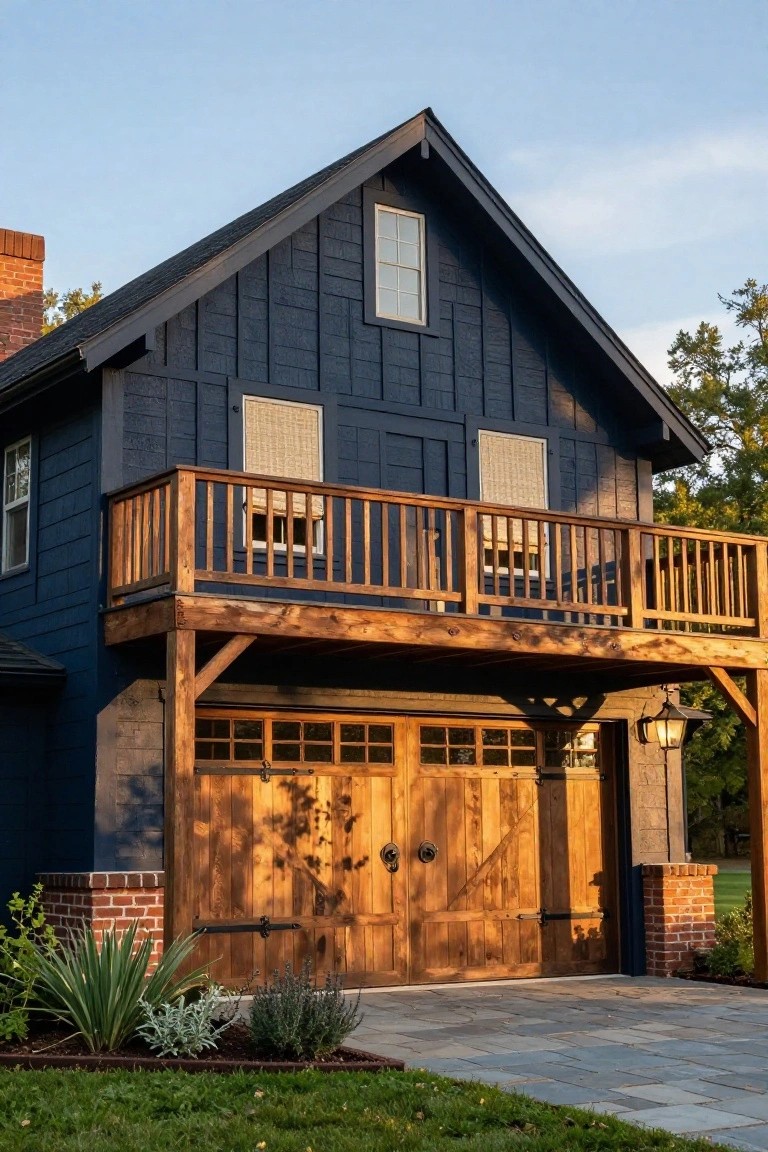
Big wooden garage doors like these make a dark blue house feel a lot less stark. The warm wood tones stand out right away against the navy siding, pulling your eye to the entry without trying too hard. That iron hardware on the doors adds just enough detail to keep things interesting.
Try this on a craftsman-style home or something with clean lines. Pair the wood with similar accents on a porch or balcony to tie it together. It suits spots with some landscaping out front… keeps the look grounded.
Frequently Asked Questions
Q: How do I pick a blue shade that fits my home’s style? A: Match the blue’s intensity to your architecture. Go bold navy for craftsman homes or soft sky for farmhouses. Hold samples outside at different times of day to see the real glow.
Q: What trim colors make blue siding stand out? A: White trim keeps everything fresh and bright. Black gives a sharp modern edge. Paint a scrap board first and prop it up to check the combo in your light.
Q: Does blue exterior paint fade quickly in sunny areas? A: Choose paints with solid UV blockers. They hold color longer than basic formulas. Rinse off dirt regularly to slow any fading.
Q: How do I keep a blue house looking sharp year-round? A: Hose it down every few months. Spot-clean mildew with a baking soda mix. Fresh paint every seven years or so revives the whole look.
