

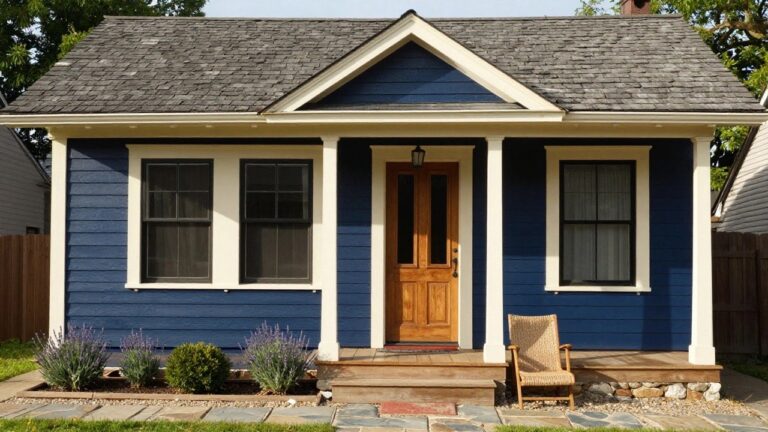
I remember pulling up to a friend’s renovated bungalow one evening, and their slate blue exterior made the simple gable roof and front door read sharper from the car.
From the street, a house’s color hits you first, shaping how the facade, materials, and entry all come together before details like trim or landscaping fill in.
Blues have a way of standing out against typical brick or siding without overwhelming the overall look.
I’ve found that testing swatches in morning and afternoon light reveals which shades hold up best on real homes.
A handful in this set pair well with common rooflines and accents, worth noting for your next project.
Navy Blue Siding with White Trim
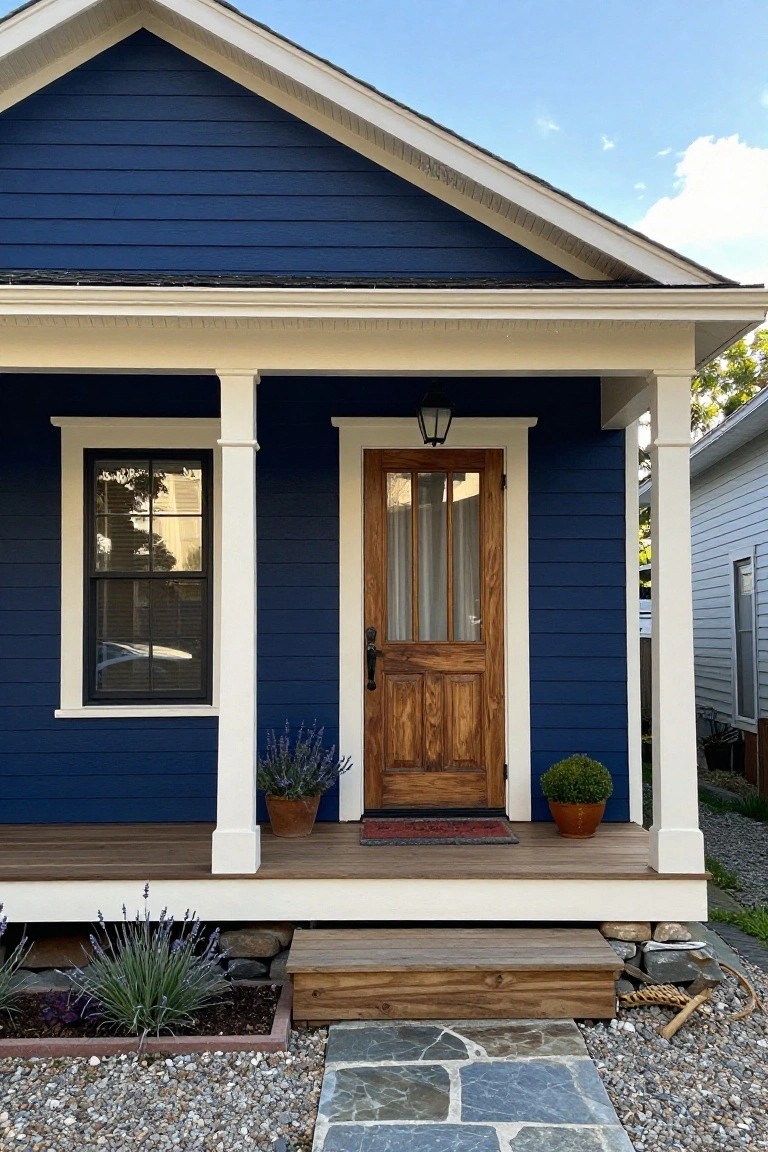
A deep navy blue siding like this gives a house real street presence without trying too hard. The white trim on the porch columns and window frames keeps everything sharp and balanced. That warm wood door pulls it together at the entry, making the whole front feel welcoming.
This look suits older cottages or bungalows best, especially in neighborhoods with some green around. Stick to clean lines on the trim so the blue stays the star. Add a few pots of lavender or simple plantings out front… it softens the edges nicely.
Pale Blue Cottage Exterior

This pale blue siding on a small cottage catches the eye just right, especially out by the dunes. It’s soft enough to feel at home in a beach setting but bright enough to stand out from the street. The white trim and porch railing sharpen it up without overpowering the color.
Paint it on a modest house like this if you’re after easy coastal charm. It suits vacation spots or relaxed neighborhoods best. Add a few pots of flowers on the porch steps, and keep the yard simple with gravel and tough plants. Skip it if your area’s too wooded, though. It needs open sky to shine.
Deep Blue Vertical Cladding
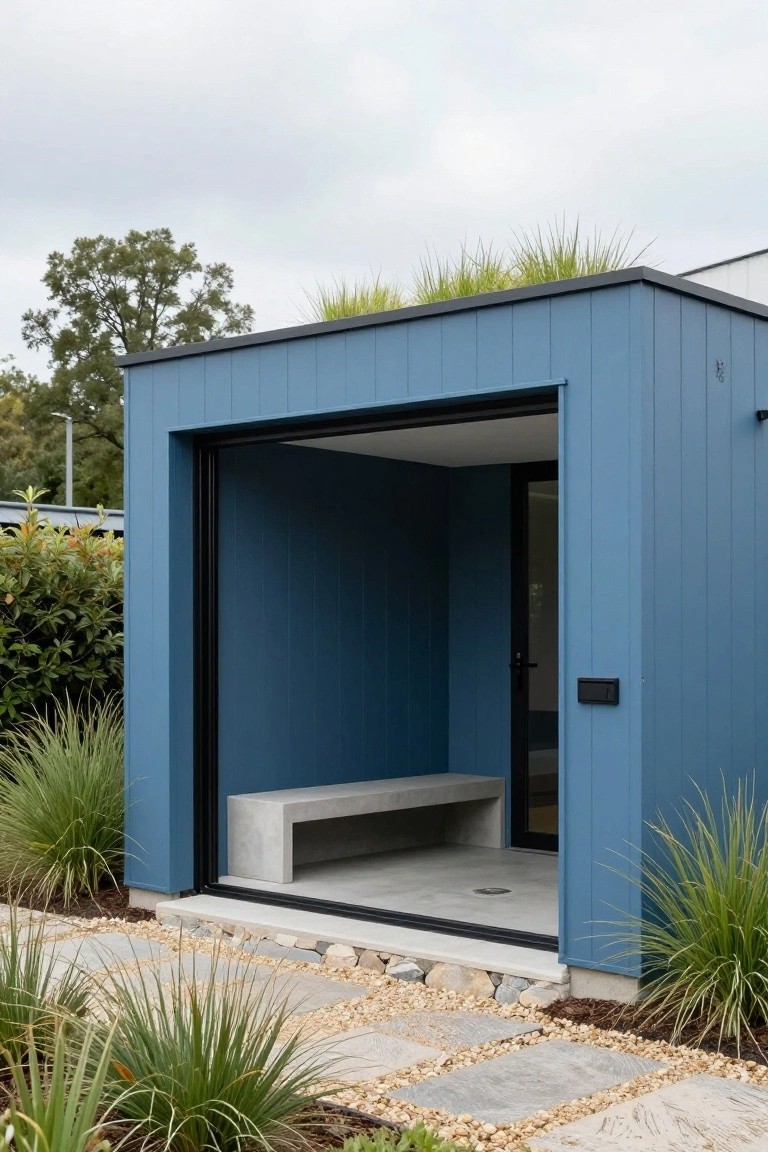
This deep blue vertical cladding turns a simple outbuilding into something that really catches the eye. It’s used here on what looks like a pool house or garden studio, with board-and-batten style panels that give it a modern edge. The color picks up nicely against green plants and stands out without being too loud, especially under a plain sky.
You can pull this off on garages, sheds, or guest spaces where you want a pop of color. It works best on smaller structures so the blue doesn’t overwhelm the main house. Pair it with concrete benches or stone paths for a clean look, and keep plantings low around the base to let the walls shine. Just make sure the paint holds up to weather, since blue can fade if it’s not quality stuff.
Stained Glass Entry on Blue House Facade
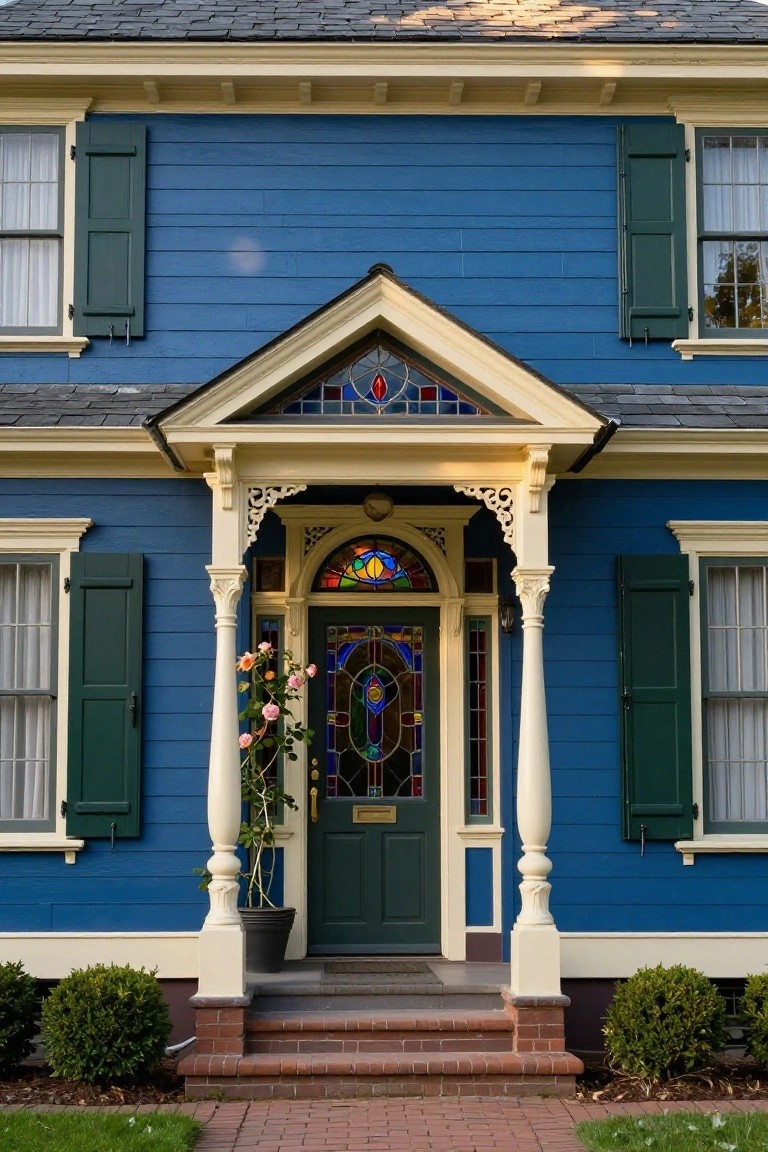
A stained glass transom over the front door gives this blue house an instant focal point. The rich blue siding provides a solid backdrop, while the colorful glass catches the light and hints at something special inside. It turns a simple porch into a standout feature that draws the eye from down the street.
This works great on older homes or ones with classic lines, like Victorians. Add white columns and a few climbing roses nearby, and you get real curb appeal without much fuss. Skip it if your porch is tiny… it needs room to shine.
Muted Blue Stucco Facade
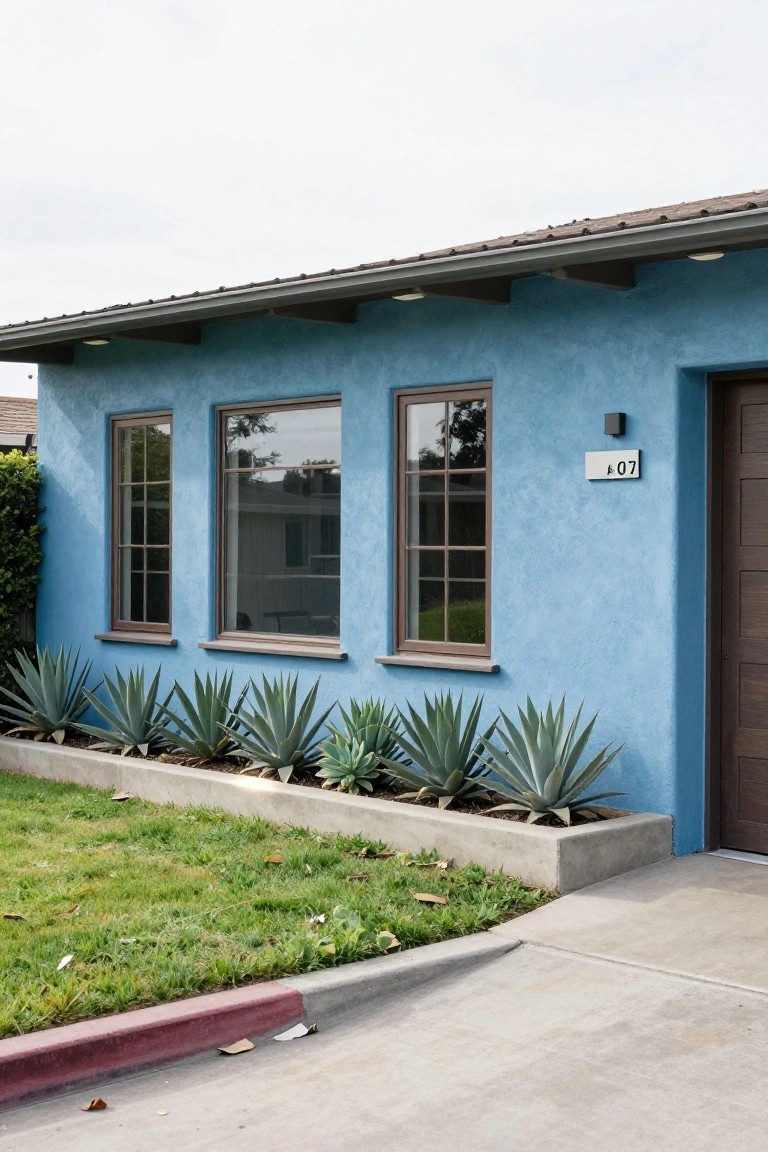
This muted blue stucco finish keeps things calm yet noticeable on the street. It has that soft coastal vibe without shouting. The color picks up light nicely during the day, and those wooden window frames add a bit of warmth to balance it out.
Try it on ranch-style or simple mid-century homes, especially where you get a lot of sun. Line the base with tough plants like agaves to echo the blue tones and draw the eye down. Just make sure the trim contrasts enough so the house doesn’t blend into overcast skies.
Bright Turquoise Beach Cottage Exterior

This turquoise blue siding turns a simple beach cottage into something that really catches the eye along the shore. The color pops right against the pale sand and green dunes, giving the house a fresh, nautical feel without trying too hard. White trim around the windows and roof keeps it crisp, and those rope railings on the deck add a bit of seaside charm that fits perfect.
You can pull this off on small coastal homes raised on pilings to beat the tides. It works best where you want low-key curb appeal that nods to the ocean. Just pair it with natural wood accents and keep landscaping simple with beach grass. Avoid darker shades here, they can feel heavy in the salt air.
Navy Blue Painted Brick Exterior
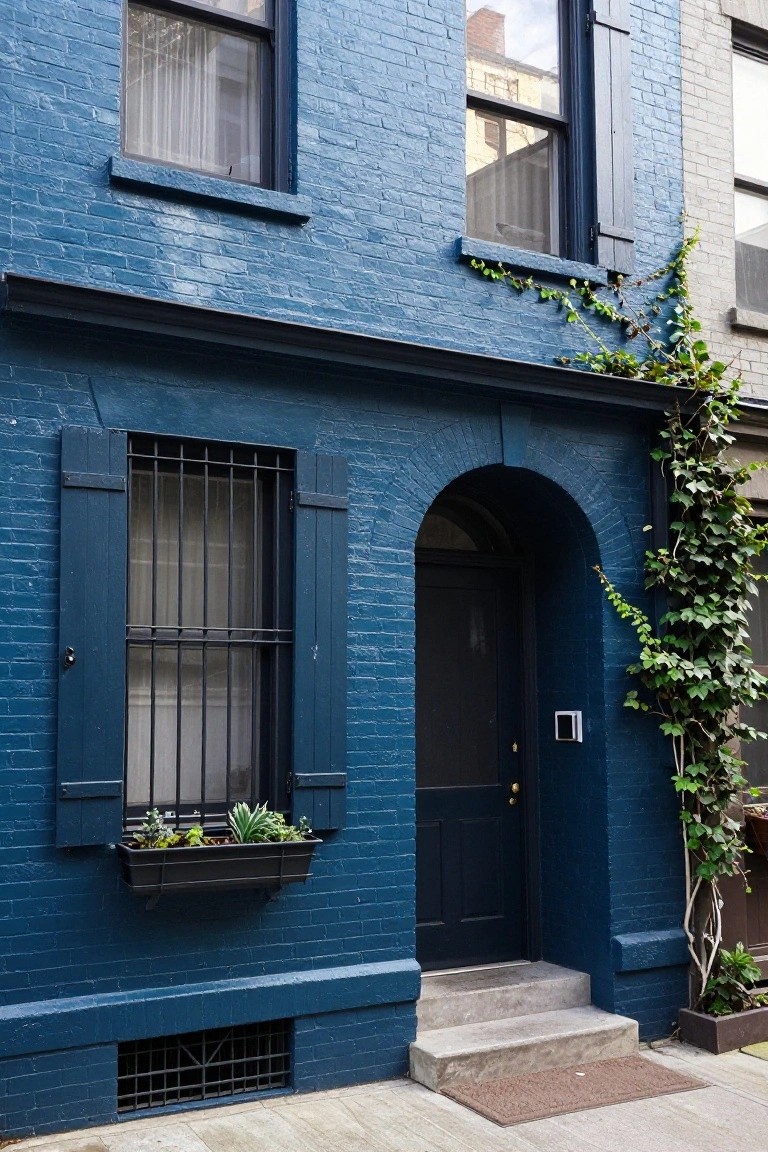
A deep navy blue paint job on brick gives townhouses that rich, standout look without screaming for attention. It works so well on these older urban facades because the color hugs the brick texture nicely, making the house feel solid and timeless. The arched doorway and black front door add to that classic vibe, while a few plants keep it from feeling too stark.
This shade shines on narrow street-front homes like rowhouses or brownstones. Pair it with dark trim on windows and doors for contrast that pulls everything together. Ivy climbing one side softens the edges a bit. Go for it if your place has good bone structure, but test the color in different lights first – navy can shift moody depending on the sun.
Soft Blue Cottage Siding

This light blue siding gives a house that fresh, airy feel without shouting for attention. It’s a pale shade, almost like a summer sky, that works great on a simple cottage style with white trim and a classic porch. The color picks up on the sky and fields around it, making the home blend in just enough while still standing out from the street. Those copper lanterns on the porch add a bit of warmth too.
Try this on older farmhouses or starter homes in the country or suburbs. It suits clapboard siding best, paired with crisp white trim to keep things clean. Just make sure the roof is neutral, like gray shingles, so the blue doesn’t get lost. Avoid it on super modern boxes, though. It needs some traditional lines to shine.
Black Door and Awning on Blue Siding
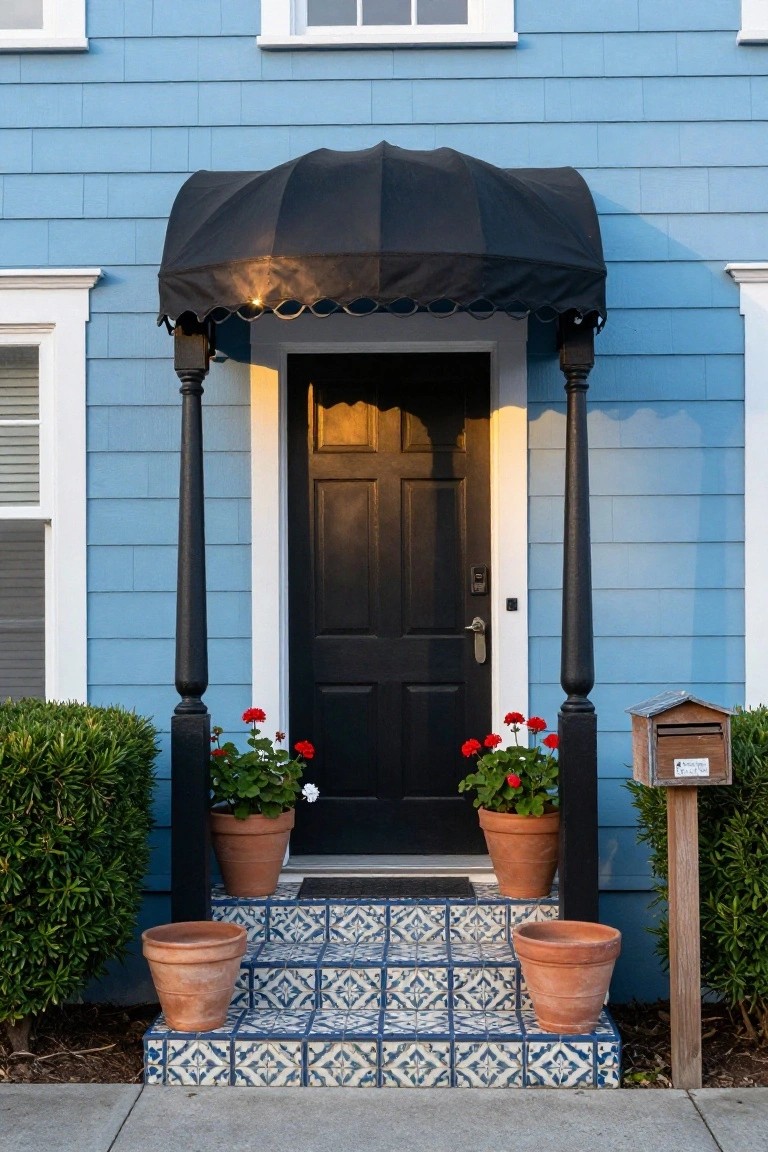
A light blue house like this one gets a strong entry with its black awning, door, and columns. That dark contrast pulls your eye right to the front door. It keeps the blue from looking too soft, and the simple setup works well on a street of similar homes.
You can pull this off on most blue shades, especially paler ones. Add terracotta pots with red flowers on the steps for extra color without much work. It suits older neighborhoods where you want classic curb appeal that doesn’t shout.
Soft Blue Cottage Exterior

A soft blue like this on clapboard siding turns a simple cottage into something that catches the eye down the street. It feels fresh and classic at the same time, especially with cream trim framing the windows and door. Those red geraniums in pots right by the entry pull it all together without much fuss.
This color works best on smaller homes with traditional lines, like bungalows or old village houses. Stick to lighter trim to keep things balanced, and add a couple pots of bright flowers for contrast. It brightens up gray days too… just avoid darker shades if your roof is slate.
Navy Blue Siding on a Colonial Home
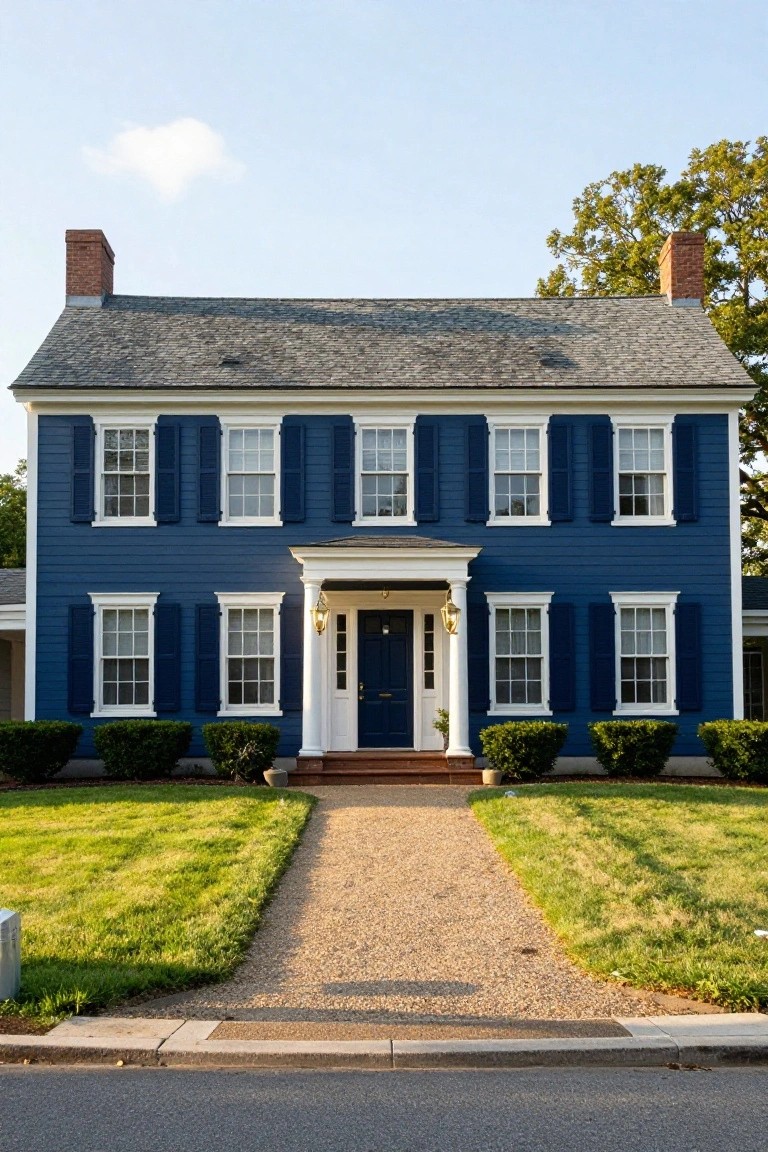
A deep navy blue paint job like this turns a classic colonial house into something that really catches the eye from the street. The color hugs the clapboard siding nicely and sets off the white trim around the windows and doors. It feels bold but still traditional. No need for extra fuss. The simple symmetry of the facade does the rest.
This shade works best on older style homes with clean lines, like colonials or federals. Keep the trim bright white to make the blue stand out more. Add a gravel path and some boxwoods out front, and it looks pulled together without much work. Just avoid pairing it with busy landscaping. Let the house color lead.
Deep Blue House with Wood Garage Door
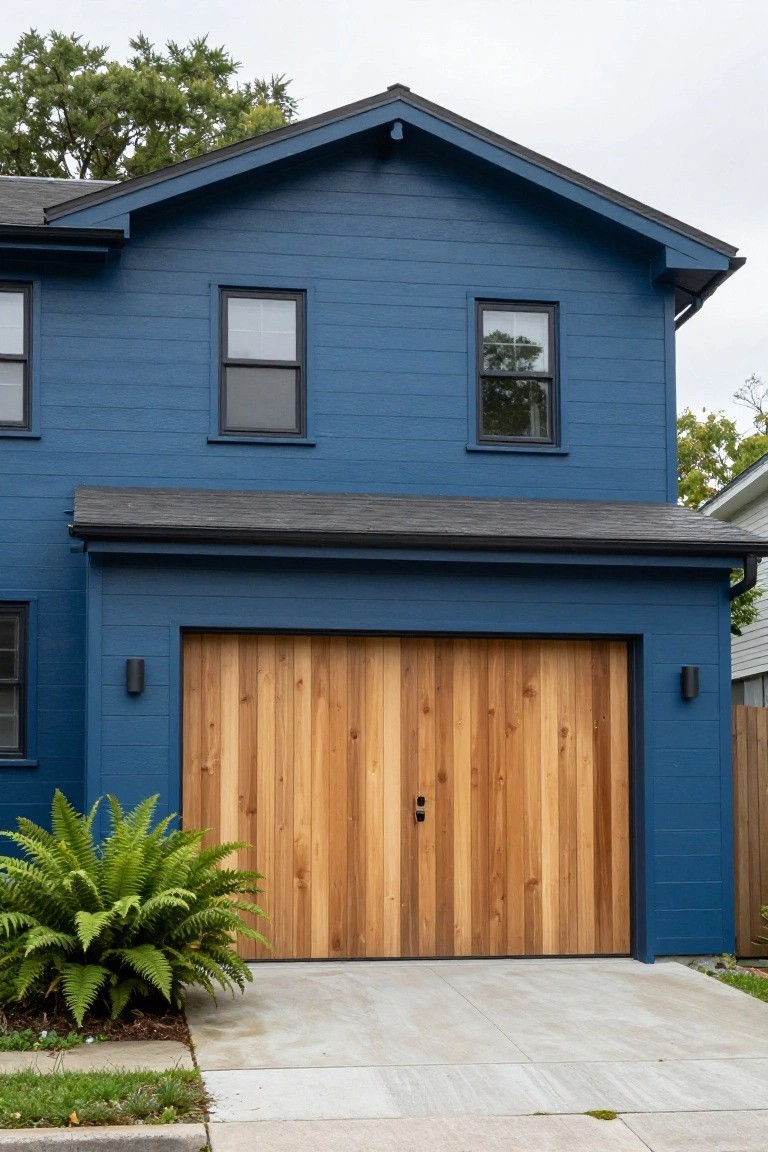
A deep blue siding like this one grabs attention right away on any street. It gives the house a modern edge without feeling cold. That big wooden garage door in warm cedar tones pulls it all together. Adds real texture and keeps things from looking too stark.
This look works best on craftsman or farmhouse styles tucked into leafy neighborhoods. Go for a bold navy or teal paint on the body. Then contrast it with unstained or lightly finished wood on the garage or entry. Just plan to seal the wood every couple years. It holds up nice that way.
Blue Brick Exterior with Matching Door
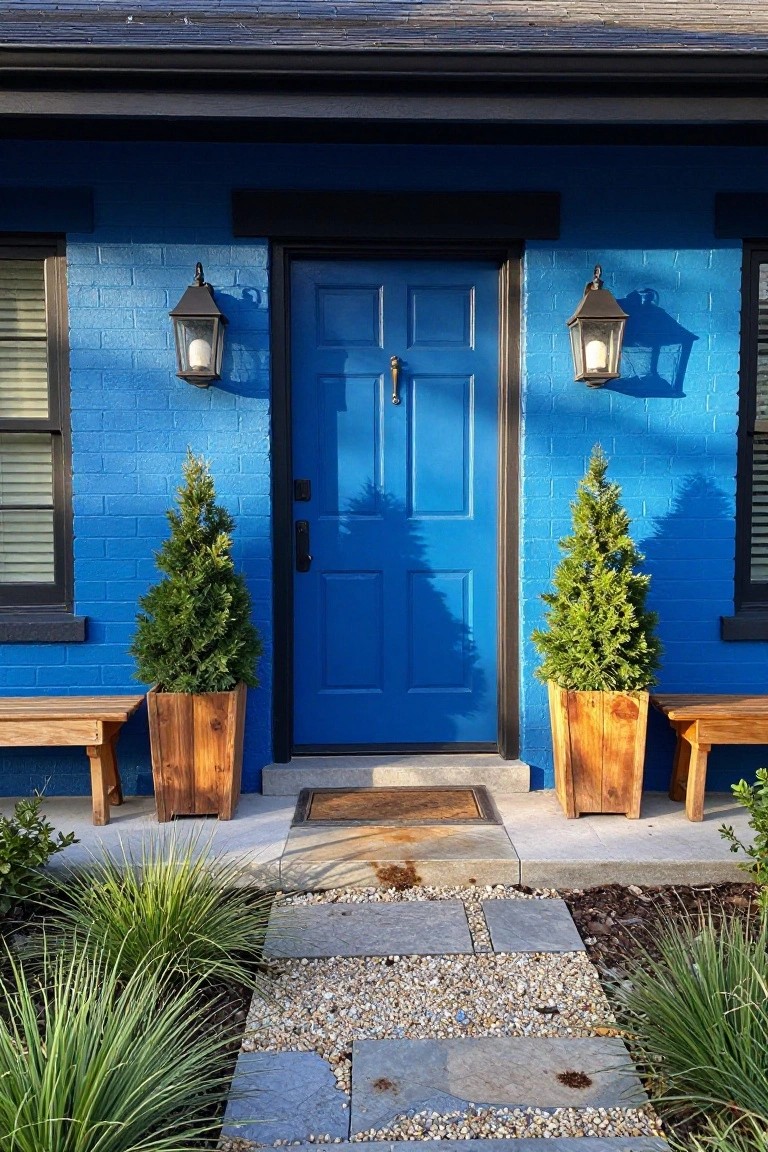
A deep blue brick facade like this one grabs attention right away on any street. The color is bold but not overwhelming, especially with the door painted in a close shade of blue. Flanking lanterns in black add a touch of contrast, and the wooden planters with small evergreens keep things grounded.
This setup works best on homes with clean lines, whether modern or cottage style. Use warm wood accents to balance the cool blue tones, and keep the entry simple. It suits urban or suburban spots where you want the house to feel welcoming without too much fuss.
Teal Board-and-Batten Siding

A deep teal blue on board-and-batten siding gives this cabin a fresh take on rustic style. The vertical lines make the color read strong from the street, especially with simple wood trim around the windows and doors. It holds its own next to all those trees and rocks without fading into the background.
Try this on smaller homes in wooded or mountain spots where you want some color but not a loud one. Stone at the base keeps things from feeling too skinny, and a gravel drive fits right in. Skip it on super modern builds, though…it leans more cabin than sleek.
Bright Blue Stucco Facade
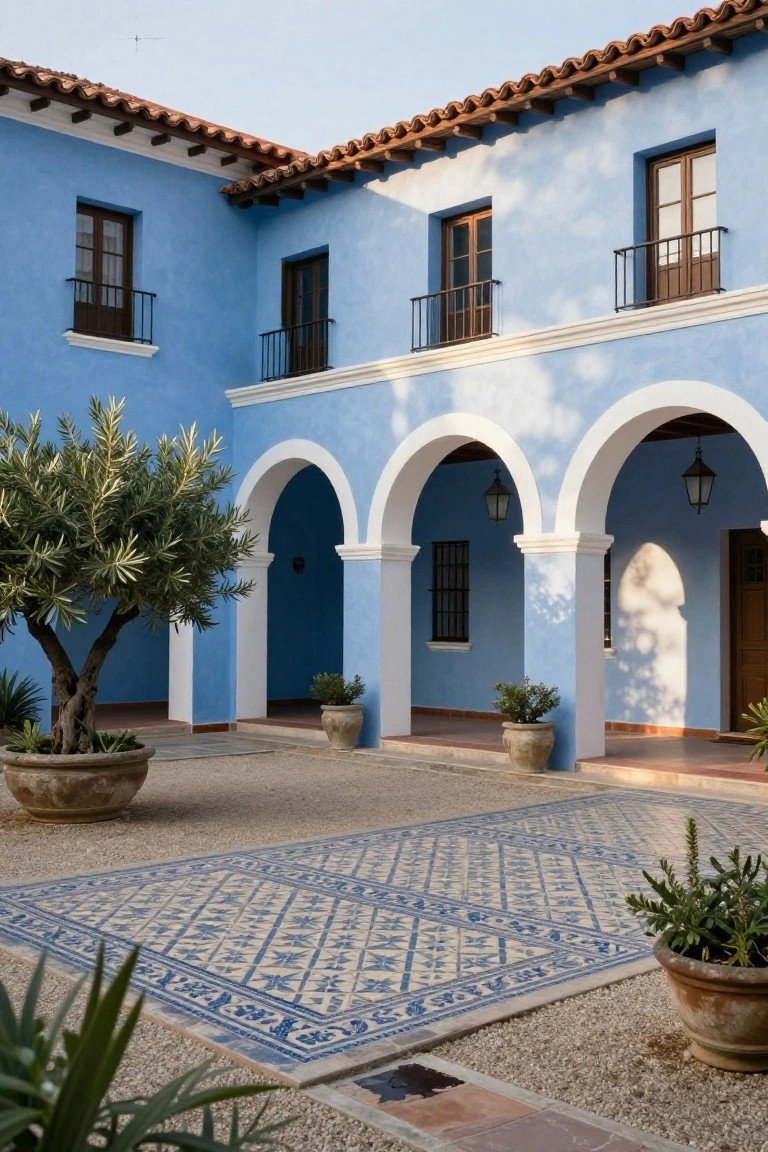
A fresh sky blue on stucco walls like this one turns a simple house into something that catches eyes from down the street. The color pops nicely in sunlight, and those white arches keep everything looking sharp without too much fuss. It’s a straightforward way to give your home some personality.
This look fits older styles with a bit of Spanish or Mexican flair, especially around courtyards or entryways. Pick a durable exterior paint rated for sun exposure, and pair it with neutral trim so the blue does the main work. Skip it on shady lots where it might feel too cool.
Pale Blue House with Blue Door
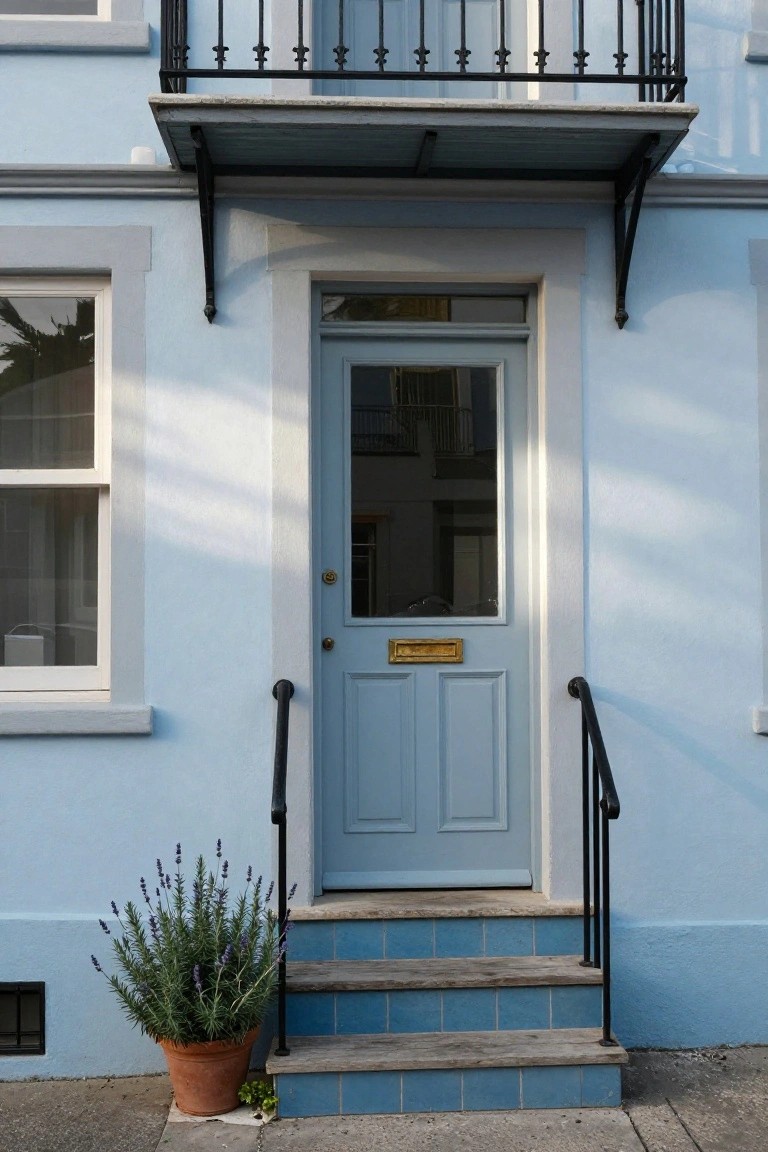
A pale blue paint on the house walls works nicely with a door in a deeper shade of the same blue. It keeps everything looking calm and pulled together. That soft color stands out on the street but doesn’t shout. A simple gold letterbox catches the light just right.
This setup suits older homes or row houses in town. It feels fresh on light brick or siding. Add a potted lavender by the steps… easy curb appeal. Skip bold trim colors to let the blue lead.
Navy Blue Cottage Facade

A deep navy blue siding like this gives a cottage a strong, standout look without trying too hard. The vertical clapboard picks up shadows nicely in the late light, and white trim around the windows and gables keeps everything sharp and clean. That wooden front door in a warm tone pulls it all together, making the entry feel right at home.
This setup works best on smaller homes with simple rooflines, especially where there’s some green around to contrast. Add matching benches by the door and a stone path, and you’ve got easy curb appeal. Just keep the landscaping low-key so the blue stays the star.
Teal Blue Exterior Walls
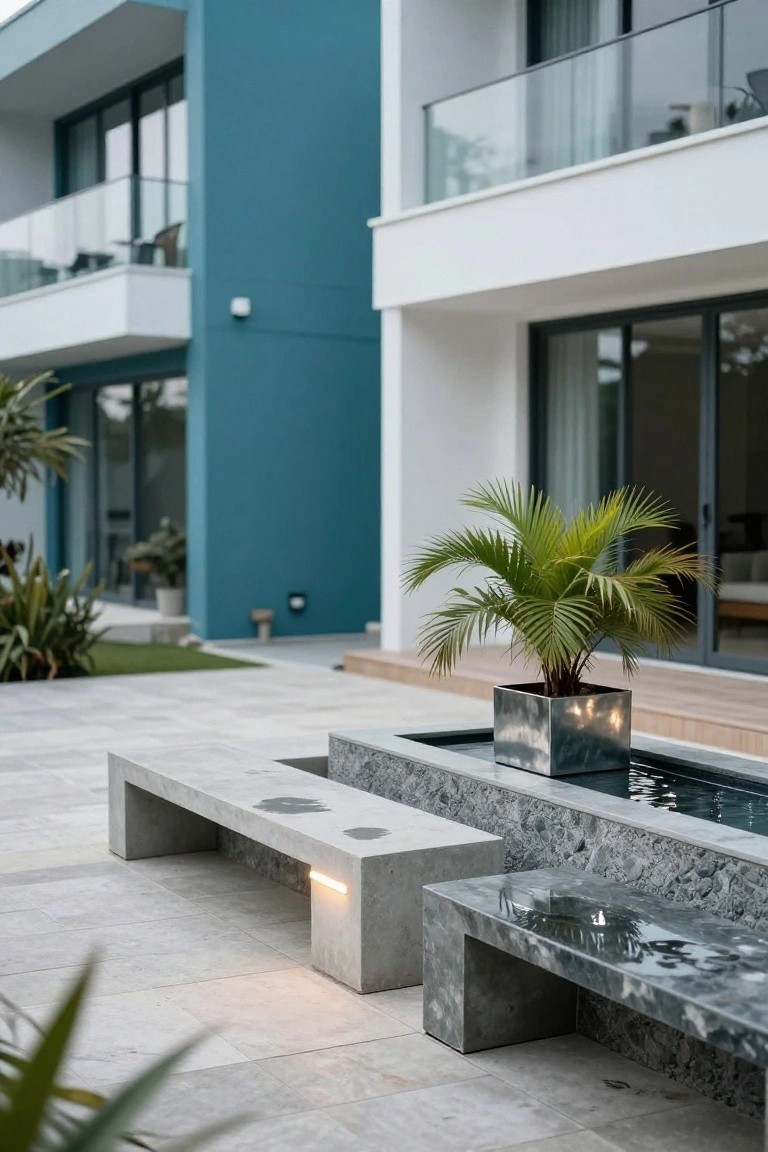
Teal blue walls like these give a house a fresh, modern edge that turns heads on the street. It’s not your standard navy or sky blue. This shade has a bit of green in it, which keeps things lively and ties right into nearby plants or greenery. The color pops nicely against plain white sections, making the whole side of the house feel balanced and clean.
You can pull this off on homes with big glass doors or balconies, especially in warmer spots where palms and such grow easy. Stick to concrete or stone accents down low to ground it. Just test the shade in different lights first. It might look different in shade than full sun.
Deep Blue Siding on a Simple Facade
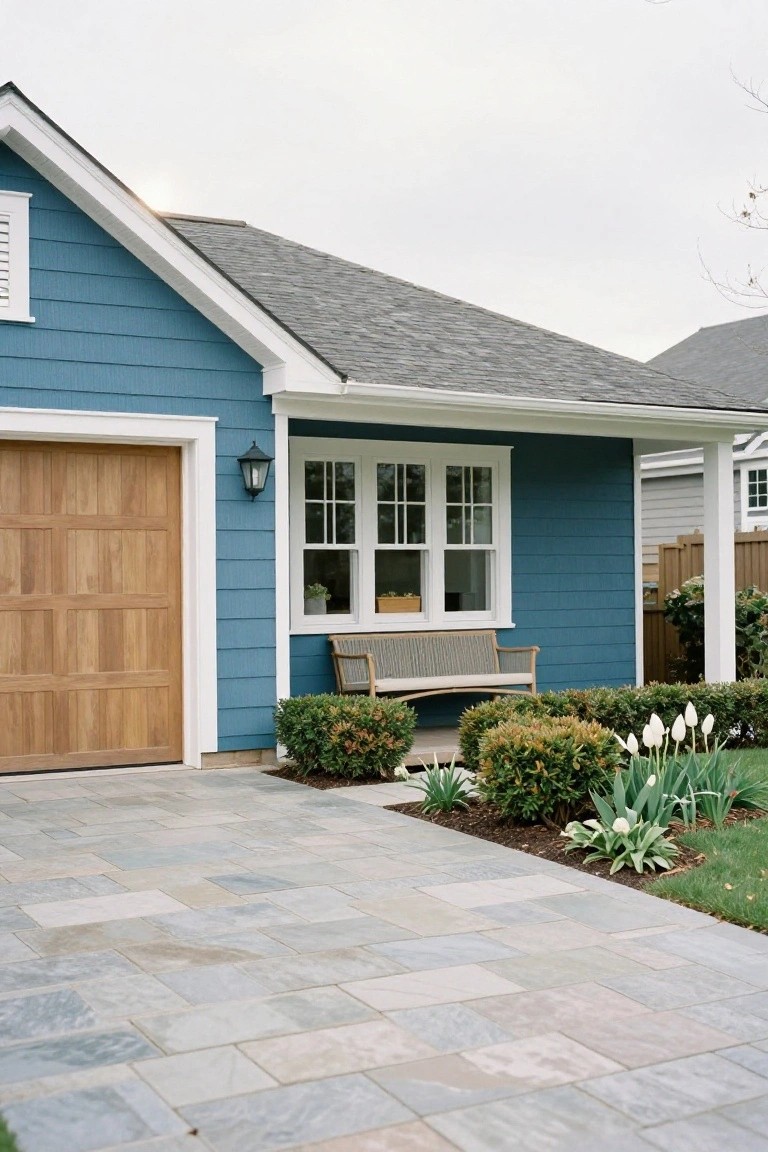
This deep blue siding gives the house a fresh coastal feel that catches the eye from down the street. It’s a shade that’s bold enough to stand out but pairs nicely with white trim around the windows and a plain wood garage door. The color keeps things classic without going overboard.
Try it on smaller homes or cottages where you want easy curb appeal. It looks good with a paver driveway and low boxwood shrubs along the edge. Just make sure the trim stays crisp white to keep the blue from feeling too heavy.
Soft Blue Garden Shed Exterior
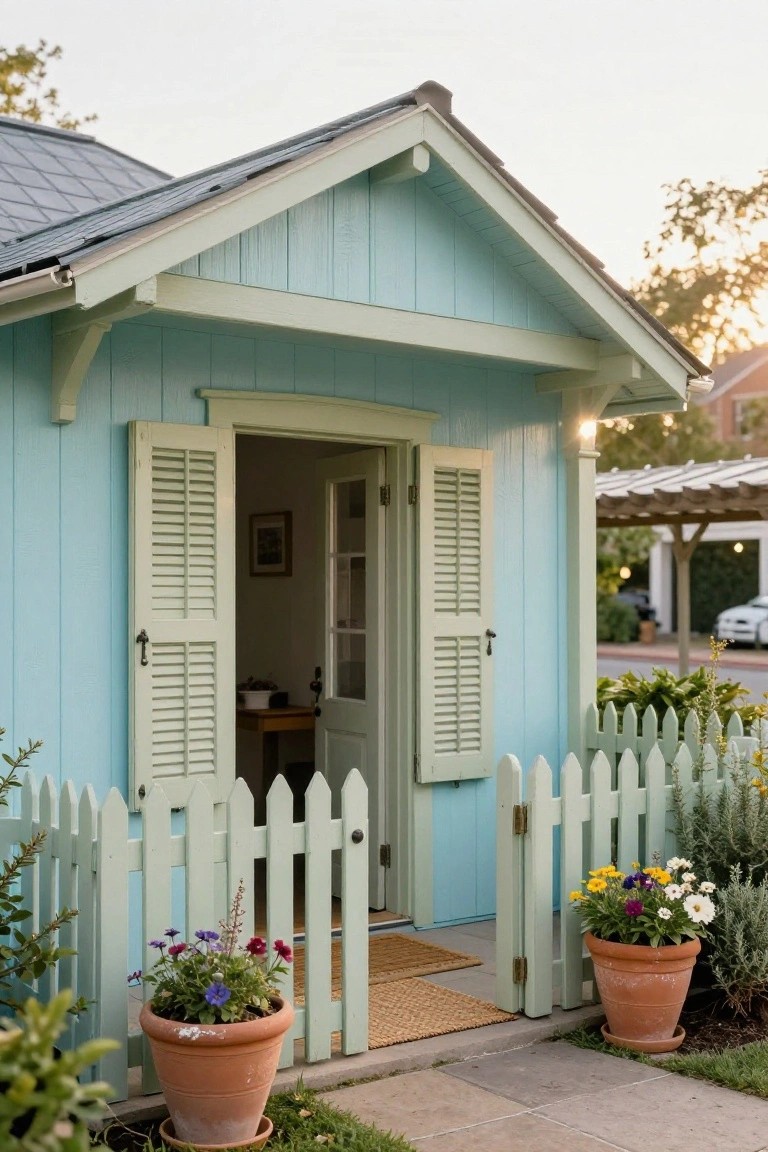
A soft blue like this on a garden shed turns a plain backyard building into something straight out of a storybook. The clapboard siding picks up the sky at dusk, and those crisp white shutters plus the picket fence keep it from feeling too bold. It’s charming without trying too hard, and it stands out just right on a street of bigger houses.
Try this color on a shed, potting area, or playhouse where you want a fun focal point. It suits family yards or cottage-style homes best, especially with simple pots of flowers around the base. Skip it if your main house is stark modern, though. Just match the trim to your fence for easy flow.
Frequently Asked Questions
Q: How do I pick a blue that won’t fade in full sun?
A: Go for mid-tone blues with good UV blockers in the paint.
They hold color longer than pale shades that bleach out fast. Slap a sample on your siding and check it after a couple sunny weeks.
Q: What trim color makes blue siding really pop?
A: White trim gives the cleanest contrast every time.
Paint it glossy to bounce light and make your blue shine brighter. Test the combo on a small patch first.
Q: Can I paint a brick house one of these blues?
A: Sure, limewash or breathable paint lets brick breathe underneath.
It softens the texture while the blue grabs eyes from the street. Scrub the brick clean before you start.
Q: My yard stays shady. Which blue brightens it up?
A: Cool grays with blue undertones wake up dark spots.
They reflect whatever light hits without looking dull. Hang a board with samples there to see the magic.
