

When you pull up to a house, the exterior color grabs you first and shapes how the whole facade reads from the curb.
I’ve noticed over years of walking neighborhoods that blues often lift plain siding or brick without clashing against roof shingles or trim.
They highlight entries and windows in a way that feels balanced, especially under shifting daylight.
One shade caught my eye on a friend’s updated ranch style home, where it warmed the street view instead of fighting it.
Certain blues like these reward a second look and adapt well to testing against your own setup.
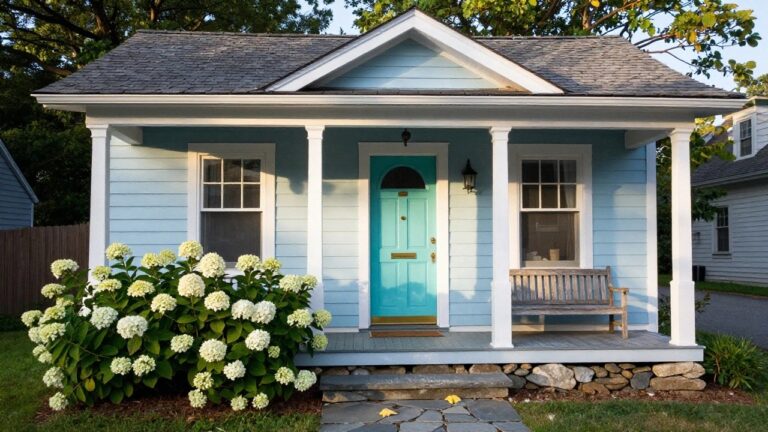
Pale Blue Siding with Turquoise Door
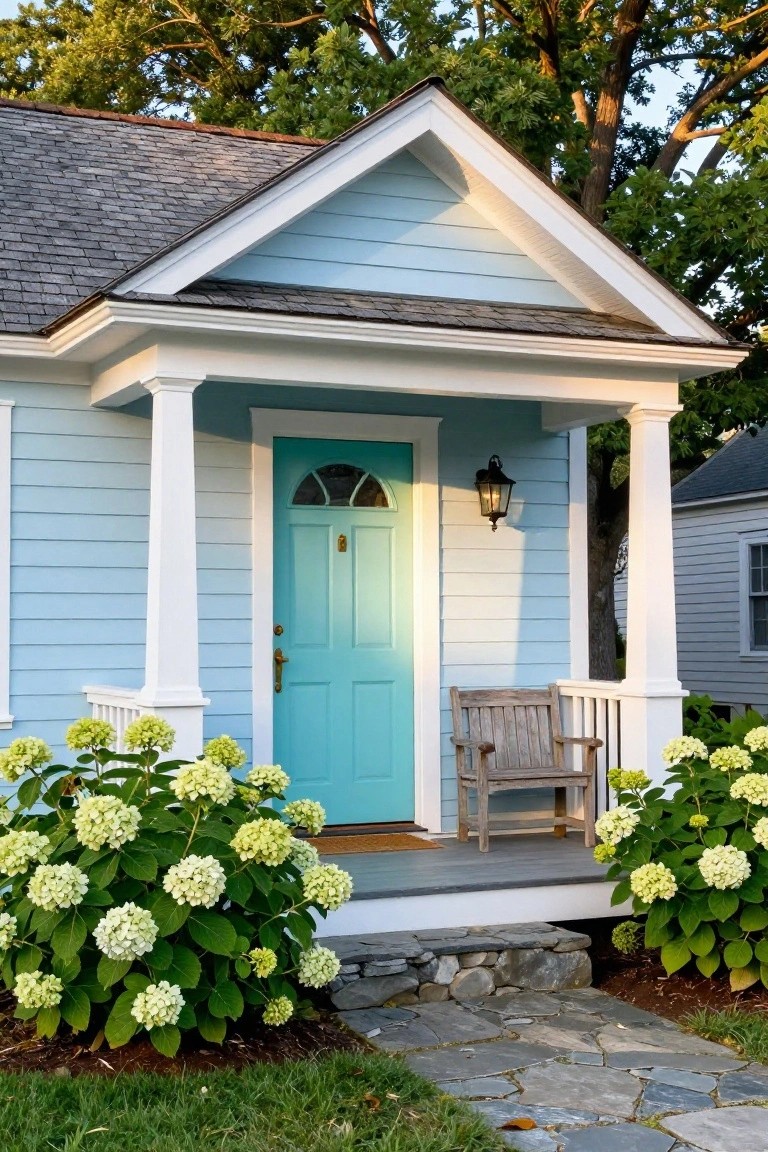
A pale blue on the house siding gives off a relaxed, coastal feel that’s easy on the eyes. Pair it with a brighter turquoise door, and you get a simple pop of color right at the entry. White trim and columns sharpen things up, while the soft shade blends well with natural surroundings.
This look suits cottage-style homes or older neighborhoods with trees and shrubs nearby. Go for matte finishes to keep it low-key. It shines in partial shade where the blues read softer during the day.
Deep Blue Siding with Warm Wood Door
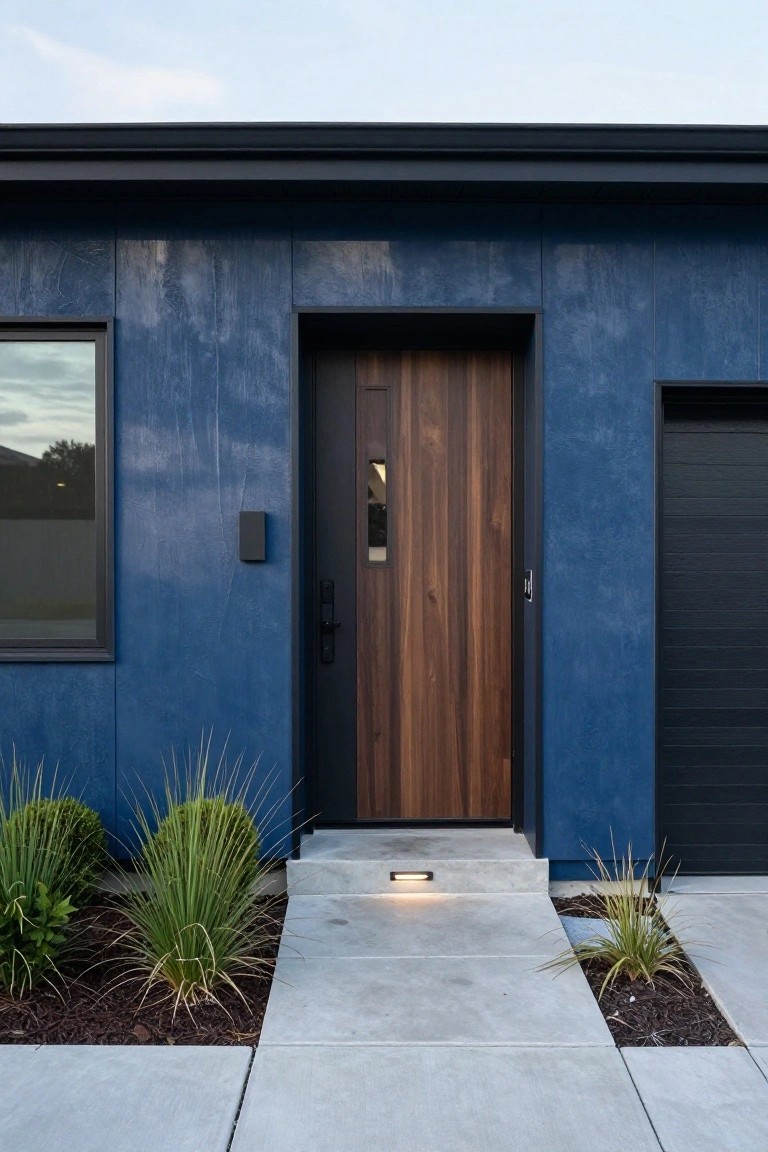
A deep blue like this on the house siding really stands out, especially when you add a warm wood door right at the entry. That walnut tone brings some natural feel to the cooler blue walls. It keeps things modern but not cold, and the simple path leads you straight there.
Try this on a low-slung modern home where you want curb appeal without much fuss. Pick a blue with a bit of texture for interest, pair it with vertical grain wood on the door. Native grasses along the walk fit right in. Watch the scale though. Too big a door might overwhelm a smaller house.
Light Blue Siding with Black Metal Roof
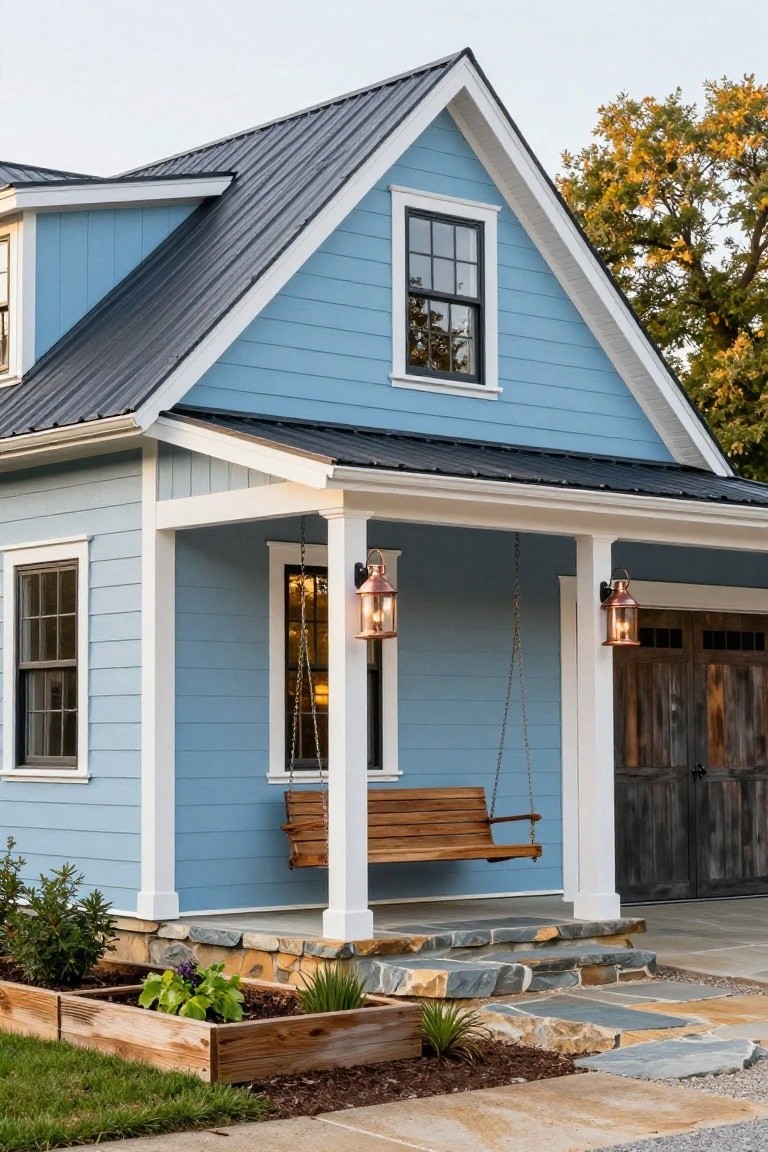
A soft light blue siding like this one gives a house that easy, approachable cottage look. The black metal roof pulls it together without overpowering the color. White trim around the windows and porch columns keeps everything clean and lets the blue shine through, especially in good light.
This setup works well on simpler homes, like gable styles or farm cottages, where you want curb appeal without too much fuss. Add wood touches, say a porch swing, to warm it up. Steer clear if your roof pitch is low… the contrast might feel off.
Soft Sky Blue Stucco Exterior
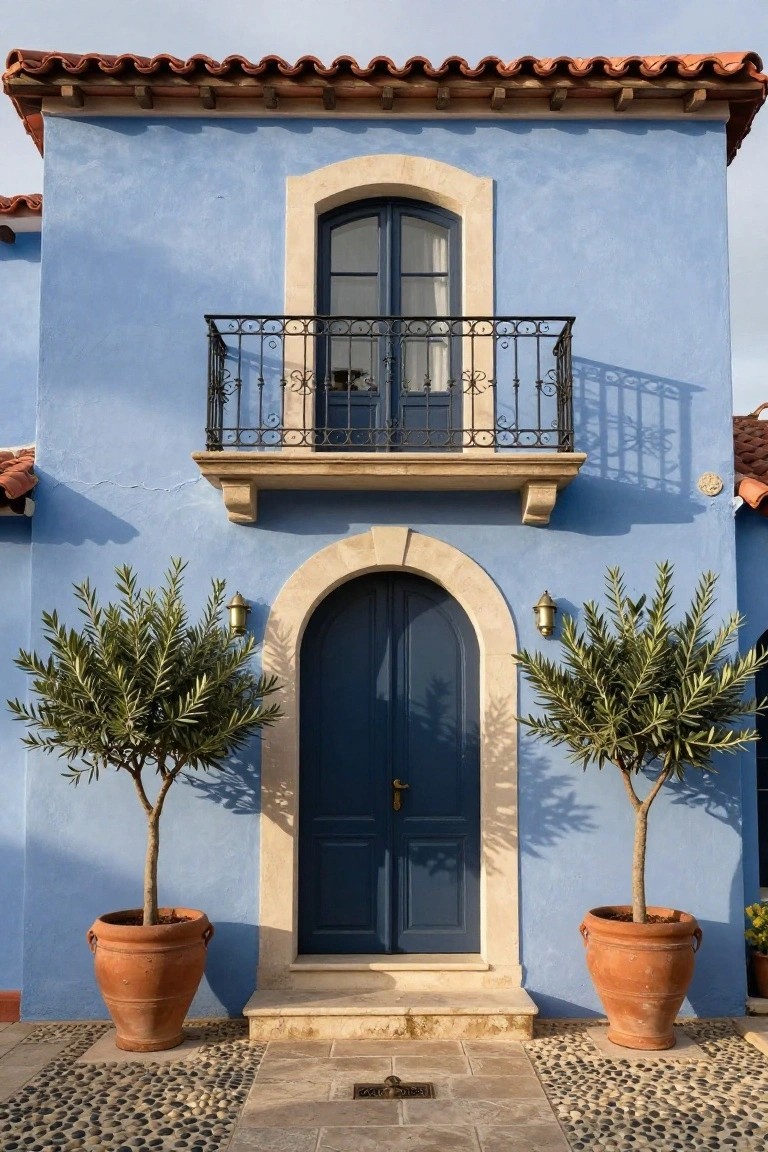
This soft sky blue on stucco walls brings a calm, sunny vibe to the house front. It plays nice with the warm beige stone arch framing the navy door, and those olive trees in big terracotta pots tie it all together without much fuss. The color feels light and open, especially under a clear sky.
Try it on a Mediterranean-style home or anywhere with lots of sun. Stick to neutral stone accents and dark wood or metal doors to keep the balance. It suits warmer spots best… cooler climates might need a slightly deeper blue to hold up.
Teal Blue Siding with a Yellow Front Door
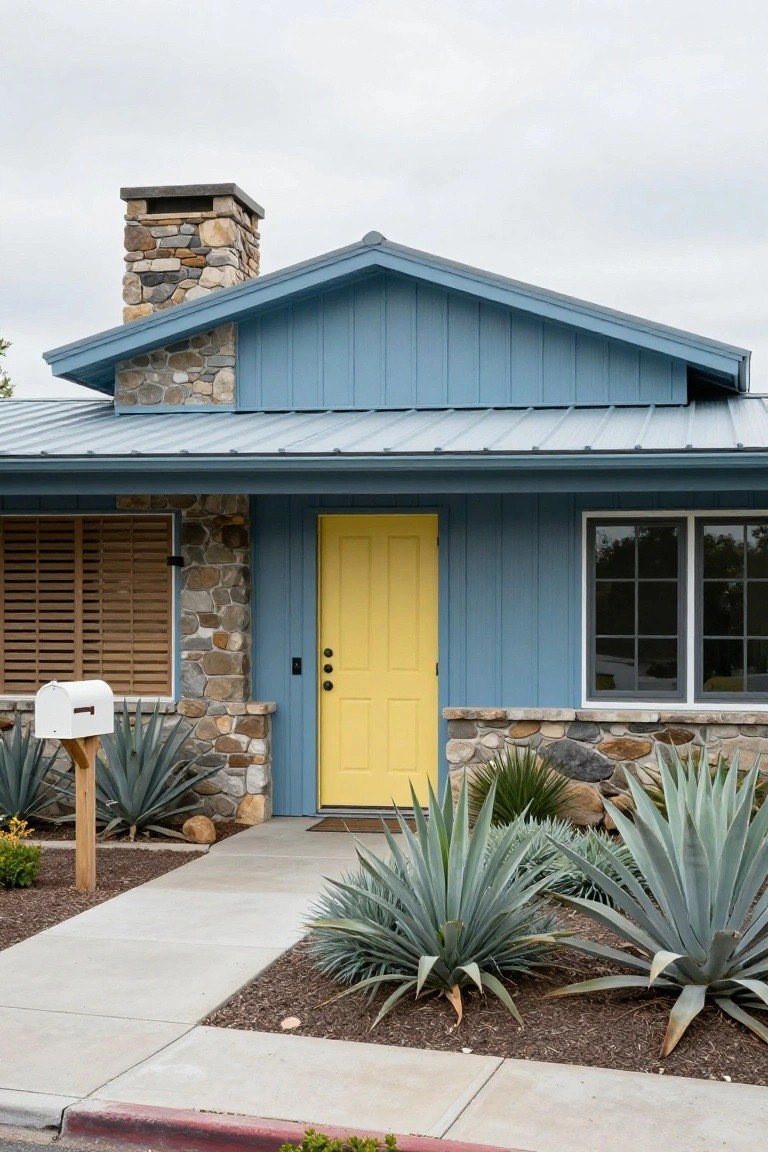
A teal blue exterior like this one keeps things cool and relaxed. It fits right into a casual coastal or desert vibe. That bright yellow door pulls your eye straight to the entry. It adds a hit of cheer without overwhelming the softer blue tones. Stone accents around the chimney and base tie it together nicely.
Try this on ranch houses or low-slung homes with simple lines. Pair the blue with drought-tolerant plants like agaves along the front path. The yellow works best in sunny spots. Just pick a quality paint to hold up against fading… and keep the door hardware simple so it doesn’t compete.
Navy Blue Shakes with Cedar and Stone
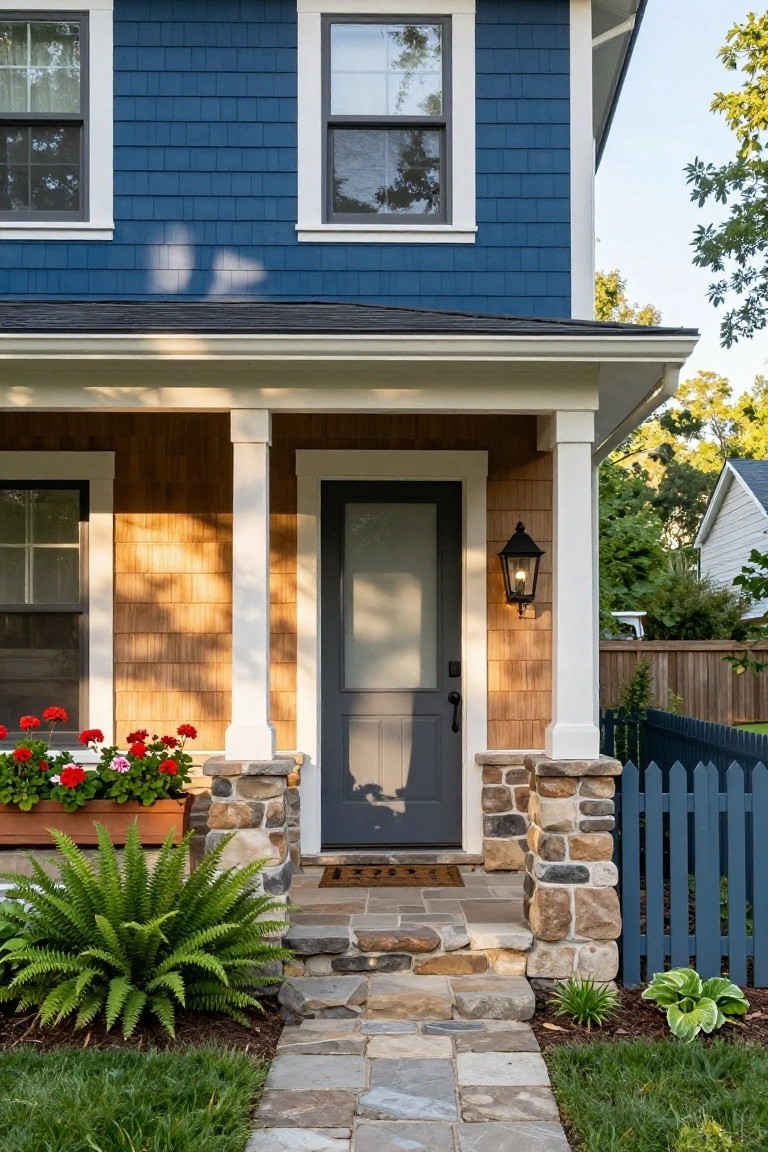
A deep navy blue covers the upper shakes on this house. Down below, cedar shakes mix in along the porch sides, with stone pillars holding up the white columns. That shift from cool blue to warmer tones right at eye level makes the front feel balanced and not so stark. The frosted glass door adds a soft touch too.
Try this on homes with a craftsman or coastal style. It suits places with some tree cover or open yards where the blue can pop against green. Stick to white trim to keep things crisp, and add a few plants near the steps like they did here. Just make sure the stone base matches your foundation so it all ties together.
Deep Blue Exterior Walls
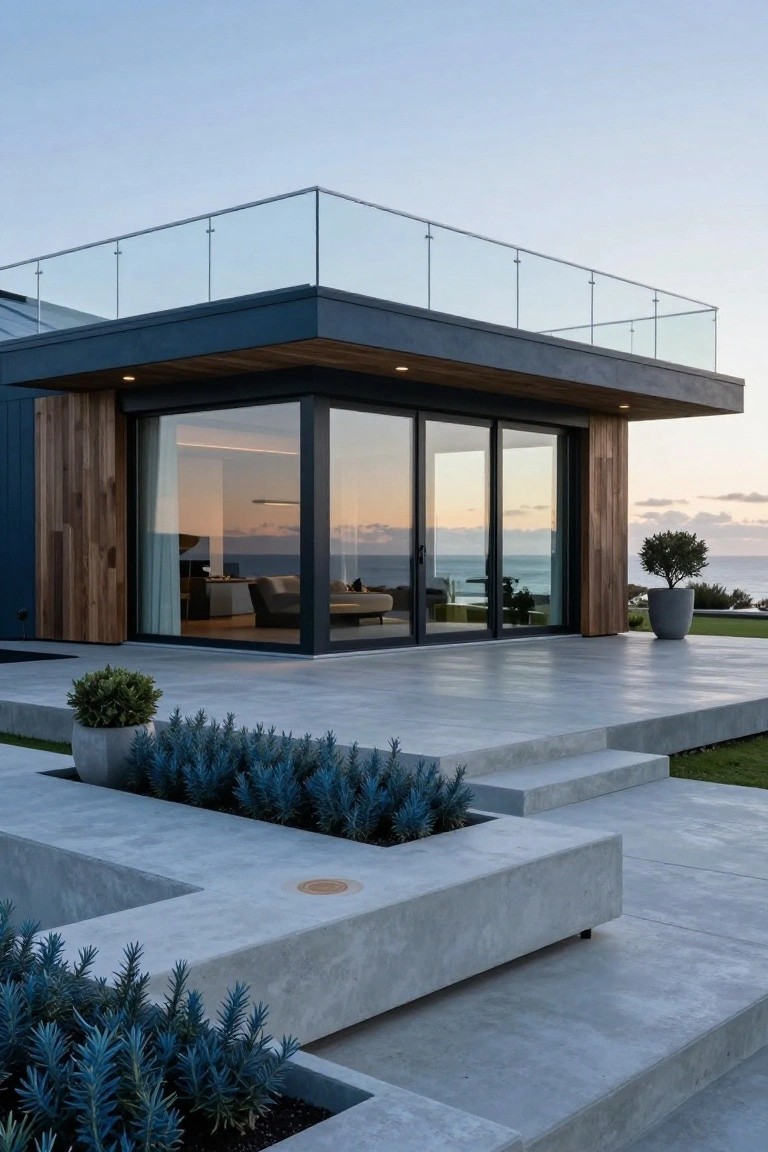
Deep blue walls like these give a modern house a grounded, almost moody look that fits right in with coastal settings. The color pulls from the ocean and dusk sky without being too bright, and it sets off the wood panels and glass nicely. It’s a strong choice when you want the house to feel sleek but connected to nature.
Try this on homes with clean lines and big windows, especially where you have water views or lots of sunset light. Pair it with concrete decks and simple plantings to keep things low-key. Just make sure the blue is a true exterior grade paint or cladding, since it needs to hold up to weather.
Light Blue Siding with Black Shutters
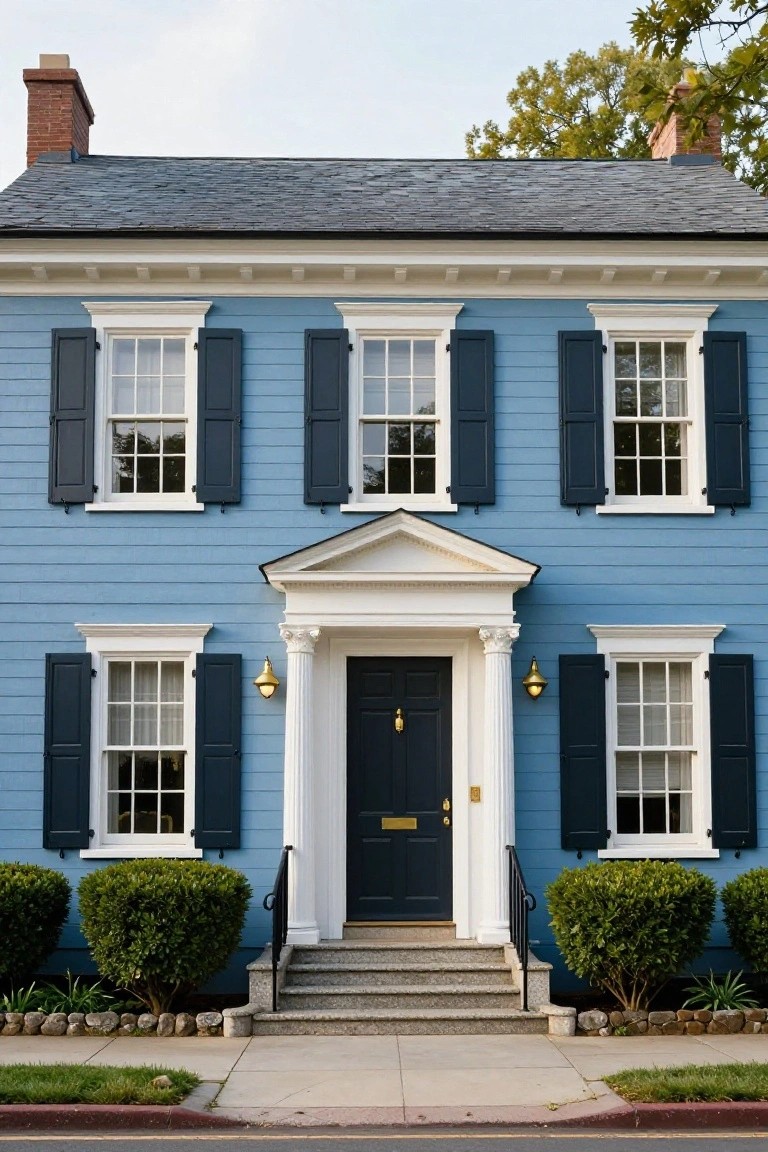
A light blue like this brings out the best in older homes with good bones. It softens the look of clapboard siding while the black shutters pull your eye to the windows. White trim around the edges keeps everything crisp. That combo feels fresh but still nods to tradition.
Try it on two-story Colonials or Federals where symmetry matters. It suits neighborhoods with mature trees. Just make sure the blue isn’t too pale or it washes out. Black shutters work best if the house has plenty of windows to balance them.
Deep Blue Shingles and Red Front Door
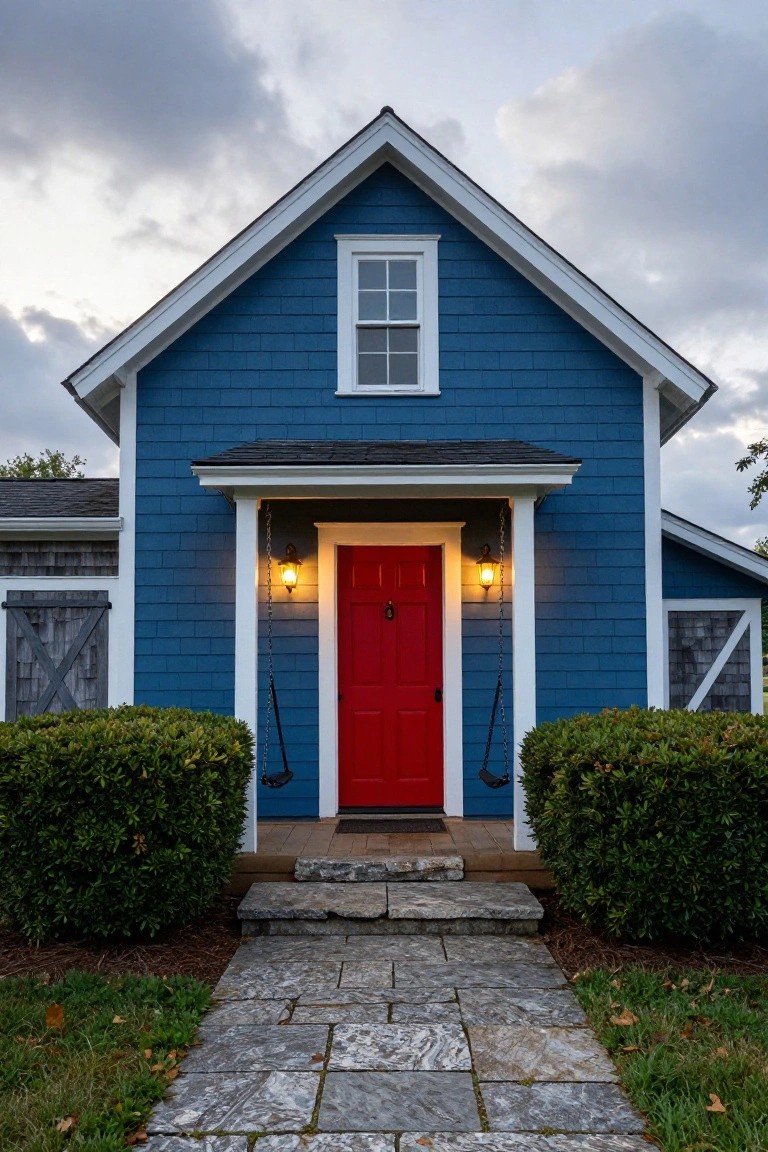
A deep blue shingle exterior like this one feels right at home in coastal or country settings. It has that classic New England look without trying too hard. Then the bright red door pulls everything together. It makes the entry the star and gives the whole house a welcoming lift right from the street.
This combo works best on smaller homes or cottages where you want some punch without overwhelming things. Pair it with white trim and simple lanterns to keep it clean. Boxwoods on either side add a bit of structure too. Just make sure the red isn’t too glossy if your house faces a busy road… it can show dirt faster.
Blue Vertical Siding on a Modern Box House
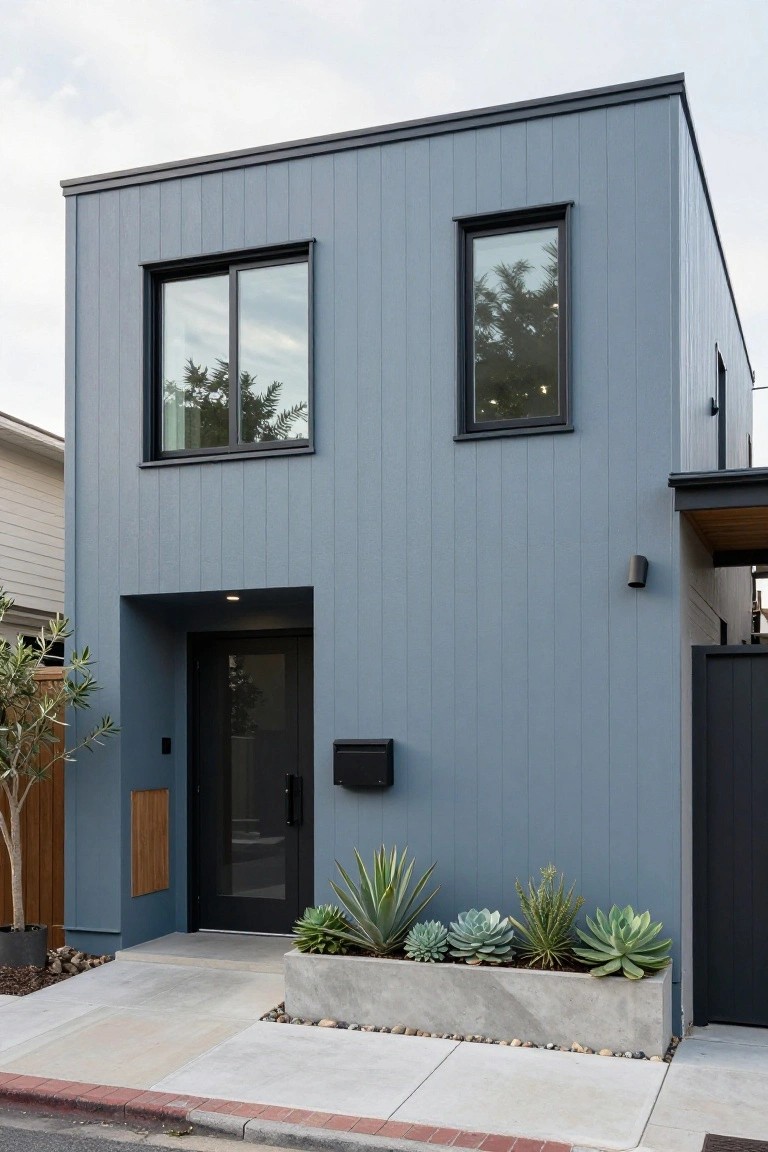
This kind of blue vertical siding works great on boxy modern homes. It gives the facade a clean, architectural feel without too much fuss. The color is a cool gray-blue that picks up the sky and trees around it, so the house blends right into its spot. Black windows and a simple entry door keep things sharp.
You can pull this off on narrow city lots or anywhere you want a fresh update. Pair it with low plants like succulents in concrete boxes for easy curb appeal. Just make sure the siding material holds up to weather, like cedar or fiber cement. It suits homes that lean contemporary. Not so much for super traditional places.
Pale Blue Clapboard Cottages

A soft pale blue on clapboard siding like this keeps a traditional cottage feeling light and fresh. The color picks up the sky on clear days, and white trim around the windows and porch brackets adds clean contrast. Stained glass in the door brings a bit of old-house character without overwhelming the simple lines.
This shade suits seaside homes or any spot with good light. It hides dirt better than white but stays bright year-round. Stick to classic details like a picket fence, and skip busy landscaping so the house stays the focus.
Soft Blue Siding with Stone Base
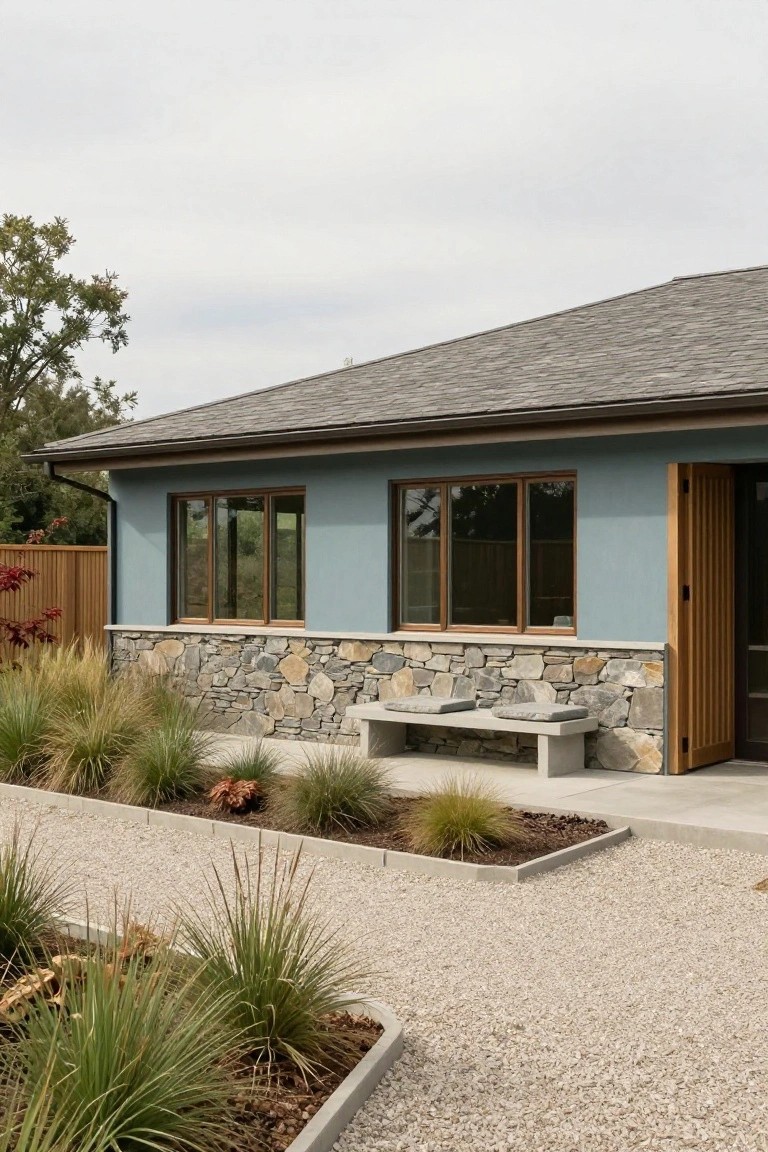
A soft blue like this on house siding keeps things calm and easy on the eyes. It works because the color picks up hints from the sky and trees around it, without shouting. That stone base at the bottom adds real texture too. Rough stones in grays and browns make the blue feel more solid, not floaty.
Try this on a low-slung house in a wooded spot or suburb. Pair the siding with wood doors or trim for warmth. It fits ranch styles or simple modern builds best. Just make sure the stone matches your local rocks, or it might look off.
Soft Blue Cottage Exterior

A soft blue like this on rendered walls brings out the best in a traditional cottage. It feels fresh and calm without being too bold. The navy door pulls your eye right to the entry, and those climbing roses soften everything up nicely.
Try this shade on homes with some age and texture to it. It suits English-style cottages or similar builds in milder climates. Stick to deeper blues for doors and trim, then add perennials like lavender along the path for that lived-in charm. Just make sure the render is in good shape first.
Muted Blue Siding for Everyday Appeal
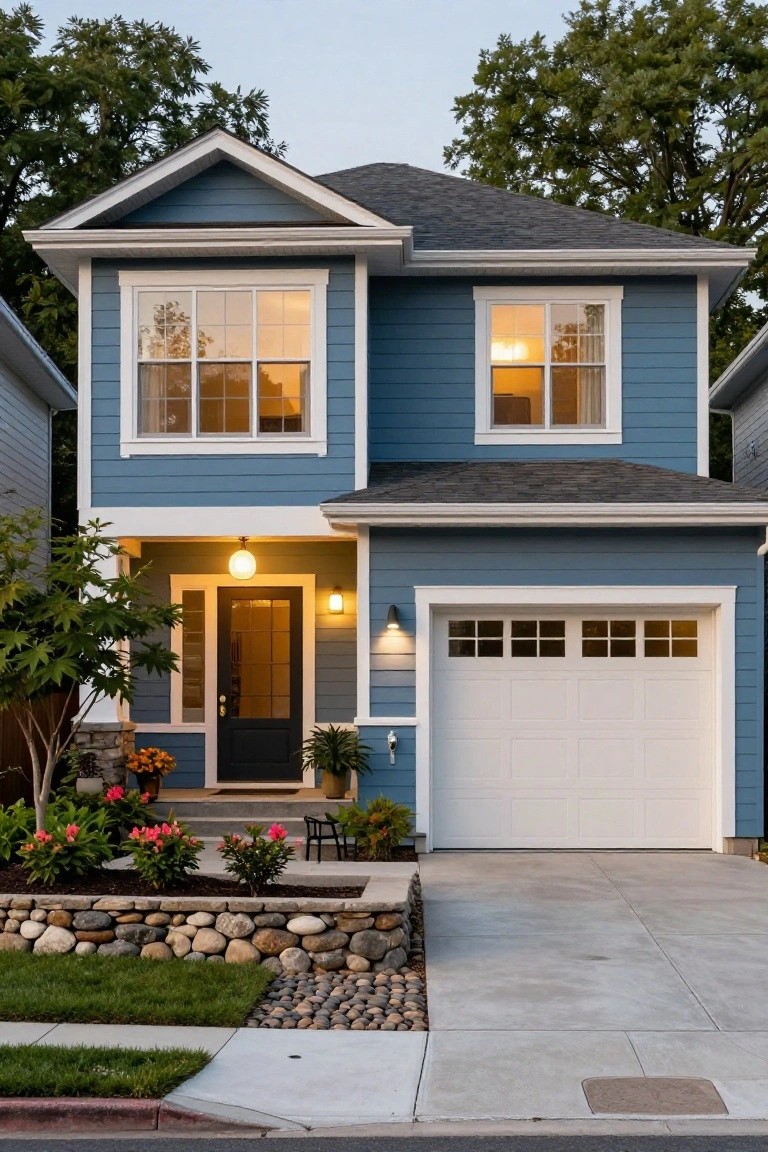
A soft blue like this on siding gives a house that lived-in feel without trying too hard. It works because the color sits back a bit against green trees and grass, letting the white trim and simple gable roof do the talking. That front porch light and clean garage door just pull it all together nicely.
Try this shade on two-story homes in family neighborhoods, especially Craftsman styles with some overhangs. It holds up well in partial shade and pairs easy with stone accents or basic flower beds out front. Skip it if your lot gets full southern sun, though. The blue might fade faster there.
Muted Teal Siding on a Cabin Exterior
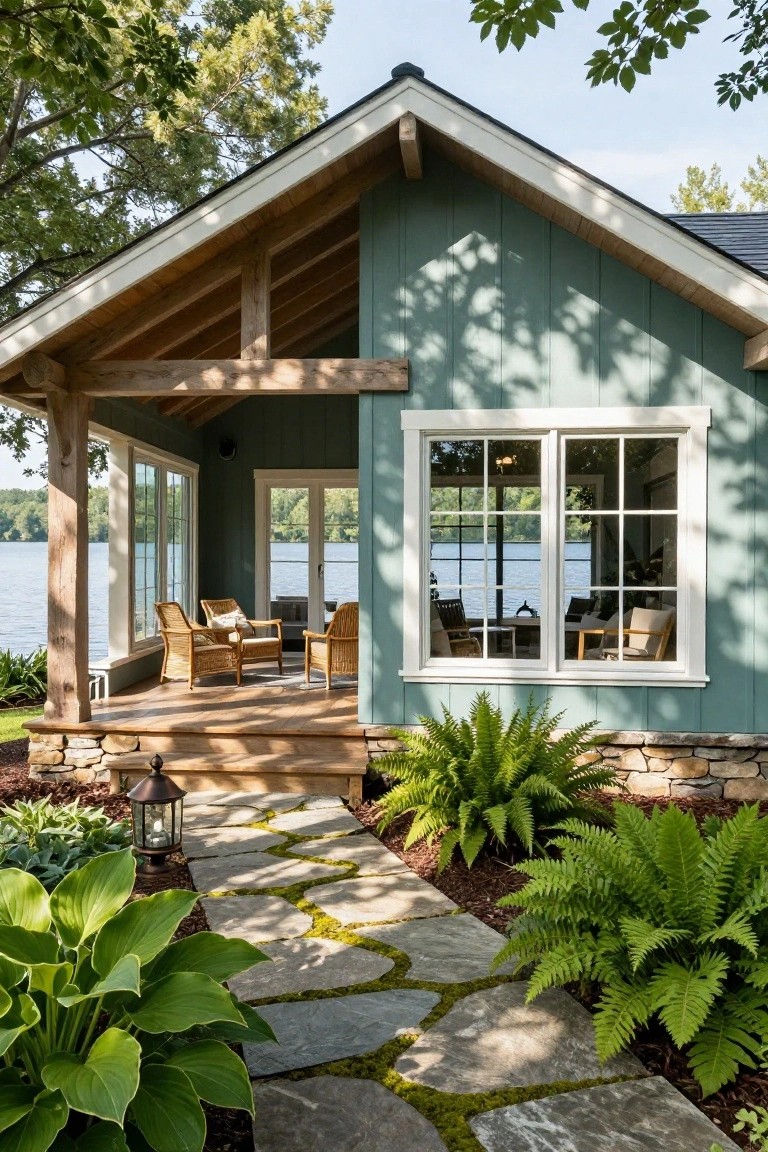
This muted teal siding works so well on cabins near water. It picks up the soft greens from trees and the lake reflections without being too bold. Paired with exposed wood beams and trim in white, it keeps the house looking sturdy yet relaxed, like it grew right out of the landscape.
Try this color on board-and-batten siding for waterfront spots or wooded lots. It suits modern rustic homes best, especially ones with big windows to bring the outdoors in. Just make sure the trim stays crisp white to let the teal breathe.
Deep Blue Corrugated Siding
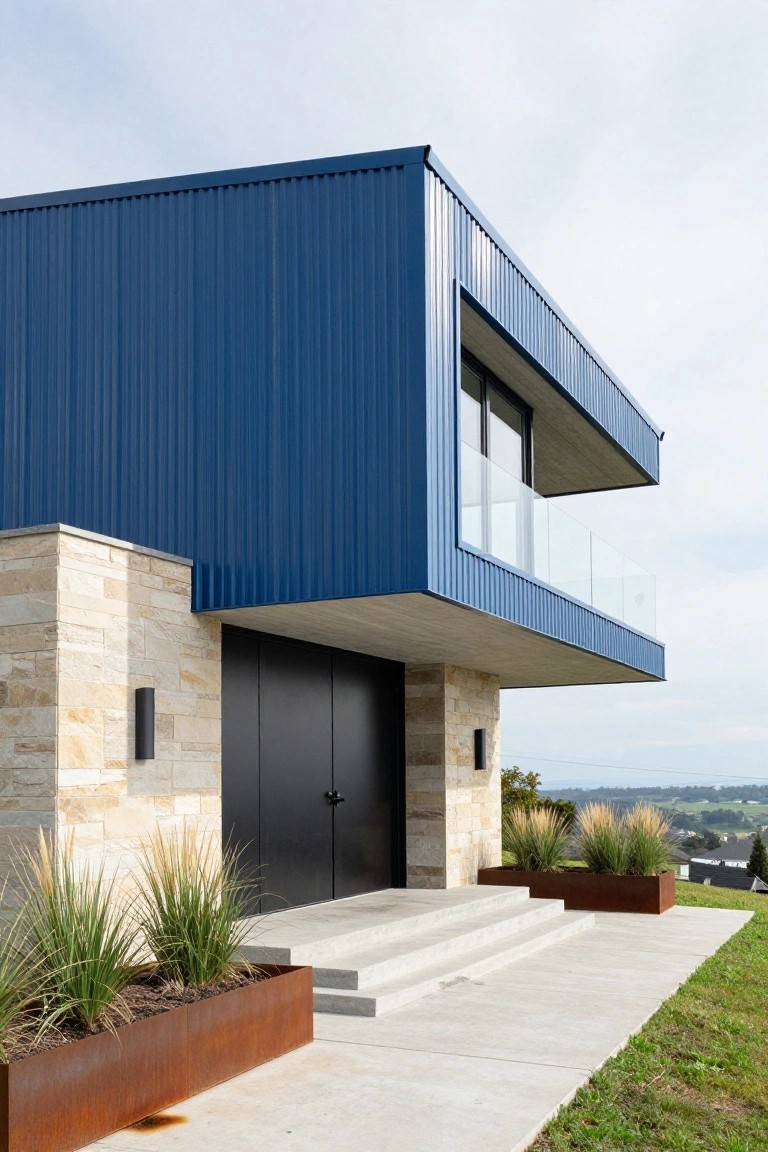
Deep blue corrugated metal siding wraps this house in a way that feels tough and fresh at the same time. It covers the main walls boldly, while a light stone base keeps things from going all one-note. That blue picks up the sky on clear days and holds its own against green hills. It’s a color that lasts because metal sheds rain easy and doesn’t fade much.
You can pull this off on newer homes with simple shapes, especially if you’re after low upkeep. It fits spots with some elevation, like hillsides, where the color shows up strong. Pair it with neutral stone or wood accents so it doesn’t overwhelm. One thing… go for quality panels rated for outdoors, or you’ll deal with dents later.
Blue Walls for Courtyard Patios
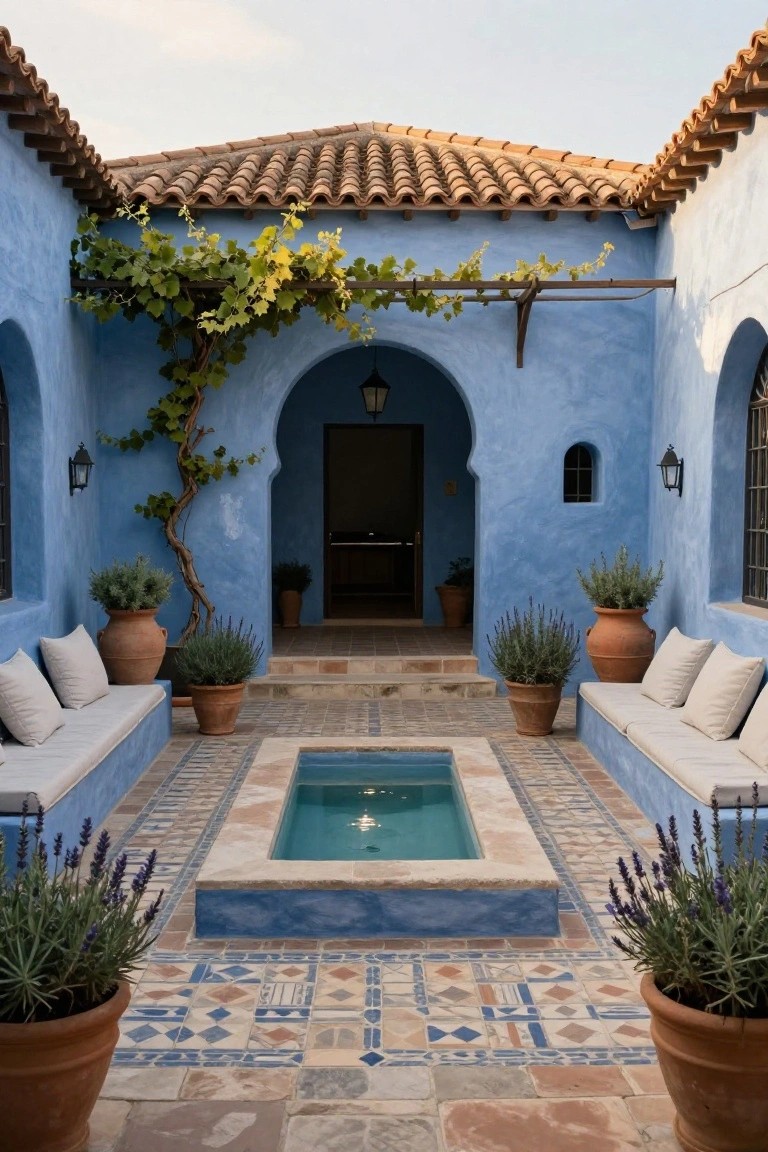
Blue walls like these turn a plain courtyard into something special. The color wraps the space in a cool, steady feel that makes the small pool right in the middle stand out without trying too hard. Terracotta pots and simple benches keep it easygoing, and that shade of blue holds up well in sunlight.
This works best on homes with some kind of walled patio or inner yard. Paint stucco or plaster walls in a mid-tone blue, then add a plunge pool if you can. Skip fussy details. It suits warmer spots where you want shade and a place to sit out most days. Just make sure the floor tiles can handle water.
Soft Blue-Gray Shingles Shine in Coastal Settings
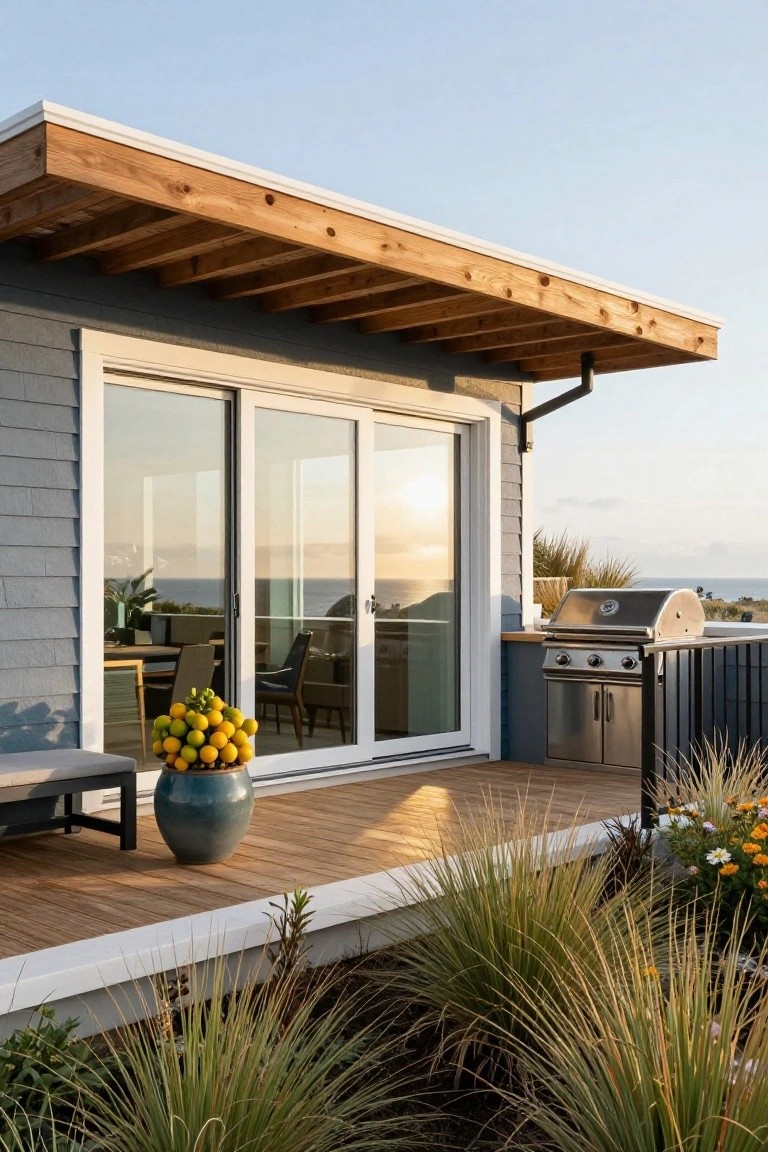
This soft blue-gray shingle siding catches the eye without trying too hard. It picks up the muted tones from the ocean and sky, making the house feel like part of the landscape. The wood deck and overhang add a natural warmth that keeps things from looking too cool or stark.
Homes near the water do well with this color. It holds up against salt air and fading sun. Pair it with simple wood elements and low plants around the base for that easy coastal feel. Just make sure the trim stays crisp white to let the siding stand out.
Frequently Asked Questions
Q: Will a soft powder blue make my small ranch house look bigger?
A: Yeah, it bounces light around and opens up the space. Pair it with crisp white trim to draw the eye upward. Skip the super dark shades, though, since they can shrink things visually.
Q: How do I choose blue paint that won’t fade fast in the sun?
A: Go for high-quality exterior acrylic paints with UV protection. Test a sample on your siding first to see how it holds color through the seasons. Freshen it up every five to seven years.
Q: What if my neighborhood is all beiges and grays, can I still go blue?
A: Pick a muted blue like slate or denim to blend while standing out. It adds personality without clashing. Your house will thank you.
Q: Does navy blue hide dirt better on a busy family home?
A: Navy camouflages dust and smudges way better than lighter colors. Hose it down quarterly, and it’ll stay sharp. And that depth? Timeless.
