

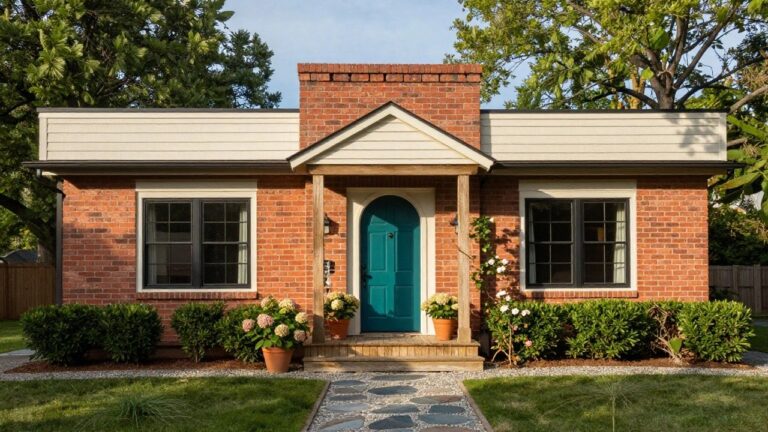
When I drive through older neighborhoods, the brick houses that catch my eye first are the ones where the siding color pulls the warm tones from the brick without clashing.
I’ve painted trim on a brick exterior before, and it taught me how much light shifts the look from block to block during the day.
Pairing the right hues with brick’s texture boosts curb appeal and makes the whole facade read cleaner from the street.
Some colors fade into the background too easily against red brick.
A few of these combinations have stuck with me as worth sketching out for my own place someday.
Turquoise Door on Crisp White Siding
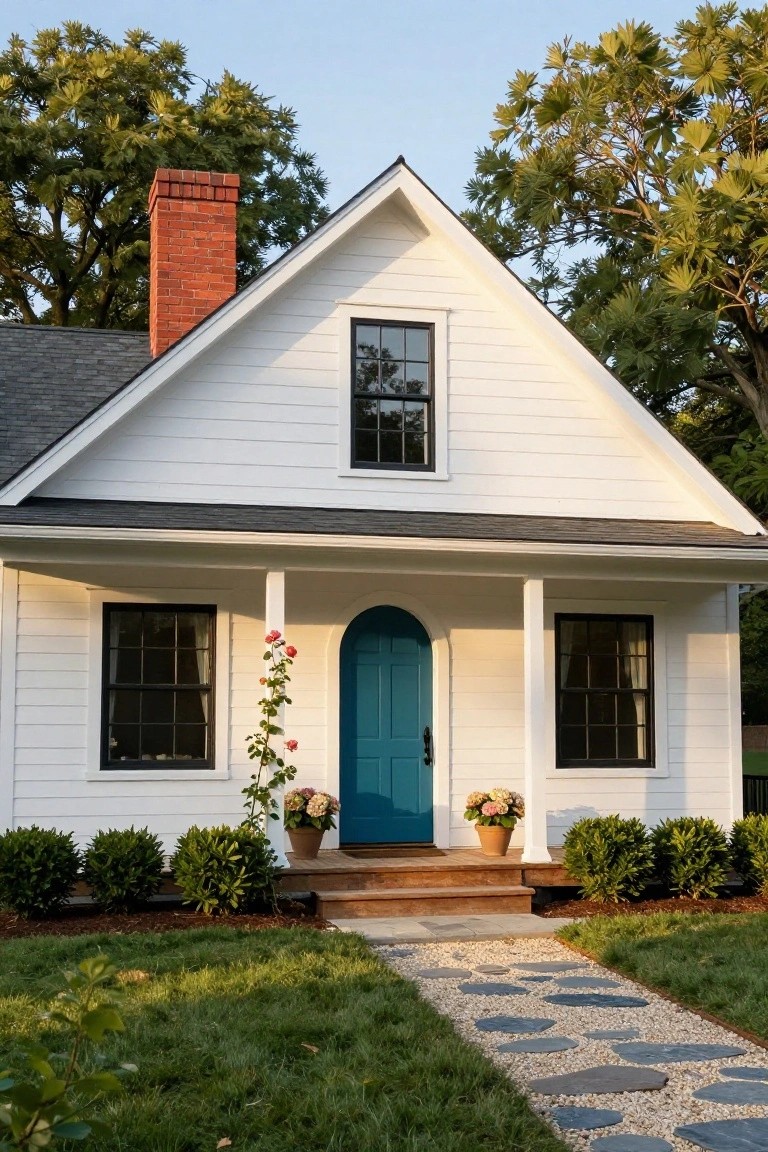
A turquoise front door like this one gives a plain white house some real personality. The arched shape fits the gable roof and porch nicely. White clapboard siding stays clean and simple, while the brick chimney adds a bit of warmth up top. That door color pulls everything together without overwhelming the look.
This setup works best on smaller homes in older neighborhoods. It suits cottage or farmhouse styles, especially with a chimney or other brick touches. Keep plants around the entry low-key, like boxwoods and a few roses. Just make sure the door hardware stands out against the bold paint.
Brick Exterior with Dark Trim
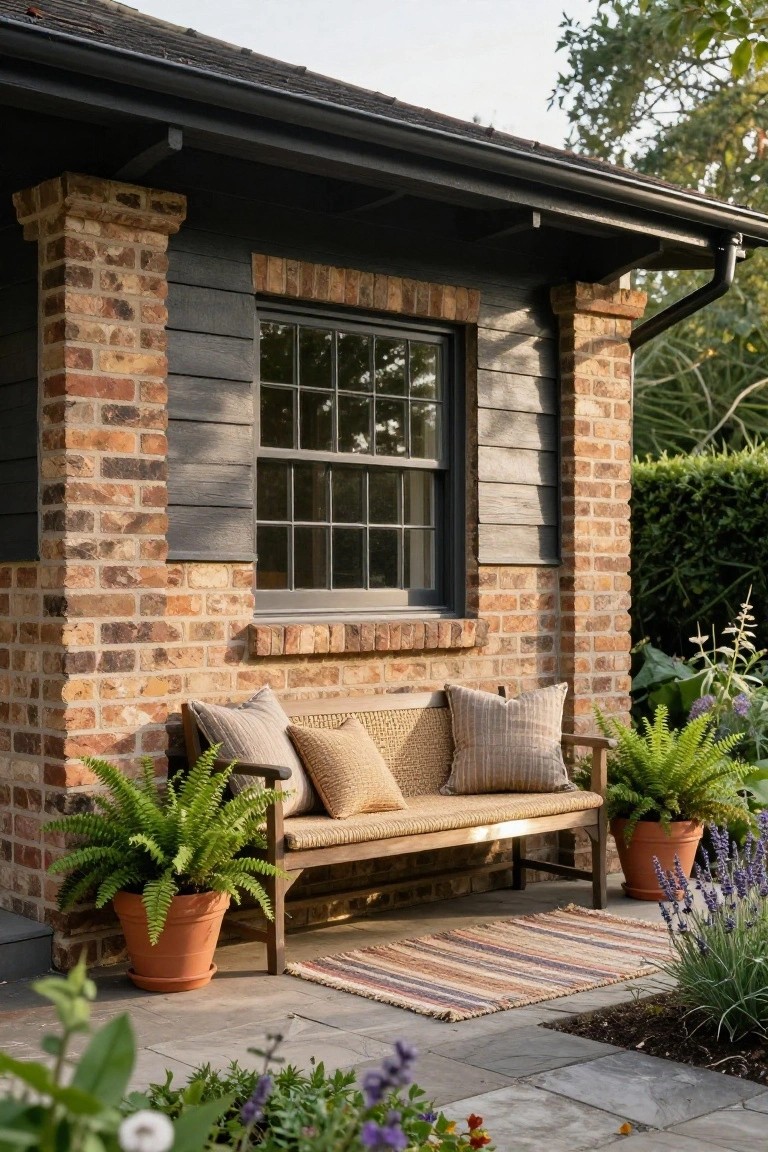
Warm brick like this takes on a fresh, modern edge when you add dark trim around the windows and doors. The black frames and shutters pull focus without overwhelming the brick’s natural texture. It keeps things clean and sharp, especially against a simple overhang.
This look works great on ranch or craftsman-style homes where you want subtle contrast. Paint the trim in a deep charcoal or black to match roof accents. Pair it with a bench or seating nook right outside for everyday use. Skip it if your brick is too orange. it can clash.
Soft Green Walls on Brick Houses
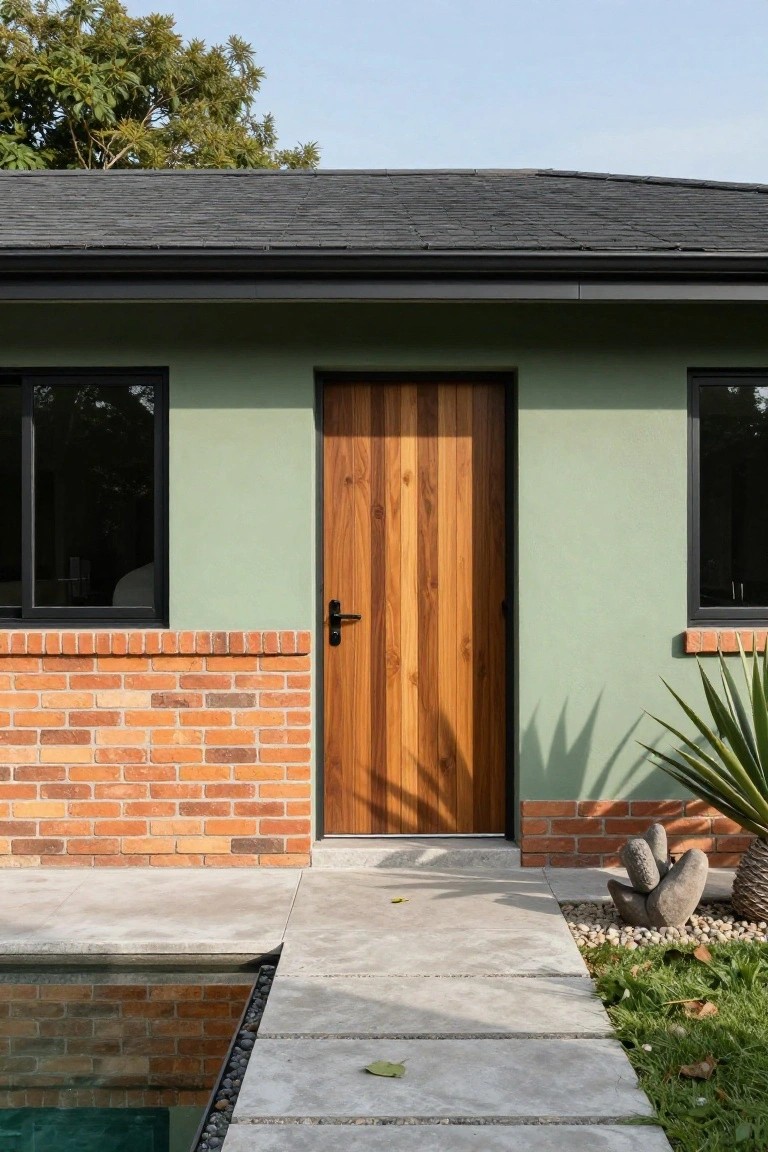
A soft green paint like this one on the upper walls pairs nicely with a red brick base. It keeps things fresh and modern but not overpowering. That warm wooden door right in the middle pulls it all together without much fuss.
This look suits ranch homes or simpler brick builds, especially if you have some yard or pool area nearby. Go for a pale shade to let the brick show through… test it in sunlight first since greens can shift. It hides dirt better than white too.
Navy Blue Siding on a Traditional Home
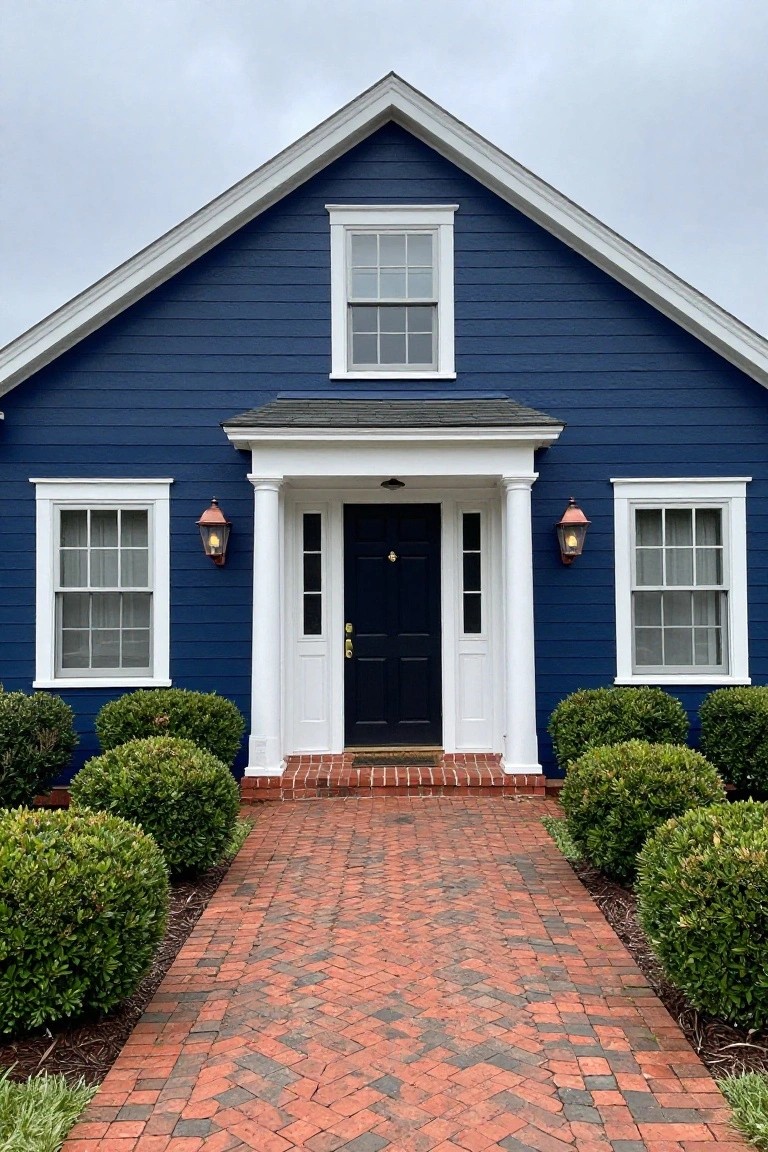
Navy blue siding like this gives a house a solid, grounded feel. It shows up clean against white trim around the windows and porch columns. The brick path in front pulls it together, especially with those neat boxwood shrubs on each side. It’s a look that feels put-together without trying too hard.
This setup works best on classic homes with some brick already, like steps or a foundation. Go for it if you want curb appeal that lasts through seasons. Just keep the trim bright white to make the blue pop, and avoid darker doors if the navy feels heavy already.
Gray Brick with Black Trim
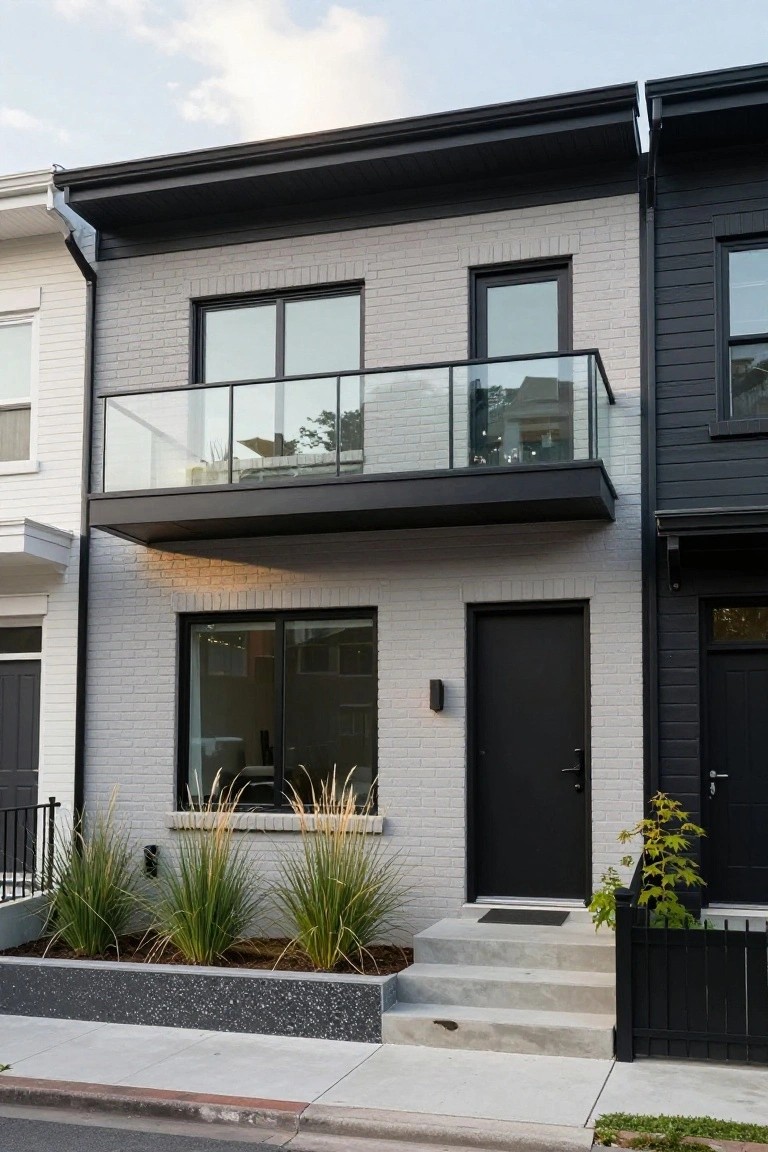
Light gray brick makes a solid base for a house exterior. Add black trim around the windows, door, and balcony railing like this. It keeps things sharp and modern. The contrast pops without overwhelming the brick’s softer tone.
This setup suits townhouses or row homes best. The black pulls focus to the entry and upper levels. Try it on older brick if you want a fresh update. Keep landscaping simple, with tall grasses along the front. Just make sure the black paint holds up to weather.
White Brick with Light Blue Siding
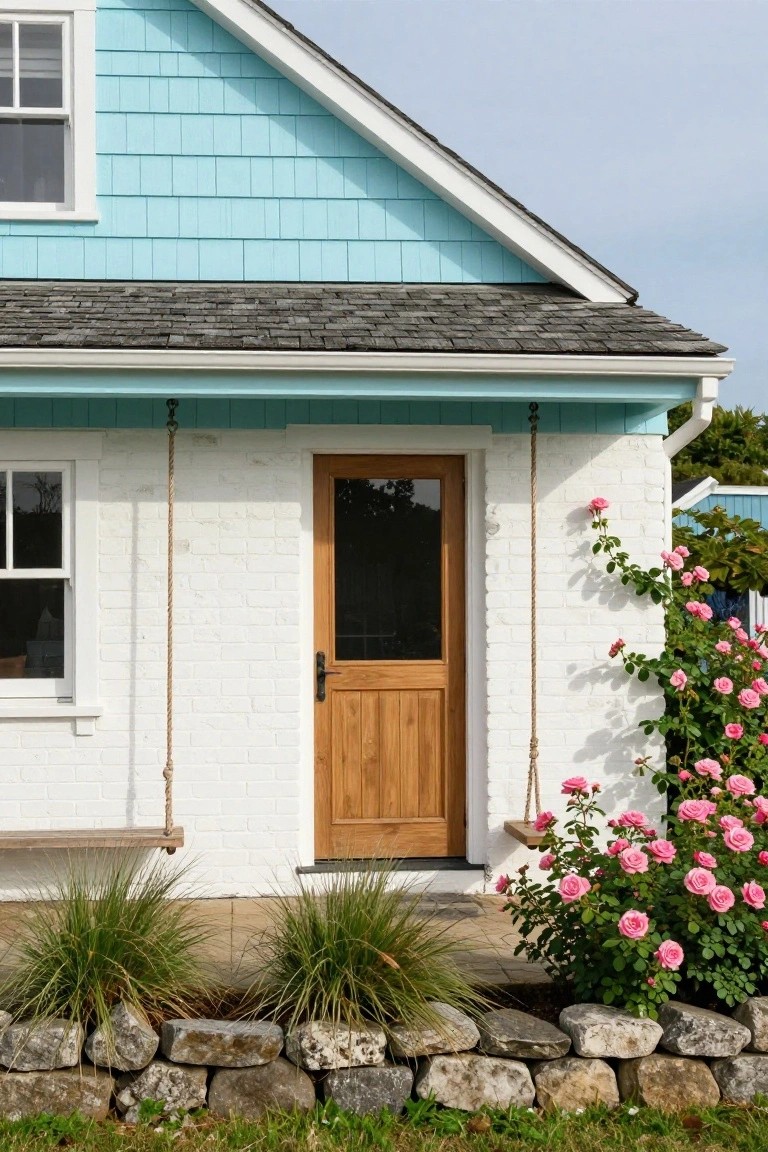
White brick forms a clean base for this house, paired with pale blue siding up top. That color shift keeps things light and beachy. The brick stays crisp against the soft blue, and it works without much fuss. A simple wood door pulls it together nicely.
Try this on homes with some height, like ones with a gable roof. It suits milder climates or spots wanting a relaxed vibe. Skip darker trim though. It can weigh down the look. Add plants nearby if you want more life around the entry.
Classic Beige Stone with Brick Accents
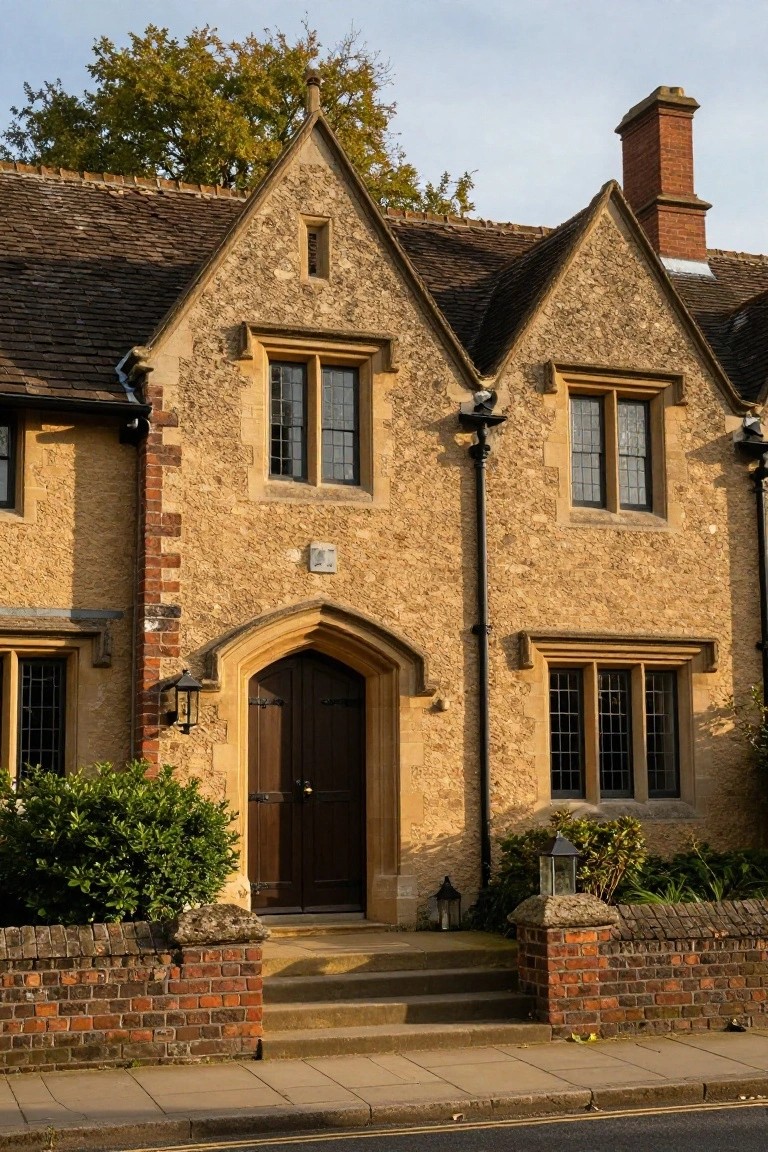
This exterior pulls off a simple mix of warm beige stone walls and red brick at the base. The stone gives the house that soft, aged look you see on old English cottages, while the brick adds a sturdy feel right where it counts, around the foundation and entry steps. Together they make the place feel settled and welcoming without trying too hard.
Try this on traditional homes or ones with gabled roofs and leaded windows. It suits spots with some brick already, like a chimney or porch base. Just match the brick color to keep things even… too much contrast can look off. A dark wood door like the one here finishes it nicely.
White Brick House with Black Door
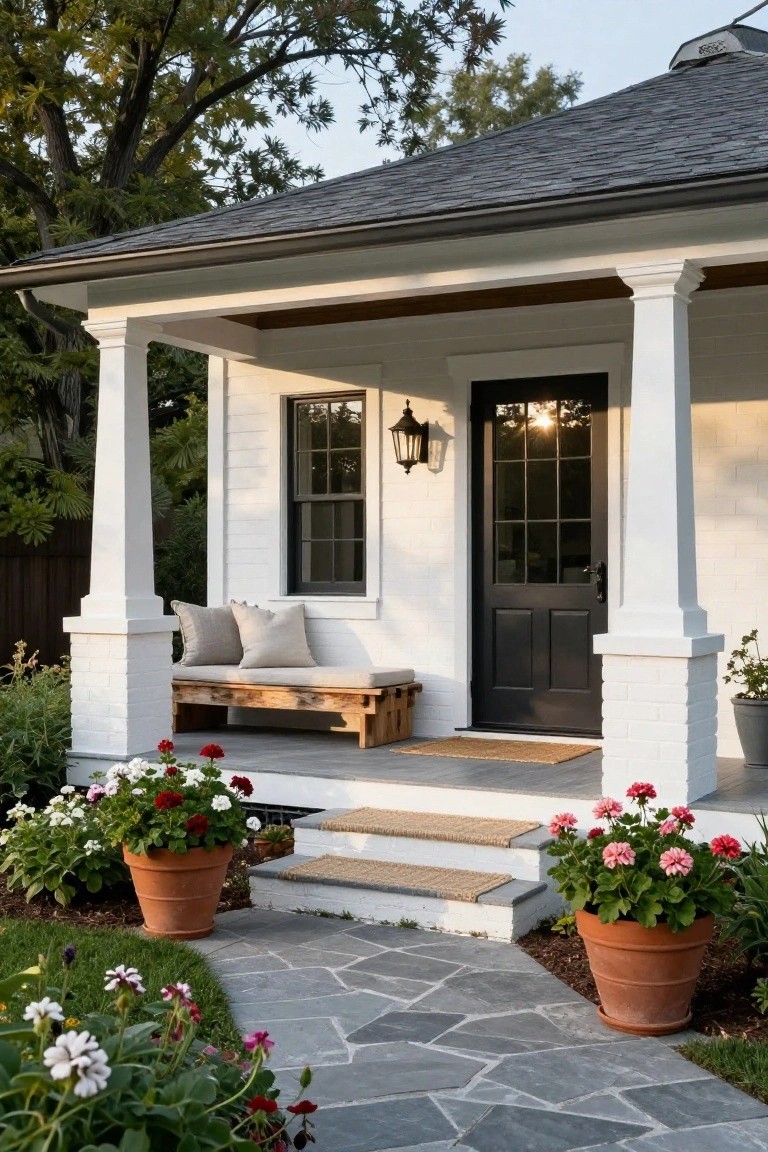
White brick gives a house a clean, fresh look that’s hard to beat, especially when you add a black front door right in the middle of it all. The white brick on the walls and pillars stays bright and simple, while that dark door pulls your eye straight to the entry. A wooden bench on the porch and a few potted plants nearby keep things homey without clutter.
This setup suits older-style homes like bungalows or farmhouses, where you want curb appeal that lasts. Start with light brick painted white if needed, hang a lantern by the door, and use stone steps to lead up. Skip busy colors elsewhere. It holds up well in sunny spots too.
Warm Ochre Stucco with Brick Trim
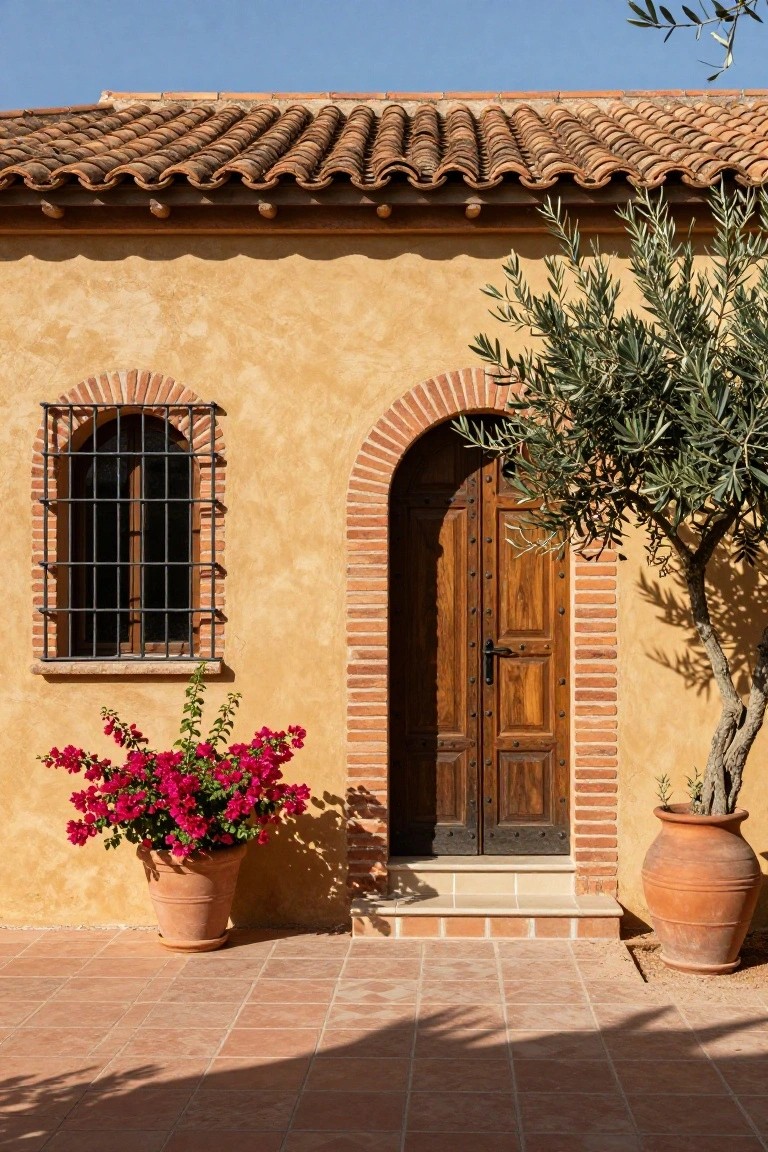
A soft ochre stucco covers these walls, setting off the red brick trim around the arched door and window. That combo keeps things warm and grounded, especially nice under a clear sky. It pulls together a simple Mediterranean vibe without much fuss.
This works well on ranch or low-slung homes where you want the exterior to feel settled in. Paint or stucco the ochre shade first, then add brick details at key spots like entries. Skip it if your area gets heavy rain, since stucco needs good maintenance.
Black Brick Facade with Wood Garage Door
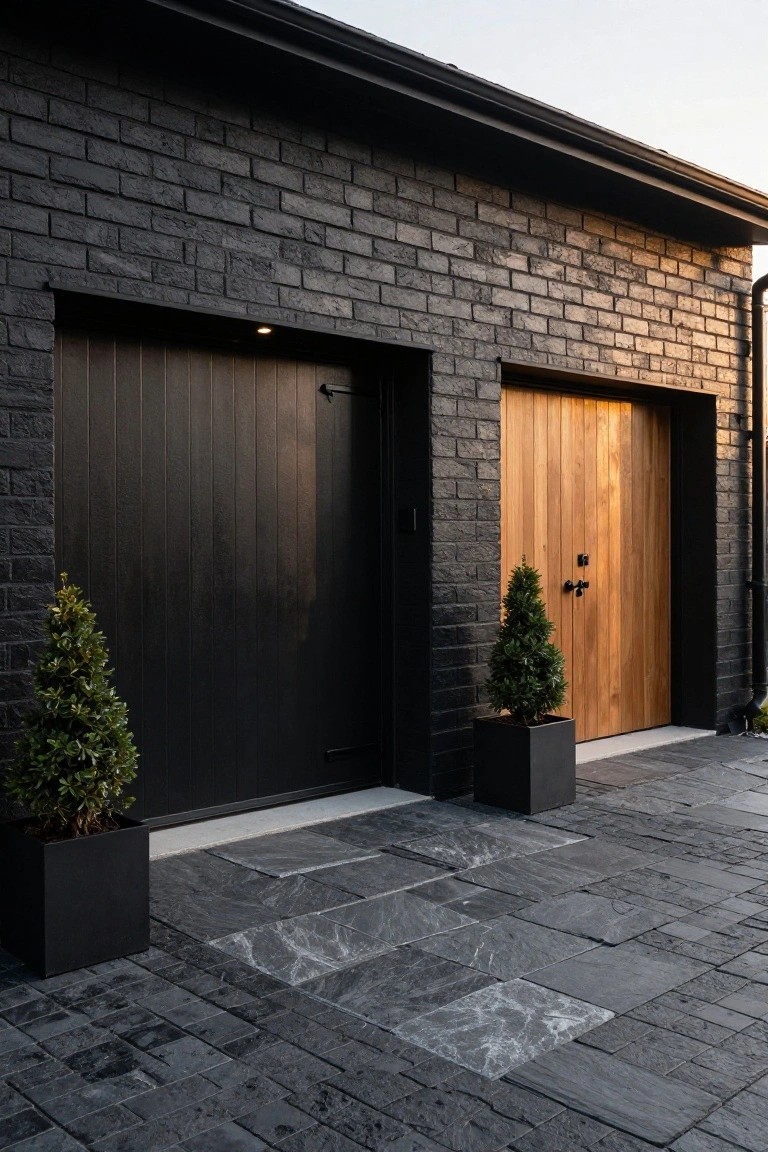
Black brick gives a house a strong, modern edge. But it can feel a bit stark on its own. Here a natural wood garage door right next to a matching black one softens things up nicely. The wood brings in warmth and texture without losing that sleek look. Small topiary plants in black pots frame it all just right.
This setup suits newer homes or ones getting a fresh exterior update. Pick a light oak or cedar door, left natural, to contrast the matte black brick. It works on the street side where you want curb appeal that lasts. Just keep the proportions simple so the door doesn’t overwhelm.
Soft Beige Brick with Red Accents
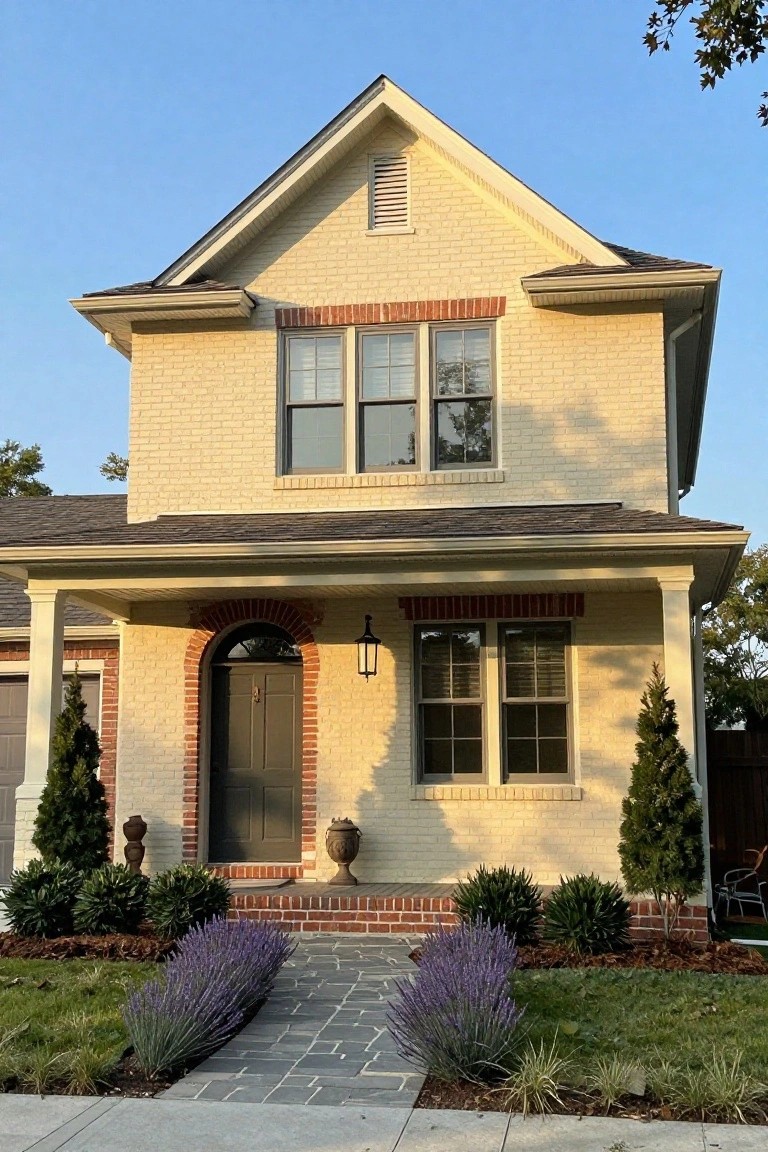
A light beige brick like this one keeps things calm and easy on the eyes. The red brick trim around the windows, porch arch, and entry pulls in some warmth and ties back to classic styles. It works because the pale base brightens the whole front without washing out, and those red touches add just enough contrast to make the house pop from the street.
Try this on a two-story home with a simple gable roof or porch setup. It suits milder climates where you want curb appeal that lasts year-round. Go with a dark door for balance, and keep plants low-key, like lavender edging the walk. One thing to note: pick quality bricks so the beige doesn’t fade too fast in harsh sun.
Dark Green Siding with Brick
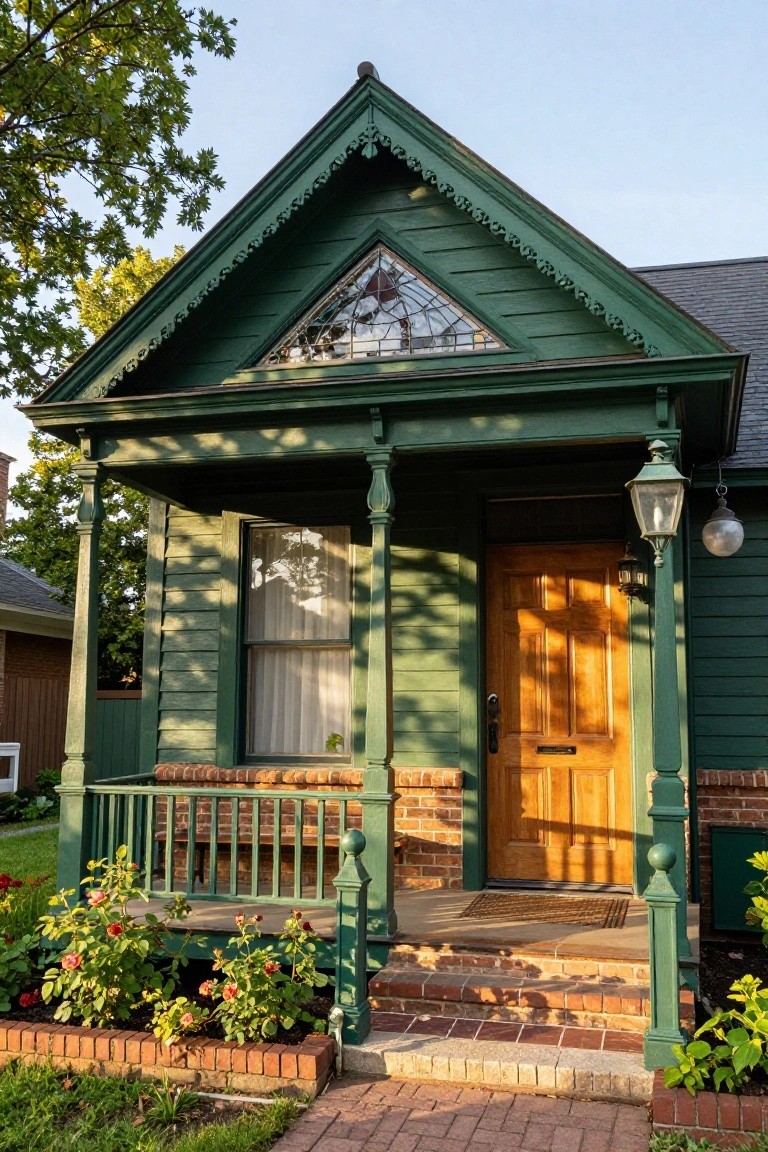
Dark green paint on wood siding shows up nicely against brick like this. It gives the house a steady, lived-in look that fits right into a neighborhood with trees and lawns. The color holds its own without overpowering the simple porch or front door.
This works best on older homes that already have some brick, maybe steps or a low foundation. Go for a shade like forest green on vertical siding, and keep windows white or cream. It hides wear over time, but check paint every few years on the wood parts.
Brick Homes with Black Framed Entries
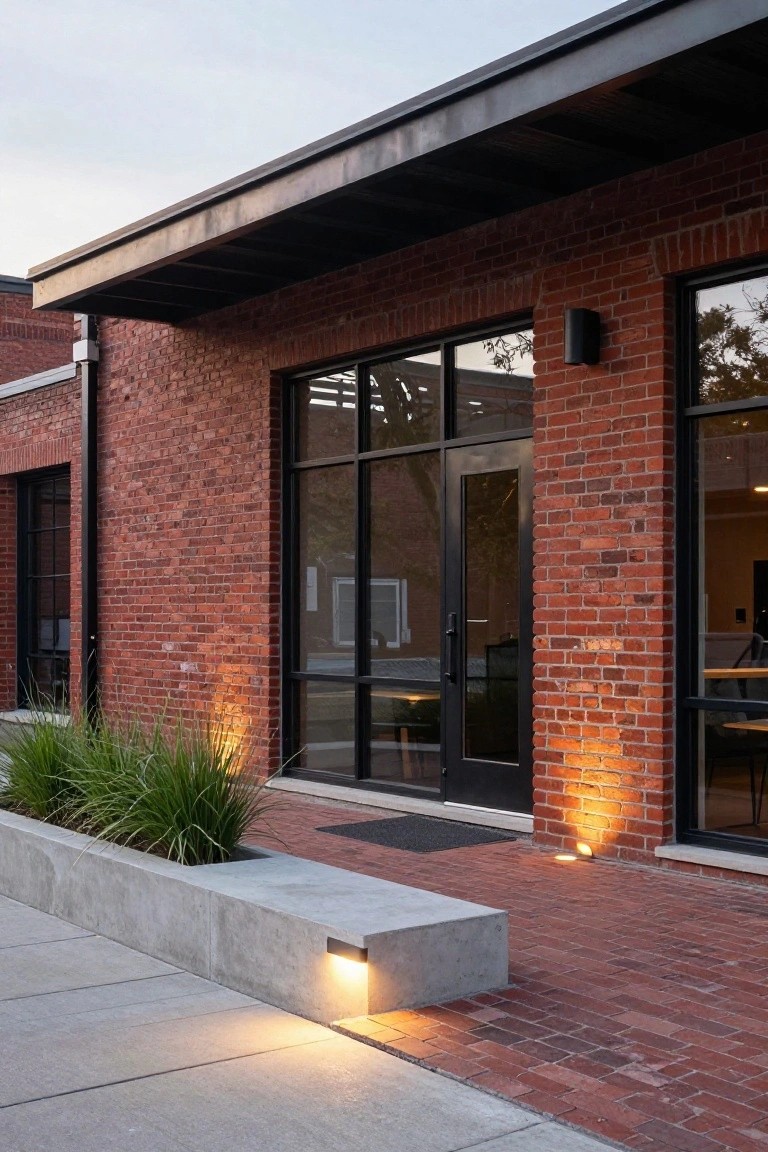
Large glass doors and windows with black frames make a simple update to a classic brick house. The dark frames stand out against the warm red tones of the brick. It pulls the old and new together without much fuss. Concrete planters nearby keep things grounded.
Try this on ranch or two-story homes where the entry needs a boost. It suits urban spots or places with some landscaping. Just make sure the black doesn’t overwhelm smaller windows. Add low plants like grasses to soften the edges.
Pale Brick Bases for Beach Houses
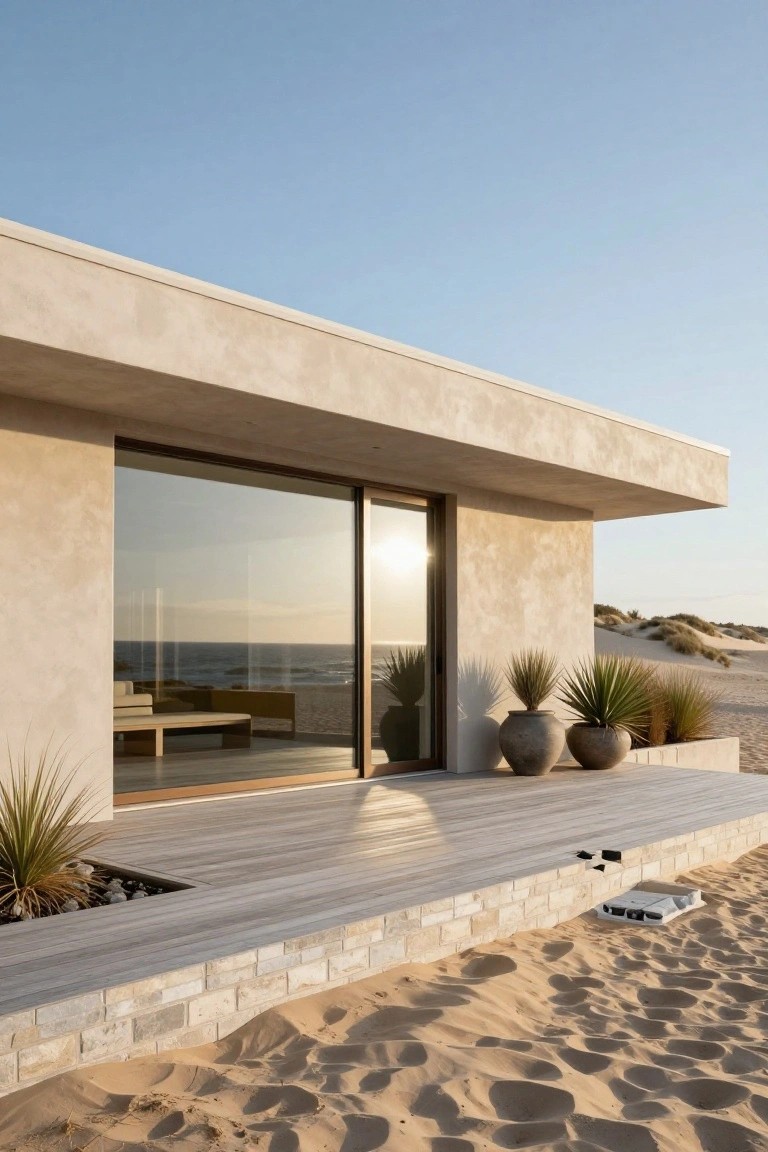
One simple way to make a beach house feel right at home is with pale brick at the base. Here it’s used for a low retaining wall under the wooden deck. That light sandy color picks up the dunes and sand around it so the house doesn’t look dropped in from somewhere else. Paired with the beige stucco walls it keeps everything calm and blended.
You can pull this off on any coastal spot where the yard meets sand or loose soil. Stack the bricks low to hold back the edge without fighting the view. It works best on modern or simple designs. Just make sure the mortar matches the light tone or go groutless to keep it soft.
Red Siding Paired with Brick
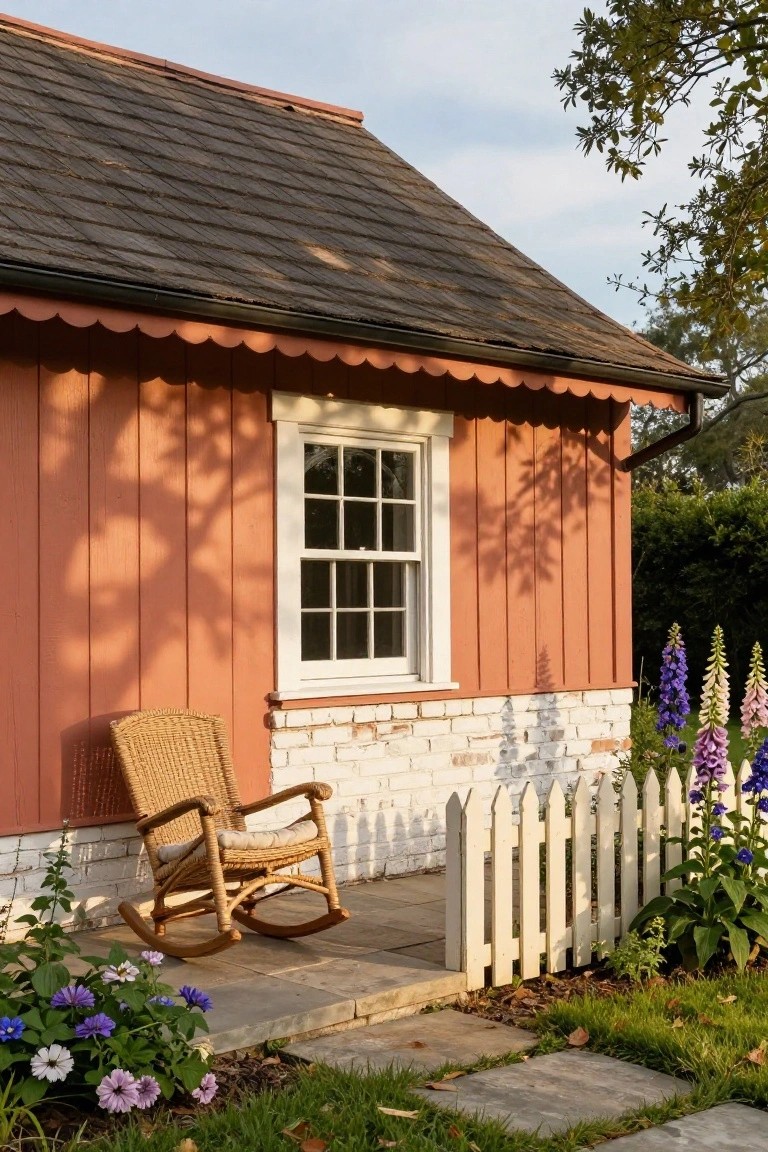
A warm red paint on wood siding like this makes a simple brick base pop without overpowering it. The color pulls in the garden surroundings nicely, and that low brick skirt keeps things grounded. Add a spot like the wicker rocker here, and it feels like a spot you’d actually use.
This look fits older farmhouses or cottages best, especially where you want some color without going bold. Paint the siding a barn red or terracotta shade, keep trim white, and limit brick to the bottom few feet. Skip glossy finishes though. They show dirt fast outdoors.
Sage Green Siding on Brick Homes
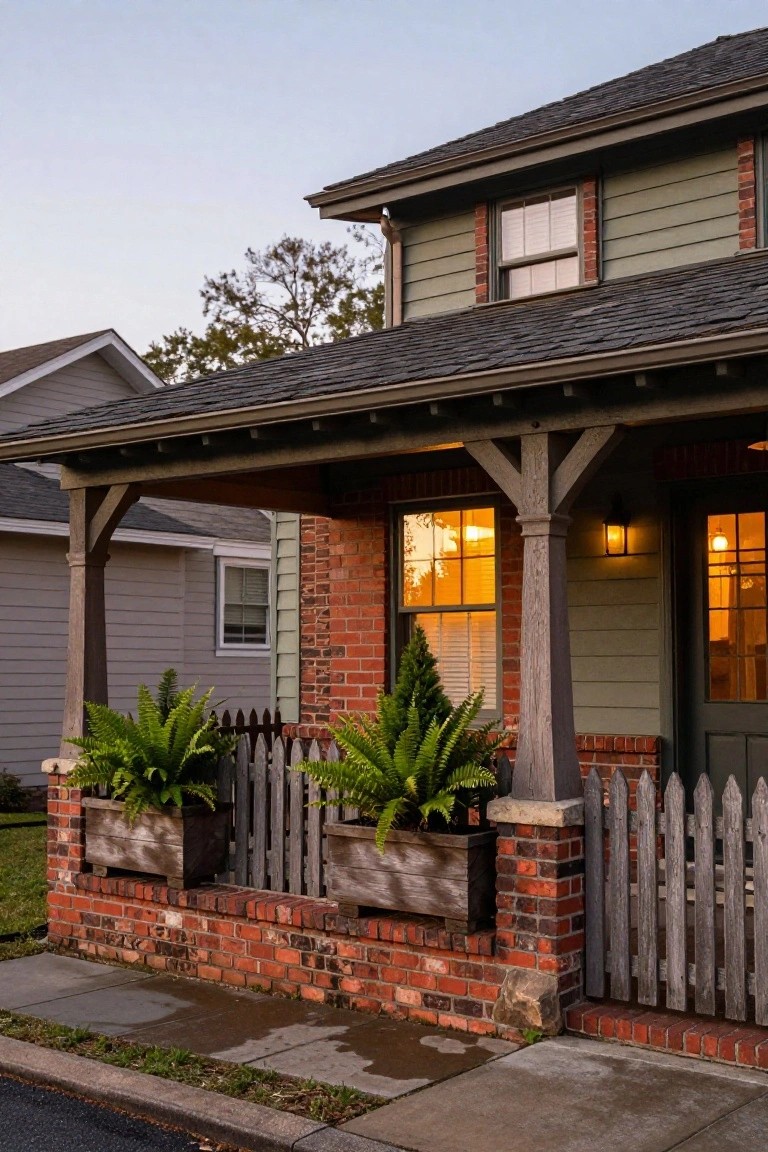
Brick homes often have that solid, traditional feel. Adding sage green siding up top softens things nicely. Here, the muted green on the upper part works against the warm red brick base. It keeps the house from looking too heavy. The wooden porch columns and planters with ferns tie it all together without much fuss.
This color combo fits older neighborhoods or craftsman-style houses best. Use it where you want a calm, natural look that blends with trees and lawns. Lighter sage shades brighten shady spots. Just make sure the green isn’t too yellow, or it might clash with the brick tones.
Navy Blue Siding on Brick Houses
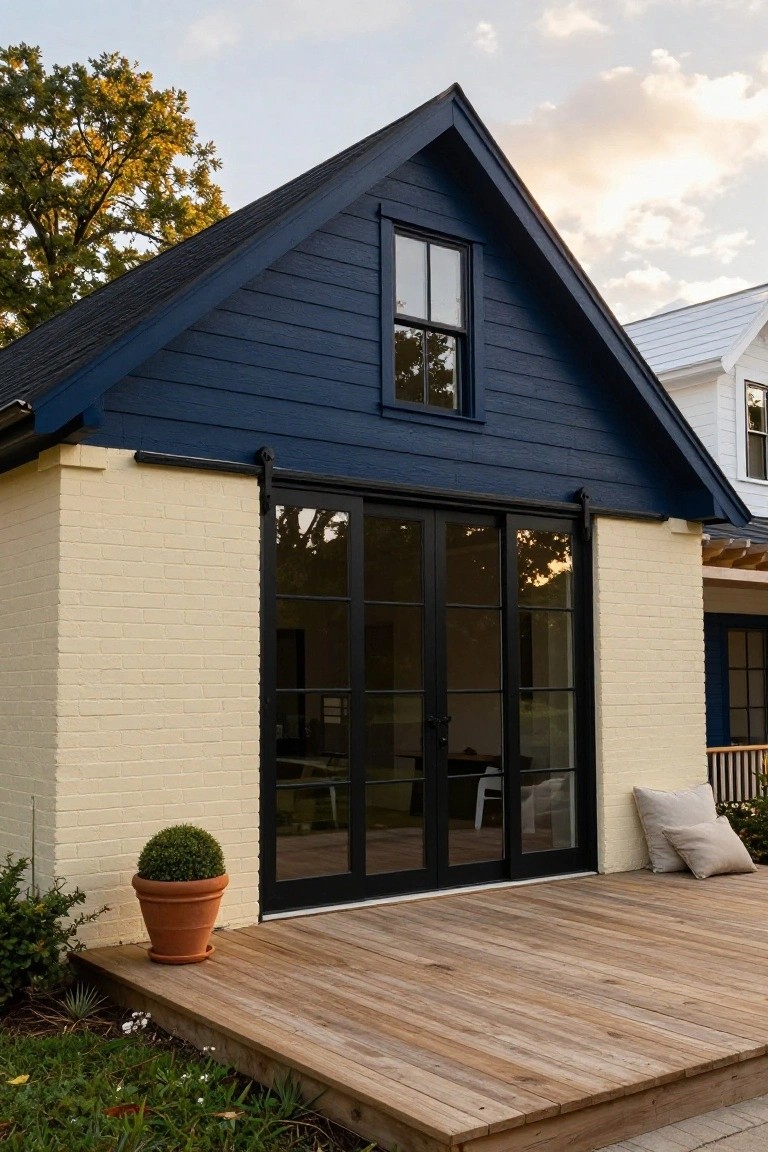
Navy blue siding like this shows up well against light brick. It gives a traditional brick house some modern punch without going overboard. The deep color on the gable and upper walls makes the whole side of the house feel pulled together. Those black doors help too. They frame the view out to the deck.
This works best on the back or side of a home. Think farmhouse or craftsman styles that want a fresh look. Paint the siding in a durable exterior blue. Keep the brick light colored so the contrast pops. It hides dirt better than white. Just make sure the trim stays crisp.
Sage Green Plaster on Brick Homes
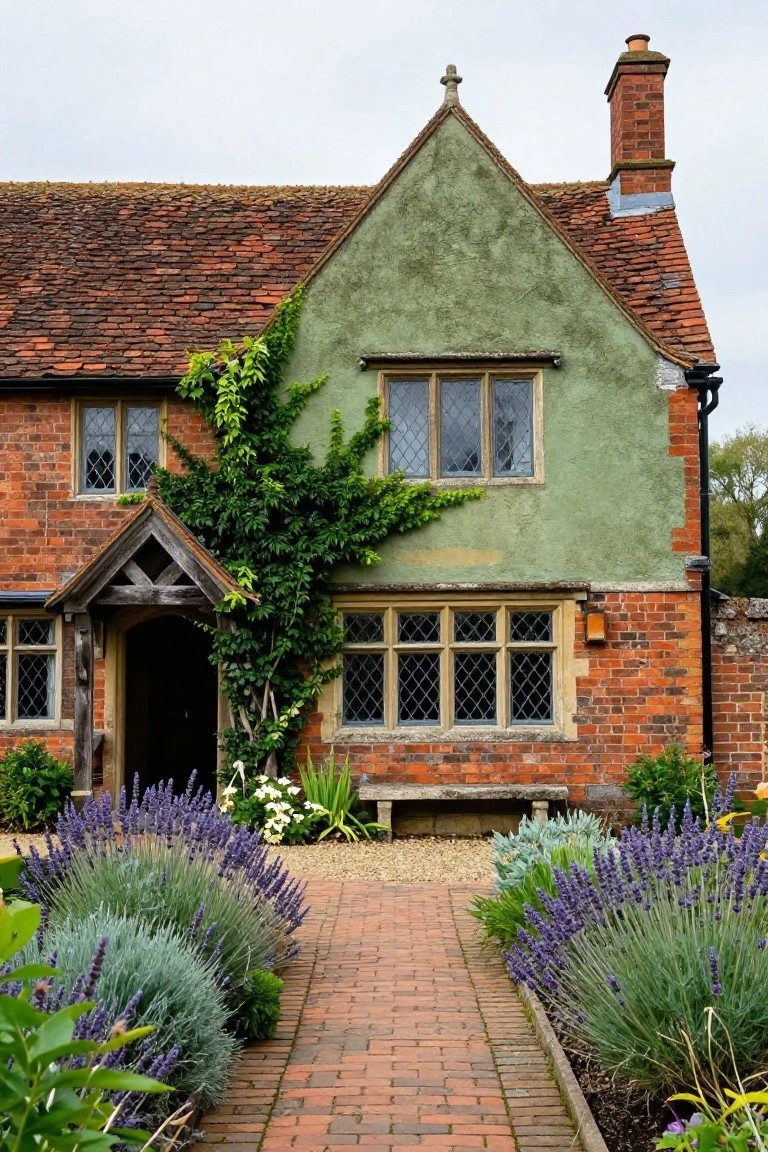
Brick houses often have that solid, warm base. Painting the plaster sections in a soft sage green takes it up a notch. It softens the red tones without hiding them. The ivy climbing up one side and the lavender along the path just pull it all together naturally.
Try this on a cottage-style home or anything with mixed brick and plaster. It fits rural spots best, where you want that lived-in English country feel. Keep the green muted, nothing too bright. Watch the trim, too. Wood tones around doors and windows keep things grounded.
Black Brick Facade with Wood Door
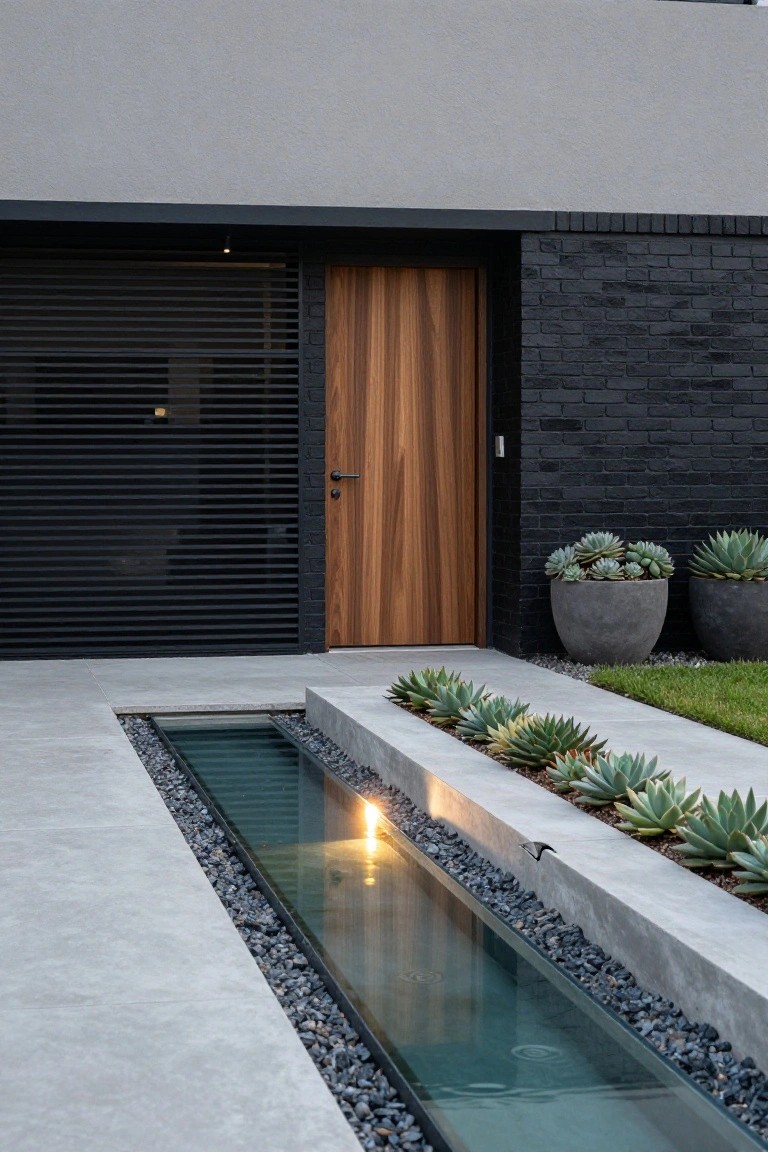
Black brick gives a house a bold, modern edge right away. Pair it with a simple wood front door like this one, and you get some natural warmth that keeps things from feeling too stark. The dark bricks work well against lighter concrete paths and gray siding. It pulls the entry together without much fuss.
This setup suits newer homes or updates to older ones wanting a cleaner look. Use black or very dark bricks on one wall or corner to start, then add a solid wood door in walnut or similar tones. Keep plantings low like those agaves along the path. Watch the scale though, bigger doors help on wider facades.
Dark Brick Entry Accent on Beige Stucco
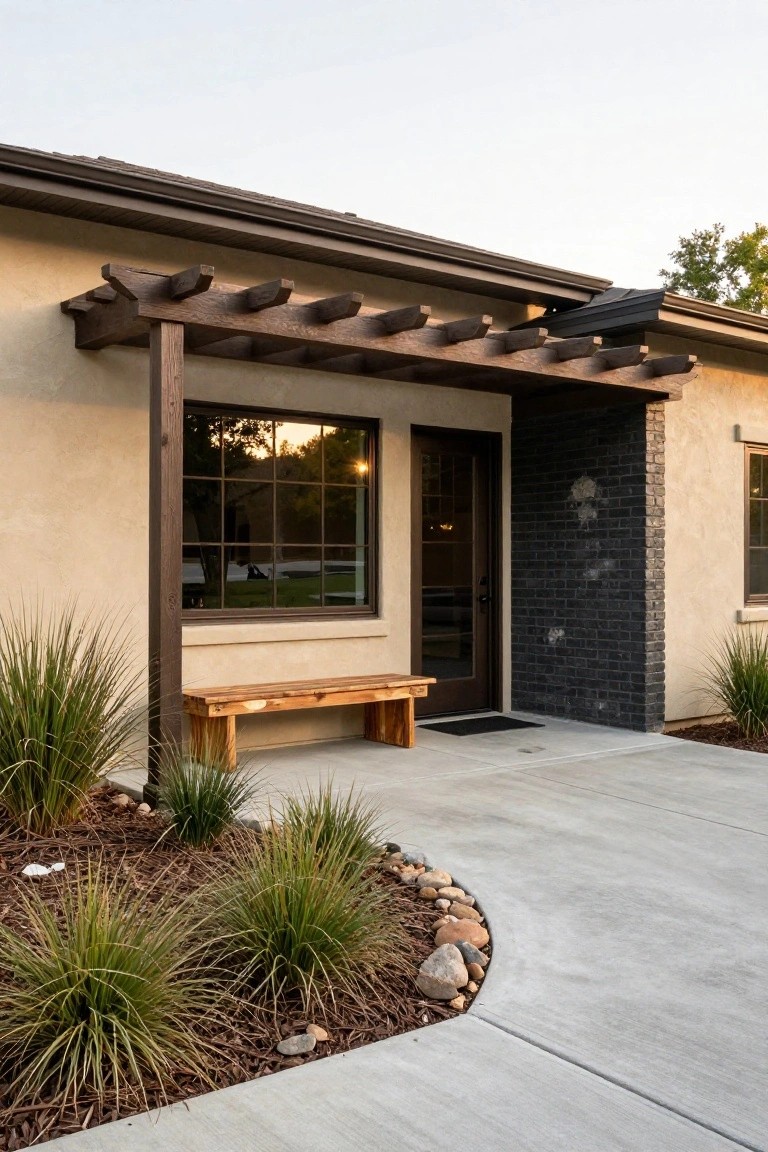
A simple way to add some punch to a plain stucco house is with a tall dark brick pillar right at the front door. Here, the blackish bricks stand out against the soft beige walls, and they frame the entry without taking over. The wood pergola overhead picks up on that warmth too, making the whole spot feel more finished and welcoming.
This look works best on ranch-style or low-slung homes in dry areas, where the neutral stucco keeps things light and the brick adds just enough weight. Pair it with a plain wood bench nearby for seating, and keep plants low like grasses around the edges. Skip busy patterns on the brick, though. It can look heavy if you overdo the accents.
Red Door on Pale Brick
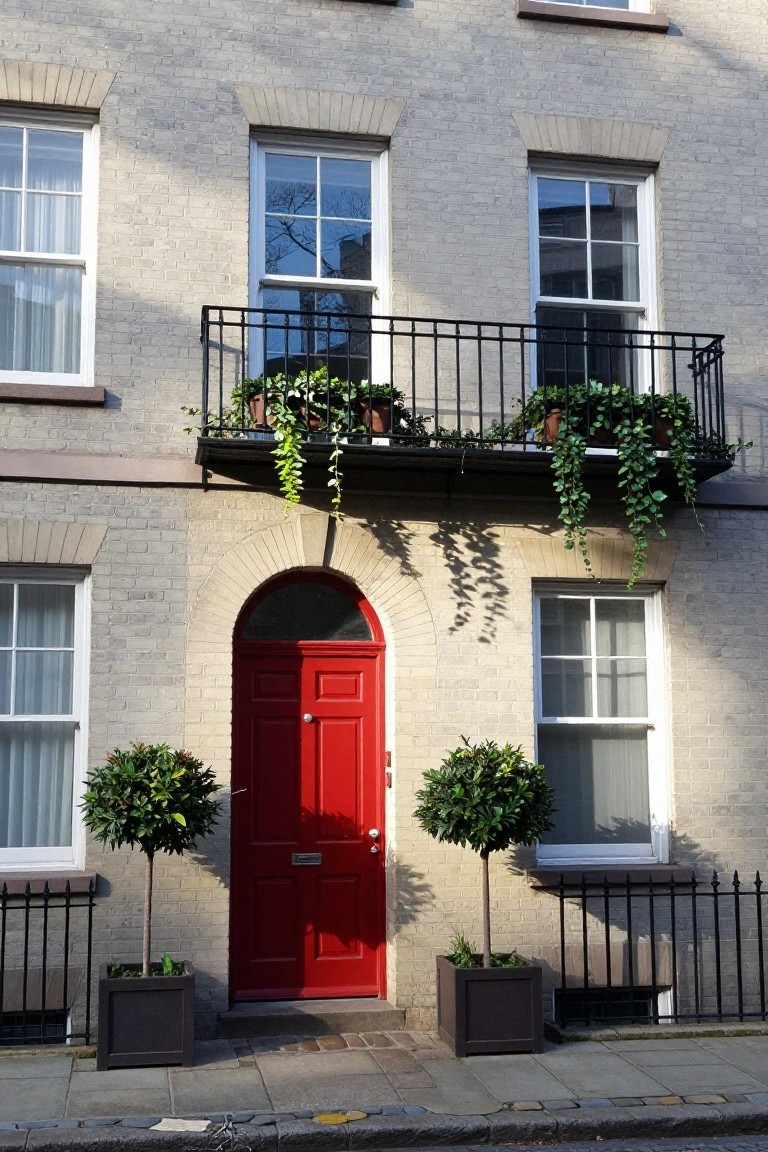
A red front door like this one grabs your attention right away on a pale brick house. The soft beige bricks stay in the background, letting that bold color do the talking. It adds a bit of cheer and makes the entry feel more inviting, especially with the simple arch above it.
Try this on older townhouses or row homes where you want some pop without a full repaint. Flank the door with a couple of topiary plants in dark pots to frame it nicely. Just keep the rest neutral so the door doesn’t get lost.
White Stucco with Brick Doorway
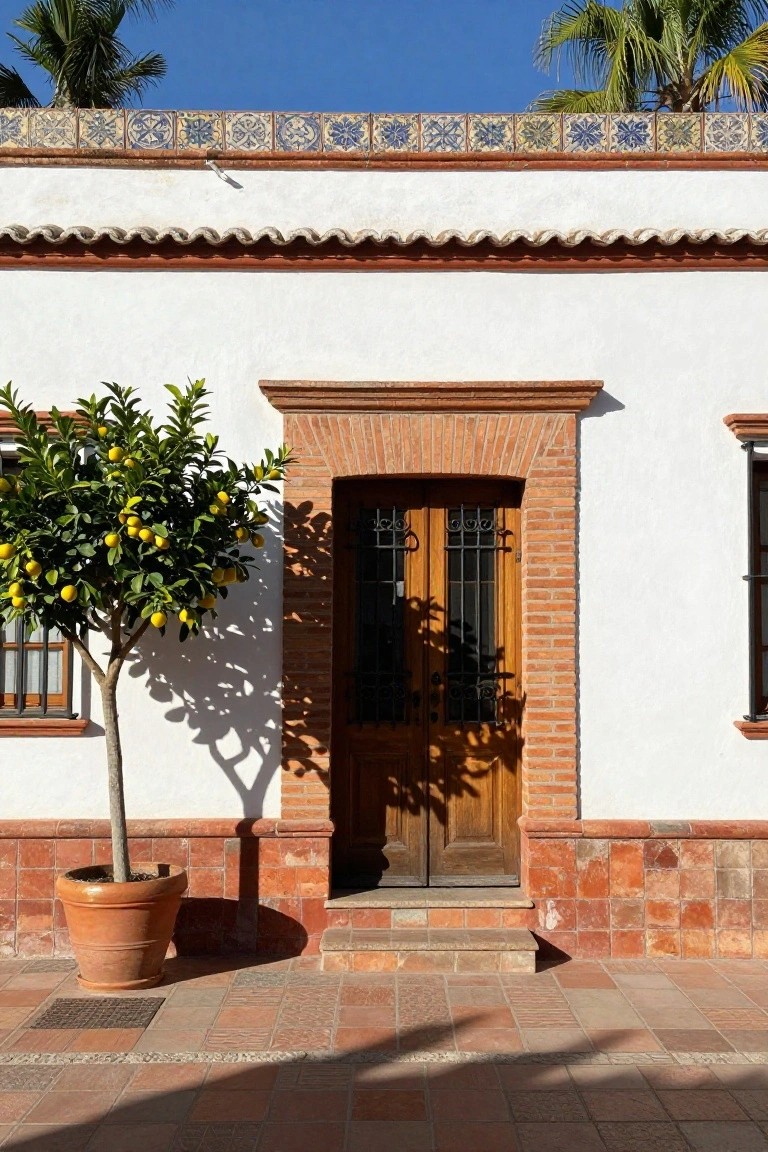
White stucco walls make a house look clean and fresh, especially in sunny spots. Pair them with red brick around the entry like this, and you get a warm touch that pulls everything together. The brick arch and base add some structure without overwhelming the simple white. It’s a look that’s been around forever but still feels right today.
This setup works great on ranch-style homes or older places in warm climates. Use matching terracotta tiles on the roof edge to tie it in. Keep plant pots simple, like that lemon tree here, so they don’t steal the show. Just watch the brick doesn’t get too busy, or it can clash.
Black Door on White Brick Facade
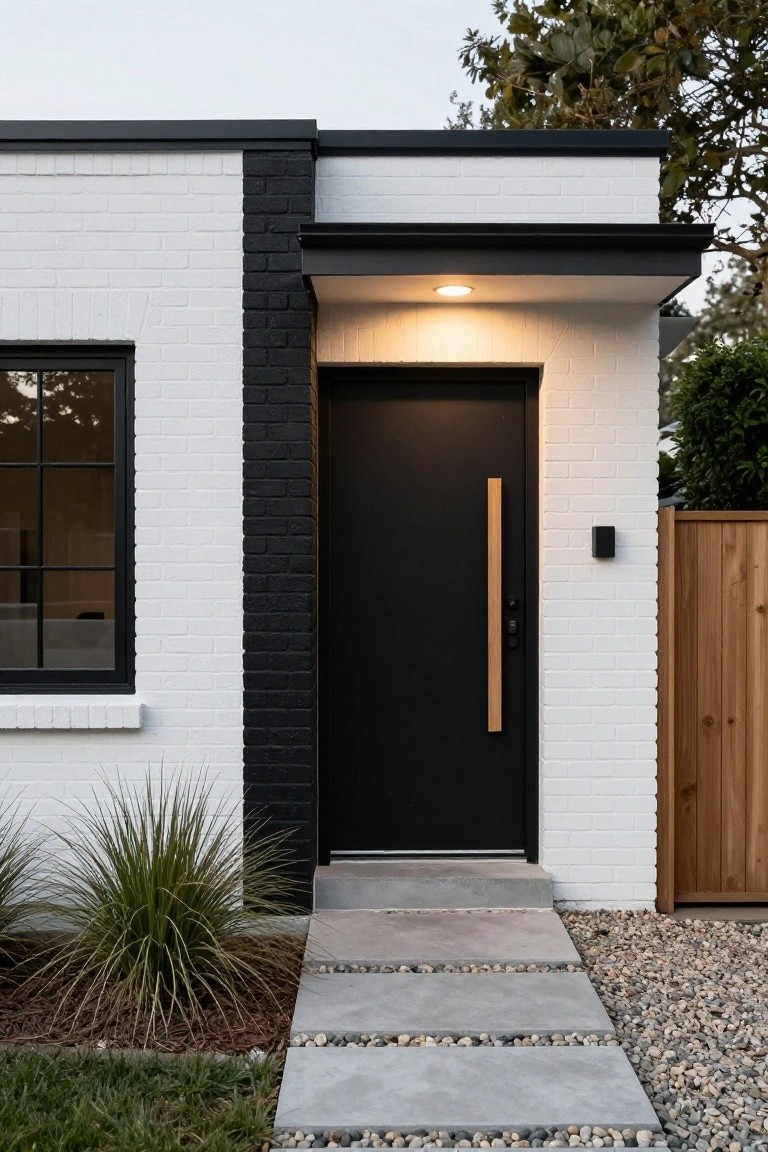
A black front door stands out strong against white brick walls. Here it’s paired with black brick accents along one side, which keeps things balanced and modern. That wooden handle on the door adds just a bit of natural warmth without softening the look too much.
This works well on simpler house shapes, like ranch or mid-century styles. It pulls the eye to the entry and boosts curb appeal fast. Keep surrounding plants low and tidy so they don’t compete. On busier streets, it helps the house feel more put-together.
Cream Door on Red Brick
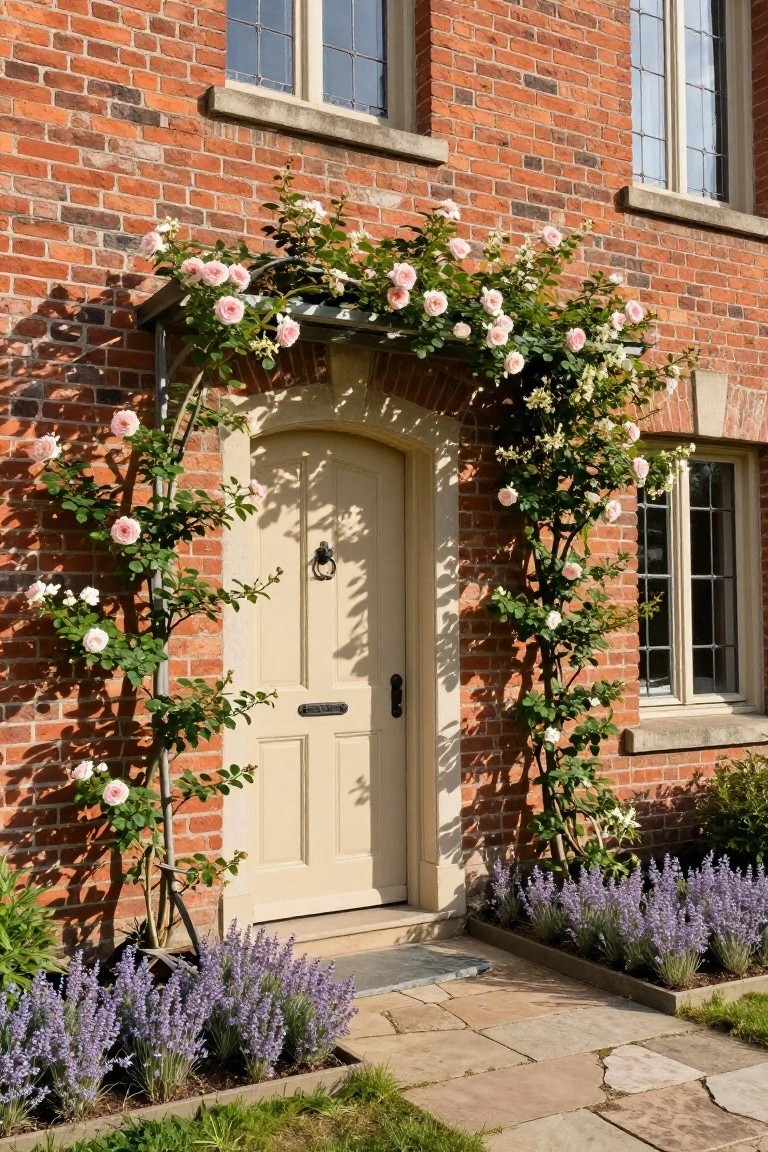
A cream front door stands out nicely against the warm tones of red brick. It keeps things light and welcoming without clashing. Here the pink climbing roses over the arched entry pull the look together. That soft contrast makes the whole facade feel calmer and more approachable.
Try this on older brick homes or ones with traditional lines. Pick a pale cream paint that’s not too yellow. Add some flowering vines if your entry has room for a trellis. It suits spots with good sun for plants. Just keep the door hardware simple, like a black knocker.
Light Blue Exterior with Brick
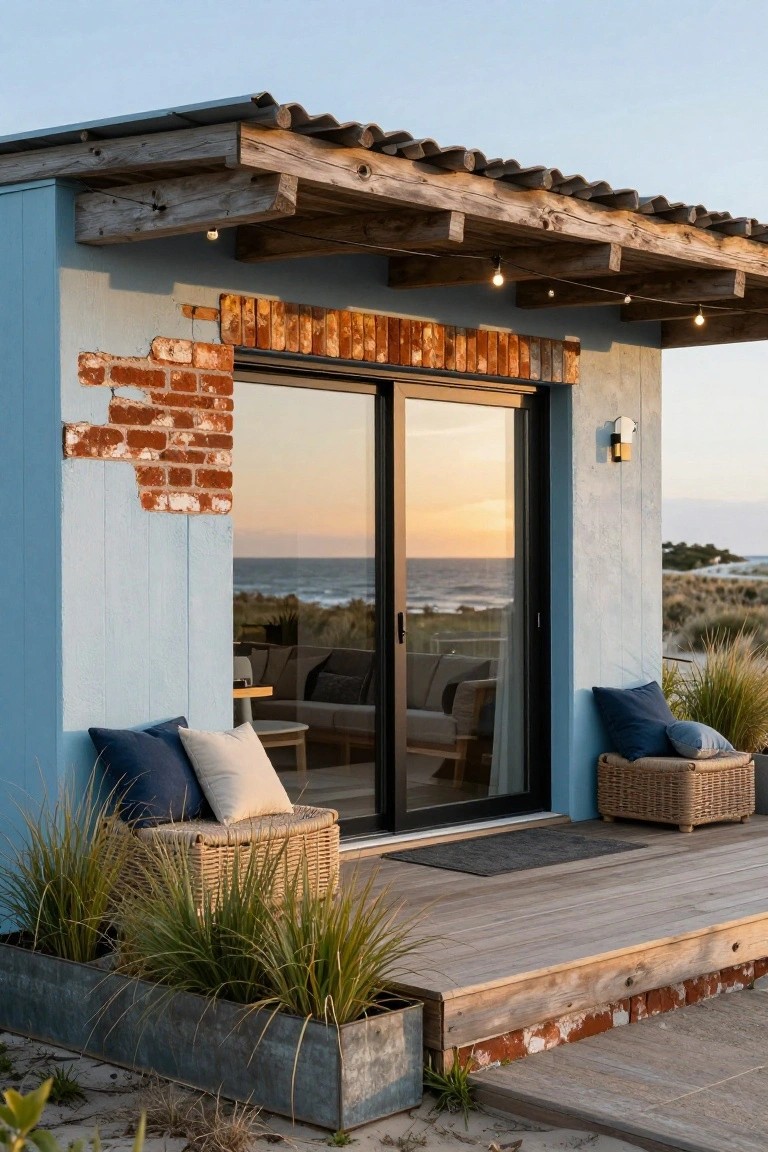
A soft light blue on the house walls gives this beach cabin a calm, relaxed feel that fits right in with the sand and sea. The patches of weathered brick along one side add some warm texture and a touch of rustic charm. It keeps things simple without feeling too plain.
This color combo works best on coastal spots or vacation homes where you want easy curb appeal. Try it on a small addition or garage. Go for muted brick tones so they blend naturally… and keep the rest clean and minimal.
Frequently Asked Questions
Q: Can I paint right over my brick, or do I need to prep it first?
A: Clean the brick super well with a pressure washer and mild detergent. Let it dry out completely before painting. Breathable masonry paint lets moisture escape so your walls stay healthy.
Q: My house has red brick. What paint colors won’t clash?
A: Try creamy whites or soft taupes. They lighten up the red without fighting it. Paint a test patch and check it morning and night.
Q: How do I test house colors without buying a ton of paint?
A: Buy sample pints and slap them on poster board. Prop the boards against your house in full sun and shade. Live with them a few days.
Q: Does my roof color limit my house paint choices?
A: Pair grays with asphalt shingles. And go bold like deep green on white metal roofs. Your trim ties it all together.
