

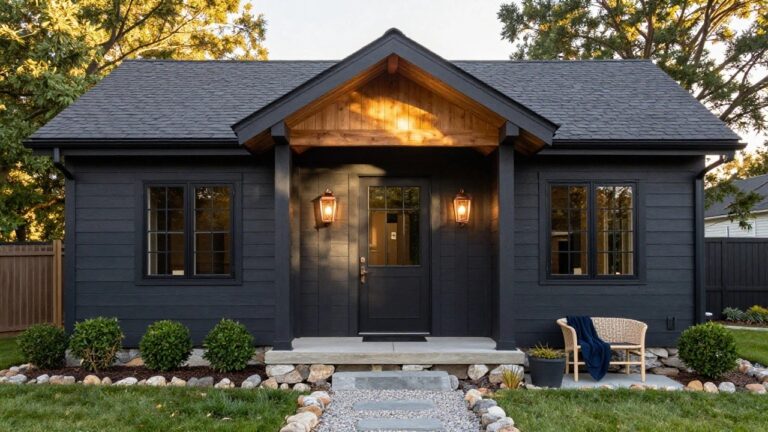
I’ve found that dark exterior colors give a house real weight and presence from the street, grounding it against the sky and trees in a way pastels never do.
They sharpen the roofline and make entry doors pop without needing extra trim or fuss.
When I tested a midnight blue on our siding a couple years back, it balanced the light stone foundation and made the whole facade read as more deliberate.
These shades handle siding, brick, and stucco alike, fading gracefully over time instead of looking worn.
One right pick can shift curb appeal for good.
Dark Siding with Wood Gable Accents
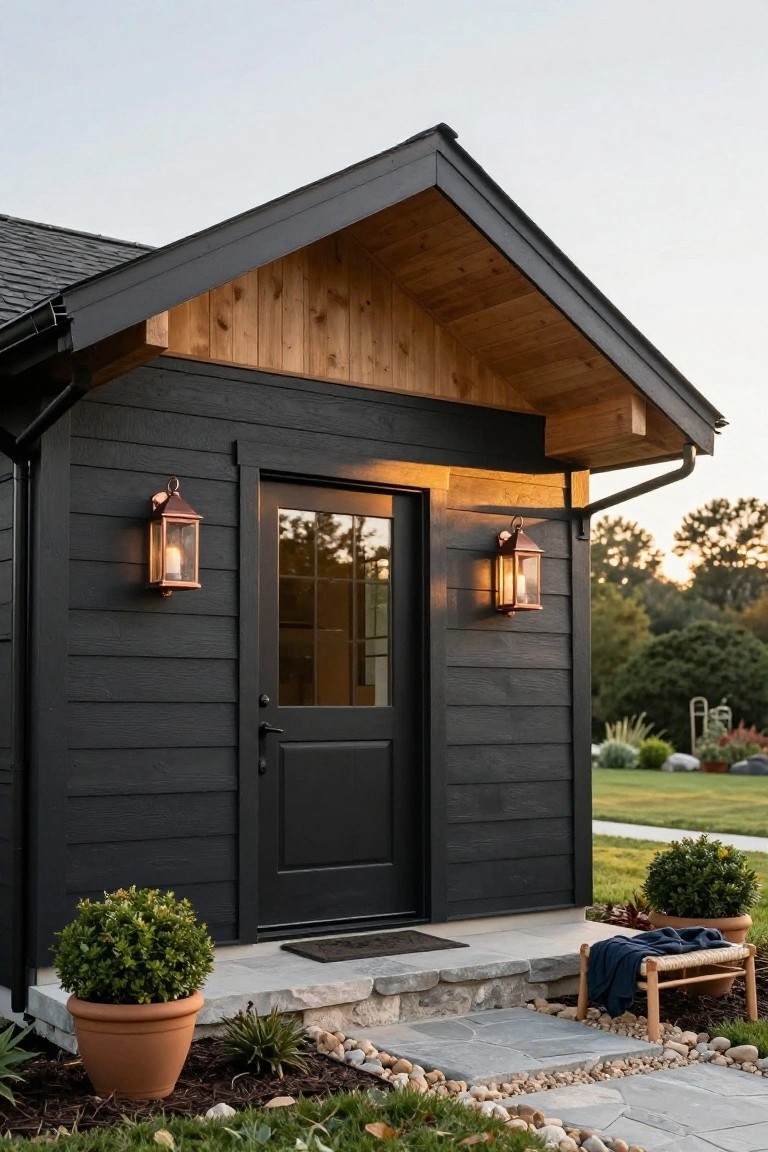
Dark siding like this near-black charred wood gives a house a strong, modern edge without going overboard. The exposed wood gable up top pulls in some natural warmth right where you need it most, around the entry. Those copper lanterns on either side pick up on that too, making the whole front feel put together at any time of day.
You can pull this off on sheds, garages, or even a main house gable if you keep the wood simple and let it weather naturally. It suits cabins or farm-style homes in wooded spots best. Just make sure the siding holds up to moisture, since dark colors show dirt more if you skip good maintenance.
Navy Blue Shingle Siding
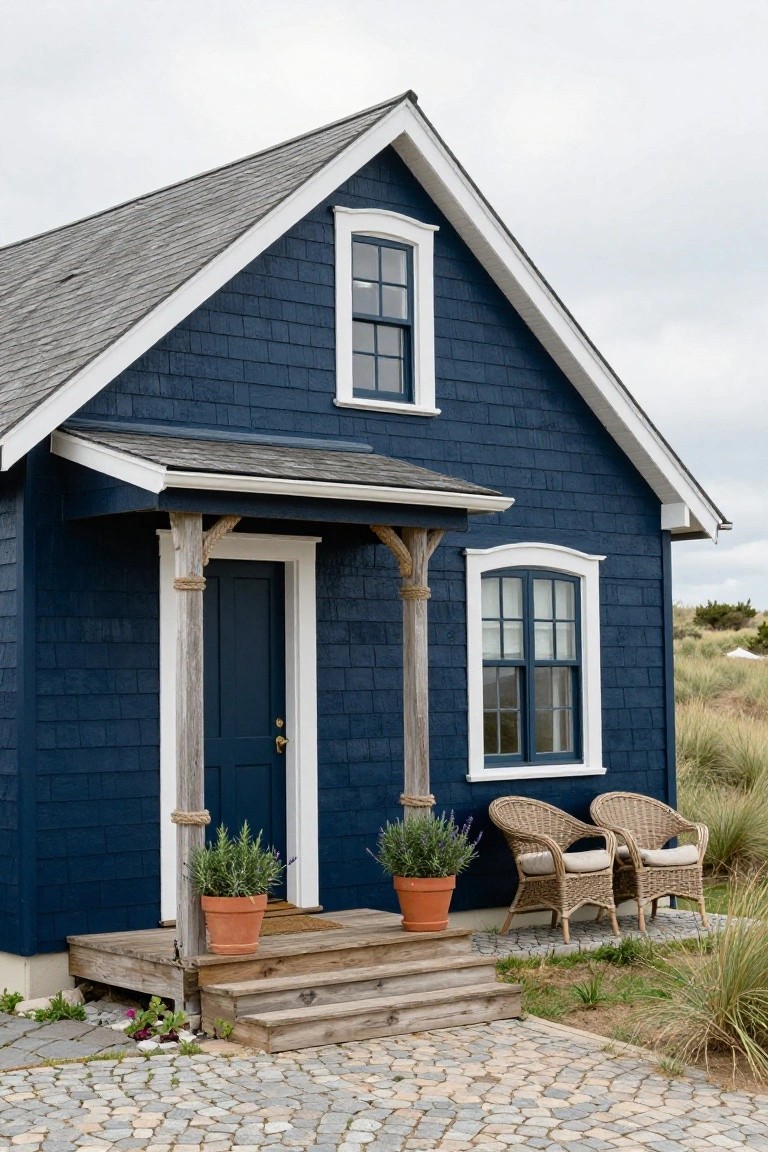
Dark navy blue shingles like these make a cottage look settled and timeless. They hug the house shape nicely, especially with white trim outlining the windows and door. The color holds up to coastal weather too, blending into dune surroundings without fading into the background.
This works great on smaller homes near water or in relaxed neighborhoods. Use it on gable roofs and porches for that classic shape. Keep accents light, like weathered wood posts. Skip it on big modern boxes, though. It suits places where you want low-key curb appeal.
Dark Gray Exterior with Warm Wood Garage Door
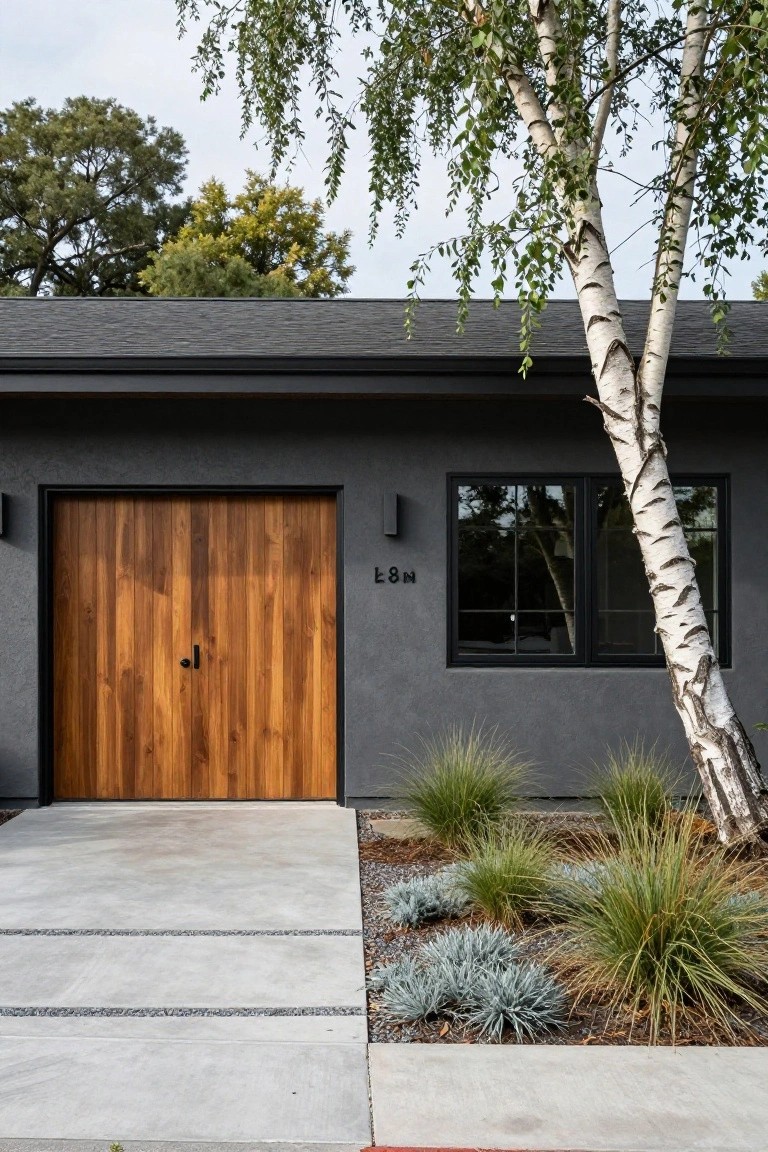
A dark gray siding like this one sets a sleek, modern tone for the whole house. It keeps things low-key and sophisticated without much upkeep. But that big wooden garage door in rich brown tones changes everything. It adds real warmth right where you need it most, at the entry. The combo feels balanced and welcoming, especially with the simple black window and house number pulling it all together.
This look works best on one-story or low-profile homes in sunny spots. Go for durable woods like teak or cedar that weather well outdoors. Skip busy details around the door, and let the contrast do its thing. It suits contemporary or minimalist styles, and pairs easy with concrete driveways or gravel beds. Just make sure the wood finish matches your climate.
Dark Slate Roof on Red Brick
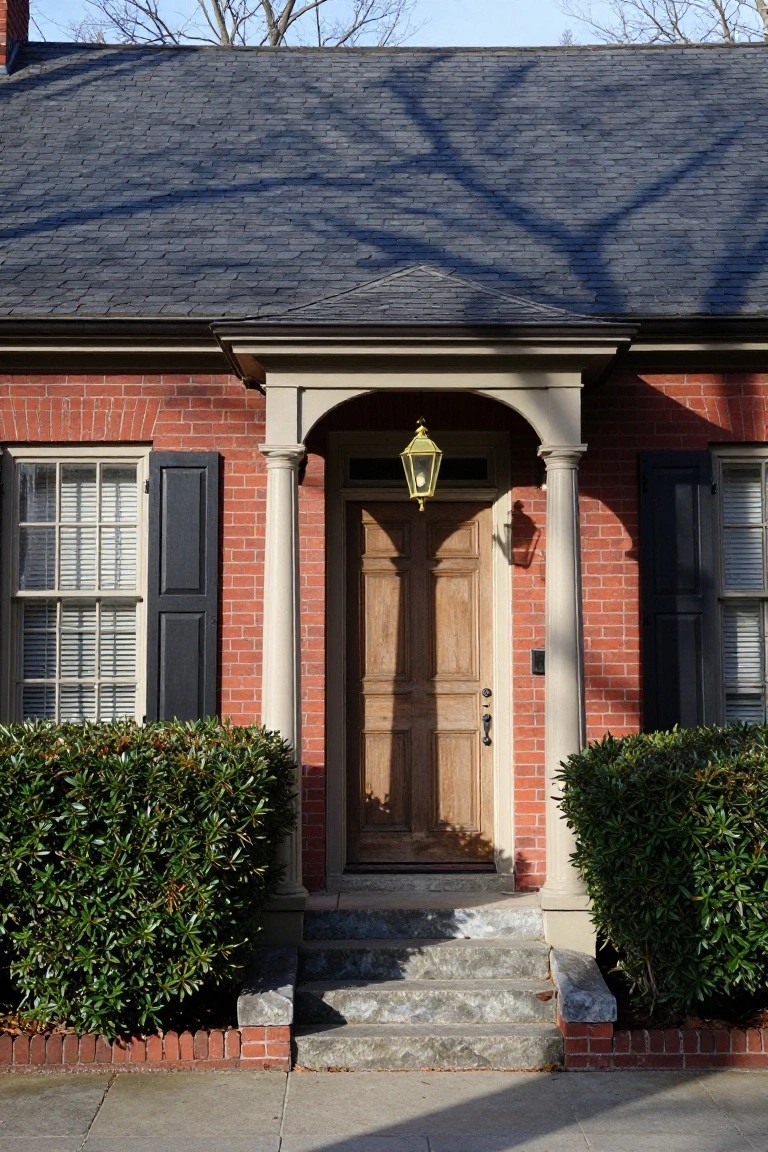
A dark slate roof like this one sits nicely over warm red brick siding. It gives the house a solid, traditional feel without overpowering the brick’s color. The deep gray pulls back just enough to let the brick warmth stand out, especially around the entry porch and windows.
This combo works best on older style homes or colonials in neighborhoods with some character. Add black shutters to sharpen the look. Keep plantings low like these boxwoods so they don’t hide the roofline. Avoid it on super modern houses where the slate might feel too heavy.
Forest Green Clapboard Siding
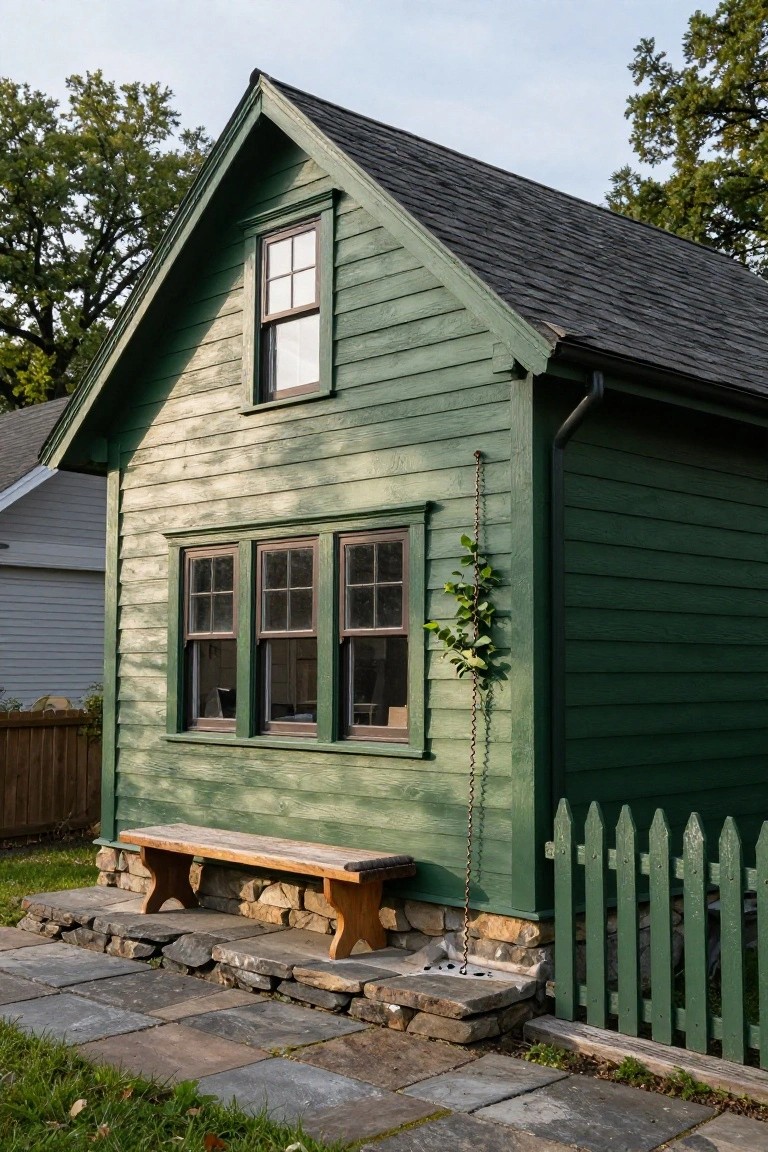
A deep forest green paint on clapboard siding gives this little house a cozy, tucked-away feel that blends right into the yard. You can see how it works with the big windows and that simple wooden bench out front. The shade feels classic without being too bright. It just settles in nice.
Try this color on homes with simple rooflines or traditional shapes, especially if you’ve got trees nearby. Keep trim in a darker brown to match the frames here. It suits smaller houses best. Watch for fading in full sun, though, so pick a good quality exterior paint.
Dark Siding with Climbing Ivy
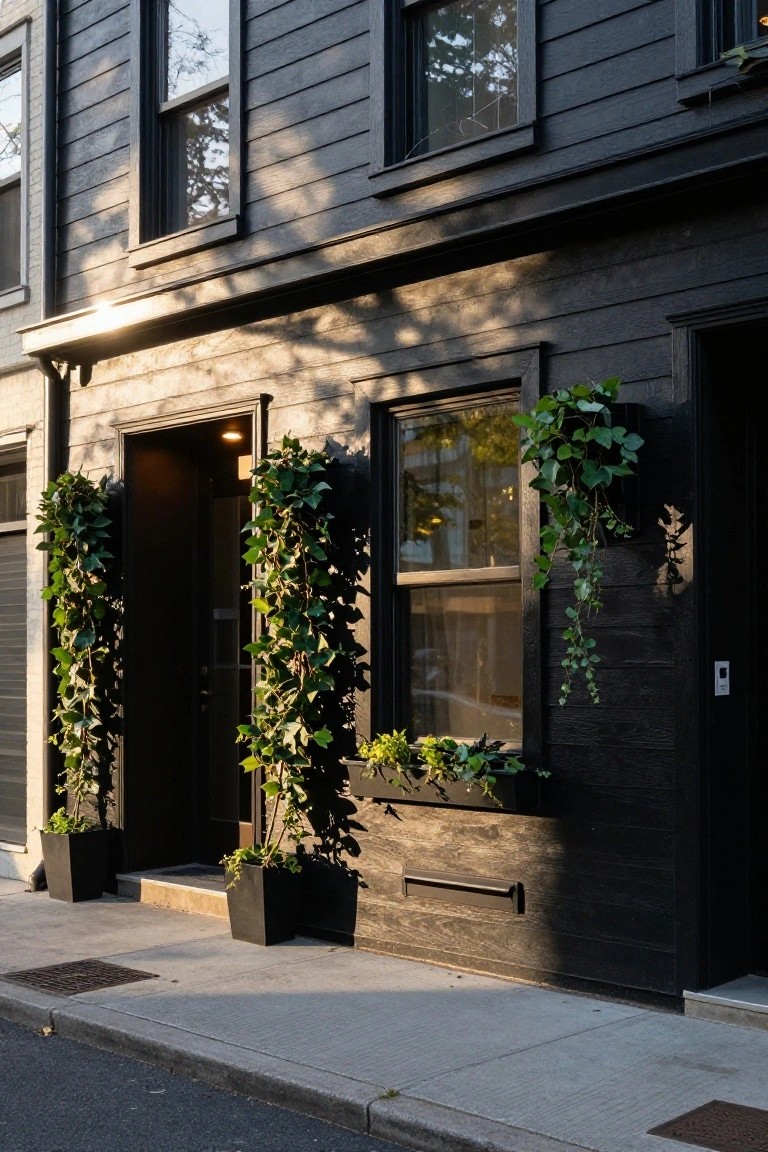
A deep black siding like this gives a house a moody, sophisticated edge. What makes it work so well here is the ivy trailing up both sides of the entry, along with those tall planters framing the door. The green pops right against the dark wood, softening things just enough without losing that bold look. It’s a simple way to add life to a dark exterior.
Try this on a narrow urban home or a craftsman-style place where you want curb appeal without a lot of fuss. Plant sturdy ivy varieties that cling well, and keep them trimmed back from windows or gutters. It suits shady spots best, since the plants thrive there and balance the drama of the black paint.
Black Wood Chalets in Mountain Settings
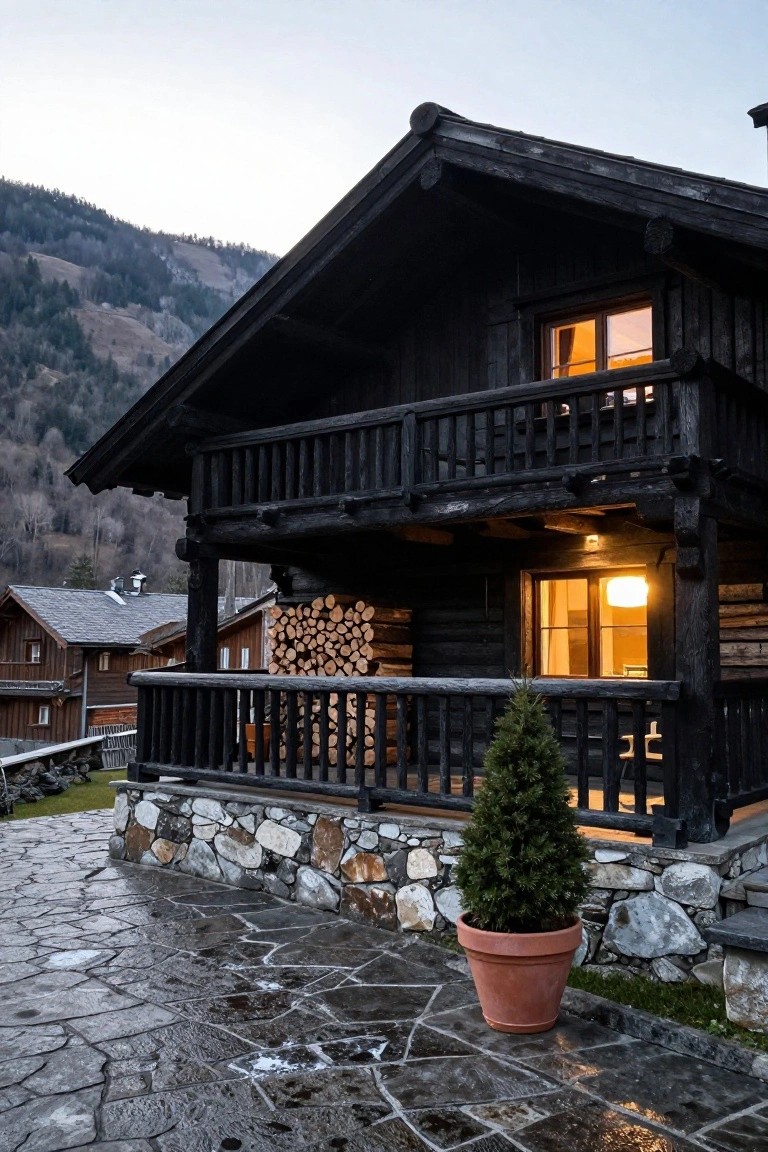
A deep black stain on the wood siding and trim turns this chalet into something that just melts into the hillside. You see the dark logs and shakes picking up the shadows from the pines and rocks around it. No bright colors pulling your eye away. Instead, the house sits quiet, sturdy against the slope.
This look fits best on wooded or rocky lots where you want the home to feel settled in, not showy. Vacation spots or rural cabins do well with it. Add a stack of firewood by the entry like here. Keeps things practical for cold weather. Just make sure the stain holds up to moisture.
Deep Blue Exterior Walls
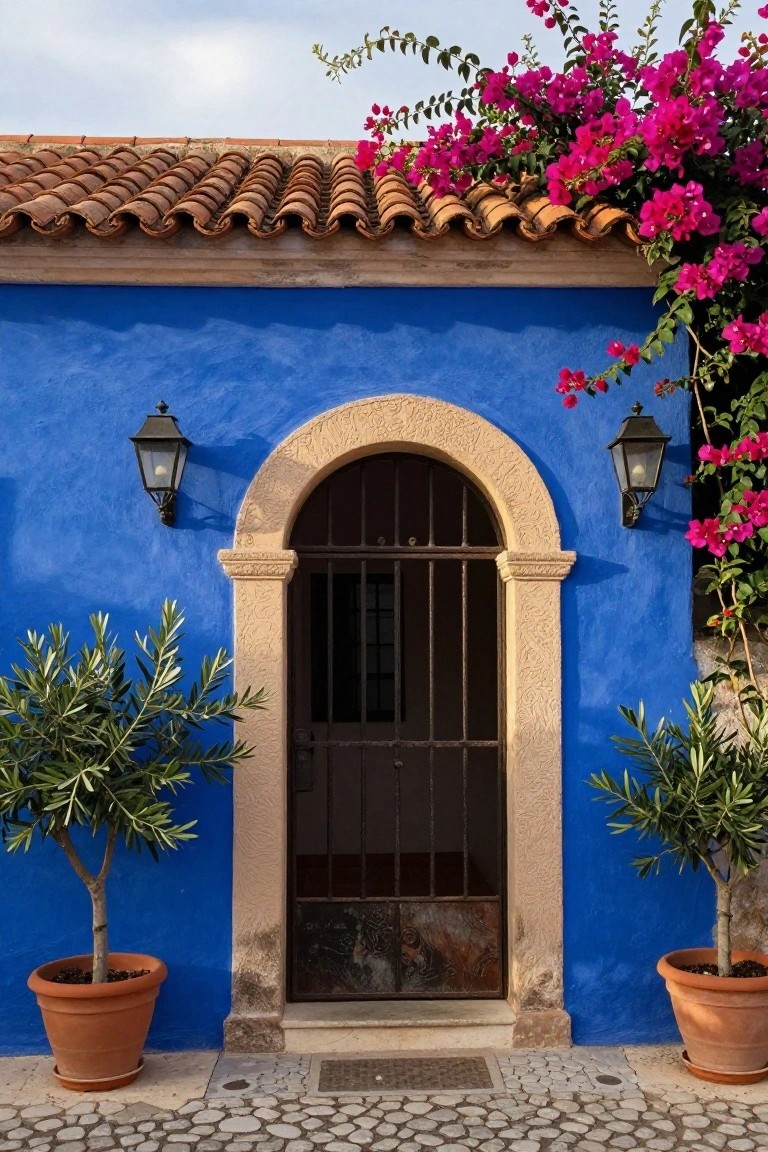
Deep blue walls like this one turn a simple house facade into something that really catches the eye. The color pulls warmth from the terracotta roof tiles and the pink bougainvillea climbing nearby. It makes the entry feel more alive without overwhelming the space. Olive trees in pots next to the door add some green contrast that keeps things grounded.
This works best on homes with Spanish or Mediterranean details, like arched doorways and stucco finishes. Pair it with wrought iron gates and lanterns for that old-world feel. Just make sure the blue shade has enough gray undertone so it doesn’t fade too fast in the sun. Test a few samples first.
Dark Green Siding on a Farmhouse Facade
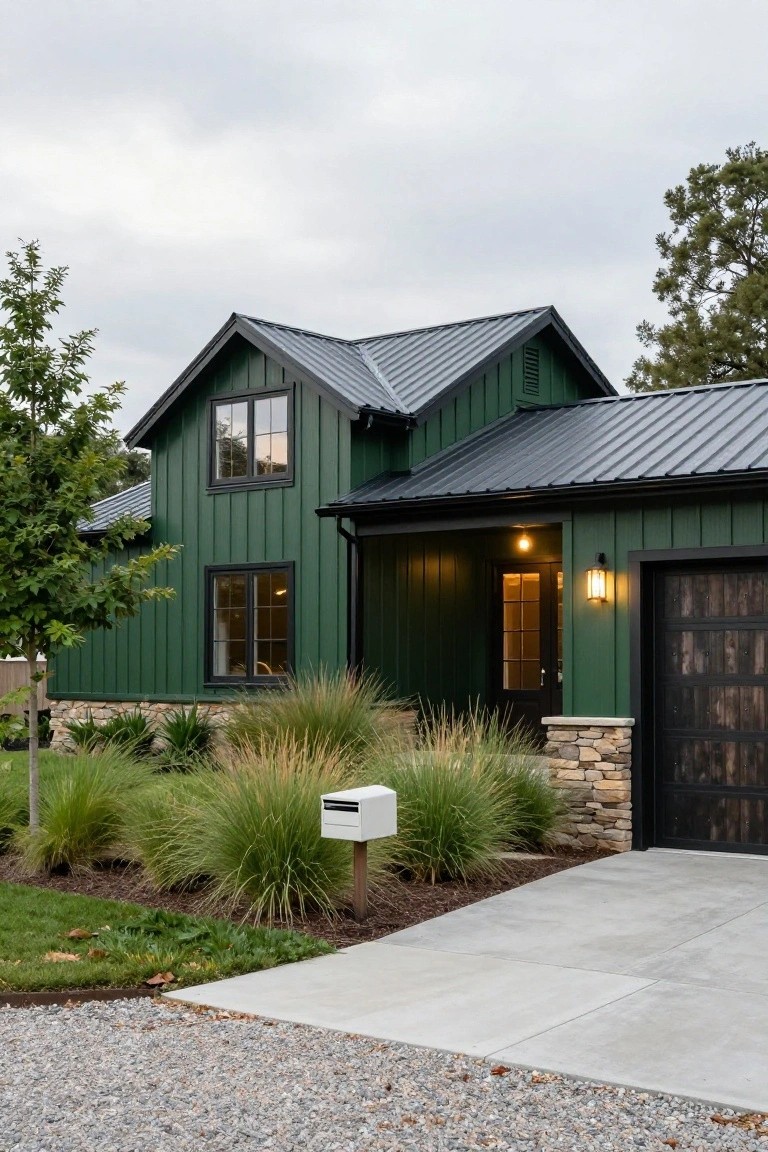
A deep green siding like this on board-and-batten panels turns a simple farmhouse shape into something bold yet cozy. The color pulls from the woods around it, making the house blend right in while the black metal roof and dark trim add sharp contrast. It’s a look that feels fresh without trying too hard.
This works best on homes with clean lines and some stone or wood details at the base. Go for it in cooler climates or shady spots where the dark tone hides wear. Just keep plantings low and textured nearby so they don’t fight the green… grasses like these fountain types fit perfect.
Classic Black Timber Framing on Pale Walls
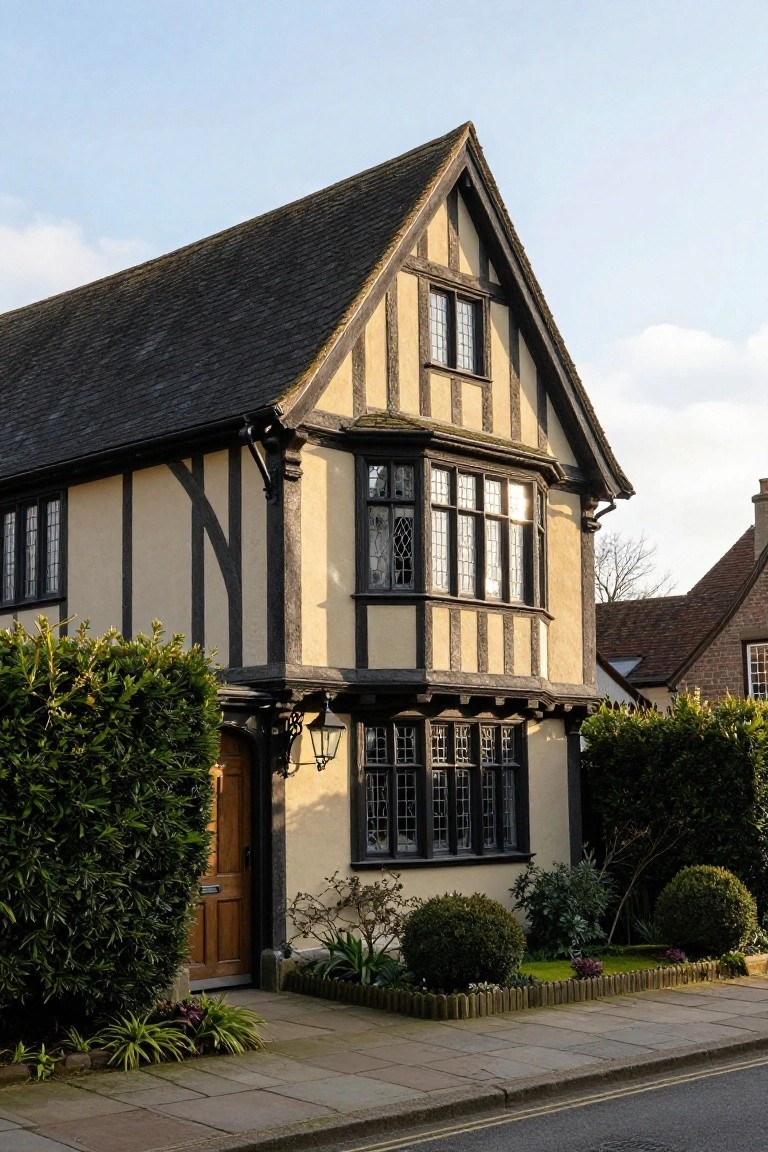
There’s something about black timber beams set against pale plaster that just feels right for older-style homes. This look pulls from traditional Tudor houses and gives the front a strong, grounded presence without overwhelming the street. The dark lines outline the windows and roof just enough to draw the eye up, while the light walls keep everything bright even on cloudy days.
You can pull this off on a two-story house like this one, especially if you’re in a neighborhood with historic vibes. Paint the beams a deep black or charcoal for punch, and go with a soft cream or beige on the stucco. Trim the hedges neat around the door to frame it nicely. It suits craftsman or colonial revivals too, but skip it on super modern boxes.
Deep Burgundy Exterior Paint
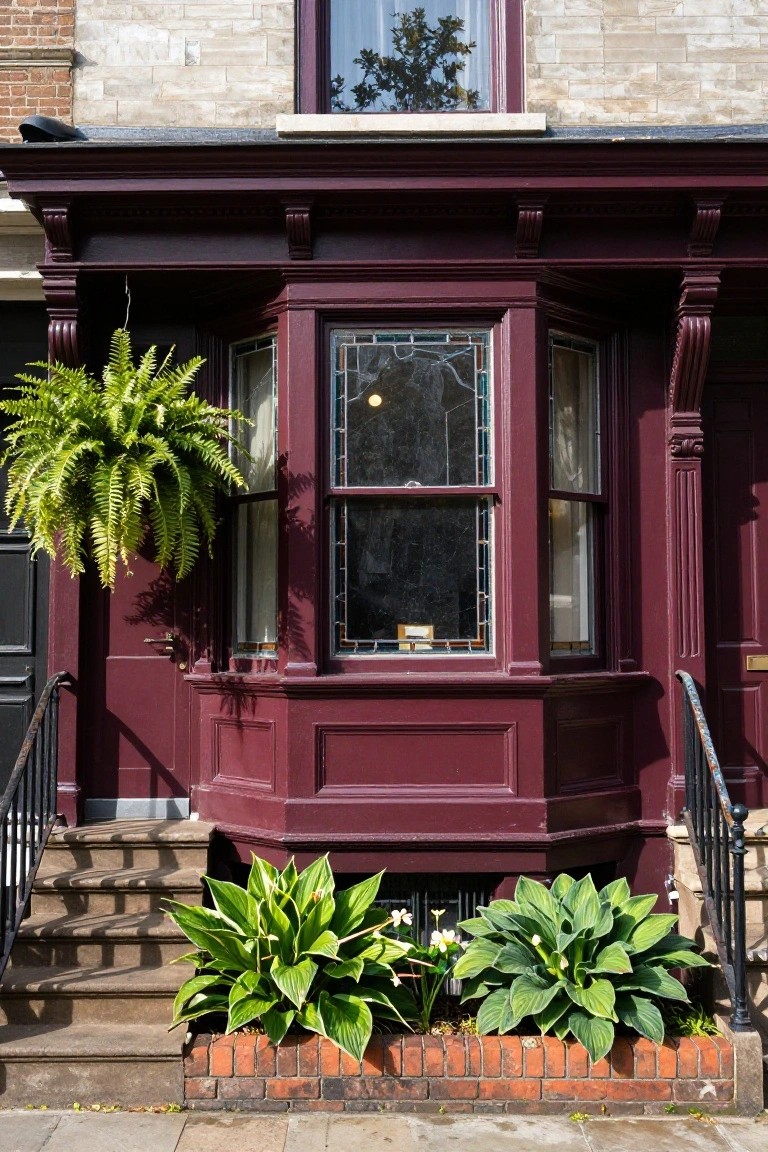
Deep burgundy paint turns a simple house facade into something rich and noticeable. Here, it coats the woodwork around a bay window with stained glass, picking up the warmth from nearby brick while keeping things moody. It’s a color that feels classic, not flashy, and holds up well in shade or sun.
Try it on homes with lots of trim or Victorian details. It pairs nicely with black doors and railings for punch. Best for townhouses or semis where you want curb appeal without going too bold… just prep the surfaces right first.
Dark Gray Siding with Wood Entry Door
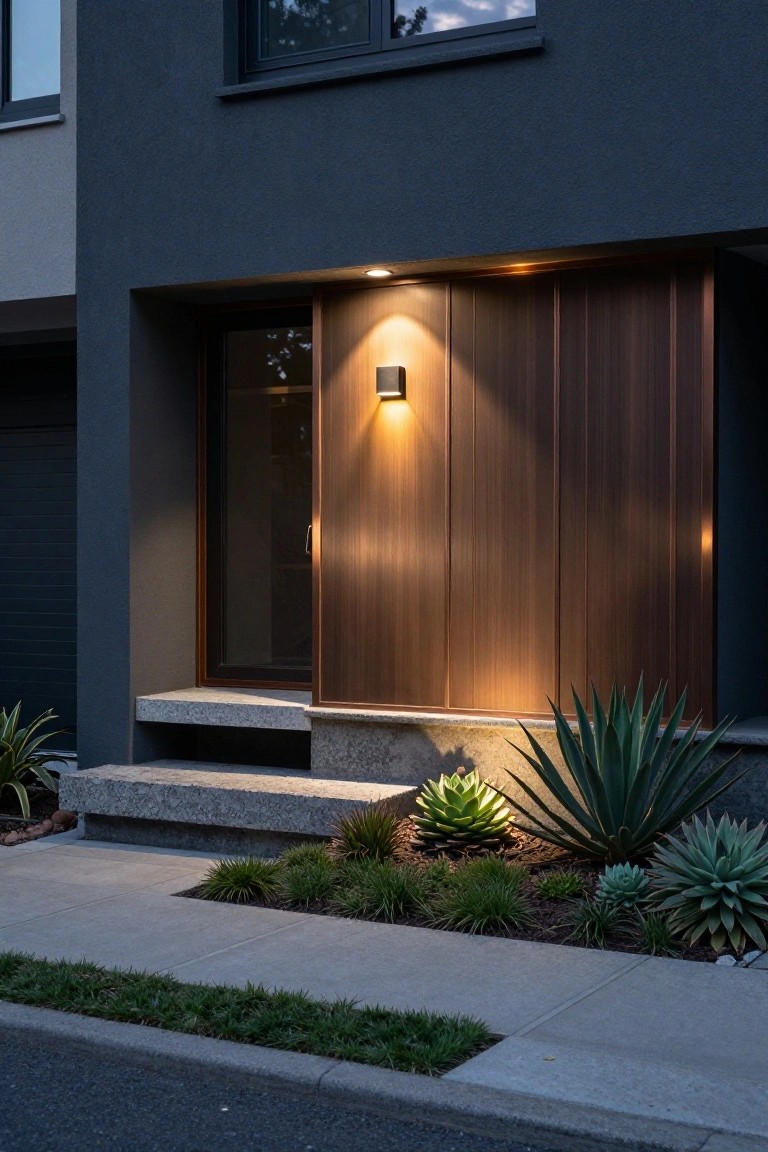
Dark gray siding gives this house a sleek, modern look that recedes into the evening shadows. The real standout is the tall wood entry door with its vertical slats, painted in a warm copper tone. Paired with simple uplights, it pulls your eye right to the front door and makes the whole facade feel more welcoming without much fuss.
This setup works great on contemporary homes or anywhere you want curb appeal that lasts year-round. Use it on narrower lots where the dark siding keeps things from feeling boxy. Just make sure the wood finish can handle your weather, and keep plantings low like those agaves so they don’t block the glow.
Dark Exterior with Light Wood Door
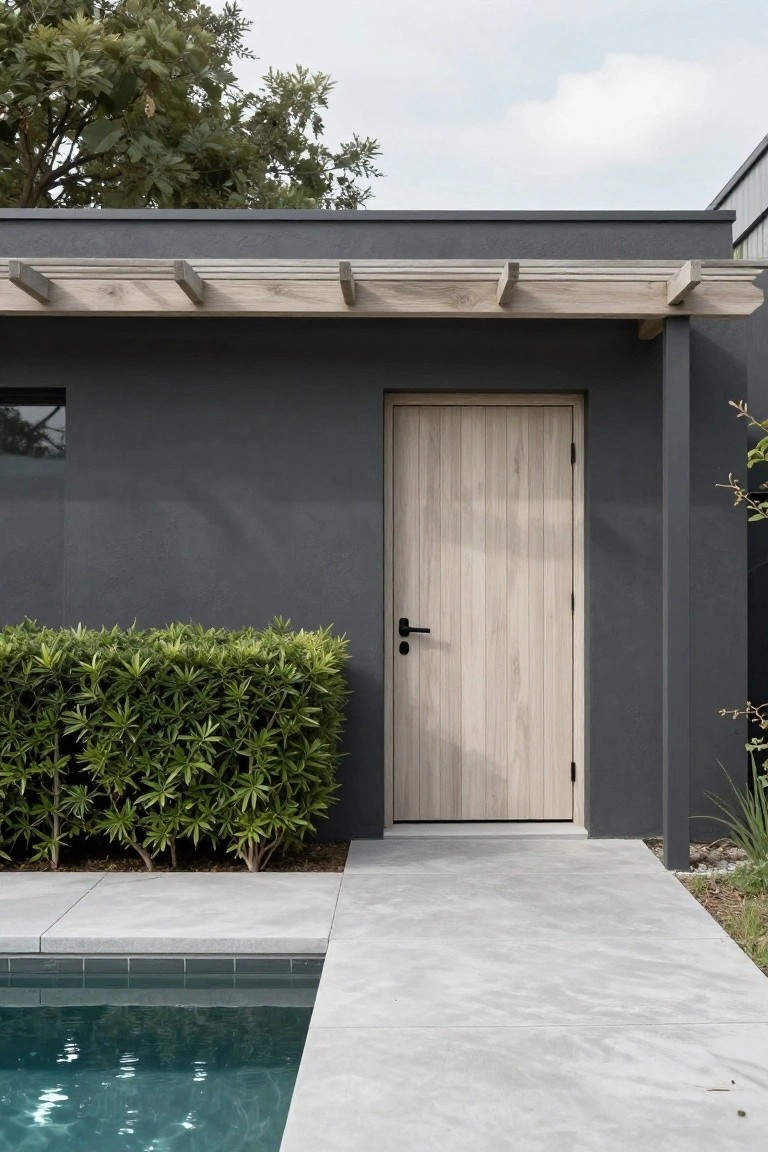
A simple way to brighten up a dark house exterior is a light-toned wood door at the entry. The charcoal gray wall here gives that sleek modern feel, but the pale oak door pulls in some natural warmth without overpowering things. The pergola overhead in matching wood ties it together nicely.
This look suits low-slung contemporary homes or even ranch styles in suburban spots. Go for limed or whitewashed oak to keep the contrast crisp, and pair it with a matte black handle. It works best where you want subtle interest at the front without going all white. Just seal the wood well if it’s outdoors year-round.
Terracotta Tile Entry Path
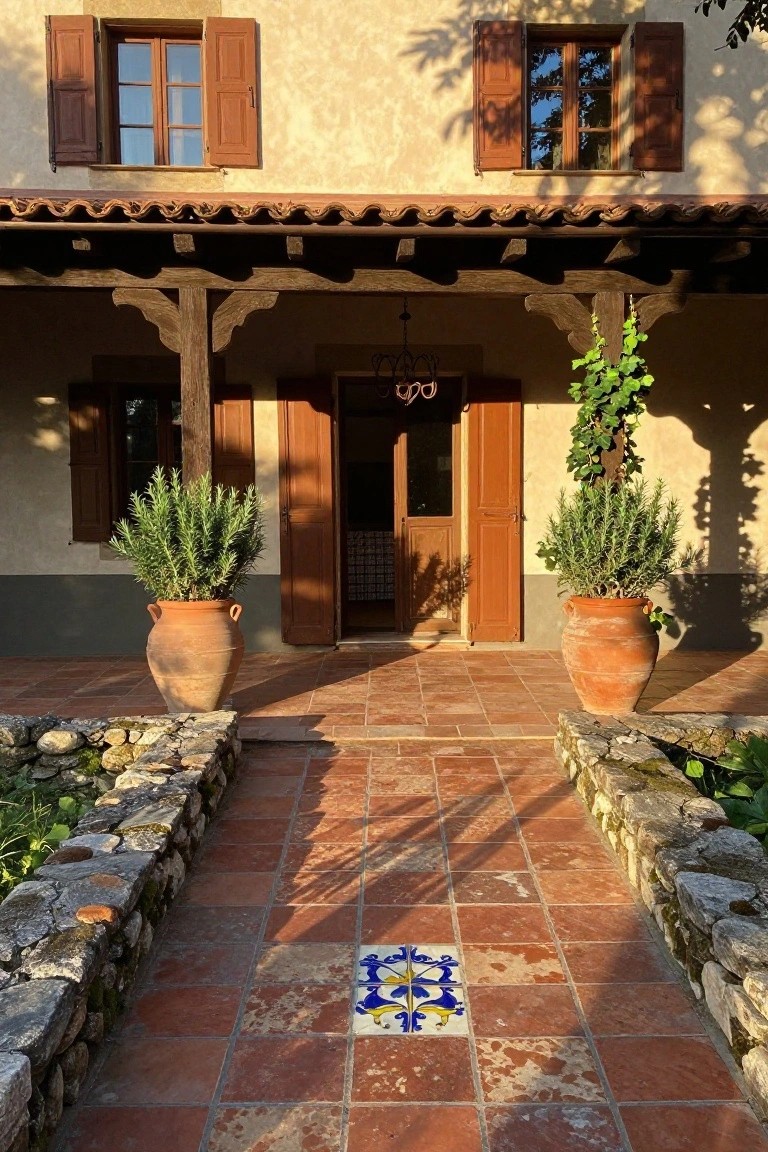
A terracotta tile path running right up to the front door gives this house a grounded, welcoming feel. The warm reddish-brown color of the tiles echoes the large matching pots filled with rosemary plants on either side. It pulls focus to the wooden entry doors without overwhelming the light stucco walls.
This works best on homes in sunny climates with light-colored exteriors, like Spanish or Mediterranean styles. Lay the tiles in a simple grid pattern, maybe add one decorative blue tile for interest. They hold up well outdoors and pair nicely with stone edging or low plantings along the sides.
Recommended Products

𝐏𝐑𝐄𝐌𝐈𝐔𝐌 & 𝐃𝐔𝐑𝐀𝐁𝐋𝐄 𝐀𝐂𝐀𝐂𝐈𝐀 𝐖𝐎𝐎𝐃: Made from 100% natural acacia wood with a deep-oil finish, these interlocking decktiles are sturdy, water-resistant, and built for outdoor conditions. Sanded smooth for a premium wood grain look, a smooth-finished surface, and a noticeably smoother barefoot feel - comfortable for families and pets.

Premium Acacia Wood: Solid hardwood with a linseed oil finish for a smooth, barefoot-friendly surface; each tile measures 12 x 12 inches and 0.9 inches thick for a refined look and feel
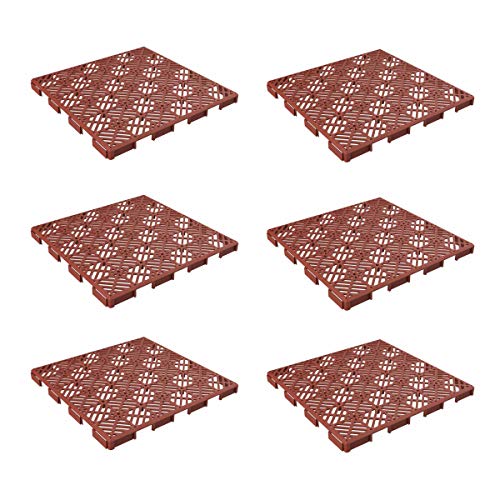
OUTDOOR PAVERS - This 6-pack of balcony flooring boasts a design that enables airflow and drainage for durability. Constructed from weather- and fade-resistant materials, these interlocking deck tiles won’t swell or decay and work well in direct sunlight.
Black Framed Glass Walls for Bold Exteriors
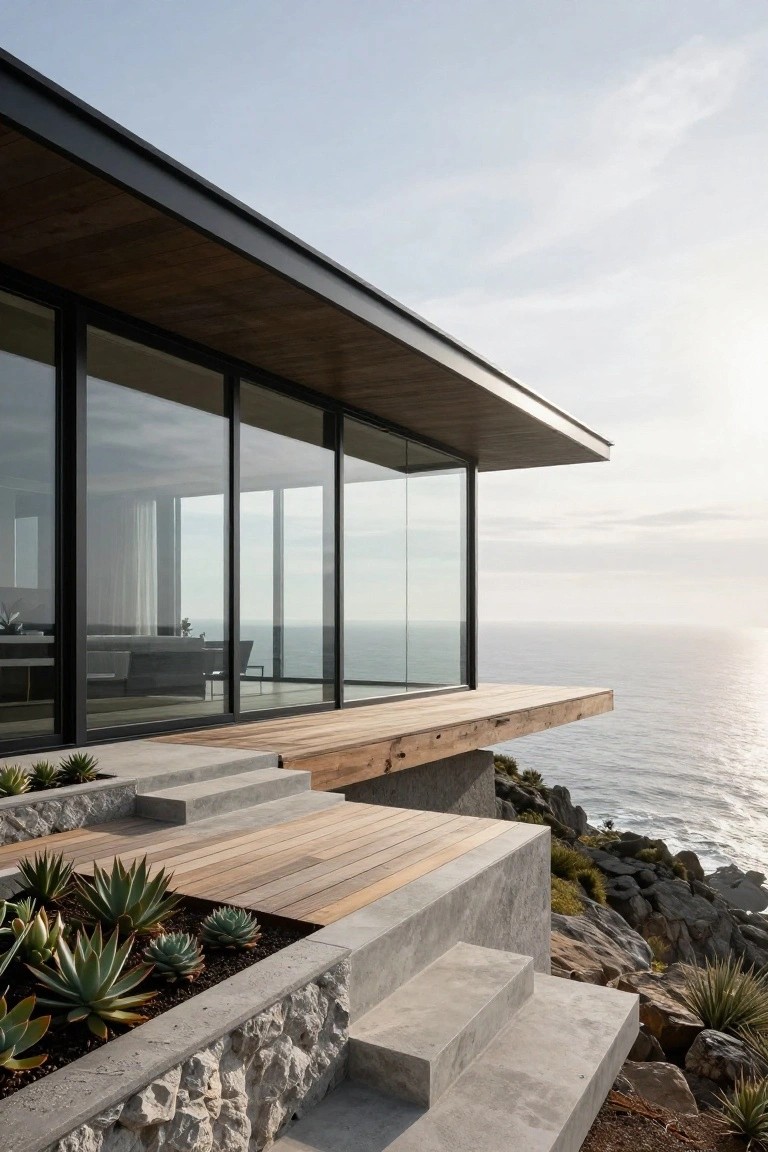
Big glass walls wrapped in slim black frames make a house look sharp and open. They pull in all that outside light and views without the bulk of thicker trim. On this cliffside spot the black sets off the wood deck and concrete just right turning the whole front into one clean statement.
These frames work best on modern homes where you want to blur inside and out. Go for them facing water or hillsides if your site allows. Keep the glass super clean though or the dark lines start showing every smudge.
Dark Board-and-Batten Siding
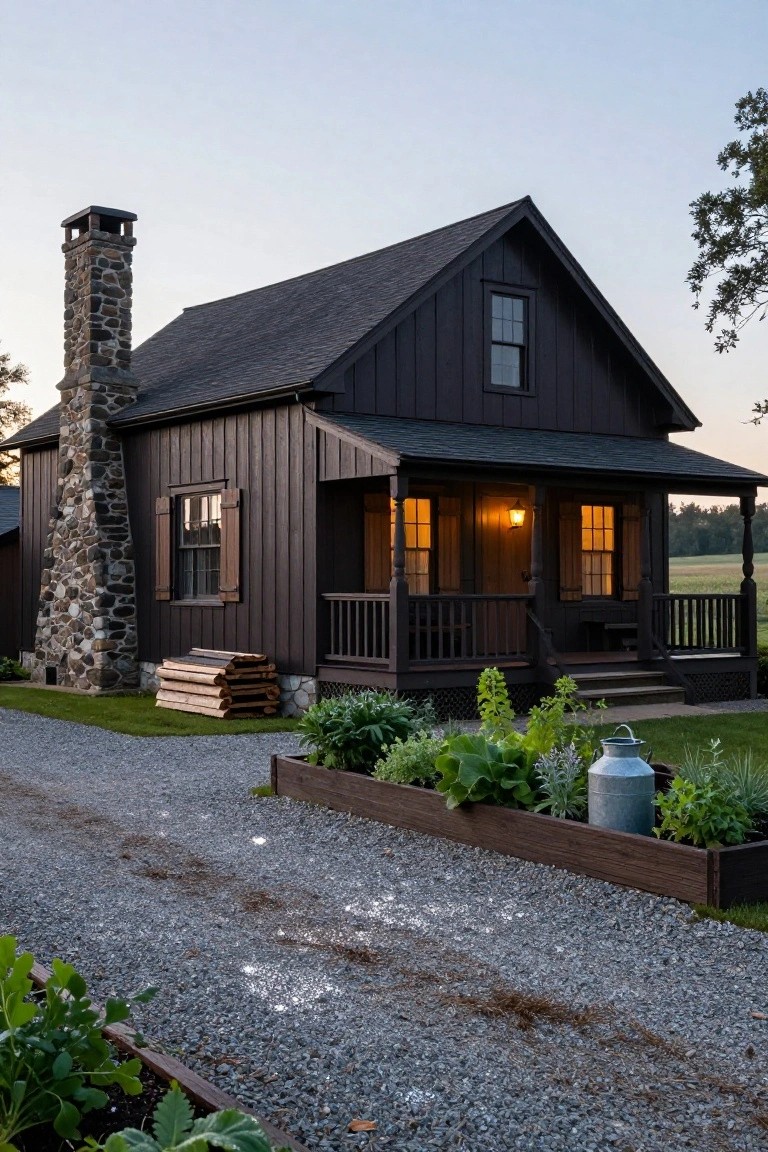
A dark stain like this on vertical board-and-batten siding turns a basic cabin into something that feels solid and tucked into its spot. The near-black tone soaks up the light at dusk, making the stone chimney and porch stand out without trying too hard. It’s a straightforward way to get that rustic vibe on a gable-roofed house.
Try it on farm-style homes or vacation spots where you want low upkeep and a moody look. It suits rural edges or wooded lots best, but pair it with lighter trim around windows so the place doesn’t fade into the trees. One thing… keep the porch open and simple to let the siding do its job.
Dark Barn Shed Exterior
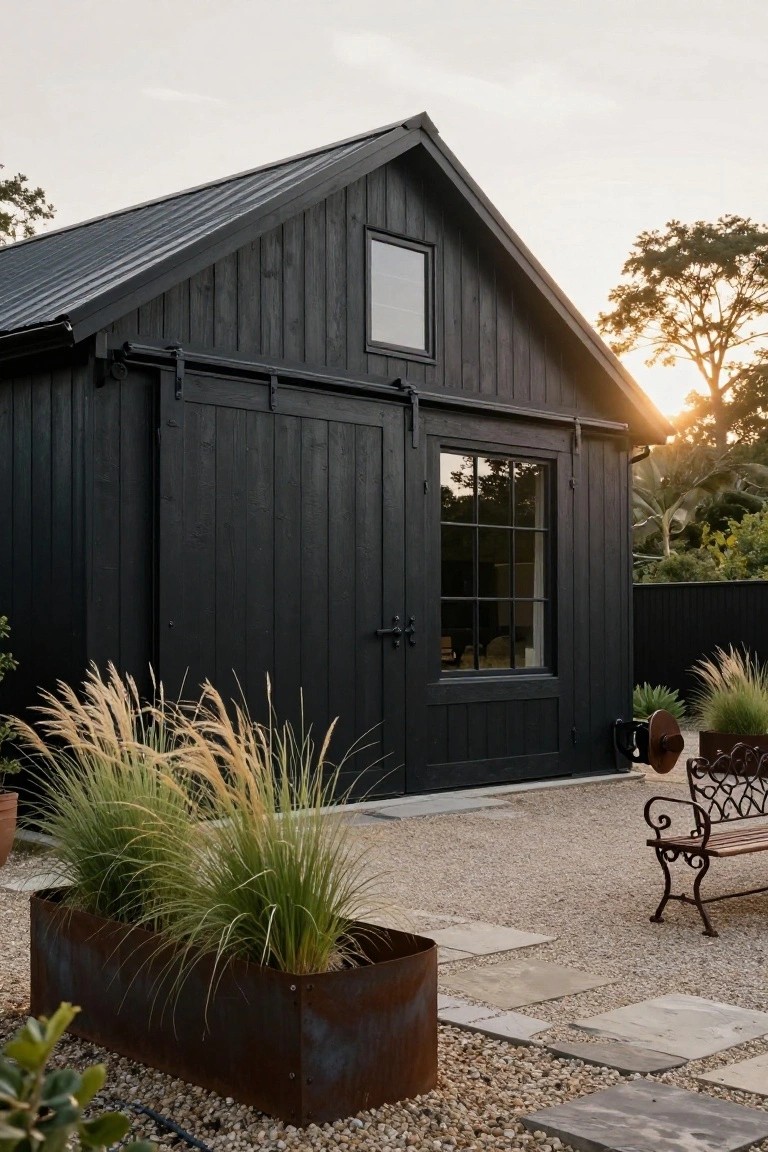
A deep black stain on this backyard shed turns a basic structure into a standout piece. The vertical wood planks and oversized sliding barn doors create clean lines that feel both rustic and current. It pulls the eye without clashing against the surrounding greenery or gravel path.
This approach works well for outbuildings like studios or storage sheds on smaller lots. It suits modern farmhouses or craftsman homes where you want some edge. Prep the wood right with a quality stain, and it holds up to weather… just check for fading after a couple years.
Deep Navy Siding
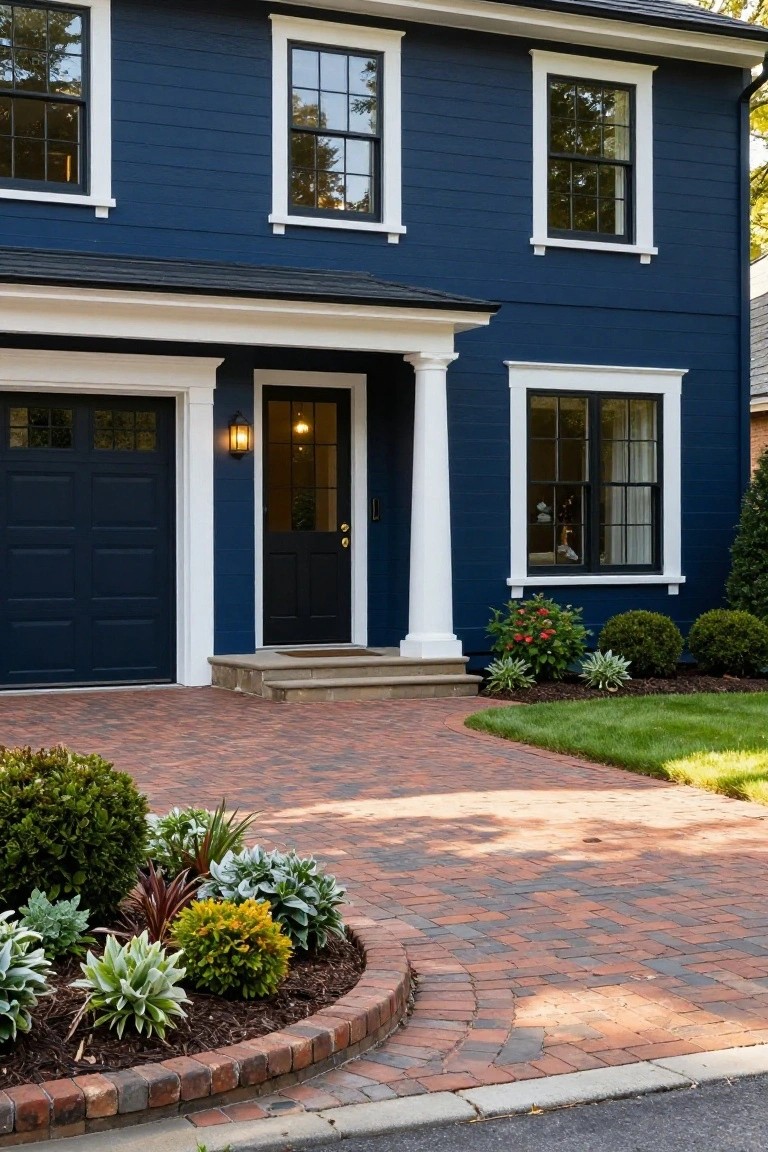
A deep navy blue siding like this gives a house real presence without going overboard. It stands out against the green lawn and sky, and the white trim keeps everything sharp and clean. Black doors and garage doors add some weight at the bottom, so the whole front feels balanced and pulled together.
This color works best on traditional style homes with columns or simple rooflines. Paint the body navy, trim white, and accents black for that crisp look. It hides dirt better than lighter colors too, which is practical if you’re not painting every year. Just make sure your roof isn’t too dark or it might blend in.
Dark Green Siding for Coastal Homes
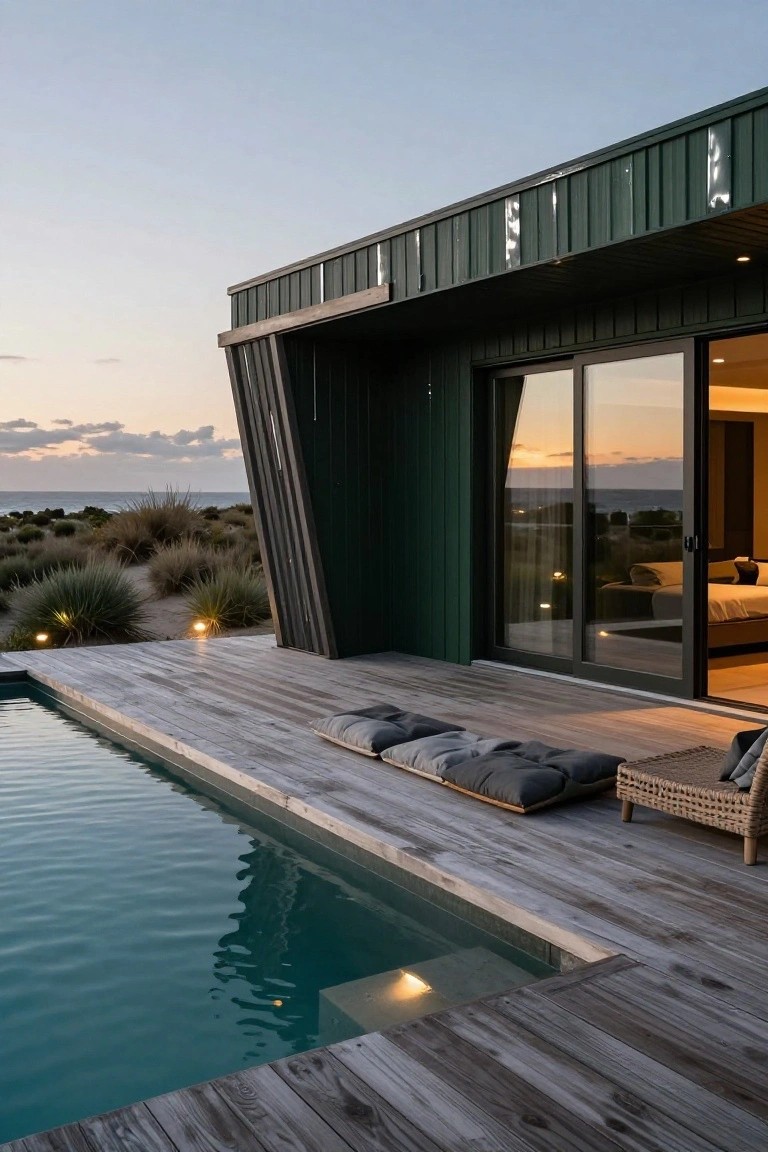
Dark green siding like this gives a house a quiet fit with its surroundings. On this beach setup, the deep shade picks up the nearby dunes and scrub grass, so the place doesn’t shout for attention. It keeps things grounded, especially with those sharp angles on the structure.
Try it on modern homes near water or woods, where blending in matters more than standing out. Go for vertical panels to echo natural lines, and add wood decking nearby for warmth. Skip it on busy streets, though. It suits spots that stay low-key year round.
Navy Blue Siding on Small Houses
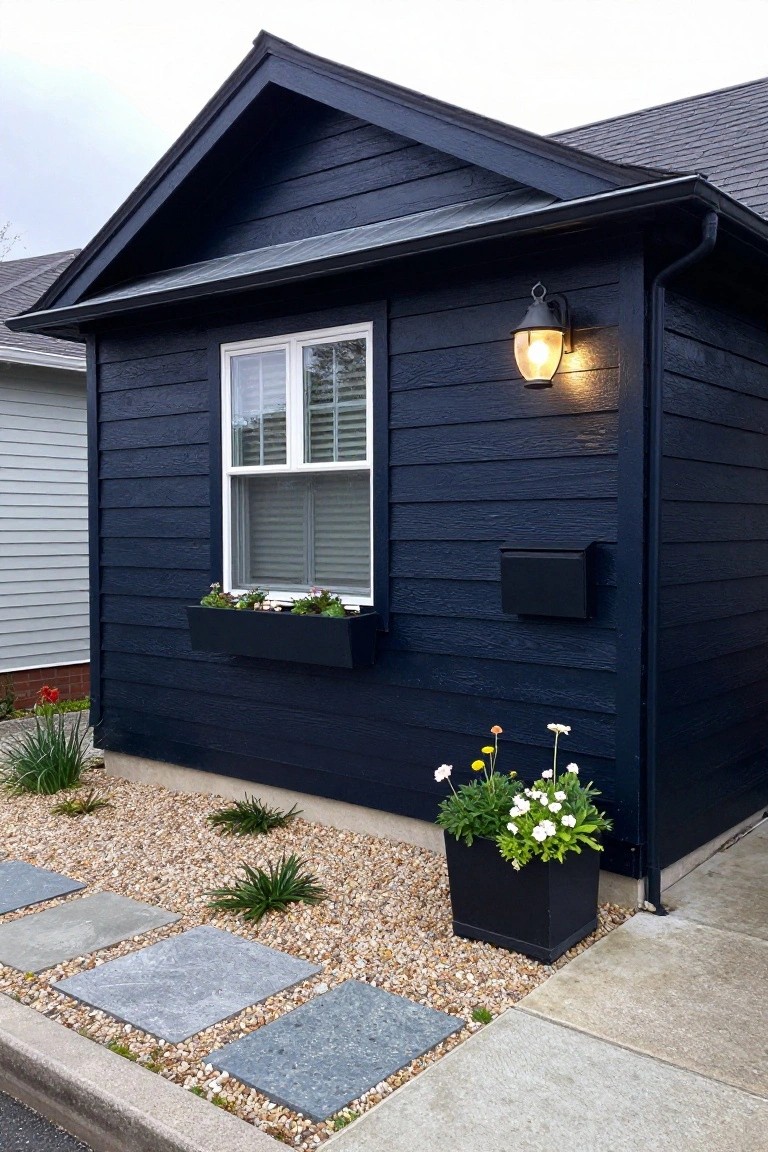
A deep navy blue siding like this turns a basic little house into something that really stands out. It gives the place a modern edge without much fuss. The color picks up light nicely from that lantern and window box, making the front feel welcoming even on gray days.
Try it on sheds, guest cottages, or starter homes where you want big impact on a small scale. It pairs well with gravel yards and simple plantings to keep things low upkeep. Just make sure your trim stays crisp white to let the blue do its thing.
Frequently Asked Questions
Q: Do dark exterior colors hide dirt and grime better?
A: They sure do. Dust and pollen blend right into deep charcoals or navies way easier than on white siding. Just hose it down once a season to keep that sleek look.
Q: Will a dark house color make my home feel smaller or gloomier?
A: Lighter trim around windows and doors brightens things up fast. It draws the eye and adds dimension without fighting the dark base. Skip pure black if your lot sits shady.
Q: How do I test dark paint shades before painting the whole house?
A: Paint large sample boards and stick them on all sides of your home. Walk around at different times of day to catch how sunlight shifts the tone. Pick what thrills you in real light.
Q: What if my area gets blazing hot summers—do dark colors overheat the house?
A: Dark shades soak up sun, so add overhangs or plant fast-growing trees for shade. Quality paint with heat-reflective tech cuts that down too. Your walls stay cooler that way.
