

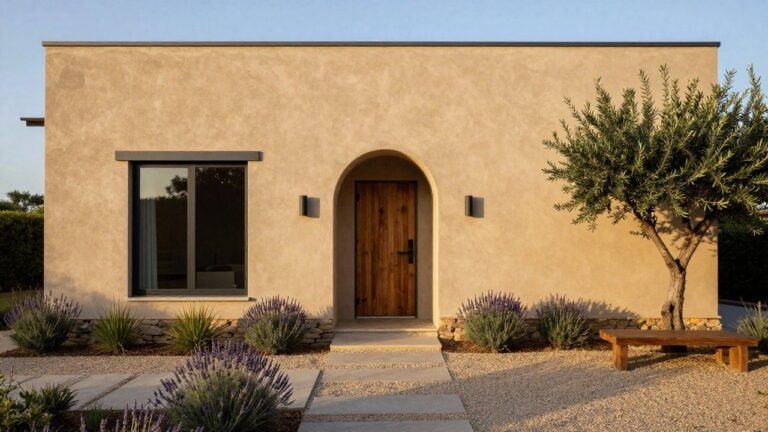
I’ve spent time walking neighborhoods, noting how beige exteriors catch the eye without overpowering the street view. Certain shades warm up brick facades and make entryways pop, especially when paired with contrasting trim. Beige works best when it shifts subtly with sunlight across siding and rooflines, avoiding that flat look some houses get. I remember testing a few on our own place, and the ones with earthy undertones held their charm through seasons. Save the warmer neutrals.
Beige Stucco Paired with Arched Wood Door
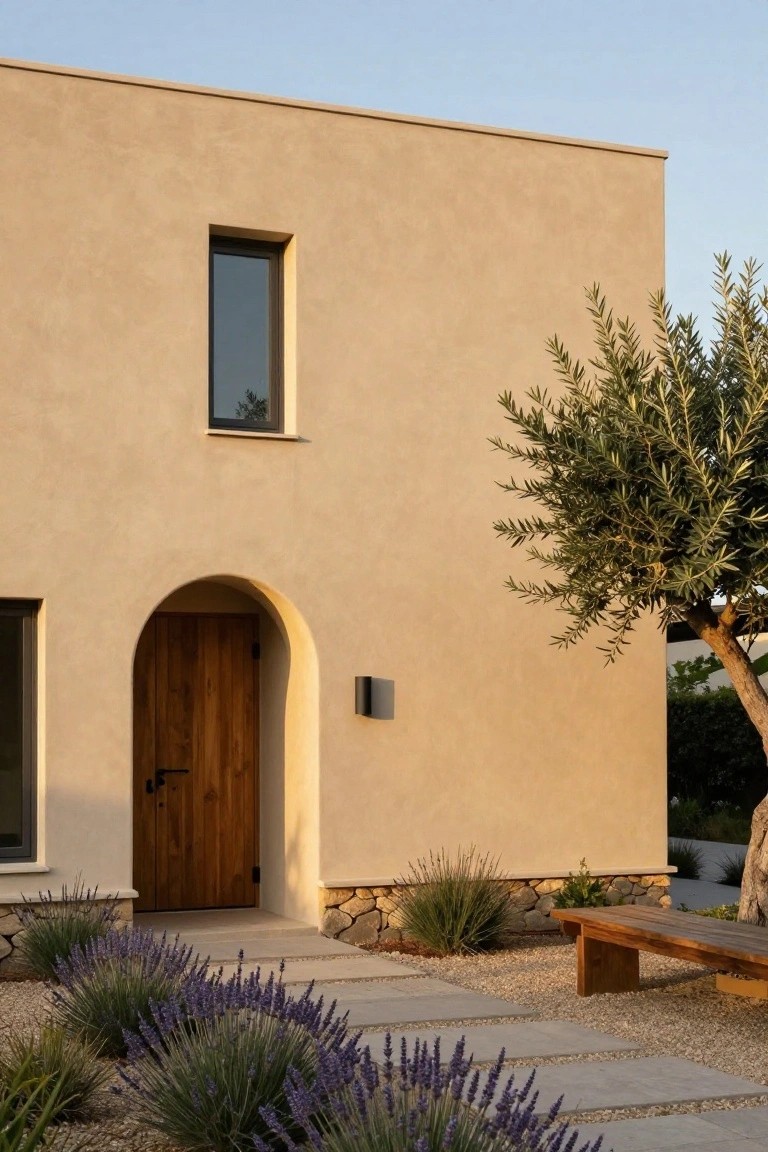
A soft beige stucco finish on the exterior walls looks right at home with a simple arched wooden door. The neutral tone keeps things calm and ties into the natural landscape around it. That wood door brings just enough warmth to make the entry feel welcoming without any fuss.
This setup works great on single-story homes or places with a bit of slope. It suits warmer spots where you want low upkeep, and the stucco holds up well over time. Keep the plantings simple like lavender along the path so they don’t steal the show.
Beige Siding with Blue Shutters
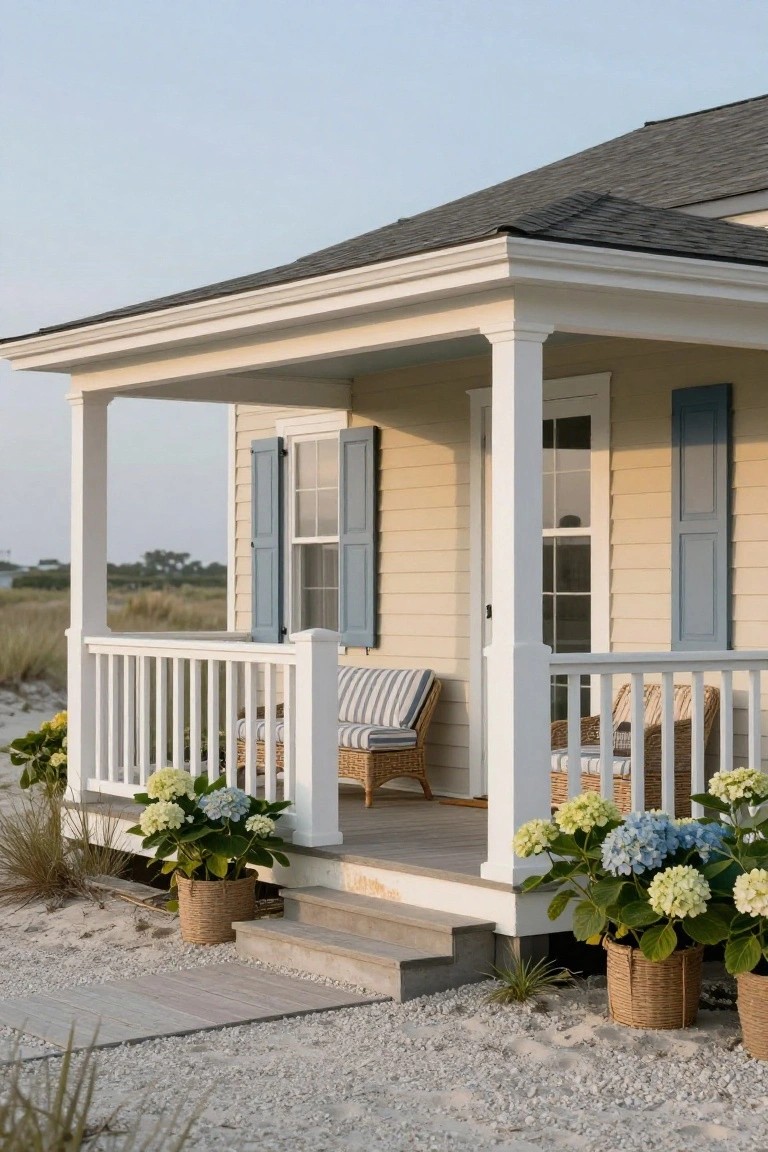
Beige siding like this gives a house a soft, easy look that fits right into coastal spots. The light color picks up the sand and sky around it, while blue shutters add just enough punch without going overboard. White trim on the porch columns keeps things crisp and pulls the whole front together. It’s a setup that feels relaxed but put-together.
This works best on homes near water or in warm areas where you want low-key curb appeal. Pair the beige with white porch railings and maybe some potted hydrangeas out front for that beachy nod. Skip darker accents if the house sits in full sun, or it might show dirt faster. Simple changes like this can make an older place look fresh without a full repaint.
Recommended Products

Vinyl shutters included UV-additives that protect from fading.

One Piece Injection Molded Polypropylene Construction
One Piece Injection Molded Polypropylene Construction
Beige Stucco with Arched Entry
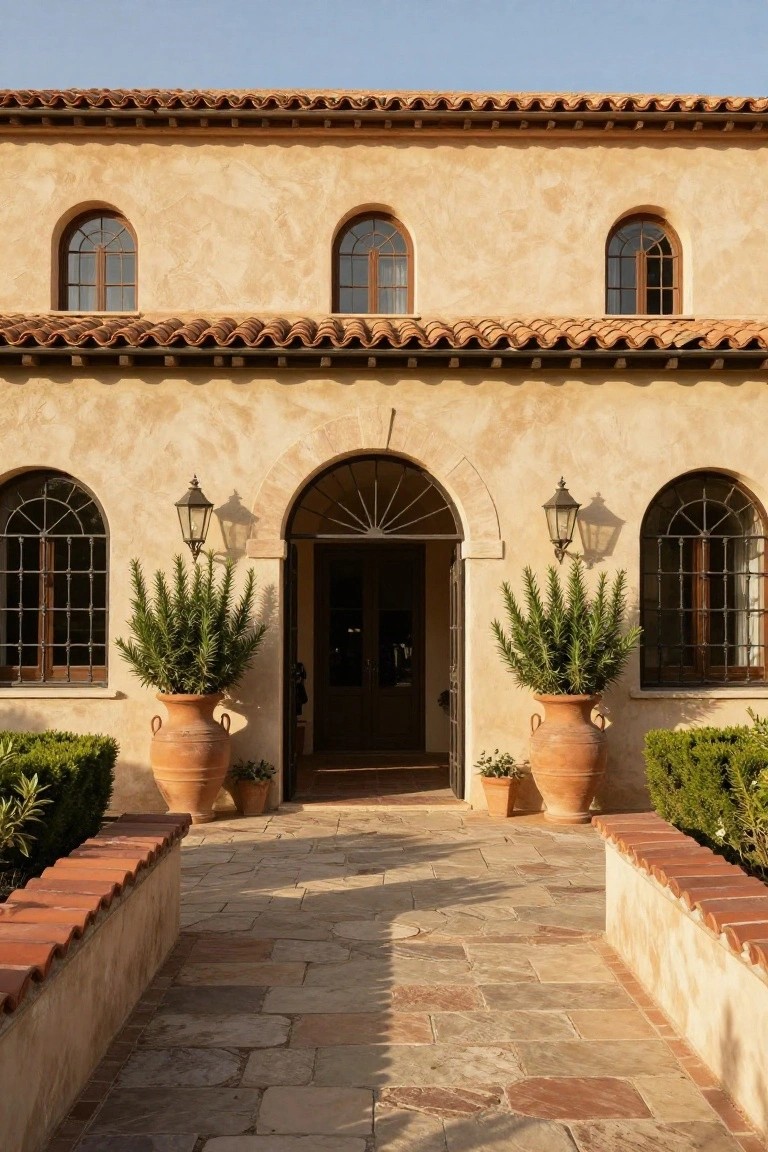
A soft beige stucco finish on the house walls sets a calm base here. The wide arched entry pulls everything together, making the front door feel like an invitation rather than just an opening. Flanking lanterns add a touch of old-world charm without overdoing it.
This setup works best on single-story homes or ranch styles aiming for a Mediterranean vibe. Pair the stucco with terracotta roof tiles and simple potted rosemary plants by the steps. Keep the path straightforward in stone. It holds up well in sunny spots… just watch for stucco cracks in wet weather.
Recommended Products

Use for a variety of indoor and outdoor project surfaces including wood, metal, plaster, masonry or unglazed ceramic

This high-quality, acrylic latex water-base interior/exterior paint offers excellent hiding properties with great adhesion and water repellency on textured interior and exterior surfaces

Ideal for use on interior/exterior surfaces including wood, plastic, plaster, metal, masonry and unglazed ceramic
Beige Siding with Gray Metal Roof
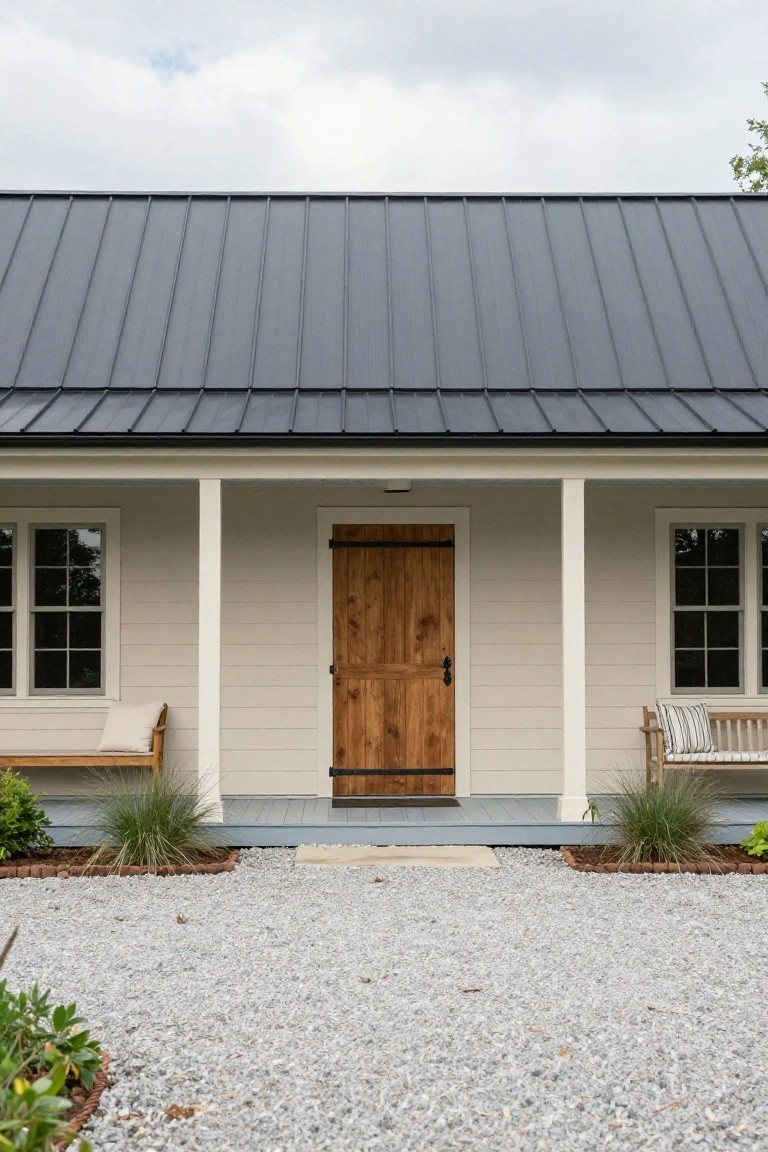
A light beige siding like this one pairs nicely with a dark gray metal roof. The soft walls keep the house feeling open and easy on the eyes, especially under a wide sky. That roofline with its standing seams gives the whole front a bit more structure without overpowering things. Notice how the wood door pulls in some natural tone too.
This setup works best on straightforward ranch or cottage styles where you want a clean look that doesn’t fade into the background. It’s practical for warmer spots since metal roofs stay cooler. Just make sure the beige isn’t too yellow, or it might clash with the gray. Add simple benches on the porch, and you’ve got a welcoming entry that lasts.
Warm Beige Shingle Siding
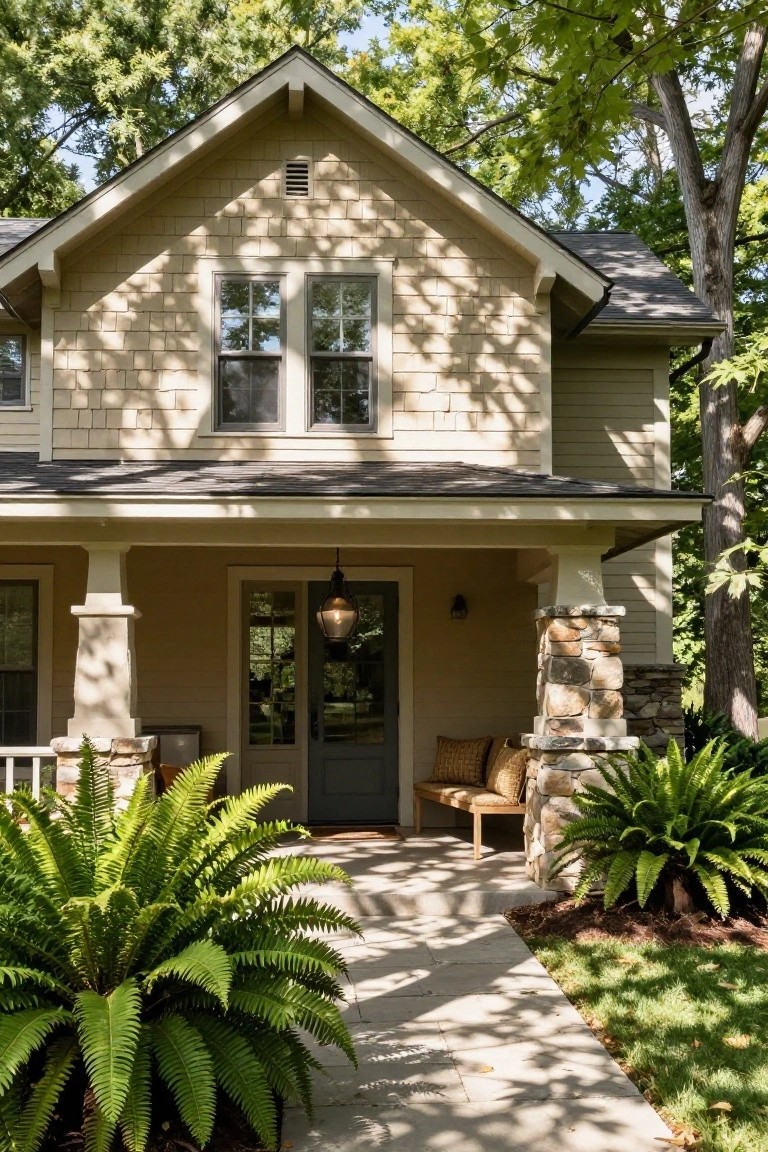
A warm beige shingle siding like this gives a house a cozy, lived-in feel right from the street. It picks up on the soft tones in the surrounding trees and grass, so the home doesn’t stand out too much. The stone pillars on the porch add just enough texture to keep things interesting.
This look fits older neighborhoods or wooded lots where you want the house to settle in naturally. Use darker trim around windows and doors to define the shape. Skip bright accents. It holds up well in humid spots too, since shingles shed water easily.
Soft Beige Stucco on Minimalist Boxes
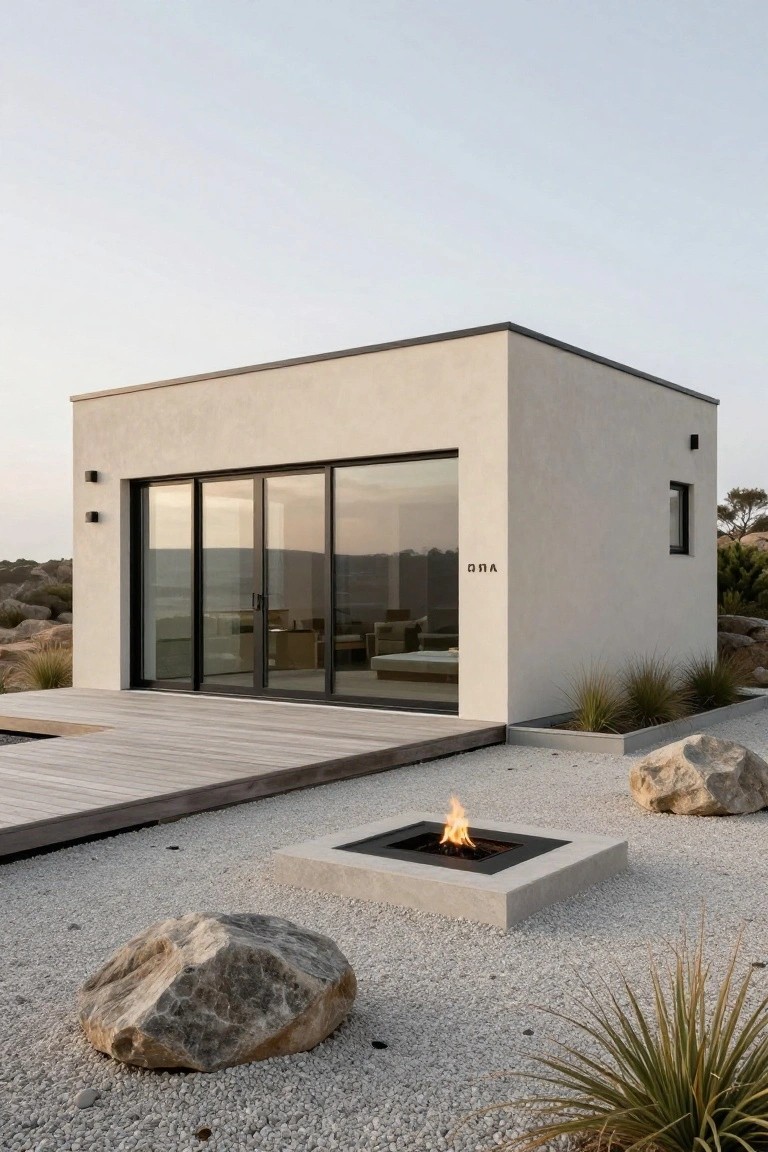
A soft beige stucco covers this small boxy house, giving it a calm look that fits right into the rocky desert setting. The color picks up on the natural grays and tans in the big boulders nearby, so the house doesn’t stick out. Large glass doors slide open to a wooden deck, pulling the outdoors close without any fuss.
This works best on compact modern homes in arid spots where you want low maintenance and a natural feel. Pick a beige with some texture to hide dust, and pair it with gravel ground cover like here. It suits vacation spots or simple backyard getaways, but skip it if your area gets heavy rain.
Beige Brick with Green Shutters
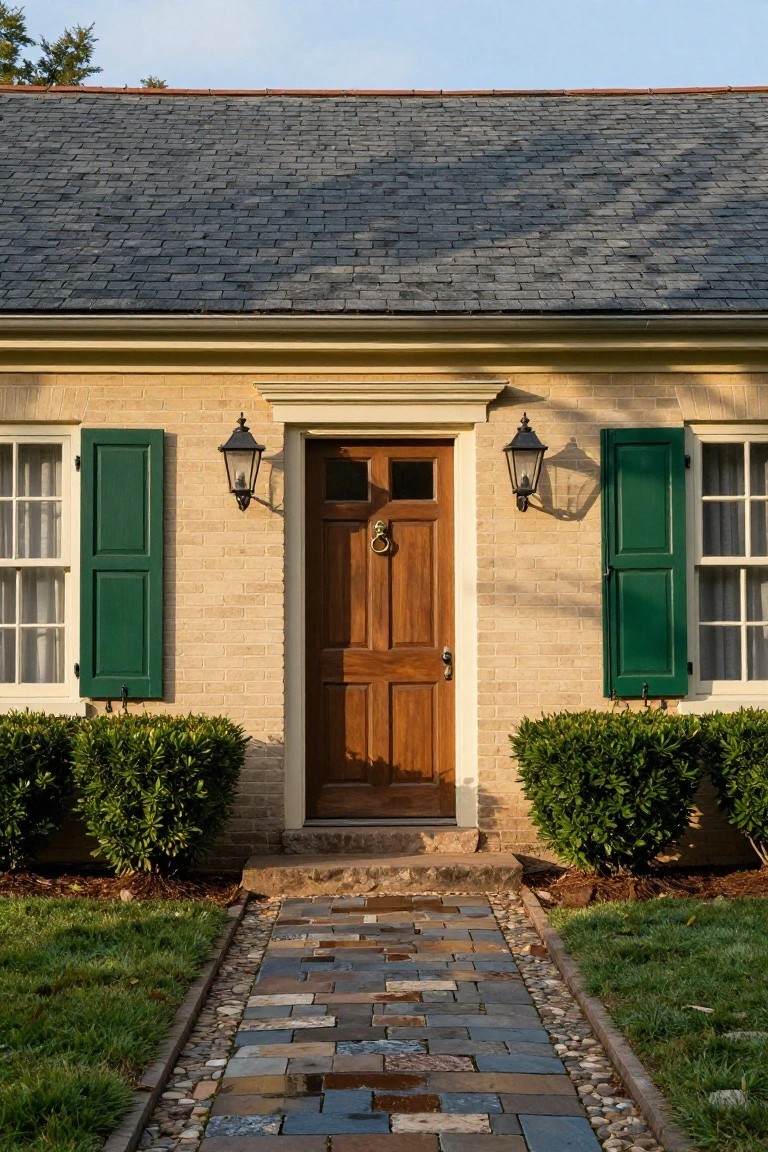
Beige brick gives a house a solid, timeless base that doesn’t shout. Pair it with green shutters like this, and you get a nice pop of color right at the entry. The warm tones in the brick play well against the deeper green. It keeps things traditional without feeling too plain.
This setup works great on smaller homes or colonials in the suburbs. Go for hunter green shutters on double-hung windows flanking the door. Add a wood door for extra warmth. Skip it if your brick has too much orange. Otherwise, it boosts curb appeal without much work.
Warm Greige Stucco Facades
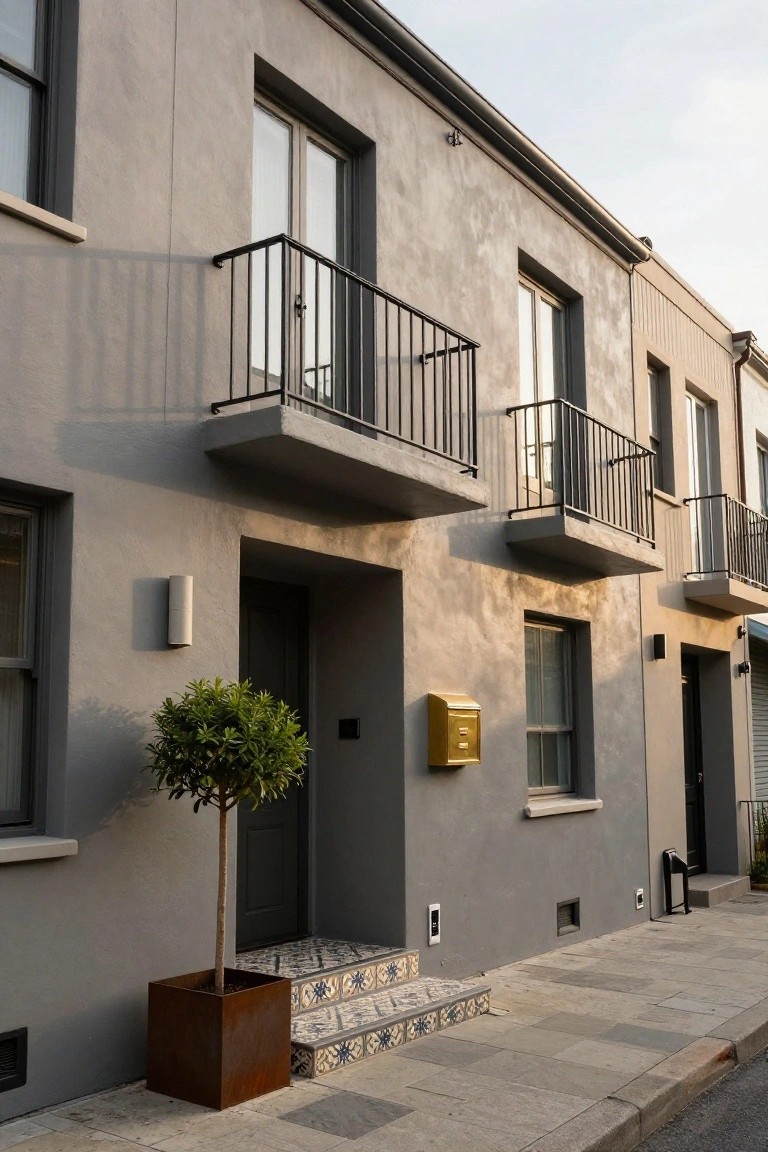
A warm greige stucco like this softens the look of a terraced house. It has that subtle beige undertone that keeps things from feeling too cold or industrial. The texture adds some interest up close, and black metal balconies give clean lines without overpowering.
This color works best on row houses or narrow urban lots where you want low-key curb appeal. Pair it with a single potted olive tree by the door and colorful tiled steps for a bit of life. Skip bold trim colors though. It suits most climates but shows dirt less on sheltered sides.
Warm Beige Stucco Facade
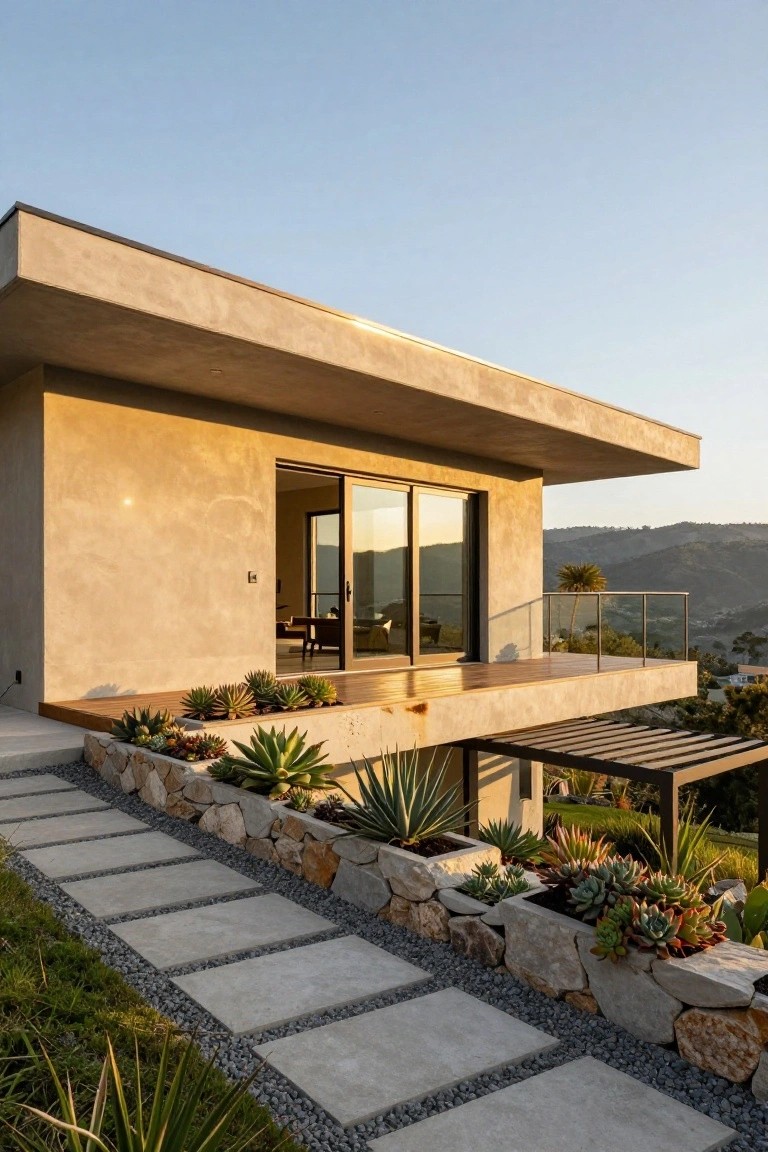
Warm beige stucco gives this modern house a soft, grounded look that fits right into the hillside setting. The texture on the walls picks up the golden hour light, making the cantilevered upper level feel less boxy and more like part of the landscape. It’s a simple way to keep things contemporary without going cold or harsh.
This color works best on homes with clean lines and some overhang, like this one with its balcony deck. Use it in sunny, dry areas where the tone hides dust and pairs well with natural stone bases or succulents along the path. Just make sure the shade is warm enough to avoid looking flat in overcast weather.
Soft Beige on a Cottage Porch House

This look uses a pale beige siding that gives a small gabled house a gentle, lived-in feel. The shingle texture adds some subtle interest without overpowering the soft color. A red roof pops against it nicely, and the covered porch with rocking chairs makes the front feel right at home for relaxing evenings.
Try this on a modest home in a rural or suburban spot where you want curb appeal that stays simple year-round. Pair the beige with wood posts and a flower box for that extra welcome touch. It works best on homes under two stories, keeping things cozy rather than grand.
Warm Beige Stucco Exterior
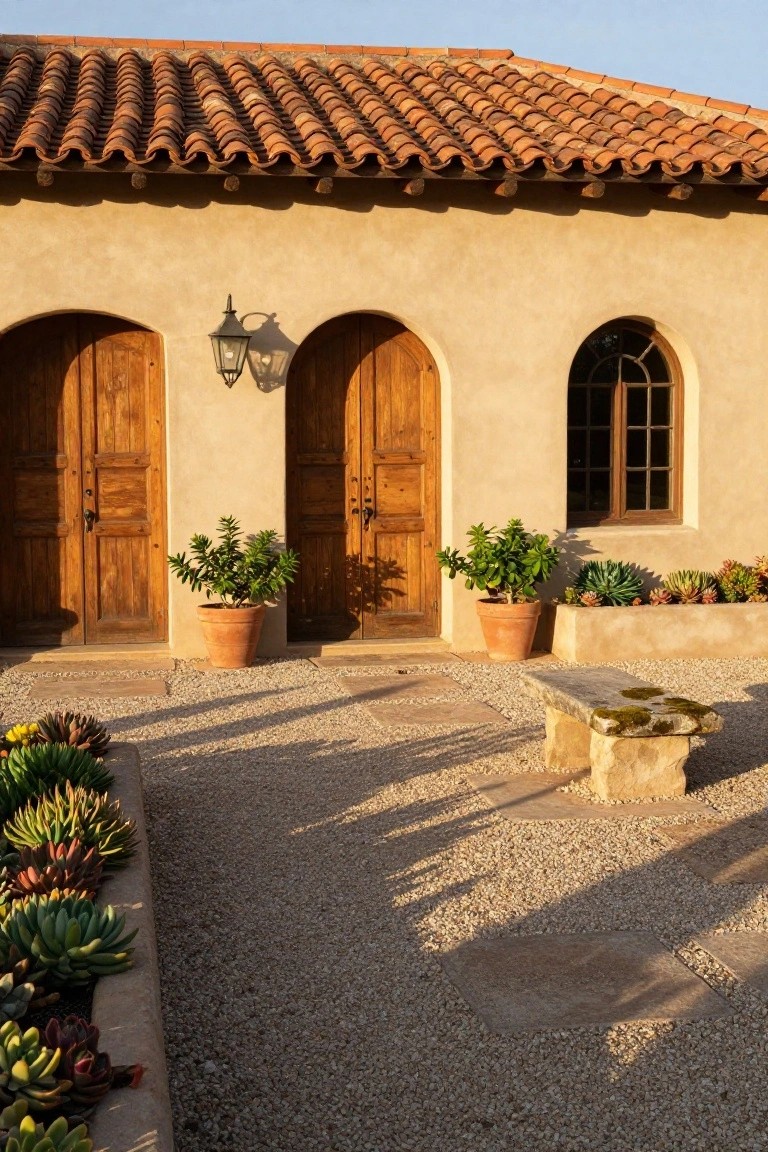
A warm beige stucco like this makes a house feel settled into its spot. It picks up the sandy tones from the ground and sky around it. Those terracotta roof tiles bring in a bit of red warmth without overpowering things. And the dark wooden doors add some heft to balance it out.
This look suits older-style homes or ones aiming for that Southwest vibe. Use it on blocky shapes with arches to keep the proportions right. Stick to gravel or stone paths nearby so the beige doesn’t get lost. It holds up well in hot sun. Just refresh the stucco every few years.
Climbing Roses on Porch Posts
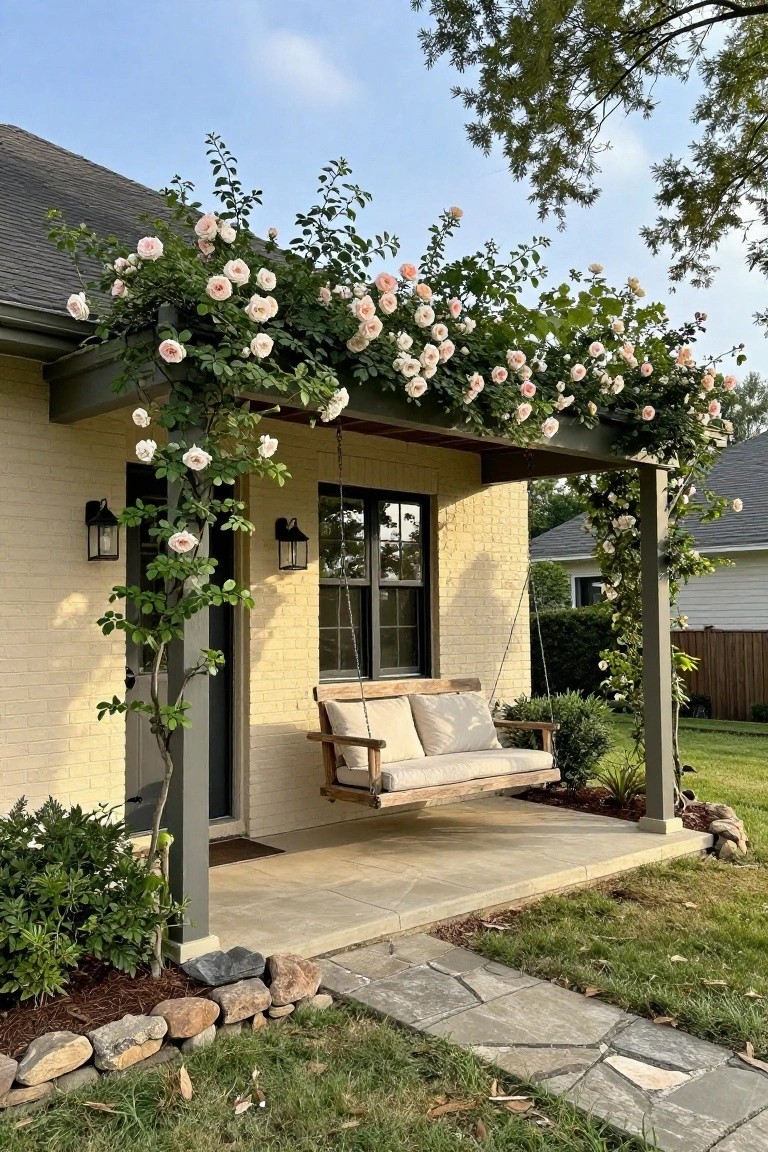
A simple way to warm up a beige brick exterior is letting climbing roses take over the front porch posts. Those soft pink blooms climb right up the dark supports, framing the entry and swing without hiding the house itself. It adds color and a bit of romance to what could be a plain facade.
This looks right at home on low-slung brick houses like ranches or cottages. Pick a sturdy climbing variety, train it along the posts or a simple arbor, and keep it trimmed back each spring. Works best where you get good sun, and it pairs easy with basic landscaping around the base.
Beige Garage with Dark Metal Roof
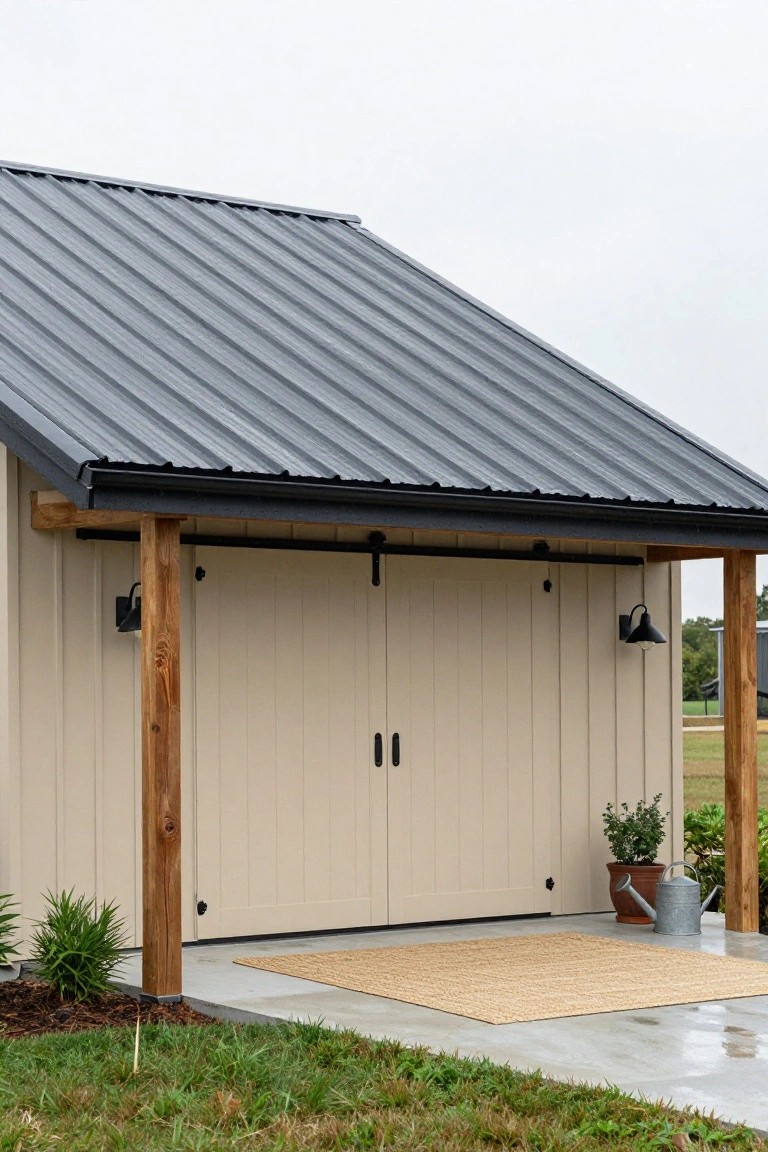
A light beige siding like this works great on garages or small outbuildings. Paired with a dark gray metal roof, it gives the whole thing a crisp, modern edge without much fuss. Those sturdy wooden posts tie it back to a rustic feel, keeping the look balanced and easy on the eyes.
You can pull this off on any home that needs a practical add-on space. It suits rural spots or suburban yards where you want low upkeep. Metal roofs shed rain fast, and beige takes dirt in stride. Just match the wood tone to your porch or fence for flow.
Bougainvillea Accents on Beige Walls
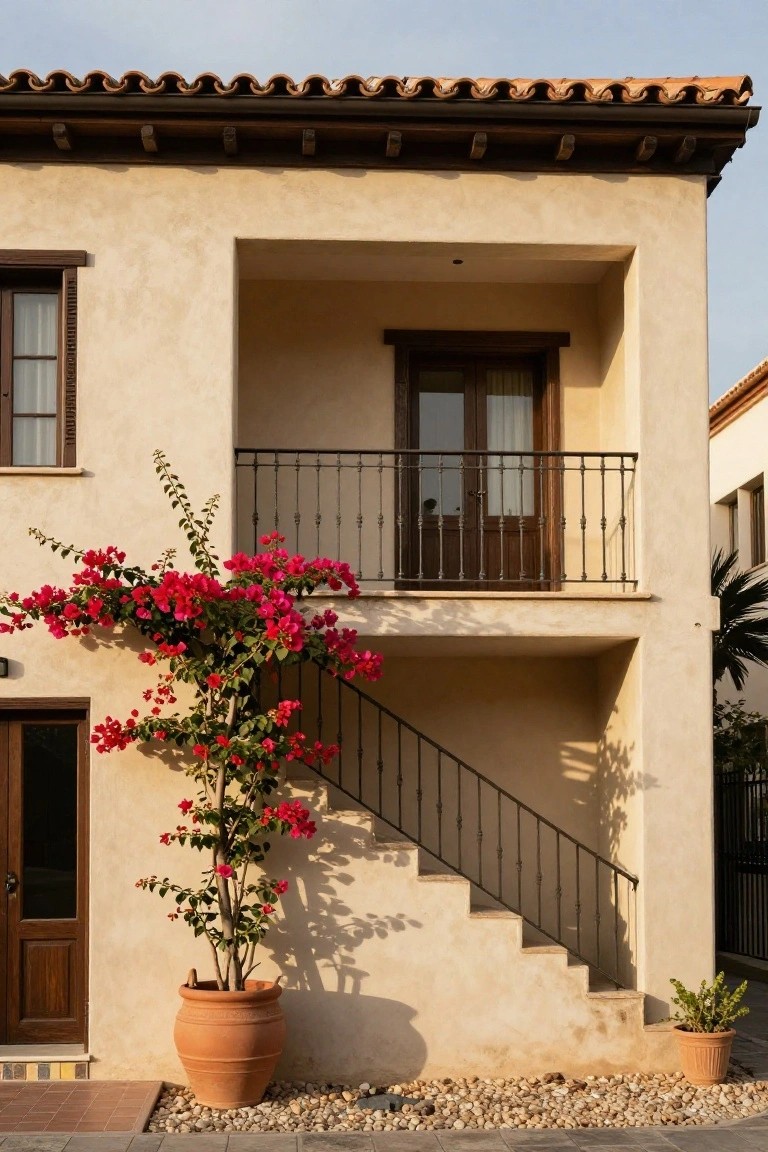
A soft beige stucco exterior like this one gets a real lift from the bougainvillea climbing nearby. Those bright pink blooms stand out sharp against the neutral walls, and the big terracotta pot keeps it all grounded. It’s a simple way to add color that feels right at home in sunny spots.
Try this on warmer beige tones in dry climates where bougainvillea thrives. Plant it in a pot by the entry or train it up a wall near stairs or a balcony. Works well on stucco houses with iron details… just trim it back now and then so it doesn’t take over.
Soft Beige Shingles for Coastal Homes
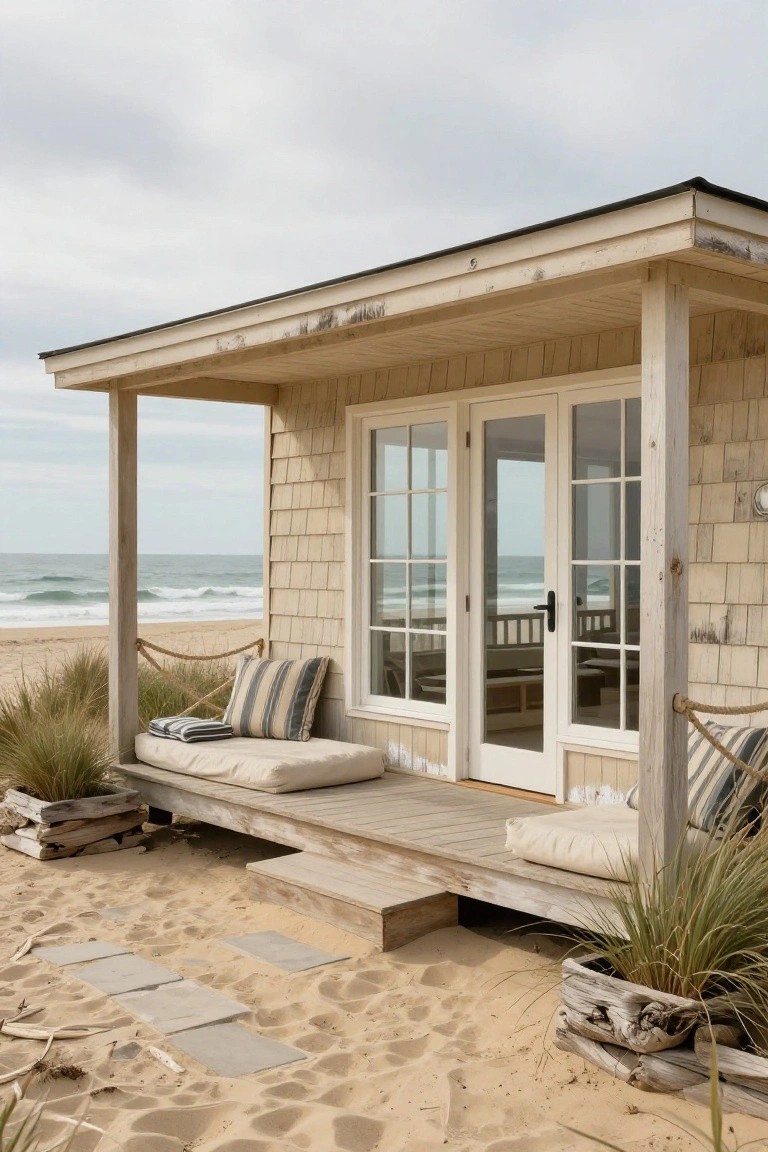
Soft beige shingles give this beach house a natural, lived-in feel that matches the sand and sea around it. The color has a subtle fade, like it’s been there for years, without looking brand new or too polished. Paired with white-framed doors and simple posts, it keeps things calm and easy on the eyes.
You can pull this off on small cabins or bigger houses near water, or even inland spots that want a relaxed vibe. Use it where upkeep matters, since shingles handle weather well. Just stick to light trim to let the beige shine, and add rope accents if you like a bit of beach detail.
Warm Beige Cottage Exterior

A warm beige like this on stucco walls brings out a cozy, lived-in feel for older-style homes. It lets the stone base and wooden porch brackets stand out without overpowering them. The gravel path edged with lavender keeps things simple and adds a bit of height and scent right at the entry.
This look fits older cottages or farmhouses in the country or suburbs. Use it where you want low upkeep, since lavender comes back each year. Just keep the path clear and trim the plants so they frame the door nicely, not block it.
Beige Stucco Facade with Wood Door Entry
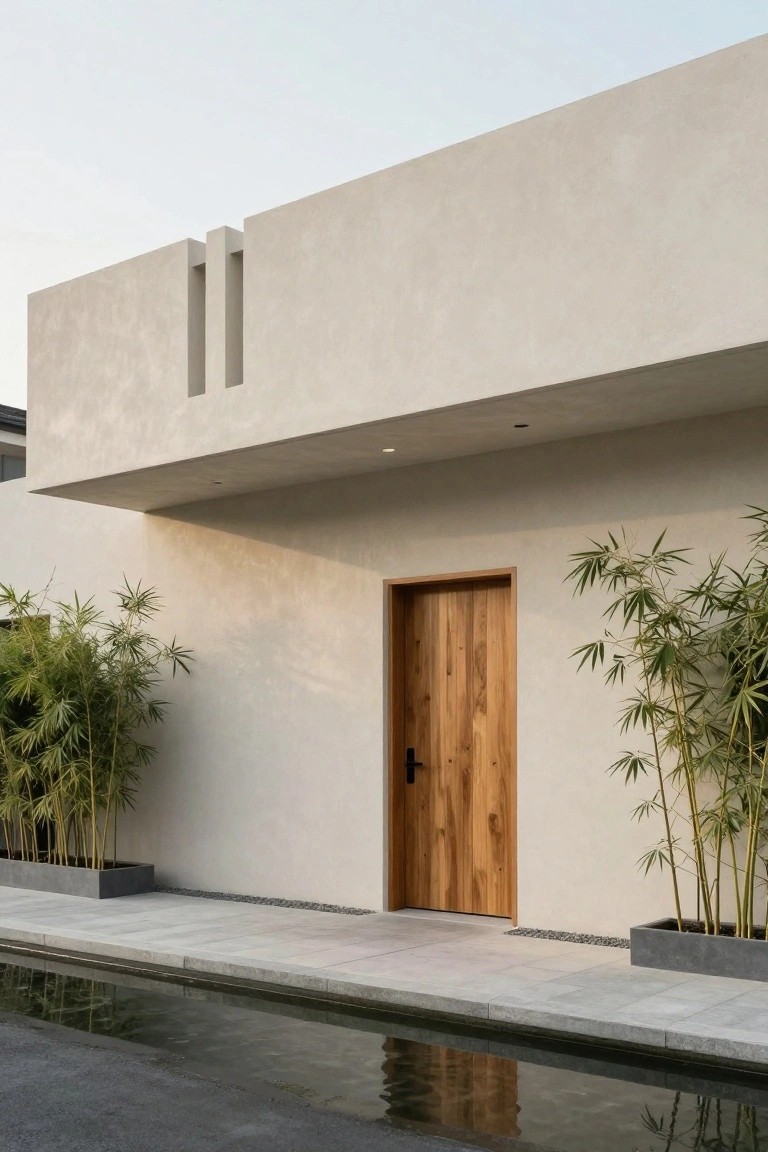
Beige stucco gives this house a clean, soft look that feels modern but not stark. The smooth plaster walls catch the light nicely, and that tall wooden door in a warm tone pulls everything together. It adds just enough natural warmth without overwhelming the neutral base. Bamboo plants on either side frame the entry nicely too.
You can pull this off on mid-sized homes where you want curb appeal without much fuss. Stick to light beige plaster over darker wood like oak or teak for the door. It works best in warmer climates or places with some greenery nearby. Just keep the path simple, like the stone one here, so the door stays the focus.
Soft Beige Shingle Siding
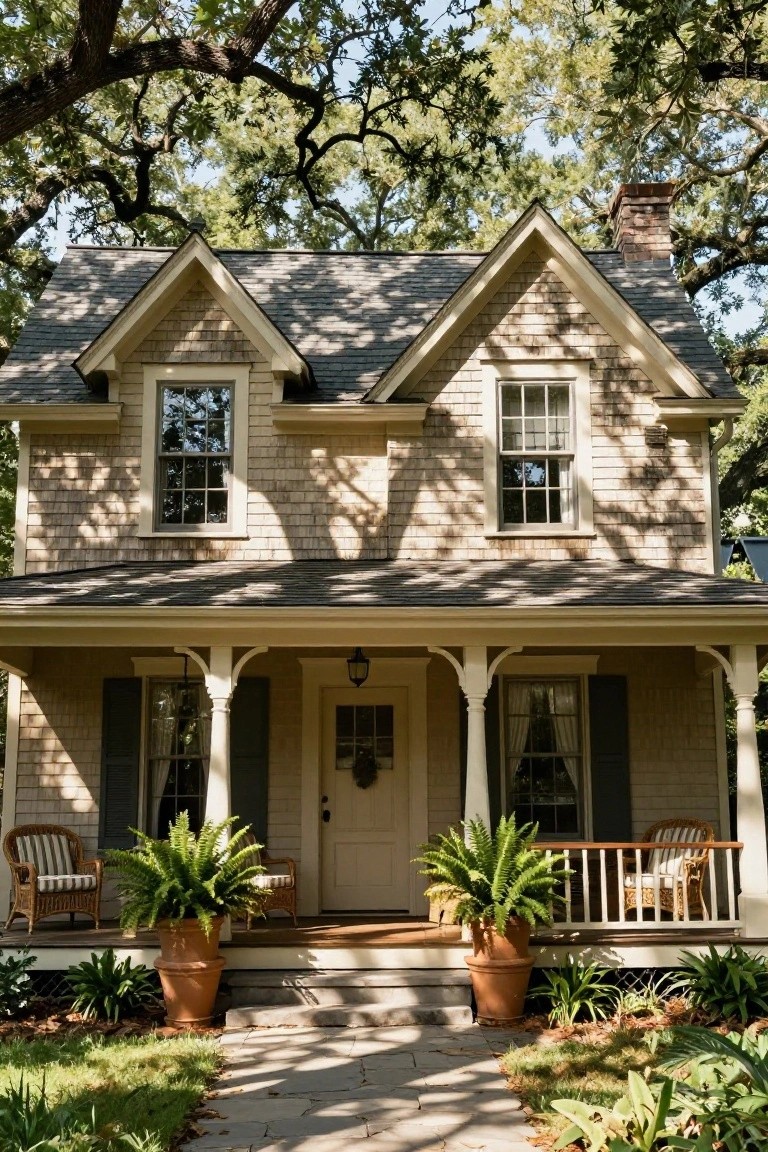
A soft beige shingle siding like this one keeps a cottage-style home looking cozy and timeless. It picks up on natural tones from the oaks overhead and the sandy path leading up. That subtle shade avoids anything too stark or modern. Instead, it settles right into the yard.
This works best on homes with gables and porches, especially in warmer spots where trees provide shade. Go for it on a two-story setup if you want easy curb appeal. Just pair the siding with crisp white trim around windows and columns. Skip bold colors elsewhere… let the beige carry the look.
Warm Beige Stucco Entry
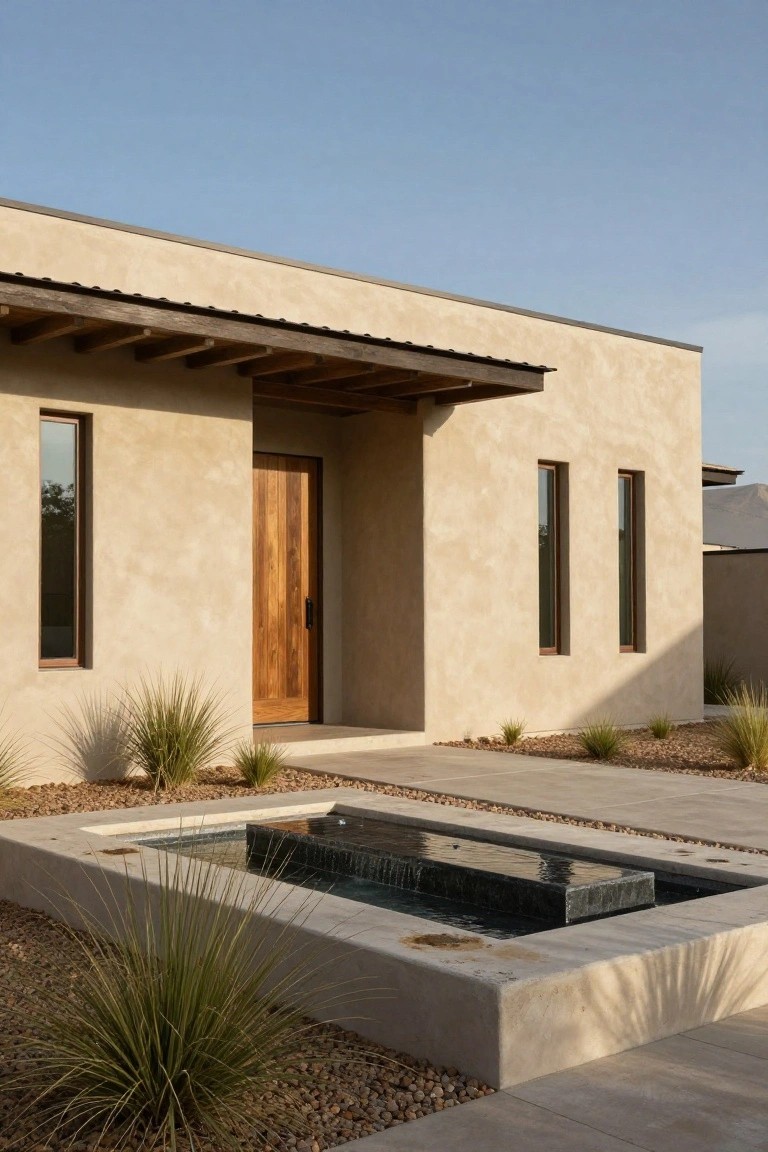
A warm beige stucco covers this home’s exterior, giving it a soft, earthy feel that fits right into a dry landscape. The wooden door pulls focus without stealing the show, and that simple reflecting pool out front adds a calm touch to the entry area.
This look works best on single-story homes in sunny spots like the Southwest. Use it where you want low upkeep and a welcoming vibe from the street. Skip busy details. Just let the beige do its thing with gravel beds and tall grasses nearby.
Vine Pergola for Shaded Terrace Seating
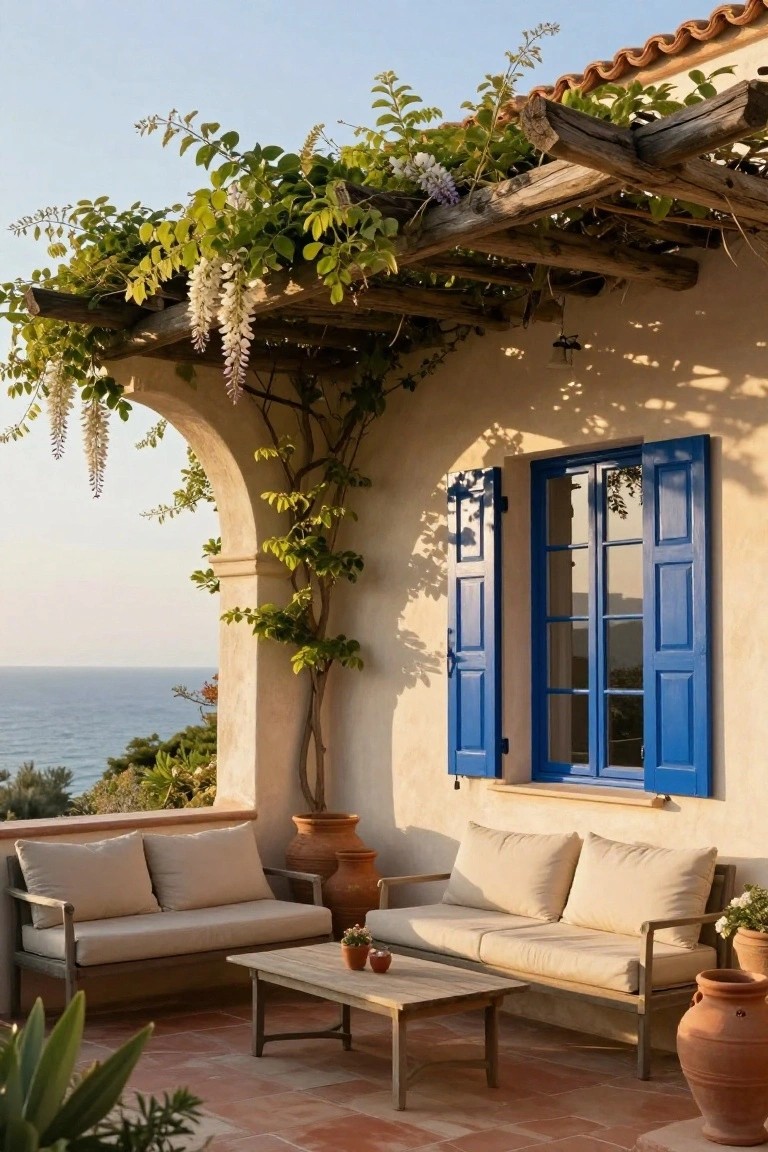
A wooden pergola draped in climbing vines makes a perfect shady spot for outdoor lounging. Here, lush green leaves and wisteria blooms filter the sun while the structure ties right into the house wall. It keeps the space open to views but adds that soft, natural layer people love for relaxing afternoons.
Try this on a sunny balcony or terrace where you want low-key seating. Neutral fabric sofas and a wood table blend easily with beige stucco walls. Big terracotta pots nearby boost the green without much work. It suits warmer climates or homes with good exposures… just prune the vines now and then to keep it tidy.
Blue Tile Accents on Beige Stucco
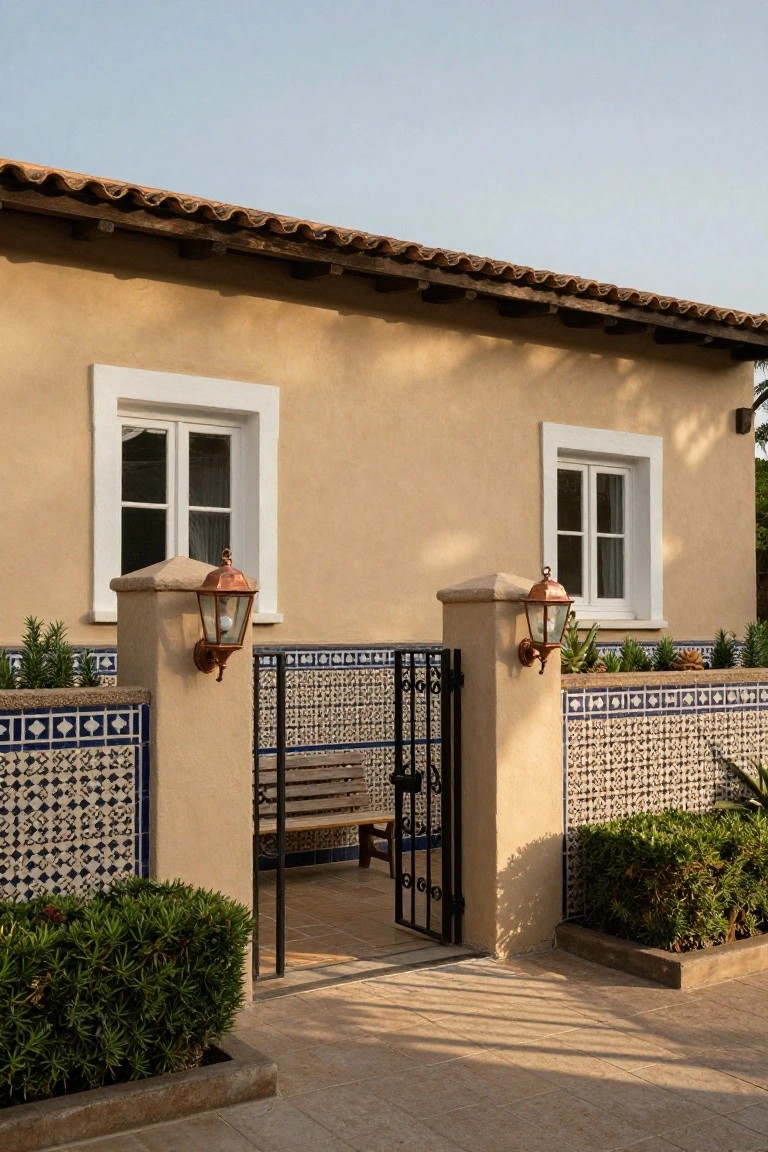
Beige stucco walls give a house a clean, sunny look that’s easy to live with year-round. What makes some of these homes stand out is adding blue and white patterned tiles around the entry, like on the pillars and low walls. They bring in a pop of color and pattern without taking over the whole facade. Those tiles nod to old Spanish or Mediterranean styles, and they pair right up with the soft beige tones.
You can pull this off on smaller homes or rentals too, just by tiling the gate posts or a short entry wall. Stick to classic blue and white patterns so they don’t clash with the neutral base. Copper lanterns nearby help tie it together. It works best in warm climates where the tiles catch the light nicely, but watch for too much pattern if your house has busy rooflines already.
Desert Beige Stucco Facade
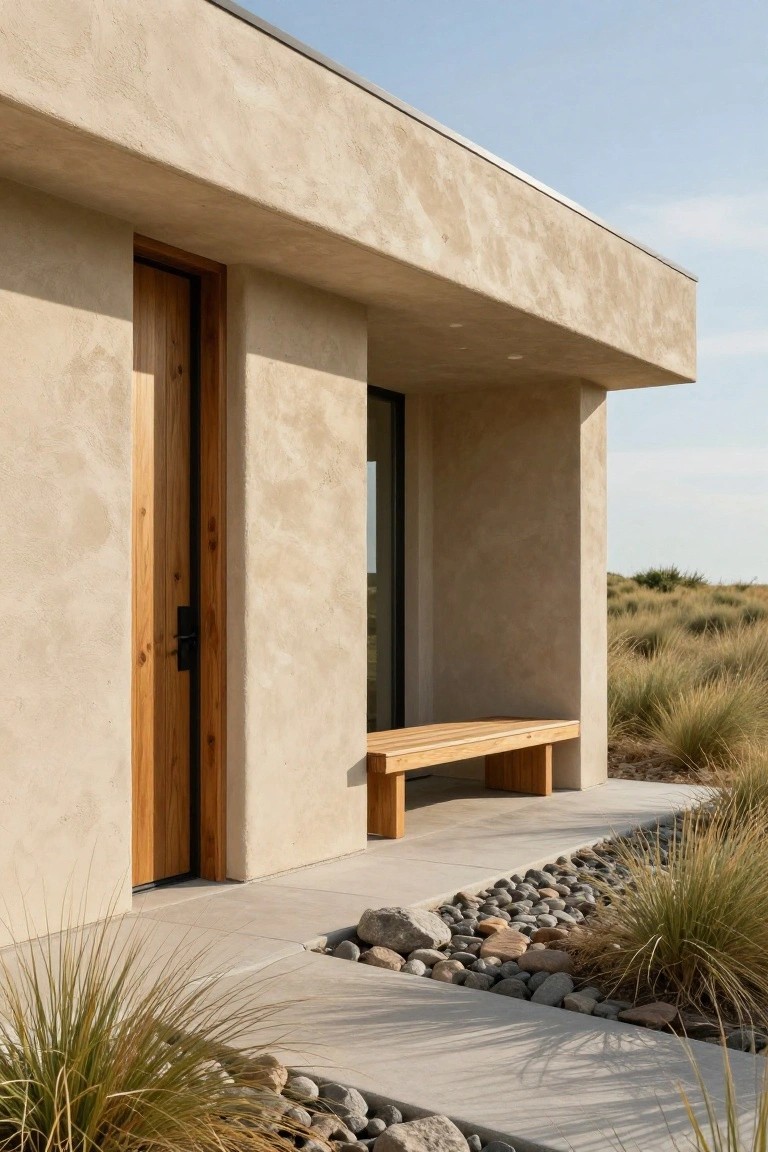
A textured beige stucco covers these exterior walls, blending right into the sandy surroundings. The warm wood door pulls your eye to the entry, and that simple bench nearby makes the spot feel more settled. It’s a quiet way to let the house sit comfortably in a dry landscape without fighting it.
This works best on single-story homes or low-slung designs in arid spots like the Southwest. Go for a mid-tone beige to avoid fading into the dust. Add wood accents at the door and maybe a bench if you have porch space. Native grasses along the path keep maintenance low… and it all stays cohesive.
Arched Entry on Beige Brick Facade
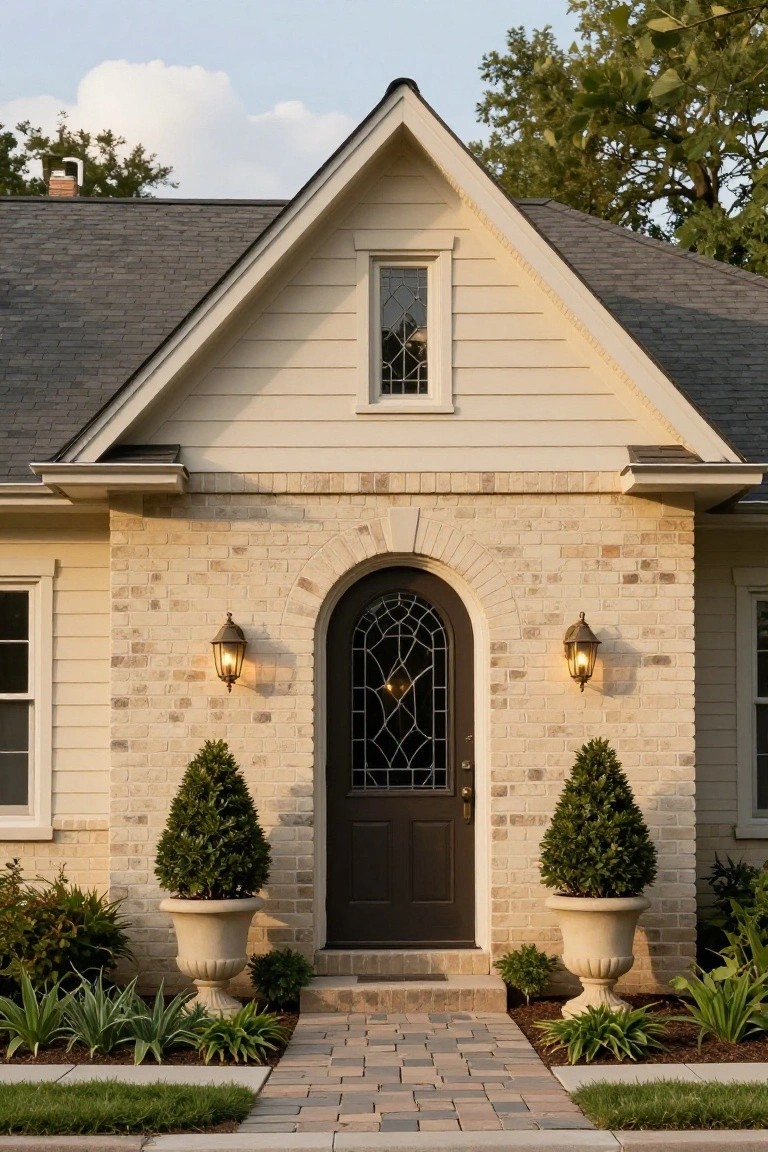
A simple way to make a beige house feel more special is adding an arched entry like this one. The light beige brick frames the dark wood door nicely, and those lanterns on either side give it some evening glow without being too much. It pulls the eye right to the front door and makes the whole place look put-together.
This works best on smaller homes or cottages where you want classic charm without big changes. Use it if your house has mostly beige siding or brick already. Just keep the plantings simple around the base, like those topiaries in urns, so they don’t hide the arch. Skip it on super modern homes though. It can feel out of place there.
Frequently Asked Questions
Q: How do I test a beige shade on my actual house before committing?
A: Buy sample pints of your top picks. Paint large boards or patches on a few walls facing different directions. Live with them for a week and check morning light through afternoon glow.
Q: Does beige hide dirt and wear as well as darker paints?
A: Lighter beiges show pollen and dust more than grays or browns. Rinse the siding with a garden hose twice a year. Quick cleans keep that fresh look going strong.
Q: What trim color makes beige siding pop the most?
A: Pure white trim frames beige perfectly. It brightens everything without stealing the show. And on overcast days, it lifts the whole facade.
Q: Can beige exteriors handle hot, sunny climates?
A: Warm beiges hold color better in intense sun. They reflect heat too, so your home stays cooler inside. Fade happens slower with quality paint.
