

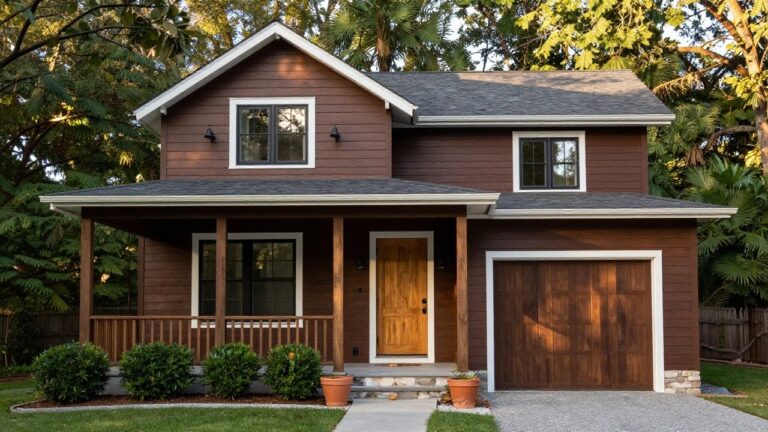
When I walk or drive past houses, the ones painted in brown tones always catch my eye for how they settle into the landscape without trying too hard. A good brown exterior boosts curb appeal by harmonizing with rooflines, siding textures, and entry features, making the whole facade read as welcoming from down the street. I once sampled a few warm browns on sample boards held against our brick facade, and the ones with subtle red undertones shifted beautifully from morning light to dusk. Darker shades ground taller homes while lighter ones lift modest facades, but they all depend on matching your local climate to avoid fading. Save a couple of these for your next paint swatch run.
Warm Brown Wood Siding Exterior
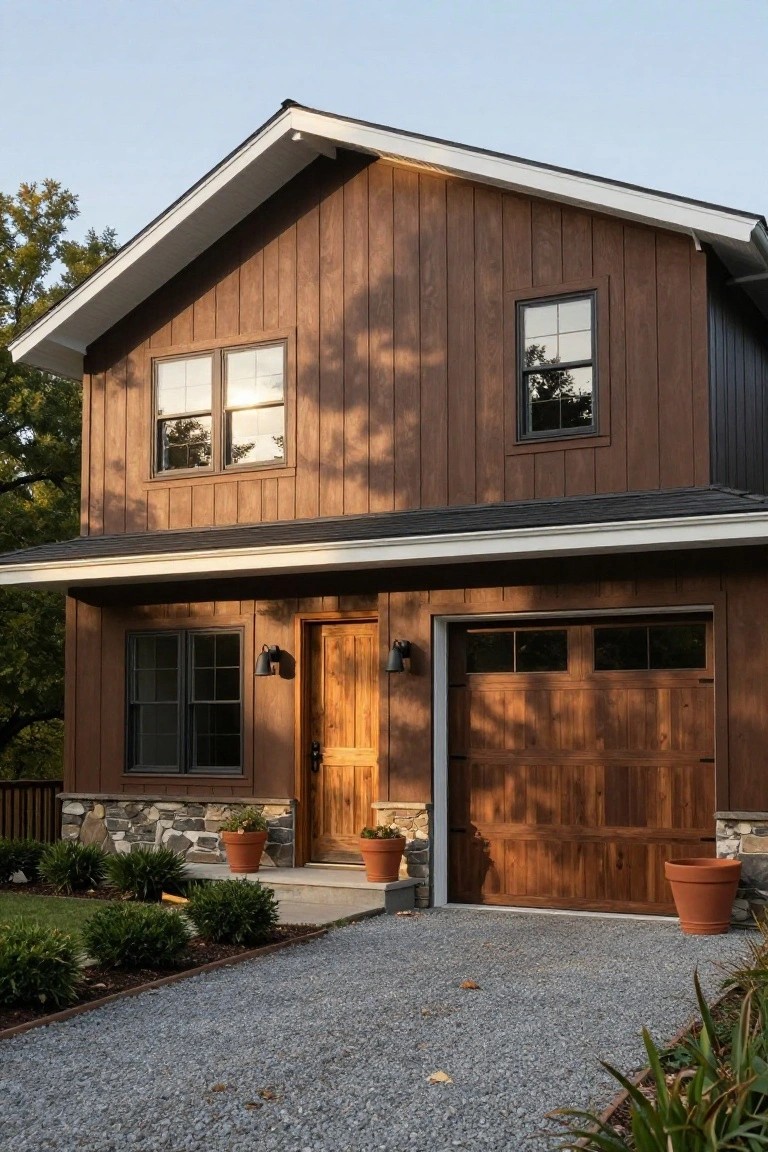
Warm brown wood siding like this covers the whole front facade and makes the house feel right at home in a wooded spot. The vertical boards catch the light nicely and pair well with the stone base at the bottom. It keeps things simple but gives that cabin warmth people like on a modern frame.
You can get this look by staining cedar or pine siding in a medium brown tone before installing. It works best on two-story homes or ones with garages, especially where you want to blend with trees or gravel paths. Just seal it yearly to hold the color.
Recommended Products

EFFECTIVE ON ALL WOOD SURFACES and QUICK DRYING: Furniture Clinic Wood Stain is a fast drying and highly concentrated wood stain making it effective on all indoor and outdoor wood surfaces. Our wood stain provides excellent coverage and ensures even color penetration. It's water based, environmentally friendly, and dries to a natural matte finish in only 10 minutes.

READY-TO-USE DECK STAIN & SEALER: Olympic WaterGuard acorn brown semi-transparent wood stain and sealant combines color and waterproofing in one water-based, ready-mix coat.

EFFECTIVE ON ALL WOOD SURFACES and QUICK DRYING: Furniture Clinic Wood Stain is a fast drying and highly concentrated wood stain making it effective on all indoor and outdoor wood surfaces. Our wood stain provides excellent coverage and ensures even color penetration. It's water based, environmentally friendly, and dries to a natural matte finish in only 10 minutes.
Textured Brown Stucco Exterior
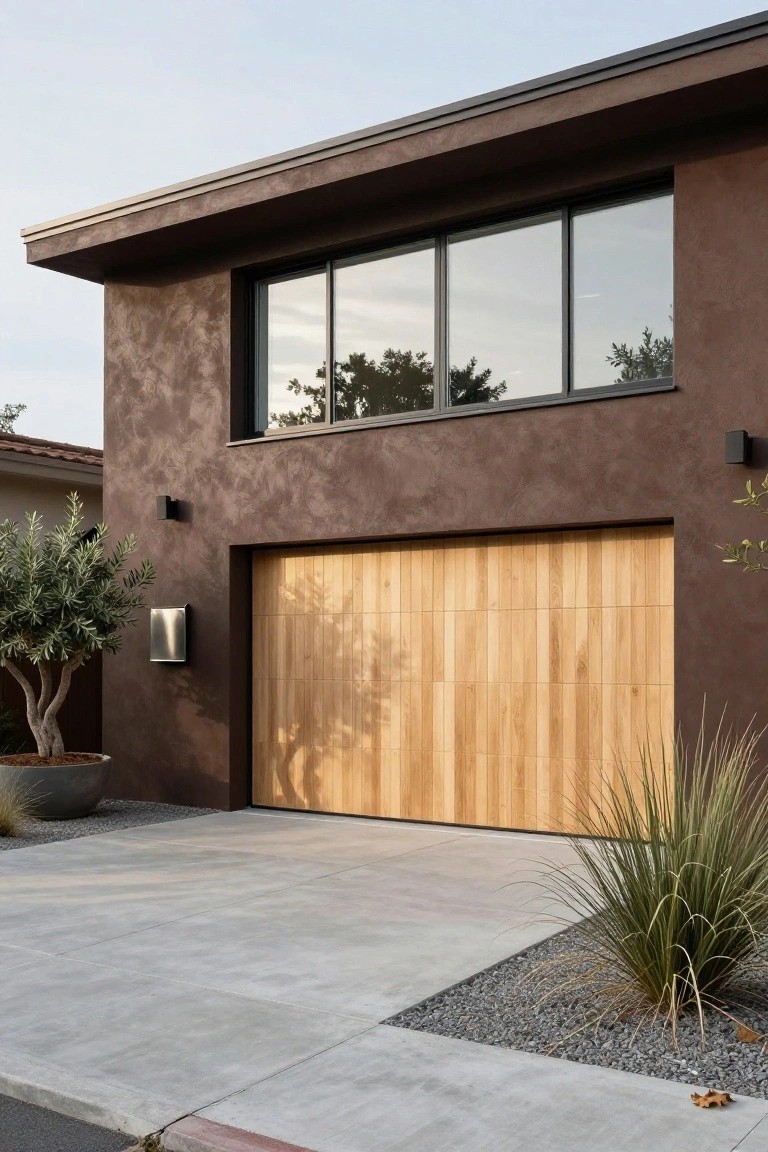
Textured brown stucco like this gives a house facade some real character. It’s not flat paint. The rough finish adds depth and makes the brown feel warmer and more natural. Paired with that big window and wood garage door, the whole front pulls together without trying too hard.
Try this on a modern or midcentury-style home where you want earthy tones but not boring. It holds up well in dry climates. Go for a mid-tone brown so it doesn’t fade fast. Add simple plants nearby to keep the look clean.
Warm Brown Stucco Exterior
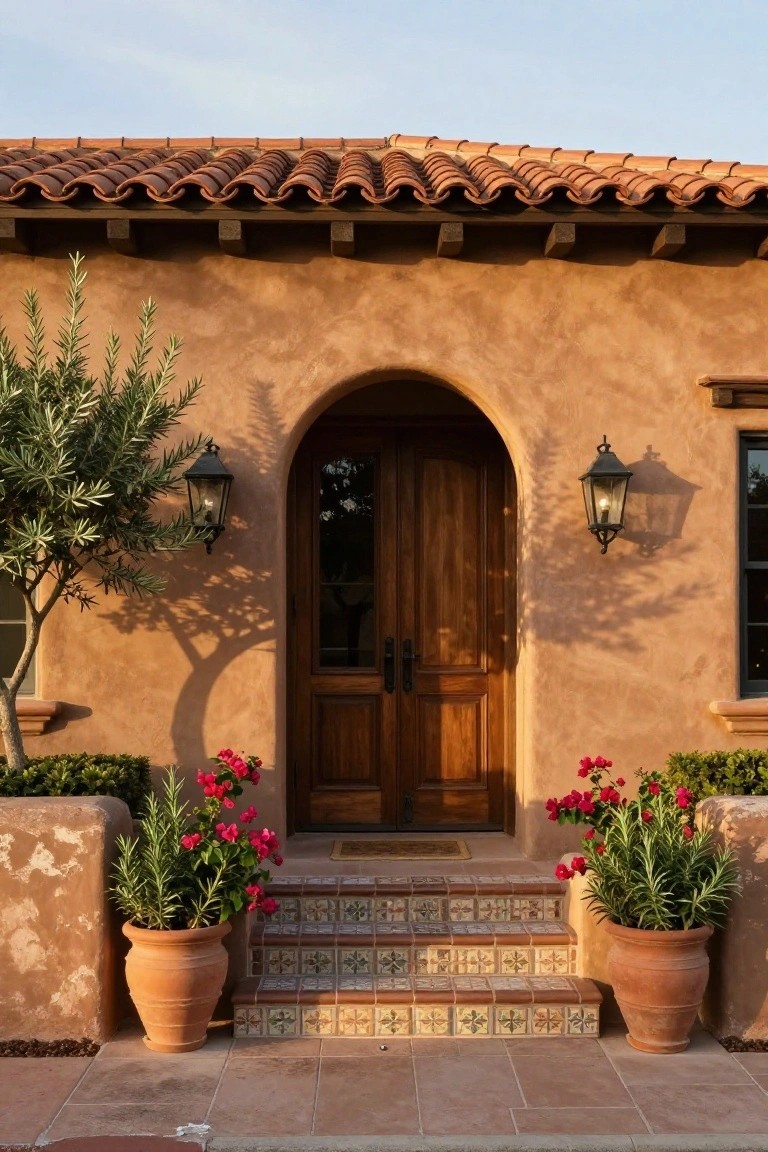
A warm brown stucco finish like this one brings an earthy, lived-in feel to the house front. It catches the late-day light nicely and ties into natural surroundings without much effort. The color sits somewhere between tan and rust, making the whole facade look settled and welcoming.
This works best on homes in dry climates or anywhere you want a Southwestern vibe. Go for it on single-story houses or add-ons like a garage. Pair the stucco with terracotta roof tiles and simple potted plants near the entry to keep things cohesive. Just make sure the trim stays neutral so the brown stays the star.
Recommended Products

Weather and corrosion resistant coating protects exterior/interior surfaces like wood, metal, concrete, masonry and more

Use for a variety of indoor and outdoor project surfaces including wood, metal, plaster, masonry or unglazed ceramic
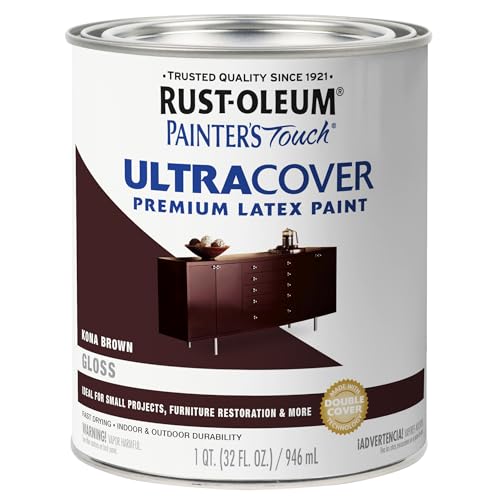
Use for a variety of indoor and outdoor project surfaces including wood, metal, plaster, masonry or unglazed ceramic
Warm Brown Shingle Siding
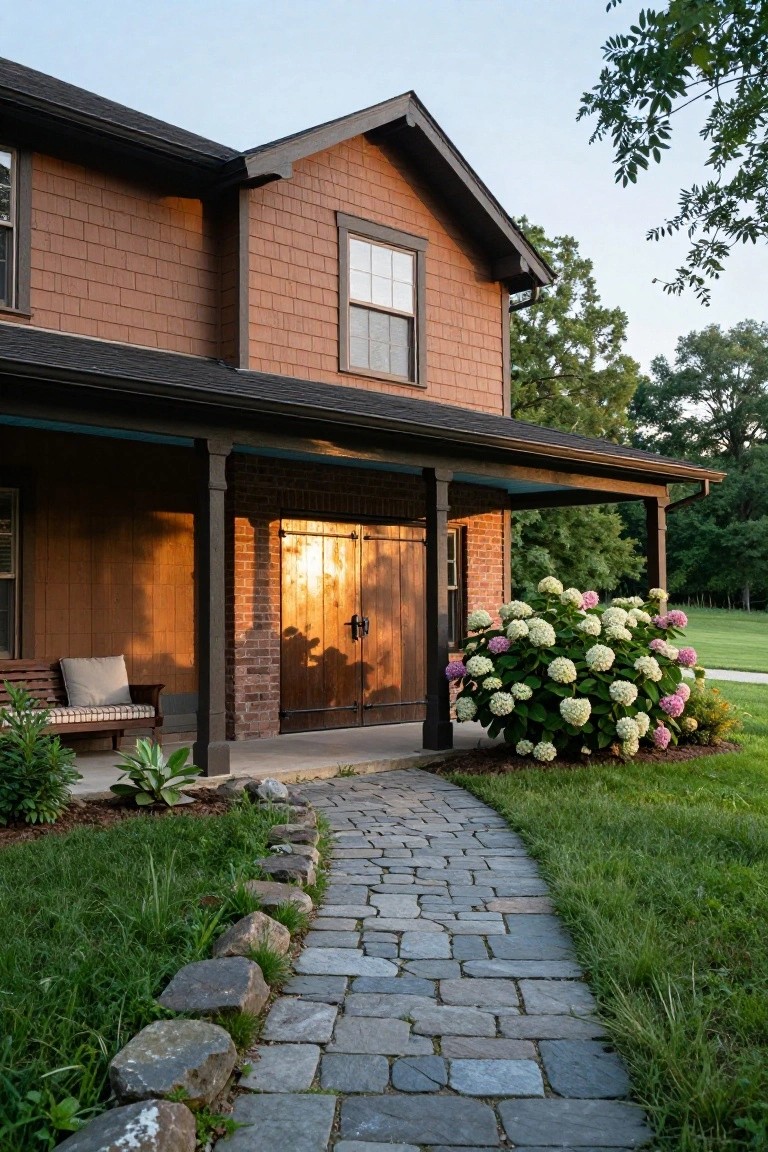
Brown shingle siding in a warm, earthy tone covers this house nicely. It gives the whole front a textured, cozy look that fits right into a wooded spot. The shakes work well with the brick base and porch posts, keeping things simple yet sturdy.
This siding suits craftsman or ranch homes best, especially ones with porches. Go for a medium brown that picks up colors from nearby trees or soil. Pair it with natural stone paths or big bushes out front. It holds up over time… practical for families.
Deep Brown Paint for Townhouses
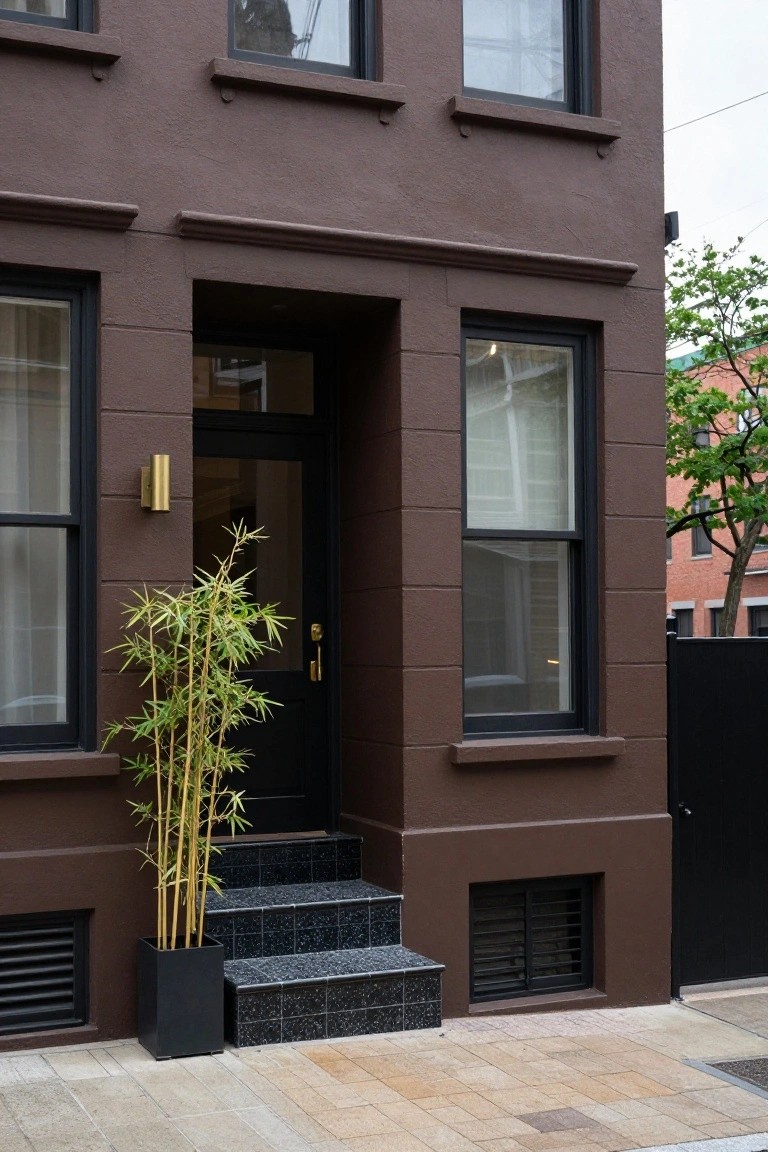
A deep brown like this one gives townhouses that solid, lived-in feel without looking dated. It covers the textured base smoothly, picking up on brick tones but staying even and fresh. The black door and windows keep things crisp, while a tall bamboo plant right by the steps adds life without fuss.
This shade suits narrow urban spots best, where you want warmth that blends with the street. Use it on row houses or older builds, matching black trim for contrast. Just test a sample first, since it can shift under city lights.
Shingle Siding in Warm Browns
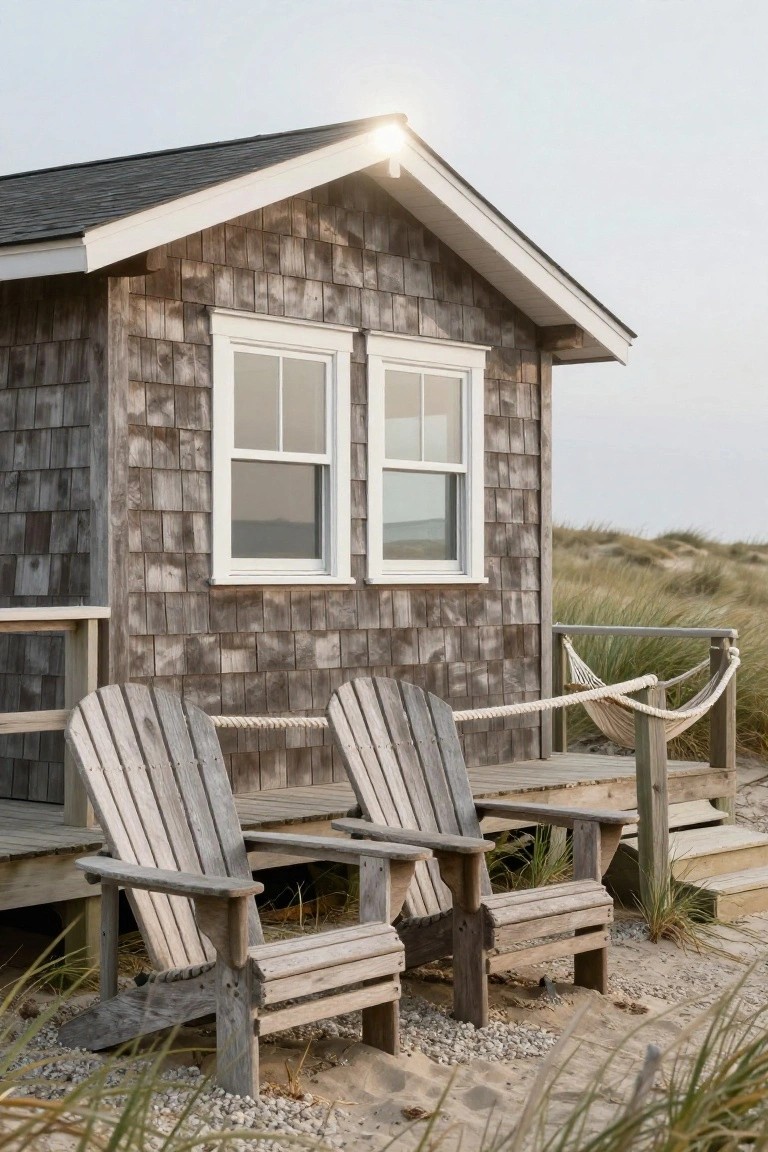
Shingle siding like this catches your eye for how it settles into the landscape. The warm brown tone, weathered just right, makes a small cottage feel part of the dunes and beach grass around it. White window trim keeps things crisp without pulling focus from the siding itself.
This look works best on coastal homes or vacation spots where you want low-key charm. Go for cedar shingles stained in a soft brown that fades naturally over time. It suits modest sizes, like bungalows under 1,500 square feet, and holds up to salt air better than paint alone. Skip glossy finishes though. They fight the casual vibe.
Brown Wood Siding on Chalet Homes
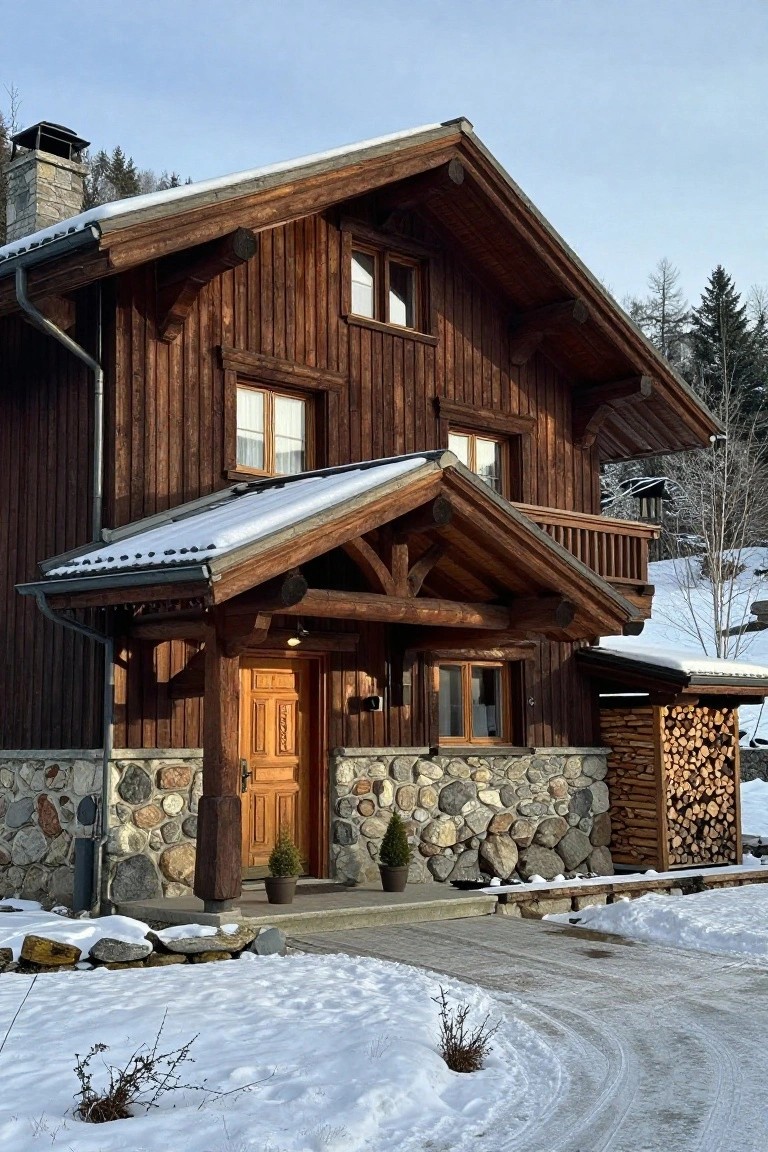
Dark brown wood siding like this turns a simple house into a cozy mountain retreat. The vertical planks catch the light just right, blending with the trees and snow around it. That stone base at the bottom keeps things grounded and tough against the weather.
This look fits best on sloped sites or wooded lots where you want the house to feel part of the landscape. Use treated cedar or pine for the siding, and stack firewood nearby for extra charm. Skip paint here… natural aging adds character over time.
Warm Brown Vertical Cladding
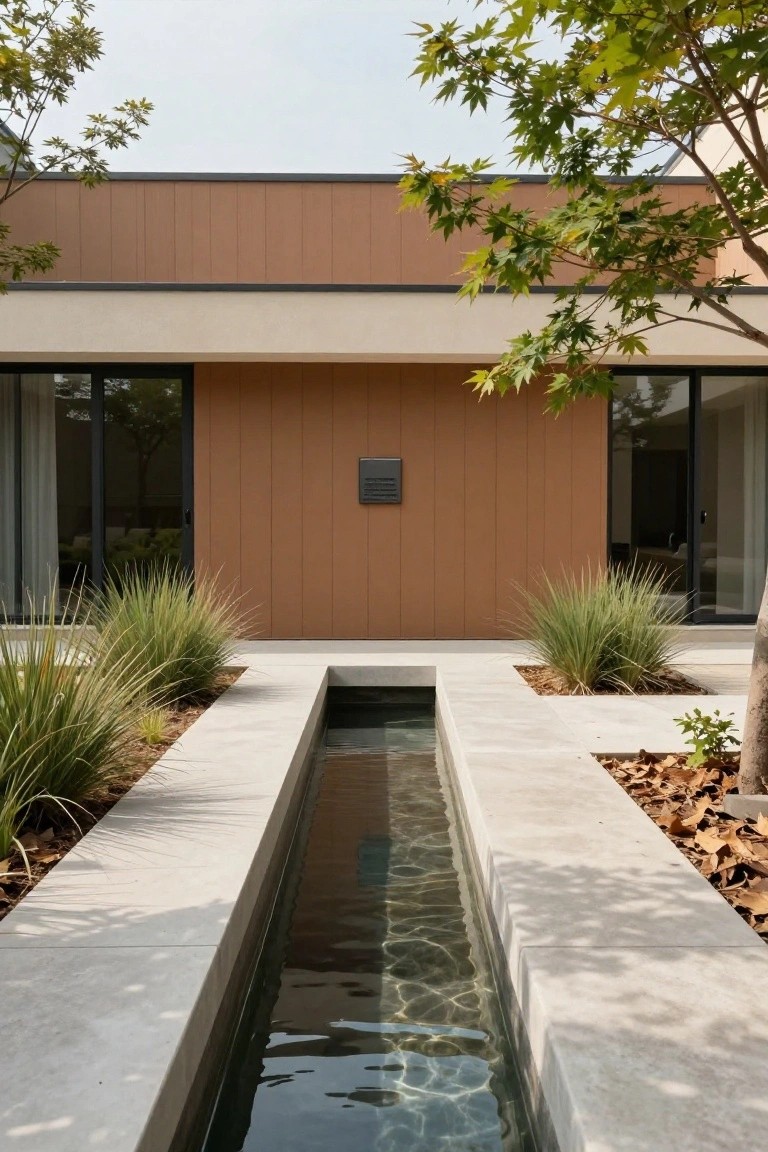
Warm brown vertical cladding like this covers the main wall and pulls the eye right to the entry. It has that woodsy warmth without looking rustic. The straight panels run clean from top to bottom, working well against the light stone path and simple glass doors.
Try this on a boxy modern house where you want some texture but not fuss. It suits milder climates with trees nearby, since the brown echoes natural tones. Keep surrounding areas plain, like concrete pavers and low grasses, so the cladding stays the focus.
Warm Brown Clapboard Siding
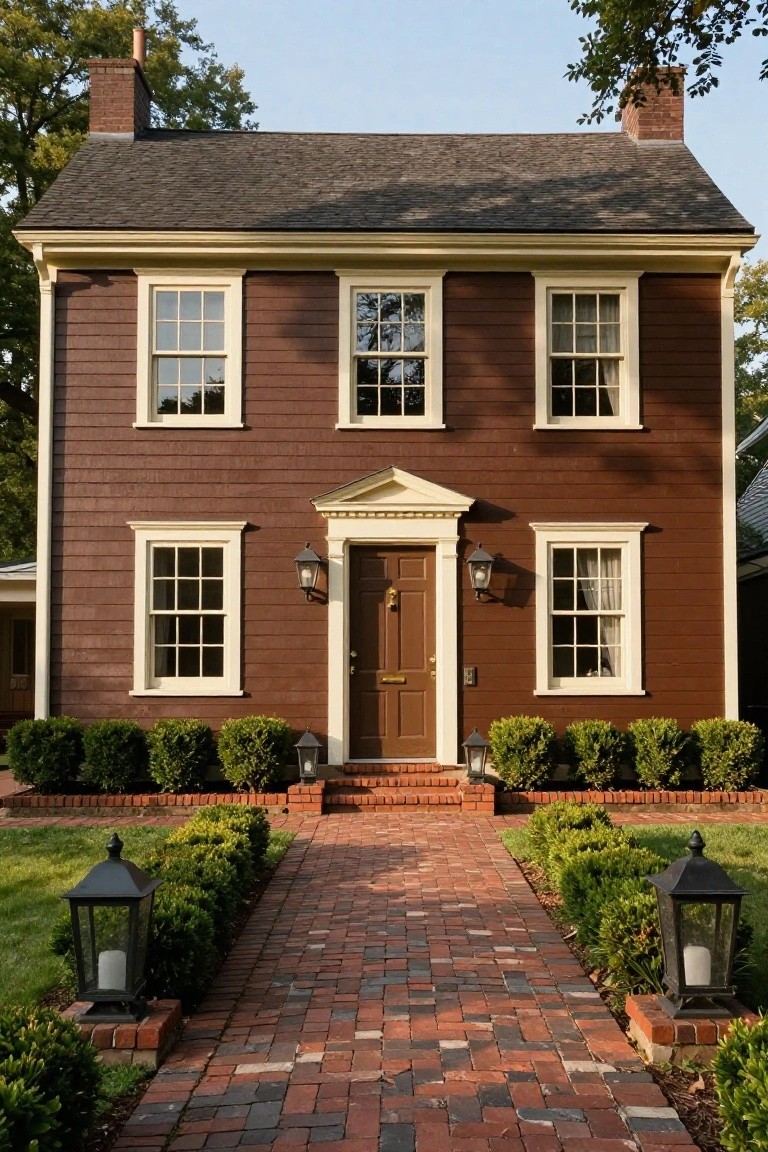
A warm brown clapboard siding like this one brings out the best in older style homes. It has that rich, wood-like tone that feels settled and real, not too dark or muddy. The cream trim on the windows and door sets it off nicely without stealing the show, and it picks up the natural light around the brick path.
This color works well on two-story colonials or federals in suburban spots. Go for it if your house has simple lines and multi-pane windows. Keep landscaping low and neat, like boxwoods along the walk, to let the siding stand out. Steer clear if your home is all glass and angles.
Warm Brown Wood Siding on Entries
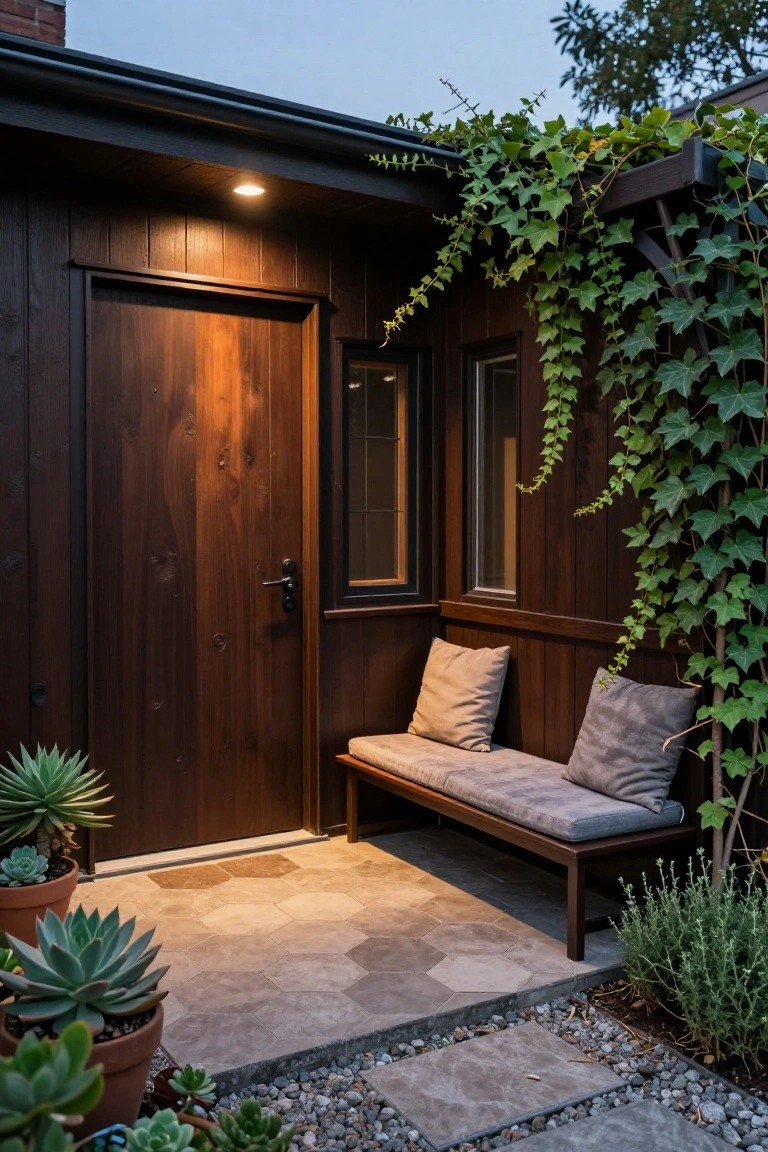
This kind of siding uses vertical planks in a deep brown wood tone. It covers the walls right around the door and makes the entry feel solid and modern. With ivy growing up one side and a few plants out front, it pulls in some green without overdoing it.
Try it on houses with clean lines, like ranch or contemporary styles. The wood holds up well outside and doesn’t need painting every few years. Just pair it with simple seating, maybe a bench built right in, so folks have a spot to sit while they knock.
Warm Brown Brick Facade
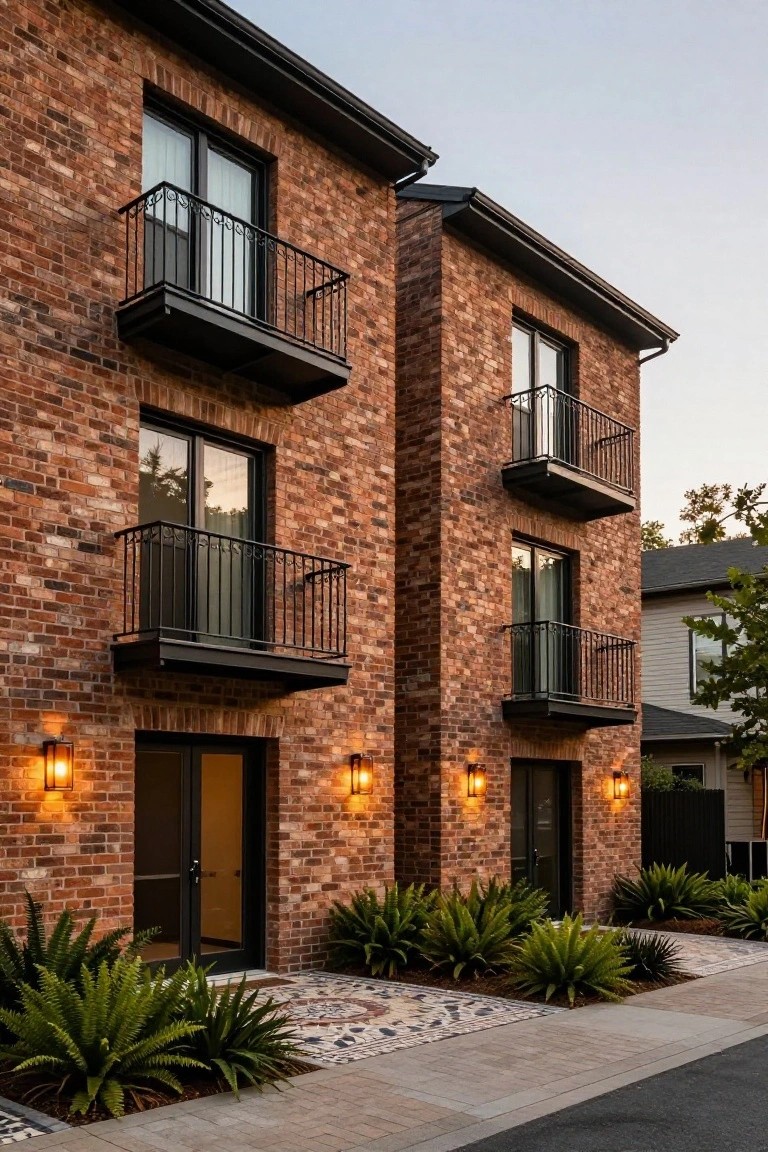
A warm brown brick covers this whole front exterior. It builds a sturdy base that feels at home in most neighborhoods. Black railings on the balconies and dark frames around the windows keep it from looking too plain. Those entry lanterns help too, especially as light fades.
This setup suits two-story homes or row houses. It holds up well in mild climates where brick won’t fade fast. Pair it with simple plants at the base, but skip busy colors on trim so the brown stays the star.
Warm Brown Log Cabin Siding
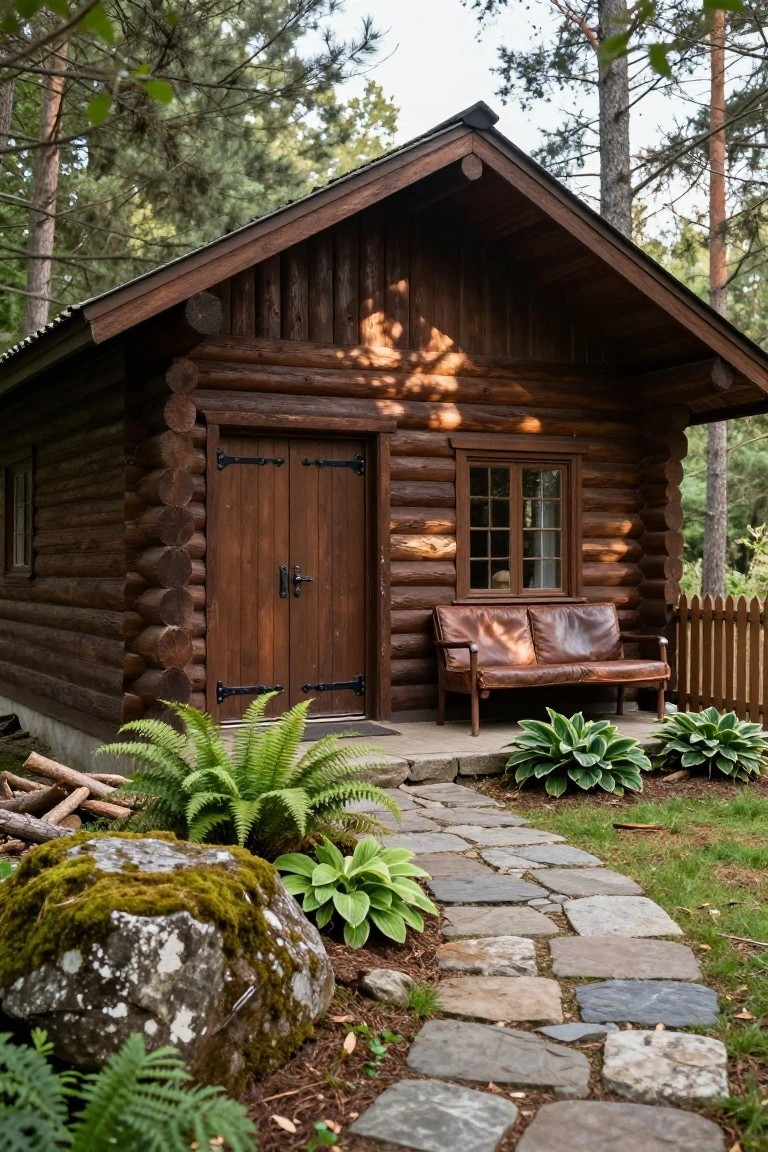
Log cabins like this one pull off a deep, warm brown really well. The natural wood logs have that rich tone that settles into the landscape without trying too hard. It gives the whole place a cozy, lived-in feel that matches the trees around it.
This works best on smaller homes or cabins in wooded areas where you want things to blend rather than stand out. Use a penetrating stain to bring out the brown in real logs, or try a textured paint on frame houses for something close. Just keep the entry simple, like these double doors, so the color stays the star.
Warm Brown Stucco Exterior
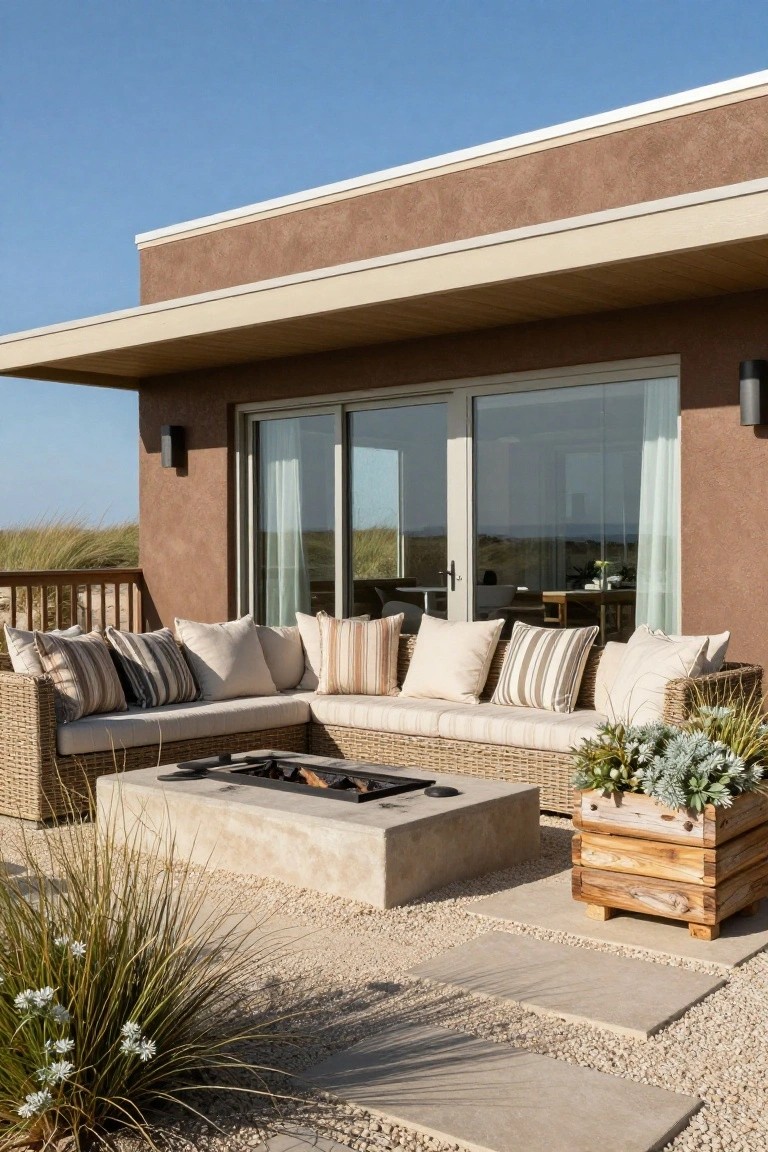
A warm brown stucco like this one fits right into coastal spots with dunes and beach grass. It takes on the sandy tones around it so the house doesn’t stand out too much. That texture gives the walls some life without overdoing it, and the color stays soft year-round.
This works best on low-slung modern homes or ones with adobe vibes near the water or desert. Go for beige trim on the roofline and doors to keep things light. Big glass sliders help tie the patio seating right to the indoors. Pick a breathable paint to handle salt air.
Recommended Products

Weather and corrosion resistant coating protects exterior/interior surfaces like wood, metal, concrete, masonry and more

Ready-mixed paint, available in light gray, dark gray and brown

ENAMEL FLOOR PAINT: Provide your floors with an extremely durable and long-lasting finish using California Paint ALLFLOR Porch, Patio and Floor Enamel Paint.
Warm Brown on Brownstone Facades
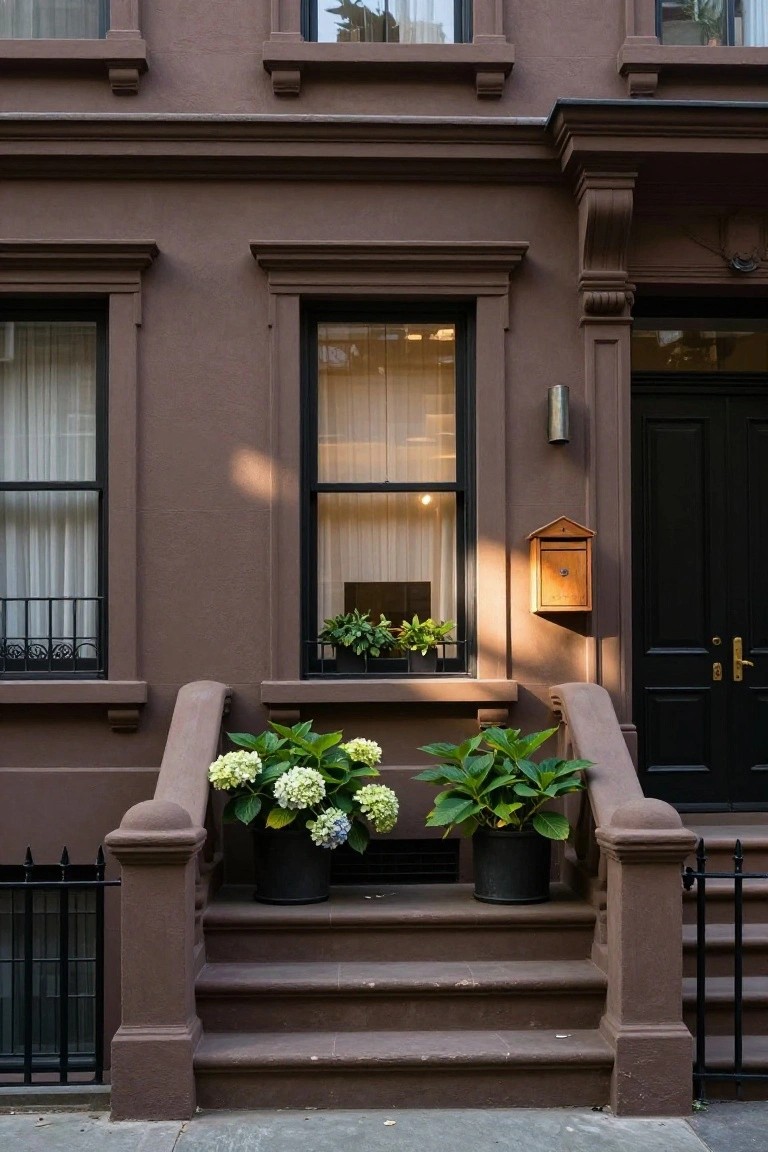
A warm brown like this one softens the look of a traditional brownstone. It pulls from earthy brick tones but stays lighter than chocolate shades. Paired with black doors and white window frames, the color makes the whole front feel steady and lived-in. No harsh contrasts here. Just right for city blocks.
Paint this on row houses or older homes with good bones. It holds up under streetlights and sun. Add pots of blooming hydrangeas on the stoop… they bring life without much fuss. Skip it on super-modern builds though. This shade loves history.
Cozy Tan Brown Siding for Small Homes
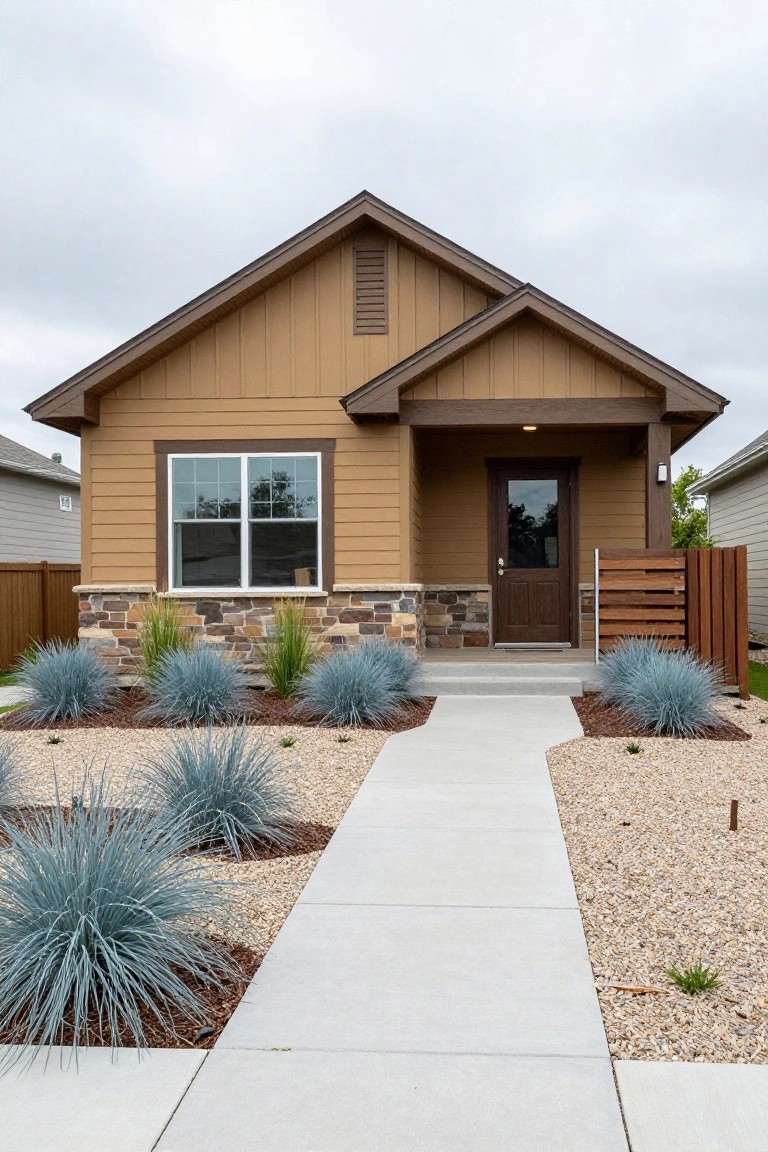
This tan brown paint color on the house siding gives off a warm, lived-in feel without being too dark or bold. It pairs nicely with the stone base around the bottom and the darker wood on the porch and door, making the whole front look pulled together. Folks like it because it softens the modern lines of a simple gable roof house and stands up to everyday weather.
Try this shade on ranch or cottage style homes in drier areas. It shines with gravel paths and tough plants like those blue agaves out front, keeping maintenance low. Just make sure the trim stays crisp white to keep things from blending into the yard.
Turquoise Door on Brown Shingle Siding
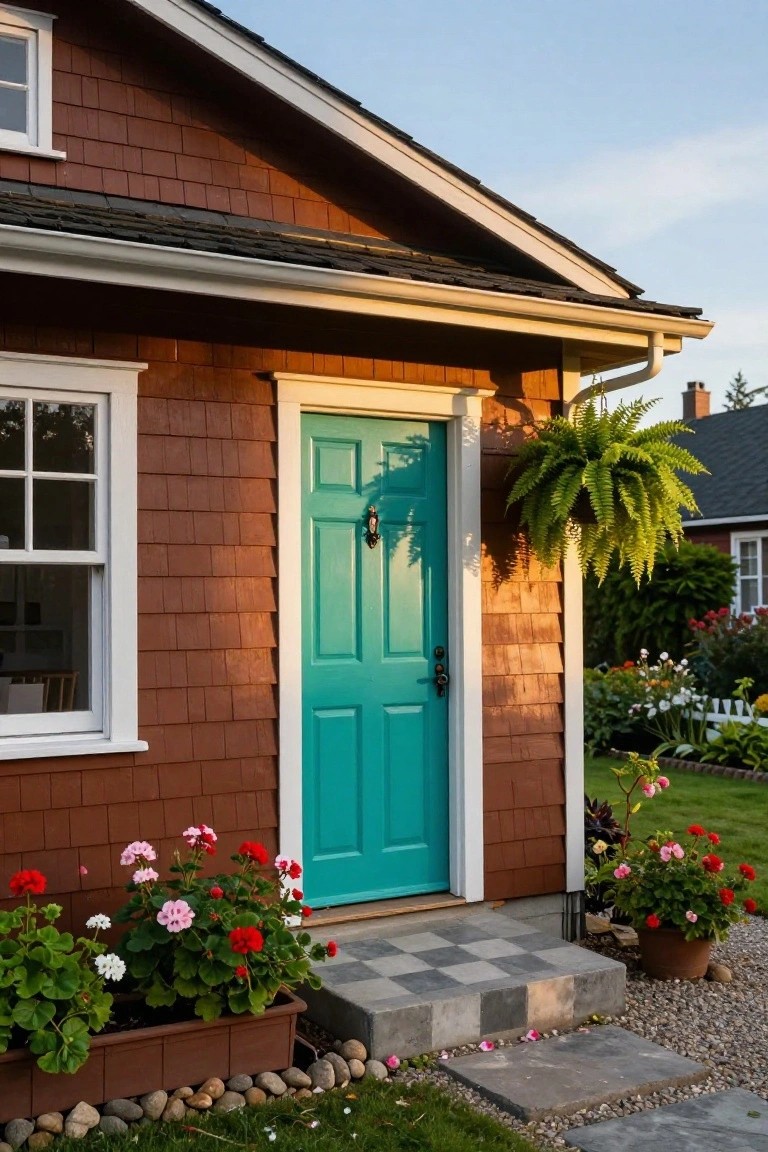
A bright turquoise door like this one works great against the warm tones of brown shingle siding. It pulls your eye straight to the front entry without overwhelming the house. The color contrast feels fresh and welcoming, especially on a classic shake-style exterior.
This look suits older homes or cottages in coastal areas where you want some personality up front. Paint the door a true turquoise, not too green or gray, and keep trim white for balance. Add a few pots of red geraniums nearby to echo the roof hints of red. It might feel bold at first, but it settles in nicely over time.
Brown Corrugated Metal Siding
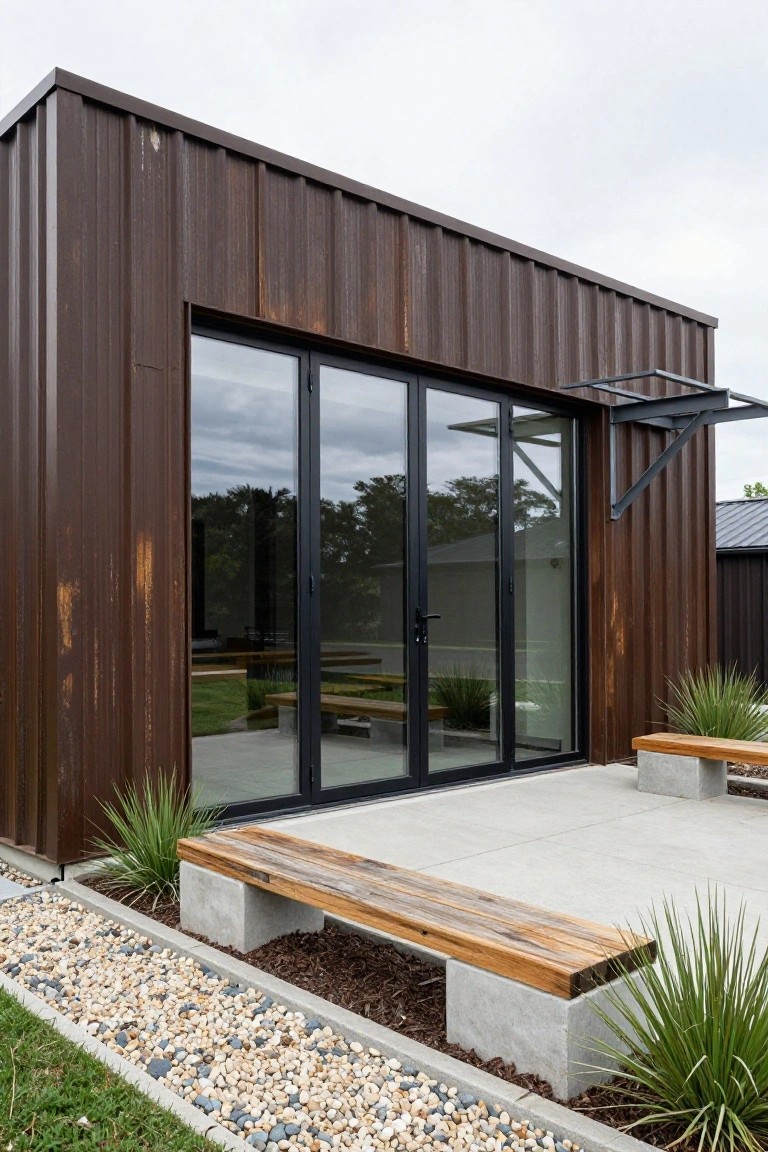
Brown corrugated metal siding like this gives a house a tough, lived-in look without much upkeep. The rusty tones catch the light just right and tie into the yard naturally. It’s got that industrial edge but stays cozy around the entry with those big glass doors pulling the outside in.
This works best on smaller modern homes or backyard studios where you want low maintenance. Go for it in spots with some weather exposure to let the patina build over time. Skip it on super formal places though. Add simple concrete benches nearby to settle the space.
Warm Brown Wood on Chalet Exteriors
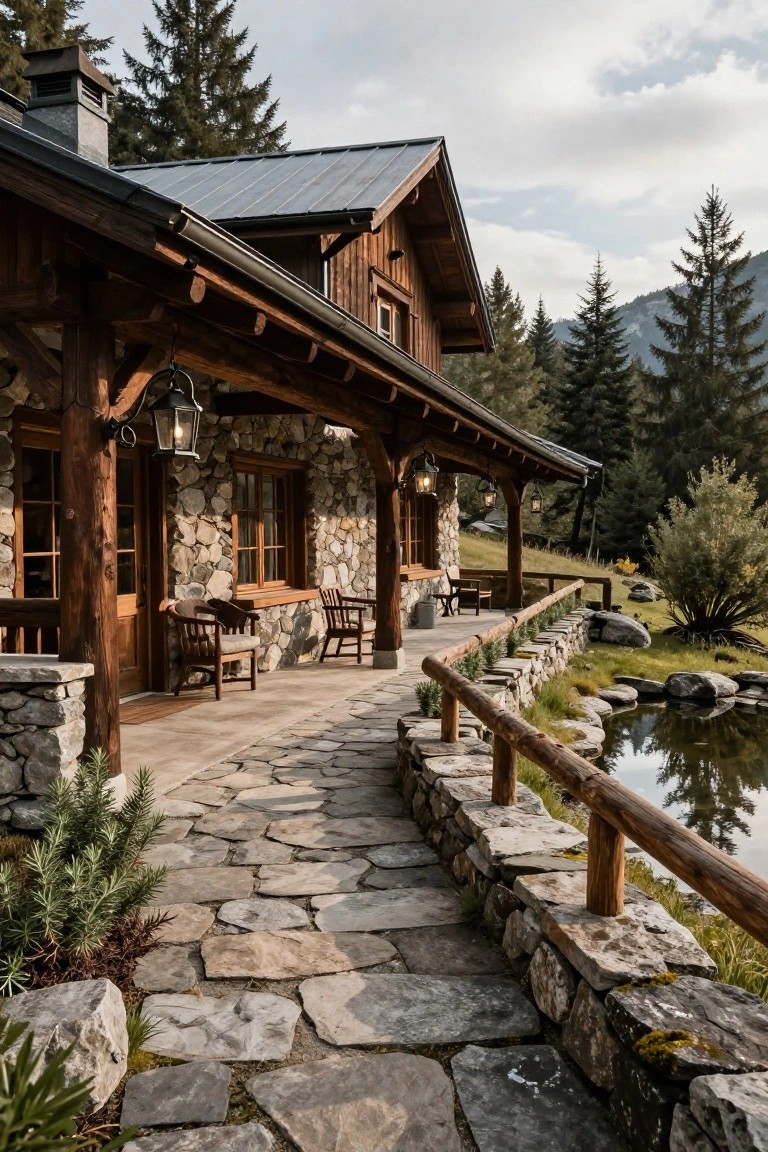
A warm brown stain on wood siding gives this chalet a cozy feel that fits right into the mountains. The color pulls from the surrounding pines and rocks without trying too hard. Paired with a stone base, it keeps the house looking sturdy and natural, like it grew there.
This works best on sloped sites or wooded lots where you want the house to blend in. Use a semi-transparent stain to let the wood grain show through, and add lanterns for evenings. Skip it on flat urban lots, though. It shines on vacation homes or cabins.
Brown Shingle Siding on a Cottage Facade
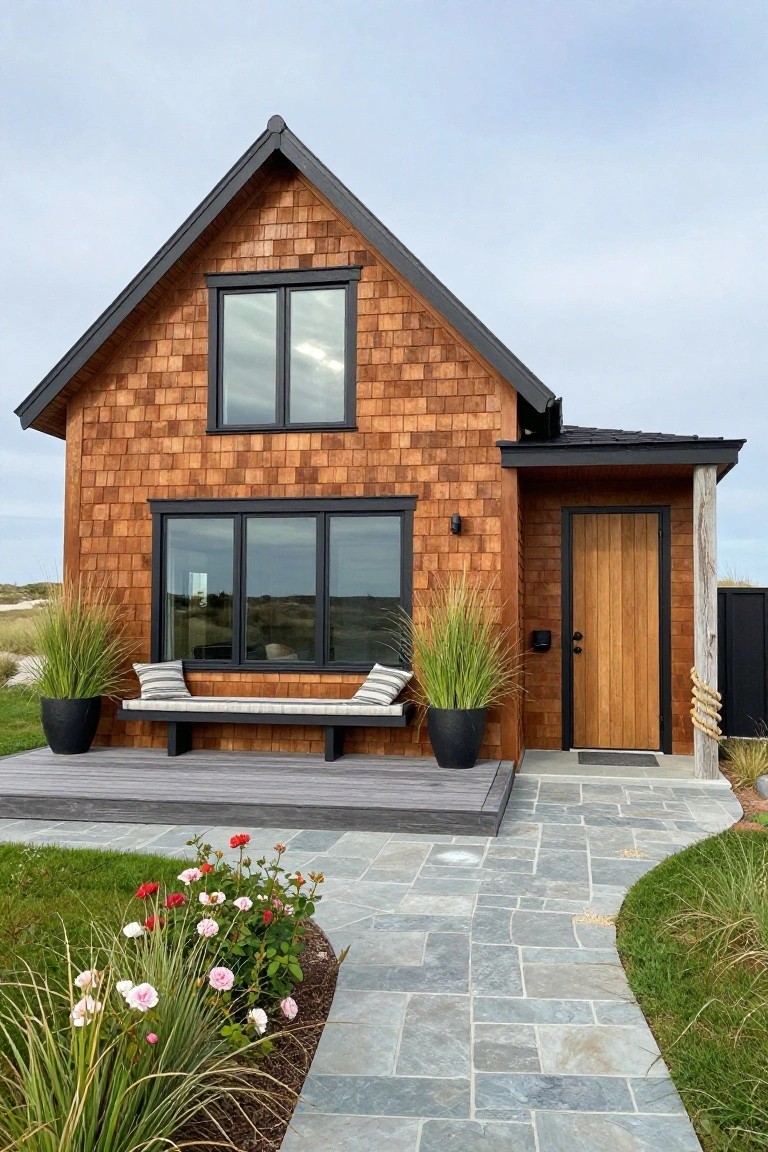
Warm brown shingle siding like this covers the whole front of the house. It gives off a cozy cabin feel without looking too rustic. The wood tone picks up the natural colors around it, and those black frames on the windows keep things sharp.
This works best on smaller homes near the coast or in wooded spots. It holds up to weather if you seal it right. Pair it with a simple wooden door and stone path to tie everything together.
Dark Brown Barn Siding
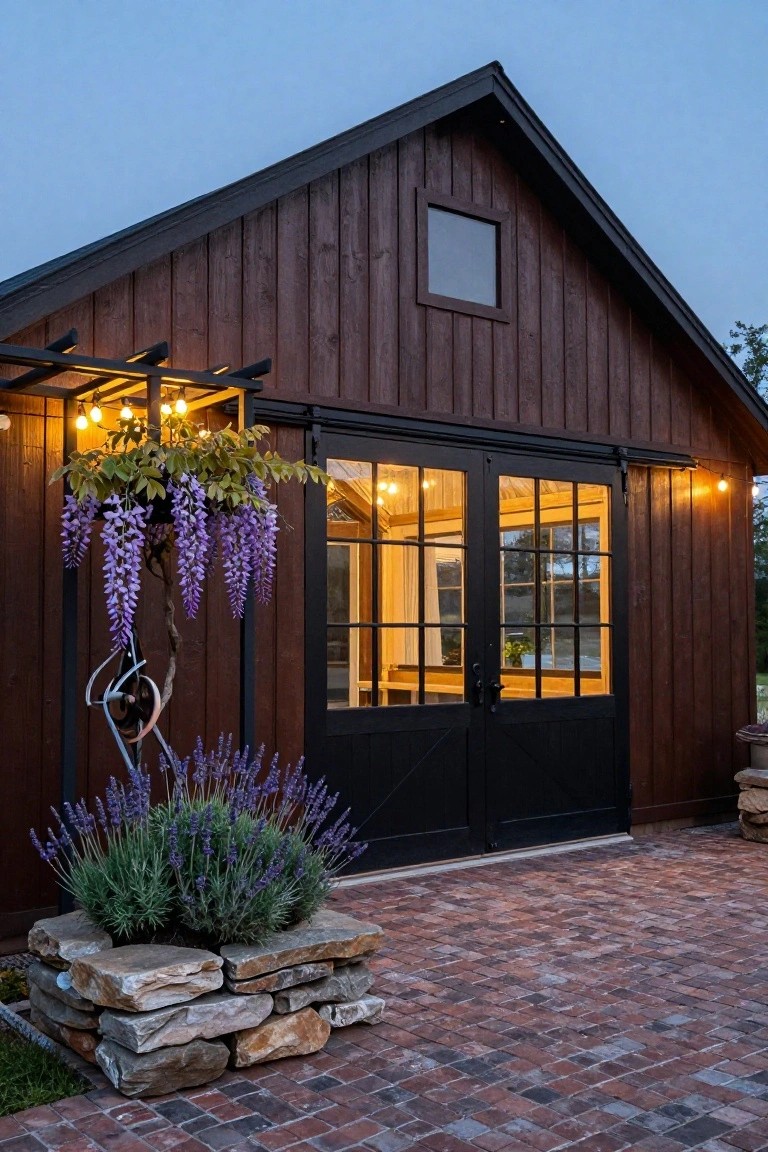
Dark brown siding like this turns a simple barn-style building into something warm and welcoming. The vertical wood boards soak up the stain nicely, giving plenty of texture without much fuss. Black sliding doors add a sharp contrast that keeps the look from feeling too folksy.
This works best on smaller structures like guest houses or workshops, or even as an accent on a bigger home. Try it in wooded spots or rural settings where it blends right in. Pair with low plants like lavender around the base, and it stays practical year-round.
Frequently Asked Questions
Q: How do I test a brown paint color on my actual house before committing?
A: Buy small sample cans and brush large patches right on your siding in a few spots. Check them morning, noon, and evening to catch how sunlight shifts the shade. You’ll spot the perfect match fast.
Q: Should I match my brown house paint to a dark or light roof?
A: Pick a brown a shade or two lighter than a dark roof to balance things out. Dark roofs pull deeper browns together nicely. Light roofs shine with mid-tone browns that don’t overwhelm.
Q: What’s the easiest trim color for brown siding?
A: Go with crisp white. It pops against brown and makes everything feel fresh.
Q: Can brown paint hide dirt and wear on the exterior?
A: Browns camouflage dust and grime way better than whites or pastels. Wipe down with mild soap yearly to keep that fresh look. And warm browns stay vibrant longer outdoors.
