

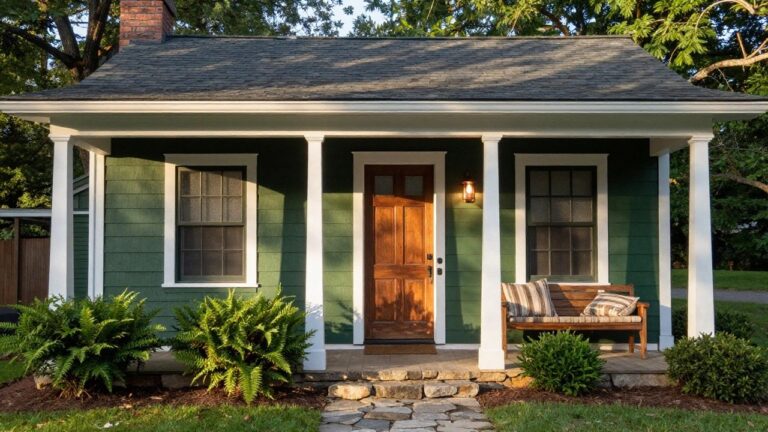
I’ve driven past plenty of houses where a green exterior just pulls everything together, from the siding to the roofline, creating that instant curb appeal you feel from the street.
Greens work best when they nod to your home’s materials, like softening brick with a sage tone or brightening vinyl with something fresher.
I once painted a test swatch of deep forest on our stucco garage, and it showed me how the color shifts with sunlight across the facade all day.
Neighbors spot those choices first, and the right one makes your entryway draw them in instead of blending into the yard.
Some shades in this set are practical enough to try on your own place next season.
Forest Green Shingle Siding
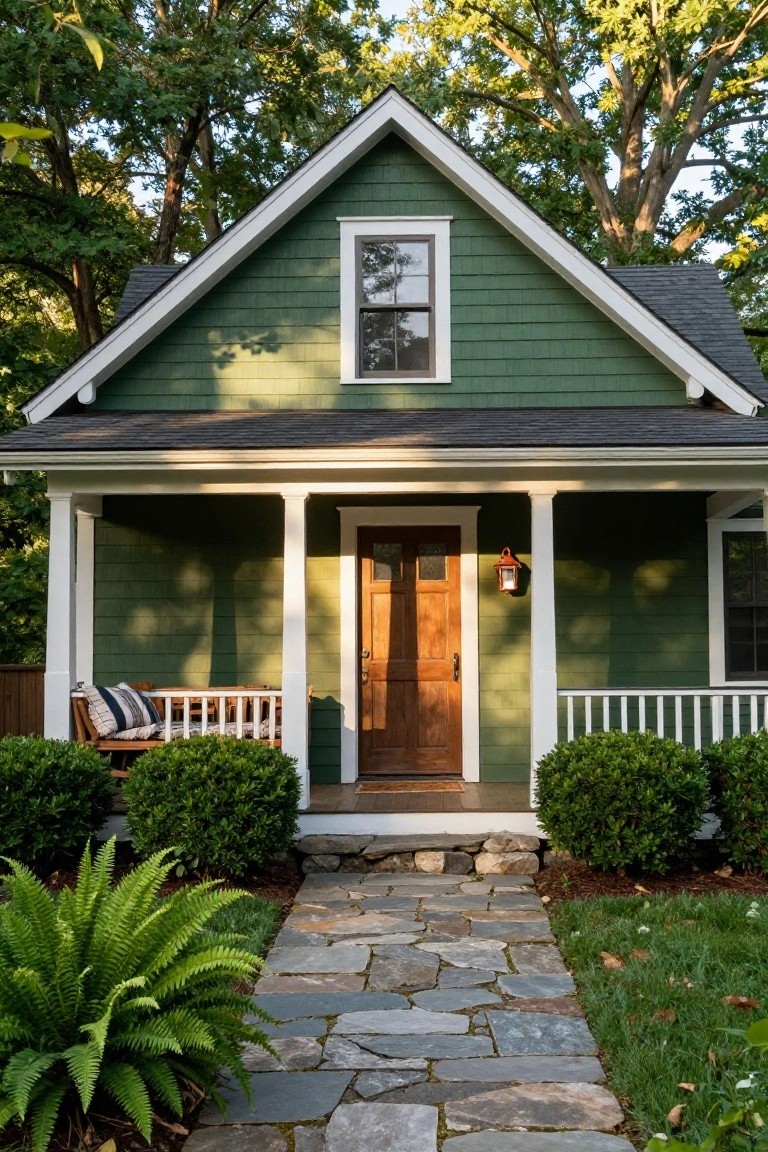
A deep forest green on shingle siding like this turns a simple cottage into something that belongs in the woods. It echoes the trees around it but stays distinct thanks to the texture of the shingles catching the light. White trim on the porch columns and windows gives clean lines that keep the green from feeling too heavy.
This works best on traditional homes or bungalows with some yard to show it off. Pick a shade with subtle blue undertones so it reads fresh in different light. Add boxwoods by the steps and a stone path to tie it all together without much fuss.
Recommended Products

Item Description: 14"W x 51"H Lifetime Vinyl, Standard Four Board Joined, Board-n-Batten Shutters, w/Installation Shutter-Lok's & Matching Screws (Per Pair), Forest Green

Single course design

Single course design
Pale Green Siding for Farmhouse Garages
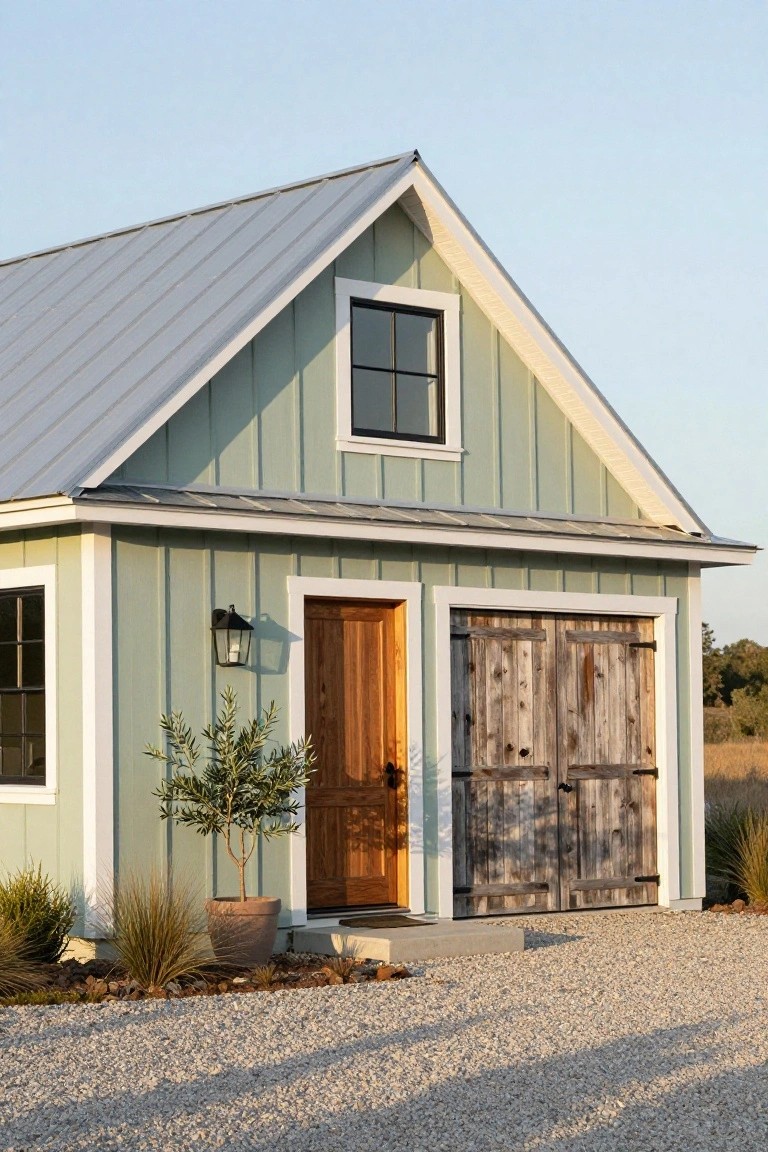
A soft pale green like this works great on siding for garages or small outbuildings. It gives the whole thing a fresh coastal farmhouse feel without being too bold. The vertical board-and-batten style picks up light nicely, and white trim keeps everything crisp. Pair it with those weathered wood garage doors, and you get real character that ties into a rural setting.
This color suits homes in dry or sunny spots, like California hillsides. It blends with olive trees or grasses around the base. Go for it on detached garages or workshops where you want low-key curb appeal. Just make sure the trim paint is a true bright white to avoid muddiness.
Sage Green Siding on Small Structures
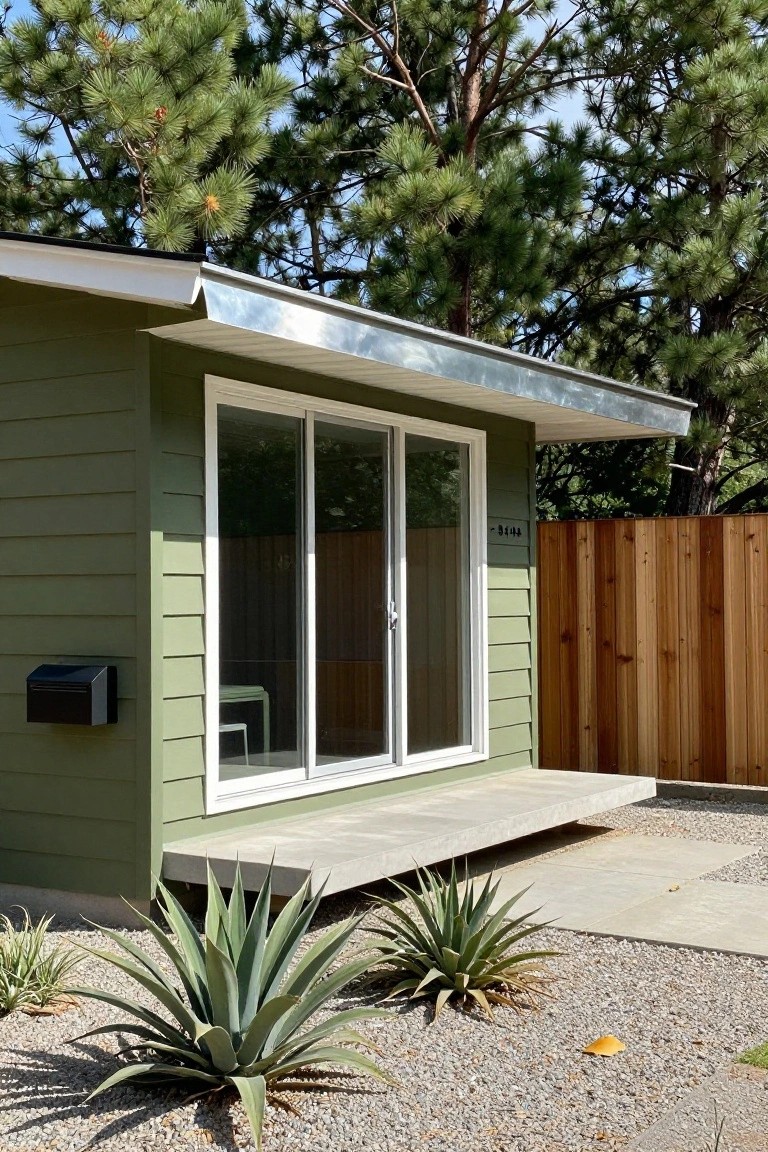
Sage green siding like this turns a simple backyard shed into something that feels right at home in the landscape. The muted tone picks up on nearby pines without overpowering them. White trim on the doors adds a clean break that keeps the look fresh.
Try it on guest cottages or poolside changing rooms where you want low-key appeal. It fits dry climates with gravel yards and succulents best. Avoid busy patterns nearby. The color holds up well to sun.
Mint Green Shingle Siding
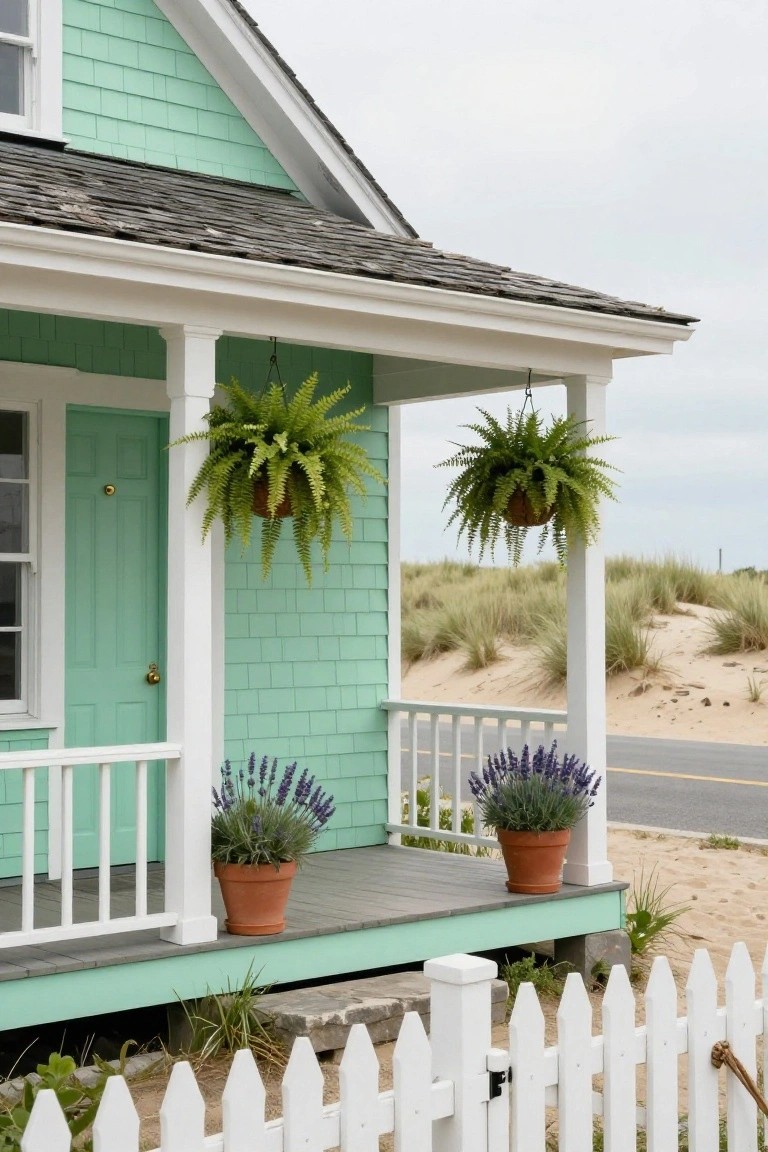
A soft mint green on shingle siding brings a light coastal feel to this cottage. It works well against white trim and porch details, keeping the look fresh without being too bold. The color picks up on nearby dunes and sea air nicely.
Try it on smaller homes near water or in relaxed neighborhoods. Add hanging ferns and potted lavender on the porch for easy curb appeal. It suits classic styles best, but watch that it doesn’t fade too fast in full sun.
Deep Green Siding on a Historic Facade
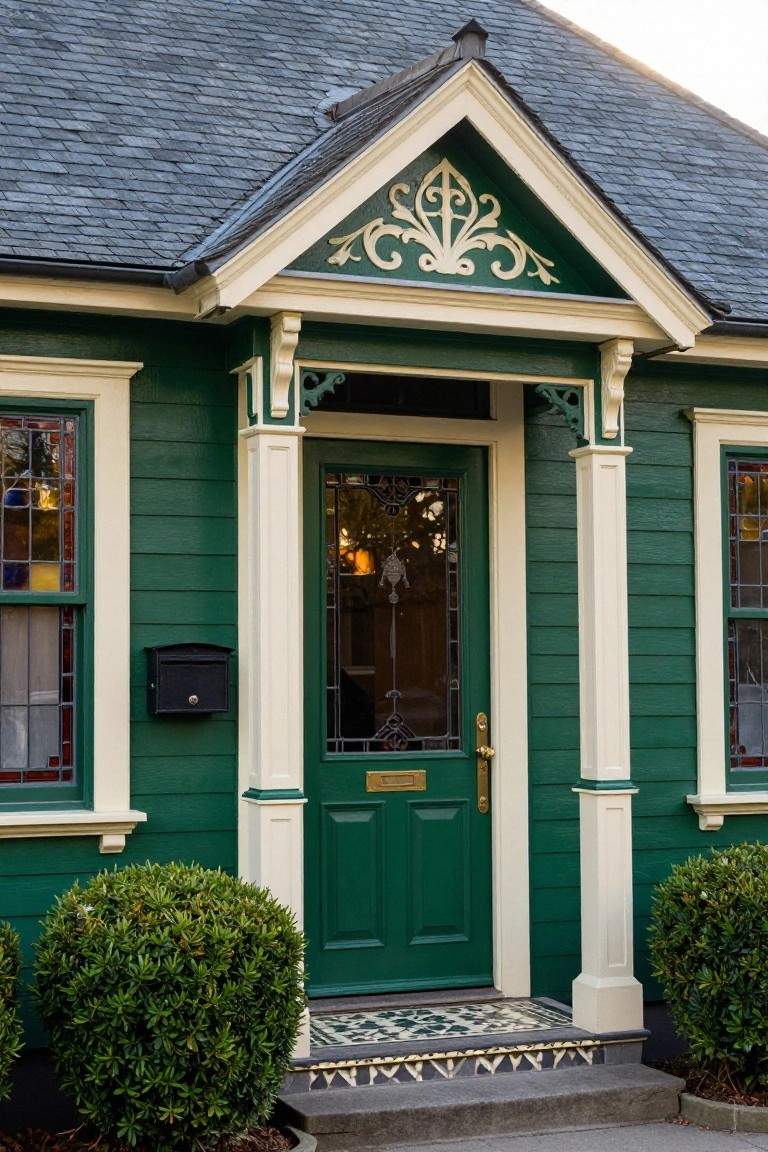
Dark green paint covers the siding and front door here, setting off the cream trim on the porch columns and window frames. The stained glass windows add a bit of sparkle without stealing the show. This shade feels settled and welcoming, like the house has been there forever.
It suits older homes with gingerbread details or gables best. Pick a true hunter green for that depth, and test it on a sunny day to see how it shifts. Pair with simple evergreens out front to keep things tidy. Dirt and pollen won’t show much, which helps in real life.
Sage Green Stucco Exterior
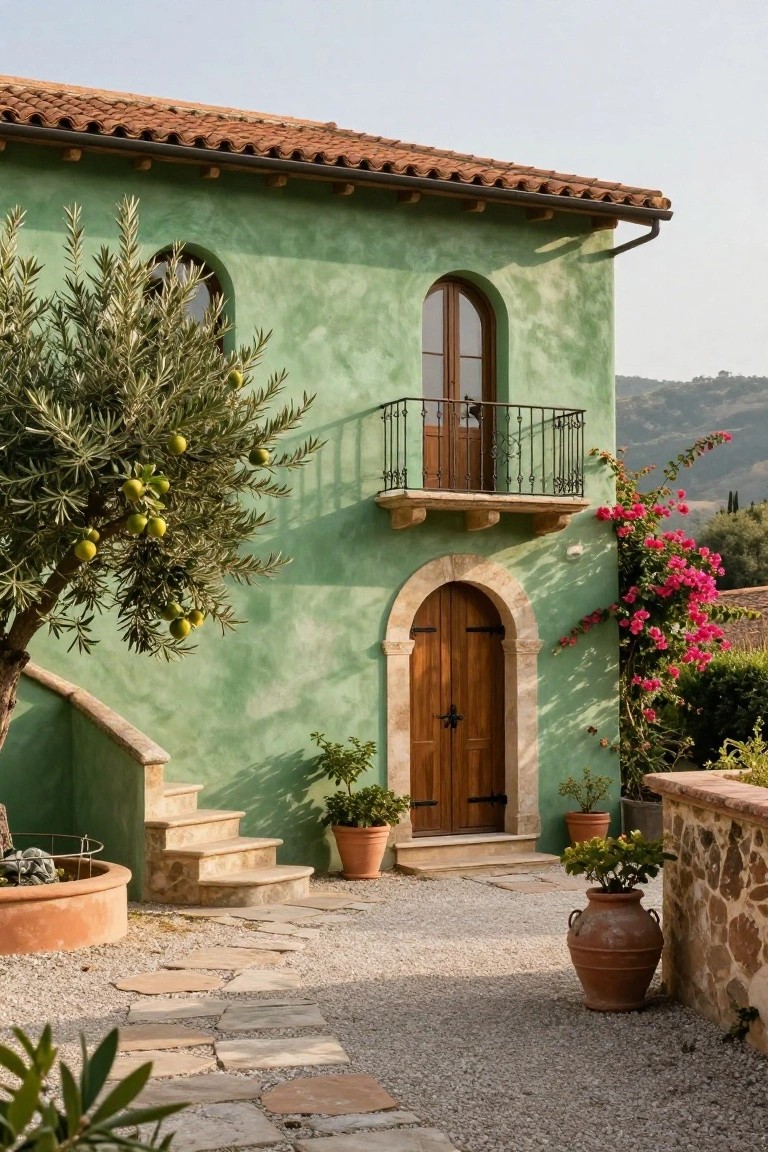
A soft sage green on stucco walls gives a house that easy Mediterranean feel. It picks up the tones in olive trees and blends right into hillside spots without shouting. That terracotta tile roof adds just enough warm contrast to keep things interesting.
This color works best on older style homes in sunny areas, like Spanish or villa-inspired ones. Go for it on facades with arches and balconies, then add stone steps and a few big pots out front. Skip it on super modern boxes, though. It needs some architectural character to shine.
Vibrant Green on Cube Structures
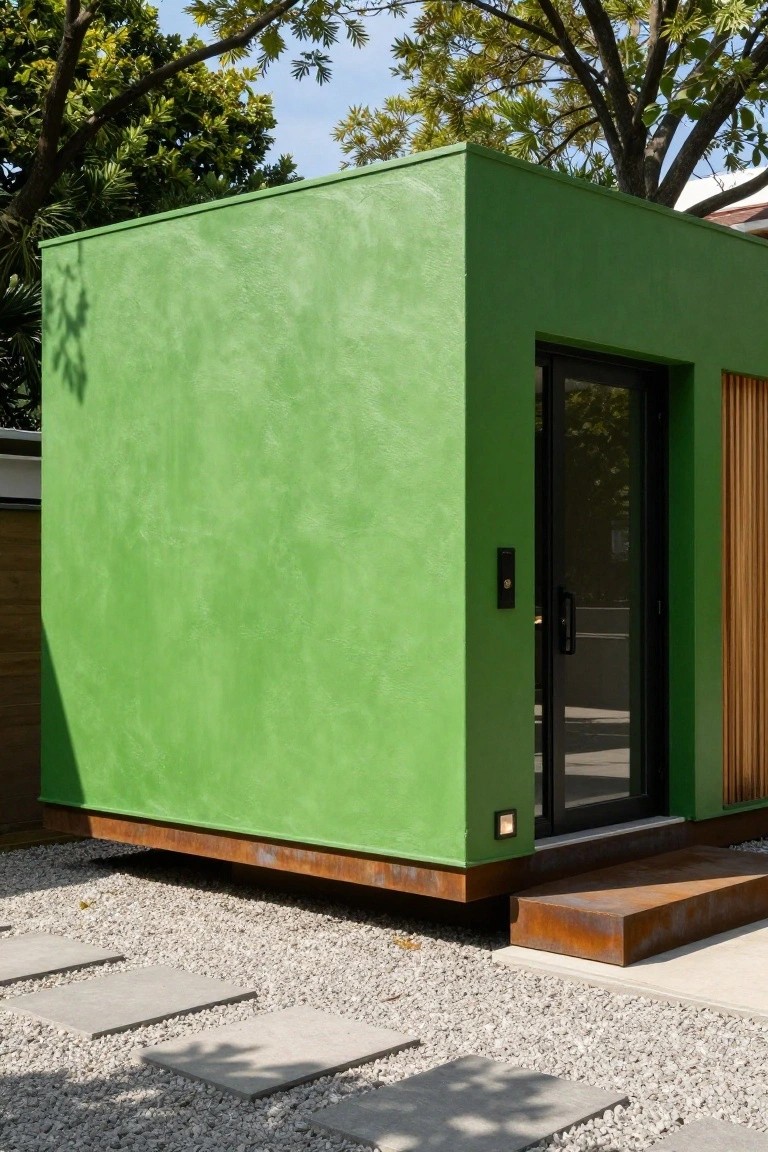
A simple cube shape painted in a bright, textured green really stands out in a backyard setting. Here the color picks up on nearby trees without blending in. It gives the small building a fresh, modern vibe that feels lively but not overpowering. The rusty metal base adds a nice contrast too.
You can pull this off on garden sheds, studios, or even playhouses. It suits homes with lots of greenery around, where the green ties everything together. Just go for a matte finish to avoid glare, and keep the form clean for the color to shine.
Green Brick House Facades
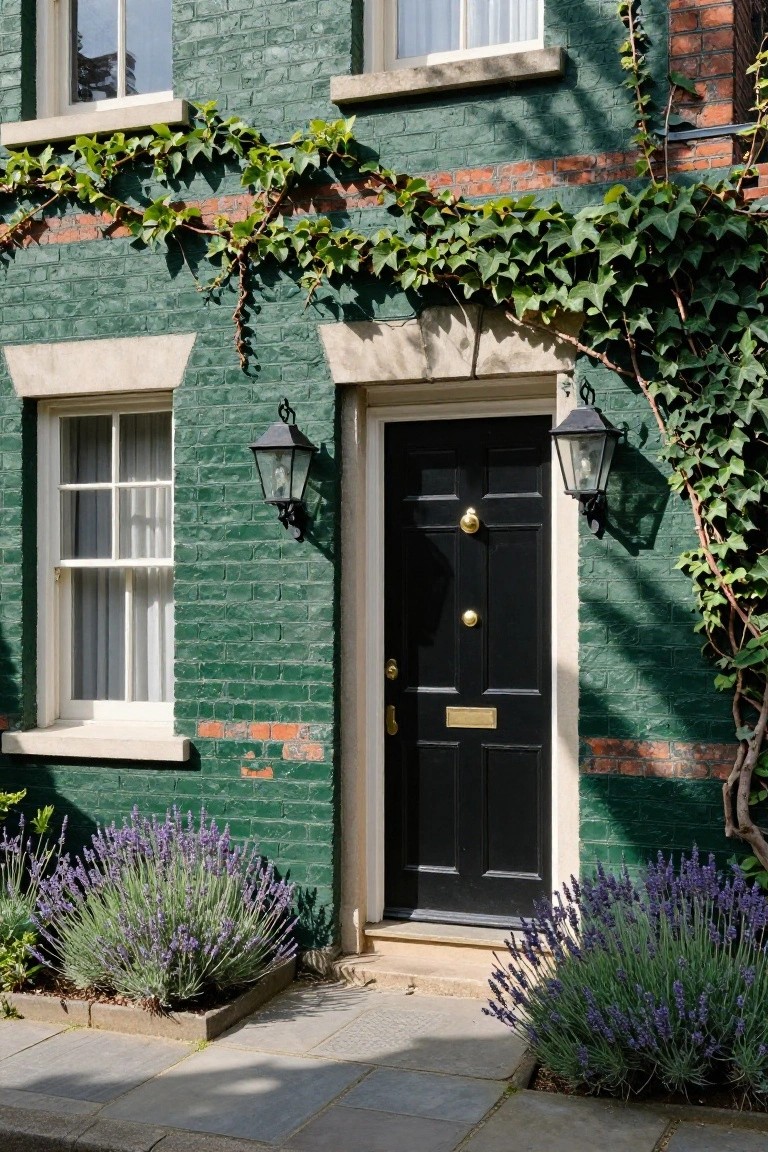
Green brick works so well on older style homes. It gives the whole facade a solid, lived-in feel without trying too hard. Here the deep green tone on the brick mixes with some red accents at the edges. That black door stands out just right, and a bit of ivy softens things up naturally.
Try this on traditional two-story houses, especially in town settings with paths out front. Paint or choose brick in a muted green shade to keep it grounded. Add lavender or low plants by the entry for that extra touch. It holds up year-round… just trim the ivy now and then.
Soft Green on Townhouse Facades
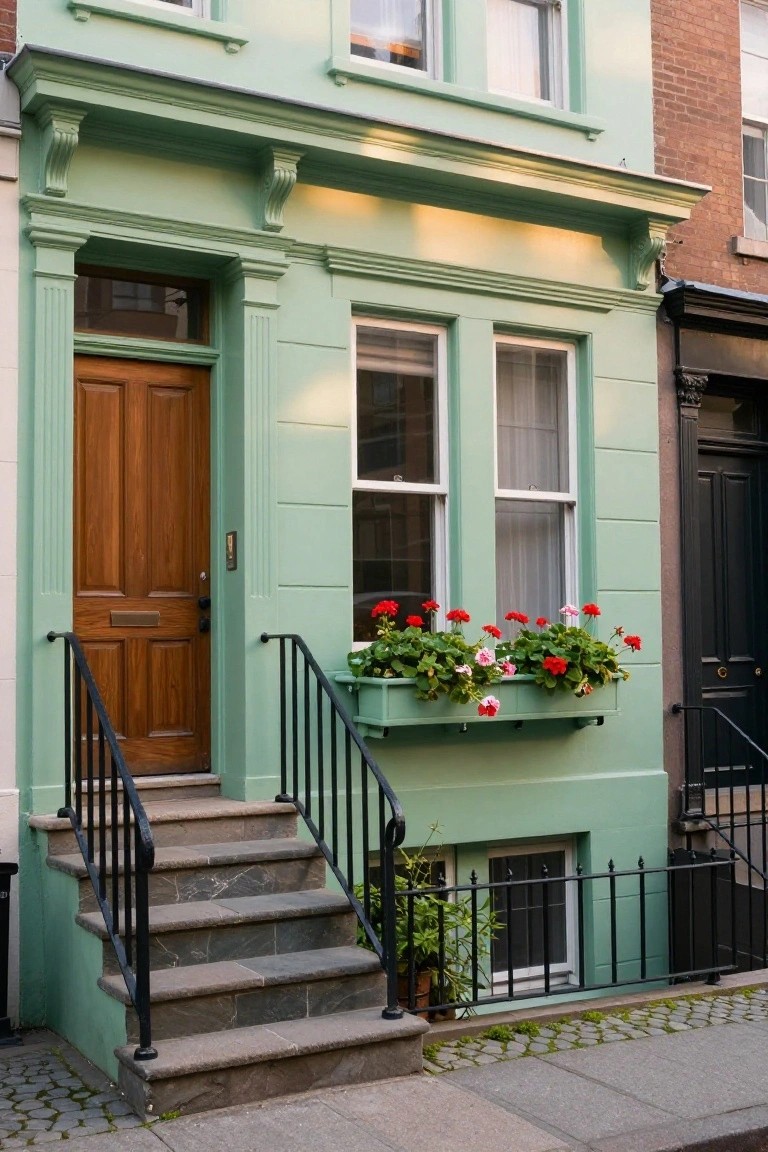
A pale green paint like this one freshens up a classic townhouse without overpowering the architecture. It works well on brick row houses, where the soft color picks up light during the day and gives a gentle glow in the evening. Pair it with a warm wooden door and black iron railings, and you get real curb appeal that feels lived-in, not showy.
This shade suits older urban homes or narrow street fronts best. Test it on a small area first, since green can shift under different lights. Add a window box with bright geraniums for extra pop… it ties everything together nicely.
Pale Green Siding for Beach Homes
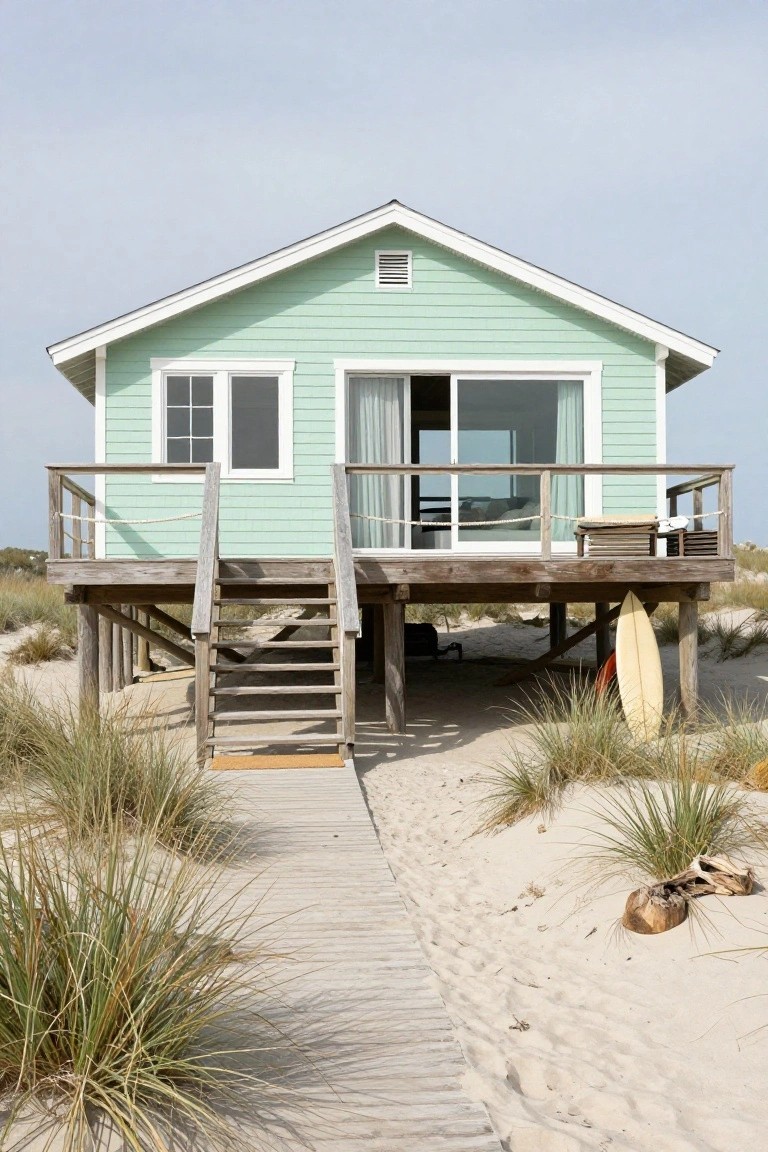
A pale green like this one shows up nicely on coastal houses. It blends right in with the sand dunes and ocean air without shouting. White trim keeps things crisp, and the wood deck below adds that weathered beach feel people expect.
This color fits elevated homes in flood-prone spots. It works on simple cabins or bungalows where you want low-key curb appeal. Pick a shade with cool blue undertones to avoid anything too limey.
Gray Stucco Exterior with Wood Entry
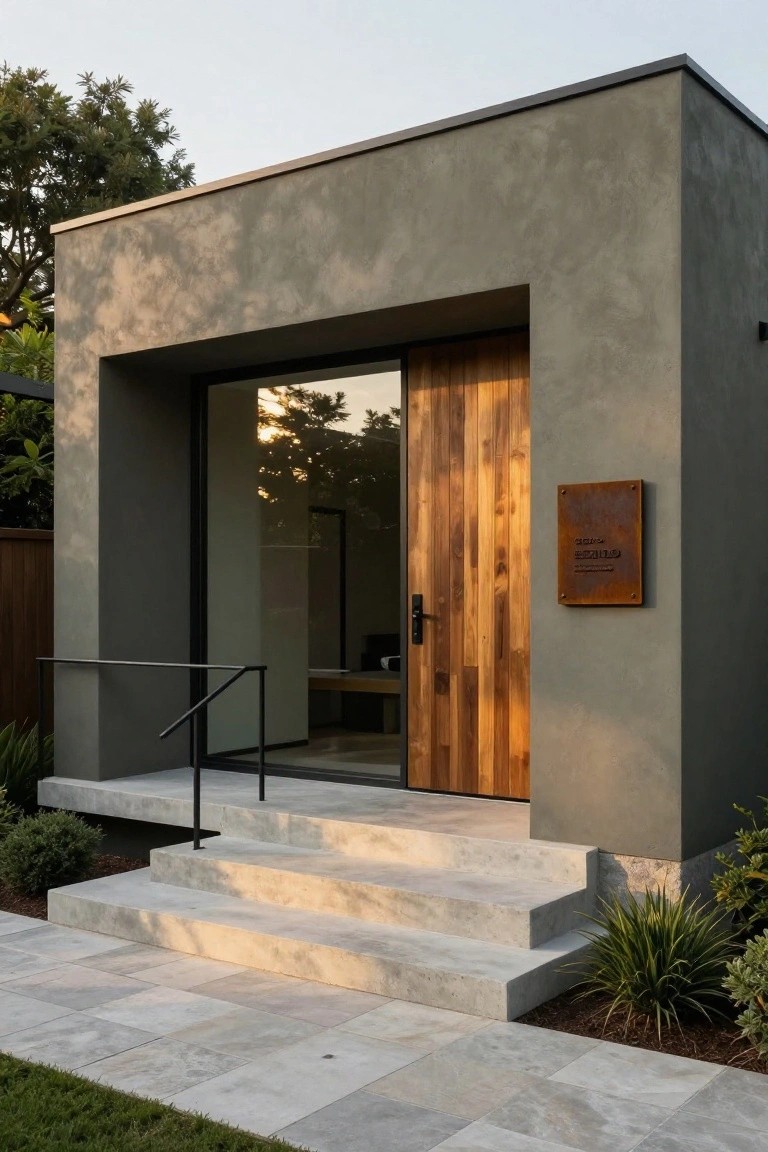
Gray stucco gives this modern house a clean, understated look that feels fresh without trying too hard. The soft texture catches the light nicely, and that big wooden door adds just enough warmth to make the front welcoming. It’s a simple combo that works because the gray stays neutral while the wood pulls your eye right to the entrance.
You can pull this off on ranch-style or contemporary homes where you want low-maintenance siding. It suits spots with some landscaping around the base, like grasses and shrubs that echo the natural wood tones. Just keep the stucco sealed to handle weather, and pick a durable wood like teak for the door.
Sage Green Cottage Exterior
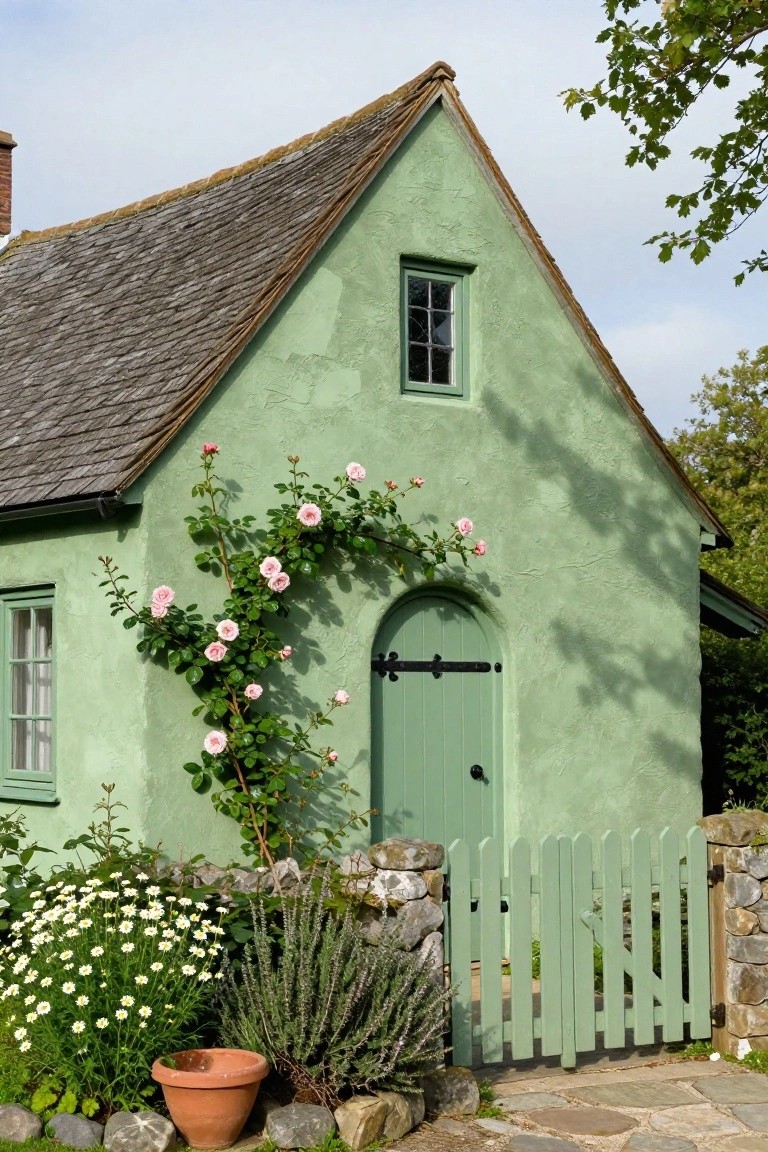
A soft sage green paint like this turns a simple cottage into something straight out of a storybook. It wraps the textured walls nicely, picking up the green in the door and fence without overpowering the place. Those pink climbing roses along the entry just seal the deal. They soften the look and add a bit of color pop that feels right at home.
Try this shade on older homes or bungalows where you want charm without much fuss. It suits country settings or suburban spots with some garden space. Keep doors and trim in a matching tone, and let plants like roses trail over the front. Avoid big houses, though. It shines on smaller scales.
Sage Green Garden Shed
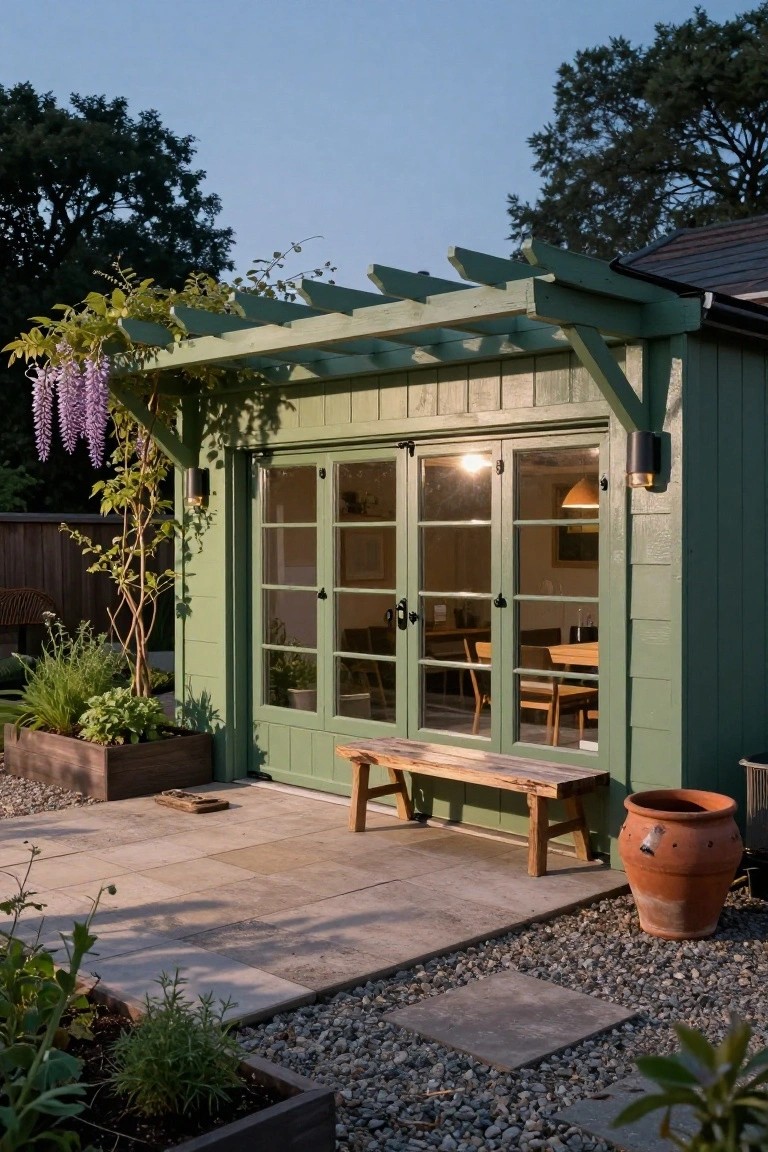
A sage green garden shed like this one blends right into the backyard without stealing the show. The soft color on the wooden siding picks up the tones from nearby plants and trees, making the whole space feel connected. Large glass doors let light pour in, and that simple pergola overhead with wisteria adds just enough charm without overdoing it.
This works best in cozy gardens where you want a spot for tools, a hobby area, or even a quiet reading nook. Paint a similar shed this shade if your yard has lots of green foliage, it hides dirt well too. Skip it on big houses though, it shines on smaller structures. Add a bench out front for that extra practical touch.
Soft Green Siding with Darker Green Doors
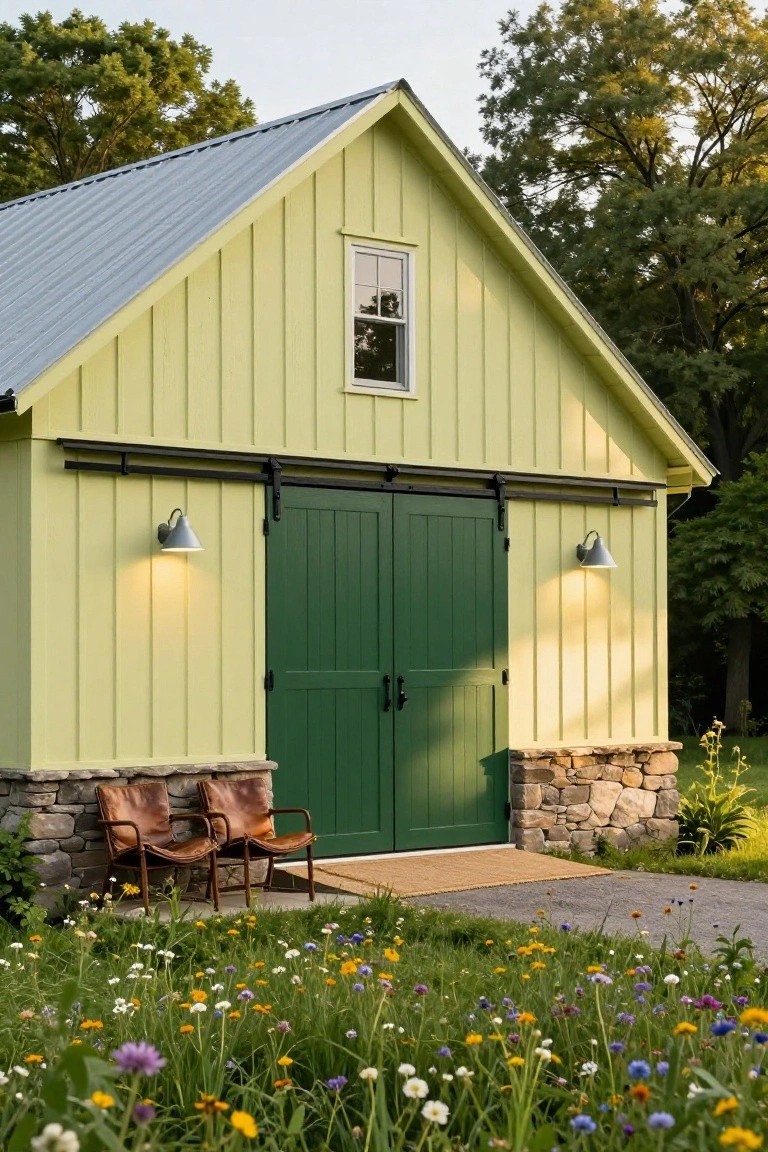
A soft pale green on the siding paired with deeper green doors pulls off a quiet contrast that feels all of a piece. It echoes the trees and grass without shouting. That metal roof adds a clean edge up top.
This works best on garages or outbuildings near a house, especially in rural spots or with some woods around. Stone at the base grounds it more. Skip it if your yard is too formal, though. Just paint and see how it settles in over a season.
Green Vertical Wood Siding
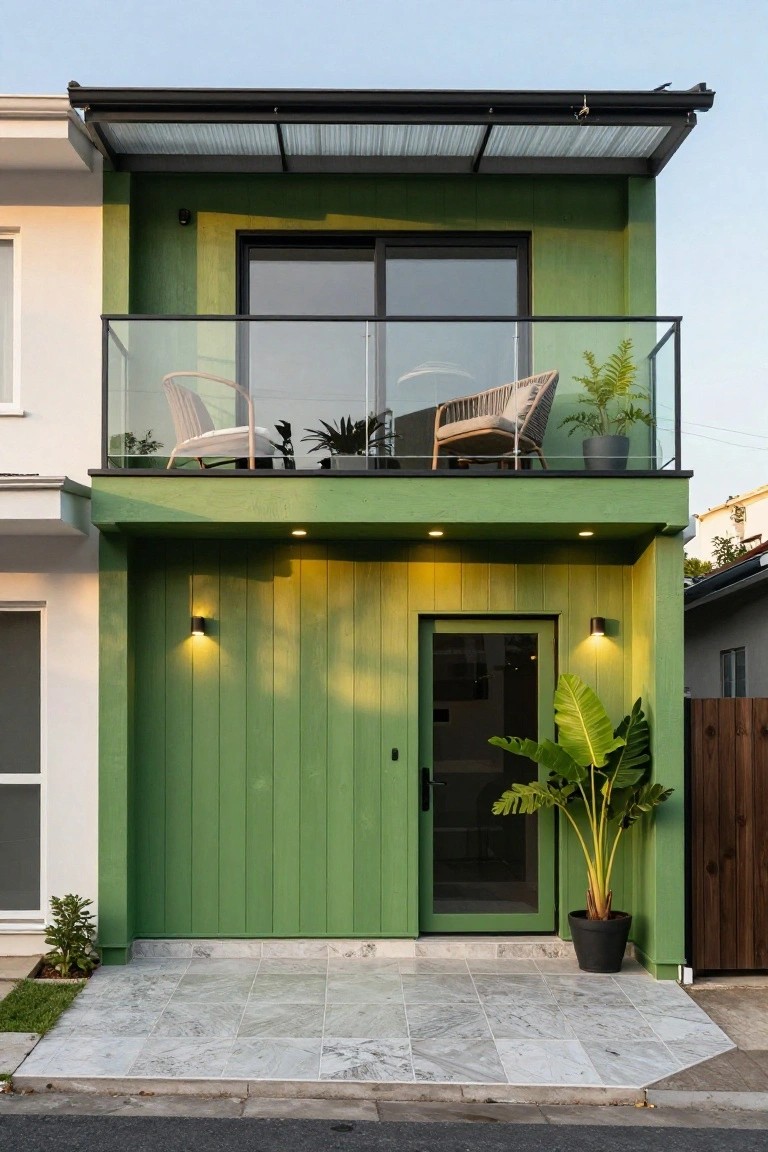
Green vertical wood siding like this turns a simple house facade into something fresh and eye-catching. The planks run straight up, giving the whole front a clean, modern rhythm that feels taller and more open. Paired with black window frames and a glass balcony, it keeps things simple but bold. Neighbors in white and beige make the green pop without trying too hard.
You can pull this off on mid-century or new-build homes where you want curb appeal that lasts. Paint cedar or pine boards in a mid-tone green, then seal them well for weather. It suits spots with some sun. Add a big plant by the door like they did here. Skip it if your house is super traditional, though. Might feel out of place.
Sage Green Half-Timbered Facade
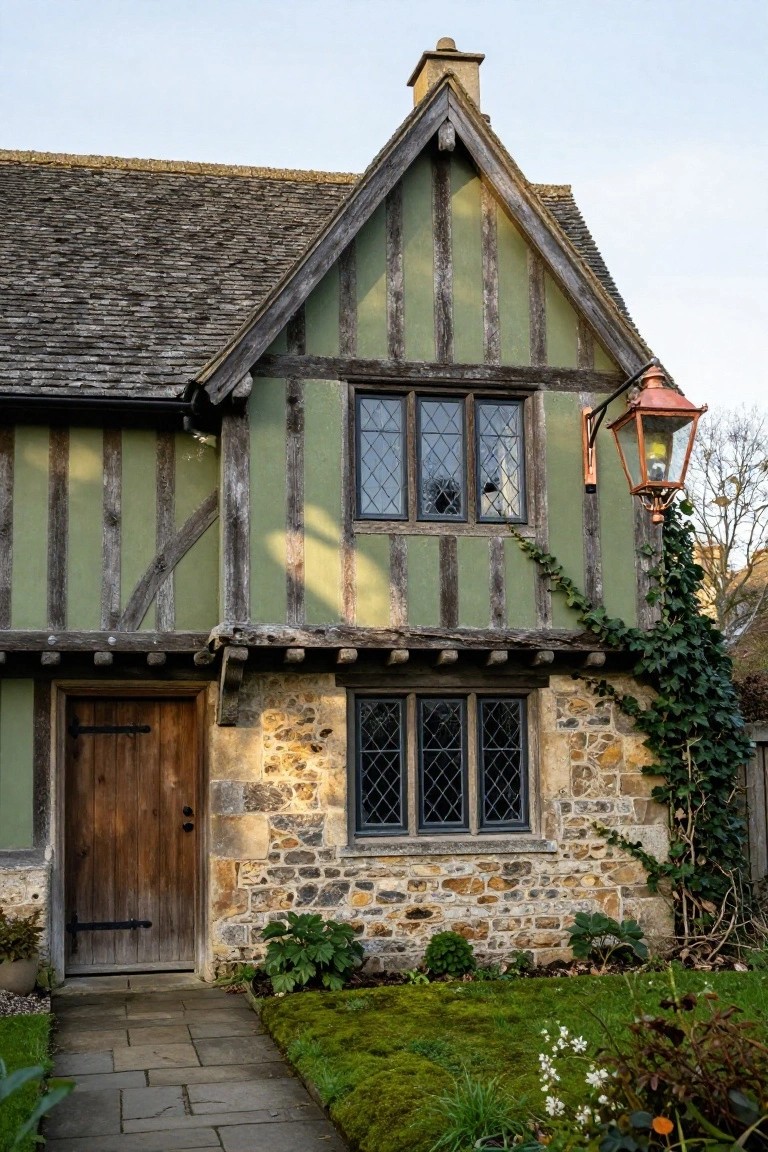
A soft sage green paint on half-timbered walls like this pulls the whole house together in a quiet, natural way. The dark wood beams pop right out, and the color ties into the garden and stone base without trying too hard. It’s one of those looks that feels right at home in older neighborhoods.
This shade suits traditional cottages or Tudors best, especially where you want to highlight the timber without a bold color stealing the show. Go for a matte finish to keep it subdued, and let plants like ivy climb up one side. It holds up well in shady spots too.
Recommended Products

ALL-IN-1 PAINT & PRIMER: A hardy multi-purpose and multi-surface one-coat paint and primer in one for almost any indoor or outdoor surface. A wall, ceiling, floor, skirting board, cabinet, furniture and door paint for your bathroom, kitchen, home and garden.

Made in United States

TRUE ALL-IN-ONE PAINT & PRIMER – Skip the extra steps. Evolve Tru Coat combines paint and primer in one, delivering excellent adhesion and coverage on wood, metal, masonry, and concrete with minimal prep.
Pale Green Siding with Dark Green Trim
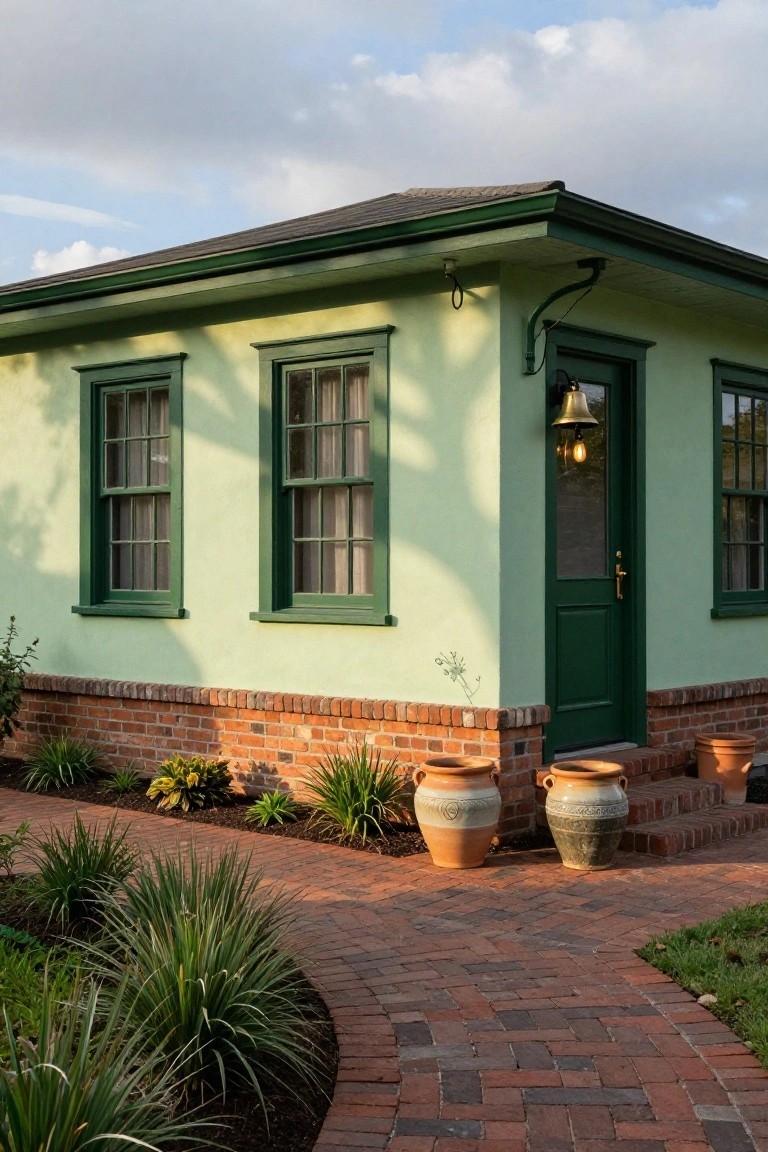
A pale green siding like this gives a house a soft, fresh look without going too bold. The color picks up on nearby plants and sky, making the home blend right into its spot. Pair it with darker green trim around the windows and door, and you get nice contrast that makes everything pop just enough. The brick base at the bottom keeps things steady too.
This setup works great on smaller homes or cottages, especially where there’s some garden around. Try it in warmer spots since the green feels right at home there. Just stick to matte paint to avoid shiny glare, and match the pots or path to the earthy tones below.
Forest Green Siding on a Cabin
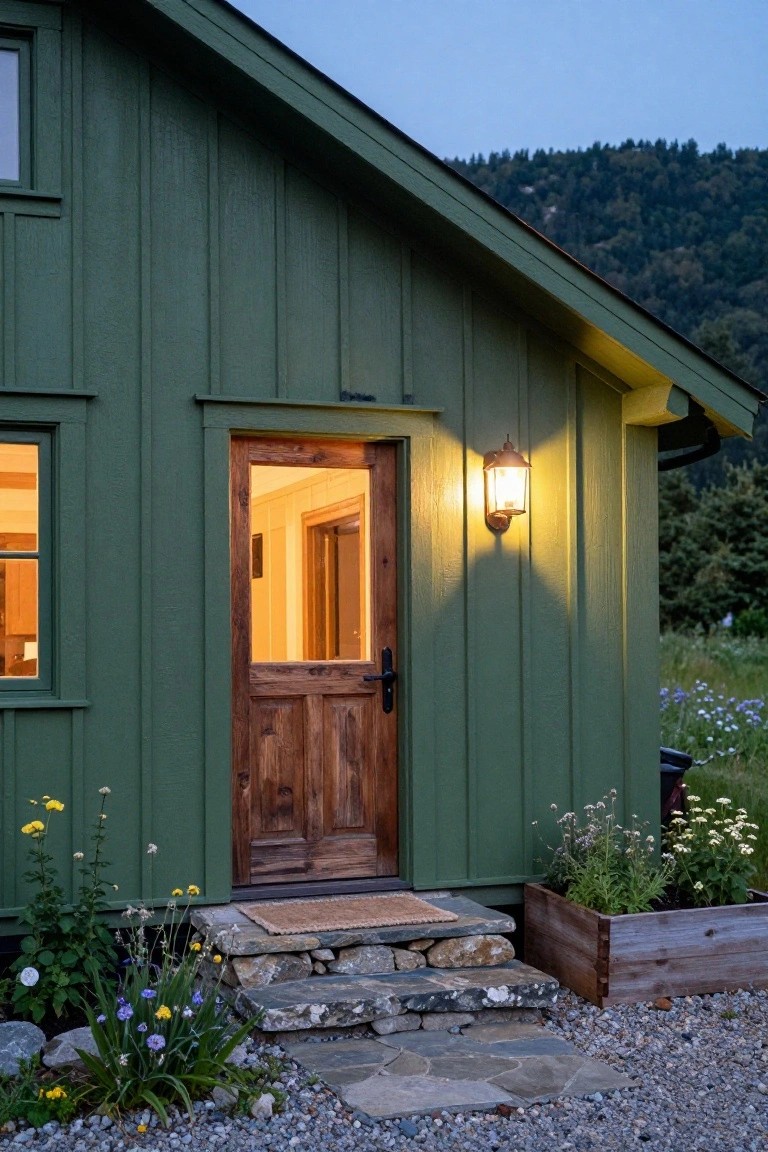
A deep forest green paint on board-and-batten siding turns a simple cabin into something that blends right into the trees around it. That color picks up the evergreen tones without being too bright. And the warm wooden door pulls it together, making the entry feel solid and welcoming.
This look works best on smaller homes or cabins tucked into wooded spots. Go for vertical siding to keep the lines clean and tall. Just pair it with natural stone steps or gravel paths so it doesn’t feel too stark. Avoid super modern additions, though. It suits rustic setups fine.
Frequently Asked Questions
Q: My house is in a shady spot. Will green still pop?
A: Shadier greens like moss or forest tones thrive there. They pick up subtle light changes without washing out. Bright lime might fall flat, so stick to deeper shades.
Q: How do I test a green before committing to the whole house?
A: Grab sample pots and paint big swatches on different sides. Walk around at different times of day to see how the light hits. Live with it for a week before deciding.
Q: What trim color pairs best with most greens?
A: White trim gives clean contrast on any green. It brightens the look and makes details stand out.
Q: Green on a ranch-style house – too bold?
A: Not at all. A soft olive keeps it grounded and timeless. Pairs great with stone accents if you have them.
