

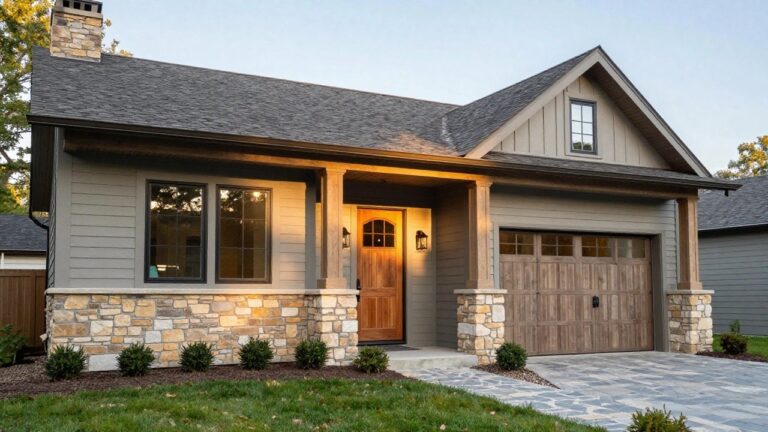
When you drive up to a house, the colors wrapping the stone facade hit you first and shape that instant curb appeal.
I once tested a soft blue against our own stone siding, and it grounded the whole front in a way the swatches never hinted at.
Stone’s texture calls for hues that lean into its natural depth rather than fighting it, especially around rooflines and doorways.
Bold shades work when stone anchors them.
A handful of these pairings stand out as ones I’d adapt for real homes down the line.
Gray Siding with Stone Accents
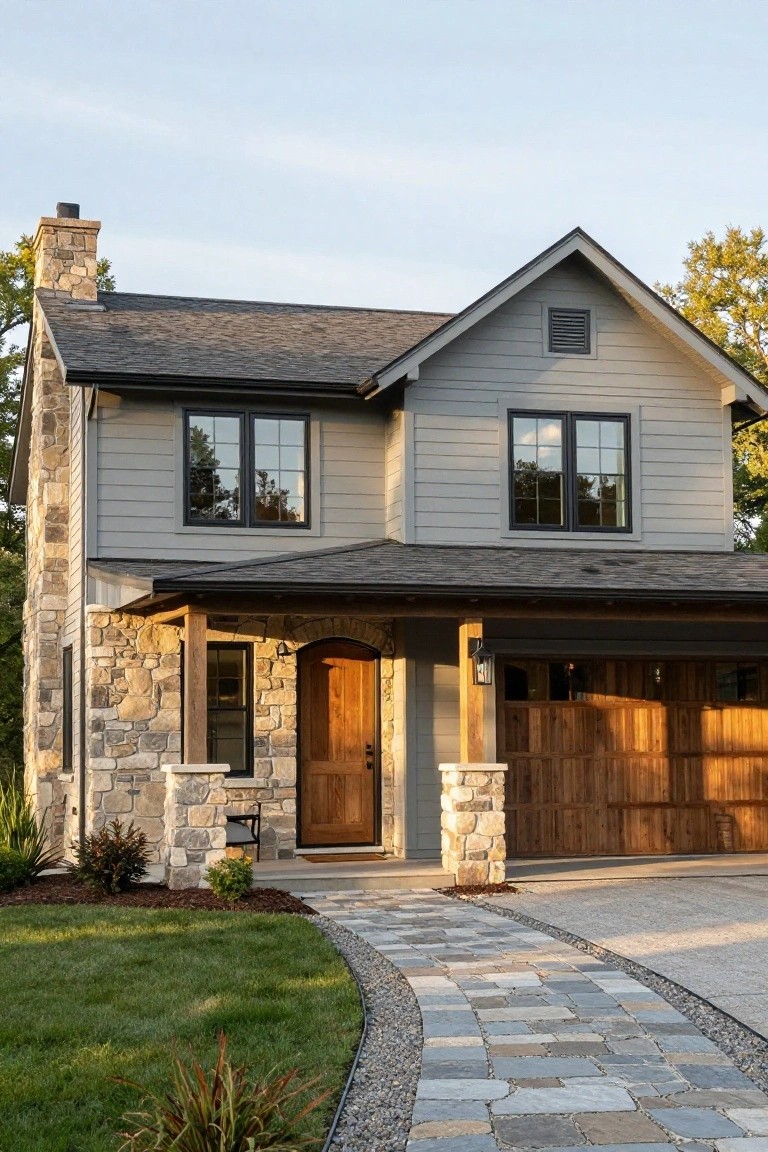
Gray siding like this covers most of the house body and pairs up nicely with natural stone on the chimney and pillars. The combo keeps things simple and modern. Stone brings in some rough texture that offsets the smooth siding without overwhelming it. Black window frames add a crisp edge too.
Try this on a two-story home with a gabled roof. It suits craftsman or transitional styles in mild climates. Add wood tones on the door or garage to warm it up a bit. Just make sure the stone matches your region’s look so it blends right in.
Mint Green Siding on a Stone Base
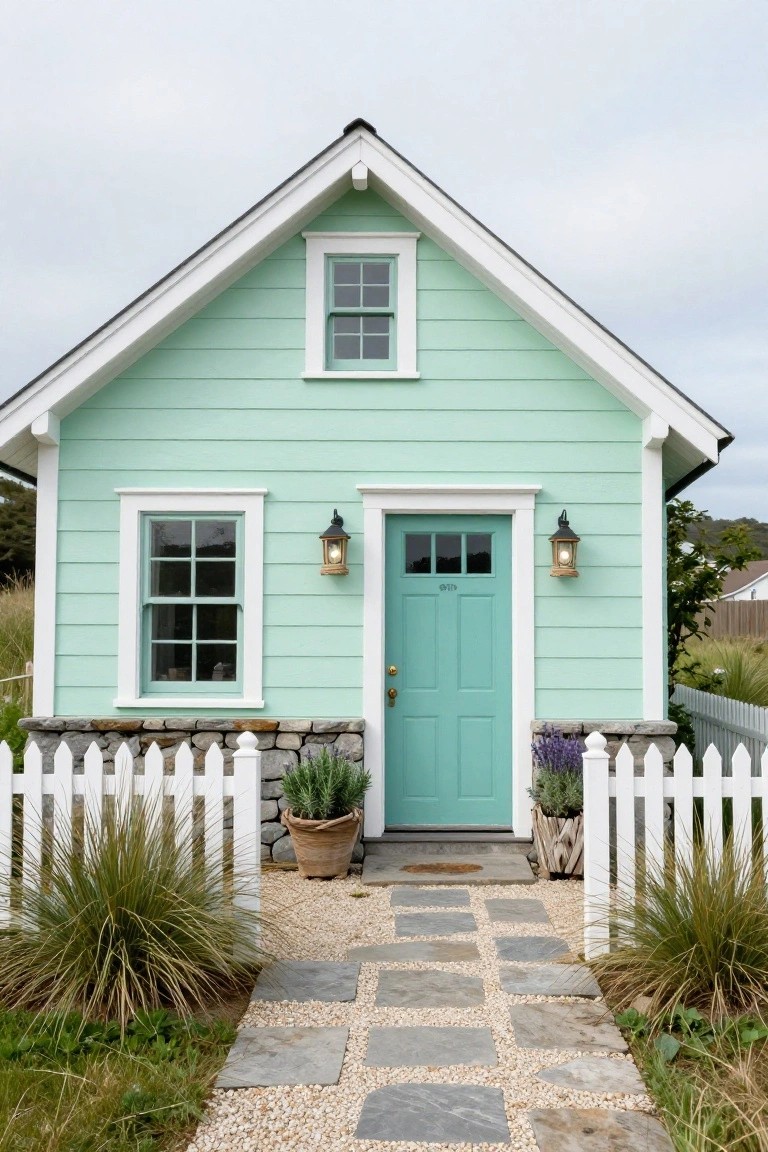
A soft mint green siding like this turns a basic cottage into something fresh and beachy. The color feels light and airy against the stone foundation, which keeps things from floating away visually. White trim sharpens it up nicely.
This works best on smaller homes in coastal spots or mild suburbs. Pick a quality exterior paint to hold up to weather, and add stone accents at the base for stability. Skip it on super modern houses, though. It suits traditional shapes better.
Stone Accents on Dark Walls
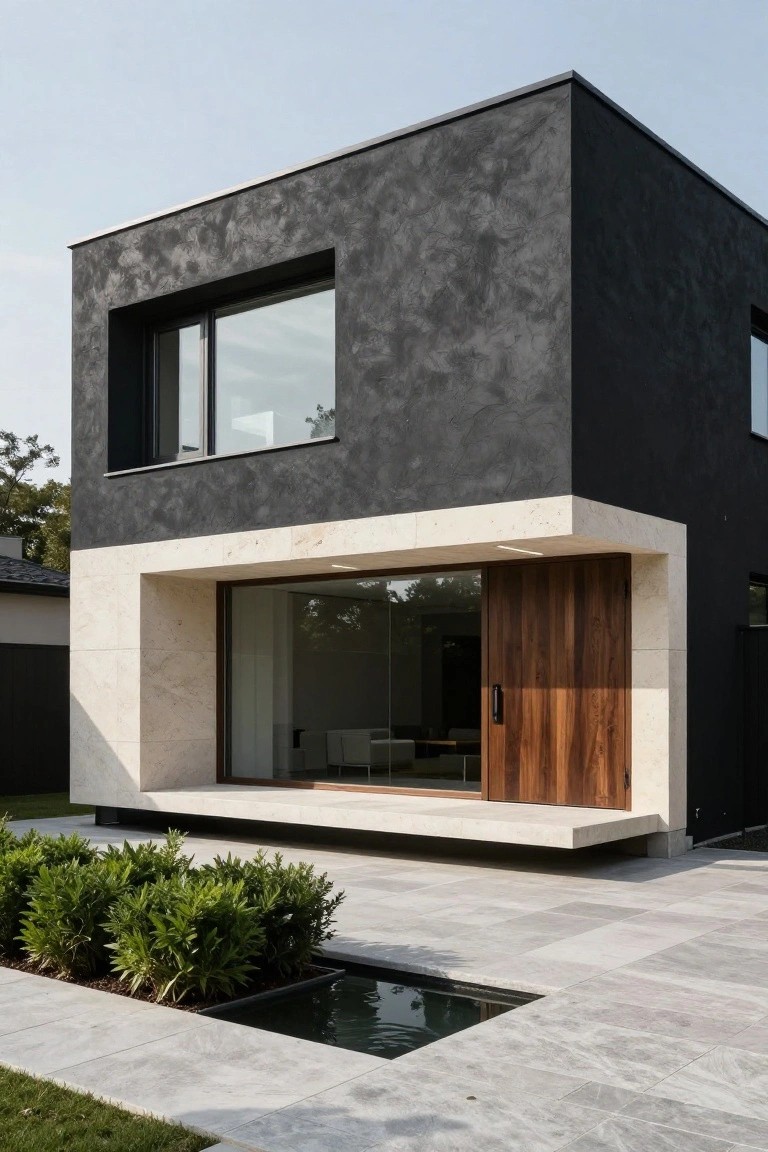
Dark stucco walls like the charcoal ones here give a house a sleek, modern edge. Adding light stone cladding around the entry pulls your eye right to the front door and makes the whole facade feel more balanced. It’s a simple way to add some lift without going overboard on color.
This setup works best on boxy contemporary homes where you want contrast but not fuss. Frame the door and windows with the stone, maybe add a wood panel for a touch of warmth like you see here. Skip it on super traditional houses, though. It can look out of place there.
Sage Green Siding on a Stone Base
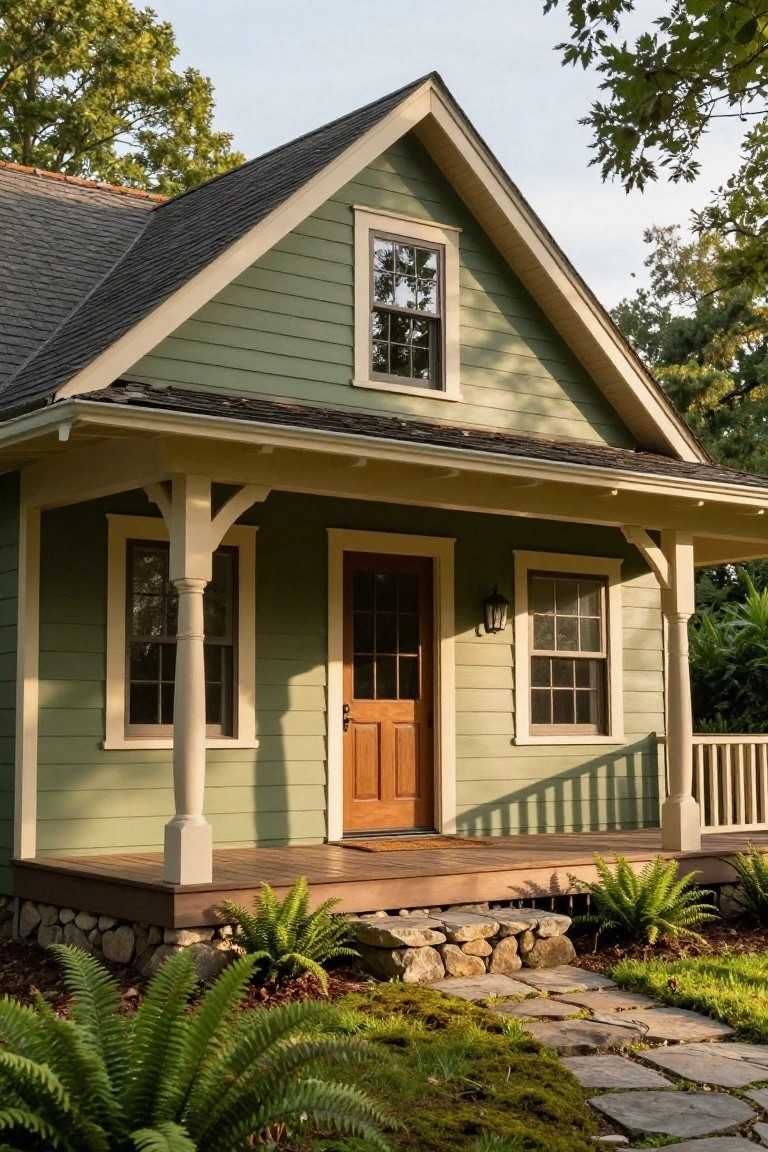
A soft sage green paint on clapboard siding looks right at home against a low stone foundation. It brings out the natural side of a house without going too bold. The combo feels settled and sturdy, especially with white trim outlining the windows and porch. Folks like it because it nods to older cottages but stays fresh.
This works best on compact homes in wooded or rural spots. Use local stone for the base to tie into the yard, and add ferns or low plants along the edge. Skip it on super modern builds, where the green might clash. Keep the porch wood simple to let the color do its thing.
Terracotta Stucco Exterior with Stone Base
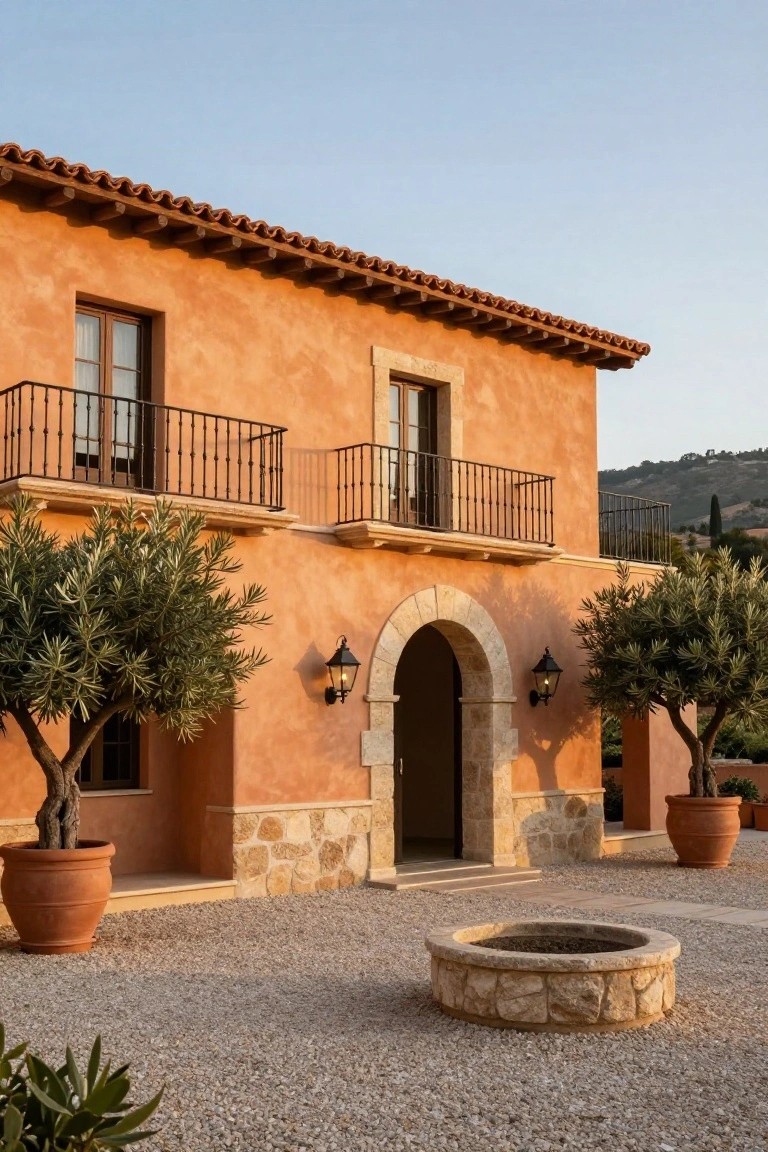
Warm terracotta stucco gives this house a cozy, sun-baked look that fits right into a hillside setting. The peachy orange walls pick up the earth tones around it, and the rough stone base along the bottom keeps things from feeling too smooth. A big stone arch at the entry pulls it all together without much fuss.
This setup works best on homes with a Mediterranean or Spanish vibe, especially where you want the outside to blend with the landscape. Pair it with potted olive trees for that extra touch of place, and gravel underfoot keeps maintenance low. Just make sure the stone matches the local rock so it doesn’t stick out.
Blue Siding for Classic Curb Appeal
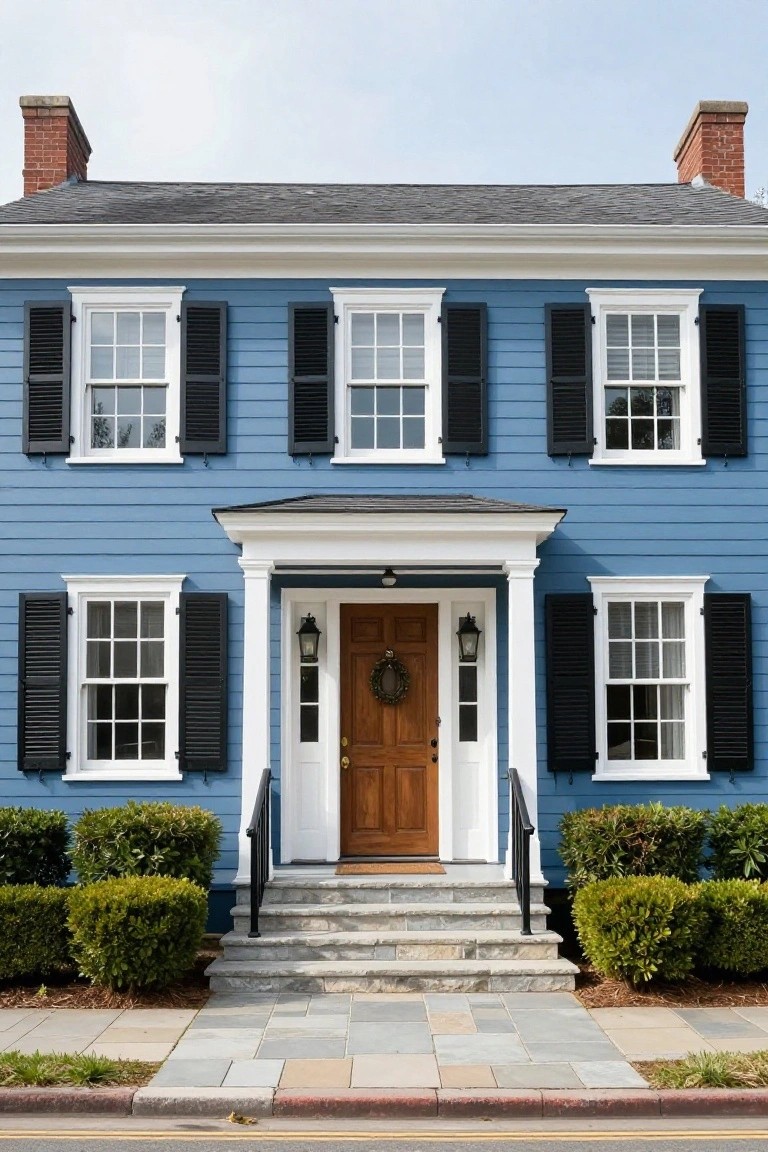
A soft blue clapboard siding like this one freshens up a traditional two-story home without going overboard. The color picks up on coastal or countryside vibes, and those stone steps at the entry give it a solid base that feels right at home. Black shutters and white trim keep everything sharp and balanced.
This setup suits older neighborhoods or homes with simple rooflines and symmetric windows. Go for a mid-tone blue to avoid fading fast in the sun. Match the stone to your foundation if you can, and add boxwoods on the sides for some green structure. It pulls the front together nicely.
Terracotta Stucco Walls with Stone Chimney
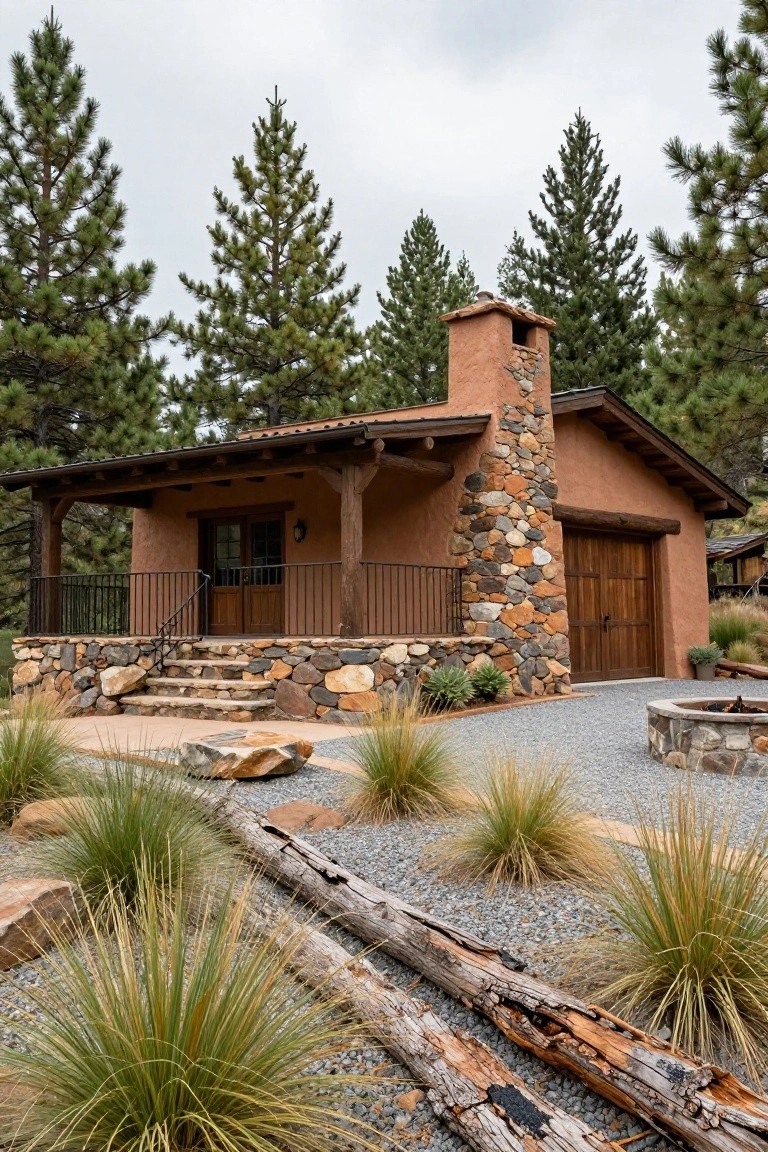
Warm terracotta stucco gives this cabin a cozy, grounded feel that fits right into the pines around it. The rough stone chimney rising up one side adds real texture without overdoing it. It’s that simple mix of soft clay color and hard rock that makes the house look like it grew out of the ground.
You can pull this off on smaller homes or guest houses in wooded spots. Pair the stucco with local stone for the chimney or base to keep costs down and tie into the landscape. Skip glossy finishes. It holds up well in dry climates… just make sure the stone matches your area’s rocks so it doesn’t look forced.
Gray Exterior with Stone Foundation
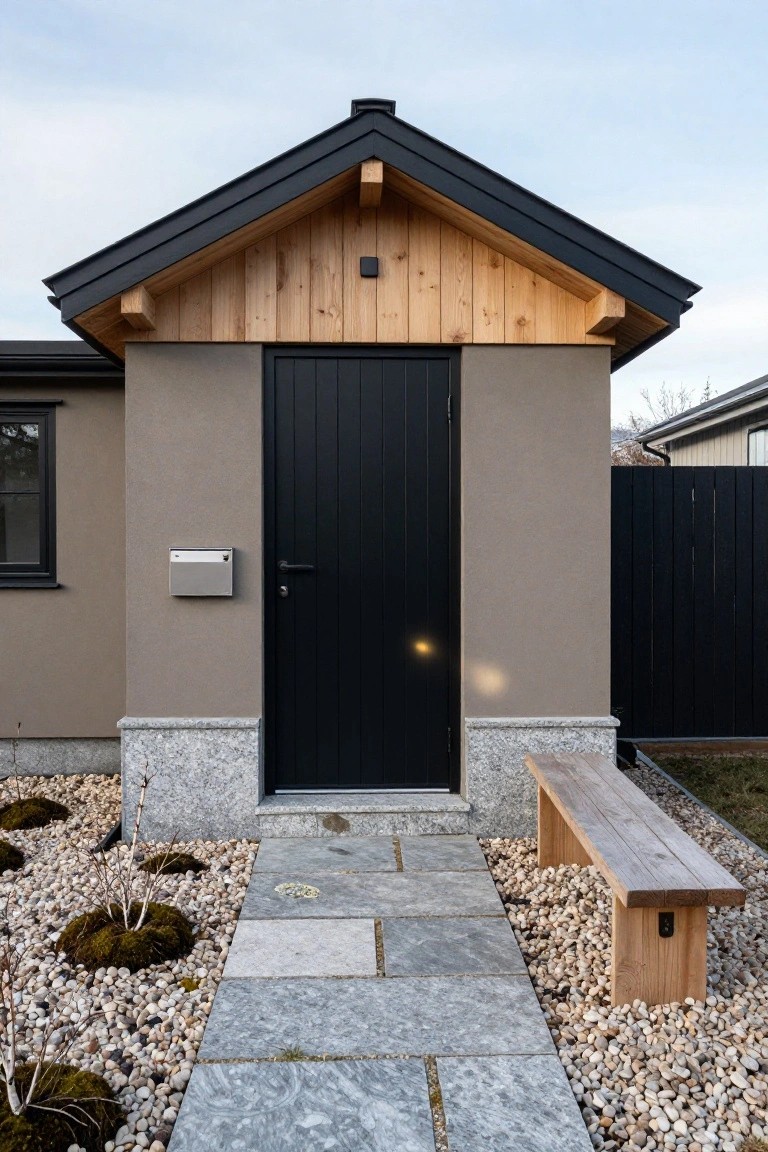
A soft gray plaster covers the walls here, grounded by a light stone base that gives the whole thing a solid feel. Up top, wood accents on the gable roof add a bit of warmth without stealing the show. It’s a straightforward way to bring stone into the mix, especially when you want something modern but not stark.
This setup suits compact outbuildings, garages, or even house entries in suburban yards. Pick a granite-like stone in pale tones to match the gray, and keep the path simple with pavers leading right to a dark door. It holds up well in rocky or cooler spots, just make sure the stone level matches your foundation height.
Warm Yellow Stucco with Stone
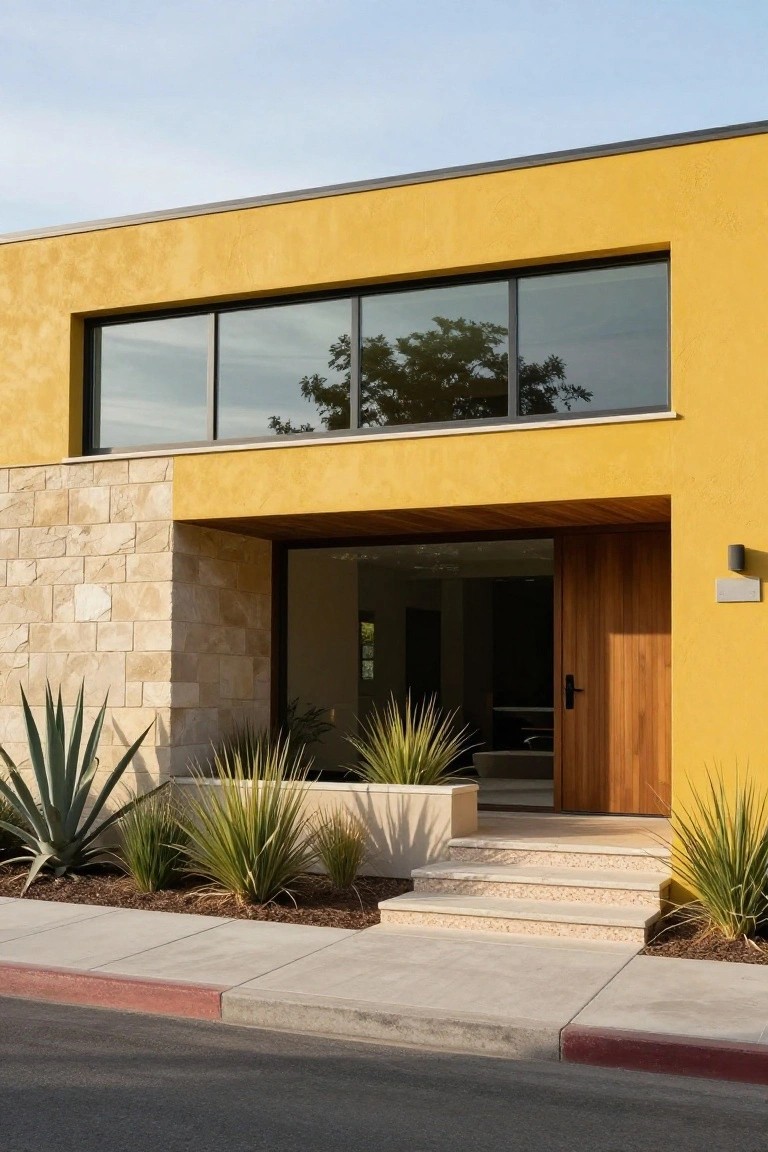
A warm yellow stucco covers most of this house facade, while light beige stone wraps the entry area. That mix keeps things feeling modern but grounded. The yellow picks up the sun nicely without overwhelming the look, and the stone adds some texture right where you need it.
Try this on a single-story home or a low-slung modern build. It suits warmer spots like the Southwest… just keep plantings simple, like those agave out front, so the colors stay the focus. Stone works best if it’s a softer tone to match.
Cream Siding with Stone Chimney
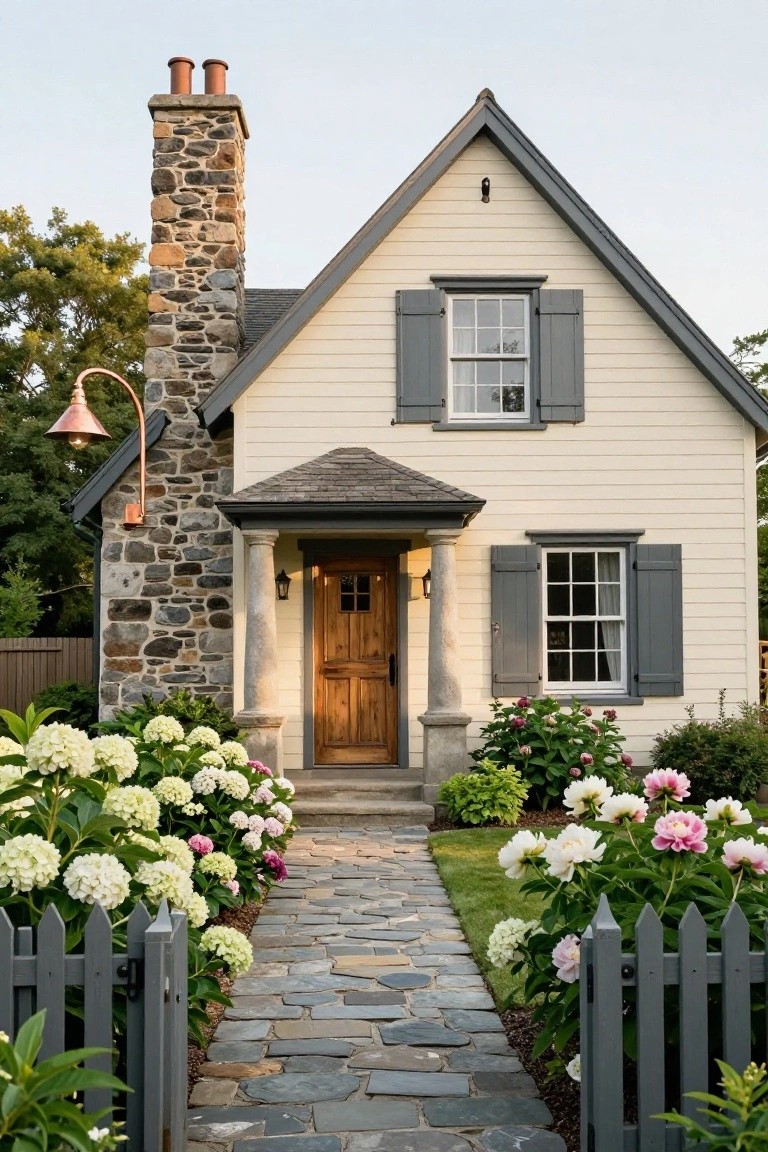
A soft cream siding like this one works so well next to a tall stone chimney. The light color lets the natural stones stand out, making the house feel sturdy yet welcoming. It’s a simple way to mix textures without overdoing it.
Try this on a cottage or craftsman style home, especially if you have trees around. Dark gray shutters and trim keep things crisp. Add flowers along the path… and it pulls the look together nicely for everyday curb appeal.
Black Siding Paired with Light Stone
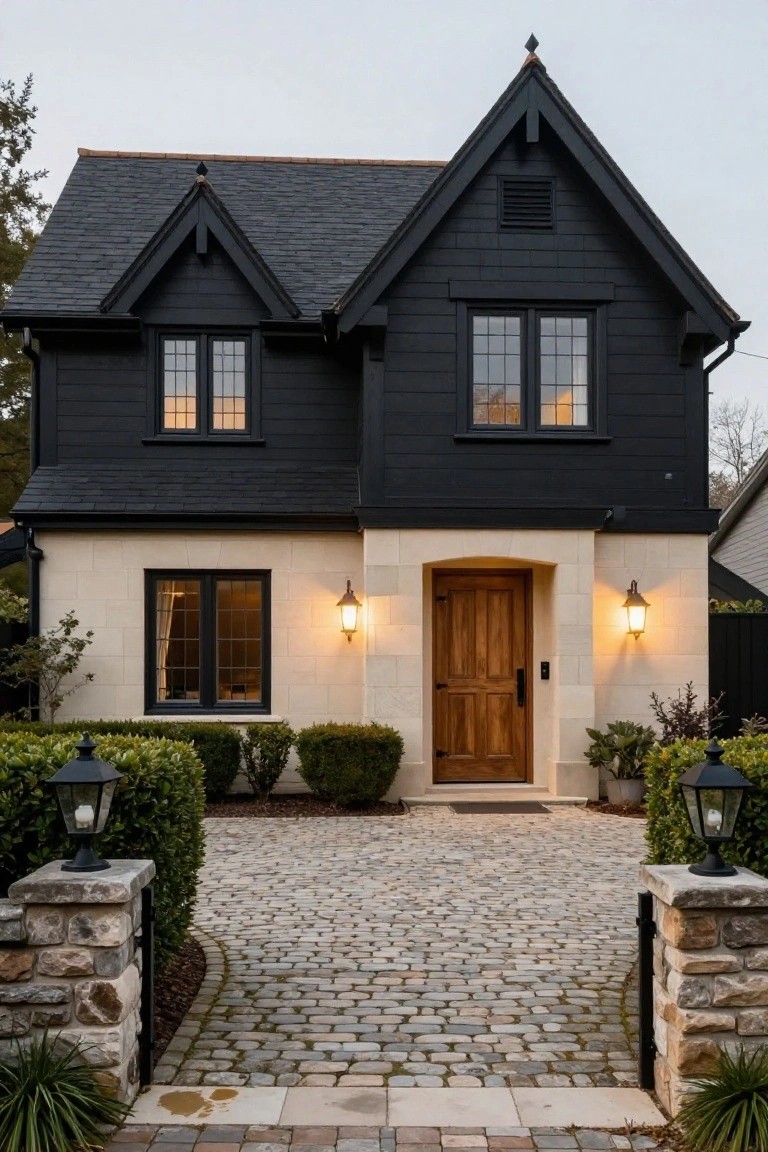
One look at this house shows how black siding up top works so well against a light stone base down below. The dark paint gives the upper part a bold, modern edge without overpowering the whole thing. That creamy stone keeps the entry grounded and adds a touch of warmth. It’s a simple switch from the usual all-one-color exteriors.
This combo fits older homes or traditional styles looking for a fresh update. Try it on a craftsman or tudor-style house where you want contrast without going too wild. Just make sure the stone is a soft beige or limestone tone to avoid clashing. Paint the trim black too for clean lines.
Gray Siding with Stone Accents
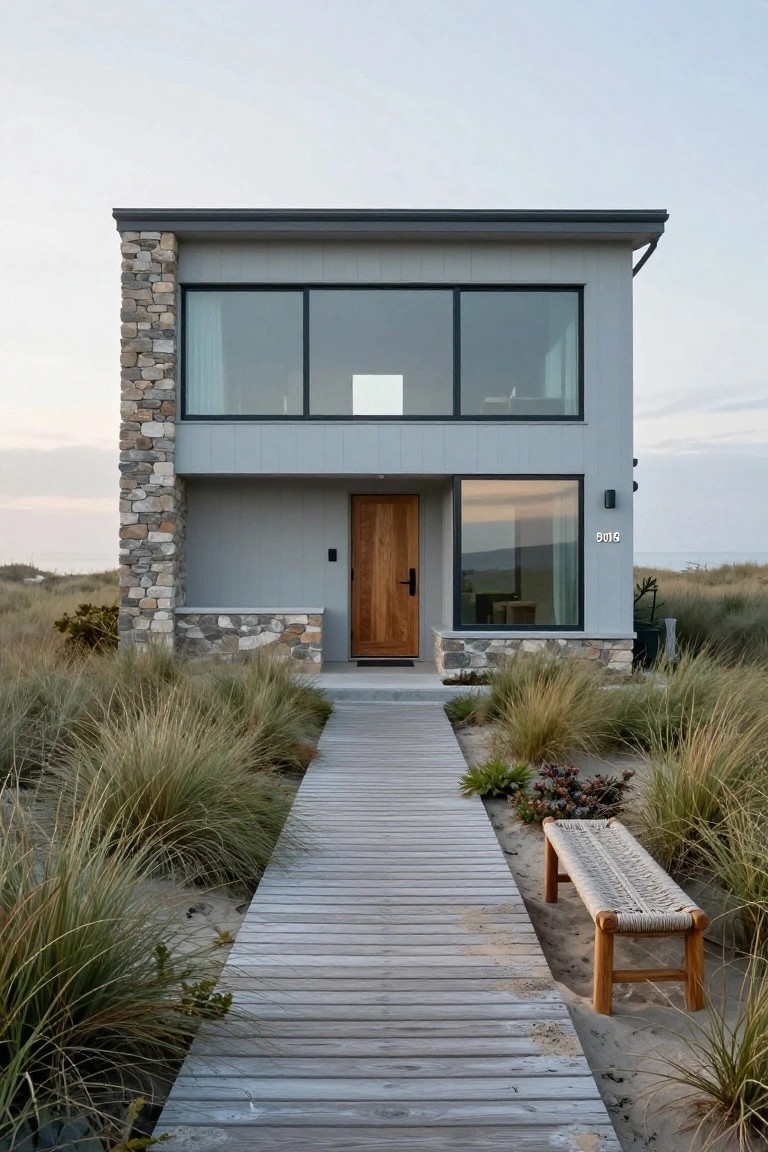
Gray siding shows up a lot on coastal homes these days. It picks up the soft tones from the beach and sky without being too bold. Here the light gray clapboard pairs with rough stone on the corners and base. That stone adds some texture right where you need it around the door and windows. Keeps the house from looking too plain against all that sand and grass.
You can pull this off on low beach houses or even tucked into a hillside spot. Stick with natural fieldstone or something similar so it blends with the outdoors. A wood door warms it up just enough. Watch the scale though. Too much stone and it gets heavy. Keep it simple like this and it stays clean year round.
Climbing Roses on Stone Facades
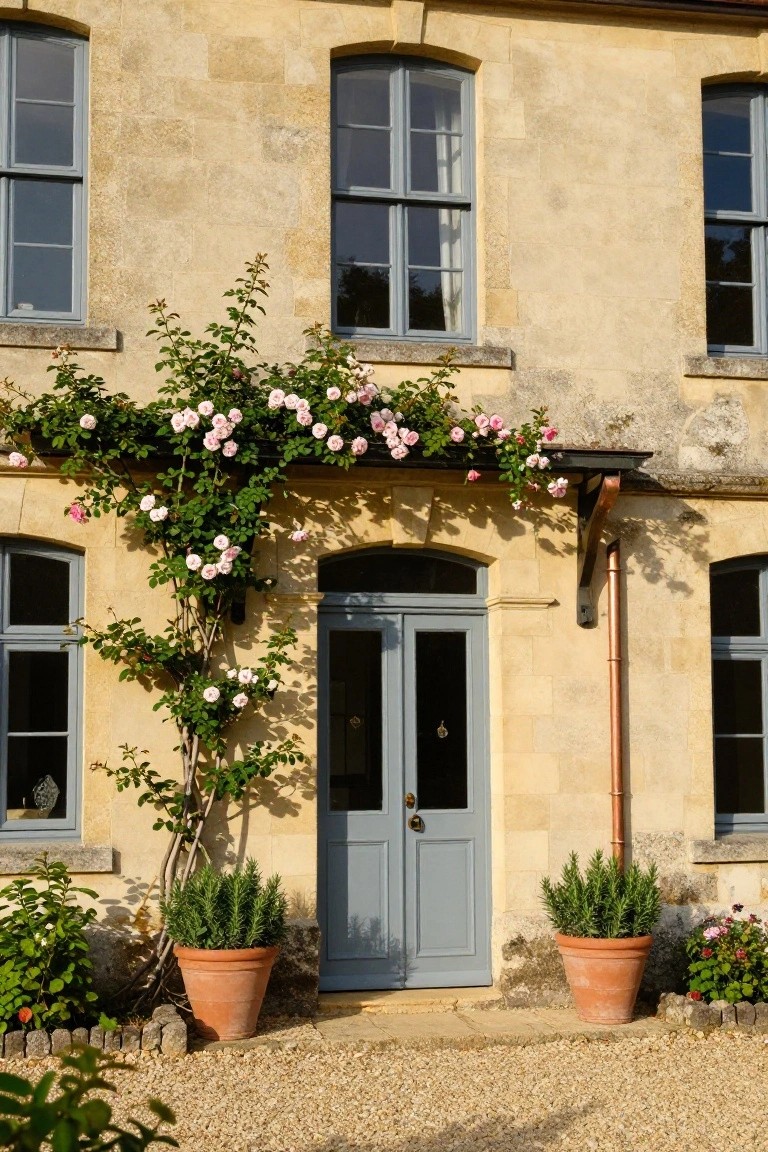
Climbing roses work so well on stone houses like this one. The soft pink flowers trail up the honey-colored walls and frame the entry door nicely. They add color and a bit of cottage charm without hiding the stone texture. That blue door pulls it all together too.
Try this on older homes with light stone walls facing south or west for good sun. Pick rambling varieties that bloom a lot through summer. Plant them at the base and tie them in loosely. Add a couple pots of rosemary nearby for green through winter. It suits rural spots best, keeps things low fuss.
Green and White Two-Tone Exterior
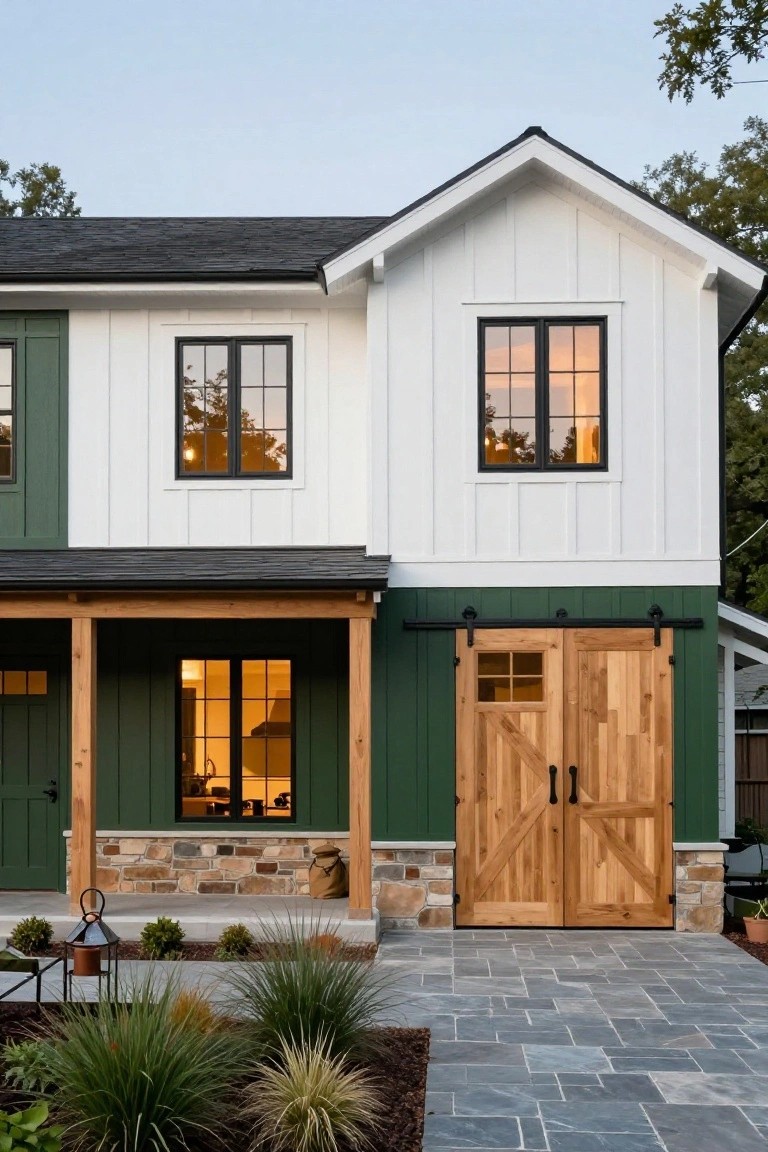
This setup takes a classic farmhouse look and freshens it up with dark green siding on the bottom half and clean white board-and-batten siding up top. A low stone base ties it to the ground, while black-framed windows and wooden barn doors keep things simple and strong. The green feels earthy without being too bold, and the white lifts the whole front.
It works best on two-story homes where you want some height without overwhelming the yard. Go for it in casual neighborhoods or spots with trees around. Just make sure the green shade has some depth so it doesn’t fade fast, and keep the stone neutral to let the colors pop.
Warm Beige Stucco with Stone Arch Entry
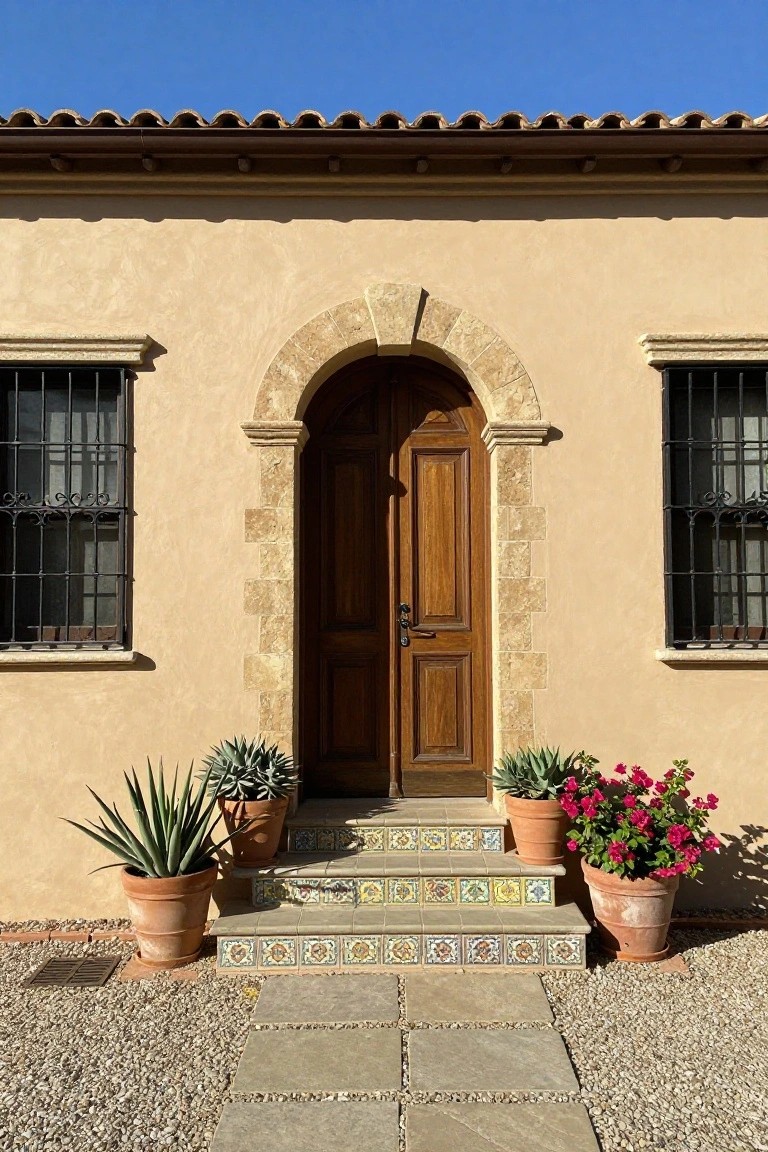
A soft beige stucco covers the walls here, setting off a sturdy stone arch around the front door. That combo keeps the house looking clean and sunny, especially with the dark wood door tucked inside. Stone like this pulls in some natural texture without overwhelming the light walls.
It works well on ranch-style or Mediterranean homes in dry climates. Add potted succulents by the steps for easy color pops. Scale the arch to your door size so it doesn’t look too fussy.
Light Gray Siding with Teal Door
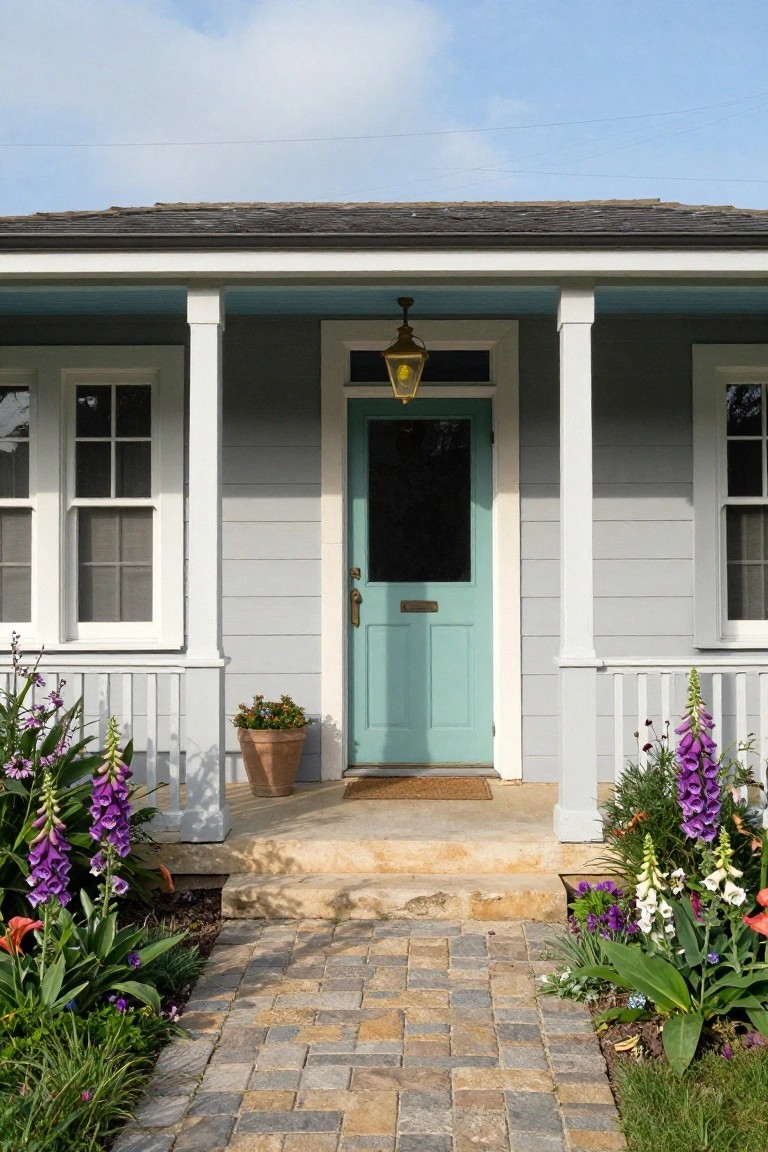
A light gray siding like this gives a house a quiet, steady look that doesn’t shout. Then that teal door steps in with just enough color to make you smile when you pull up. The stone paver path pulls it all together, guiding your eye straight to the entry without any fuss.
This combo fits older neighborhoods or cozy bungalows best, where you want some charm but nothing too bold. Stick to white trim around the windows and porch to keep it crisp. Watch the door shade in full sun, though. It can shift a bit greener some days.
White Stucco Paired with Natural Stone
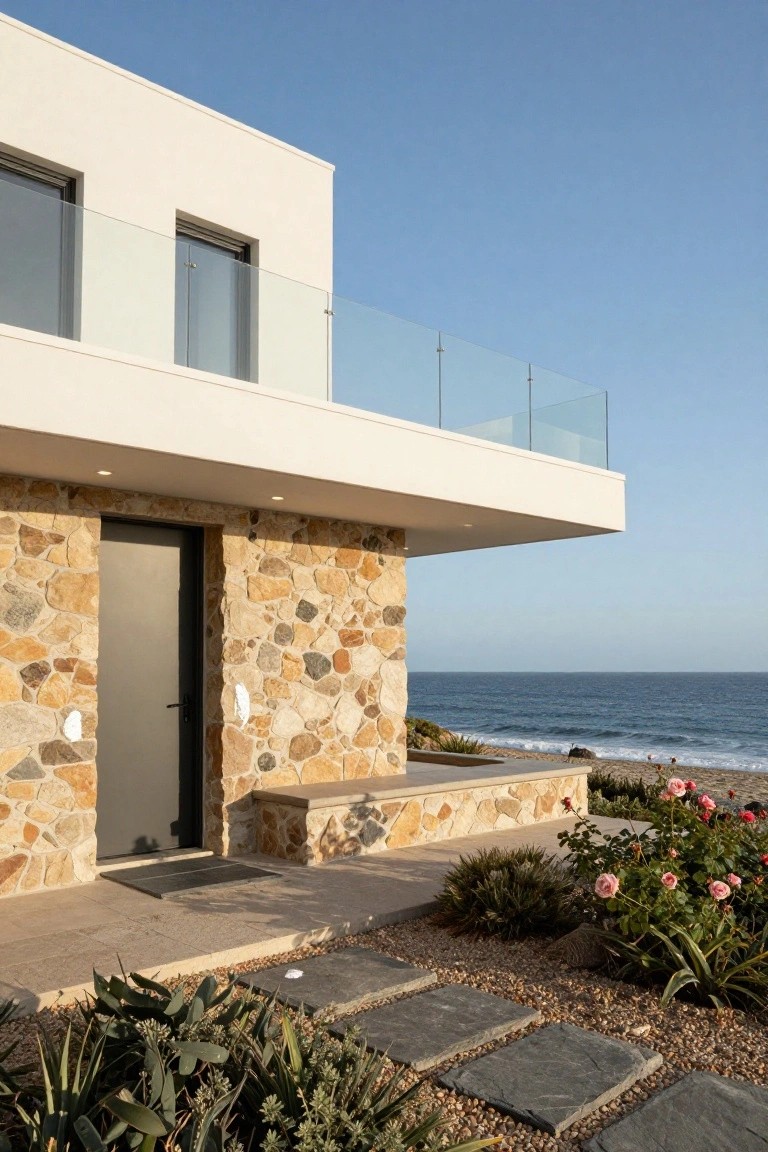
One solid way to handle an exterior is crisp white stucco up top with a band of natural stone down low around the entry. The white keeps things light and open, almost floating above the ground. That rough stone base adds real texture right where you need it, making the house feel more solid without getting heavy. It pulls in the landscape too, especially near water or rocks.
This setup shines on coastal homes or anywhere with a view. The white bounces back the sun and salt air stays off easier. Go for it on flatter facades that need some interest at eye level. Pick stones in earth tones that match your site. Steer clear if your lot’s too shaded, since the contrast pops best in bright light.
Warm Terracotta Stucco with Stone Trim
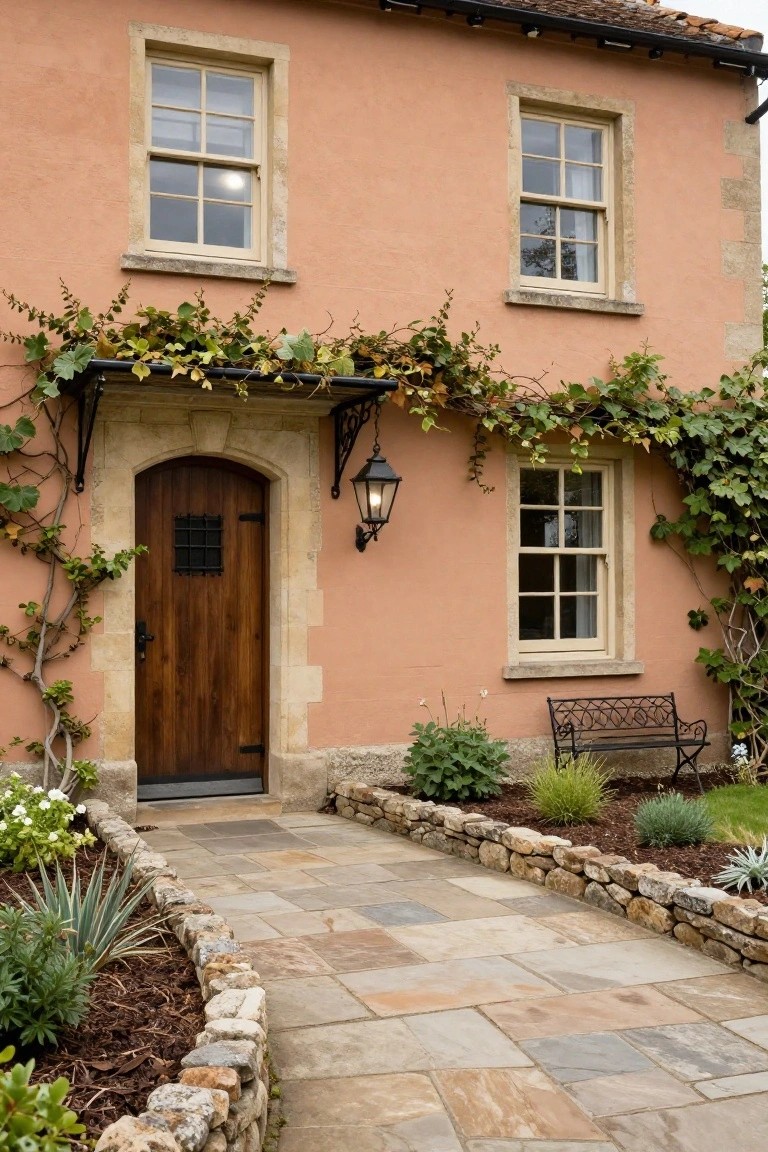
A warm terracotta color on stucco walls gives a house that cozy, lived-in feel right away. Pair it with stone trim around the doors and windows, and you get a nice contrast that makes the place look sturdy without being too heavy. That arched wooden door and the lanterns just pull it all together for a welcoming front entry.
This setup works great on older-style homes or cottages in milder climates where you want some color but not too bold. Keep the stone natural, nothing too polished, and add a bit of climbing ivy if the wall gets enough sun. It hides small flaws in the stucco too… just watch that the color doesn’t fade too fast in harsh sun.
Light Stone Facade with Dark Roof
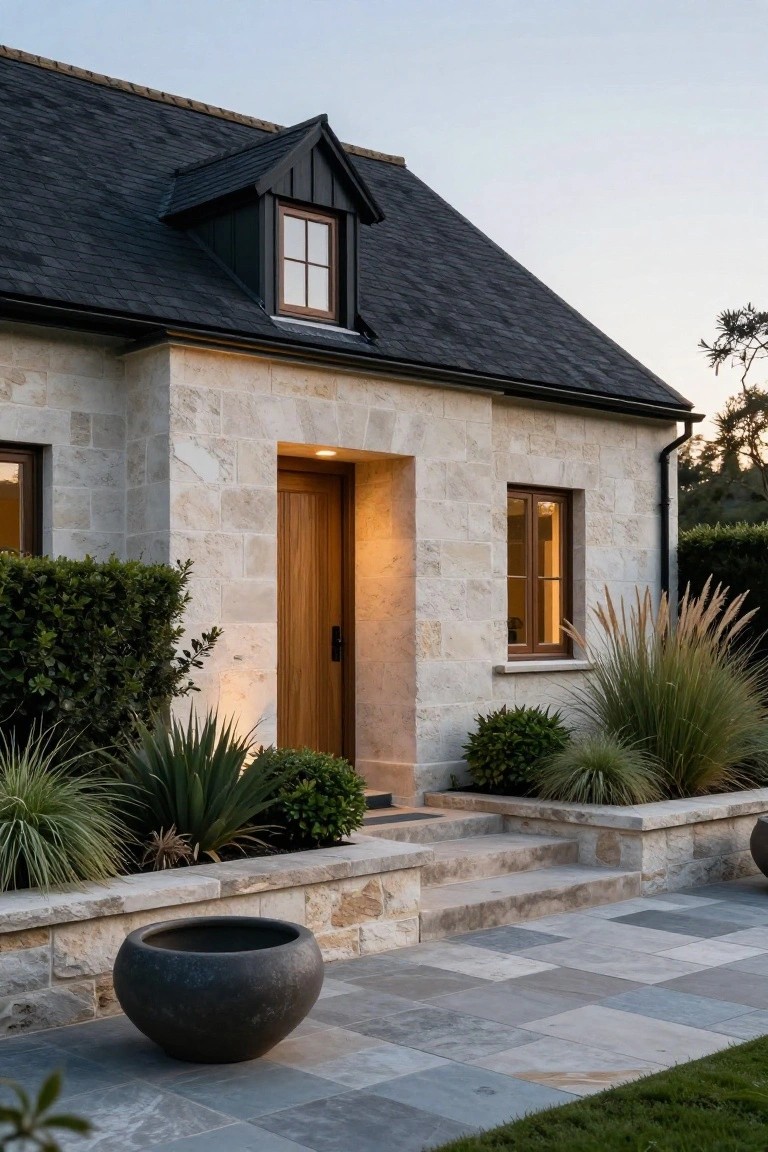
A light beige stone covers the walls here, paired with a deep black slate roof. That contrast keeps things simple and strong. The stone feels soft in the evening light, while the dark roof adds weight up top. It makes the house look settled and real, not flashy.
Try this on homes with clean lines or a bit of traditional shape. The warm wood door pulls it together at the front. It suits warmer climates where stone holds up year round. Just keep plantings low around the base so the stone stays the focus.
Cream Siding with Stone Pillars
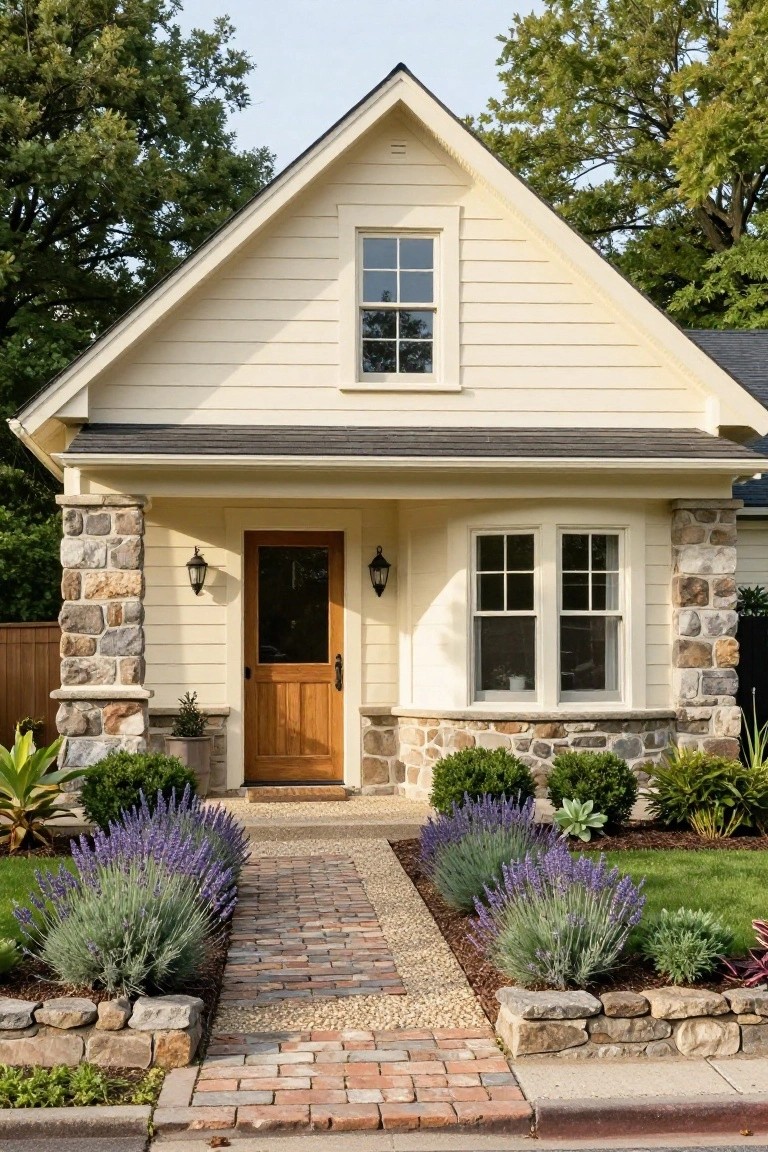
A soft cream siding like this keeps the house looking clean and bright year round. The stone pillars at the porch corners add a bit of heft and texture that stops it from feeling too plain. It’s a simple way to mix smooth wood siding with rougher natural elements for better curb appeal.
This setup works best on smaller homes or cottages where you want a welcoming front without much fuss. Use it on ranch or Craftsman styles in mild climates. Just make sure the stone matches your region’s rocks, and add a dark roof to pull it together. Skip it if your yard is mostly shade, since the cream shows dirt faster there.
Warm Stone Facade with Dark Wood Doors
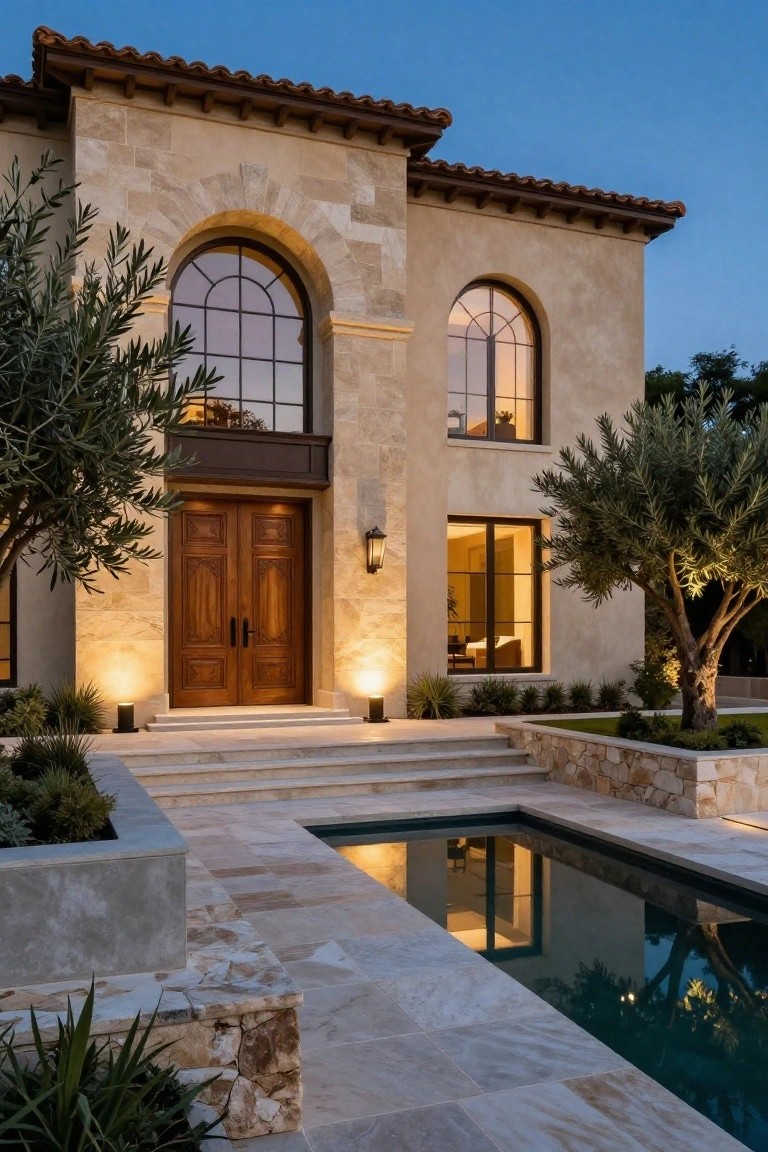
A light beige stone covers this house exterior, giving it a soft, sunny look that feels right at home in warmer climates. The rough texture of the stone picks up the evening light nicely, and pairing it with those big double wood doors in a deep brown adds real warmth without overpowering things. It’s a simple combo that makes the entry feel solid and inviting.
This setup works best on homes with some Mediterranean or Spanish style touches, like the terracotta roof here. You can pull it off on a suburban lot or even a smaller place, just make sure the stone isn’t too uniform, go for varied shades to keep it interesting. Skip it if your area gets heavy snow, since the light color shows dirt more.
Frequently Asked Questions
Q: What colors pair best with beige stone?
A: Navy blue and soft sage green make beige stone shine without overwhelming it. They pull out the warm tones in the stone for a welcoming vibe. Stick to one accent color on trim to keep things balanced.
Q: Can I use bold colors like red with stone?
A: Red works great on stone houses if you tone it down to a muted brick shade. It adds energy but stays grounded against the texture. Paint the body in a neutral first, then add red shutters for punch.
Q: How do I pick paint for a stone and siding mix?
A: Match the siding color to the stone’s lightest or darkest vein. This ties everything together fast. Test big swatches side by side outdoors.
Q: Is white trim okay on stone exteriors?
A: Crisp white trim sharpens stone’s natural edges every time. Go matte to cut glare… glossy can feel too stark in sun.
