

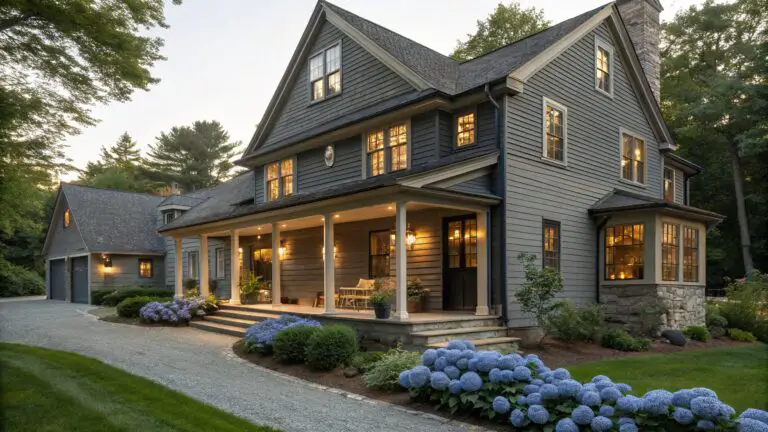
I’ve noticed that gray exteriors catch my eye on drives through older neighborhoods because they refresh tired facades without overwhelming the street view.
The key lies in how siding textures pair with rooflines and entry trim to create that clean depth people notice first from the curb.
Simple contrasts, like charcoal accents on lighter gray, keep things from feeling flat.
When we tested matte black lanterns on our own gray front, it shifted the whole house from bland to balanced in a weekend.
Certain mixes in here stand out as ones I’d adapt for real curb appeal that lasts.
Gray Shingle Exterior with Wraparound Porch
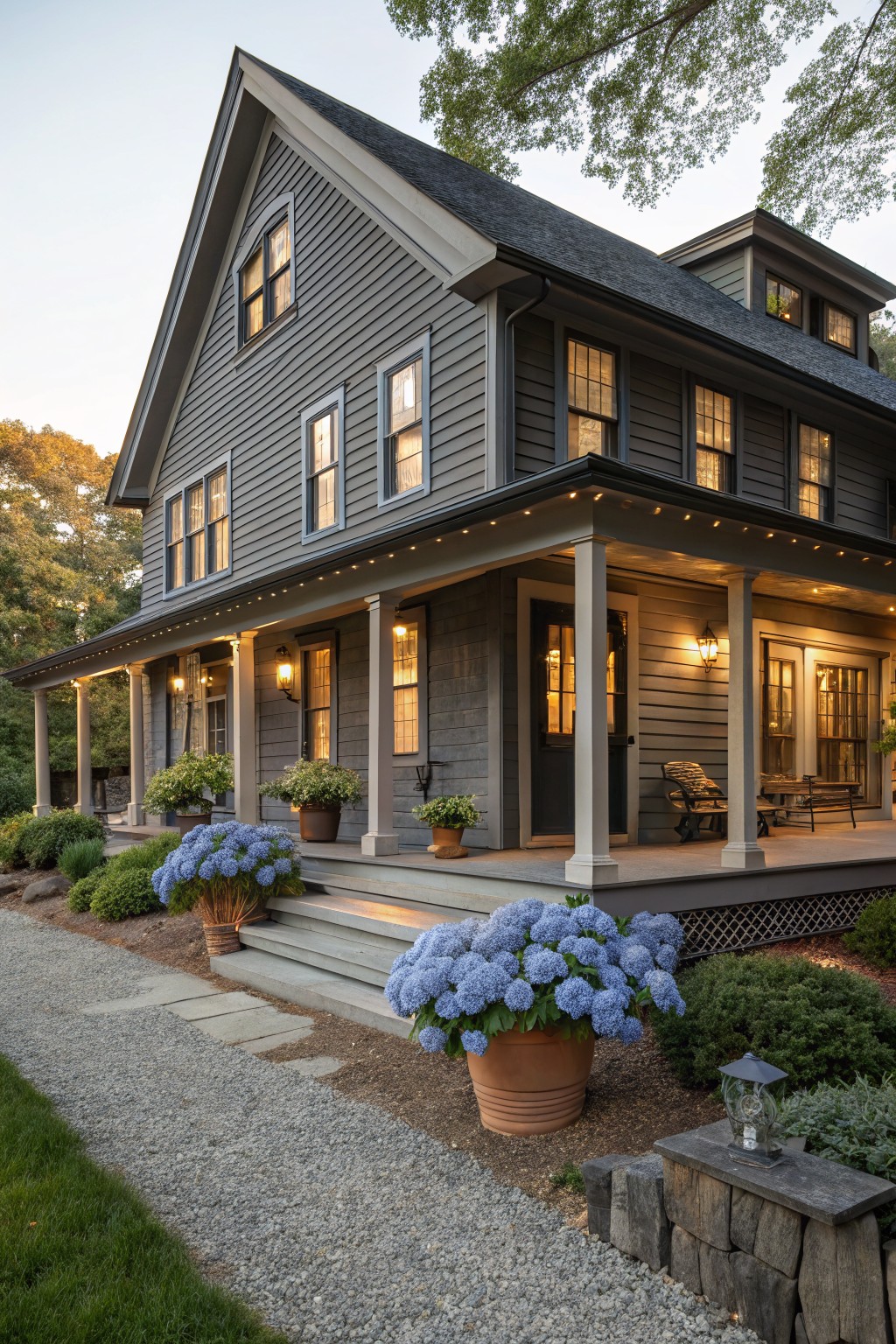
A wraparound porch like this one takes a simple gray shingle house and turns it into something you actually want to approach. The dark gray siding gives the place a quiet, sturdy look that fits right into a wooded spot, and those wide columns with white trim keep things clean. Evening lights along the porch edge make it glow just enough without overdoing it.
This setup works best on homes with a bit of yard space, maybe on a gentle slope where steps lead up naturally. Pair the gray with big potted hydrangeas for some blue pop in summer. Skip it if your lot is super tight, since the porch needs room to breathe.
Gray Concrete Facade with Cantilevered Wood Roof
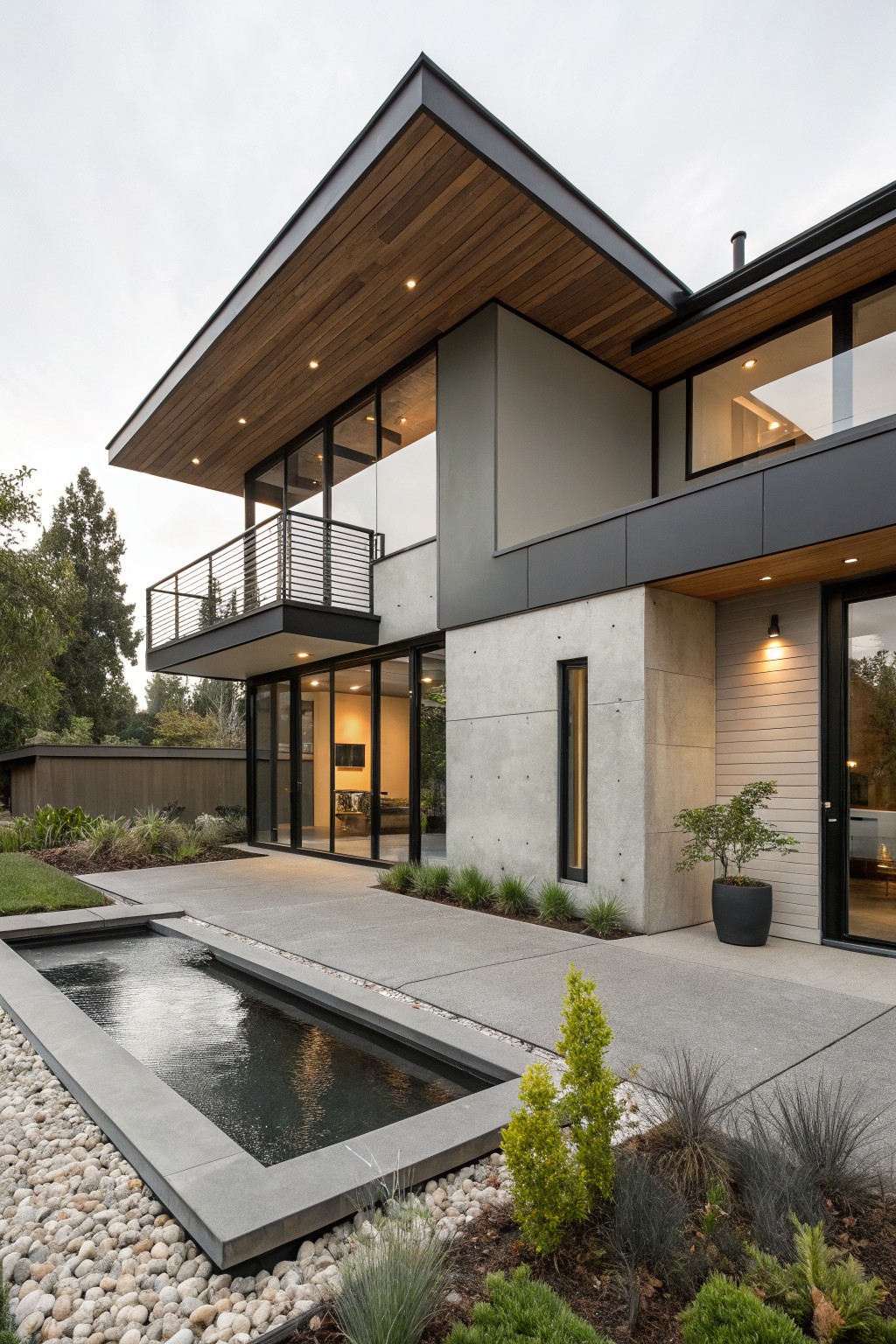
This look starts with board-formed concrete walls that have a rough, textured finish. Then a wide cantilevered roof juts out overhead, lined with warm wood planks underneath. It keeps the gray tones fresh by adding that bit of wood contrast right where you see it first from the street. Solid base, lighter upper level. Feels modern but not stark.
Try it on a home with some slope or trees nearby, like this one. The concrete grounds everything, wood softens the edges. Good for West Coast spots with rain. Just make sure the wood gets a good sealant so it ages right alongside the concrete.
Gray Shingle Exterior with Teal Door
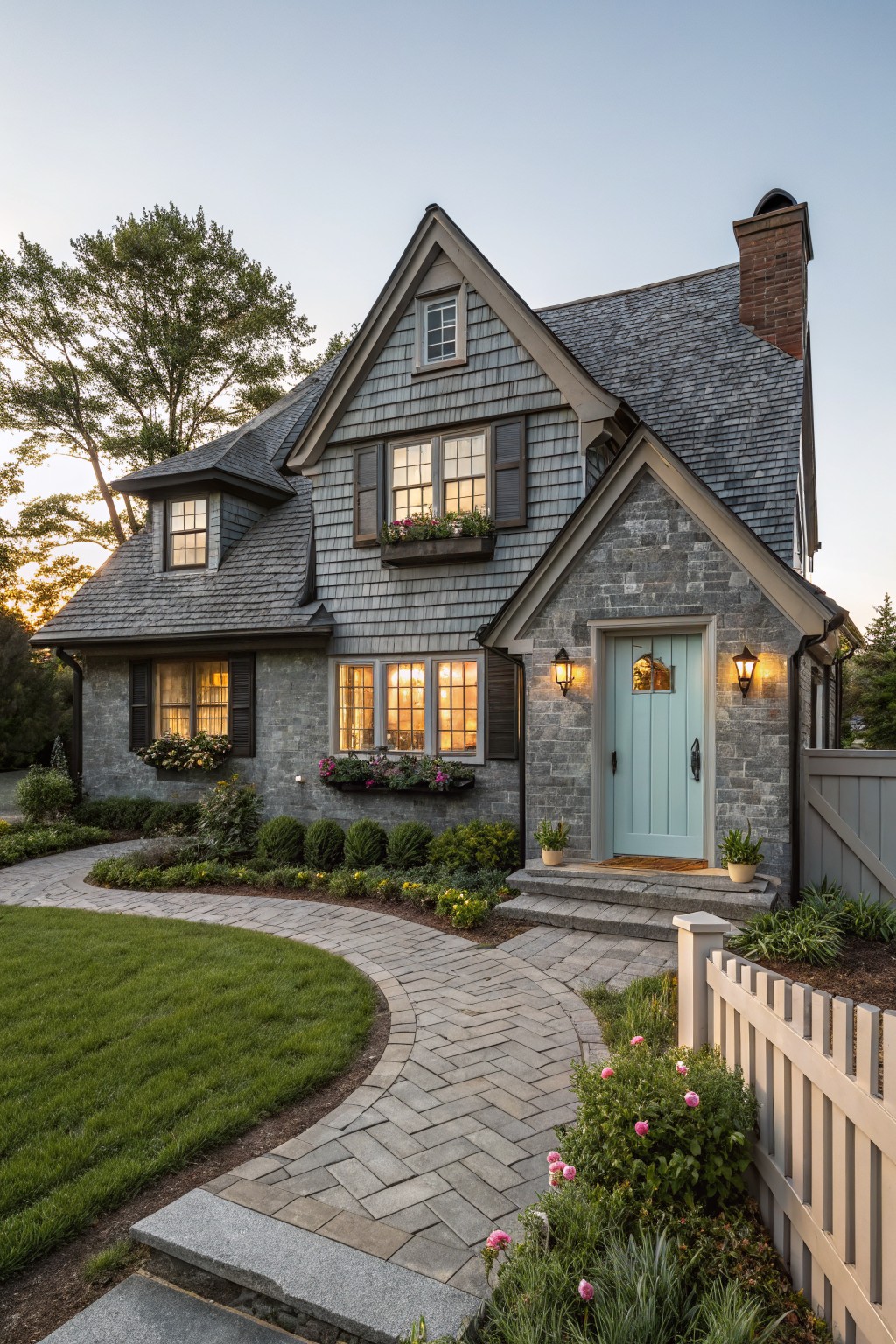
Gray shingles give this house a classic coastal feel, covering the roof and most of the siding, while stone adds texture to the front gable and base. That teal door pulls it all together. It stands out against the muted grays without overwhelming them, making the entry feel fresh and personal right away.
You can pull this off on older homes or new builds aiming for traditional charm. Go for a door hue like teal or soft blue that echoes nearby plants or water views. Pair it with simple lanterns and a stone path, and skip busy details elsewhere. It suits suburban yards or seaside spots best.
Dark Wood Entry Stairs on Gray Brick
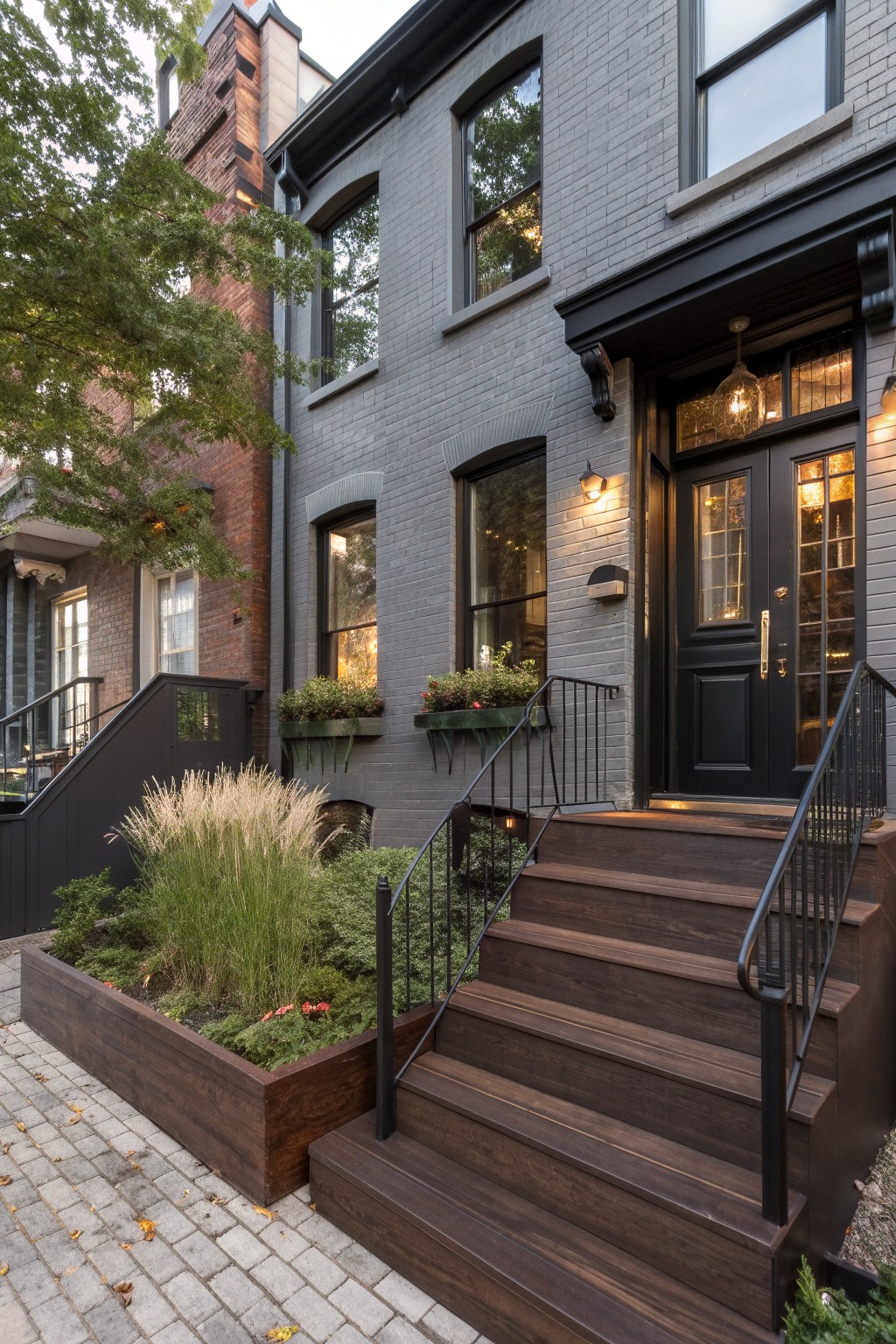
Gray brick houses have that solid, cool look. But adding dark wood stairs up to the front door changes things. The rich tones of the wood warm up the facade right away. Here, the stairs lead nicely to a black door with simple lighting. Black railings keep it clean and modern. It’s a straightforward way to make the entry feel more welcoming without much fuss.
These stairs work great on townhouses or any home with a raised entry. They suit urban spots with brick or stone bases. Go for durable wood like ipe that holds up outside. Pair it with matching dark trim on the door and railings. Just make sure the steps are wide enough for easy access. Skip fussy details. Keep the plants at the base simple so the stairs stand out.
Gray House with Wraparound Porch
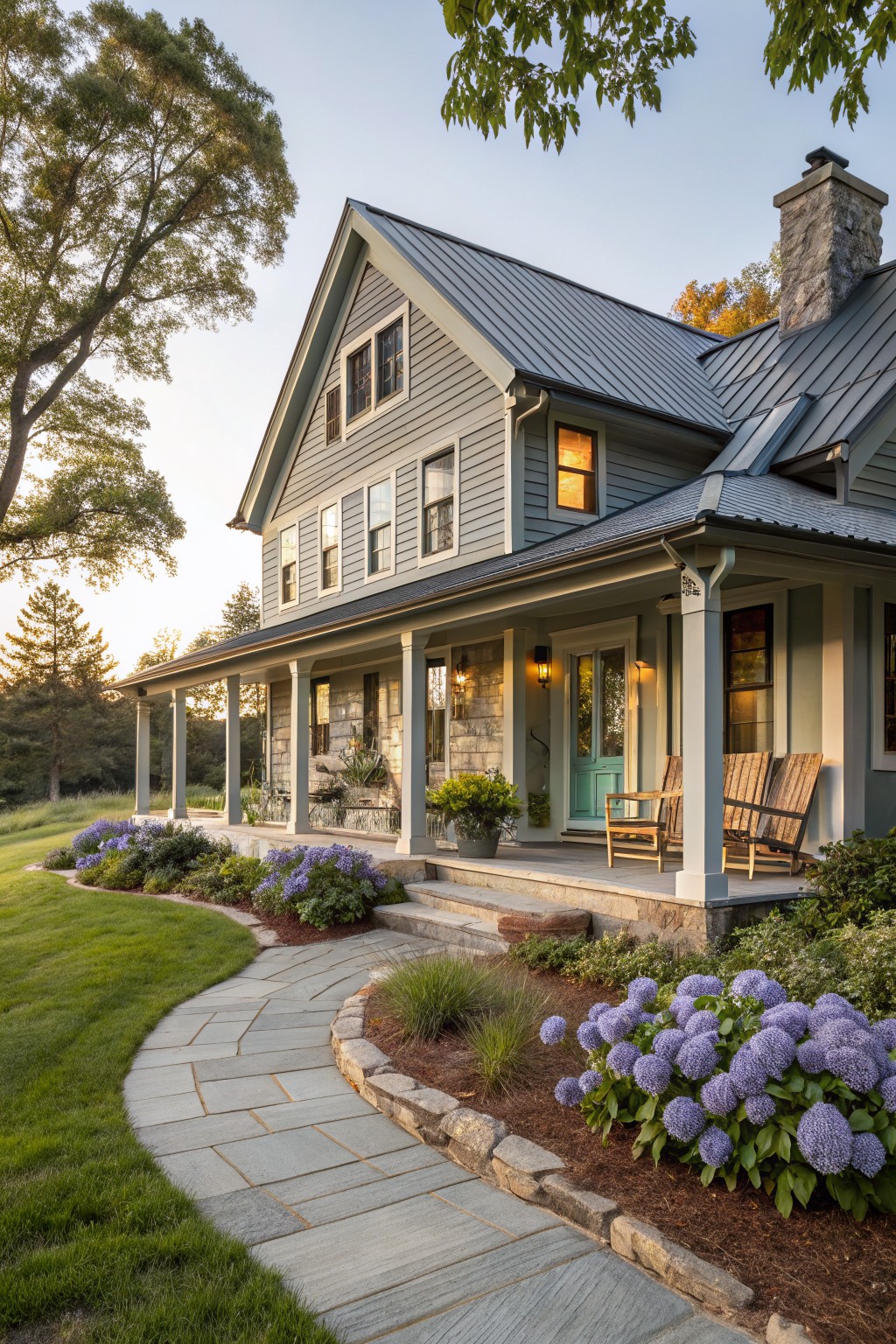
A wraparound porch like this one takes a simple gray exterior and turns it into something you actually want to come home to. The light gray clapboard siding pairs nicely with the dark metal roof, but it’s that wide porch stretching across the front and side that really pulls you in. Wooden chairs tucked near the turquoise door and stone accents at the base keep it from feeling too plain.
This setup works best on farmhouse-style homes or older colonials where you have room for the porch to extend. It suits spots with a yard out front, maybe some trees nearby. Just make sure the porch roofline matches your existing one so it doesn’t look added on later. Add a few plants along the steps, and you’ve got easy curb appeal without much fuss.
Navy Blue Doors on Gray Stucco
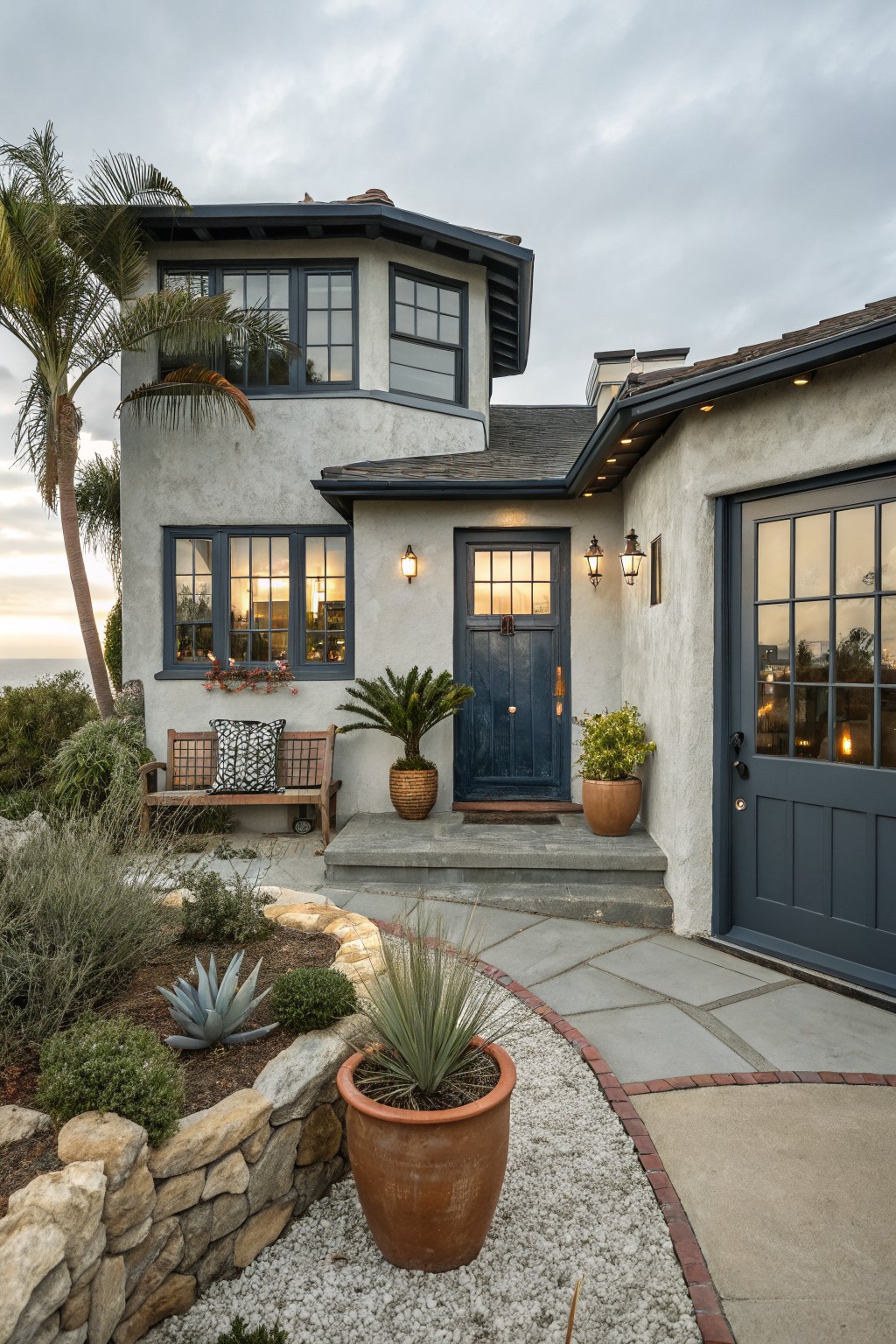
A soft gray stucco exterior gets a real lift from navy blue doors like you see here. The dark color on the front entry and garage stands out clean against the light walls. It pulls the eye right to the entrance without overwhelming the simple lines of the house.
This works best on homes in sunny spots where the contrast pops even more. Stick to matte finishes on the doors to keep things low-key, and add a bench or a couple pots nearby for everyday use. Skip it if your area gets heavy rain, since darker paints can show dirt faster.
Victorian Gray with Ornate Porch Trim
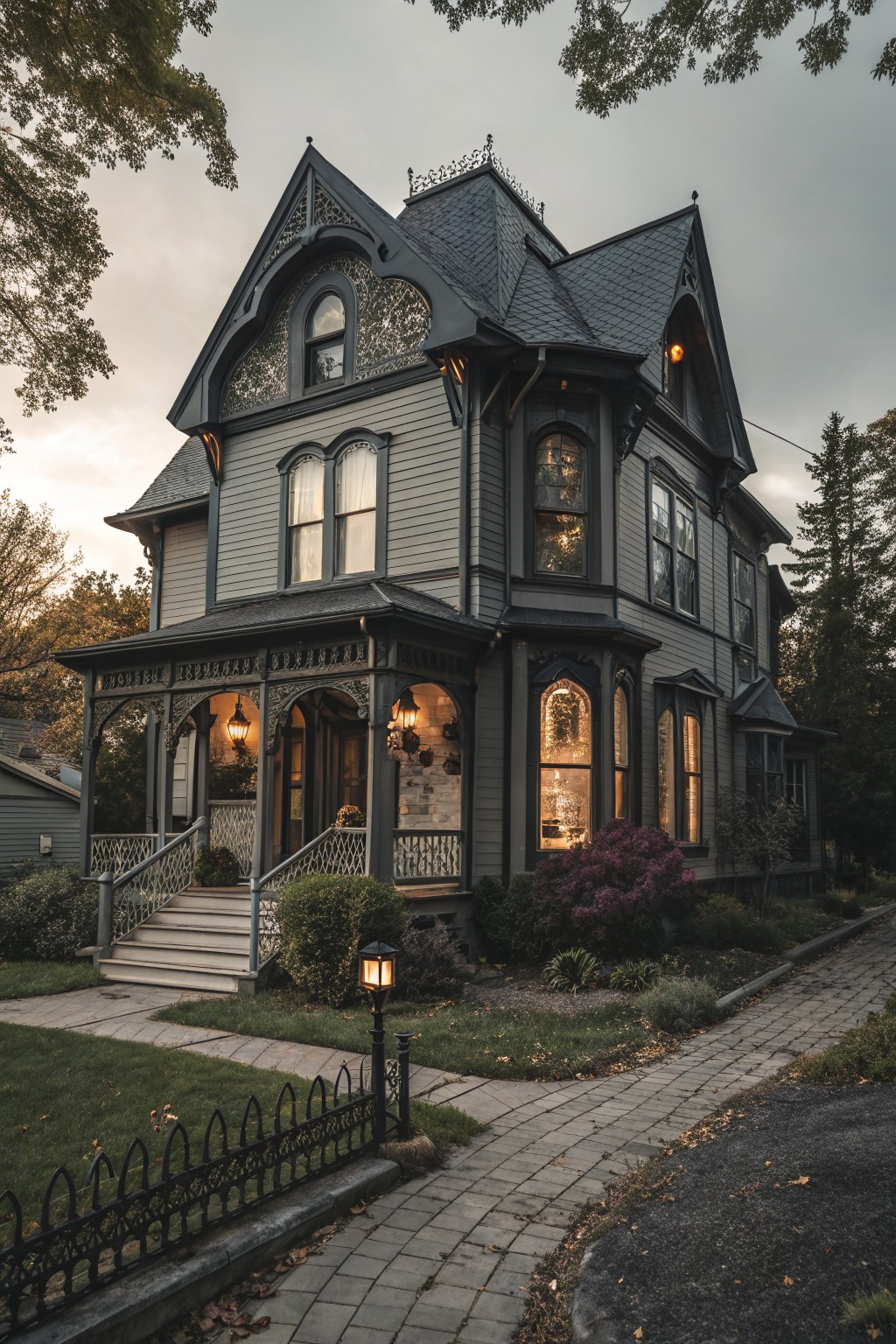
Dark gray siding on a Victorian house like this one really makes the gingerbread trim and arched details stand out. Those warm lantern lights on the porch add a cozy glow that pulls the whole front together without overpowering the architecture. It’s a look that feels historic yet fresh, especially as the sun sets.
You can pull this off on any two-story home with some Victorian flair, or even update a plain facade with added trim pieces. Keep the landscaping simple, like low shrubs and a stone path, so the house stays the focus. Just watch the lighting scale, it shouldn’t compete with the trim work.
Dark Gray Siding with Stone Base
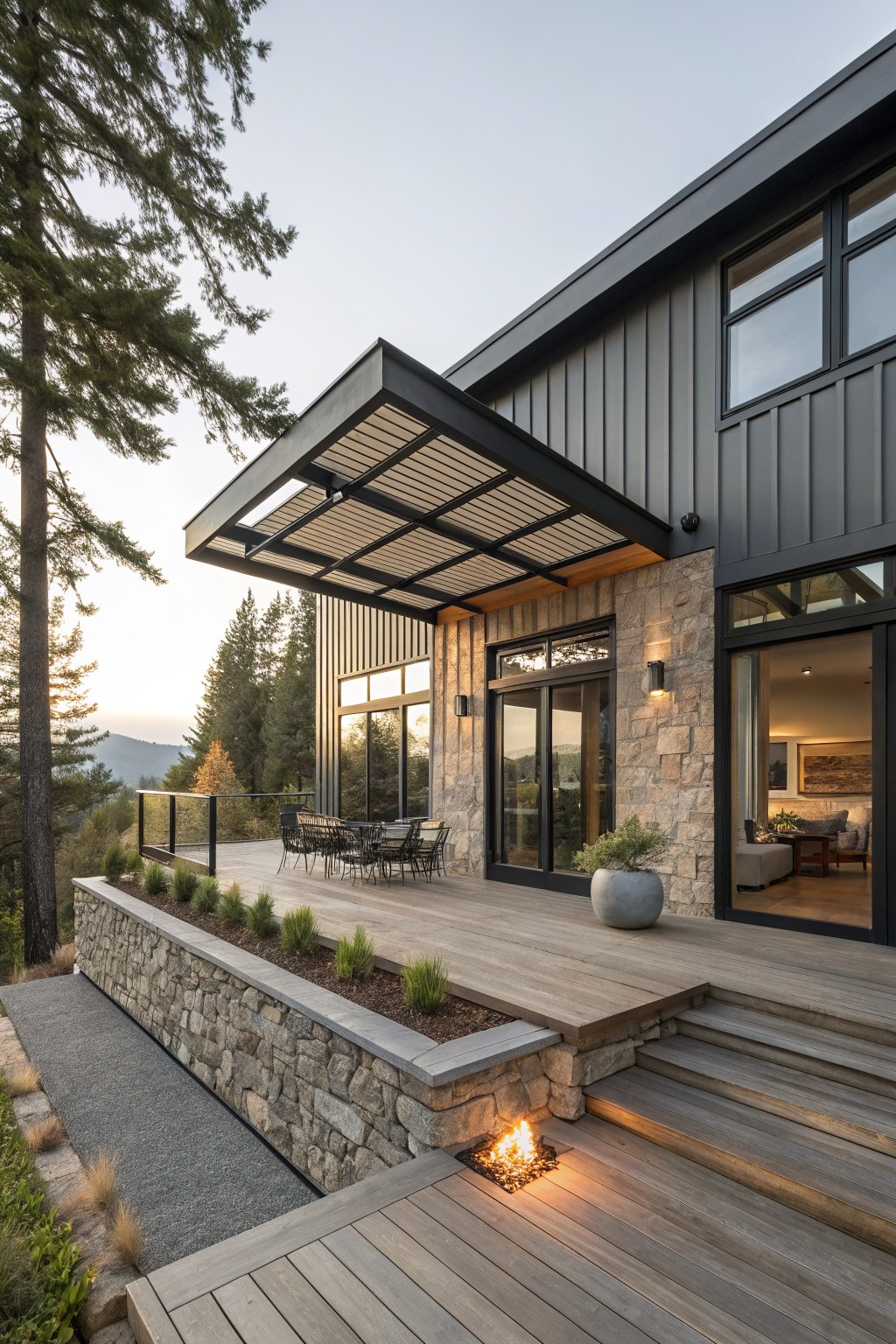
Dark gray siding like this works well on homes tucked into hilly or wooded spots. The vertical metal panels catch the light without standing out too much against trees. Below them, a sturdy stone base keeps things from looking top-heavy. It gives the house a solid, settled feel even on uneven ground.
This setup suits cabin-style places or modern builds where you want some toughness. Use local stone if you can, to match the site. Pair it with wood decking out back for easy outdoor flow. Just make sure the gray is matte so it doesn’t glare.
Black Front Door on Light Brick
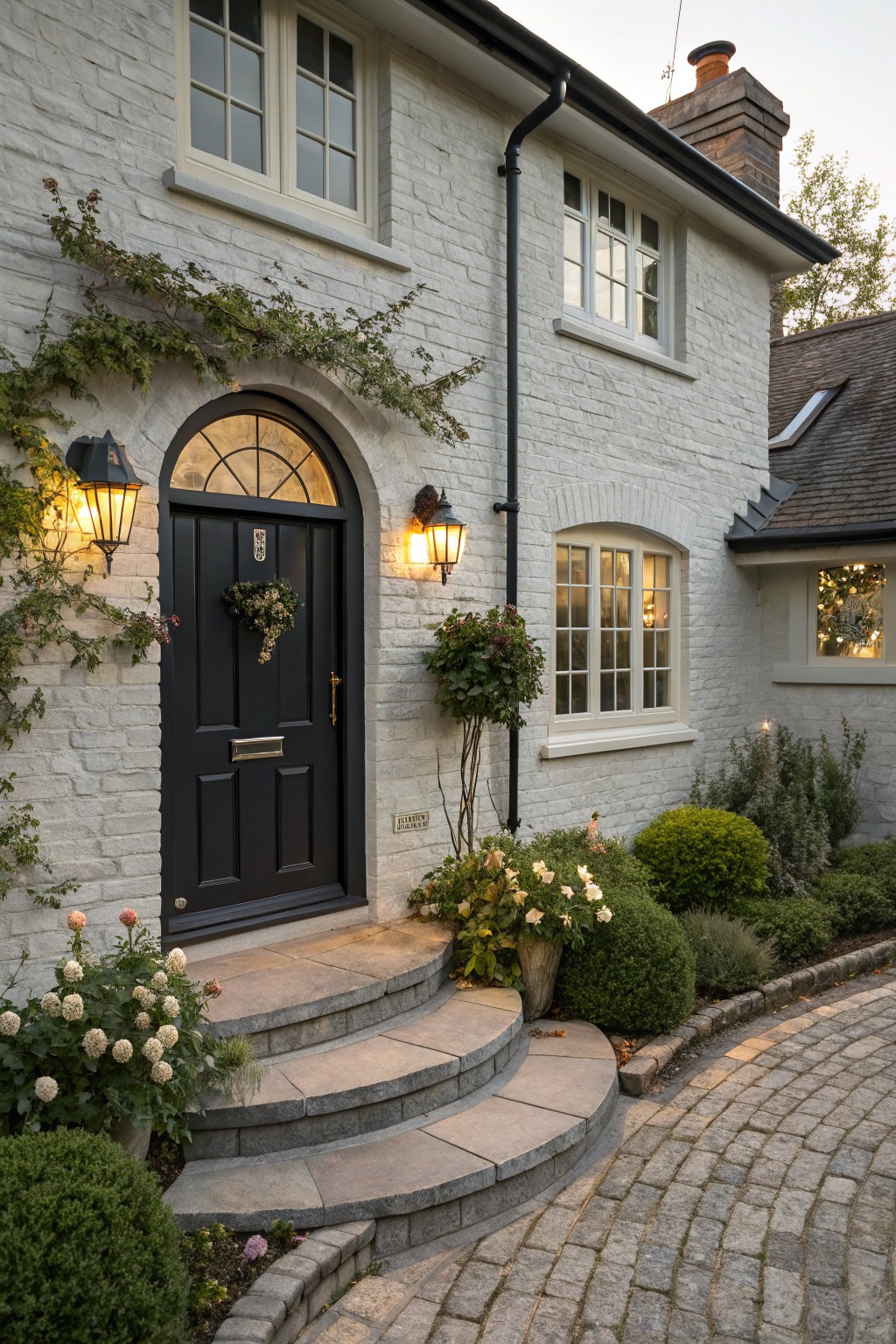
A black front door stands out sharp against white brick. It pulls your eye right to the entry and gives the house a clean, put-together feel. Simple lanterns on each side light it up nicely come evening, without overdoing things.
Try this on older homes or ones with a cottage vibe. The dark paint hides dirt well, and it pairs easy with plants trailing nearby or boxwoods along the path. Just make sure the door hardware matches, like brass here, so it doesn’t look slapped on.
Dark Gray Brick House Facade
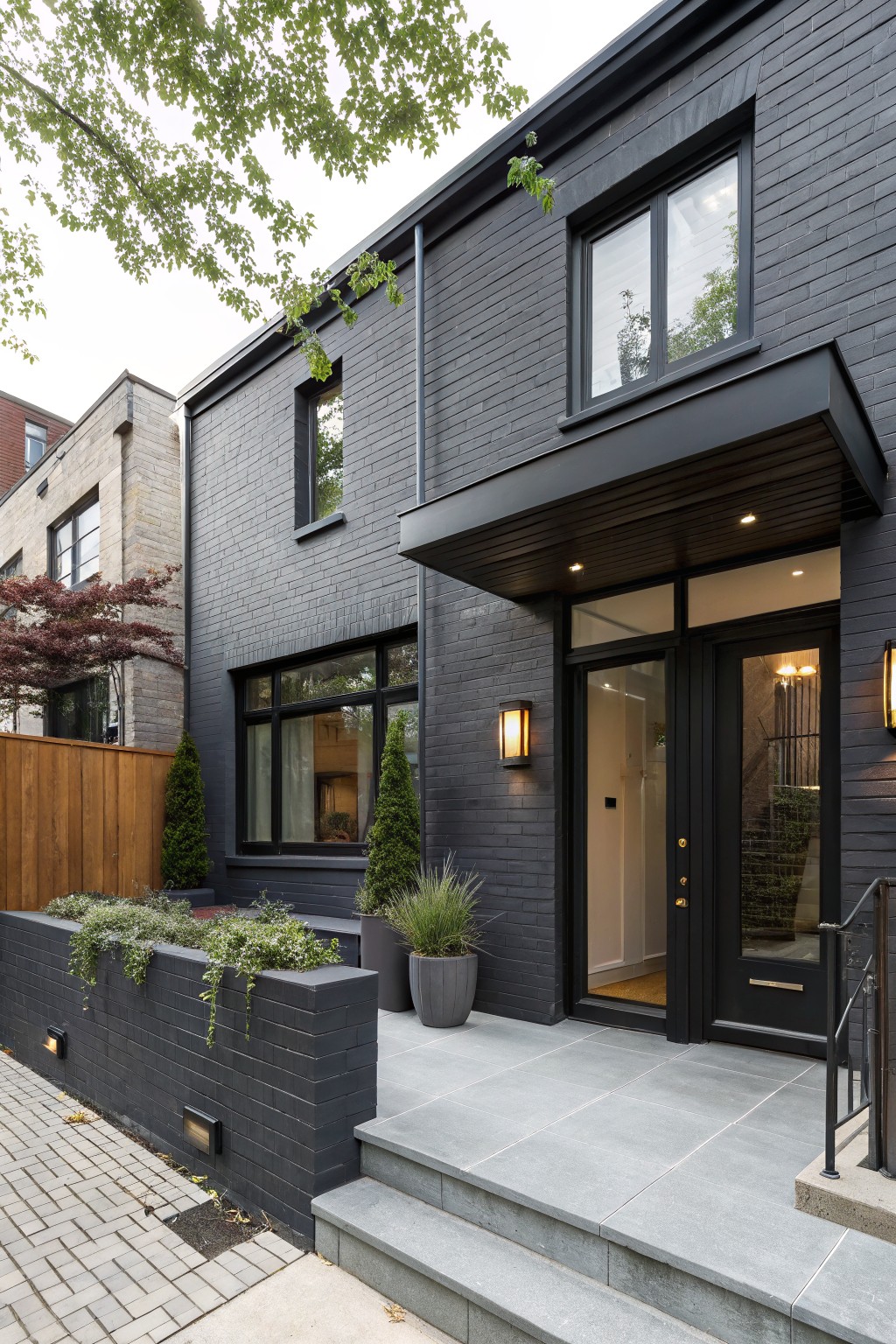
Dark gray brick gives this house a solid, modern edge that stands out on a city street. The matte finish and slim profile make it feel fresh instead of old-school, especially with big windows letting light in and that simple black overhang shading the entry door. Low brick walls with trailing plants keep things grounded without overdoing the greenery.
This look suits rowhouses or tight lots where you want presence without flash. Stick to clean lines, add spots for lanterns by the door, and use gray stone steps to tie it together. It hides dirt well too, so less upkeep on a busy block.
Craftsman Porch with Stone Pillars
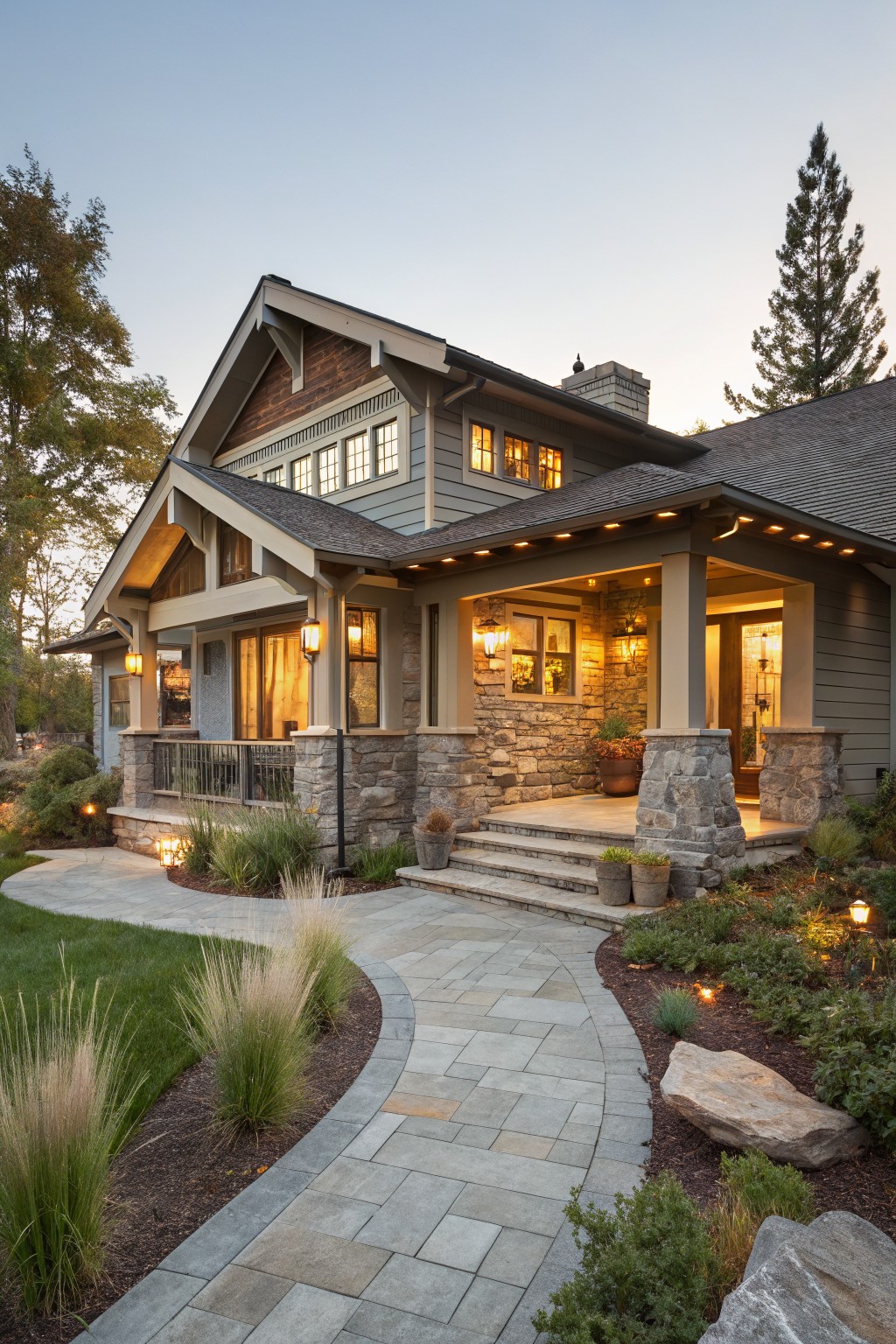
Tall stone pillars hold up this wide Craftsman porch, mixing rough natural rock with the house’s wood shakes and gray siding. It gives the whole front a sturdy feel that fits right into wooded spots. The lanterns along the porch edge add a soft glow that pulls you closer at dusk.
Try this on ranch or two-story homes with gables. Pick stone that matches your area’s rocks for a real fit. It suits sloped lots best, where the pillars help tie the house down visually. Just keep the stone to the base so the wood up top stays the star.
Gray Stoop Entries with Black Railings
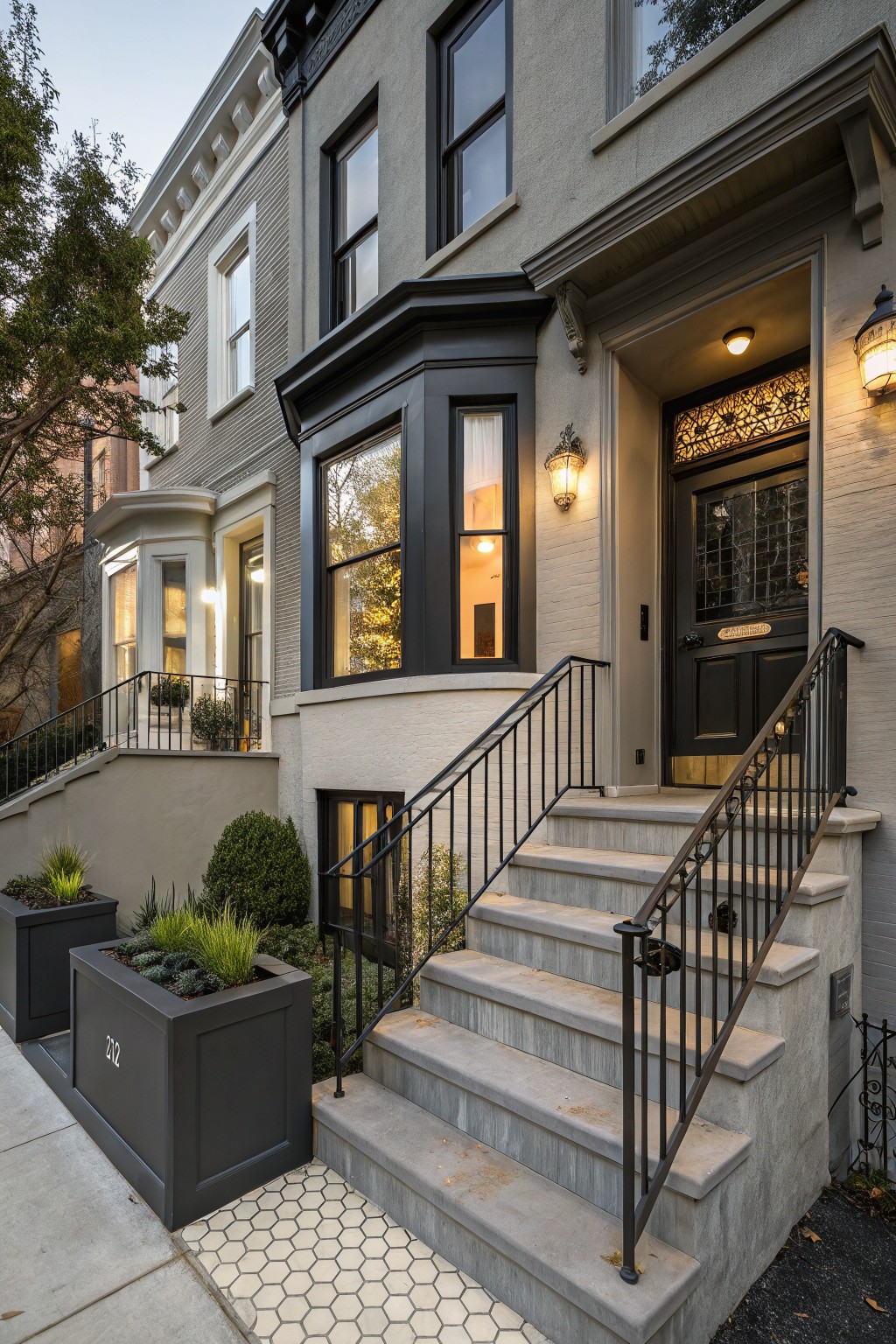
Black railings and a dark front door give this gray townhouse a sharp, defined entry that pulls the eye right up the steps. The soft gray brick and stucco fade into the background while the black iron adds that classic touch without overwhelming things. It’s a simple way to make a plain facade feel more put-together.
These setups work best on row houses or older urban homes where you want some polish at street level. Keep the plants low-key like those big black planters with grasses, and add a tiled path if your sidewalk allows. Just don’t go too heavy on the black elsewhere, or it starts competing with the house itself.
Wood Garage Doors Warm Up Gray Siding
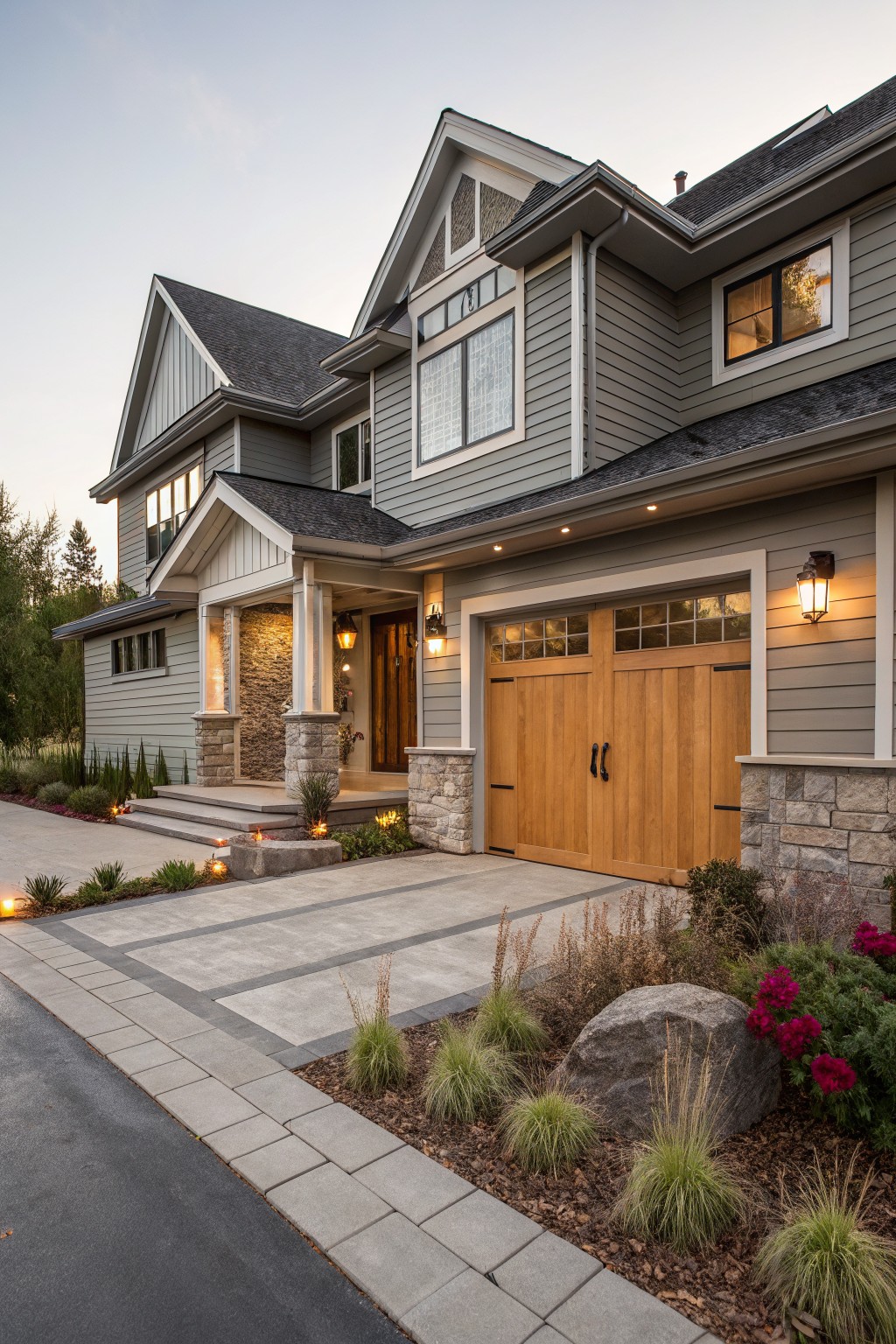
Gray siding gives a house that clean, modern edge plenty of folks want these days. But it can come off a little stark up close. Wood garage doors fix that fast. Here, the sturdy oak doors with their dark hardware pull warm tones right into the gray facade. They make the whole front feel more welcoming without overdoing it.
Try this on a two-story home with a simple roofline. It suits craftsman styles or even ranch houses looking for some character. Go for natural wood stains that echo nearby trim. Stone bases around the doors add nice contrast too… just keep the scale right so the garage doesn’t overpower the entry.
Light Gray Shingle Siding with Dark Trim
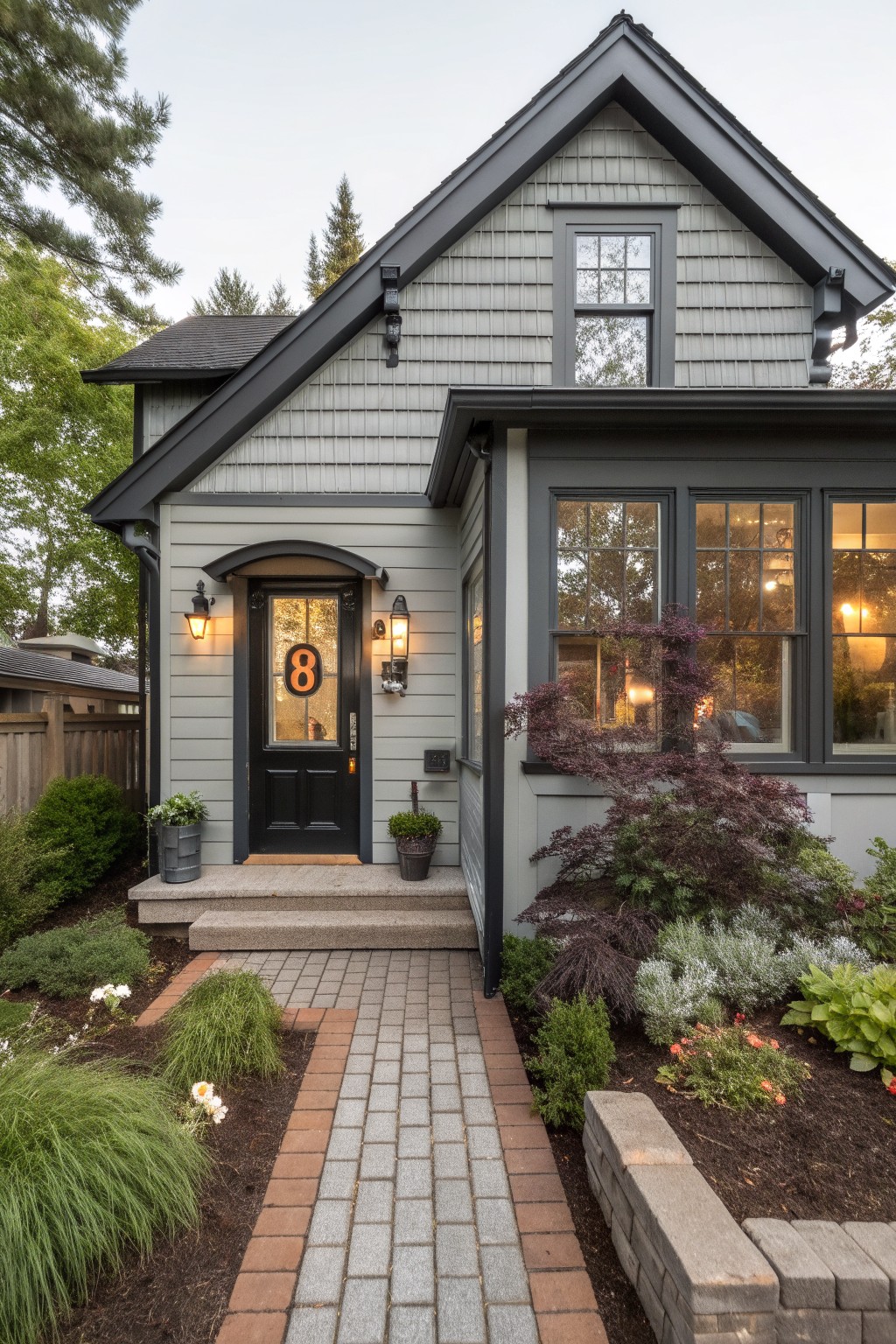
Light gray shingle siding like this gives a house a clean, updated look without going too bold. Paired with darker trim on the windows, roofline, and entry arch, it adds just enough contrast to make the facade pop. That black door pulls it all together, making the front feel sharp and welcoming.
This setup works great on smaller homes or cottages in neighborhoods with trees. Keep landscaping simple, like the brick path and low plants here, so the siding stays the focus. It holds up well in damp climates too, since shakes handle weather nicely.
Gray Stone House with Timber Porch
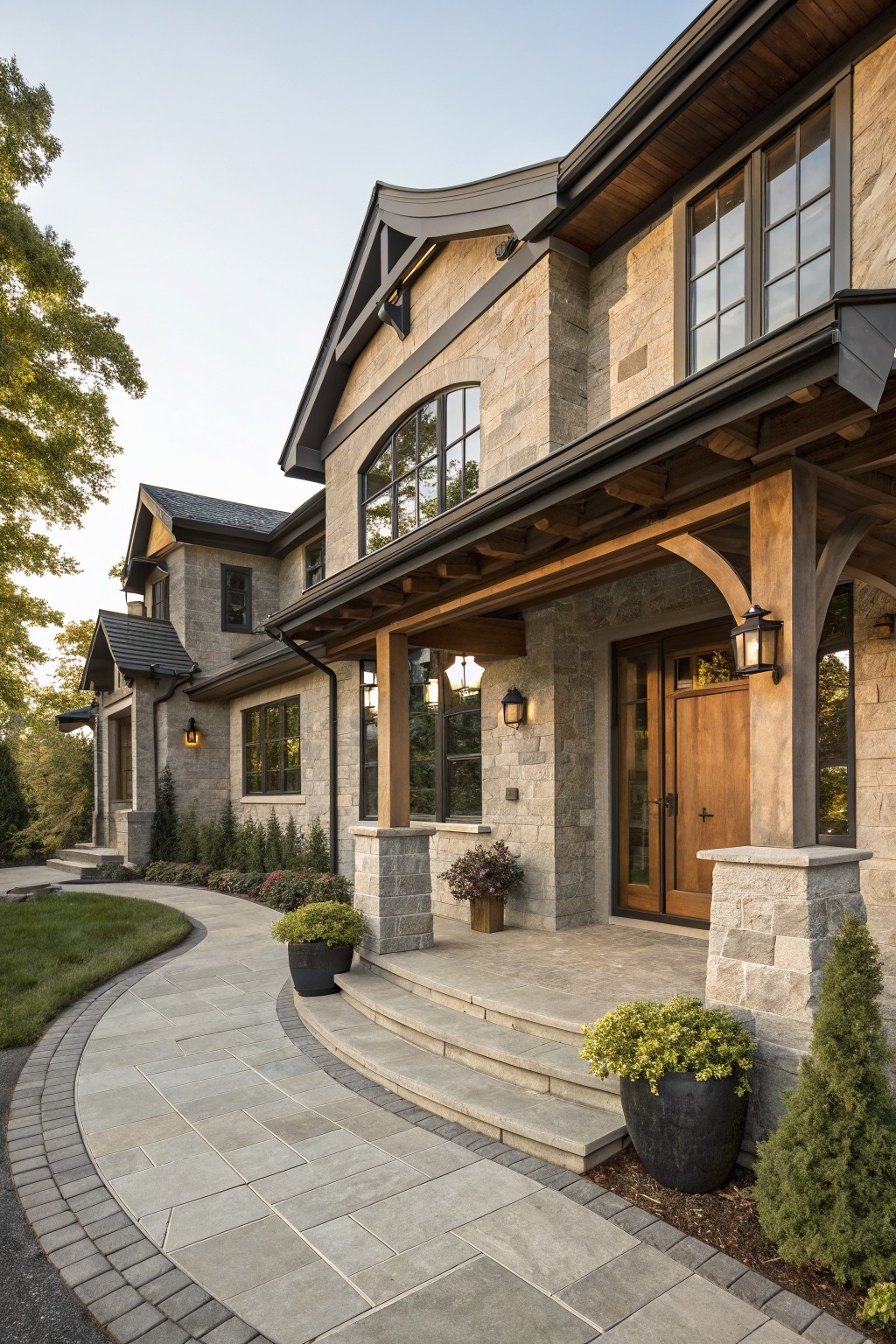
A timber porch like this one softens the solid look of gray stone walls. The exposed beams and posts add a bit of rustic warmth right at the entry, where it counts most. Stone pillars hold it up nicely, and simple lanterns on either side keep things practical. It makes the whole front feel less stark, more like a place you’d want to walk up to.
This setup works best on bigger homes with some height to them. The wood scale matches the stone without overwhelming it. Try it if your house has a lot of gray or cool tones already. Just keep the plants low-key around the base, nothing too busy. It holds up well in shady spots too.
Gray Shingle Exterior with Porch Seating
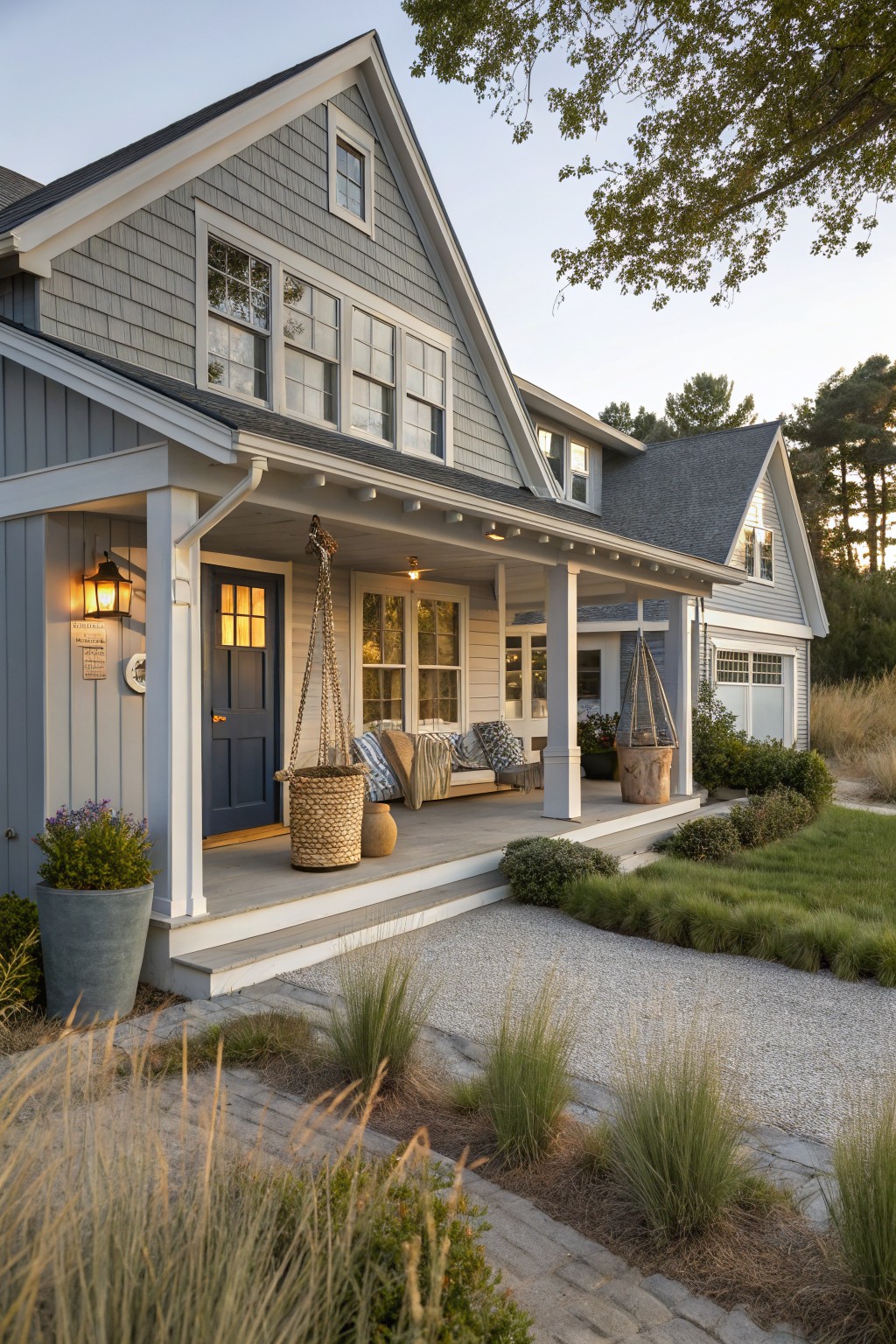
Gray shingle siding like this gives a house real texture and movement. It catches the light in soft ways and feels right at home near trees or dunes. Here the porch pulls it together with simple seating, a blue door, and those hanging baskets. It’s not fussy but makes the front feel lived in and easy to approach.
You can pull this off on a traditional or coastal-style home pretty much anywhere. Add lanterns for evening light and keep plants low-key. Just make sure the porch roofline matches your gables so it doesn’t look added on later. Works best where you want curb appeal without a lot of upkeep.
Frequently Asked Questions
Q: Does gray siding hide dirt better than lighter colors? A: Gray camouflages dirt, dust, and mildew way better than white or beige. Rain usually rinses it clean on its own. Hose it down a couple times a year to keep that fresh look.
Q: What’s the best front door color for a gray house?
A: Pick a sunny yellow or deep red door. It pulls the eye straight to your entrance and adds instant energy.
Q: How do I warm up a cool-toned gray exterior? A: Layer in natural wood shutters or a cedar porch railing. They bring cozy earth tones that balance the gray nicely.
Q: Can gray freshen up an older-style home? A: Gray updates Victorians or colonials without clashing. Paint trim bright white and swap house numbers for modern ones. Your place will feel pulled together overnight.
