

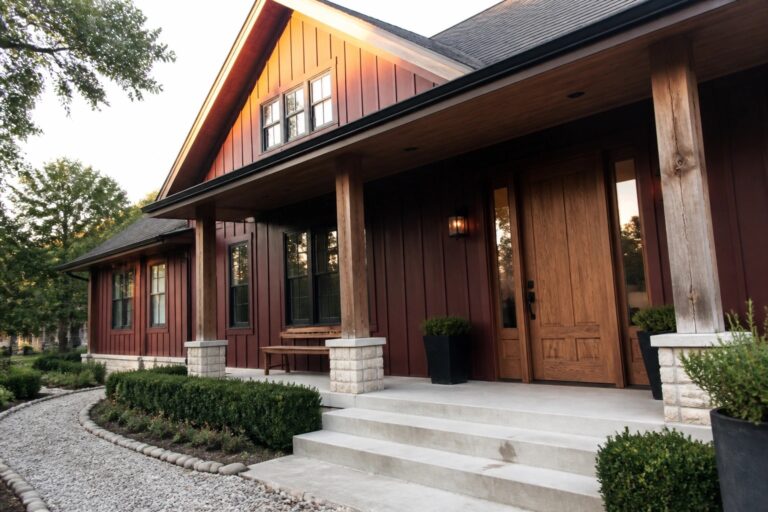
When I walk past homes with deep burgundy siding I notice how the color holds up against weather and light only when paired with the right wood accents around windows and doors.
The natural grain brings a warmth that stops the burgundy from feeling flat or too heavy on the facade.
Not every shade pairs cleanly.
I have watched how the wood placement near the entry and roofline changes how the whole front reads from the street and makes the house feel more settled in its setting.
Those details are the ones I would sketch out first if I were updating an exterior myself.
Burgundy Siding With Natural Wood Accents
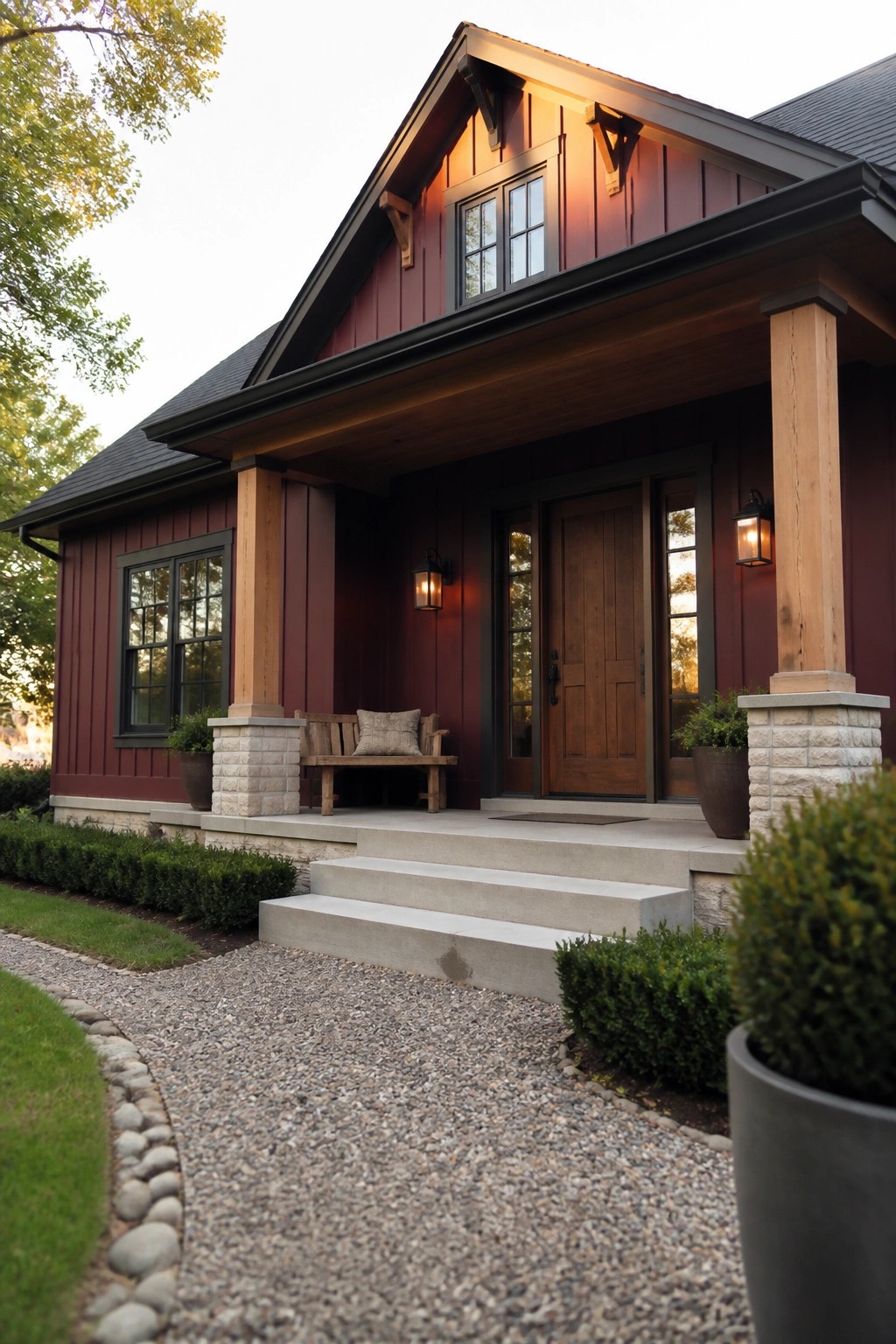
Burgundy siding gains a lot when it sits next to real wood rather than painted trim. The color feels richer and the whole front looks more settled instead of flat.
This approach works best on homes that already have a porch or simple overhangs. Use the wood on posts, beams, and the door frame so the burgundy does not take over the whole surface.
Burgundy Exterior With Warm Wood Porch Details
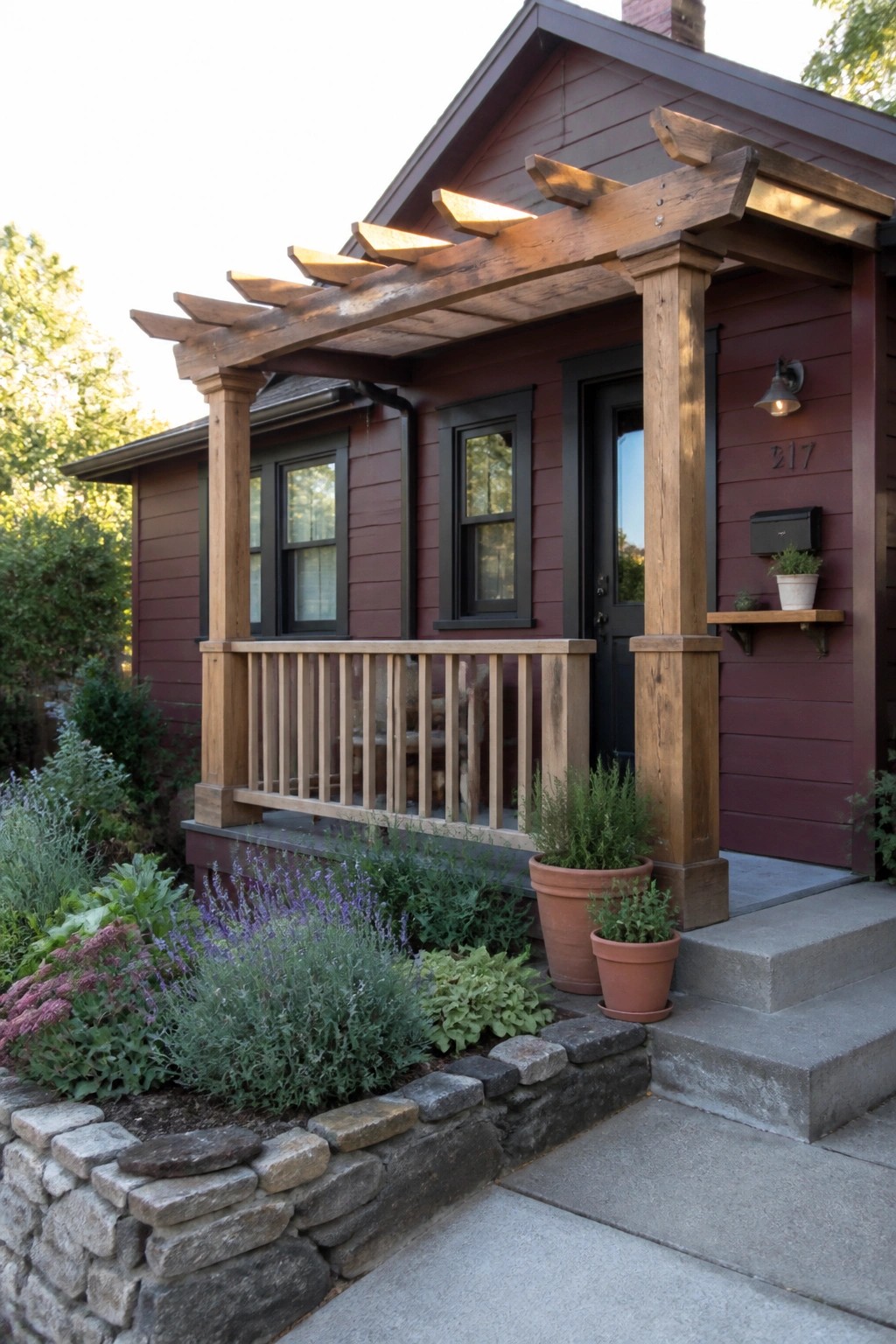
Burgundy siding can feel heavy on its own, so adding natural wood around the entry helps break up the color and brings in some warmth. The wood softens the look without making the house seem smaller or darker.
This works best on homes with a simple shape where the porch or overhang can carry most of the detail. Use the wood for posts, beams, or railings and keep the finish light so the grain shows through.
Deep Burgundy Siding With Contrasting Wood Features
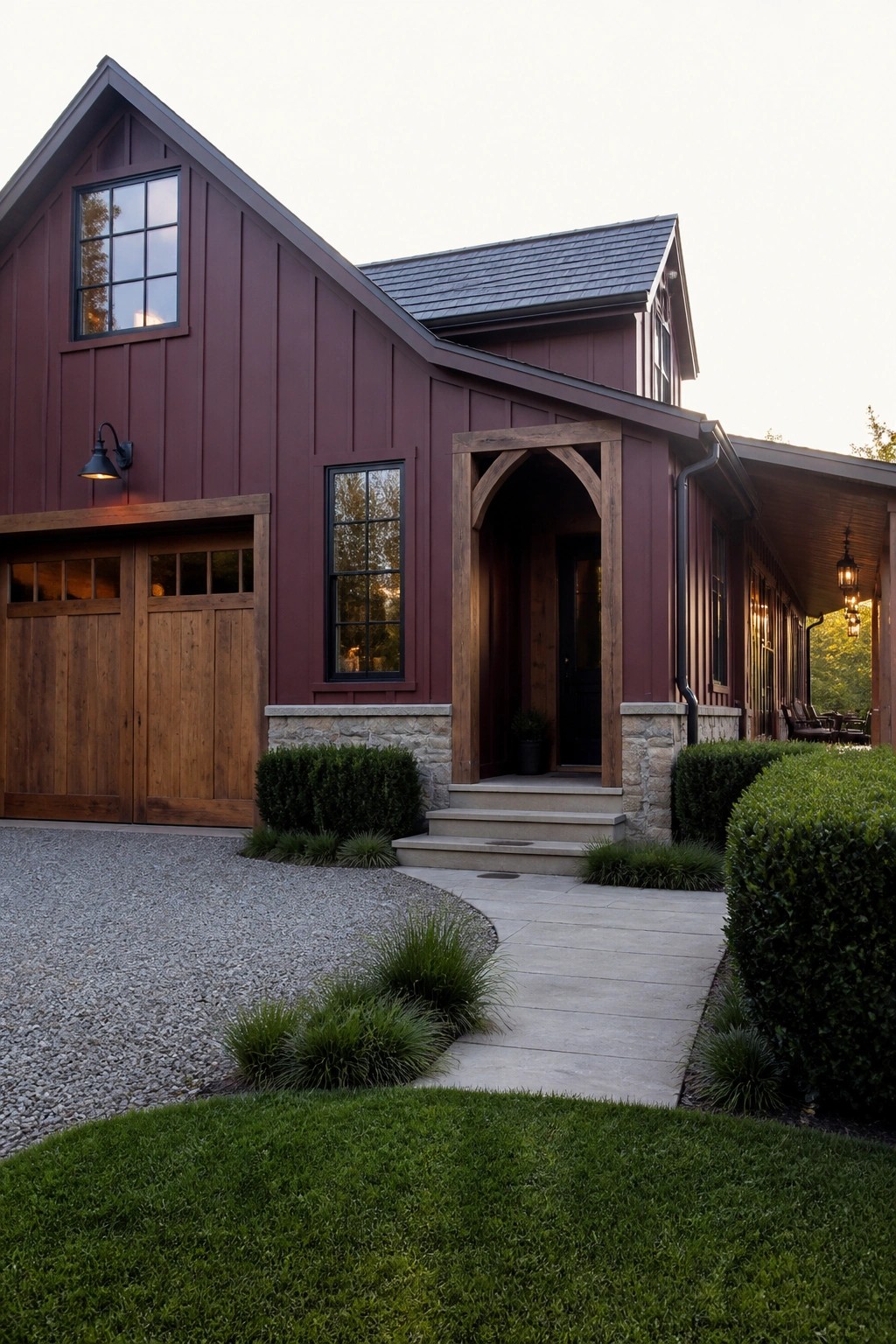
A deep burgundy exterior can feel heavy on its own, so many people add natural wood accents to bring in warmth and balance. The wood softens the color and gives the house a more grounded, lived-in look that still reads as bold.
This approach works best on homes with clean rooflines and a strong entry. Start with the garage doors and door surround, since those spots show the contrast right away without needing a lot of extra trim. Keep the wood tone fairly natural so it stands out against the paint.
Burgundy With Natural Wood On The Exterior
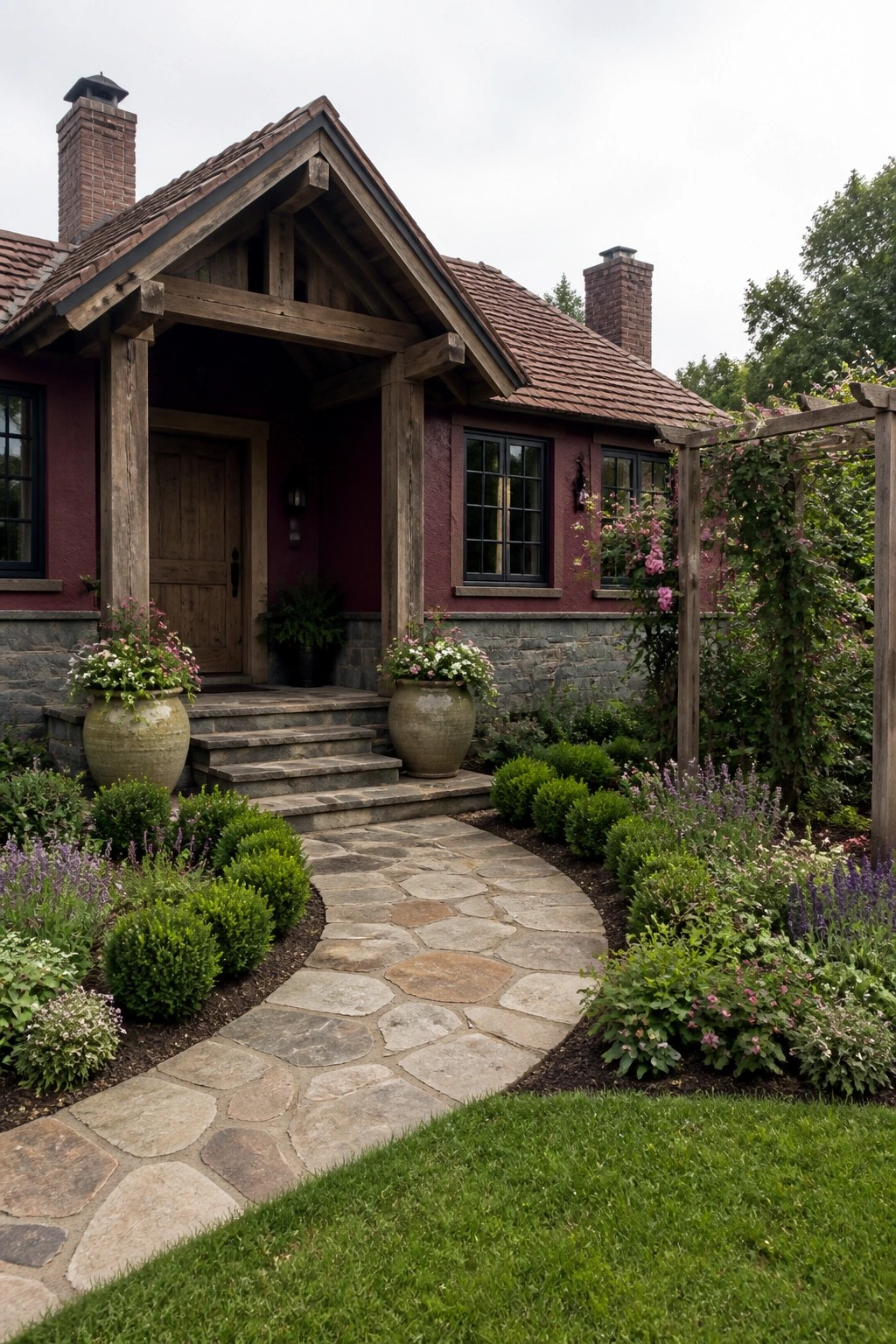
Deep burgundy siding gains a lot when the wood trim and beams are left in their natural tone. The contrast keeps the color from feeling flat and gives the front a settled look that works in most seasons.
This approach suits homes with a simple roofline and a clear entry. Use the wood on porch posts, rafters, and window frames, and let the path materials stay neutral so the house color stays the main focus.
Burgundy Siding With Wood Entry Accents
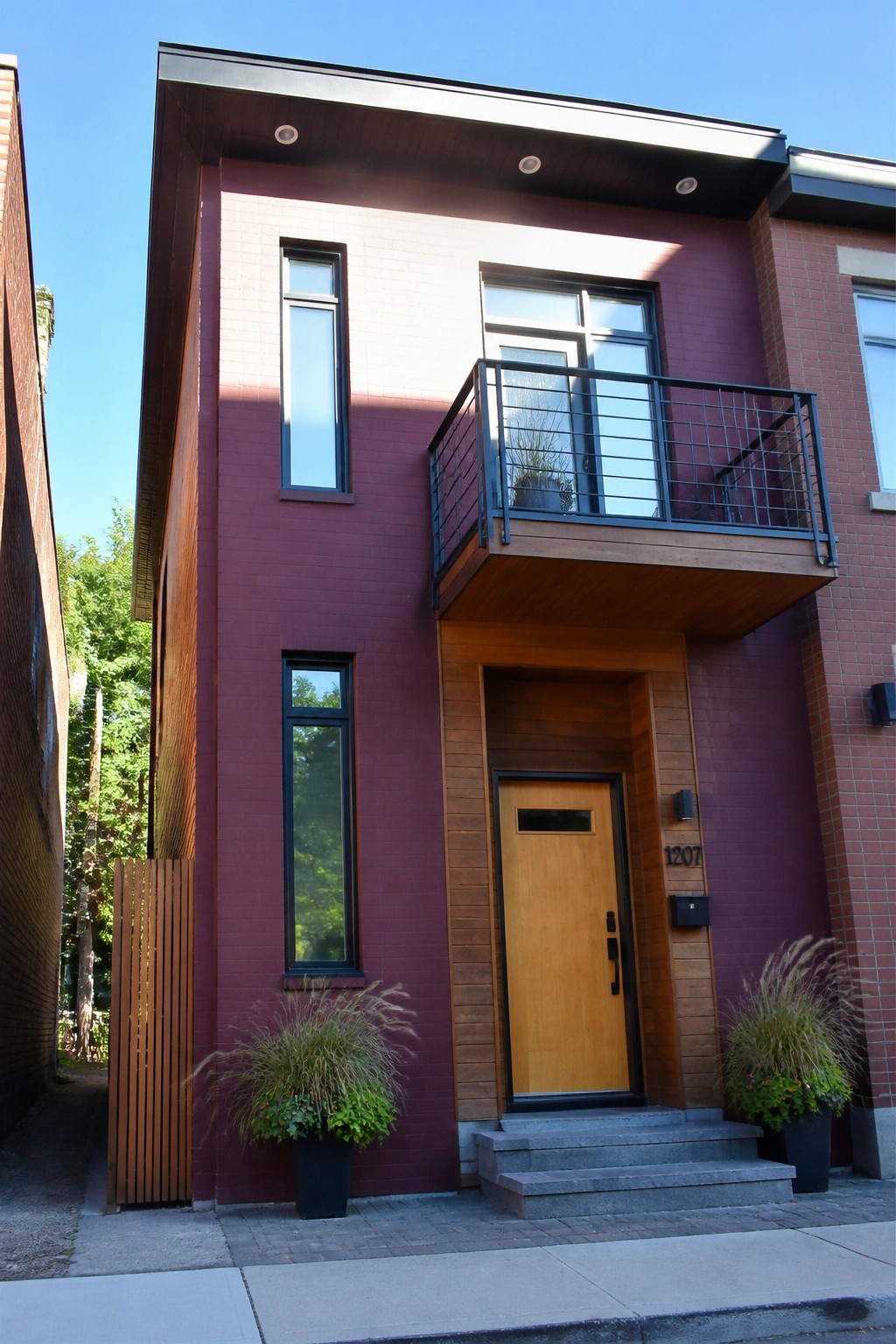
Burgundy siding can feel a bit heavy on its own, so adding wood around the front door and balcony helps break it up. The warm tone of the wood softens the color and draws attention right to the entrance without needing extra trim or paint.
This approach works best on narrower homes or row houses where the facade is fairly flat. Keep the wood limited to the door surround and any projecting elements like a small balcony so the rest of the siding stays clean.
Burgundy Exterior With Natural Wood Garage Details
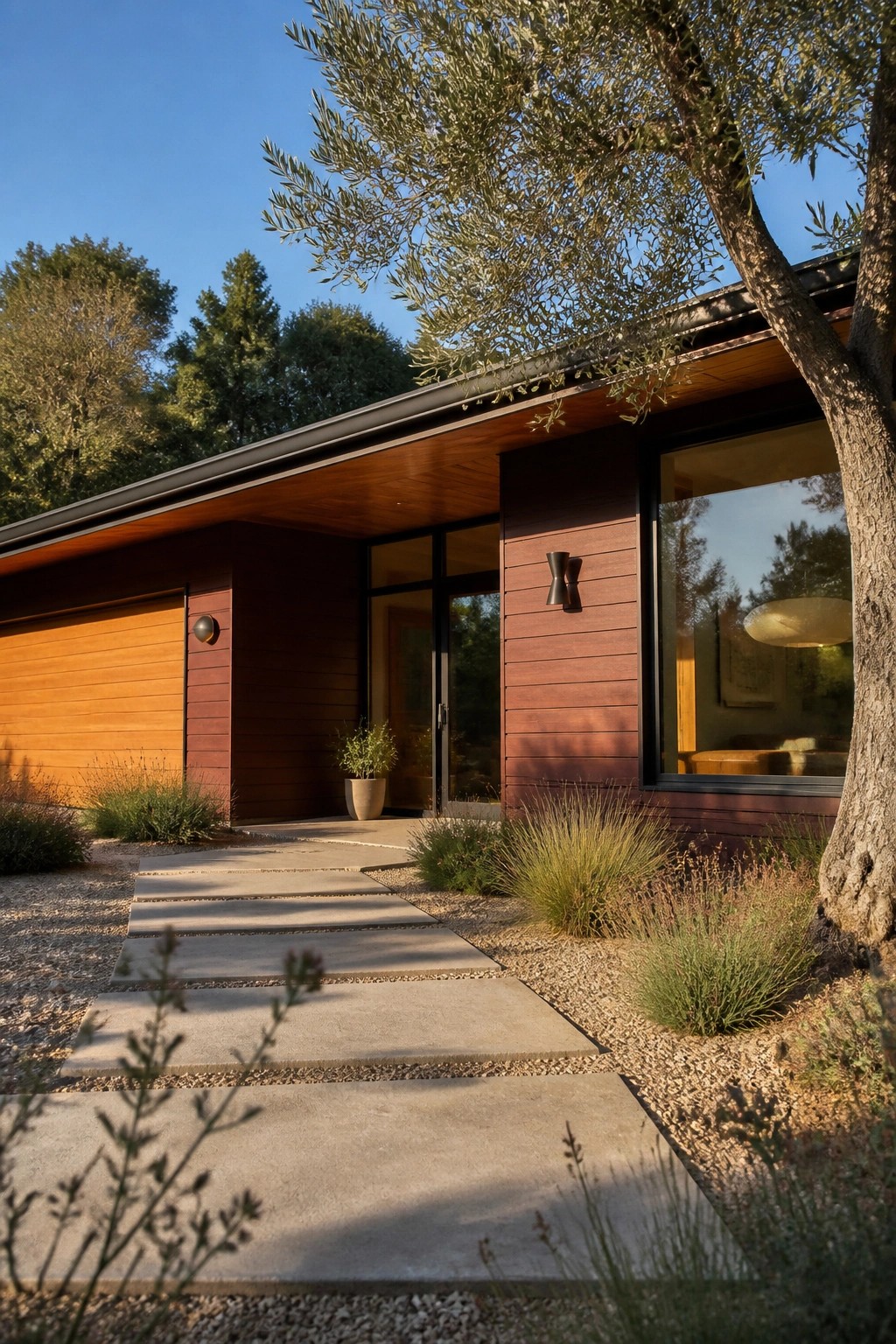
The deep burgundy siding stands out more when it sits next to natural wood tones instead of matching everything in the same color. The wood softens the look and gives the house a warmer feel without losing the bold color choice.
This works best on homes with simple shapes and larger wall sections. Use the wood on the garage door, entry trim, or overhangs so the accents read as deliberate rather than random.
Burgundy Siding with Wood Accents
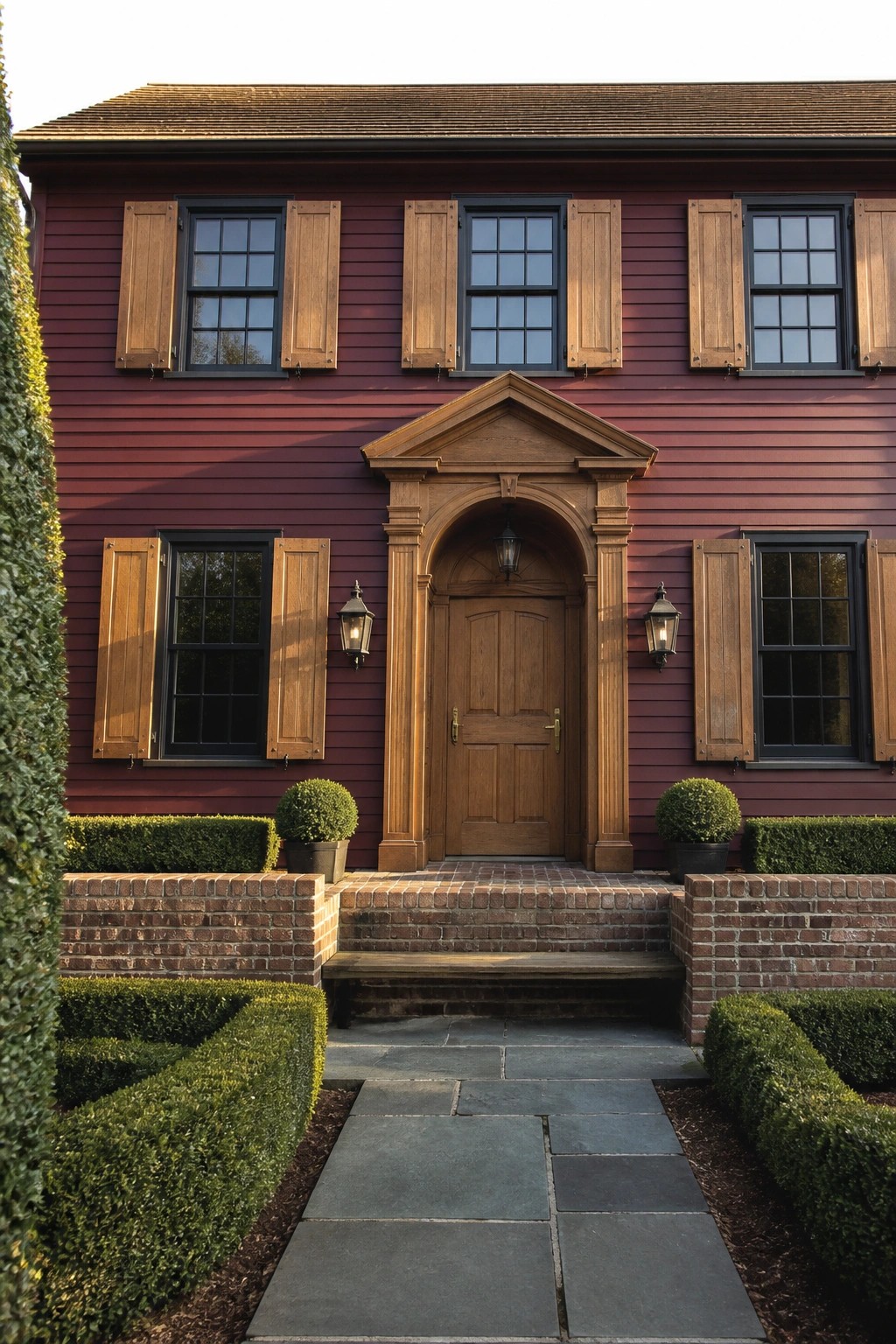
A deep burgundy exterior gains a lot from natural wood shutters and trim. The contrast keeps the color from feeling heavy while the wood adds warmth that paint alone cannot provide. Many homes use this mix to look finished without extra ornament.
It works well on older houses or new builds that want a traditional look. Keep the wood in its natural tone or a light stain so it reads as a deliberate accent rather than another painted surface.
Using Natural Wood to Accent Burgundy Siding
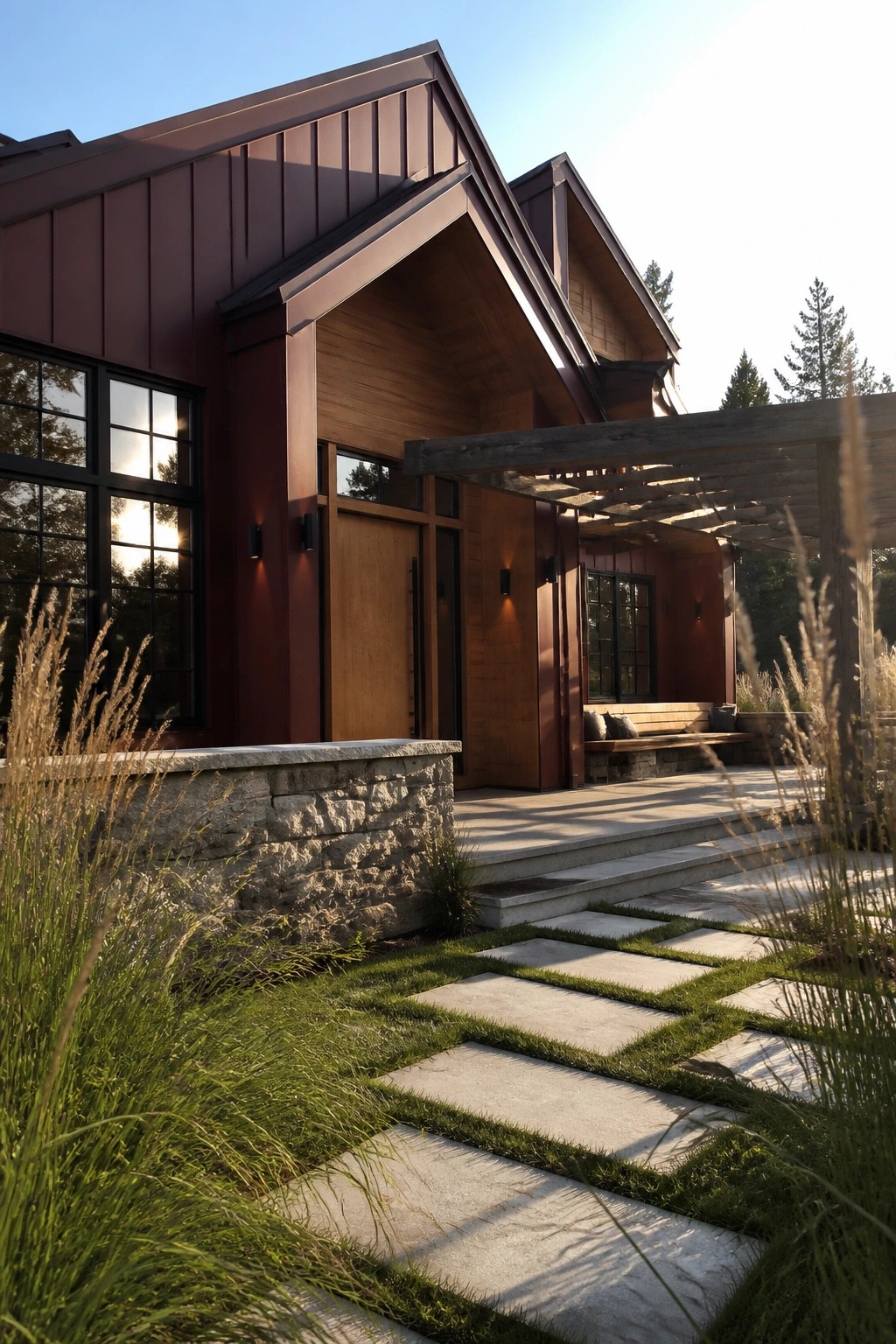
Many homes with deep burgundy siding gain a lot from natural wood around the main entry. The wood softens the strong color and gives the front a more grounded feel without changing the overall palette.
This approach works best on houses that already have a clear gable or porch structure over the door. Keep the wood finish simple and let it cover the main structural pieces rather than adding too many small details.
Burgundy Siding With Wood Trim
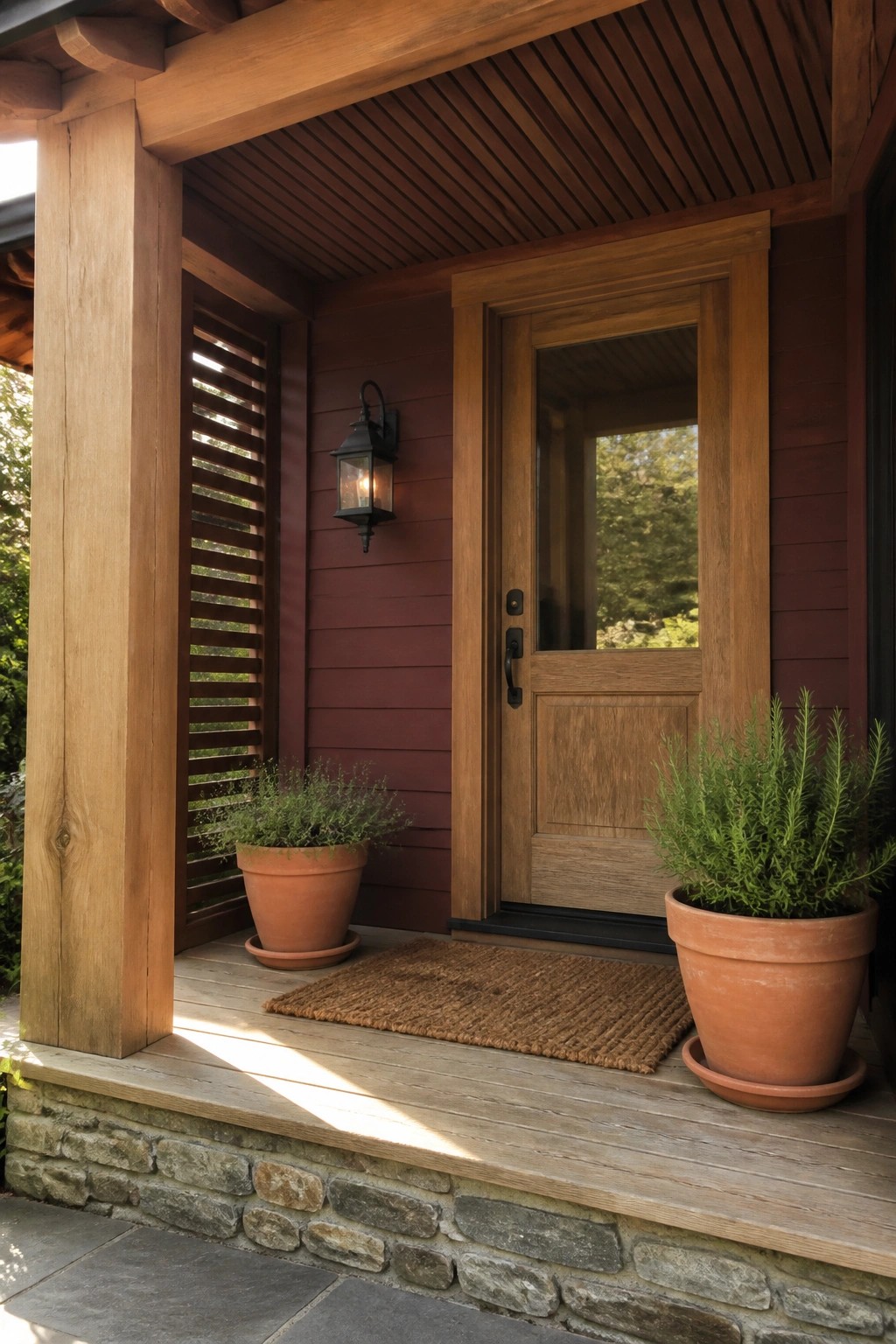
The deep red siding gains a lot of character once natural wood is added around the door and across the porch structure. The contrast keeps the color from feeling flat and gives the whole front a warmer, more finished look.
This approach suits homes that already have some wood detail or a simple roofline. Use the wood on the door, posts, and any overhead beams, and keep the finish natural rather than painted so the tones stay balanced.
Burgundy Siding With Wood Accents
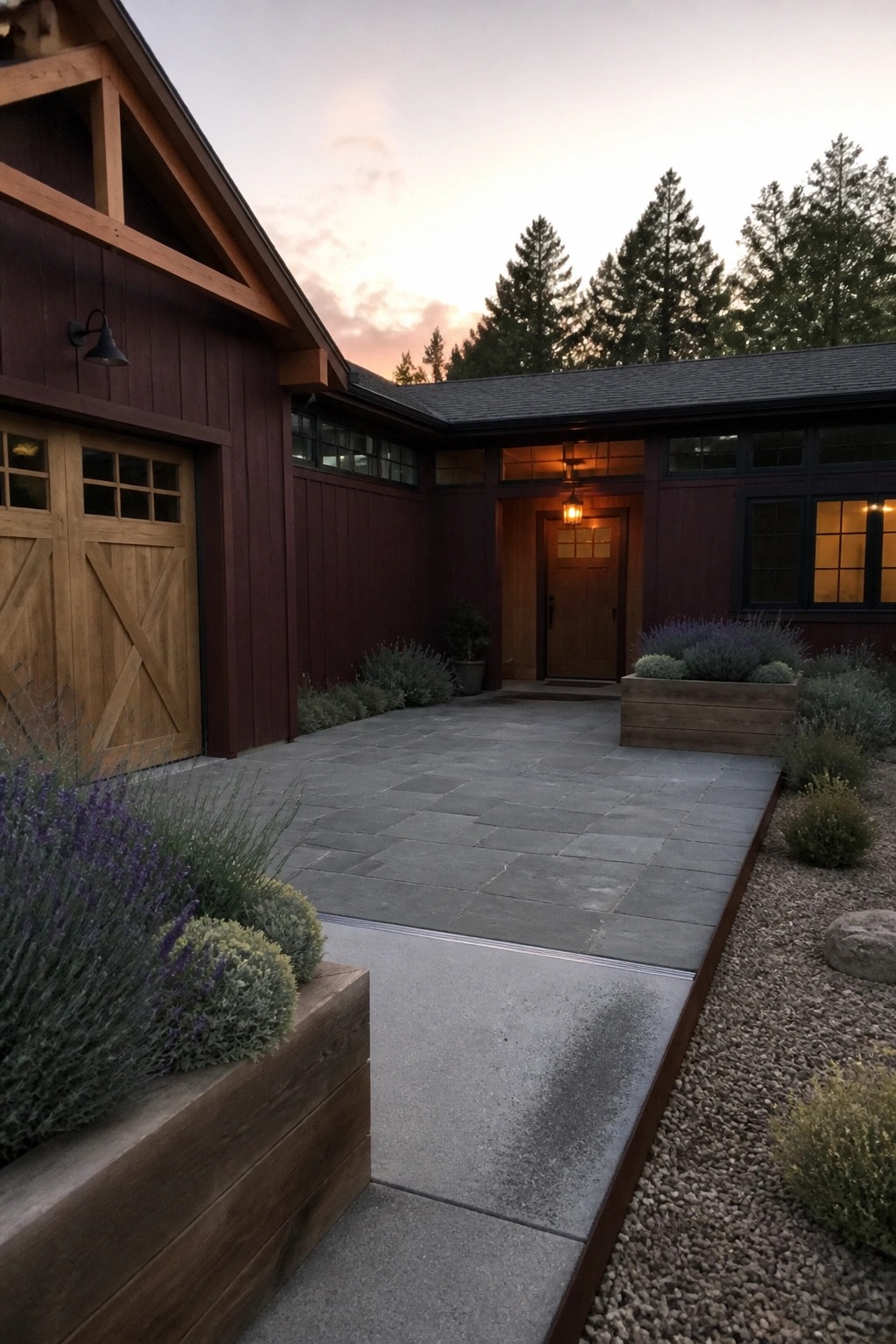
A deep burgundy exterior stands out more when it is paired with real wood rather than painted trim. The natural grain on doors and built-in boxes adds warmth that paint alone cannot match, and it helps the color feel less flat against the sky or trees.
This approach works best on homes with straightforward shapes and a few strong wood features already in place. Keep the wood tones consistent and let the burgundy do the main work so the contrast stays clean instead of busy.
Built-In Bench Seating Along the Deck
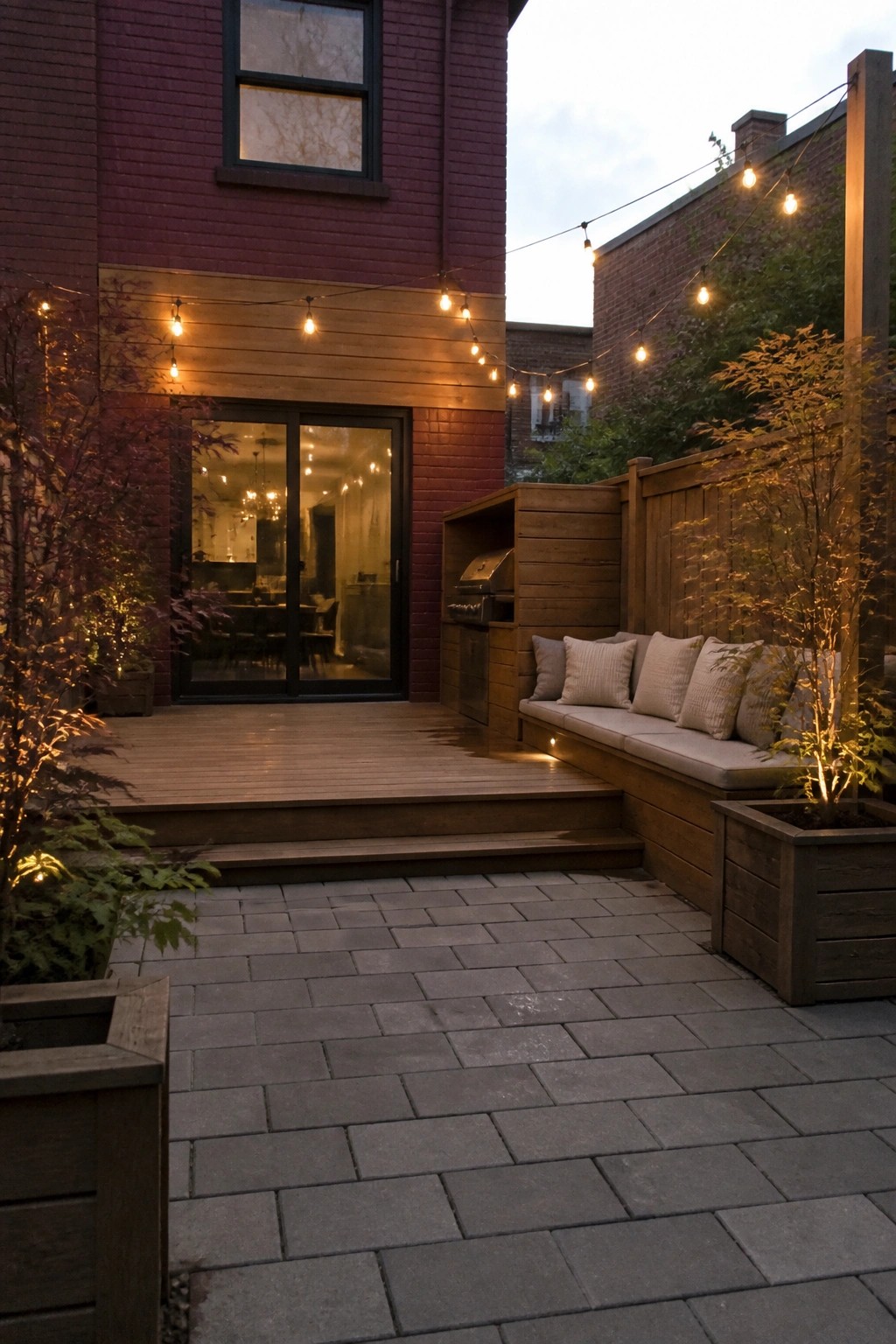
A built-in bench made from the same wood as the deck gives the patio a clean, finished look without crowding the space. It turns the edge of the deck into usable seating while keeping the area open for movement. The cushions make it comfortable for longer evenings outside, and the wood ties right into the house accents.
This setup works best on mid-sized patios where you want seating that stays put and does not need rearranging. It suits homes with wood details already on the exterior, since the bench helps connect the house to the yard. Just make sure the bench height matches the deck so it feels like one surface rather than an add-on.
Wood Accents On Deep Burgundy Brick
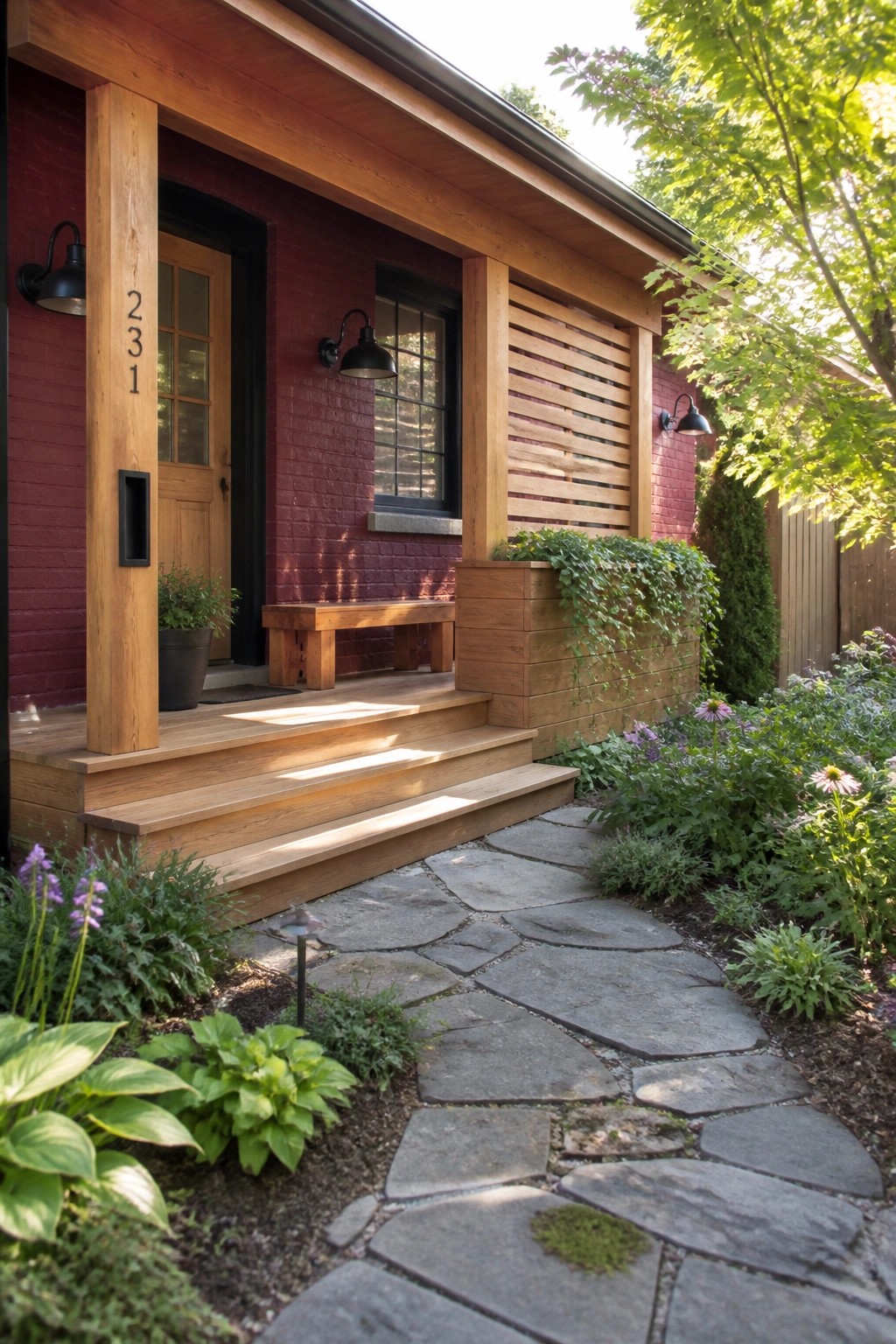
The wood details here keep the strong brick color from feeling too heavy. Posts, the door frame, and even the bench add a lighter touch that makes the whole front look more balanced and welcoming.
This approach works best on homes with bold exterior colors where you want some contrast without losing warmth. Stick to natural wood tones for trim, supports, or small built-ins near the entry, and keep the rest simple so the brick stays the focus.
Burgundy Siding With Natural Wood Window Details
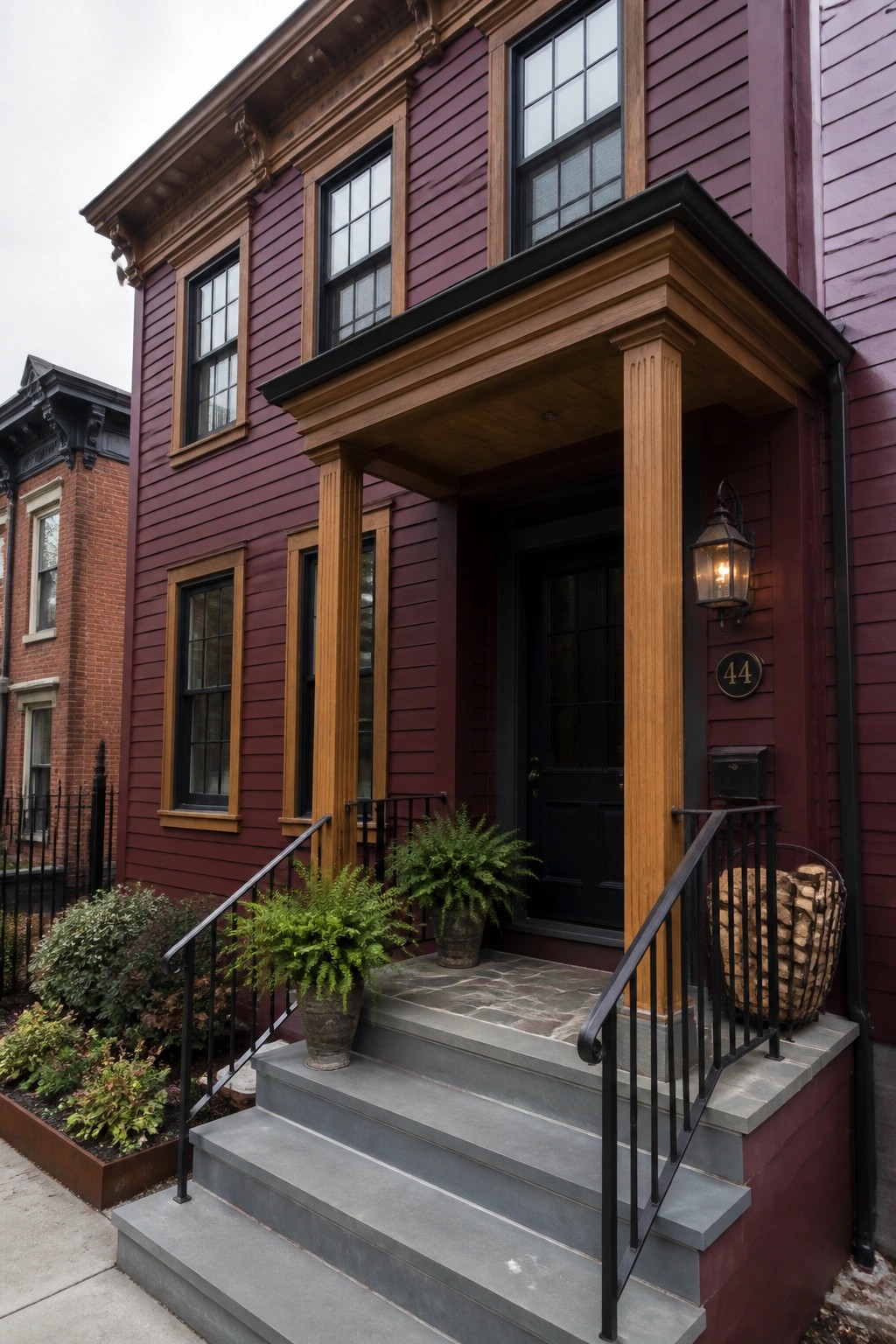
The deep burgundy paint on this house works better because of the natural wood trim and porch structure. The wood softens the strong color and gives the entry a warmer look without making the whole front feel dark or heavy.
This works best on homes with some architectural detail already in place. Keep the wood finish natural and limit the accent to the main entrance and window frames so the color stays the focus.
Wood Decking That Picks Up the House Accents
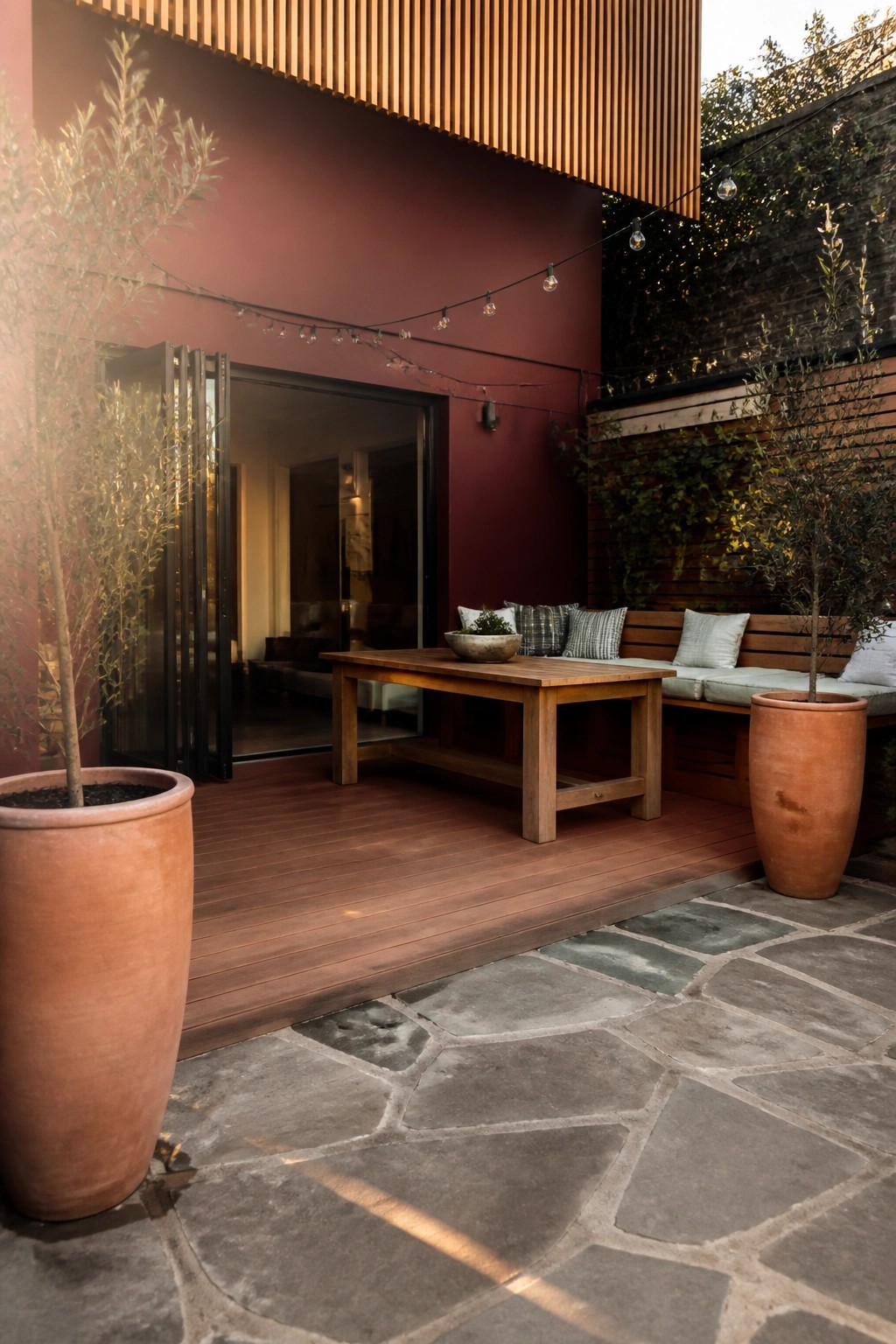
A wood deck next to a burgundy wall gives the outdoor space a grounded feel without needing extra color. The warm tones in the wood soften the bold paint and make the area feel like part of the house rather than an add-on.
This approach works best on homes with a strong exterior color where you want the deck to blend in instead of stand out. Keep the seating and table in the same wood tone and skip bright cushions so the connection stays simple and consistent.
Burgundy Exterior With Natural Wood Porch Posts
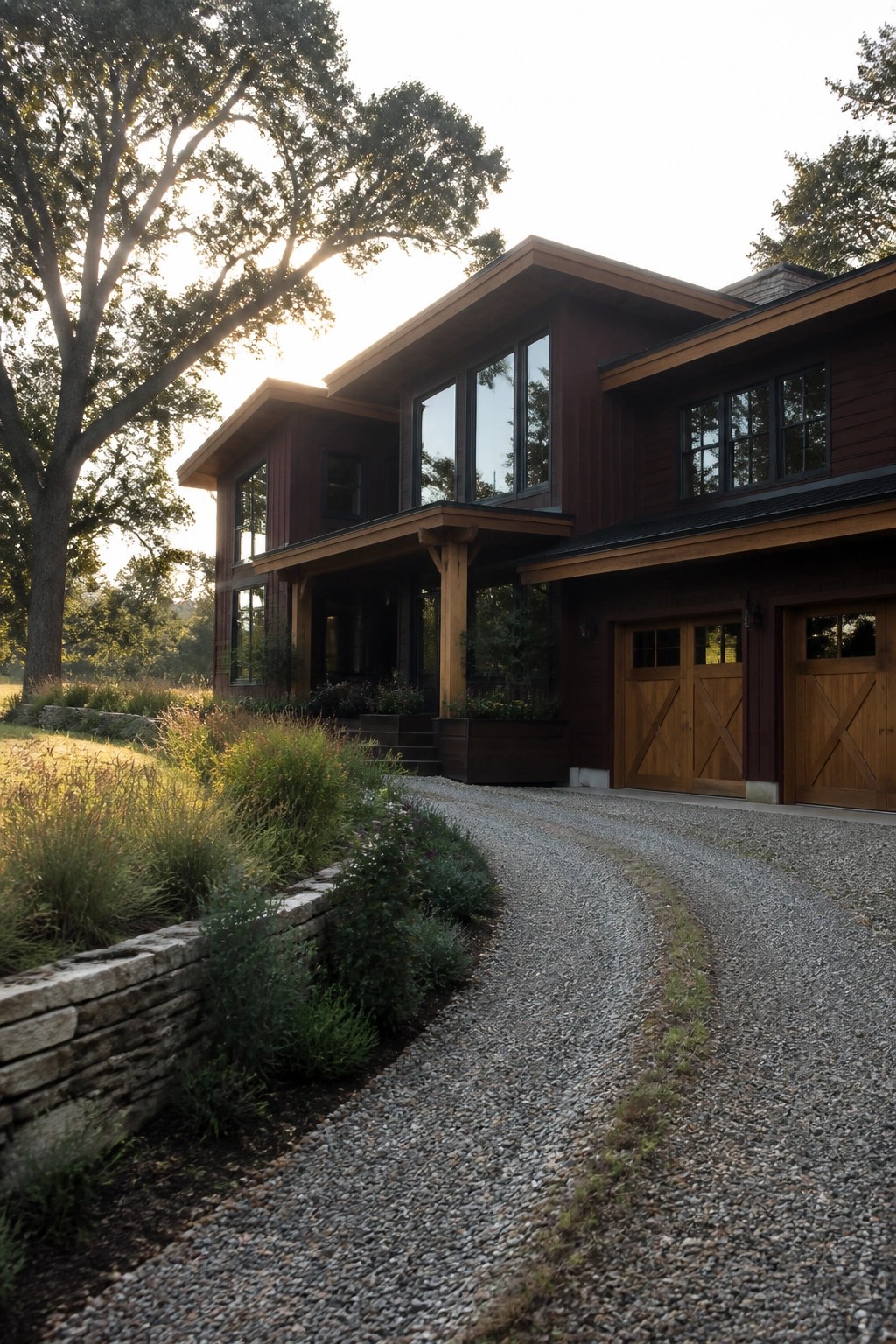
Burgundy siding stands out more when it is paired with wood that keeps its natural tone. The contrast makes the house feel grounded and a little warmer than all-painted exteriors usually do.
This approach works best on homes that already have simple rooflines and strong horizontal lines. Use the wood on garage doors, porch posts, or window trim and let the burgundy cover the larger wall areas so the wood reads as a deliberate accent instead of scattered details.
Frequently Asked Questions
Q: How do I choose the right shade of burgundy for my siding?
A: Start by looking at how the color shifts in different lights on your lot. Test a few samples on the actual walls before committing. Natural wood tones will warm up cooler burgundies nicely.
Q: Will the wood accents need special sealing every year?
A: Seal them once when you install and then check every couple of seasons. A good exterior oil finish holds up well against weather.
Q: What if my trim is already painted white?
A: Swap the white for a deep brown stain on the wood instead. It grounds the burgundy and keeps the natural feel.
