

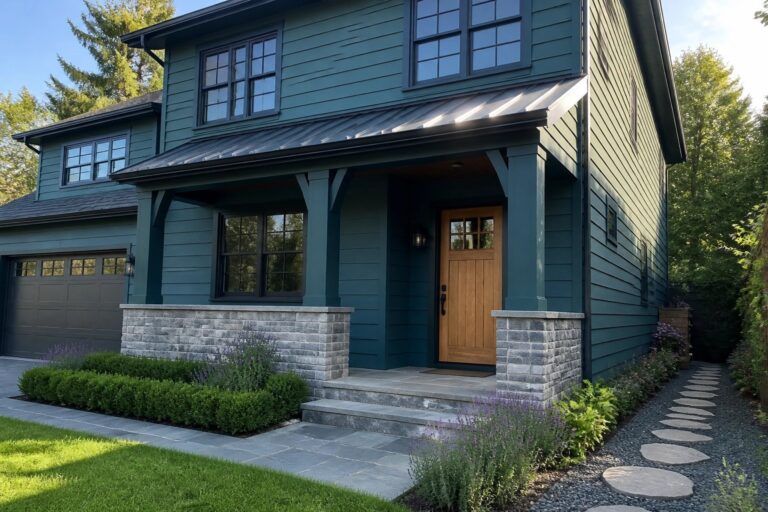
I’ve always noticed that teal on a house exterior shifts a lot depending on the light and what sits next to it.
Pairing it with gray stone veneer tends to ground the color and give the front a more layered look, especially when the stone runs along the base or frames the entry.
The balance matters more than people expect.
I’ve seen homes where the stone keeps the teal from feeling too bold from the street, and that mix often holds up better through changing seasons than a single color would.
If I were picking finishes for my own place I would test the two materials side by side in daylight before deciding.
Teal Siding With Gray Stone Veneer
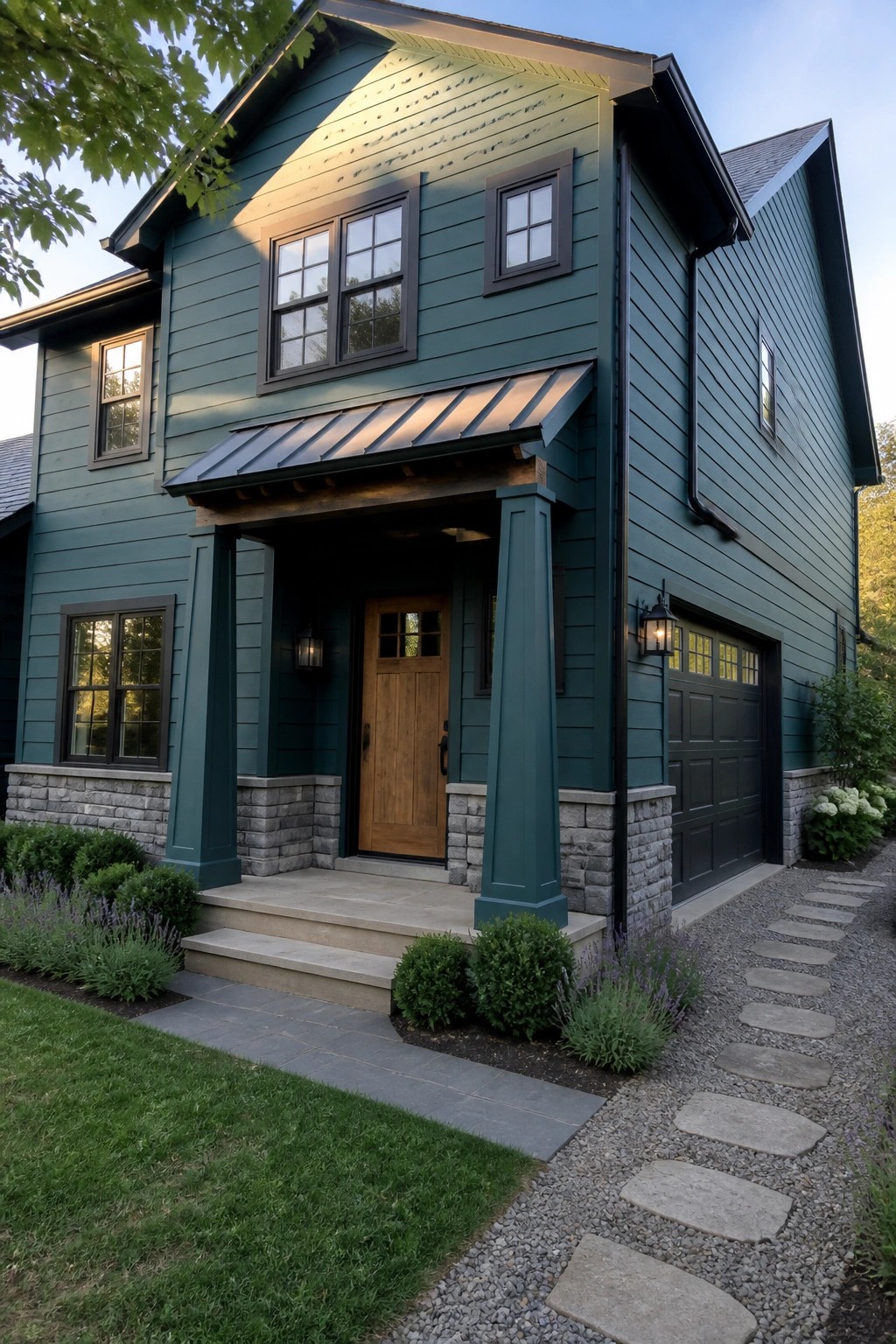
Teal siding looks sharper when it sits on a gray stone base. The stone gives the color something solid to rest on and keeps the whole front from feeling too light or flat.
This pairing works best on houses that already have some trim or columns to break up the color. Keep the stone low and let the teal cover most of the siding. It suits homes with a simple gable roof and a clear entry point.
Teal Siding With Stone Accents
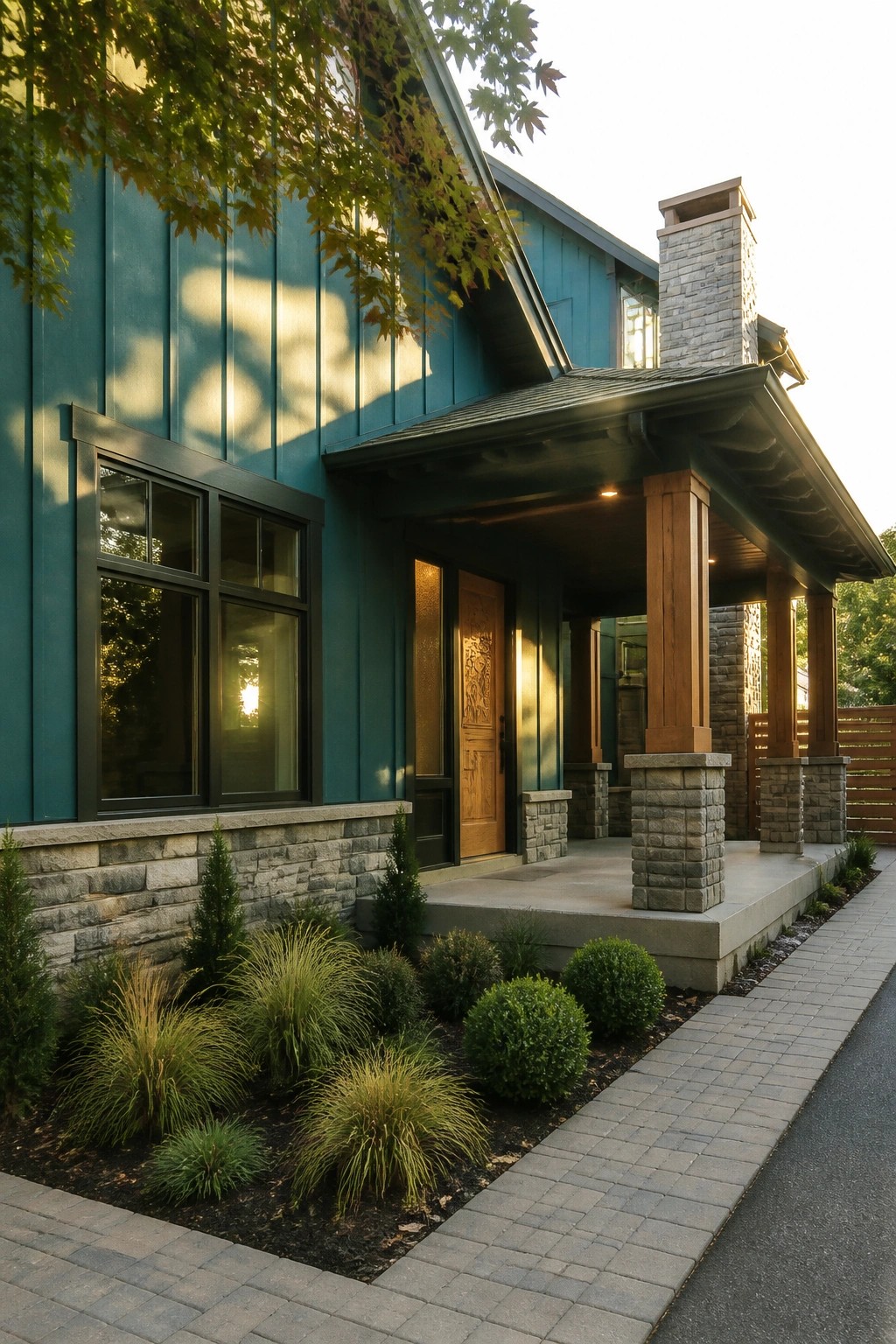
Teal siding stands out more when it sits above a band of gray stone. The stone gives the lower part of the house weight and keeps the bright color from feeling too light or flat against the ground.
This mix works best on homes that already have a porch or a visible foundation line. Keep the stone low and use it on column bases too so the teal remains the main color across the rest of the facade.
Stone Veneer Bases For Teal Exteriors
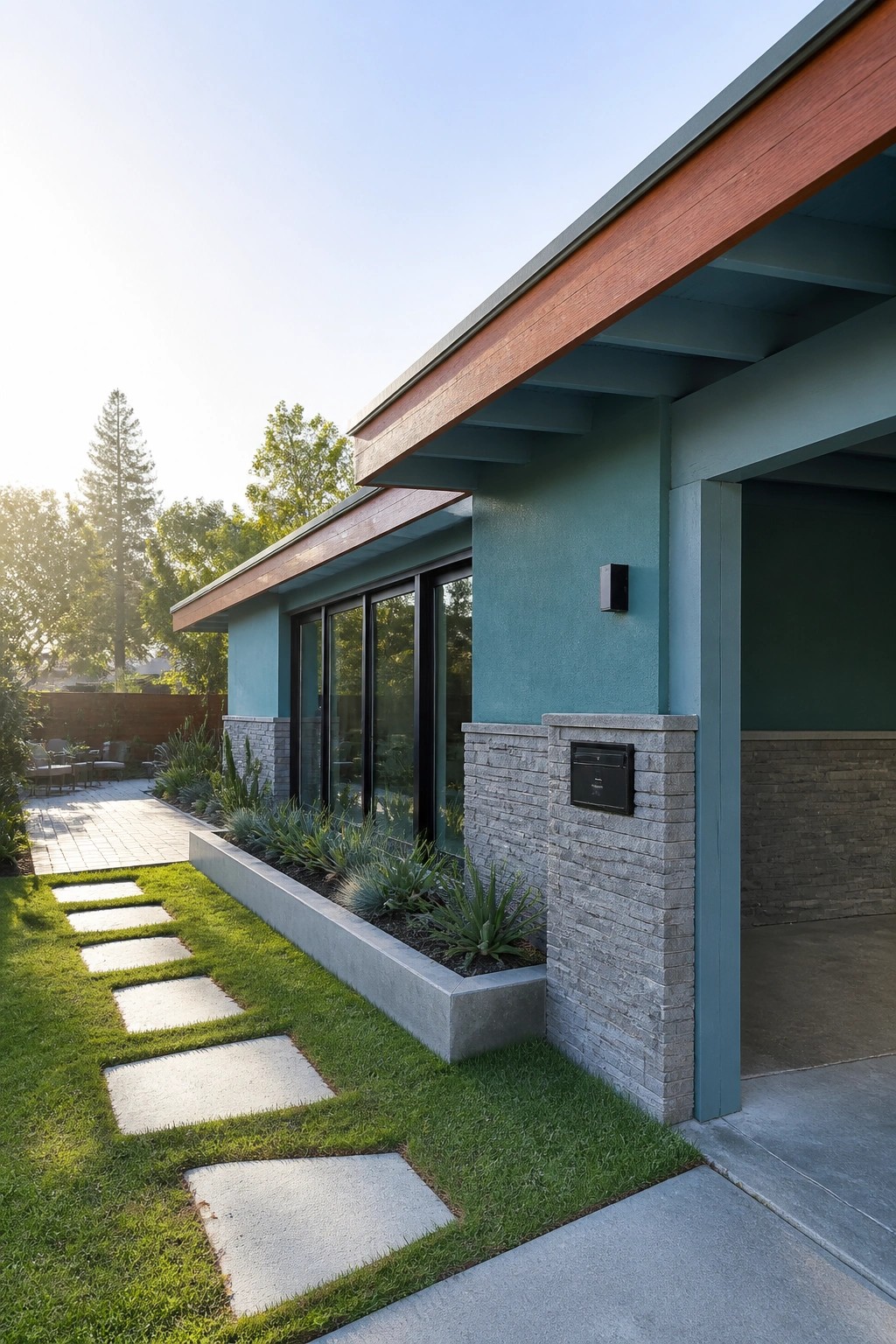
Teal siding looks sharper when it sits on a stone base instead of running straight to the ground. The gray veneer adds weight and texture that keeps the color from feeling too light or flat on a simple modern house. It also helps the teal stand out without needing extra trim or details.
This works best on homes with clean rooflines and large windows. Place the stone on pillars, entry walls, or the lower third of the facade where it can anchor the color. Avoid using too much stone or it can start to compete with the teal rather than support it.
Teal Siding with Stone Veneer
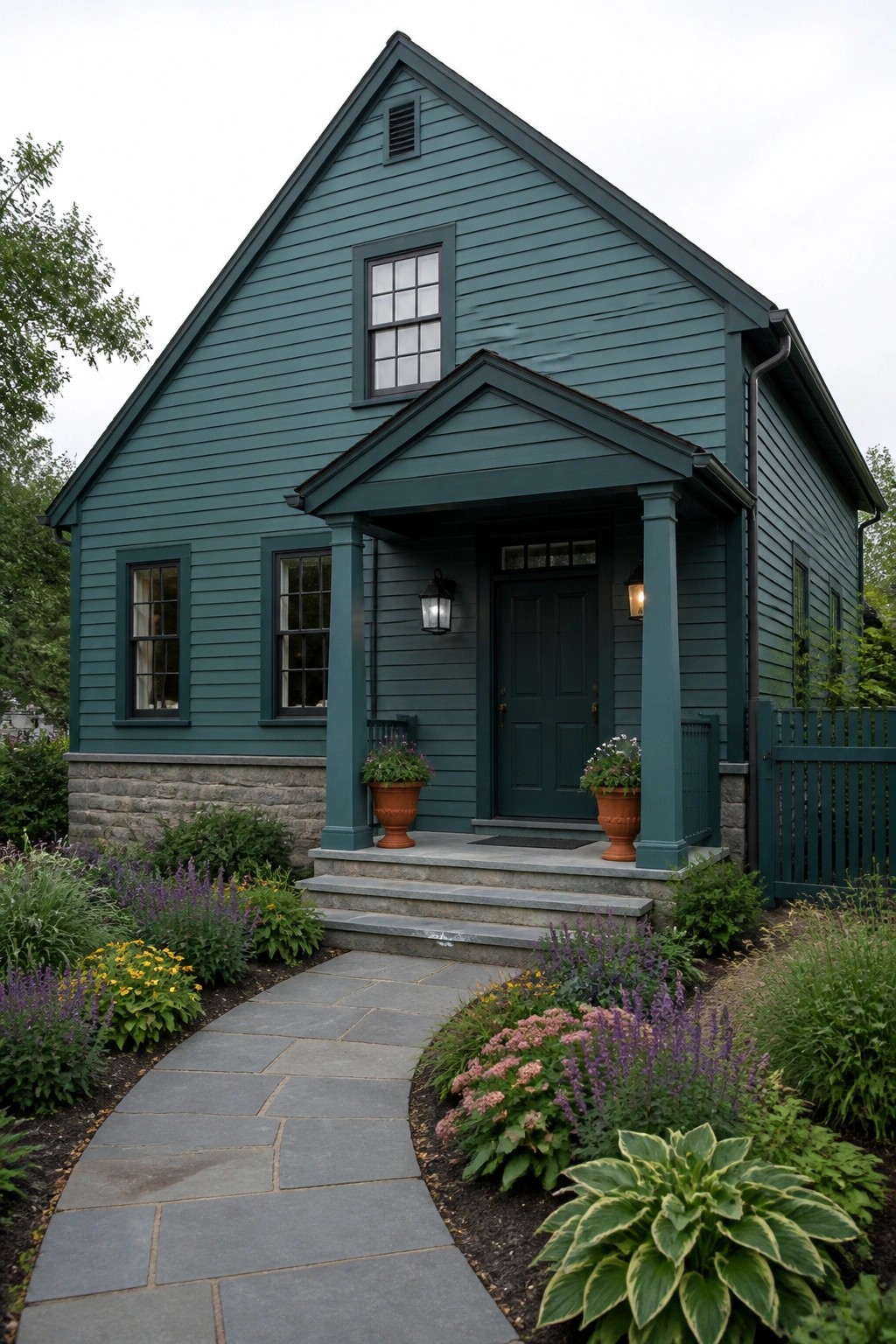
A deep teal works well on house siding because it keeps the color bold without letting the whole exterior feel too light or floating. The gray stone at the base pulls everything down and gives the house a settled, finished look that pairs naturally with most yards.
This mix suits homes that already have some foundation height to work with. Keep the stone in a simple stacked pattern and match the trim to the stone or a darker shade of the teal so the two materials read as one clean unit rather than separate pieces.
Gray Stone Veneer Grounds Teal House Exteriors
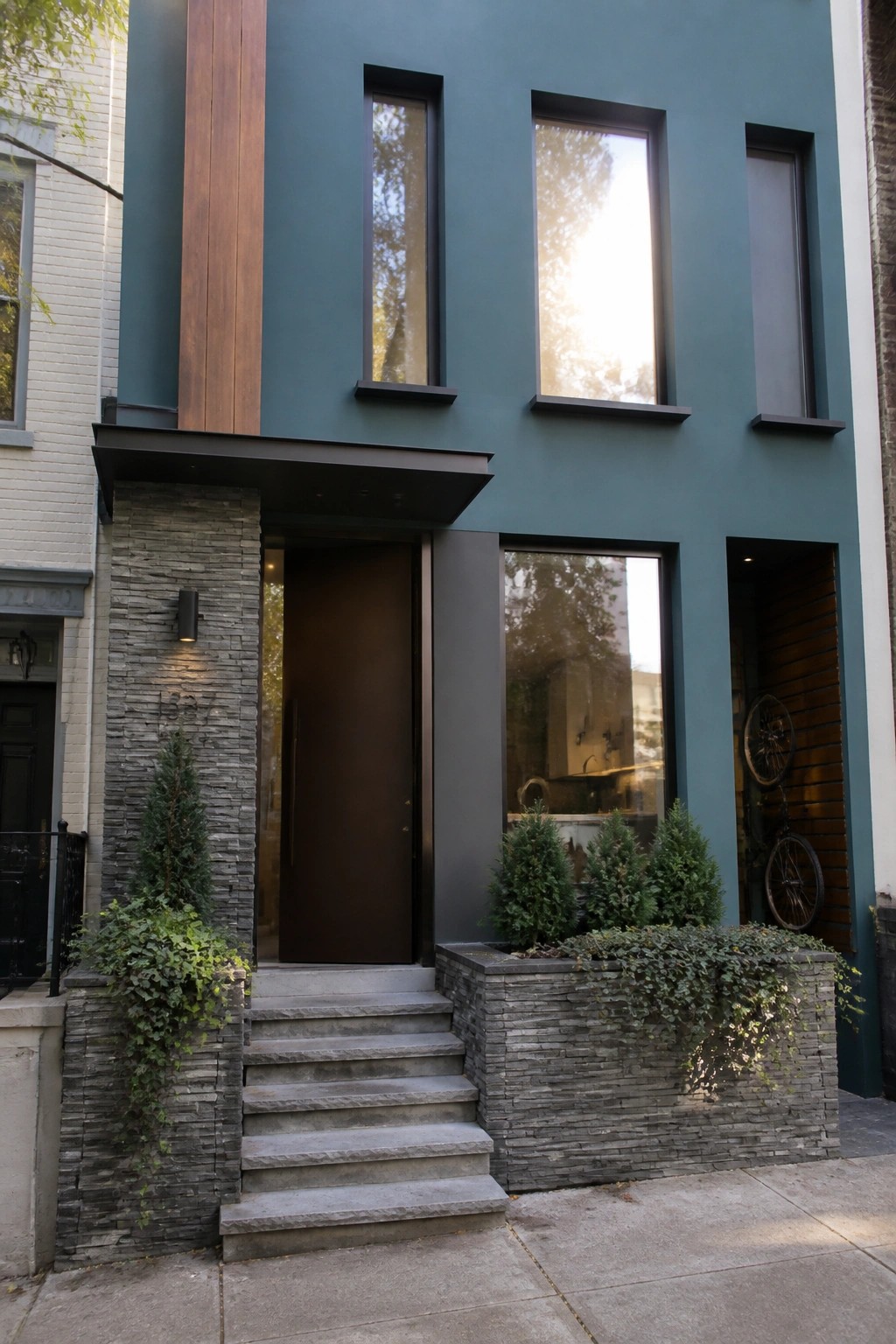
Teal can feel a bit sharp on its own when it covers most of a house front. Gray stone veneer at the base and around the entry gives the color a solid place to land and keeps the whole look from floating.
This approach suits updated row homes or modern builds where you want the teal to stay prominent but still feel settled. Use the stone mainly on the steps, planters, and door surround so it supports the color instead of competing with it.
Teal Siding with Gray Stone Accents
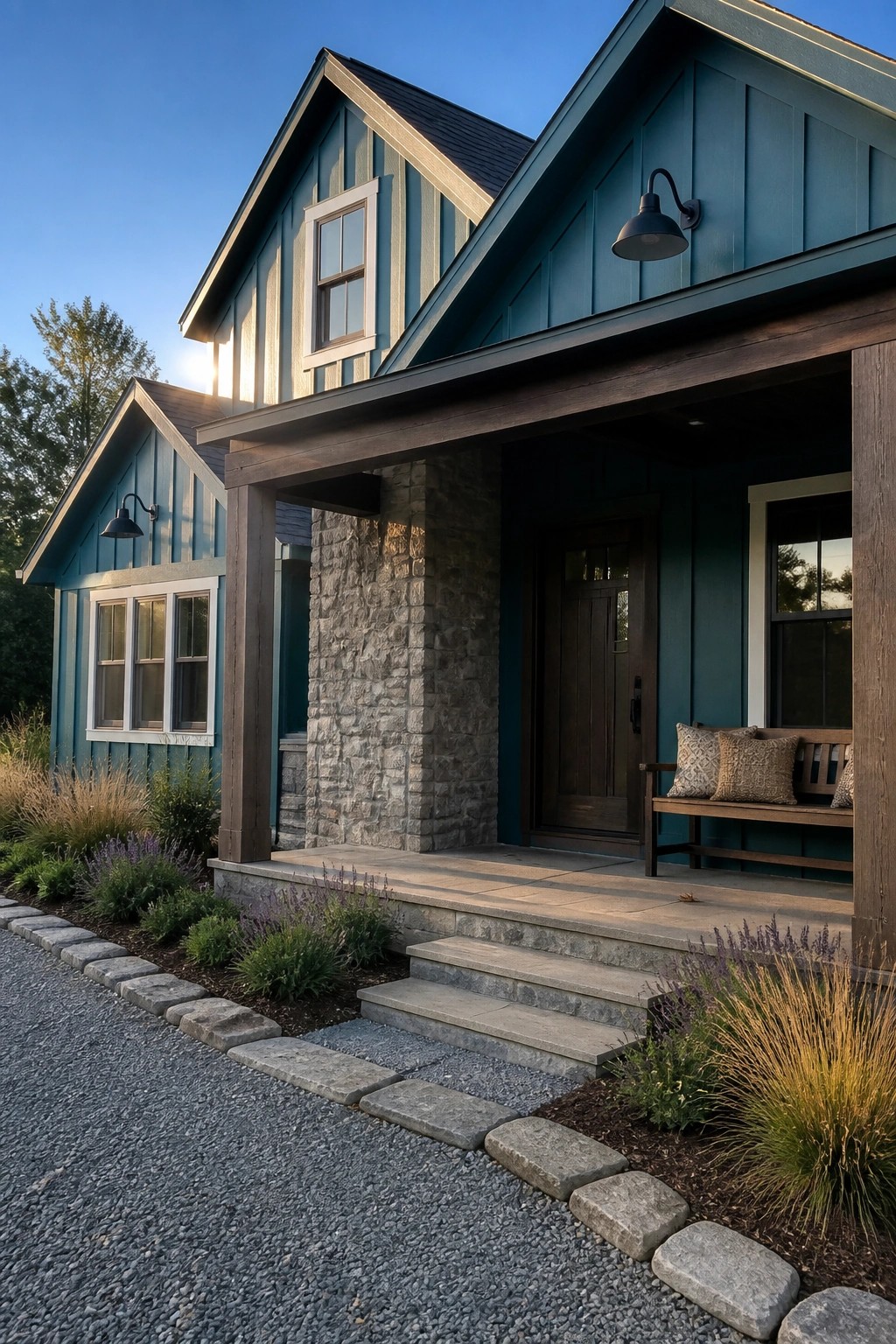
Teal house paint gains a lot from gray stone placed around the entry. The stone adds weight and texture so the color feels more grounded instead of just bright.
This works best on homes where the stone stays limited to columns or steps. Keep the rest of the siding clean and let the stone handle the contrast near the door.
Teal Paint with Gray Stone Veneer
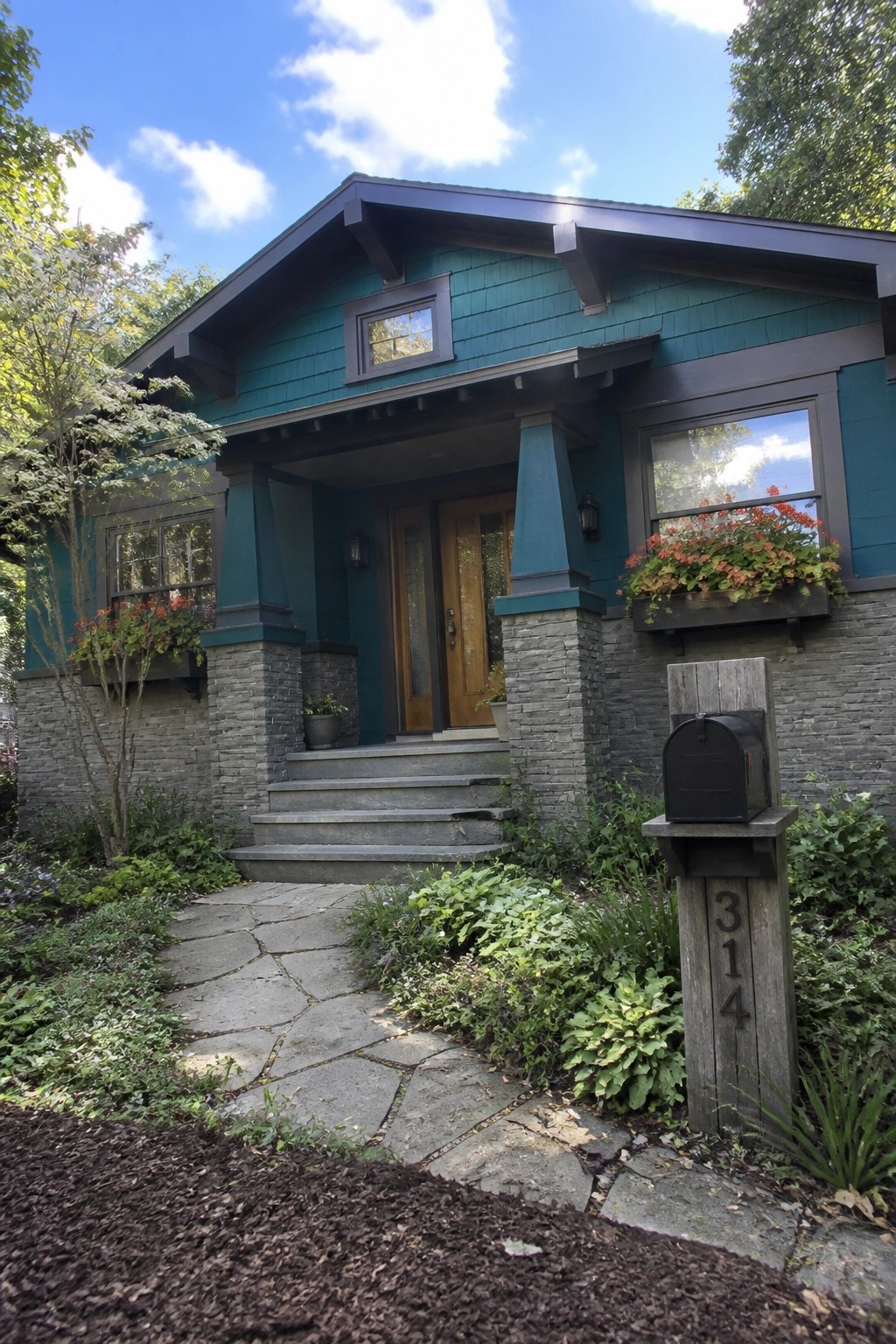
Teal siding stands out more when the lower walls and porch columns are wrapped in gray stone. The two materials keep each other in check so the color feels bold but still grounded.
This approach works best on smaller homes or bungalows where you want some texture without adding too many extra colors. Keep the stone to the foundation and entry area, and let the teal cover the main body of the house.
Teal Siding with a Stone Base
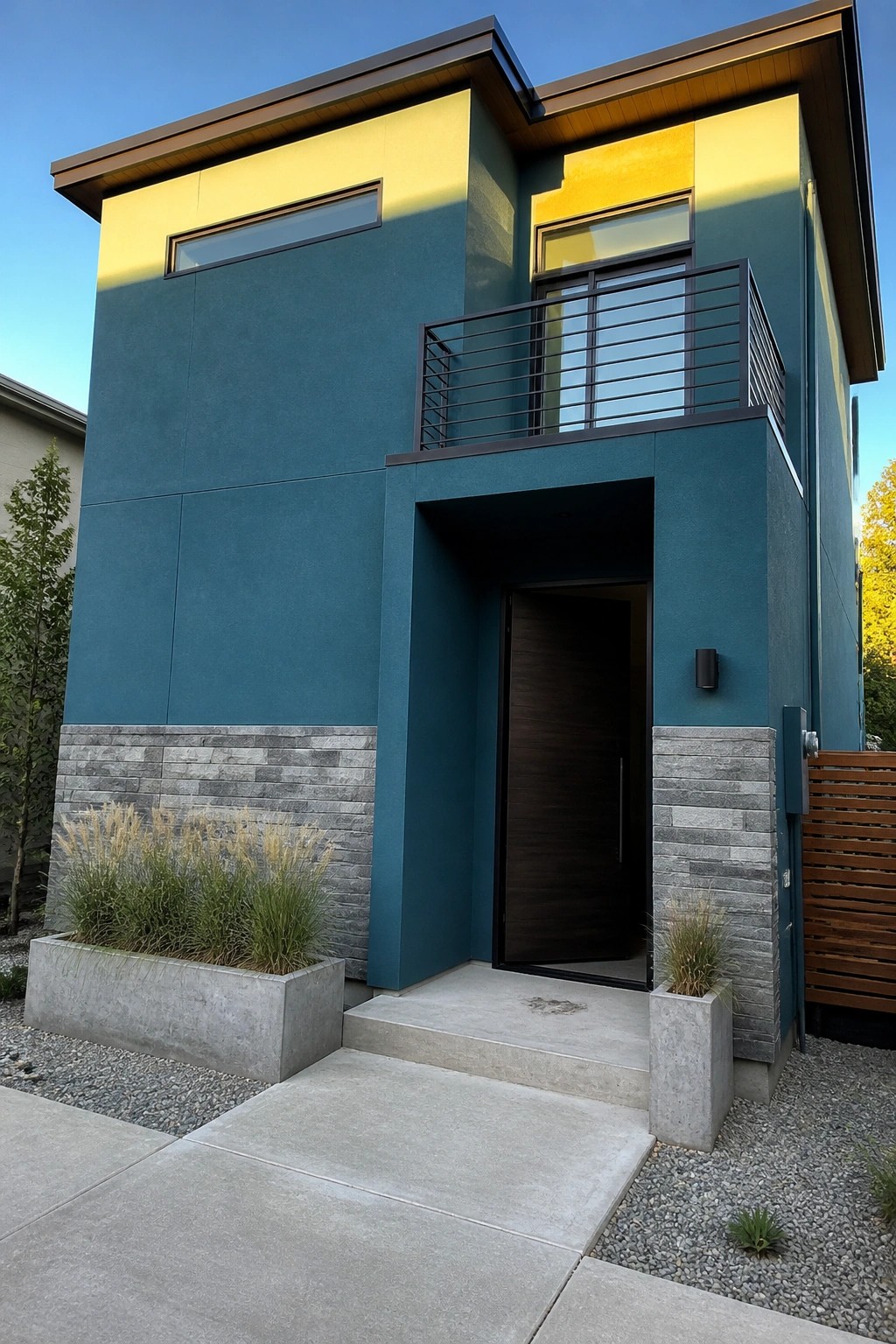
Many people like teal on a house because it stands out without needing lots of extra trim or detail. Adding a gray stone veneer along the lower walls gives the color something solid to sit on and keeps the whole front from feeling too light or floating.
This mix works best on homes with simple shapes and flat rooflines. The stone adds texture right where the house meets the ground, and it pairs especially well with a dark door and minimal landscaping so the color and material stay the main focus.
Stone Veneer Grounds Teal Siding
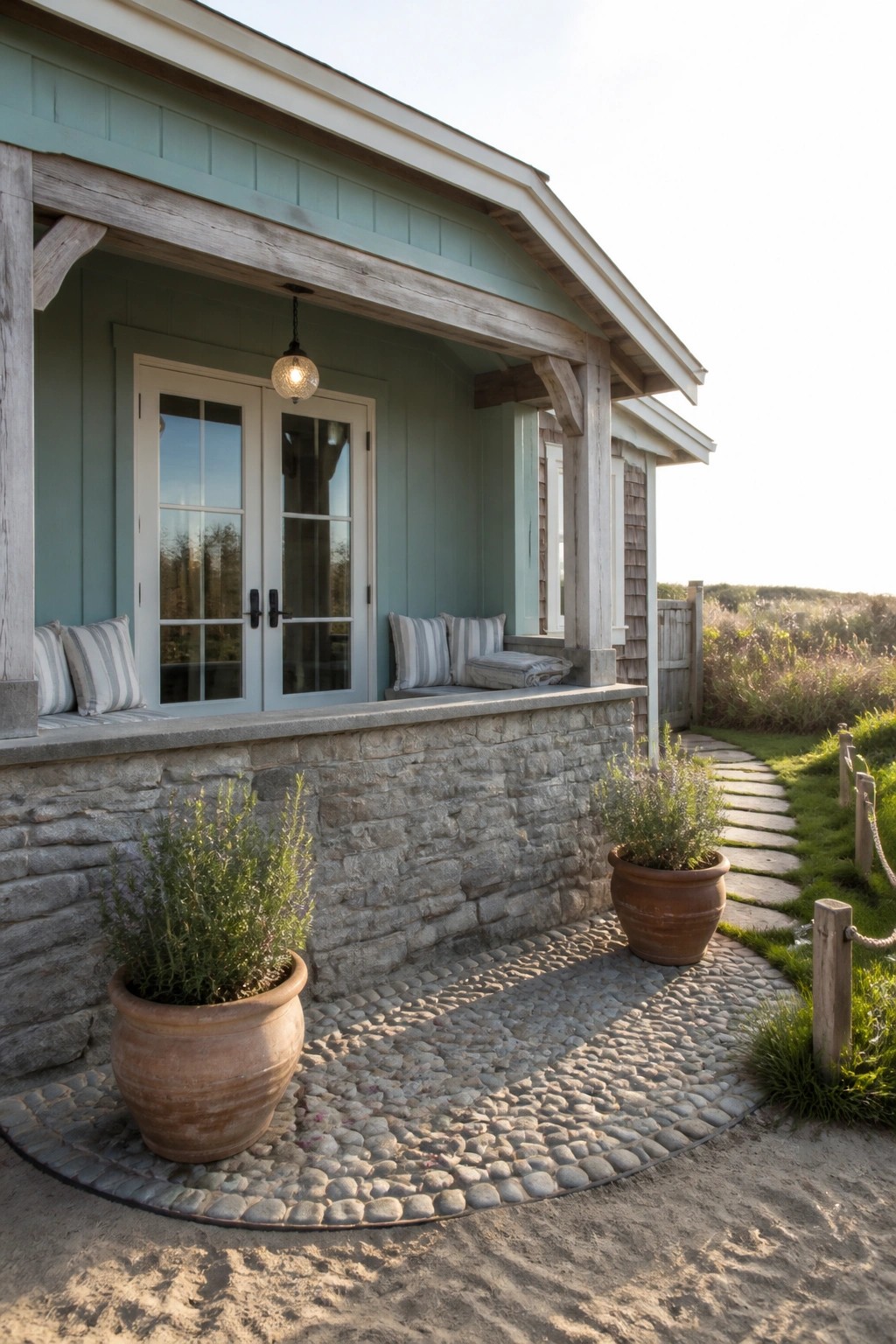
Teal paint can feel a bit light when it runs all the way to the ground, especially on homes that sit close to sand or grass. A band of gray stone veneer along the base gives the color something solid to sit on and keeps the whole front from looking too delicate.
This works best on houses with a porch or a raised foundation where the stone can run along the lower third. It suits coastal cottages and keeps the teal looking fresh rather than washed out against the soil.
Stone Veneer Along the Base
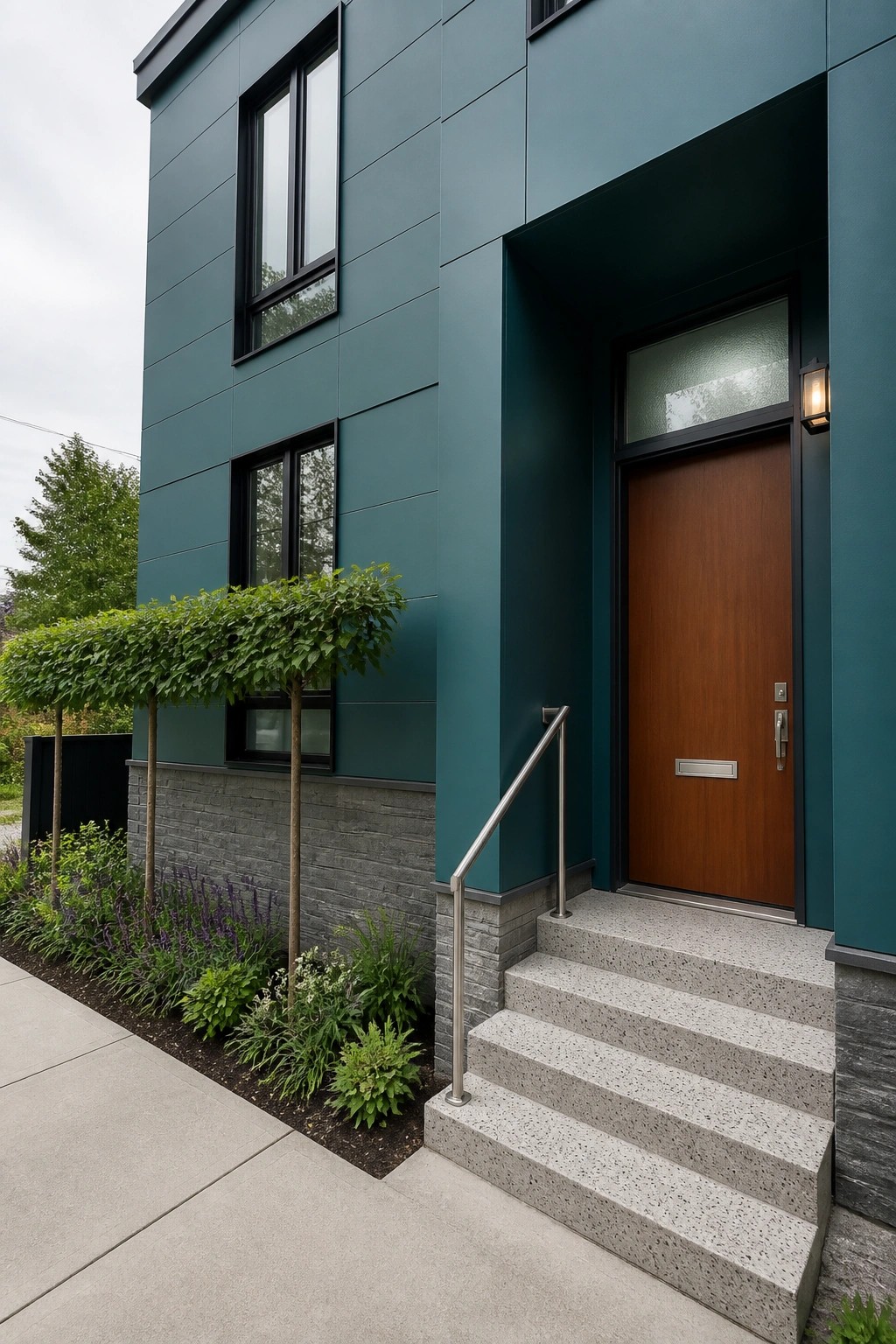
Many teal house exteriors gain a more settled look when gray stone veneer covers the lower section. The stone creates a clear break between the siding and the ground, which helps the color feel less stark and more tied to the site.
This approach works especially well on homes with raised entries or visible foundation walls. Keep the stone height modest so it frames the door and steps without overpowering the teal above.
Teal Siding Works Well with Stone Details
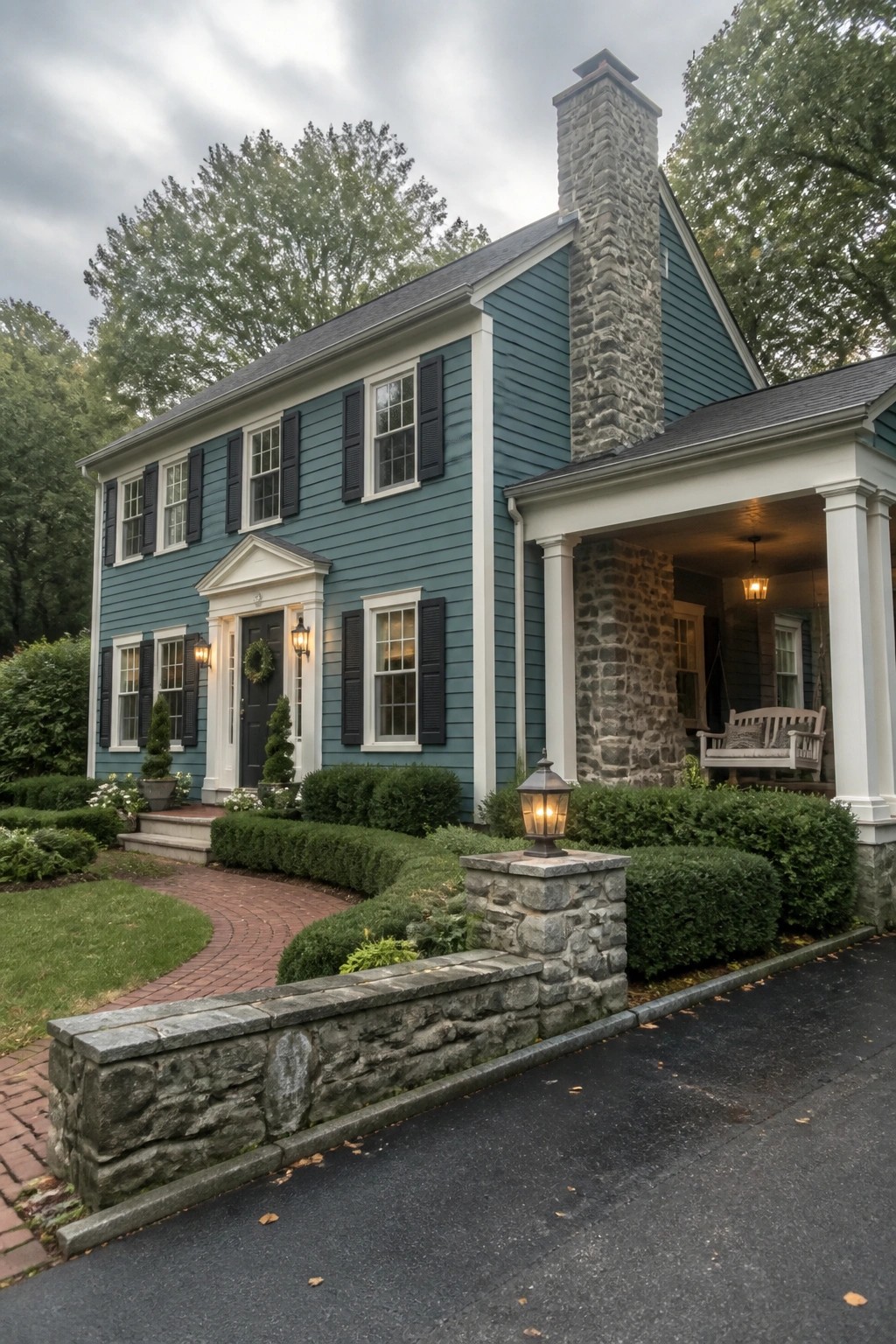
Teal paint on a house can feel a little bright on its own, so adding gray stone helps balance it out. The stone gives the color something solid to sit against and keeps the whole look from seeming too light or flat.
This mix suits homes that already have a chimney or porch columns where stone can be added without much trouble. It works especially well on traditional shapes where the stone can run up one side or across the base.
Gray Stone Veneer On Teal Siding
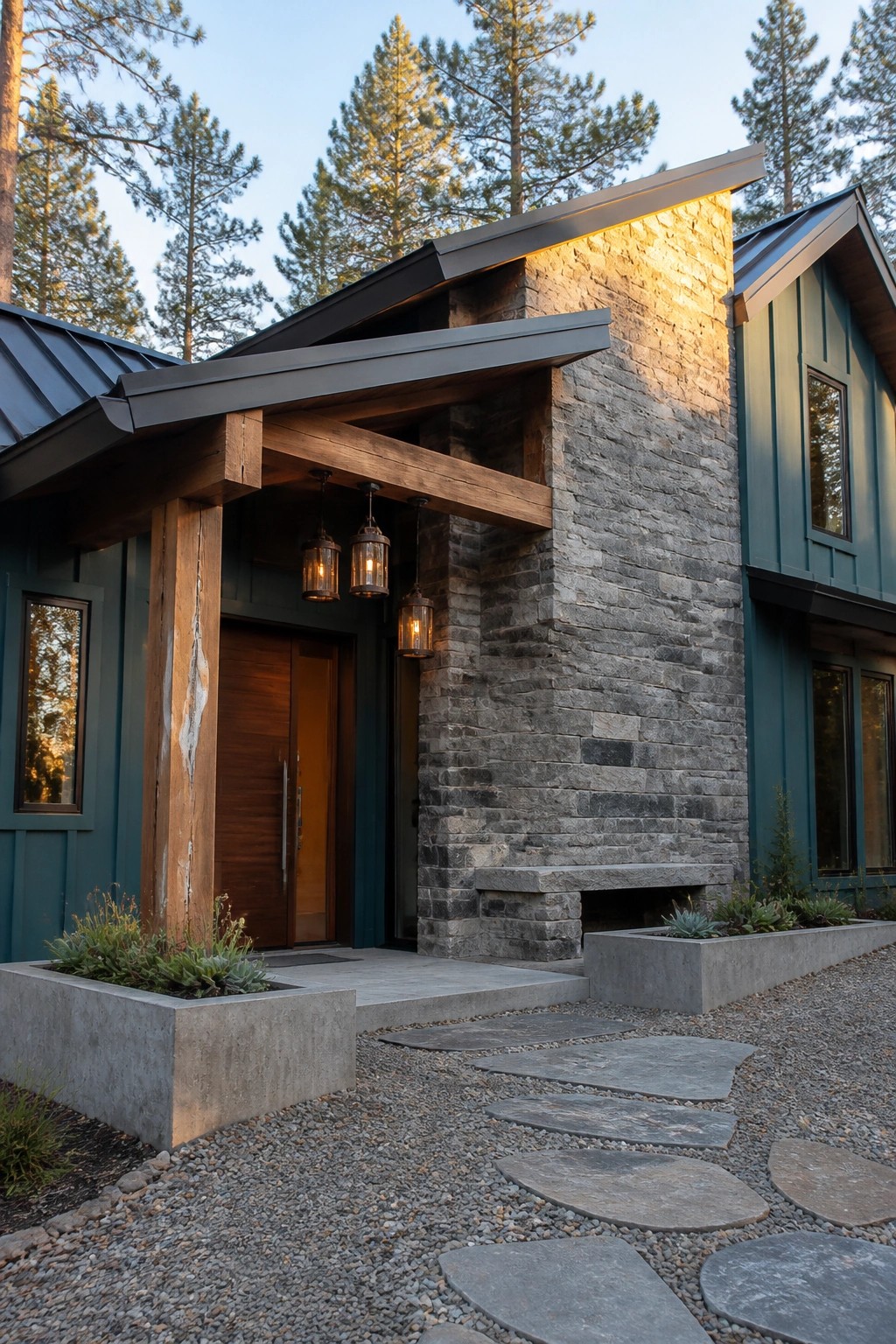
Teal siding can look a little flat on its own, especially on larger walls. Adding gray stone veneer next to it gives the exterior some weight and breaks up the color without overpowering the teal.
This approach works best on homes with simple rooflines and natural surroundings. Keep the stone in a mid-tone gray so it contrasts cleanly with the teal and still feels grounded.
Teal Siding with Stone Veneer at the Entry
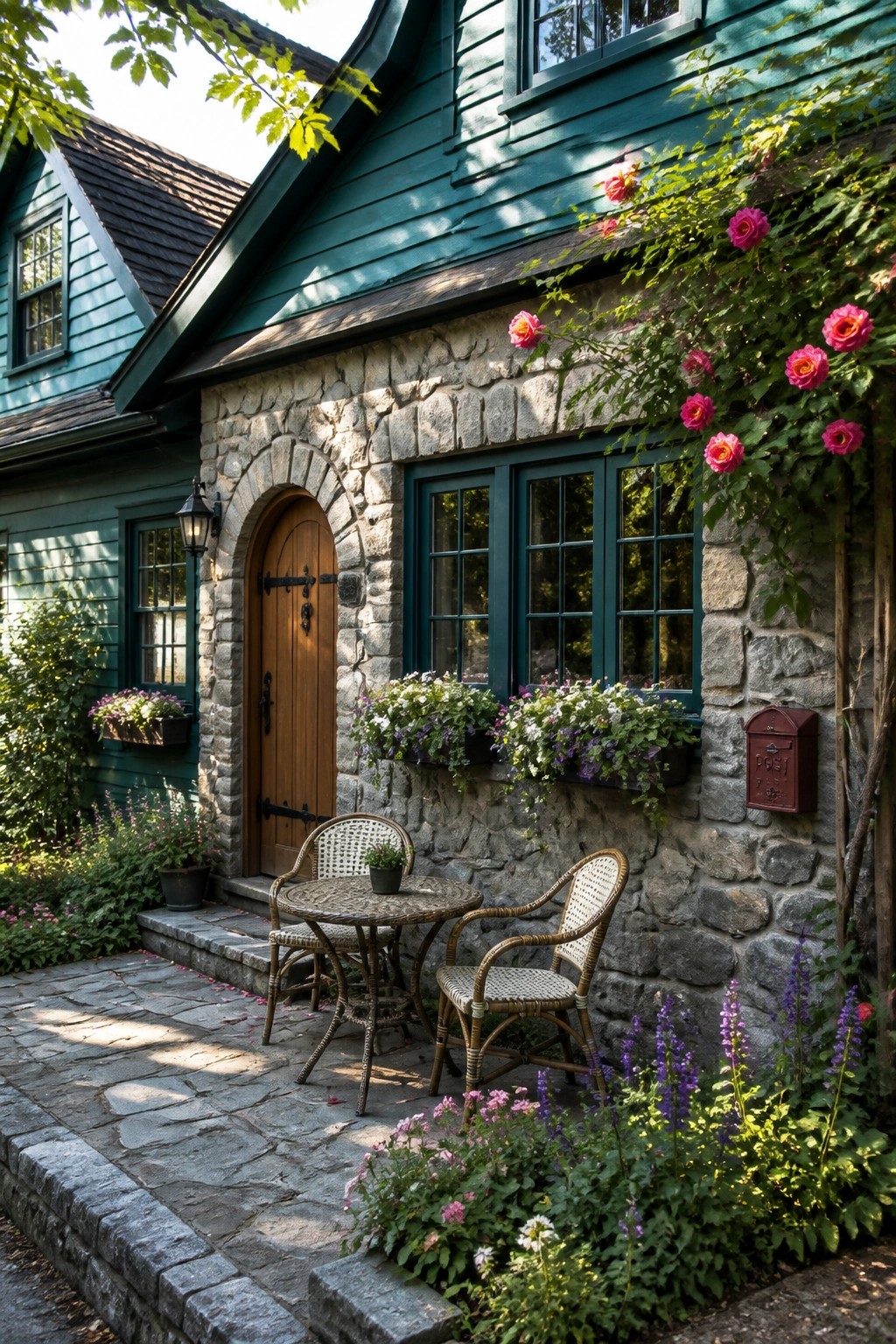
One of the simplest ways to make teal siding feel more substantial is to bring in gray stone veneer around the door and lower sections of the house. The stone gives the color something solid to sit against, so the teal does not read too bright or flat on its own. It also creates a natural spot for the eye to land at the front door.
This mix works especially well on smaller or cottage-style homes where you want some weight without adding more trim or dark paint. Keep the stone limited to the entry surround and window bases so it stays as an accent rather than covering the whole facade. Flower boxes or low plantings along the stone edge help the two materials blend without extra effort.
Stone Veneer Bases for Teal Siding
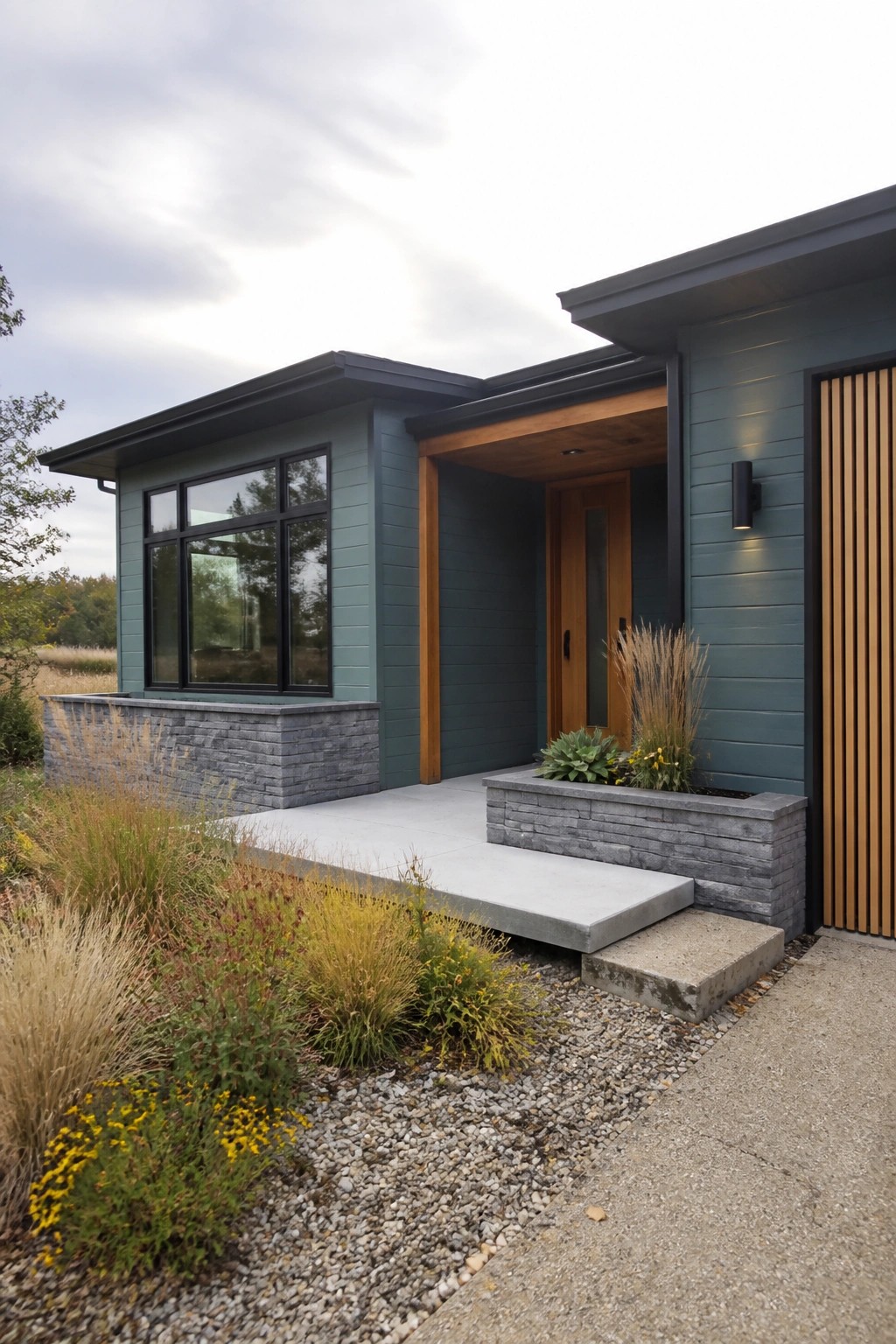
Stone veneer gives teal siding a solid starting point at ground level. The gray tones add texture and weight that keep the brighter color from feeling too light or flat against the landscape.
This works best on homes with simple shapes where you want one natural material to handle the lower section. Limit the stone to the foundation and a few built-in planters so the teal remains the main feature rather than competing for attention.
Stone Veneer Bases for Teal Homes
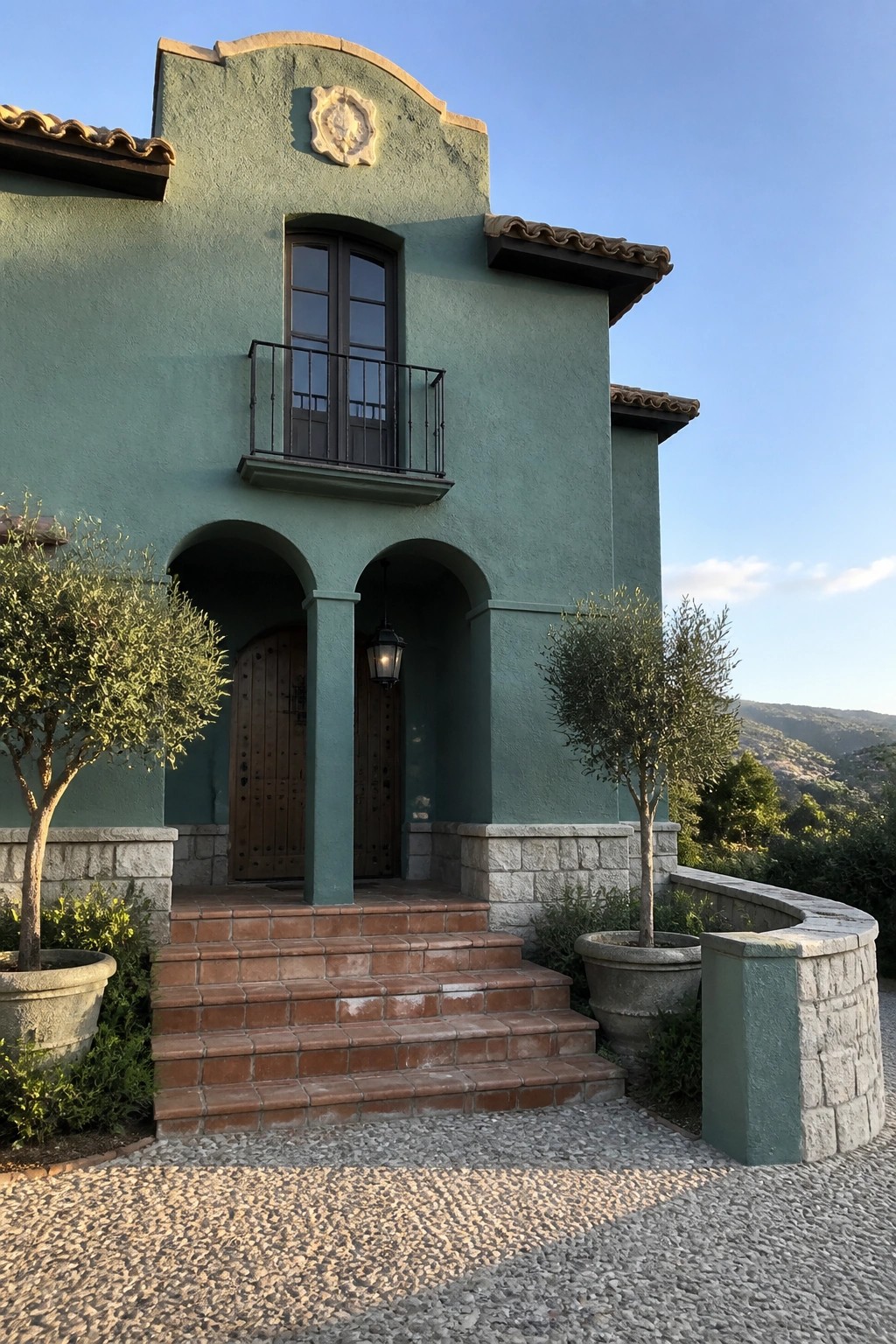
Teal stucco can feel a bit light on its own, especially near the ground. Adding gray stone veneer along the base and around the entry columns gives the color something solid to rest on and keeps the whole front from looking too flat.
This works best on houses with simple rooflines and stucco walls. Keep the stone low and focused around the door and foundation so it supports the teal instead of taking over.
Teal Siding With Gray Stone Details
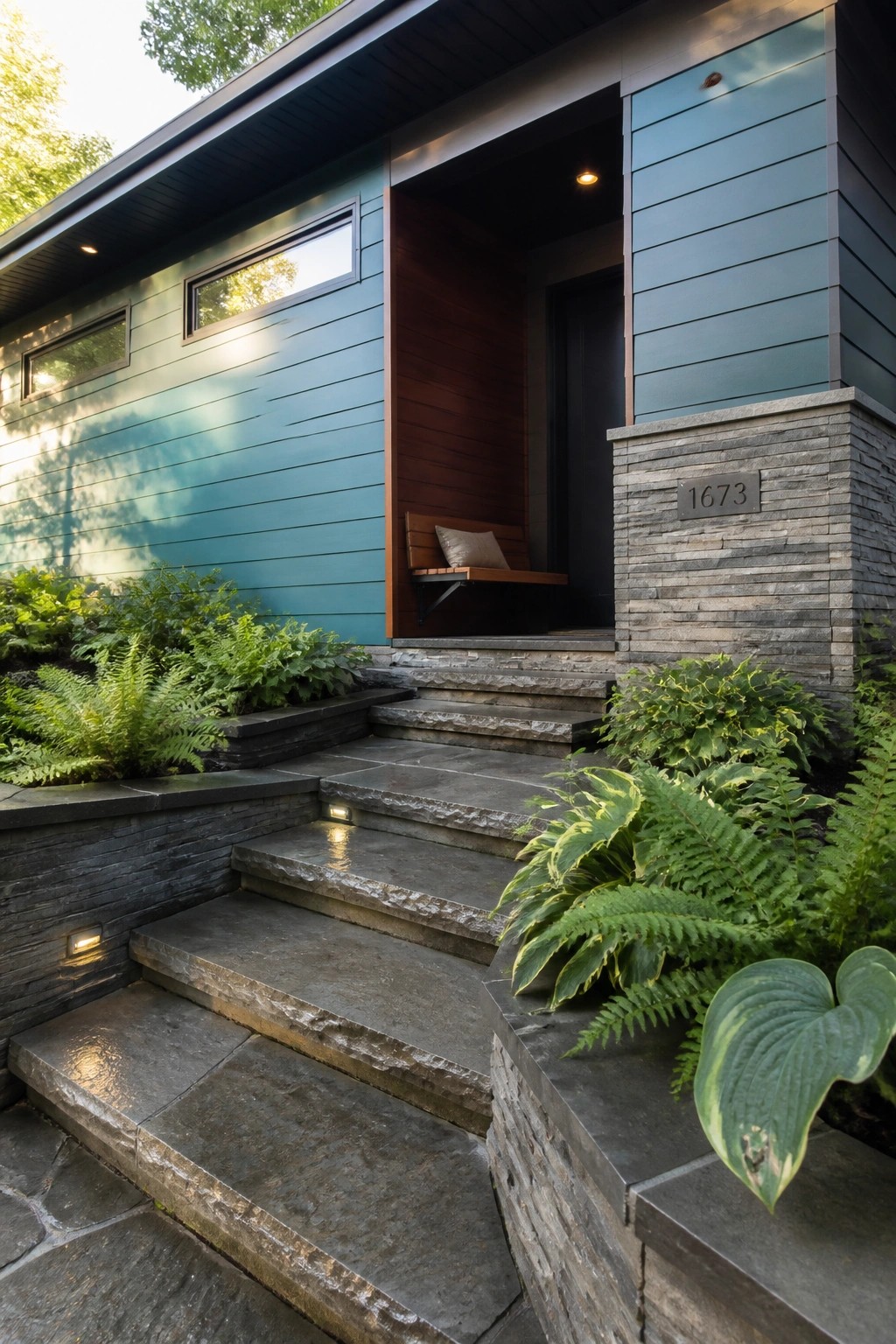
Teal siding stands out on this house because the gray stone veneer anchors it at the base and along the steps. The stone gives the color something solid to sit against so the whole front feels balanced rather than flat.
This approach works well on smaller or mid-century homes where you want color without losing weight. Use a slightly muted teal and let the stone run along the foundation and any visible steps so the two materials read as one deliberate choice.
Teal Siding With Gray Stone Accents
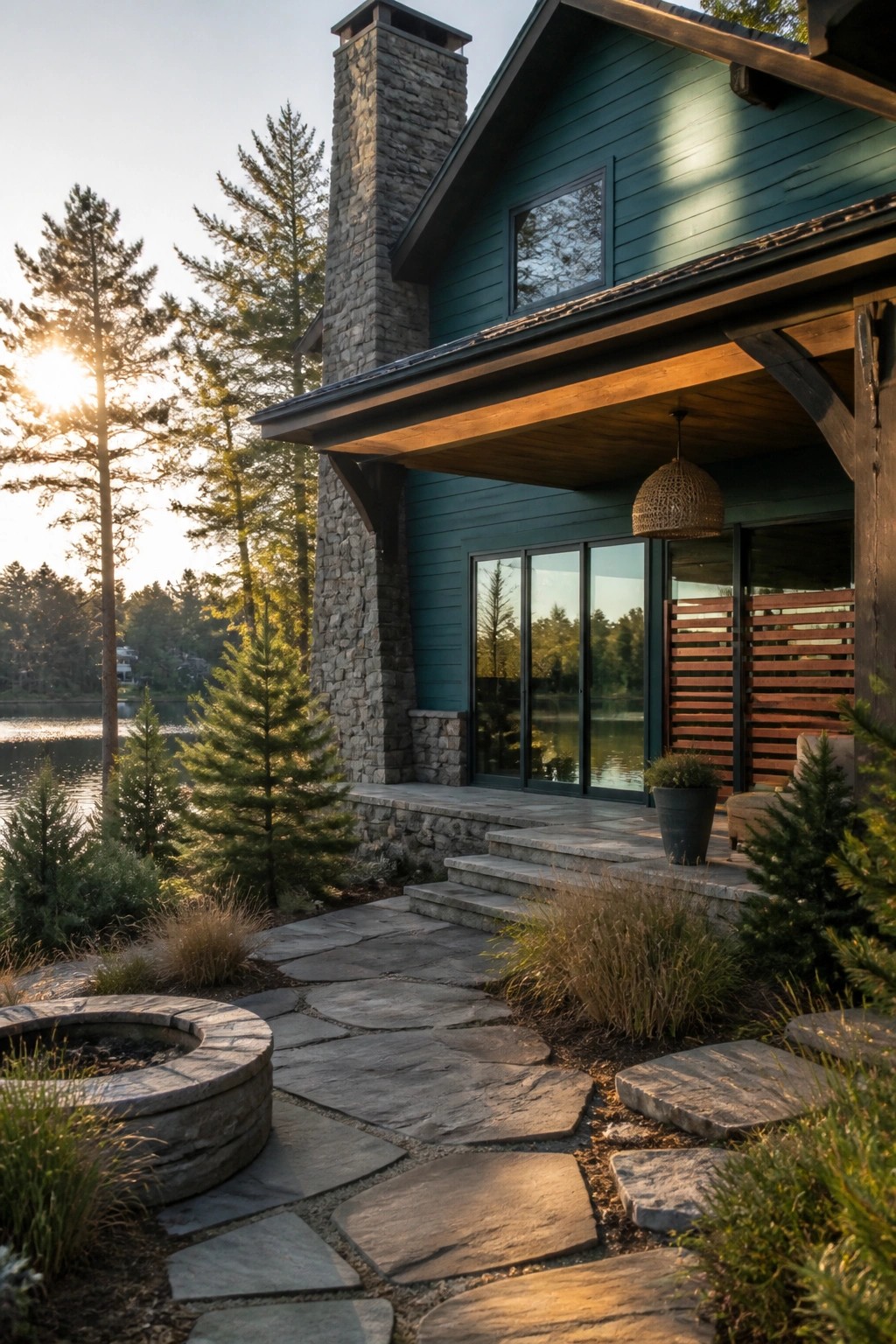
Teal siding gains a lot from gray stone next to it. The stone gives the color weight and stops the house from looking too bright or one-note.
This approach suits homes near water or in wooded settings. Keep the stone on the chimney or lower walls and let the teal cover the main surfaces so the two materials play off each other without competing.
Teal Exteriors Gain From Stone Veneer Accents
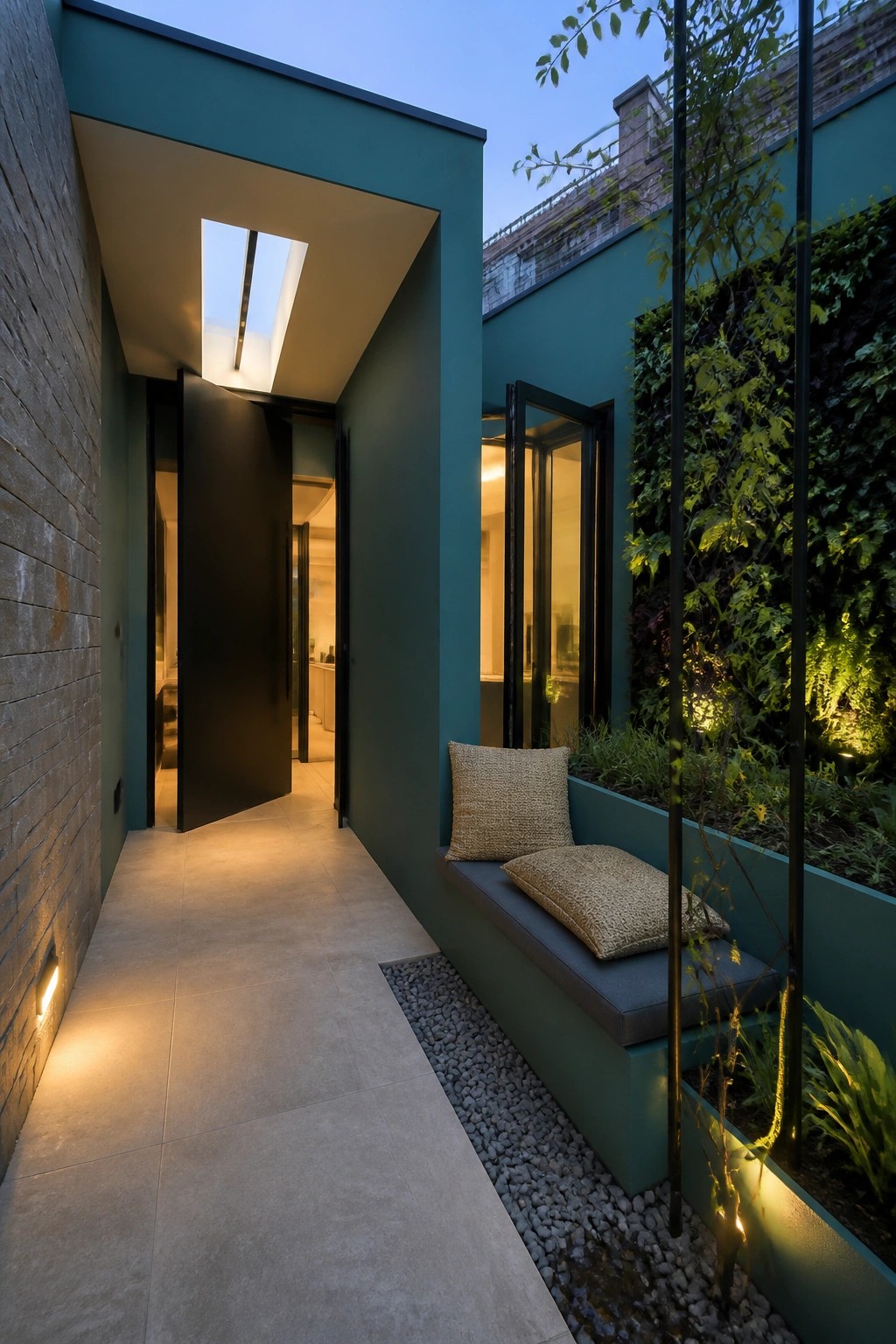
Teal paint on exterior walls can look a bit flat on its own. Adding gray stone veneer along one side gives the color something solid to sit against and helps the whole wall read as more intentional.
This works best on modern homes with narrow side passages or small courtyards where the two materials sit close together. Keep the stone in smaller sections so the teal stays the main color rather than getting lost.
Teal Siding With Stone Veneer
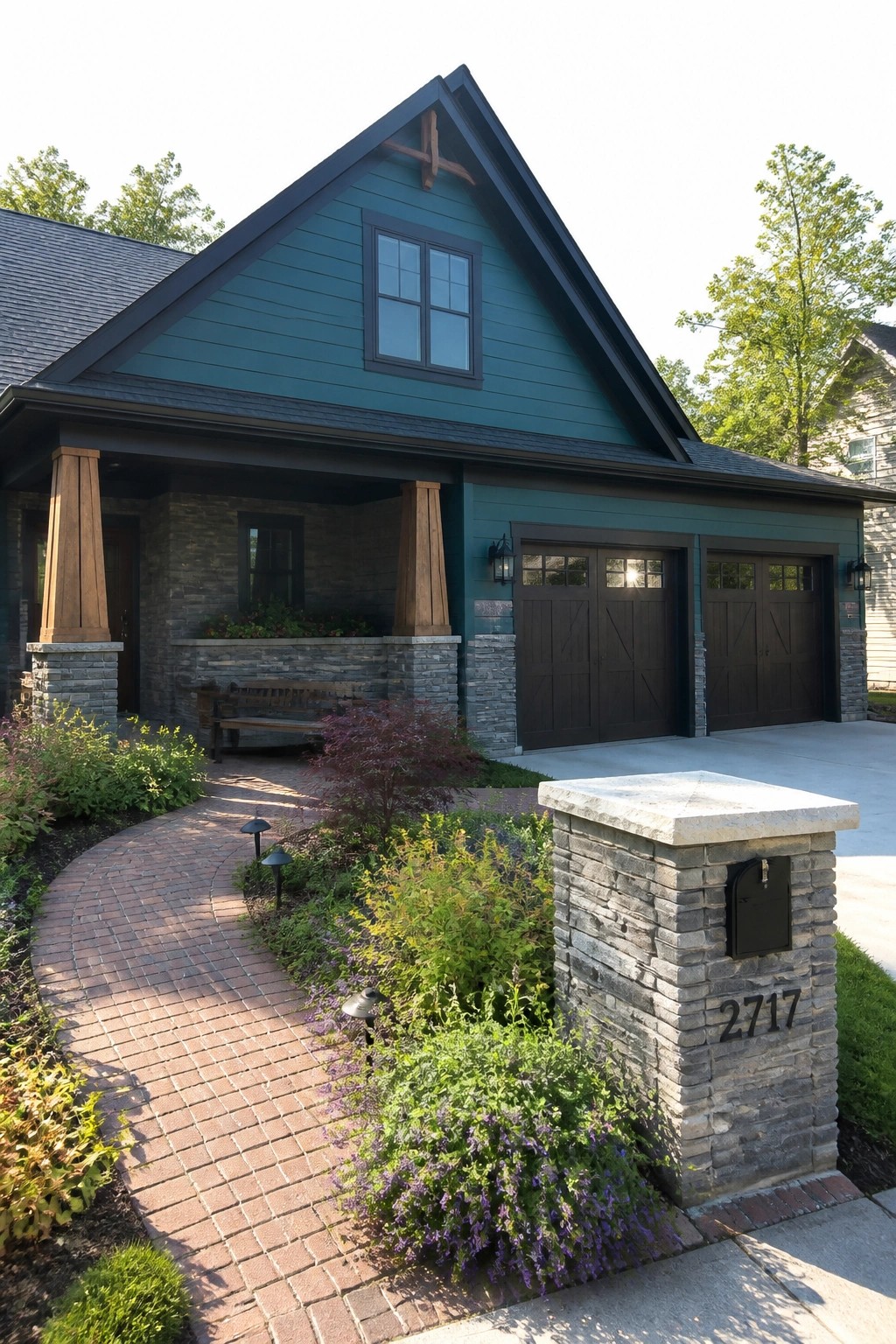
Teal siding stands out more when it sits next to gray stone veneer. The stone gives the color something solid to rest against and keeps the front from feeling too flat or one-note.
This mix works best on homes that already have some masonry details like porch columns or garage surrounds. Keep the trim dark so the teal and stone stay in balance instead of competing.
Teal Siding with a Stone Base
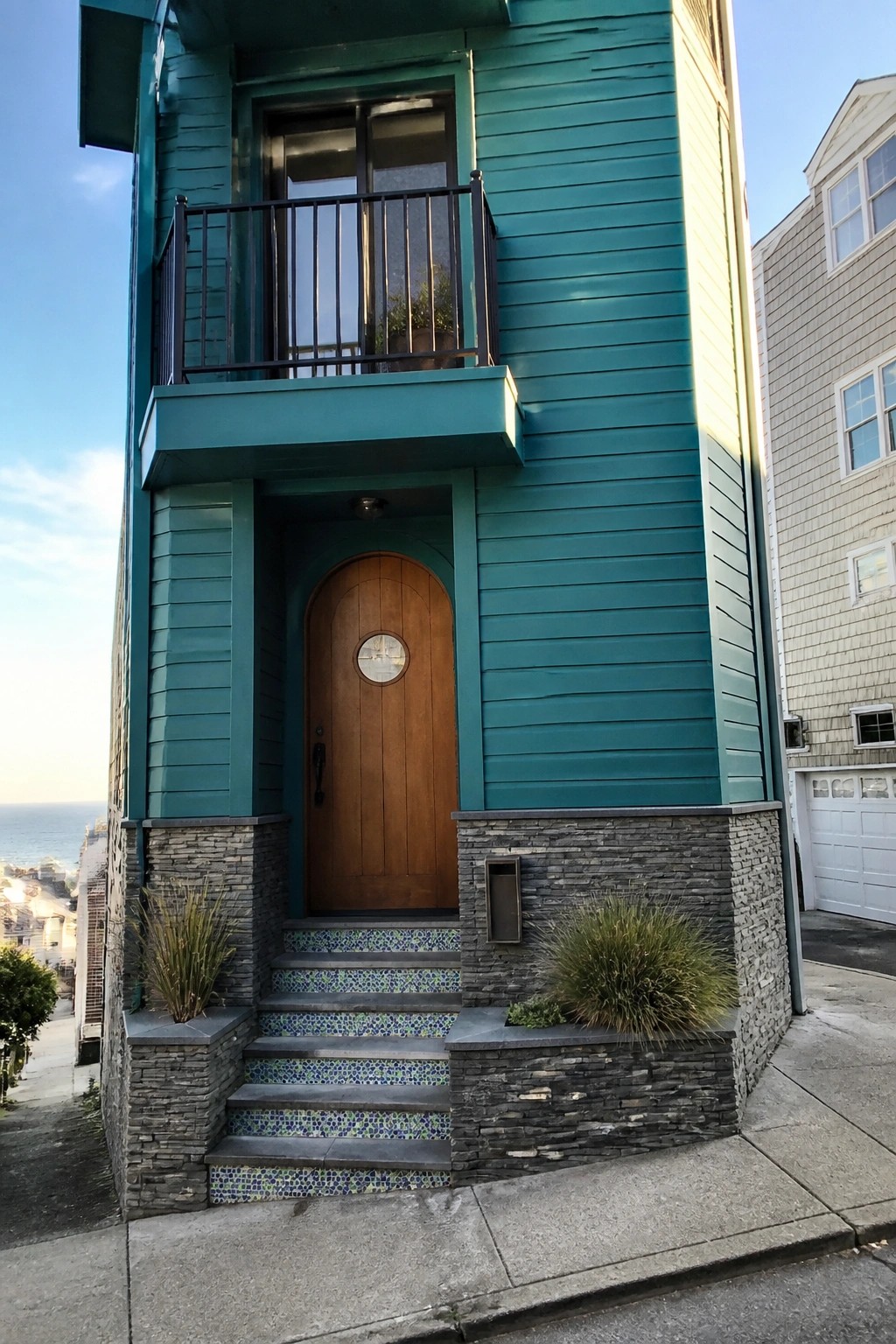
The teal paint on this house works because the gray stone veneer anchors the lower section. It gives the bright color a heavier, more grounded feel and stops the facade from looking too light at the bottom.
This approach suits tall or narrow homes where the eye needs something solid near the ground. Match the stone on the steps or low walls to keep the materials connected without adding extra colors.
Teal Siding Works Well with Stone Veneer
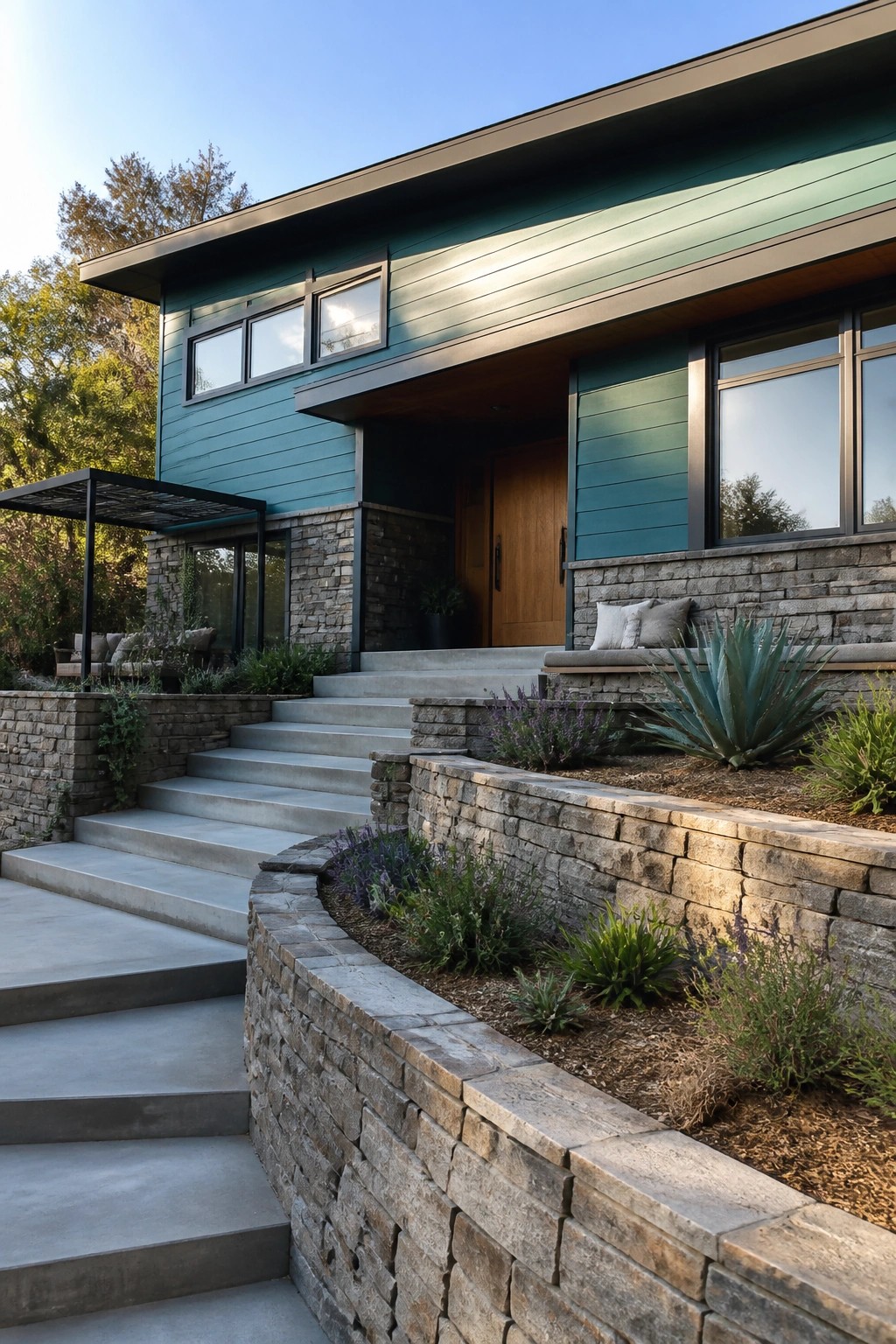
Teal siding can feel bold on its own, but pairing it with gray stone veneer keeps the look balanced. The stone adds texture and weight at the base, so the color does not overwhelm the house. This mix gives the exterior a clean modern shape while still feeling tied to the ground.
It works best on homes with some height change or a visible foundation line. Use the stone on the lower half and around the entry, then keep the teal on the main walls. The result stays simple and holds up in different light without needing extra trim or details.
Frequently Asked Questions
Q: Which teal shade pairs best with gray stone? A: Choose a teal that leans a bit toward blue rather than green. This creates a nice contrast against the stone without clashing. Always test a few swatches on your wall before committing.
Q: Will the teal fade faster than other colors in bright sun? A: Quality exterior paints resist fading well these days. The gray stone stays stable no matter what. Focus on prepping the surface right and you will get years of good color.
Q: How do I keep the whole exterior from looking too modern or stark? A: Add soft landscaping with green plants at the base. This ties the teal and stone together without extra effort.
