


I’ve noticed that neutral green exteriors make houses feel grounded in their surroundings, whether tucked into a city lot or out in the country. They enhance curb appeal by softening rooflines and siding materials, so the whole facade reads clean and approachable from the street. One time, I drove past a modest two-story with a pale sage finish that blended perfectly with the oaks nearby, proving how these tones hold up in real light. What stands out first to most folks is the subtle play between the color and entry details, like trim or doors that add just enough contrast. A handful of these ideas are worth noting down for your own home tweaks.
Sage Green Siding Paired with Dark Metal Roof
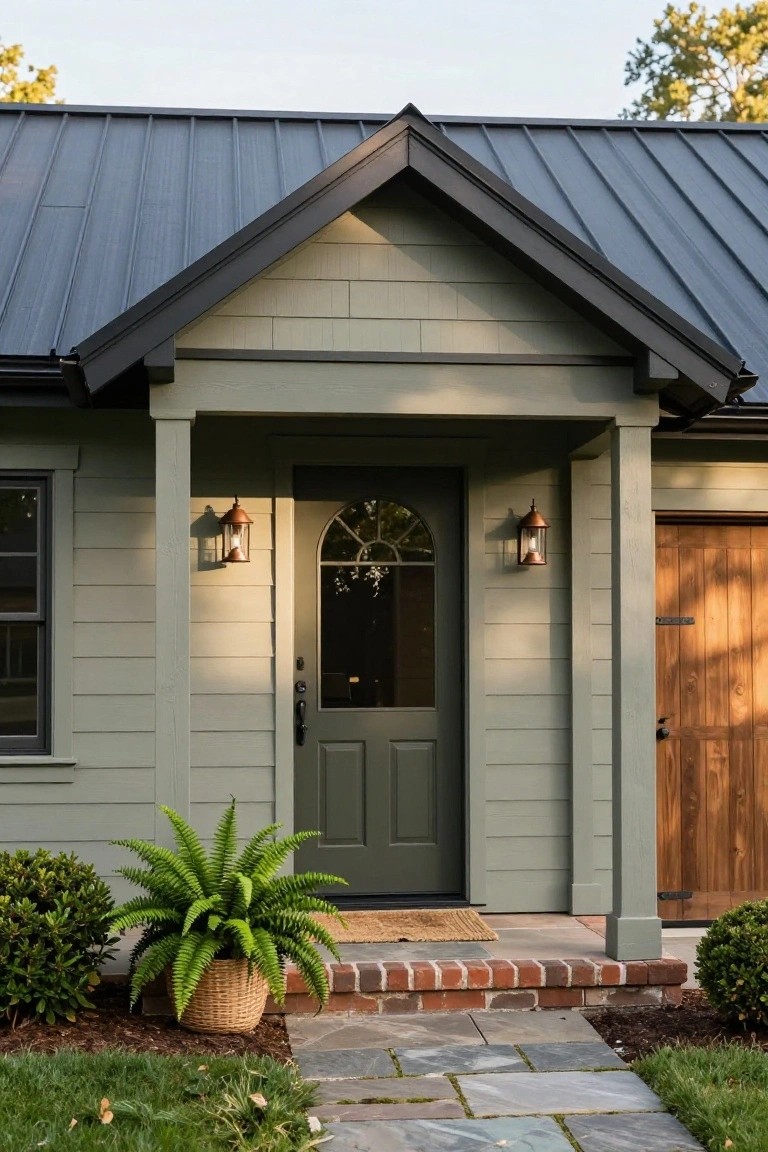
This house pulls off a soft sage green on the siding that feels fresh but not too bold. The dark standing seam metal roof adds nice contrast without overwhelming things. It gives the whole front a calm, grounded look that works in any neighborhood. That green door on the porch ties it right in.
You can try this on ranch or cottage style homes where you want some modern edge. Pick a muted green paint for the siding, then go darker on the roof for definition. Keep porch details simple like those lanterns. It holds up well in shady spots or full sun. Just match the green tone to your trees and grass so it blends.
Sage Green Shingle Siding

A soft sage green works great on shingle siding like this. It keeps the house looking quiet and settled in with the yard and trees. White trim around the door and windows sharpens it up without much fuss. That combo makes the front feel steady, not showy.
Try this on a small cottage or bungalow anywhere. It holds up in sun or shade. Just match the green to your light. Plants like lavender at the base help blend it right in. Skip anything too glossy on the trim.
Brick Entry with Potted Ferns
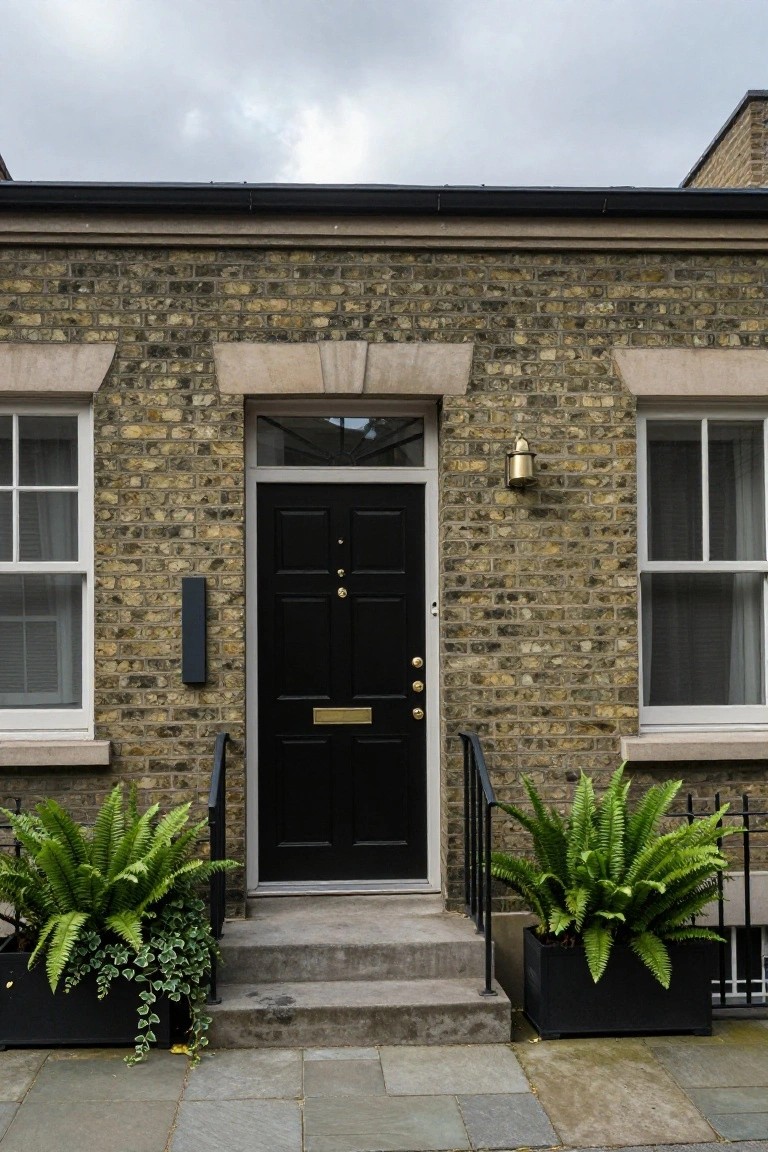
A yellow brick house like this one shows a straightforward way to work green into the exterior. Large ferns fill black pots placed right beside the front steps. They pick up on the dark door without overwhelming the simple brick walls and windows. The green stays neutral enough to fit most neighborhoods.
This approach works best on attached homes or spots with no room for beds. Use big pots for presence, and stick to shade-loving ferns since entries often lack sun. Containers in the same color as your door tie everything together neatly.
Pale Green Siding on a Cottage
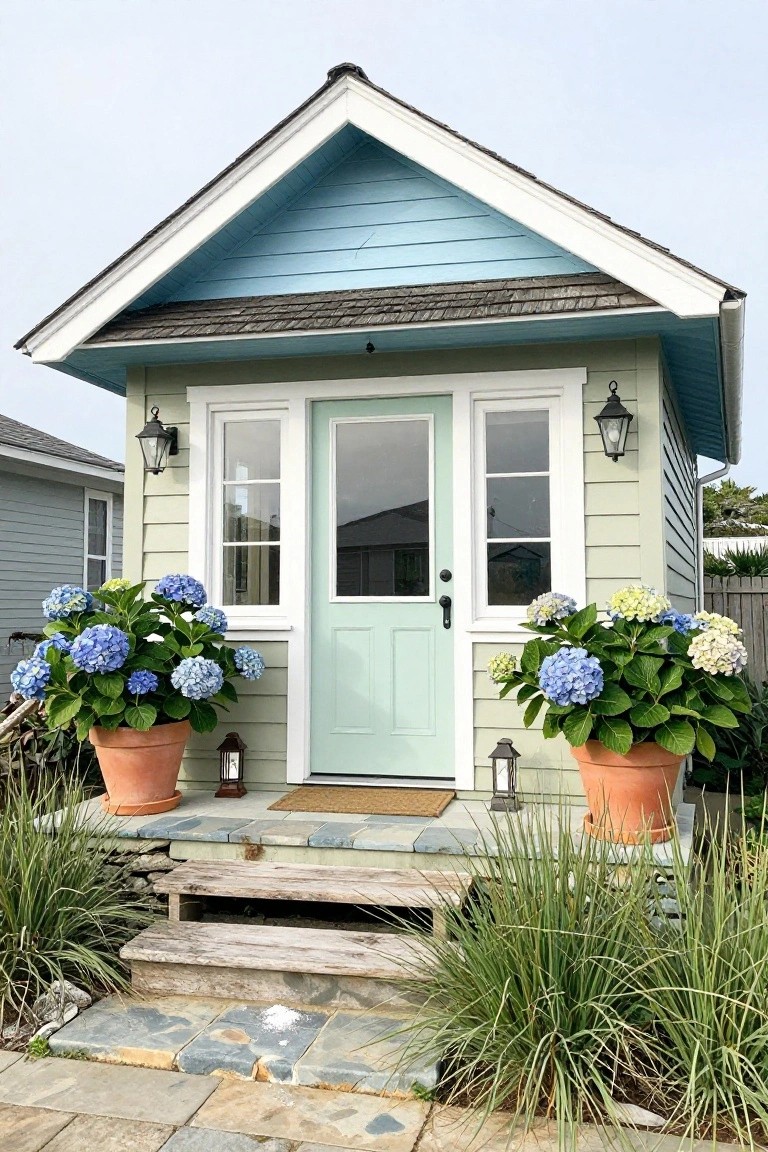
This cottage uses a pale green siding that feels fresh and easy on the eyes. It’s neutral enough to blend with coastal surroundings but still gives the house some gentle color. The blue gable roof and matching hydrangeas in terracotta pots pull it together without much fuss.
You can pull this off on smaller homes or bungalows where you want curb appeal that doesn’t shout. Pair the siding with white trim and a few blue plants for that soft tie-in. It suits relaxed spots like beach towns. Just keep the green light so it stays airy, not heavy.
Neutral Green Cottage with Picket Fence
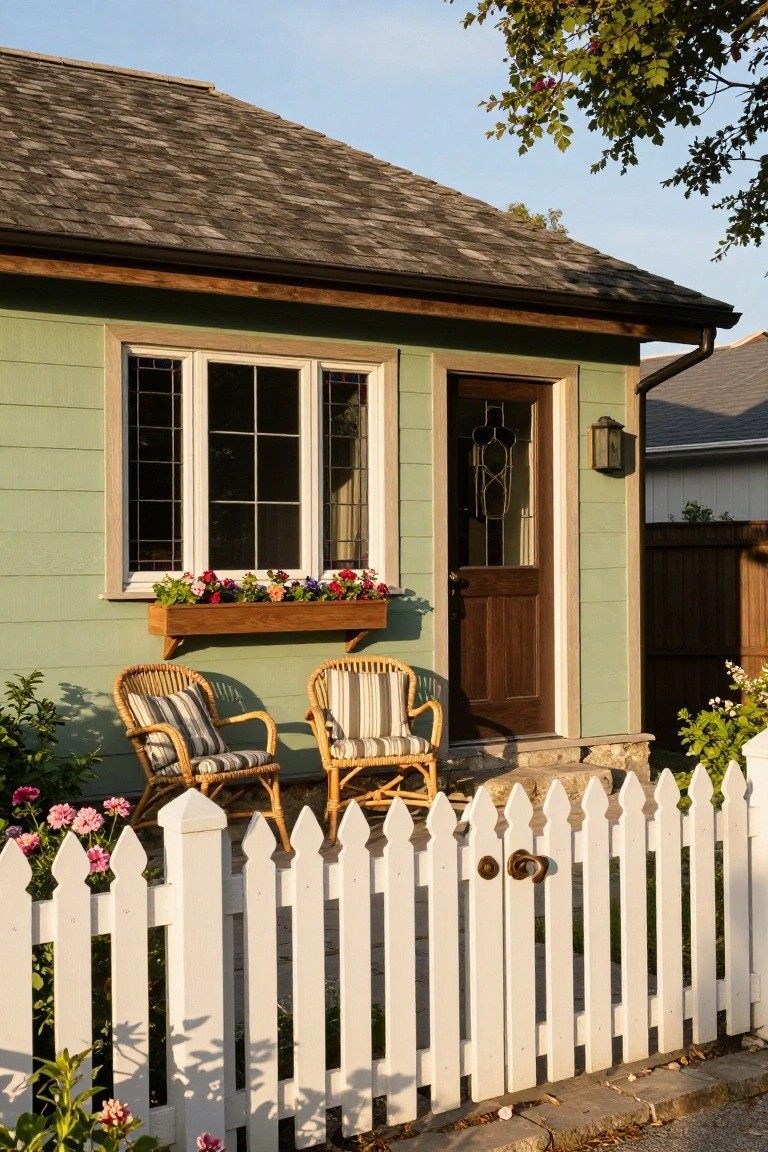
A soft neutral green like this on house siding brings out a cozy cottage feel without overpowering the yard. It sits well against trees and sky, and the white trim around windows and door keeps things crisp. That window box full of flowers adds a homey touch right at eye level.
This look fits older bungalows or small homes in town. Paint the siding in a muted green, then add a white picket fence out front for that classic edge. Set a couple wicker chairs by the door… it draws folks in without much fuss. Works best where you want low-key charm.
Recommended Products

Ready to use, pre-mixed door and trim paint offers a fresh new look on interior or exterior metal, wood and fiberglass

Use for a variety of indoor and outdoor project surfaces including wood, metal, plaster, masonry or unglazed ceramic
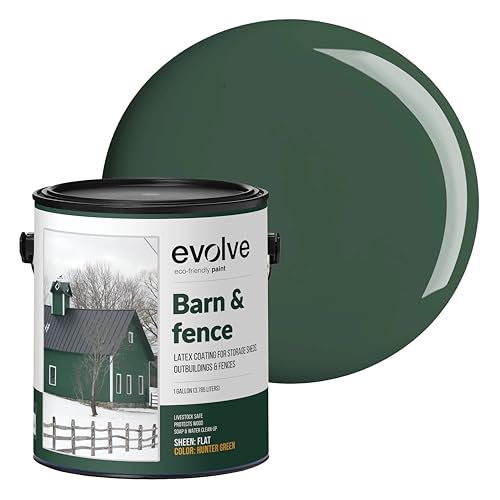
ELEVATE OUTDOOR STRUCTURES: Refresh barns, fences, sheds, and exterior surfaces with durable paint that delivers long-lasting color and protection.
Neutral Green Siding with a Navy Door
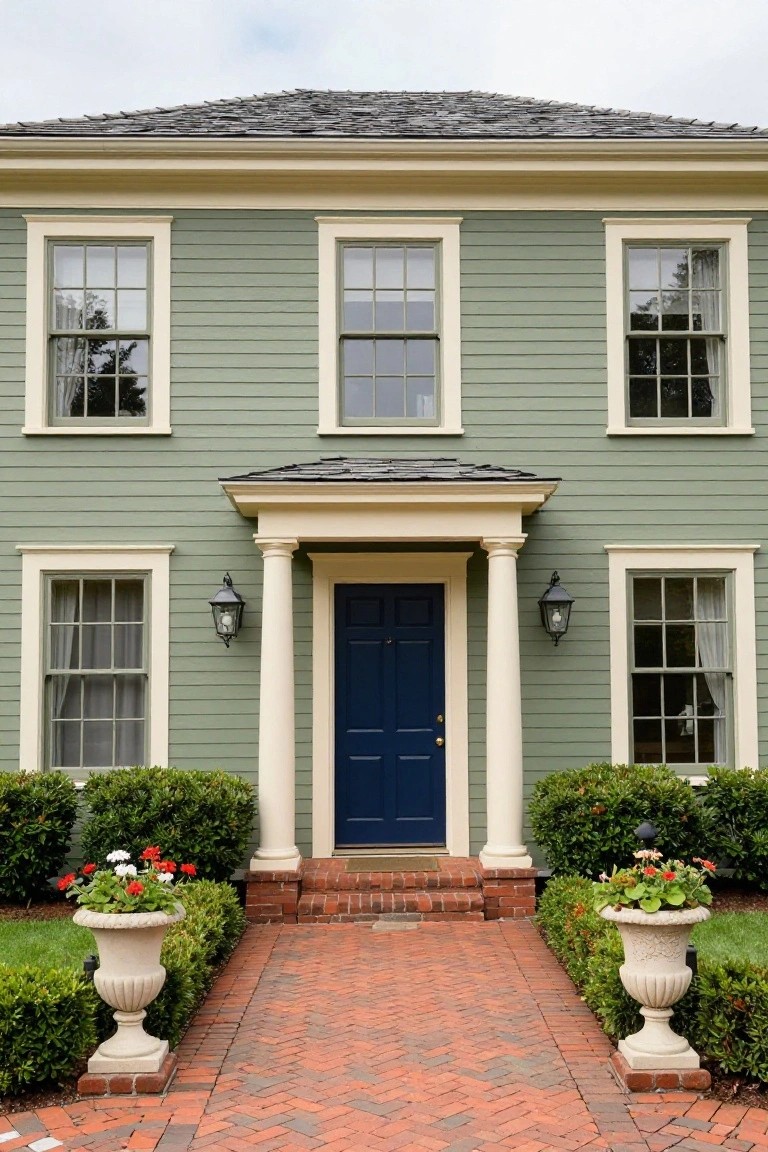
This house shows how a soft neutral green on clapboard siding can give a traditional home real presence without overwhelming the yard or street. The pale green reads calm and fresh from a distance. Then that deep navy blue door pulls everything together. It adds just enough punch to make the entry feel special. White trim and columns keep it crisp.
You can pull this off on older colonials or even simpler farmhouses in town or country spots. Pick a green with gray undertones so it doesn’t go brassy in the sun. Go bold on the door color but test it first. Brick steps like these ground the look nicely. Skip if your house has too much going on already.
Cubic Green House with Wood Entry Doors
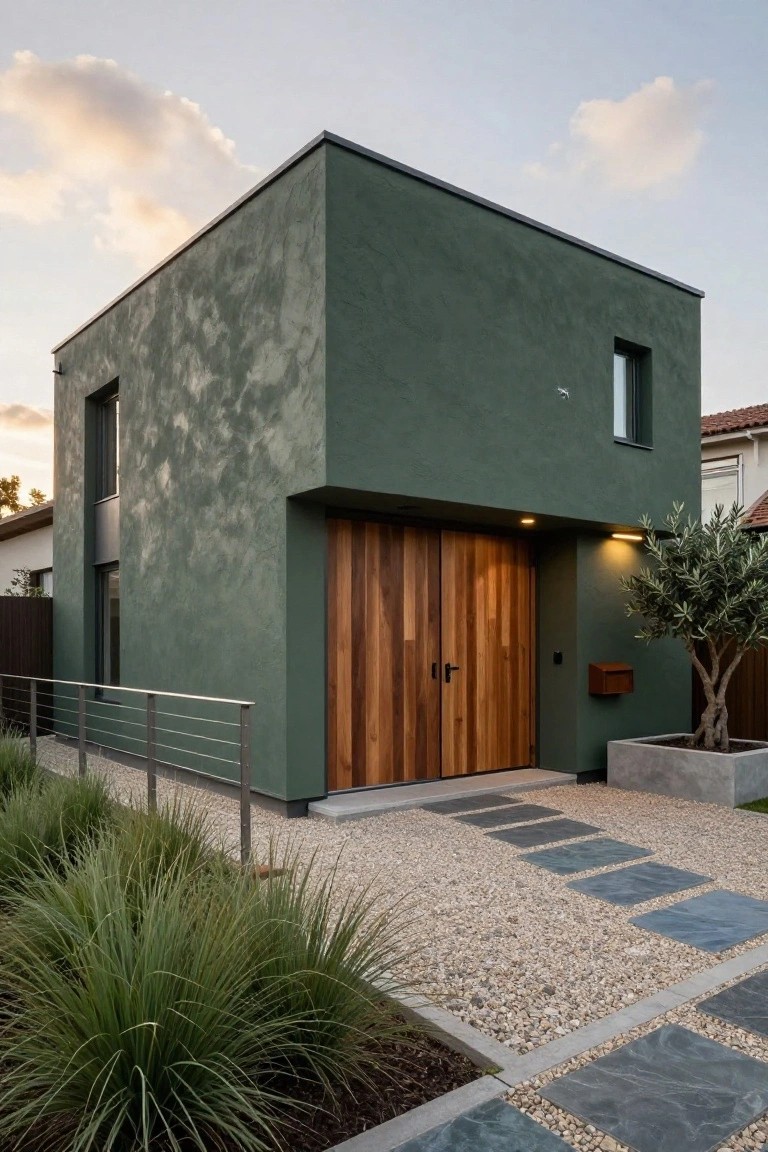
A simple box shape like this takes neutral green stucco really well. The soft texture on the walls keeps it from looking too plain, and those vertical wooden double doors add just enough warmth right at the front. It’s modern but not cold.
This setup fits tight urban lots or suburban spots where you want curb appeal without fuss. Go for a muted green shade, keep landscaping low-key with grasses and gravel, and it works pretty much anywhere.
Sage Green Stucco Walls
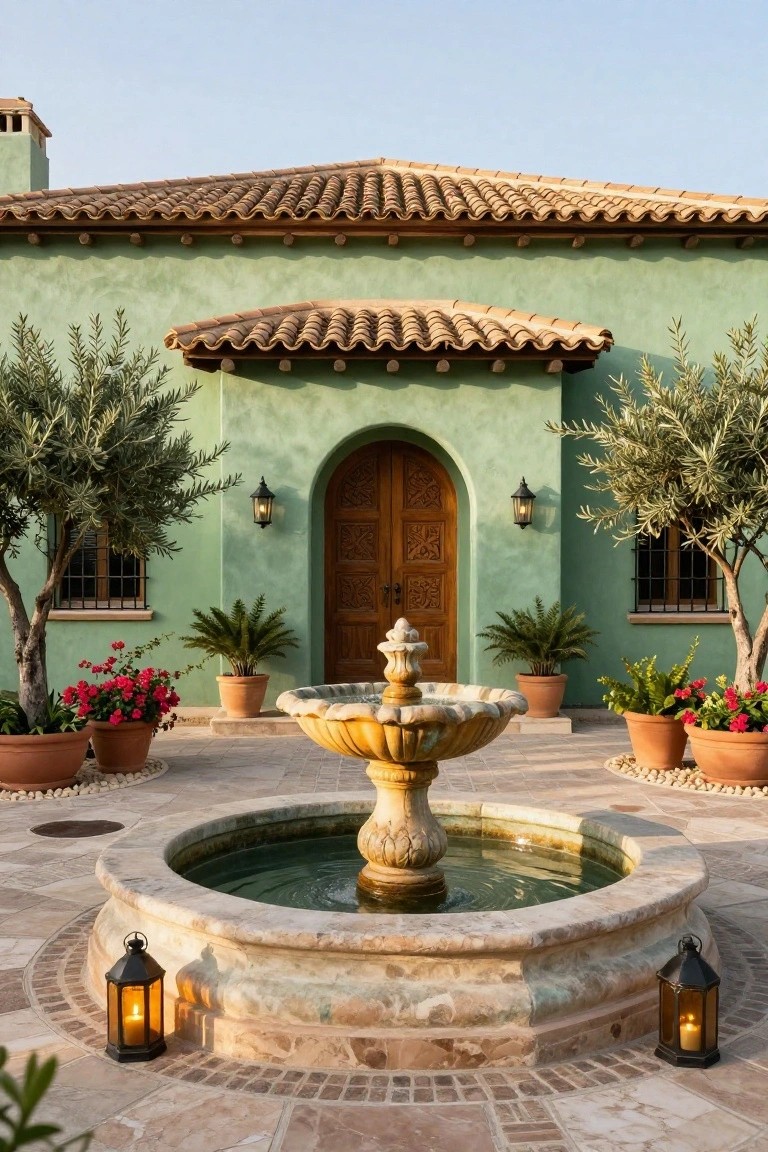
A soft sage green on stucco walls gives this house a calm, earthy feel that pulls you toward the entry. The color works well with the warm terracotta roof tiles and lets the carved wooden door stand out without overwhelming the look. It’s one of those shades that feels fresh yet settled in.
You can pull this off on ranch styles or low-slung homes, especially where you have a courtyard or front patio. Pair it with olive trees or simple potted plants to keep things grounded. Just stick to matte finishes so it doesn’t look too shiny in bright sun.
Soft Green Brick Facade

Yellow brick like this has a subtle green undertone that keeps things neutral and easy on the eyes. It’s not too bright or bold. The dark wood door and matching lanterns pull it together without much fuss, and a couple pots of white flowers add just enough life at the entry steps.
This look suits row houses or older homes in the city. It blends right into neighborhoods where you want some character but nothing flashy. Pair it with simple iron railings and keep plantings low-key so the brick stays the star.
Neutral Green Siding with Wood Cladding
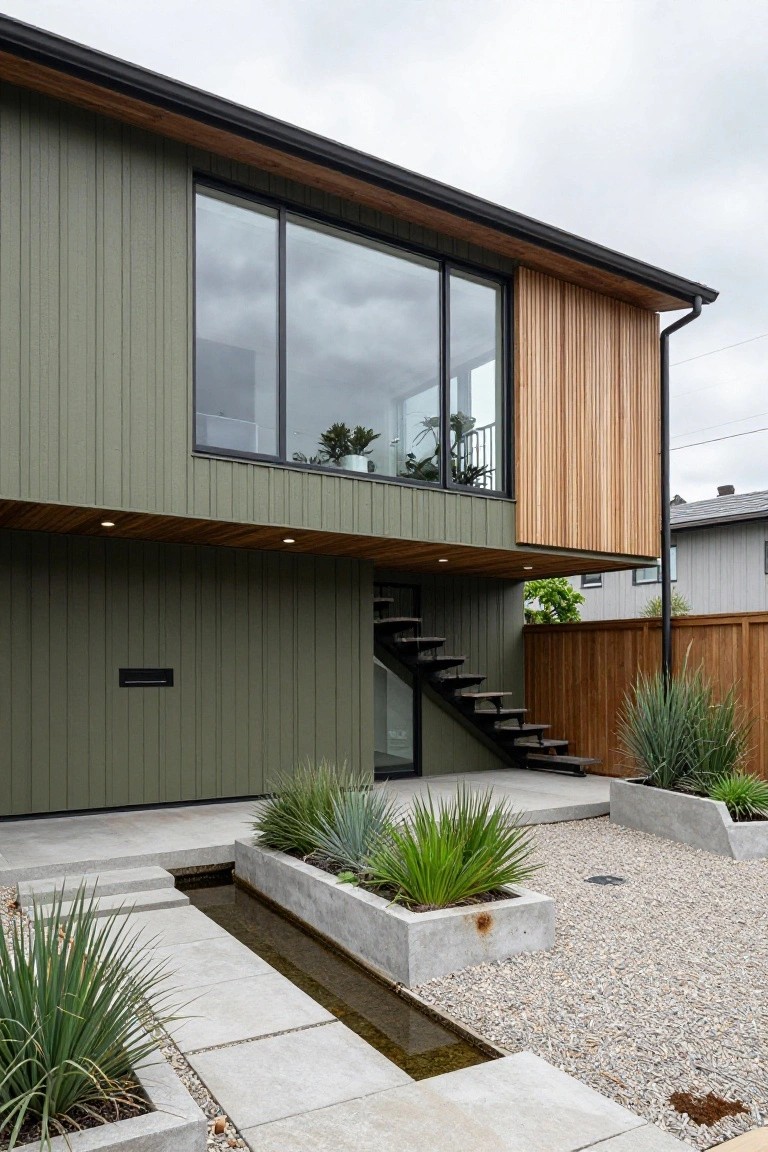
This house uses a soft neutral green on the vertical siding, paired right up with natural wood cladding on the corner. It gives the whole facade a calm, modern feel without going too stark. The green reads as earthy but not bold, and the wood adds just enough texture to keep things from feeling flat. Those black metal stairs up to the entry pull it all together nicely.
You can pull this off on a boxy modern home or even update an older ranch style. Stick to muted greens like this one, and source cedar or similar for the accents. It works in rainy climates or dry ones too, since both materials hold up well outside. Just make sure the wood gets some protection if you’re in a wet area.
Sage Green Half-Timbered Facade

Half-timbered houses get a fresh, grounded look with sage green paint on the plaster panels between the dark wooden beams. It keeps the old English cottage charm but softens things just enough to feel approachable today. The green pulls from nature without going too bright, and those exposed timbers add real character that paint alone can’t match.
This works best on older homes or new builds aiming for that timeless vibe, especially in rural or suburban spots with some garden around. Pair it with a simple wooden door and lanterns like this one, and you’ve got curb appeal that lasts. Just stick to muted greens, or it might overwhelm the structure.
Soft Sage Green Cottage Facade
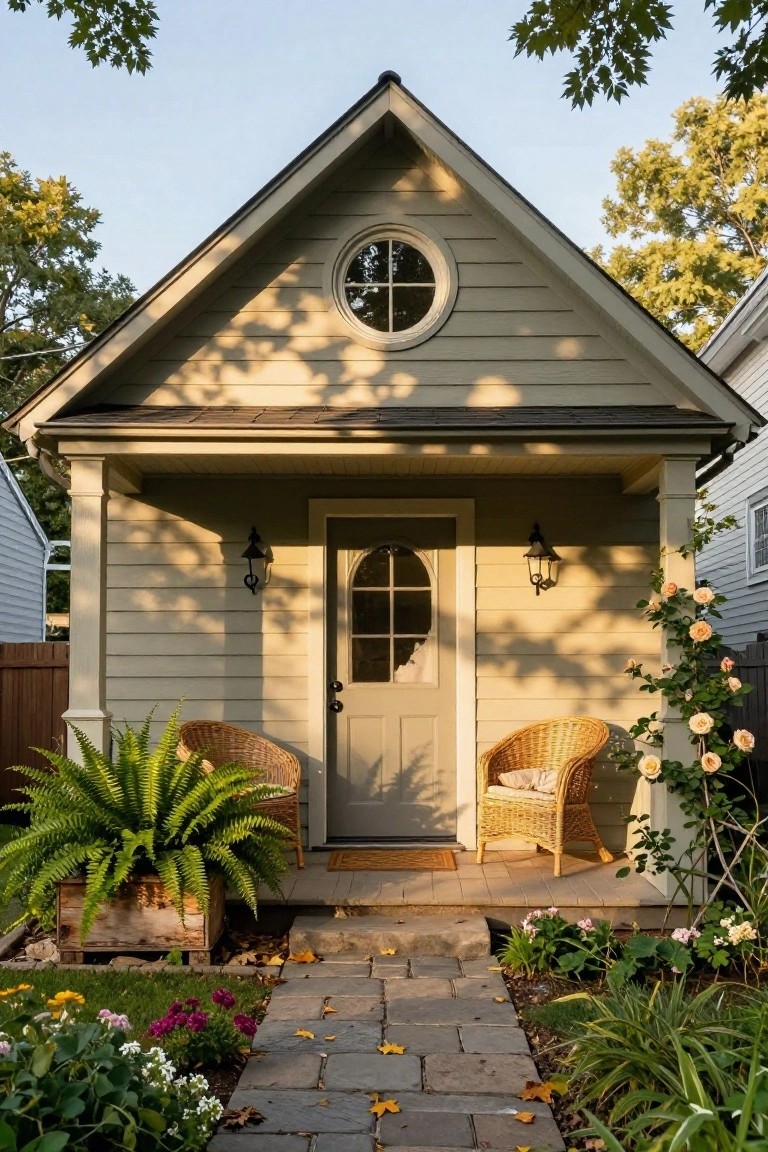
A soft sage green like this on horizontal siding gives a small house that easy, lived-in charm. It blends right into garden settings without shouting, and the pale trim keeps things crisp. That round gable window adds a touch of whimsy up top.
Try it on cottages, guest houses, or backyard studios where you want low-key curb appeal. The covered porch pulls it together for seating or just lingering. Stick to neutral greens that shift with the light, so it stays fresh year-round.
Vertical Green Siding on a Boxy Facade

Vertical siding in a soft neutral green works well on this simple boxy house. It stretches the lines upward, making the place feel taller and more modern without much fuss. That muted green tone blends with plants nearby but still pops against the black door and window frame.
Try this on compact city homes or starter houses where you want curb appeal on a budget. The siding holds paint nicely over time. Just keep the landscaping simple, like those raised beds with a couple shrubs, so the green facade stays the focus.
Green Shingle Cottage Exterior
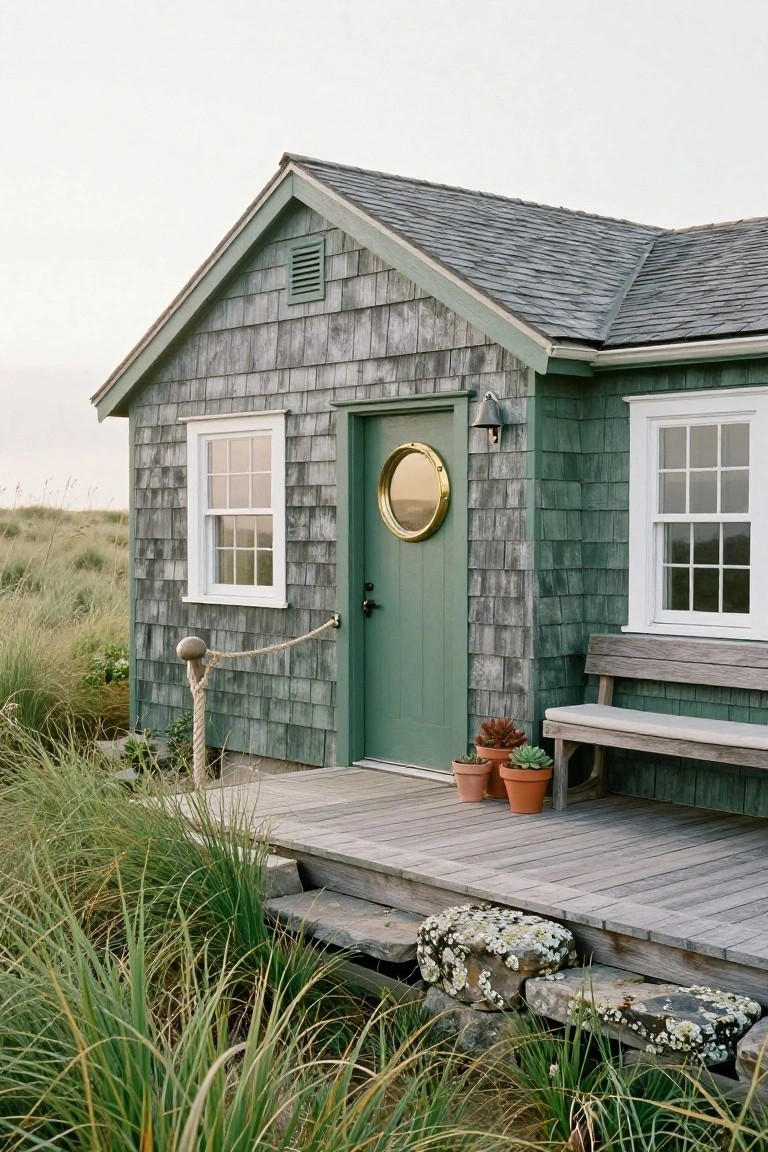
Shingle siding in a soft, neutral green gives this little house a cozy, lived-in feel that fits right into a dune setting. The muted tone picks up the natural colors around it without standing out too much. That round porthole window on the door adds a bit of nautical interest, keeping things simple and beachy.
You can pull this off on smaller homes or cabins near water, or even in a backyard spot that needs some character. Go for aged-look shingles to avoid a brand-new vibe, and pair with white trim windows for contrast. It works best where you want low-key charm that doesn’t compete with the landscape.
Patinated Copper Roof on Neutral Stucco
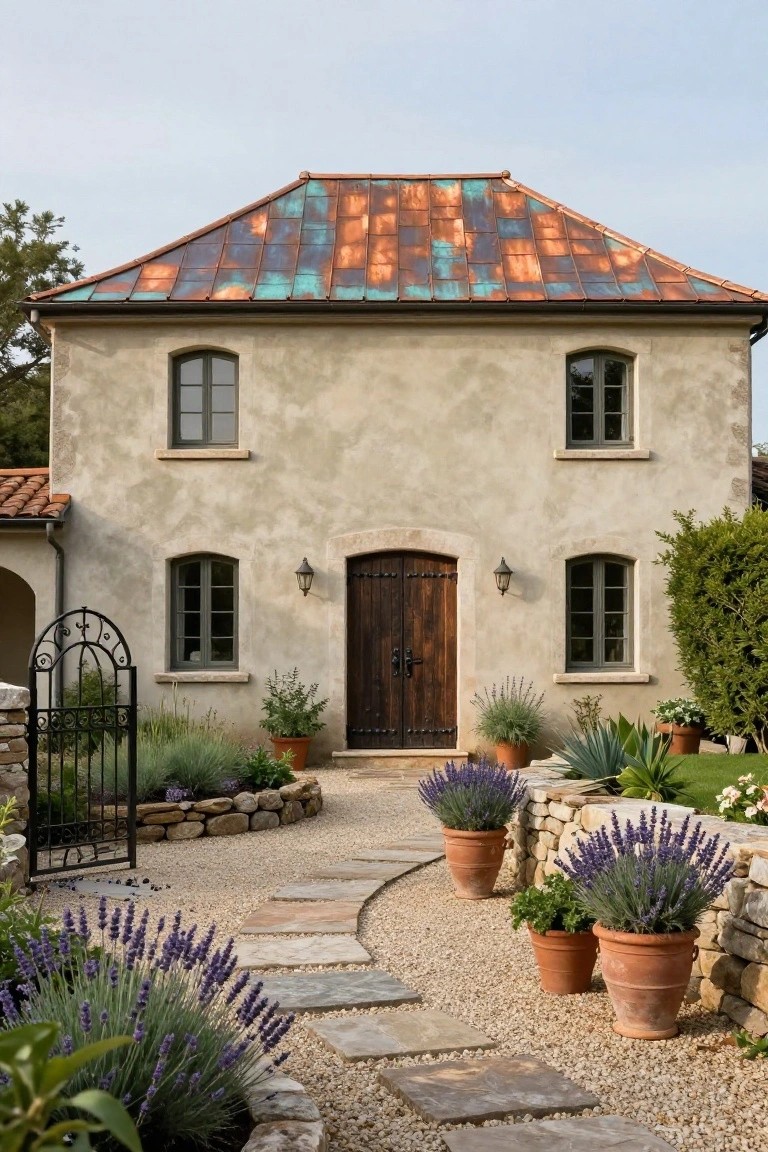
A copper roof like this one starts out shiny but weathers to a soft green patina that fits right in with neutral stucco walls. It adds just enough color to keep the facade from looking plain, while the beige exterior stays calm and versatile. The heavy wooden door and arched windows pull it all together without extra fuss.
This approach works well on ranch-style or Mediterranean homes in sunny spots where the roof can develop that natural patina over a few years. Use gravel paths and low plants like lavender around the entry to echo the roof’s tones. Skip it if your area gets heavy pollution that might change the color too fast.
Stone Pillars Frame the Entry
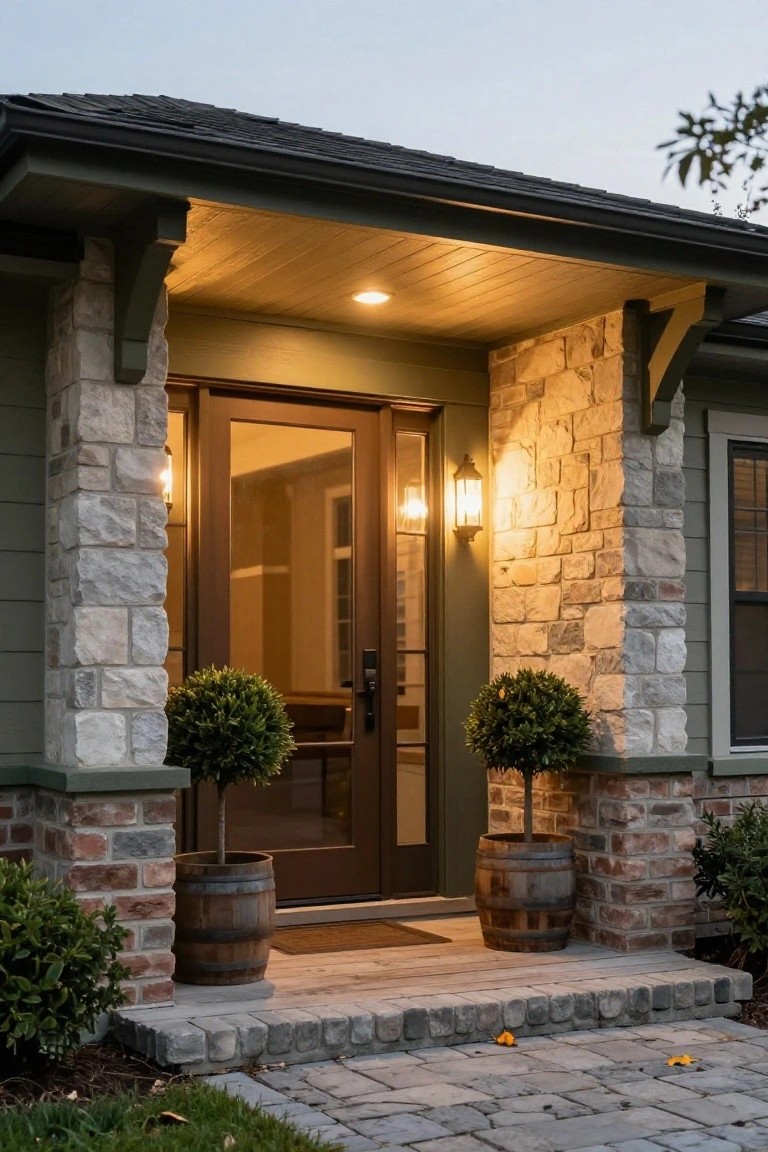
Tall stone pillars like these give a neutral green house a solid, grounded look right at the front door. They stand out against the sage siding without taking over, and the mix of textures from the rough stone, brick base, and smooth wood door pulls everything together nicely. It’s a simple way to make the entry feel more substantial.
This works best on homes with craftsman or rustic vibes, especially where you want curb appeal that lasts year-round. Pair them with low boxwoods in those big whiskey barrels for some life, but keep the plantings simple so the architecture stays the focus. Skip it if your lot is super tight. It suits most neighborhoods.
Vertical Green Siding Paired with Stone
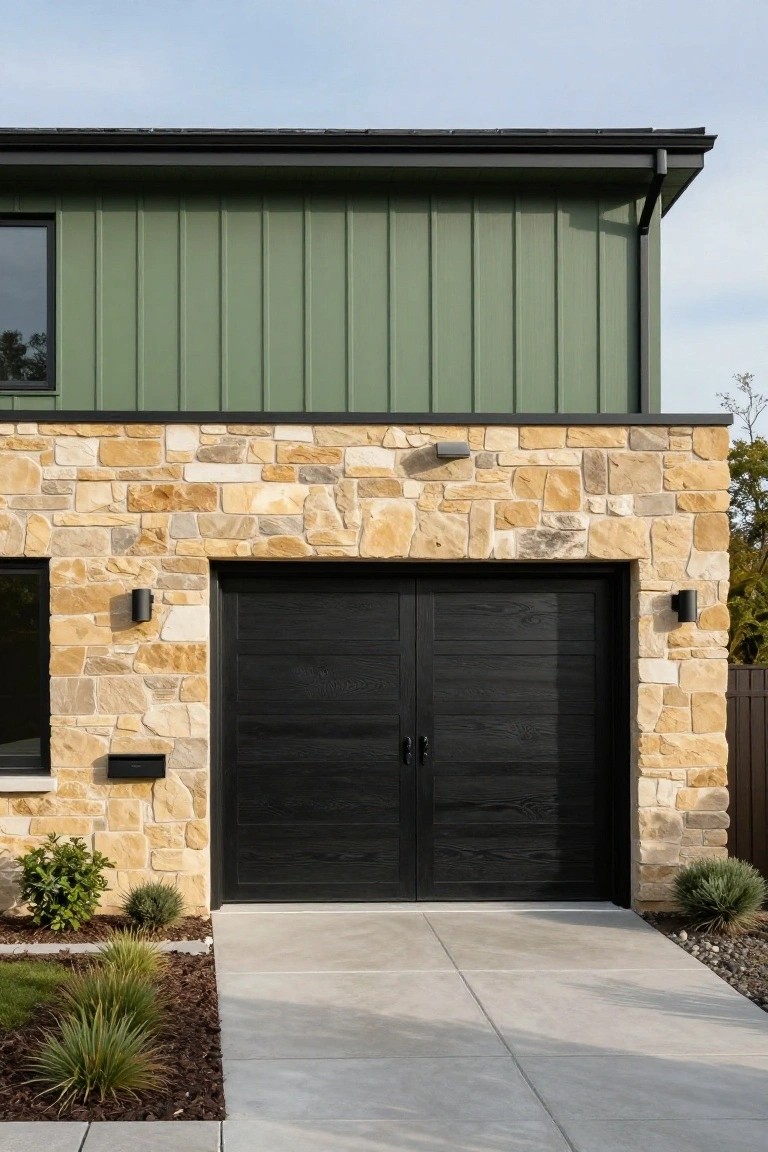
This setup uses neutral green vertical board-and-batten siding on the upper part of the house, sitting right above a base of rugged sandstone blocks. The green keeps things fresh and ties into nature without going bold. The stone below adds some weight and texture. It makes the whole facade feel solid yet light.
You can pull this off on ranch styles or modern farmhouses pretty easily. Just make sure the stone matches your local vibe, like lighter sandstone for warmer spots. Pair it with a dark garage door to pull the eye in. Works well in suburbs or rural edges… keeps the house from blending into the background.
Sage Green Cottage with Climbing Roses
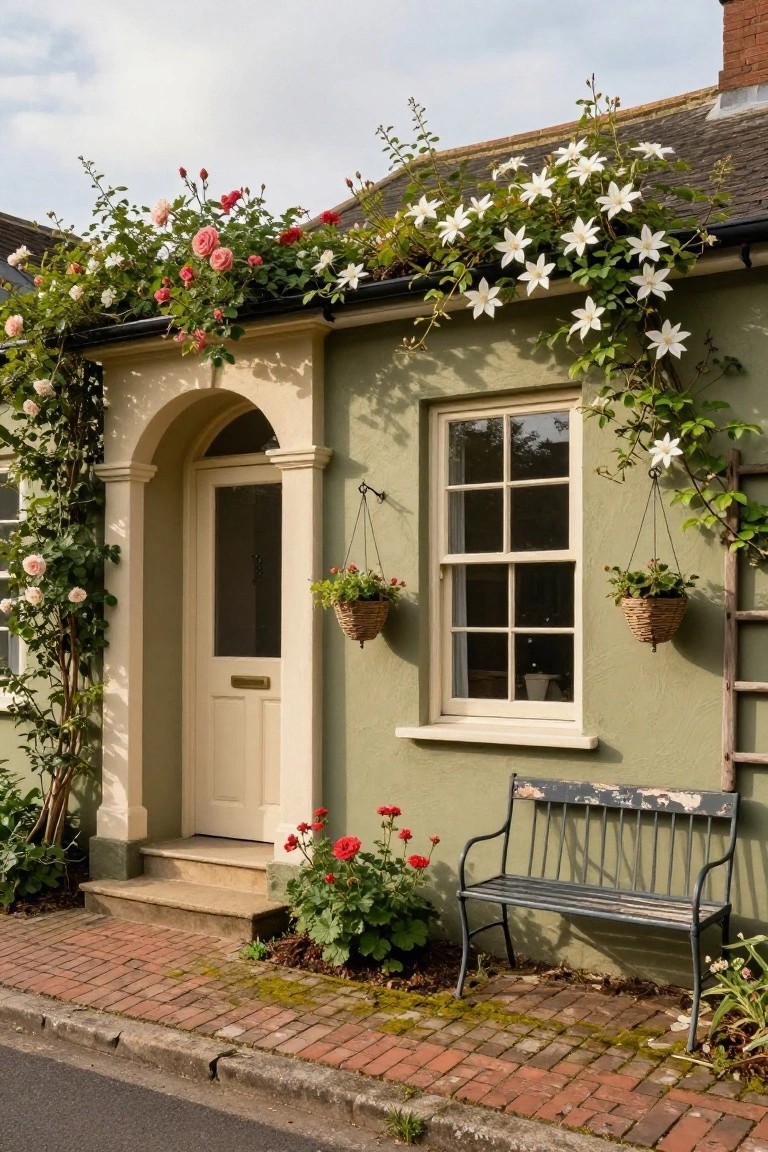
A pale sage green exterior like this one looks right at home under climbing roses. The soft pink blooms tumble over the arched entry and mix with white clematis, giving the whole front a cozy, lived-in charm. It’s neutral enough to blend anywhere but those flowers make it feel personal and pretty.
This setup works best on small older homes or bungalows along a street. Train the vines up the doorway and along the roofline for that cottage effect. Pick repeat bloomers so you get color all season… and prune back in winter to keep things tidy.
Green Cladding on a Garden Pavilion

A neutral green finish covers the vertical boards of this little pavilion, giving it a fresh look that fits right into the backyard setting. It’s slim and modern without trying too hard, and the color picks up on the nearby plants for an easy blend. Open the doors and you’ve got indoor space flowing out to the terrace.
This works well on small outbuildings like guest rooms or offices in any size yard. Pair it with gravel paths or bamboo for privacy, and it stays low-key year round. Just make sure the green tone isn’t too bright, or it might stand out more than you want.
Frequently Asked Questions
Q: Will neutral green hide dirt and mildew better than lighter colors?
A: Greens mimic nature so smudges blend right in. Hose it down a couple times a year and it stays sharp.
Q: How do I pick a shade that won’t look too dark on my shady side yard?
A: Lean toward olive tones with more yellow undertones. They brighten up without washing out. Hang samples there for a few days to check.
Q: What door color pops against neutral green siding?
A: Black doors add crisp contrast every time. Paint it matte to tone down the drama…
Q: Can I add stone accents without clashing?
A: And light gray or beige stone grounds the green perfectly. Skip bold patterns. Stick to subtle textures for flow.
