


In a Japandi living room, lighting has to do more than brighten the space; it needs to support the calm, uncluttered feel while making everyday tasks comfortable.
I find that rooms with only one overhead light can feel flat, even when the furniture and finishes are thoughtfully chosen.
A mix of soft ambient light, focused reading lamps, and gentle accents can bring out natural textures without making the room feel busy.
The placement matters too, since a lamp beside the sofa or a low glow near a shelf can make the layout feel more settled after dark.
I’d start with the ideas that suit your room’s size and routines, then adjust the layers until the light feels balanced.
Use Several Light Sources In One Room
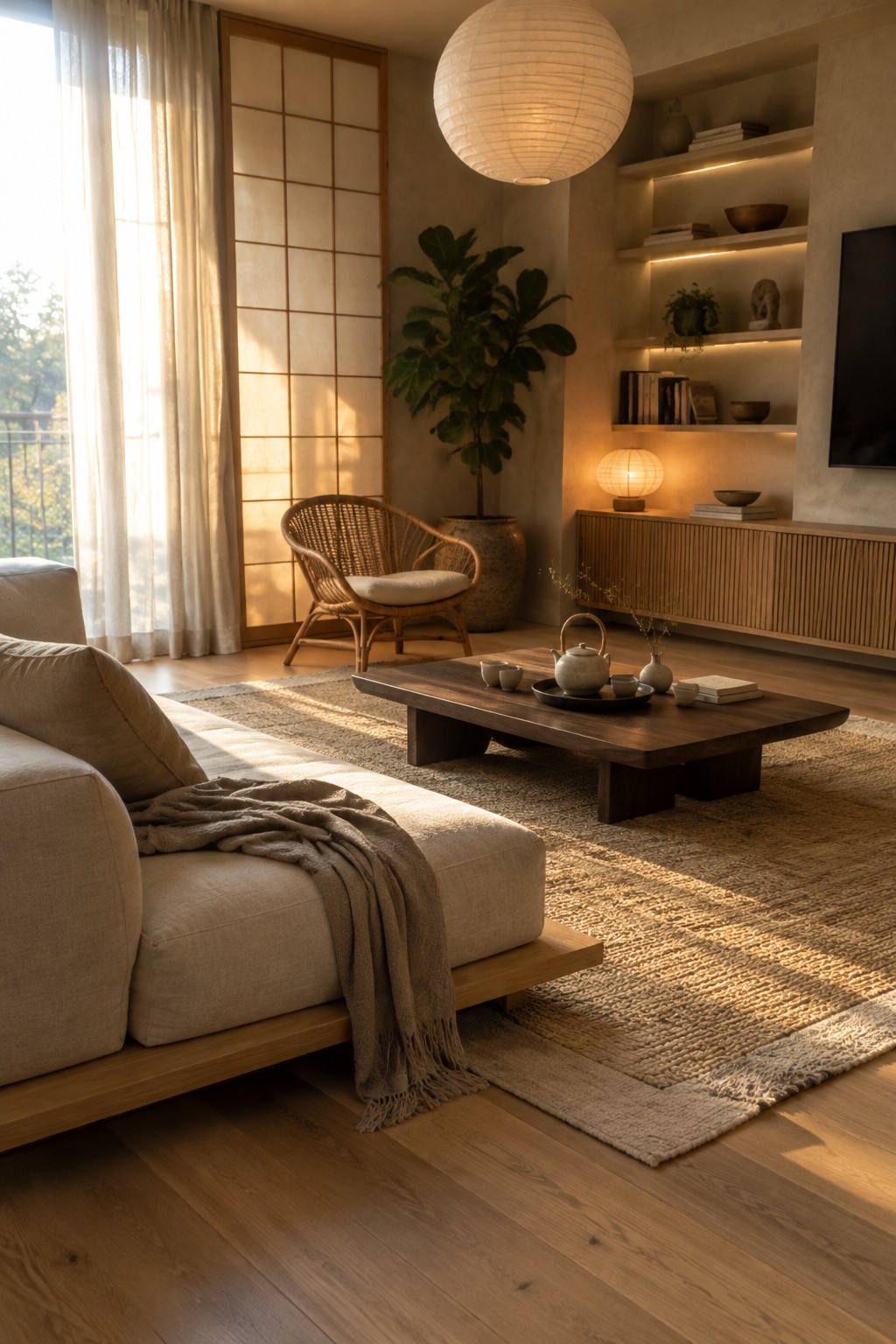
Layered lighting works well in a Japandi living room because it lets you shift between gentle ambient light and smaller pools of light for relaxing or reading. Here, a large paper pendant provides the main glow, while a small lamp on the console adds light lower down.
Try this approach in a room where one ceiling fixture feels too harsh on its own. Choose shades and finishes that suit the calm, natural feel of the space, and use warm bulbs so the different lights work comfortably together.
Use Soft Layers for Japandi Lighting
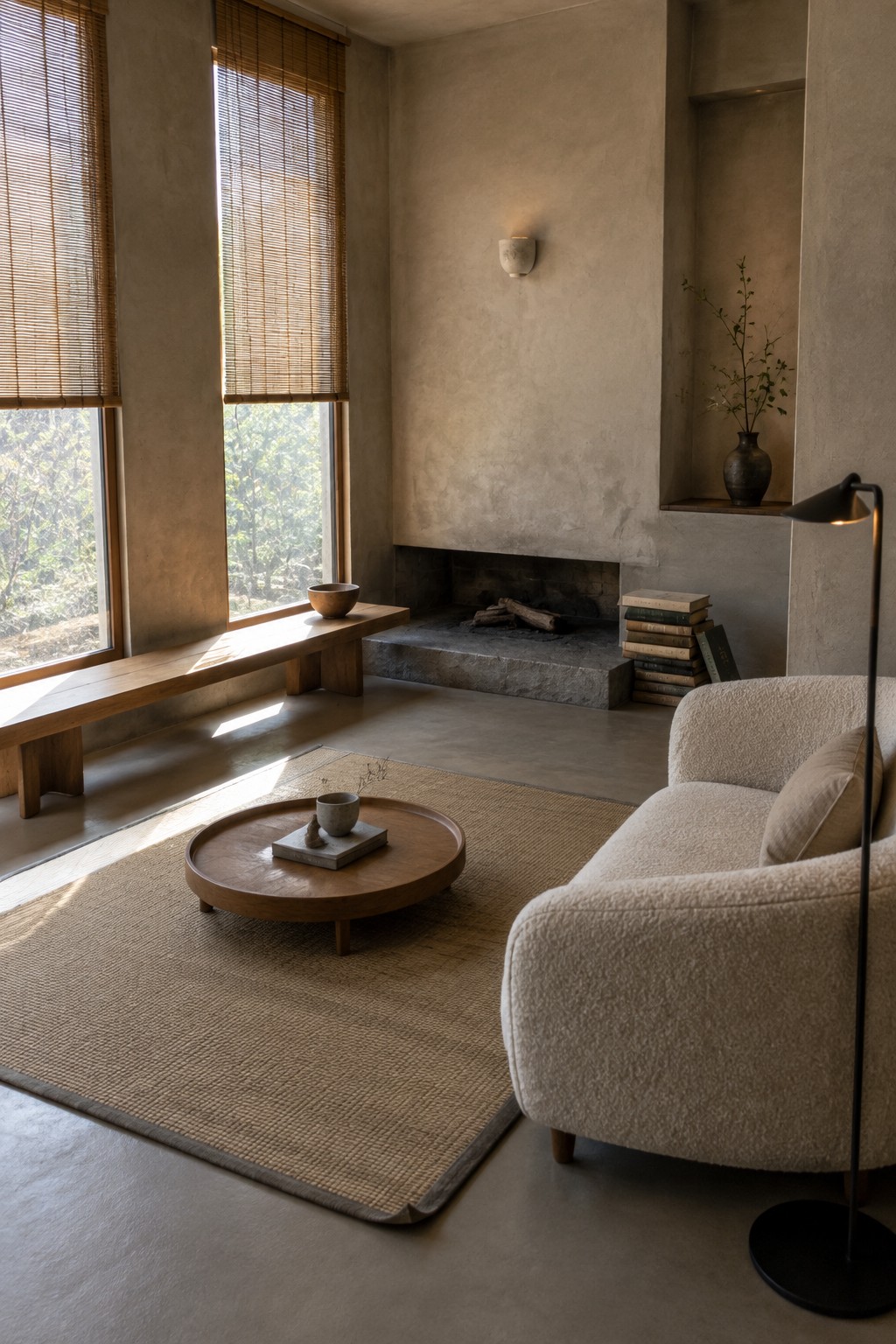
Japandi lighting works best when it comes from more than one source. A small wall sconce can provide gentle background light, while a floor lamp near the seating adds a more focused glow. Keeping the fixtures simple lets natural materials and calm finishes stay at the center.
Try this approach in a living room with a quiet, neutral palette. Choose warm bulbs and spread the light around the room rather than relying on one bright ceiling fixture. Keep the lamp shades modest so they do not compete with the rest of the space.
Layered Lighting for a Calm Living Room
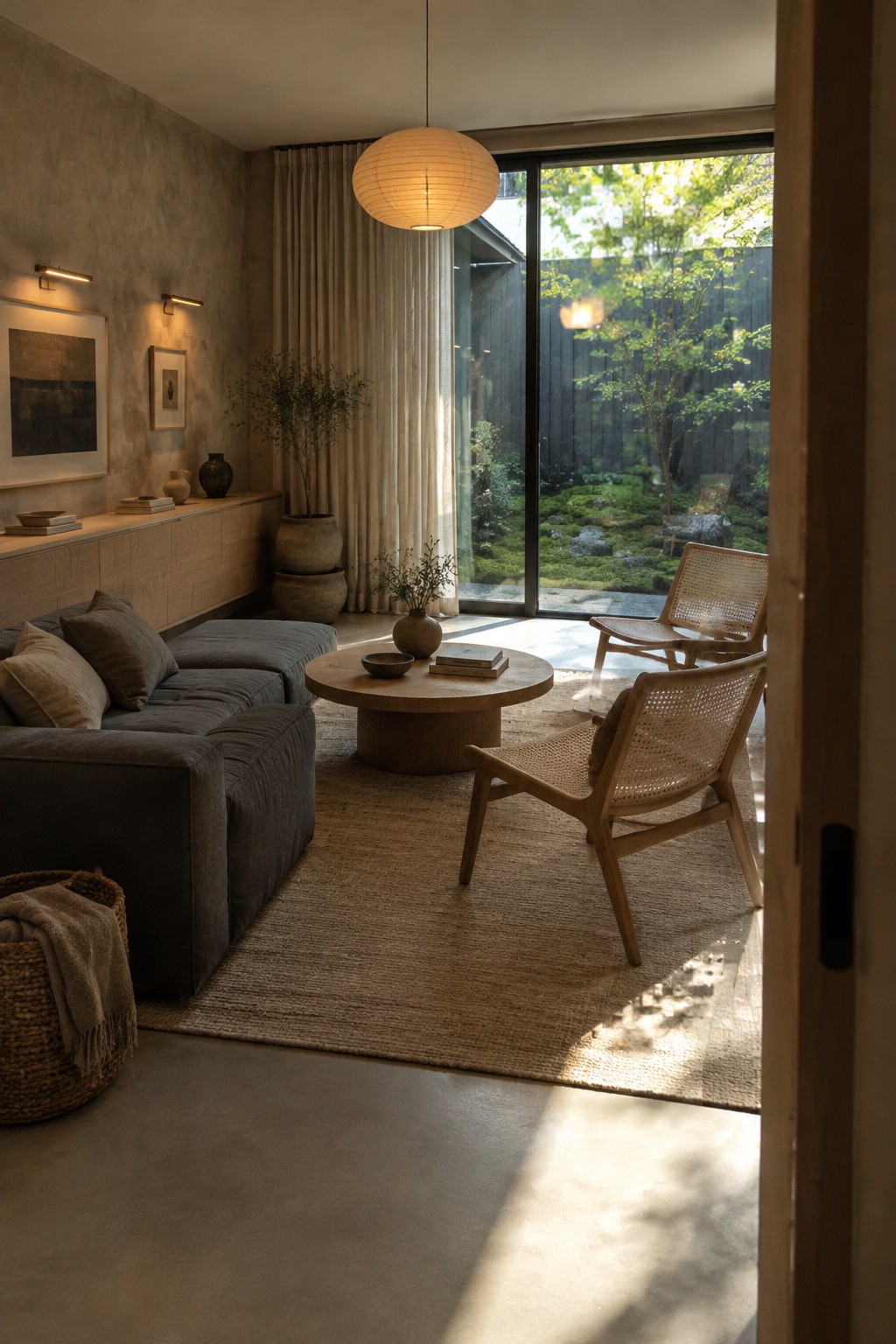
A Japandi living room can feel comfortable at different times of day when it uses more than one kind of light. A paper pendant provides a gentle overall glow, while small wall lights make artwork easier to see without relying on the ceiling fixture alone.
Try combining a pendant with a few lower, focused lights, and use warm bulbs to keep the room feeling relaxed. Dimmers are useful too, especially when daylight comes through large windows and you want the evening light to feel softer.
Use Lamps For Soft, Layered Light

A table lamp is an easy way to bring softer light into a Japandi living room. Here, its pleated shade gives off a gentle glow, while the nearby wall lighting adds another level without relying on a bright ceiling fixture.
Try a lamp beside a sofa or reading chair, and use a warm bulb for a relaxed feel in the evening. A simple shade and natural materials suit this style well; just make sure the lamp is bright enough for the task at hand.
Add a Paper Pendant for Gentle Overhead Light

A large paper pendant gives a Japandi living room a softer source of overhead light than a bare fixture. Its diffused glow works well alongside warmer task lighting, so the room can feel comfortable without relying on one bright ceiling light.
Use a pendant like this over a seating area, and add a table lamp nearby for reading or evening use. Choose a simple shape and keep the bulb warm in tone so the fixture suits the room’s natural wood finishes.
Use a Fireplace as a Source of Ambient Light
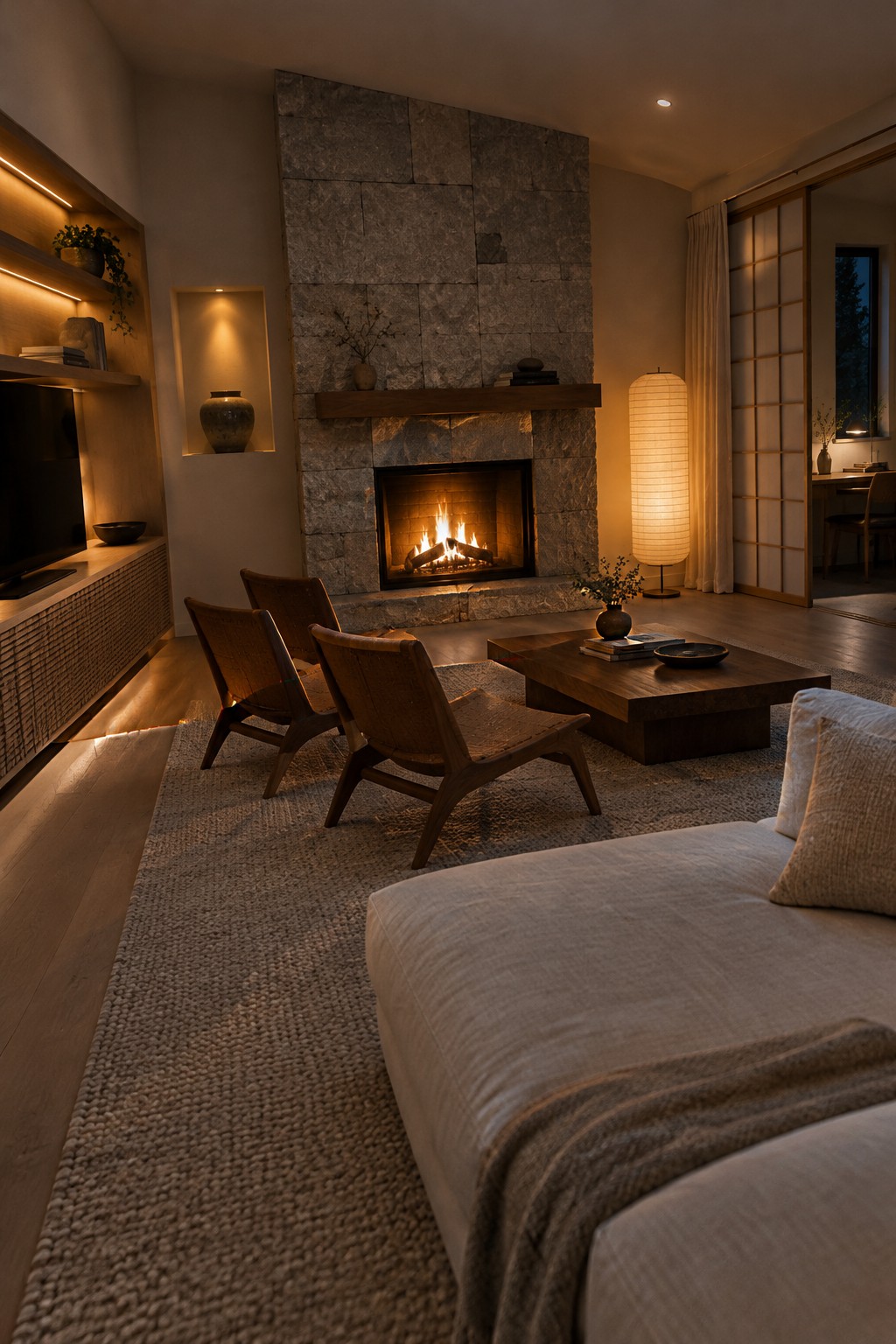
A fireplace can provide a gentle layer of light in a Japandi living room, so the room feels comfortable without relying on bright overhead lighting. Here, the fire sits within a large stone surround, giving its glow a clear place to spread from.
For a similar effect, let the fireplace handle some of the evening ambient light and use a floor lamp nearby when you need more. This works especially well in a seating area meant for quiet evenings; just make sure the other light sources can be dimmed or switched off independently.
Use Woven Pendants for Gentle Overhead Light
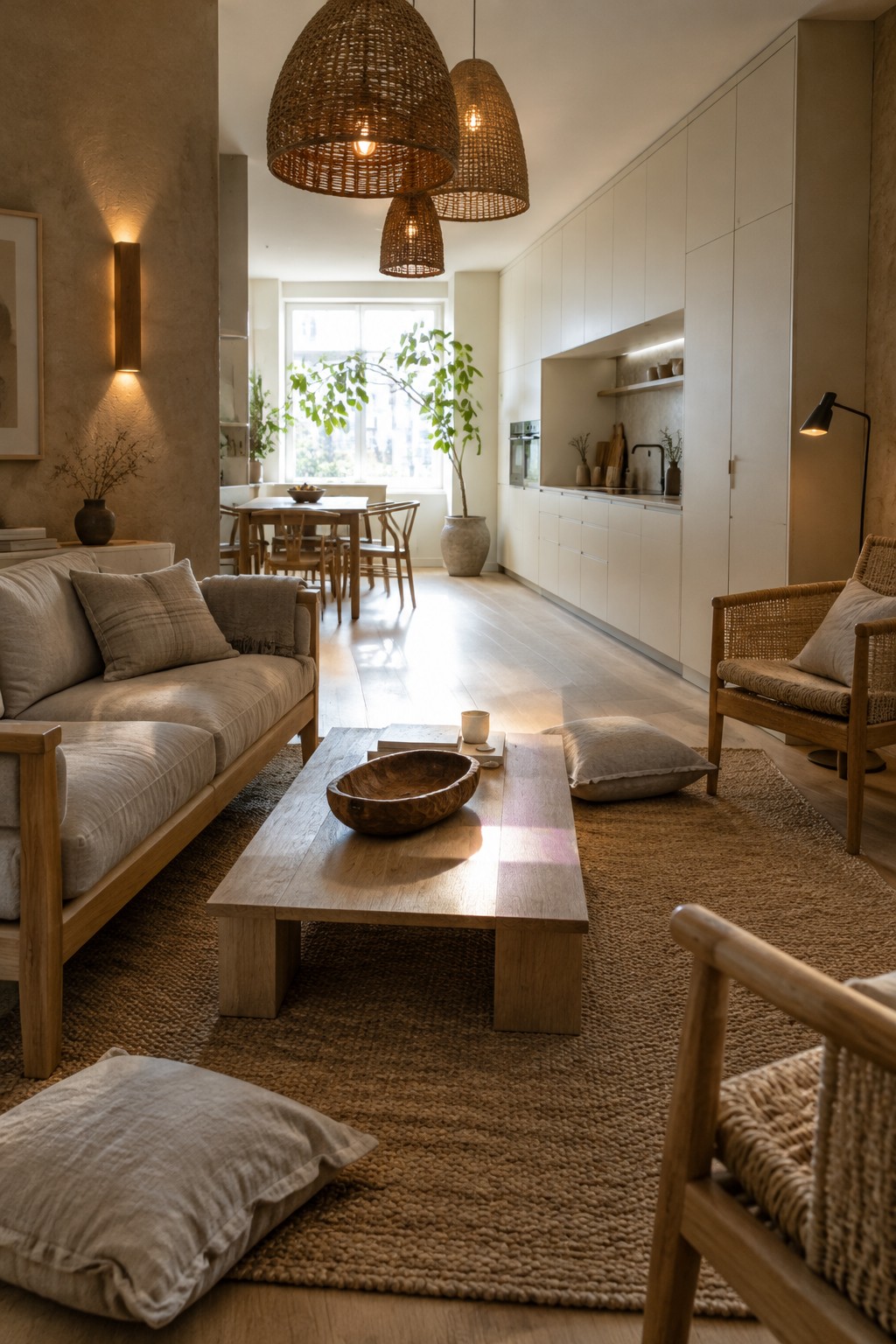
Woven pendants give a Japandi living room a softer kind of overhead lighting. Their open shades let light pass through, so the fixtures feel less stark than solid shades and bring a natural material into the room.
Use a pendant over a seating area or dining table, then add a floor or wall lamp for light at a lower level. Keep the shade size in proportion to the room, and avoid using woven fixtures as the only light source.
Use Built-In Lighting To Warm Up Japandi Shelving
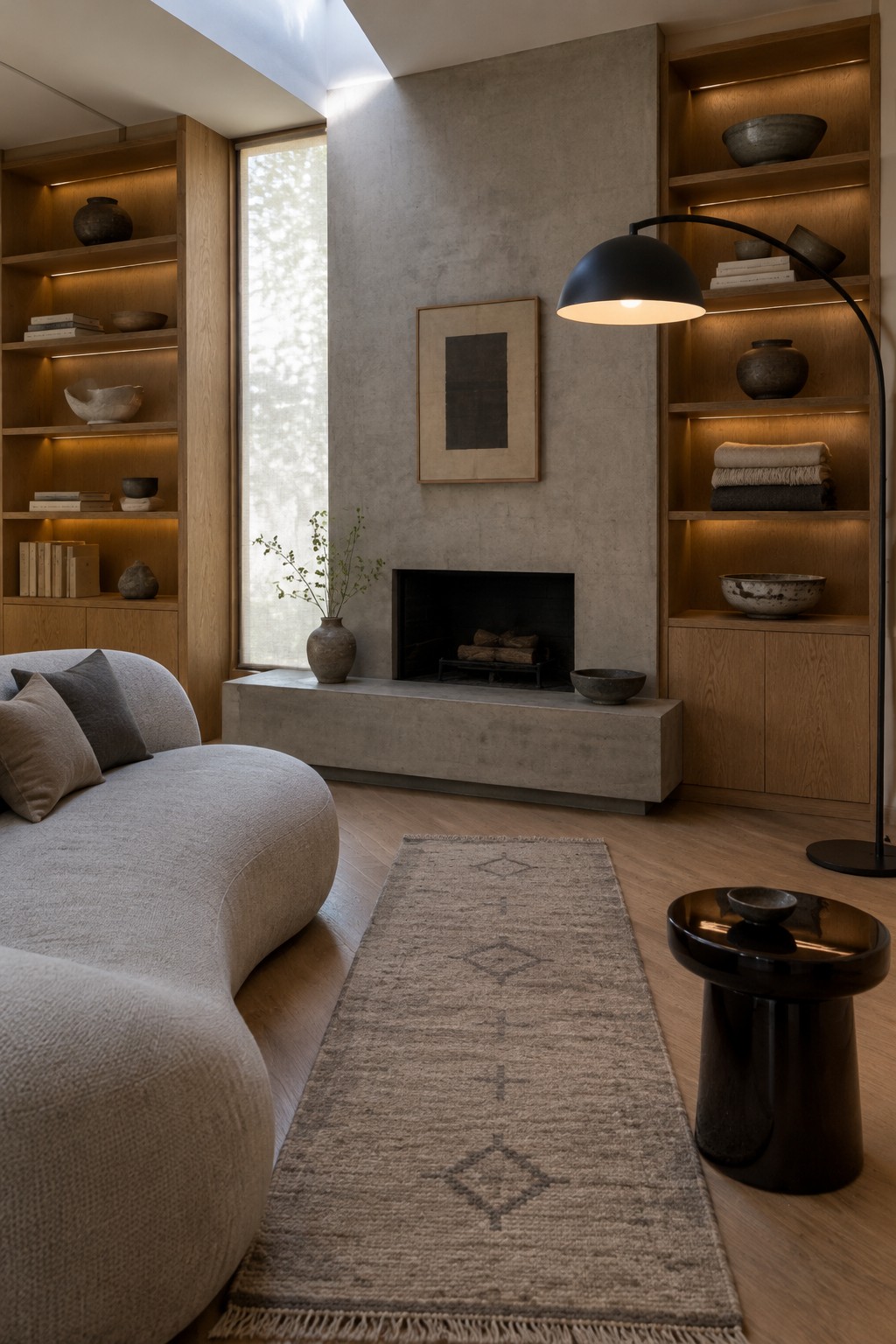
Built-in shelf lighting is a simple way to layer light in a Japandi living room. Small, warm lights tucked along the shelves bring out the wood and make the room feel comfortable after daylight fades.
This works especially well around a fireplace or in a room with tall built-ins. Use a soft, low-glare strip rather than bright spotlights, and add a floor lamp nearby for light where people sit.
Use a Wall Sconce for Gentle Reading Light
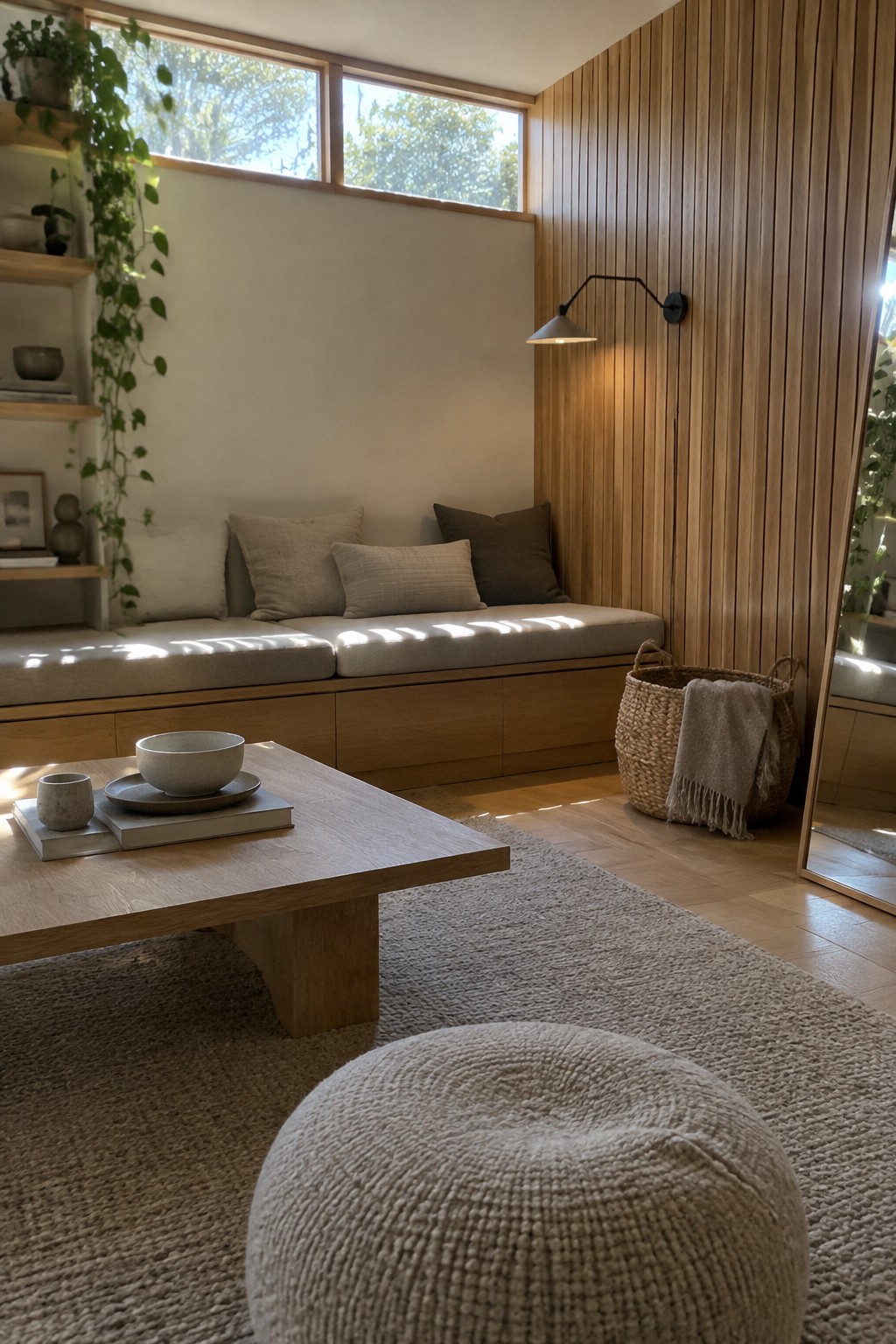
A wall sconce can light a seating area without relying on a bright ceiling fixture. Here, the adjustable arm places the light beside the built-in sofa, making it useful for reading while keeping the rest of the room softly lit.
This works well in a Japandi living room where a simple, uncluttered look matters. Position the sconce near a seat and add a dimmer if possible, so the light can be lowered in the evening.
Use Wall Lights Alongside Overhead Lighting
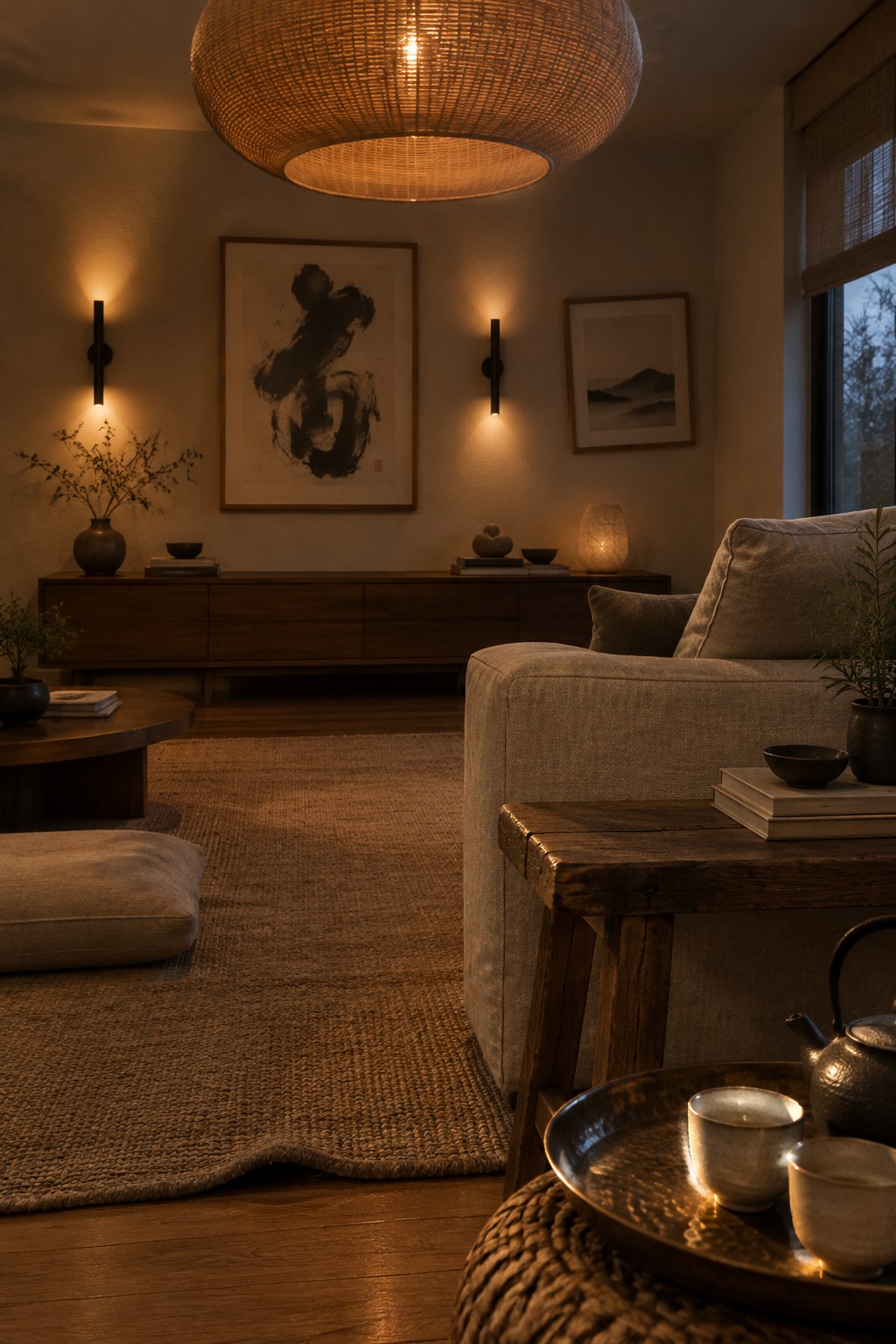
Wall sconces give a living room a softer layer of light than a ceiling fixture can provide on its own. Here, their warm glow works with the woven pendant to make the room comfortable for quiet evenings.
Try sconces beside artwork or along a seating area, and put them on separate switches so you can adjust the room for reading or relaxing. This works especially well in Japandi spaces, where gentle light suits natural materials and simple furnishings.
Use Window Light as Part of the Lighting Plan
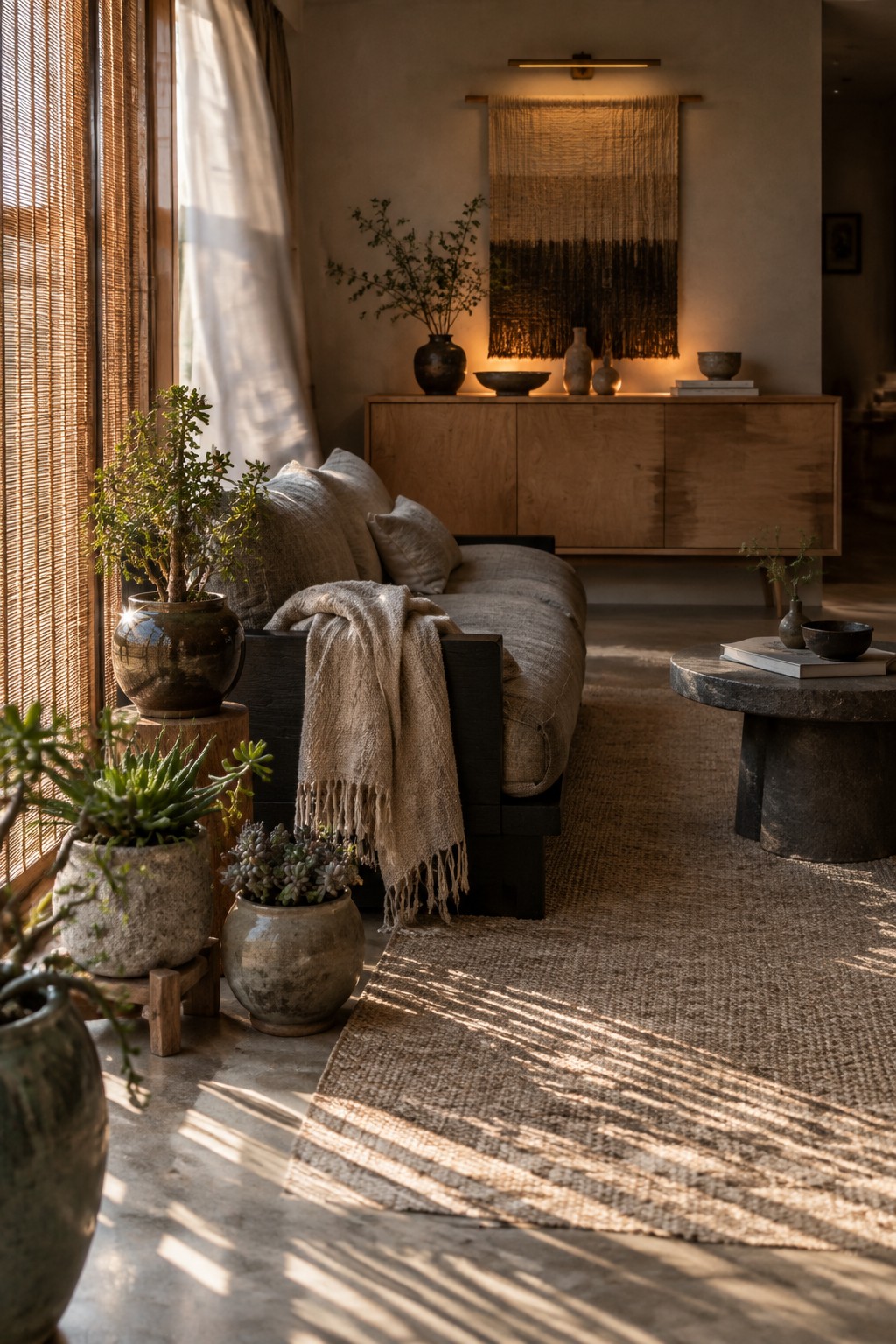
Natural light filtered through woven blinds brings a gentle pattern into a Japandi living room. It gives the space a softer feel than relying on overhead lighting alone, while still letting daylight do most of the work.
For a similar effect, use woven shades to filter strong sun, then add a low, warm lamp for the evening. This approach works especially well in a room with neutral fabrics and natural wood, but avoid making the window covering so dense that the room stays dim.
Use Recessed Lighting To Highlight A Wall

A softly lit wall niche can provide a gentle layer of light without relying on a bright overhead fixture. The concealed strip outlines the inset and gives the art and pottery there a little extra visibility.
This approach works well in a living room with a built-in niche or a shallow alcove. Use warm-toned lighting, and keep it dimmable so the glow can stay subtle in the evening.
Use a Table Lamp for Low, Gentle Light
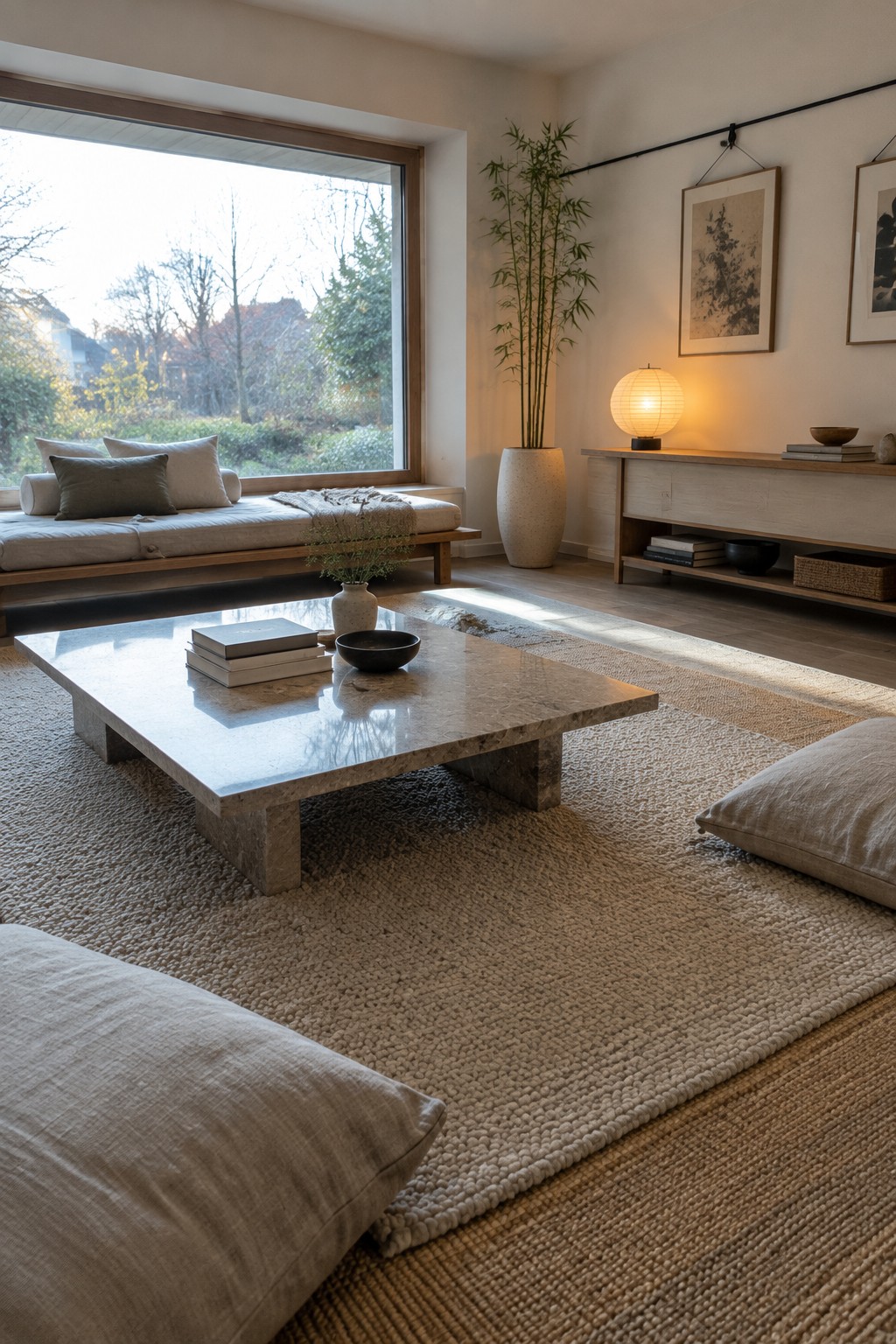
A table lamp is a simple way to bring a softer pool of light to a living room. Here, a glowing paper shade sits on a low console, giving the room a quieter light source than an overhead fixture.
Try this approach on a sideboard or console where you spend time in the evening. Choose a warm bulb and a shade that diffuses the light, then use a dimmer or switch the lamp off when brighter task lighting is needed.
Use Floor Lamps for Focused Light

A floor lamp can add useful light beside a sofa without relying on a bright overhead fixture. In this room, a slim black lamp sits near the fireplace and points its shade down toward the seating area.
Place one beside a reading chair or at the end of a sofa, where it can light a book or a small stretch of the room. Choose a simple shape and a warm bulb so it fits comfortably with Japandi’s natural materials and quiet style.
Use Cove Lighting To Set a Gentle Glow

Hidden cove lighting is a useful way to give a Japandi living room a soft, even glow without relying on a bright ceiling fixture. Here, the light follows the recessed ceiling edge, while paper pendants add a lower, more focused layer.
This approach works well in rooms with a tray ceiling or another shallow ledge where a concealed strip can sit out of view. Use a warm, dimmable source, and keep the brightness low enough that it supports the room rather than competing with other lights.
Use Picture Lights To Add Focused Warmth
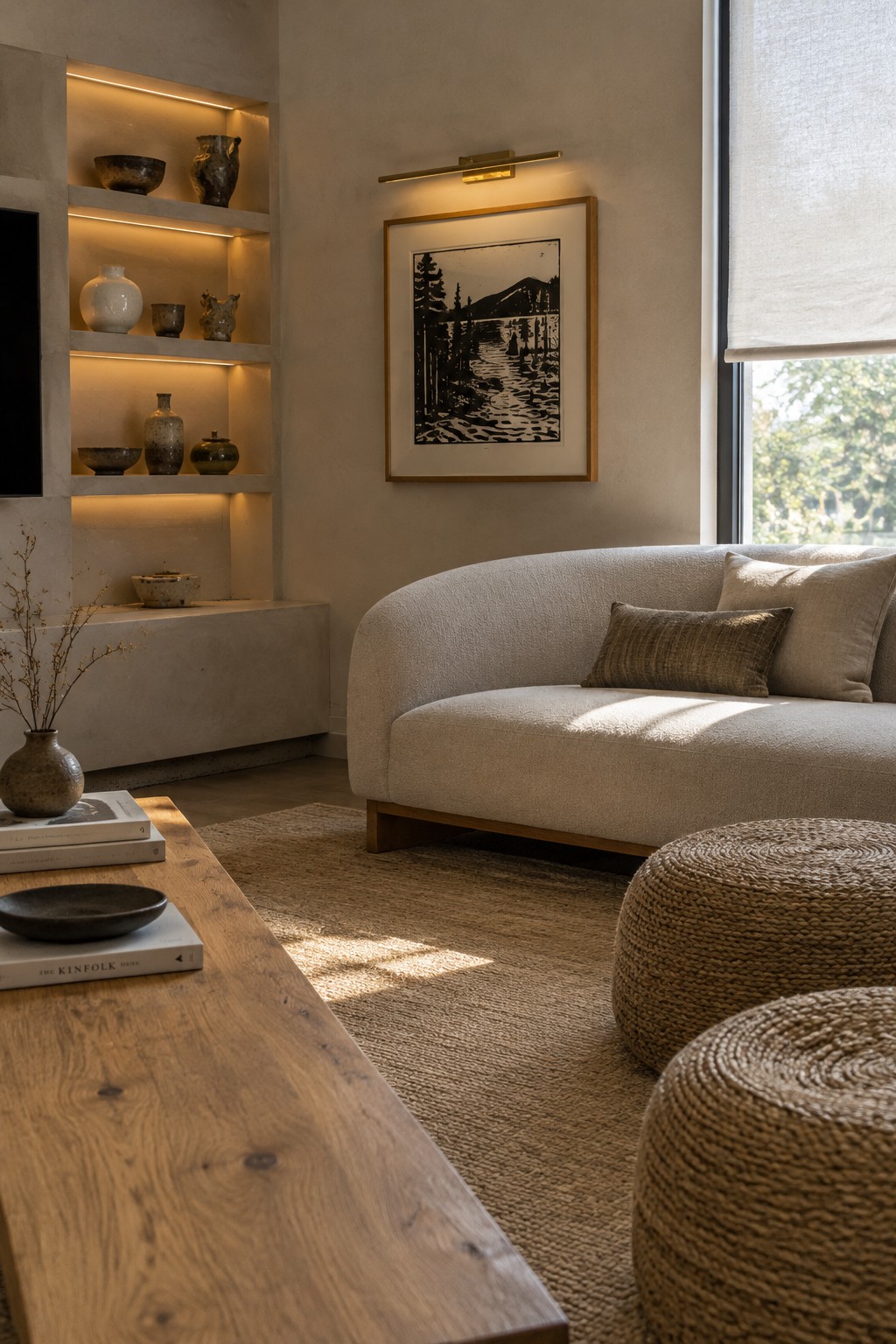
A slim picture light can give artwork its own gentle pool of light while adding another layer to a living room’s lighting plan. It works especially well when the rest of the room has a calm, simple feel, since the art gets noticed without needing a bright ceiling fixture.
Choose a warm-toned light and aim it so it illuminates the artwork without creating glare. This approach suits a print or painting on a main wall, and it can work alongside recessed lights or a nearby lamp.
Let the Fireplace Add to the Room’s Ambient Light
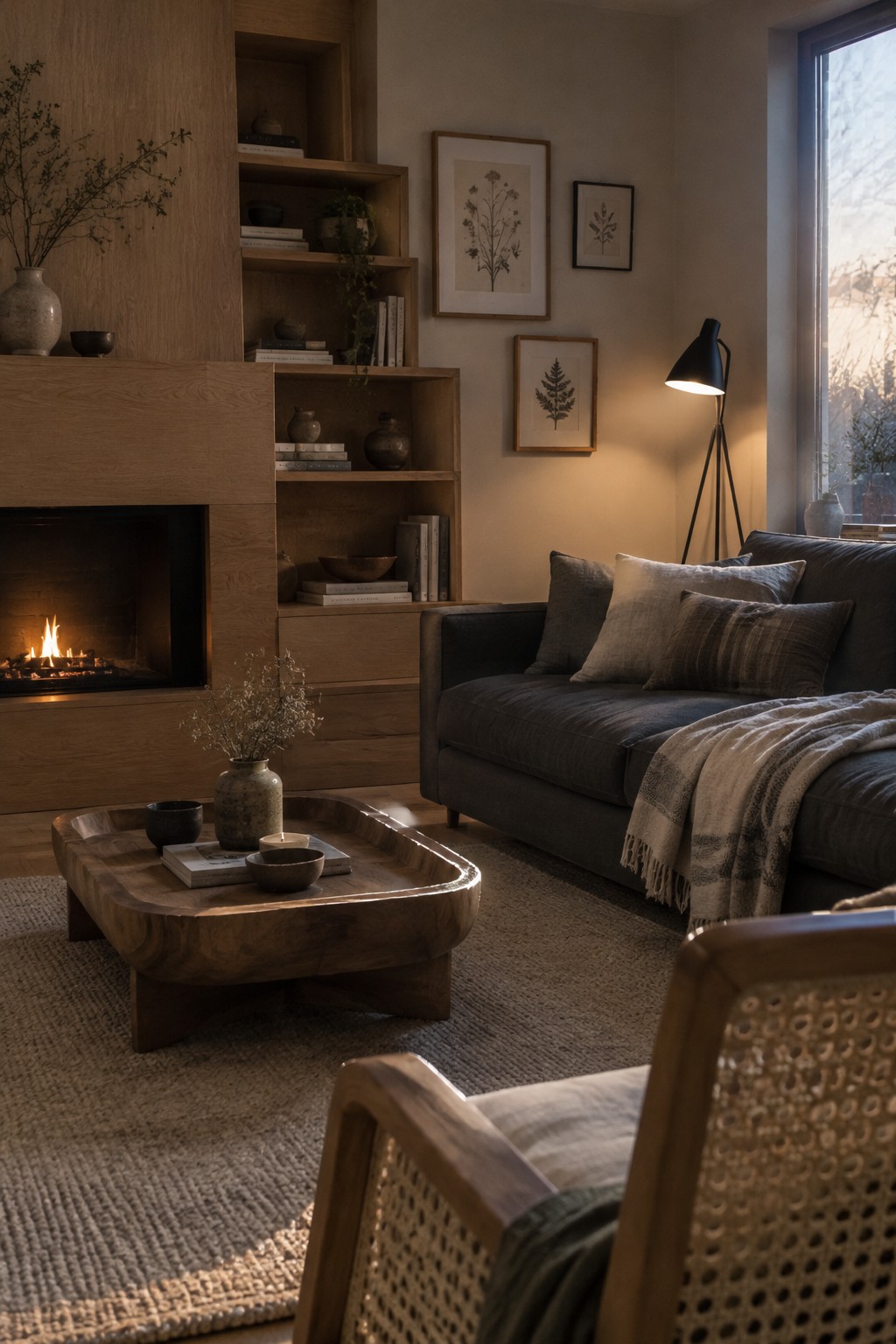
A fireplace can be part of a Japandi living room’s lighting plan, not just a place to gather around. Its low, flickering glow works well alongside a floor lamp, giving the room a softer feel in the evening without relying on bright overhead light.
Keep the other light sources gentle so the fire remains comfortable to sit near. A shaded floor lamp nearby can help with reading while keeping the overall light relaxed.
Let Lamps Add a Softer Layer
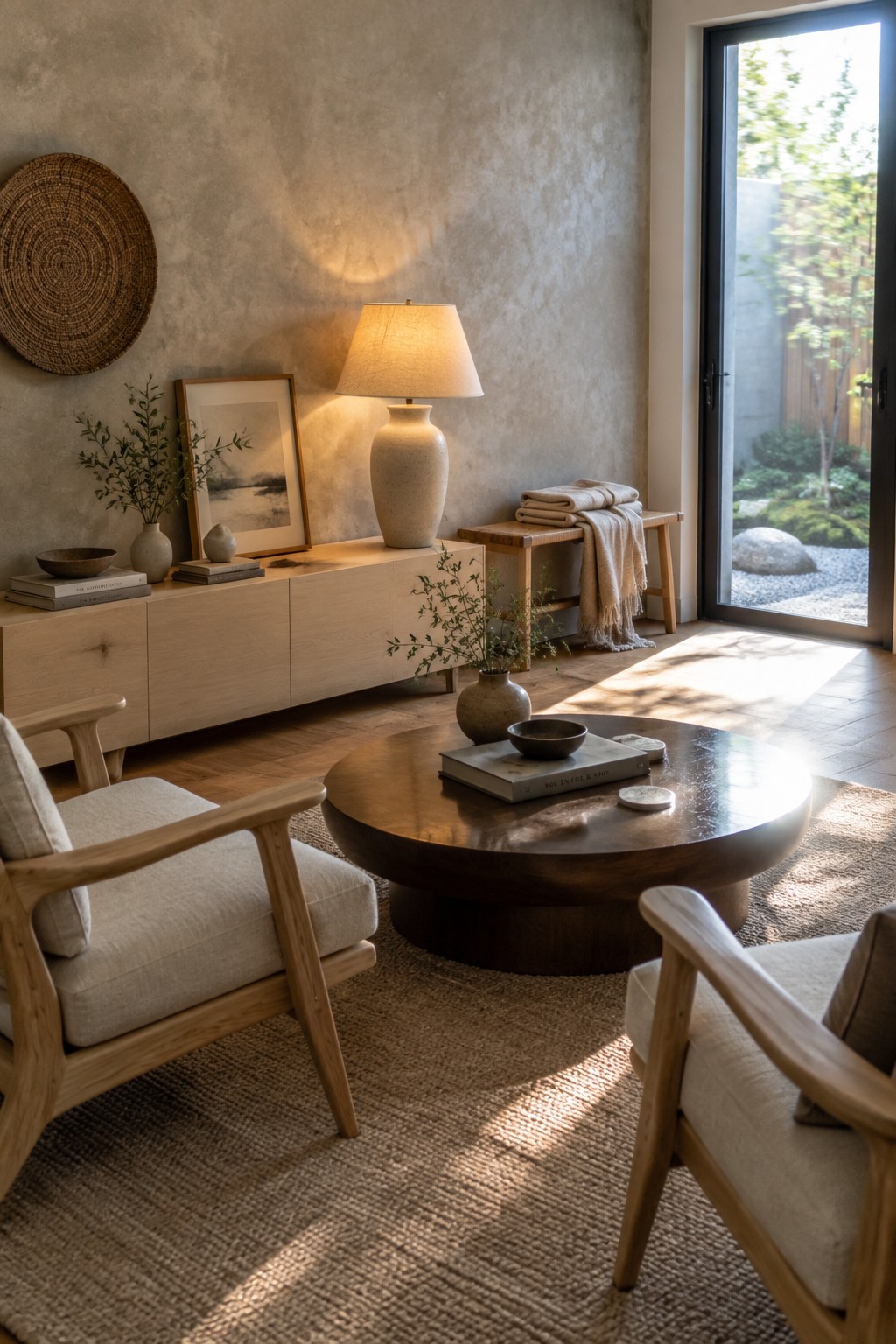
A table lamp can make a living room feel comfortable after the main lights are off. Its pool of light is easier on the eyes, and a warm fabric shade suits the quiet, natural materials often used in Japandi rooms.
Set a lamp on a sideboard or end table where you want a gentle glow, and choose a shade that spreads light rather than directing it sharply. A simple ceramic base keeps the look relaxed without adding visual clutter.
Use Paper Pendants at Different Heights
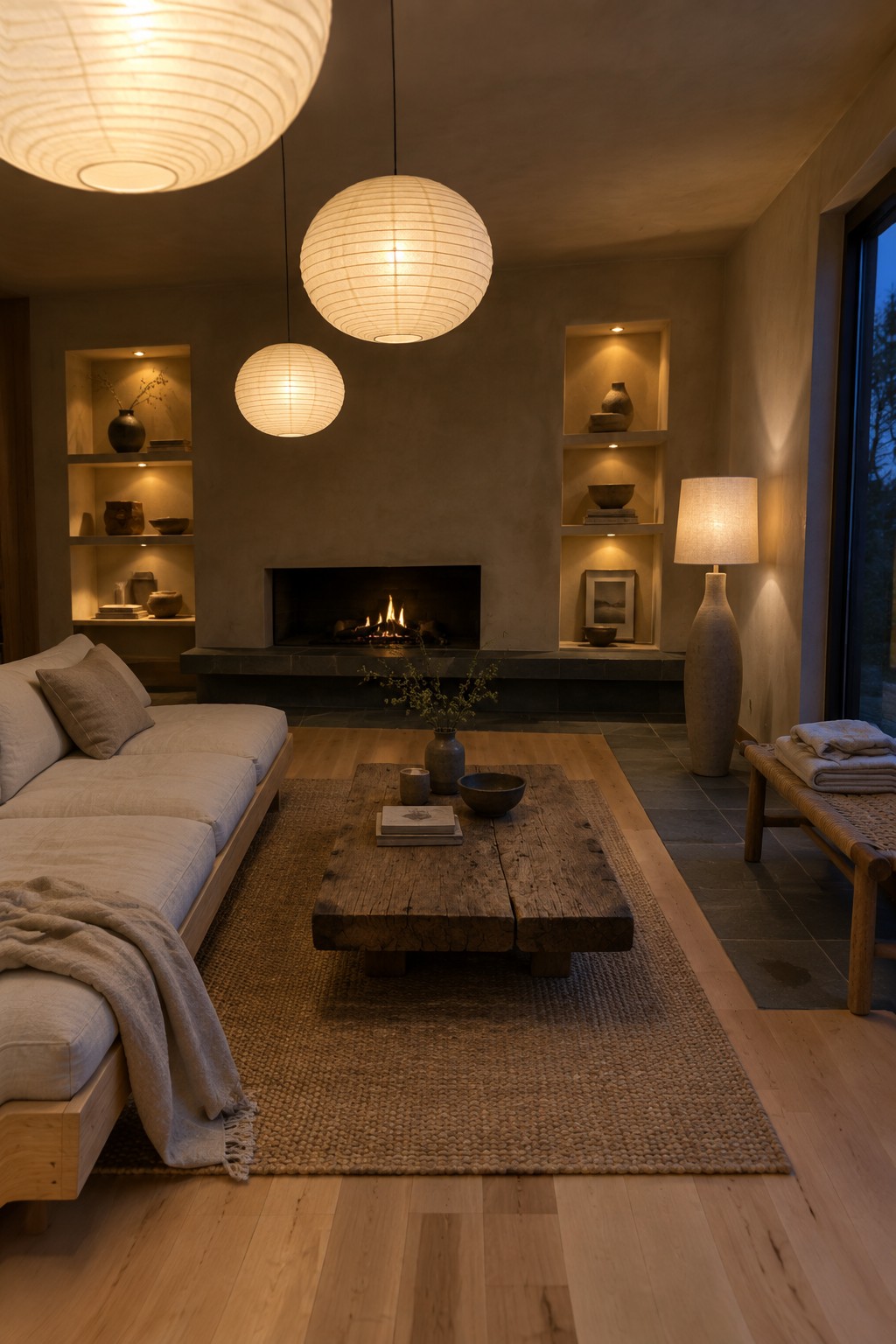
Hanging paper pendants at different heights spreads soft overhead light through a living room instead of concentrating it in one spot. The simple round shades suit Japandi rooms, where a few quiet shapes often work better than a busy fixture.
Try this with a pair or small group above a seating area, leaving enough space for people to move comfortably beneath them. Keep the bulbs warm and gentle, and use a dimmer if the pendants are the room’s main evening light.
Frequently Asked Questions
Q: What kind of bulbs work best with Japandi living room lighting?
A: Choose warm white bulbs for a soft, welcoming glow that suits natural wood and neutral fabrics. If your fixtures use different bulbs, keep their color temperature similar so the room feels calm rather than patchy.
Q: How can I layer lighting without making the room feel cluttered?
A: Start with one ceiling light, then add a floor or table lamp where you read or relax. A simple paper, linen, or wood shade can add warmth without drawing too much attention.
Q: Should I use a dimmer in a Japandi living room?
A: Yes, if your fixtures support one. Dimming lets you shift from brighter light for everyday tasks to a softer glow in the evening.
Q: Where should I place a floor lamp?
A: Set it beside a sofa or reading chair, with the light aimed where you need it. Keep the base out of walkways so the room stays easy to move through.
