

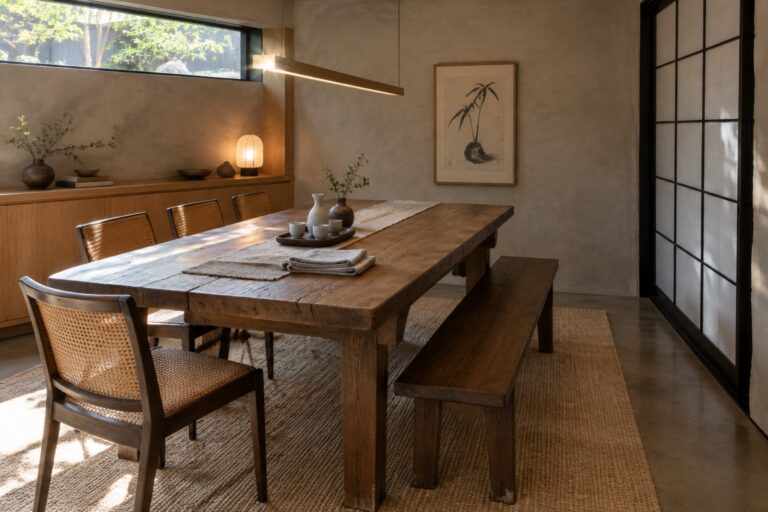
In a Japandi dining room, the light fixture often catches my eye before the table setting, so its shape can set the tone for the whole space.
A linear pendant suits this style because it gives the dining table a clear visual anchor while keeping the room feeling calm and uncluttered.
The balance matters, though: a fixture that hangs too low can interrupt conversation, while one that is too small may feel disconnected from the table.
I’d pay attention to the warmth of the light, the finish of the materials, and how the pendant sits alongside everyday pieces like chairs and cabinets.
These designs offer practical details worth saving and adapting to the proportions and routines of your own dining room.
Choose a Linear Pendant for a Long Dining Table
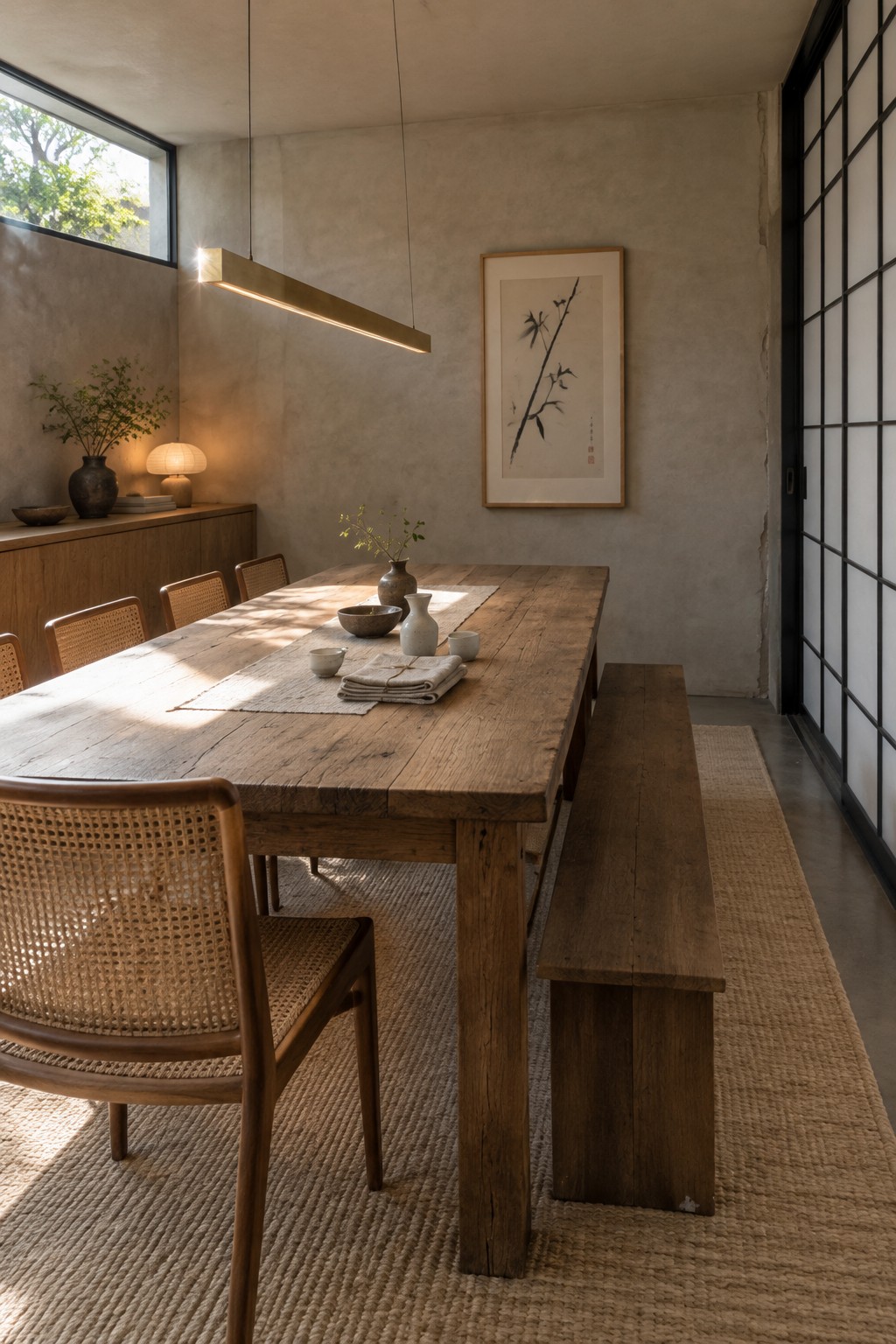
A linear pendant suits a long dining table because it spreads light across the surface instead of concentrating it in one spot. A slim fixture also fits a Japandi room, where simple shapes and natural materials keep the look calm.
Hang the pendant along the table’s length, with enough clearance for people to see across the table comfortably. A warm, dimmable bulb works well with wood furnishings and textured walls.
Choose a Linear Pendant for a Round Dining Table
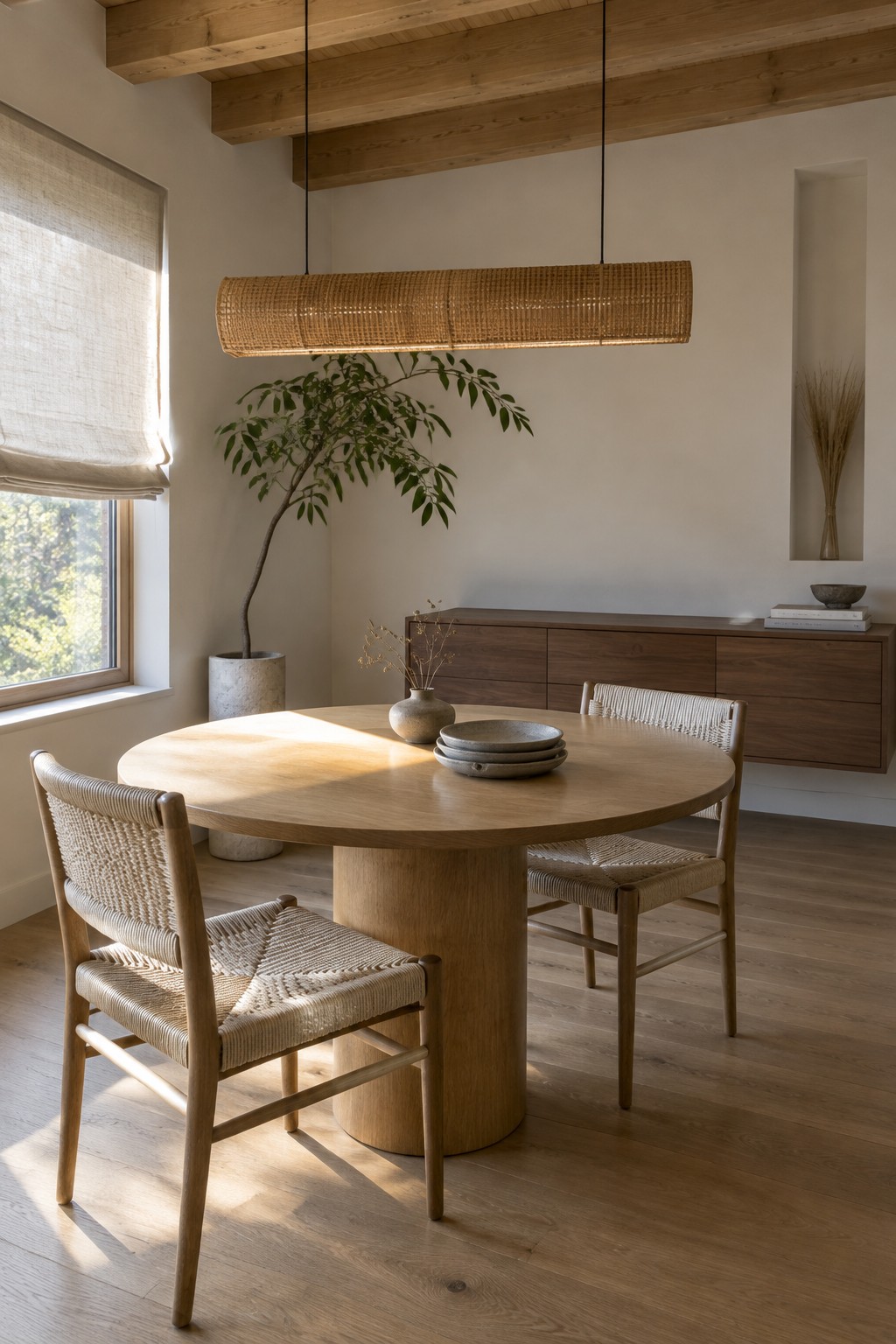
A linear pendant can work well above a round dining table when its shape is kept simple and its size suits the table. A woven shade, like the one shown here, brings in texture without making the dining area feel formal.
Hang the fixture low enough to define the table, but high enough that people can see across it comfortably. This idea suits Japandi rooms with natural materials and uncluttered furnishings. Check the pendant’s length against the table’s diameter so it doesn’t feel oversized.
Choose a Linear Pendant for the Dining Table
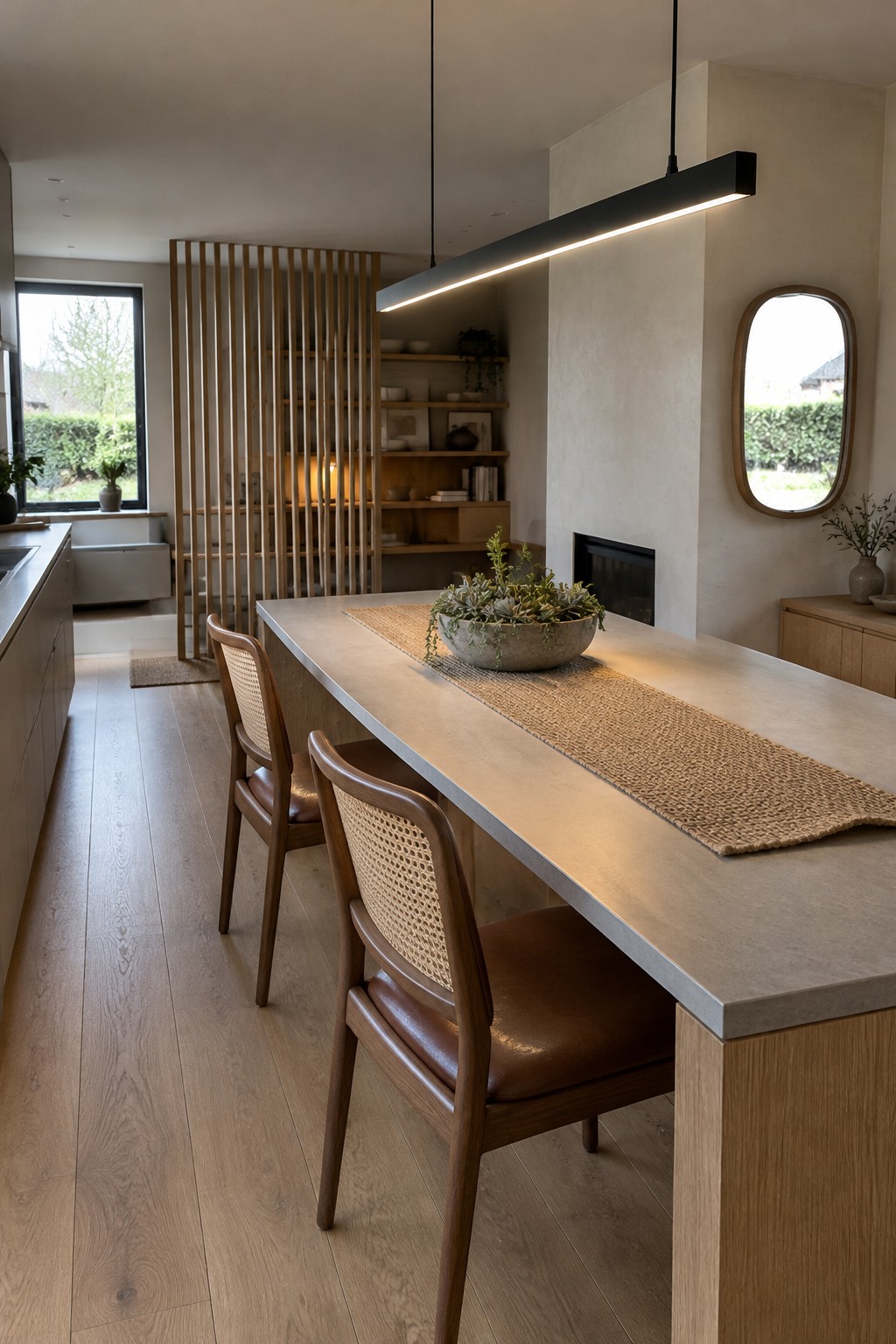
A linear pendant suits a long dining table because it spreads light along the surface instead of concentrating it in one spot. A slim black fixture also gives a simple focal point without making the room feel busy.
Hang the pendant so it sits comfortably above the table and does not block conversation across it. This style works well in open-plan dining areas, especially when the rest of the room has calm finishes and natural materials.
Use a Linear Pendant to Define the Dining Area

A long pendant works well above a dining table because its shape follows the table and gives the eating area a clear focus. In a Japandi room, a simple design with diffused shades can provide useful light without making the space feel busy.
Hang the fixture so it sits comfortably above the tabletop, and choose a length that suits the table rather than stretching far past its ends. A warm, understated finish fits especially well with natural wood and quiet neutral colors.
Use a Linear Pendant to Light a Narrow Dining Area
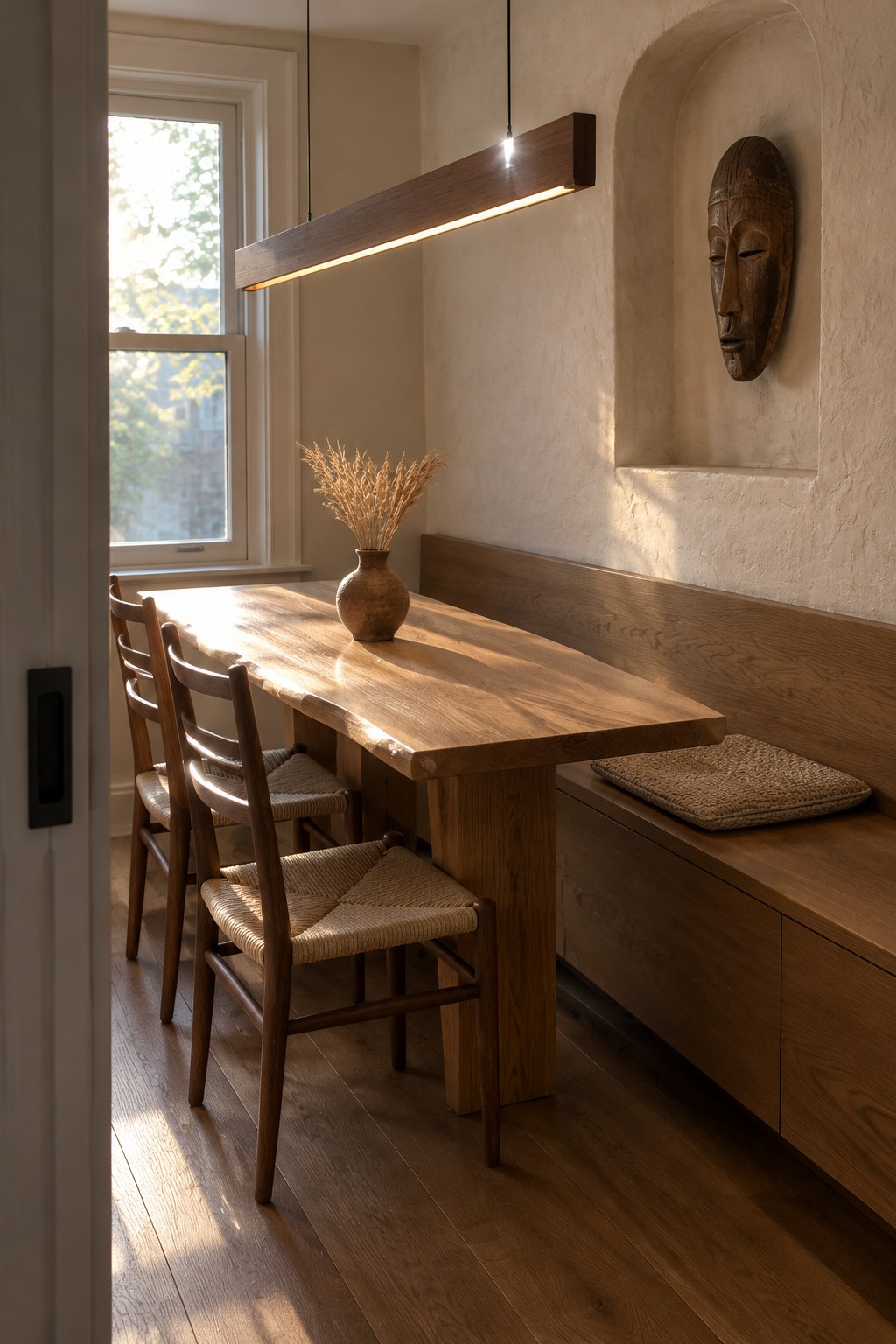
A linear pendant suits a dining table that runs along a wall, giving the whole surface even light instead of focusing it on one spot. Its simple shape also fits naturally with the long lines of a built-in bench.
Hang the fixture so it sits comfortably above the table and does not block conversation. A warm, dimmable bulb is useful here, especially in a smaller dining space that serves as a place for both meals and everyday tasks.
Use Multiple Linear Pendants for a Long Table
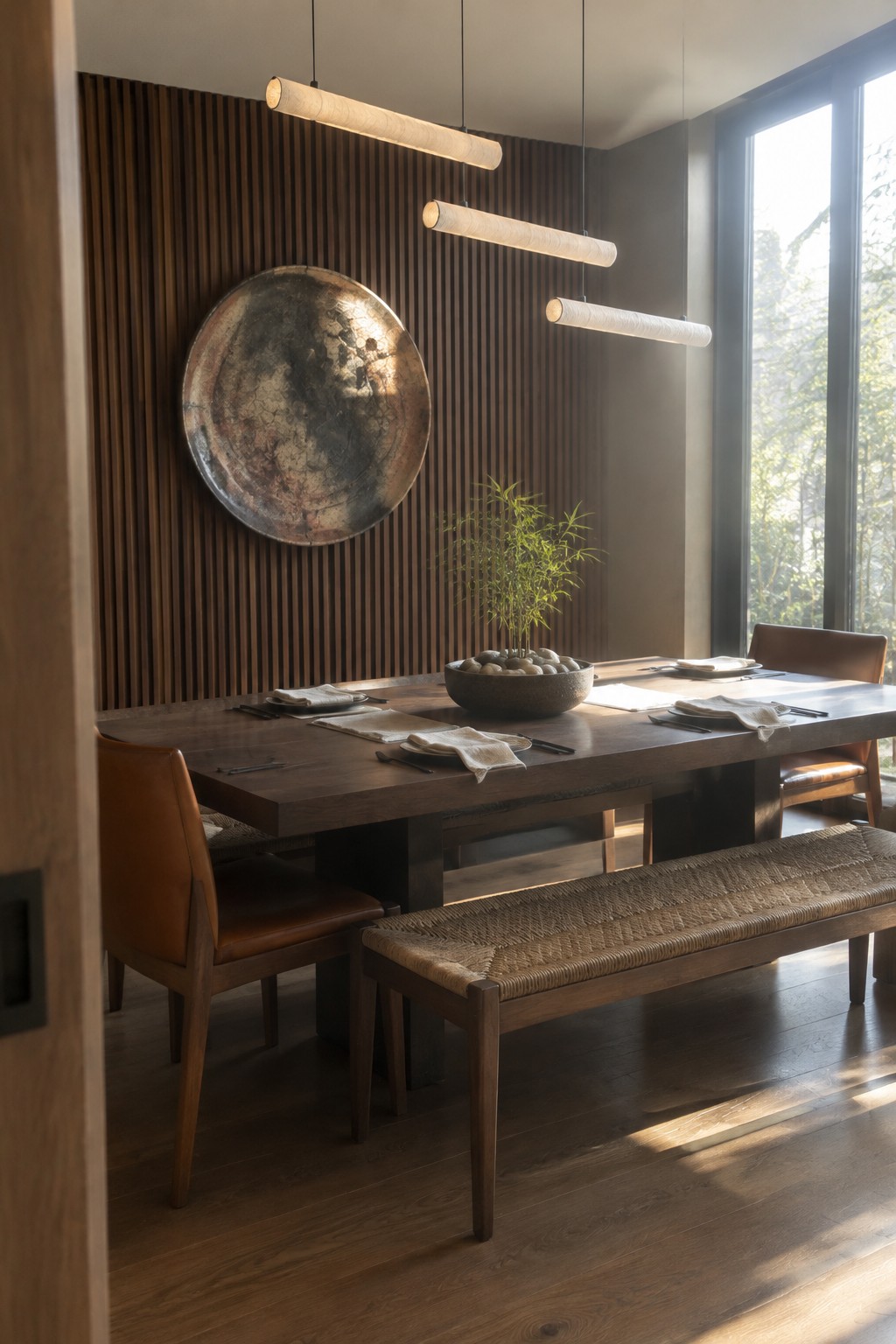
Several slim pendants can spread light across a long dining table without relying on one oversized fixture. Their simple shape suits a Japandi room, where natural materials and uncluttered forms do much of the decorating.
Hang them in a staggered line above the table, keeping enough space between each one for an even look. This approach works well in a dining room with a high ceiling, but check that the fixtures do not block conversation across the table.
Use a Slim Pendant to Light a Large Dining Table
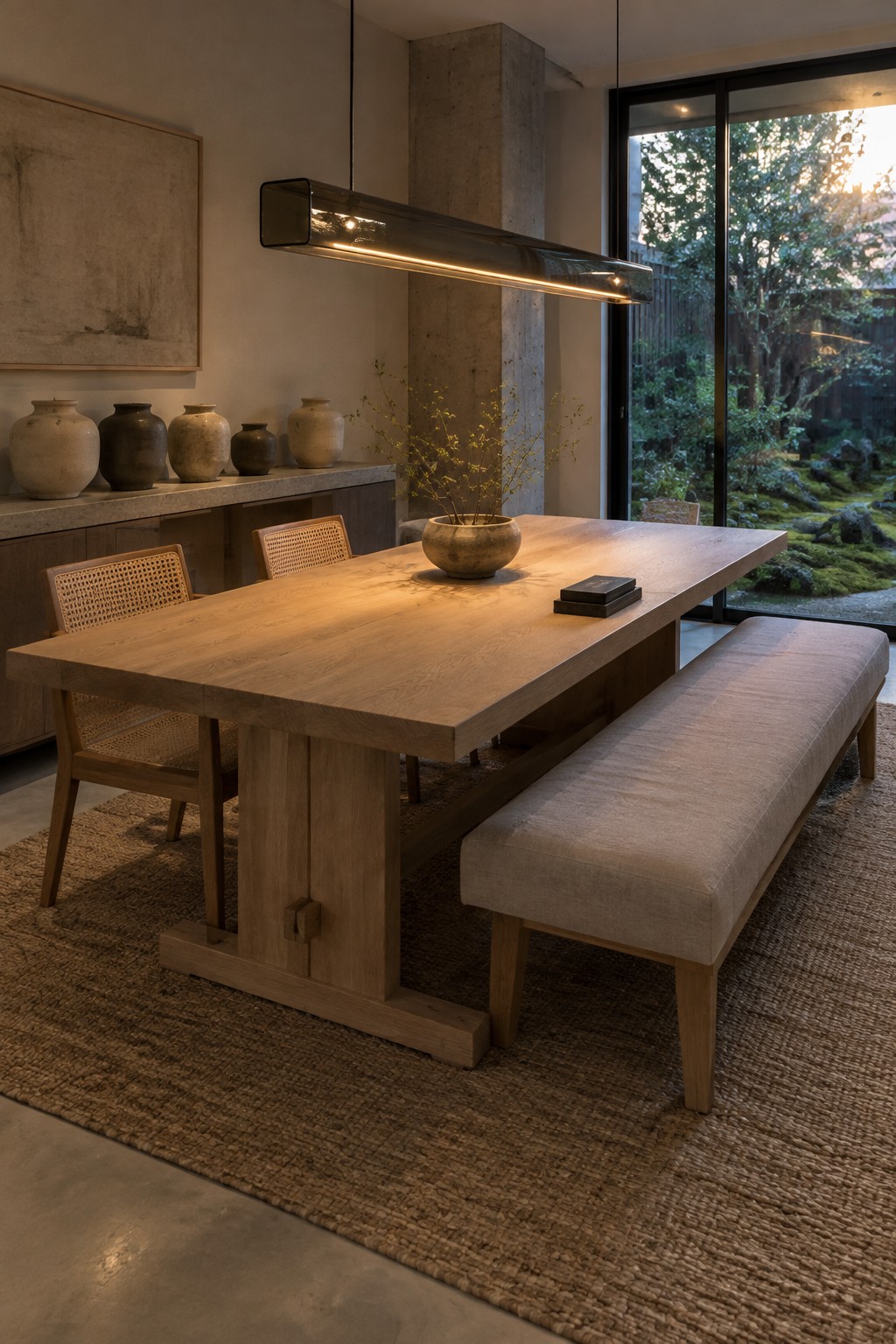
A long, narrow pendant is a practical choice for a generously sized dining table. It spreads light along the table instead of concentrating it in one spot, and its simple shape suits a Japandi room without adding visual clutter.
Hang the fixture low enough to light the tabletop, but leave enough clearance for people to see across it comfortably. A dimmer is useful here, especially when the dining area is used for both meals and quieter evenings.
Use Natural Materials Around a Linear Pendant
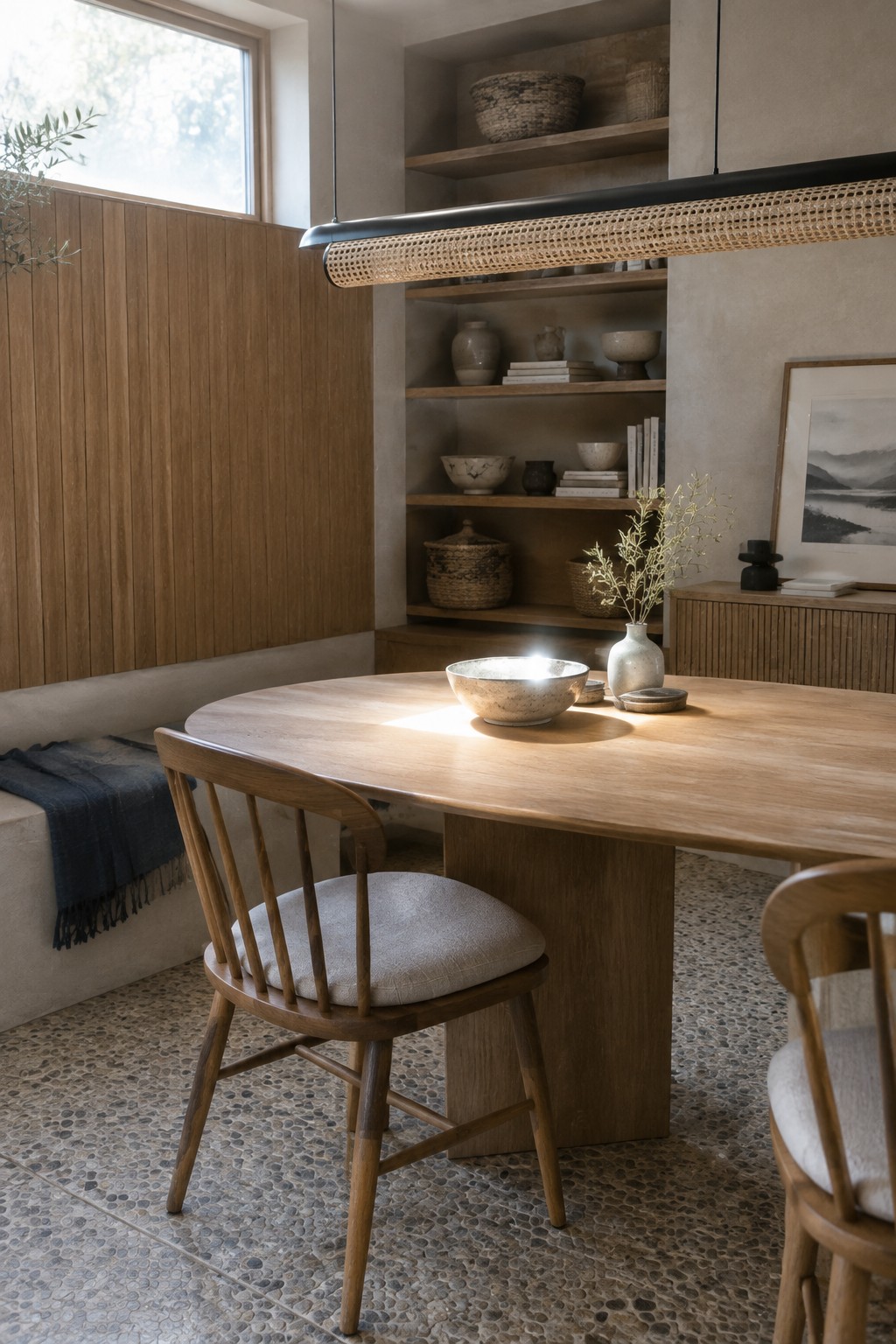
A linear pendant can feel right at home in a Japandi dining room when its materials echo the rest of the space. Here, a woven shade sits above a simple wooden table, so the fixture feels considered without needing a bold shape or bright finish.
Try this approach over a dining table in a room with pared-back furniture and natural finishes. Keep the pendant long enough to relate to the table, and hang it where it gives useful light without blocking conversation.
Let a Linear Pendant Set the Dining Room’s Style

A linear pendant suits a long dining table because it spreads light across the surface instead of focusing it in one spot. A simple white fixture keeps the look clean, while natural wood makes the room feel relaxed and easy to live in.
This approach works especially well in an open dining area where the table needs a clear sense of place. Hang the fixture so it lights the tabletop comfortably, and choose a length that feels in proportion to the table rather than stretching far beyond it.
Let the Pendant Follow the Table
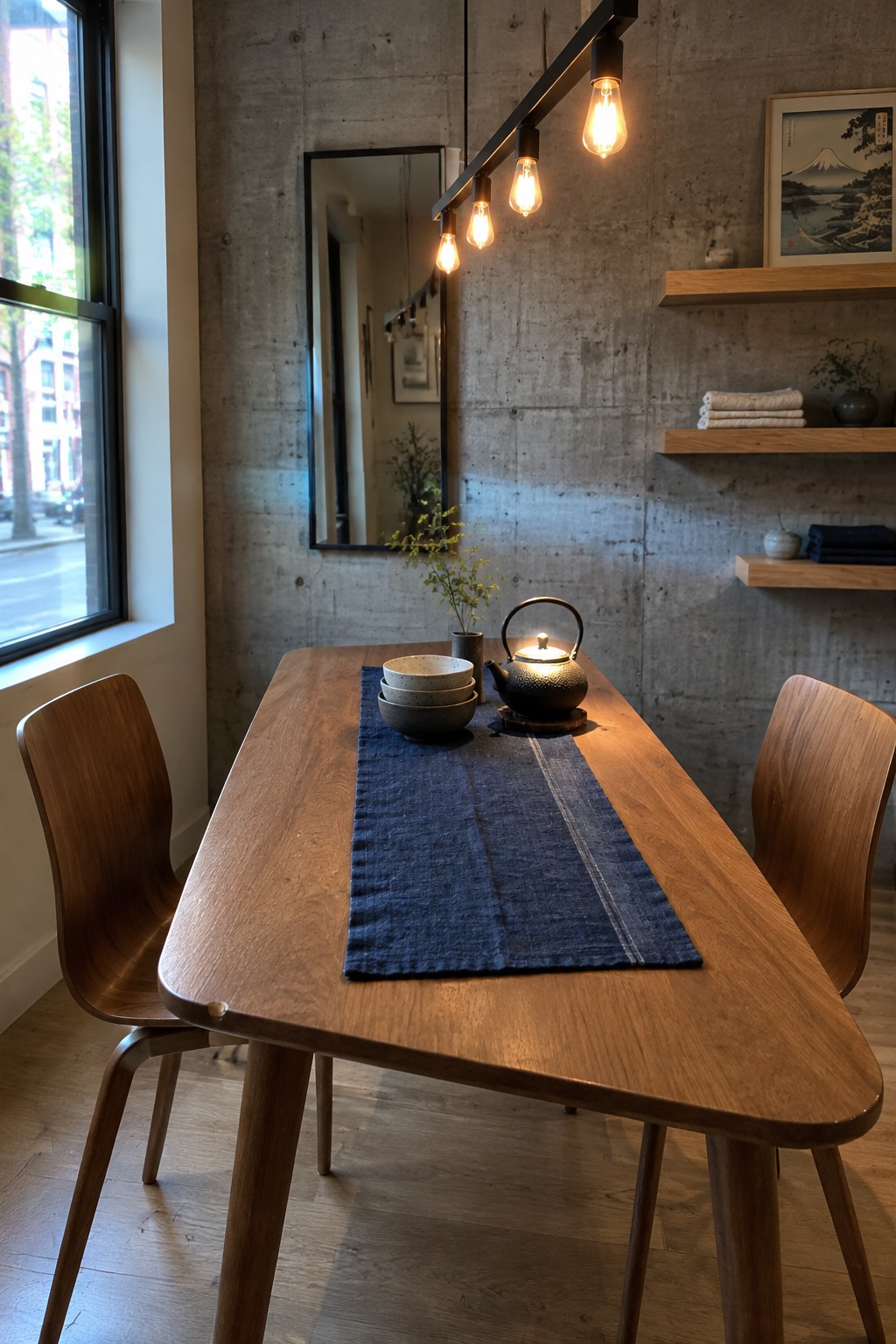
A linear pendant suits a long dining table because it spreads light along the eating area instead of concentrating it at one point. Exposed bulbs also work nicely in a Japandi room, where simple forms and natural materials keep the look relaxed.
Hang the fixture over the center of the table, with the bulbs spaced to cover most of its length. In this room, the wood table and dark linear fixture make a clear, useful pairing. Keep the pendant narrow enough that it does not crowd the table or block conversation.
Use a Warm Linear Pendant in a Wood-Focused Dining Room

A linear pendant is a practical choice for lighting a long dining table. Its shape spreads light along the tabletop, and a warm, simple fixture fits naturally with rustic wood without competing with the table.
Hang it low enough to light the table comfortably, but high enough that people can see across it. This approach suits open dining rooms with a long table, especially when the fixture has a quiet shape and a soft glow.
Use Warm Light Above a Low Dining Table
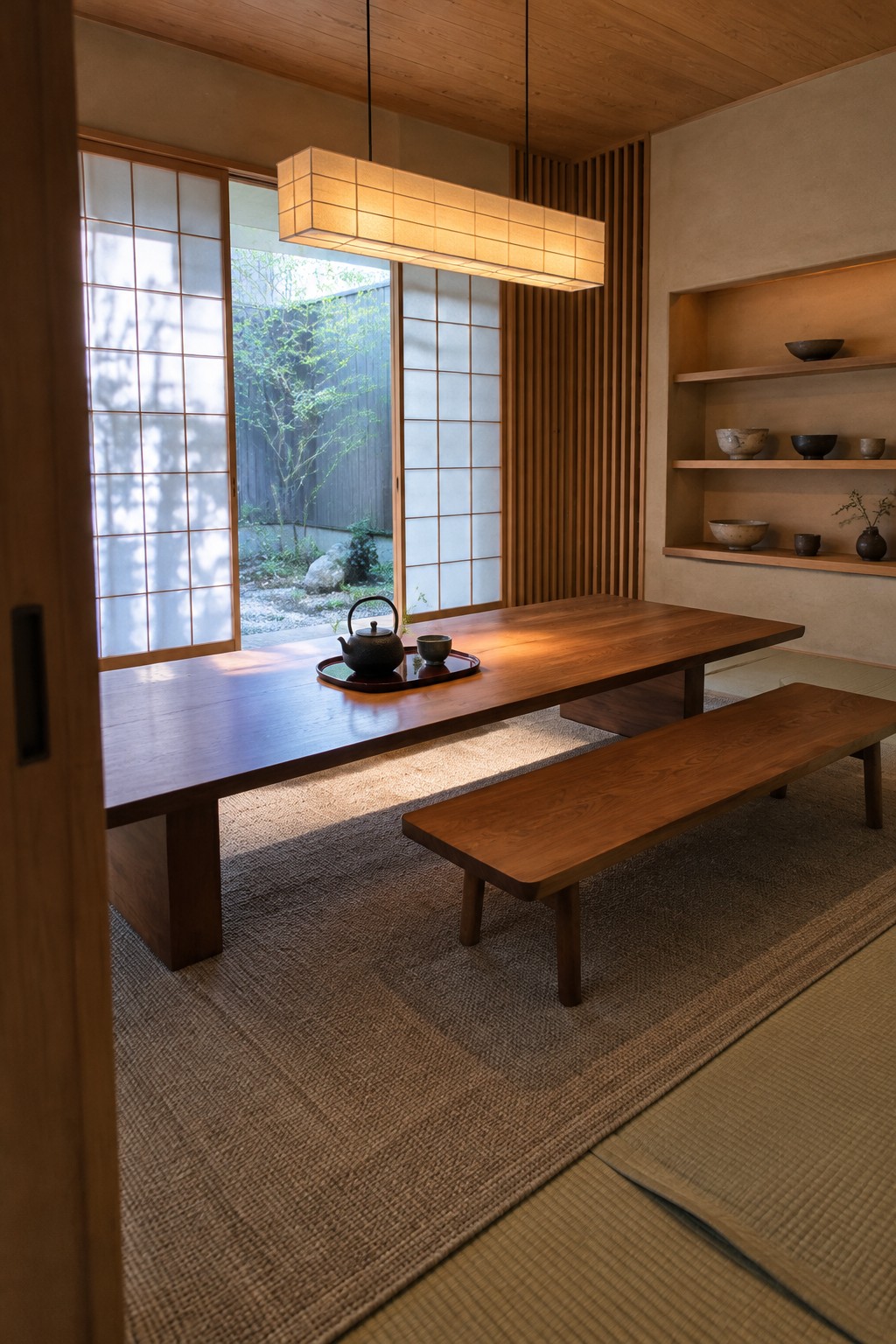
A long, linear pendant works well over a low dining table because it spreads light along the surface instead of concentrating it in one spot. A paper shade also gives the room a softer glow than a bare bulb.
This approach suits dining rooms where people sit close to the floor and the table is the main gathering place. Hang the fixture low enough to light the table, but high enough to keep it out of the way when people are seated.
Choose a Linear Pendant for a Dark Dining Room
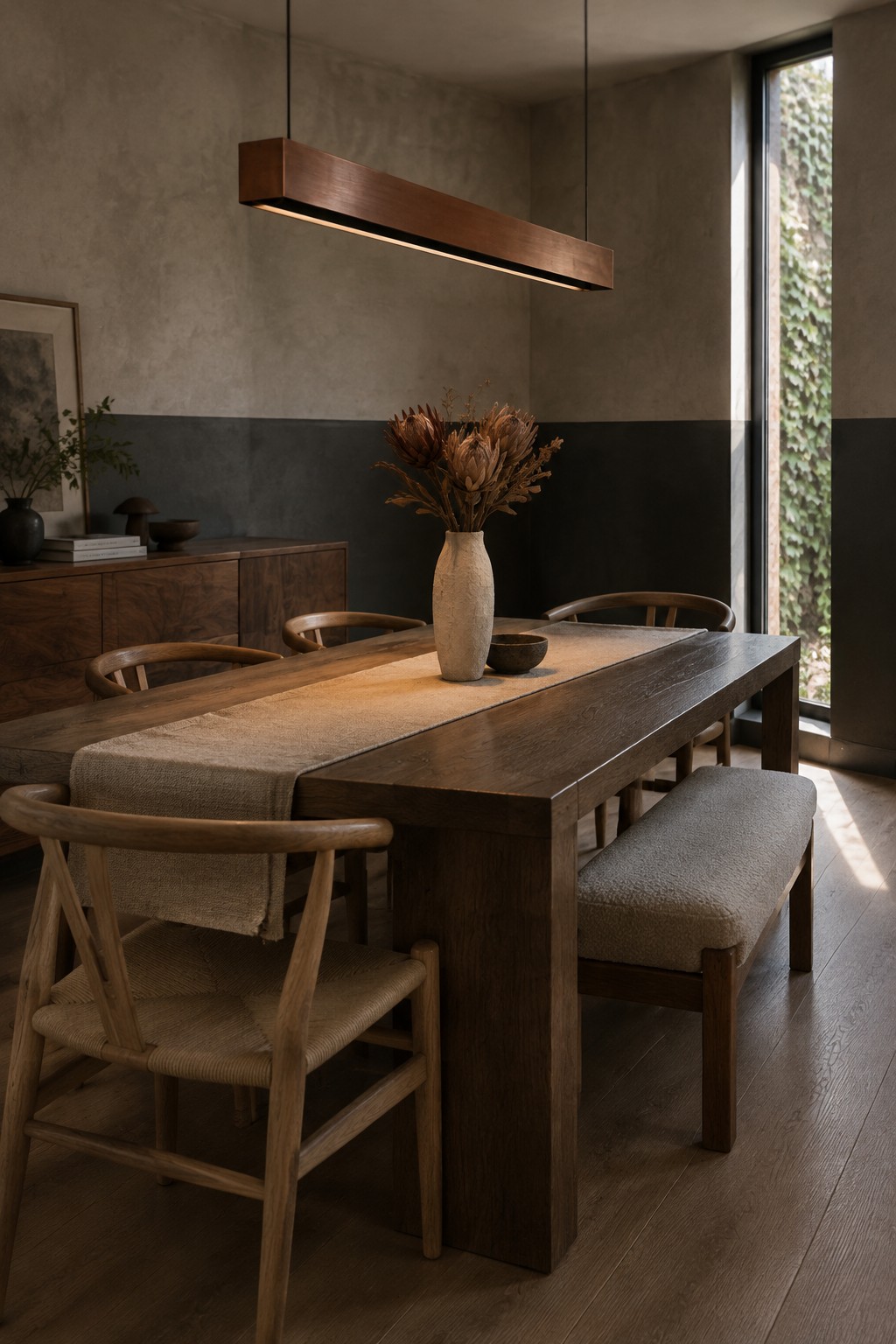
A slim linear pendant suits a dining room with dark finishes because it spreads light along the table without adding a bulky fixture. Here, the warm-toned fixture picks up the wood of the table while its simple shape keeps the focus on the room’s natural materials.
For a similar look, choose a pendant that is long enough to light most of the tabletop, and hang it low enough to feel connected to the dining area without blocking conversation. A dimmer is useful in a room with deep wall colors, where softer light can make dinner feel more comfortable.
Use a Slatted Linear Pendant for a Warm Dining Area
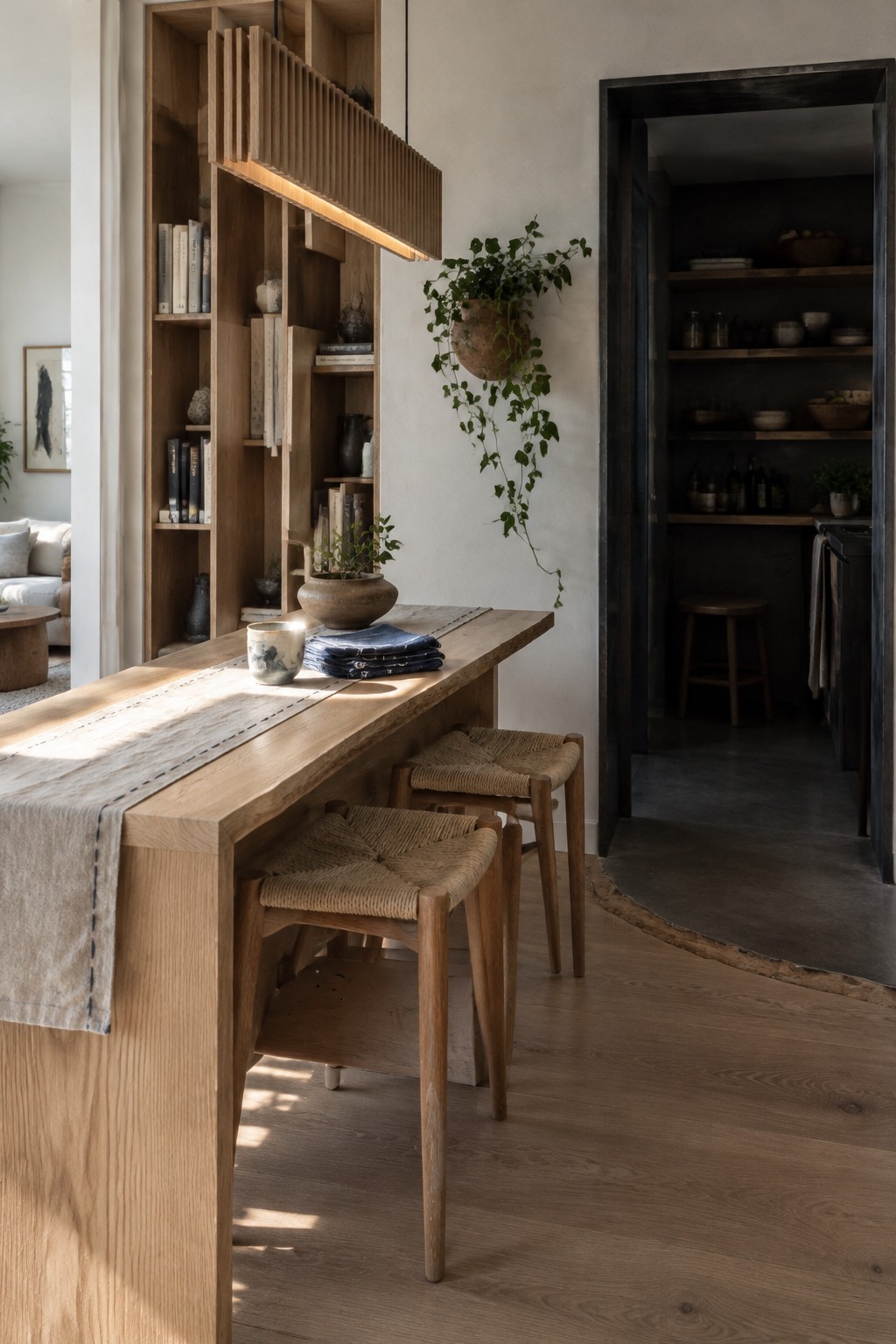
A linear pendant with a slatted wood shade brings a softer look to a dining area than a plain metal fixture. The repeated wooden fins give the light some texture, while the long shape suits a table used for everyday meals.
For a similar effect, choose a pendant that is narrower than the tabletop and hang it low enough to light the surface without blocking conversation. It works especially well in a room with natural wood furniture, but keep other finishes simple so the fixture does not make the space feel crowded.
Choose a Linear Pendant for a Long Dining Table
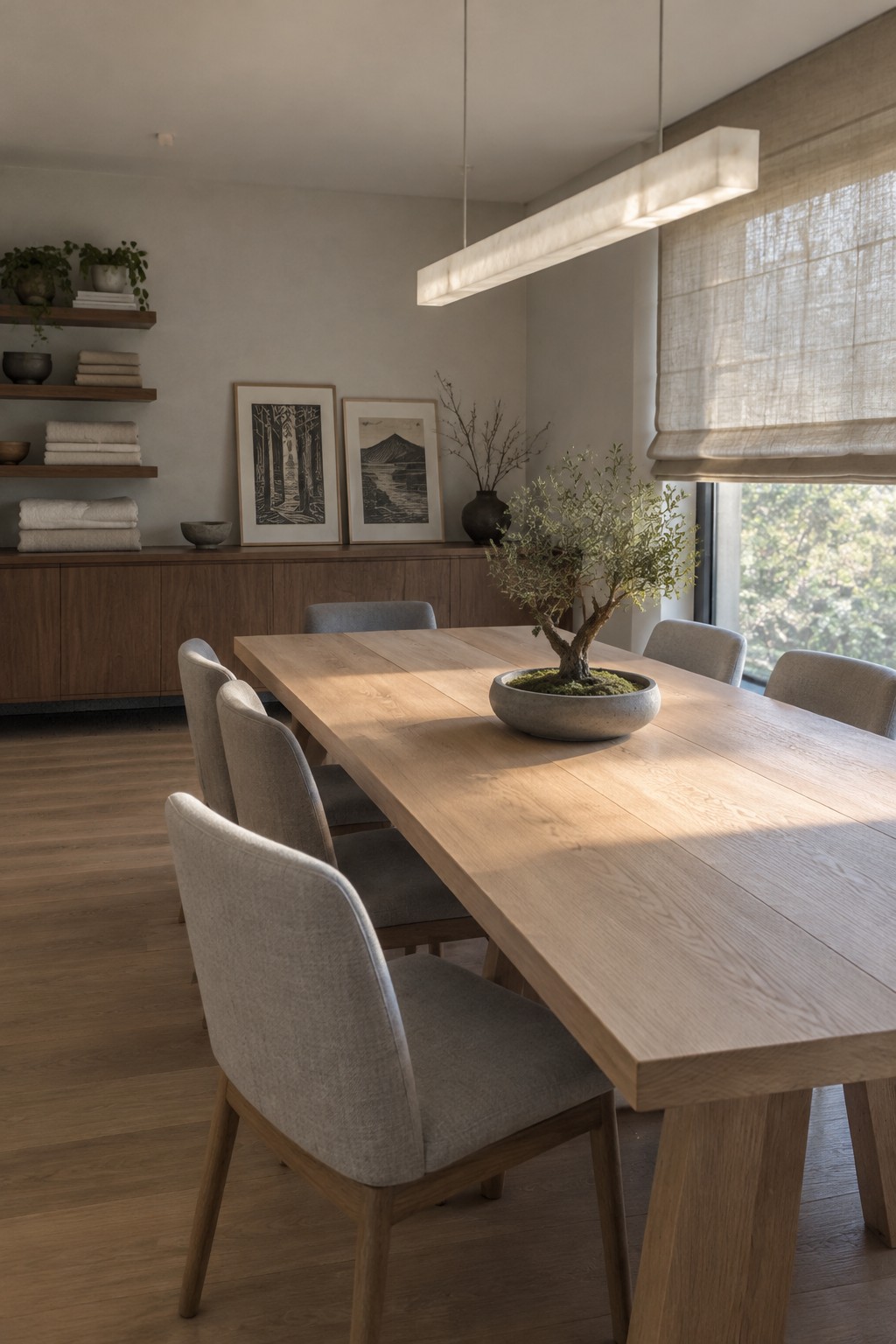
A long dining table needs light spread across its full length, and a linear pendant is a practical way to do that. Its simple shape suits a Japandi room, where natural wood and uncluttered furnishings keep the look calm.
Hang the fixture centered over the table, with enough clearance for people to talk comfortably across it. A warm, diffused shade works well in a dining room with wood furniture, but check that the light reaches both ends rather than pooling only in the middle.
Keep a Linear Pendant Simple
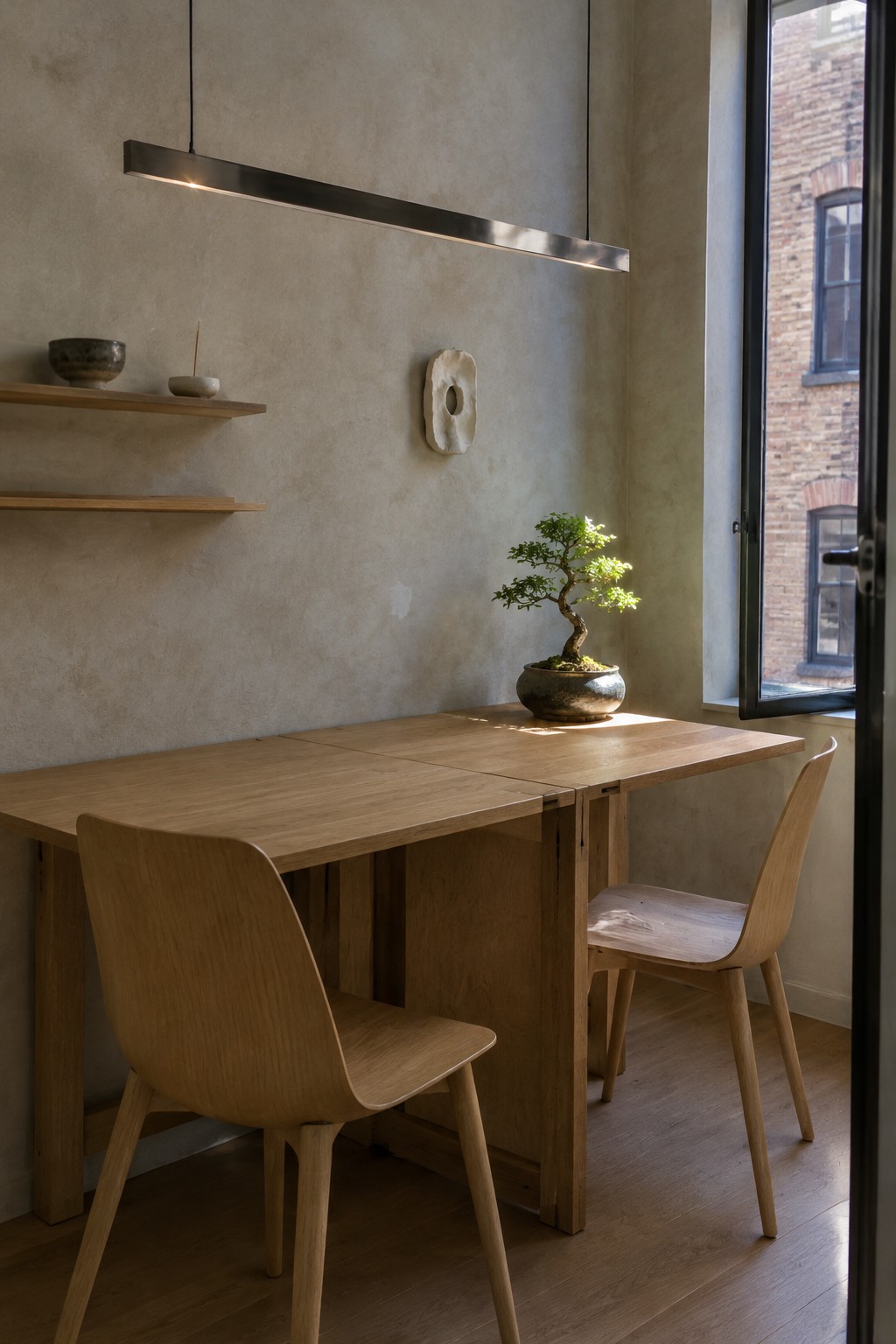
A slim linear pendant suits a Japandi dining room because it gives practical light without adding much visual clutter. Its clean shape works especially well above a straightforward wooden table, where the furniture and natural finishes can stay in focus.
Hang the fixture so it runs along the table’s length, and choose a warm light that feels comfortable for meals. In a smaller dining area, a narrow design can provide useful light without making the ceiling feel busy.
Use a Woven Pendant for Gentle Dining Light
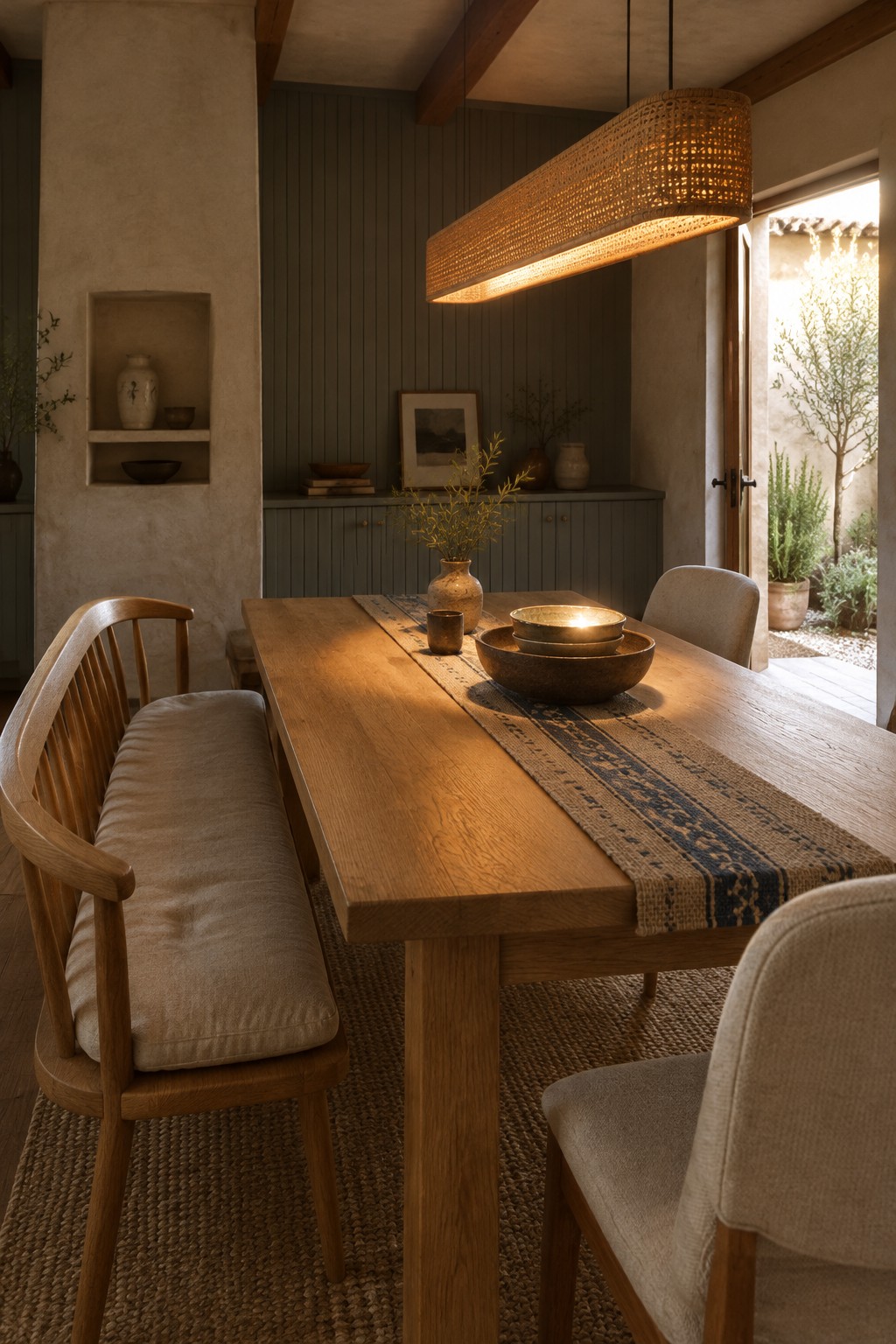
A woven linear pendant is a good choice when you want the dining light to feel warm without making the room feel formal. Its open texture lets light filter through, while the long shape suits a rectangular table.
Hang it low enough to light the tabletop, but high enough to keep sightlines clear. A woven shade works especially well with natural wood and simple finishes; choose a tighter weave if you need more focused light.
Frequently Asked Questions
Q: How high should I hang a linear pendant over a dining table?
A: Start with the bottom of the pendant about 30 to 36 inches above the tabletop, then adjust until it feels comfortable from both seated and standing positions. A slim fixture helps keep the view across the table open.
Q: What size linear pendant works with my dining table?
A: Choose a pendant that’s a little shorter than the table, so the fixture doesn’t crowd the ends. For a long table, one linear pendant can work well, while a pair of smaller lights may suit a wider layout.
Q: How do I keep a linear pendant from feeling too modern in a Japandi dining room?
A: Look for simple shapes and natural materials, such as wood, paper, or linen, and pair them with a warm-toned metal finish. A soft, diffused glow usually feels more relaxed than a bare, bright bulb.
Q: Should I use a dimmer with my dining room pendant?
A: Yes, if you can. A dimmer makes it easy to shift from bright light for meals or cleanup to a softer glow for a slower evening.
