

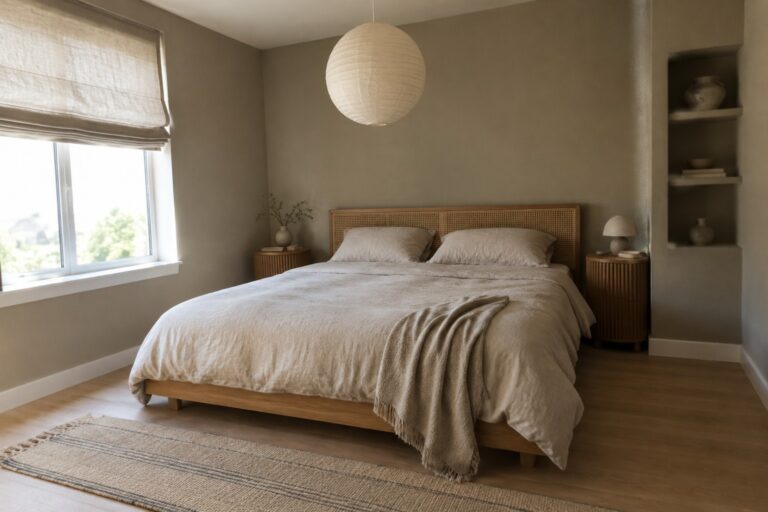
Warm neutrals can make a Japandi bedroom feel calm, but their undertones matter once they sit beside wood, bedding, and trim.
I find that beige can turn pink or yellow in changing daylight, while a soft greige may feel cooler than expected against warm floors.
The best combinations balance those shifts with natural textures and a little contrast, rather than making every surface the same shade.
Even a subtle change in wall color can alter how a room’s furniture and fabrics read.
I’d test a few options on the wall and check them in morning and evening light before settling on a palette.
Warm Taupe Walls With Natural Oak

The walls look closest to a warm taupe, a soft brown-gray that suits a Japandi bedroom without feeling too cool. Similar shades include Benjamin Moore Pale Oak, Sherwin-Williams Accessible Beige, and Farrow & Ball Skimming Stone. The color stays quiet, while the oak bed frame gives it a little contrast.
In changing daylight, this neutral may read more beige or more gray, so test a sample on the wall before painting the whole room. It works especially well with light wood and creamy whites; very cool white trim could make the walls look more brown.
Warm Greige Walls With Natural Oak

This bedroom’s walls look like a warm greige, a soft neutral between beige and gray. Close matches might include Benjamin Moore Pale Oak, Sherwin-Williams Accessible Beige, or Farrow & Ball Skimming Stone. It’s a useful choice for a Japandi room because it feels quieter than a strong beige but still sits comfortably beside natural oak.
The color appears warm in the window light, though it may read grayer in a dimmer room. Pair it with pale wood and simple cream textiles, and test a sample on more than one wall before committing.
Warm Beige Walls Beside Honey-Toned Wood

The walls look closest to a warm beige, with a soft, earthy undertone rather than a pink or cool gray cast. For similar shades, I’d compare Benjamin Moore’s Natural Cream, Sherwin-Williams’ Accessible Beige, or Behr’s Blank Canvas. This kind of neutral feels easy to live with and gives a bedroom a little more warmth than a plain white.
The natural wood around the bed and doorway suits the wall color, while white bedding keeps the room from reading too dark. In a room with less daylight, test a sample first, since warm beige can look deeper or more yellow on the wall.
Warm Greige Walls With Dark Wood

A warm greige is the closest fit for these bedroom walls. It sits between beige and gray, with enough warmth to keep the room from feeling chilly. This kind of quiet neutral works well when you want a restful backdrop without choosing plain white.
The dark wood headboard brings out the warmer side of the paint, while daylight may make it look a little grayer at times. Try samples on more than one wall before deciding, since greige can shift with the light. It suits bedrooms with wood furniture and simple, pale bedding.
Warm Clay Walls With a Cane Headboard
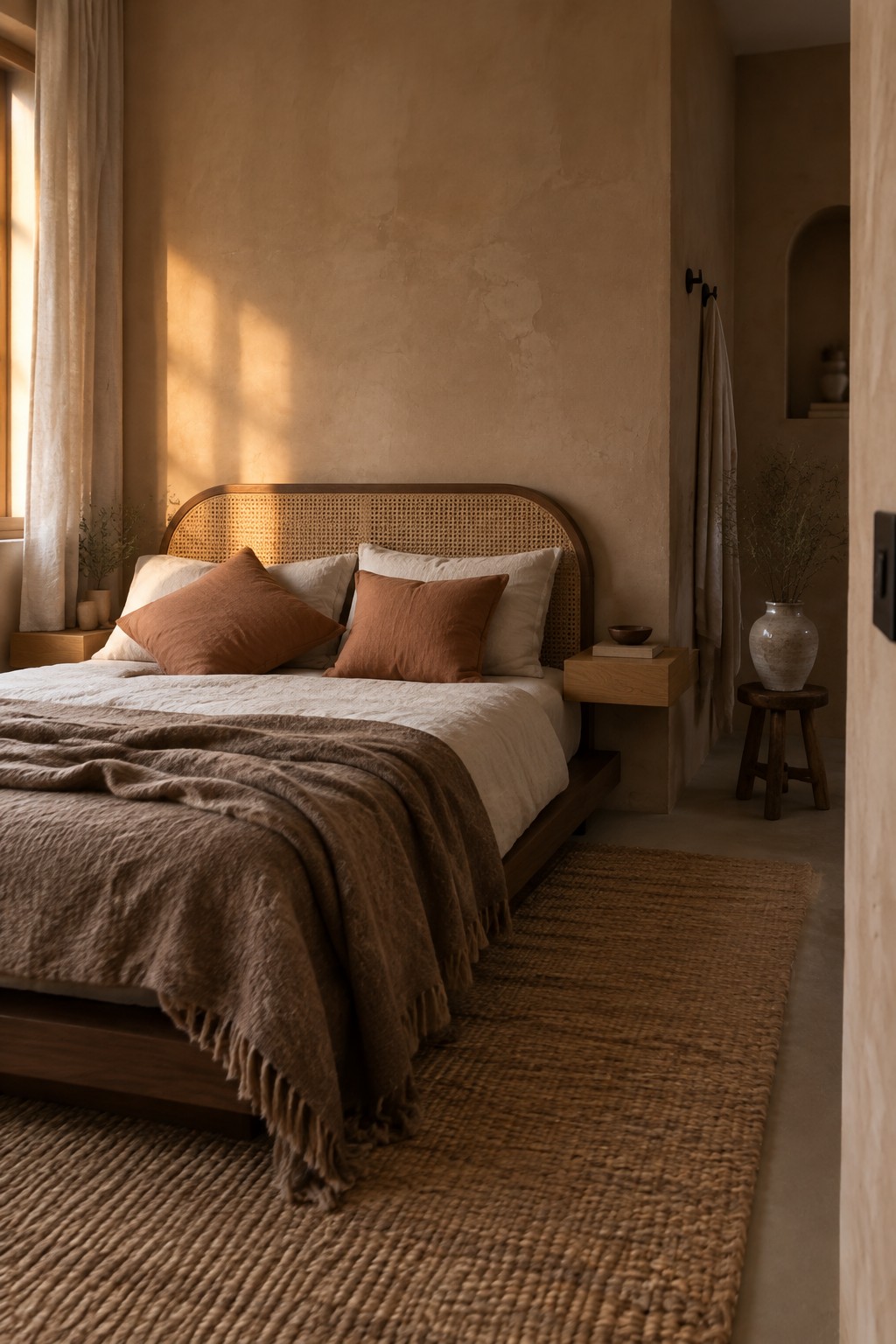
This wall color reads as a warm, earthy beige with a hint of clay. A close match might be Sherwin-Williams Accessible Beige, Benjamin Moore Muslin, or Farrow & Ball Jitney, though the exact shade is hard to pin down from a photo. It has more color than a plain cream, but still works as a quiet backdrop in a bedroom.
The muted wall tone pairs naturally with the cane headboard and soft white bedding. Try it in a room with warm natural materials, and test a sample in both daylight and evening light before painting, since beige can look more brown in a dim corner.
Warm Greige Paneling With Walnut Wood

This bedroom’s wall color looks like a warm greige, somewhere between beige and soft brown. Similar shades include Benjamin Moore Pashmina, Sherwin-Williams Accessible Beige, and Behr Almond Wisp. Used across the tall wall paneling, it gives the room a little more definition than plain cream without making the walls feel dark.
The color works well beside walnut-toned wood, which keeps the neutral from reading too cool or flat. In a room with less daylight, test a sample first, since some warm greiges can look noticeably browner.
Soft Taupe Walls Beside Light Oak
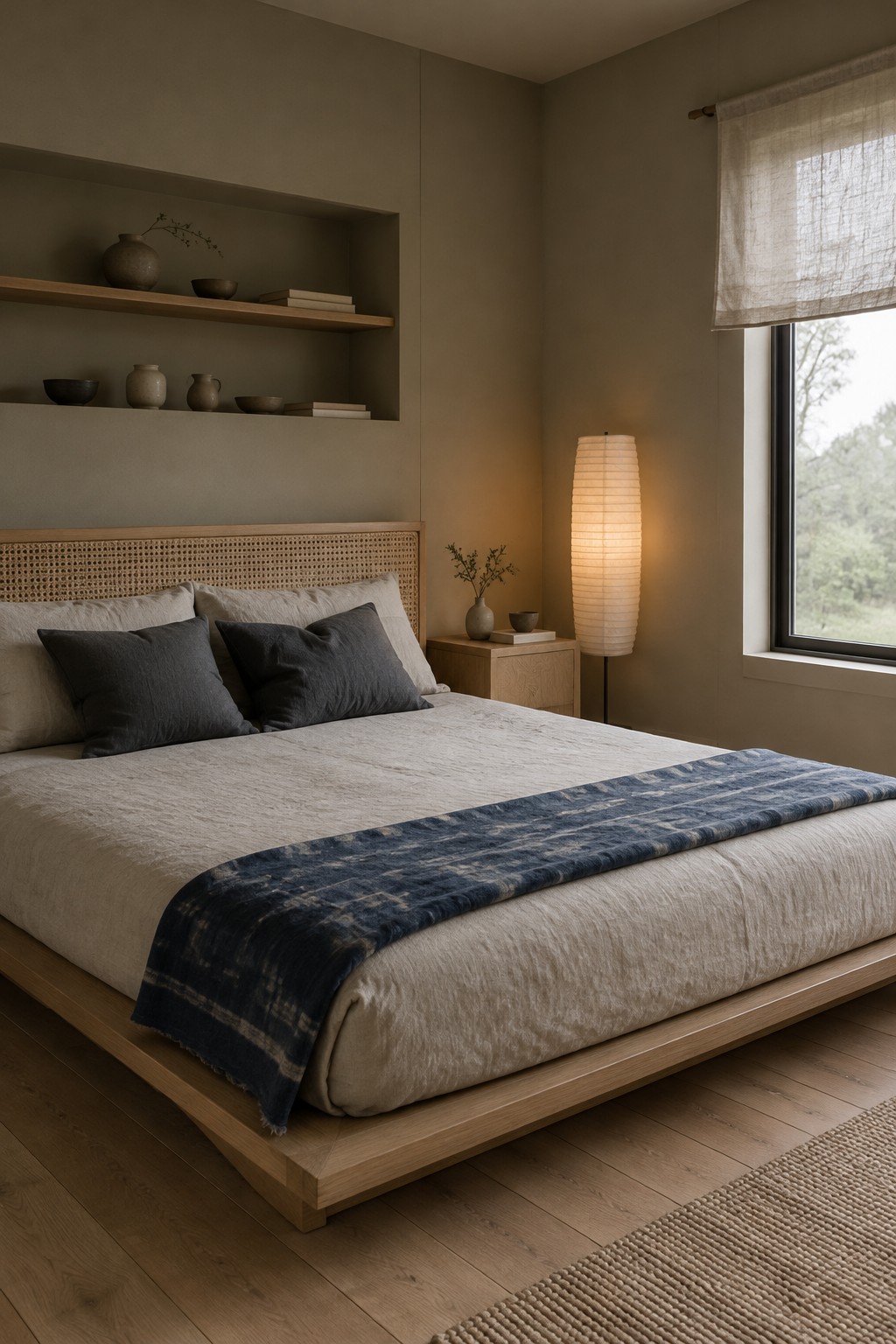
This bedroom’s walls look like a warm taupe, close to Benjamin Moore Edgecomb Gray, Sherwin-Williams Accessible Beige, or Farrow & Ball Skimming Stone. It is a soft neutral with a little more color than cream, so it gives a bedroom a settled look without making it feel dark.
The light oak bed frame suits this kind of paint, while the room’s window helps keep the taupe from feeling too heavy. Try it in a bedroom with natural wood and pale linens, and test a sample first since taupe can read grayer in cooler light.
Warm Greige Walls With Walnut Furniture
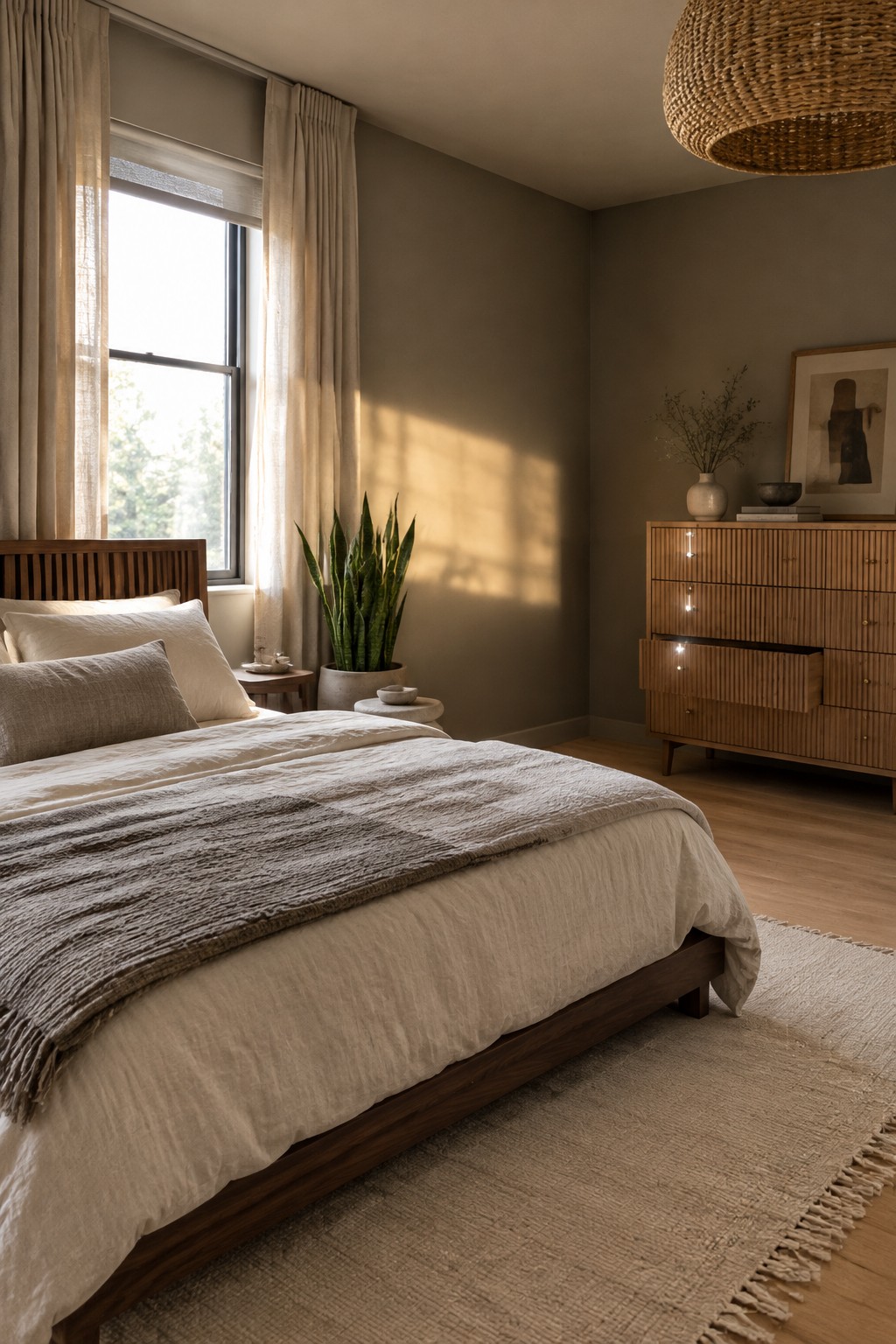
Warm greige is the closest color family for these walls. It looks like a soft taupe with a muted brown undertone, a little deeper than a typical warm white. It works well in a bedroom because it feels gentle without making the walls seem too pale.
The shade sits comfortably beside the dark wood bed and dresser, while the lighter floor keeps the room from reading too brown. Look for greige samples that lean slightly warm, and test them in both daylight and lamplight before painting.
Pale Greige Slats Behind a Cane Headboard
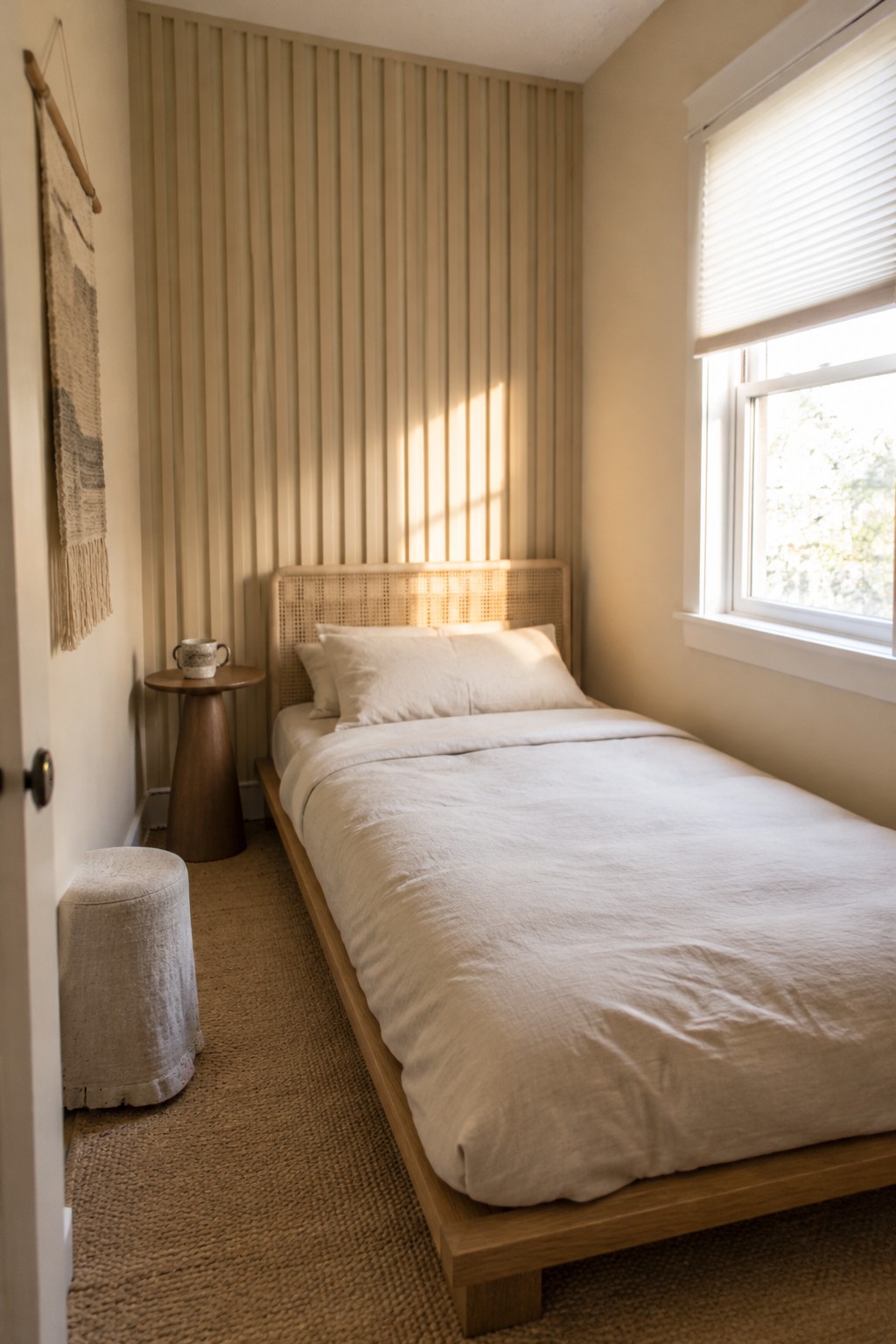
This bedroom’s wall color reads as a pale warm greige, close to Sherwin-Williams Accessible Beige, Benjamin Moore Pale Oak, or Behr Sandstone Cove. The neutral shade keeps the narrow room feeling light without looking stark, and it works well with natural wood.
The color leans beige in the warm window light, so it should pair easily with cream bedding and a cane headboard. Sample it on the wall first, since cooler light may bring out more gray.
Muted Olive Walls Beside a Cane Headboard
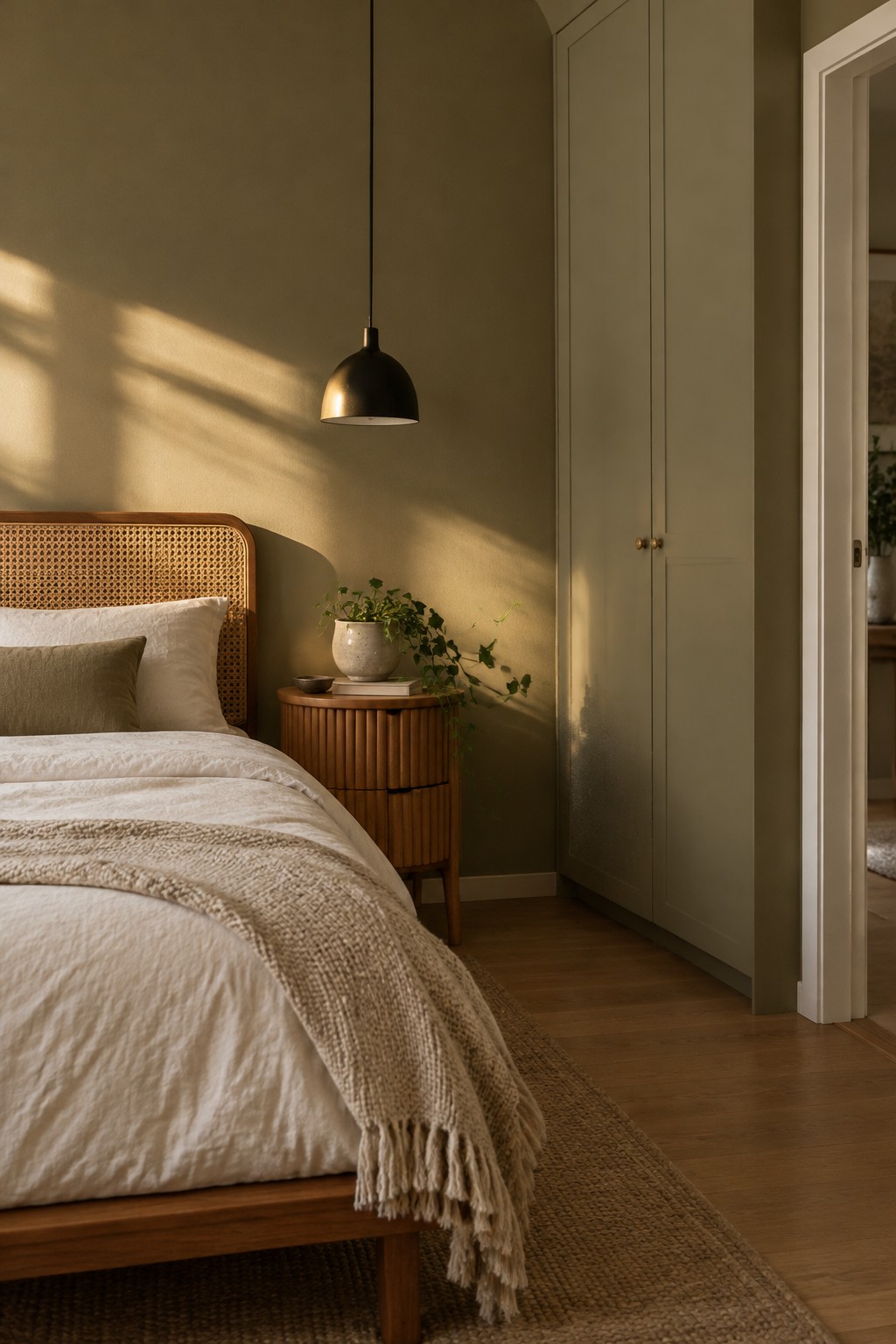
This looks like a muted olive green, with a warm, earthy cast. It would suit a bedroom where you want a little more color than beige without making the walls feel too bold. The closest unbranded matches might be Benjamin Moore’s Gloucester Sage, Sherwin-Williams’ Olive Grove, or Farrow & Ball’s Treron.
The color pairs well with the honey tone of a cane headboard and warm wood flooring. In strong daylight, olive can look lighter and more golden, so test a sample on the wall before committing. It may read darker in a room with less natural light.
Warm Plaster Walls Beneath a Whitewashed Timber Roof
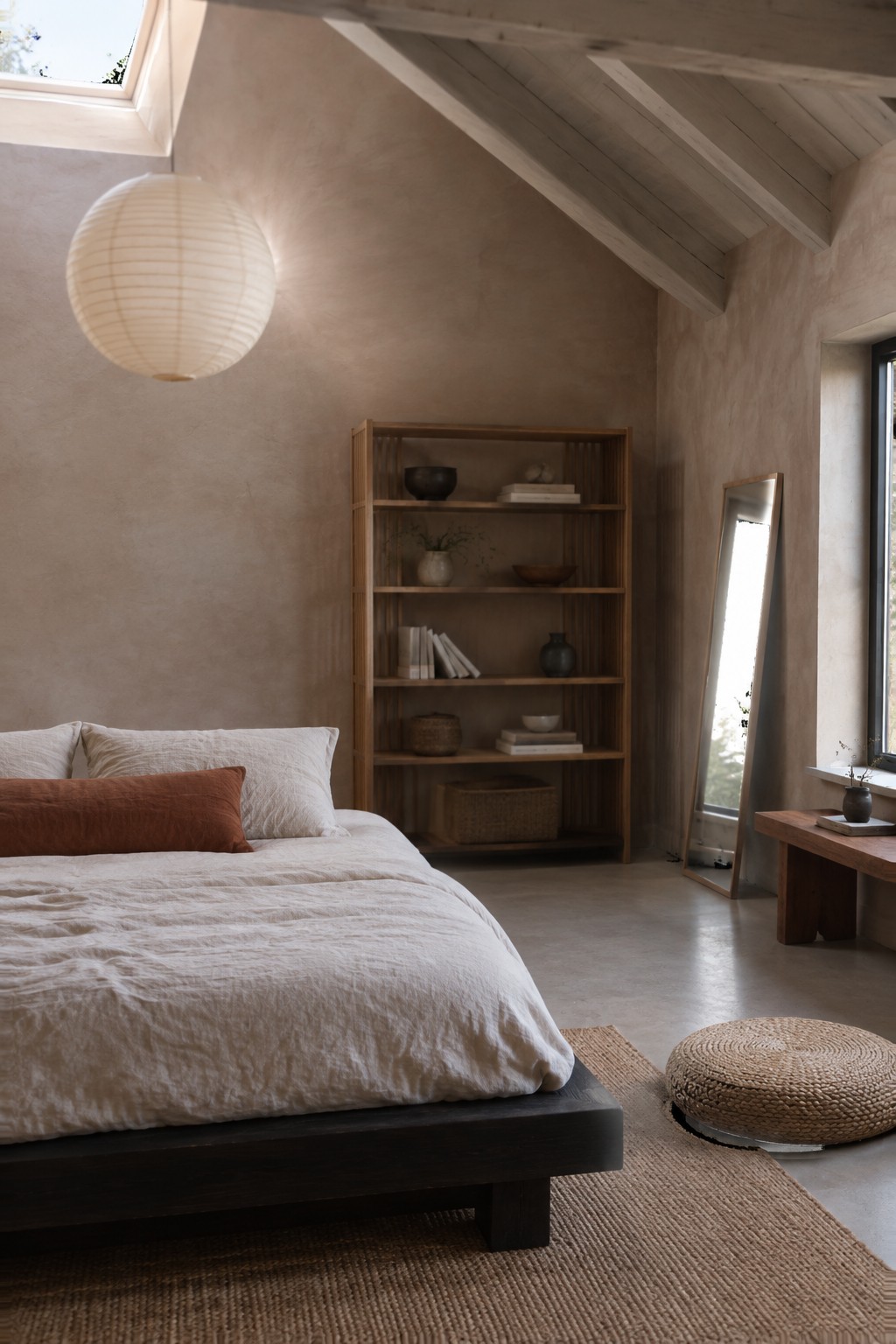
These walls read as a warm, muted taupe with a slight clay undertone. Close matches might include Benjamin Moore Edgecomb Gray, Sherwin-Williams Shiitake, or Farrow & Ball Skimming Stone. The color feels soft rather than yellow, and it gives a bedroom a cozy look without making the walls feel too dark.
The natural plaster texture and pale wood ceiling suit this kind of earthy neutral. It works well with cream bedding and darker wood, but test a sample first: in a dim room, the taupe may look browner.
Warm Greige Walls Beside Light Oak
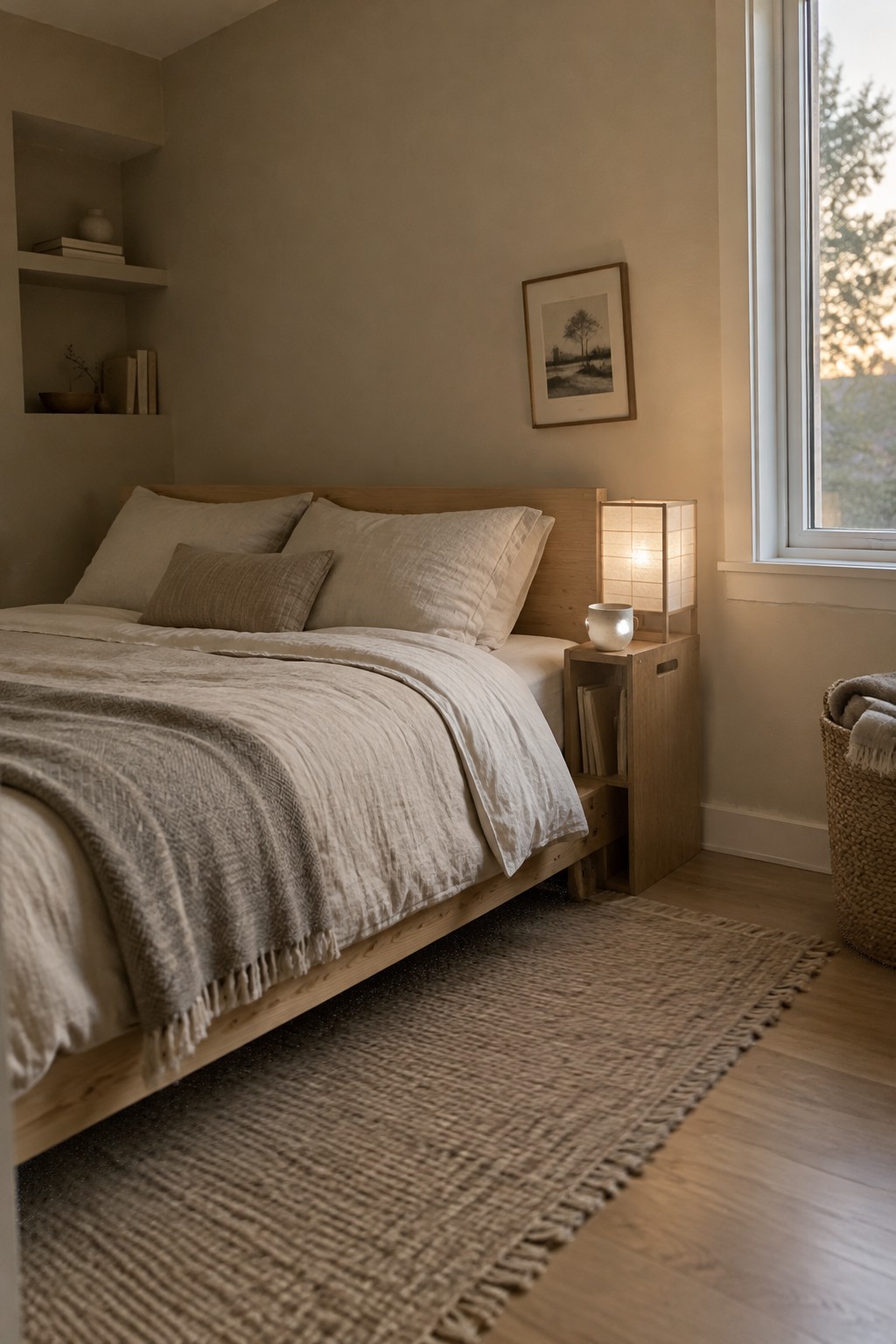
This bedroom’s wall color reads as a warm greige, somewhere between soft beige and taupe. A close match might be Benjamin Moore Pale Oak, Sherwin-Williams Accessible Beige, or Farrow & Ball Skimming Stone. It feels quiet without turning stark, which makes it a useful choice for a room meant to feel restful.
The warm undertone works well with the light oak bed and natural-fiber rug. In a room with less daylight, test a sample first, since greige can look darker or more beige than expected.
Warm Greige Walls in Soft Window Light
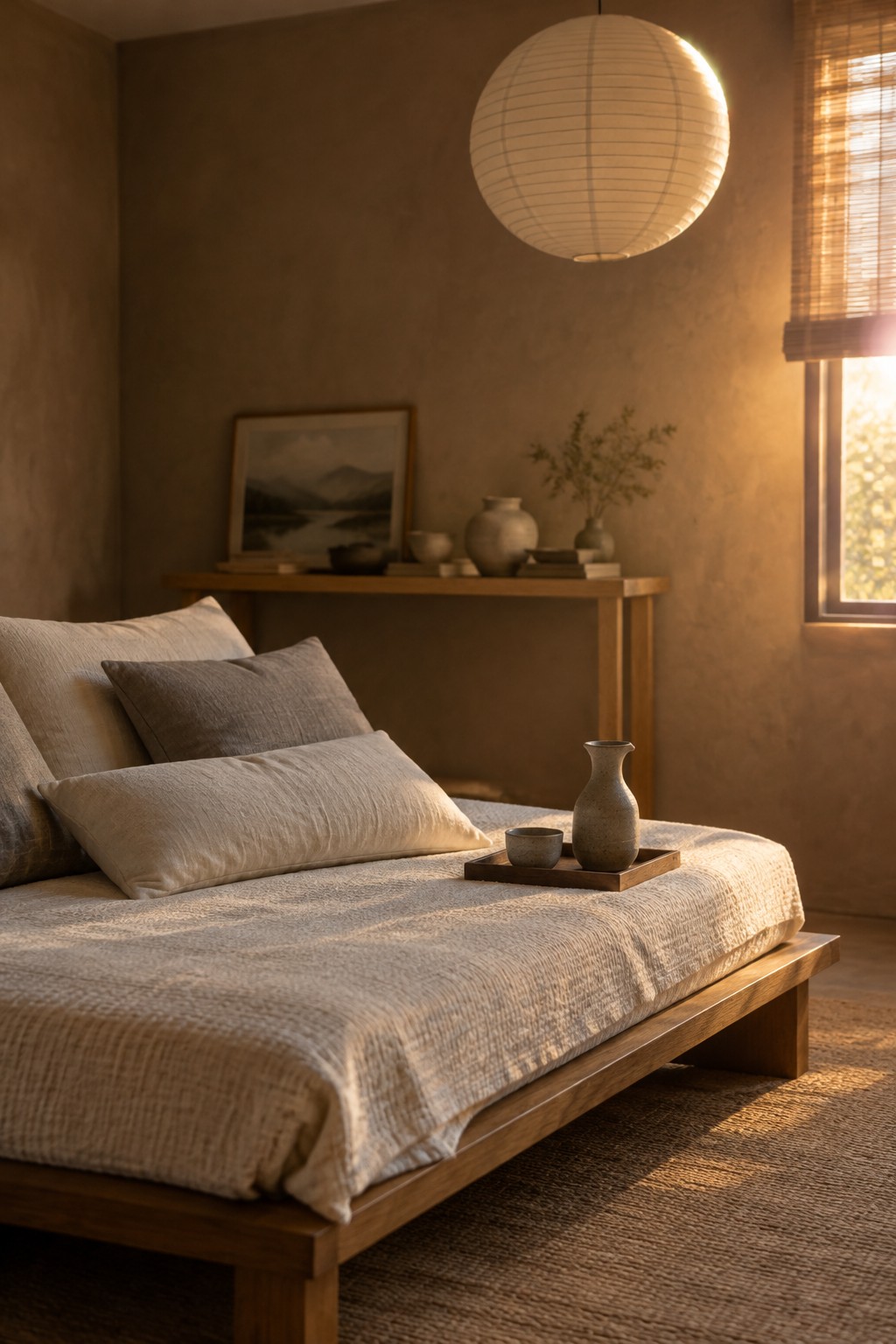
This bedroom’s wall color reads as a warm greige, a neutral with a little brown in it rather than a cool gray. Close matches might include Benjamin Moore Pale Oak, Sherwin-Williams Accessible Beige, or Farrow & Ball Skimming Stone. It gives a Japandi bedroom a quiet backdrop without making the walls look stark.
The window light brings out the warmer side of the paint, while the wood bed keeps the palette feeling natural. It should work well with cream textiles and light or medium wood. Test a sample in your own room first, since this kind of greige can look browner in dimmer light.
Warm Greige Walls Beside Pale Oak Flooring

This looks like a warm greige, a muted neutral between beige and gray. Close matches might include Benjamin Moore Pale Oak, Sherwin-Williams Accessible Beige, or Farrow & Ball Skimming Stone. It suits a bedroom well because it feels settled without making the walls seem dark.
The shade leans beige in the soft window light, and the pale oak flooring keeps the overall palette natural. Try it with cream trim and simple white bedding; test a sample first, since a grayer greige can look cooler in a room with less daylight.
Warm Greige Walls Beside Light Oak

Warm greige is a good fit for this bedroom, and the wall color looks closest to Sherwin-Williams Accessible Beige, Benjamin Moore Edgecomb Gray, or Behr Wheat Bread. It sits between beige and gray, with enough warmth to feel comfortable without turning yellow. That makes it an easy color to live with across a full bedroom.
The light oak bed frame and natural woven rug suit this soft neutral. In strong window light, the walls may read paler and more beige, so sample the color in the room before painting. It works especially well with cream textiles and other natural finishes.
Warm Greige Walls Beside Walnut Wood
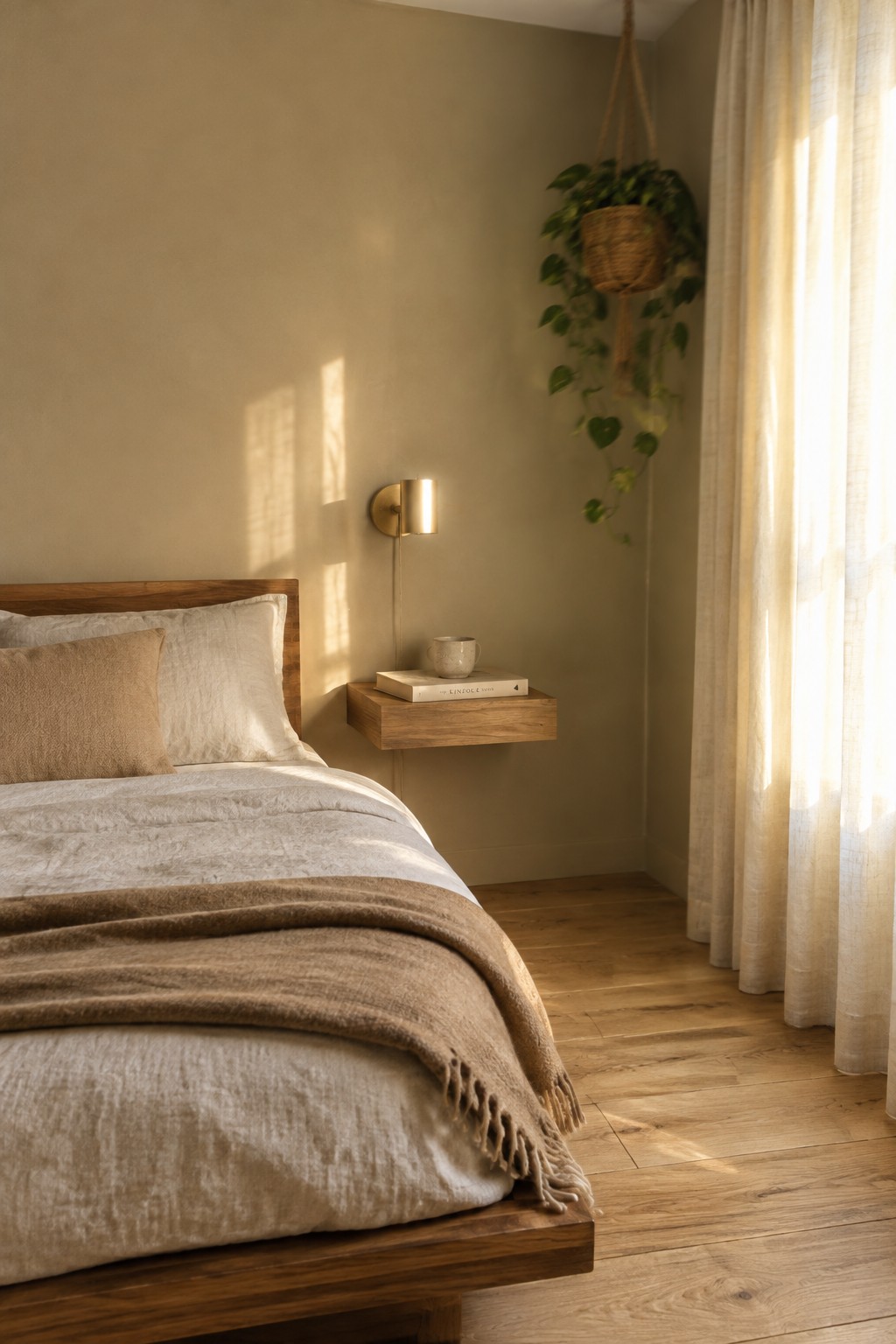
The walls look closest to a warm greige, a soft neutral between beige and gray. It keeps the bedroom feeling quiet without looking stark, and the walnut bed frame gives the pale wall color a natural contrast.
In a room with warm daylight, this shade may read more beige; in cooler light, its gray side can show more. Try a few samples on the wall before choosing, especially if your room gets little sun.
Warm Taupe Walls With a Cane Headboard
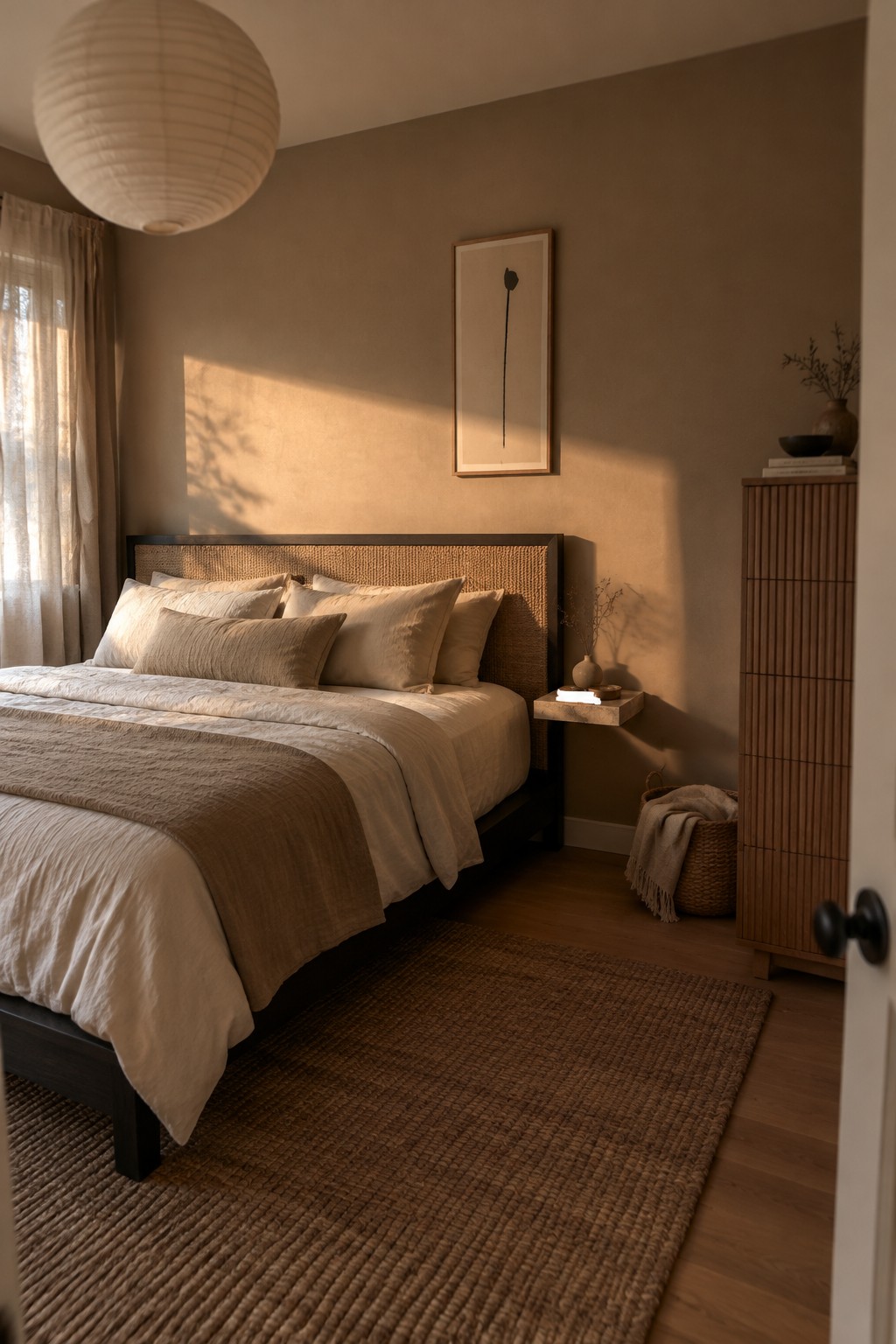
The walls look like a warm taupe, a soft brown-beige that feels quieter than a strong tan. For an unbranded match, I’d look at Benjamin Moore Pashmina, Sherwin-Williams Tony Taupe, or Farrow & Ball Skimming Stone. This kind of neutral works well in a bedroom because it feels settled without making the room look dark.
The color has a muted, earthy cast beside the cane headboard and dark wood bed frame. It should suit a room with warm wood and cream textiles; test a sample first, since taupe can look more brown in dim light.
Frequently Asked Questions
Q: How do I keep warm neutral walls from making a small bedroom feel dull?
A: Choose a soft, light shade like warm white or pale beige, then add contrast with darker wood, textured bedding, or a few black accents. Mixing linen, cotton, and wood gives the room depth without making it feel busy.
Q: Can I use gray in a Japandi bedroom with warm neutrals?
A: Yes, but look for a warm gray with a hint of brown rather than a cool, blue-toned gray. It pairs naturally with cream, taupe, and oak.
Q: What colors work well with a warm neutral Japandi palette?
A: Muted olive, clay, and soft charcoal all sit comfortably alongside warm neutrals. Try one as a small accent, such as a pillow or bedside lamp, before bringing it into larger pieces.
Q: How can I add color without losing the calm feel?
A: Keep the main surfaces quiet and bring in color through one or two simple details, like a throw or a ceramic vase. A muted shade will feel restful without blending into the background.
