

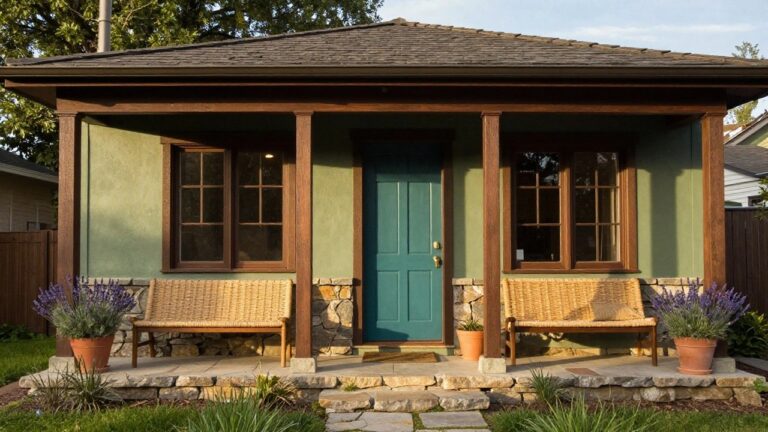
I’ve always noticed how a green exterior with brown trim can make a house feel like it’s always belonged there, tucked into its lot without drawing extra attention.
That pairing draws from the earth tones around it, so the facade reads cohesive from the curb, with the trim subtly outlining rooflines and entries.
You spot the warmth in the brown accents first against the green siding, especially on overcast days when everything else fades back.
I think it shines when the trim material weathers naturally, like cedar that picks up hints from nearby bark.
One approach I’d test on our place involves slightly varying the brown shades to follow the home’s contours.
Sage Green Siding with Brown Wood Trim
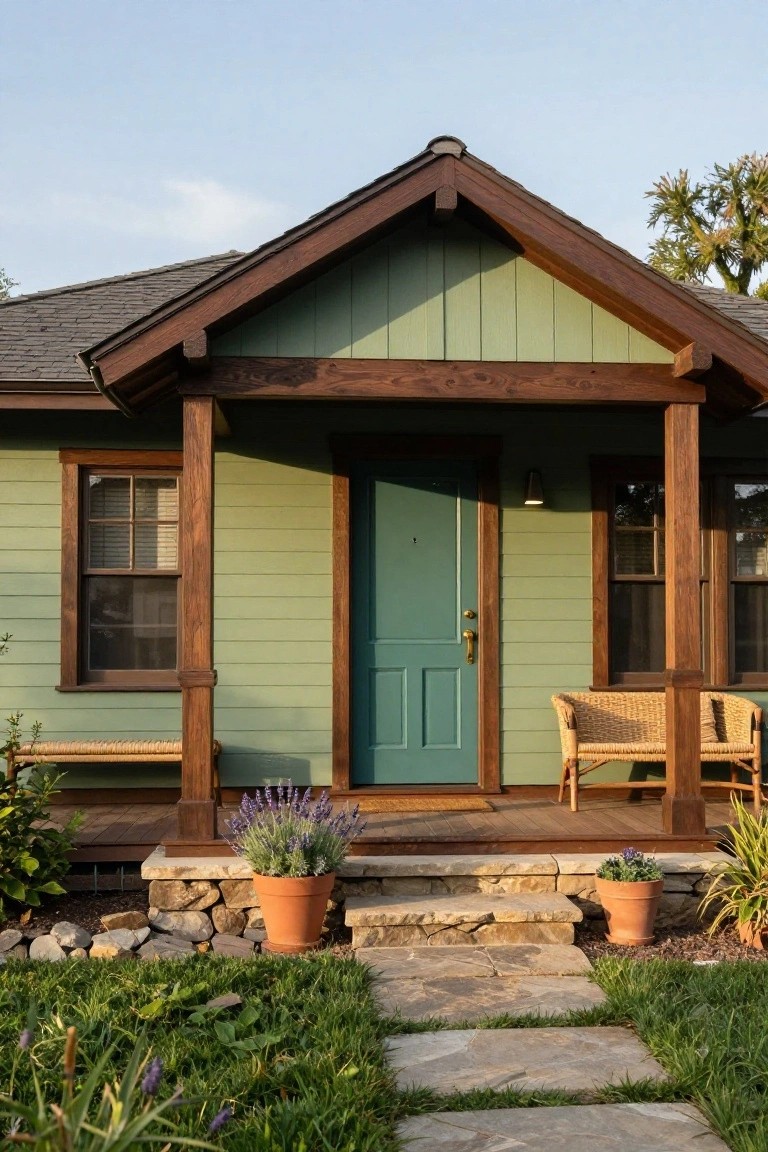
A soft sage green on the siding works so well here with the darker brown wood trim around the windows, porch posts, and roofline. That combo pulls the house right into its surroundings. You barely notice where the building stops and the garden starts. The dark green door keeps things cohesive without clashing.
This setup suits smaller homes like cottages or bungalows in greener spots. Paint the siding in a muted green, then let natural or stained wood handle the accents. Skip bright colors nearby… it stays calm that way. Add a few pots like the lavender ones by the steps for extra tie-in.
Sage Green Siding with Brown Trim
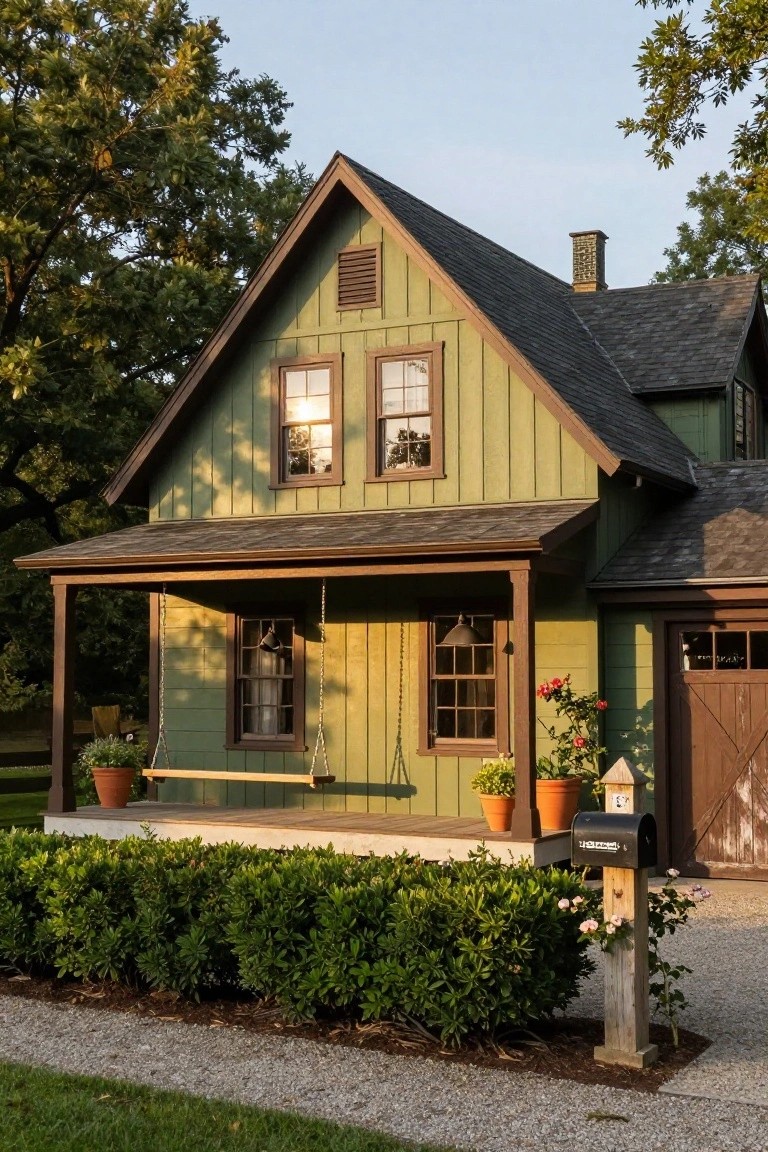
A soft sage green on the siding works great with dark brown trim around the windows, roof edges, and porch. That combo pulls the house into the yard naturally, especially where there are oaks and shrubs nearby. It gives off a settled, old-place feel without trying too hard.
Try this on Craftsman-style homes or simple farmhouses in greener areas. It holds up well in shade, but pick a quality paint to fend off fading. The porch swing here shows how a little seating keeps things homey.
Charming Arched Entry Door
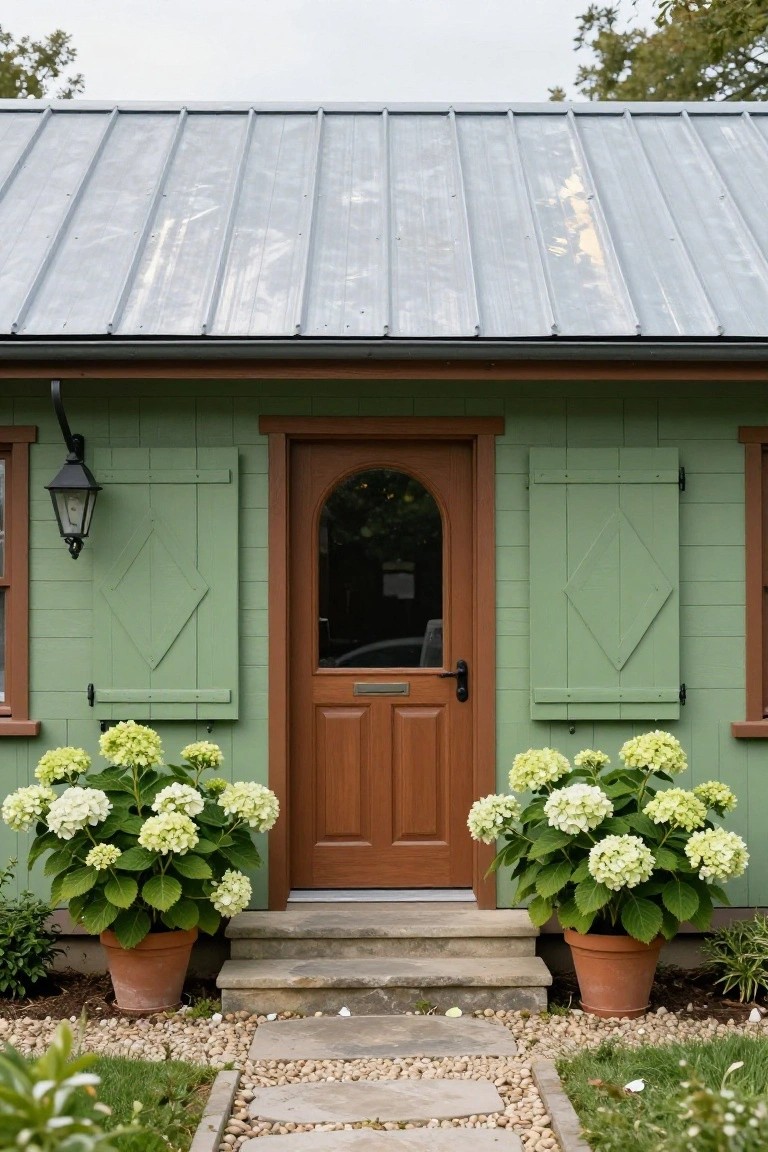
A brown arched door like this one gives a green house that cozy cottage feel right at the front. The rich wood tone picks up on earthy trim details while the curved top and glass panel let in some light without losing privacy. It stands out against the cool mint siding and those diamond shutters, making the whole entry look pulled together and friendly.
This works best on smaller homes or guest houses where you want a touch of tradition without going overboard. Go for a similar wood door in a warm stain that contrasts your green paint, and flank the steps with big potted plants to tie it into the yard. Skip anything too modern here… it keeps the natural blend going strong.
Recommended Products

Smart Motion Sensor Lights for Everyday Convenience: Equipped with 3 magnetic LED lights featuring motion sensing technology, this storage cabinet provides hands-free illumination for easier access during both day and night.

Statement Arched Glass Aesthetic: Elevate your home with the Bijou 64-inch sideboard, featuring four iconic arched tempered glass doors. This architectural silhouette blends modern minimalism with mid-century charm, allowing you to display curated decor or fine china while keeping them protected and dust-free.

Flexible Modular Design: Measuring 15.75"D x 32.5"W x 31.9"H, this belleze sideboard cabinet works perfectly on its own or can be combined with hutches, dressers, or multiple units to create a stylish, sideboard, or full wall unit - perfect for small apartments or spacious living rooms alike.
Green Facade with Wooden Door
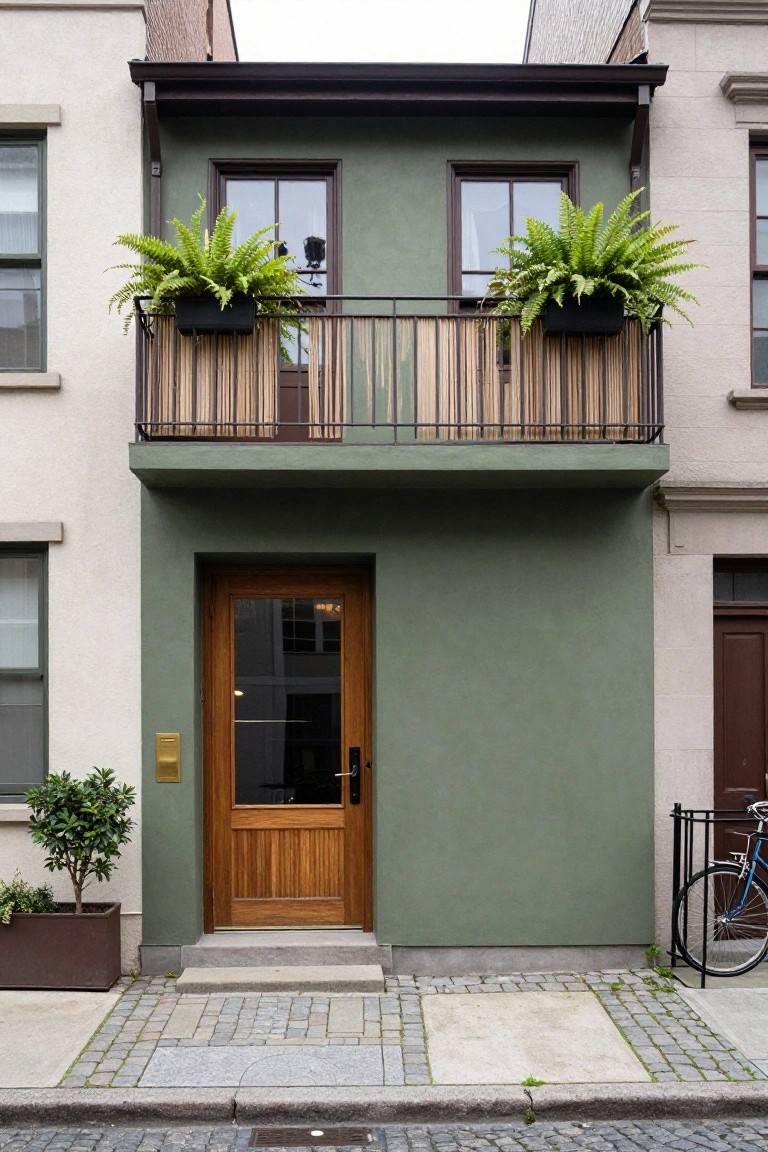
A soft sage green covers the walls of this narrow townhouse, setting off the warm wooden front door just right. The brown tones in the wood pick up on the natural vibe from the ferns hanging on the balcony. It keeps the look grounded without feeling too bold next to plainer neighbors.
This setup fits tight urban spots where you want curb appeal that blends in. Go for a muted green like this on stucco or siding, then use simple oak or cedar for the door and any trim. It softens a plain facade… especially if you add a couple potted plants out front.
Sage Green Colonial with Black Shutters
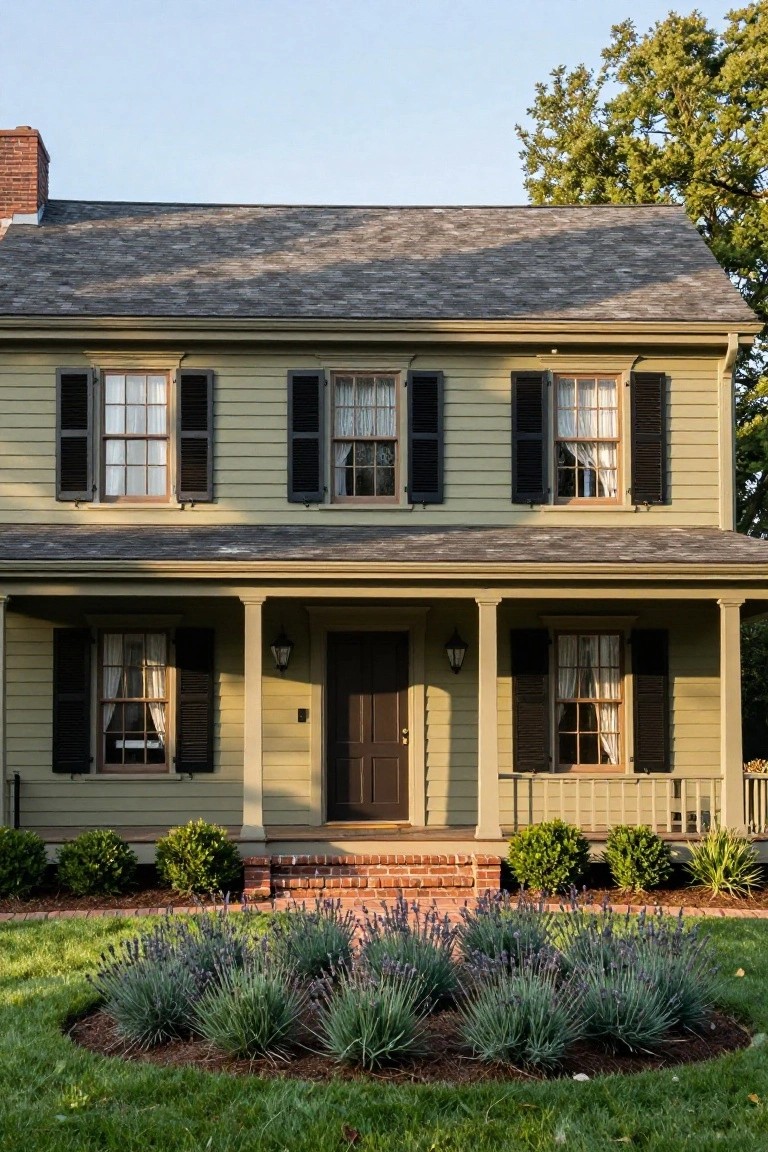
This two-story colonial pulls off a soft sage green clapboard siding that looks right at home outdoors. Black shutters frame the multipaned windows nicely, adding that sharp contrast without overpowering the gentle green tone. The porch columns and brick entry steps tie it together, making the front feel steady and lived-in.
Try this on classic homes in leafy neighborhoods. The muted green works best where there’s some garden or trees nearby, so the house doesn’t stick out. Skip glossy paints though. Flat or satin finish keeps it blending smooth.
Outdoor Deck Seating Around a Fire Pit

This deck pulls off a simple outdoor spot for sitting and talking. Rattan sofas and chairs form a loose circle around a low concrete fire table, all under the house’s wood overhang. With the sliding doors open nearby, it feels like an extra room without much fuss.
Try this on a side deck or patio off the main living area. It suits homes in warm spots where evenings stay mild. Stick to neutral cushions and sturdy woods that match your trim. Just make sure the fire table vents well, and add potted plants along the edge for a bit more green.
Recommended Products

MULTIFUNCTION FIRE PIT TABLE: This outdoor fire table with a lid does double duty as an gas firepit and patio dining table. You can stay warm while relaxing with family and friends around a propane fire pit, and a gas fire pit is the perfect complement for social gatherings
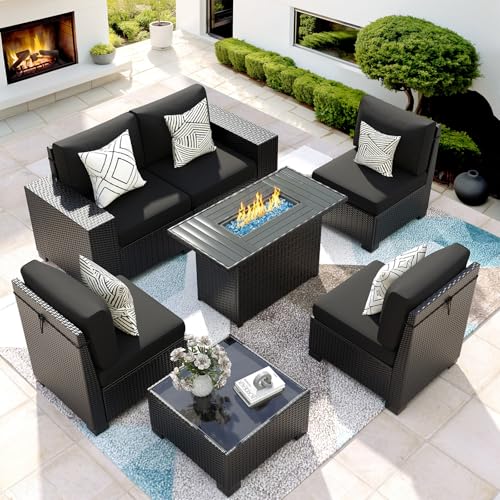
【Built for the Outdoors】Crafted from powder-coated galvanized steel, this outdoor furniture set offers exceptional durability and excellent corrosion resistance, making it ideal for outdoor use. Its sturdy structure ensures stability and safety. Additionally, the PVC rattan used boasts high resilience, rain or shine - so you can enjoy the ultimate in outdoor relaxation with minimal upkeep

Wicker Patio Chair: Our Adirondack chair offers a large, curved seat, high backrest, and ample armrests. Made with resin, it has all the classic rattan wicker style, with superior water resistance and weathering resistance.
Green Cottage with Timber Framing
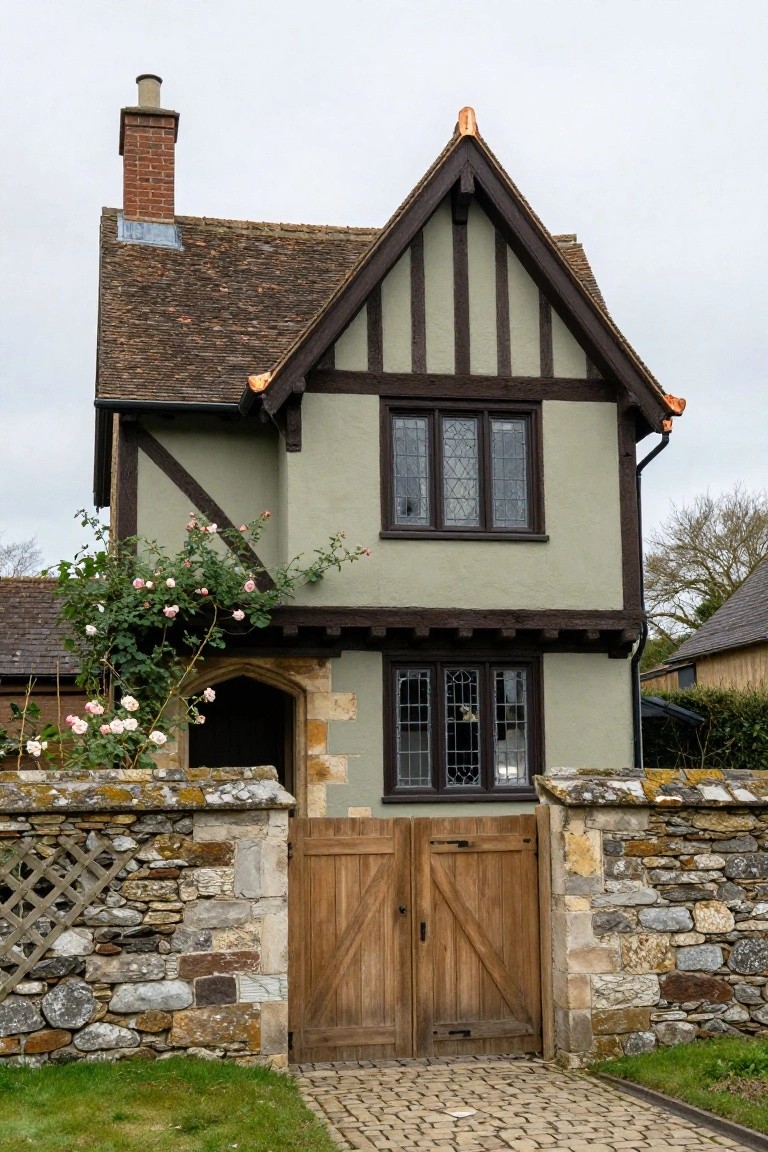
A sage green cottage like this one uses dark brown timber framing against soft plaster walls to create a cozy, old-world feel that pulls the house right into the garden. The climbing roses weaving through the beams add that natural touch without trying too hard. It just works.
This style fits best on smaller homes in rural spots or suburbs with some garden space. Go for muted green paints that weather well and sturdy timbers, then let vines like roses soften the edges. Keep the plants in check so they don’t mess with the wood over time.
Wooden Bench on the Porch
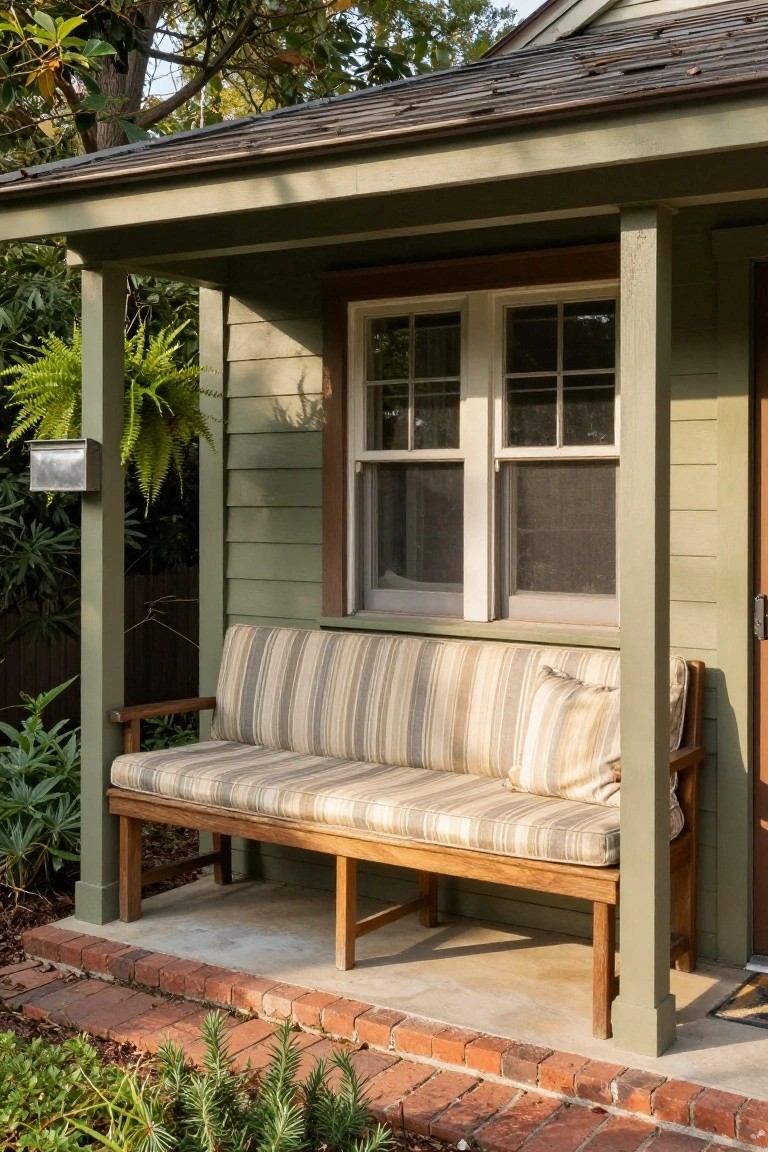
A wooden bench like this one fits right on a covered porch. The natural wood frame echoes the brown trim around the door and windows on the green house. Paired with wide striped cushions, it offers easy seating without taking up much room. What stands out is how it pulls the house into the yard. The plants and ferns nearby make it all feel connected, like a spot meant for quiet mornings or quick chats.
This setup works well on smaller porches, especially bungalow types with green siding. Pick sturdy wood that handles weather. Cushions in neutral stripes hold up and don’t fight the garden colors. Keep it simple… no need for extras. Just makes the front area more usable every day.
Soft Green Siding with Brown Trim
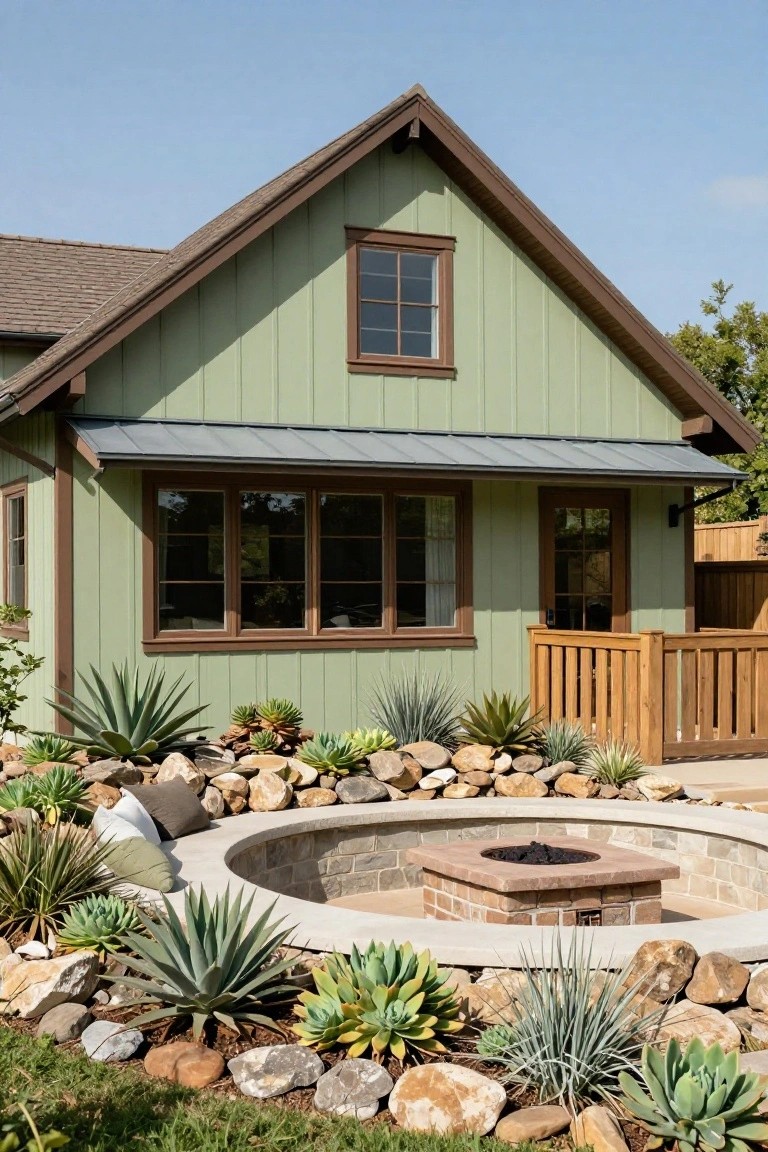
A soft sage green siding like this one pairs nicely with dark brown trim around the windows and roof edges. It gives the house a cozy, settled look that doesn’t fight the yard. Folks notice how the green echoes the nearby plants without overpowering them.
This setup suits smaller homes or cottages in warmer spots with dry gardens. Paint the body a muted green, then use brown stain on wood details for contrast. It hides dirt well too… just test shades against your plants first to keep things from blending too much.
Green Stucco Exterior with Brown Trim
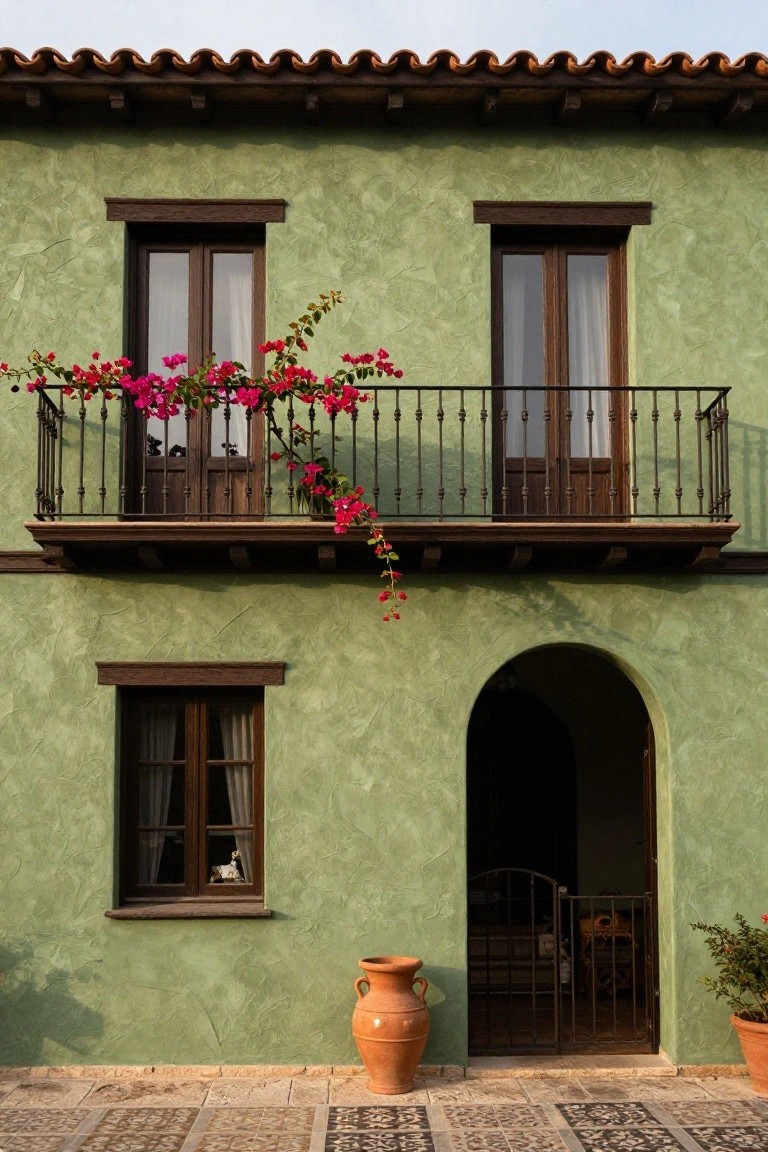
A soft green stucco wall pairs nicely with brown wood trim around the windows and doors on this house. The dark frames stand out just enough against the textured green without clashing. That bougainvillea climbing over the balcony rail ties it all into the outdoors. It’s a simple way to make a home look settled into its spot.
This setup fits older style homes or ones with a bit of Spanish influence. Use it where you want low upkeep but still some warmth from the wood tones. Skip bold colors elsewhere so the green stays calm. Add a big terracotta pot by the entry like here and it pulls together even better.
Covered Porch Dining Spot
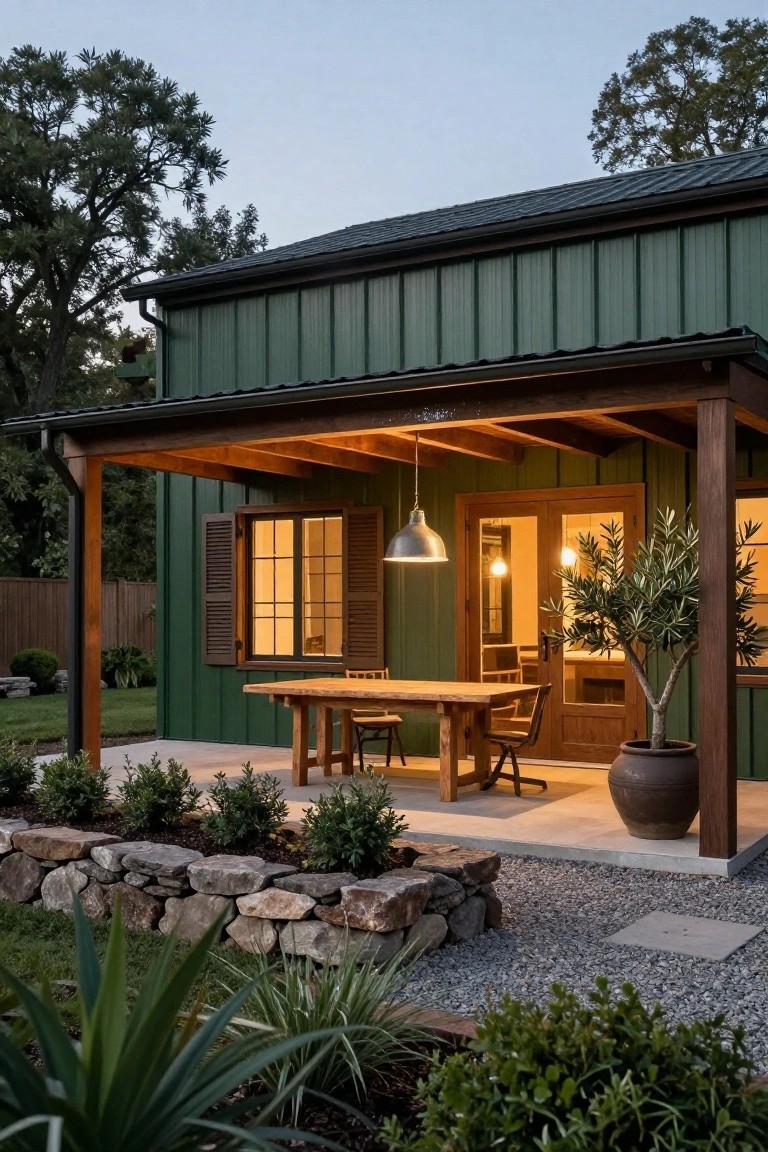
A covered porch like this turns outdoor meals into something easy and regular. The wood beams overhead keep rain off, and that single pendant light gives just enough glow for evenings. Set against green siding, it pulls the house right into the yard without any fuss.
This works well on ranch-style homes or anywhere with trees nearby. Go for a plain wood table and mix in a big potted plant for shade and green. Skip fancy cushions if bugs are around. It suits back patios more than front entries.
Stone Bay Window Blends into the Garden
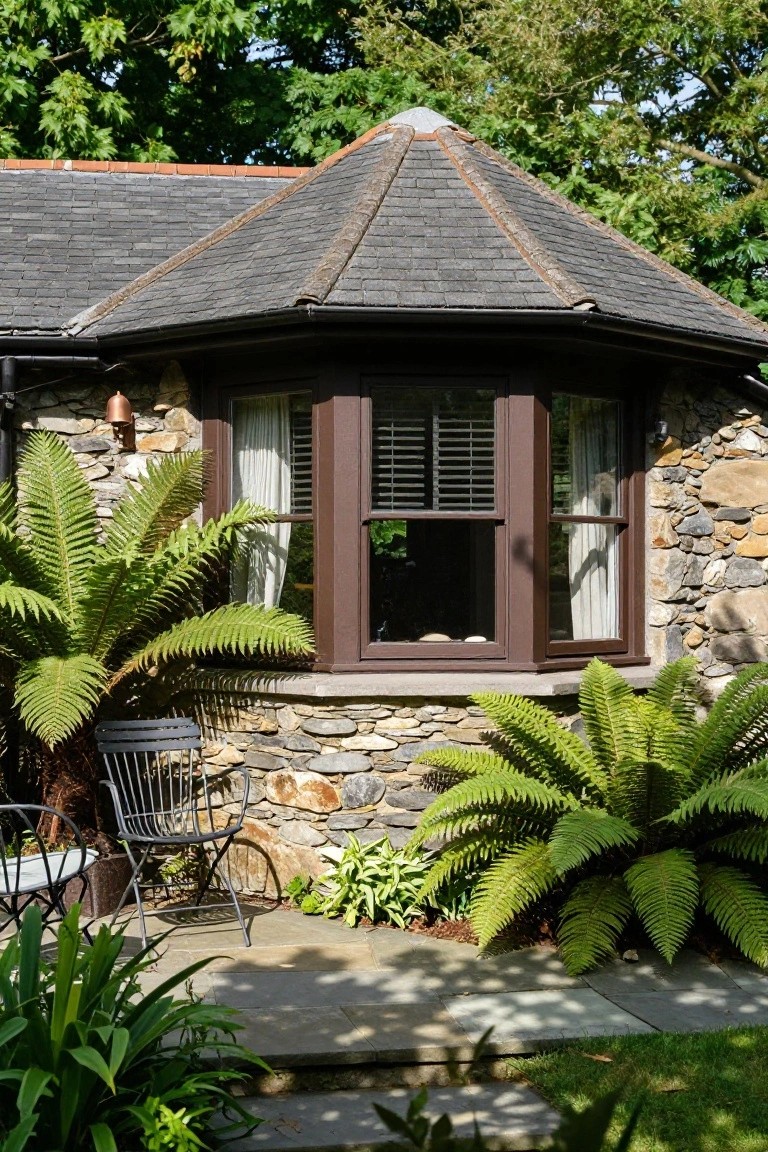
This corner of the house uses a curved stone wall with a big bay window to create a little turret feel. The brown wood frames on the window pick up the slate roof tones nicely, and it all sits easy against the green ferns growing right up alongside. It’s one of those spots that makes the house look like it grew out of the yard instead of being plunked down in it.
You can pull this off on smaller homes or additions where you want more window light without losing that grounded look. Stick to local stone if you can, keep the trim in earthy browns, and plant big bold ferns or similar to hug the base. Works best in shady, damp spots… just make sure the stonework drains well or moss might take over.
Green Siding with Brown Wood Trim
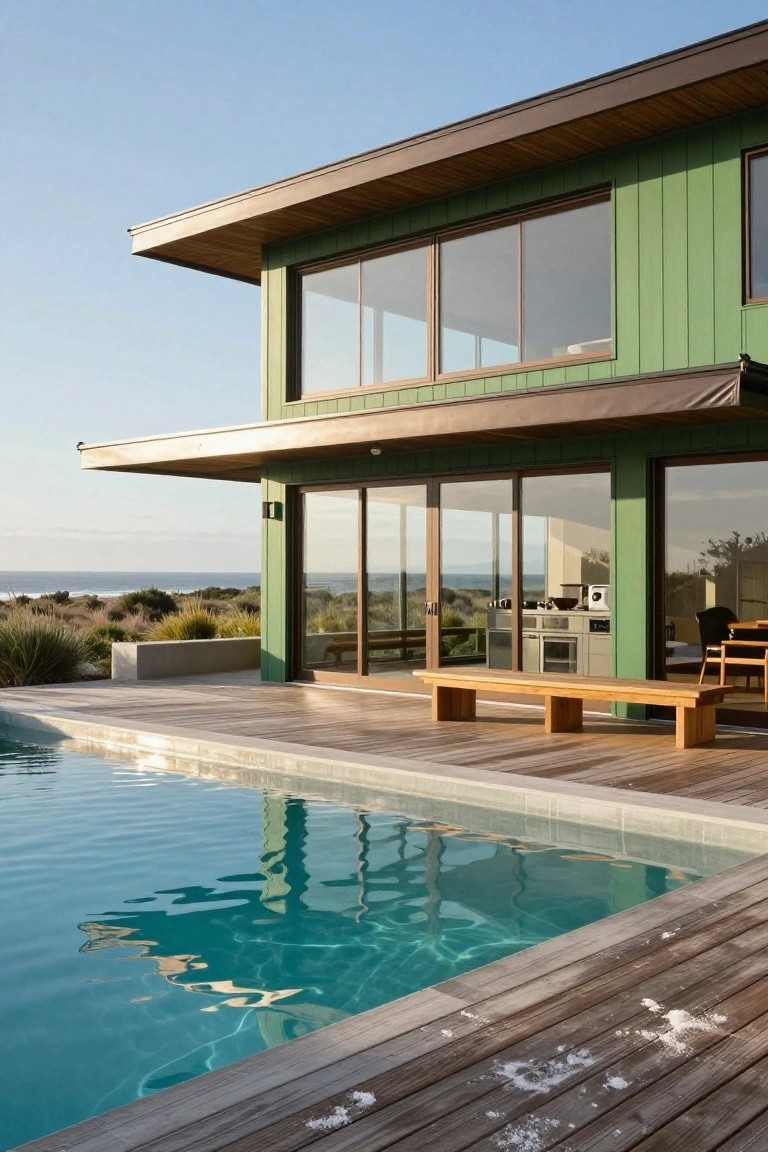
One straightforward way to make a green house feel right at home in nature is to add brown wood trim around the windows, doors, and roofline. Here the deep green siding picks up on coastal plants while the warm brown wood on the overhanging eaves and deck keeps things from looking too stark. It ties the house to the sandy dunes and ocean view without much effort.
This setup works best on modern homes near water or woods where you want some contrast but not a lot of flash. Use cedar or ipe for the trim since it weathers nicely outdoors. Just make sure the green paint is mildew-resistant if you’re in a damp spot, and keep the deck boards spaced for drainage.
Entry Courtyard with Fountain Centerpiece
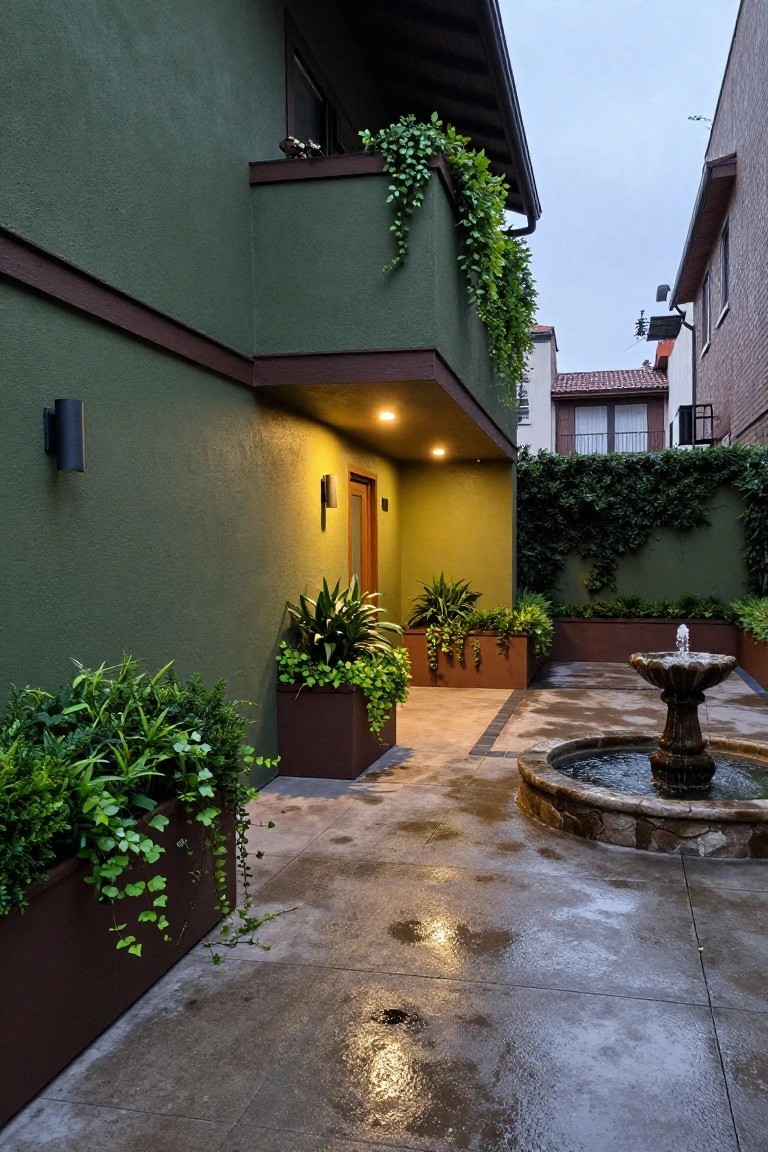
One nice touch here is putting a stone fountain right in the middle of the entry courtyard. It sits on the wet pavement path that leads straight to the door. With green walls all around and plants spilling out of brown pots, the whole space feels tucked away and easy on the eyes.
This works well for homes with a side or front courtyard, especially in warmer spots. Keep the fountain low and bubbling quietly. It suits green houses like this one, where the brown accents on pots and door tie right into the trim. Just make sure the path stays clear for walking.
Recommended Products

Outdoor Water Fountain: With its modern design, the waterfall fountain is perfect for your outdoor home and interior decoration. Especially in the evening, the lighting creates a visually appealing and tranquil atmosphere

RELAXING WATER FLOW: Enhance your outdoor space with the Alpine Corporation 2 Tier Barrel and Pump Water Fountain. Water gently cascades from the pump spout into the rustic barrel tiers, creating a soothing and peaceful ambiance. Perfect for relaxing in your garden, patio, or yard, this fountain adds a tranquil touch to your outdoor oasis, helping you unwind and enjoy nature’s calming sounds.

Solar Powered: Choice water fountain outdoor birdbath enjoy an energy-saving water feature with our bird bath fountains solar power, no batteries or power cords needed. Suitable for use in gardens, patios, and balconies, this fountain also provides a perfect bathing spot for hummingbirds.
Sage Green Siding with Brown Trim
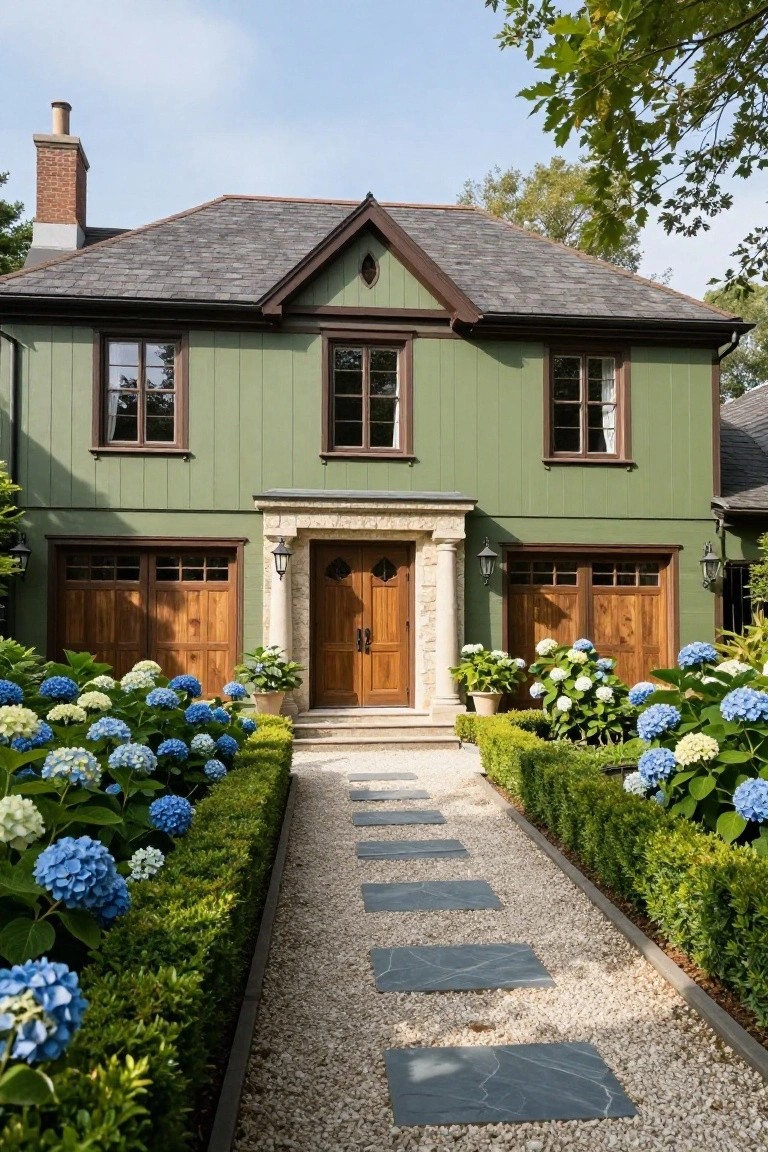
This house uses a soft sage green on the siding paired with darker brown trim around the windows and roof edges. It pulls the home right into the yard without much effort. The green shade echoes the surrounding trees and shrubs. And those brown wood details on the garage doors and frames add a bit of warmth that keeps things from looking too plain.
You can pull this off on older homes or new builds in leafy neighborhoods. Pick a muted green paint that matches your local foliage. Use brown stain on wood elements for contrast. Line the front path with low boxwoods and big blooms like hydrangeas. It works best where you want the house to settle in. Not so great in bare urban spots.
Poolside Cabana in Sage Green
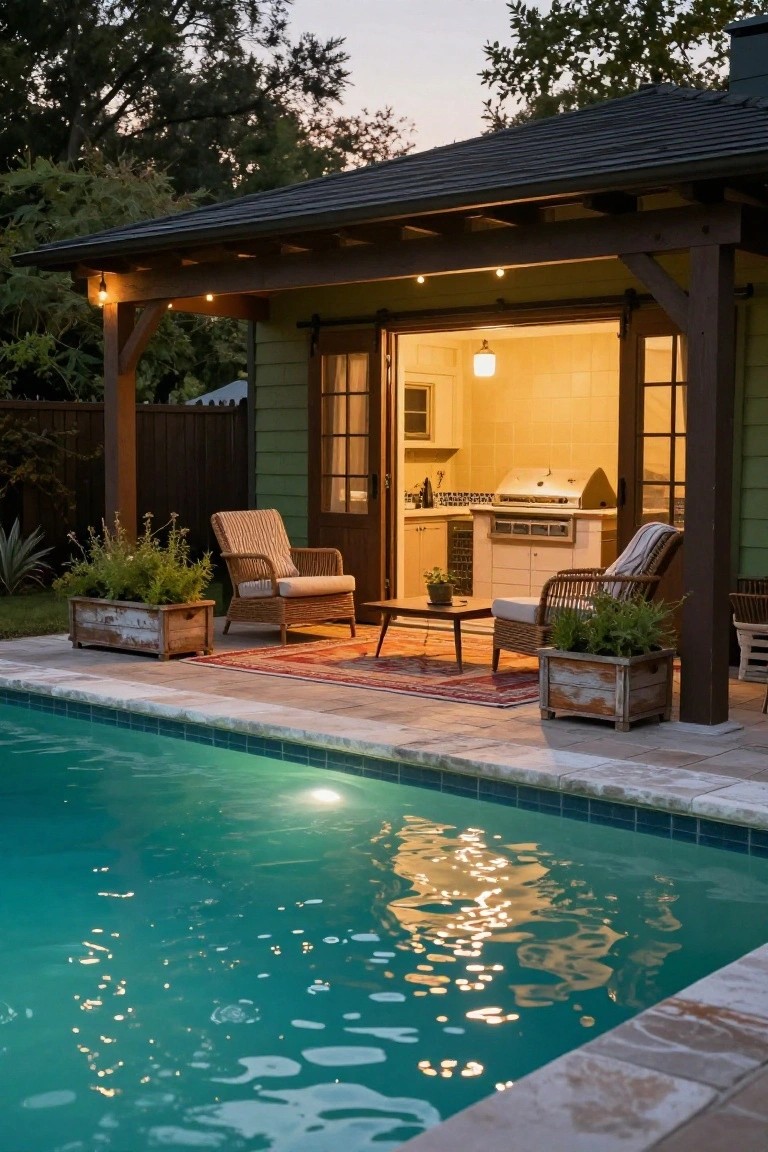
A pool cabana like this one uses soft sage green siding paired with dark wood trim on the beams and posts. Open glass doors pull back to show a basic outdoor kitchen, and wicker chairs sit out front on a simple rug. That green tone echoes the plants around it and keeps things from standing out too much against the yard.
Put something similar next to your own pool if you cook outside a lot. It suits homes with fenced backyards and some tree cover. Stick to natural wood shades for the trim so it blends with fences or decking. One thing, size it just right so it does not overwhelm the pool edge.
Sage Green Siding with Dark Brown Trim
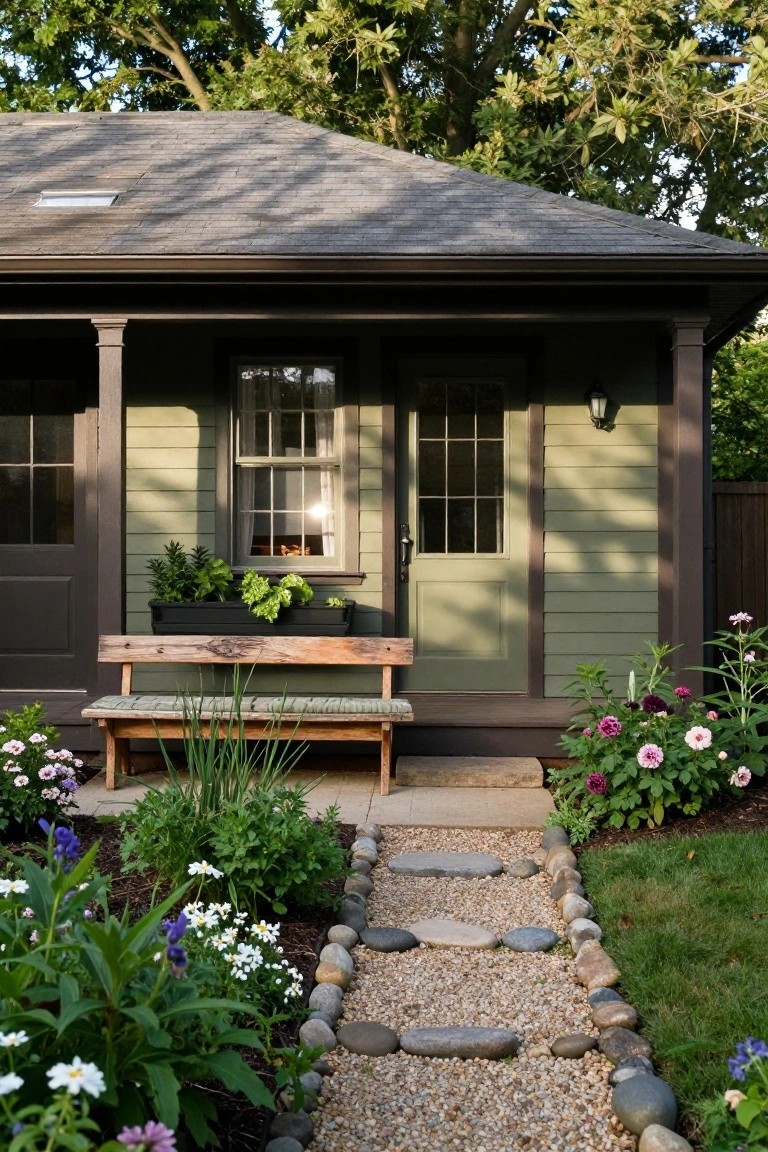
This setup uses a soft sage green on the siding and dark brown for the trim around doors, windows, and porch posts. It works because the green echoes the garden plants nearby, while the brown ties into the wood tones of trees and soil. The house doesn’t jump out. Instead, it settles right into the yard like it grew there.
Try this on a small cottage or bungalow where you have trees and flower beds close by. Paint the main body in that muted green, then use brown on edges and frames. Add a simple bench out front, maybe some herbs in a wall planter. It suits shady spots best. Just make sure the trim is a true dark brown, not black, or it might look too stark against the green.
Frequently Asked Questions
Q: How do I pick a green that won’t clash with my brown trim?
A: Stick to muted greens like sage or olive. They mimic forest tones and flow right into warm browns like chestnut. Slap samples on a sunny wall and check at different times of day.
Q: What if my yard gets a lot of shade—will the green still pop?
A: Shade actually makes these greens glow softer and more natural. Pair with brown trim in deeper mahogany shades for contrast. You’ll blend into the trees without trying.
Q: How do you keep brown trim looking fresh year after year?
A: Wipe it down with mild soap twice a year. And seal with a natural oil stain every two summers. Dirt slides right off that way.
Q: Can I mix in some stone accents with this green and brown setup?
A: Grab earthy flagstone or river rock in taupe tones. It grounds the house like it’s grown from the land. Tuck it around the base for instant harmony.
