

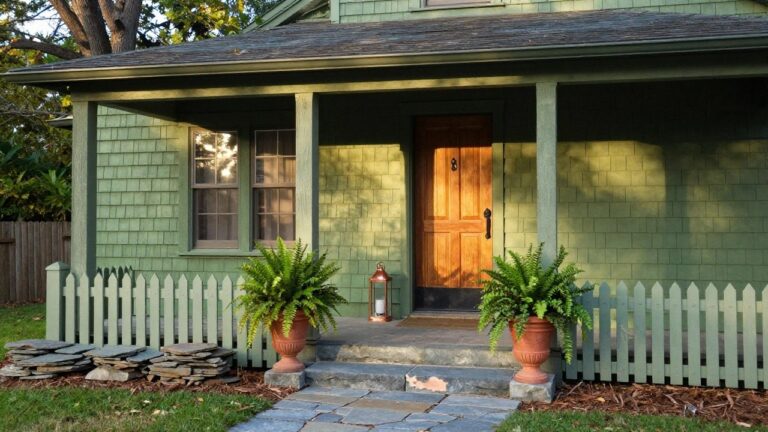
I’ve noticed that a house’s exterior often wins people over through its curb appeal long before the door opens, especially when green tones tie it to the surrounding landscape. Greens work best on facades when they play off natural materials like wood siding or brick, softening rooflines and drawing attention to simple entries without overwhelming the street view. I tried a mossy green on our trim years ago, and it grounded the whole front in a way crisp whites never could, making the house read as part of the yard. Details like that show how exteriors succeed or flop based on how colors age and interact with light through the seasons. Certain ideas in here are practical enough to adapt right away.
Warm Wood Door on Green Siding
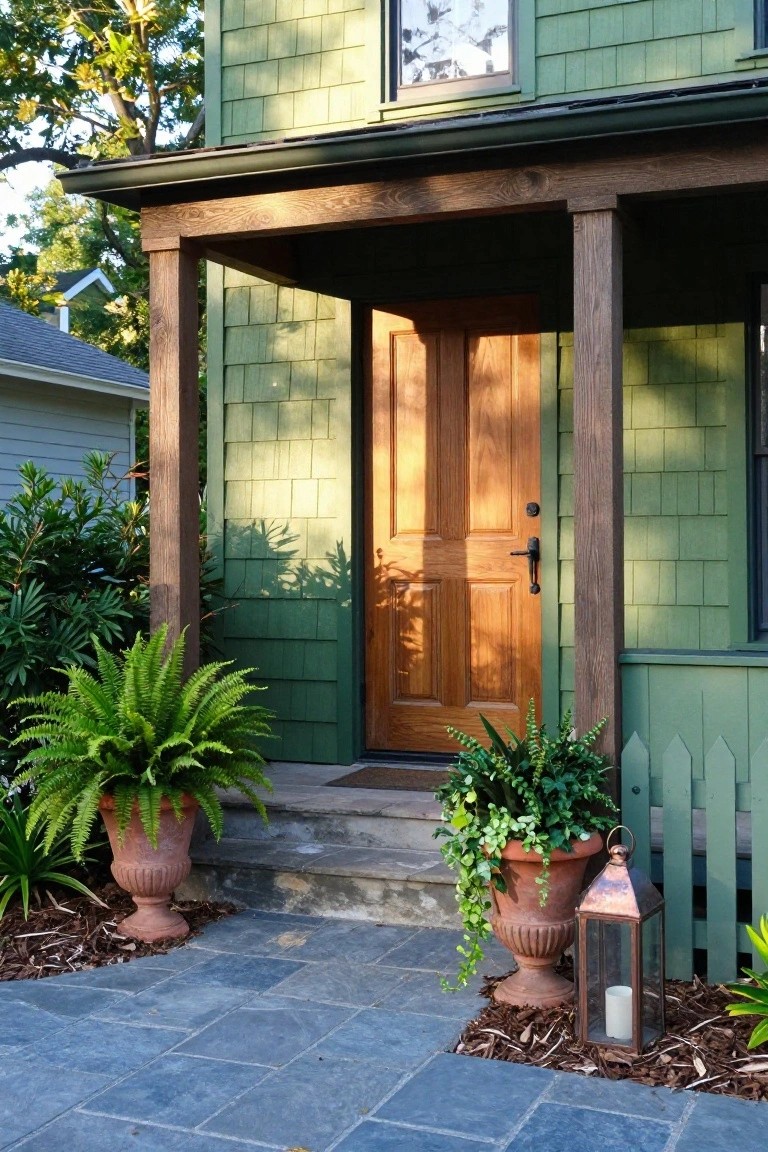
A deep-toned wooden door stands out nicely against cool green shingle siding like this. It pulls the eye right to the entry and adds a bit of warmth that green alone can’t give. The matching wood porch posts help frame things without overdoing it.
This look fits older bungalow homes or any house wanting that classic front-porch feel. Go for a solid wood door in mahogany or oak tones, and keep the porch simple. Add a couple potted ferns nearby if you want more life there… just don’t crowd the steps.
Green Painted House Facade
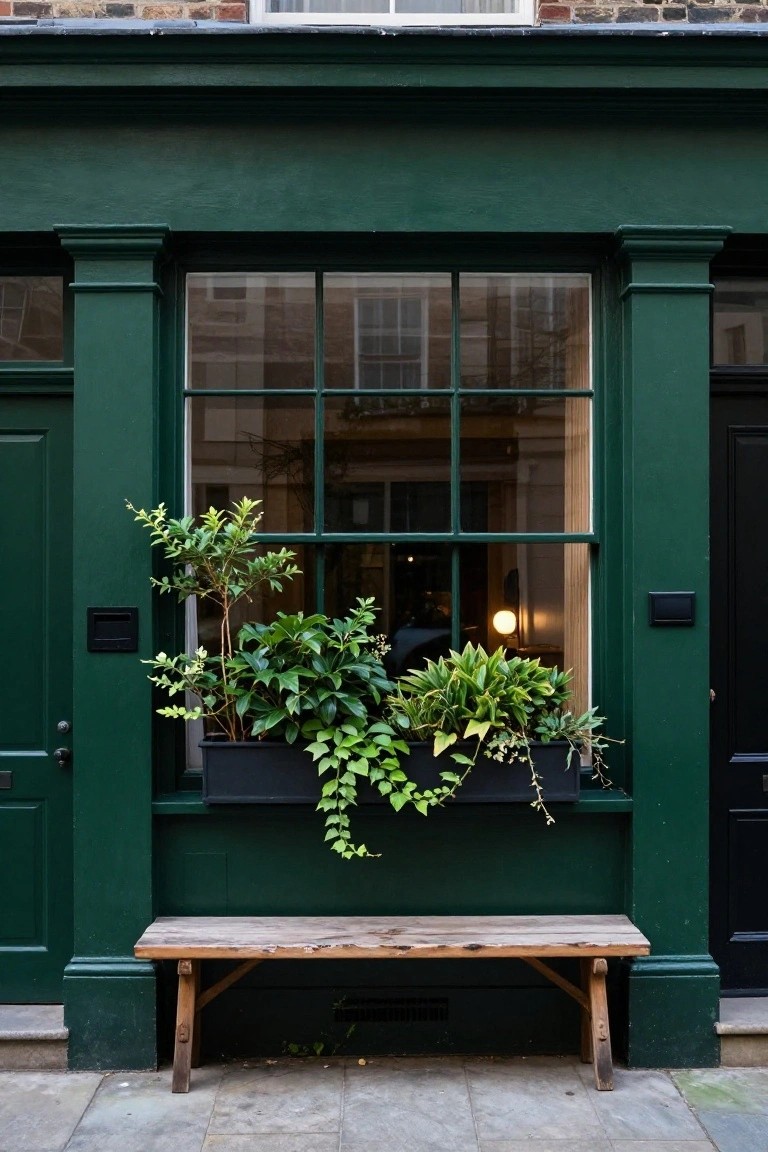
A deep green paint job like this one turns a plain row house into something that stands out on the street. The color feels rich and a bit moody, especially with the plants spilling out of the window box right in the middle. It ties the architecture together without trying too hard.
This look suits older homes with columns and big windows. Pick a shade that holds up to your weather, then add trailing ivy or similar low-key plants. A weathered bench nearby keeps things practical for sitting out front.
Potted Olive Trees at the Entry
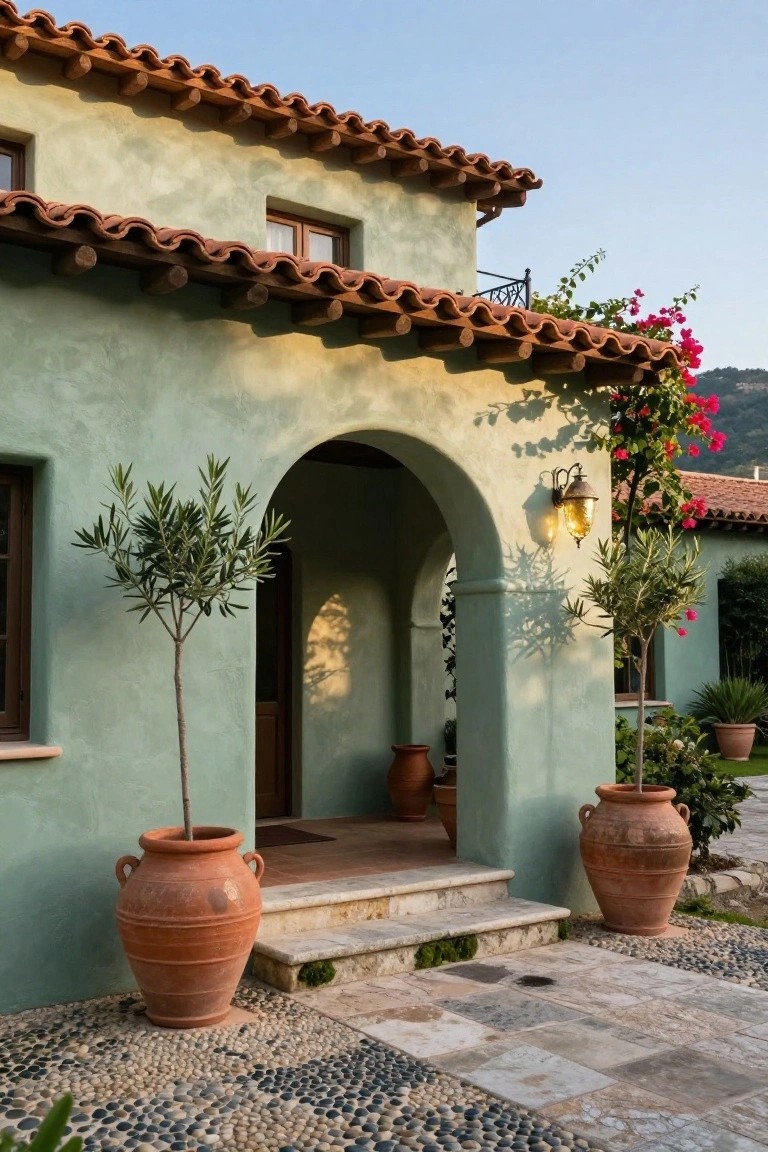
Large terracotta pots filled with olive trees stand on either side of this arched doorway. They add height and a touch of green that ties right into the soft sage walls. The warm orange pots pick up the roof tiles too. It’s a straightforward way to make your front entrance feel more established and welcoming, like something out of a hillside village.
This look suits stucco homes or any house with a simple facade, especially in sunny spots. Go for full-size pots at least three feet tall so the trees reach up toward the door. Plant olives or similar drought-tolerant trees that won’t need constant watering. Skip it on super modern places though. It might feel out of place.
Green Corrugated Metal Siding
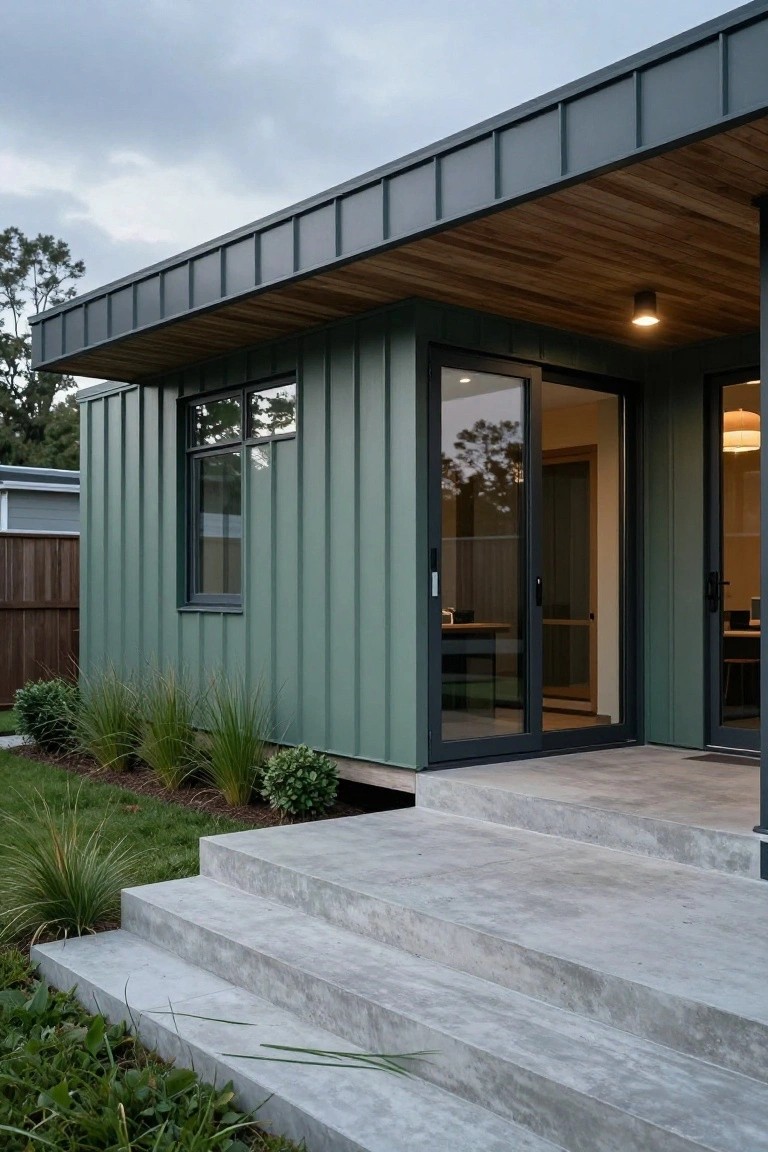
Corrugated metal siding in a soft green shade makes this house exterior stand out without trying too hard. The panels have that familiar wavy texture, but painted green they pull in the surrounding trees and grass for a natural fit. Add a timber overhang like this one, and it warms up the look just enough.
Try this on a backyard office or guest house where you want something tough and low maintenance. It holds up to weather well, especially with concrete steps leading right up to sliding doors. Keep landscaping simple around the base so the siding stays the focus… suits modern setups in greener spots.
Recommended Products

ANTI-CORROSION COATING: Made of 1022A carbon steel with forest/ivy green baked coating, these glossy green metal roofing screws are harder and withstand rust, corrosion and extreme weather, ensuring a long serving life. Suitable for both indoor/outdoor use

【#10 x 1” Roofing Screw】 JEGONFRI roofing screws are designed to fix thin-gauge metal plates under 2.4 mm to wooden structures. Composed of high-strength alloy steel to provide strong toughness. An additional magnetic-absorbing driver bit available.

Durable Galvanized Steel Construction: Each roof sheet is manufactured from high-quality galvanized steel, ensuring robust performance and structural integrity for outdoor installations.
Sage Green Clapboard Garden Shed
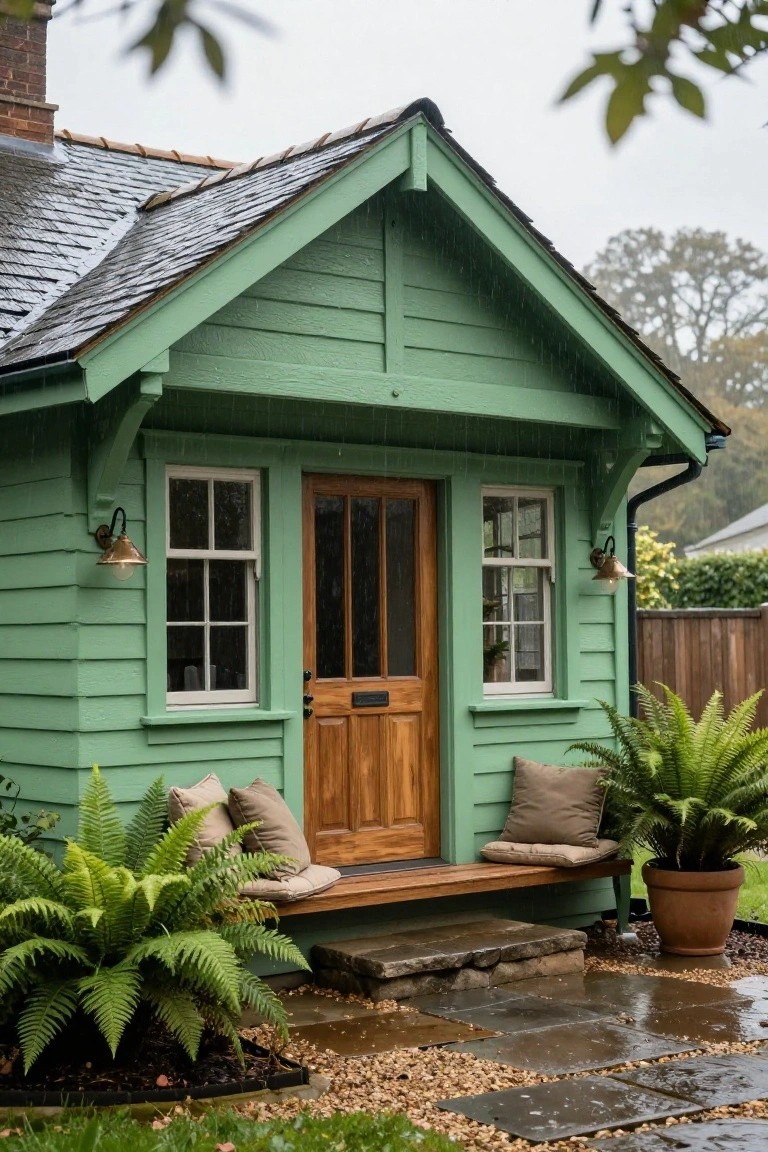
A soft sage green clapboard siding turns a simple garden shed into something that fits right into the landscape. You see it here on this little outbuilding, where the pale green boards blend with the ferns nearby and let the oak door and slate roof stand out just enough. It’s a quiet way to add color without shouting, and it gives that cozy cottage feel many yards need.
Paint your own shed or potting house this way if you’ve got a green yard or wooded spot. It suits older homes or rural settings best, keeping things practical for tools or storage. Watch for good trim paint around the windows to keep moisture out.
Green Shingle Siding for Beach Homes
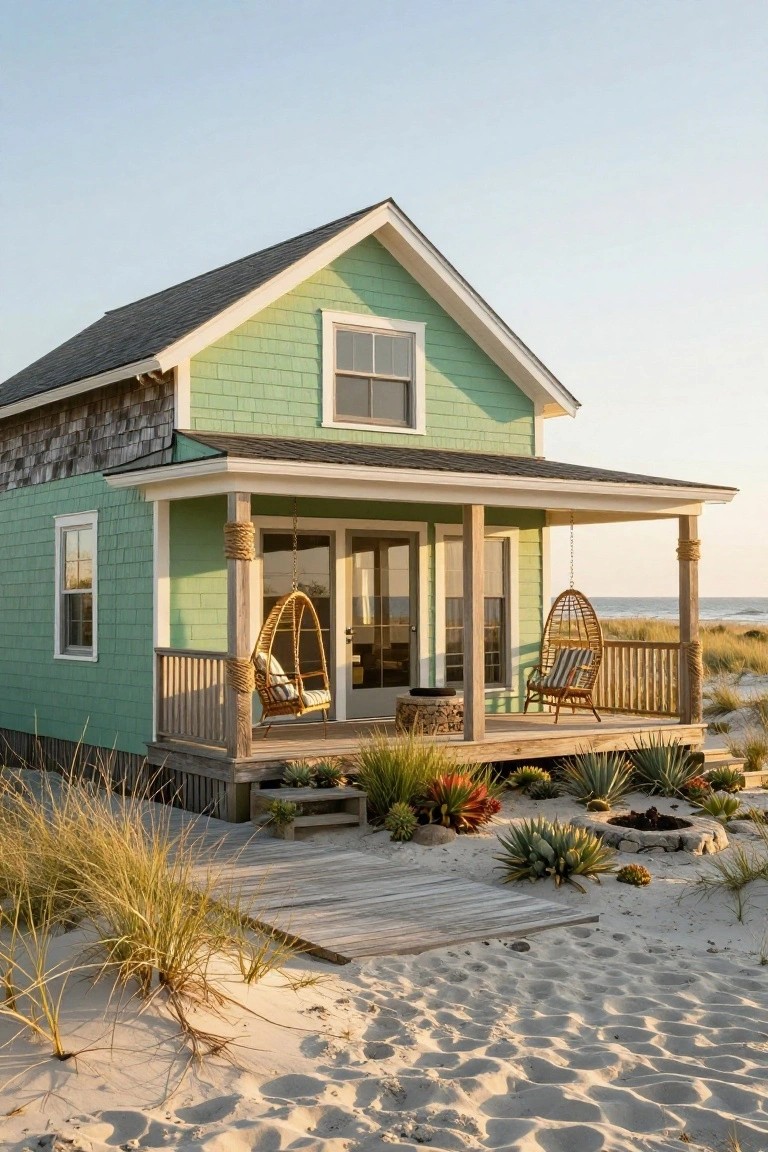
A soft green cedar shingle siding like this one fits right into a coastal spot. It picks up the colors from the sea and sand without shouting. The pale shade keeps the house looking settled into the dunes, more like it’s always been there than newly built.
This works best on smaller cottages or vacation spots near the water. Go for it where you want easy upkeep and a nod to traditional shingle style. Wrap porch posts in rope for that extra beach touch, but skip bold trim colors to let the green carry the look.
Gray Facade Paired with Lush Plants
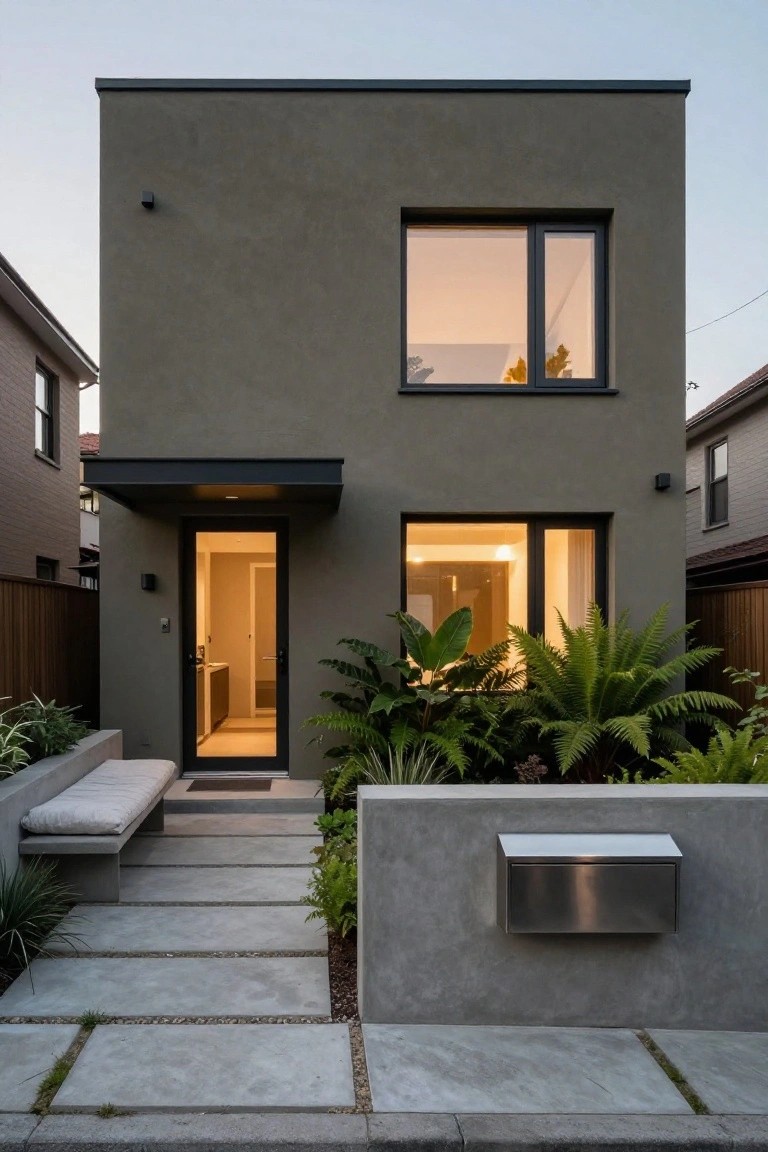
A simple gray stucco exterior like this one keeps things clean and modern. The texture on the walls adds just enough interest without clutter. Then those big ferns and palms in the front beds bring in life and color. It makes the house feel less stark, more approachable right from the street.
This setup works great on narrow urban lots where you want curb appeal but not a lot of fuss. Plant the taller stuff near the corners to hug the house, keep the path clear with pavers. It suits mid-century updates or new builds in mild climates. Just make sure the plants won’t overwhelm the walkway over time.
Sage Green Shed Exterior
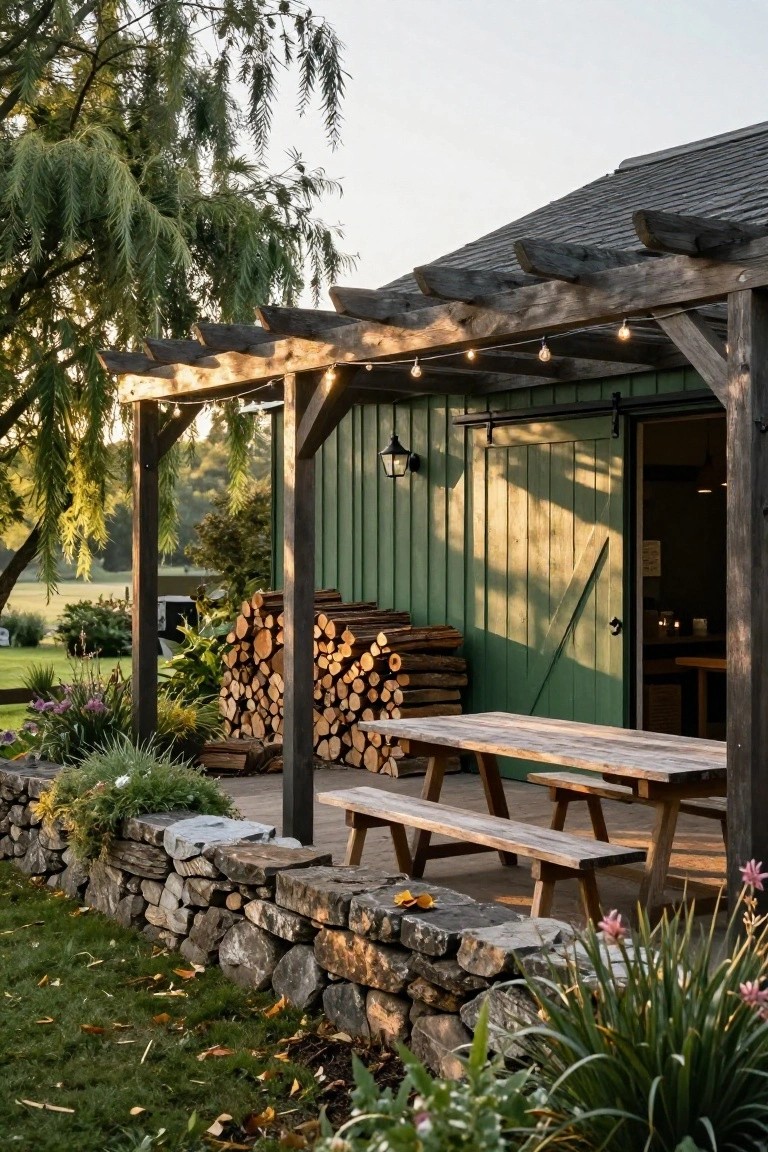
One simple way to add charm to your backyard is painting a shed or small outbuilding in sage green. It pulls in the colors from the surrounding trees and garden without overpowering the space. Here the green siding on vertical boards gives a nod to old barn styles, but the open sliding door and nearby pergola keep it feeling fresh and usable. That muted green tone works year-round. It fades into fall leaves nicely.
Try this on a garden shed or workshop behind a country or cottage home. Stack firewood right next to it for easy access and that lived-in look. Pair with natural wood pergola beams and a basic picnic table. Skip bold trim colors. Let the green do the quiet work alongside stone walls or gravel paths. It suits spots where you want practical storage that doubles as an outdoor hangout area.
Soft Green Brick Exterior
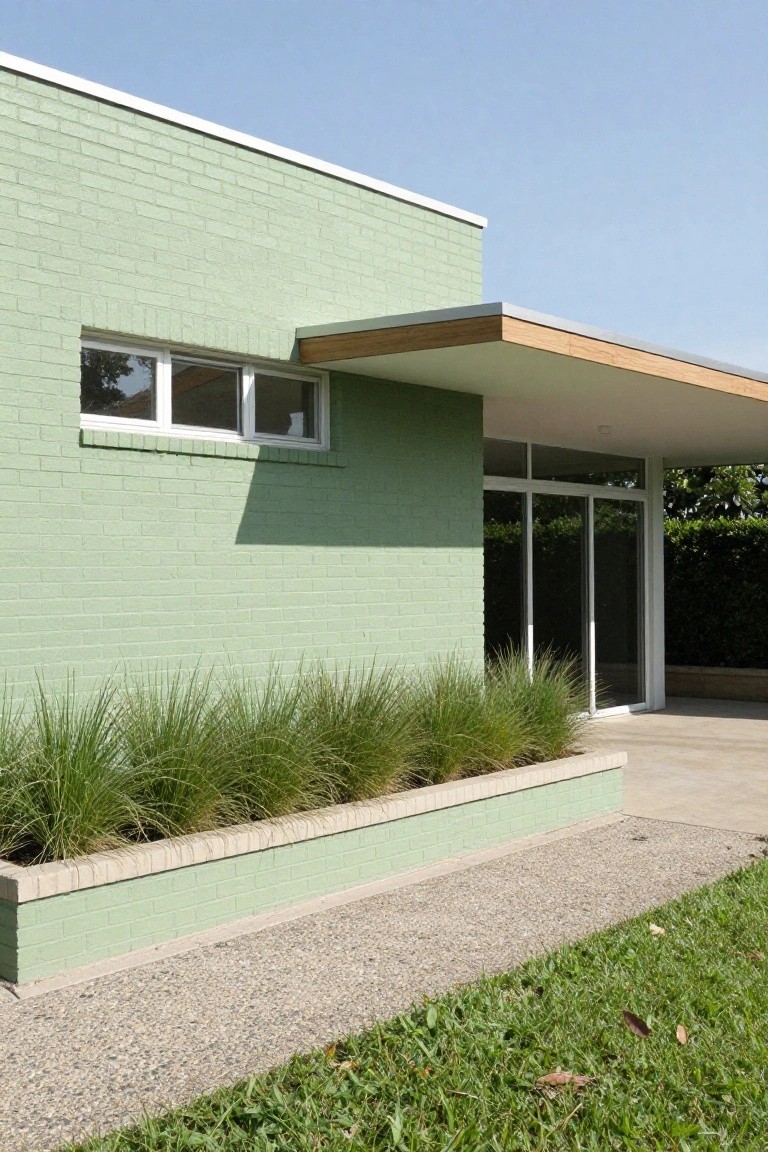
Brick houses don’t have to stick to the usual reds and browns. A soft green like this one gives the whole place a fresh, calm look that’s modern without trying too hard. It works because the color picks up on nature around it, like the grass and plants nearby, and pairs nicely with clean lines and a simple wooden awning over the glass entry doors.
Try painting existing brick this shade if your home has straightforward architecture, maybe mid-century style or something ranch-like. It suits milder climates where green feels right at home. Just make sure the paint is breathable so moisture doesn’t get trapped, and keep an eye on fading over time.
Mint Green Terraced Houses
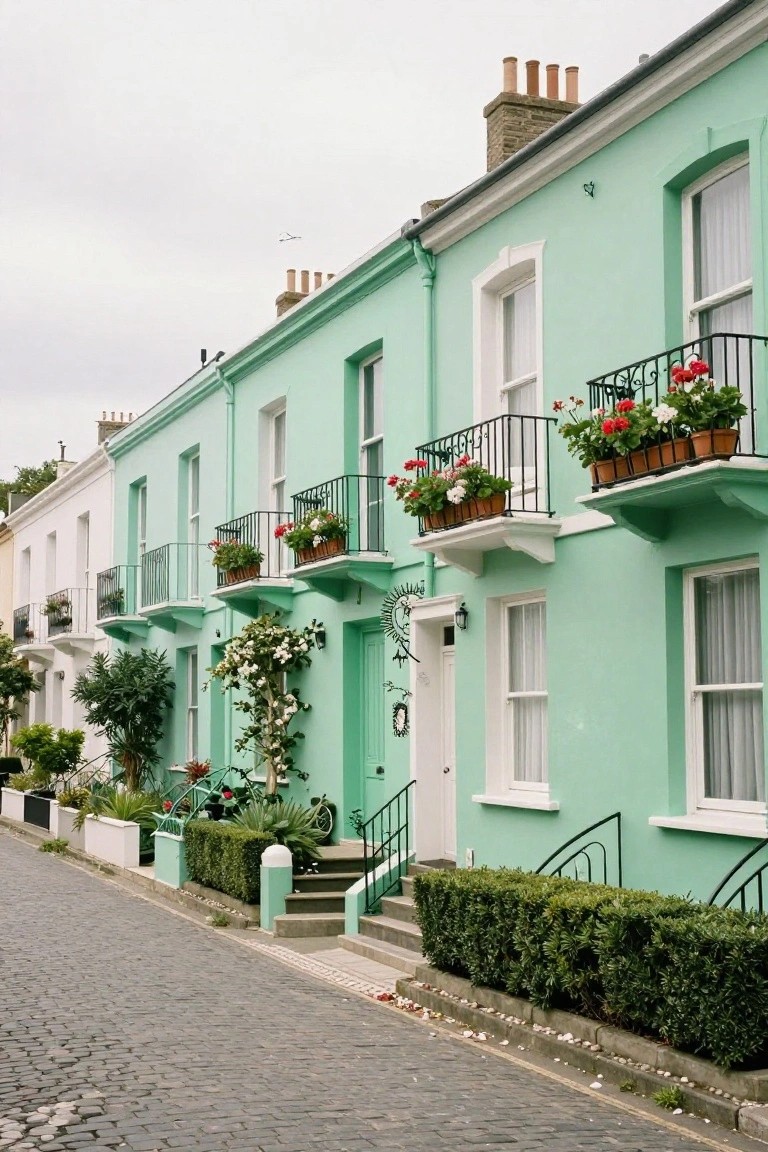
A row of classic terraced houses painted in soft mint green really brightens up a neighborhood street. That pale green shade gives the old architecture a fresh lift, standing out just right against white window frames and doors. Flower boxes with red blooms add a bit of color without overdoing it.
This look suits older urban homes, like Victorians or similar row houses on narrow streets. Go for a light mint to keep things airy, and plant climbers like roses near the entry for some softness. Boxwood hedges out front stay low and tidy. Skip it on super modern builds, where it might clash.
Vertical Gardens Climbing Metal Siding
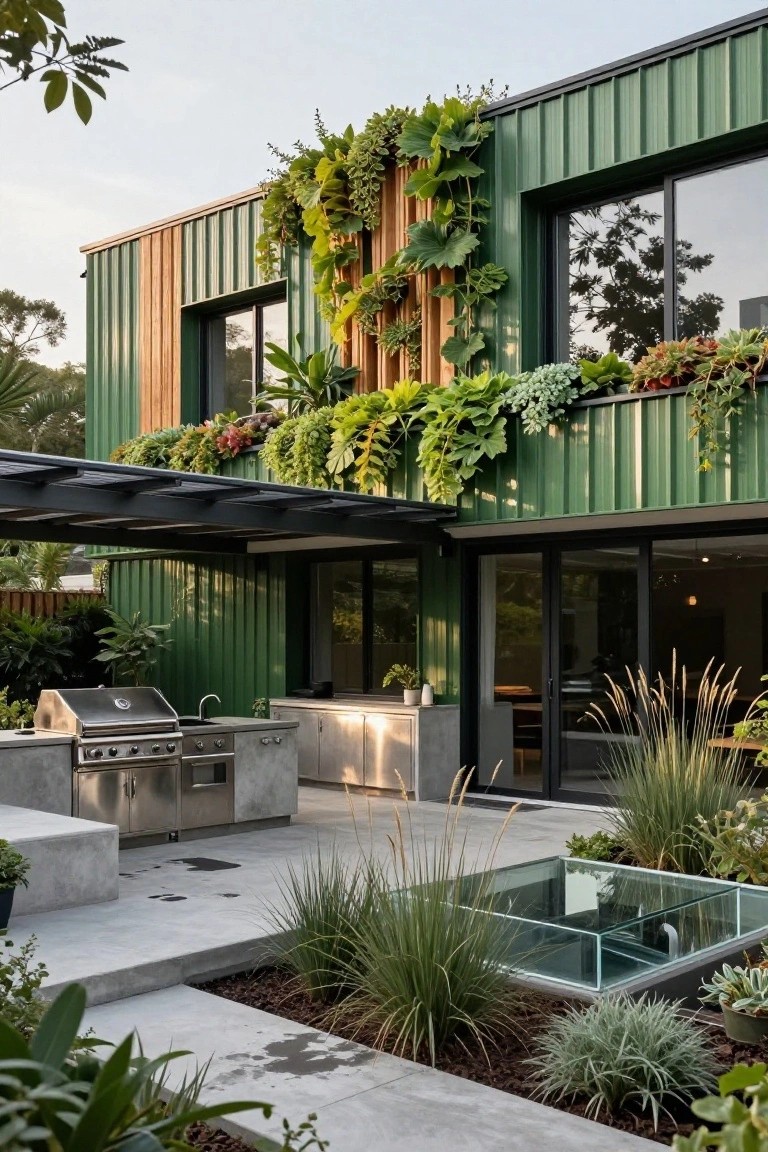
This setup takes corrugated green metal siding and adds a vertical garden right on the facade. Plants climb up a simple wooden trellis against the metal panels, blending the house wall with the garden around it. It turns a bold modern material into something softer and more connected to nature without hiding the structure.
You can try this on a side or rear wall where it’s visible from your outdoor space. It suits homes in milder climates with vining plants like pothos or ivy that grip well. Just make sure the trellis is sturdy and plants get enough water, especially in full sun.
Sage Green Cottage Exterior
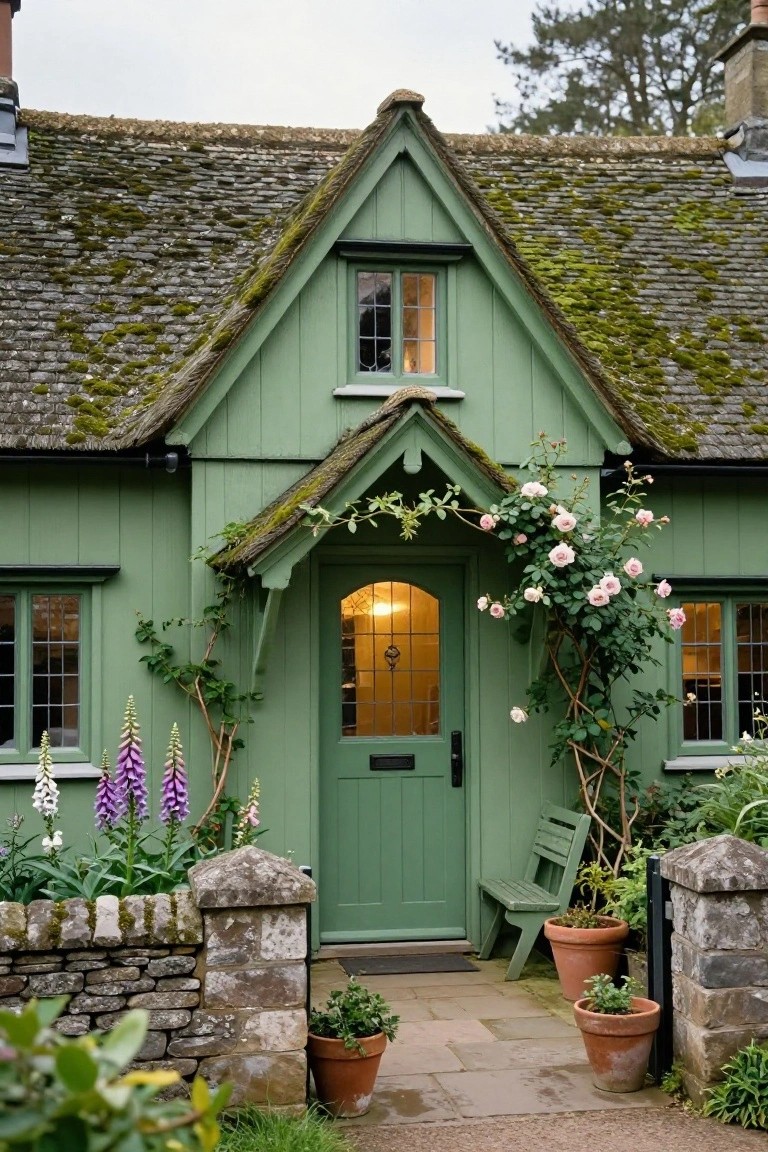
A soft sage green paint on clapboard siding turns a plain cottage into something straight out of an old storybook. That muted green pairs so well with a mossy slate roof. It feels settled and real, not showy.
This look fits older homes or bungalows tucked into green surroundings. Paint the trim a shade darker if you want more definition around the windows and door. Climbing roses on the porch add life without much work. Pick a good exterior paint to stand up to rain.
Soft Green Siding on a Cabin Home
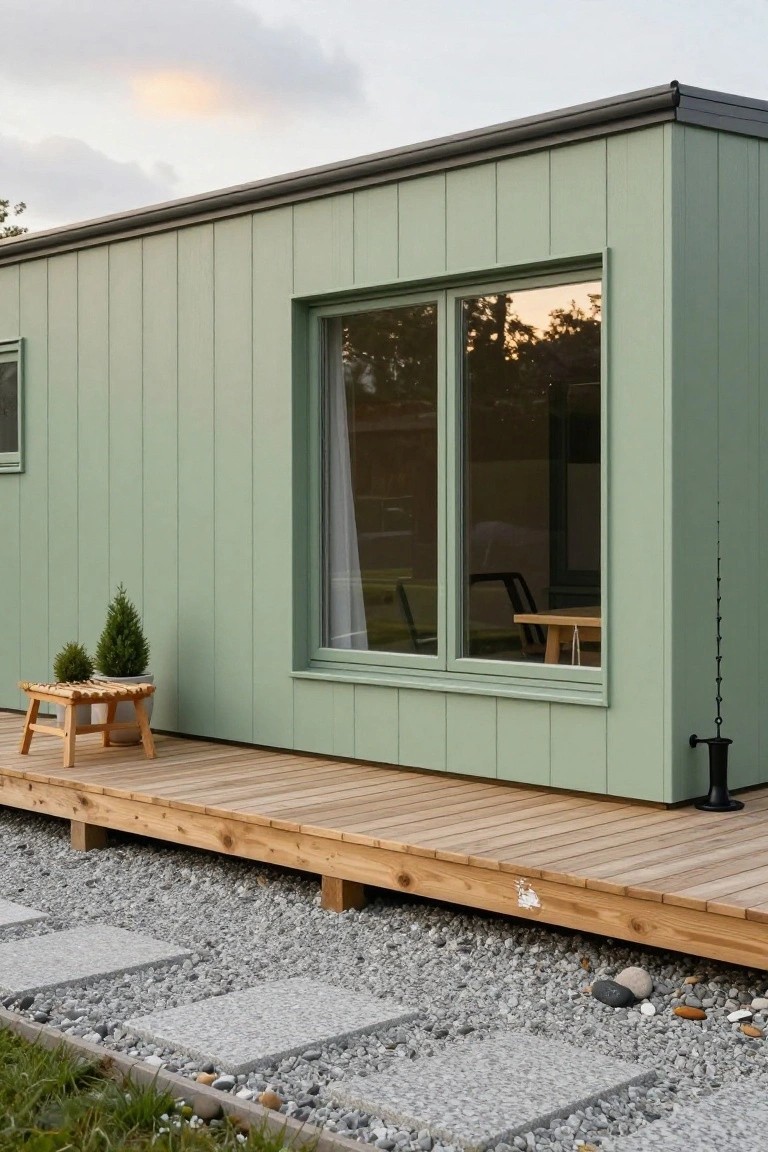
A soft green paint on vertical wood siding brings a calm, nature-tied feel to this compact cabin exterior. It picks up hints from the surrounding trees and sky without overpowering the simple lines. That large window lets light pour in, and the color keeps things fresh year-round.
This works best on smaller homes or backyard retreats where you want low-key appeal. Pair it with a natural wood deck and gravel paths to tie everything together. Skip stark whites or dark stains here. They can fight the green vibe. Just test the shade in different lights first.
Lime Green Stucco Walls
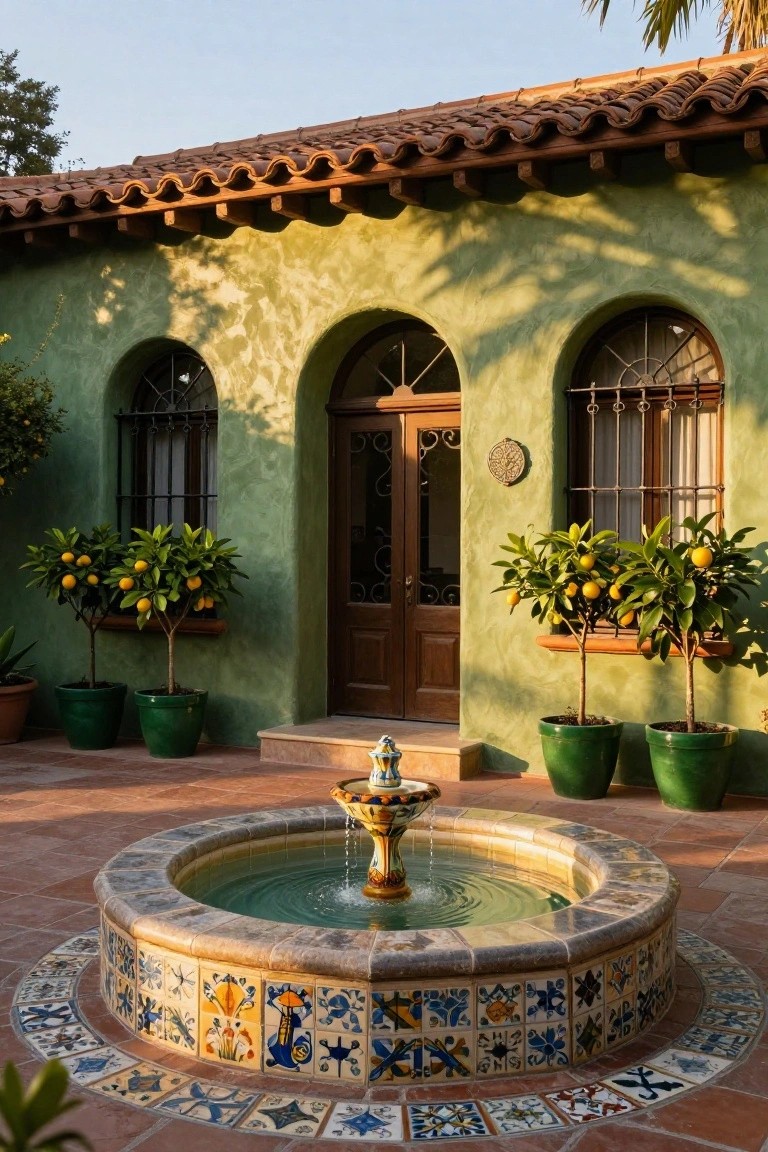
A lime green stucco finish on the house walls gives this Spanish-style home a fresh, lively look that stands out without trying too hard. It picks up the green from the potted lemon trees right by the entry and makes the whole facade feel connected to the garden. That color shift from usual beiges keeps things interesting.
You can pull this off on homes in warm, sunny spots where the green won’t wash out. Stick to terracotta roof tiles and a dark wood door to ground it. Just test a few shades first, since lighting changes how green reads from the street.
Sage Green Stucco Walls
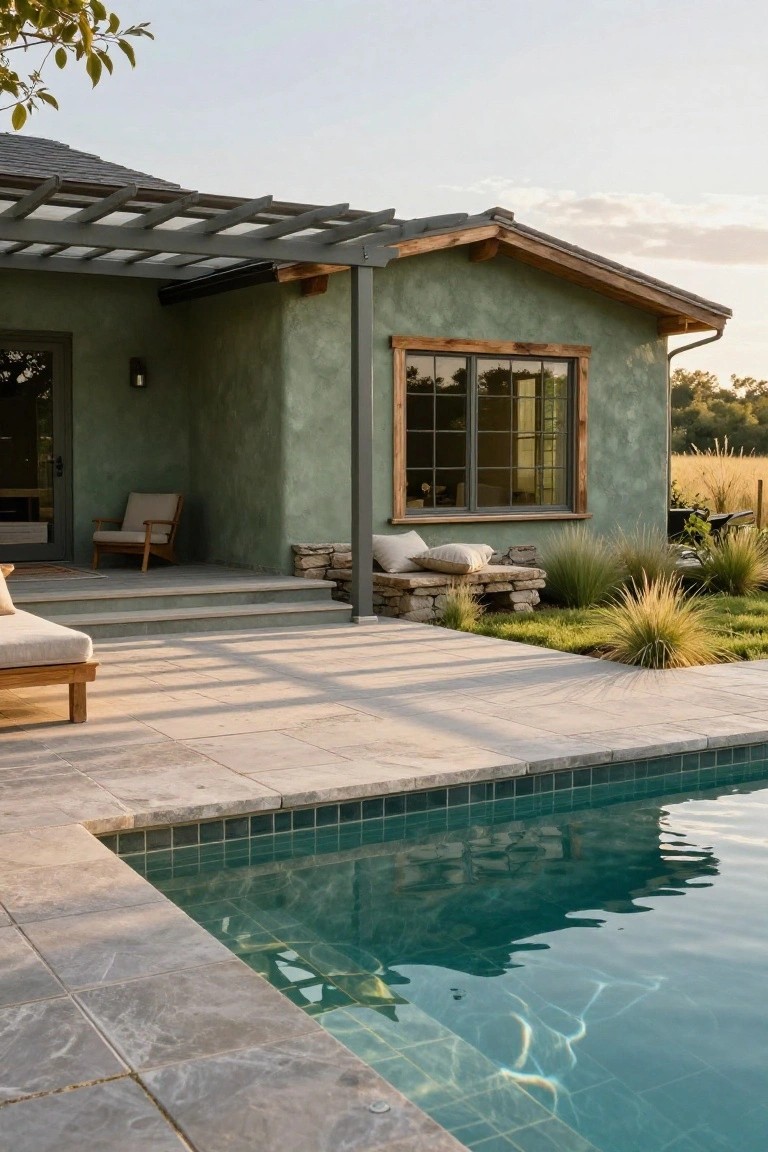
Soft sage green stucco on the exterior walls gives this house a quiet, earthy look that sits right into the landscape. It’s not a bright green. More like a muted tone pulled from olive trees or dry fields nearby. The texture of the stucco adds some depth without trying too hard, and it pairs nicely with the wooden pergola overhead.
You can pull this off on low-slung ranch homes or simple modern builds where you want calm over flash. Stick to natural wood accents and stone pavers around the base to keep it grounded. Just watch the sun exposure. Lighter sages hold up better and stay cooler.
Tropical Porch with Rattan Chairs
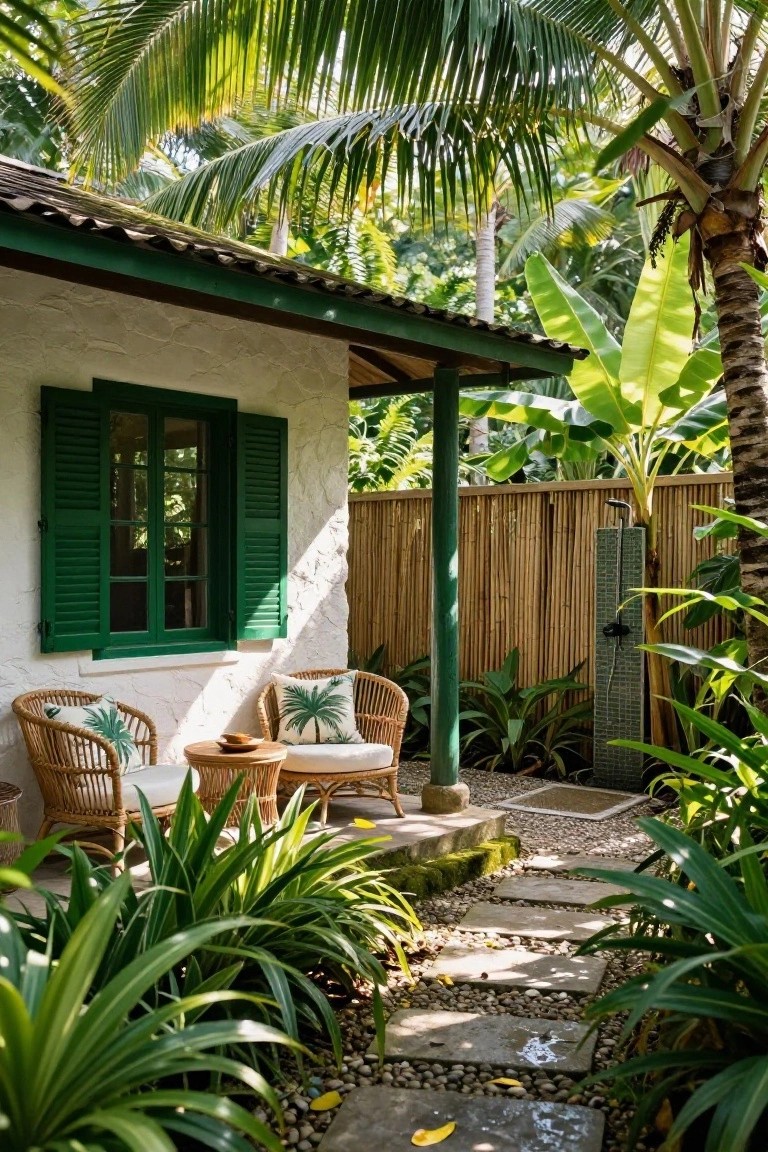
One easy way to make a porch feel like a real getaway spot is setting up rattan chairs with simple cushions. Here the white house wall and green trim keep things light while the woven chairs and small table fit right in with all the plants around. It turns a basic covered area into a place you actually want to sit and stay awhile.
This setup works great on smaller homes or vacation spots where you want outdoor time without much fuss. Put it near a door or window so it connects inside and out. Stick to natural materials like rattan or bamboo they hold up in humid spots and mix well with palms or ferns. Just keep the seating close together for that cozy feel.
Deep Green Facade on a Terrace House
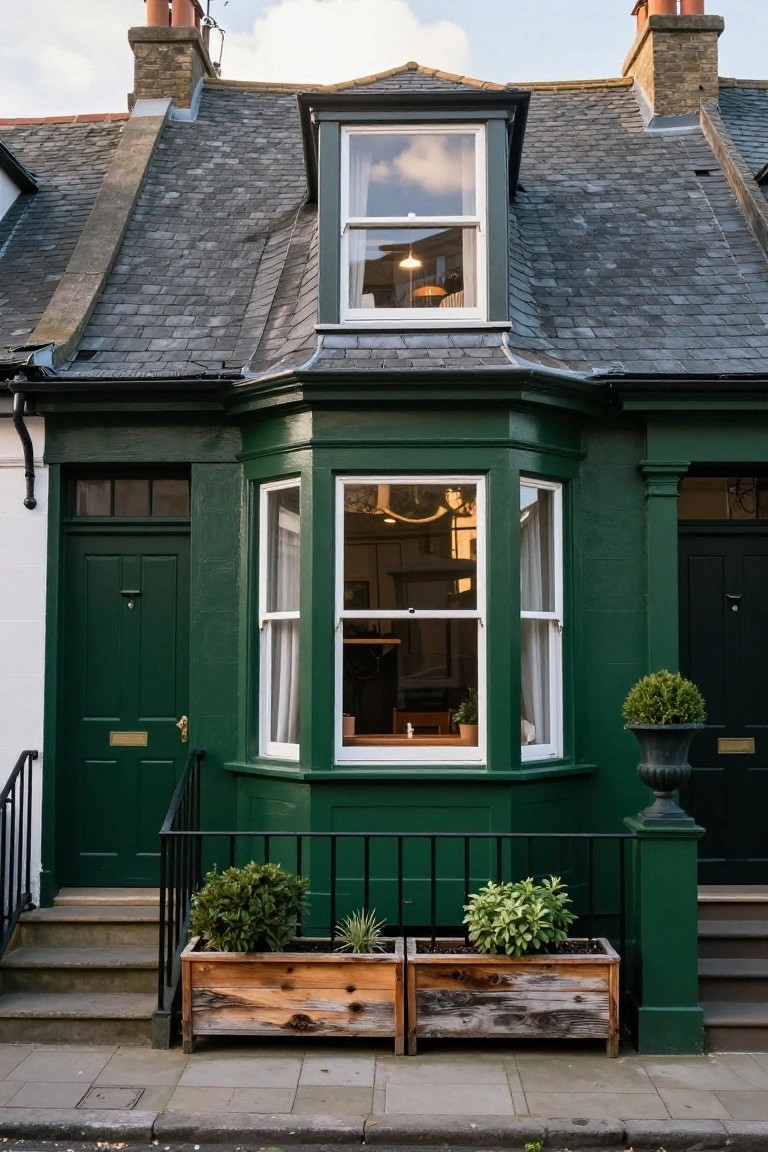
A deep green paint job can wake up an older terrace house like nothing else. It covers the doors, window frames, and trim in one strong color that plays off the slate roof and brick details. Against plainer neighbors, it makes the whole front feel more alive and put-together.
Try this on Victorian or Edwardian homes with bay windows and solid bones. Go for a durable exterior paint in a shade like hunter green, then add simple planters on the steps for extra touch. It suits urban rows where you want standout curb appeal without major changes.
Soft Green Stucco for Coastal Homes
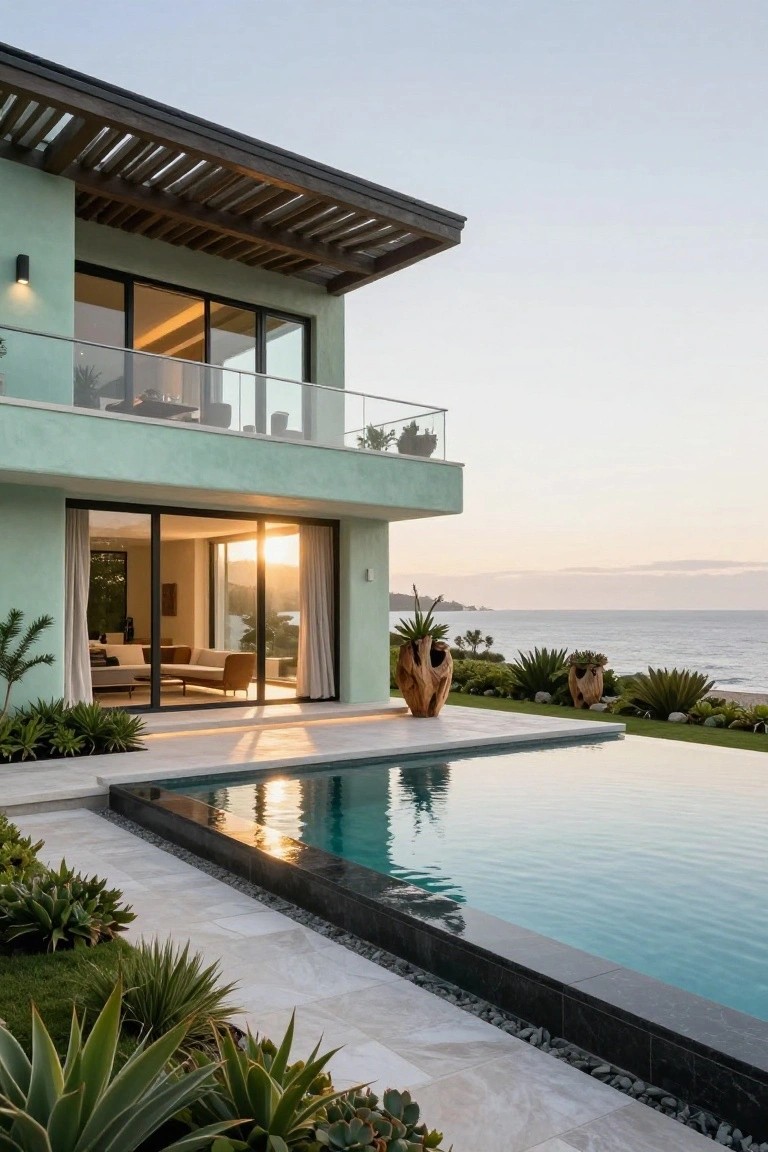
Soft green stucco gives this house a fresh, easy feel that pulls in the ocean backdrop without trying too hard. The pale mint shade on the textured walls looks calm next to the wooden pergola overhead and glass balcony. It keeps things light and beachy, especially with the sunset glow coming through those big windows.
You can pull this off on homes near water or in warm spots where green ties right into the plants around. Pick a shade that’s not too bright so it doesn’t clash with stone or wood details. Works best on simple modern shapes, but watch the trim colors to keep it from feeling washed out in shade.
Frequently Asked Questions
Q: How do I pick a green shade that won’t clash with my neighborhood?
A: Walk around your block at different times of day and snap photos of houses you like. Pick a green a few tones softer than your favorite to blend right in. Test samples on a small board first, hung outside for a week.
Q: What plants work best to amp up a green exterior?
A: Go for textures that pop against the paint, like feathery ferns or spiky agave. Cluster them in pots near the entry for instant impact. And skip anything too fussy, they just distract from the clean green vibe.
Q: Can I pull off green on a brick house?
A: Paint the trim and accents green instead of the whole facade. It highlights the brick’s warmth without overwhelming it.
Q: How do I make green last through harsh weather?
A: Prep surfaces with a solid primer before painting. Choose high-quality exterior paint rated for UV and moisture. Refresh with a power wash and touch-up every couple years.
