

I’ve noticed how a green house can blend right into the landscape if the accents feel too safe or mismatched. From the curb, it’s the trim around doors and windows, or even shutters, that first catches the eye and sets the tone for the whole facade. Those details pull everything together. On my street, one neighbor switched to a rusty red on the entry for contrast, and now the house reads warmer and more welcoming against the siding. A couple of these color combos could be worth painting a board to test outside your own home before deciding.
Green Built-In Cabinets
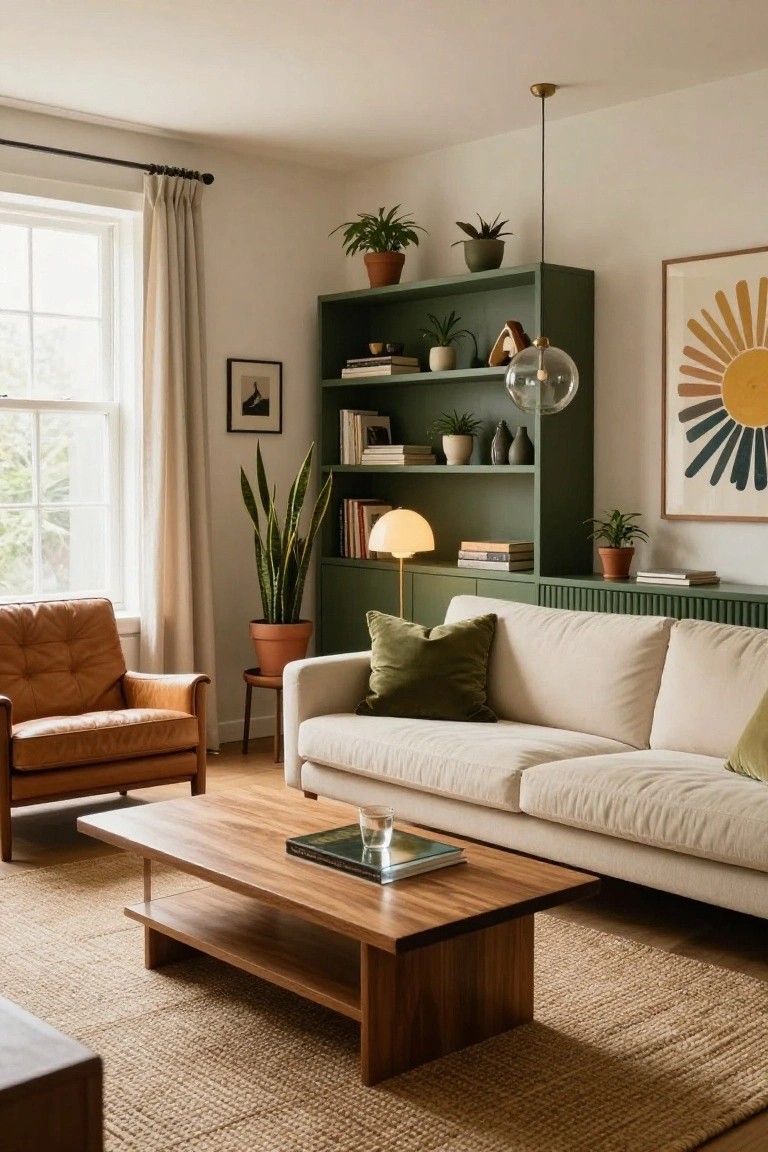
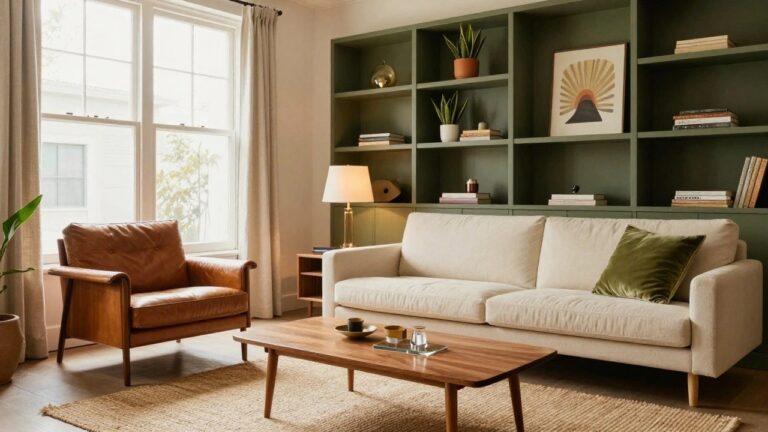
Green built-in cabinets like these give a neutral living room real punch. The sage tone on the tall shelving unit stands out against cream walls and a light sofa. It holds books, pots, and little decorative bits without cluttering things up. Wood floors and a tan chair keep it grounded.
Paint old cabinets green or add new ones in spaces that feel a bit bland. Works best in rooms with lots of natural light and simple furniture. Skip it if your walls are already dark… might feel too much.
Sage Green Headboard Accent
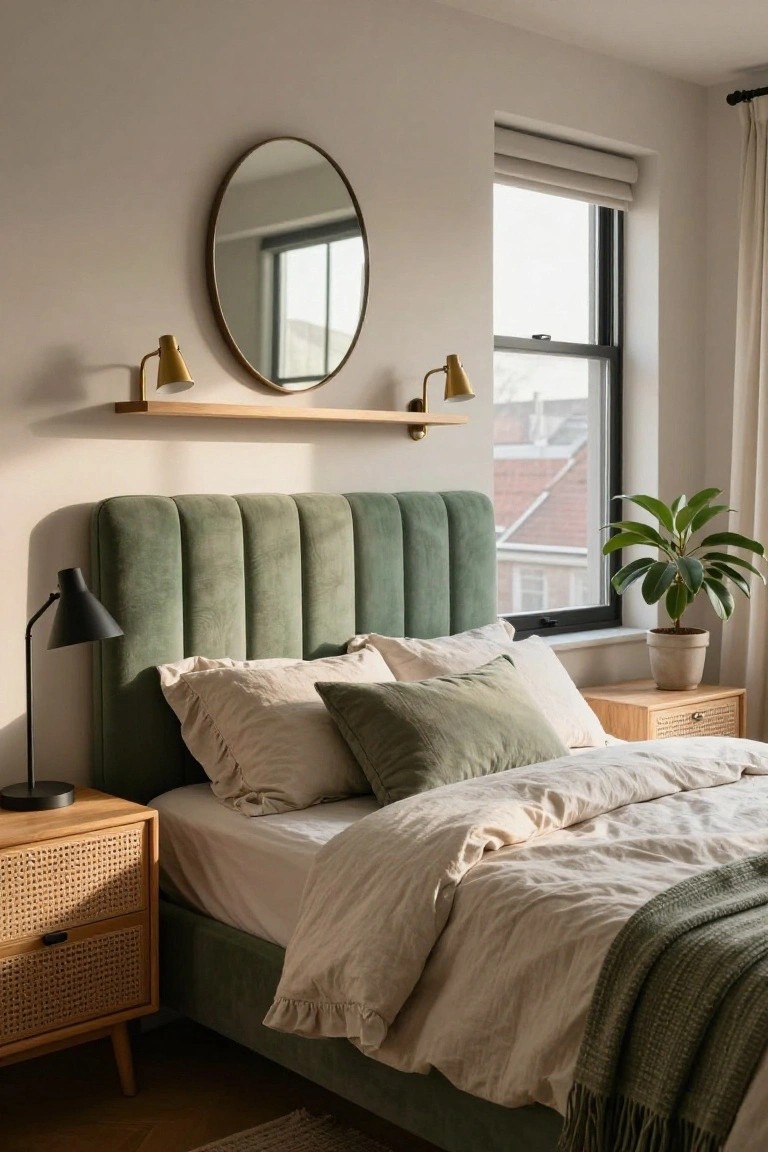
A sage green tufted headboard like this one brings a fresh pop of color to a mostly neutral bedroom. It stands out against soft beige walls and light linens without overwhelming the space. Paired with wooden nightstands and a simple plant, it keeps things calm and layered.
This works best in smaller bedrooms or rental spots where you want easy impact. Upholster an existing frame or buy a ready-made one in that muted green shade. It suits modern farmhouses or airy apartments. Just keep surrounding pieces neutral so the green stays the star.
Deep Green Kitchen Cabinets
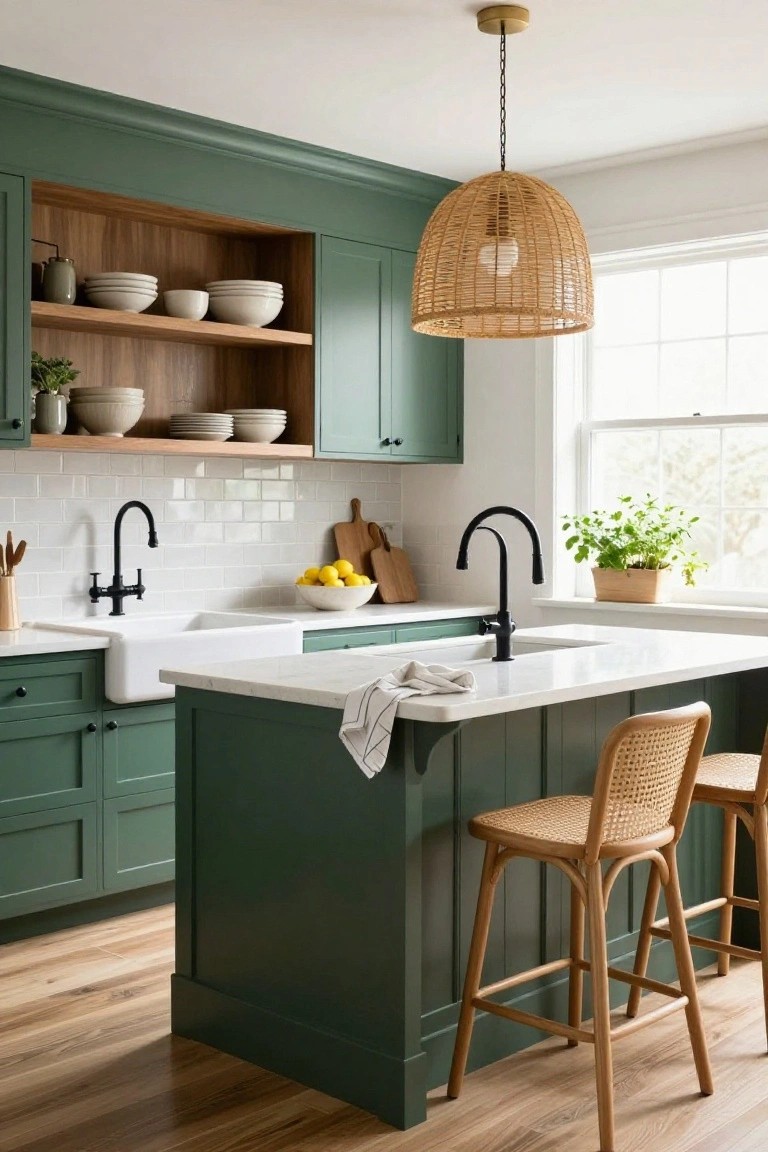
Green cabinets like these give a kitchen real presence without overwhelming the space. The deep shade feels rich and grounded, especially against white countertops and subway tile backsplash. It pulls in a bit of nature indoors. Paired with black faucets and wood shelves, it keeps things practical yet pulled together.
Try this in a farmhouse or transitional kitchen where you have good natural light from windows. White quartz tops keep it clean and easy to maintain. Add rattan stools or herbs on the counter for warmth. Skip it in super small spaces… might feel too heavy there.
Teal Green Doors in Hallways
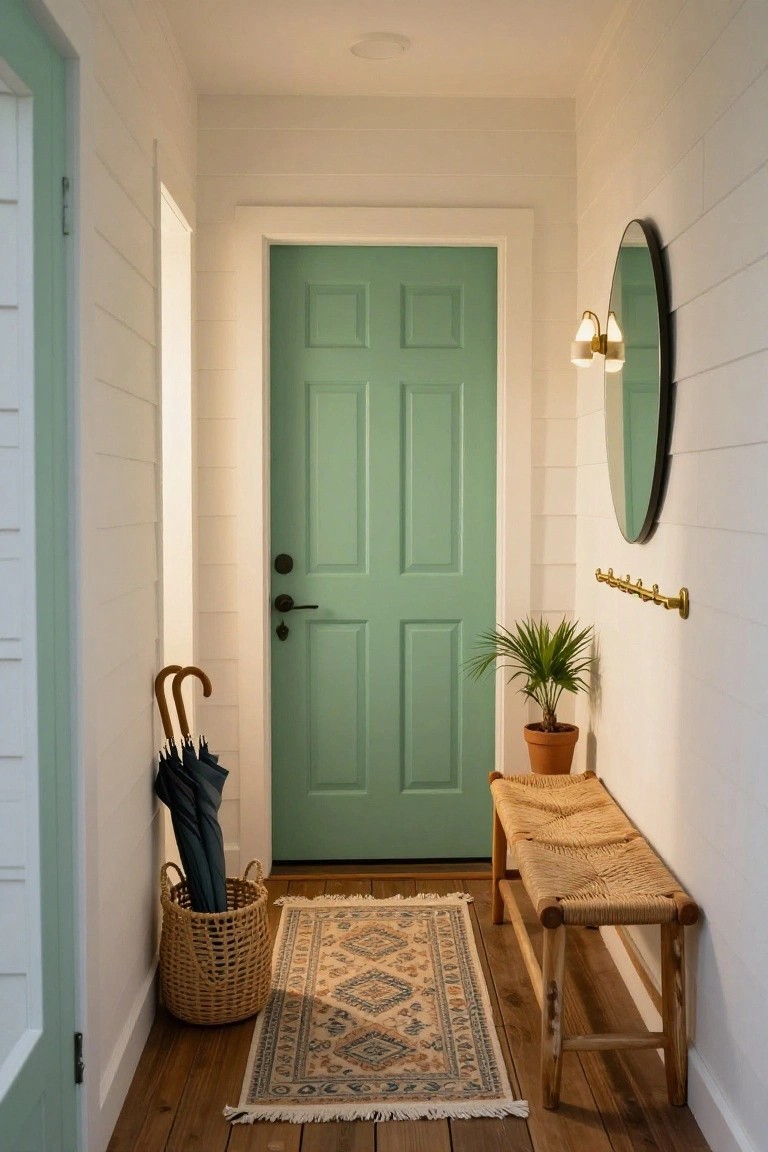
A teal green door can bring real life to a plain hallway. Set against white shiplap walls like this, it adds color right where you need it most. The green feels fresh, not too loud, and pulls your eye down the space without taking over.
Try this in narrow entries or mudrooms where neutrals might feel dull. Keep the rest simple, maybe a wood bench and a plant nearby. It suits coastal or farmhouse homes best, but watch the lighting, it can look darker in low light spots.
Green Velvet Booth Seating
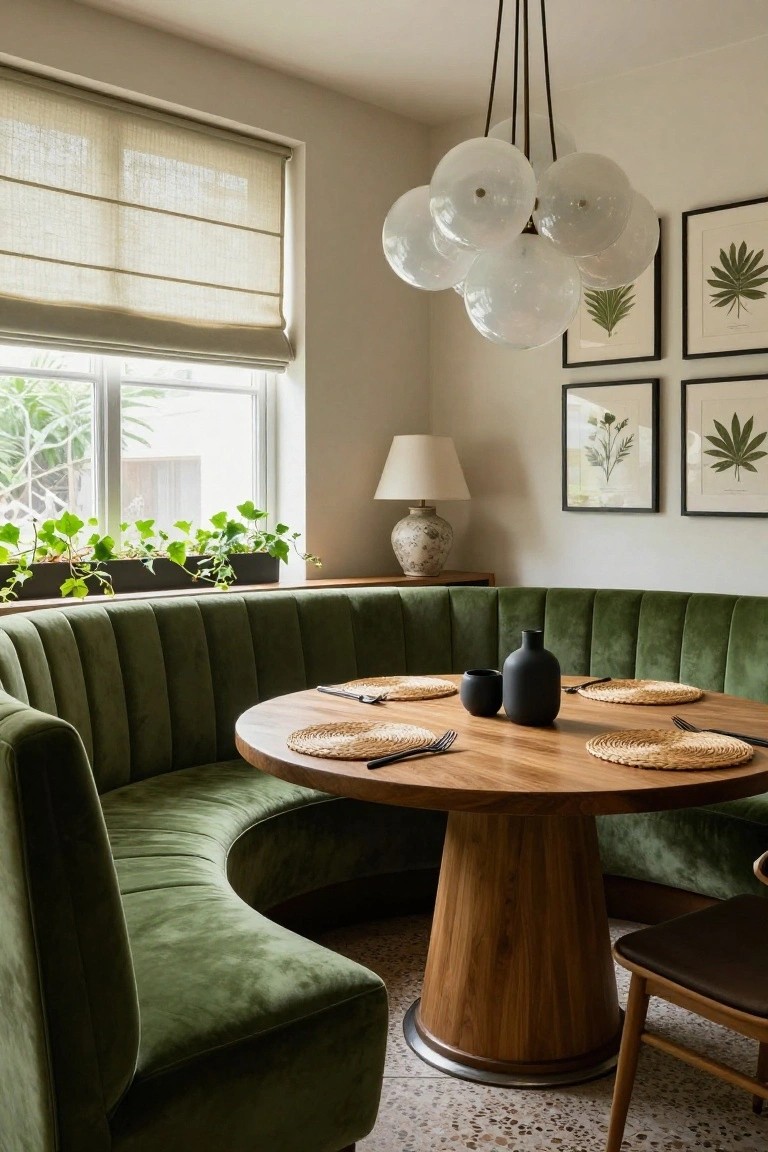
A deep green velvet booth like this wraps right around a simple wooden table. It turns an everyday dining corner into a cozy spot that feels a little special. The rich color stands out against light walls and floors. But it doesn’t take over. Instead it pulls the eye and makes you want to sit down for a meal.
Try this in a kitchen nook or small eating area. It works best where space is tight. Pair it with natural wood and woven placemats to keep things grounded. Neutral surroundings let the green do its thing. Just make sure the fabric is durable if kids are around.
Sage Green Filing Cabinets Brighten Home Offices
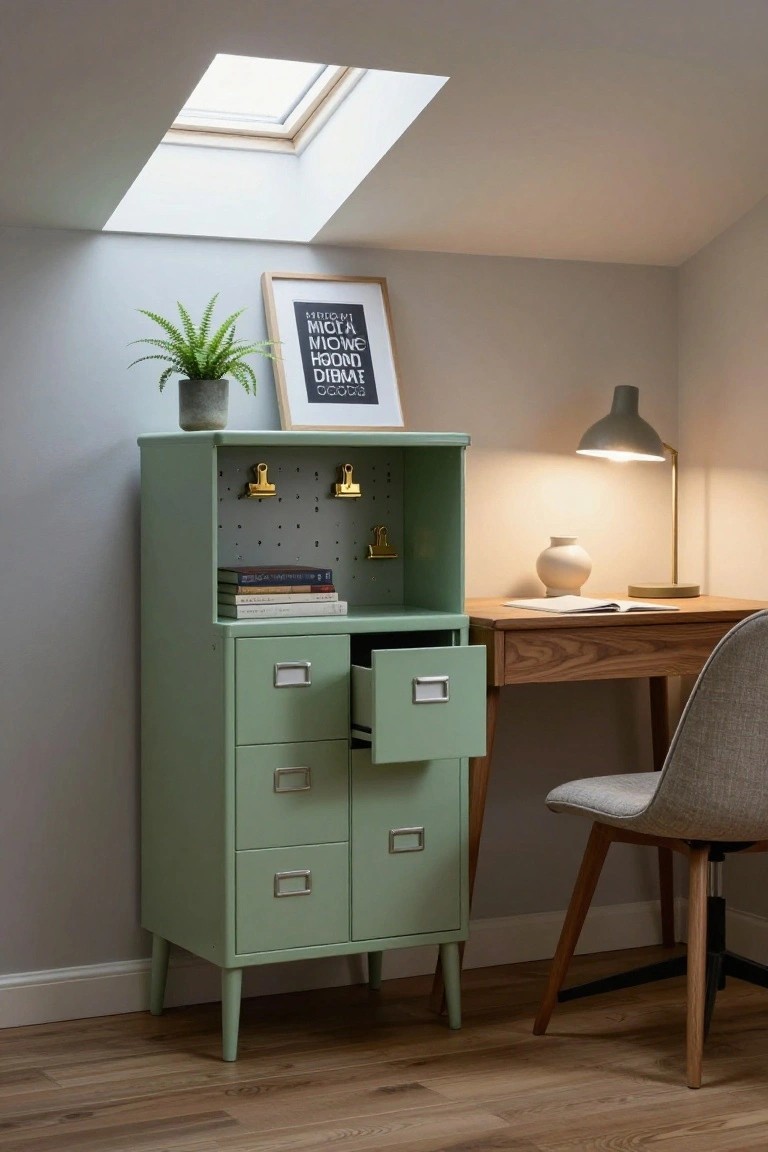
A sage green filing cabinet like this one stands out nicely in a plain home office. It brings a soft pop of color to light walls and wood tones, turning basic storage into something with personality. That muted green feels fresh but not too bold, especially with simple extras like a desk lamp nearby.
This works best in cozy spots like attic rooms or small workspaces. Pair it with neutral furniture and maybe a plant on top to keep things balanced. Look for mid-century styles or just paint an old one, but stick to pale surroundings so the green does its job without clashing.
Sage Green Wainscoting in the Nursery
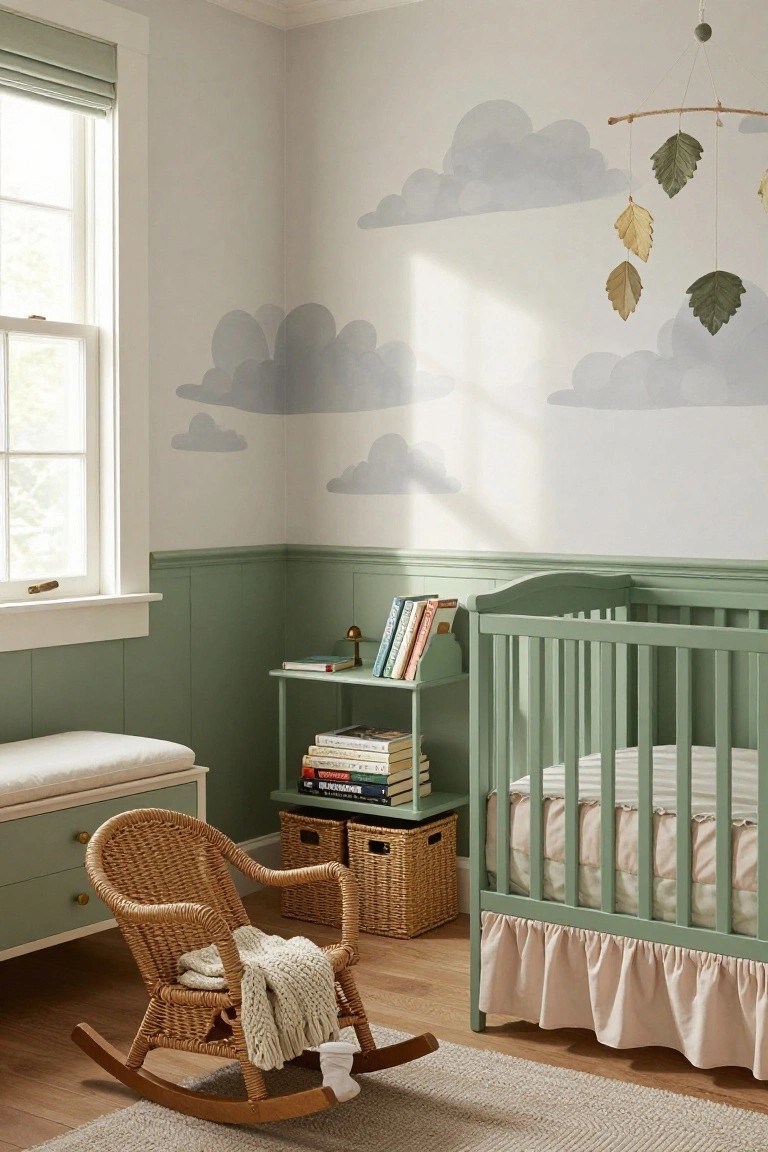
Sage green wainscoting on the lower walls gives this nursery a soft, grounded feel. Paired with crisp white above and those faint cloud shapes, it lets green play a supporting role instead of taking over. The matching crib picks up the color just right, making the whole space feel fresh for a baby room.
You can pull this off in any kid’s bedroom or small sitting area. Stick to pale neutrals for the rest, like the wood rocker and floor. It suits older homes with simple trim… just paint the lower half and keep upper walls light to avoid a cave feel.
Sage Green Tiles in the Shower
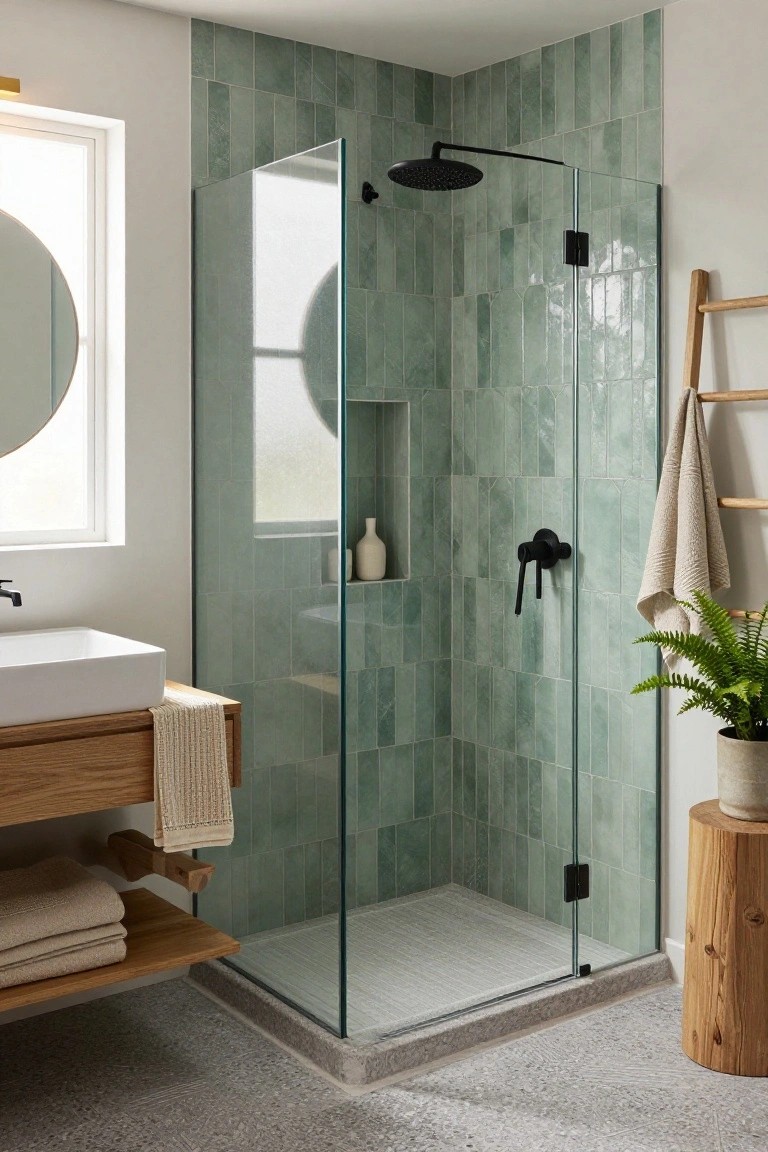
A soft sage green tile covers the shower walls here. It gives the whole bathroom a fresh spa feel right away. The color pops nicely against the white floor and wood vanity, but stays calm enough for everyday use.
Put these tiles just in the shower to keep things simple. They suit small bathrooms best, especially in homes with a natural or modern look. Go for matte black fixtures to pull it together, and add a plant nearby for extra life.
Deep Green Walls Warm Any Living Room
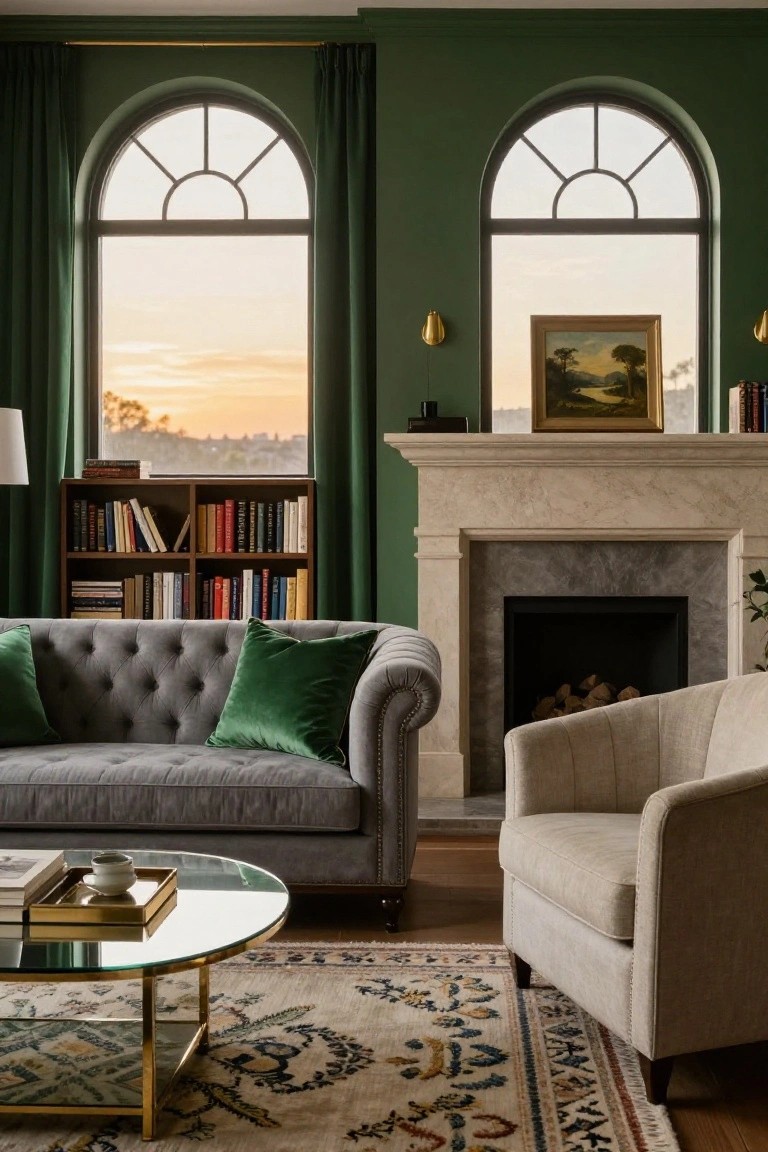
A deep green on the walls turns a standard living room into something special. It wraps the space in a cozy feel, like being in a forest cabin but with nicer furniture. Here the color shows up strong around the fireplace and big arched windows, and it plays well against the gray velvet sofa and those matching green pillows. The sunset outside just adds to the mood without stealing the show.
You can pull this off in rooms with some architectural interest, like trim or a mantel. Stick to neutral pieces for the seating so the green stays the star. It works best in homes that get decent light during the day… otherwise it might feel a bit cave-like. Just one or two green accents elsewhere keep things from getting too much.
Green Kitchen Cabinets
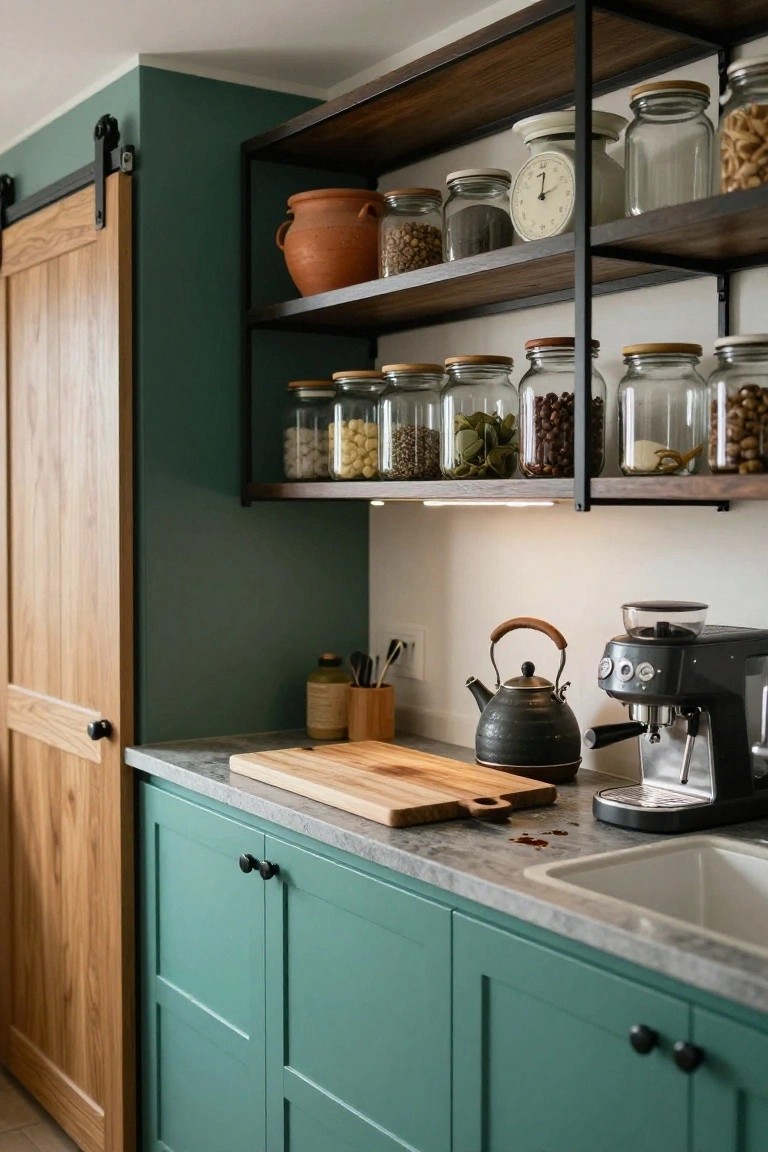
A deep teal green on the lower cabinets gives this kitchen a fresh punch. It works well next to the oak sliding door and those open metal shelves stocked with jars. The color feels lively but stays grounded thanks to the wood tones and neutral counters.
Try this in a kitchen that gets decent light. It suits homes with some wood details already, like beams or floors. Just keep uppers light or open to avoid a closed-in feel.
Sage Green Laundry Cabinets
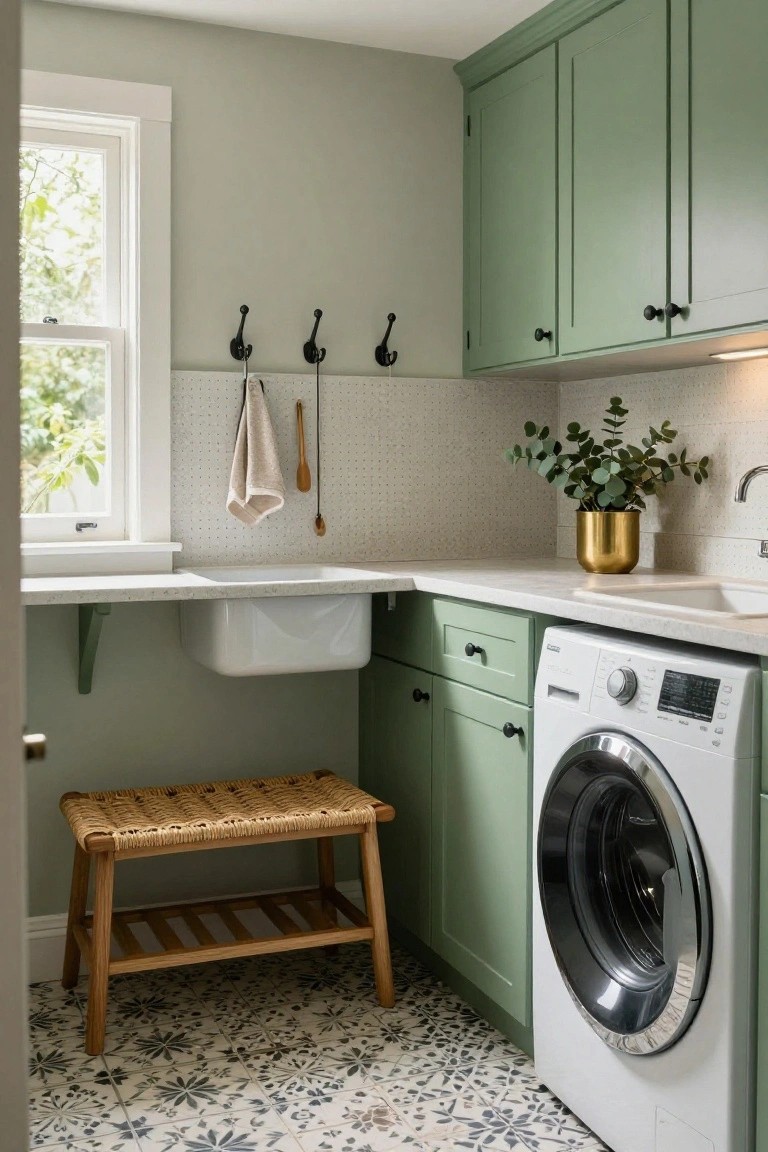
Sage green cabinets give a small laundry room a calm, fresh look that feels more like part of the house. Here they cover the lower and upper sections around the sink and washer, standing out nicely against pale walls. Paired with white appliances, the color keeps the space bright and easy to work in. It’s a simple way to make chores feel less dull.
This works best in compact utility areas or mudrooms where you want some color but not too much. Go for shaker-style doors like these, and stick to whites and beiges nearby. It suits older homes with simple trim. Just make sure good lighting hits the green, or it might read too dark.
Sage Green Wardrobe Accent
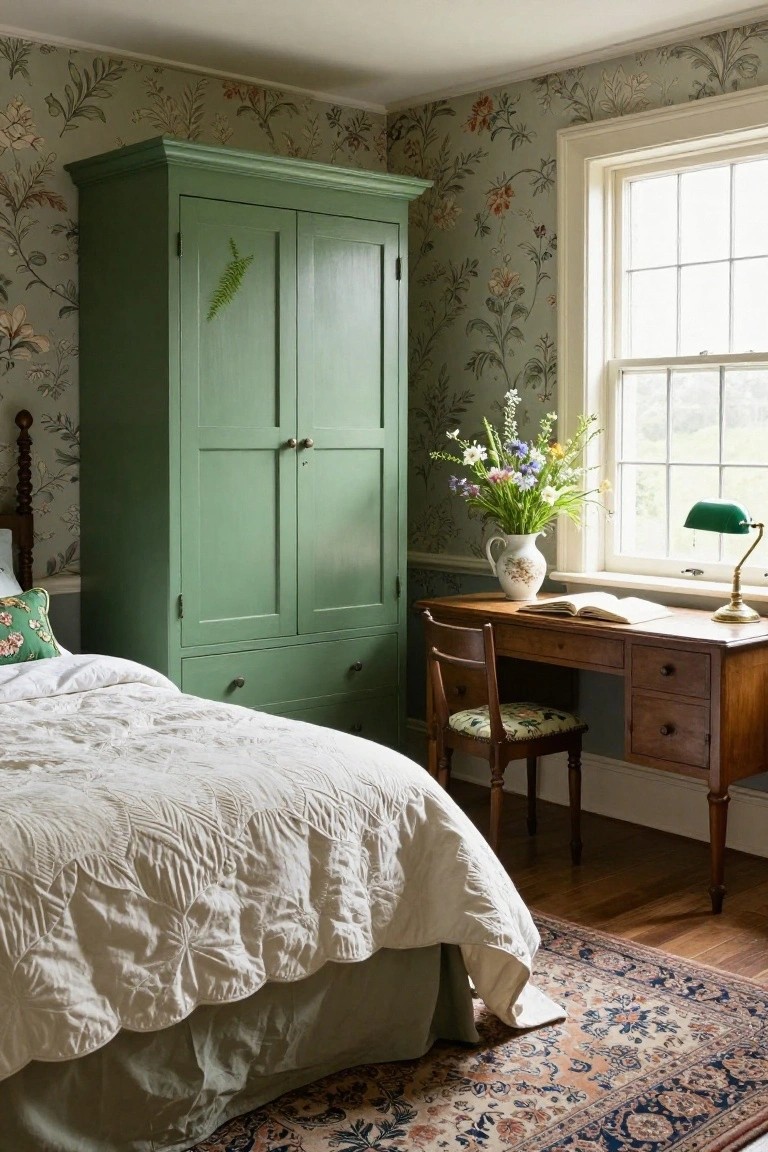
A tall sage green wardrobe like this one really pulls the eye in a bedroom full of soft florals and neutrals. It echoes the green hints in the wallpaper but stands out enough to give the room some life. Paired with a simple white bed, it keeps everything feeling calm and put-together.
Hunt down an old armoire at a flea market or thrift shop, then paint it this shade of green. It fits right into cottage bedrooms or older homes with wood floors. Stick to muted tones so it blends rather than fights the rest of your setup.
Pale Green Kitchen Booth
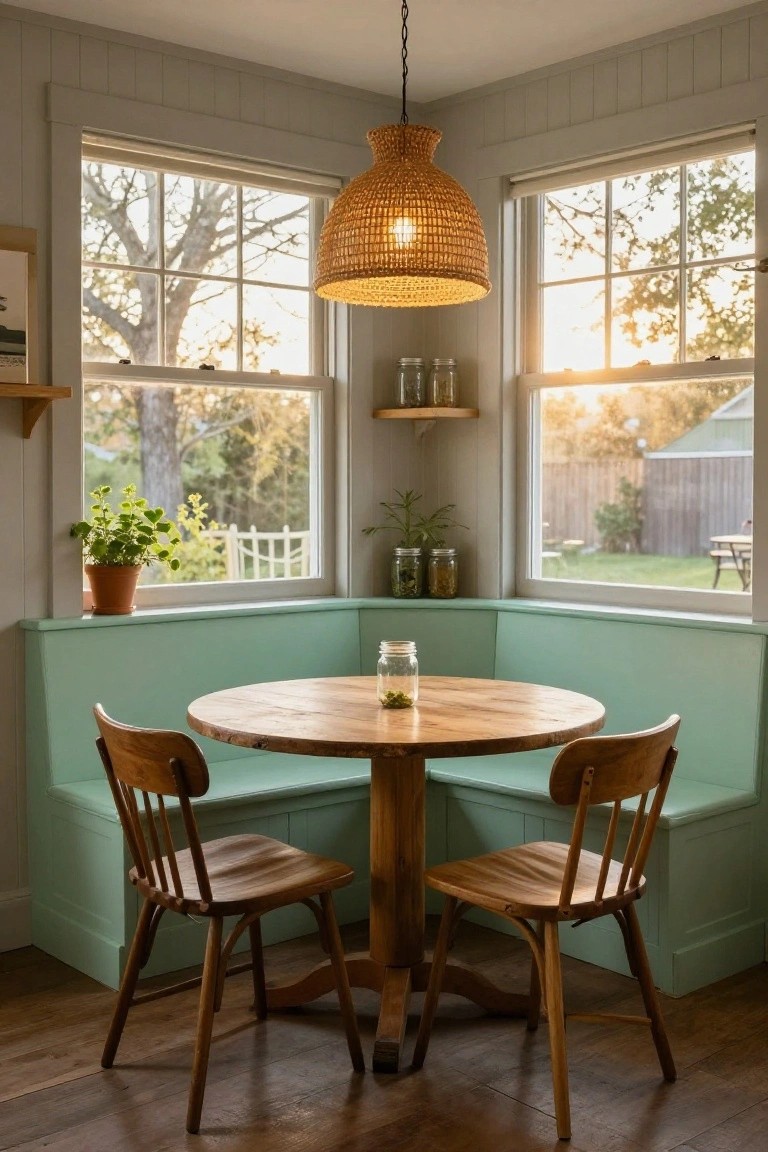
A pale green booth like this one turns a plain corner into something cheerful without overwhelming the room. It picks up the soft light from nearby windows and sits easy next to wood furniture and neutral walls. That gentle green hue feels fresh but stays calm. Jars on the shelves nearby echo the color just enough.
Try this in a breakfast nook or eat-in kitchen where space is tight. Built-in seating saves floor room and makes the spot feel custom. It suits older homes with wood floors or white trim. Go for durable fabric though… spills happen at the table.
Pale Green Walls Brighten Entry Spaces
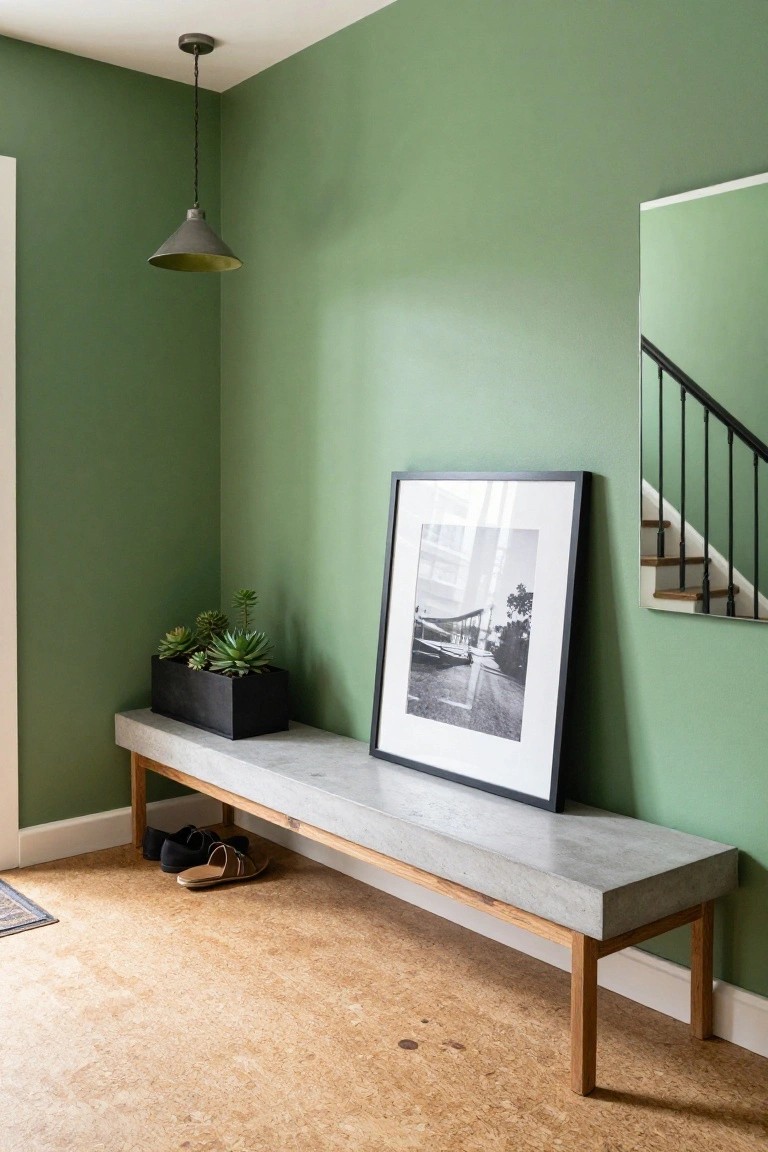
A soft pale green on the walls turns this narrow entry into something fresh and open. It works because the color feels light enough not to close in the space, but still adds a bit of personality right when you walk in. Here, a simple concrete bench with wood legs sits against it, along with a black pot of succulents and a big black-framed photo. Nothing fussy. Just calm.
You can pull this off in any small entry or hallway, especially older homes with cork or wood floors. Pick a green with gray undertones so it stays airy. Pair it with concrete or wood furniture to keep things grounded. Skip busy patterns… the walls do enough on their own.
Emerald Green Bathroom Vanity
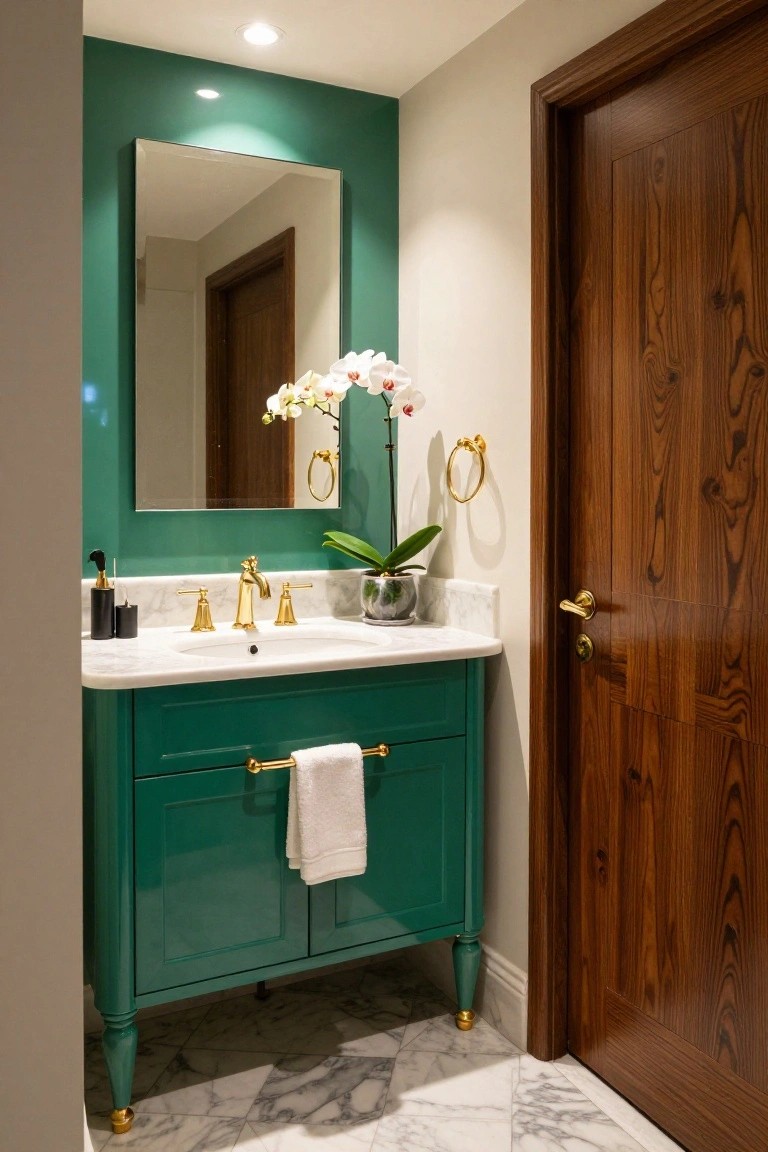
A deep emerald green vanity like this one turns a standard bathroom setup into something special. The glossy cabinets catch the light just right, pairing nicely with gold faucets and a white marble top. It’s a bold color move that feels rich without overwhelming the space.
This works best in smaller bathrooms or powder rooms where you want one standout piece. Go for it in homes with neutral walls and wood accents nearby. Keep other colors simple so the green does the talking… and test a sample first to see how it looks in your light.
Sage Green Sofas in Neutral Rooms
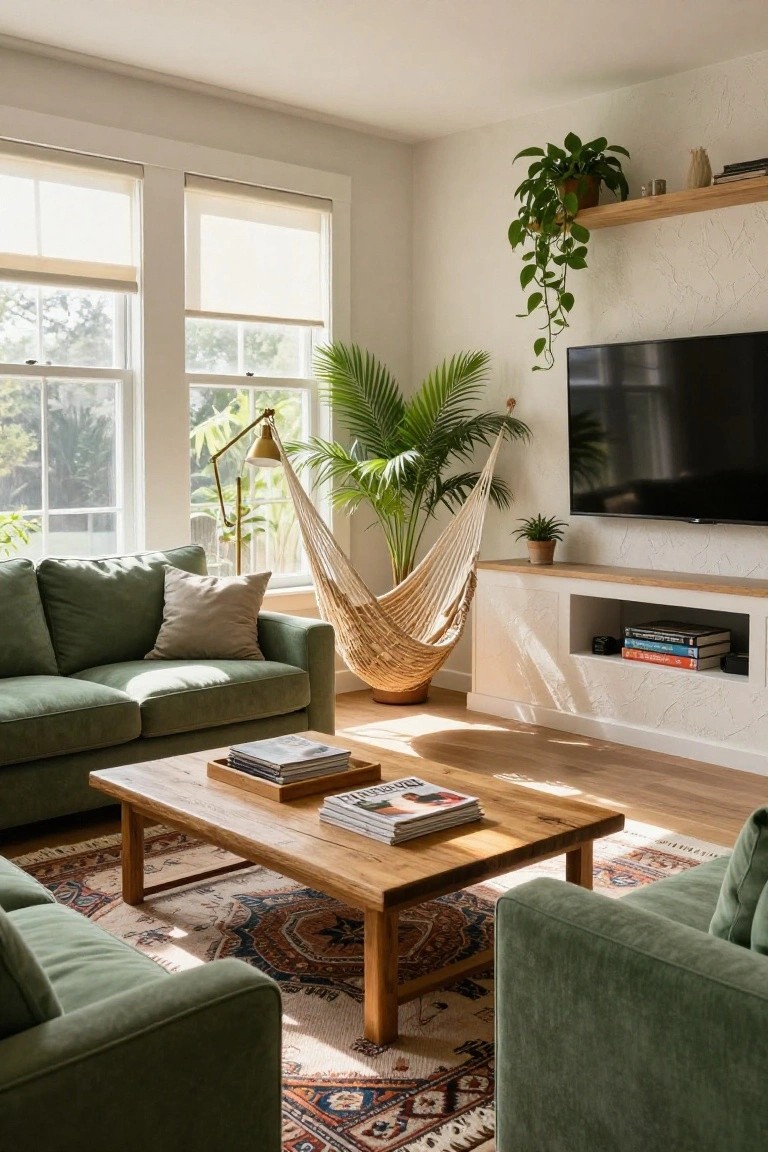
Sage green sofas work well in this light living room. The olive tone on the velvet upholstery picks up nicely against white walls and oak floors. A few plants echo the color without much effort. It keeps things calm and a bit earthy.
Put these sofas in spaces with good natural light. They suit apartments or family rooms that need some color but not too bold. Pair with wood pieces and avoid dark walls, or the green might feel heavy.
Green Tile Backsplash
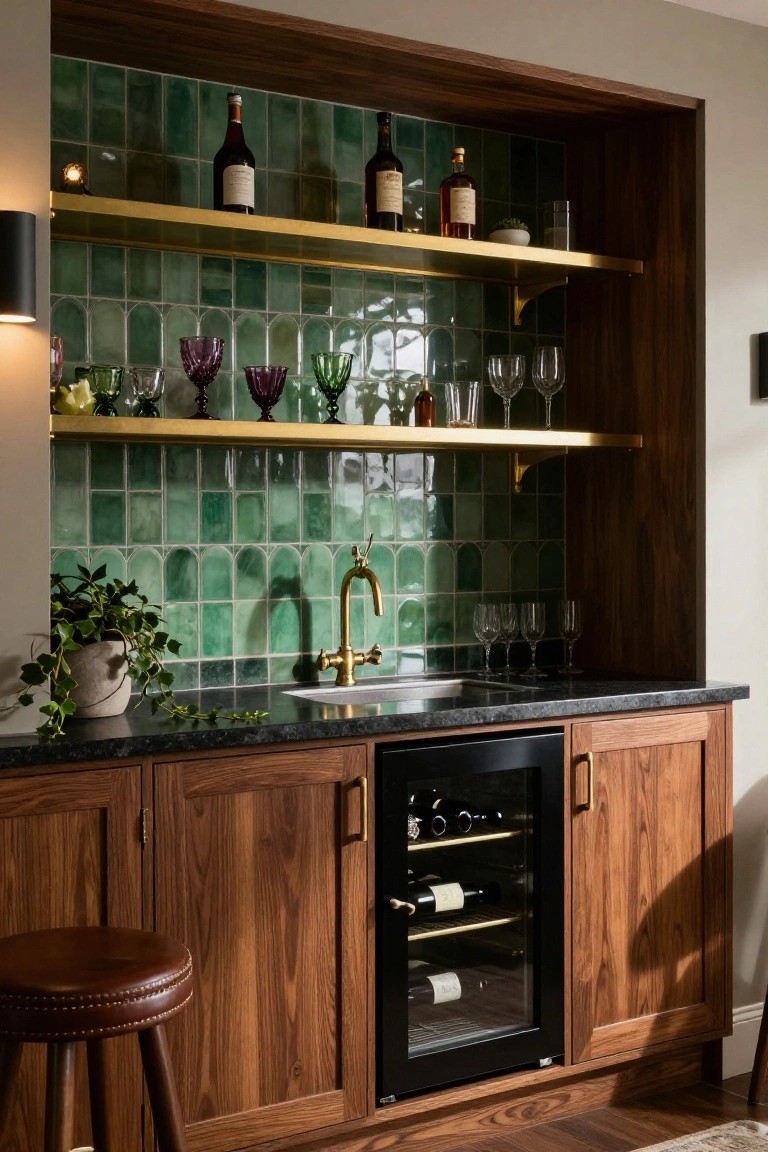
A green tile backsplash like this one turns a simple bar area into something with real character. The soft emerald color and arched shapes catch the eye without overwhelming the space. Paired with warm wood cabinets, it feels fresh but grounded.
You can pull this off in a kitchen or wet bar where you want an accent that lasts. Stick to matte tiles to keep it practical around a sink. It suits homes with wood tones already… just measure twice before tiling.
Green Shelves Above a Desk Area
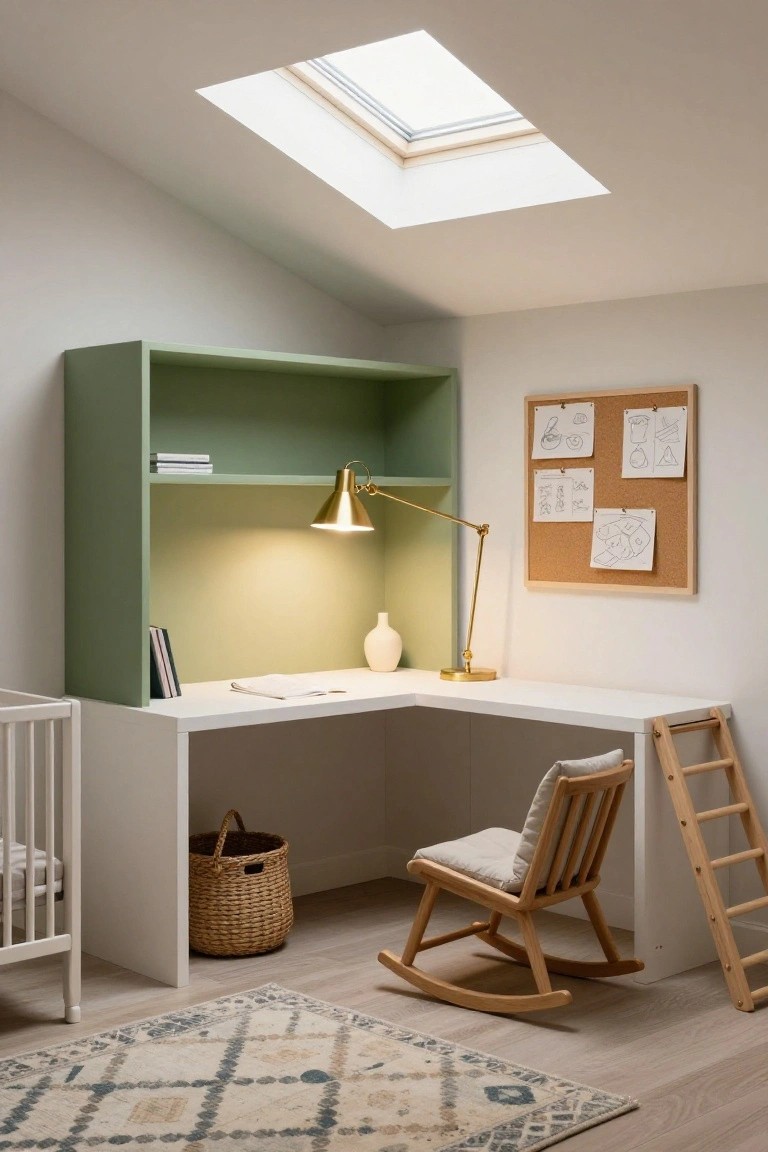
A simple way to work green into a room is with upper shelving like this soft green unit over a white corner desk. It holds books and a vase without taking over the space. The color feels fresh against white walls and wood floors. Keeps things calm for a kids’ area.
Try this in a nursery or playroom where you want some life but not too much. A gentle green shade fits best with neutrals and light wood pieces like a crib or rocker. Avoid darker greens here. They can make the spot feel smaller.
Teal Tiles in a Green Kitchen
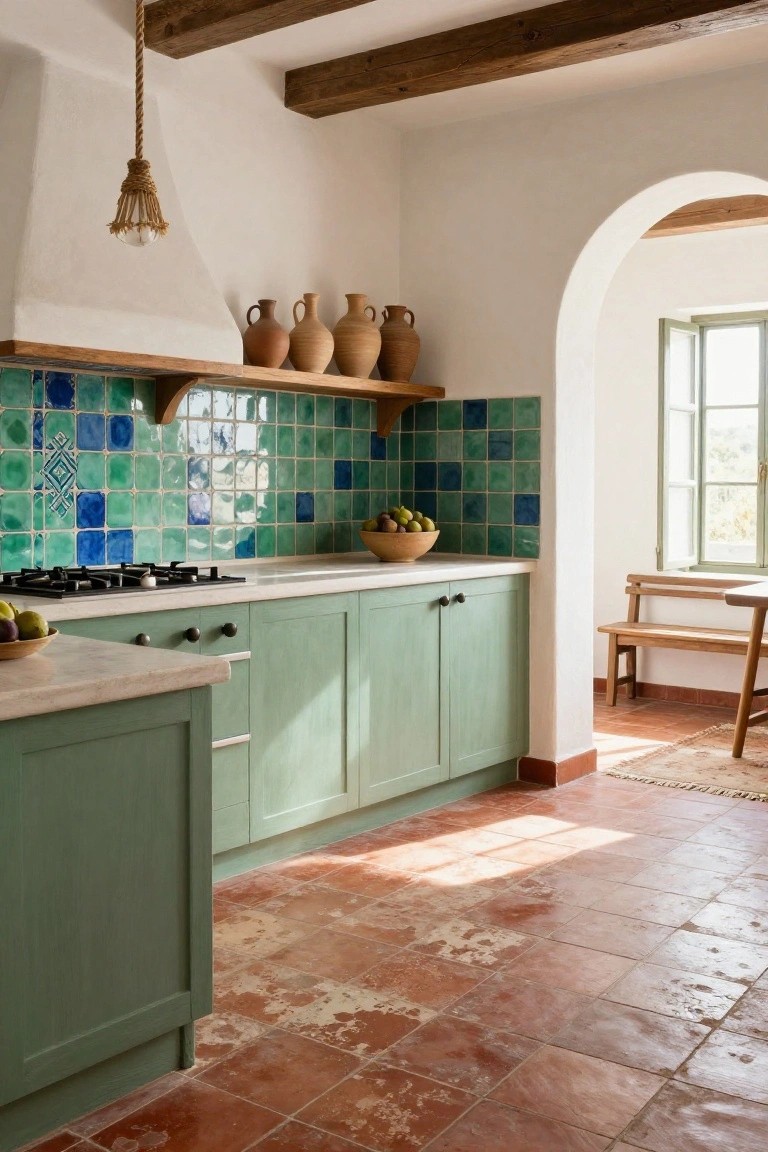
Teal tiles make a simple backsplash stand out in this green kitchen. The blue-green shades mix with the sage cabinets for a fresh look that feels sunny and relaxed. Those hand-painted patterns on the tiles add just enough interest without busyness.
This works well in older homes or cottages with white walls and wood beams. Pair the tiles with terracotta floors and keep counters plain. Muted greens let the teal take center stage… go bolder if your space gets lots of light.
Green Sliding Wardrobe Doors
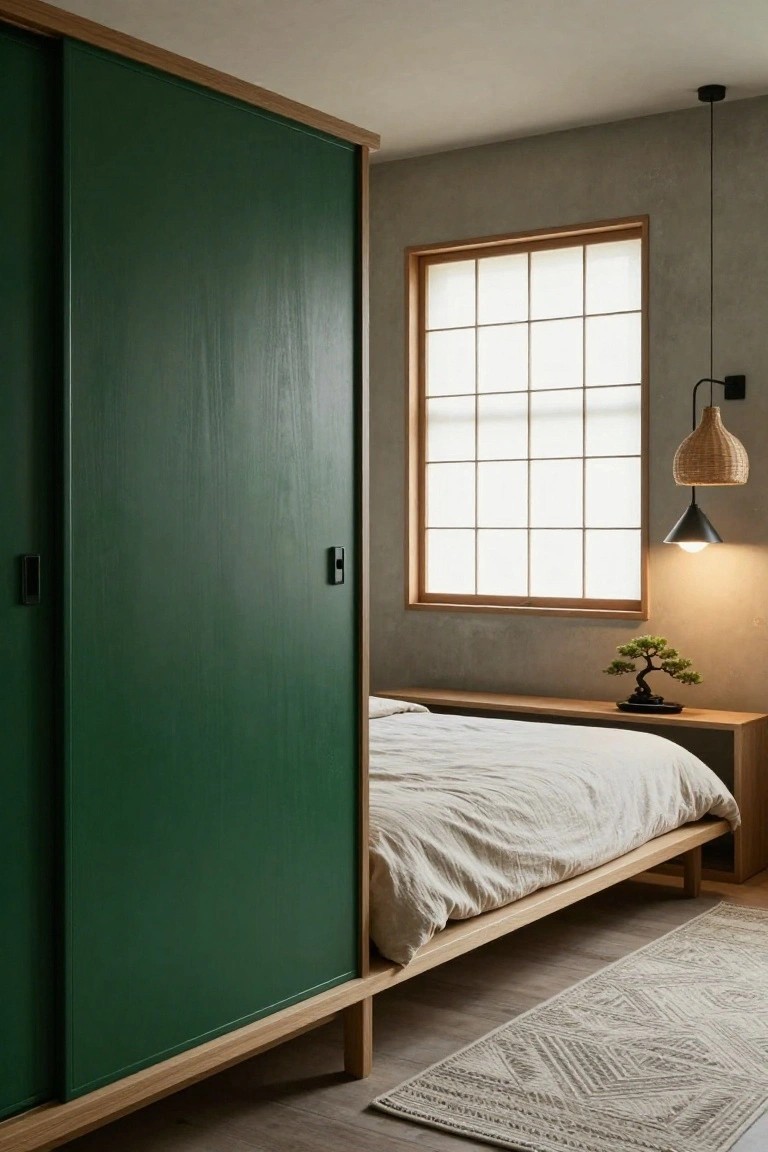
A tall set of deep green sliding doors on the bedroom wardrobe brings real color into an otherwise quiet room. That green stands out nice against the light bed linens and wood tones, without making things feel busy. It’s a simple way to add some punch, especially in spaces that lean neutral or minimalist.
Put these doors in a guest room or master where storage takes up one wall. They suit smaller spots best, like apartments or modern homes with clean lines. Pick a matte finish so it stays restful… and pair with plants or wood for balance.
Mint Green Shiplap Walls
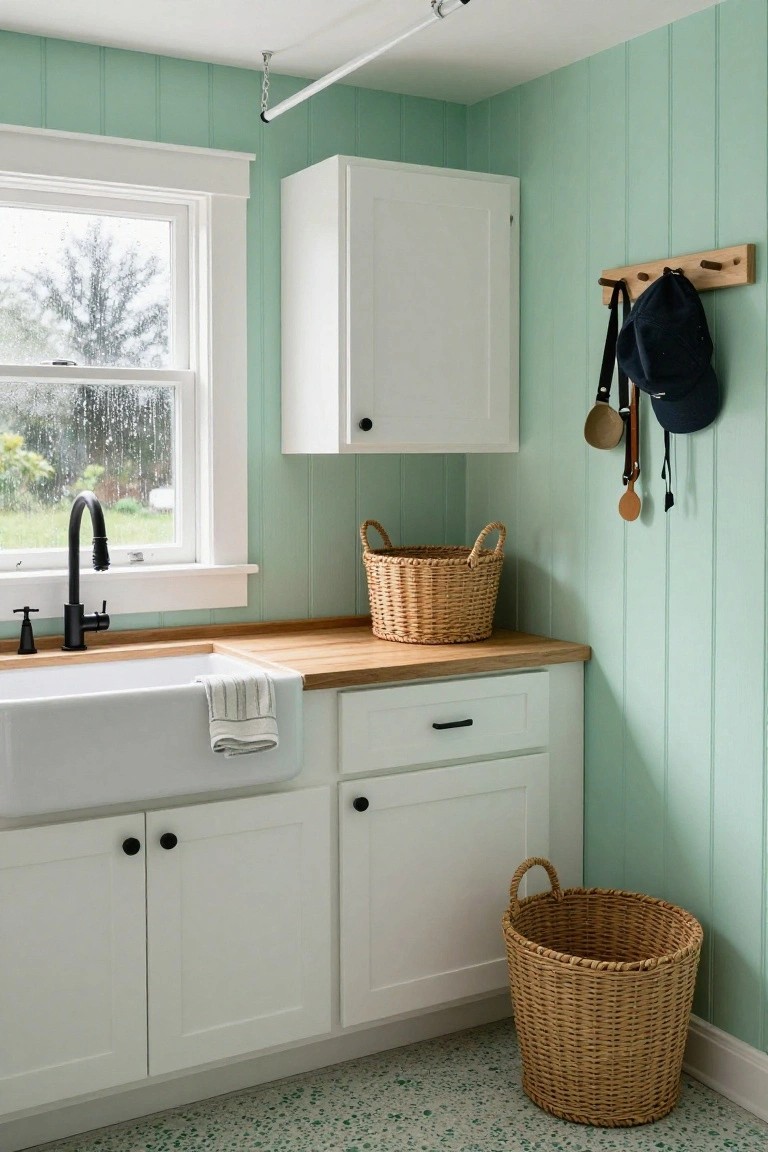
Pale mint green shiplap walls bring a soft, fresh feel to kitchens and utility spaces like this one. They keep things light against white cabinets and a butcher block counter, without overwhelming the room. The vertical lines add a bit of texture too. It’s calming, almost coastal.
Try this in smaller kitchens or laundry rooms where you want color but not too much. It works best in homes with good natural light, like near a window. Pair it with natural wood and woven baskets for balance. Just test the shade first… some greens can look flat in dim spots.
Frequently Asked Questions
Q: My house is a deep forest green. Which accents stand out without clashing?
A: Pair it with crisp white trim or a sunny butter yellow door. These cut through the richness and make the green feel alive. Stick to matte finishes to tone down any glare.
Q: How do I test accent colors on my actual house?
A: Buy small sample cans and brush large patches right on the siding or trim. Walk around at morning, noon, and evening to see how light changes them. Wipe off what you don’t love with soap and water.
Q: Should I use just one accent color or mix two?
A: Pick one punchy shade for doors and shutters to keep it simple. And if you crave more, echo it lightly in planters nearby.
Q: Do these accent colors hold up to sun and rain?
A: Choose high-quality exterior paint with UV protection. It locks in the vibrancy year after year. Refresh every few seasons if your area gets brutal weather.
