

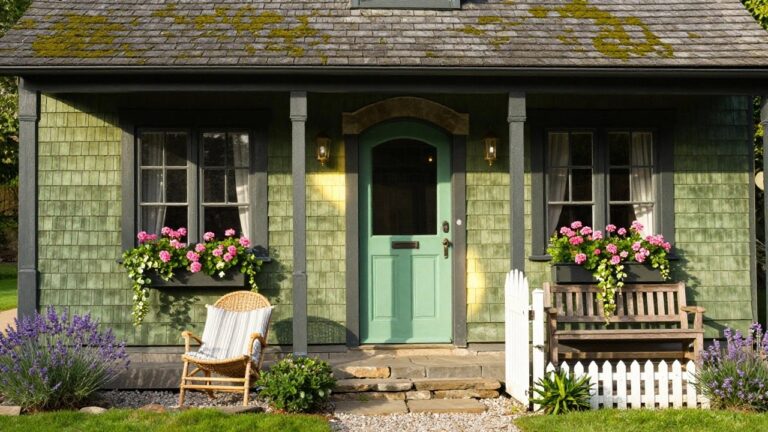
I always slow down when I spot a green cottage exterior that wraps around you like a favorite sweater from the street. One time I tested a soft mossy green on our facade, and it tucked the house right into the landscape instead of sticking out. They pull off cozy through simple choices like shingled siding, peaked roofs that promise nooks inside, and doors framed by climbing vines. Curb appeal hits first with that color against the yard, then the details like lantern lights or stone steps draw you closer. These show real ways to borrow that charm for your own front.
Green Shingle Siding on Cottages
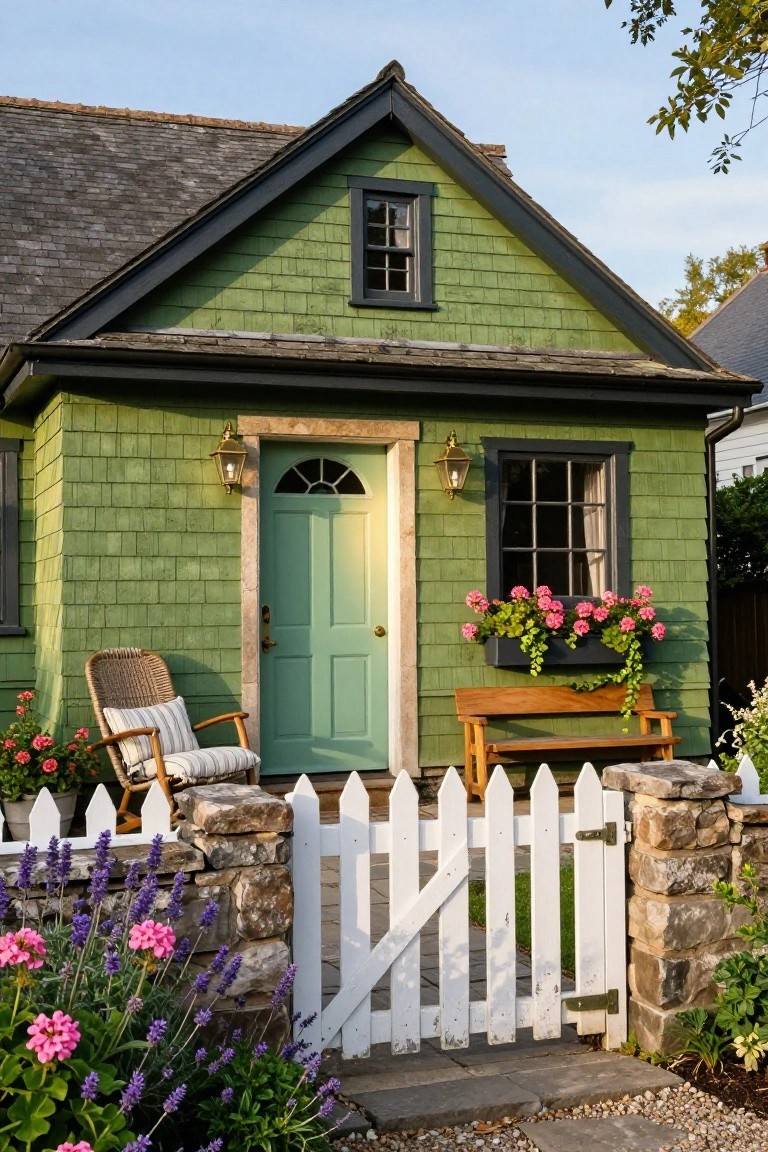
Green shingle siding like this gives a cottage that soft, lived-in look without going too bold. The sage tone picks up on nature around it, and the texture adds some character to the simple shape. Paired with black trim on the windows and roofline, it keeps things crisp but not stark. Folks notice how it settles right into a garden setting.
You can pull this off on smaller homes or additions where you want curb appeal that lasts. Stick to muted greens to avoid fading issues, and add white accents like a picket fence or door for balance. It suits older neighborhoods or rural spots best. Just make sure the shingles are cedar or something that handles weather well.
Recommended Products

Utility Grade Shingle for Under Coursing of Double Coursed Sidewalls and Starter Shingles

POWERFUL, EFFECTIVE CEDAR CLEANER ― Say goodbye to ugly black and green stains and debris on your cedar roof, shakes, shingles, fencing, clapboard, beams, decks, siding or other wood surfaces. Cedar Wash Premium Wood Cleaner is what professional power washing contractors use to safely and effectively clean without the use of harsh chemicals or bleach.
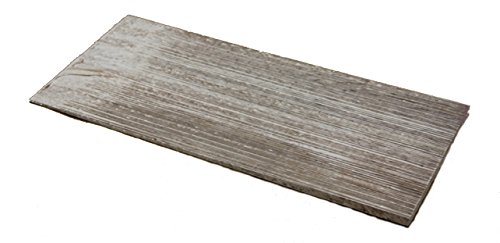
50 square feet at 14" exposure
Climbing Roses Frame the Entry Porch
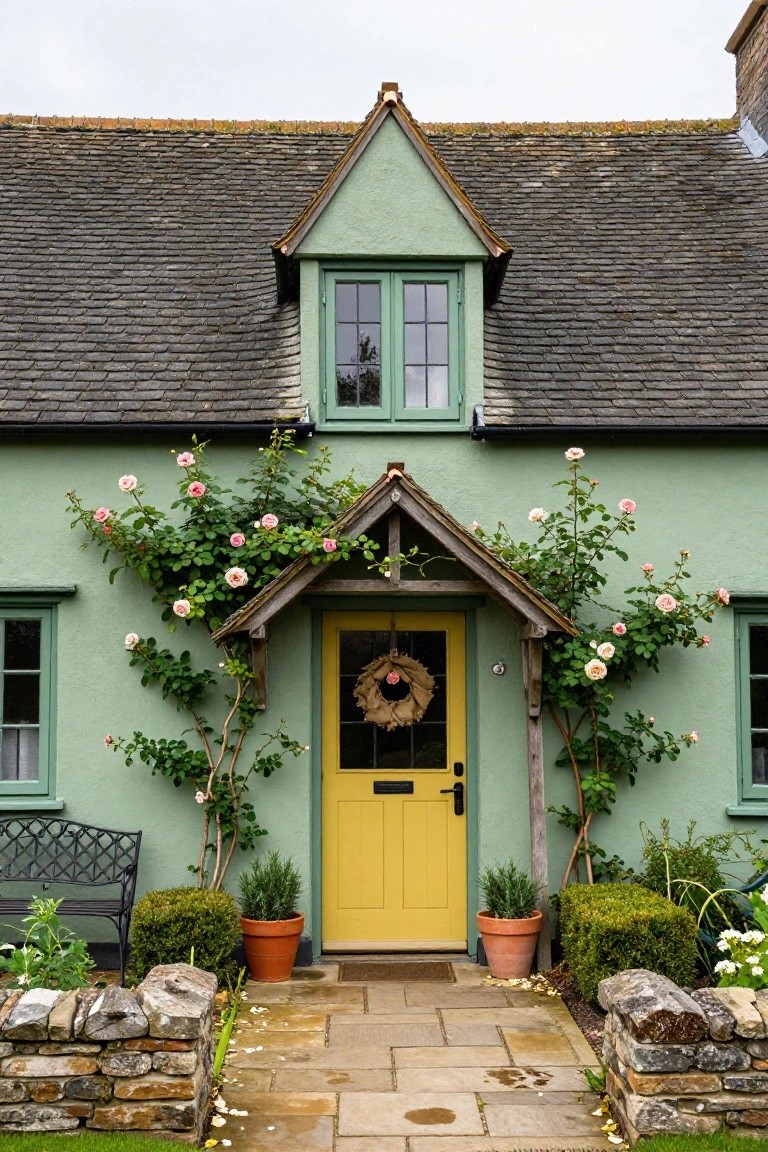
Nothing says cottage charm like climbing roses spilling over a porch entry. Here, soft pink blooms cover the wooden trellis and supports right around a bright yellow door. Against the pale green walls, it all feels fresh and lived-in, pulling your eye straight to the front and making the house look extra welcoming without much fuss.
This works best on smaller homes with a simple gable porch or overhang. Plant rambling roses that hug the structure, and trim them back once a year to keep paths clear. Skip it if your entry gets too much shade, since the flowers need sun to thrive.
Turquoise Clapboard Siding
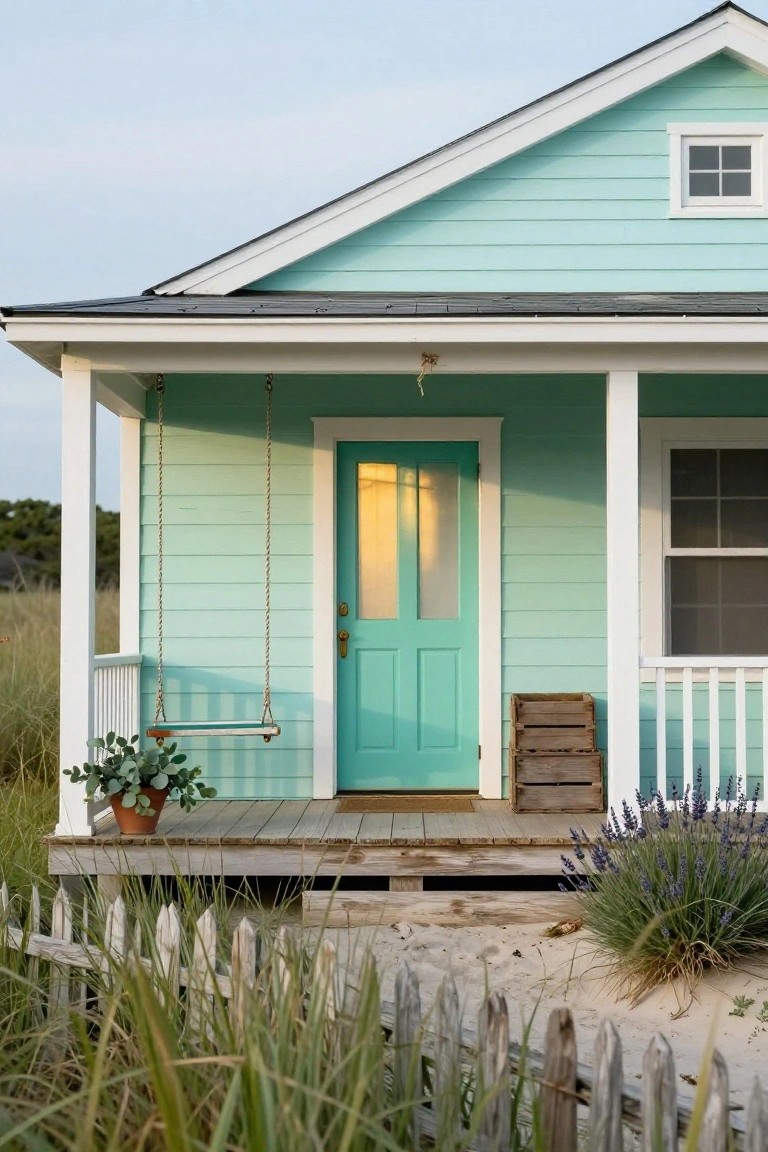
A soft turquoise on clapboard siding turns a basic cottage into something that feels beachy and lived-in. It picks up sky and water colors without shouting. Here the brighter turquoise door and white porch posts keep things crisp, and that rope swing adds a touch of play.
This works great on low beach houses or older bungalows wanting curb appeal. Pick a muted shade so it doesn’t overwhelm smaller spots. Throw in potted eucalyptus or lavender nearby… it ties right in. Avoid super glossy finishes, though. They can look too new.
Recommended Products

Our real wood 3/8" lap siding is designed for miniature collectors, crafters, dollhouses, train, hobby and those who are interested in creating, building, accessorizing or constructing dollhouses, and miniature scenes. The wood that we use is unfinished poplar wood. All of our wood is sanded as the final step prior to shipping. It is ready to paint or stain upon arrival. The samples seen in the attached photos are for

Extremely durable outdoor paint ideal for use on properly prepared exterior wood, brick, masonry, concrete, weathered aluminum, weathered vinyl siding*, and primed metal substrates

Extremely durable outdoor paint ideal for use on properly prepared exterior wood, brick, masonry, concrete, weathered aluminum, weathered vinyl siding*, and primed metal substrates
Sage Green Cottage Facade

A soft sage green paint job like this turns a simple clapboard cottage into something truly cozy. The color picks up on the surrounding trees and garden without shouting, while the mix of shingles on the roof and gables keeps things interesting. That small porch with its oak timbers pulls it all together for a welcoming front.
Paint your own cottage or small house this way if you want low-key curb appeal that ages well. It suits older homes or backyard structures in green settings, especially with a stack of firewood nearby. Just stick to natural wood accents on the porch to avoid clashing, and let plants like hydrangeas frame the entry.
Soft Green Siding on a Porch Cottage
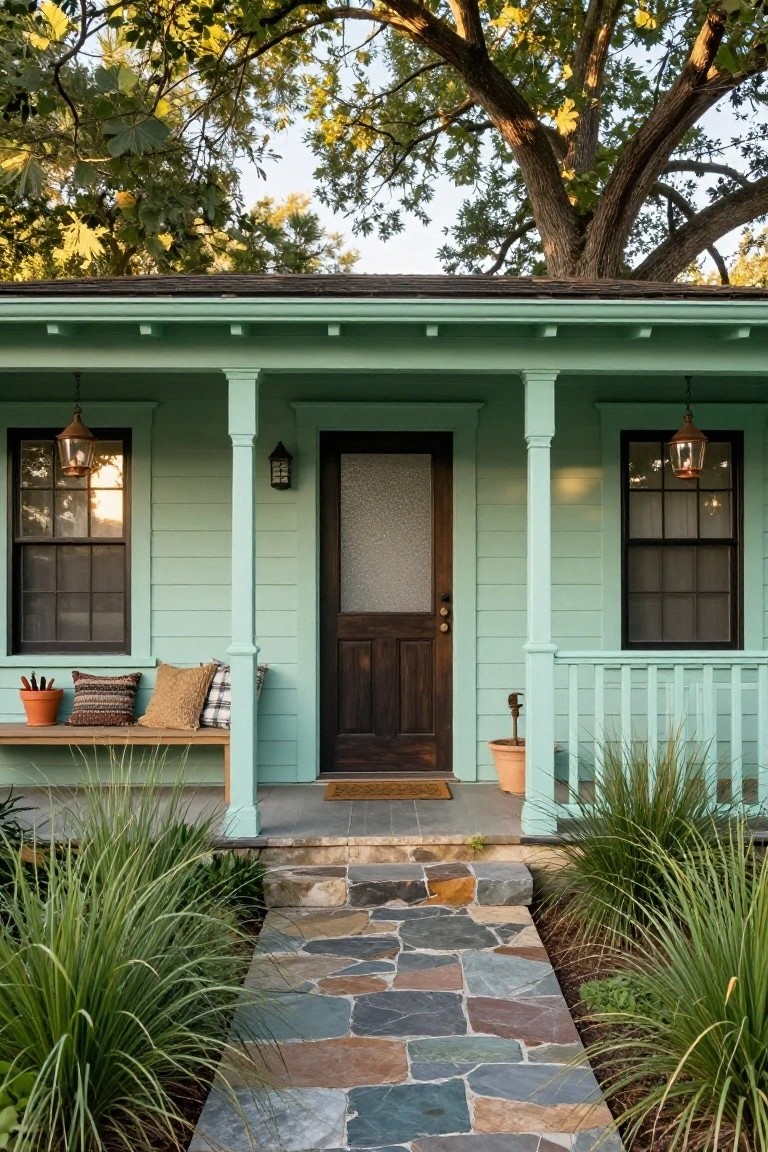
A soft green siding like this turns a basic porch cottage into something that feels right at home in the garden. It picks up hints from the trees and grasses nearby without shouting. That dark wood door pulls focus to the entry. And the simple bench out front says come sit a while.
This look works best on older bungalows or farmhouses with some porch overhang. Pick a muted green to keep it calm. Avoid brighter shades unless you want more pop. Add pillows to the bench for that lived-in touch.
Pale Green Cottage with Climbing Vines
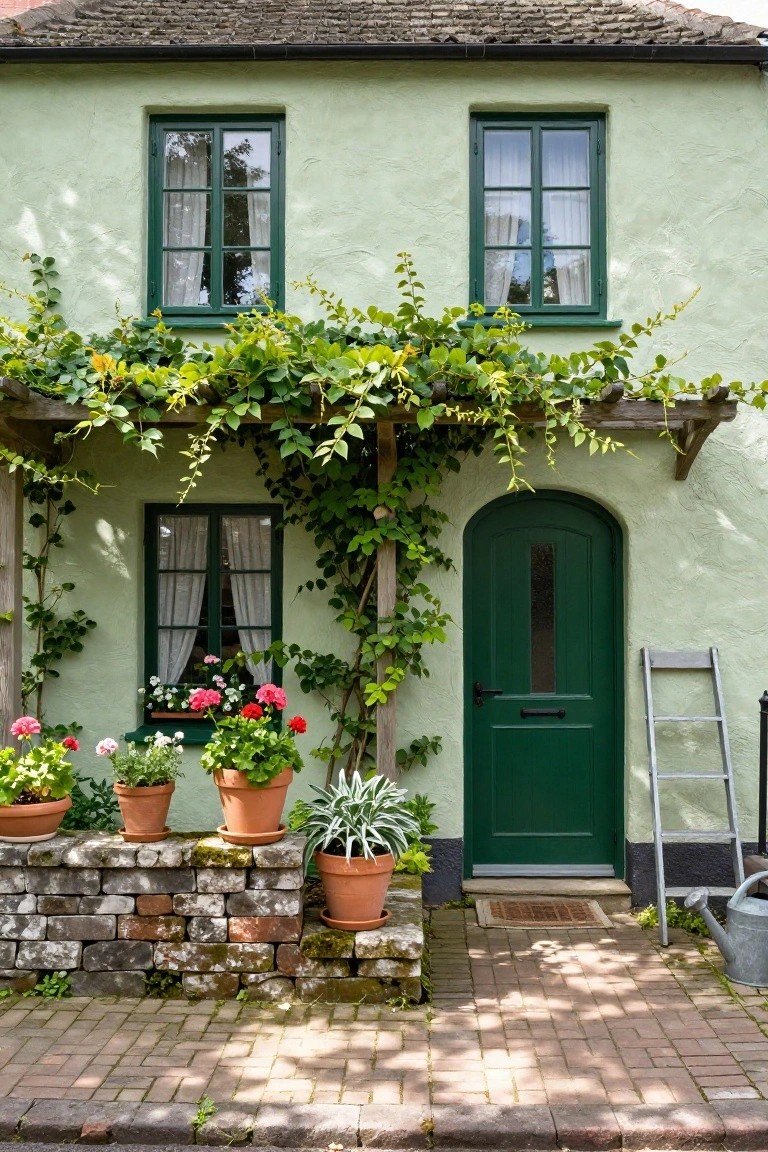
A soft pale green stucco wall sets the base for this cottage look, with dark green frames on the windows and that arched door pulling it all together. What really makes it pop is the way climbing vines spill over a simple wooden pergola right above the entry. It softens everything up and adds this lived-in feel, like the house has been there forever.
This works great on small older homes or bungalows where you want more charm without big changes. Grow something sturdy like ivy or Virginia creeper on a pergola or fence by the door. Tuck in a few potted flowers along the base too. Watch that the plants don’t block light from the windows.
Turquoise Shingle Siding Adds Cottage Whimsy
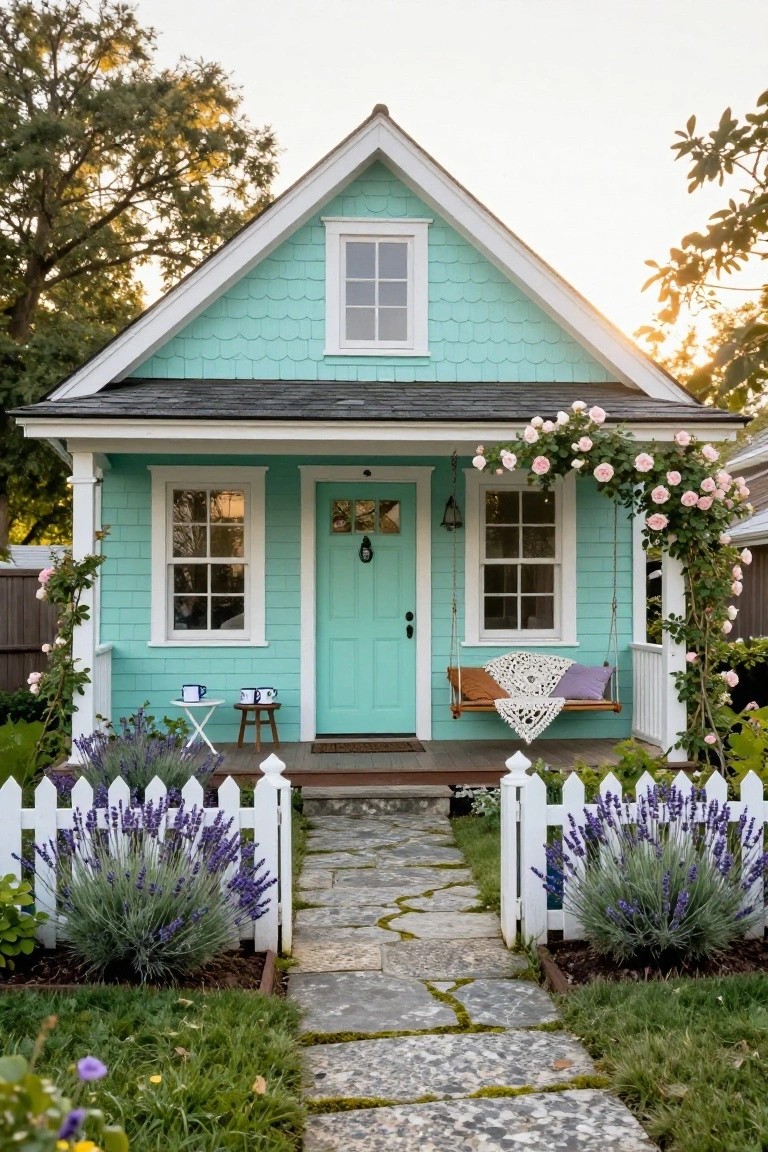
This soft turquoise shingle siding turns a simple cottage into something straight out of a fairy tale. The scalloped edges catch the light just right, and white trim keeps everything clean and bright. A porch swing hanging nearby makes the whole front feel lived-in and friendly.
Try it on compact homes tucked into a yard with trees around. It works best where you want color without going overboard. Add climbing roses along the porch posts, and you’ve got easy curb appeal that lasts. Pick paint rated for full sun though, or it might fade faster than you’d like.
Sage Green Cottage with Teal Door

A sage green exterior like this one gives a cottage that soft, lived-in feel right away. Pair it with a teal front door, and you get a nice pop of color that draws the eye without being too loud. The arched glass panel in the door lets light in and hints at what’s inside, while the green siding keeps everything calm and tied together.
This setup works great on smaller homes or bungalows where you want curb appeal that doesn’t overwhelm. Go for matte paints to avoid shine, and flank the path with low plants like succulents for balance. It suits shady spots too… the colors hold up without fading fast.
Classic Green Shingle Cottage
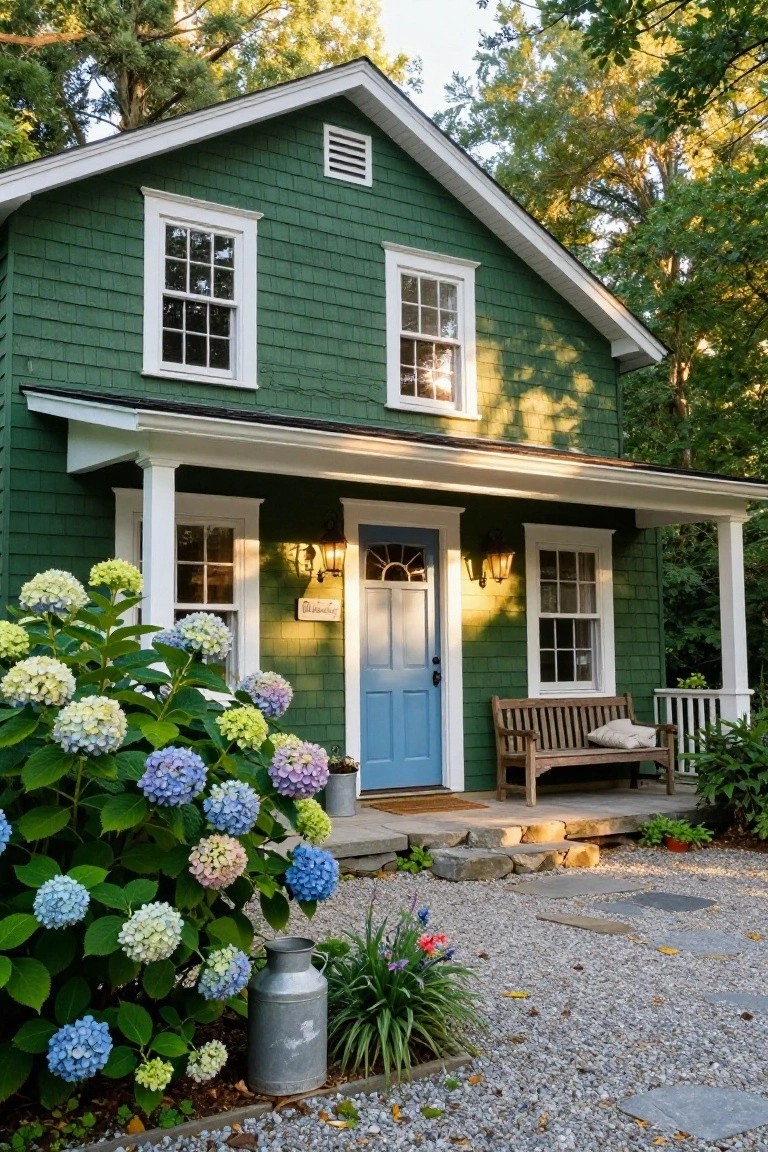
Shingle siding painted in a deep green takes a simple cottage and gives it that tucked-away, storybook feel. You see it here on this little house, where the textured shakes catch the light just right, and white trim outlines the windows and porch to keep things clean and bright. It’s a look that says cozy without trying too hard.
Try it on a one or two-story home near trees or in a rural spot. Pick sturdy cedar shakes, paint them a forest green, and pair with a pop of color on the door like this blue one. Add a bench on the porch for sitting. Skip it if your lot’s too open. It shines where some shade softens the green.
Light Green Cottage Siding
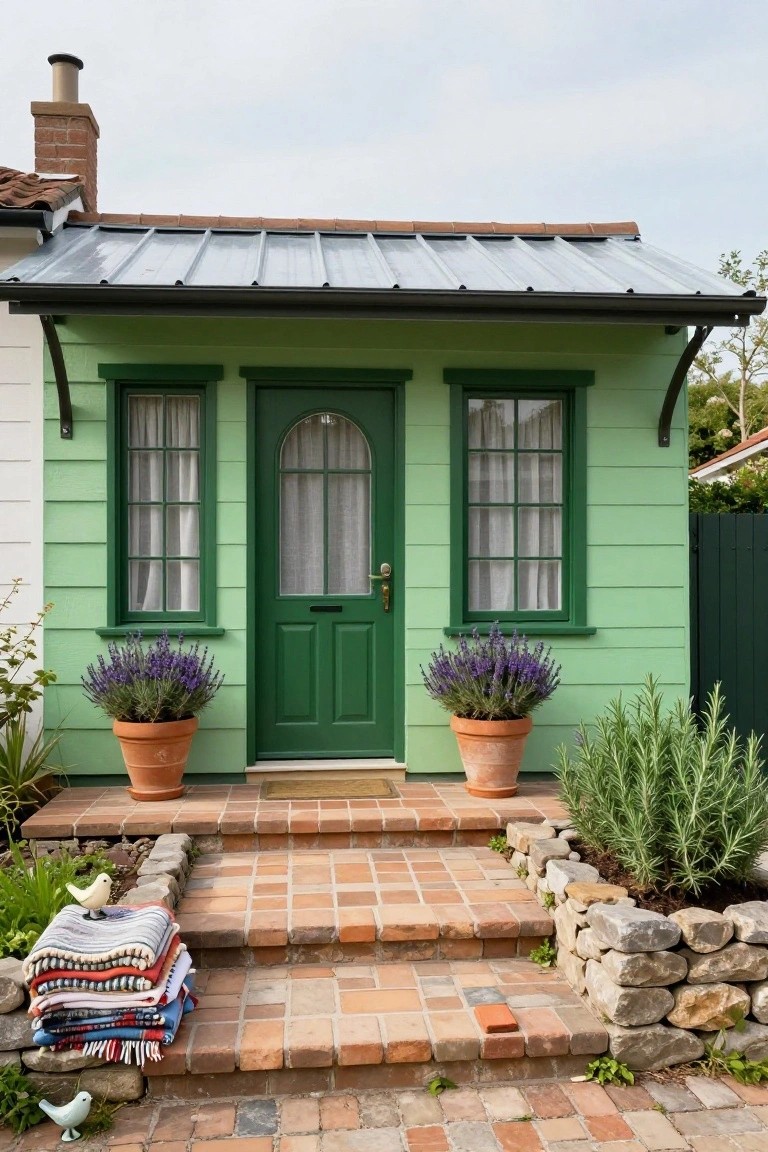
A soft mint green on clapboard siding turns a plain little outbuilding into something straight out of a fairy tale. It keeps things light and cheerful without going overboard. The matching green door pulls it all together. And those tall lavender pots next to the steps? They make the entry feel extra welcoming right away.
Try this on a garden shed or tiny guest house where you want that cozy cottage look. Go for a pastel shade that plays well with greenery around it. White trim on the windows keeps it crisp. It suits mild climates best. Just refresh the paint every few years to hold the color.
Sage Green Clapboard Cottage
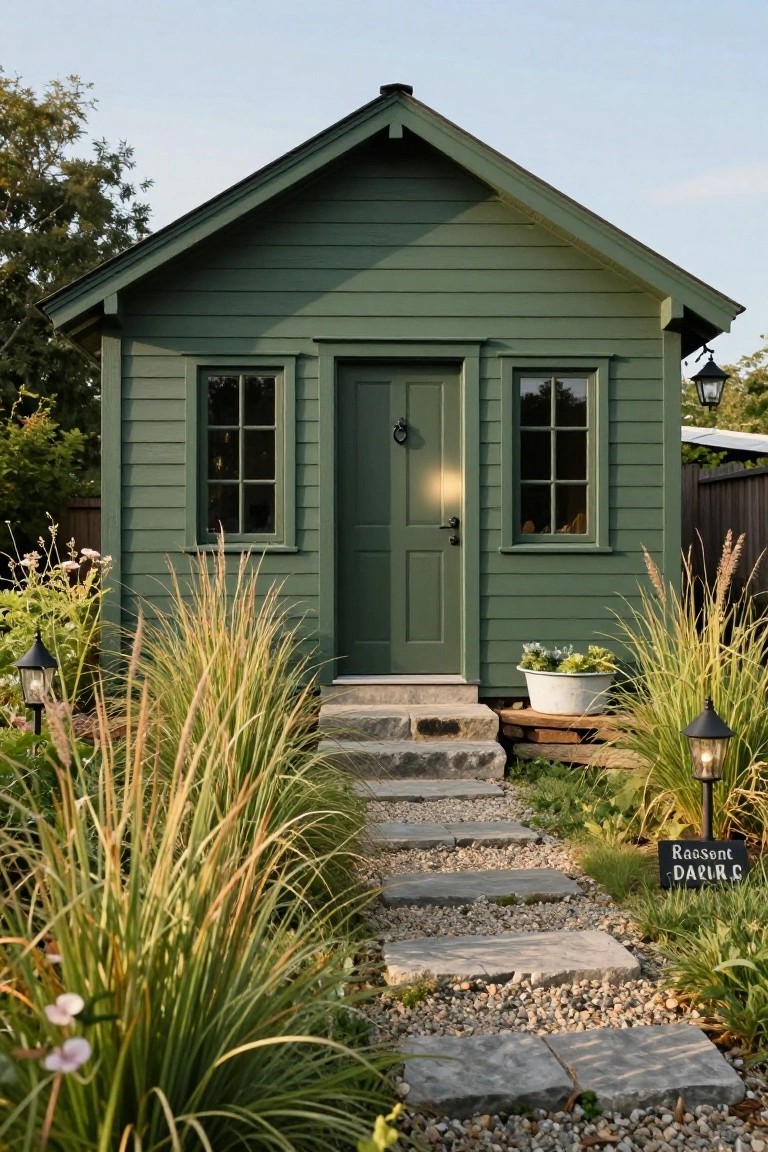
A soft sage green on clapboard siding turns a simple gabled cottage into something that feels tucked right into the garden. That muted color picks up the tones in the grasses and plants nearby, making the whole setup look settled and easy. The plain door and windows don’t fight it. Just cozy.
Try this on a garden shed or guest house where you want low-key charm that doesn’t shout. It suits small spots backed by trees or fences. Stone steps leading up help ground it, like here. Skip brighter greens unless you have lots of sun.
Green Door Cottage Entry
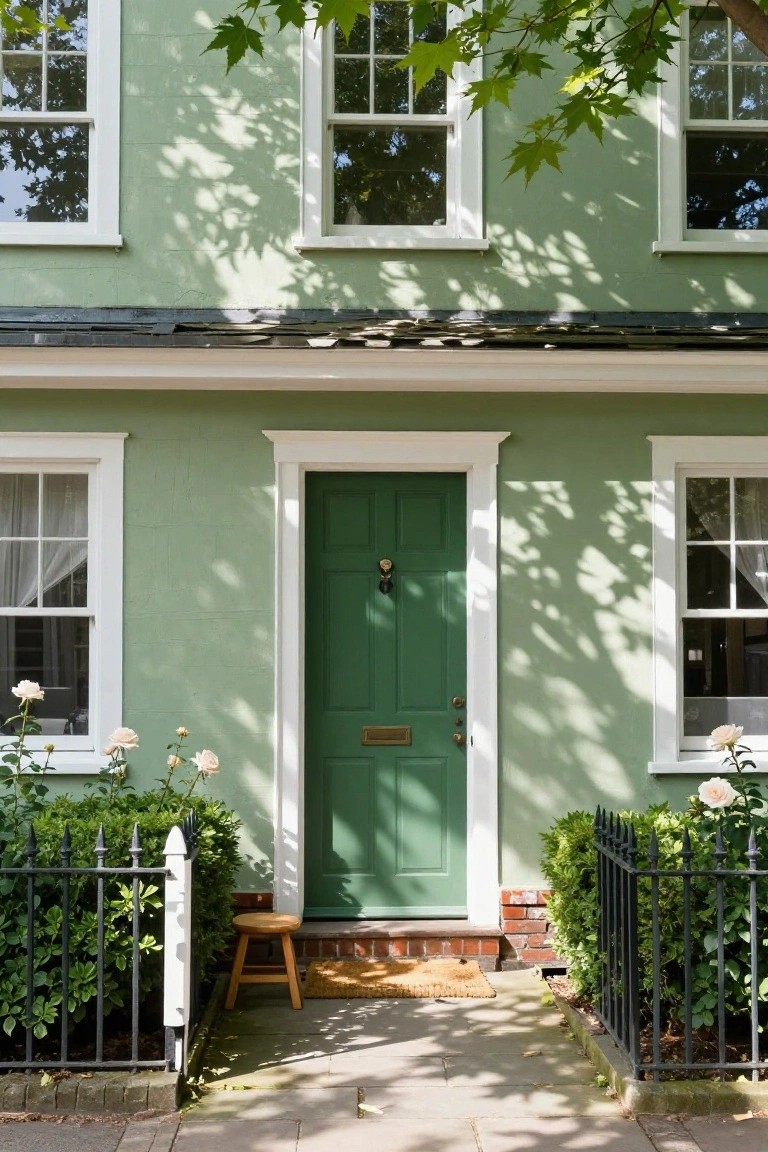
A deep green front door stands out nicely against the softer sage green walls of this cottage. The white trim frames it clean and sharp, drawing your eye right to the brass knocker and letterbox. Boxwood hedges on either side add a bit of structure without fuss.
This setup works well on compact homes in older neighborhoods. Pick a glossy door paint a few shades darker than your house color, then keep plantings low and simple. It gives instant welcome feel, especially with a plain stool or mat out front. Skip busy details around the door though. They can muddle the look.
Classic Green Front Door
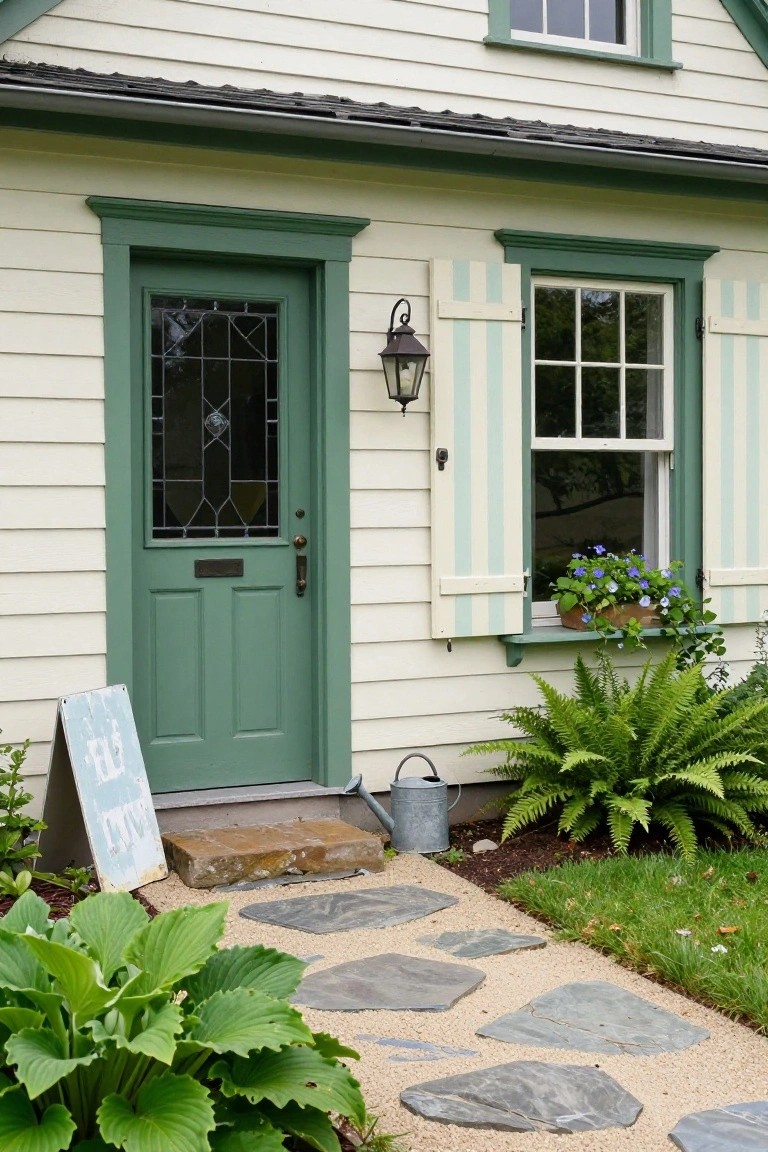
A deep green front door like this one turns a simple cottage entry into something special. On a pale siding house, the color pops without overwhelming things. It pulls your eye straight to the welcome, and that stained glass panel adds just a touch of old-time charm.
Try it on light-colored homes where you want the door to stand out as the main feature. Pair it with matching trim, a lantern light, and stone steps for easy flow. Keep landscaping simple around the base so the door stays the focus… works best in cozy neighborhoods.
Turquoise Shingles with Black Porch Trim
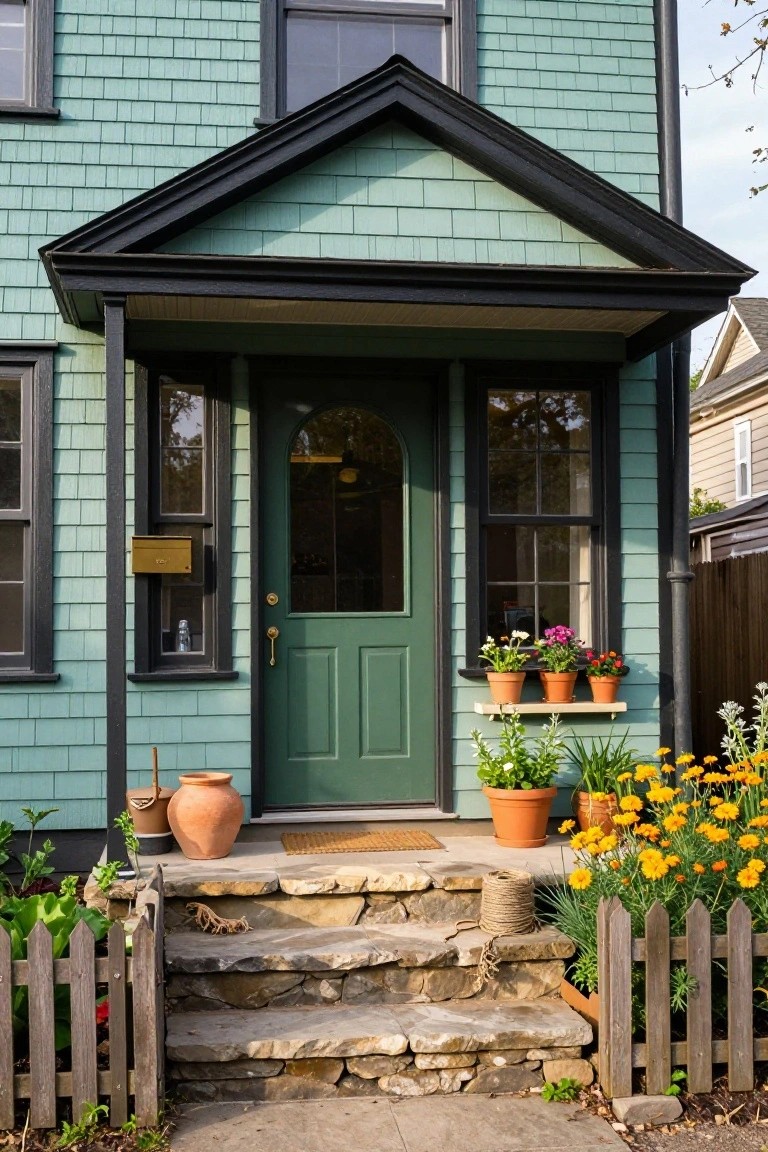
A soft turquoise shingle siding like this one looks fresh on a cottage style house. The black trim around the porch and windows gives it clean lines and makes everything sharper. That green door pulls it together nicely. It’s a simple way to update an older exterior without a big paint job.
Try this combo on homes with some age to them. It holds up well in shady spots where mildew might show. Tuck in a few pots of flowers by the steps to soften things up. Skip it if your house faces full south sun, the turquoise might fade faster.
Teal Siding on a Cottage Facade
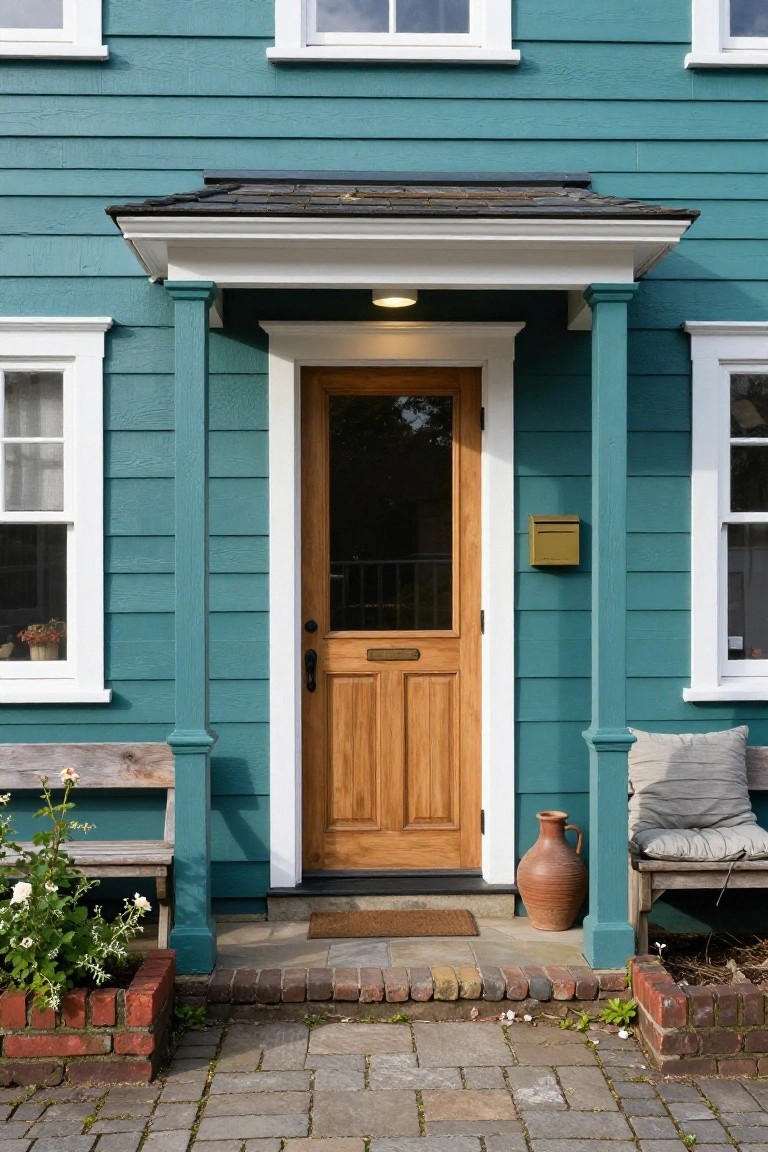
Teal siding gives this cottage a fresh, lively look that still feels right at home in a quiet neighborhood. The color picks up on nearby greenery without going overboard, and that warm wooden door pulls everything together. Add simple benches and a tall terracotta pot by the steps, and the front yard turns into a spot folks actually want to linger at.
This setup works best on older homes with clapboard or shingle siding. Pick a semi-gloss paint to hold up to weather, and choose oak or pine for the door to keep the warmth. Skip busy trim colors. It suits shady spots too, since teal brightens things up on overcast days.
Roses Arching Over the Front Door
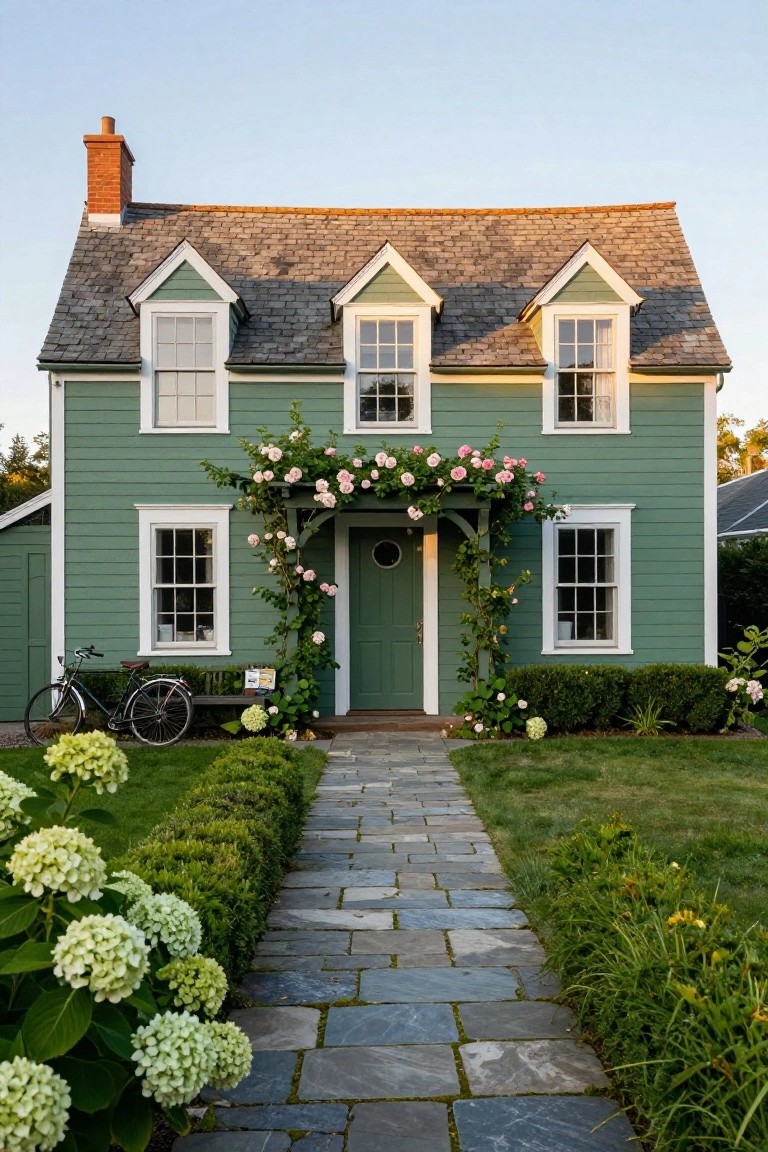
Climbing roses like these make a simple front entry feel straight out of a storybook. Here, soft pink blooms drape over a wood arch right above the green door, pulling the eye in without much fuss. The green house color ties right in, keeping everything fresh and not too sweet.
You can add this to most cottages or bungalows facing a yard or street. Pick a sturdy climbing variety, like New Dawn, and build a basic trellis. Just trim them back each spring so they don’t take over the path. Works best where you get some sun on that entry spot.
Sage Green Brick Cottage Entry
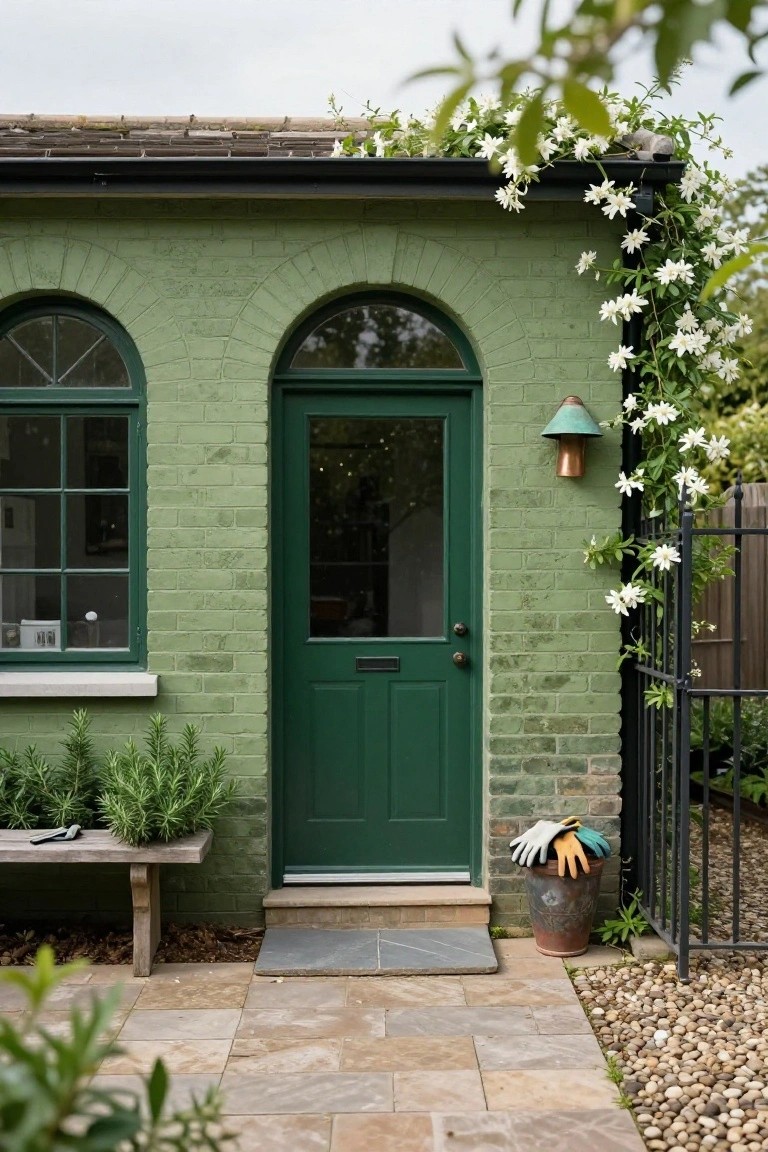
This entry pulls off a simple all-green look with soft sage brick walls and a deeper green door that matches just right. The climbing white flowers trail up one side without stealing the show. It gives that cozy cottage welcome, like the house grew right out of the garden.
Try it on brick homes with a bit of character, or even a garden studio. Go for tones close enough to blend but different enough for depth. Stone steps and a potted rosemary keep things practical… watch the door hardware so it doesn’t clash.
Sage Green Siding with Teal Door
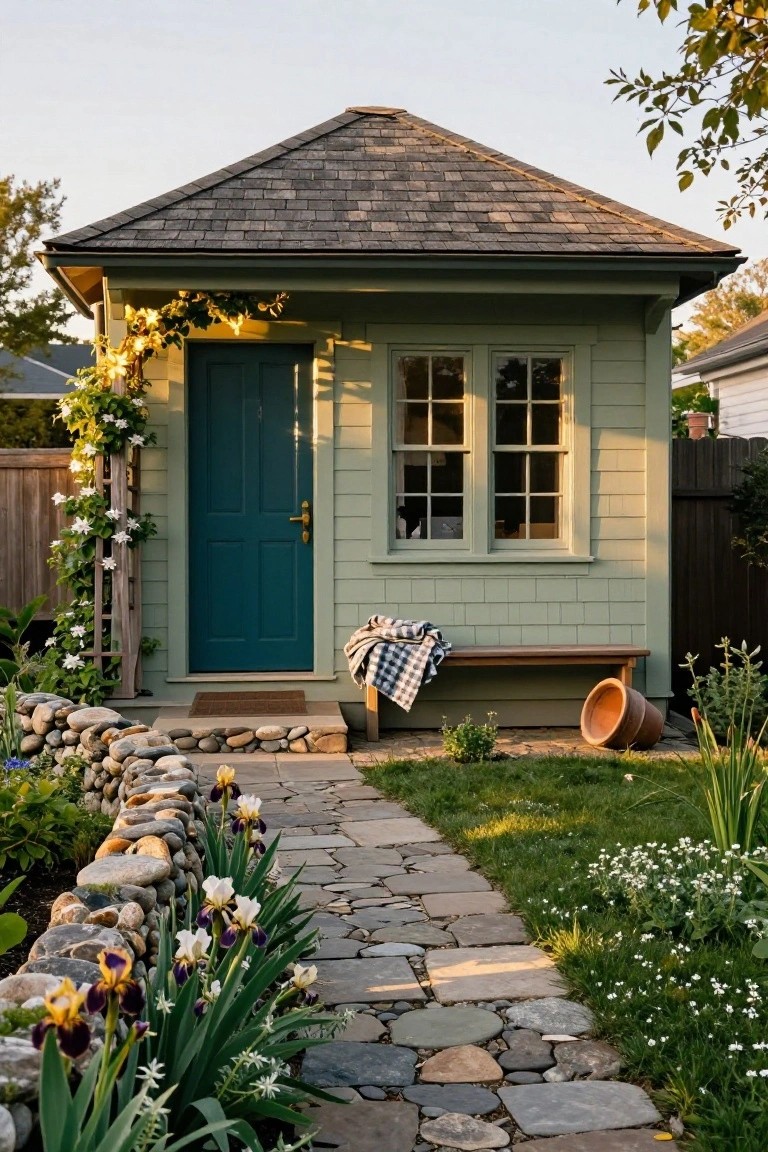
This setup takes a simple garden shed and turns it into a little cottage standout. The soft sage green on the siding feels calm and right at home in a yard, while that teal door pops just enough to draw your eye without overdoing it. A bench out front and some climbers along the side keep things welcoming, like the shed is part of the garden family.
Try this on a backyard outbuilding or small addition where you want charm without much fuss. It works best on shingled or board-and-batten siding, and stick to muted greens so the door color really shows. On a bigger house it might get lost, but for something compact like this, it’s perfect.
Green Picket Fence Cottage Entry
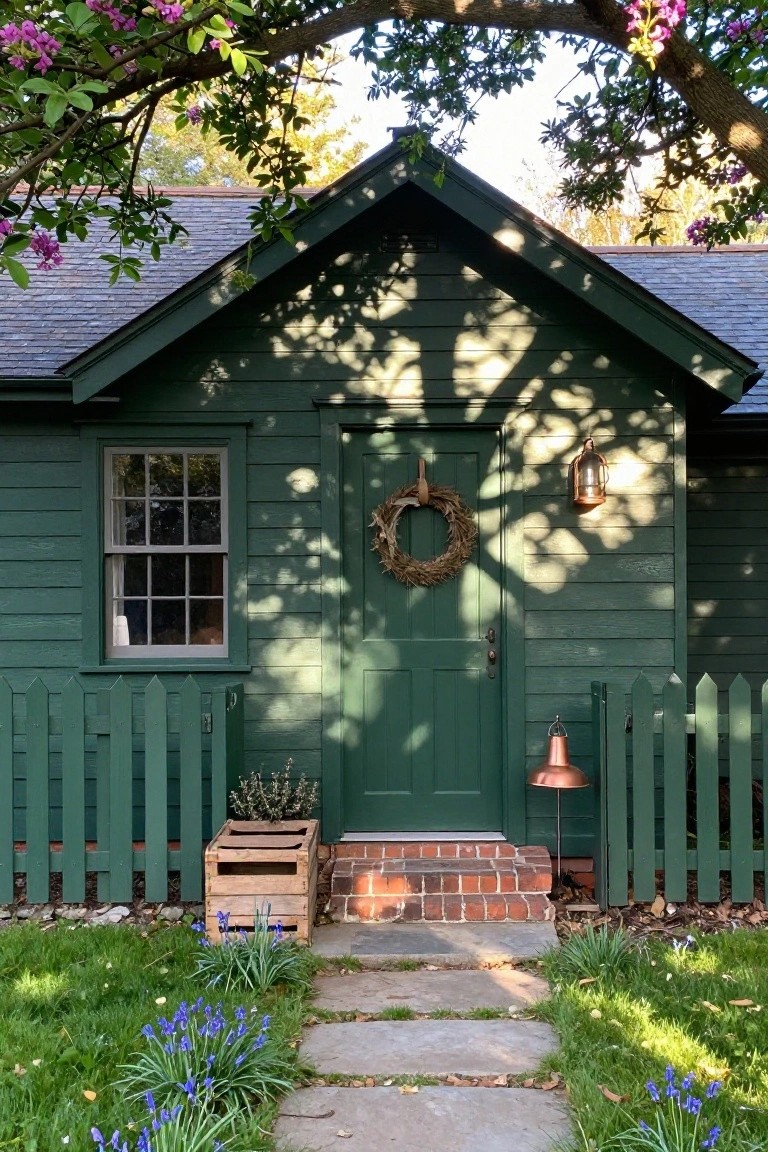
A low picket fence painted to match the house siding pulls the front together in a simple way. Here it’s that soft green on both, with the gate swung open toward a stone path. It gives the place a friendly boundary without blocking the view, and keeps things looking neat around the door.
This setup works best on smaller cottage fronts where you want curb appeal without much fuss. Match the fence color to your siding, keep it low enough for easy stepping over if needed, and line the path with early flowers like these bluebells. Skip it if your yard slopes a lot… might need something sturdier.
Frequently Asked Questions
Q: How do I choose a green shade that won’t clash with my neighborhood?
A: Walk around your block at different times of day and snap photos of houses you like.
Then hold green paint swatches up to those pics. Pick one that blends right in but still pops on your place.
Q: What plants go best with cottage green siding to amp up the cozy?
A: Go for soft pinks and whites like peonies or impatiens in window boxes.
They soften the green and draw the eye without overwhelming. And fairy lights at night tie it all together.
Q: Does green paint hide dirt and wear better than lighter colors?
A: Green camouflages dust and pollen way better than whites or beiges.
You wipe down the siding a couple times a year and it stays fresh. Perfect for low-fuss charm.
Q: How can I add shutters or trim without losing that cute cottage feel?
A: Pick creamy white or soft black shutters that match your door.
Hang them a bit shorter than the windows for whimsy. Step back and tweak till it feels just right.
