


When I walk or drive past homes, the facades that pull me in usually mix color with real texture you can sense even from afar. Green stucco does that well, holding onto subtle shadows that keep a house from looking flat under different lights. I’ve seen it pair nicely with varied rooflines and simple entries, turning a basic front into something that feels settled and right for the street. That texture changes everything. A few of these setups make me think about how I’d tweak the scale for a smaller lot, worth noting down if you’re eyeing exterior updates.
Green Stucco with Wood Door Accents
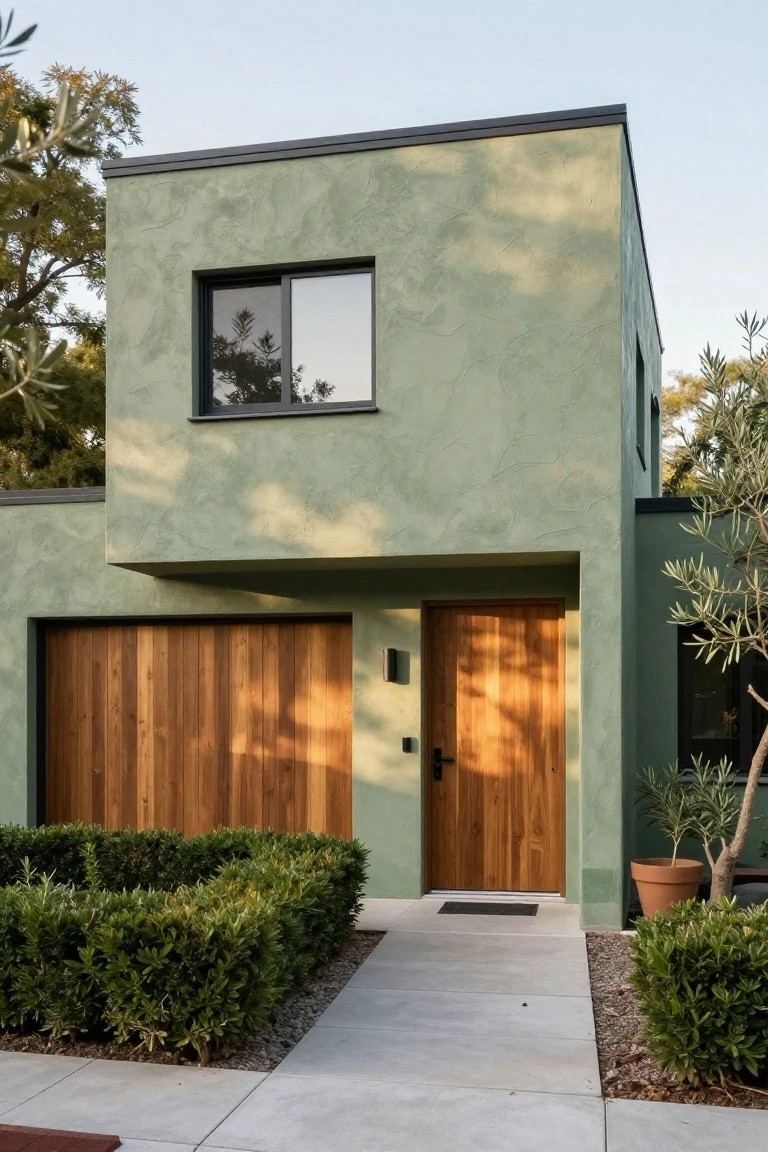
This house uses a soft green stucco finish on the walls that picks up a nice texture from the smooth plaster application. Paired with warm wood on the garage door and front entry, it gives the whole front a balanced look that’s modern but not stark. The wood tones warm things up against the cool green, and low boxwood hedges along the path keep the entry simple.
You can pull this off on a smaller lot or in a neighborhood of mostly plain homes. It works best where you want curb appeal without too much fuss. Just match the wood grain to something like teak or cedar that holds up outside, and keep plantings neat so they don’t steal the show. One thing… scale the wood panels to fit your garage size.
Recommended Products
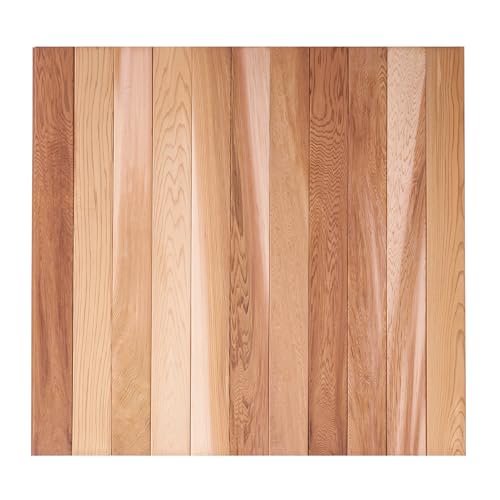
½" SOLID CEDAR — 50% THICKER THAN STANDARD WALL PLANKS: At 12mm (nearly ½ inch), these panels are substantially thicker than the ¼" boards commonly sold online. Thicker wood resists warping and cupping in humid environments like bathrooms and saunas, holds nails, staples, and construction adhesive more securely, and delivers the solid, architectural feel of real woodwork — not a surface veneer that flexes under your hand.

Package Includes: One box includes Canadian red cedar boards of various lengths, ranging from 16 inches to 55 inches, covering a total of 10.5 square feet

A set of 2 cedar panels designed for closets, wardrobes, and long‑term storage
Pale Green Stucco Facade
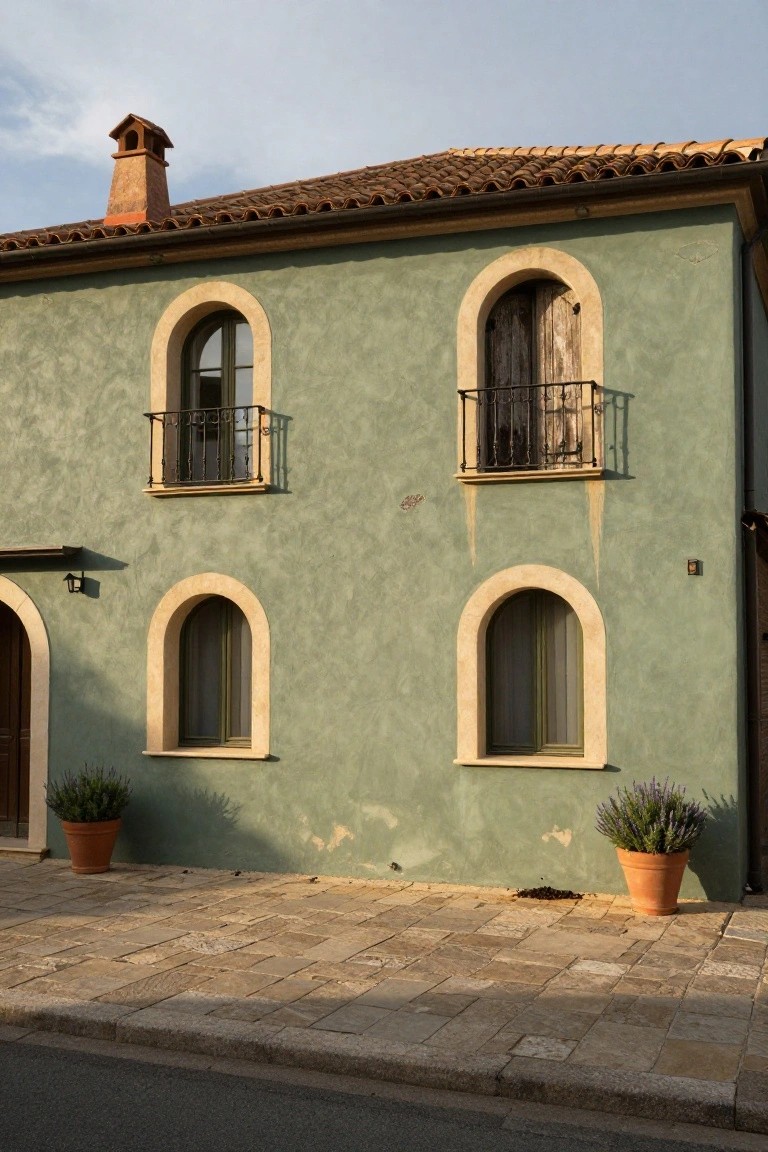
Pale green stucco like this gives a house a soft, lived-in texture without trying too hard. The plaster finish has natural roughness from the trowel marks and a touch of wear on the upper windows. It pairs well with the terracotta roof tiles for that easy Mediterranean feel.
This look suits older-style homes or additions in mild climates where the color won’t fade fast. Add potted lavender by the entry for a bit more life. Just keep the stucco sealed to avoid bigger cracks over time.
Textured Green Stucco Entry

Green stucco like this adds real texture to what might otherwise be a plain wall. The rough finish picks up shadows and light, making the color feel deeper and more alive. Here it frames a simple black door with white trim, keeping the look straightforward.
This approach fits compact homes or side entries well. Pair it with low plants in a wall box and a plain bench out front. It holds up to weather without much upkeep, and the green tone works on city lots or older neighborhoods.
Green Stucco Arch Entry

A soft sage green stucco wall sets off this simple arched entry nicely. The arch pulls your eye right to the wooden double door with its carved panels and colorful tile border. That lantern light on the side adds just enough detail without overdoing it.
This setup fits older style homes or ones aiming for a bit of Spanish flair. Use it where you have room for a short path leading up, and keep plants low like those clipped shrubs. It keeps the front feeling open but defined.
Textured Green Stucco Facade

A soft green stucco covers this house exterior, with a fine texture that shows up in the light. It keeps things simple while adding just enough surface interest to make the walls stand out from plain siding. The color feels calm and ties in with the wood window frames without overwhelming the clean roofline.
This approach works best on single-story homes or low-slung designs where you want subtle character. Use it in drier areas since stucco holds up well, and plant some grasses or rocks at the base to echo the texture. Skip bold trim colors though. They can fight the quiet green vibe.
Recommended Products

Weather and corrosion resistant coating protects exterior/interior surfaces like wood, metal, concrete, masonry and more

Ready to use, pre-mixed door and trim paint offers a fresh new look on interior or exterior metal, wood and fiberglass

Use for a variety of indoor and outdoor project surfaces including wood, metal, plaster, masonry or unglazed ceramic
Black Door on Pale Green Stucco
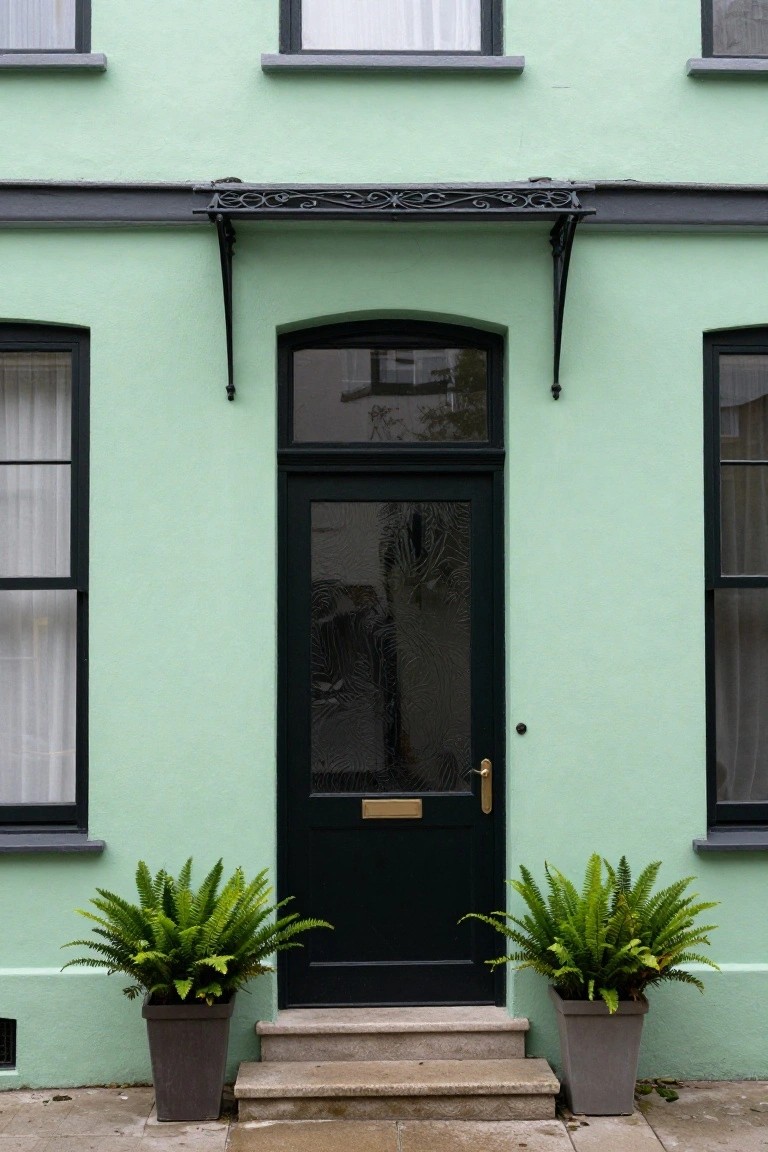
A black front door makes a real statement against pale green stucco walls. Here the deep color pulls your eye right to the entry, especially with that subtle stucco texture catching the light. Flanking ferns keep it from feeling too stark, and they tie into the soft green nicely.
This setup works best on narrower townhouses or older homes where you want the door to anchor the whole facade. Go for a glossy black finish to play up the contrast, and keep pots simple so they don’t compete. Skip it if your walls are too dark. It just draws folks right up the steps.
Tropical Green Stucco Entry

Green stucco in a bright lime shade covers this house exterior, giving the walls a rough texture that shows up well in sunlight. Shadows from the overhead pergola play across the surface, making the entry door and windows stand out without extra trim. Potted heliconia plants in orange-red add a pop right by the steps.
This look fits older bungalows or vacation homes in warm spots like Florida or Bali. The stucco handles moisture fine, and the green ties into local plants. Just pair it with simple wood elements and bold flowers to keep the front welcoming. Skip busy details, it works best kept straightforward.
Textured Green Stucco Facade
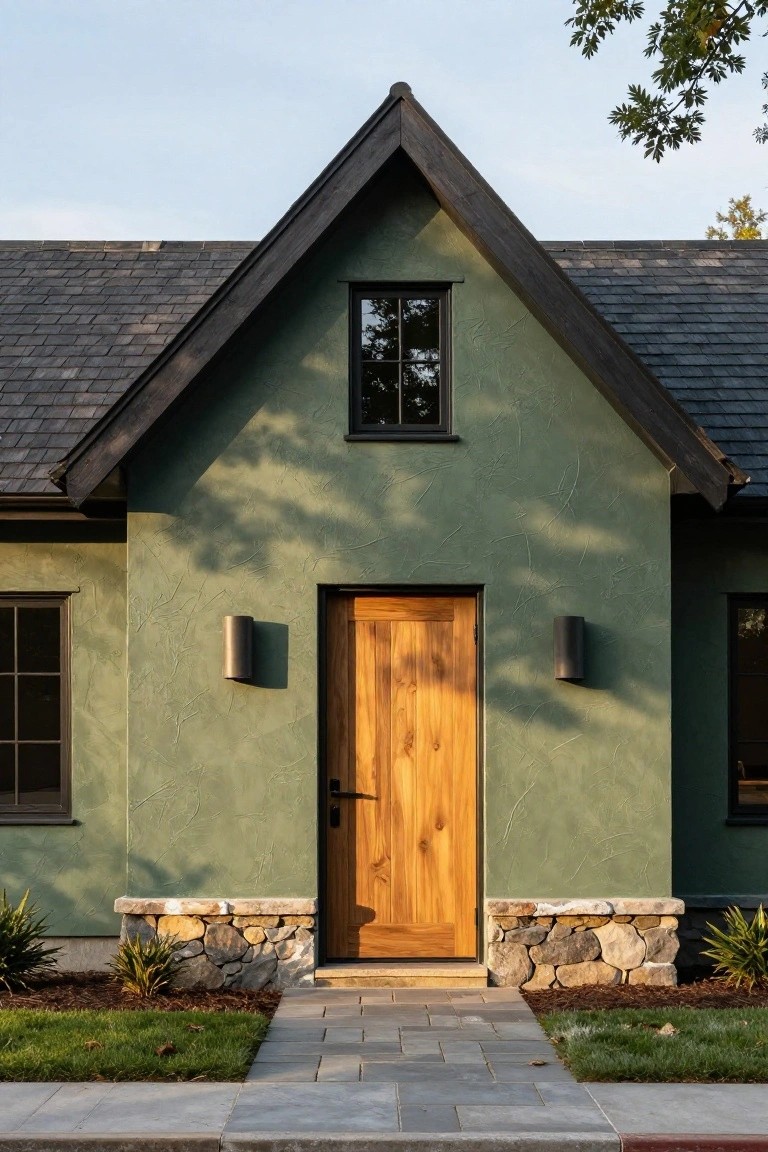
Textured green stucco like this gives a house some real character without overdoing it. The rough surface picks up shadows and light through the day, so the walls feel alive instead of flat. Paired with dark trim and a simple gable roof, it keeps things straightforward but interesting.
You can pull this off on smaller homes or Craftsman styles where you want walls that age well. Go for a muted green that blends with trees nearby, and add a wood door for contrast. The stone base here helps ground it. Watch the texture scale though, too heavy and it might overwhelm a plain front.
Green Stucco Walls by the Pool
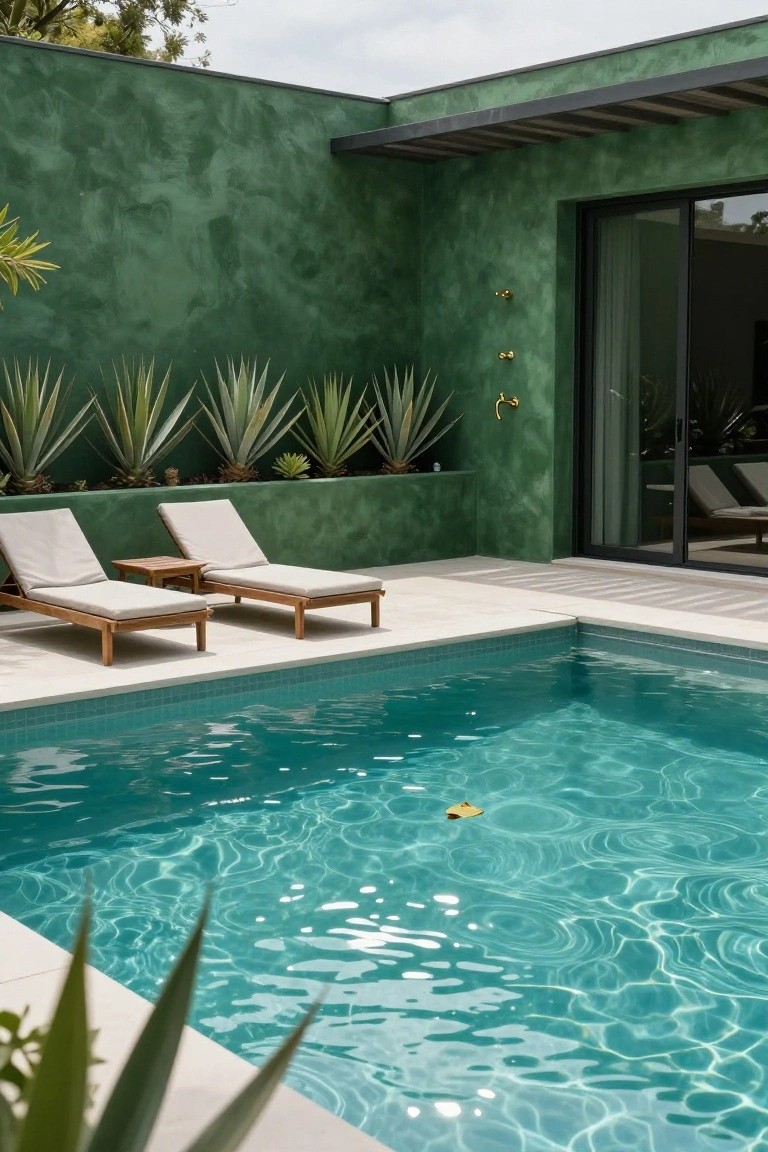
Green stucco walls like this one give a pool area real presence. The textured finish in that deep green hue picks up on the plants nearby and sets off the blue water nicely. It turns a simple lounge spot into something more resort-like without much effort.
You can pull this off on homes with a modern or tropical lean. Keep the seating basic, like teak chairs with light cushions, and add a few tough plants along the base. Watch the scale though. The wall needs to be tall enough to feel enclosing but not overwhelming the open feel of the pool deck.
Green Stucco with Coastal Texture

This green stucco finish has a rough, uneven look that picks up on the natural patina of coastal dunes. It covers the walls in a way that feels organic, like the house grew right out of the landscape. The texture comes from the stucco mix and application, giving depth without extra materials. Paired with a simple stone pillar at the entry, it keeps things grounded.
You can pull this off on modern homes near the water or in grassy areas. Go for a shade that echoes local plants, and let weather add to the texture over time. It works best where you want low-key curb appeal that doesn’t fight the surroundings. Just seal it right at first to avoid too much wear too soon.
Green Stucco with Timber Posts

Soft green stucco covers these walls, set off by thick wooden posts that look hand-hewn. The smooth plaster next to the rough timber gives real texture right there on the house. Add a few potted lavenders along the base, and it pulls the garden right up to the door without trying too hard.
This look fits older cottages or farm-style homes in the country. Use it around a side entry or porch where you want shelter that feels part of the yard. Pick posts that match local wood… keeps it honest and low-key.
Green Stucco Facade with Black Railings
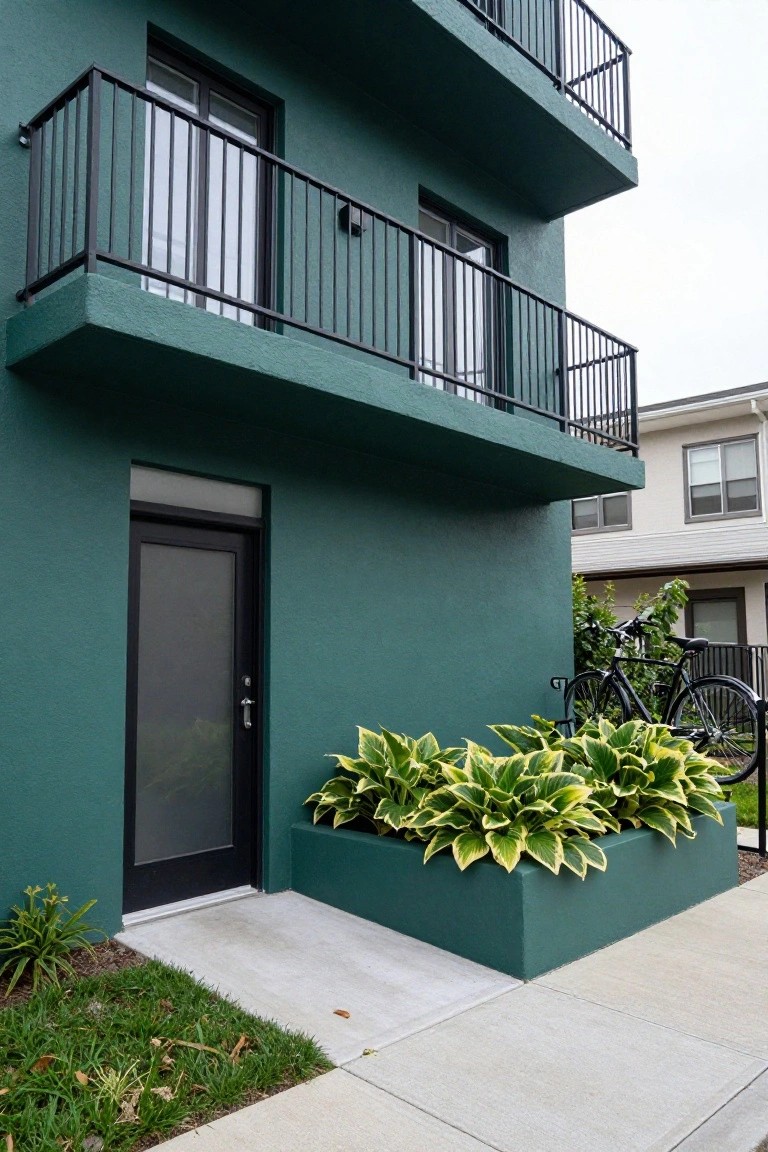
Green stucco works great when you go bold with the color like this deep shade. The texture really shows up against the smooth black metal railings on the balconies. It gives the whole building a modern edge without looking too plain or too busy.
This setup fits townhomes or small apartment buildings best. Paint the stucco first for even coverage, then add matte black details around windows and doors. Tuck in a matching planter by the entry with tough plants like hostas. It keeps things low-key but pulls the look together.
Textured Green Stucco Chalet

Green stucco gives this mountain home a soft, rugged texture that fits right into the rocky landscape. The color pulls from the evergreens and slopes around it, while the stucco’s pebbly surface adds just enough grit without going overboard. Wooden beams stick out over the entry, and a stone base keeps things grounded.
You can pull this off on sloped sites or wooded lots where you want the house to feel like part of the hill. Pair the stucco with local stone for the foundation and steps, then tuck in low plants like heather along the edges. It works best on homes with steep roofs, but watch the maintenance on that textured finish in wet climates.
Green Stucco Outdoor Nook
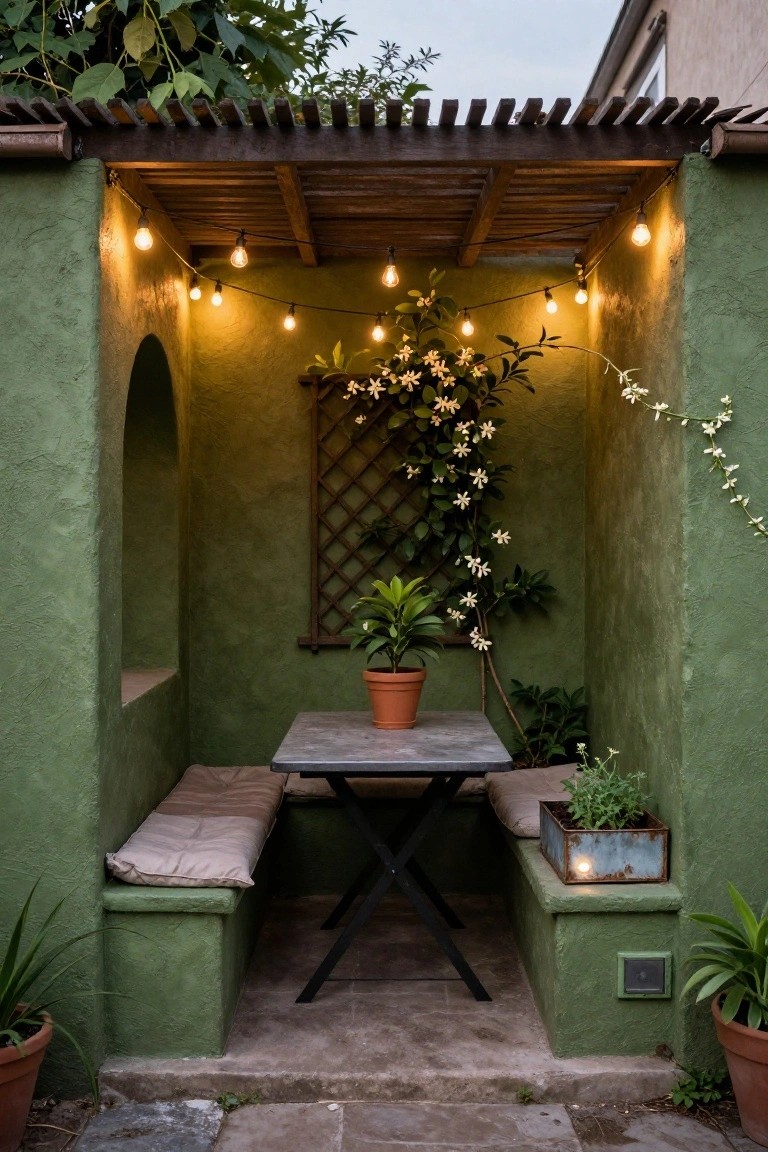
Green stucco walls shape this little outdoor spot into a real hideaway. The rough texture catches the light from those string bulbs overhead, and it mixes right in with the climbing plants and potted greenery. It’s a smart way to turn a plain corner into something usable without taking up much space.
You can pull this off in a tight backyard or along a side wall. Go for built-in benches and a basic table, then layer in vines for cover. It suits older homes with some character… just keep the plants trimmed so they don’t overwhelm the stucco.
Frequently Asked Questions
Q: Will green stucco fade quickly in direct sun?
A: Choose a high-quality, UV-resistant paint from the start to hold that vibrant green for years.
Choose earthier shades like sage over bright emeralds. They stand up better to harsh light.
Q: How do I clean green stucco without damaging the texture?
Grab a garden hose and soft brush with mild soap. Rinse from top down so dirt doesn’t streak.
Q: What trim colors pop against green stucco?
A: Go with crisp white or soft cream for clean contrast that highlights the texture.
Cream softens the look on smaller homes. White amps up the drama.
Q: Can I plant bushes right next to green stucco?
A: Keep them a foot or two away to let the wall breathe and avoid moisture buildup.
And pick low-water plants. They won’t overwhelm the green vibe.
