

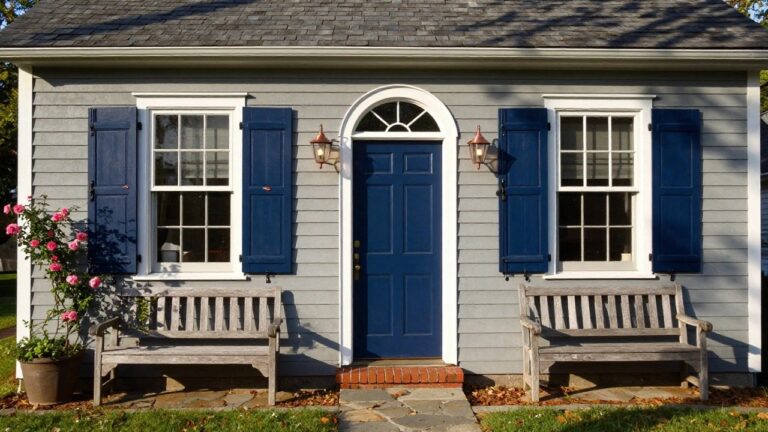
When you approach a house from the street, window shutters frame the facade in a way that sets the entire mood. I replaced ours a couple years back to better echo our gable roofline, and it grounded the whole front elevation instantly. They pull off real charm when materials sync with the siding and proportions hug the window openings just right. Overdo the width, though. Styles that nod to local architecture tend to age well outdoors and make everyday homes read with more intention.
Navy Blue Shutters on Shingle Siding
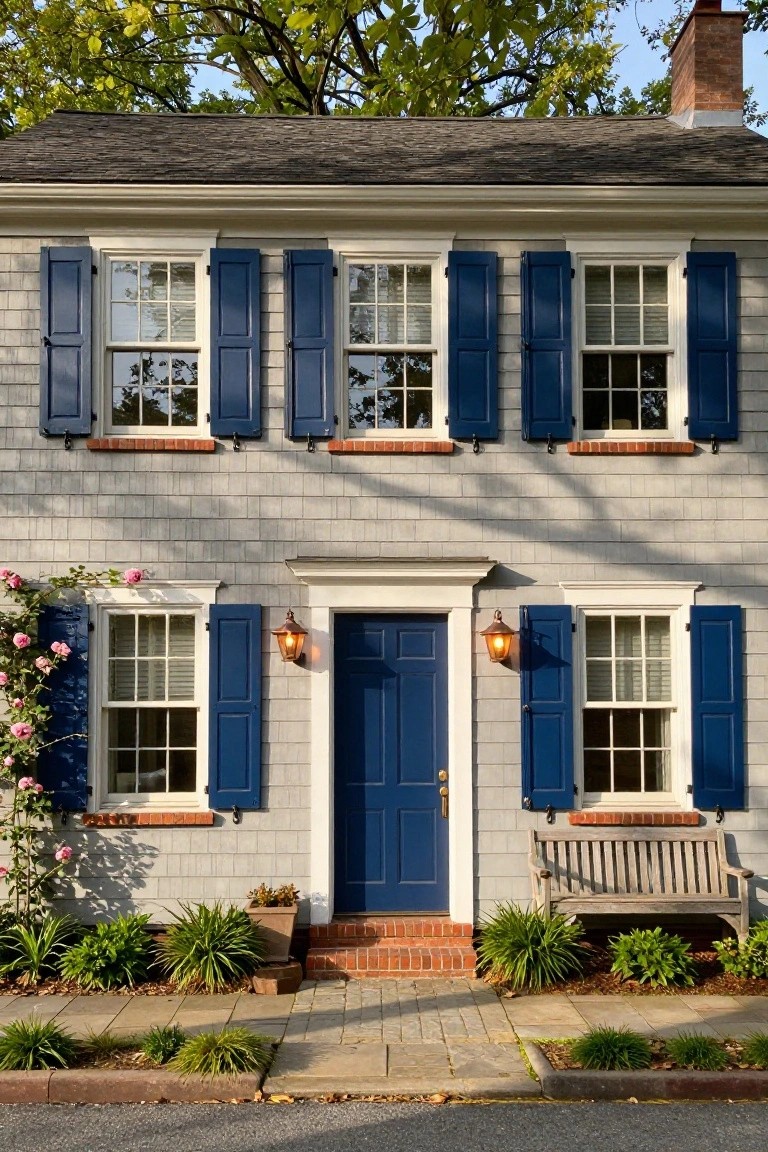
Navy blue shutters like these work great on shingle siding homes. They add a crisp pop of color against the soft gray tones, framing the windows without overwhelming the simple lines. It’s a look that feels timeless, especially on older style houses.
You can pull this off on coastal cottages or colonial revivals facing the street. Match the door in the same blue for a pulled-together entry, and keep the hardware brass for some warmth. Just make sure the shutters are proportional to your windows… too big and it looks off.
Green Shutters on Stucco Walls
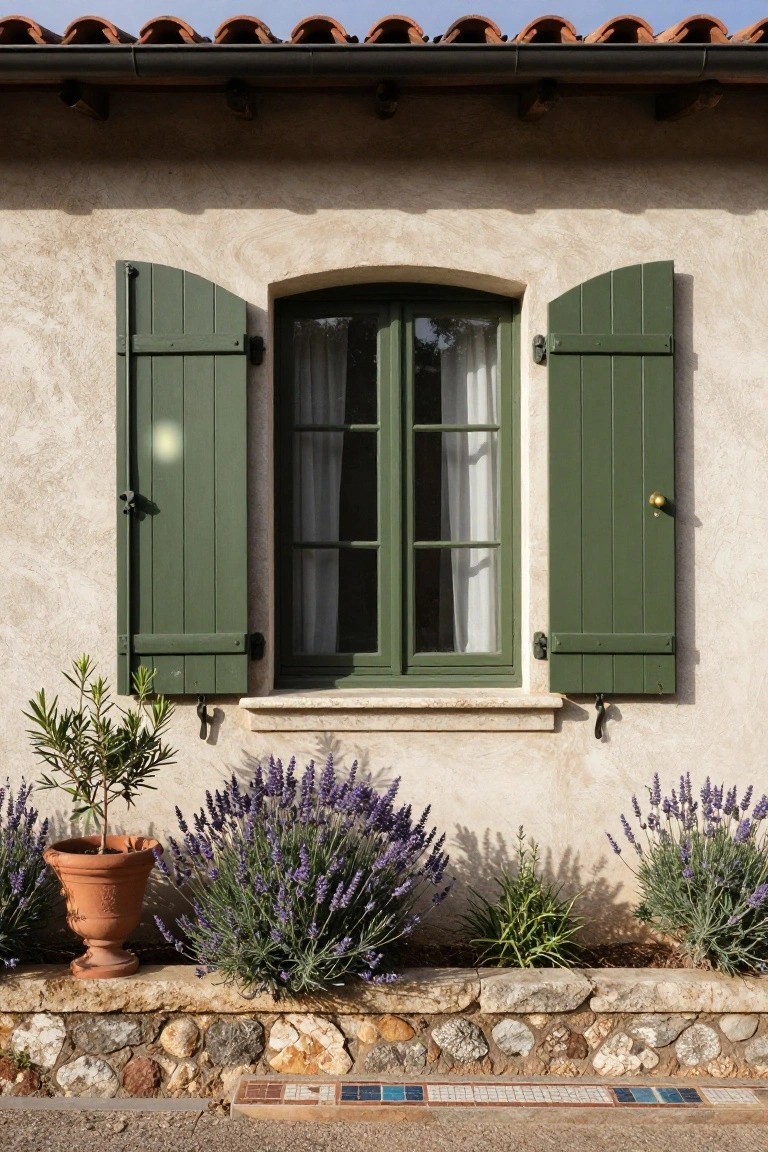
Green shutters like these work so well on a light stucco wall. They pick up the color from nearby plants without overpowering the simple arched window. The dark wood tone adds some depth to the plain facade, making the house look more lived-in and European. It’s a look that’s been around forever but still feels fresh.
Try this on a Mediterranean or Spanish-style home where the walls are beige or tan. Paint plain wooden shutters in a deep forest green, and hang them straight on the hinges. Keep plantings low around the base, like lavender bushes, so they don’t hide the shutters. It suits sunny spots best. Just make sure the green isn’t too bright, or it can clash.
Dark Shutters on White Siding
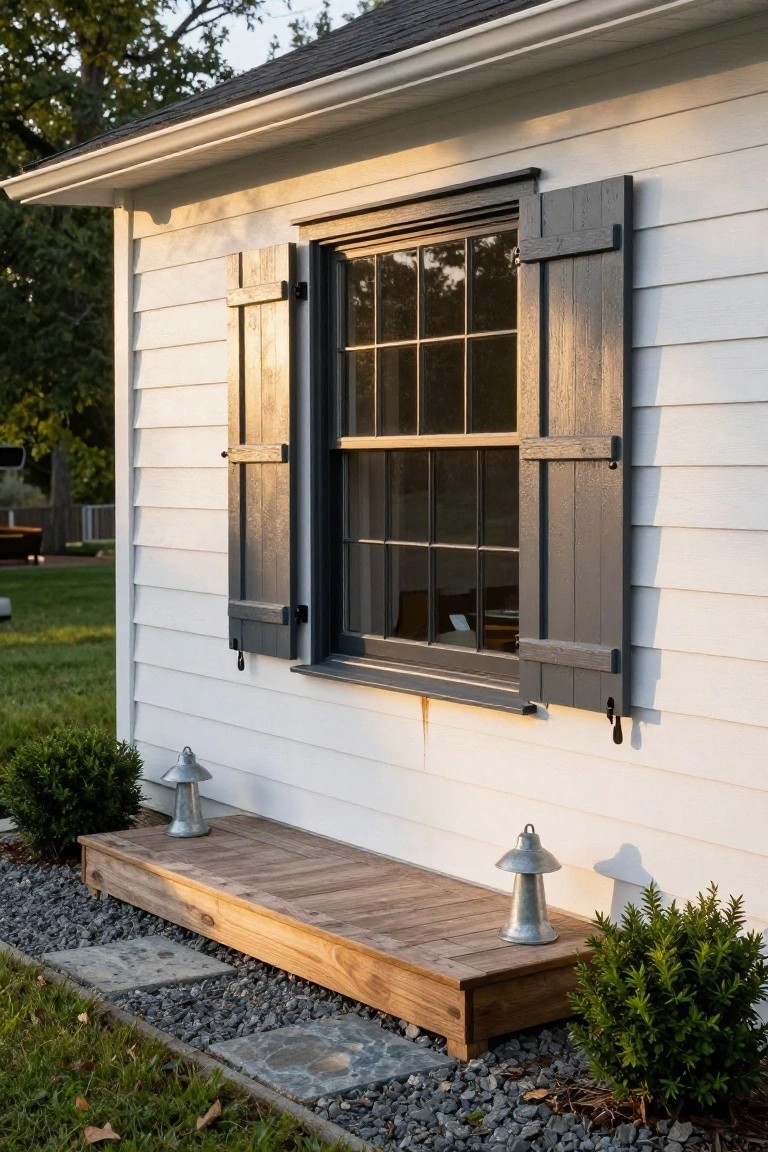
Dark shutters like these give a simple white house real character. The board-and-batten style hangs open next to a classic double-hung window, creating sharp contrast against the clean clapboard siding. It pulls the eye right to the window and makes the whole facade feel more put-together and traditional.
This look fits older homes or cottages best, especially with light-colored walls. Hang the shutters to scale with your windows, and add a couple lanterns nearby for extra coziness. Skip it on super-modern places… the style leans folksy.
Turquoise Shutters on Shingle Siding
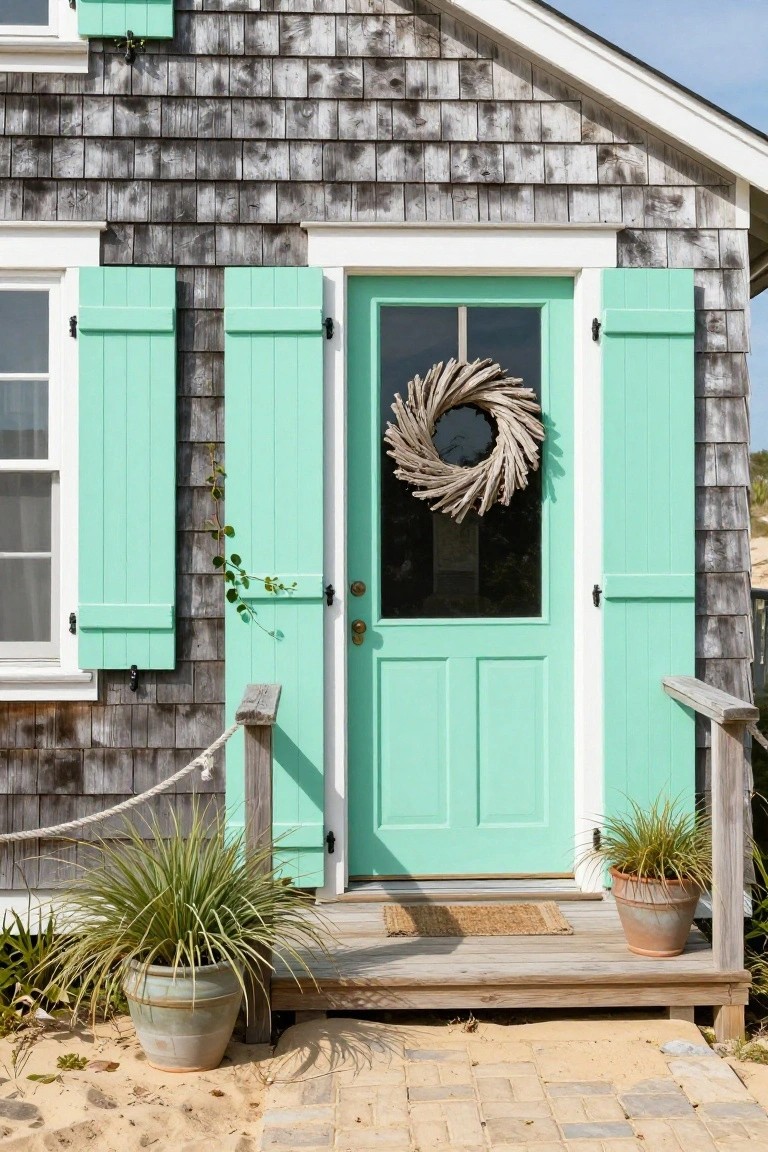
Turquoise shutters stand out nicely against the gray weathered shingles on this beach house. They match the front door just enough to tie things together, and with that driftwood wreath hanging there, the whole entry feels fresh and coastal without trying too hard.
This setup suits older cottages or any seaside home where you want a bit of color punch. Go for a soft turquoise paint on the shutters and door, pair it with neutral siding, and flank the steps with potted dune grass. Salt air can wear paint fast though, so pick a good exterior grade.
Red Shutters on Stone Walls
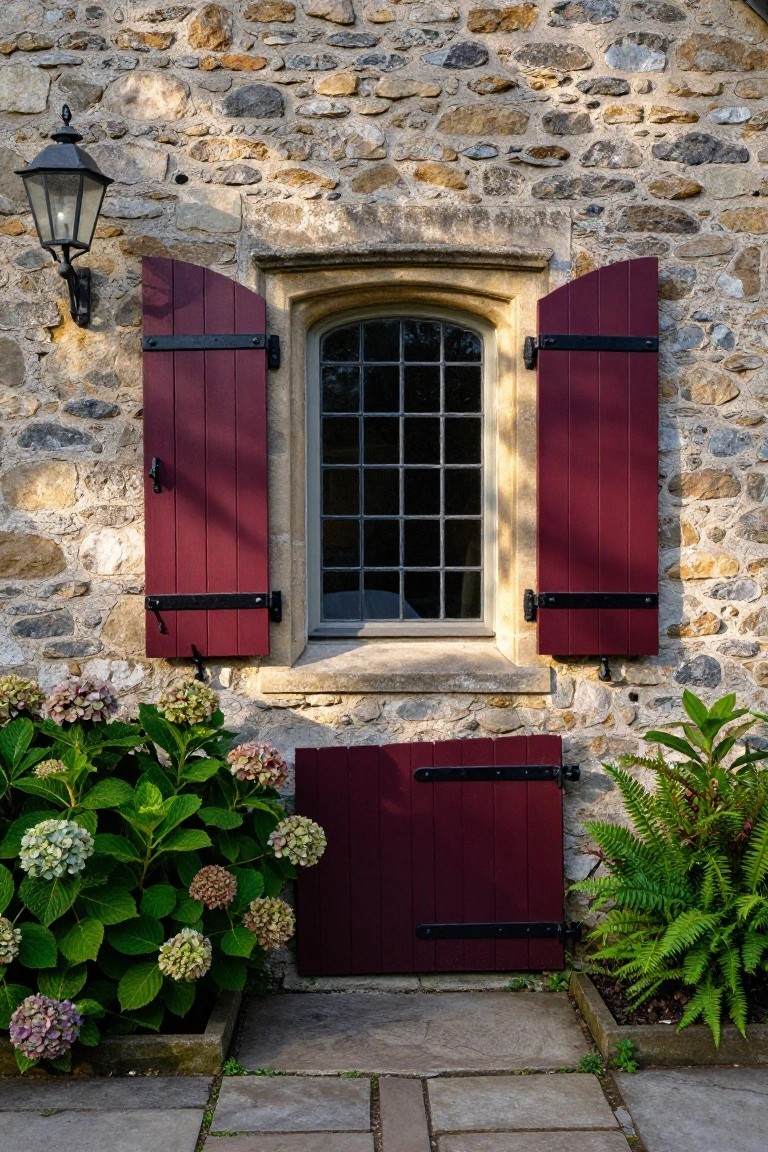
Stone walls give houses that solid, old-world feel. But they can look a bit heavy without some color. Red shutters fix that fast. The deep burgundy tone pops against the rough texture, making windows the star without overdoing it. Open them wide during the day, and you get that welcoming French countryside look right at home.
This works best on older homes or cottages with masonry walls. Pair the red with plants like hydrangeas at the base for extra softness. Skip it on super modern places, though. The color needs that rustic backdrop to shine. Keep the wood well-sealed so it lasts through weather.
Black Shutters on White Walls
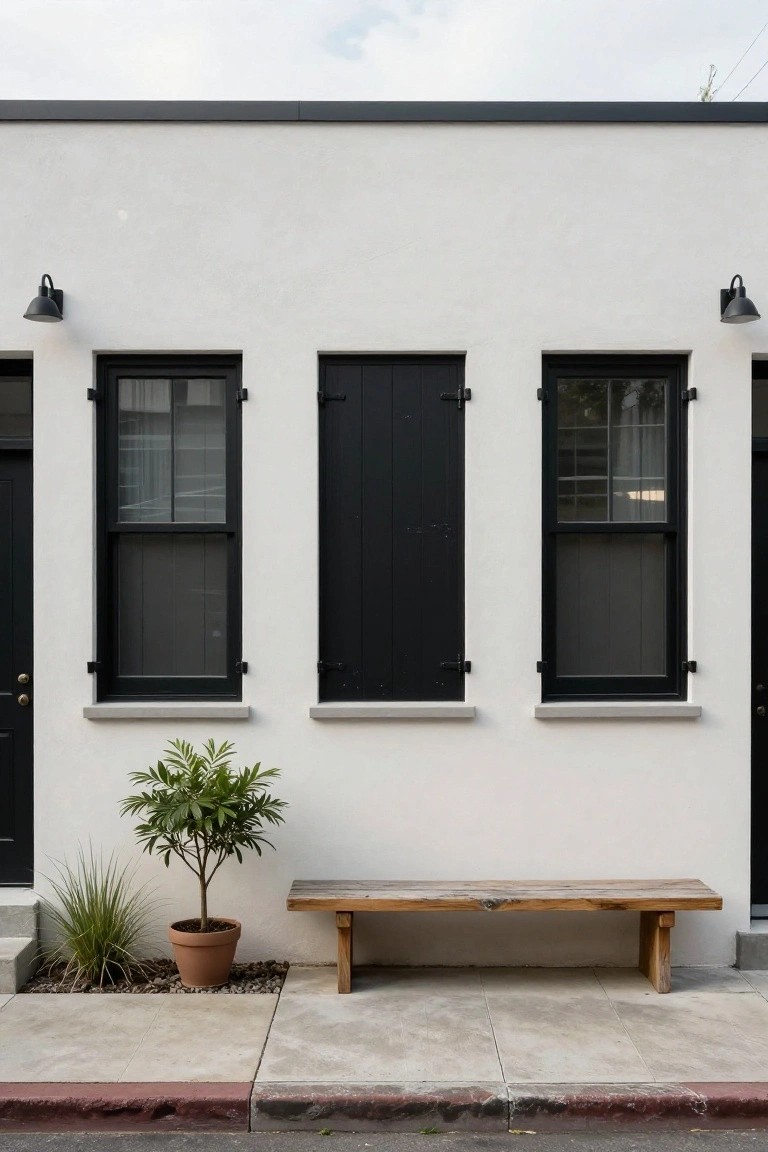
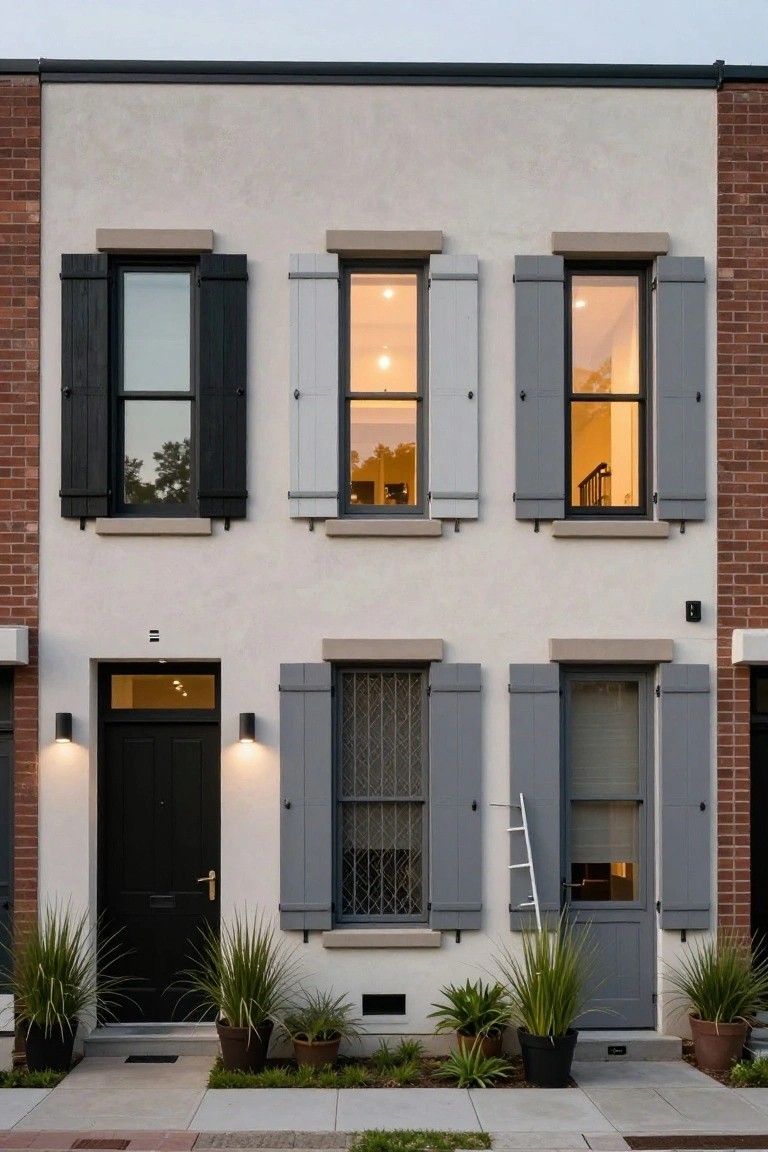
Black shutters like these stand out sharp against a clean white facade. They give the windows a framed look that pulls your eye right to them. On a stucco house, this setup keeps things simple and modern. No need for extra trim or color. Just that bold contrast does the job.
This works best on flat-walled homes with big windows. Think ranch styles or new builds. Hang matching black doors nearby. Keep plantings low-key, maybe a potted palm and bench. Avoid busy siding… it can fight the clean lines.
Flower Boxes Under Bay Windows
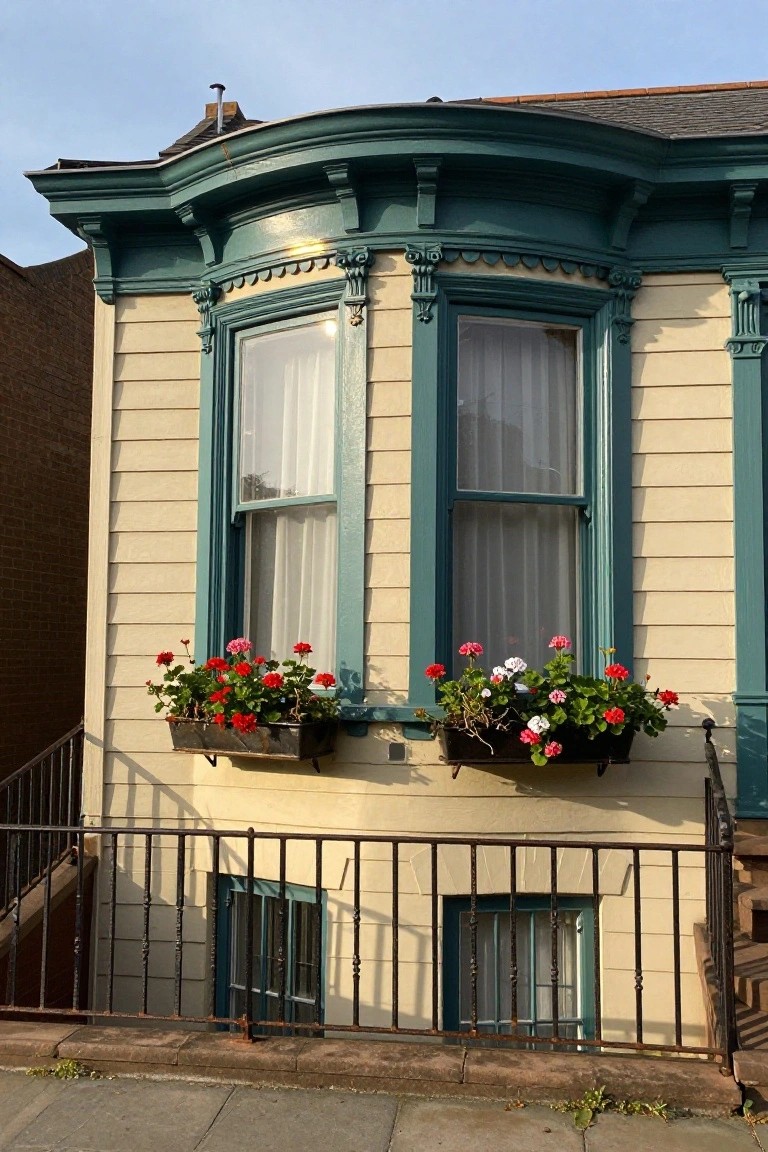
Flower boxes like these make a big difference on an older house. Tucked right under the tall bay windows, they spill over with red geraniums that pick up on the green trim. It’s a straightforward way to add color and a touch of life without much fuss. The metal boxes hang cleanly, echoing the iron railing nearby.
You can pull this off on most homes with good window ledges or brackets. It suits Victorian or Craftsman styles especially well, where the architecture already has some detail. Go for sturdy planters that won’t sag, and pick plants that trail a bit. Just keep them watered, since they’re out in the elements.
Wooden Shutters on a Chalet Exterior
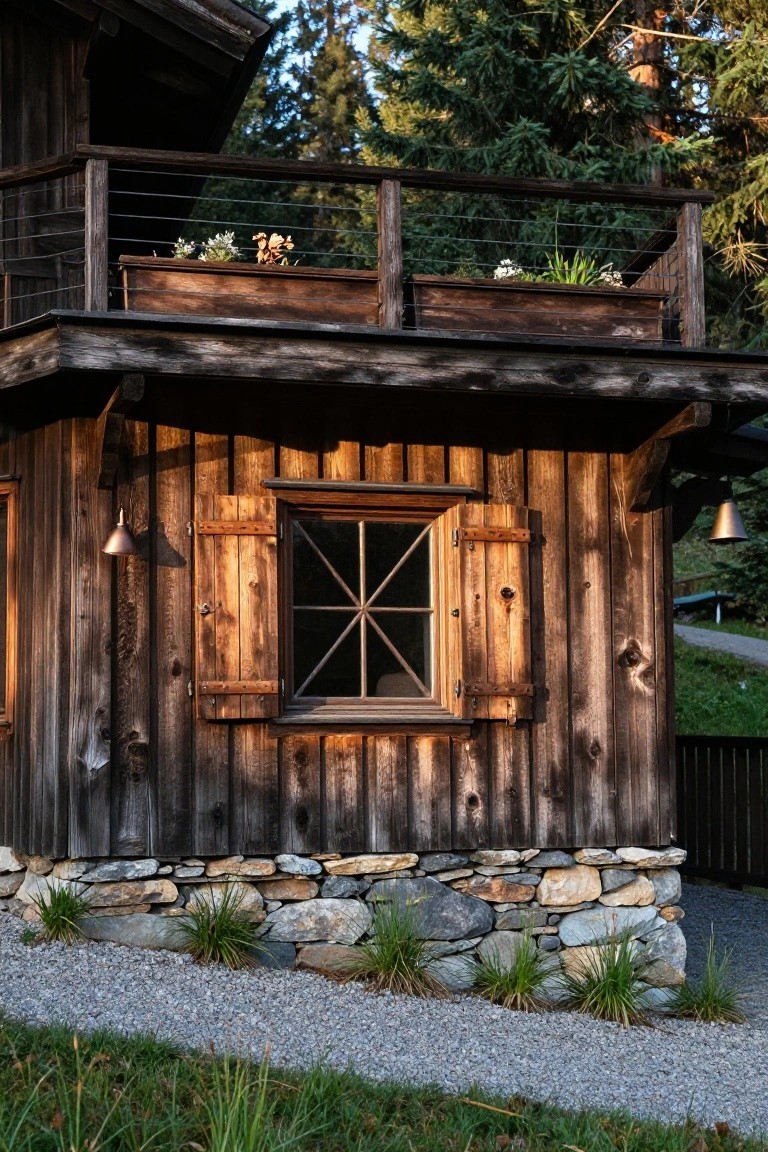
These wooden shutters catch your eye right away on this chalet side. They’re simple boards, aged to a nice patina, framing a window with cross panes. Hung on sturdy hinges, one side stays open while the other rests against the wall. Paired with the plank siding and that wall lantern, they give the whole facade a cozy, lived-in feel that fits right into the mountains.
You can pull this off on any cabin or country home with wood siding. Go for rough-sawn boards in a natural stain to match the house. They’re practical too, blocking wind or sun when closed. Just make sure the hinges are heavy duty so they last through weather. Works best where you want that old world charm without too much fuss.
Teal Shutters on Brick Houses
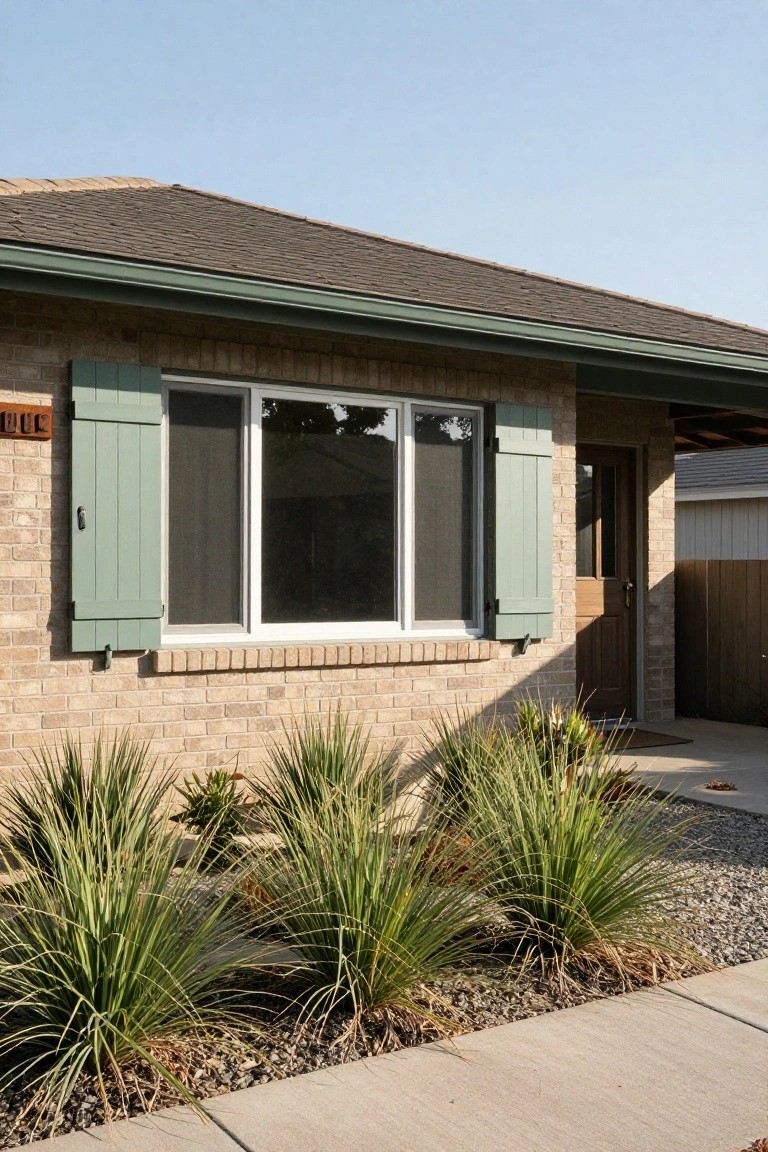
Teal shutters catch the eye on this beige brick house. They frame the white windows nicely without overpowering the simple brick look. The color picks up a bit of coastal feel, even in a standard suburban spot. It keeps things fresh but not too bold.
Try teal shutters if your home has light brick or siding. They work well on ranch or craftsman styles near the entryway. Pair with gravel beds and tough plants like yucca for low upkeep. Just make sure the hue matches your door or trim to tie it together.
Dark Wood Shutters on Light Stucco
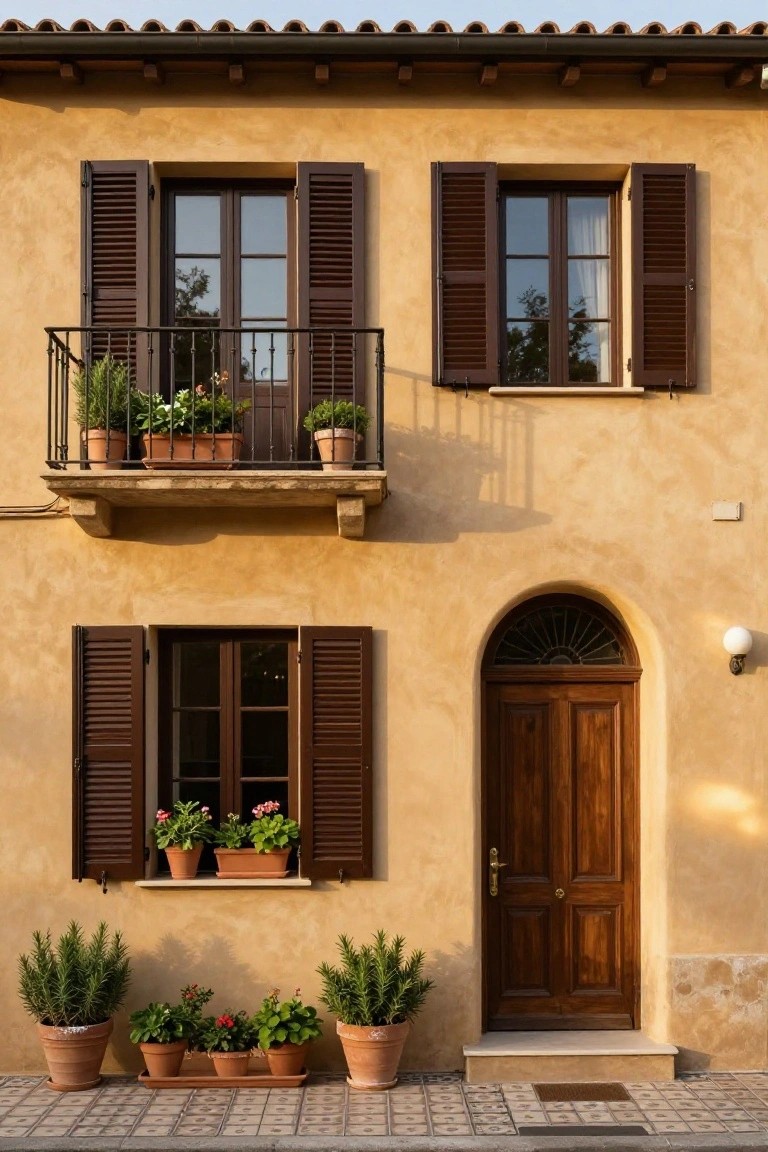
Dark wooden shutters like these work so well on a pale ochre house. They add depth right away with that strong contrast, framing the tall windows and balcony without overpowering the soft walls. The louvers let in light but keep the look traditional, and a few plants on the sills tie it all in.
Try this on older homes or any stucco facade facing south. Pick shutters in mahogany or walnut tones to pop against yellows or beiges. They suit Mediterranean or Spanish styles best, especially paired with a simple wood door. Just make sure they’re sturdy for wind.
Green Shutters Matching House Siding
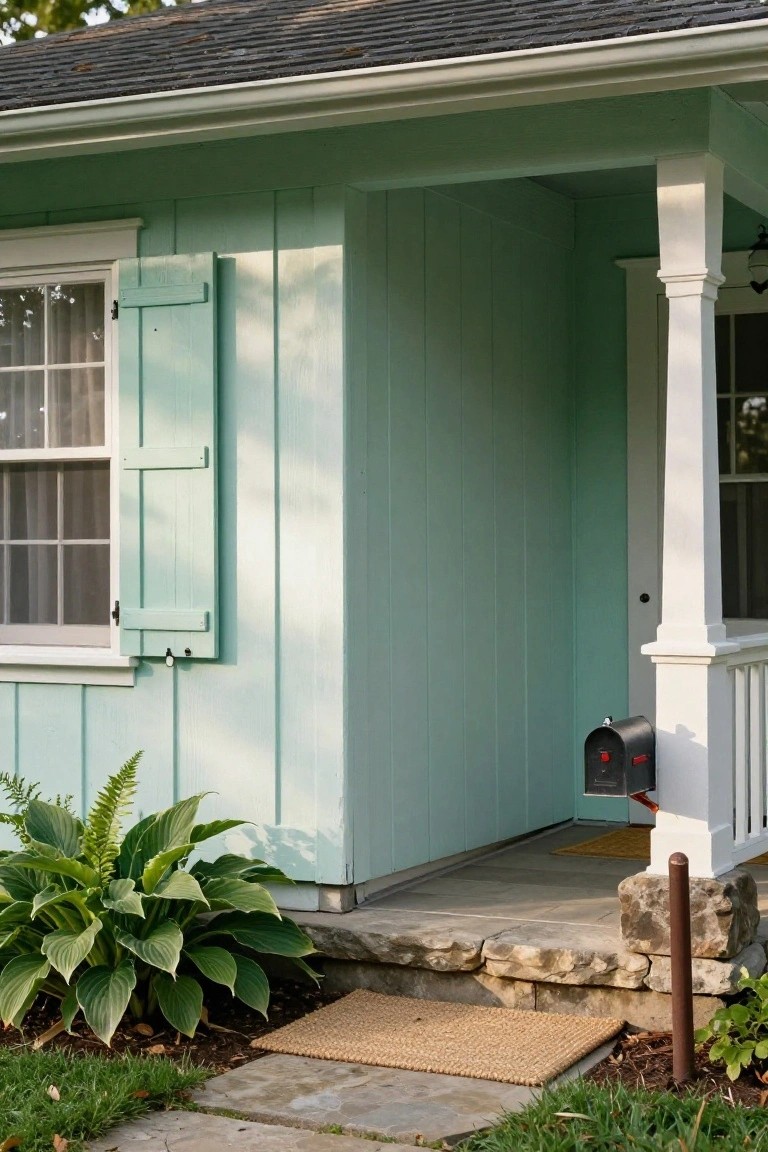
These shutters catch your eye right away because they’re painted the same soft green as the siding. On this little house, they sit flat against the wall next to a simple window with white trim. That matching color pulls the look together without much fuss. It gives the place a cozy, settled feel, like it’s been there forever.
You can pull this off on older cottages or farmhouses, especially in mild climates where greens stay fresh. Just match the shutters close to your siding shade, but keep trim white or cream for contrast. Skip it on super modern homes… it works best where you want subtle charm over bold statements.
Navy Blue Shutters for Beach Houses
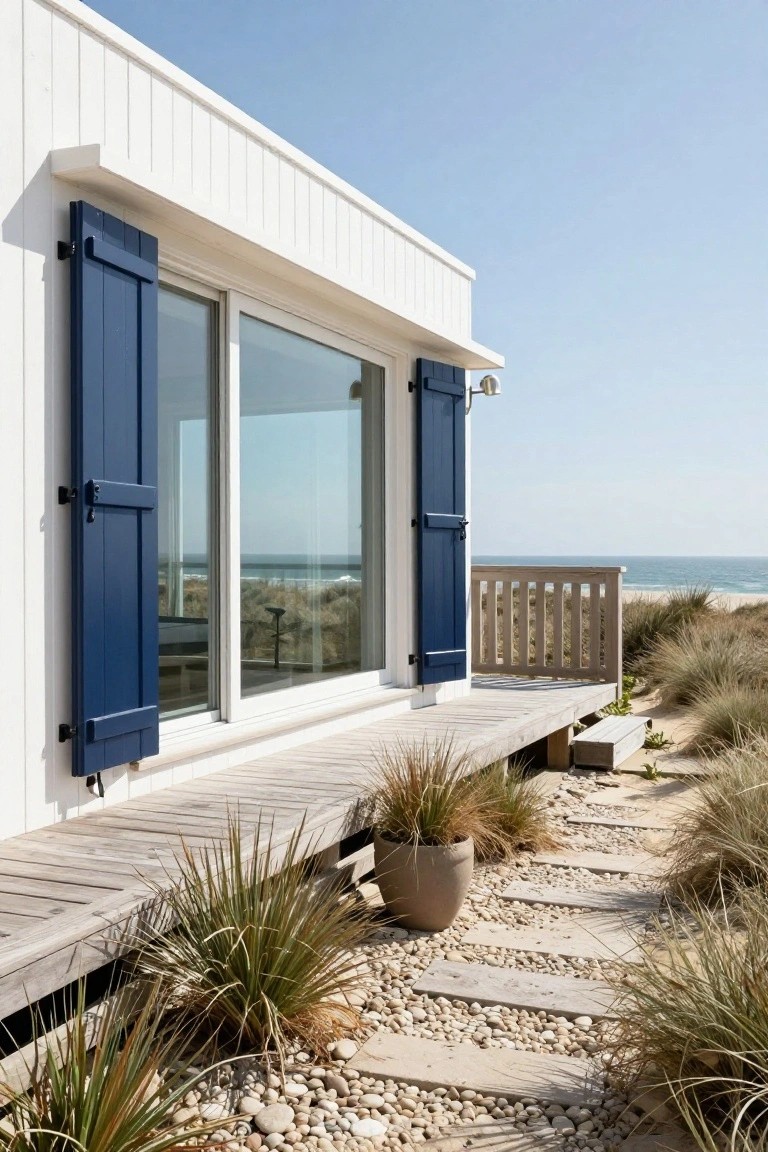
Navy blue shutters stand out nicely on a white exterior like this one. They bring a crisp contrast that fits right into a coastal spot, making the house look put-together without trying too hard. The deep color holds up against the bright sky and ocean view.
You can pull this off on any light siding near the water. It suits simple beach homes, modern or older styles. Pick durable wood or composite to handle the salt air… and keep them wide to frame big windows or doors.
Green Shutters on a Stone Cottage
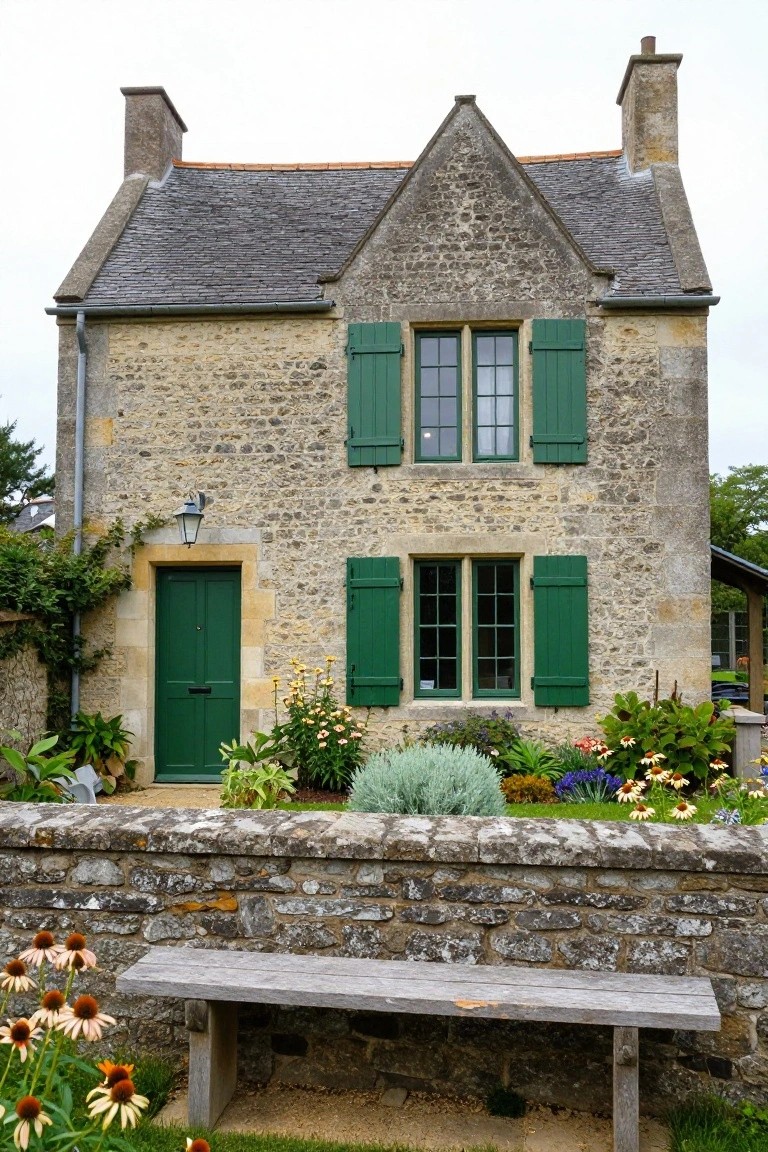
Stone cottages like this one look sturdy and plain on their own. Green shutters change that fast. They add a spot of color that pulls your eye right to the windows without overwhelming the natural stone. The green here matches the door nicely too. It keeps things simple but lively.
Try this on older homes or ones with textured walls. The shutters work best when they’re a true color, not too dark or faded. They suit rural spots or gardens where you want some cheer. Just make sure the hinges swing out smooth.
Black Shutters on Brick Homes
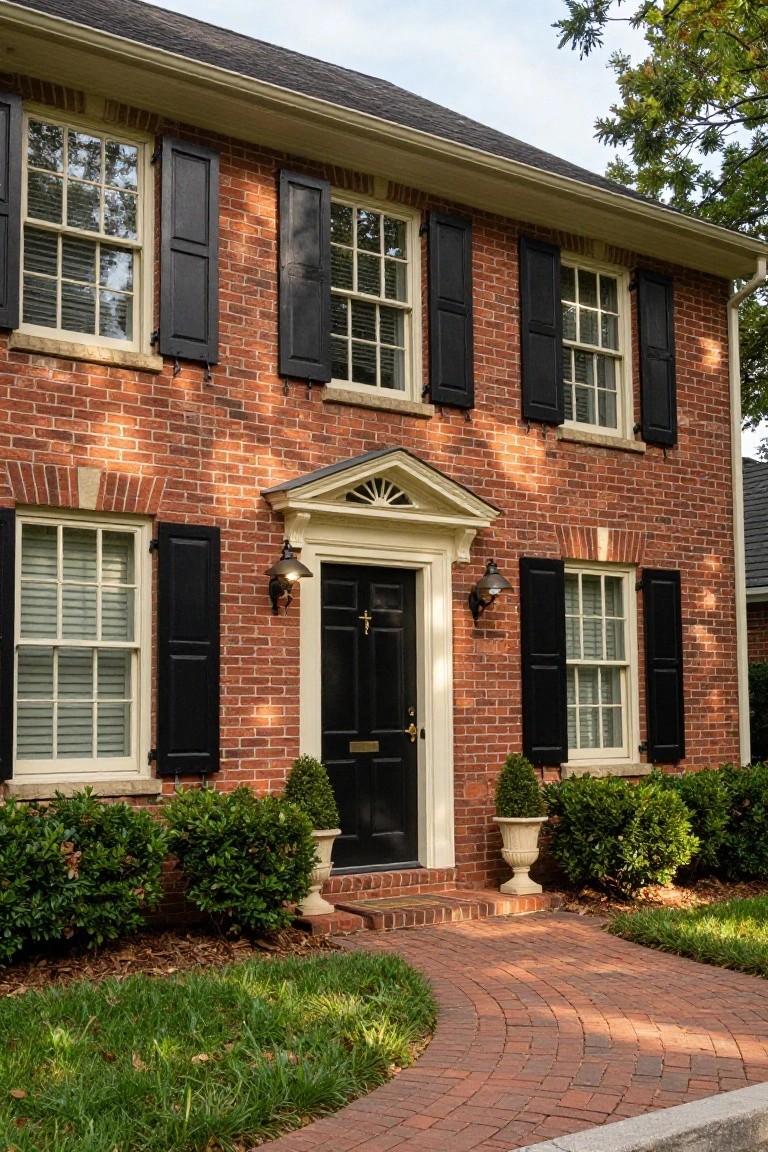
Black shutters stand out nicely against red brick. They give a traditional house that crisp look without much fuss. Here the dark panels frame the white windows just right, pulling the eye to the front door and making the whole facade feel balanced and welcoming.
These work best on colonial-style homes or any brick exterior wanting a classic touch. Match the shutter size to your windows, and keep them simple with louvers. Skip them if your brick is too busy or modern, since the contrast might fight the style.
Red Shutters Pop on Yellow Siding
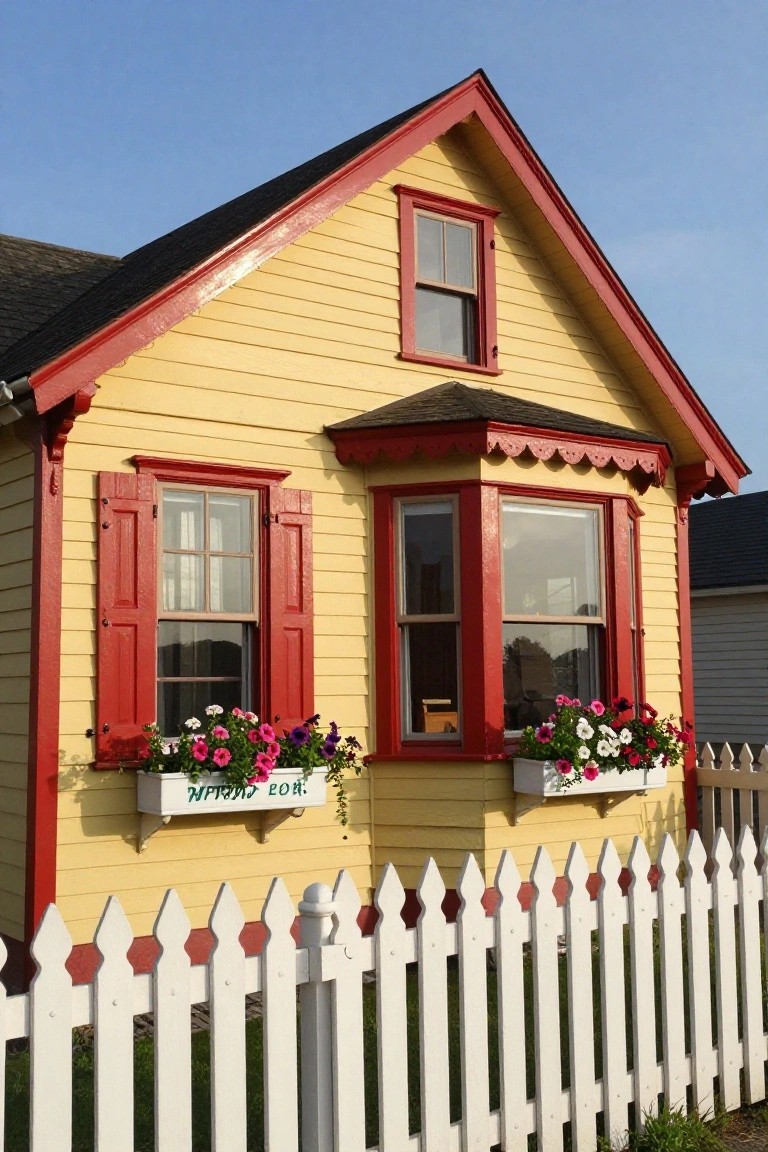
Red shutters like these give a house real personality without much effort. On this yellow cottage, the bright red frames the windows nicely and pulls the whole front together. Paired with flower boxes spilling over with petals, it feels homey and lived-in right away.
You can pull this off on older homes or bungalows where the siding is light. Go for a strong contrast, like red on yellow or green on beige, and keep shutters simple board-and-batten style. Add window boxes if you want that extra cottage touch, but watch the scale so they don’t overwhelm small windows.
Green Shutters Bring Charm to a Garden Shed
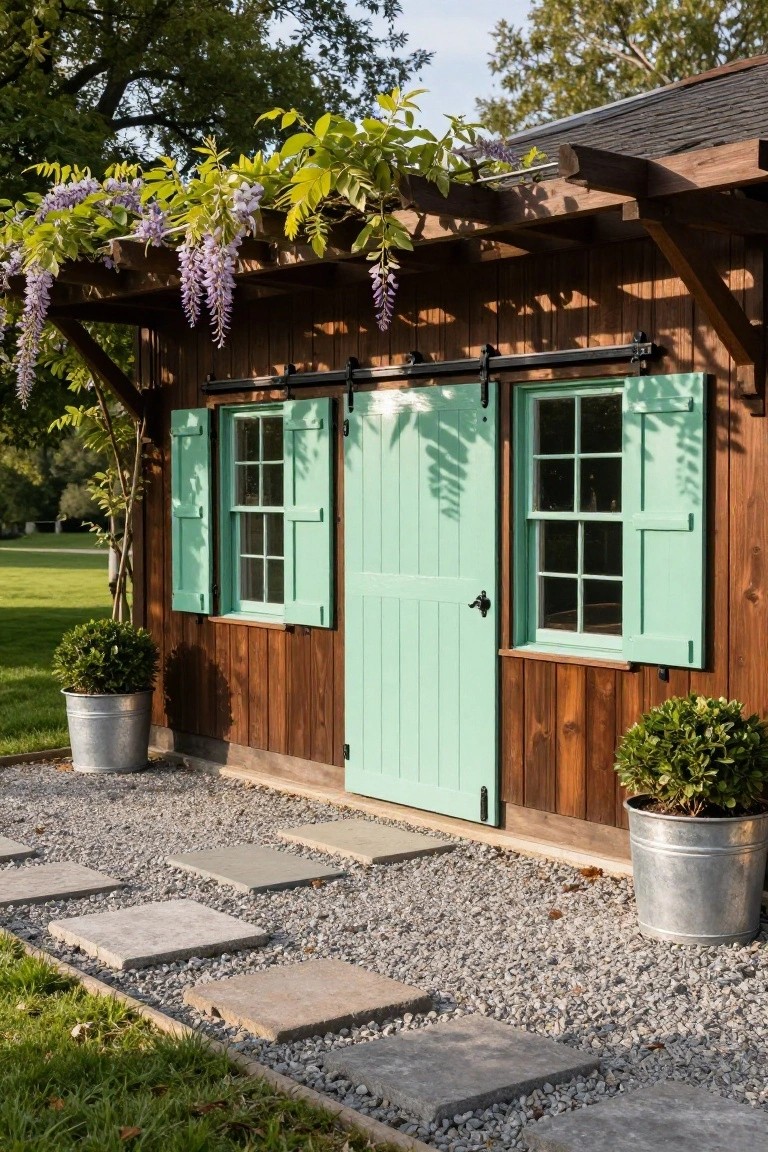
These mint green shutters catch the eye on a simple wooden shed. They stand out against the warm cedar siding and give the whole structure a fresh cottage feel. Paired with a matching green door, they make the spot look welcoming without much effort. It’s a nice way to add personality to backyard buildings that might otherwise blend in.
You can pull this off on sheds, garages, or even playhouses. The soft green works best on darker wood tones, and it holds up in shady garden spots. Just match the shutters to the door for that pulled-together look. Keep the hardware simple, like black hinges, so the color does the talking.
Rustic Stone and Wood Exterior
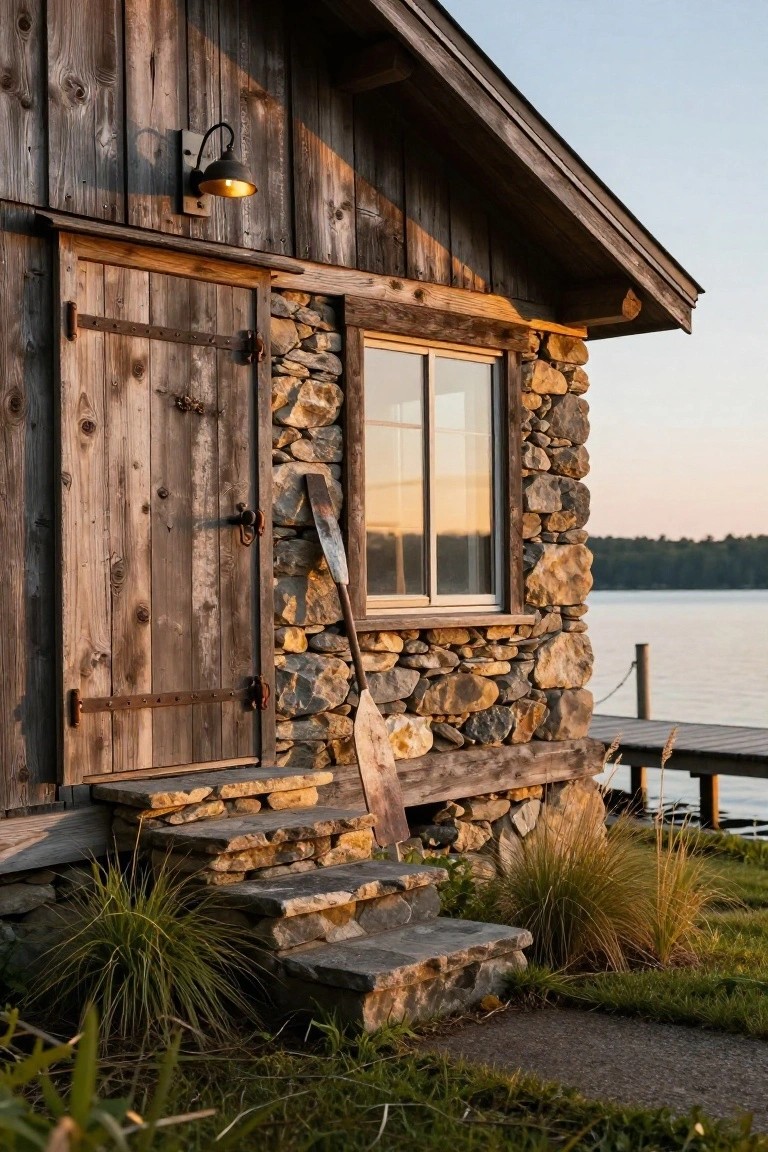
A solid stone base like this one anchors a wooden cabin perfectly, especially in a lakeside spot. The rugged fieldstone pairs with weathered wood siding to give the whole place a lived-in, sturdy feel. That lantern light by the door adds a practical touch without overdoing it.
This look works best on vacation homes or rural getaways where you want things to blend with nature. Stack irregular stones for the foundation, then let wood planks take over above. Skip fancy trim. It holds up to weather too, but check local builders for stone sourcing.
Green Shutters on Neutral Walls
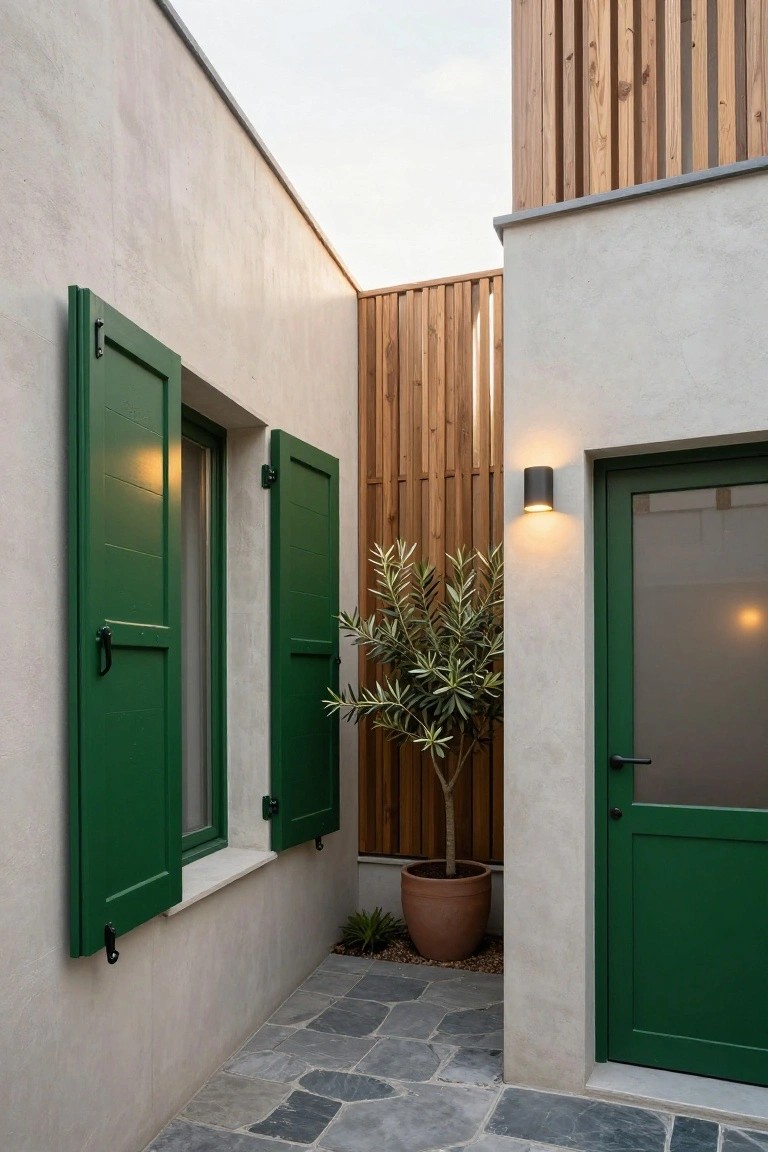
Green shutters like these work well against light stucco. They bring some color to the facade without making things busy. Here the shutters frame a simple window and match the nearby door. That repeat of green keeps everything tied together. It’s straightforward but gives the house more character.
You can pull this off on most homes with beige or gray siding. Match the shutters to another green element outside, like a door or plants. Full-height shutters suit taller windows best. Just stick to one strong shade so it doesn’t compete with the walls.
Frequently Asked Questions
Q: How do I pick shutters that match my house’s style without guessing?
A: Walk around your neighborhood and snap photos of homes you like. Match the shutter shape to your windows, like louvered for a coastal vibe or board-and-batten for craftsman charm. Test a sample against your siding in daylight.
Q: Can I install exterior shutters myself in a weekend?
A: Grab a buddy and some basic tools like a drill and level. Most clip or screw right onto the window frame in under an hour per pair. Watch a quick video first if you’re new to it.
Q: What if my old shutters are beat up… do I have to replace them all?
A: Sand and repaint the good ones to refresh the look fast. Swap out just the damaged pairs for a mix that still charms.
Q: How often do shutters need maintenance to stay sharp?
A: Hose them down once a year and touch up paint every few seasons. Wood ones crave that extra check for rot, but vinyl laughs off the weather.
