

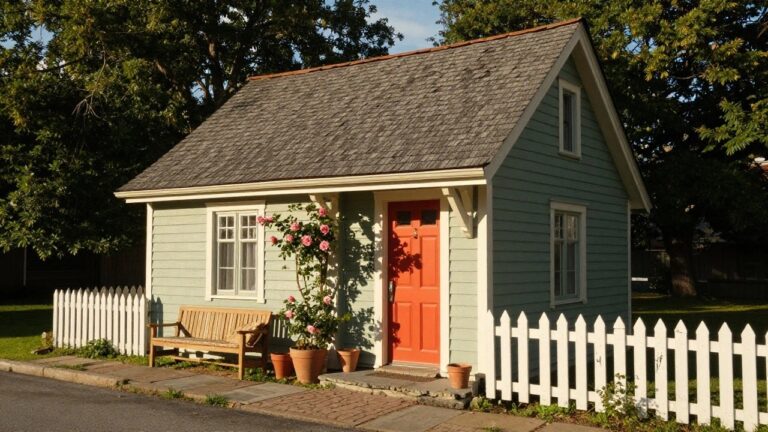
When you step back from a green house and look at it from the street, the trim colors often decide if the whole facade feels fresh or flat. I’ve painted accents on a few green-sided homes over the years, and the ones that work best balance the natural tones without overwhelming the roofline or entry. Neighbors and passersby usually zero in on the door and shutters first, so those spots deserve colors with real character. Pairing the right shades with brick bases or shingle textures can shift how the house reads from bland to standout in everyday light. One or two of these will stick with you for your next project.
Orange Door on a Green House
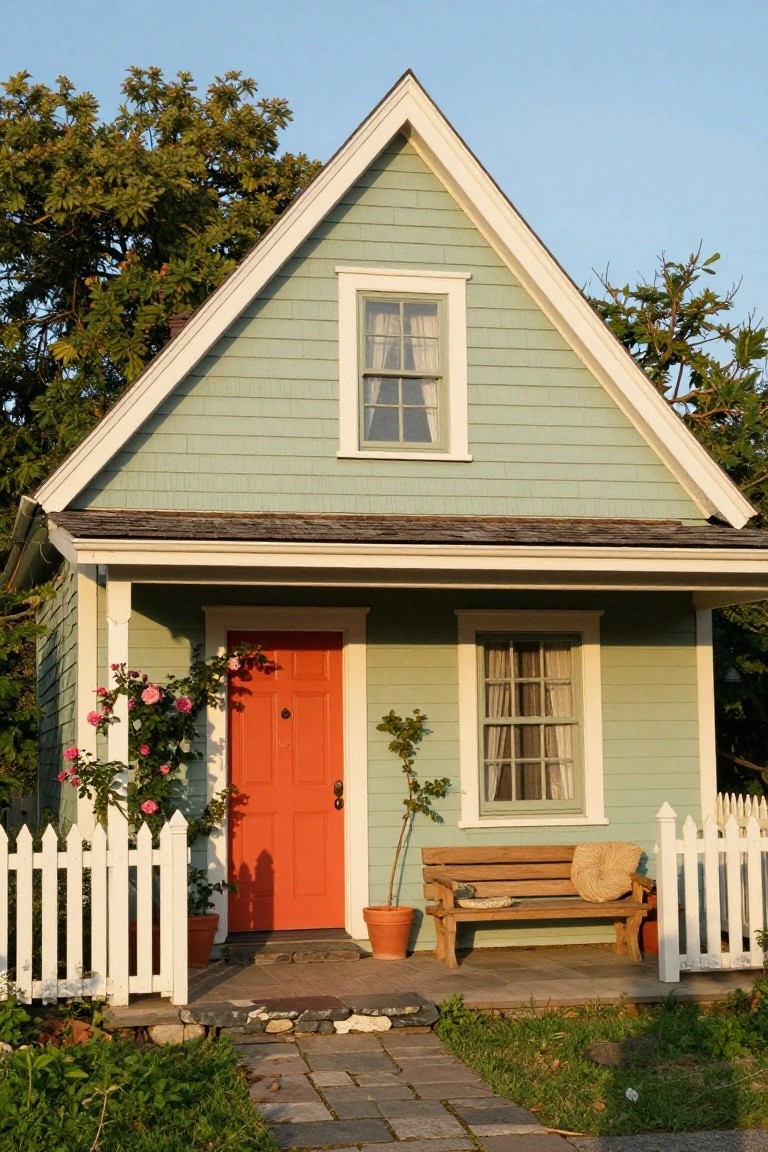
A bright orange door like this one turns a quiet green exterior into something with real curb appeal. The pale green siding stays soft and easy on the eyes, but that door pulls your attention right to the entry. It’s a straightforward way to add some life without changing much else.
This works best on small houses or cottages tucked into a yard with plants around. Go for a solid orange paint that holds up to weather, and keep the trim white to let it shine. Skip it on bigger homes where it might get lost. Just pair it with a simple porch setup, maybe a bench and a pot or two.
Teal Green Exterior Siding
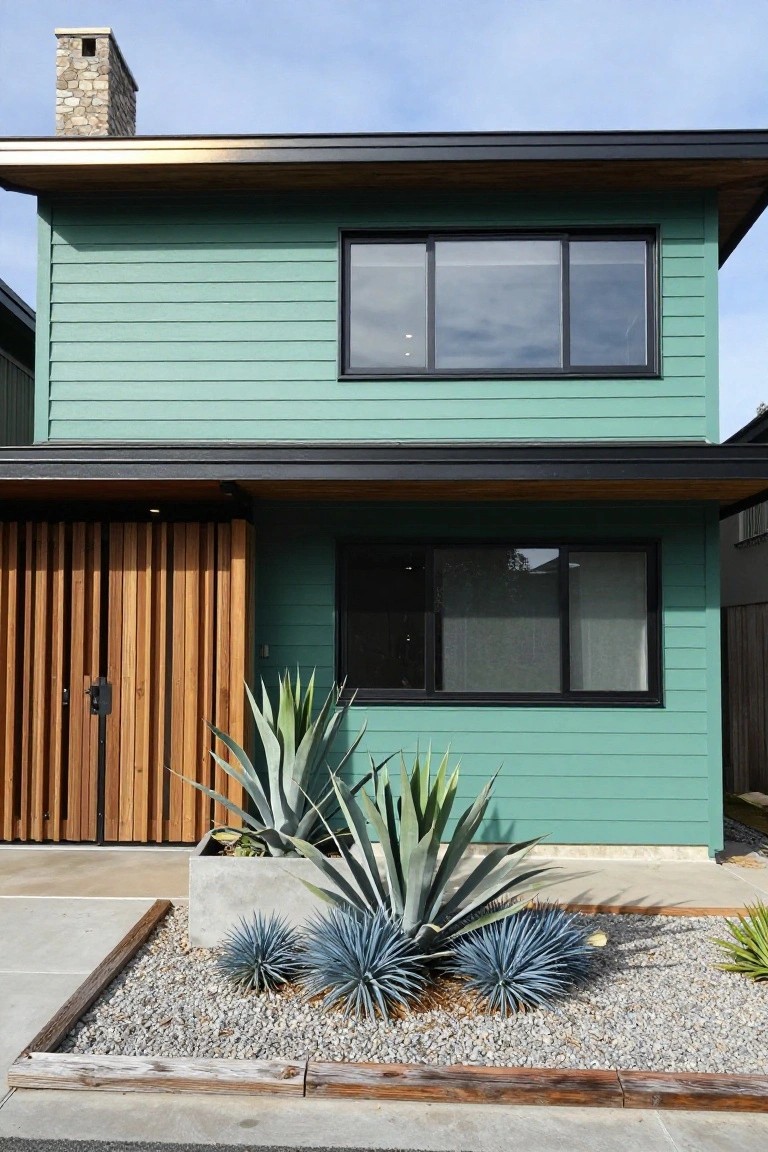
Teal green paint like this gives a house real personality without going overboard. It works great on modern homes with clean lines, like the horizontal siding and black windows here. Paired with a wood garage door, it feels fresh and a bit coastal. Folks notice it right away, but it doesn’t shout.
Try this color on ranch-style or mid-century homes facing south for that nice glow in sunlight. Keep accents simple, maybe wood or stone, and add low-water plants out front to tie it together. Skip it on super traditional places, though. It might feel too bold there.
Red Doors on Green Houses
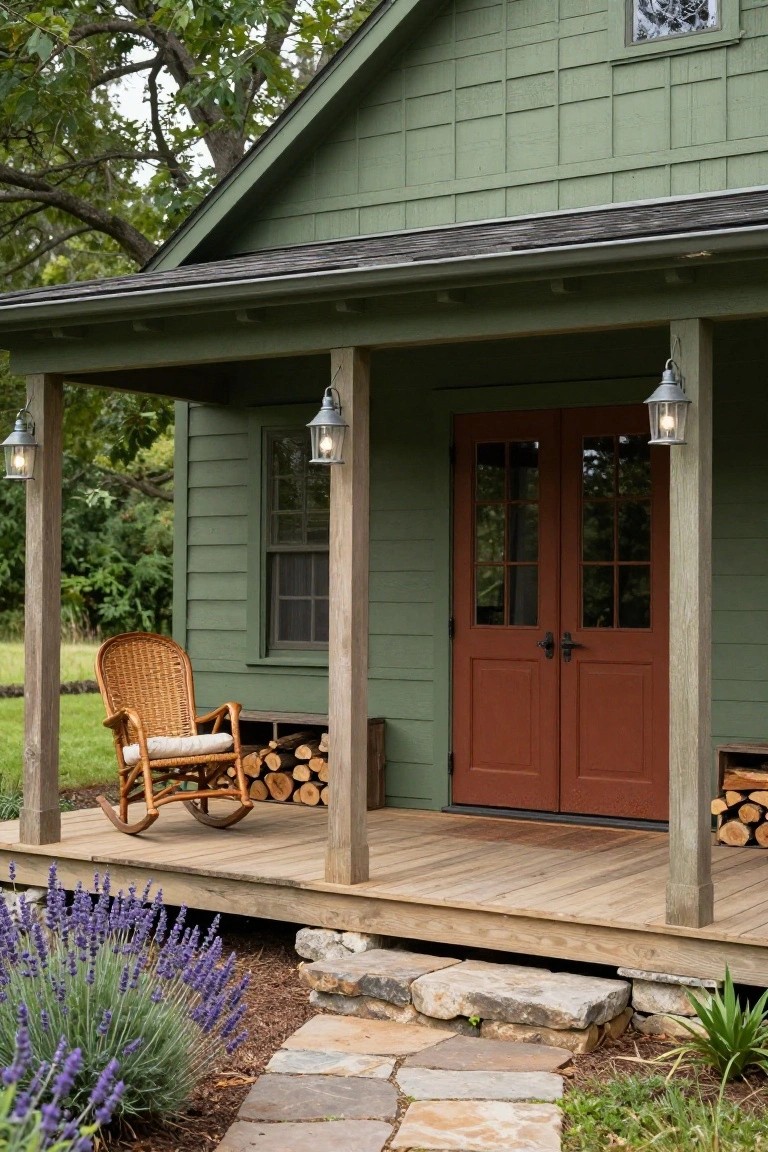
A bright red door stands out nicely against green siding like this. It pulls your eye right to the entry and makes the whole front feel more welcoming. Green houses can sometimes blend into the yard, but that punch of red adds some real personality without overdoing it.
Try this on a cottage or farmhouse style home where the green paint already gives a natural look. Pick a red that’s not too orange, maybe with some brown undertones to match wood trim. It works best if the porch is simple, so the door gets the attention.
Recommended Products

Ready to use, pre-mixed door and trim paint offers a fresh new look on interior or exterior metal, wood and fiberglass

Ready to use, pre-mixed door and trim paint offers a fresh new look on interior or exterior metal, wood and fiberglass

Magnetic House Numbers - These 4 inch tall magnetic numbers for house address outside are easy to set up. Just attach the magnetic numbers to any metallic surface and you're done! Use them as magnetic mailbox numbers, wall address numbers, or door numbers for house door!
Red Door on Mint Green Siding
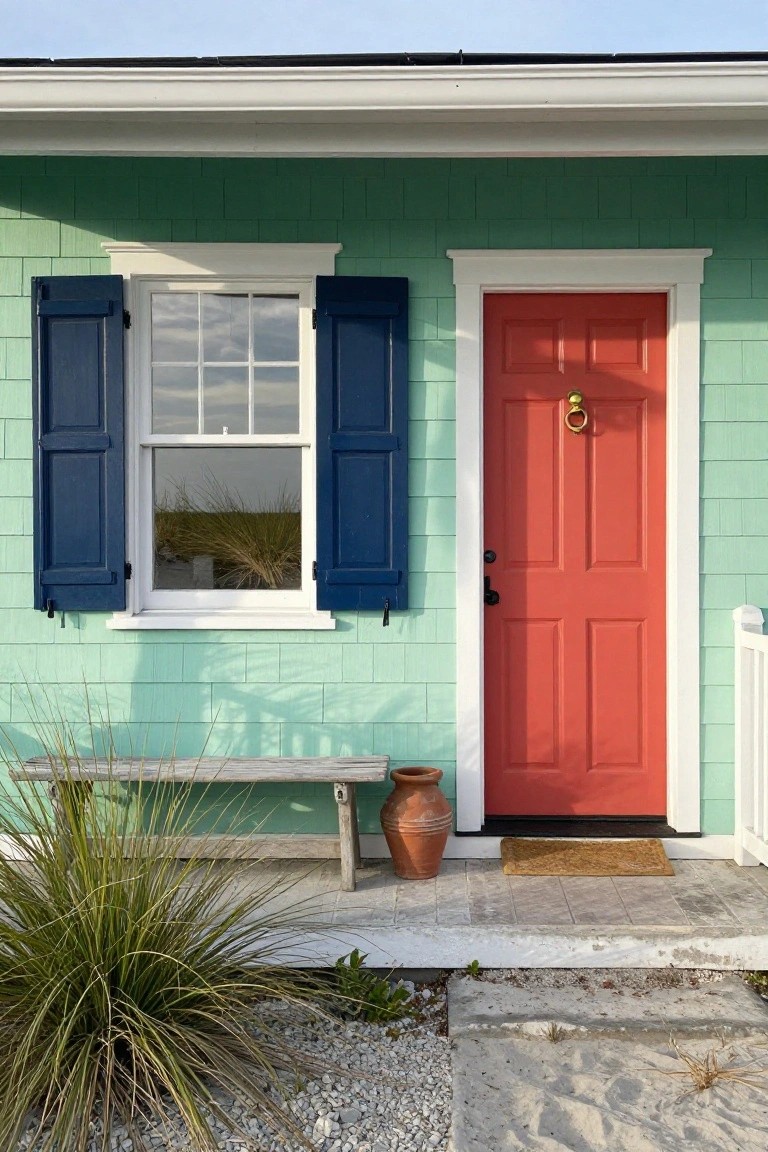
A bright red front door stands out nicely against pale mint green siding like this. It pulls the eye right to the entry and gives the whole house more life without much effort. Navy shutters on the window add a bit of contrast too, keeping things from feeling too plain.
This works best on coastal style homes or shaker shingle houses near the beach. Pick a true red paint that holds up to weather, and keep the trim white for clean lines. Skip it if your green is too dark. Might overwhelm smaller homes.
Red Door on Dark Green Exterior
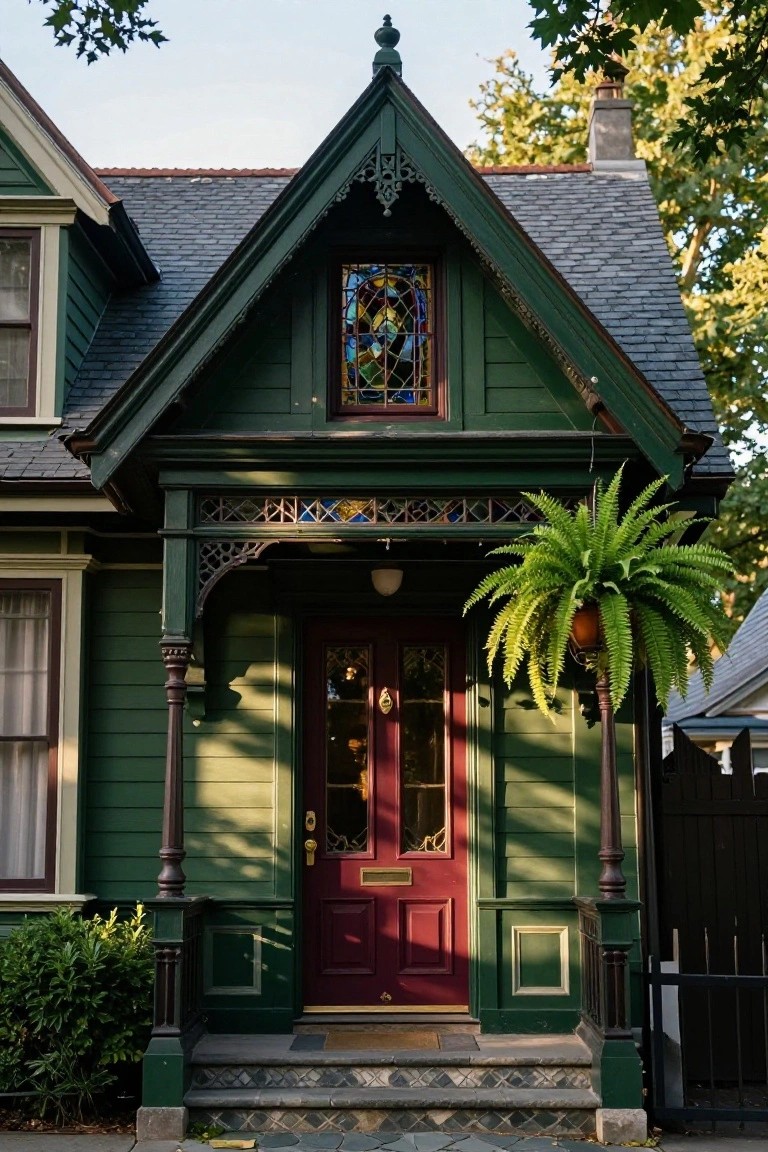
A deep green paint job like this sets a moody, classic tone on the house. But that vivid red door changes everything. It pulls attention straight to the entry and gives the whole facade some real personality. No need for fancy extras. Just those two colors do the work.
This combo shines on Victorian or Craftsman-style homes where the trim already has some detail. Go for a darker green base so the red stands out sharp. Lighter greens can wash it out a bit. Pair it with simple plants hanging nearby, like that fern, to soften things without stealing the show.
Sage Green Exterior with Wood Door
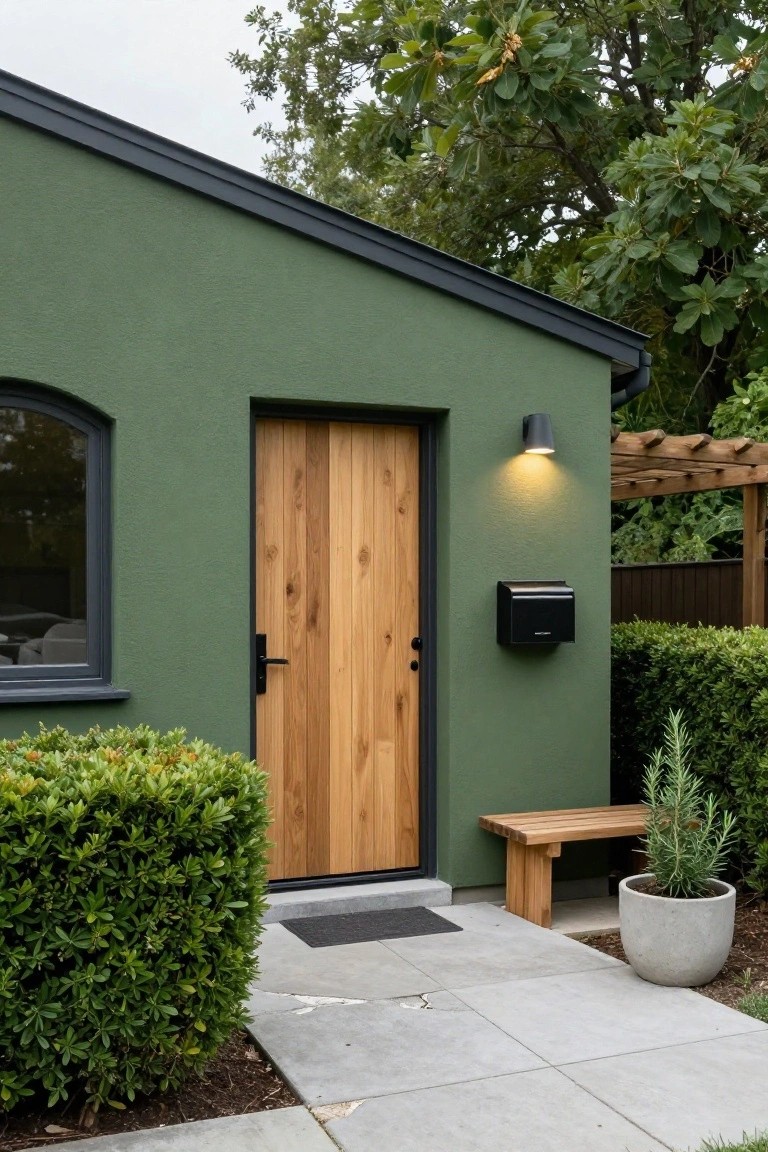
A soft sage green paint on the exterior walls gives this house a calm, earthy feel that blends right into the surrounding trees and shrubs. The double wooden door in natural timber stands out nicely against it, adding some warmth without overpowering the green. That contrast makes the entry look solid and inviting, like the house is settled into its spot.
This look works best on smaller homes or garden sheds with simple lines, especially stucco or plaster surfaces that take paint evenly. Go for a semi-gloss finish to handle weather, and keep hardware black to let the wood and green do their thing. Skip busy details around the door… just boxwoods and a bench keep it easy.
Sage Green Cottage Siding
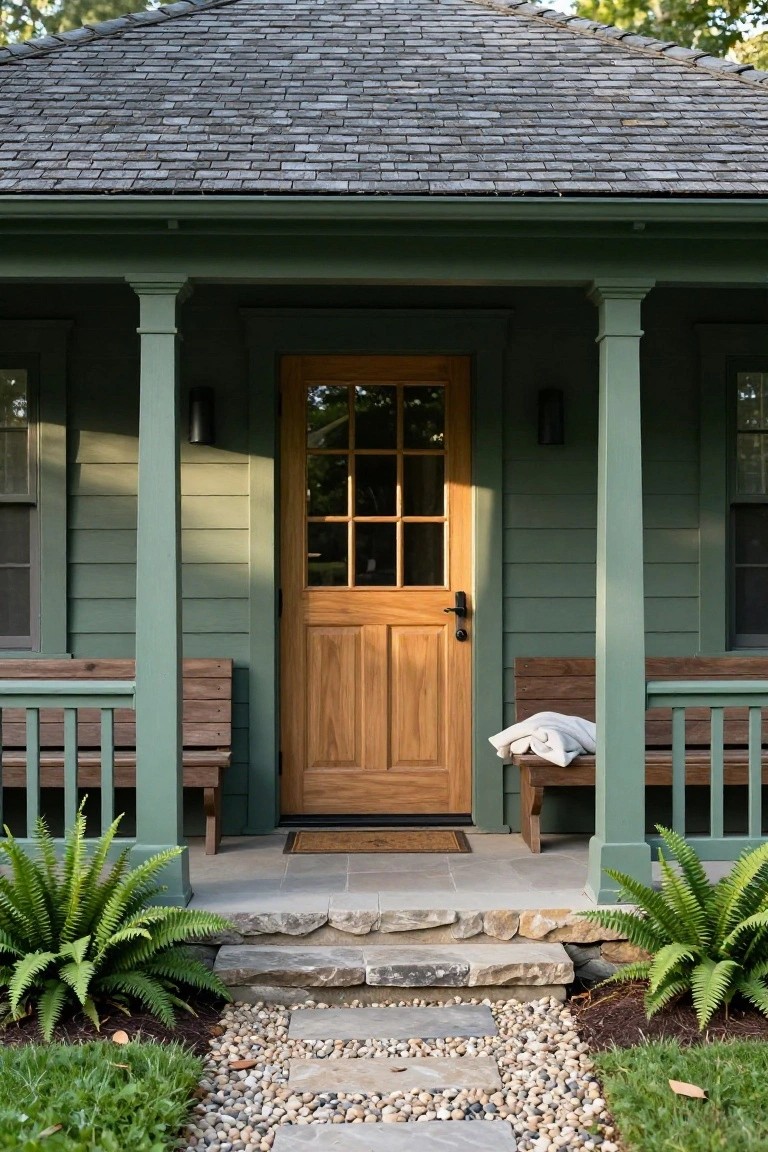
A soft sage green paint like this on cottage siding keeps things calm and tied to the outdoors. It shows up nicely against the oak front door and porch benches, without pulling focus from the simple lines of the house. Folks like how it makes a small place feel settled in its spot, especially with trees nearby.
This shade suits older homes with board and batten siding or shingle roofs. Paint the columns to match for a pulled-together look, but stick to natural wood on doors and trim. It might wash out in full shade, so test samples in your light first.
Sage Green on Half-Timbered Houses
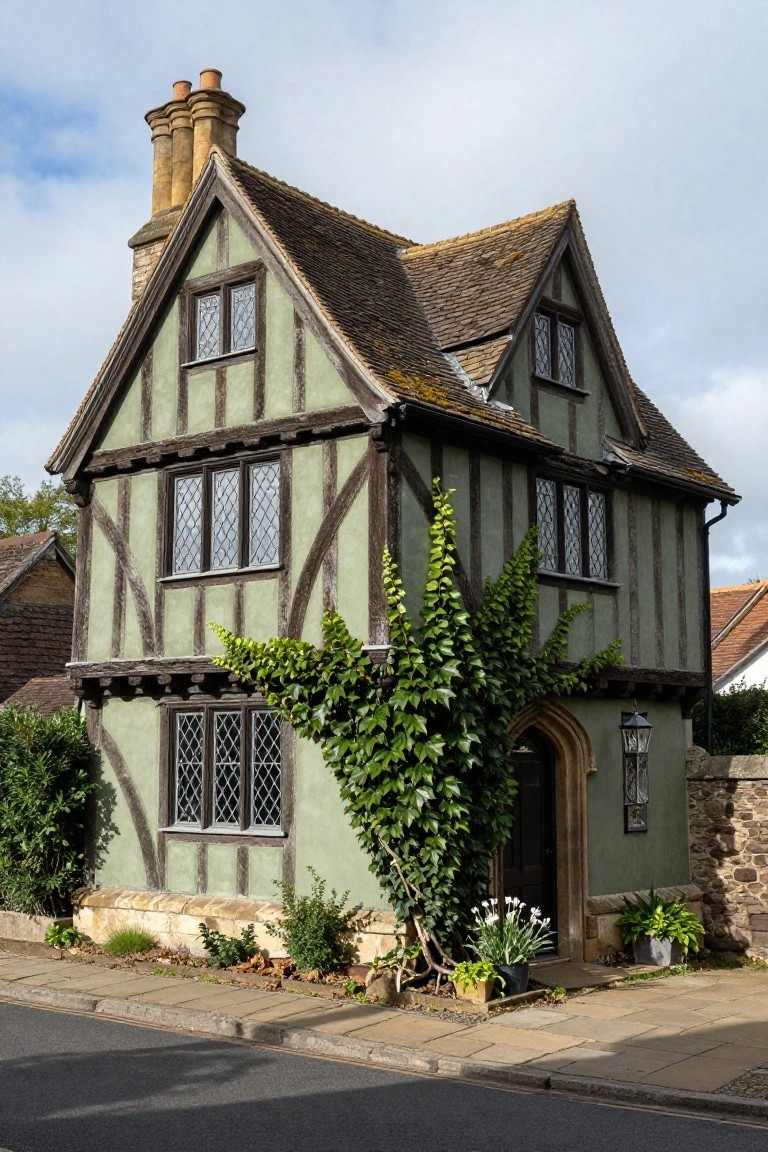
That soft sage green paint on the plaster between dark timber frames gives an old house a quiet, natural charm. It picks up on the mossy feel without trying too hard, and the climbing ivy just settles right in. The color makes the whole facade look settled and welcoming, like it’s been there forever.
This works great on Tudor-style cottages or any home with exposed beams. Pick a muted green to avoid anything too bold, and pair it with black or dark brown timbers for contrast. It’s best for spots with some greenery around, where it blends the house into the yard a bit.
Yellow Door Pops on Green Siding
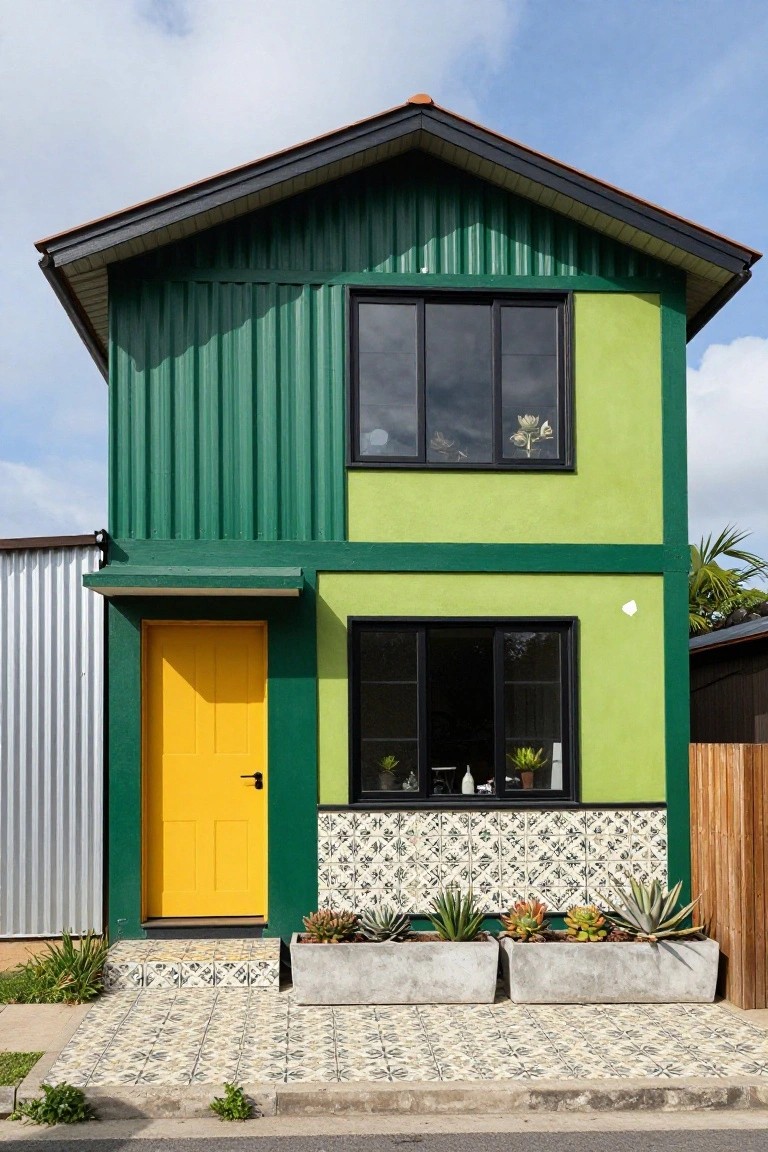
A bright yellow door stands out nicely against deep green corrugated siding like this. The green gives a solid, earthy base that feels right for many neighborhoods. But that yellow? It adds real personality without overdoing it. The plants in concrete planters nearby pick up the vibe too.
Try this on ranch-style homes or small modern builds in warmer spots. It works best where you want curb appeal that says welcoming but bold. Just make sure the yellow shade leans warm to match the green tones. Skip it if your area has strict color rules.
Soft Sage Green Board-and-Batten Siding
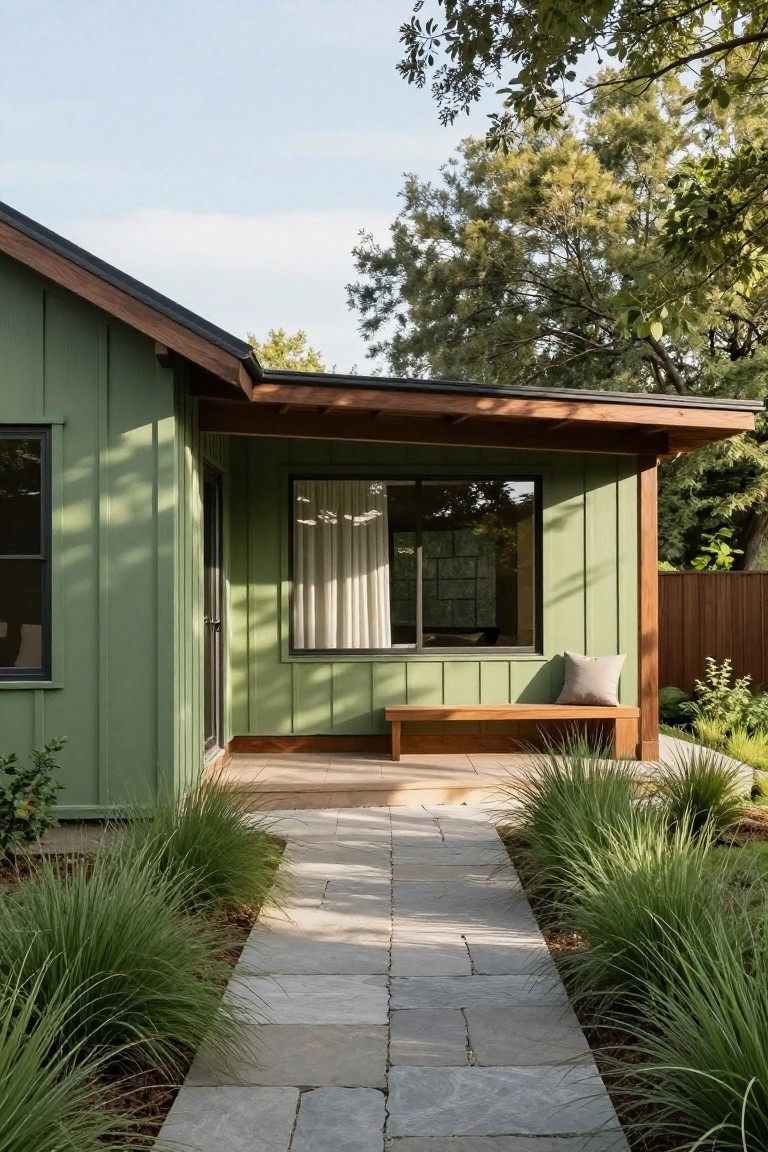
This shade of sage green on board-and-batten siding gives a house that easy, lived-in feel, like it’s been there forever. It blends right into the yard with all the trees and grasses nearby. The wood porch pulls in some warmth, making the whole front look settled and friendly.
Use it on smaller homes or cabins where you want things to feel natural and low-key. It suits spots with mature trees or native plants best. Add a simple bench or stone path to tie it together. Just skip it if your lot feels too open or sunny… might wash out a bit.
Deep Teal Front Door
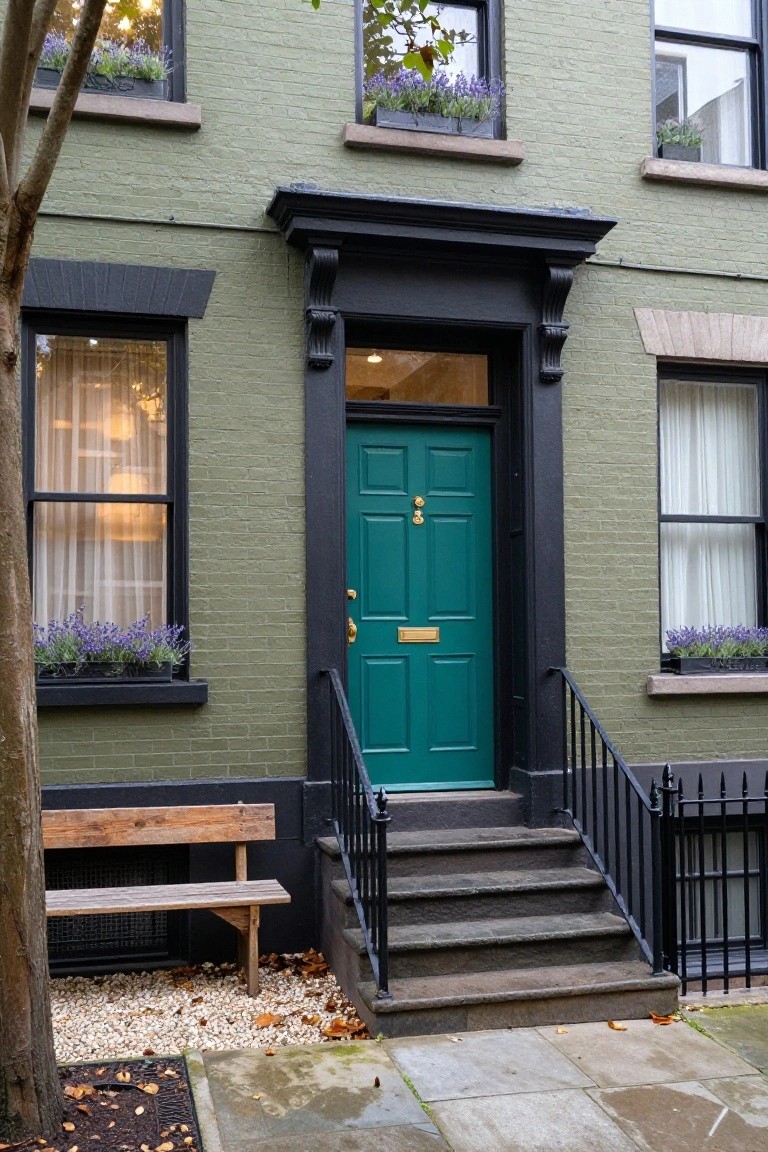
A deep teal front door like this one brings real personality to a sage green house. It stands out against the soft brick without clashing. The black trim around the door and windows helps frame it just right. You get that welcoming feel right away.
This works well on classic brick townhouses or older homes with some historic charm. Go for a teal with blue undertones to keep it grounded. Pair it with dark accents and keep the house paint muted. Skip it if your green is already bold… might fight too much.
Pale Green Siding with a Yellow Door
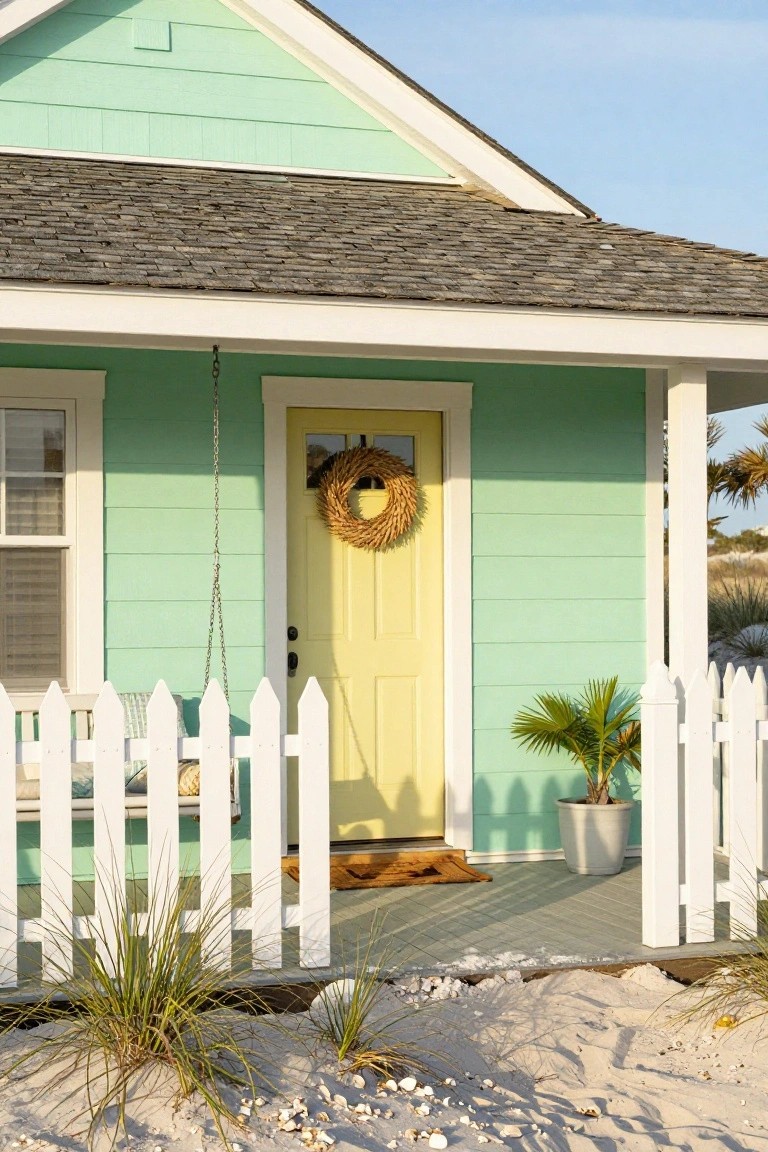
A soft pale green like this mint shade makes a house feel fresh and easygoing, especially near the beach. But adding a bright yellow door turns up the fun without going overboard. That warm yellow pulls your eye straight to the front entry, making the whole place more welcoming right away.
This look suits coastal homes or cottages best, where the green blends with nature and the door adds a sunny spark. Go for a mustard or ochre yellow to keep it grounded with the green tones. White trim around the windows and porch helps everything stay crisp and clean.
Textured Green Paint Adds Real Character
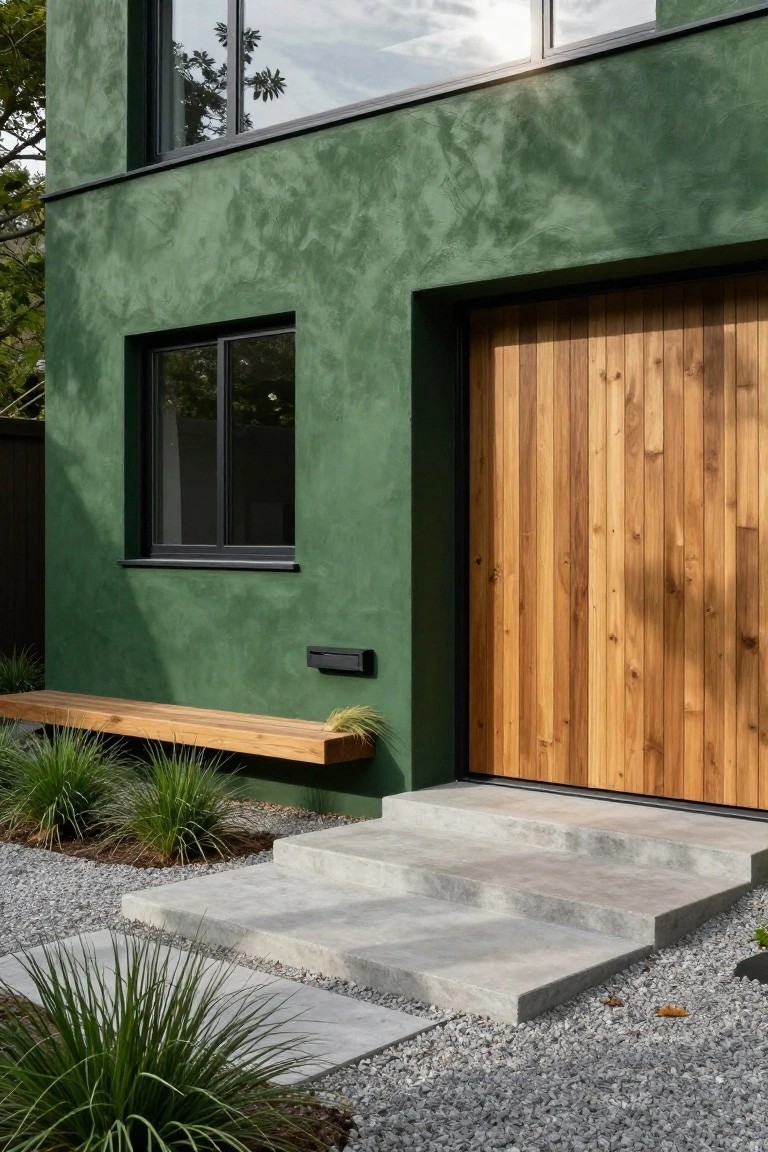
This shade of green has a rough, plaster-like texture that makes a plain house wall come alive. It’s not your smooth flat paint. That bumpy surface catches the light in interesting ways, and it looks right at home next to the warm wooden garage door and bench. The combo feels modern but still welcoming, especially with the simple gravel yard.
Paint this on a boxy contemporary house where you want some personality without going bold. It suits spots with natural surroundings, like trees nearby. Just make sure your wood trim is a good match, something oaky and vertical to pull focus to the entry. Skip it on super traditional homes, though. It needs clean lines to shine.
Red Front Door on Green Siding
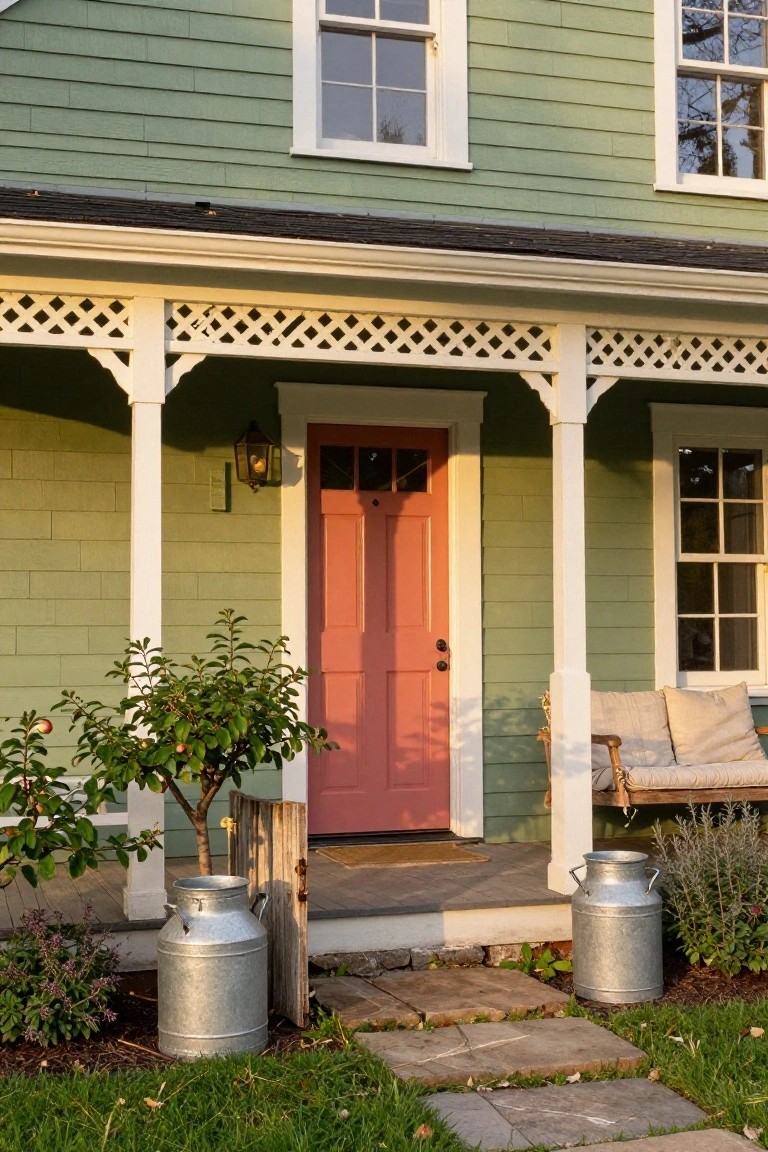
A bright red door like this one gives a green house some real kick right at the entry. The soft green paint on the siding stays calm, but that door pulls your eye in and makes the whole front porch feel more alive. White trim around the columns and a simple swing keep things balanced, nothing fussy.
This works great on older farmhouses or cottages where you want folksy charm. Pick a true red, not too orange or pink, and pair it with neutral plants or old milk cans by the steps for that lived-in look. Skip it on super modern houses, though. It suits shady spots best, where the color really glows.
Deep Green Clapboard Siding
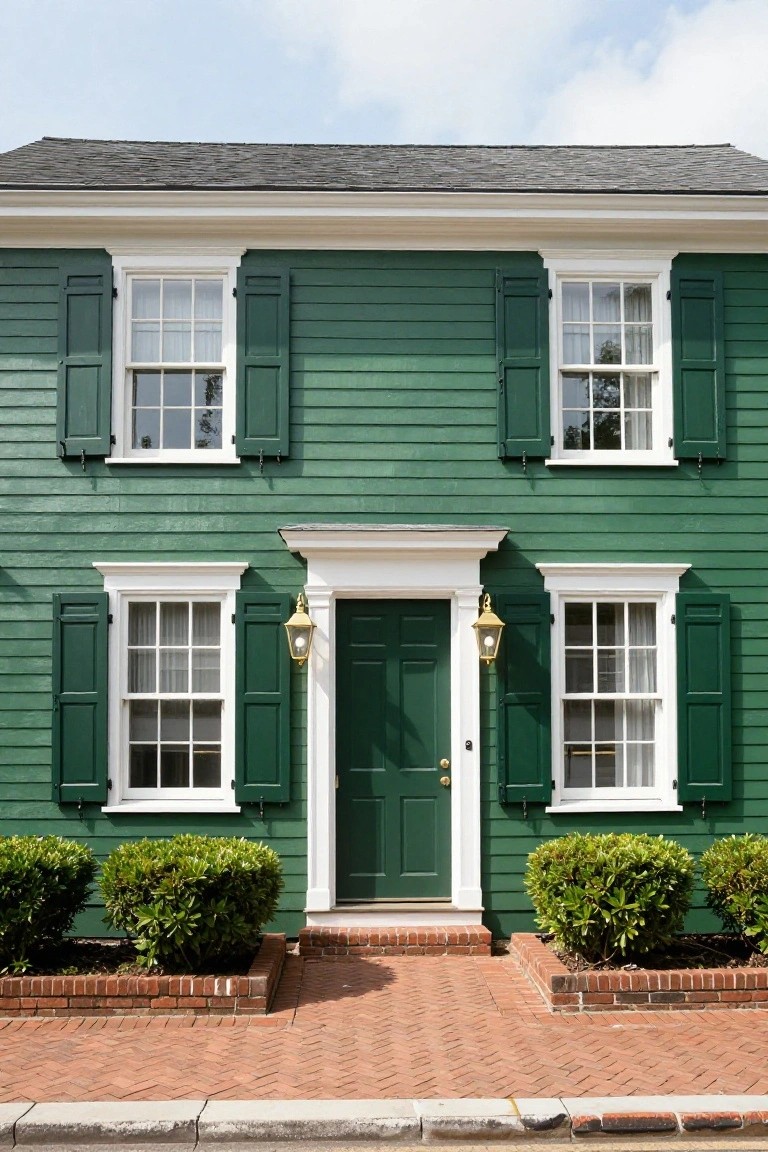
A deep green paint like this on clapboard siding brings out the best in a traditional house. It feels fresh and lively without going overboard. The white trim on the windows and door keeps things clean and lets the green do the talking. Those matching green shutters add a little extra without clutter.
This color works well on two-story homes with simple lines, especially in older neighborhoods. Go for a shade that’s not too bright, maybe with some blue undertones. Keep landscaping basic, like low boxwoods by the entry. Just watch the sun exposure, since darker greens can show dirt faster on sunny sides.
Soft Green Corrugated Siding

This soft green paint on corrugated metal siding turns a simple barn into something with real character. It picks up the tones from fields and trees around it, making the whole place feel settled in. Notice how it works with those hay bales stacked nearby. The color stays muted enough not to shout, but it gives the building some quiet personality.
Use this shade on farm-style homes or workshops where metal siding is already in play. It suits rural spots best, especially with wood posts or doors for contrast. Just make sure the green isn’t too yellow if your area’s got warmer light. Easy to maintain too.
Frequently Asked Questions
Q: How do I test these paint colors on my green house before buying a whole can? A: Grab a few sample pints and paint big swatches right on the siding. Walk around at different times of day to see how the light changes them. That way you avoid surprises come full-paint day.
Q: What trim colors make my sage green house feel more modern? A: Go for matte black or charcoal gray trim. It adds crisp edges that sharpen the soft green. Pair it with brass hardware for extra punch.
Q: Will sunny colors like yellow fade fast next to my evergreen siding? A: Stick to muted yellows with good UV protection. They hold up better than bright ones in full sun. And wipe them down yearly to keep the vibe fresh.
Q: Can I mix two colors from your list on doors and shutters only? A: Yes, layer a bold accent like terracotta on the door with navy shutters. It pulls personality from the green without overwhelming. Just keep the body color subtle.
