

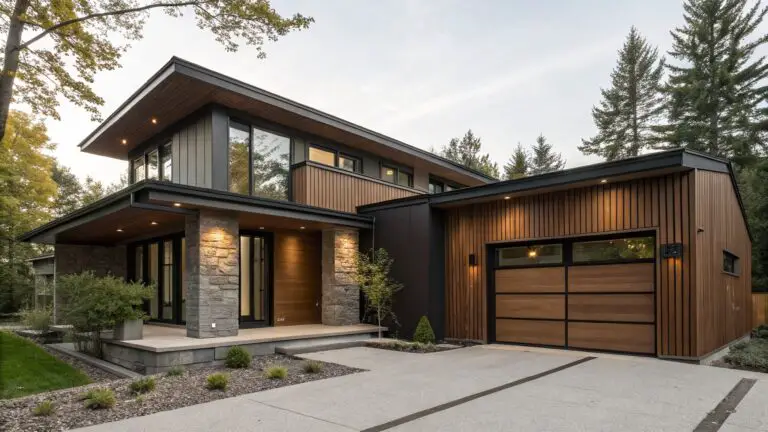
I’ve driven by houses where dark brown siding hits you first from the curb, grounding the whole facade in a way that feels solid and intentional.
The real test comes down to pairing it with rooflines that slope just right and materials that weather evenly over time.
I remember tweaking a friend’s entry surround with matte black accents against the brown, and it suddenly made their porch read as the focal point from the street.
Bold doesn’t mean busy, though, especially when trim lines stay crisp to let the color do the heavy lifting.
A couple of these setups seem primed for real-life tweaks on most homes.
Dark Brown Wood Cladding Builds Curb Appeal
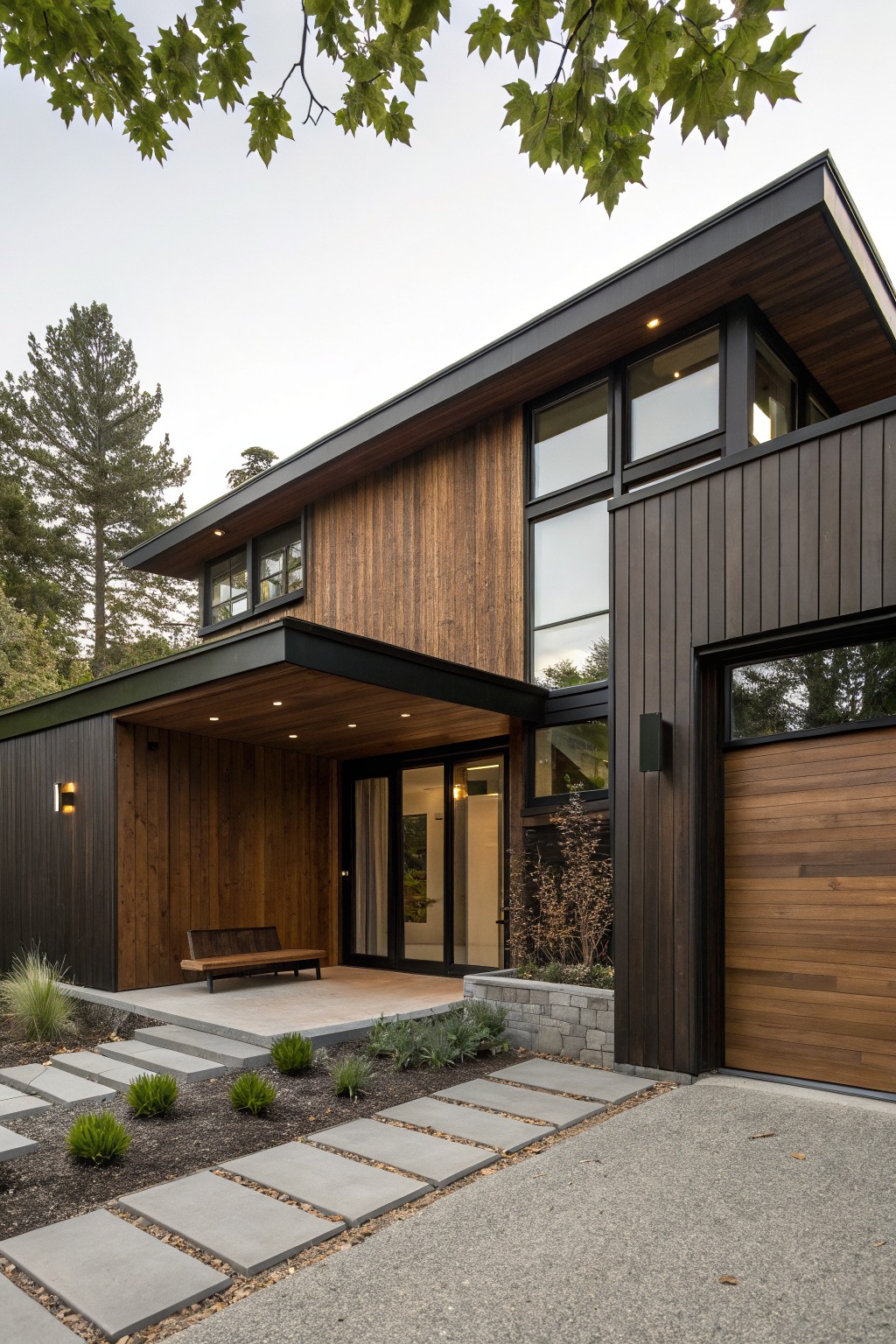
Dark brown wood cladding gives this house a solid, grounded look that fits right into its wooded spot. The vertical planks in deeper shades mix with lighter wood accents around the entry and garage, creating layers without much fuss. It stands out against the trees and pulls the eye to the big glass windows and simple black frames.
You can pull this off on a sloped lot or anywhere you want the house to feel like part of the landscape. Go for cedar or similar that’s stained dark for weather resistance. Pair it with concrete steps and minimal plants at the base, like here. Just keep the trim clean so it doesn’t get busy.
Recommended Products
![VAN VOTZ Waterproof Wood Filler [Half-Pint, Cedar] - Exterior Grade Wood Repair in 18 Paintable and Stainable Colors. Strong Adhesion and Durability for Outdoor Wood in All Weather Conditions.](https://m.media-amazon.com/images/I/41DeZztOsTL._SL500_.jpg)
MADE FOR OUTDOORS: Resists snow, sun, rain and humidity with advanced formulation developed for performance in the most extreme outdoor conditions.

STAIN & SEALER IN ONE: This high-performance formula functions as both a deep-penetrating stain and a professional-grade sealer. It enhances the natural beauty of the wood grain while providing a durable barrier against moisture and environmental wear.
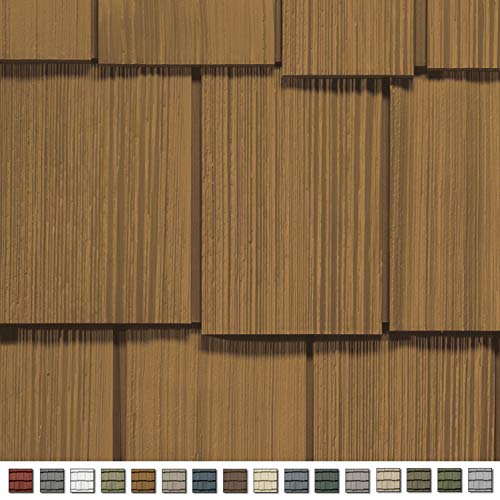
Patented PanelThermometer for precise installation True Texture finish technology
Dark Brown Rustic Timber Cottage
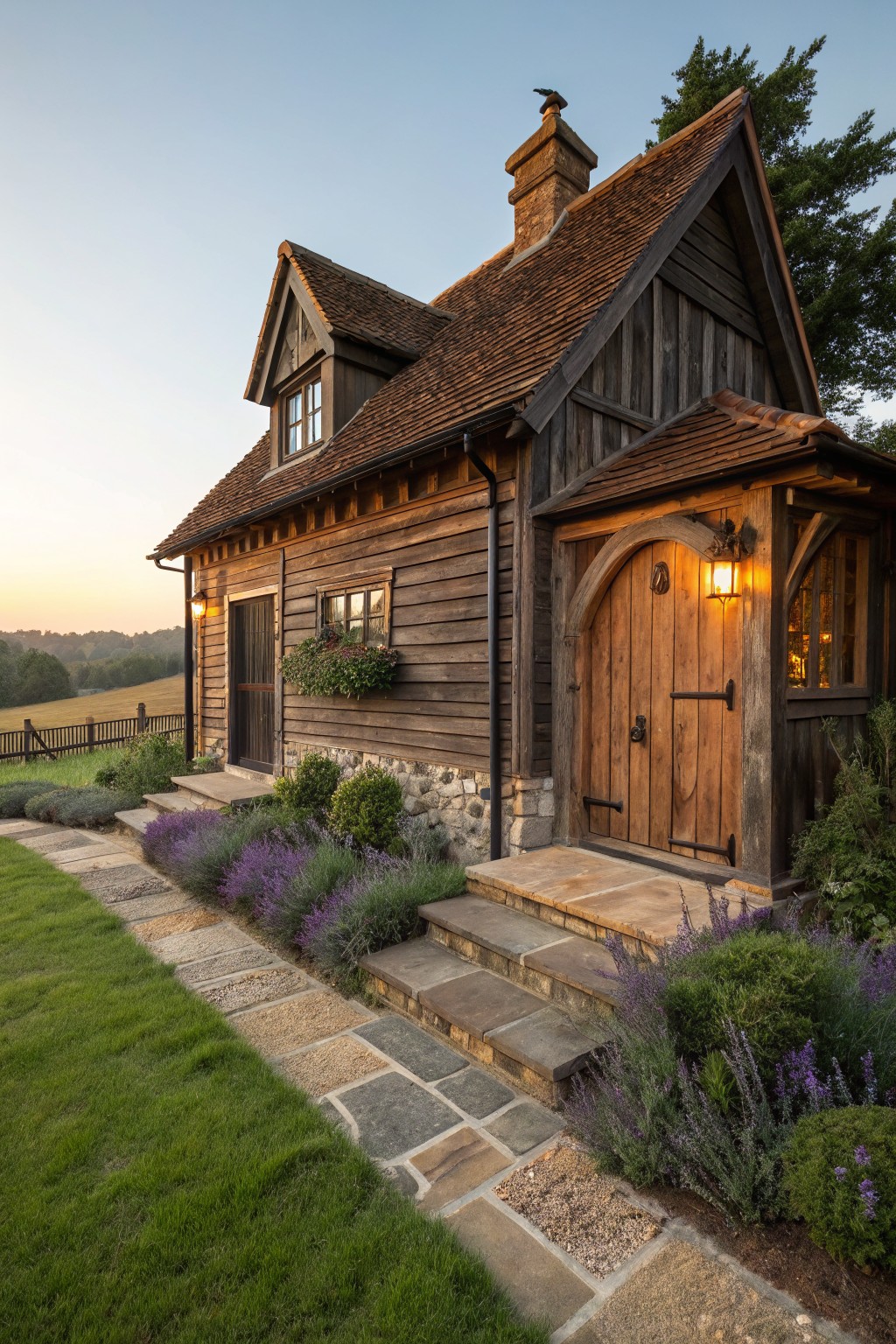
Dark brown wood siding like this pulls off a bold look on a small cottage. The heavy timber framing and that big arched door give it real presence without trying too hard. Paired with a stone base it feels solid and grounded. Folks notice it right away.
You can pull this off on country homes or even tucked into suburbs if the lot allows. Stick to weathered cedar or reclaimed wood for the tone. Add low plants like lavender along the path to keep the focus on the house. Skip bright colors nearby or it loses punch.
Dark Brick House with Timber Accents
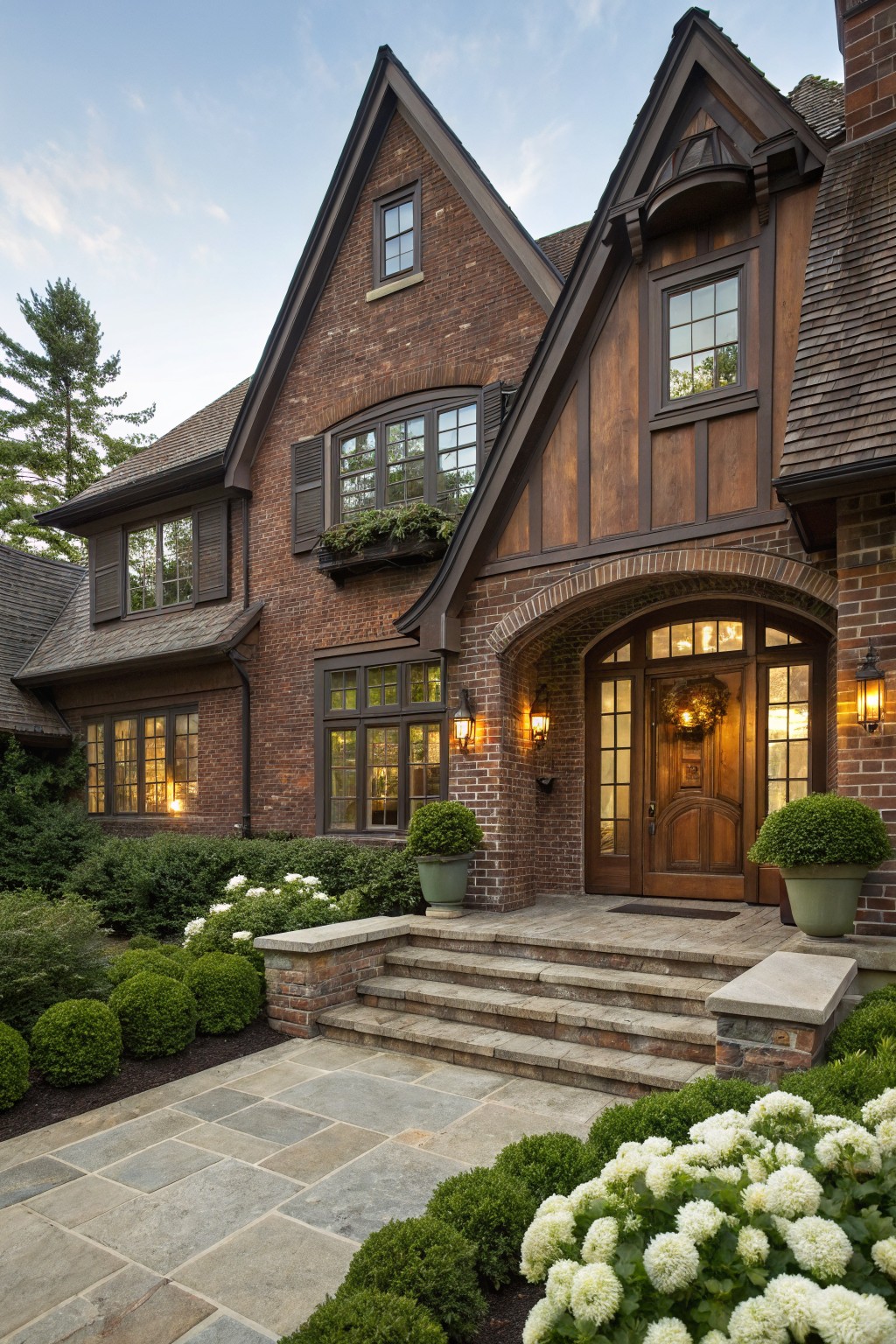
Dark brick like this pulls together a house exterior in a way that’s bold but not overdone. The deep brown tones on the brick walls mix right into the timber framing around the windows and gables. It gives the whole front a solid, grounded feel. Those wood shutters and the arched entry door keep everything in the same family of shades. No bright pops. Just strong lines.
You can pull this off on homes with some height, like two stories or gables that catch the eye. Pair it with stone steps and simple lanterns at the door for extra punch. It suits older neighborhoods or spots with trees around. Skip it if your lot is too small. The dark shades eat up light, so good landscaping helps open it up a bit.
Dark Brown Wood Siding
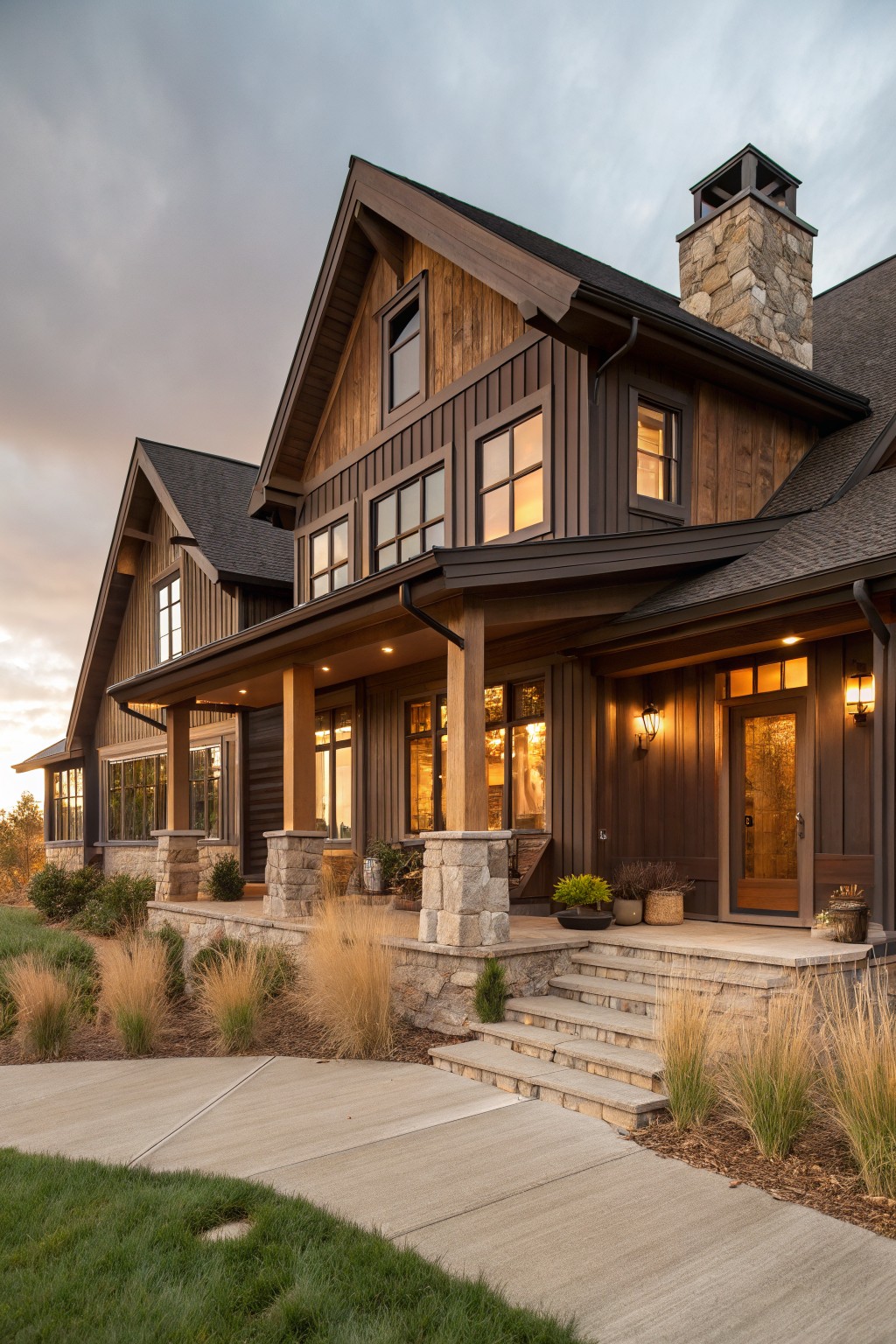
Dark brown wood siding like this gives a house real presence. It wraps the whole facade in a deep, rich tone that feels solid and grounded. The mix with stone on the chimney and porch posts adds just enough texture without pulling focus. At dusk, it picks up the warm light nicely, making the home look welcoming but strong.
This works best on bigger homes in wooded or rural spots where the color blends with nature. Pair it with lighter stone bases to keep things from feeling too heavy. Skip it on small lots, though. It can overwhelm if there’s not enough yard around. Go for cedar or similar boards that weather well over time.
Dark Brown Wood Cladding on a Modern Facade
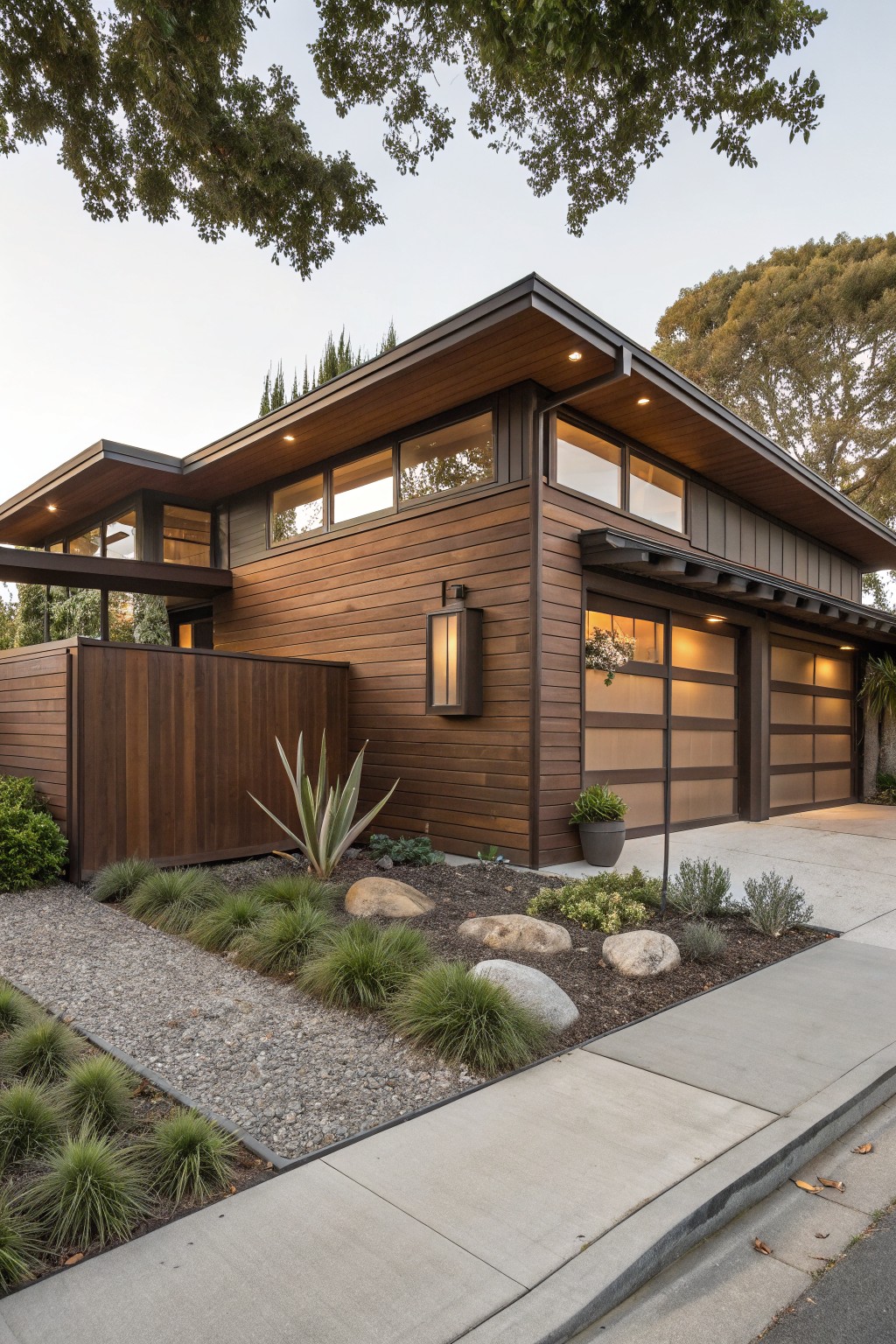
Dark brown wood cladding like this turns a simple modern house into something that really stands out. The vertical planks give the whole exterior a warm, solid feel without overwhelming the clean lines. Here, it wraps the walls smoothly and pairs with those frosted garage doors for a bit of contrast that keeps things interesting.
You can pull this off on low-slung homes in milder climates where wood holds up well. Stick to drought-tolerant plants and gravel paths out front to let the siding do the talking. Just make sure to seal it properly so the color stays rich over time.
Dark Brown Siding on a Wooded Cabin Facade
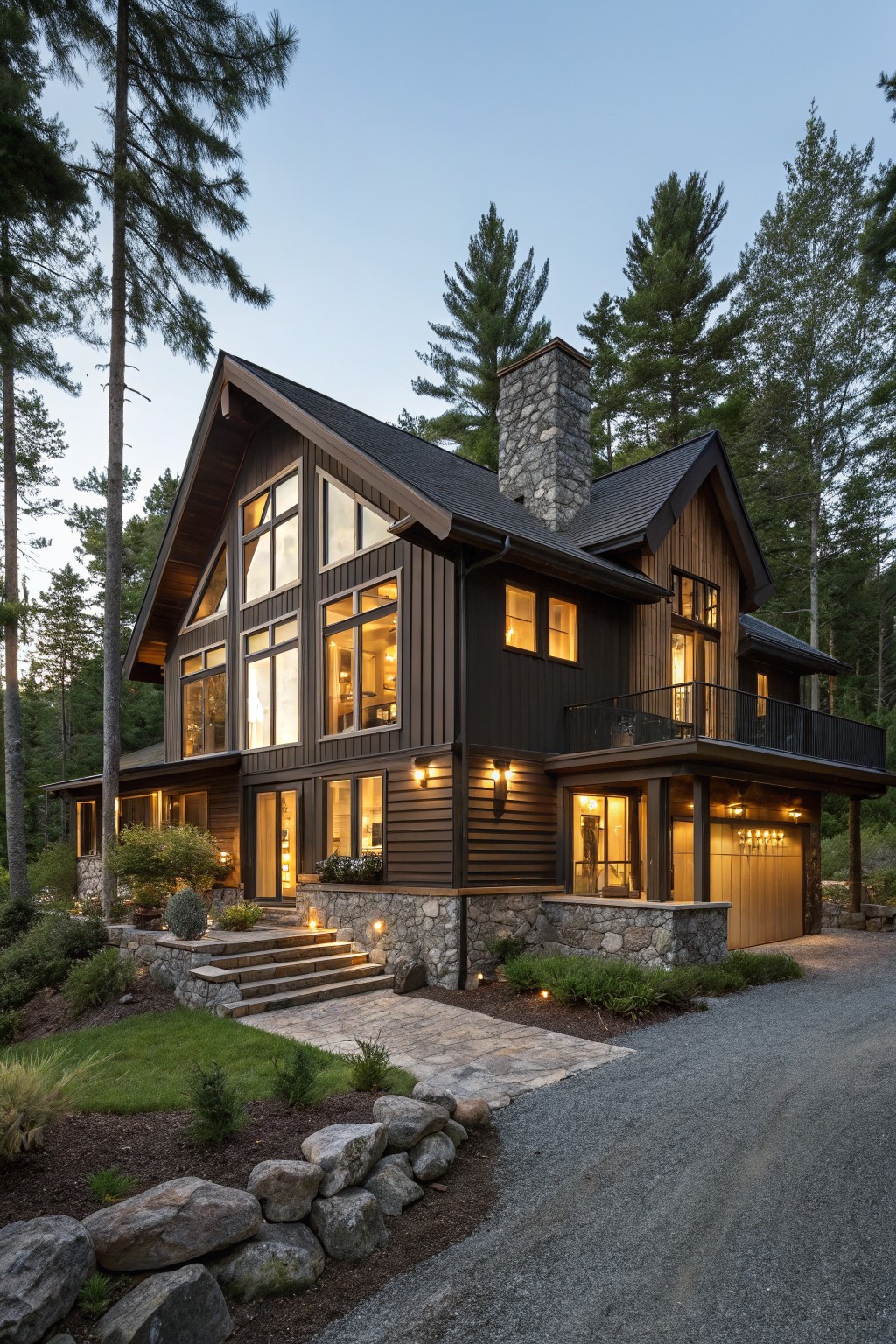
This look uses dark brown vertical siding over a sturdy gabled structure, paired with a tall stone chimney that rises right up the front. It pulls the house into the surrounding pines without blending away. Those big triangular windows in the main gable let light spill out at dusk, making the whole thing feel alive and settled in place.
Try it on a sloped lot where trees frame the view. The wood siding holds up well in damp woods, and the stone base keeps things from looking too light. Just make sure the windows are energy efficient, or heating bills climb fast in cooler spots.
Dark Wood Porch Over Stone Walls
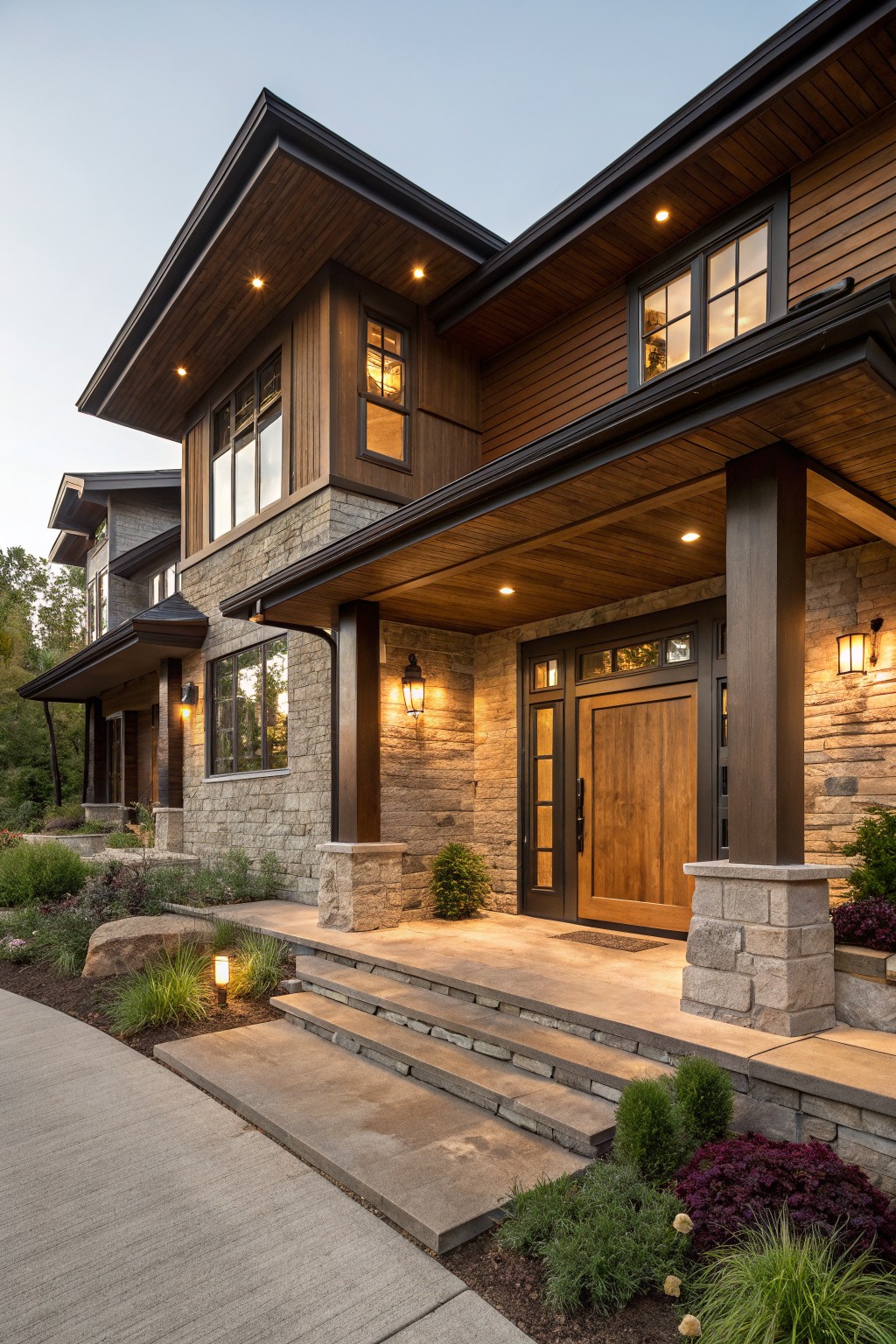
Dark wood makes a real statement here on the porch beams, siding, and that big front door. Paired with the light stone base and pillars, it gives the house a solid, grounded look. The covered overhang pulls everything together and keeps the entry feeling protected. It’s bold but not overdone.
This setup works best on bigger homes where you have room for the porch posts and steps. Go for cedar or pine stained dark brown to match the vibe. Add simple lanterns like the ones shown for night time. Skip it on small lots, though. The scale needs space to breathe.
Dark Wood Arched Entry Doors
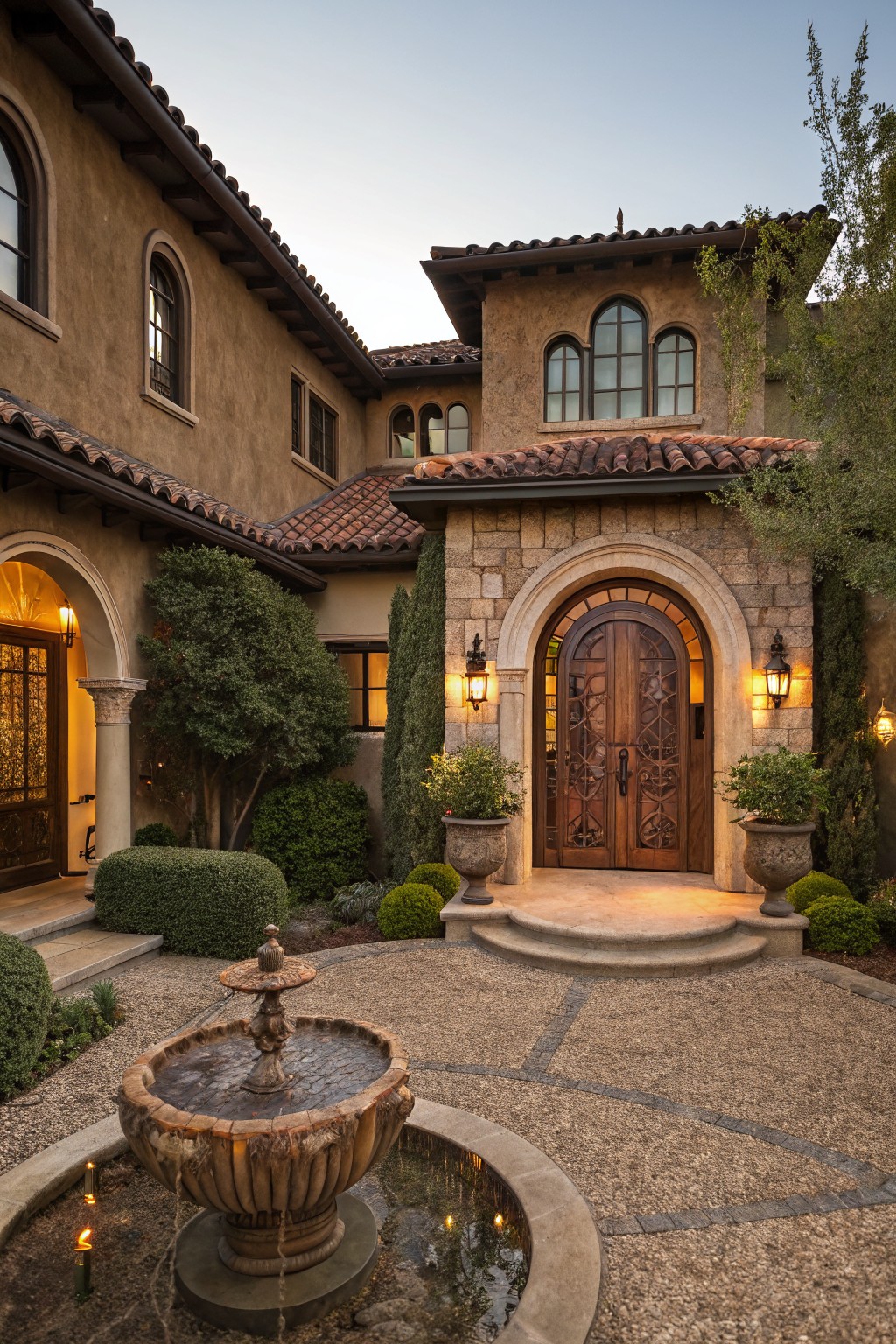
Tall double doors in dark wood set into a stone arch make a strong statement right at the front. The carved details and heavy hardware pull your eye immediately, especially against lighter stucco walls and tile roofs. Lanterns on either side add just enough light to highlight the texture without overdoing it.
This look fits homes with a bit of Mediterranean or Spanish style, where you want the entry to feel grand but not fussy. Go for it on a house facing the street or in a courtyard setup. Keep the surrounding plants simple so the doors stay the focus… and make sure the wood is sealed well for weather.
Brick Facades with Dark Upper Cladding
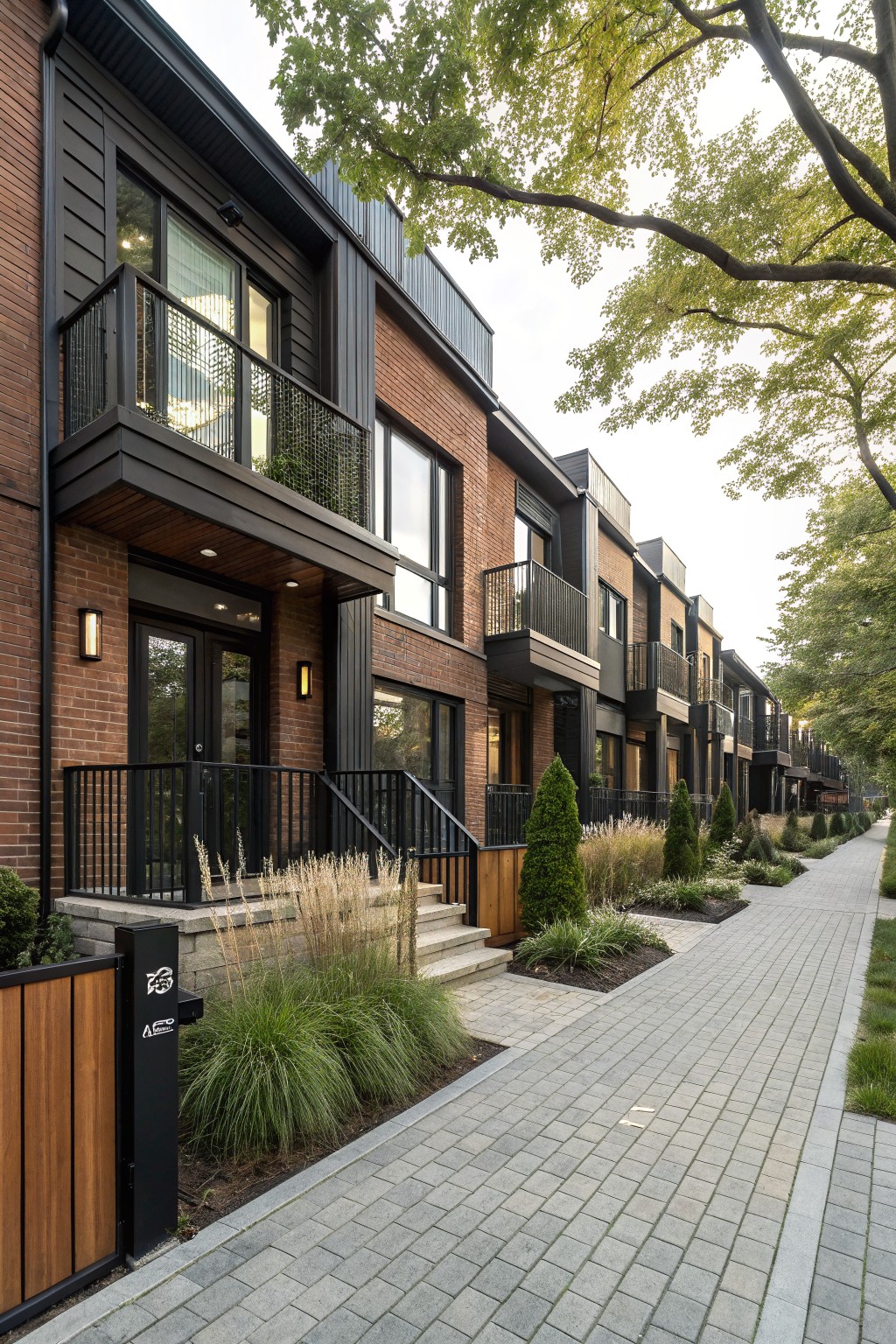
Warm red brick forms a solid base here, while dark panels and black metal accents take over above. That shift gives the house a grounded yet sleek feel. Black railings on the balconies and entry frames pull it all together without overwhelming the brick’s texture.
This setup suits row houses or townhomes on tree-lined streets. Keep landscaping simple, like tall grasses and low shrubs along the path. It holds up well in neighborhoods where you want modern punch but not a full glass box look.
Vertical Wood Slats at the Entry
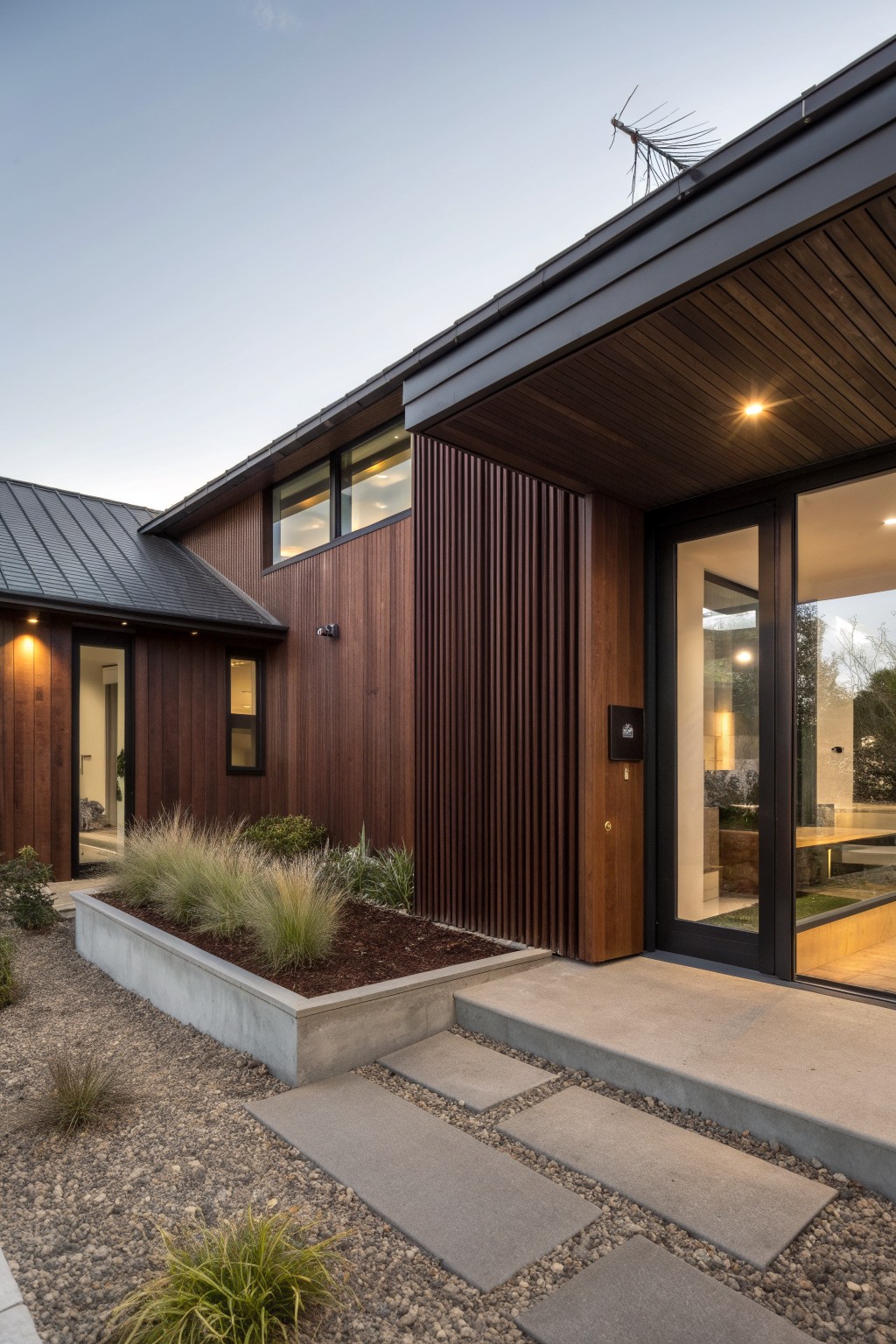
Tall vertical slats in dark brown wood run up the side of this entryway. They add a nice rhythm to the facade and frame the glass door without making things busy. The wood picks up on the rest of the house siding but stands out more with that slatted look.
You can pull this off on a modern or craftsman-style home where you want the front door to feel protected yet open. Keep the path simple with gravel and steps. Add grasses in low planters nearby to tie it to the ground. It hides a bit of the interior view too, which is practical.
Dark Timber Framing on Stone Facade
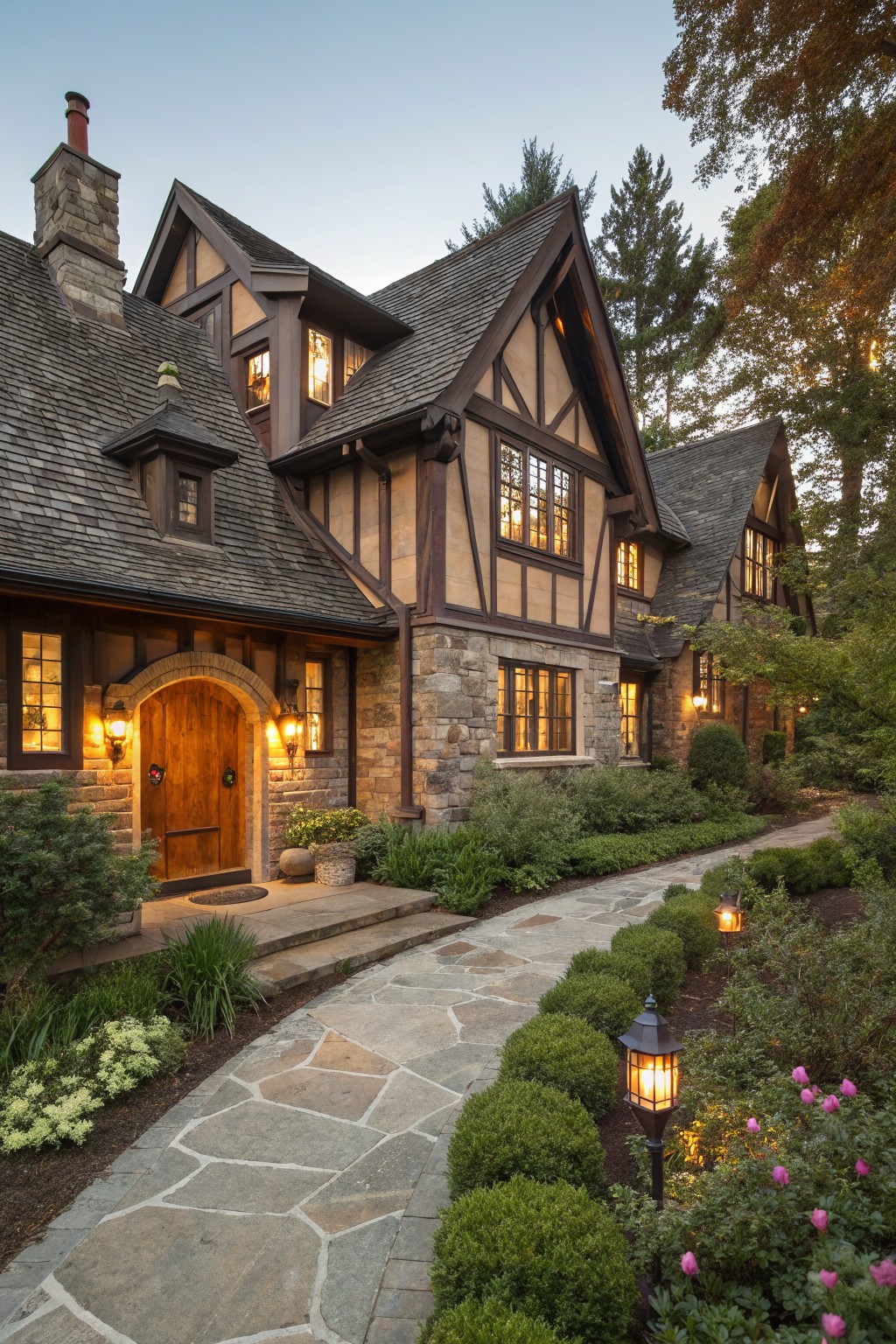
Dark timber framing gives this house a bold, sturdy look that pulls from old English styles. The deep brown timbers cut sharp lines across the lighter stone walls, creating real impact up close or from down the street. It’s a simple way to make a big statement without extra color or fuss.
This works best on larger homes tucked into wooded areas, where the style blends right in with the trees. Frame your entry with an arched door and flank the path with boxwoods and lanterns, like here. Skip it on tiny lots, though. The scale needs room to breathe.
Dark Wood Slats for Bold Exterior Texture
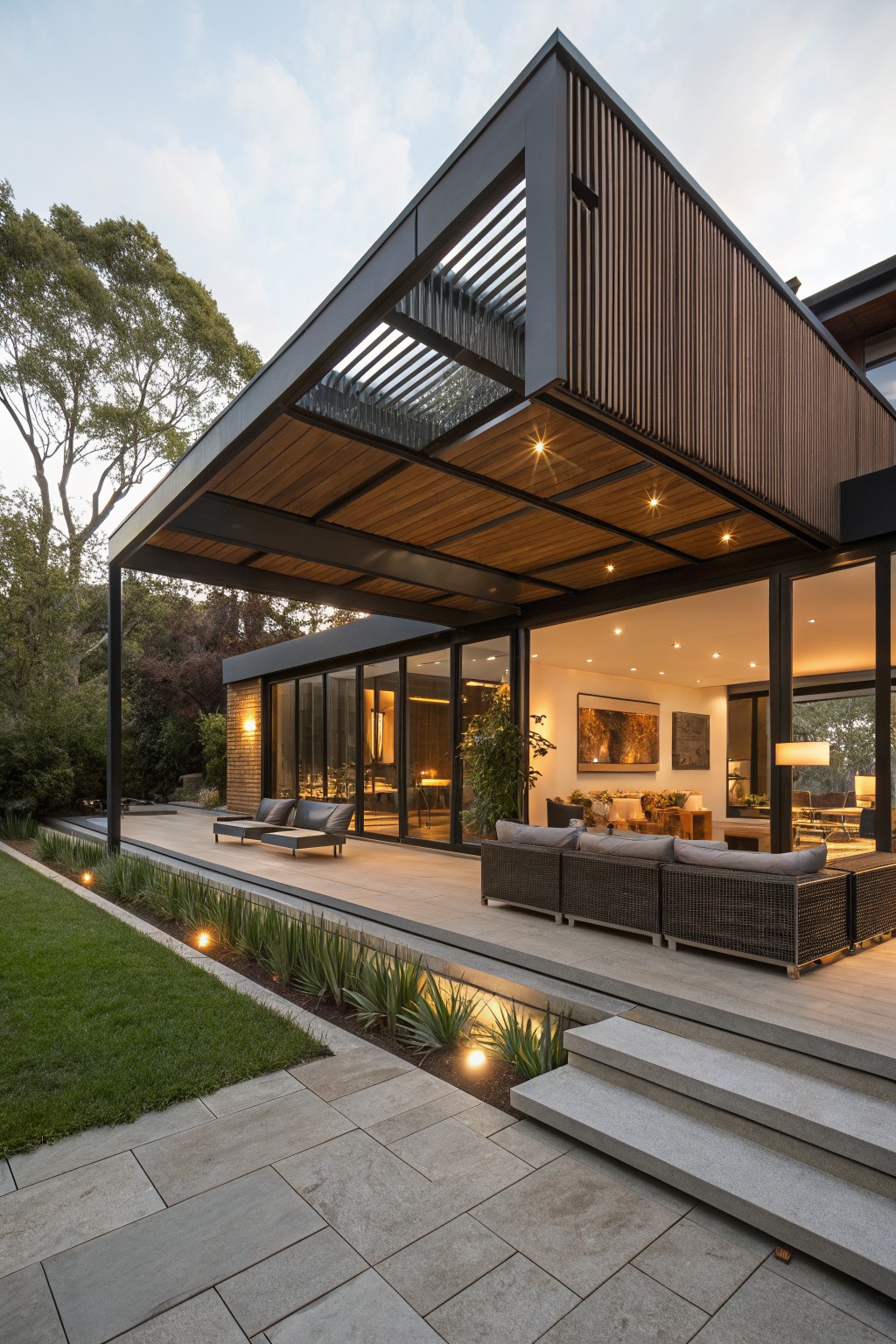
Dark wood slats running vertically along the walls and overhang give this house a strong, modern edge. The brown tones pull from nearby trees, making the place feel connected to the yard without blending in too much. Paired with black metal frames, they add depth and let light filter through nicely.
You can use these slats on a side wall or over a patio cover to shield from sun while keeping an open feel. They work best on homes with clean lines, especially if you have some trees around. Just make sure the wood is treated for weather, or it might gray faster than you want.
Dark Siding with Warm Wood Garage Doors
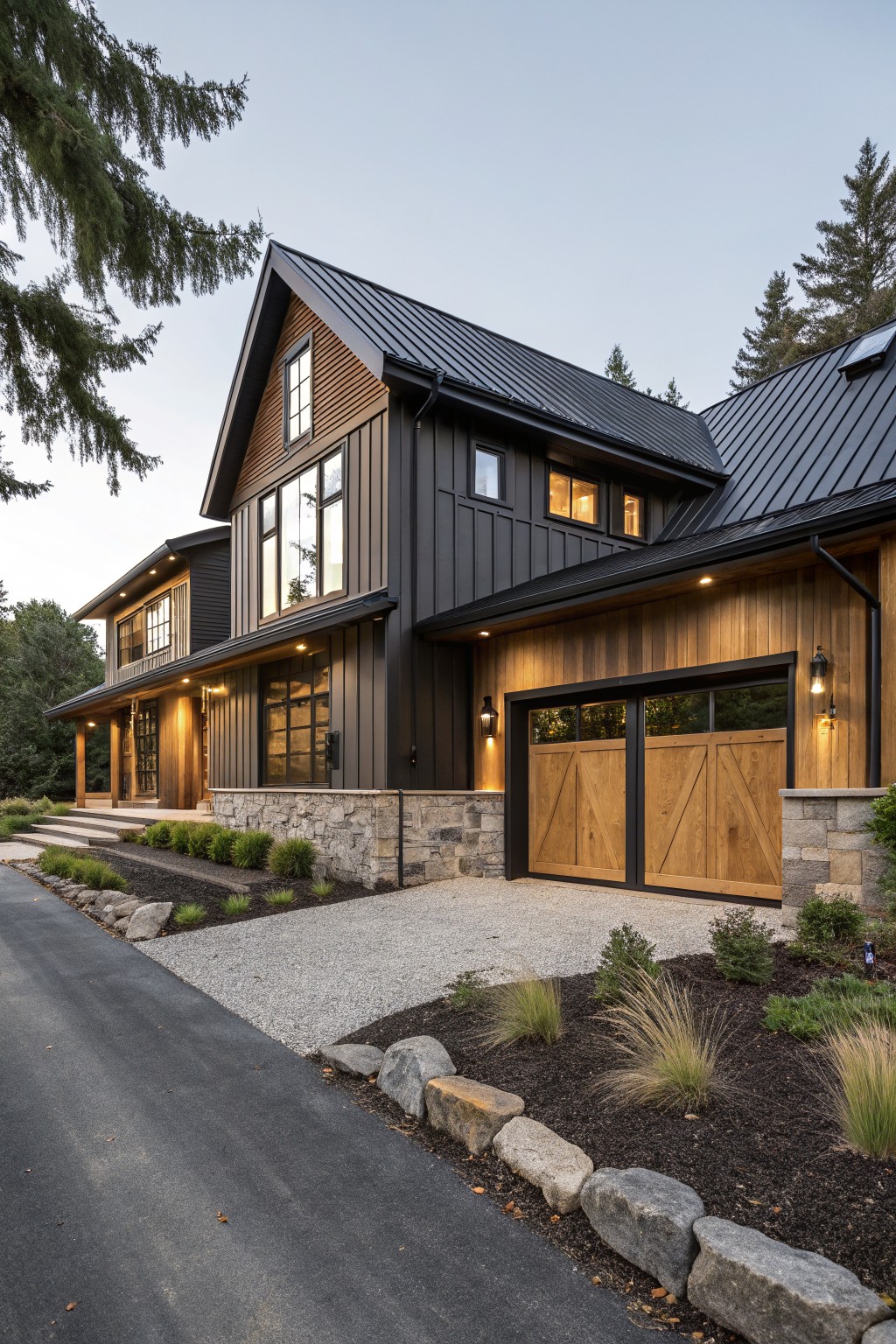
Dark siding like this charcoal board-and-batten gives a house real presence. Pair it with a black metal roof, and the whole facade pulls together into something bold yet settled. Then those warm cedar garage doors step in. They add a natural touch that keeps the dark tones from overwhelming everything.
This setup suits homes tucked into trees or on bigger lots. It fits a modern farmhouse style without going overboard. Go for sealed cedar or similar on the doors to hold up outdoors. Skip it on small houses, though. The scale needs room to breathe.
Dark Brown Wood Siding with Warm Cedar Overhang
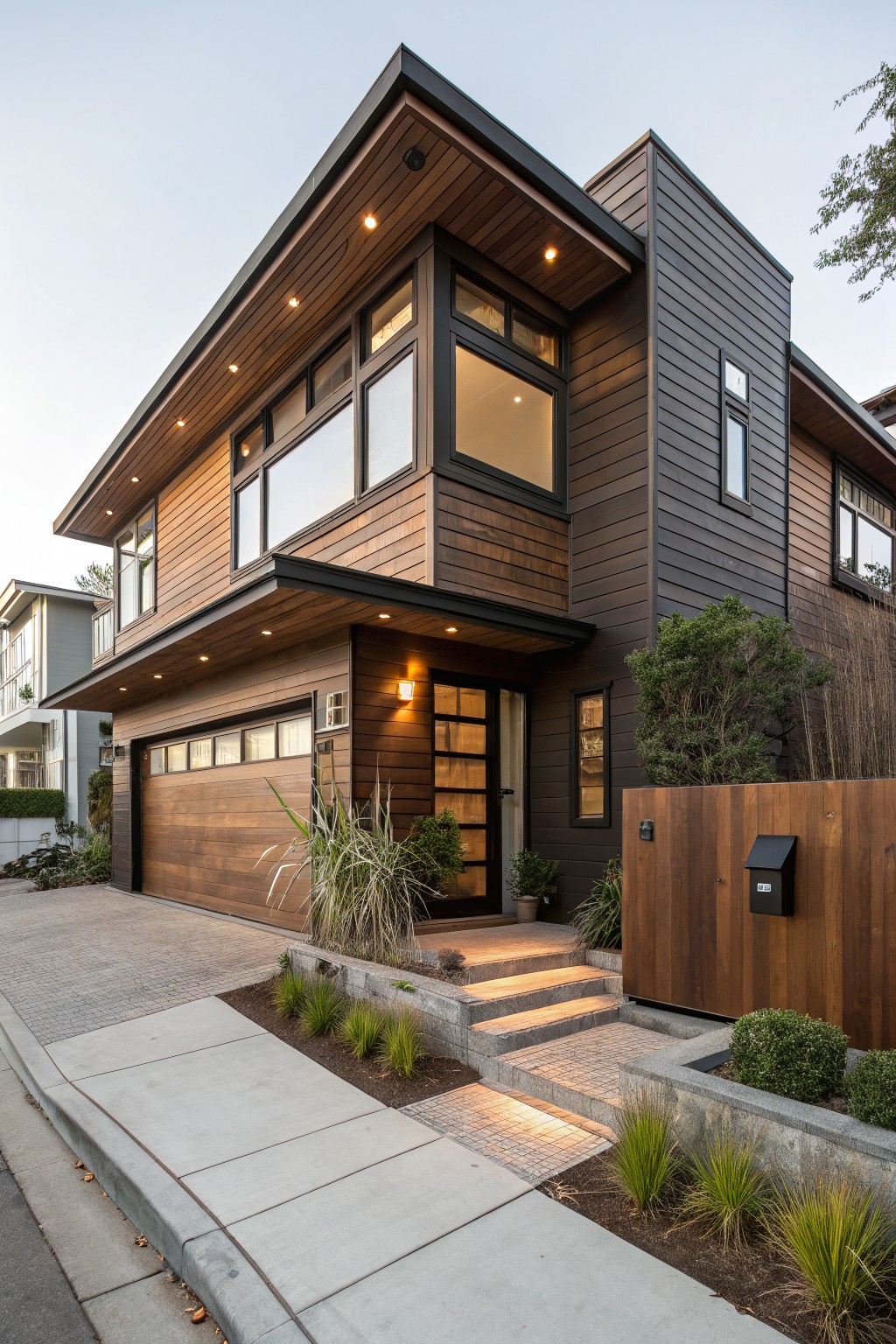
One way to make a modern house really pop is layering wood tones like this. The main siding is a deep, almost blackish brown that gives the facade a solid, grounded feel. Then the upper section cantilevers out in warmer cedar planks, plus matching garage doors and entry accents. That simple contrast adds depth right away, and the large windows keep it from feeling too heavy.
You can pull this off on a two-story home facing the street, especially where you want curb appeal without bright colors. Stick to clean lines and minimal landscaping, like grasses along the base. It works best in mild climates where wood holds up well. Just make sure the stains match your local weather.
Dark Brown Shingle Exterior
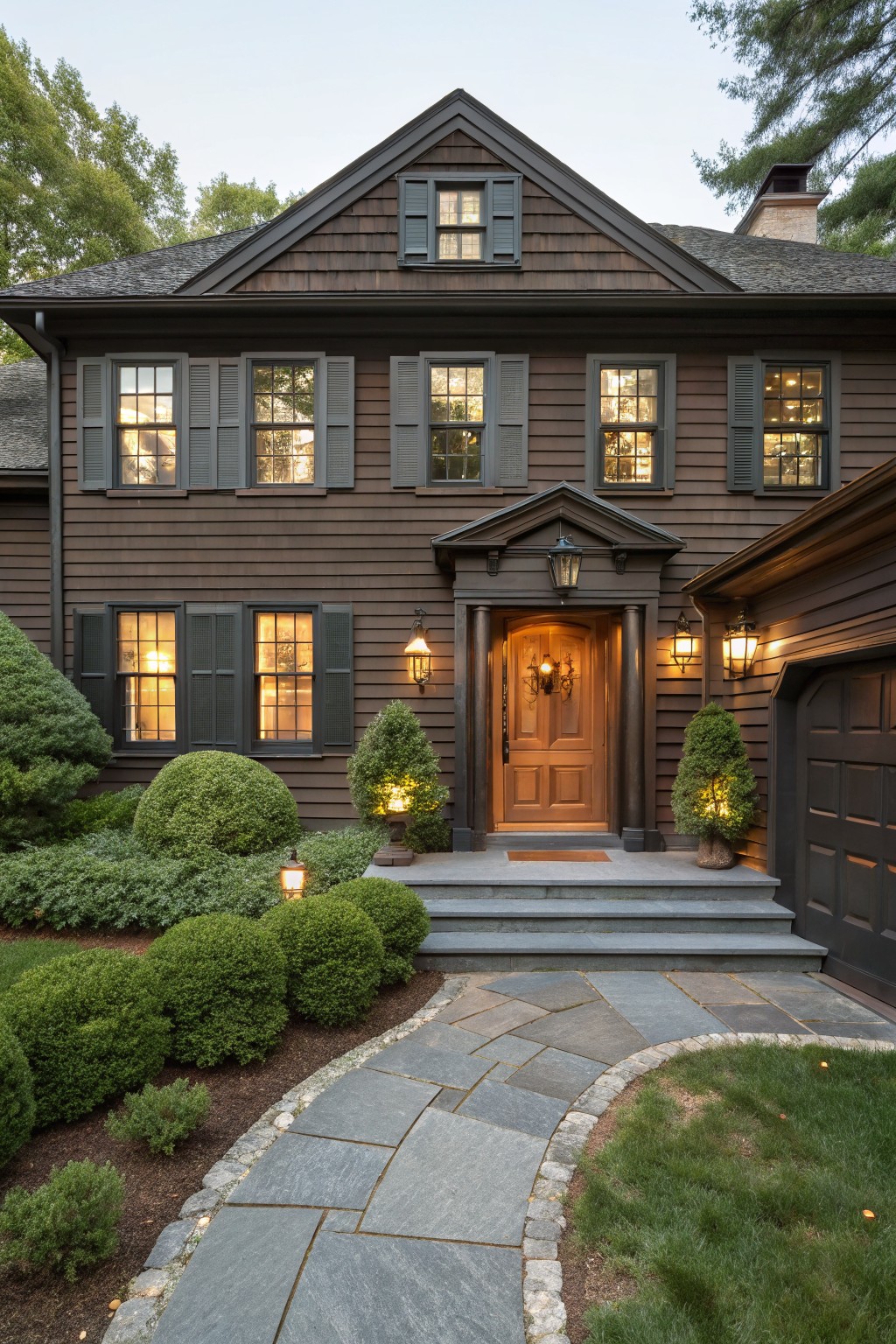
Dark brown shingles cover this house from roof to base, pulling everything together into one solid look. The deep tone stands out against green trees and grass, and it feels right at home in a wooded spot. Warm lights from the windows and entry add a cozy glow without overpowering the color.
This style fits older neighborhoods or rural settings where you want the house to blend yet command notice. Use it on gabled roofs and pair with simple stone steps or boxwood shrubs nearby. Keep trim dark too, so it doesn’t fight the shingles.
Recommended Products

PACKING SIZE:Package includes 8 pieces Brown 3-Tab asphalt shingles,size of each piece 39.4" by 13.1" and cover approximately 12.8 square feet;

15-YEAR SYSTEM - BUILT TO OUTLAST ORDINARY ROOF COATINGS: Permakote Shingle’s elastomeric ceramic membrane flexes through heat, cold, and rain without cracking. Ceramic microspheres (60,000 psi crush strength) reinforce the dried film for additional impact, salt spray, wind lift and wind driven rain resistance.

✔ THICKER 5/8" BUTT FOR ADDED DURABILITY – 18" tapersawn cedar shingles with a heavier 5/8" thickness provide improved strength, weather resistance, and longer lifespan compared to standard perfection shingles.
Dark Brown Wood Cladding on Modern Homes
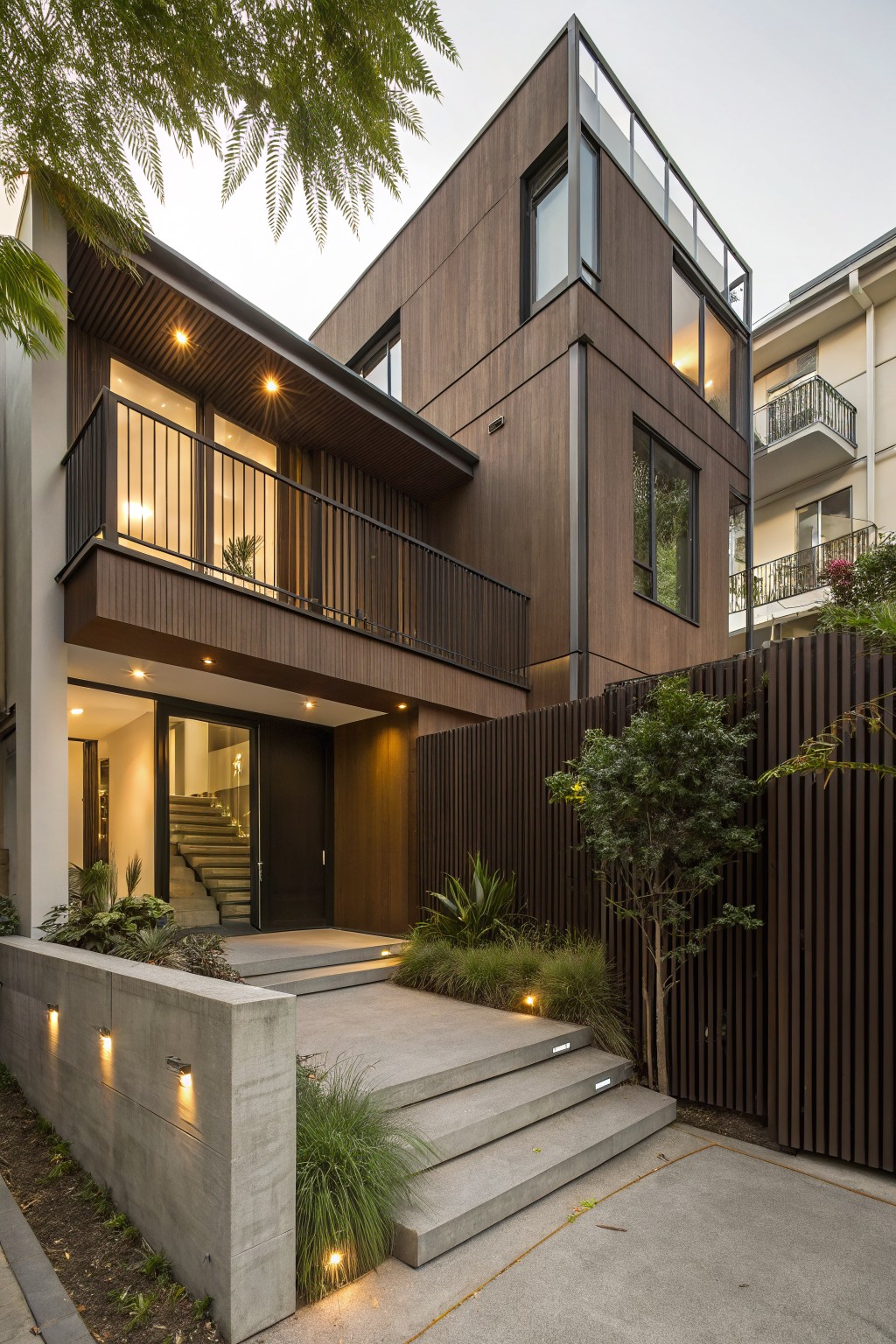
Dark brown wood cladding like this wraps the house in a way that feels solid and warm at the same time. The vertical slats run up the full height, making the two-story facade look taller and more unified. It pulls the eye right to the entry without any fuss, and the black railing on the balcony adds just enough contrast.
This approach works best on boxy modern homes where you want curb appeal that lasts. Use it on the main walls and avoid overdoing it on every surface…stick to concrete steps or light stone nearby for balance. It’s great for spots with trees or fences around, keeping things grounded.
Dark Wood Cladding on Sloped Sites
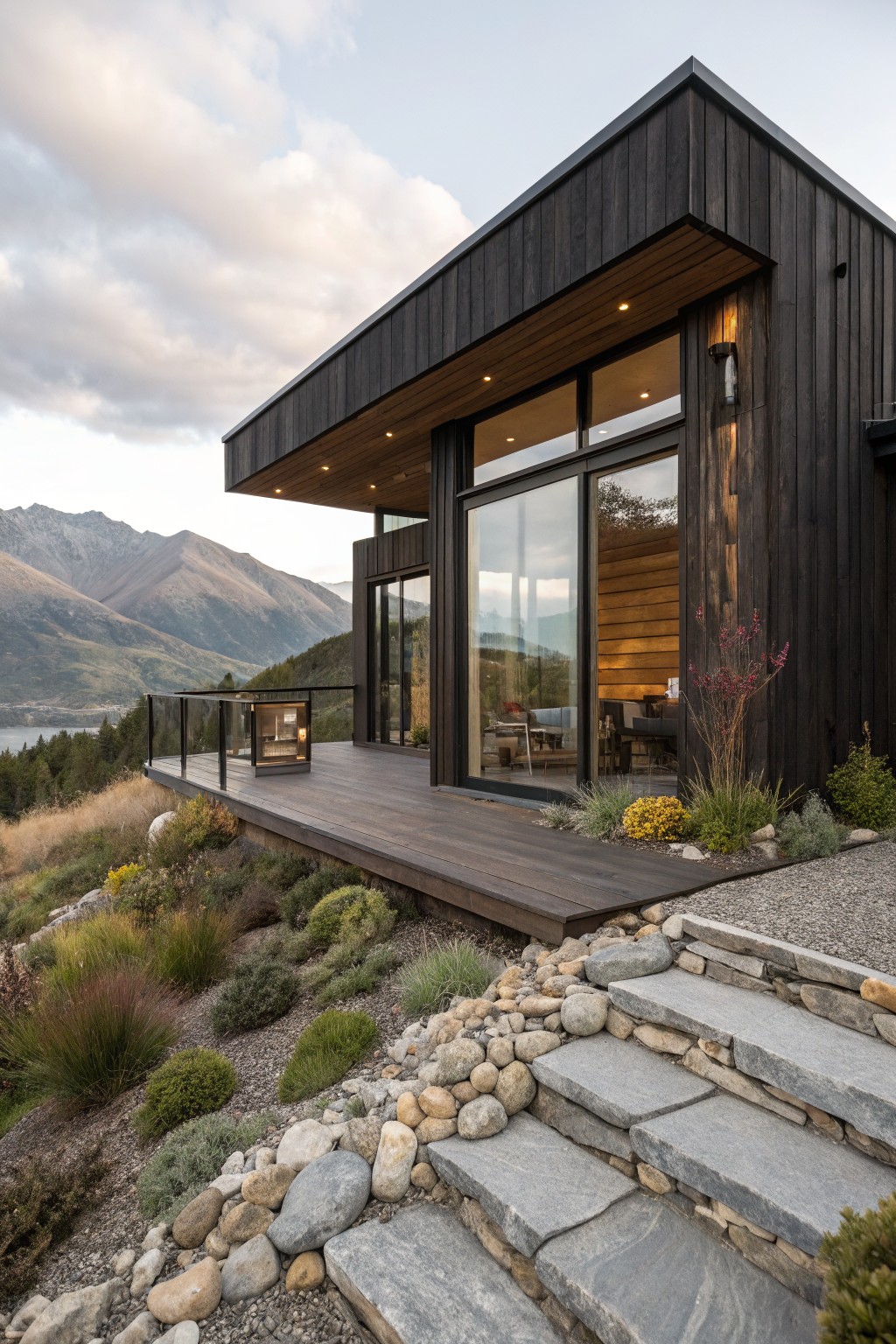
Dark wood cladding like this gives a house real presence, especially when it’s perched on a hillside. The deep brown tones pull from the surrounding trees and rocks, but the clean lines and overhang keep it looking sharp and modern. Big glass walls let the views do their thing without stealing the show from the wood itself.
This approach works best for vacation homes or properties with killer scenery. Use it on cantilevered sections to create shade on the deck below, and add stone steps for easy access. Just seal the wood well to handle weather changes, since it sits right in nature’s path.
Modern Dark Wood Cladding Overlooks the Lake
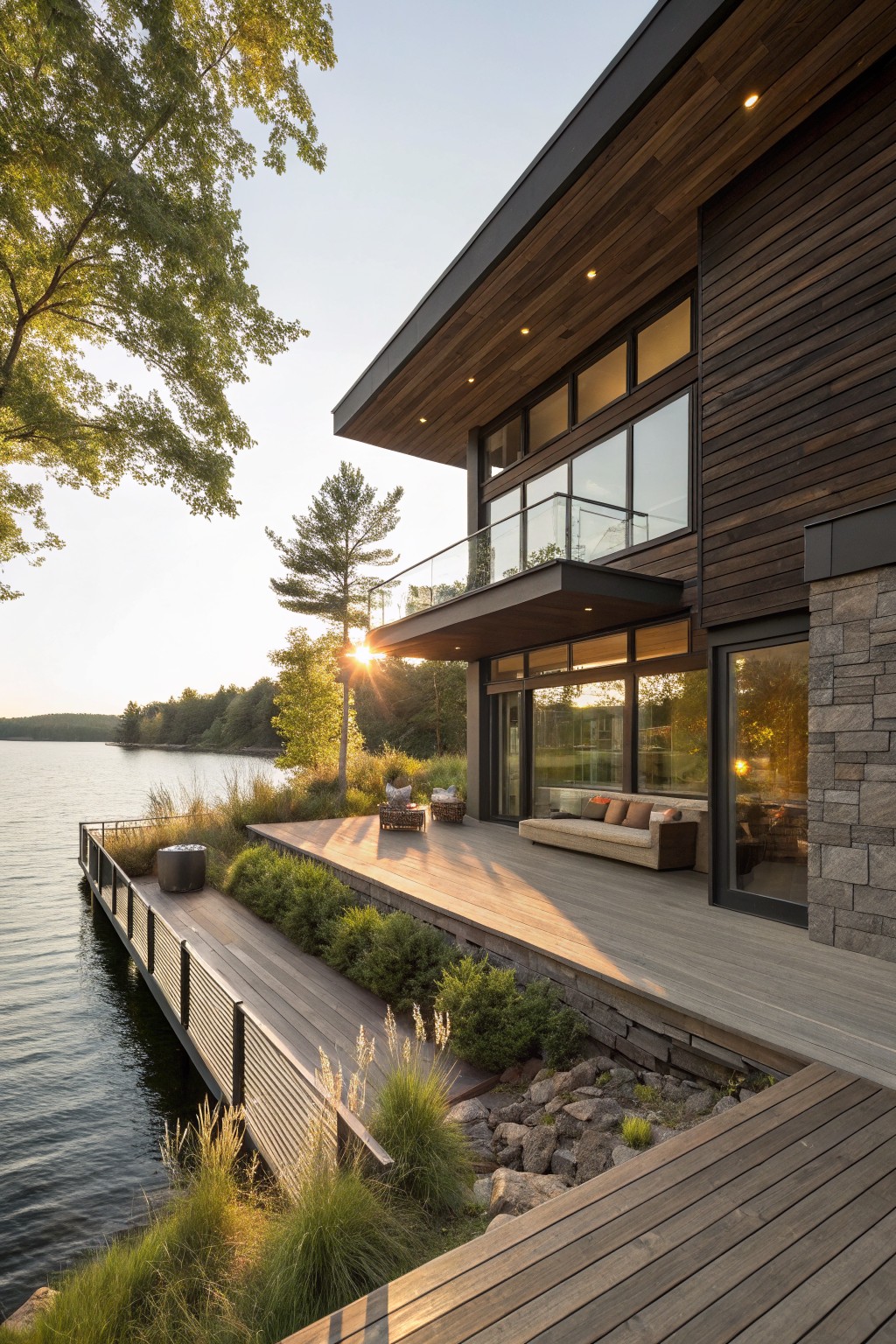
Dark brown wood siding wraps this contemporary house in a way that feels bold yet right at home by the water. The horizontal planks give the facade a clean, modern rhythm, and they pick up on the surrounding trees without blending in too much. Stone at the base adds some weight, keeping the look grounded while big glass windows let the inside flow out to the deck.
This kind of cladding works best on homes in wooded or waterfront spots where you want that strong visual punch. Go for cedar or similar that’s stained dark for weather resistance. Pair it with clean lines and a few stone accents to avoid it feeling too heavy. Skip it on super sunny sites, though. The wood can fade if not sealed well.
Frequently Asked Questions
Q: Does dark brown exterior paint fade fast in the sun?
A: Pick high-quality exterior paint with UV blockers. It holds color through seasons. Hose off pollen buildup each spring to keep it sharp.
Q: What trim color pops best against dark brown siding?
A: White trim frames everything clean and bright. It draws eyes to windows and doors right away.
Q: Will dark brown work on a smaller house without shrinking it?
A: Add vertical siding lines or tall lanterns. They stretch the look upward. And mix in a few stone accents for balance.
Q: How do I test dark brown before committing to the whole house?
A: Paint large board samples. Hang them in different spots for a week… watch how light plays off them at dawn and dusk.
