

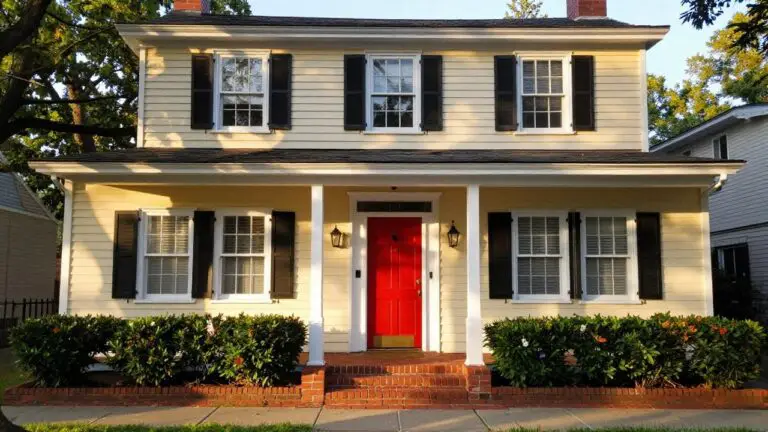
Walking past houses with fresh exterior paint always catches my eye.
The colors that really work pull the siding, trim, and landscaping into one cohesive look without overwhelming the architecture.
Too often people choose shades that look great on the fan deck but wash out or clash once the sun moves across the sky.
I tried a soft green on our garage door last year, and it picked up unexpected yellow notes from the nearby maples by midday.
Test these kinds of combinations on your own walls in real light before committing.
Soft Pale Yellow Siding
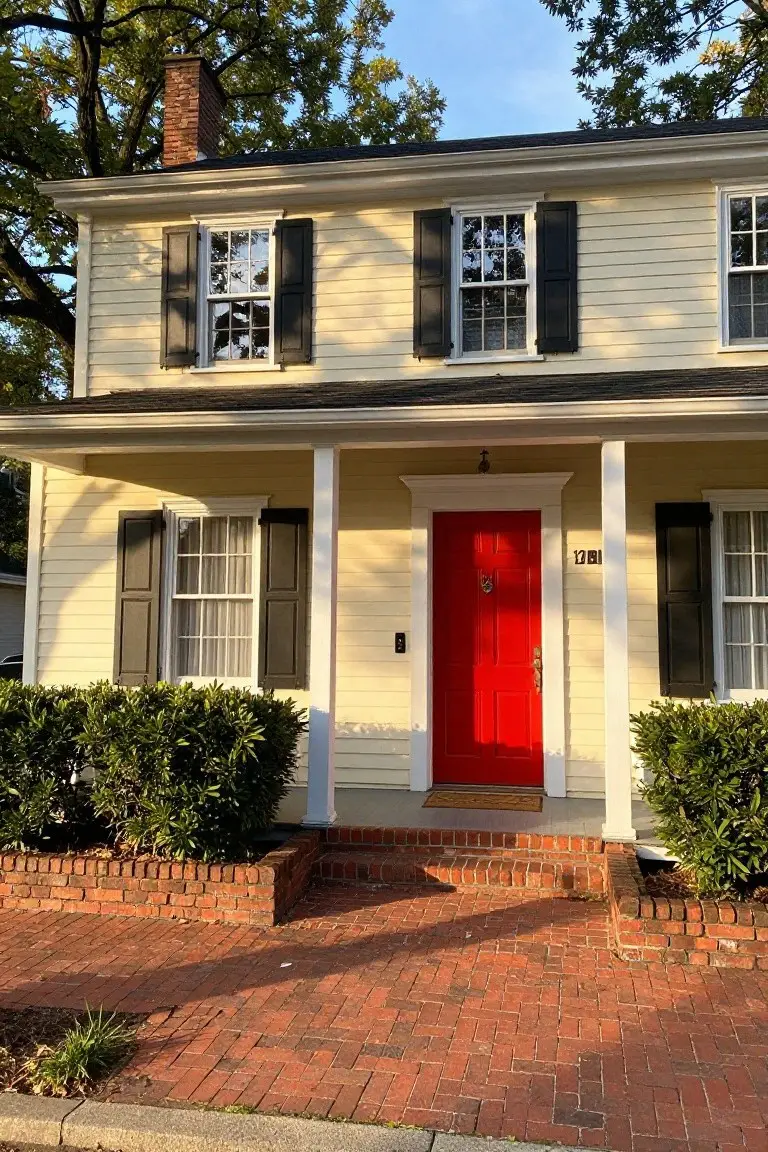
This soft pale yellow on the house body looks closest to Sherwin Williams Greek Villa or Benjamin Moore Pale Yellow, maybe Behr Wheat Bread too. It’s a warm light yellow that feels right at home on clapboard siding. Folks like it because it brightens up the front without shouting, especially on classic houses.
The yellow has those gentle buttery undertones that warm up next to brick and dark shutters. Pair it with white trim and something bold like that red door you see here. It shows best in good light, on east or south-facing spots.
Crisp White Walls
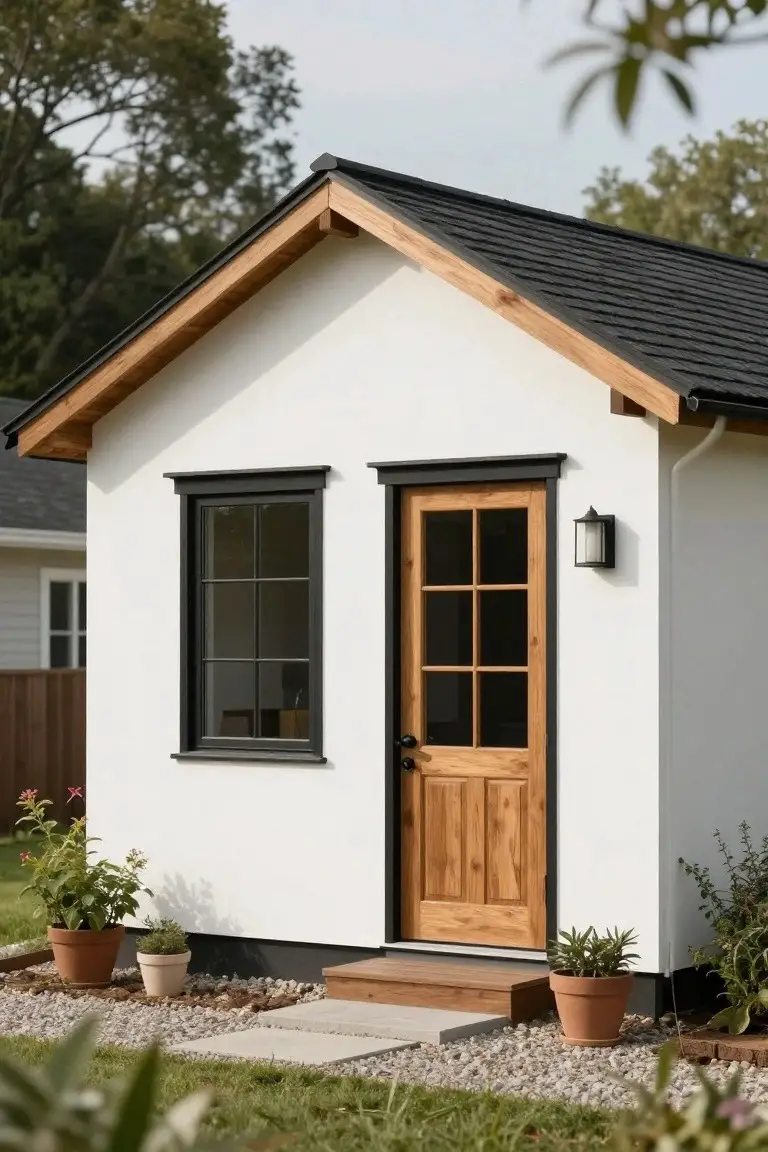
This little backyard shed shows off a clean white exterior paint. It’s that bright white family, closest to Sherwin-Williams Extra White or Benjamin Moore Chantilly Lace, maybe Behr’s Ultra Pure White too. What stands out is how it lets the wood door and black window frames pop without overpowering them. Gives a fresh, simple curb appeal boost.
Neutral undertones keep it versatile in good light. Works best around green lawns or plants like these. Pair with natural cedar tones on doors. Just watch for dirt buildup in dusty spots.
Pale Blue Siding
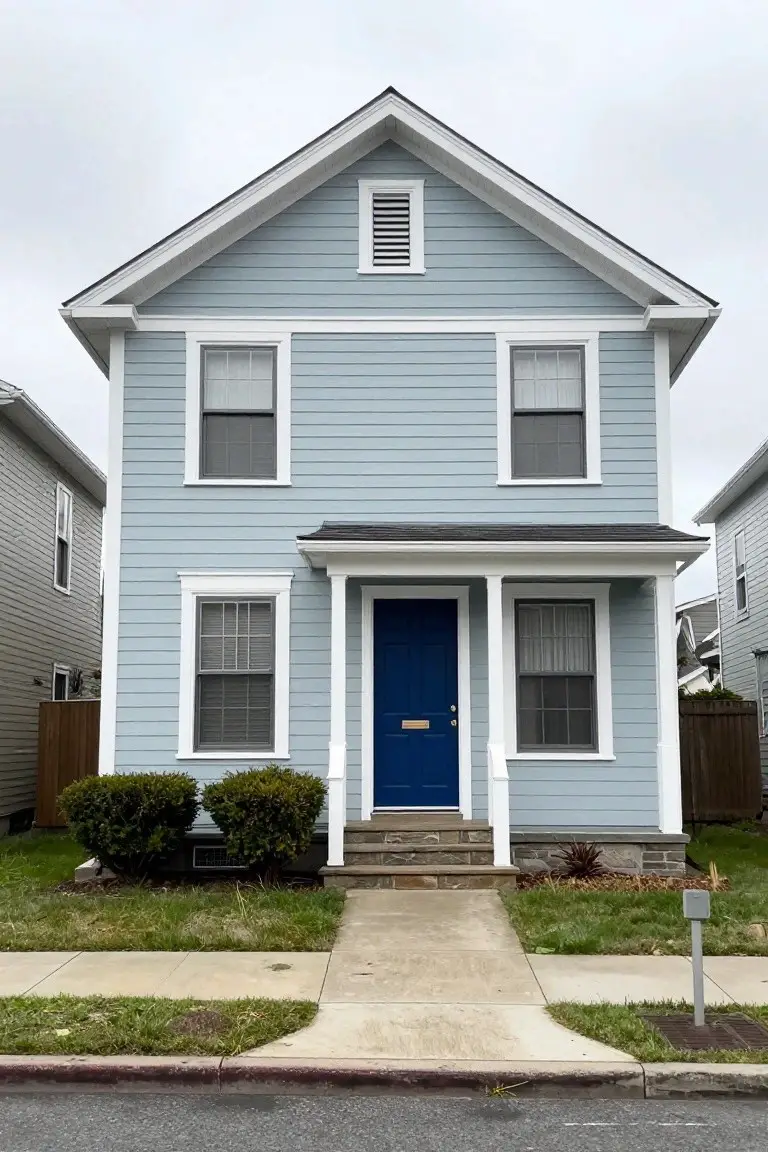
This soft pale blue on the house body reads very close to Sherwin-Williams Rainwashed or Benjamin Moore Palladian Blue, with Behr’s Breezeway as another good option. It’s a cool light blue that feels fresh without being too bright. Homeowners like it because it gives a house that clean, welcoming look from the street, especially on simple siding like this.
The color picks up gray undertones in cloudy weather, which keeps it from looking too baby-blue. It works best on homes with white trim and wood steps. Pair it with a deeper blue door for some punch, but watch that it doesn’t wash out in full sun.
Warm Brown Siding
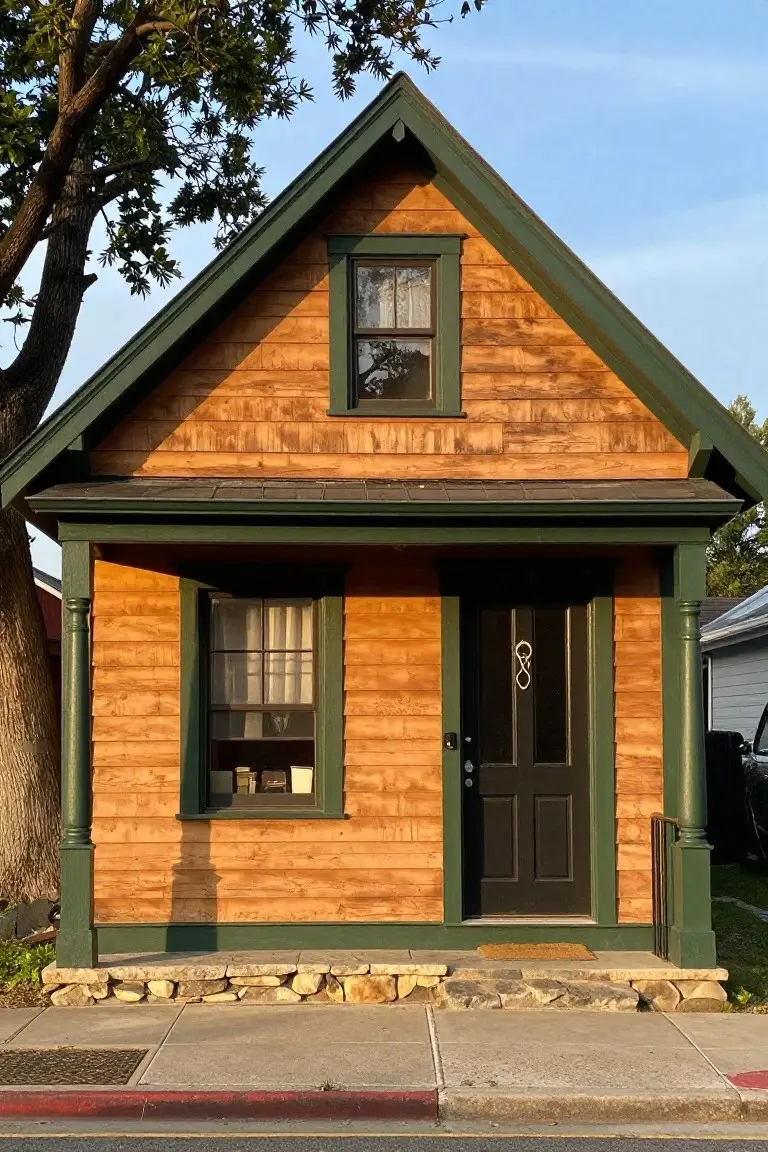
This siding shows off a warm brown that’s got a cozy, earthy vibe. It reads close to Sherwin-Williams’ Alder Buckthorn or Benjamin Moore’s Manchester Tan, with Behr’s Barnwood in the mix too. On wood shakes like this, it just settles in nice, making the house look settled and welcoming without trying too hard.
The orange undertone warms it up in sunlight. Green trim sets it off well, like you see here with the porch posts. Try it on Craftsman or cottage homes, especially where there’s some landscaping nearby. Steer clear if your spot’s all stark modern lines.
Pale Mint Green Siding
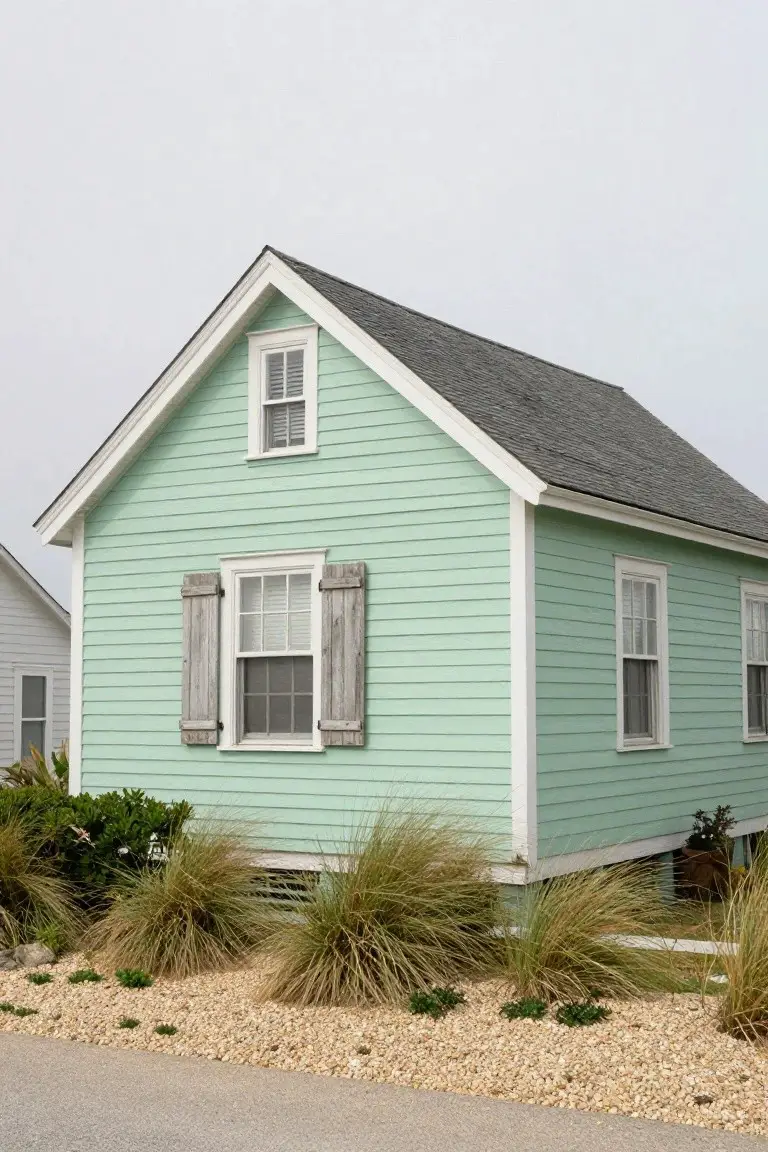
This pale mint green on the house siding gives off a fresh coastal feel. It looks closest to Sherwin-Williams Sea Salt, or Benjamin Moore Palladian Blue, with Behr Willow Whisper reading pretty similar too. It’s a light cool green that brightens up the whole place without overwhelming it. Folks like how it makes even a small home look airy and inviting.
That subtle blue undertone helps it stay crisp in bright light. White trim pops against it nicely, and those wood shutters add some warmth. Try it on beachy spots or sunny southern exposures, but test first if your area has lots of shade.
Black Entryway Siding
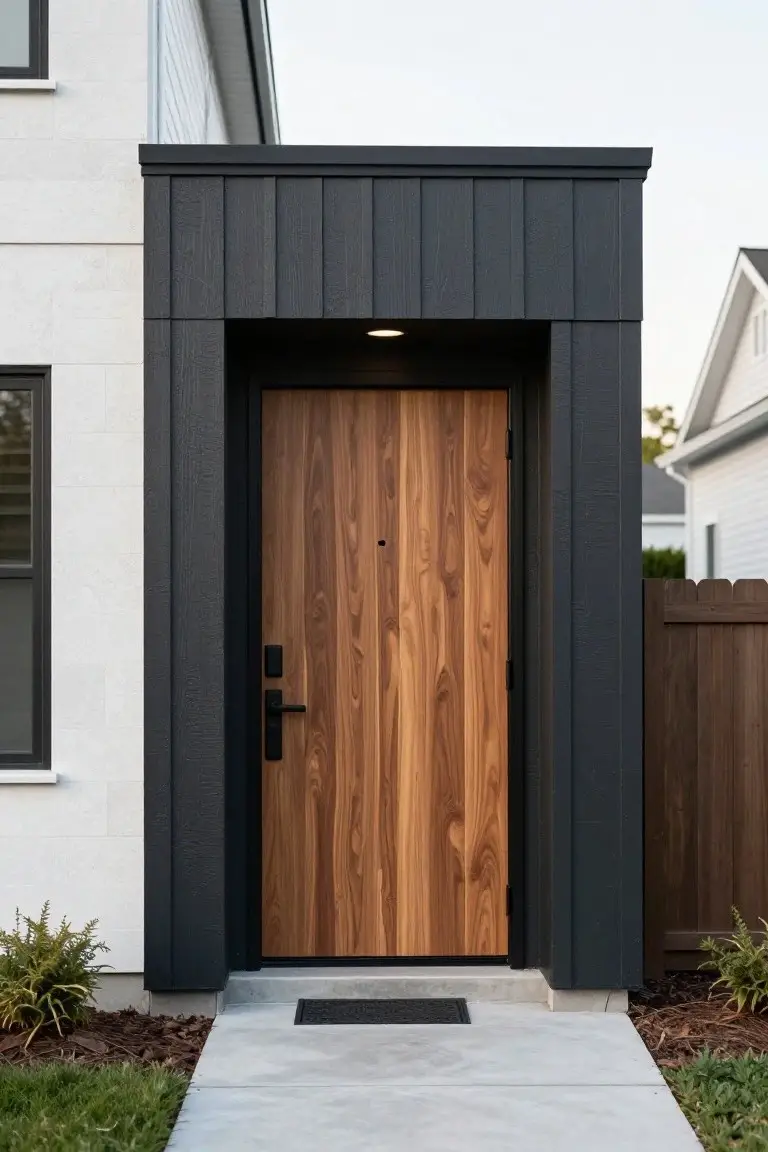
This entryway pulls off a straightforward black paint on those vertical boards framing the door. It sits in the true black family, and I’d say it matches closest to Sherwin Williams Tricorn Black or Benjamin Moore Jet Black, maybe Behr Black too. What stands out is how clean it looks next to the walnut wood door. Folks like it because that sharp contrast keeps things modern without trying too hard.
The black here feels neutral overall, no strong gray or blue pulling through. It holds up well in natural light, staying matte and not too shiny. Pair it with white house siding like this, or warm wood elements, and it works on most homes facing south or north. Just test a sample first, since blacks can shift a bit by the hour.
Deep Green Front Door
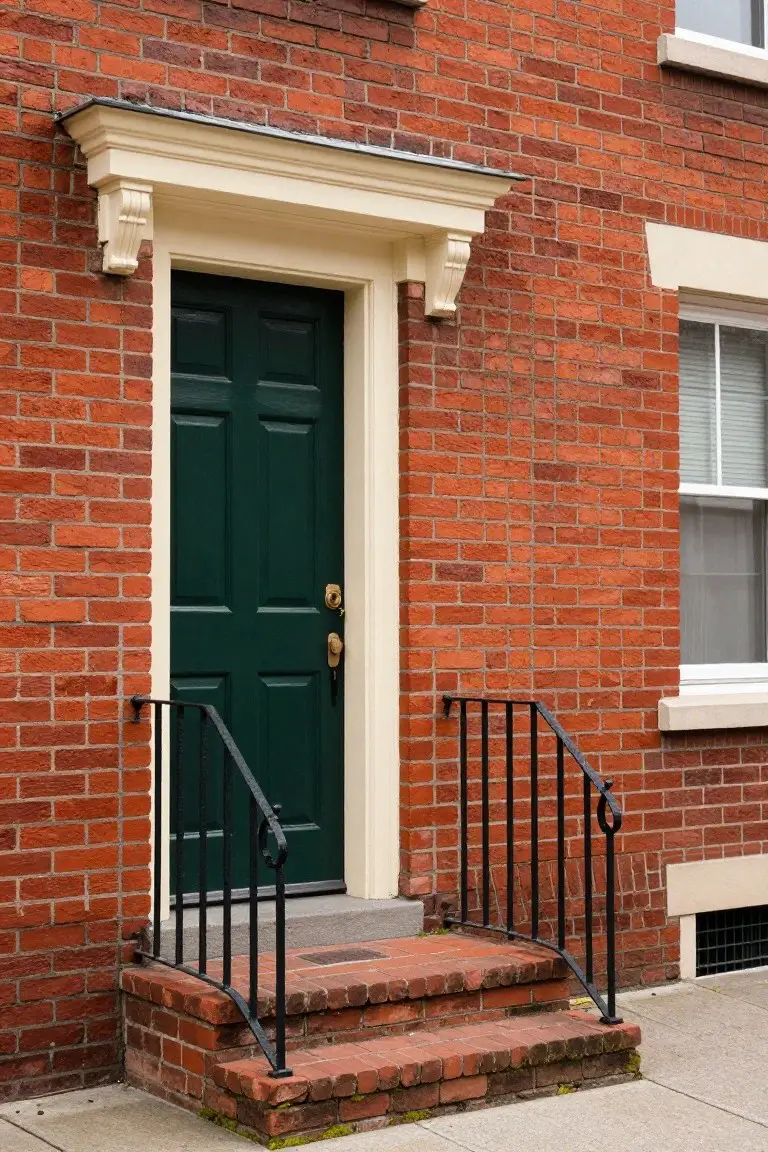
That dark green on the front door pulls the whole entry together nicely. It’s a rich hunter green in the deep green family, reading closest to Sherwin-Williams Jasper or Benjamin Moore Hunter Green HC-115, maybe even Farrow & Ball Studio Green. What makes it work so well is how it settles right into brick without overpowering things.
This shade has a neutral undertone, not too blue or yellow. It shines on older brick homes like this, especially with cream trim and black ironwork nearby. Pair it with natural stone paths or keep plantings simple so the door stays the focus.
Warm Beige Exterior
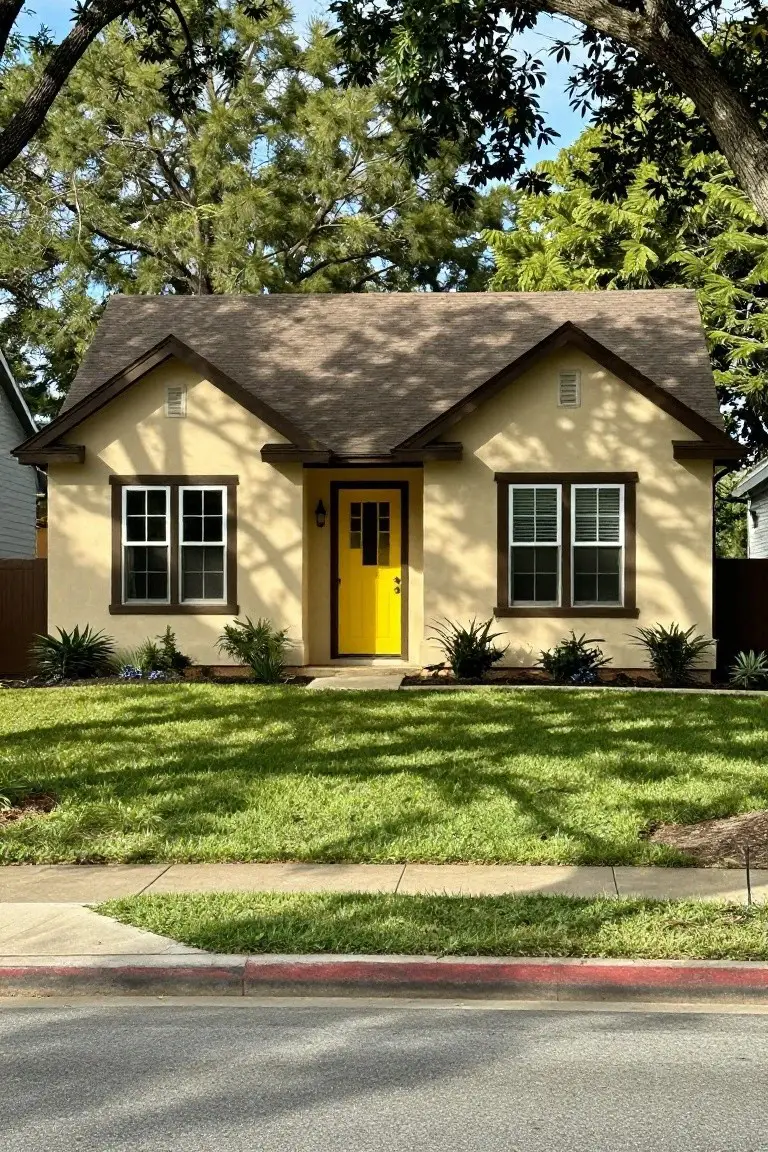
That pale house paint is a classic warm beige. It looks closest to Sherwin-Williams Shoji White or Benjamin Moore White Dove, maybe Behr Swiss Coffee too. Folks like it because it stays light on the eyes but picks up some sun for a cozy feel, especially on a simple bungalow like this.
The yellow undertones show up best in bright light, which makes the yellow door stand out without clashing. It works well around green plants and wood fences. Just test it on your trim first to see how it sits with any stone or brick nearby.
Soft Blush Pink Siding
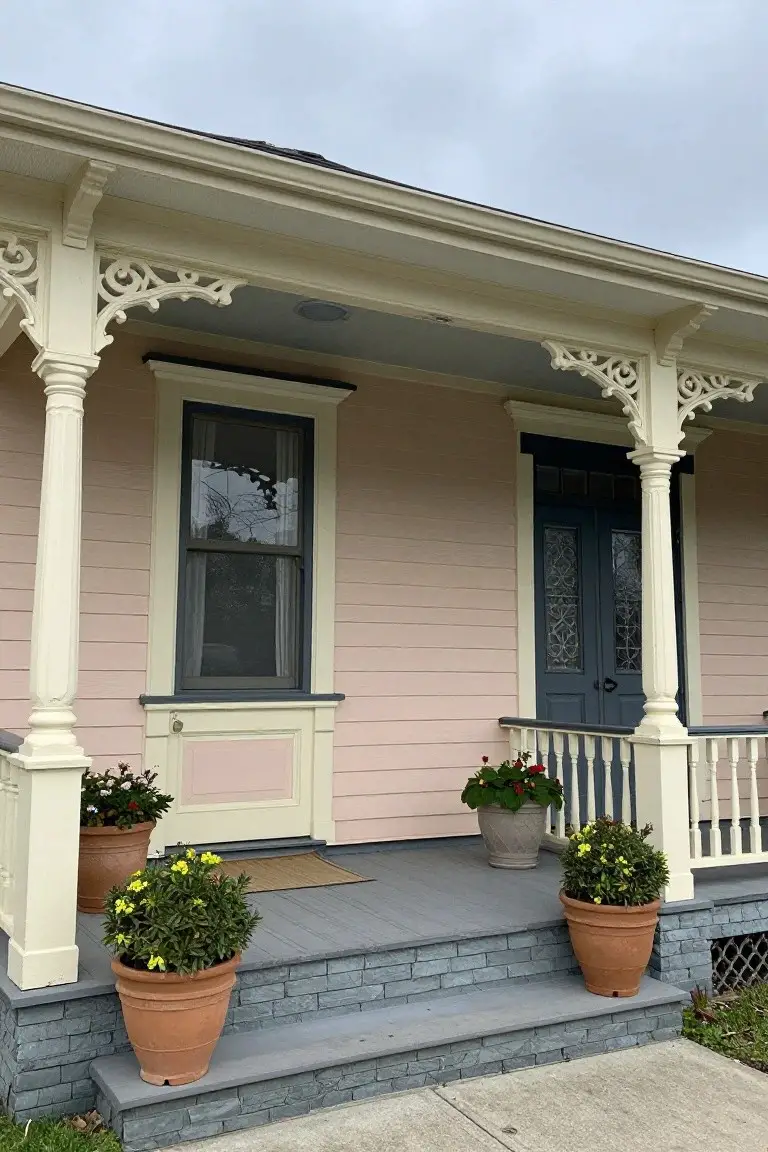
This house siding shows off a soft blush pink that’s warm and easy on the eyes. It’s got that subtle rosy feel without going too candy-sweet. Reads closest to Sherwin-Williams Innocent Blush, Benjamin Moore Pink Shadow, or Behr First Kiss.
Warm undertones keep it from looking washed out, especially next to the cream trim and navy door. Works best on older homes like this one with fancy woodwork. Just watch it in full sun, might need a test patch.
Cool Light Gray Siding
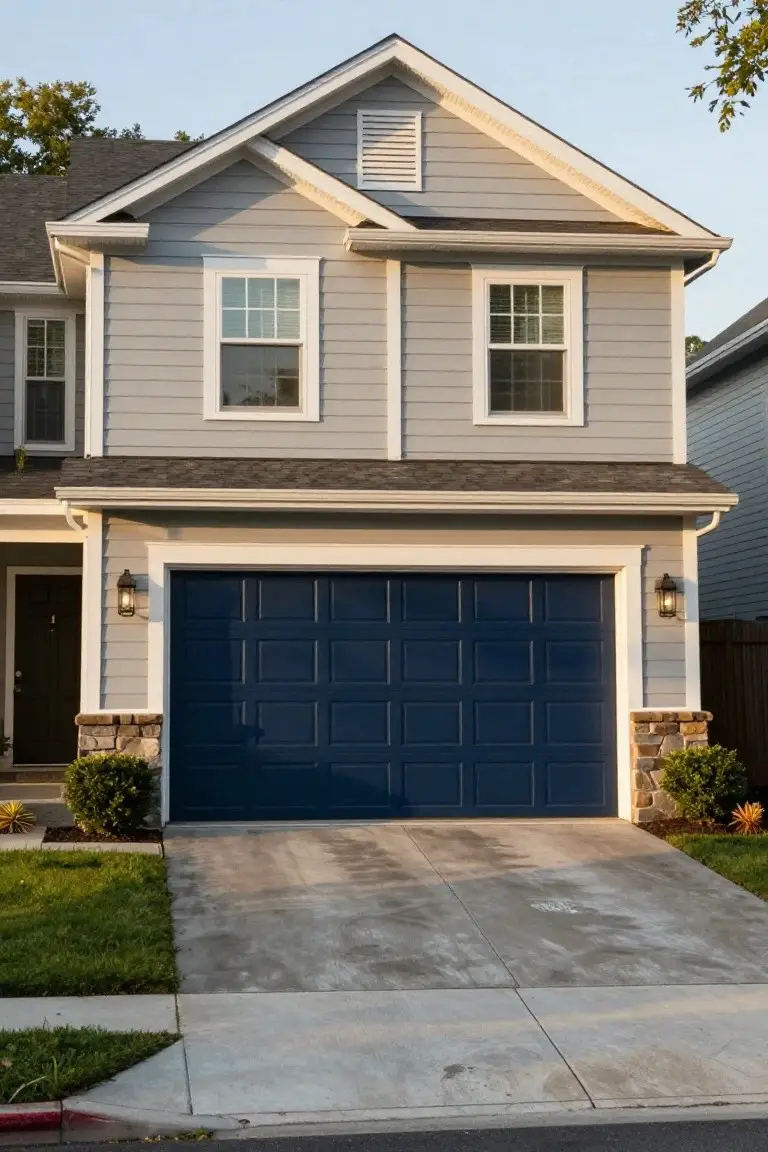
This cool light gray on the house siding reads very close to Sherwin Williams Repose Gray, Benjamin Moore Gray Owl, or Behr Silver Screen. It’s the kind of neutral gray that feels fresh without being stark. Folks like it because it keeps the look clean and modern, especially next to stone accents and a pop of navy on the garage door.
The cool undertones help it stay crisp in bright light, and it pairs well with white trim or darker doors. I’d use it on homes with some natural stone or brick details. Just watch that it doesn’t look too blue in shady spots.
Soft Sage Green Exterior
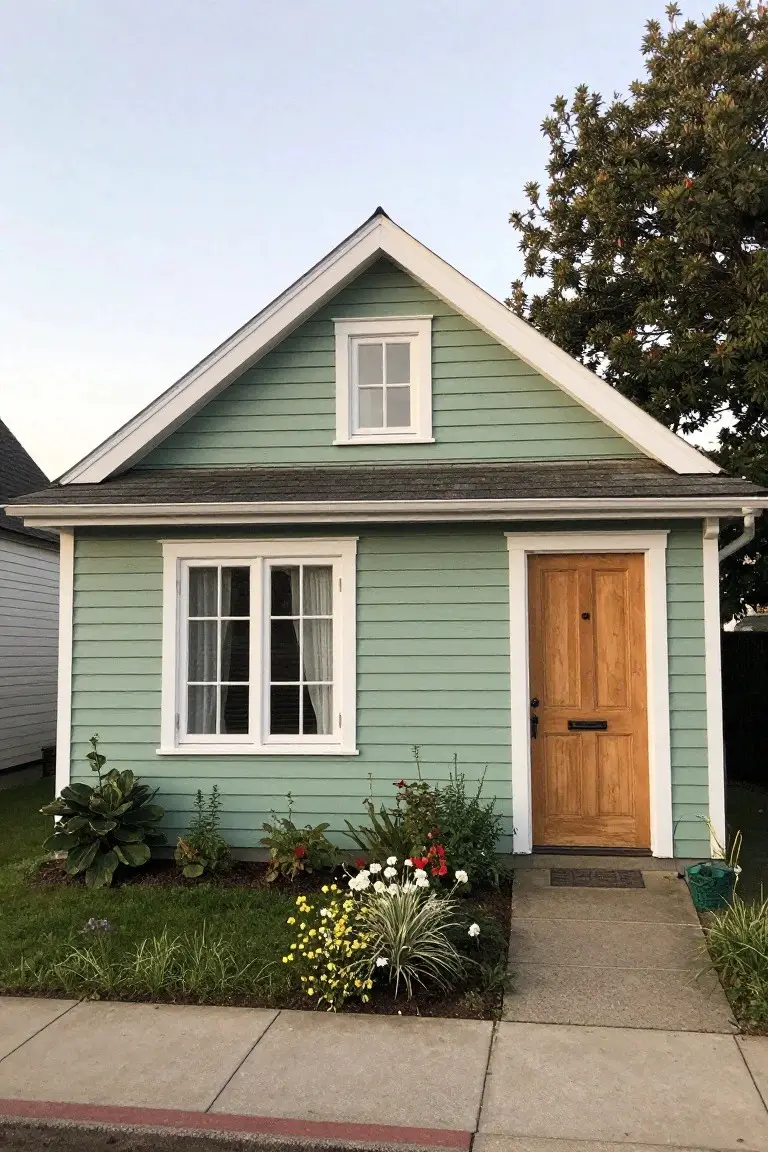
This cozy cottage uses a soft sage green on the siding that gives it a fresh, relaxed look. It seems closest to Sherwin-Williams Clary Sage or Benjamin Moore Saybrook Sage, maybe Behr’s Silver Sage too. What stands out is how the pale green keeps things light without going too bold, and it really lets the white trim pop.
That cool gray undertone shines in dappled light like this yard has. It works great on smaller homes near gardens, paired with natural wood doors and simple plantings. Just watch it can read grayer on overcast days.
Navy Blue Siding
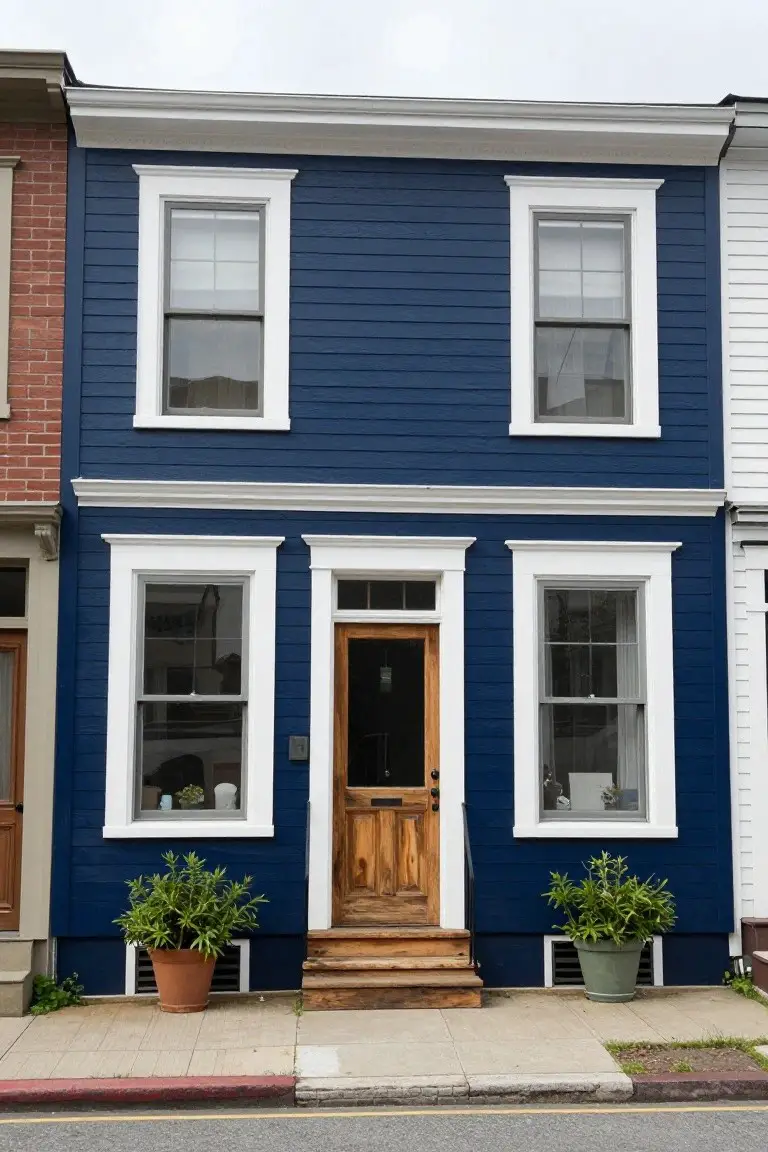
This row house uses a deep navy blue on the siding. It reads very close to Sherwin-Williams Naval or Benjamin Moore Hale Navy, maybe even Behr’s Midnight Bay. Navy like this is bold in the blue family but stays classic. Homeowners pick it for that strong curb appeal on older homes, without going overboard.
The cool undertones give it depth next to white trim and wood doors. It works great in city rows or brick-lined streets. Pair it with greenery out front… plants pop right against it. Just watch for north-facing spots where it might look too dark.
Pale Yellow Siding
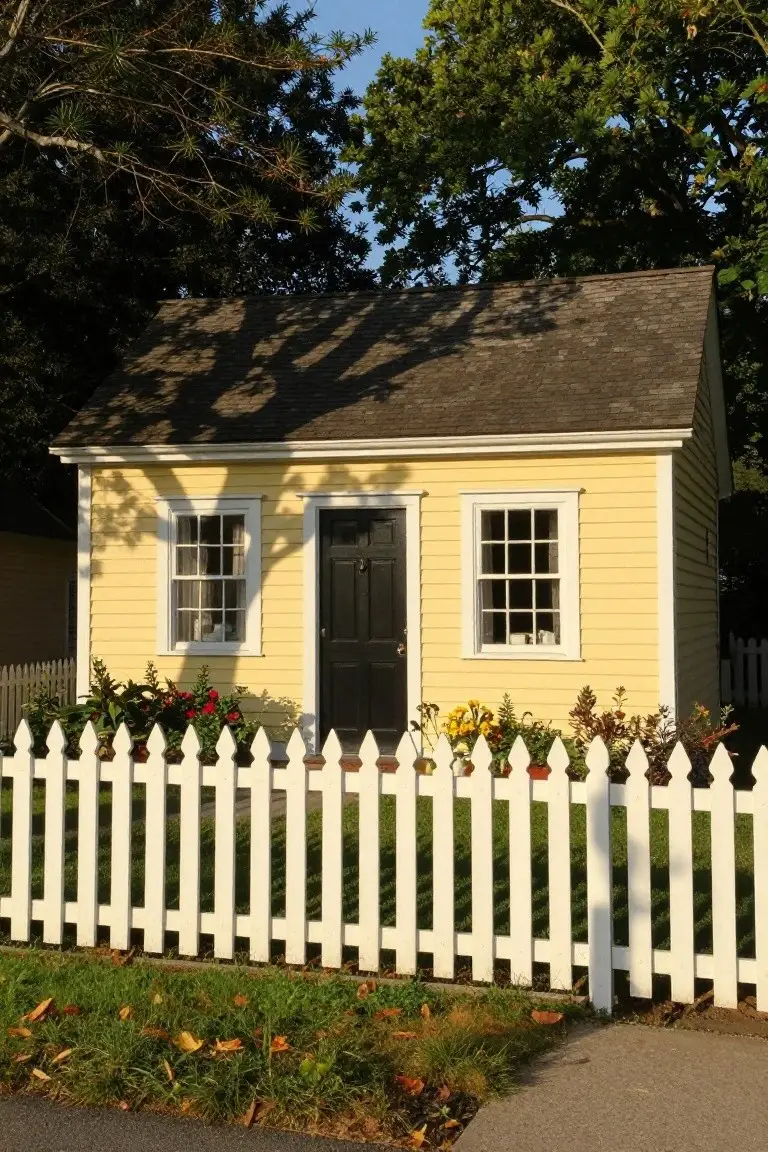
This siding shows off a pale yellow that’s warm and easy on the eyes. It reads close to Sherwin-Williams Creamy (SW 7012), Benjamin Moore Pale Yellow (202), or Behr Butter Up. Folks like it because it gives a house that fresh, welcoming look without shouting. On a small place like this cottage style, it just brightens things up nicely.
The warm undertones keep it from going brassy in full sun. Pair it with crisp white trim and a dark door, like the black one here. It suits older homes or gardens best. One thing, it can show dirt over time, so think about your spot.
Warm Dark Gray Siding
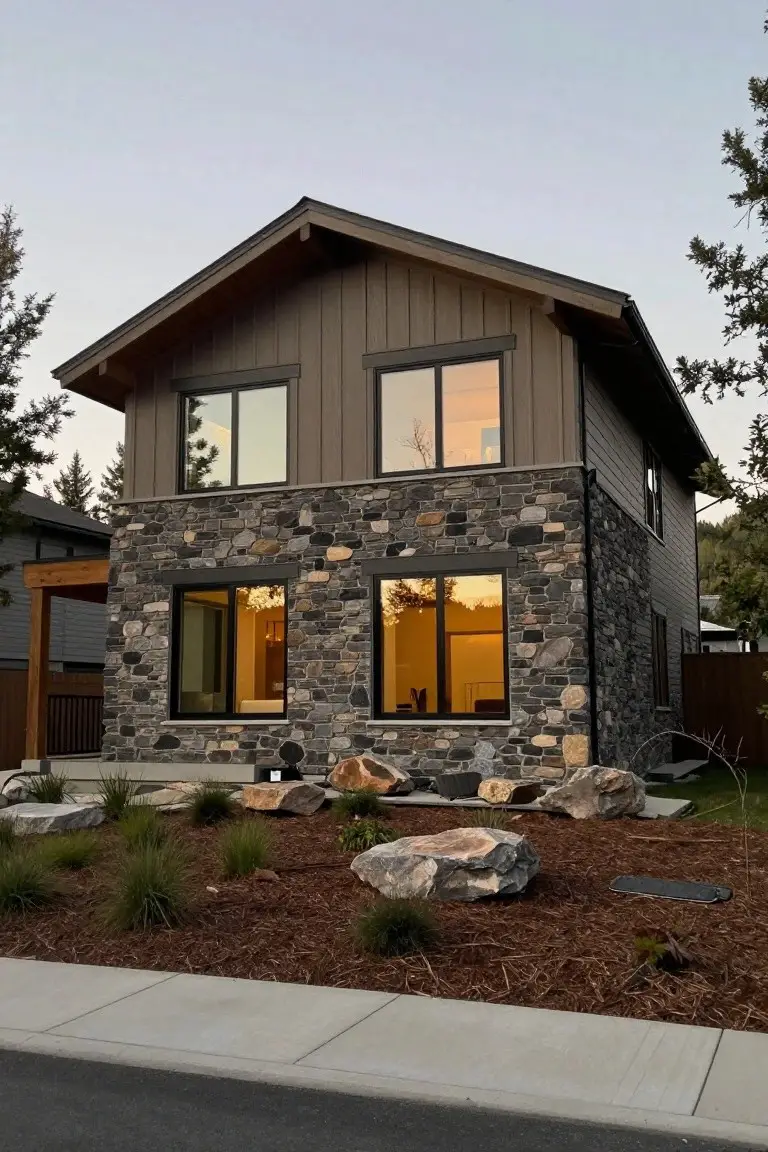
This siding pulls off a warm dark gray that’s got some brown in it. Looks closest to Sherwin Williams Iron Ore or Benjamin Moore Kendall Charcoal, maybe Behr’s Cracked Pepper too. Homeowners go for it because it stands up to stone and wood without washing out.
That subtle warm undertone makes it read richer in natural light. It suits mountain homes or wooded lots best. Pair it with black-framed windows and keep stone raw underneath.
Coral Front Door
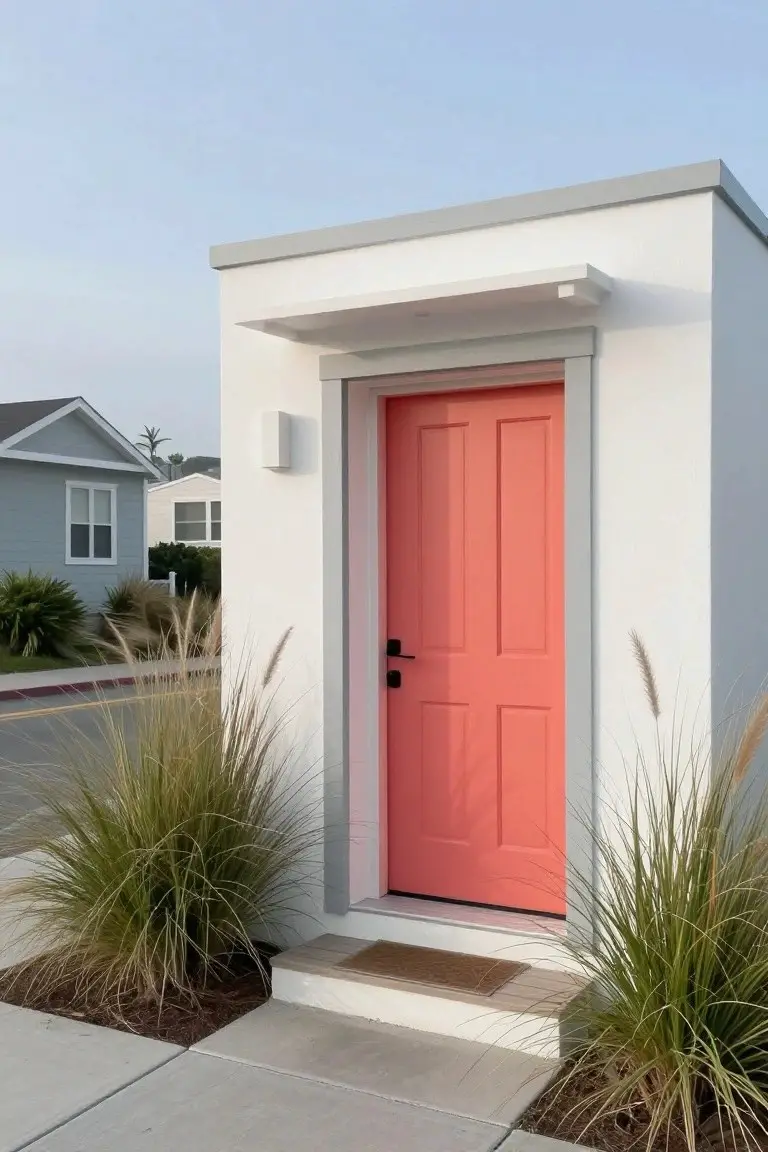
This front door in a bright coral orange really catches the eye against plain white walls. It’s that warm, lively shade with pink undertones that feels fresh without being too loud. Looks closest to Sherwin-Williams Monarch Orange or Benjamin Moore Calypso, maybe Behr Coral Fountain too. Folks like it because it adds just enough color to make the entry welcoming, especially on a simple structure like this.
The warm undertones keep it from looking harsh in bright light, and it pairs nicely with soft grays on the trim or siding. Try it on a door where you want some punch but not overwhelming reds. In cooler climates it might read a bit softer. Watch the sun though, it can glow even more on west-facing spots.
Soft Greige Siding
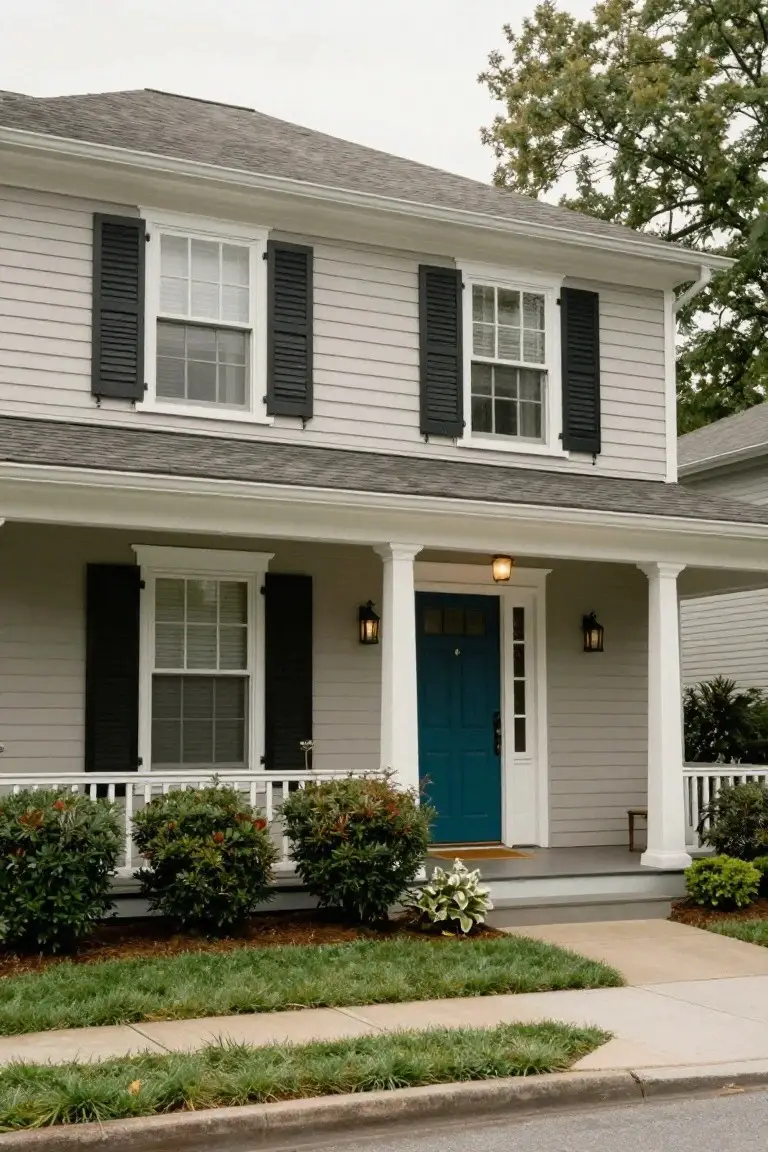
This soft greige on the house body seems closest to Sherwin-Williams Agreeable Gray or Benjamin Moore Edgecomb Gray, maybe Behr Wheat Bread too. It’s a light neutral with just enough warmth to feel cozy, not cold. Homeowners go for it because it freshens up the exterior without overpowering the architecture.
Warm beige undertones keep it from washing out in shade. White trim pops nicely against it, and that teal door adds some fun contrast. Best on homes with clean lines like this, especially if you’ve got green landscaping nearby.
Warm Terracotta Walls

This warm terracotta on the house body reads closest to Sherwin-Williams Spiced Cider or Benjamin Moore Potters Clay. Behr’s Terracotta Stone sits right there too. It’s that cozy red-orange earth tone that feels right at home on stucco exteriors. People go for it because it picks up on roof tiles and gives a house some real character without being too loud.
The warm undertones keep it from going pink or too brick-red. It works best in sunny spots where the color really glows. Pair it with crisp white trim like you see here, and dark wood accents on windows. Just watch it next to cooler grays. Might need warmer accents to balance.
Warm Beige Stucco Walls
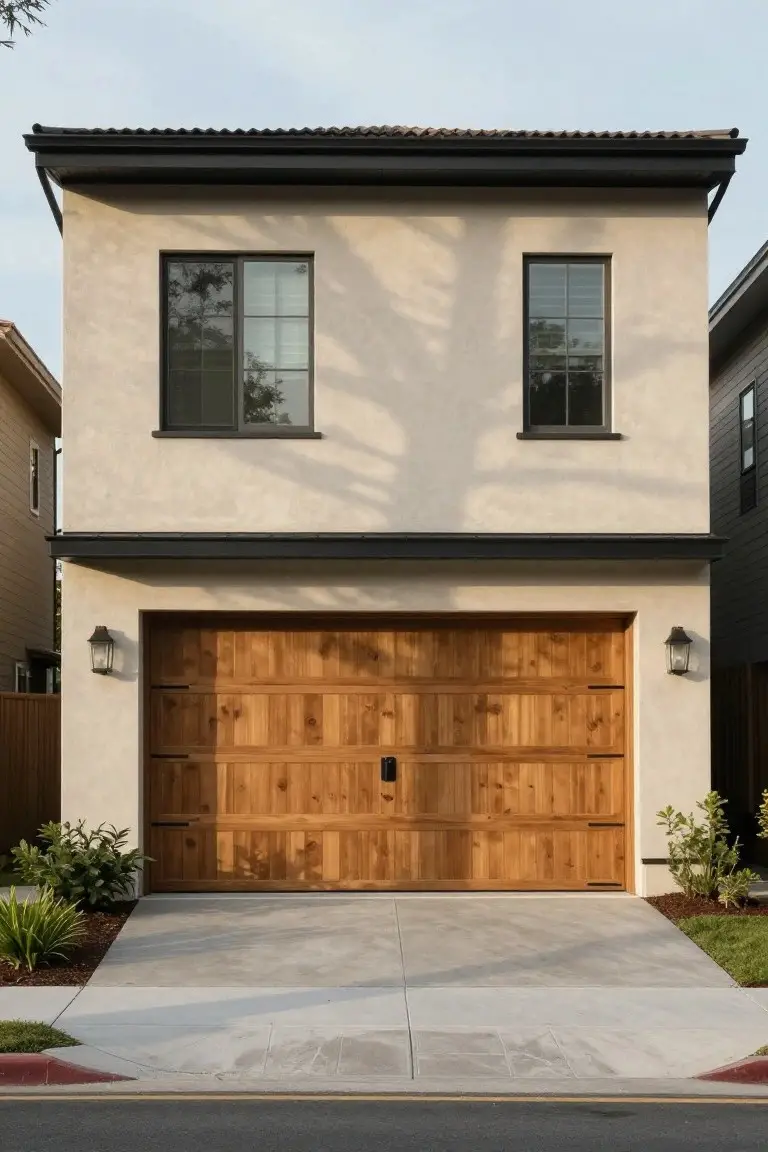
This warm beige on the stucco walls reads very close to Sherwin-Williams Accessible Beige or Benjamin Moore Edgecomb Gray. It’s that easy neutral tone that sits right between tan and gray. Folks like it because it keeps the house looking clean and fresh without stealing the show from the wood details or landscaping.
The warm undertone picks up nicely in sunlight, so it works great on west-facing homes or anywhere with good natural light. Pair it with darker trim or natural wood like on this garage door, and it just feels right. Steer clear if your area stays shady, though. Might read a bit flat there.
Frequently Asked Questions
Q: How do I pick the right combo for my ranch-style house? A: Look at the combos with warm earth tones like sage green paired with creamy beige. They hug low profiles and make your ranch feel grounded and inviting. Test a few samples on your actual siding to see how the sun hits them.
Q: What if my house has brick—do these colors still work? A: Pair soft grays or taupes with your brick for a timeless vibe that lets the texture shine. Skip super bright hues. They clash.
Q: Will dark colors like navy make my house too hot in summer? A: Dark shades soak up more heat, so go lighter on big surfaces like siding. Use navy accents on shutters instead. Your energy bill stays happier.
Q: How do I test these combos before painting the whole house? A: Grab sample pots and paint big poster boards, then prop them against your house at different times of day. Live with them for a week. You’ll spot the winners fast.
