

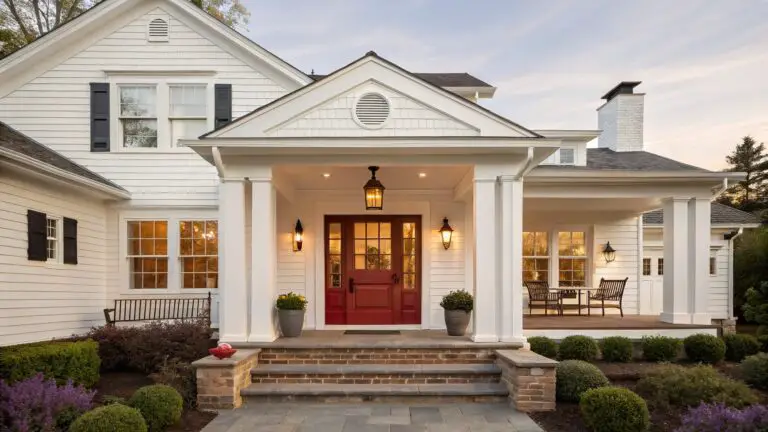
When I walk up to a white house, the front door color hits me first because it pulls the whole facade together against that plain siding. I’ve swapped colors on ours a few times, and the ones that really work nod to the roofline and trim without stealing the show from the entry itself. Drive by any street of similar homes, and you’ll see how a bold yet fitting shade turns a flat exterior into something that draws you closer. Certain hues stand out year-round, blending with brick accents or wood details to boost curb appeal in a way photos can’t quite capture. Pick one that suits your setup, and it might just become that detail neighbors remember.
Red Front Door on White Shingle House
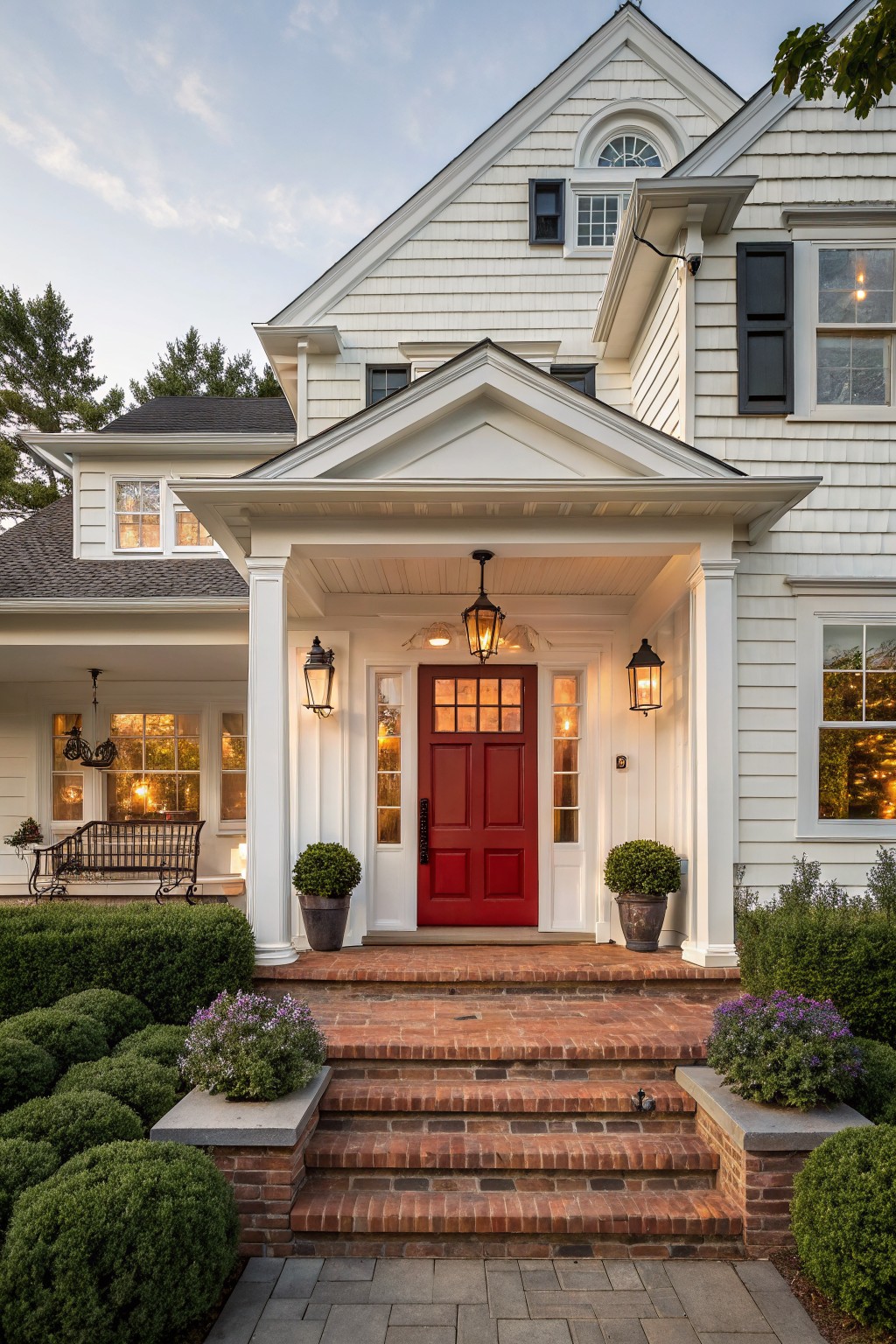
A red front door gives a white shingle exterior that instant focal point it needs. Here the double doors sit under a simple porch, pulling attention from the quiet siding and black shutters. It’s bold but fits right in with traditional shapes, making the entry feel more alive.
Try this on older Colonials or farmhouses where the white keeps things crisp. Go for a warm red like barn paint on fiberglass or wood, and add matching lanterns. Brick steps help tie it down… just avoid cooler reds that might clash.
Deep Green Front Door on White Brick
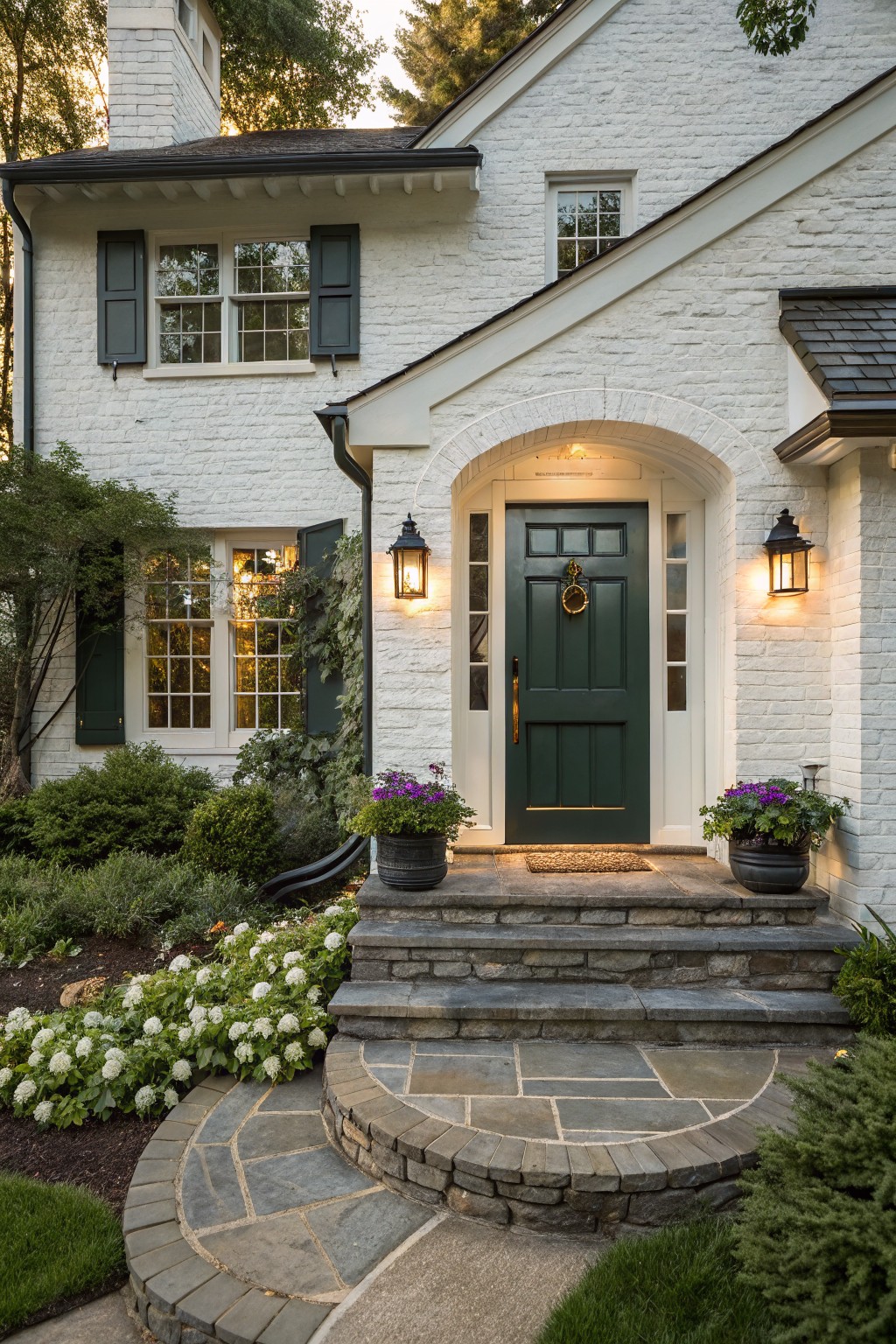
A deep green door like this one gives a white brick house instant personality. The color pulls strong contrast against the clean white exterior without feeling too loud. Brass hardware and matching lanterns tie it together nicely, making the entry feel solid and welcoming right from the street.
This look suits classic homes with some traditional lines, like colonials or farmhouses. Go for it if your house has black or dark shutters already, since the green picks up on that. Just keep the plantings simple around the steps so the door stays the focal point.
Red Door on White House
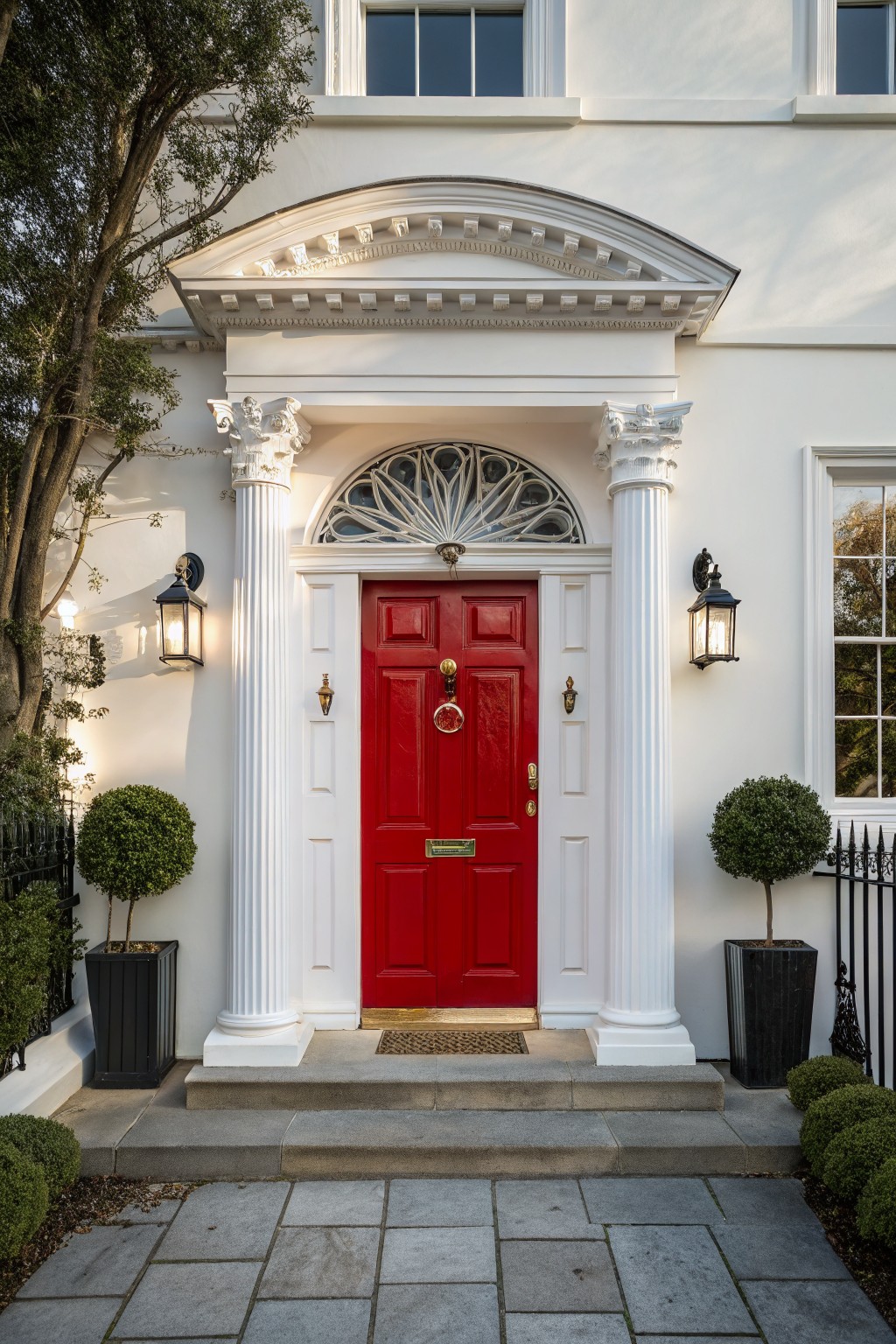
A bright red front door jumps right out on a clean white exterior like this one. It takes a classic setup with columns and a fanlight window and gives it some real personality. That color contrast makes the entry the star without overwhelming the simple lines.
This look suits traditional homes, especially Georgian or colonial styles in town or suburbs. Go for a glossy red paint to catch the light, pair it with brass hardware, and trim the white paint fresh. Just make sure the door seals well, since bold colors show dirt faster.
Burnt Orange Door on White Stucco
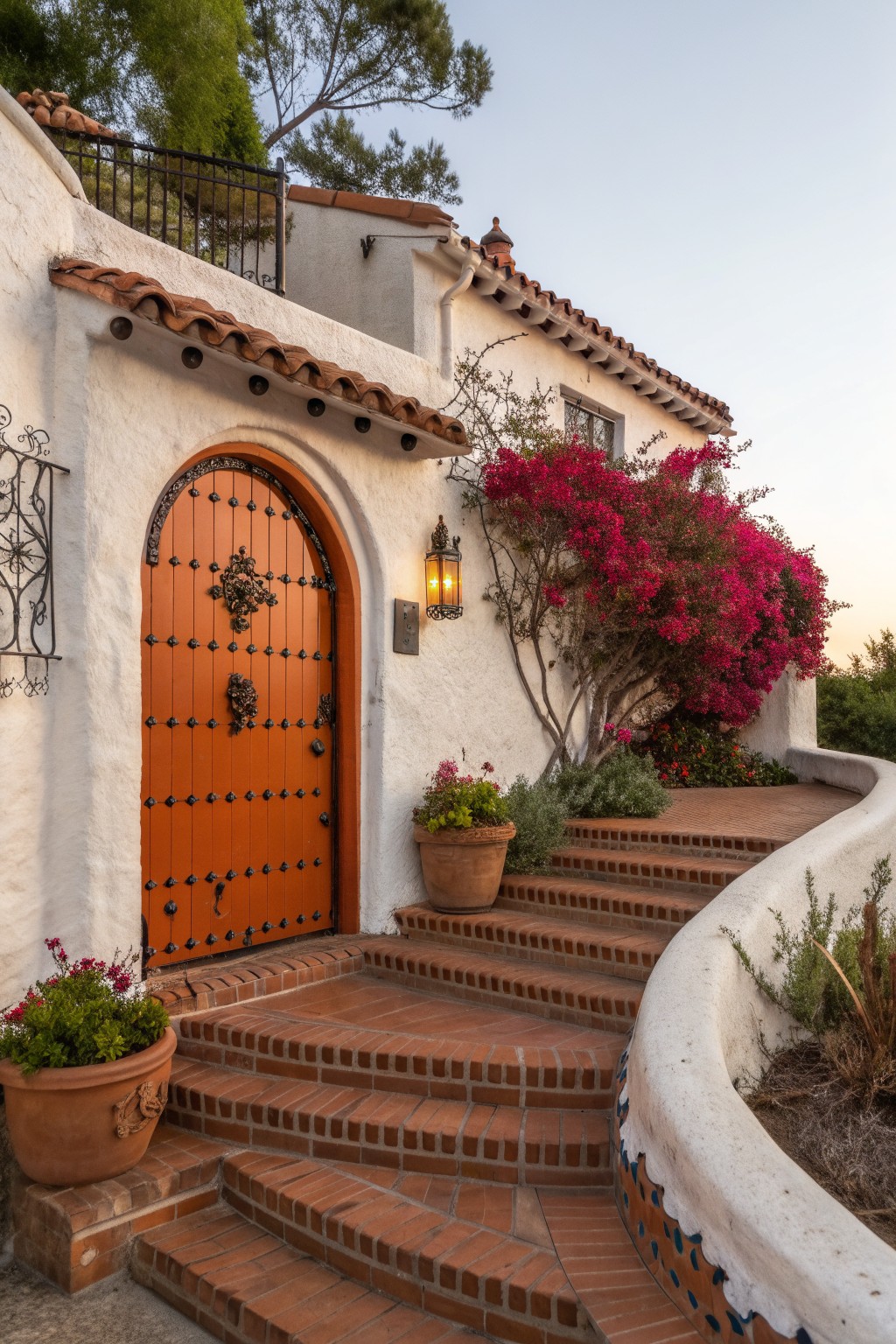
A burnt orange front door like this one turns a plain white exterior into something memorable right away. The warm color pulls your eye straight to the entry, especially with that arched shape and heavy iron hardware. It fits the soft curves of stucco walls without clashing, and nearby plants just make it feel settled in.
Try this on older homes with a bit of Spanish style, or any place where you want the door to be the main event. Keep the rest simple, like brick steps or a couple pots by the path. It might feel too bold in a super modern neighborhood, but that’s easy to tone down with a slightly muted shade.
Black Doors on a White Farmhouse
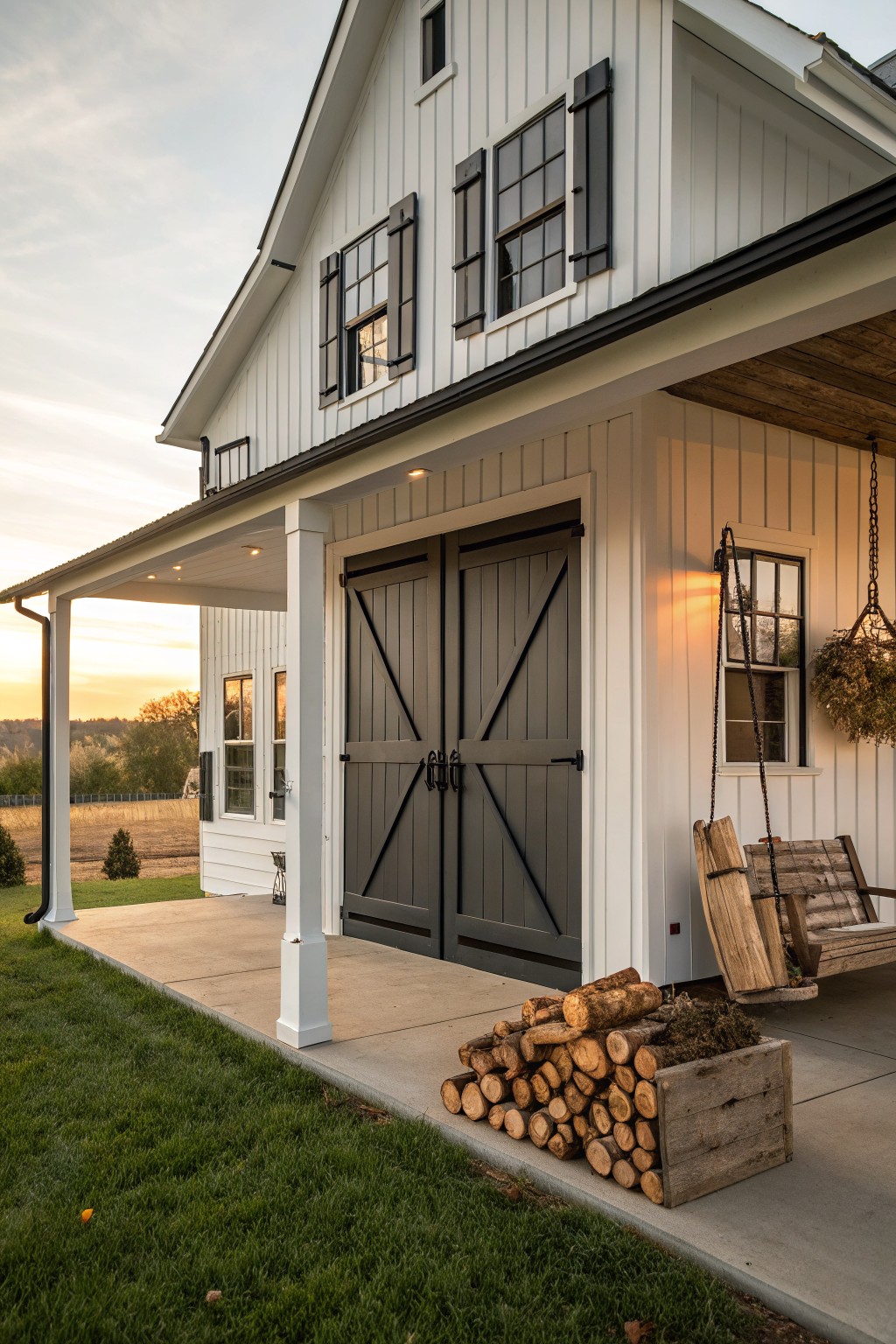
Big black double doors like these make a strong statement on a white exterior. The dark color pops right against the clean white board-and-batten siding, drawing your eye straight to the entry. It keeps things simple but gives the whole house more presence, especially with that wide porch in front.
This look fits farmhouses or modern barn styles best, where you have room for oversized doors. Go for matte black to avoid glare, and pair it with white columns or trim for balance. Just check your doors match the porch height so nothing feels off.
Light Blue Door on White Cottage Exterior
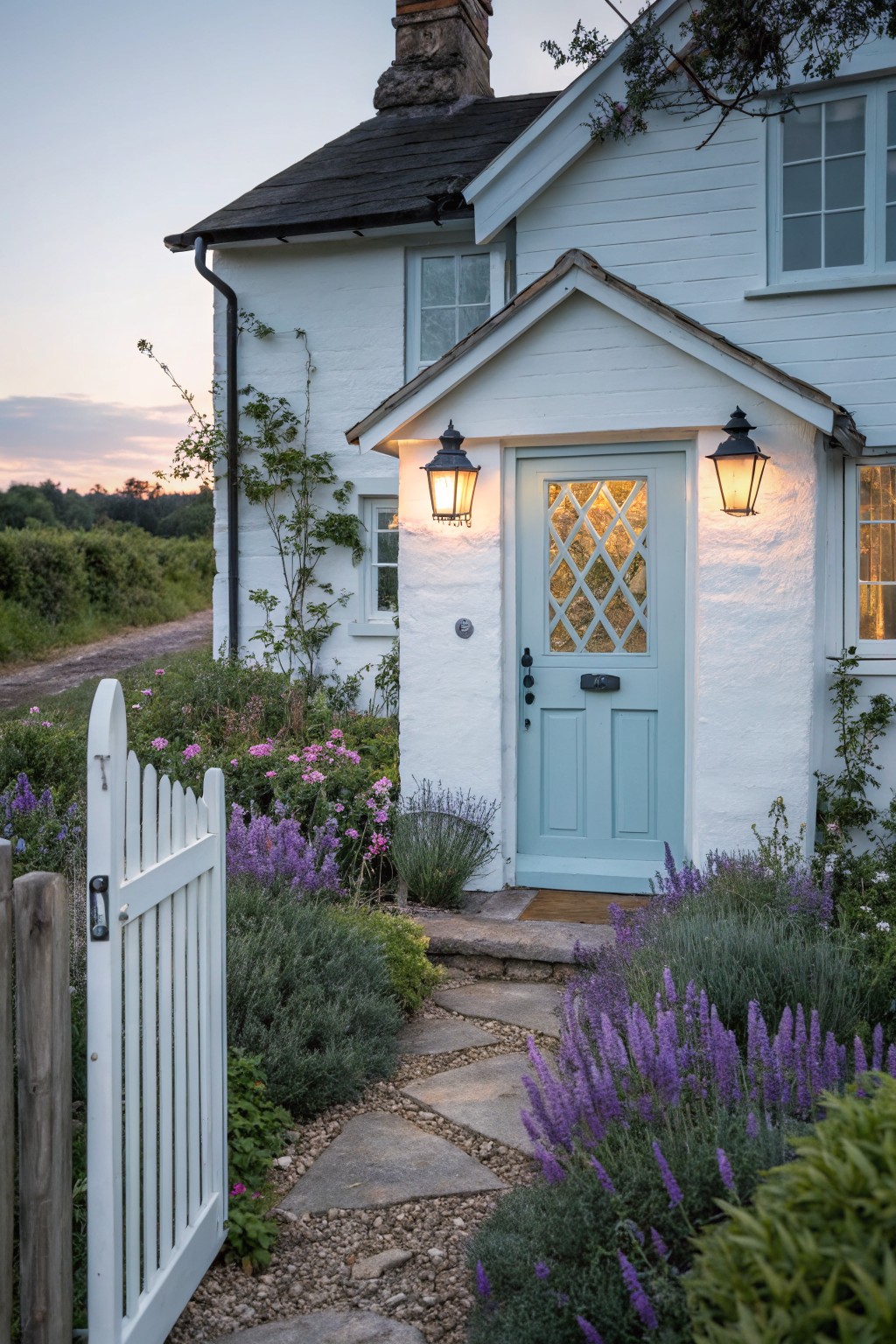
A light blue front door gives a white house that gentle pop without going overboard. It works because the soft color echoes the sky at dusk and ties right into nearby plants like lavender. White walls stay crisp and clean. The door just pulls your eye to the entry in a friendly way.
This look fits older cottages or farmhouses in the country best. Paint a similar shade on a paneled door with glass inserts. Add lanterns for evening light. Skip it on super modern homes. It might feel too sweet there. Keep plants around to soften things up.
Black Door on a White House
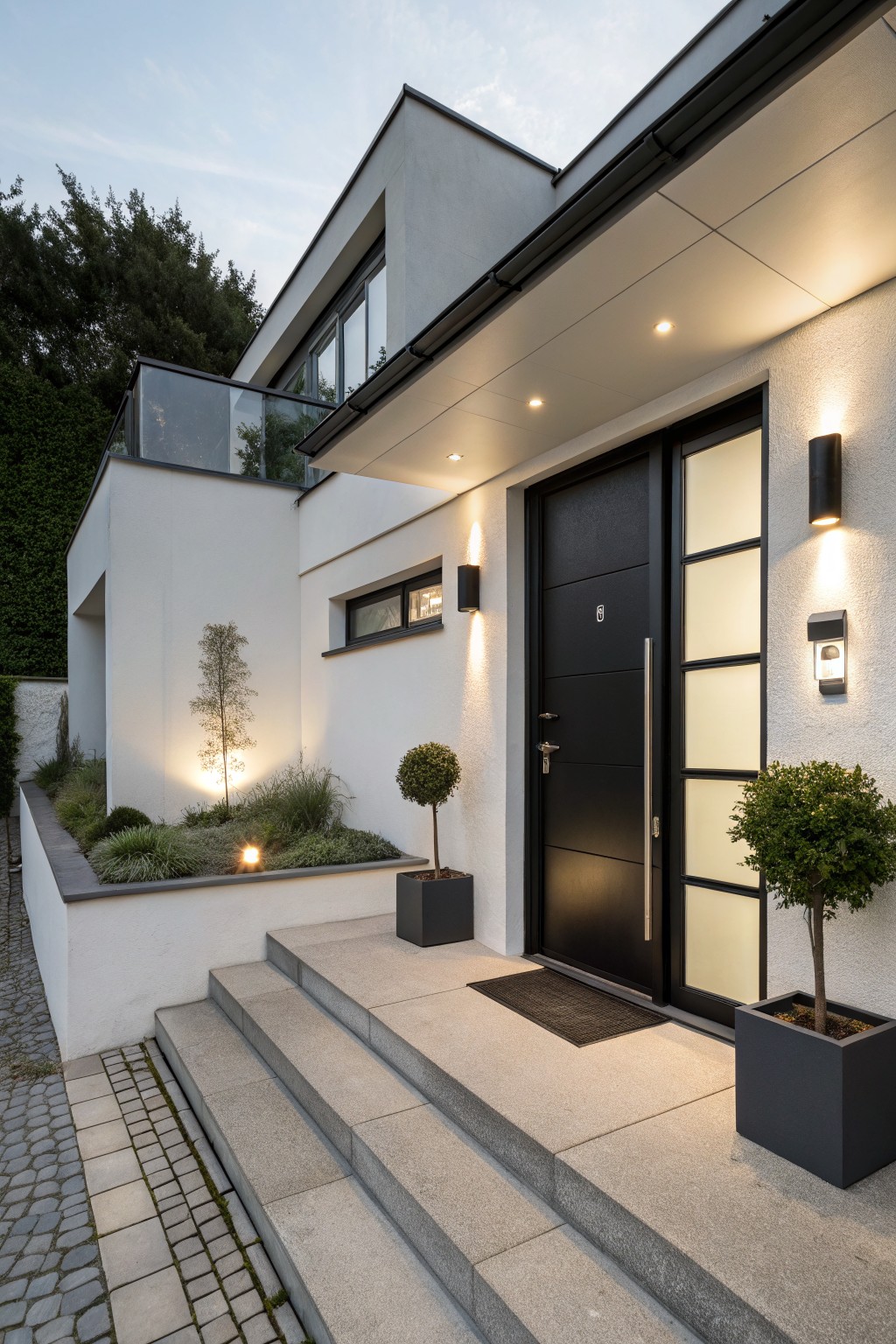
A black front door really pops against a white exterior. It gives the whole entry a strong, modern feel without much effort. Here, the sleek black door with its frosted glass panels stands right out on the clean white walls, making the house look sharp and welcoming at the same time.
This works best on simpler modern homes where you want some punch up front. Pair it with concrete steps and a few boxwood plants like this to keep things neat. Just make sure the door hardware is simple too… nothing too shiny that fights the look.
Blush Pink Door on White Stucco
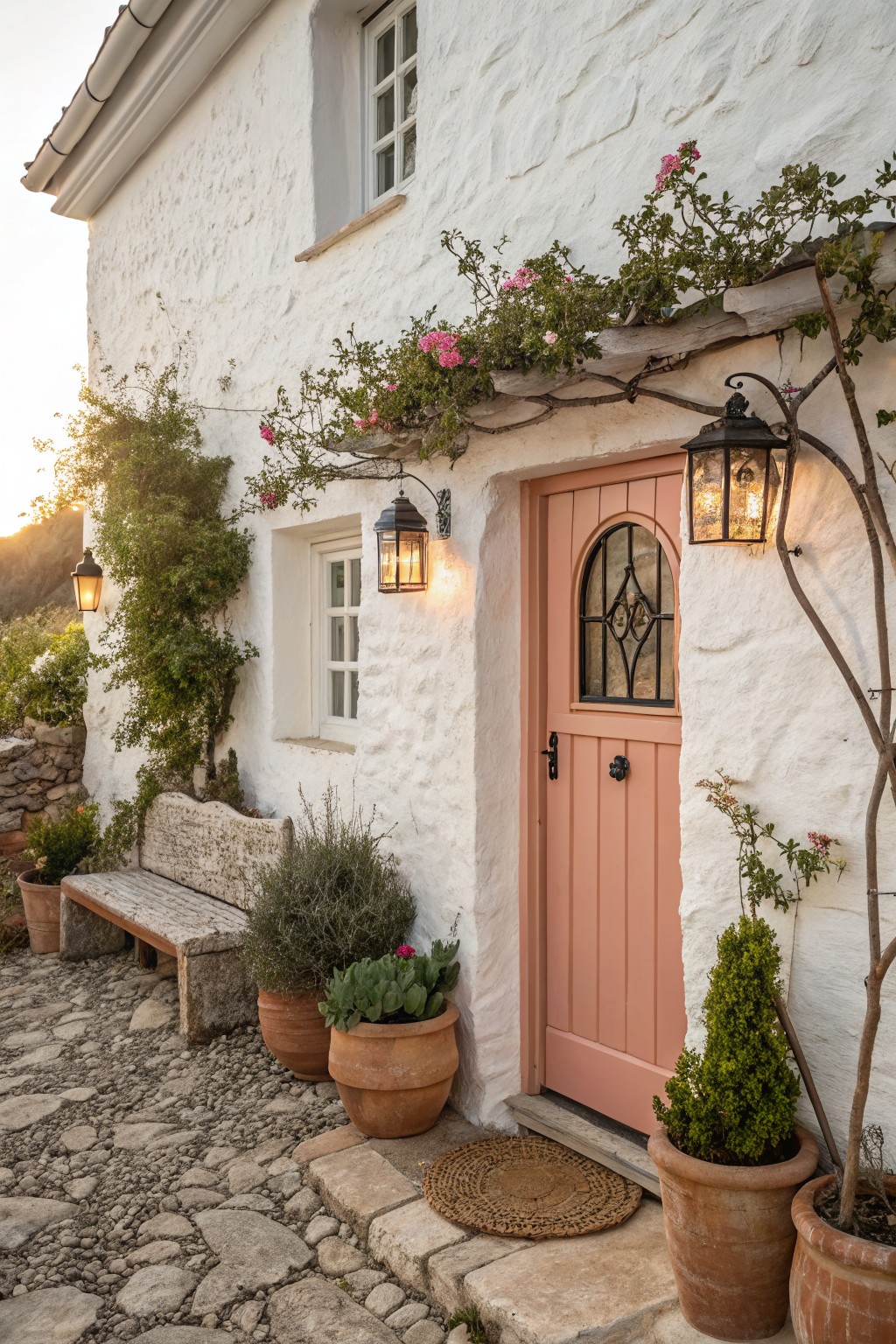
A soft blush pink door like this one brings gentle color to a plain white exterior. It stands out just enough to draw the eye to the entry without overwhelming the clean lines of the stucco walls. Paired with black lanterns and climbing roses overhead, it feels welcoming and a bit romantic.
This color works best on older style homes in warm climates, like those with tiled roofs or stone paths. Use it where you want subtle curb appeal that ties into garden plants. Skip it on super modern facades, though. It might feel too sweet there.
Deep Purple Front Door on White Exterior
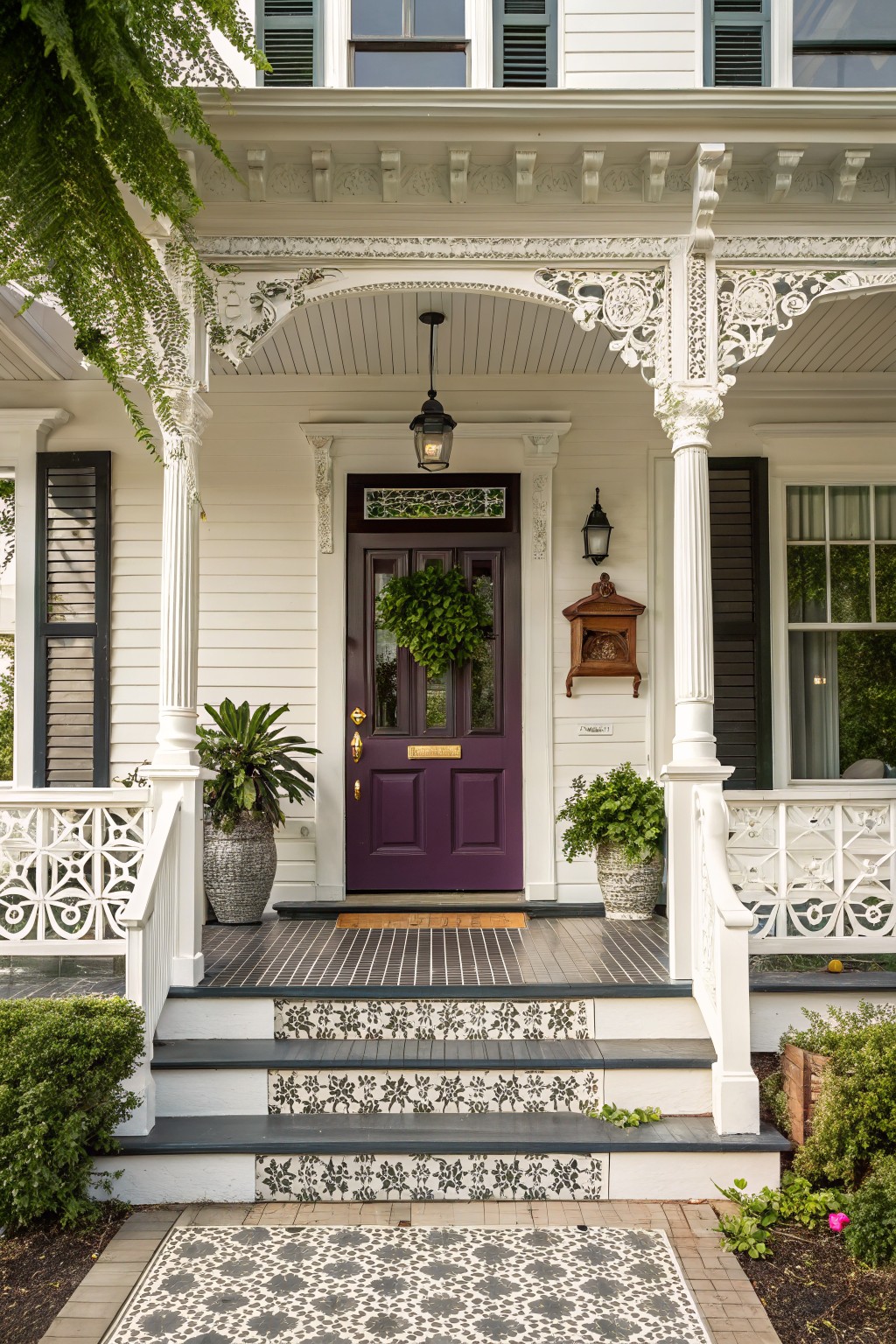
A deep purple front door gives this white house a rich entry point that catches the eye right away. The color works against the bright siding and detailed porch columns, adding some personality without clashing. It’s subtle enough for everyday but bold in just the right way.
This look suits older homes like Victorians or Colonials where the white base keeps things clean. Go for a matte finish to tone it down, and add a simple wreath or potted plants nearby like you see here. Avoid lighter purples. They can look too bright in full sun.
Turquoise Door on White Exterior
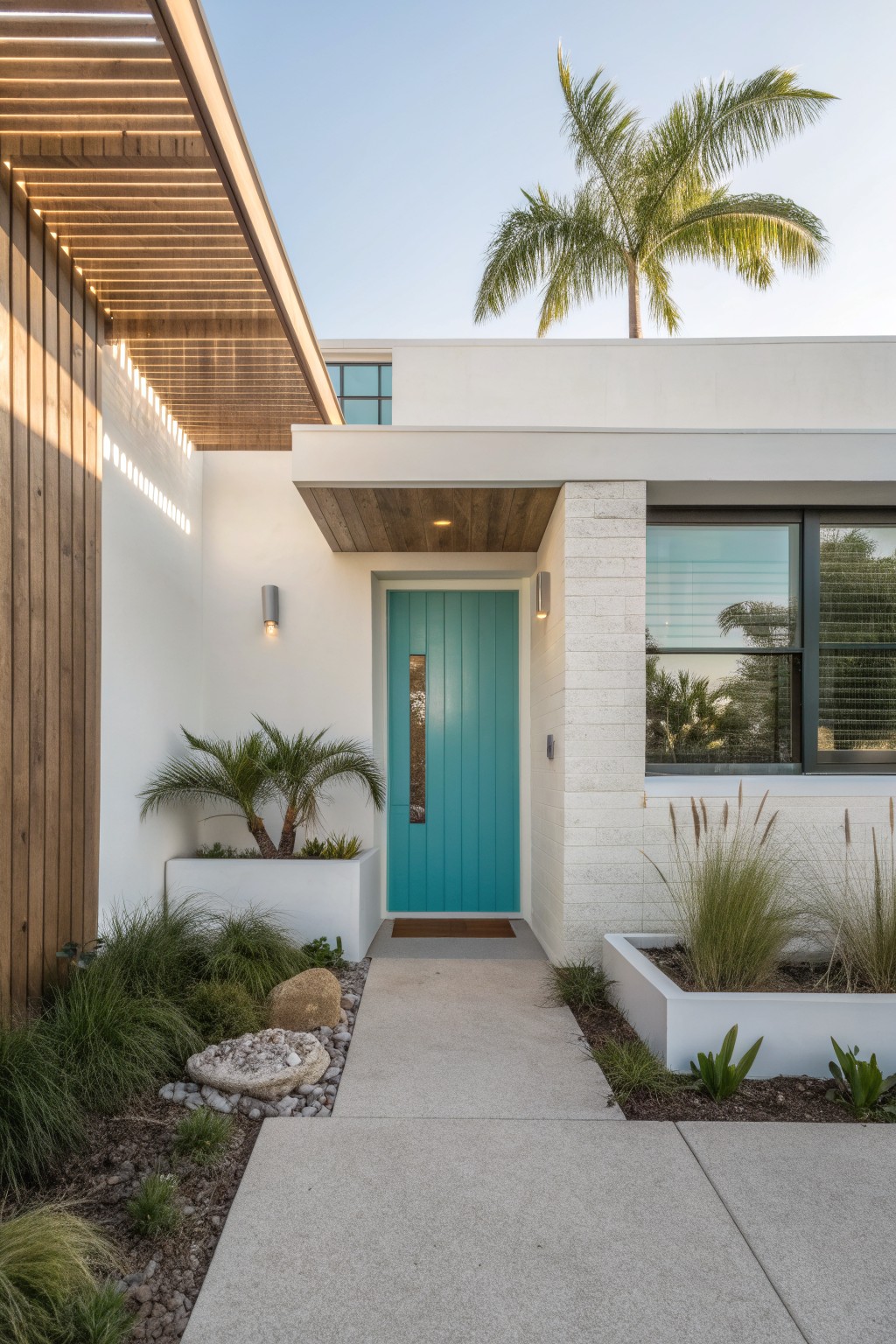
A turquoise front door gives this white house a fresh pop of color right at the entry. The bold hue stands out against the crisp stucco walls and wood accents, making the whole facade feel more welcoming. It’s a simple switch that adds personality without much effort.
This works best on modern or coastal-style homes where you want low-key curb appeal. Stick to clean lines around it, like a short pathway with grasses and a potted palm. Just make sure the door color matches your trim so it doesn’t clash… and test it in sunlight first.
Warm Wood Door on a White Facade
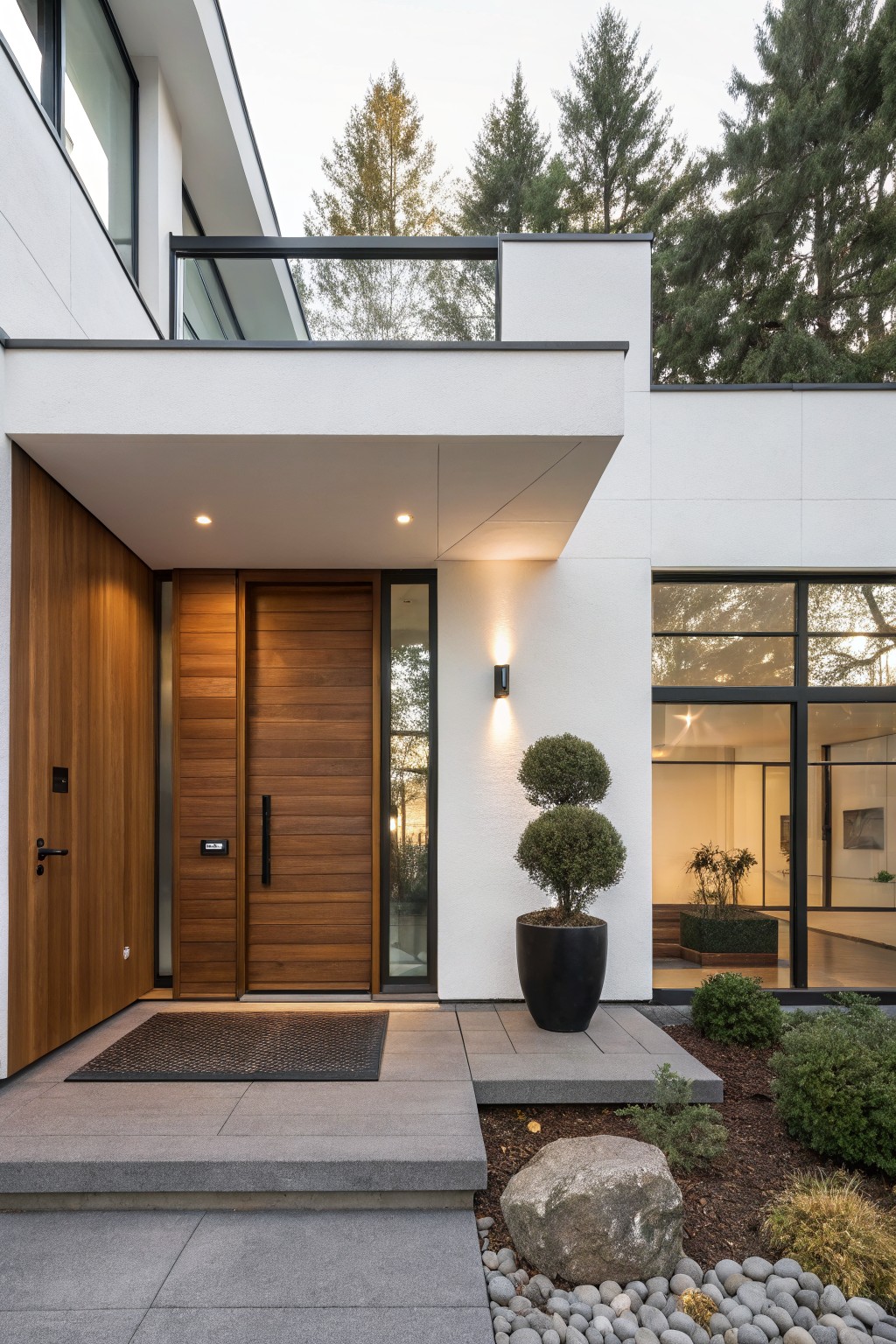
A rich wooden front door like this one warms up a stark white exterior right away. The natural tones of the vertical slats pull your eye to the entry and make the whole front feel more inviting. It’s a simple switch from painted doors that adds real character without much fuss.
This look fits modern homes with clean lines best, especially where you want some coziness up front. Go for teak or cedar that weathers nicely, and keep the surround simple with stone steps or a single potted plant. Skip it if your house has busier details… it shines on smoother surfaces.
Sunny Yellow Door on White Stucco
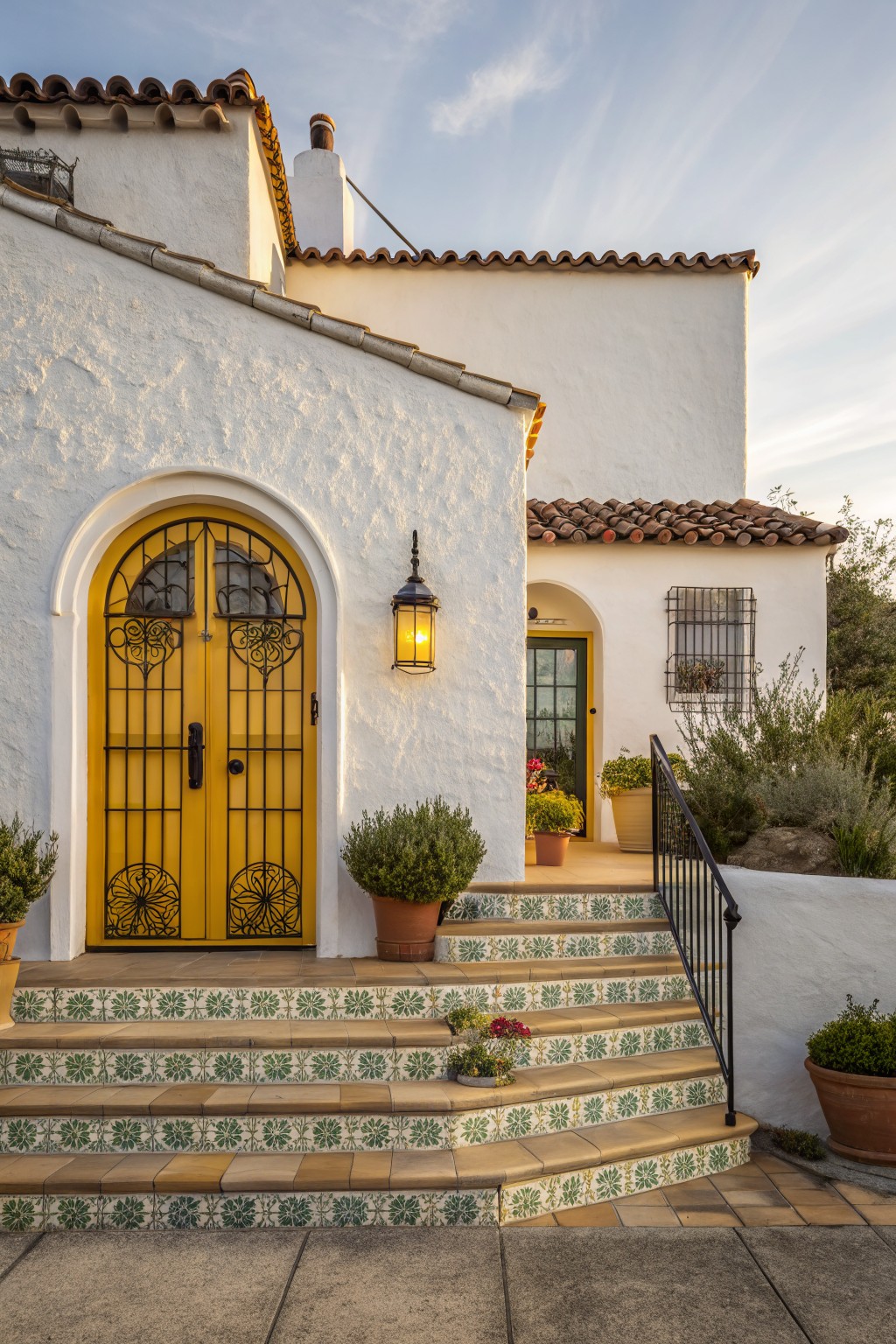
A bright yellow front door like this one grabs your attention right away on a plain white exterior. The strong color contrast makes the entry the focal point without much effort. It adds a bit of warmth and personality to what could otherwise feel stark.
This look fits older Southwestern or Mediterranean style homes best, especially with arched shapes and wrought iron details. Go for a warm mustard yellow to echo terracotta roofs nearby. Keep plantings simple around the steps so the door stays the star… and watch the scale if your house is bigger.
Frequently Asked Questions
Q: My house gets tons of direct sun. Which colors hold up best?
A: Go for deeper shades like navy or forest green. They resist fading better than pastels. Grab a paint sample and watch it for a week in the sun.
Q: How do I test a door color without painting the whole thing?
A: Buy small sample pots from your paint store. Brush them on a few boards and prop them against your door at different times of day. Pick the one that thrills you every time you pull up.
Q: What if my trim is off-white instead of pure white?
A: Lean toward warm tones like terracotta or sage green. They bridge the gap nicely and keep everything harmonious. Avoid cool grays, they fight it.
Q: Black doors look sleek, but do they get too hot?
A: Black absorbs heat, yeah. Slap on a heat-reflective exterior paint to keep it cooler. And it stays a knockout on white houses.
