

I’ve tinkered with exterior paint on my own place more times than I can count, and the biggest lesson is how sunlight transforms a color from promising to perfect or problematic.
What seems like a straightforward navy on the sample board often reads deeper or lighter depending on your home’s exposure throughout the day.
I once went with a muted terracotta expecting warmth, but it pulled too orange in the late afternoon light until I adjusted the trim to balance it.
Certain pairings manage those shifts gracefully by leaning on subtle contrasts that reveal themselves gradually.
Try a few of these in your real light before committing.
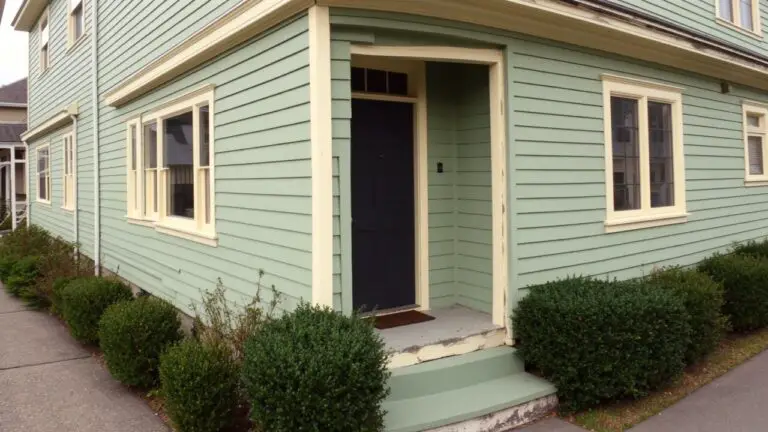
Pale Sage Green Siding
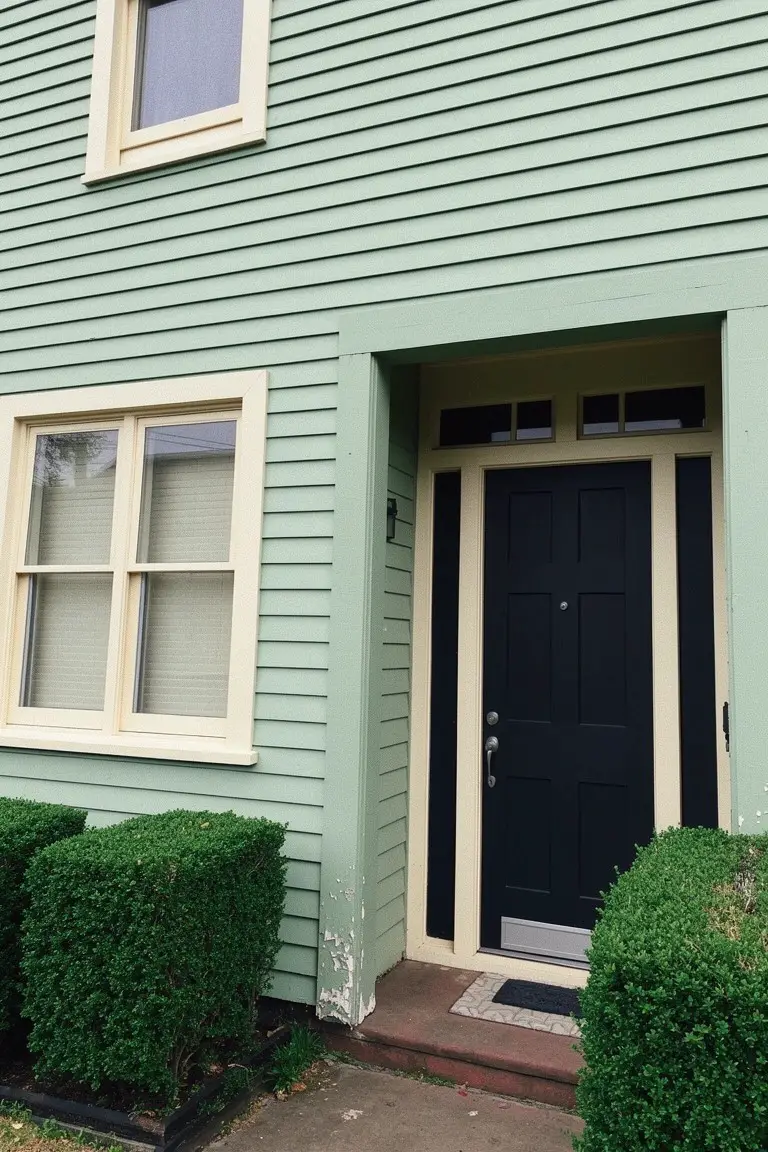
This exterior siding takes a pale sage green that’s soft and easy on the eyes. It sits closest to Sherwin-Williams Retreat or Benjamin Moore Saybrook Sage, maybe Behr’s Silver Sage too. Folks like it because it’s calming, not too bright, and gives a house that settled-in look without much fuss.
The gray undertones keep it from going too yellow in the sun. It pairs right up with black doors like this one and white trim around the windows. Best on older homes or spots with some tree shade. Just watch it doesn’t wash out next to super warm brick.
Warm Off-White Siding
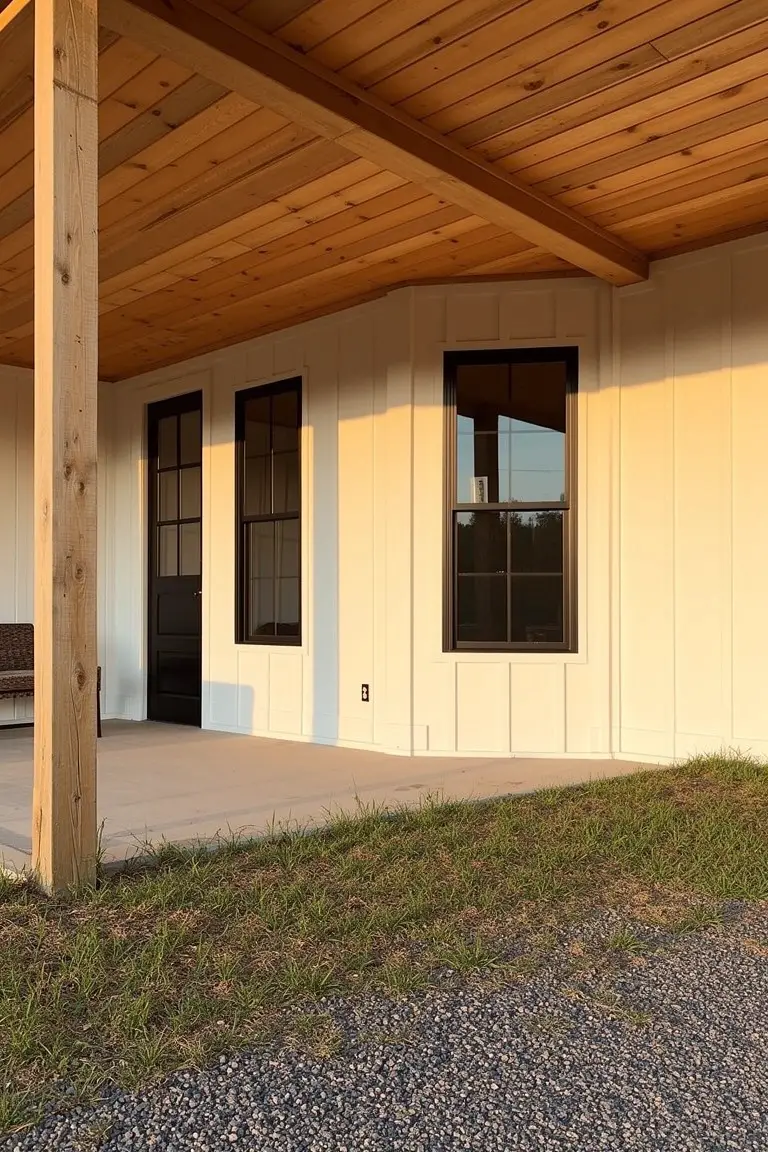
This siding shows a creamy off-white paint that’s got a nice warm undertone. It seems closest to Sherwin-Williams Alabaster, Benjamin Moore White Dove, or Behr Swiss Coffee. People go for colors like this on exteriors because they stay bright and clean but feel softer than pure white, especially around wood elements.
That subtle warmth comes through against the cedar beams here and makes black window frames stand out without clashing. It works great on porches or garages in mixed lighting. Just pair it with natural stains on wood, and skip cooler grays nearby.
Soft Seafoam Siding
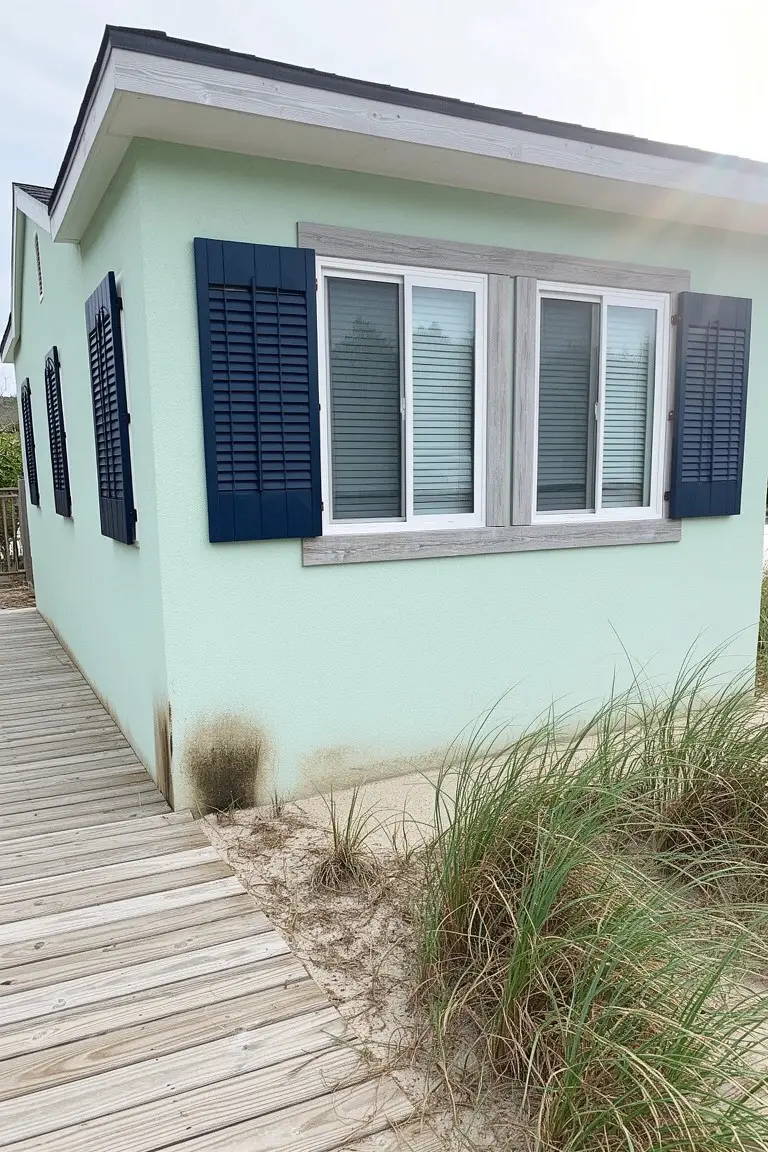
This seafoam green paint on the house siding looks closest to Sherwin-Williams Sea Salt. Or it reads pretty near Benjamin Moore Saybrook Sage and Behr Breath of Fresh Air. It’s a pale, relaxed green that fits right in at the beach. Folks like it because it stays light and airy next to sand and sky.
The subtle blue undertone comes alive in full sun. Without it, the color might lean a touch flat. Navy shutters like these add nice contrast. White trim on the windows keeps everything crisp. Try it on vacation homes or anywhere you want that easy coastal vibe.
Mustard Yellow Walls
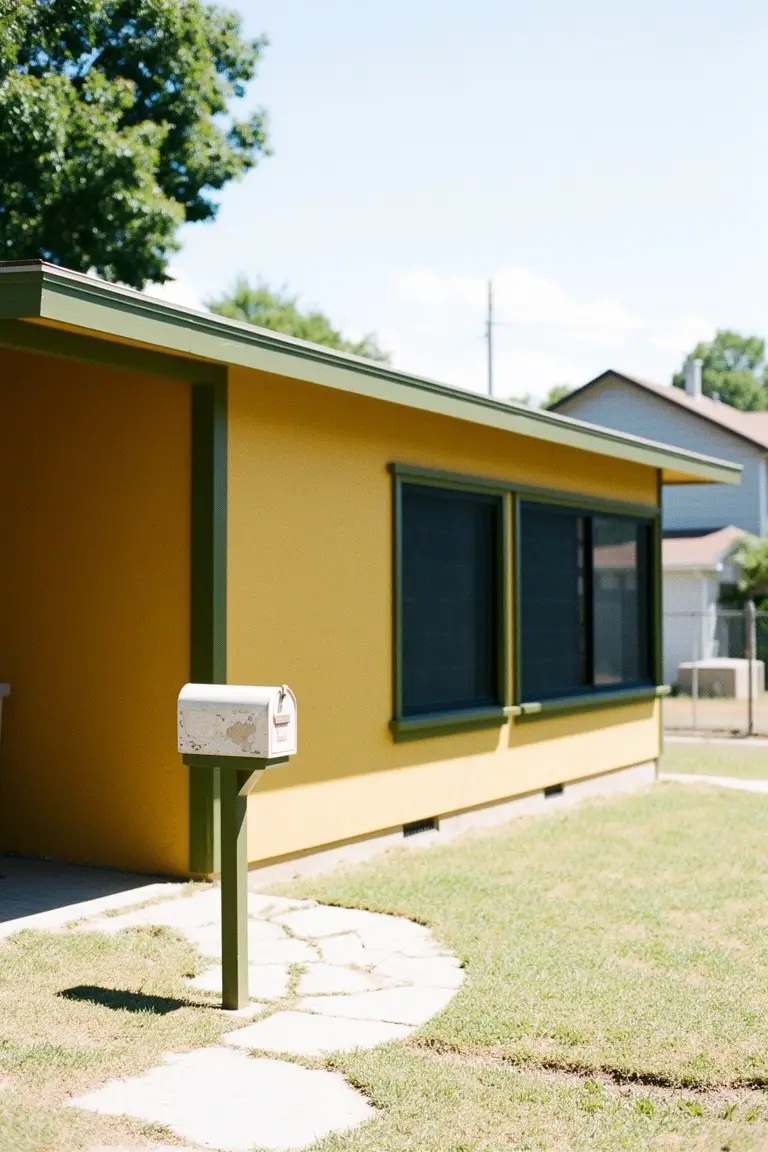
This warm mustard yellow makes up the main body color here on these exterior walls. It reads very close to Sherwin-Williams Scanda SW 2813, or Behr’s Mustard Seed, maybe even Farrow & Ball Babouche. It’s got that cozy golden tone folks turn to for a sunny vibe without going full lemon.
The warm undertones keep it from feeling cold, especially next to the green trim. It suits sunny spots best, like this yard setup, and plays nice with whites or natural wood accents. Just watch it doesn’t fade too much in harsh sun over time.
Deep Teal Exterior
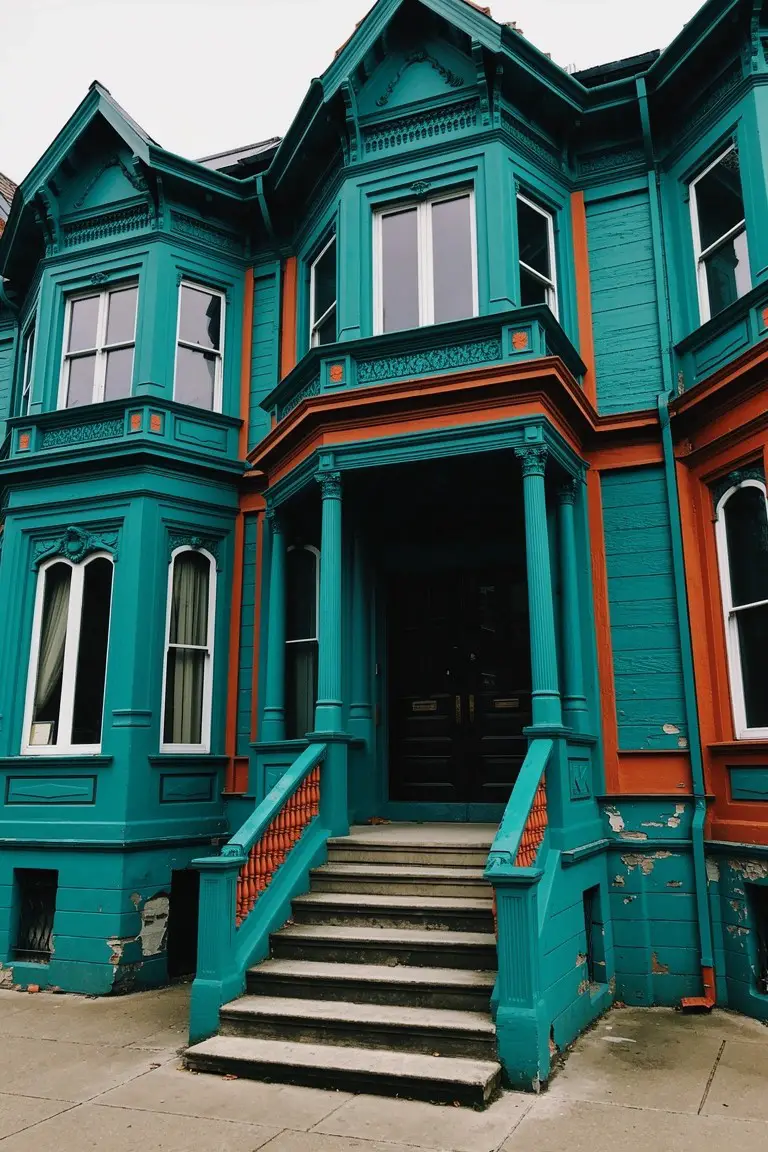
This deep teal covers the main body of the house and pulls from that blue-green family. It looks closest to Sherwin-Williams Teal Blue or Benjamin Moore St. Lucia Teal, maybe Behr Deep Breath too. Folks like it because it gives an older place like this Victorian some punch. Stays lively next to wood and those orange trim bits.
The undertone leans cool. Shines in overcast light or coastal spots where it won’t wash out. Go for warm rust or cream on doors and rails to balance it. Just test a sample first. Fades a bit in hot sun.
Deep Green Walls
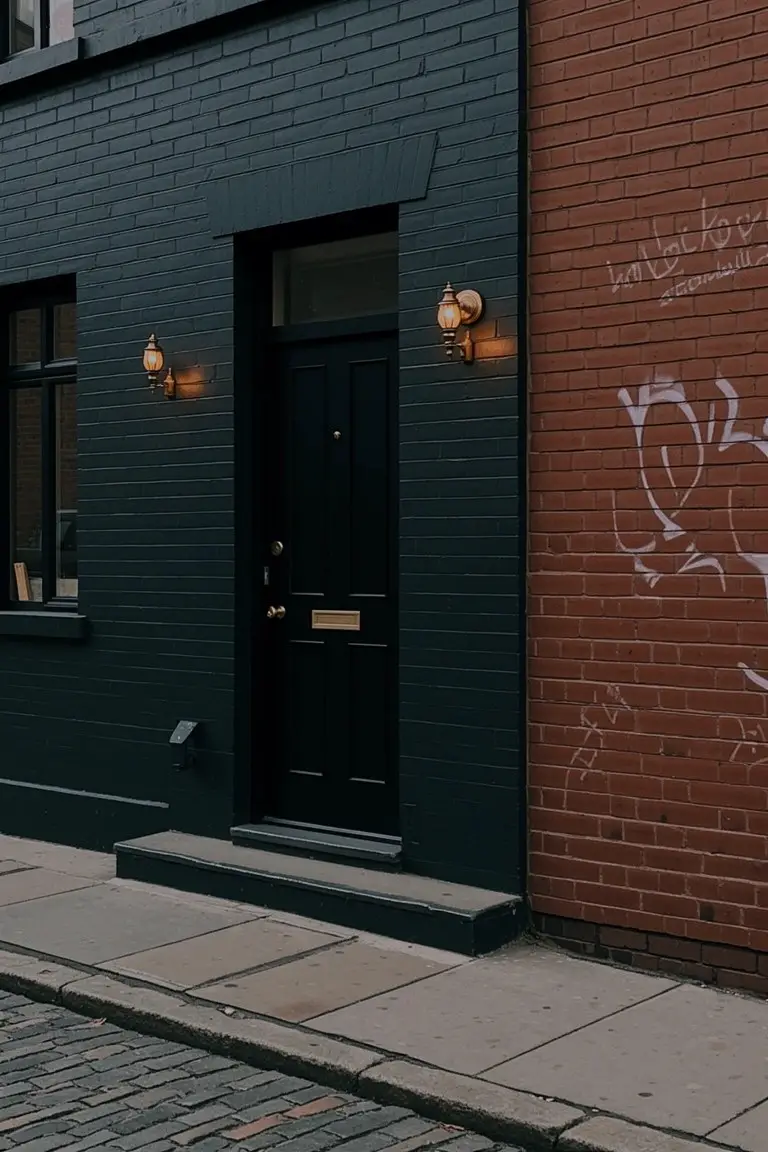
This deep green paint on the exterior walls pulls off a moody, almost black look that’s hard to beat for a personalized vibe. It seems closest to Farrow & Ball’s Studio Green, Benjamin Moore’s Black Forest, or Sherwin-Williams Killarney. What makes it work so well is how it hugs the architecture without overpowering it, especially with those brass light fixtures popping against it.
The color has a cool undertone that leans blue-green in some lights. It shines on older brick homes like this one, where the red tones next door keep things from going flat. Pair it with gold hardware or cream trim, but test it first if your spot gets heavy shade… it can read even darker there.
Cool Gray Exterior Siding
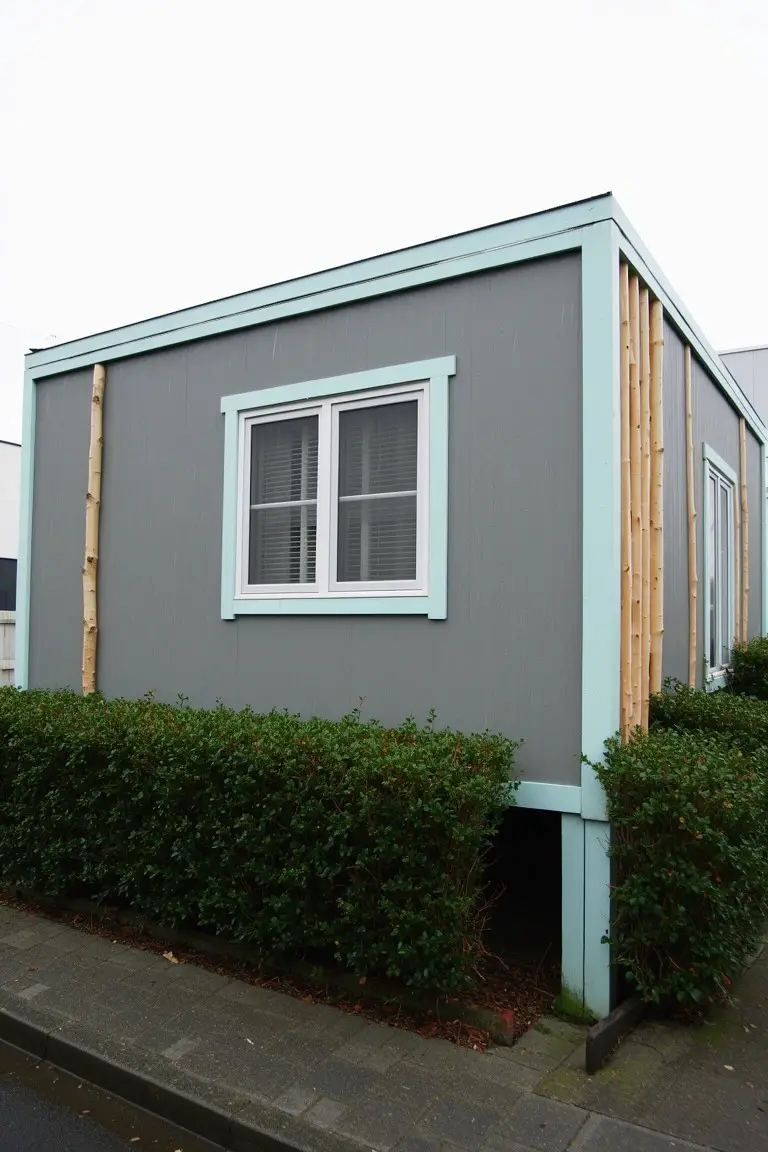
This cool gray paint on the siding reads very close to Sherwin-Williams Repose Gray, or Benjamin Moore’s Gray Owl, and Behr’s Silver Drop. It’s a medium-depth gray with subtle blue undertones that gives a house a clean, modern feel without being too stark. Folks like it because it lets natural elements like wood accents stand out nicely.
The blue lean in this gray works best on north-facing homes or in cloudy areas, where it stays fresh instead of turning muddy. Pair it with soft aqua trim like you see here, or white windows, and keep plantings low around the base to highlight the color. Just test a sample first, since lighting can shift it cooler.
Warm Terracotta Walls
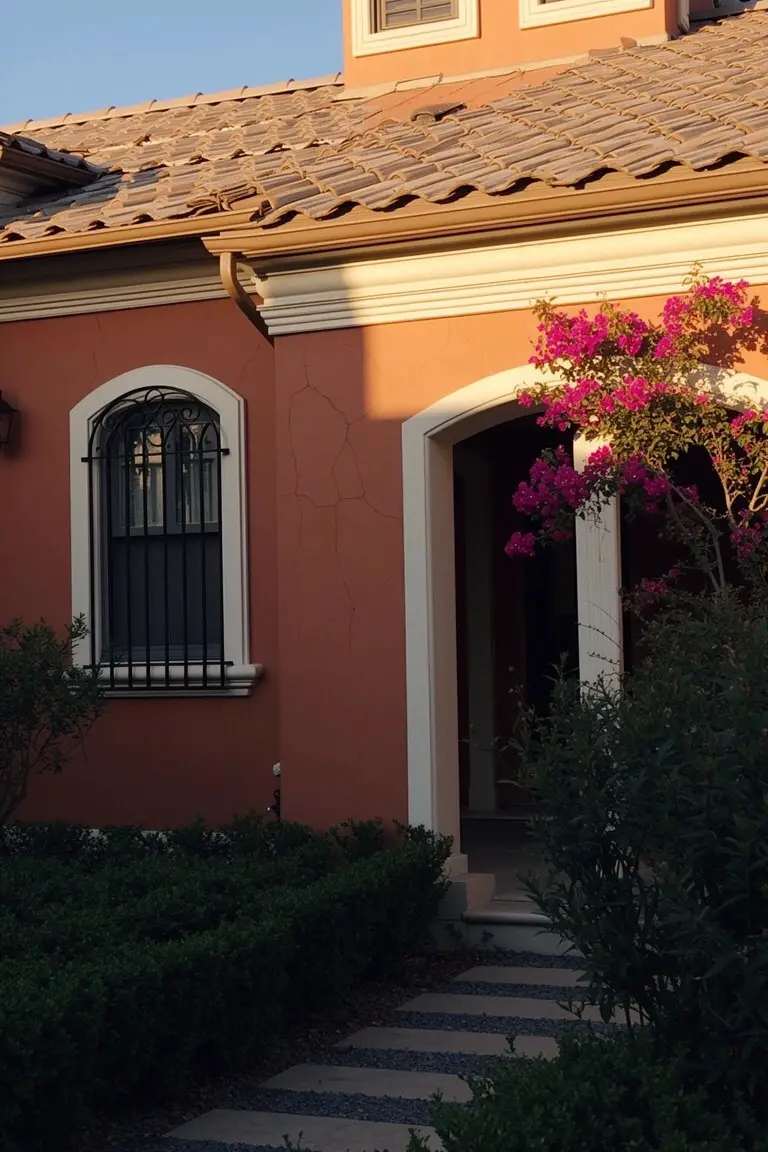
This terracotta paint on the walls pulls from that classic earthy family. It looks closest to Sherwin-Williams Terracotta 7541, or maybe Benjamin Moore Moroccan Spice 1287 and Behr’s Spiced Cider. Folks like it because it’s got real depth without being too bold. Fits right on stucco houses like this one.
The warm orange undertones make it glow in the sun. Notice how it sits with the beige trim around the arched door. It works best in sunny spots, paired with plants or tile roofs. Steer clear of pairing it with stark whites though… they can fight it a bit.
Deep Navy Lower Siding
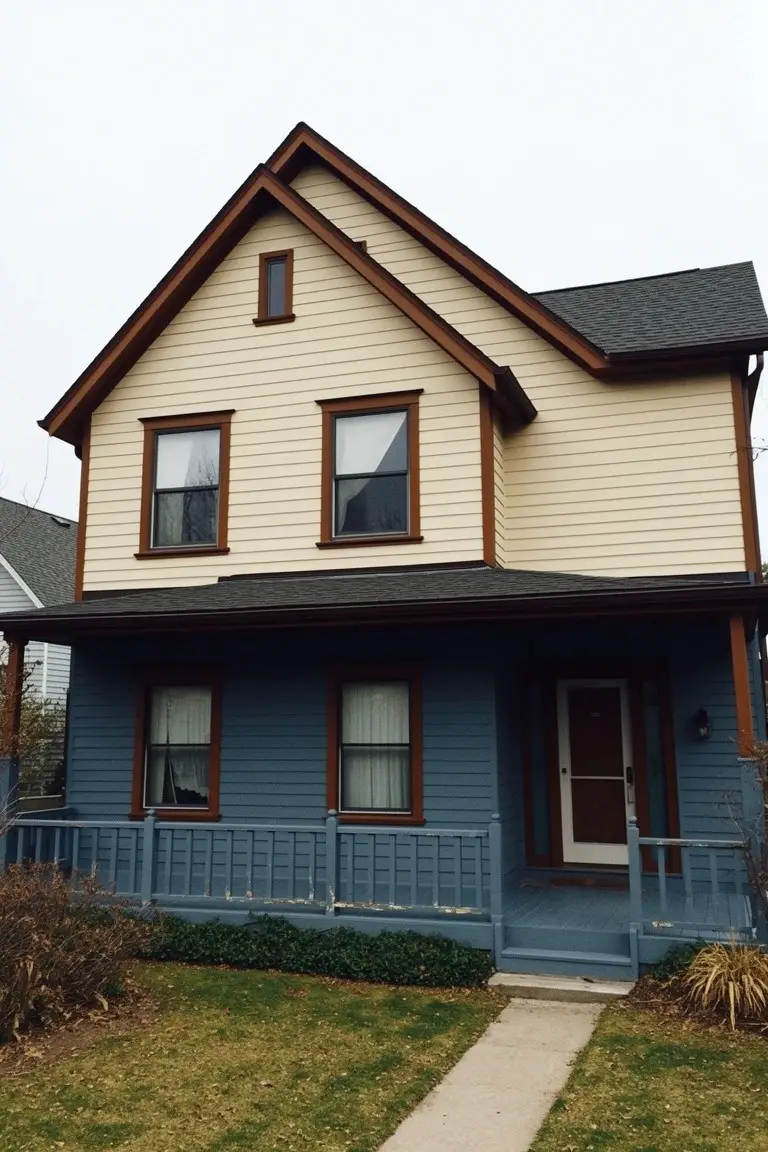
This setup goes with a deep navy blue on the lower siding and porch area. It’s that solid navy family, the kind that feels strong but not overpowering. Looks closest to Sherwin-Williams Naval or Benjamin Moore’s Hale Navy. Behr’s Midnight Blue runs pretty similar too. People pick it because it holds up next to wood trim without washing out.
The blue has a cool undertone that plays nice in overcast light, like you see here. Pair it with a light beige up top and dark brown accents around the windows. It suits older homes with some character. Just test it on your place first, since shadows can shift how deep it sits.
Matte Black Walls
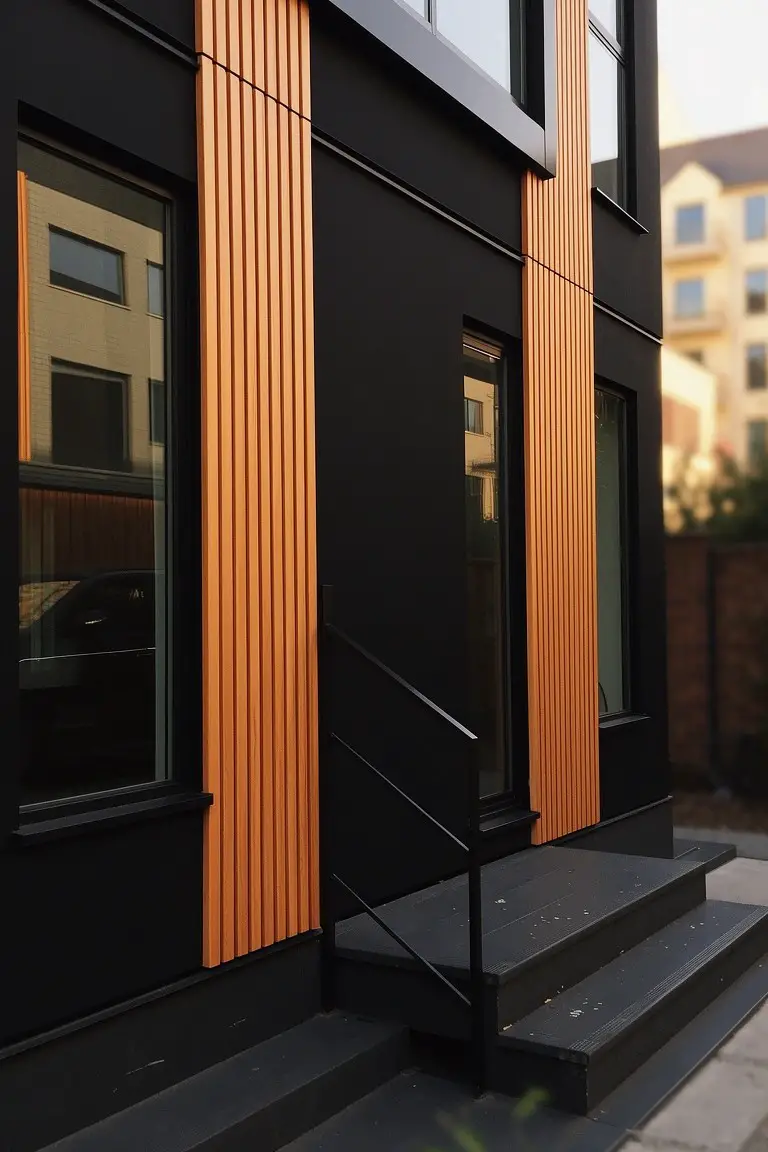
The walls here go for a deep matte black paint that gives the whole house a sharp, modern edge. It seems closest to Sherwin-Williams Tricorn Black or Benjamin Moore Black Beauty, maybe even Behr’s Black. People like this shade because it stays strong and simple, letting wood accents pop without competing.
That neutral black undertone reads steady in most lights. It works great next to warm oranges like on those vertical slats, or brick nearby. Just watch it on small homes, where it might feel heavy.
Deep Navy Siding
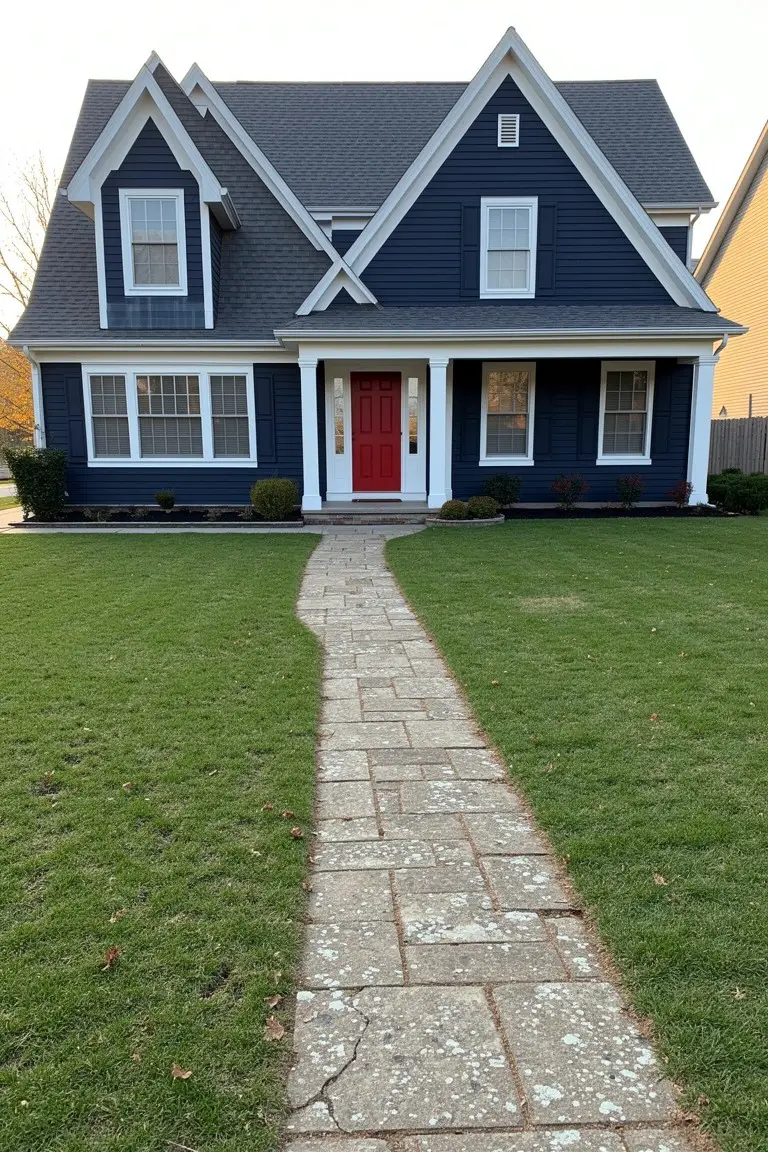
This siding shows off a deep navy blue. It looks closest to Sherwin-Williams Naval or Benjamin Moore Hale Navy, maybe Behr’s Abyss too. That’s the kind of blue people pick for a strong yet classic look on a house exterior. Not too bright. Just right with white trim.
The cool undertones hold up in different lights. Notice how it pairs with that red door for some punch. Works best on homes like this craftsman style. Skip it if your yard is super shady though… might read too dark.
Bright Coral Siding
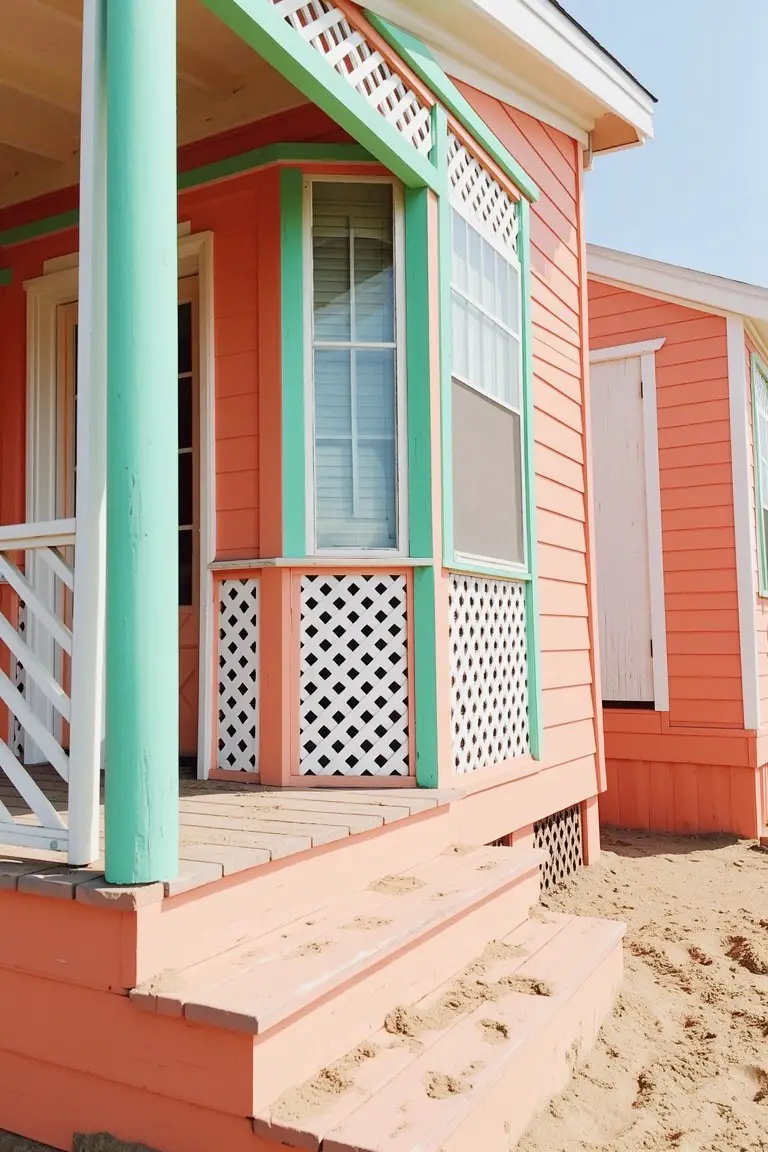
This coral pink exterior grabs your eye right away. It’s that warm coral family color, looking closest to Sherwin-Williams Calypso Coral or Benjamin Moore Coral Silk, with Behr’s Coral Fountain reading very close too. What stands out is how lively it feels on a house like this, especially with the sandy ground underneath.
The peachy orange undertones warm up nicely in the sun. It works best on beachy homes or sunny spots where you want some cheer. Green trim pops against it, like here, and keep porch details white to stay crisp. Avoid pairing with muddy browns though.
Warm Pale Yellow Exterior
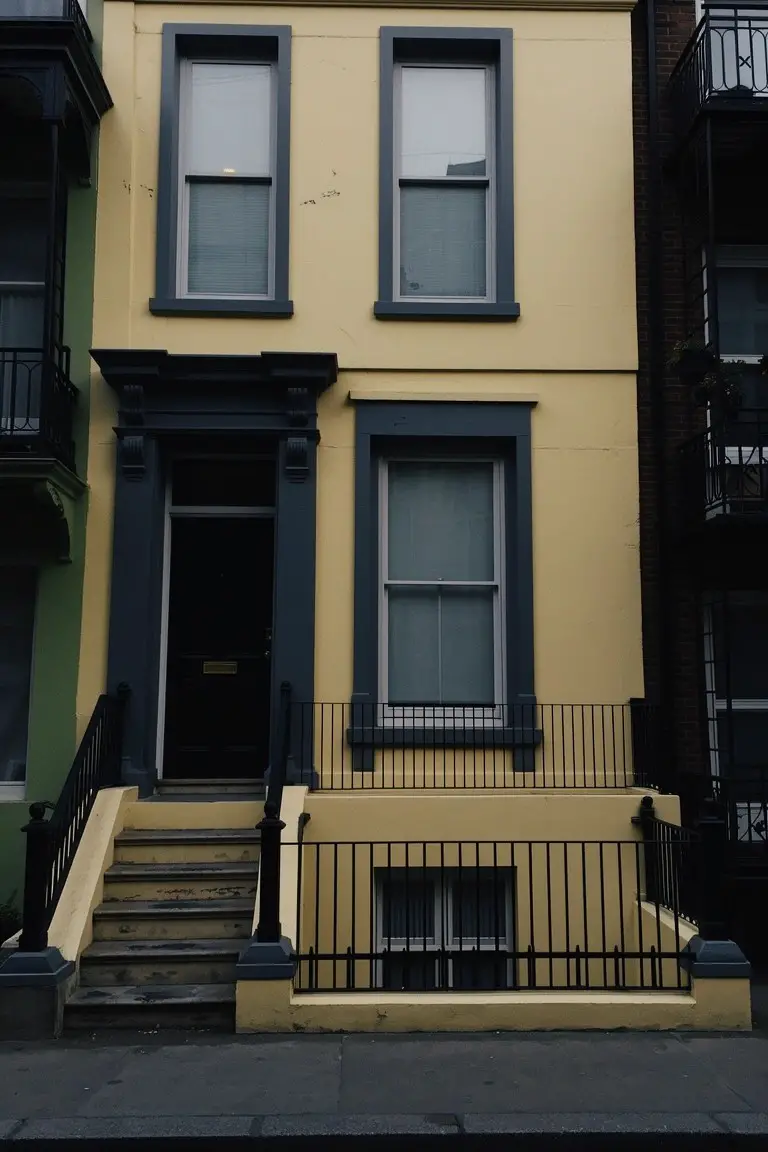
This warm pale yellow covering the house body reads very close to Sherwin Williams Creamy (SW 7012) or Benjamin Moore Pale Yellow (OC-3). Behr’s Silk Stole gives it that same mellow feel too. It’s an ochre-tinged yellow, not too bold, that brings a bit of cheer to plain brick row houses. People go for it when they want subtle sun without the full-on butter shade.
Warm undertones make it glow softly in overcast light. That black door and railing setup grounds it perfectly. Works best on east-facing spots or older urban homes. Just clean the lower walls now and then… dust shows easier on yellow.
Muted Sage Green Siding
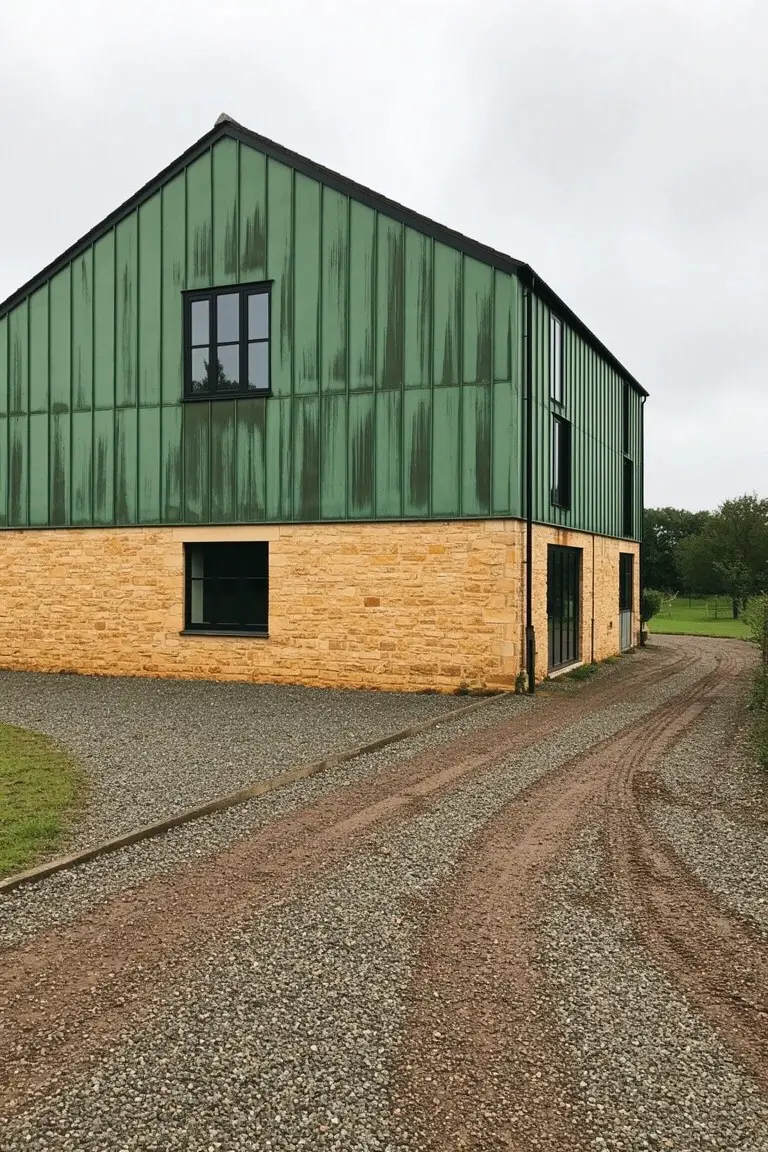
This exterior uses a muted sage green on the metal siding that reads very close to Sherwin-Williams Pewter Green or Benjamin Moore Saybrook Sage. Behr’s Silver Sage feels right in the mix too. It’s that soft green with a bit of gray, not too bright. People go for it because it settles right into a rural spot without shouting.
The cool undertones keep it from going brassy in most light. Pair it with stone bases like the yellowish brick here, or wood accents. Works best on barns or outbuildings where you want that aged patina look. Just test a sample, since metal can shift the shade a touch.
Blush Pink Exterior Walls
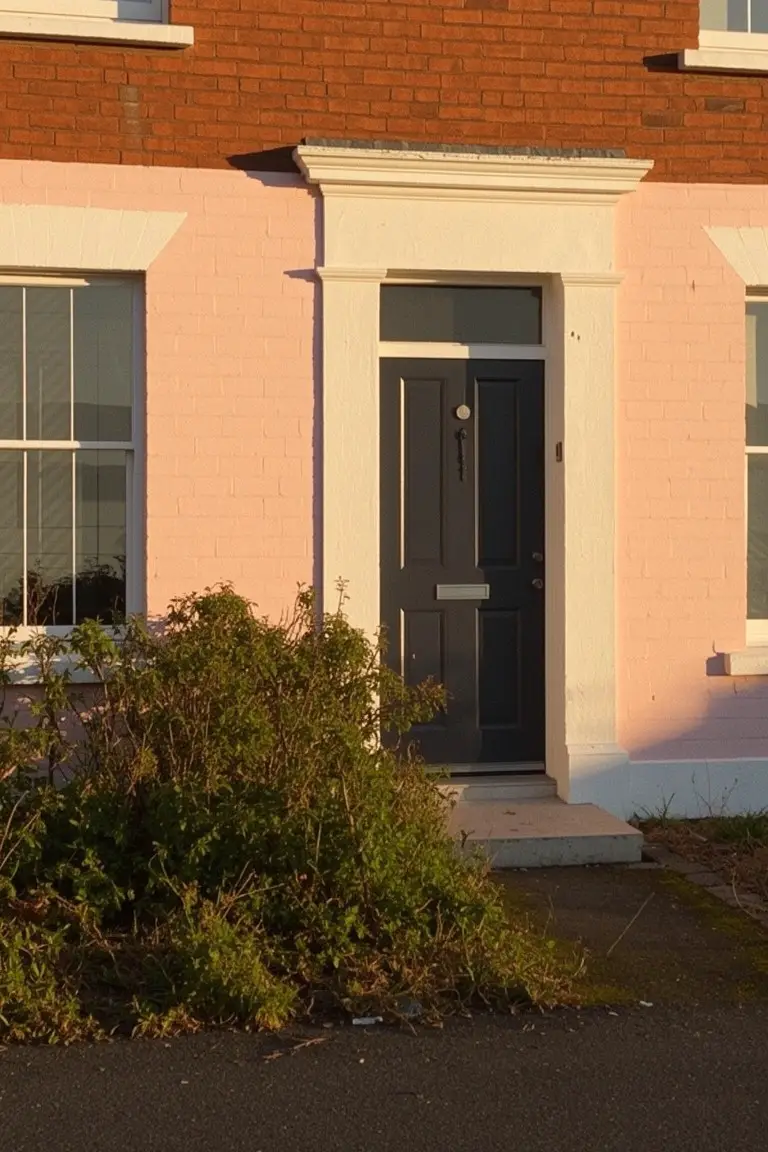
This pale blush pink on the house siding reads close to Sherwin-Williams Pussywillow or Benjamin Moore First Light, maybe even Farrow & Ball Pink Ground. It’s a soft pink in that warm family, nothing too bright or candy-like. What stands out is how it freshens up an older place without overpowering the brick next door.
Warm undertones give it a peachy hint, especially in softer light. Try it on rendered walls facing the street. It goes nicely with black doors and white trim. Just watch if your brick is too red, it might need testing first.
Light Gray Siding
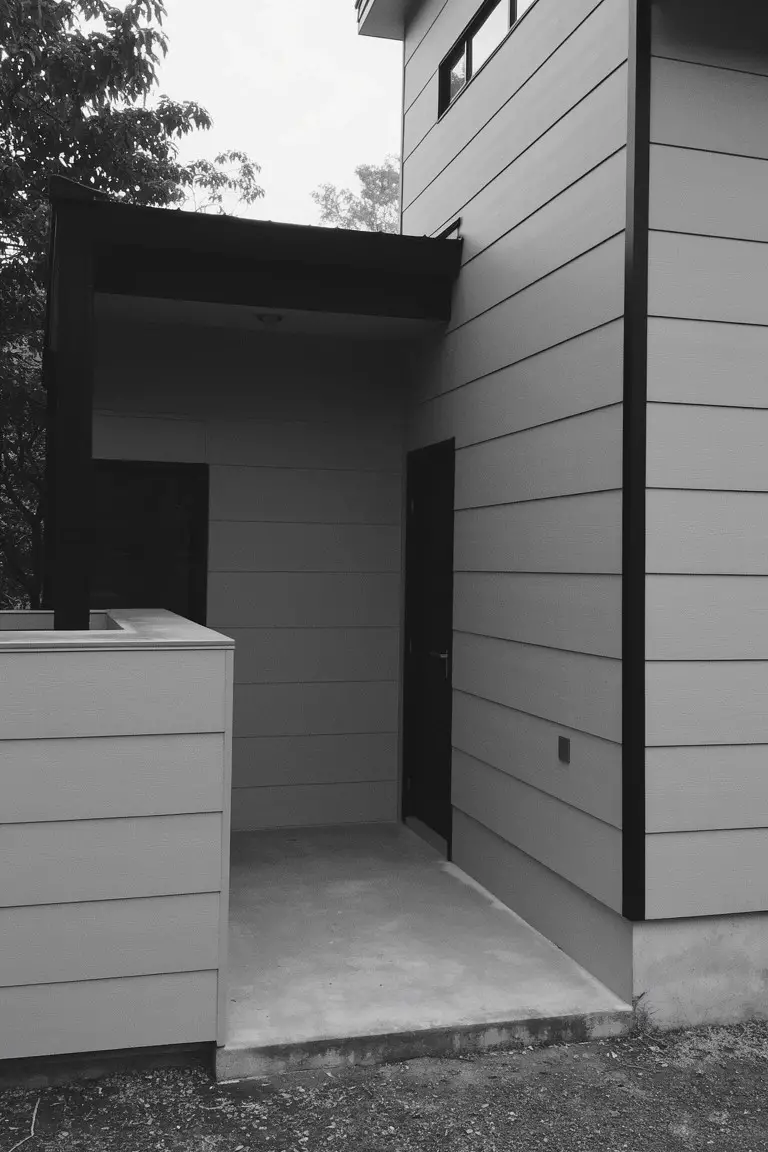
This exterior pulls off a light gray siding that looks closest to Sherwin Williams Repose Gray, or maybe Benjamin Moore Gray Owl and Behr’s Silver Drop. It’s a neutral cool gray, not too dark, that makes the house feel fresh and simple. Folks like it because it hides dirt better than white and still lets the black door and trim stand out clean.
The cool undertones show up nice in shady spots or overcast days. It works best on modern homes like this one, with those horizontal panels. Pair it with dark accents, but watch it next to warm brick, it might need warmer grays to blend.
Warm Terracotta Walls
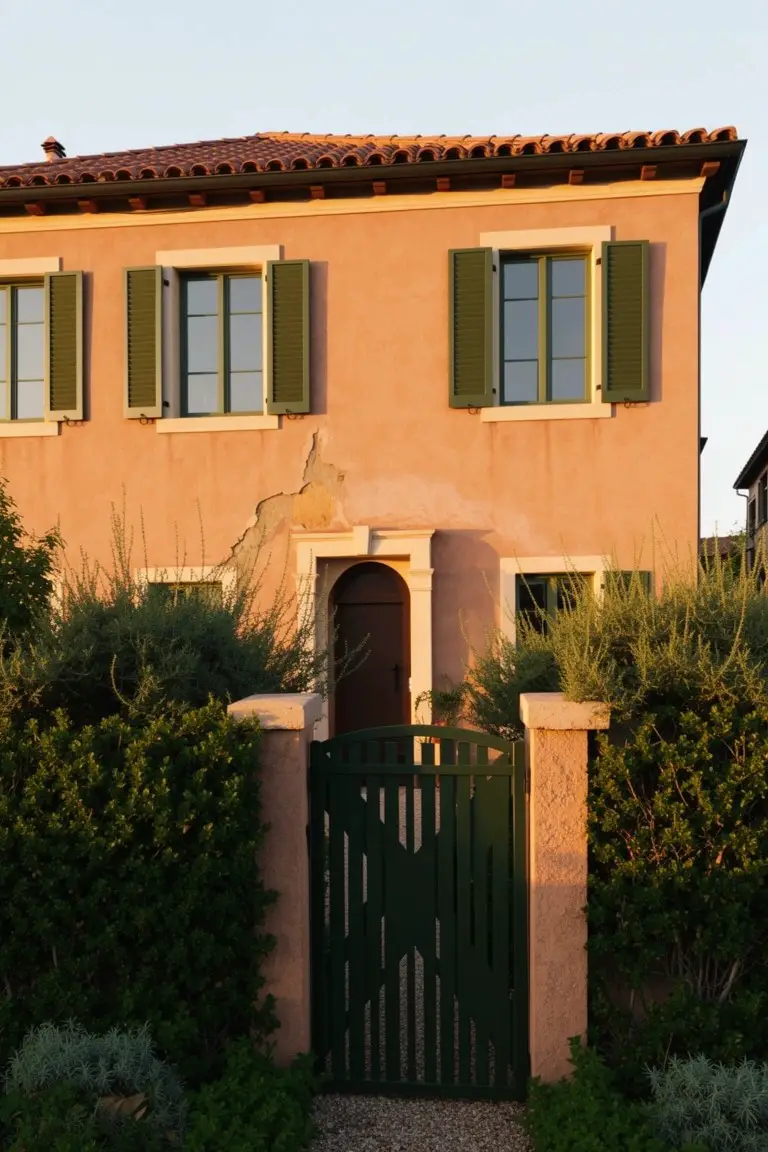
This warm terracotta on the stucco exterior seems closest to Sherwin-Williams Rodeo Clay or Benjamin Moore Potters Clay, maybe Behr Terracotta Sunset too. It’s an earthy peach tone in the terracotta family. People go for it because it feels cozy and timeless on older-style homes.
Warm undertones bring out a nice glow next to greenery. Pair it with dark green shutters and a red door, like here. Best for sunny spots on textured walls… watch it can read pinker in shade.
Pale Sage Green Exterior
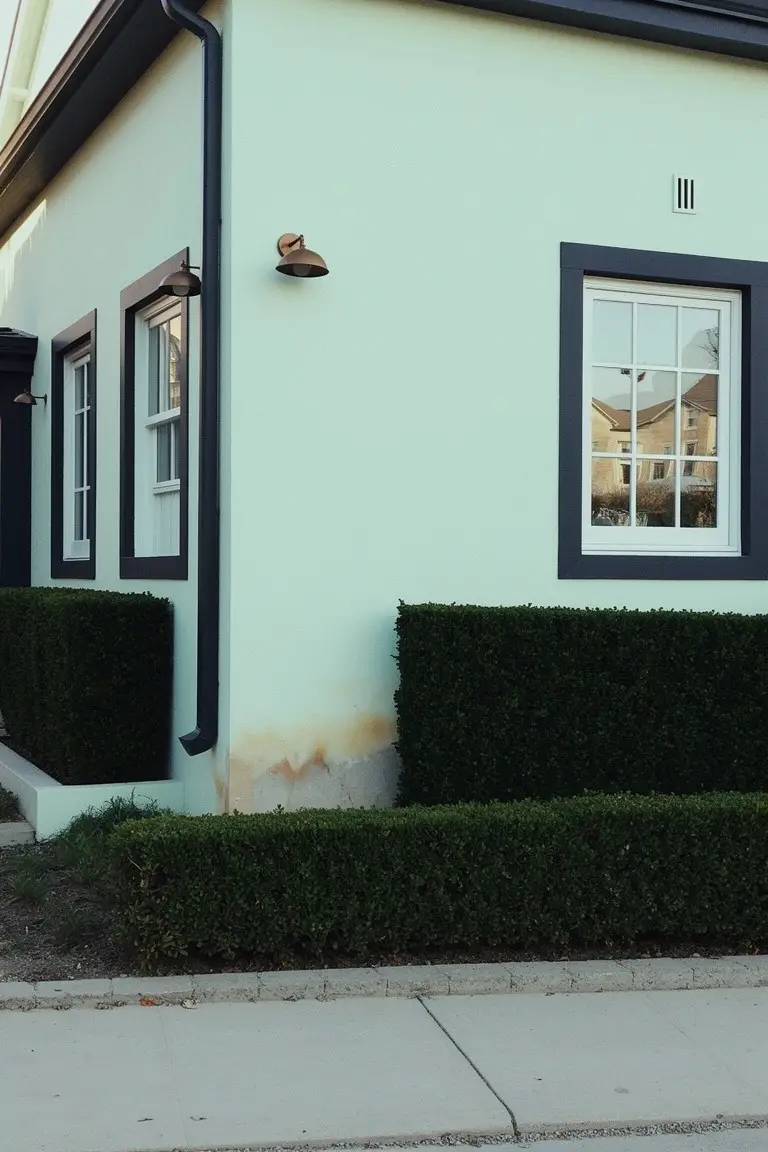
This house exterior shows off a pale sage green, the kind of muted green-gray that’s super easy on the eyes. It comes across closest to Sherwin-Williams Contented or Benjamin Moore’s Saybrook Sage, maybe even Behr’s Silver Sage. Folks go for this shade because it feels fresh and settled at the same time. Not too bright. Just right for making a home look lived-in and calm.
That cool undertone holds up well in different lights, staying green without turning muddy. Here it works nice with the black window frames and those hedges out front. Try it on a simple siding house, paired with dark trim or stone accents. Skip it if your spot’s all warm brick though.
Deep Purple Siding
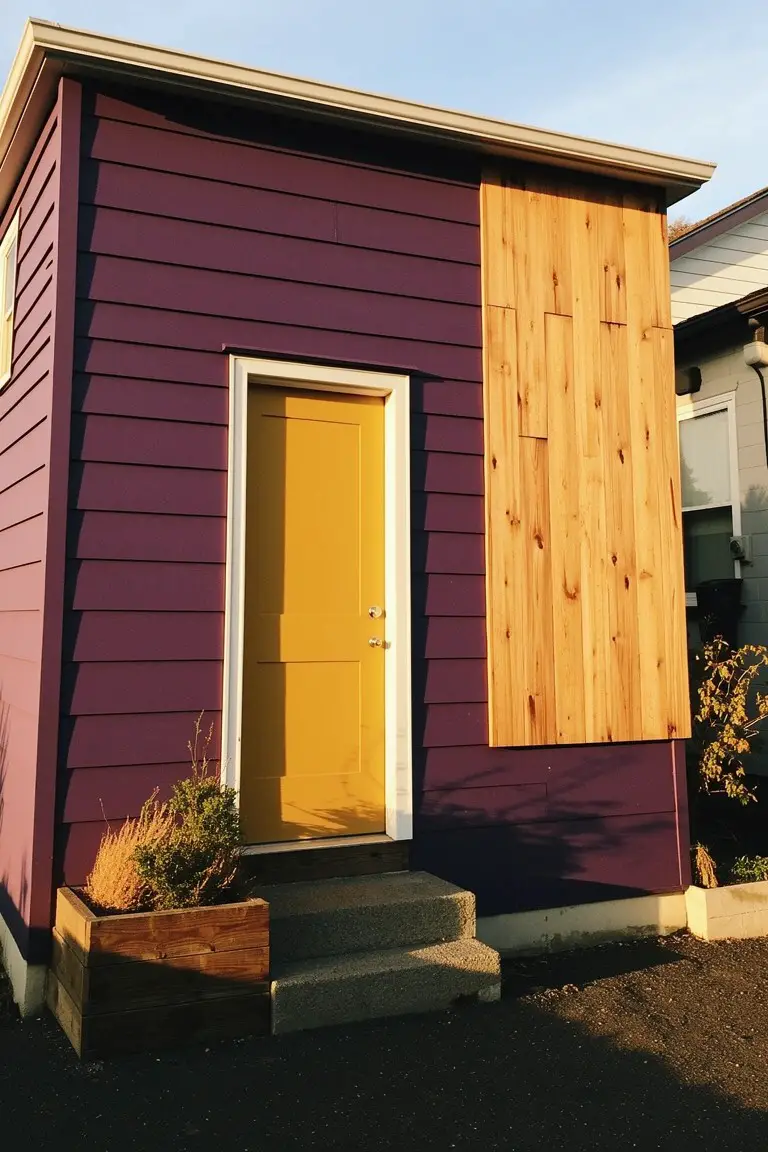
This siding paint is a deep purple right in the violet family. It comes across closest to Sherwin-Williams Intrigue or Farrow & Ball Brinjal. Behr Deep Plum reads pretty similar too. Folks like it because it gives a small house real presence without overwhelming the yard.
That warm undertone sits well next to wood accents and a sunny yellow door like you see here. Try it on a tiny home or garage where bold color won’t fight the landscape. Just watch it in shady spots. It can pull cooler there.
Classic White Exterior
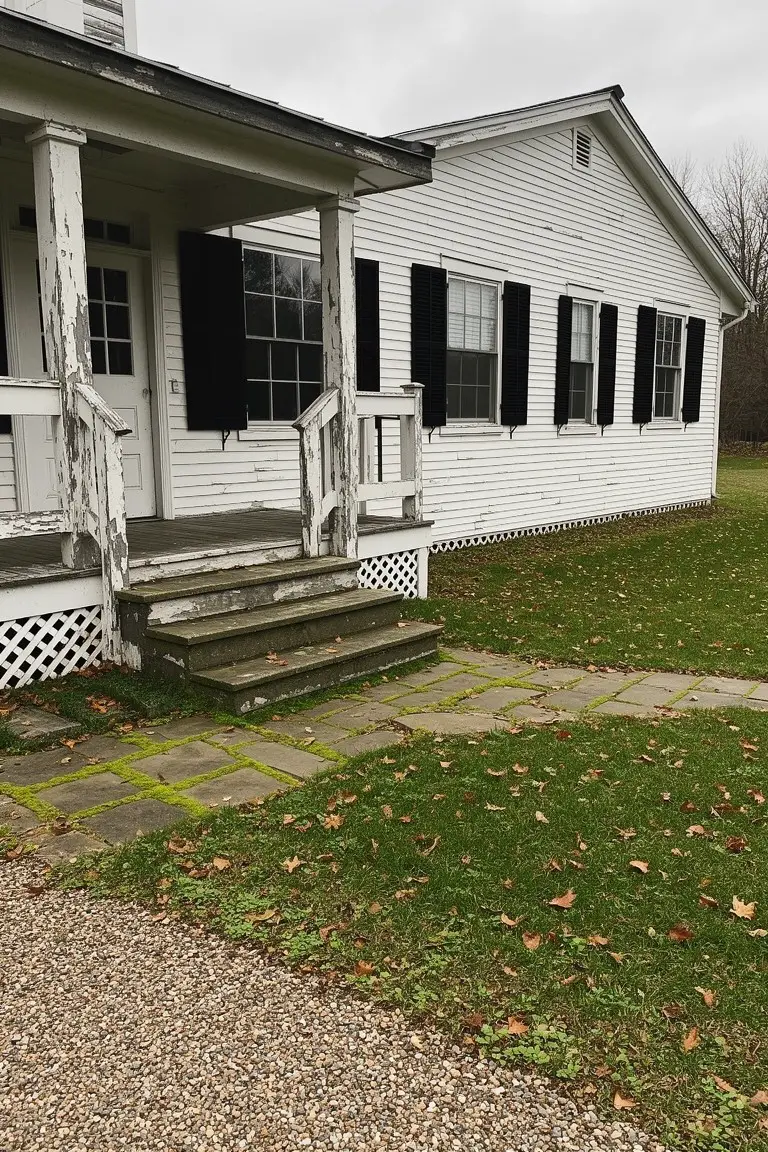
This exterior leans on a classic white paint that gives off that clean farmhouse vibe. It seems closest to Sherwin-Williams Alabaster or Benjamin Moore White Dove, maybe even Behr’s Swiss Coffee for a touch softer look. What stands out is how it stays bright year-round, letting black shutters and doors take center stage without overpowering things.
The white picks up a warm undertone from the weathered siding, which helps in cooler light or shaded yards. It pairs easy with gravel paths or stone steps nearby. Keep trim super dark to make it pop, and clean it now and then since whites show every smudge.
Deep Blue Siding
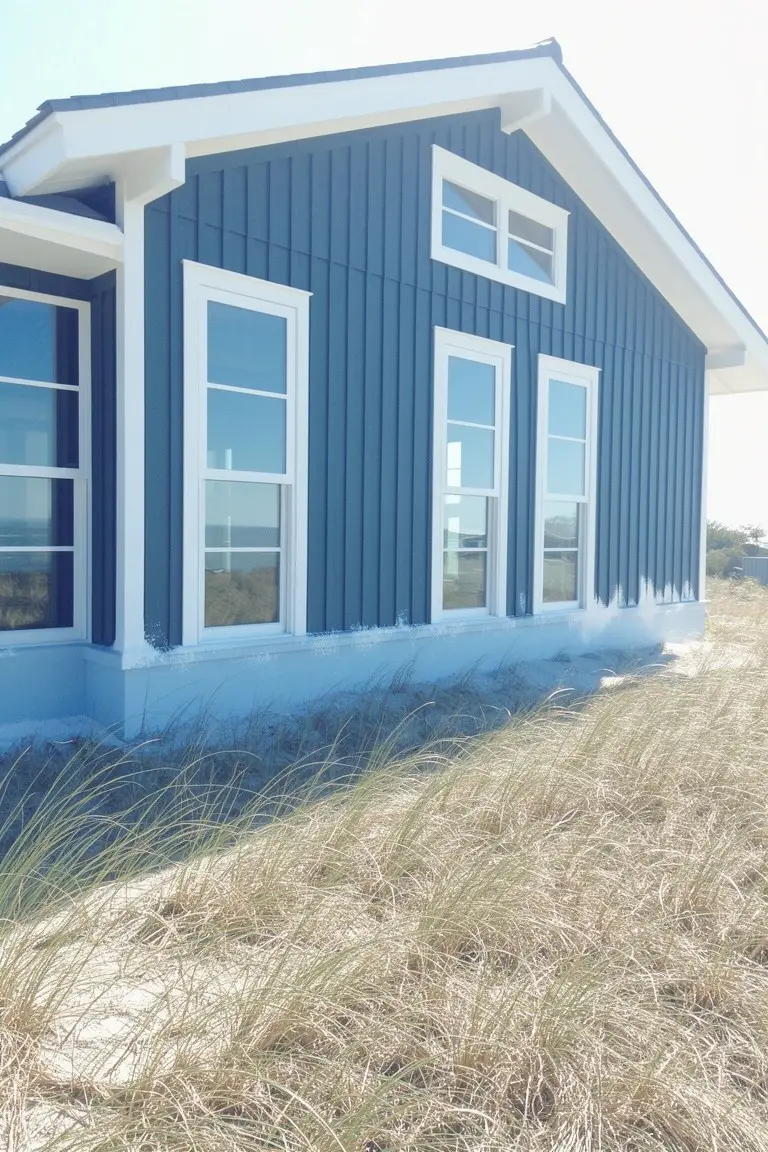
This deep navy blue on the siding stands out nice and strong. It looks closest to Sherwin-Williams Naval, Benjamin Moore Hale Navy, or Behr’s Deep Breath. It’s that kind of blue people go for when they want something bold on the outside without it feeling too heavy.
The cool gray undertones make it read lighter in the sun. White trim around the windows keeps everything crisp. It works best on homes near the water, where it picks up the light just right. Pair it with natural landscaping and you’re set.
Warm Cream Walls
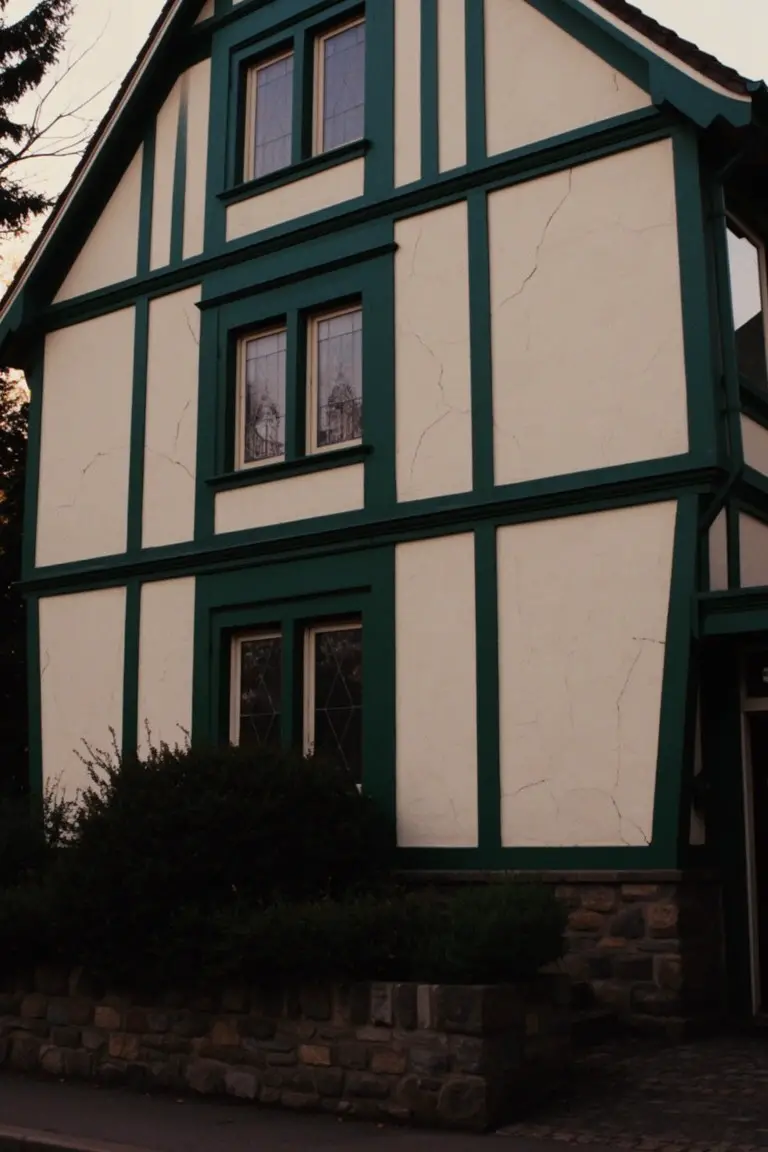
This exterior paint idea centers on a warm cream for the main walls. It sits in that creamy beige family and looks closest to Sherwin Williams Alabaster or Benjamin Moore Cloud White. Behr’s Silver Drop reads close too. Homeowners go for it because the warmth keeps things cozy on a traditional house. No harsh white glare here.
That subtle yellow undertone shows up best in north light or overcast days. Pairs right with dark green timbers like these, and stone at the base. Stick it on a craftsman or tudor style home. Just test a sample first… aging siding can shift the look.
Soft Blue Siding
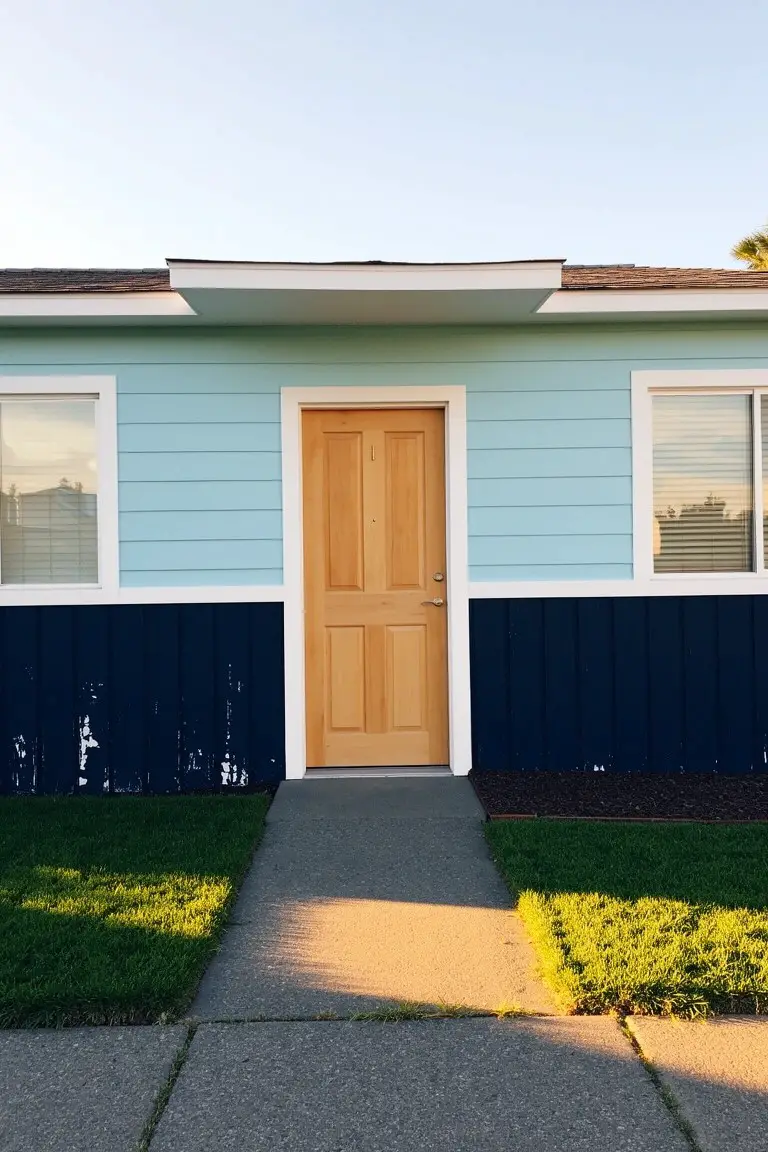
This soft blue on the clapboard siding pulls from the aqua family and seems closest to Sherwin-Williams Sea Salt. Benjamin Moore Palladian Blue reads very close too, along with Behr Blue Whisper. It’s the kind of gentle color that stays light and airy without washing out. Folks pick it for how it freshens up a simple house front.
That cool aqua undertone shows best under full sun. Pair it with a navy base like here to add some weight. Natural wood on the door brings warmth right in. Skip it if your spot gets mostly shade. Might turn a touch gray there.
Frequently Asked Questions
Q: How do I test a color scheme from the article on my house before committing to paint?
A: Paint big sample boards with your top picks and hang them in place at different times of day. Step back from the street to check the full effect. Light shifts fast outdoors.
Q: What if my home has brick or stone – how do I pick matching paints?
A: Work with the brick’s warm tones by choosing schemes that echo those earthy hues. Pull a color straight from the brick with a paint app scanner if you want exact matches. It grounds the whole look.
Q: Can I tweak these schemes for a subtle personalized twist?
A: Swap one shade for a color from your garden or door mat – keeps it unique to you. And skip matching everything perfectly. Neighbors won’t notice, but you’ll love it.
Q: Do bold schemes like the deep blues work on small houses?
A: They draw the eye up and add drama without shrinking the footprint. Balance with crisp white trim to open things up. Test on a sunny day first.
