

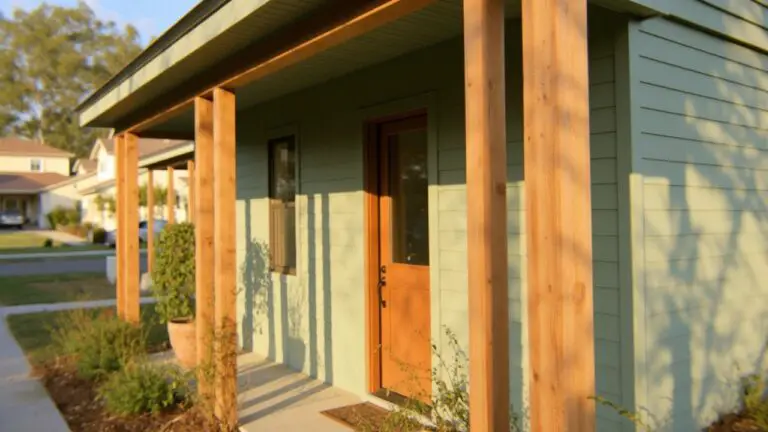
I’ve noticed that wood accents on house exteriors pull off this quiet warmth when you pair them with paints that don’t fight their natural tones.
Paints with gentle earthy bases tend to work because they shift subtly with the light, letting the wood’s grain stay front and center.
I tested a few ochre shades against our deck’s cedar last year, and they warmed up nicely by afternoon without looking forced.
Colors flop when they ignore the wood’s undertones, turning flat or jarring as the sun moves.
These wood-paint mixes hold promise in real daylight.
Soft Sage Green Siding
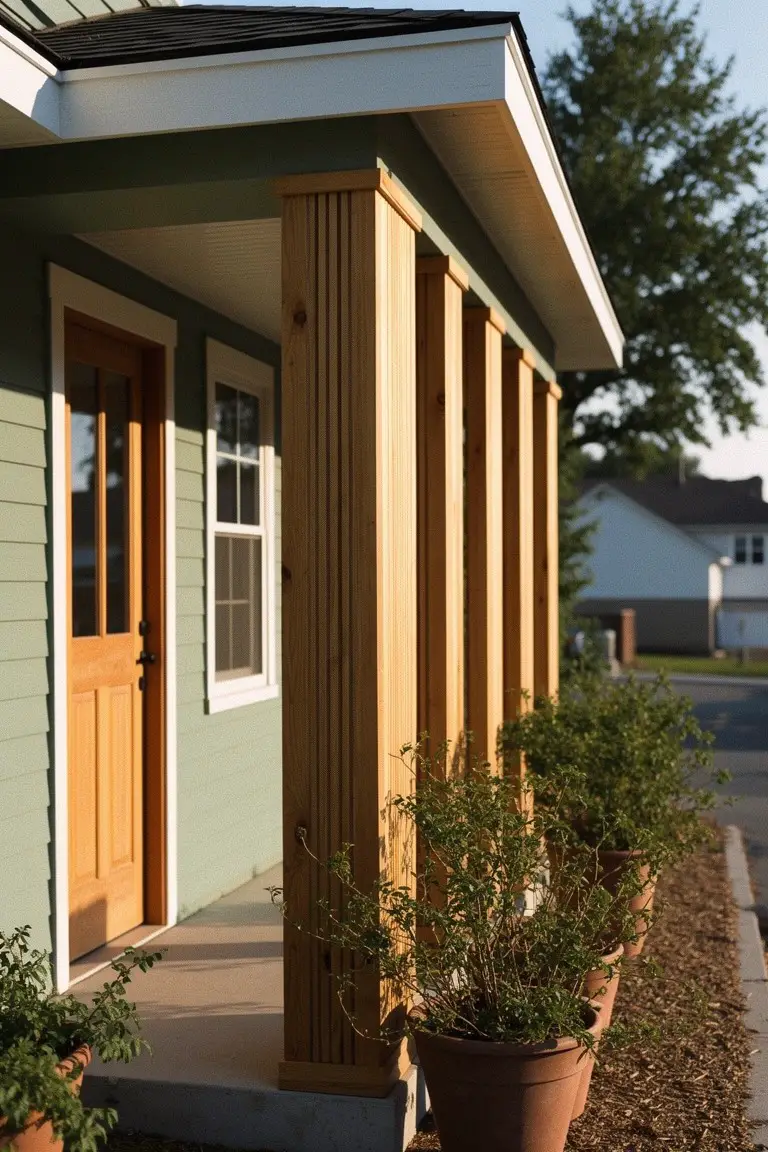
This house uses a soft sage green for the siding that feels right at home with wood details. It looks closest to Sherwin-Williams Clary Sage or Benjamin Moore Saybrook Sage, maybe Behr’s Willow Sage too. It’s a gentle green in the sage family, muted enough to stay easygoing. That calm vibe makes it great for blending into a yard without shouting.
The undertone leans a touch gray, which helps it read steady in different lights. Those fluted wood columns pop warm against it. Try this on a craftsman-style place, especially where you want wood accents to stand out natural.
Deep Gray Exterior
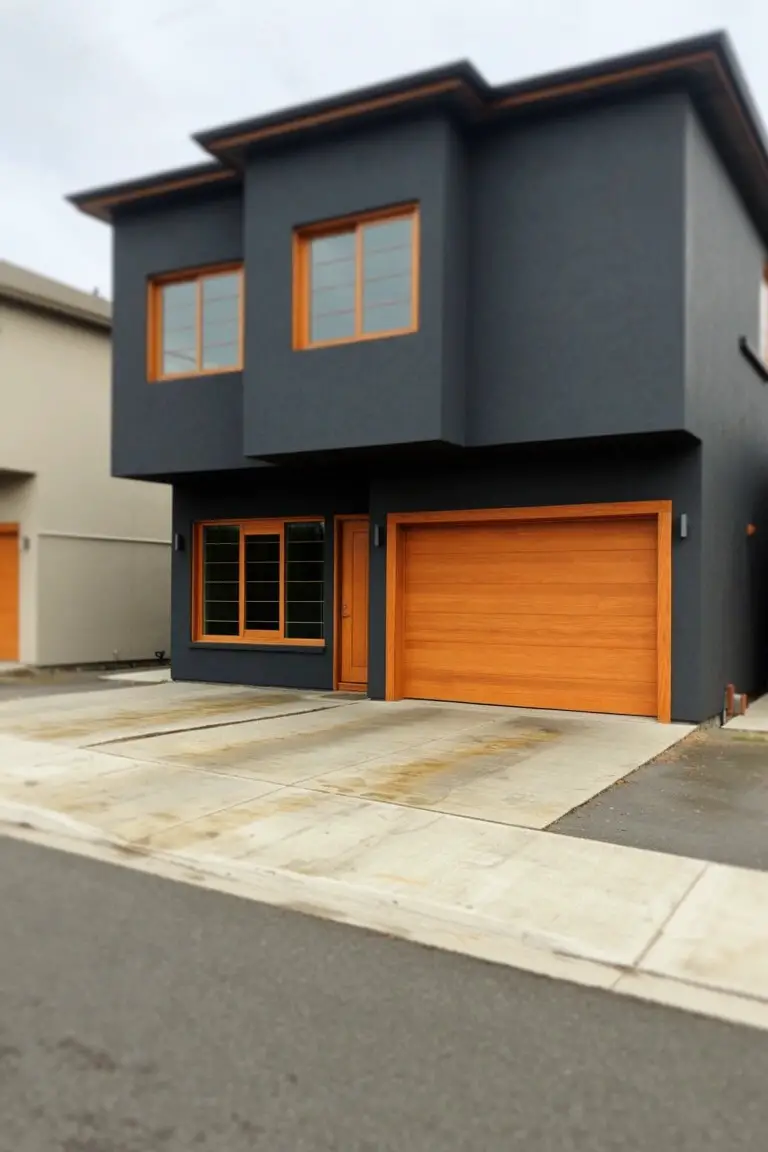
This house uses a deep charcoal gray paint that seems closest to Sherwin-Williams Iron Ore or Benjamin Moore Onyx. Sometimes Behr Cracked Pepper hits the same note. It’s got that solid, moody feel from the gray family, cool enough to let the wood accents shine without competing.
The undertone stays neutral cool next to those warm orange wood frames on the windows and garage. It suits overcast areas or north-facing spots best. Pair with natural wood tones for balance, and skip stark white trim if you want to keep the warmth going.
Warm Beige Walls
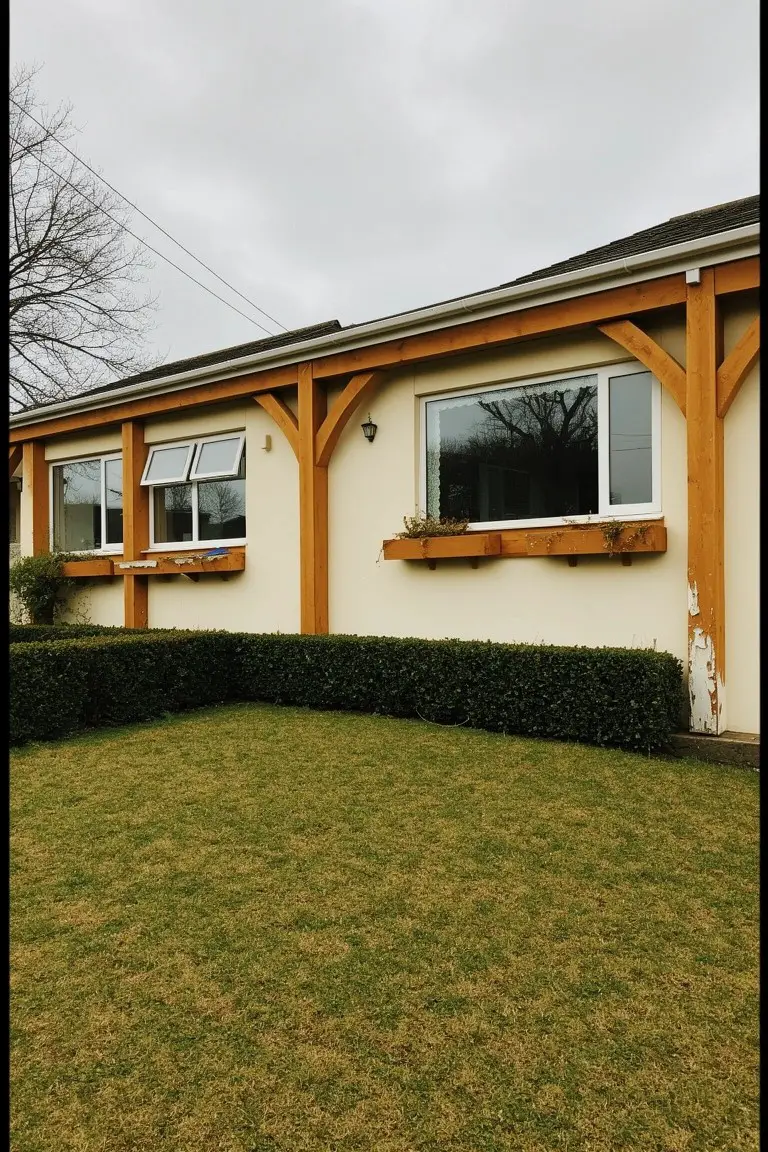
This exterior pulls off a soft warm beige on the walls that I’d place near Sherwin-Williams Alabaster, Benjamin Moore White Dove, or Behr Swiss Coffee. It’s the sort of easy neutral with just enough warmth to feel homey. People go for it because it highlights wood details like those window frames without stealing the show.
That subtle yellow undertone shows up nicely in natural light. It suits houses with landscaping around the base, and sticks best to pairing with raw timber or simple green plants. Steer clear if your wood’s too dark, though. Might wash out a bit.
Deep Purple Siding
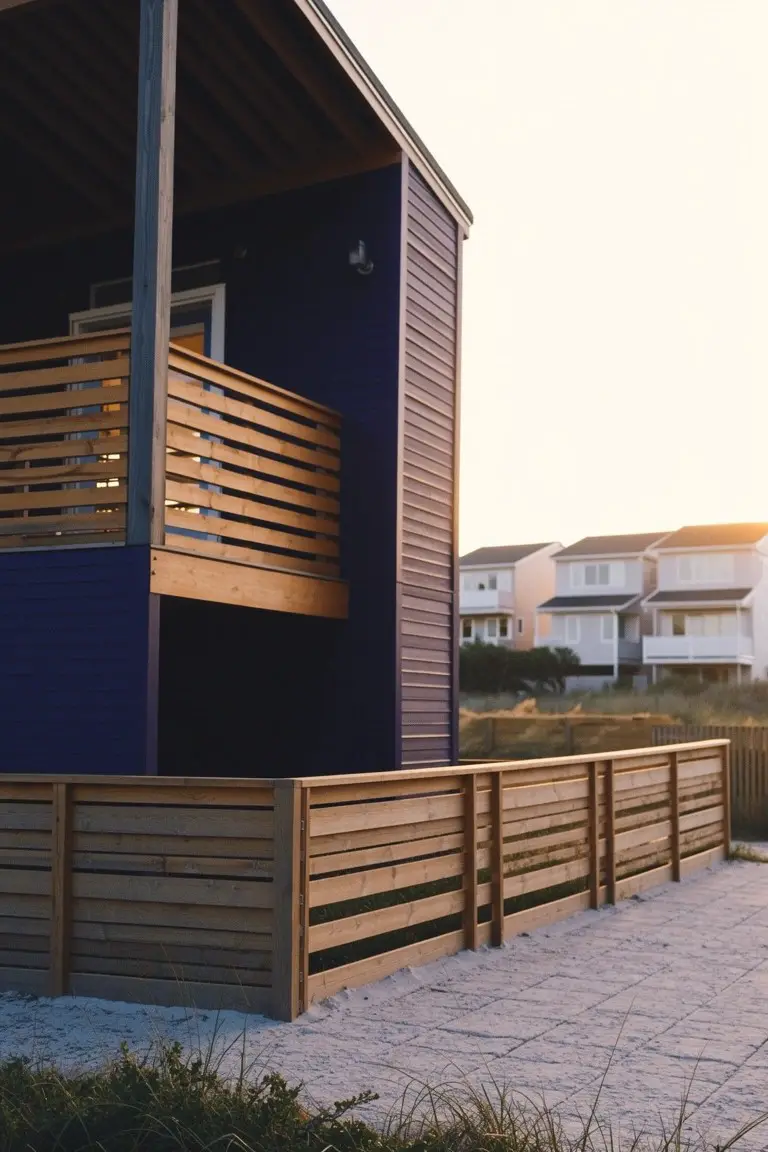
This exterior pulls off a deep purple on the siding that seems closest to Sherwin-Williams Aubergine or Benjamin Moore Rich Aubergine. Maybe Behr’s Deep Plum too. It’s got that cool blue-violet tone that feels fresh on a modern house. Folks like it because it adds personality without going overboard.
The undertones lean blue so it stays crisp next to wood. Notice how the horizontal wood fence and balcony railings warm it up here. It suits beachy areas or updated neighborhoods best. Just test it in your lighting first. Pairs easy with natural stains on the accents.
Warm Terracotta Walls
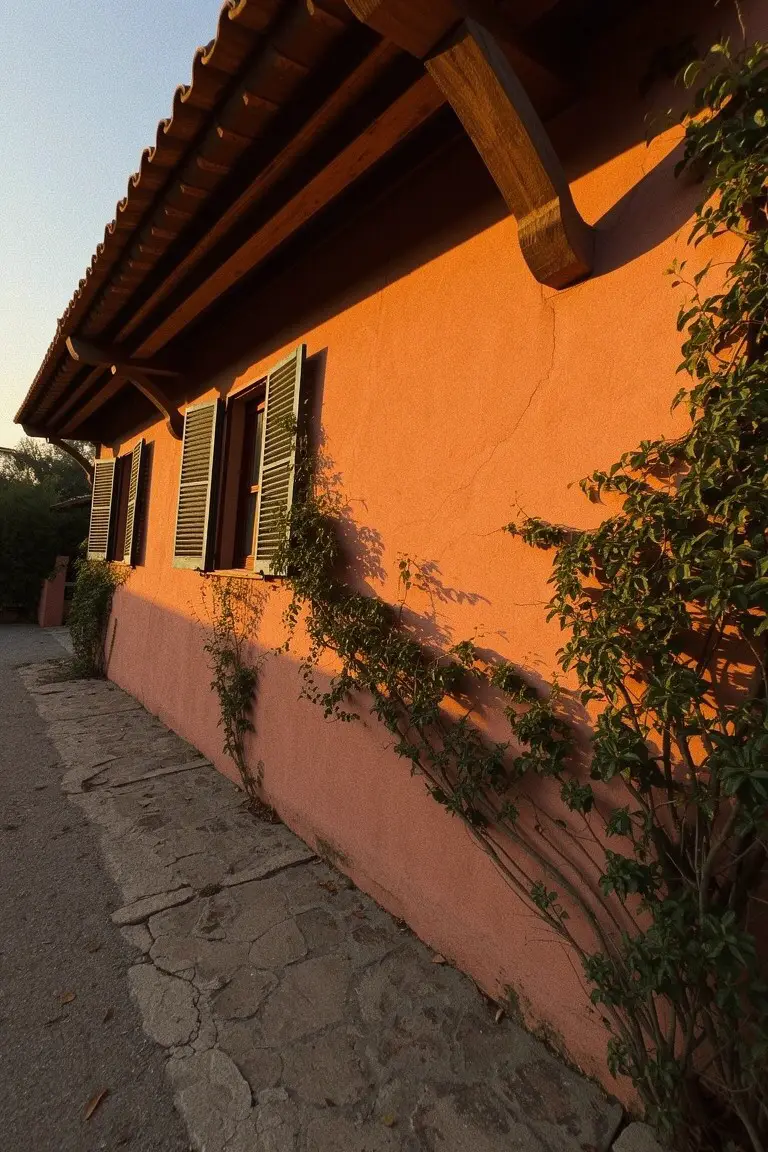
This setup pulls off a warm terracotta on the stucco walls. It reads very close to Sherwin Williams Moroccan Spice or Benjamin Moore’s take on it, with Behr Terracotta Clay in the mix too. That kind of earthy orange gives exteriors a cozy, lived-in look. Folks like how it highlights wood details without overpowering them.
The undertones lean peachy warm, especially in late light. It suits homes with wood trim or beams overhead, and stone paths nearby. Pair it with dark shutters or greenery. Steer clear if your area’s too shady… it needs some sun to glow right.
Navy Blue Walls
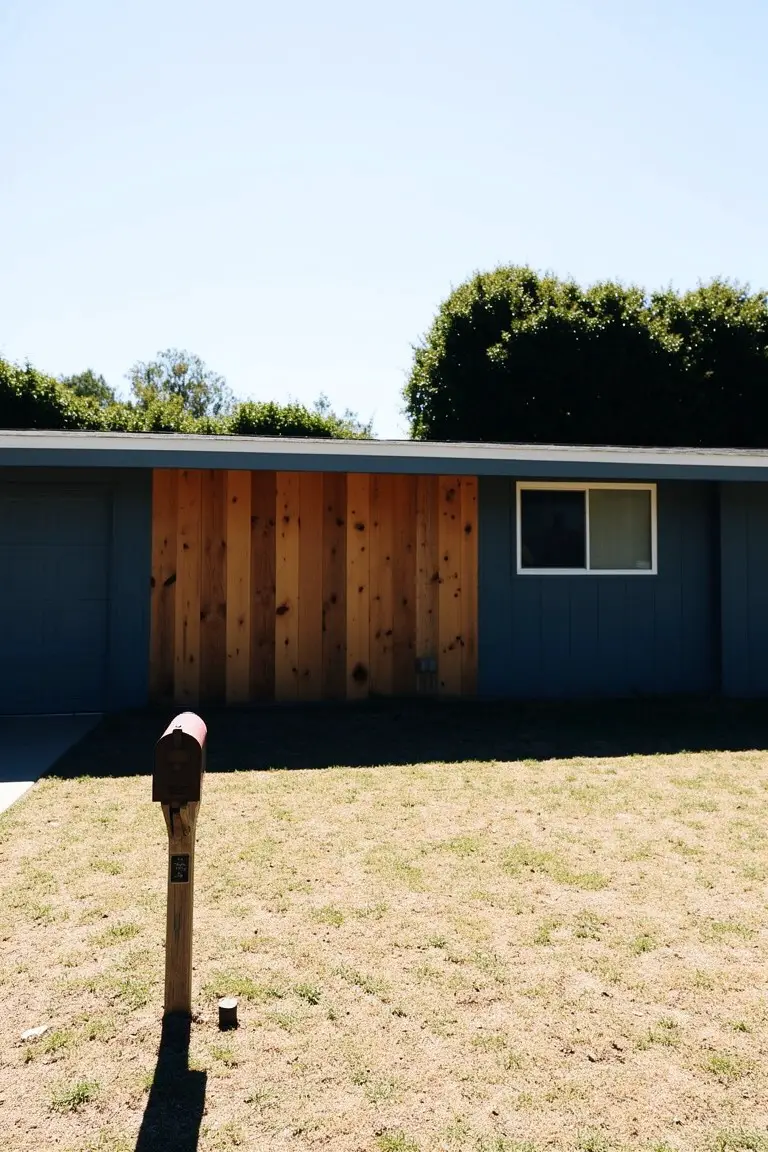
This exterior pulls off a deep navy blue on the main walls, the kind that sits in the cool blue family. It looks closest to Sherwin-Williams Naval, Benjamin Moore Hale Navy, or Behr Midnight Bay. What stands out is how that rich color hugs the vertical cedar planks without overpowering them. Folks like it for giving a modern edge while letting the wood’s warmth come through.
The navy picks up a gray undertone in sunlight, which keeps it from reading too dark. It works best on homes with good exposure, pairing easy with raw wood accents and white trim around windows. Just watch it doesn’t clash if your stonework leans too warm.
Deep Black Siding
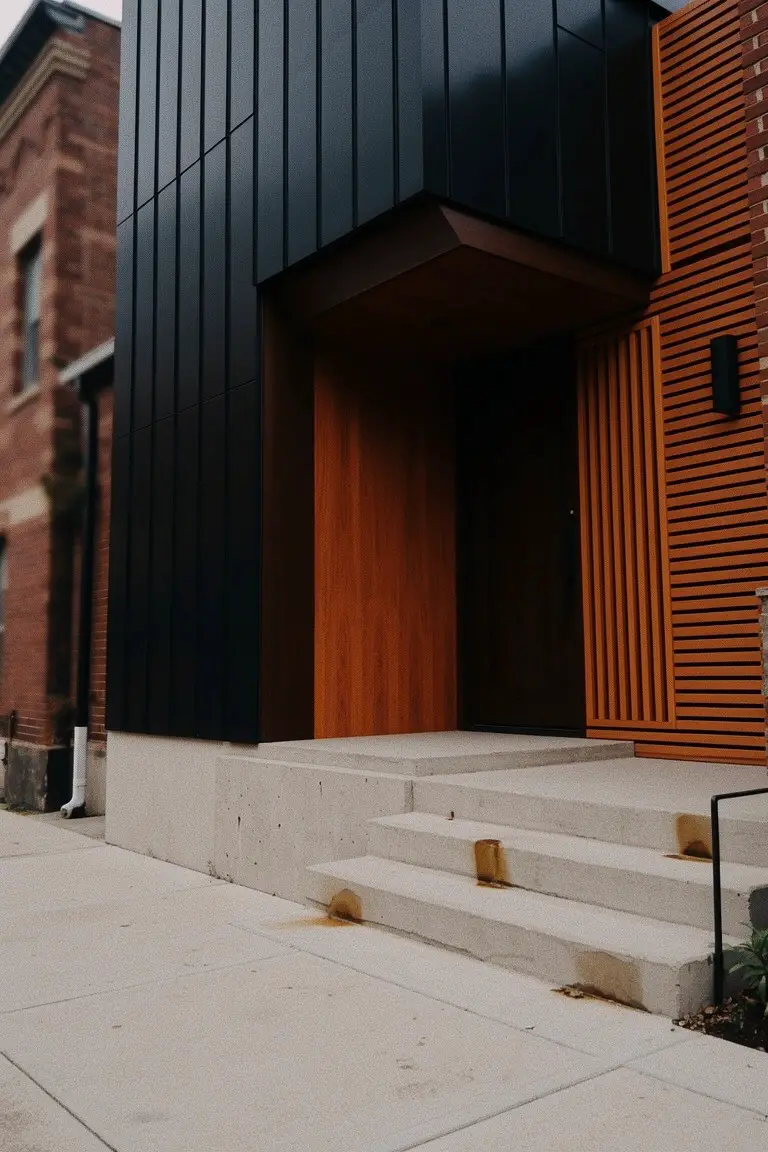
This exterior pulls off a deep black on the main siding panels. It reads very close to Sherwin-Williams Tricorn Black or Benjamin Moore Onyx, maybe even Behr’s Black. That kind of near-black color gives a strong, modern backdrop without going too flat.
The tone sits neutral here, picking up just enough warmth from the wood door and nearby brick. It works best on city row homes like this, where the wood accents add that organic touch. Pair it with lighter concrete or stone steps to keep things balanced.
Soft Sage Green Siding
This cabin-style home shows off a soft sage green on the siding. It reads very close to Sherwin-Williams Sage or Benjamin Moore October Mist, maybe Behr’s Silver Sage too. That muted green sits easy next to the wood, giving the whole place an organic look without trying too hard.
The gray undertones keep it from going too yellow in the light. It works best on exteriors like this, where the vertical wood slats and warm trim pull it together. Pair it with natural landscaping… and it just blends right in.
Soft Terracotta Walls
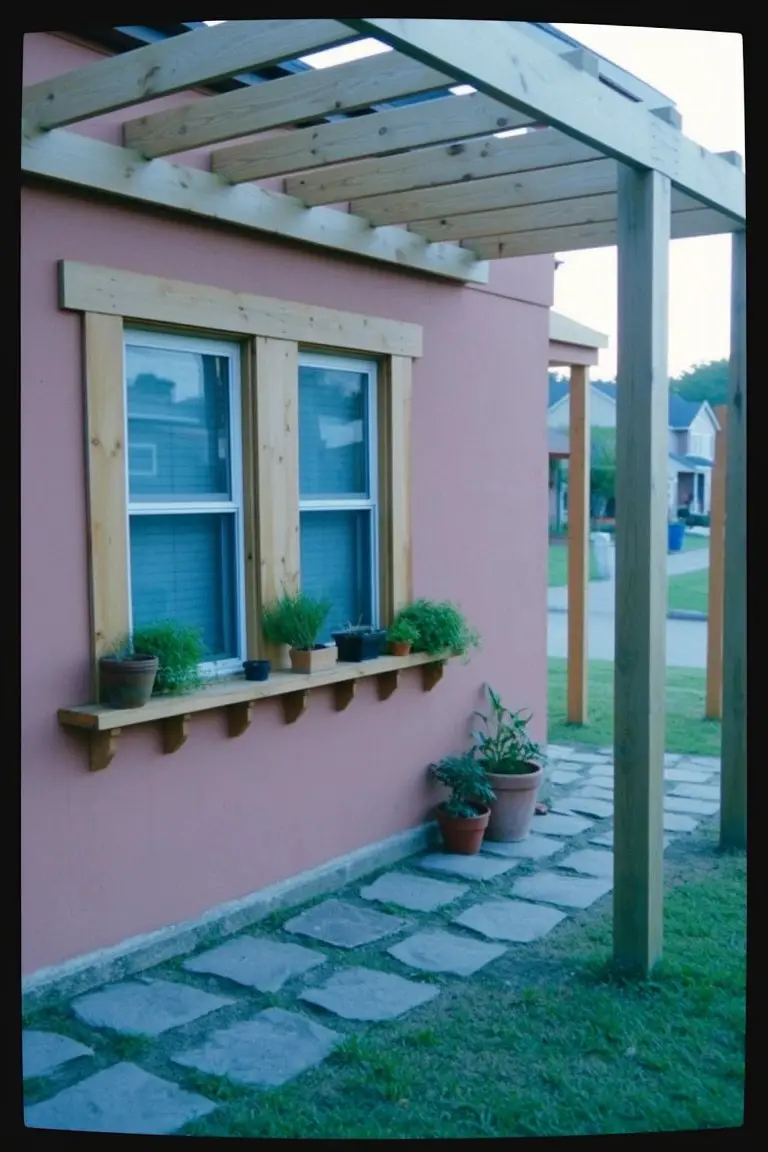
This soft terracotta pink on the house siding reads close to Sherwin-Williams Terracotta Tile SW 7518, Benjamin Moore Clay Beige HC-91, or Behr Spiced Brandy. It’s a warm earthy shade, not too bold, that settles right in with natural wood and greenery. Folks like how it brings some color without shouting.
Warm undertones make it shift a bit pink in the sun, which works well around here with the pergola beams and herb planters. Stick to unstained wood or stone paths to keep the organic look going. Avoid cooler grays nearby… they’ll fight it. Good pick for a cozy backyard wall.
Warm Brown Garage Doors
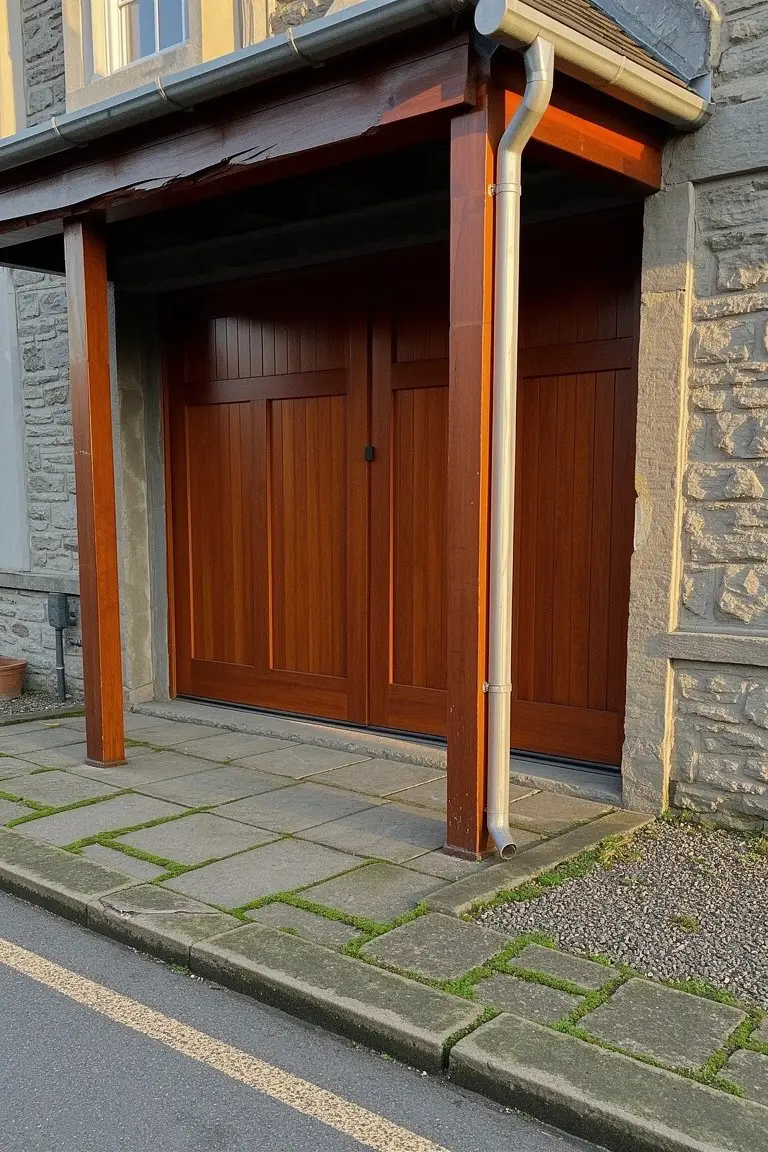
This warm medium brown on the garage doors has that rich wood feel. It looks closest to Sherwin-Williams Spiced Brandy or Benjamin Moore Nutmeg, maybe Behr’s Brownstone too. Folks like it because it warms up stone without overpowering, keeps things natural looking.
The reddish undertones pop nicely in sunlight, especially next to cool grays like that stone wall. Pair it with neutral trim or downspouts to let the wood shine. Works best on garages or entryways where you want cozy without fuss.
Warm Light Beige Siding
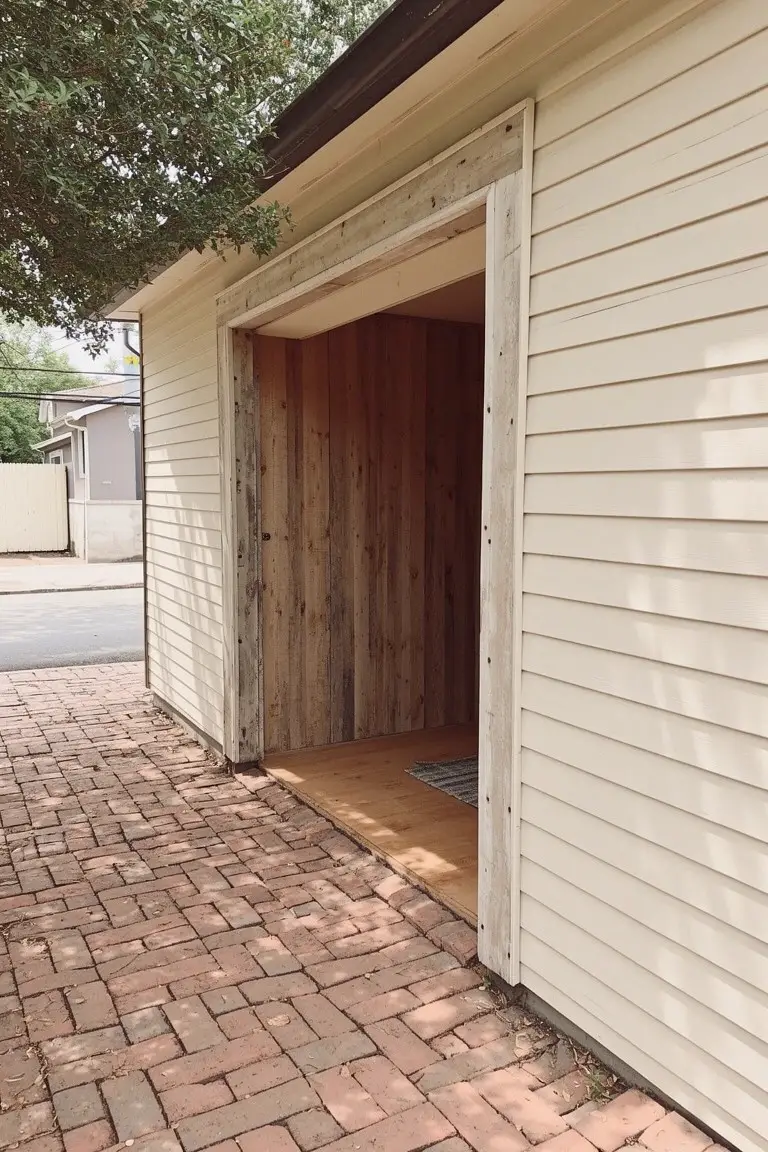
This siding pulls off a warm light beige that’s not quite white but close enough to keep things bright. It reads very close to Sherwin Williams Alabaster or Benjamin Moore White Dove, maybe even Behr Swiss Coffee on a good day. Folks like it because it lets the rough wood accents pop without stealing the show. That open garage door with its raw wood inside shows how the color plays nice.
The beige has a soft yellow undertone that warms up in sunlight, like on that brick path out front. It works best on bigger exteriors where you want calm without going too stark. Pair it with natural wood or stone, but watch for trim that might look dingy if it’s cooler toned. Solid choice for a casual backyard setup.
Warm Golden Yellow Siding
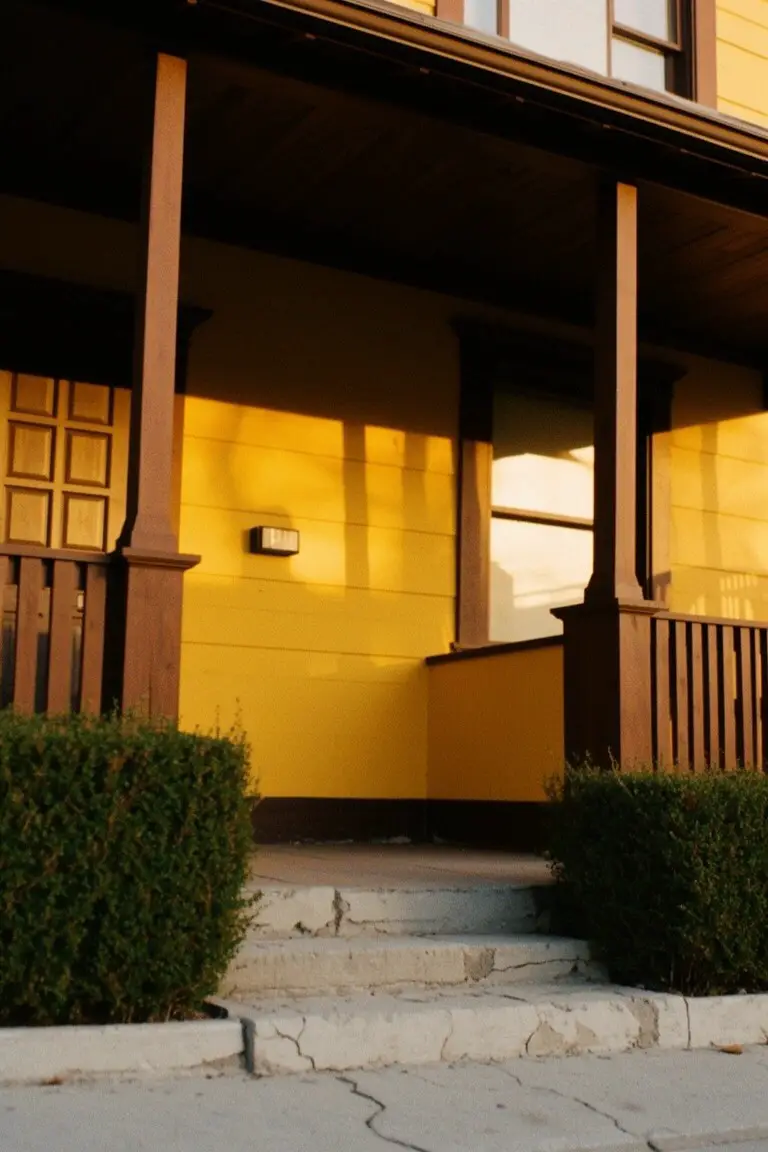
This warm golden yellow siding reads close to Sherwin-Williams Goldenrod or Benjamin Moore Golden Straw, with Behr Honey Bee not far off. It’s got that soft mustard edge, rich but not screaming. Folks like it because it pulls warmth from nearby wood without overpowering the whole look.
The golden undertones play right into the brown porch posts, making the wood pop naturally. It holds up best where there’s decent sun to bring out the glow. Stick with earthy trim and some green shrubs out front, and watch out for pairing it with anything too cool-toned.
Muted Sage Green Siding
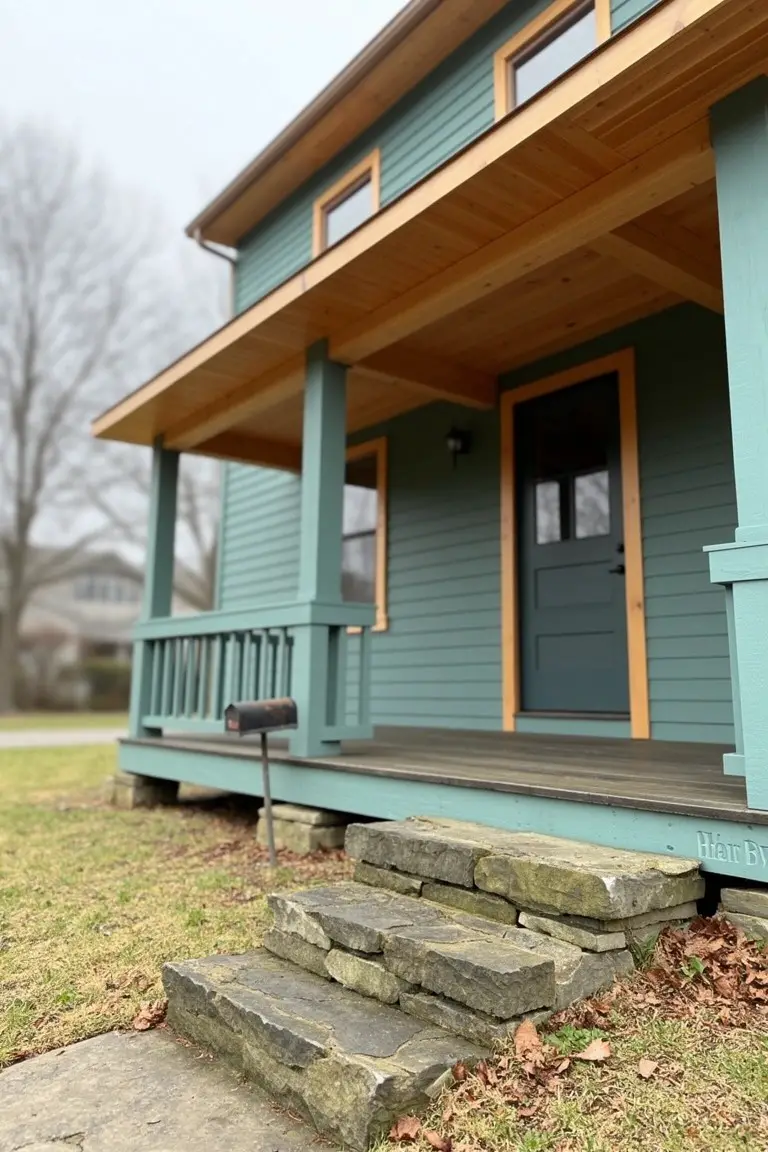
This muted sage green on the siding looks closest to Sherwin-Williams Retreat or Benjamin Moore Saybrook Sage, maybe Behr’s Back to Nature too. It’s a soft cool green that doesn’t fight the wood. People go for it on houses like this because it adds quiet color while letting the porch trim and railing shine.
Cool blue undertones keep it from going too yellow. It reads fresh next to the cedar beams and stone steps here. Best on craftsman-style homes in shady spots. Just test it north-facing first.
Warm Ochre Walls
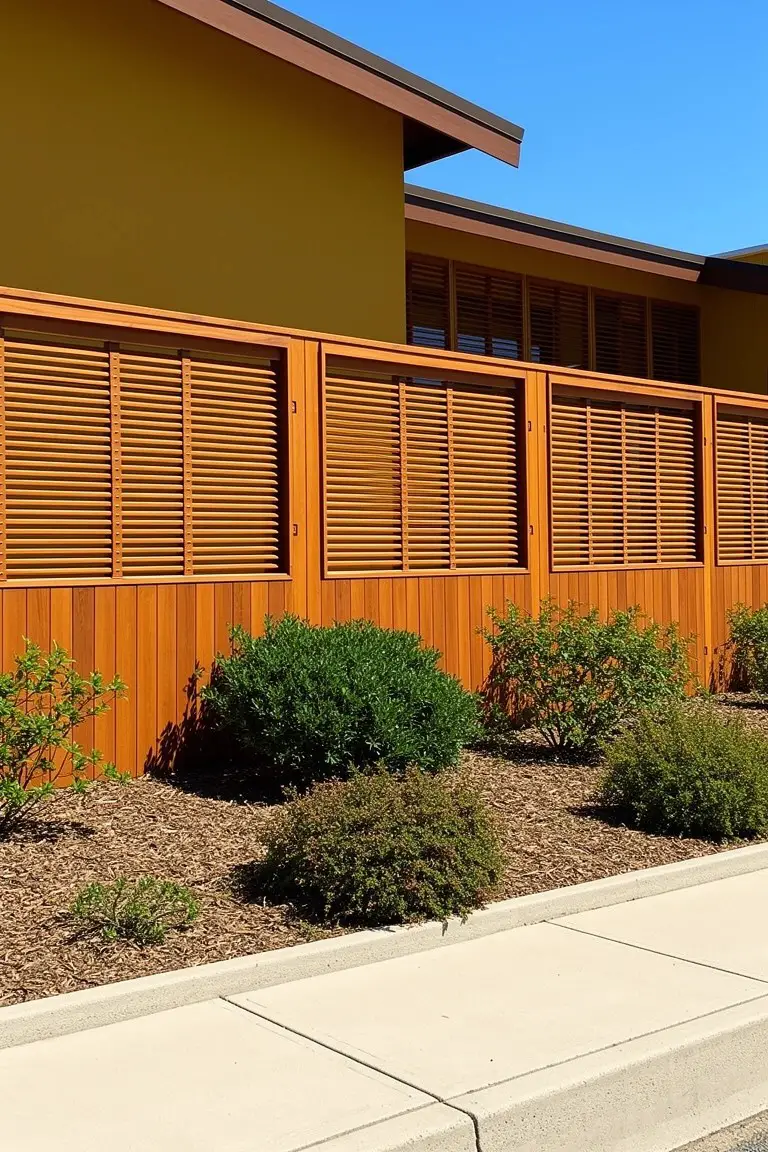
This home’s walls show off a warm ochre beige that seems closest to Sherwin Williams Kilim Beige, Benjamin Moore Pashmina, or Behr Toasted Almond. It’s that earthy tan with a touch of gold, perfect for blending with wood details. Folks like it because it feels grounded and lets the natural accents stand out without overpowering them.
The undertone leans orange-warm, which shines in full sun like this setup. It works best on bigger facades where the color can settle in. Stick to cedar or red-toned wood siding, as shown here with the fences… keeps the whole look tied together. Lighter trim helps too.
Warm Beige Walls
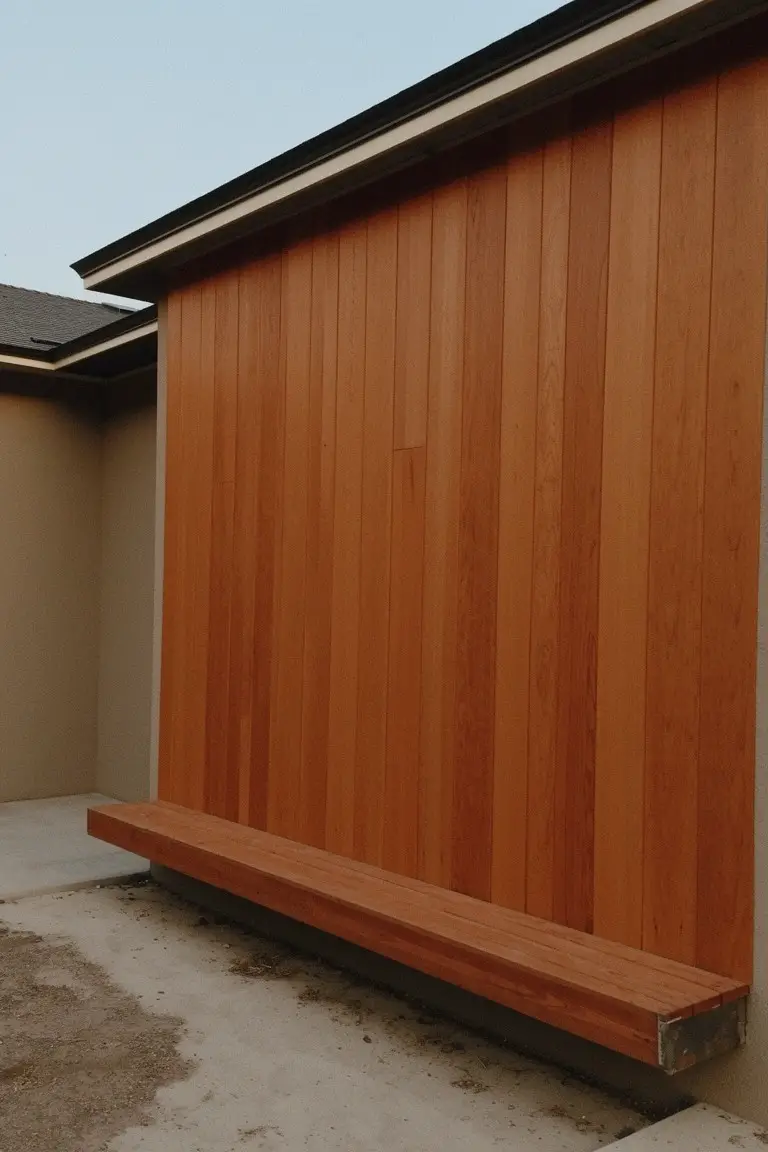
This exterior pulls off a light warm beige on the stucco side wall. It looks closest to Sherwin-Williams Accessible Beige or Benjamin Moore Edgecomb Gray, maybe Behr’s Silver Drop too. That neutral tone sits back nicely and lets the wood accents take center stage without clashing.
The warm undertones in this beige play right off the reddish wood tones. It works best where you get good natural light, keeping the look cozy year round. Stick to black trim or concrete details like that bench to finish it simple.
Crisp White Exterior Walls
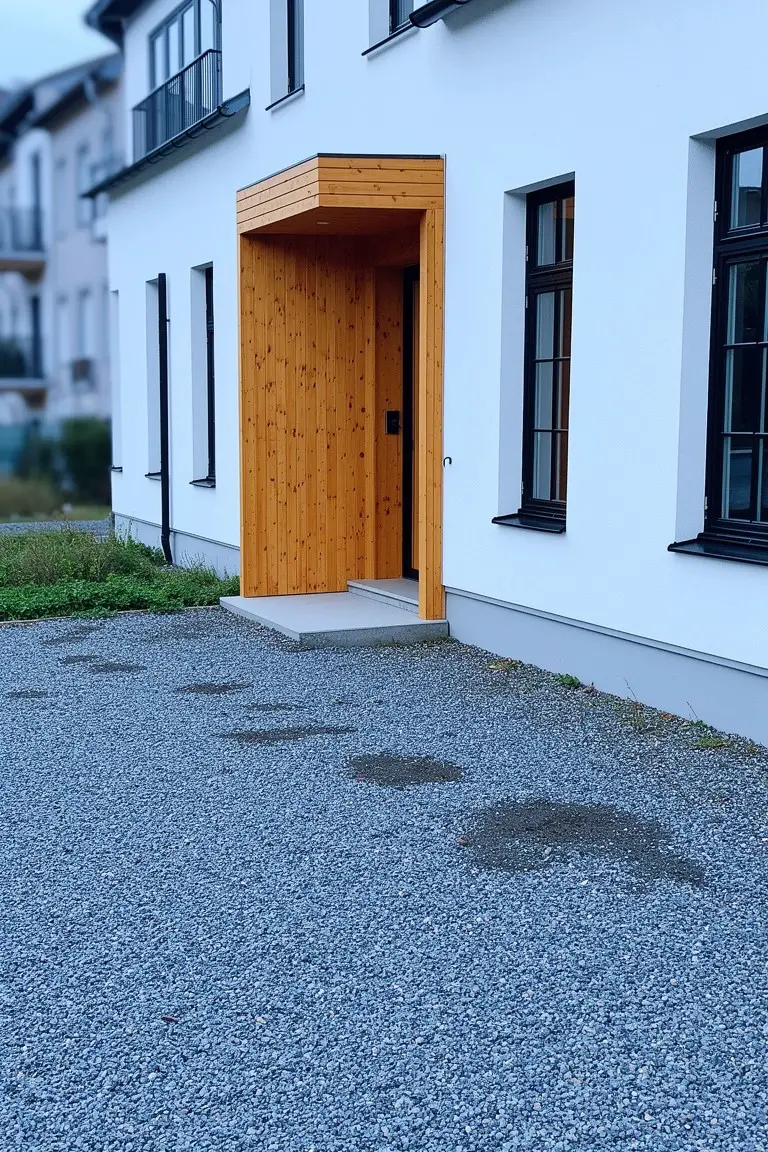
This bright white exterior looks closest to a crisp, clean white like Sherwin Williams Extra White or Benjamin Moore Chantilly Lace. Behr Ultra Pure White would be another good match. It’s the kind of straightforward white that stays neutral and lets wood accents take center stage. Folks go for it when they want a fresh backdrop that highlights natural wood tones without stealing the show.
That neutral undertone keeps it versatile in different lights. It pops nicely on a stucco or smooth siding surface, especially next to warm cedar like on this entry canopy. Best for homes with gravel driveways or green surroundings. Pair with black-framed windows to add some edge, but skip super cool grays that might make it feel chilly.
Deep Forest Green Siding
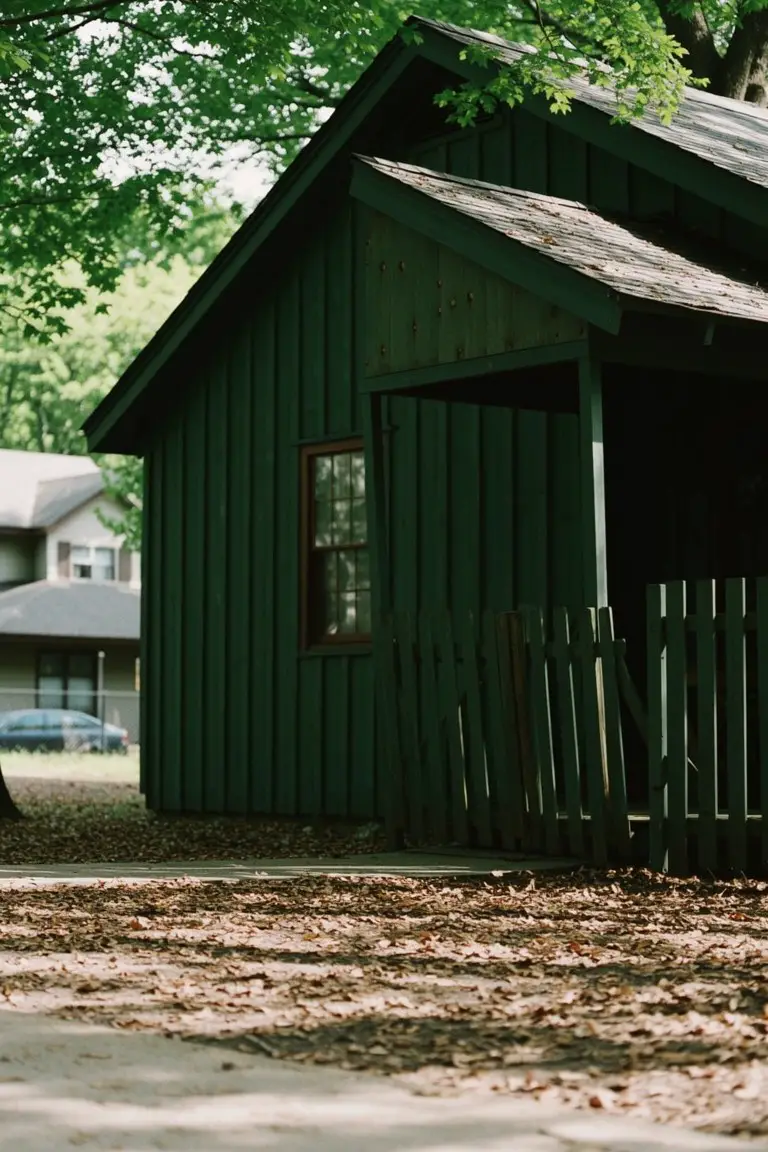
This cabin siding pulls off a deep forest green that’s close to Sherwin-Williams Pewter Green (SW 6208) or Benjamin Moore Hunter Green (HC-113). It’s the kind of rich, grounded shade that fits right into a natural setting. Folks like it because it lets wood details stand out without stealing the show.
The color has those warm earthy undertones that play well with nearby trees and gravel paths. It shines on smaller structures like sheds or guest houses, especially under dappled light. Stick to unpainted wood for the roof or fence…it keeps everything feeling connected.
Soft Gray Siding
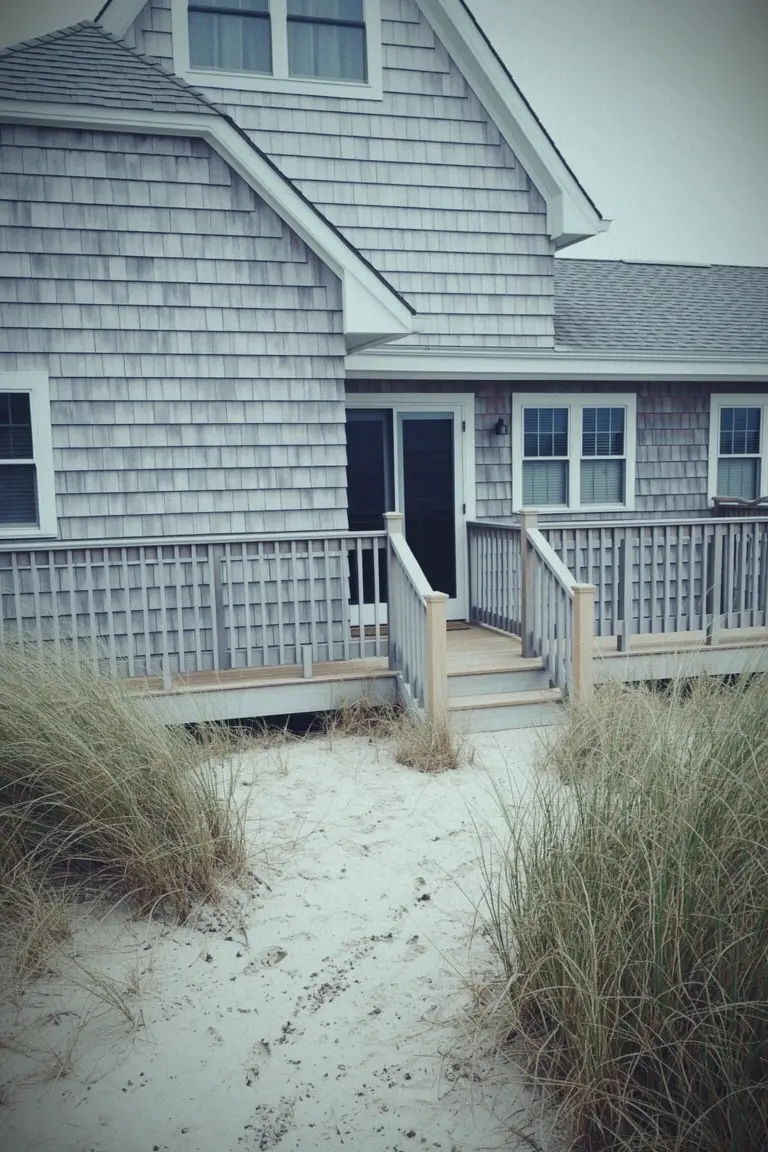
This soft gray on the shingle siding pulls off a cool coastal look. It seems closest to Sherwin-Williams Sea Salt or Benjamin Moore Gray Owl, maybe Behr Silver Drop too. What draws people to it is how it fades into the background. That way the natural wood on the deck and railings gets to shine.
Cool grays like this pick up blue undertones in bright light. They suit beach houses or spots with sandy paths best. Pair with warm cedar trim. In heavy shade though… it can read flat.
Warm Barn Red Siding
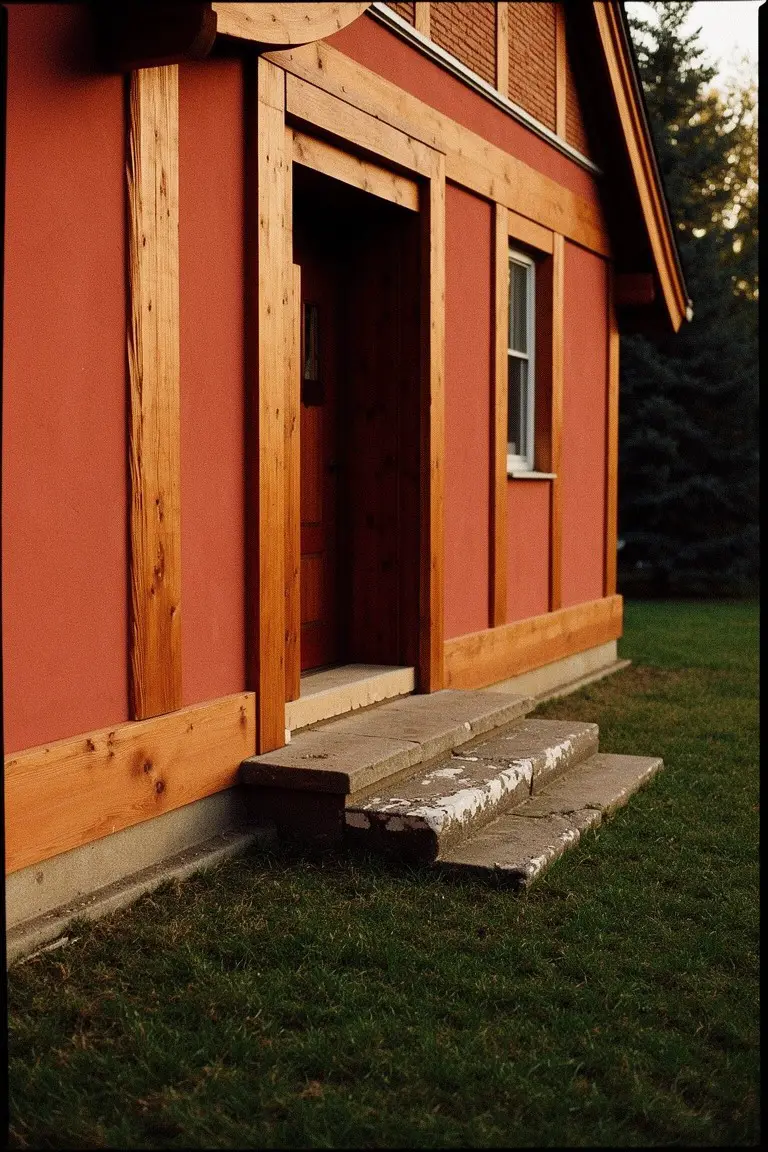
This siding paint reads like a classic warm barn red. It sits closest to Sherwin-Williams Real Red, Benjamin Moore Barn Red, or Behr Barn Red. That earthy tone pulls in some orange undertones and plays so well off the natural wood. It’s the kind of color that makes a simple cabin feel settled and welcoming right away.
Warm light brings out the rusty side of it best. Stick to exteriors with lots of wood trim, like around doors and windows. Dark greens in landscaping help too. Just watch it doesn’t fade too fast in full southern sun.
Frequently Asked Questions
Q: How do I test these color combos on my house before committing to paint?
A: Grab some large paint samples or poster boards in the shades you like, then prop them against your siding near the wood accents at different times of day.
Paint fades slower if you prime the surface first and pick quality exterior paint made for sun exposure.
Q: Can I pull off these wood-accent looks on a smaller home like a cottage?
A: Absolutely, scale down the wood elements to trim around doors or a single accent wall. The warmth draws the eye up and makes the place feel bigger without overwhelming the space.
Q: What if my existing wood siding clashes with these ideas?
A: Sand it lightly and apply a fresh stain in a warm cedar or teak tone to reset the base. That lets the new colors pop while keeping everything tied together naturally.
Q: How do I keep the wood looking fresh year after year?
A: Clean it once a year with mild soap and water, then seal with an oil-based protectant. Skip harsh chemicals, they dry it out fast.
