

I once painted our farmhouse barn a soft sage that looked perfect in the store sample, but it faded to drab under our shady oaks.
Exterior colors shift more than you expect, holding warmth in full sun or glowing gently at twilight.
I now favor those with steady undertones that team up with the wood grains and stone details.
Ones that fail often chase trends and clash with real-world light.
Try a few of these on a scrap board first.
Creamy White Siding
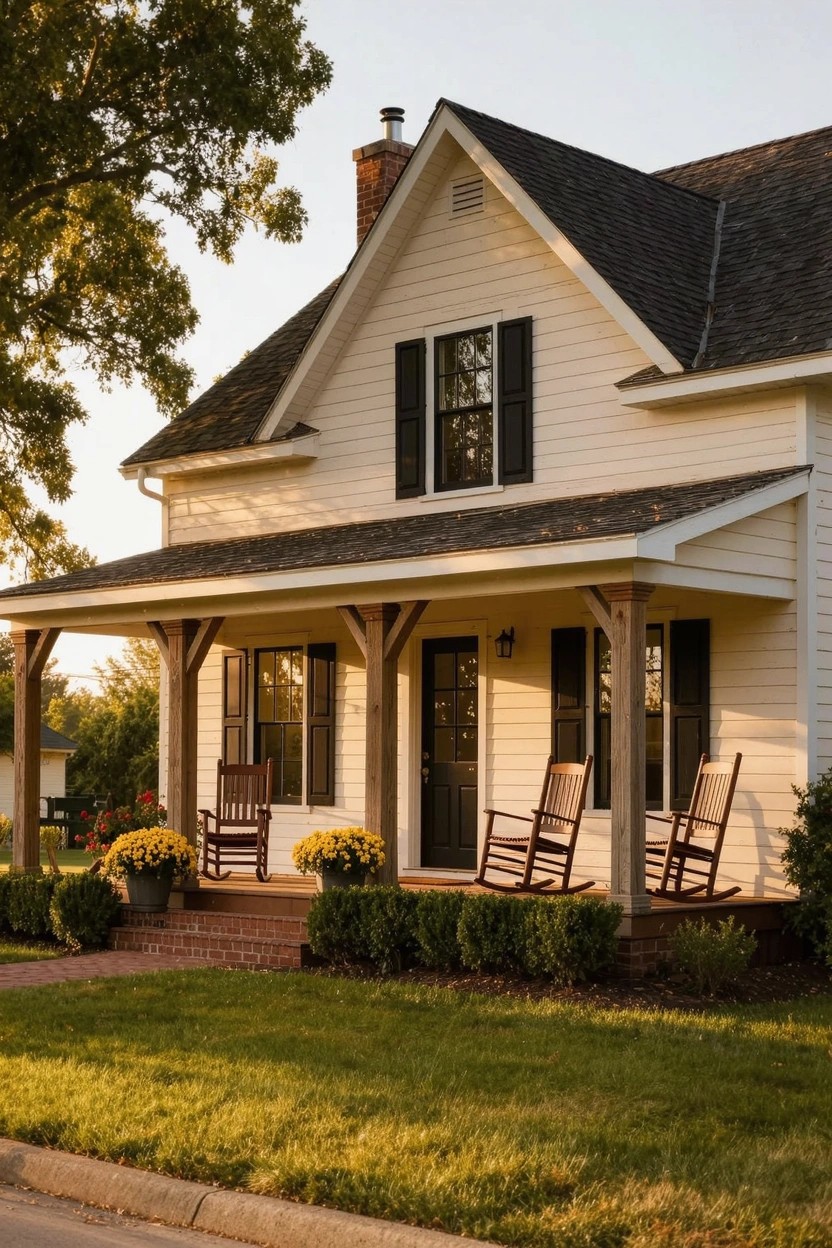
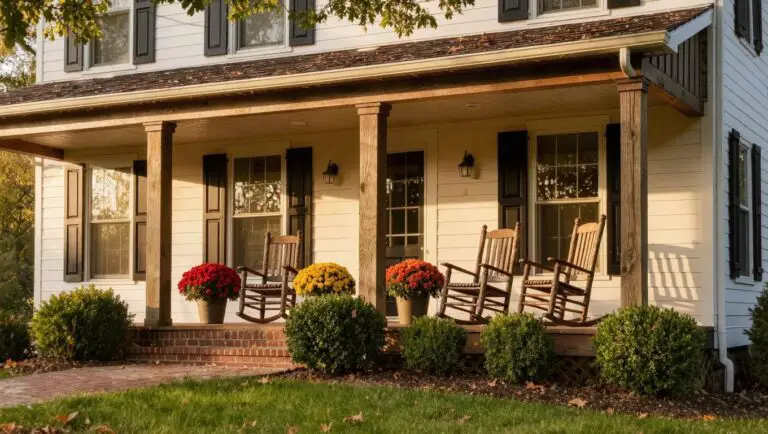
This creamy white on the siding seems closest to Sherwin-Williams Alabaster, or Benjamin Moore White Dove, and Behr Swiss Coffee. It’s a warm off-white in the neutral family, not too yellow but with enough glow to feel lived-in. That’s why it shows up so much on farmhouse exteriors. Keeps the look fresh without washing out.
Warm beige undertones come through best in natural light, like on this porch setup with wood rails. It plays nice with black shutters and brick paths. Steer clear if your spot gets heavy shade. Might read a touch flat there.
Crisp White Siding
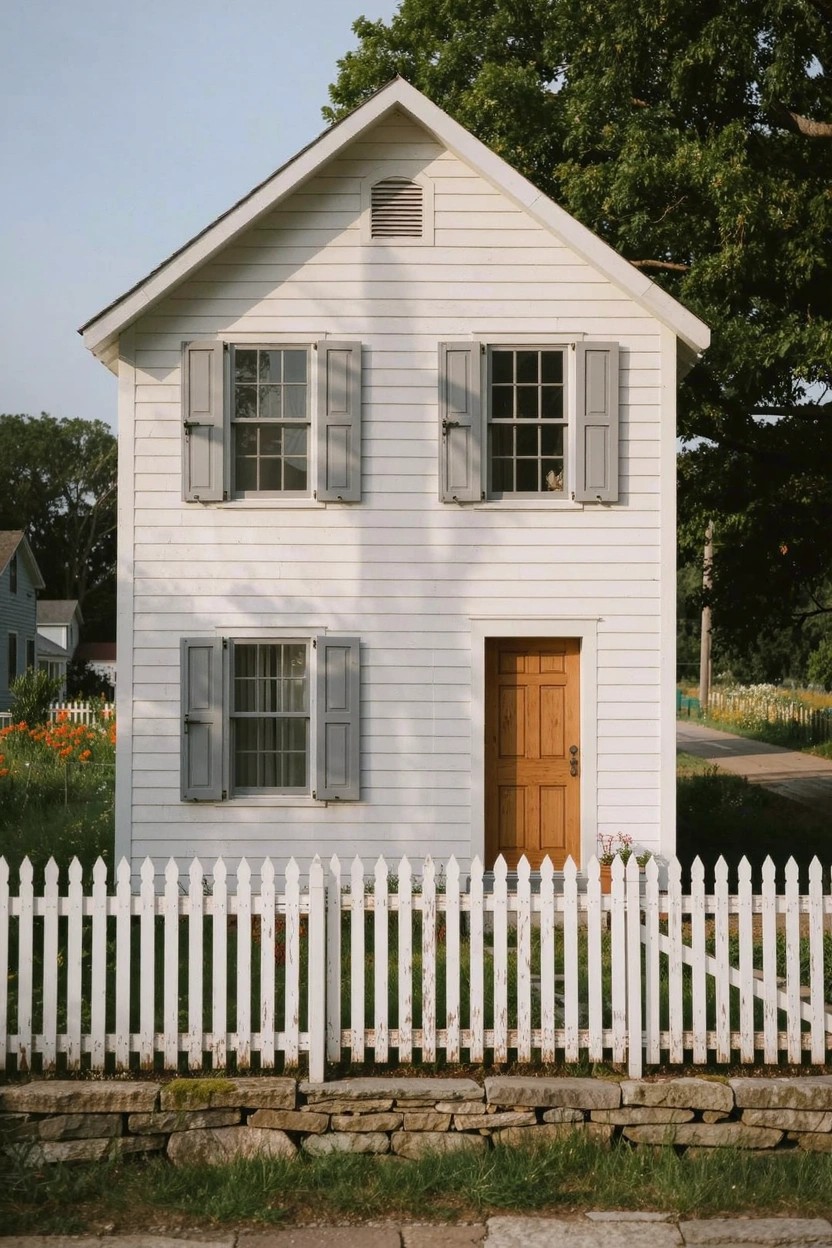
This farmhouse exterior uses a bright clean white that feels just right for that welcoming vibe. It looks closest to Sherwin Williams Extra White, or Benjamin Moore Chantilly Lace. Behr Ultra Pure White comes pretty near too. What stands out is how it stays fresh without overpowering the yard or stone base.
That white sits neutral. Not too warm or cool. It picks up light well on a house like this, especially next to the wood door and gray shutters. Good for most spots, just test it north-facing if your light runs dim.
Muted Sage Green Siding
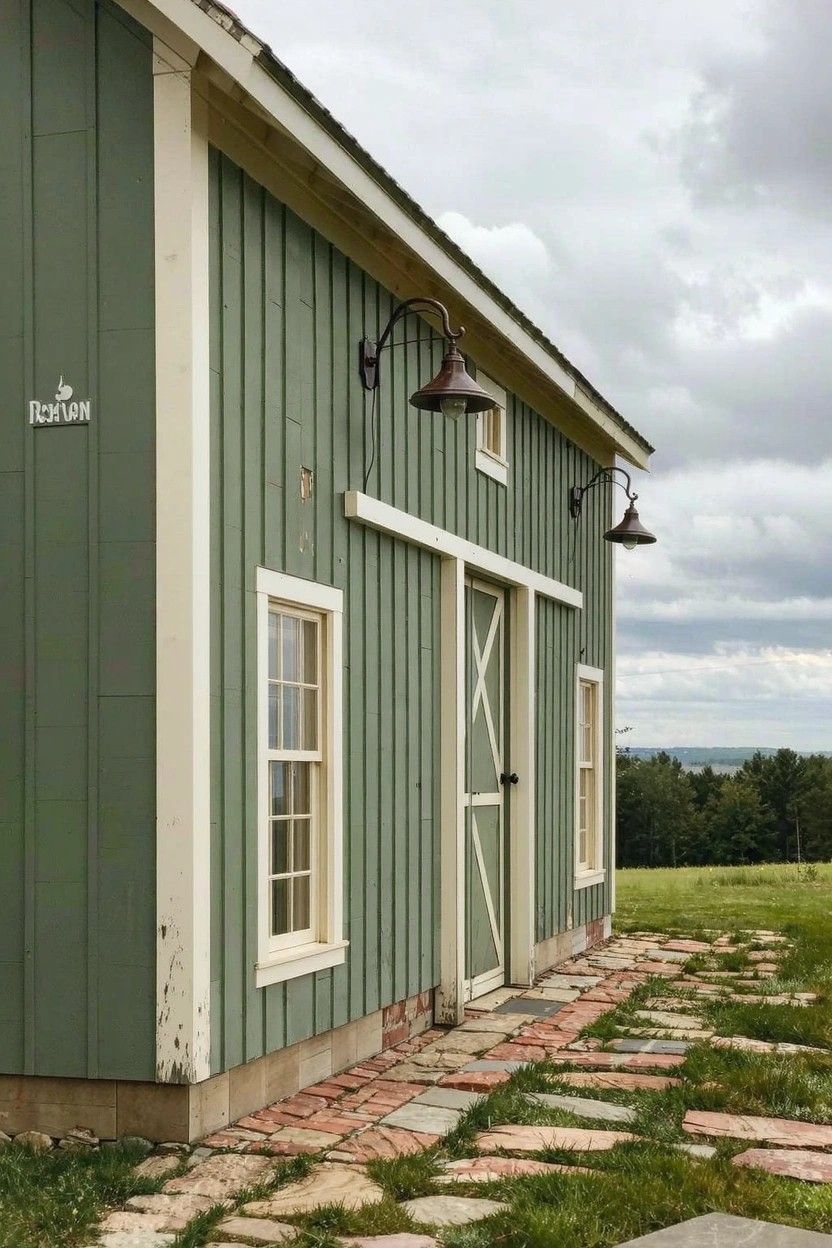
This barn siding pulls off a muted sage green that’s easy on the eyes for farmhouse exteriors. It’s in that soft green-gray family, reading closest to Sherwin-Williams Retreat or Benjamin Moore Saybrook Sage, maybe Behr’s Silver Sage too. Folks go for it since it feels natural next to fields and trees, cozy without trying too hard.
The gray undertone keeps it from going brassy in shady spots. White trim pops clean against it, and that green door ties right in. Works best on vertical siding like this, especially with brick paths or wood accents nearby.
Soft Sage Green Siding
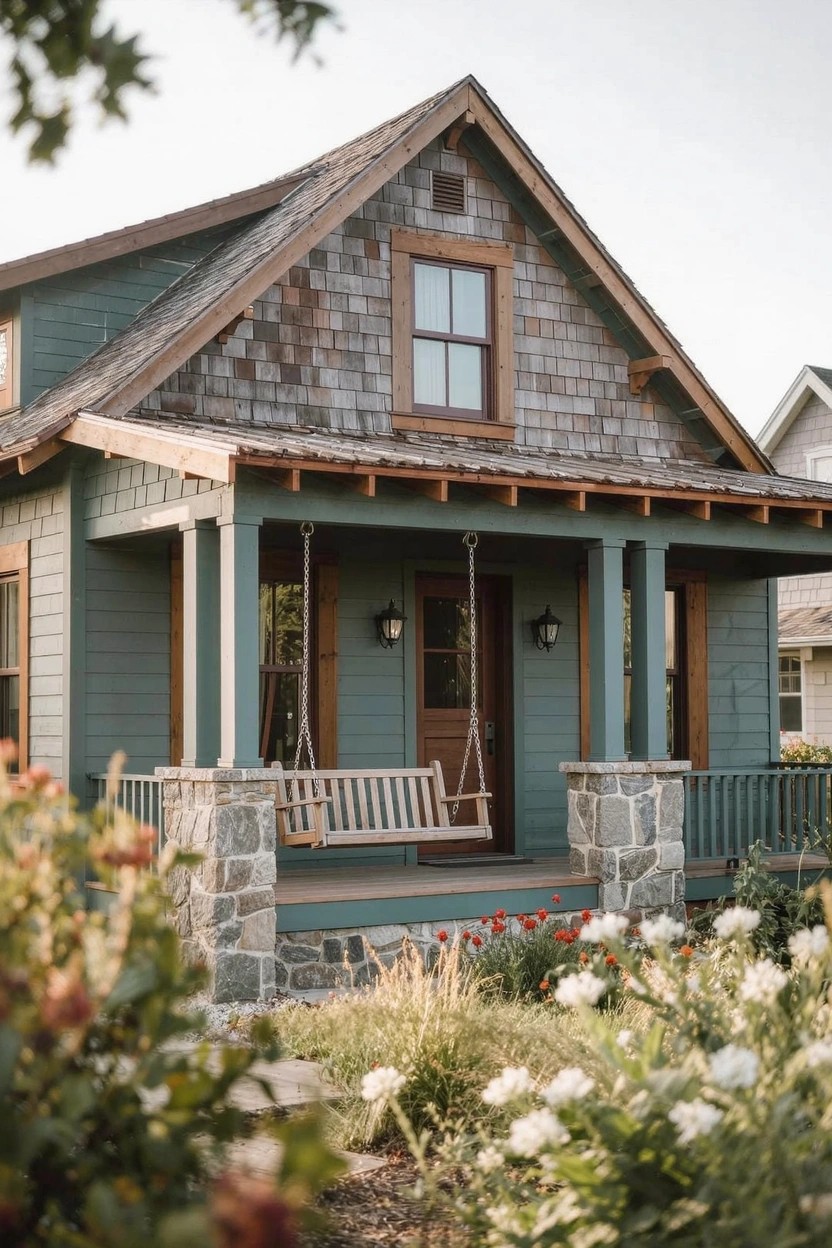
This farmhouse siding in a muted sage green seems closest to Sherwin Williams Clary Sage or Benjamin Moore Saybrook Sage. Behr’s Sagebrush would be right there too. It’s that easy green family with gray mixed in, perfect for a home that feels settled and outdoorsy right away. People go for it because it softens wood and stone without stealing the show.
Gray undertones keep it from going too yellow in the sun. It works best on bigger homes like this, paired with raw wood trim and rock pillars. Just test it first if your light’s mostly shady.
Pale Blue Siding
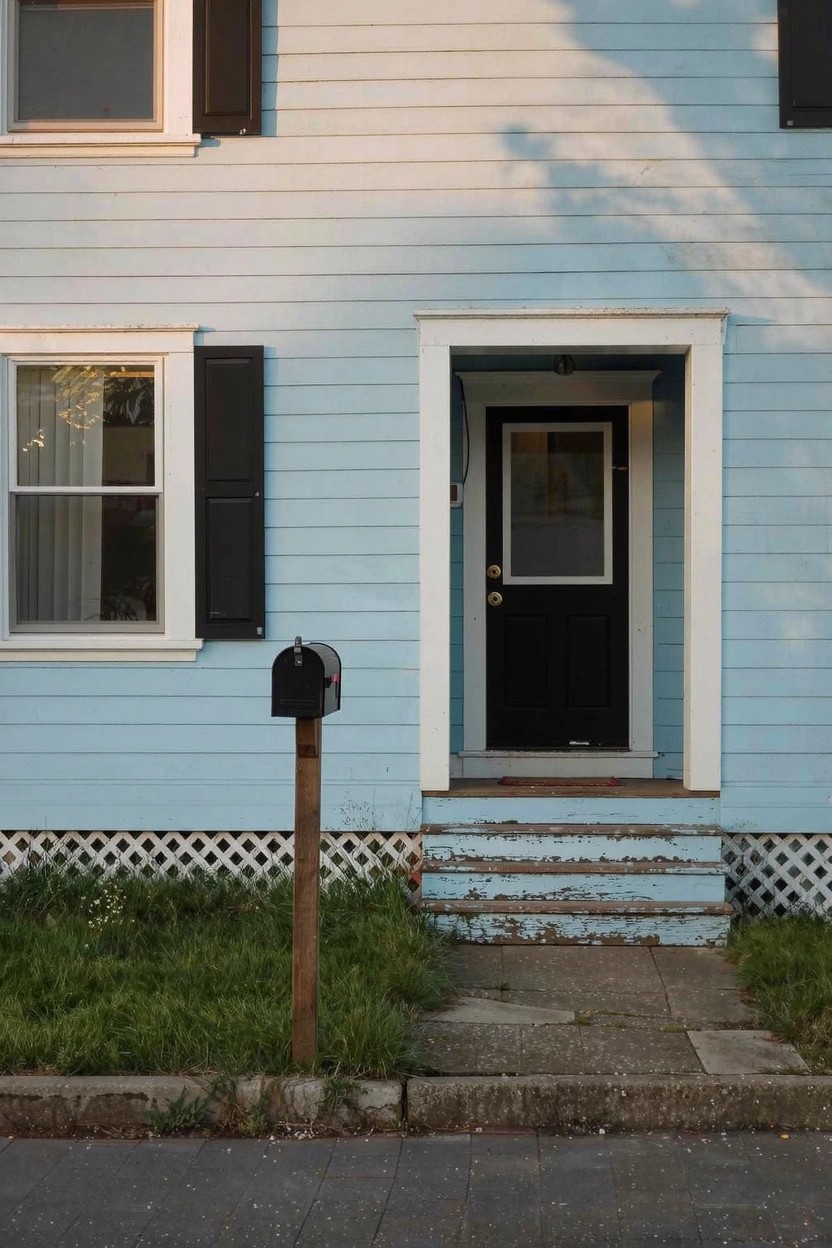
This pale blue on the house siding has that fresh, easy feel of a classic farmhouse color. It reads very close to Sherwin-Williams Rain or Benjamin Moore Palladian Blue, maybe Behr’s Blue Whisper too. Folks like it because it keeps things light without going stark white, and it plays right off the black shutters and door you see here.
The undertone leans cool with a touch of gray, so it stays crisp in most light. Pair it with white trim and wood accents for that clean look. Works best on bigger homes where you want some color but not too bold. Just test a sample north-facing to check how it sits.
Soft Gray Siding
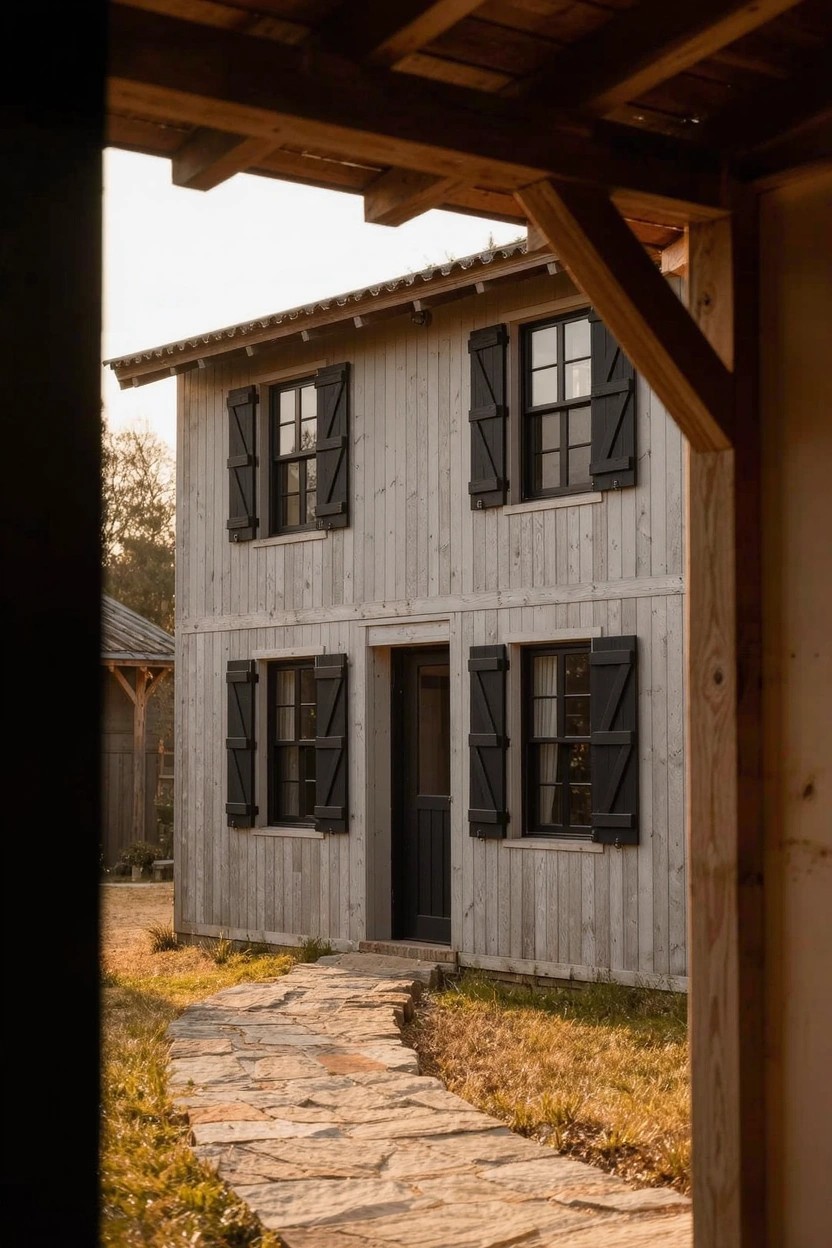
This soft light gray on the siding makes for a simple cozy farmhouse look. It reads closest to Sherwin-Williams Repose Gray, or Benjamin Moore Gray Owl. Behr Silver Drop has that same easy feel. Folks go for it since it lets the wood trim and stone path stand out without stealing the show.
The gray sits neutral, with just enough warmth to play off the dark shutters and door. It holds up well in dappled light around trees or porches. Pair it with black accents or earthy stone, but check samples outside first. Grays shift a bit.
Light Gray Farmhouse Siding
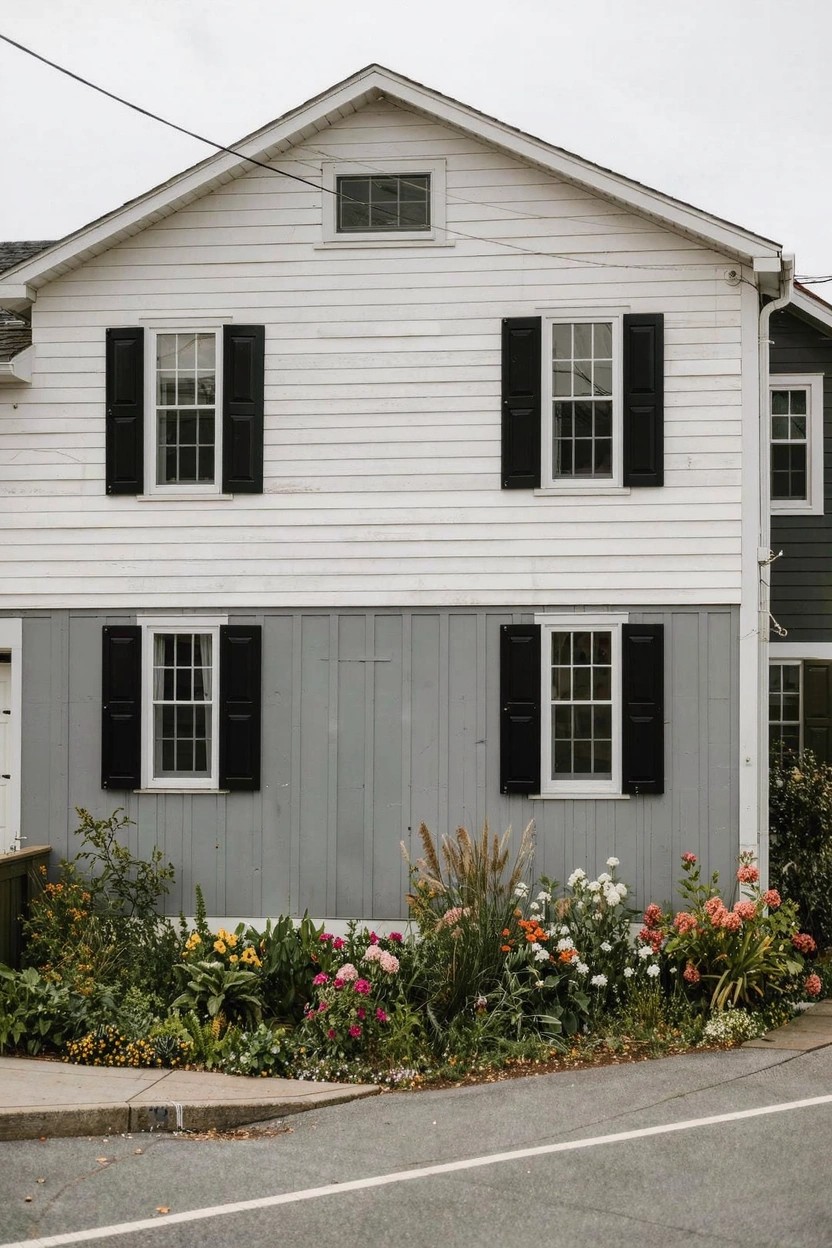
This light gray siding on the lower half pulls together a cozy two-tone look with the white clapboard above. It sits in the cool gray family, reading very close to Sherwin-Williams Repose Gray or Benjamin Moore Gray Owl. Behr’s Silver Drop has that same easy feel. Homeowners go for it because it softens the base of the house. Makes things look settled and lived-in.
Cool undertones play well in shaded spots or cloudy weather. Black shutters pop right against it. Try colorful plants nearby to warm things up a bit. Just test a sample first. North-facing walls can make it read cooler.
Dark Charcoal Gray Siding
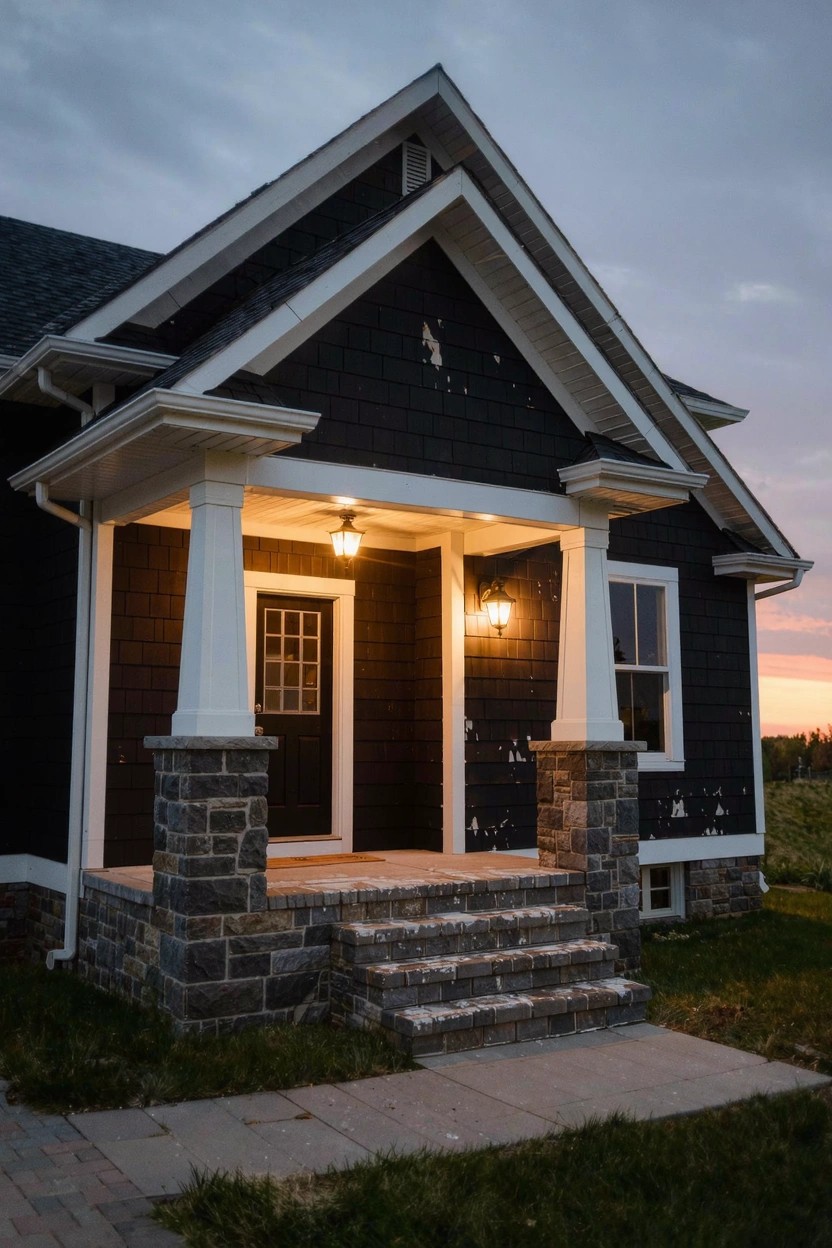
That deep charcoal gray on the house siding gives a cozy farmhouse feel right away. It’s a neutral dark gray in the charcoal family, and it looks closest to Sherwin-Williams Iron Ore or Benjamin Moore Kendall Charcoal. Behr’s Black Sapphire reads pretty similar too. People go for this shade because it grounds the whole exterior nicely, letting white trim and stone pop without stealing the show.
The cool undertones show up more in shaded spots. Pair it with creamy whites on trim and maybe a black door for balance. It suits bigger homes best, where the depth feels right at home in any light.
Soft Sage Green Siding
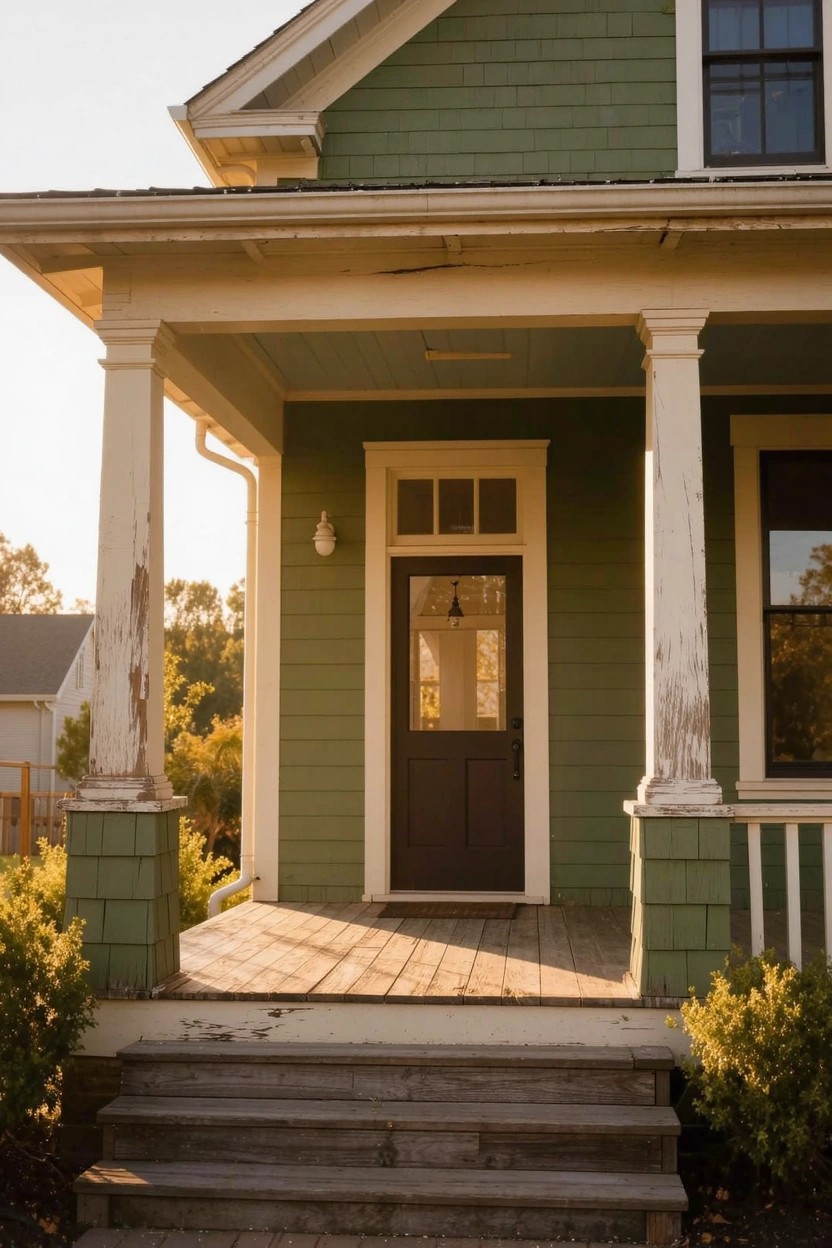
This muted sage green on the siding looks closest to Sherwin-Williams Sage Green (SW 2851) or Benjamin Moore Saybrook Sage (HC-114). Behr’s Silver Sage comes pretty near too. It’s a gentle green in the sage family, warm without shouting. Folks go for it on farmhouses because it settles right into the landscape, cozy and easy on the eyes.
Warm gray undertones keep it from going too yellow. It shines in soft evening light. White trim sets it off clean, and that dark door adds some weight. Good for older homes where you want color that holds up year-round.
Soft Blush Pink Siding
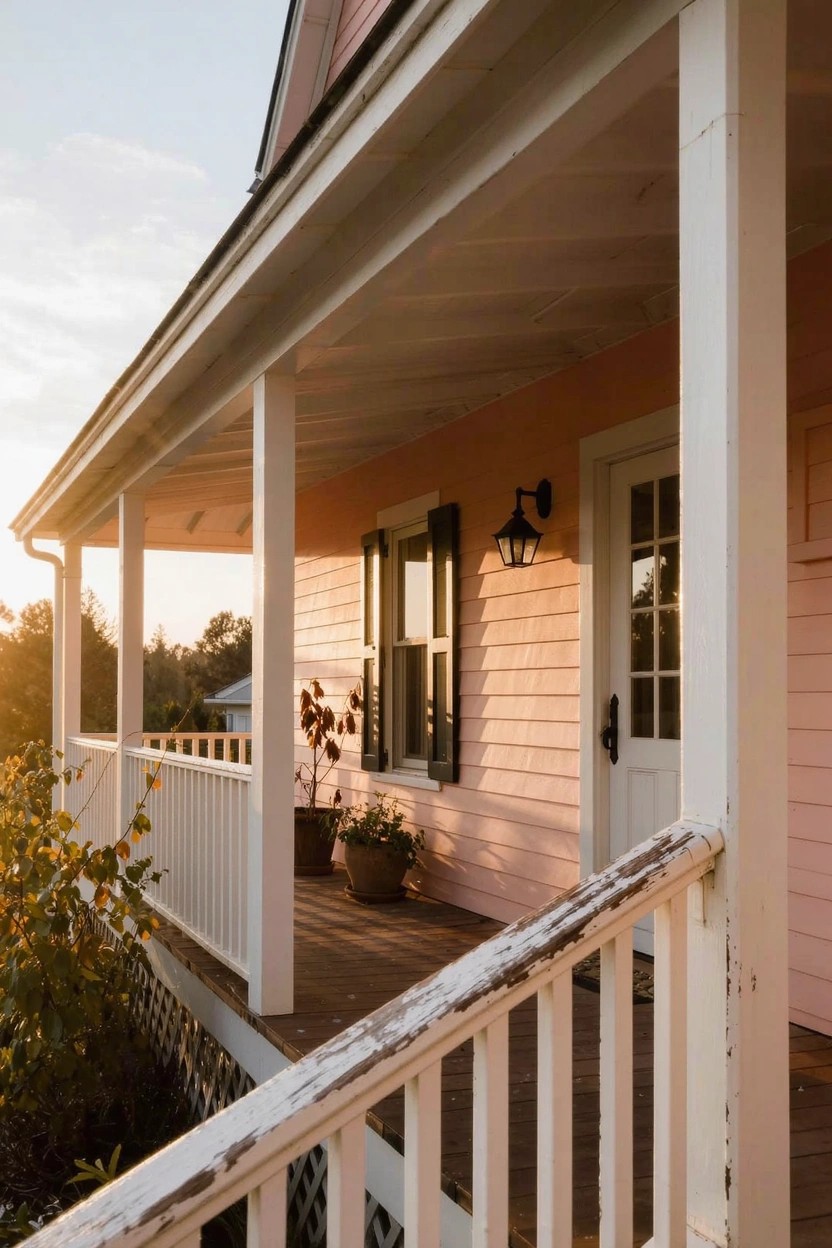
This pale blush pink on the siding reads very close to Sherwin-Williams Rosé or Benjamin Moore First Light, maybe Behr Blush too. It’s a gentle warm pink that’s not too bold. Folks like it because it gives that cozy farmhouse feel without going full candy pink. Softens things up nicely around white trim and porch posts.
The warm rose undertone shows best in afternoon light. Pairs easy with natural wood or creamy whites. Works great on older homes like this one. Just watch it next to harsh grays, might look off.
Classic Farmhouse Gray
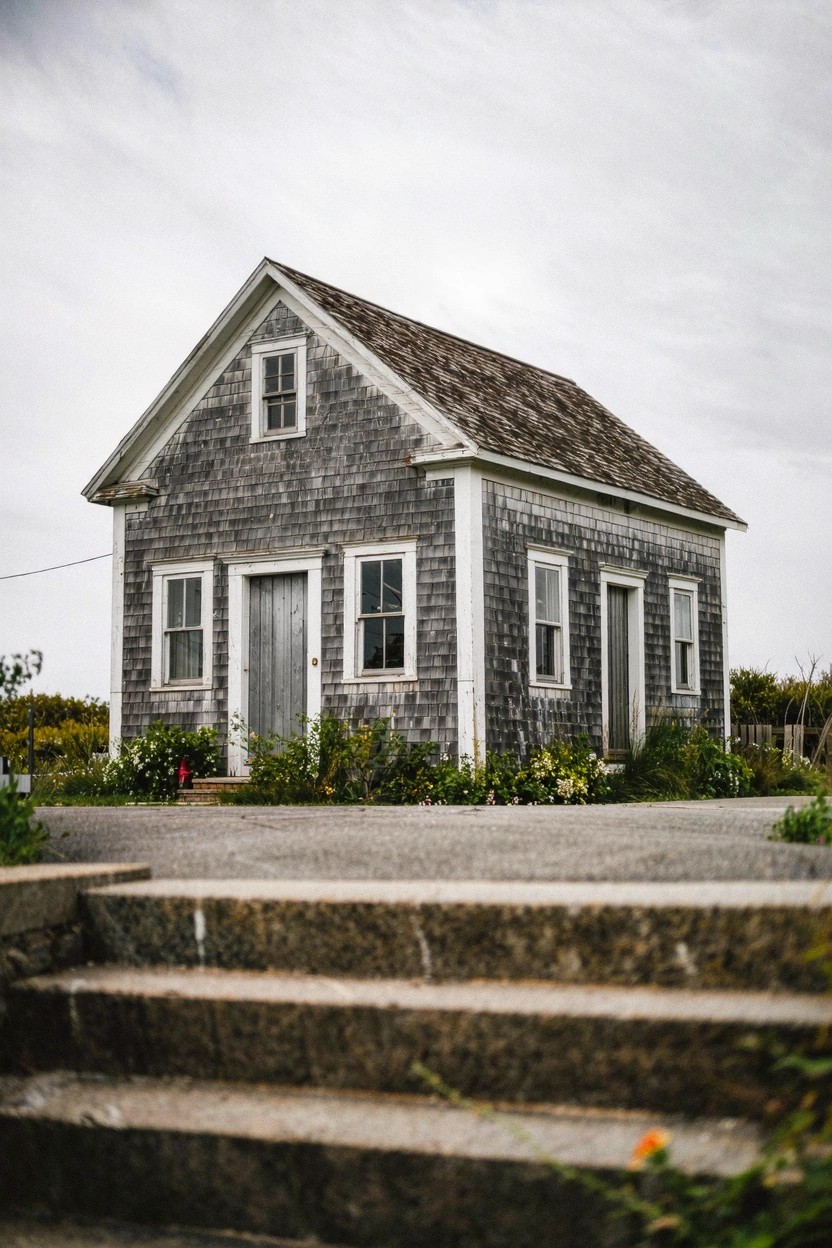
This siding shows a classic cool gray that’s easy on the eyes for any farmhouse setup. It reads very close to Benjamin Moore Stonington Gray HC-141 or Sherwin-Williams Gauntlet Gray SW 7019, with Behr’s Iron Mountain close behind. What stands out is how it settles into the landscape without overpowering things. Folks pick it for that lived-in, welcoming look that lasts.
The cool blue undertones keep it from going flat in shady spots, and it pairs right up with plain white trim on doors and windows. Works best on bigger homes where you want the gray to hug the structure. Just test it north-facing if your light stays overcast most days.
Light Cool Gray Siding
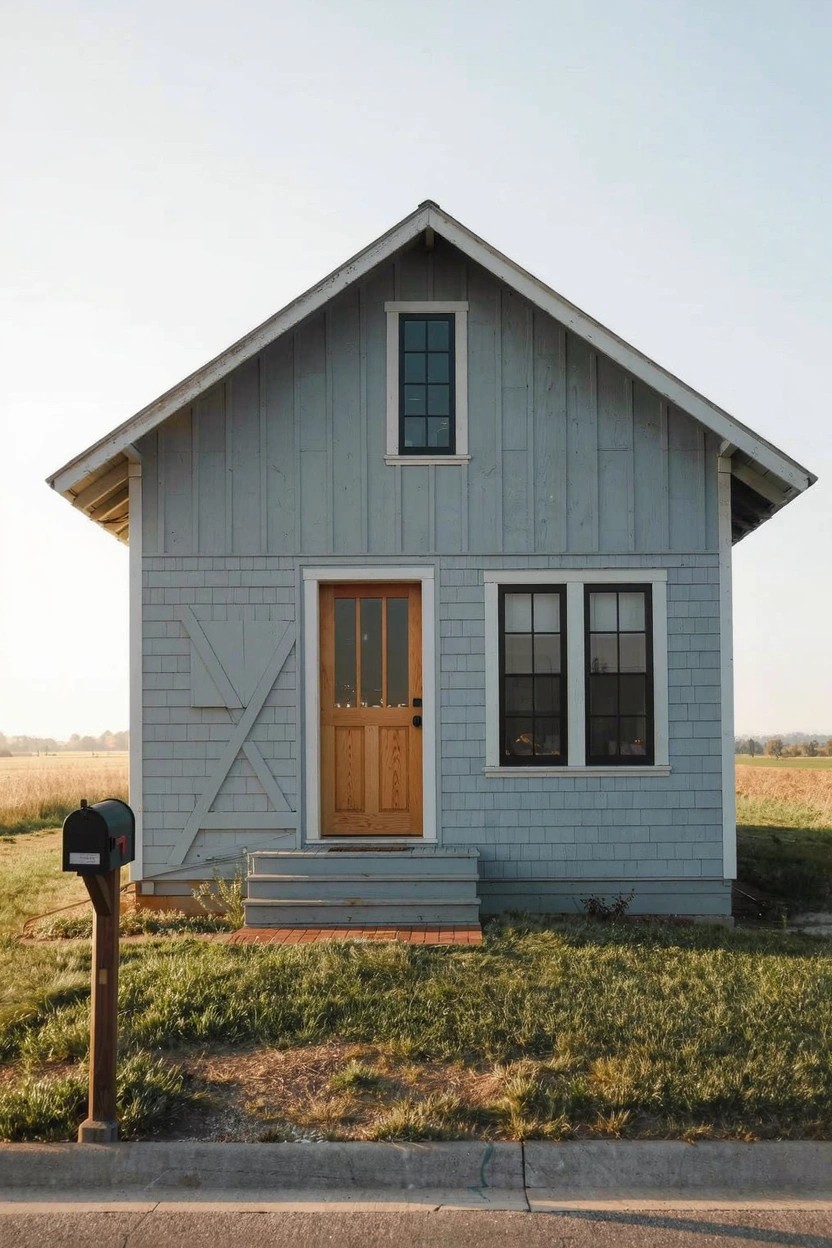
This siding shows off a light cool gray that’s perfect for a farmhouse exterior. It looks closest to Sherwin-Williams Rainwashed or Benjamin Moore Gray Owl, maybe Behr’s Silver Lining too. Folks like how it gives that clean, welcoming look without going too dark or stark. The warm wood door stands out just right against it.
That subtle blue undertone keeps it from feeling flat on overcast days. It shines in full sun though, especially paired with white trim or stone details. Watch for pairing it with too much cool metal, since warm accents help balance things out.
Warm Greige Siding
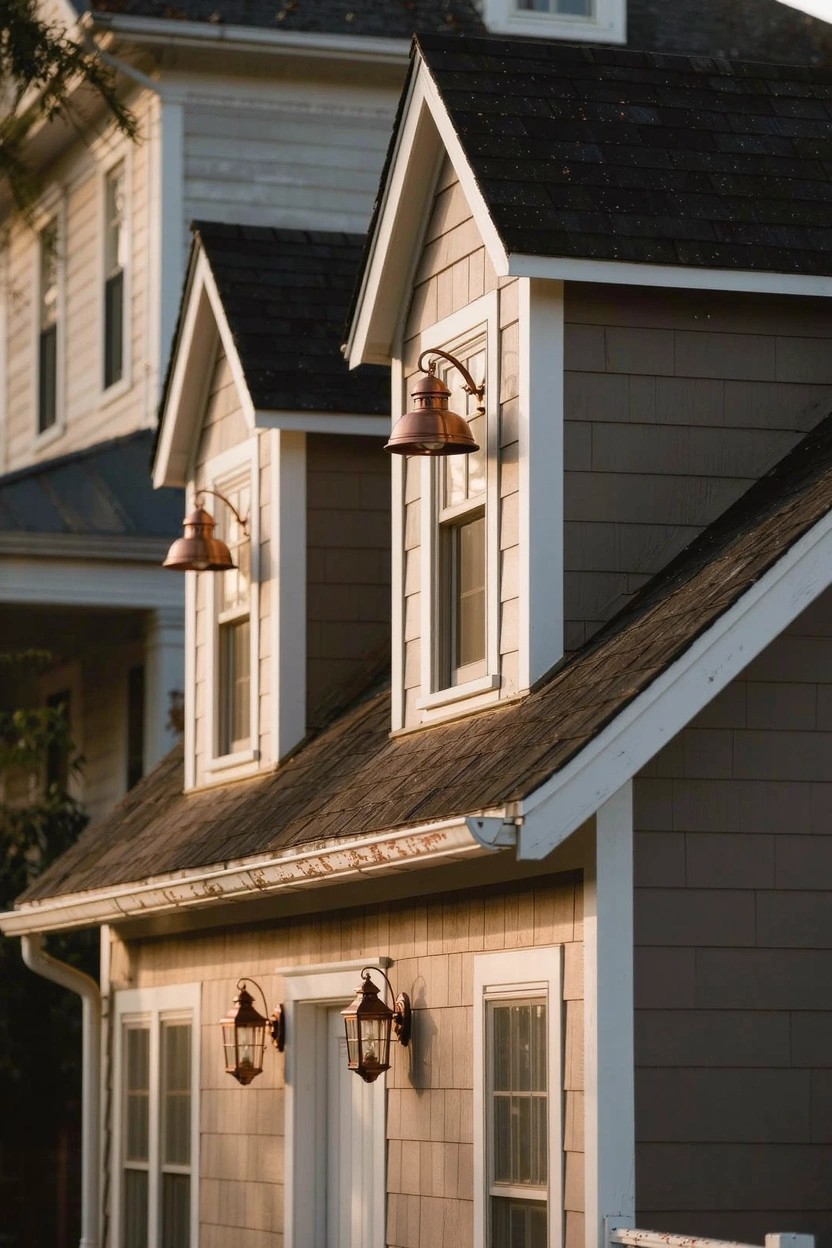
This siding pulls off a warm greige that seems closest to Sherwin-Williams Agreeable Gray or Benjamin Moore Edgecomb Gray. Behr’s Wheat Bread runs a close third. It’s that in-between shade, gray enough for depth but with beige undertones to keep things soft and lived-in. On a farmhouse like this, it just settles right in.
Warm undertones make it forgiving in changing light, especially paired with white trim and those copper lanterns. It shines on bigger homes or ones with wood accents. Stick to black shutters or doors if you want contrast. One thing. Sample it on all sides of the house before committing.
Dark Green Shutters
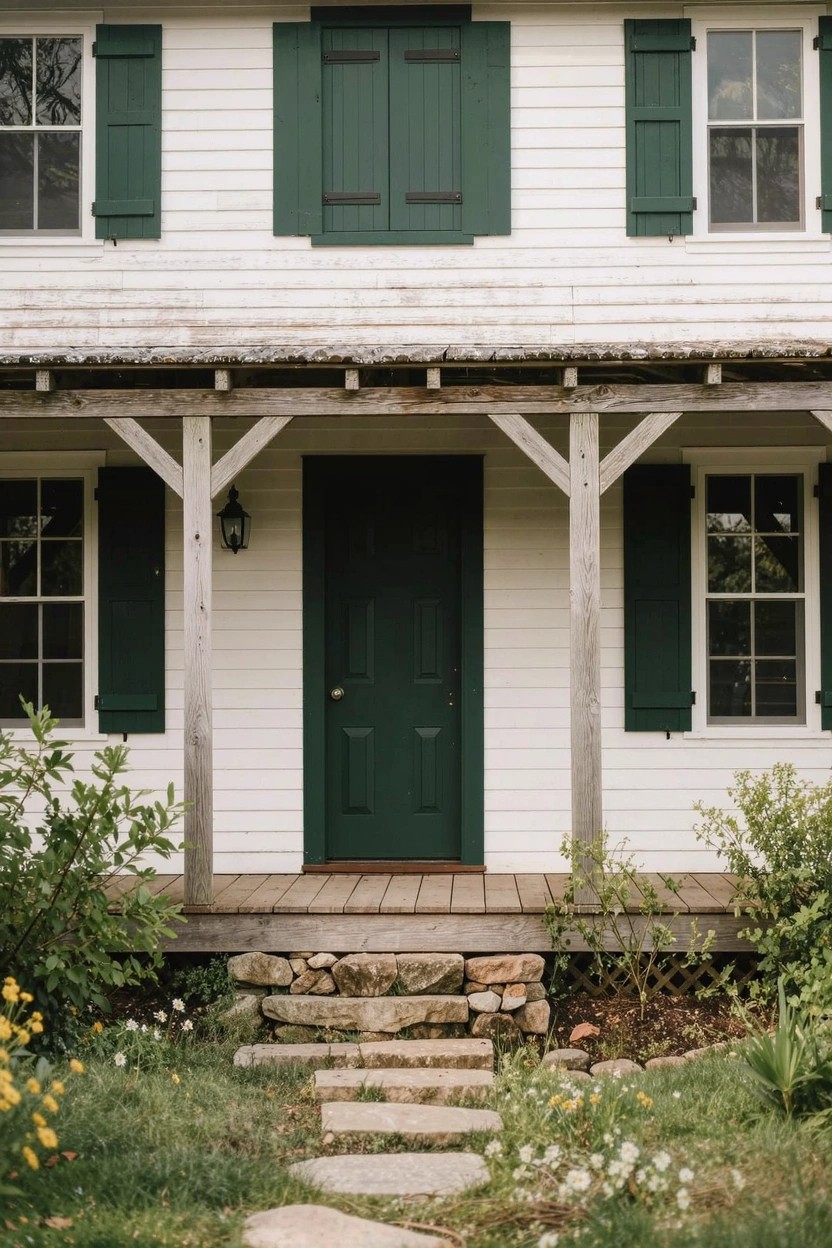
That deep green on the shutters and door pulls together a real classic farmhouse feel. It sits in the rich hunter green family and reads close to Benjamin Moore Hunter Green HC-113 or Sherwin Williams Rookwood Dark Green. Homeowners go for shades like these because they stand up bold against plain white siding but stay cozy next to wood.
You’ll see warm brown undertones in this green, especially in soft daylight. It suits bigger homes with porches or any spot with stone nearby. Just pair it with lighter body paint and raw wood trim. Too much shade can make it look almost black though.
Warm White Siding
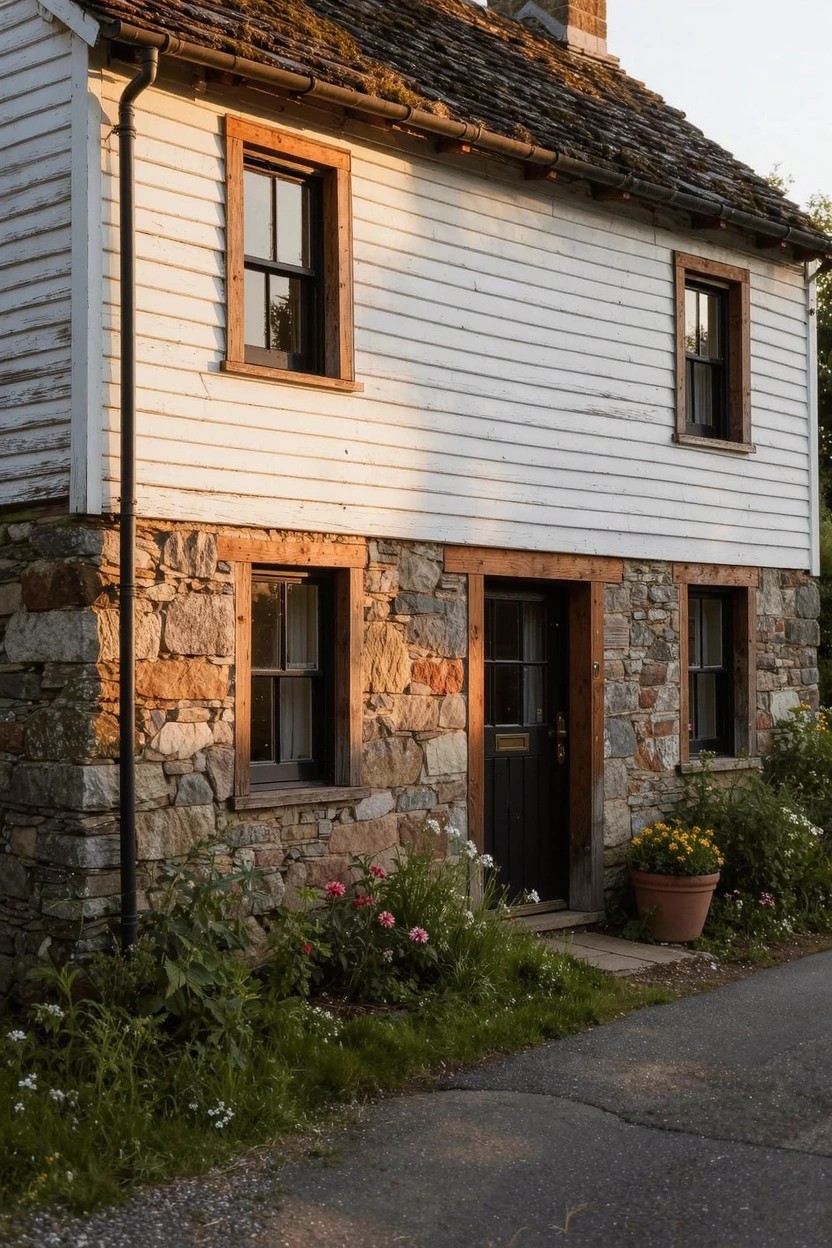
This siding shows a classic warm white paint, the kind that looks closest to Sherwin-Williams Alabaster or Benjamin Moore White Dove. Or maybe Behr’s Swiss Coffee if you’re matching that subtle creaminess. It’s not stark hospital white. More like a gentle off-white that keeps a farmhouse feeling lived-in and easy on the eyes.
That warmth comes from a soft yellow undertone, which plays nice next to the stone foundation and wood trim you see here. It holds up well in dappled light or full sun. Just pair it with earthy plants or a black door to keep things from washing out. Works best on older homes like this one.
Frequently Asked Questions
Q: How do I pick one of these colors when my house sits in full sun all day?
A: Head outside mid-morning and snap photos of your siding under natural light. Compare them to the cozy swatches in the article – the ones with warm undertones like soft taupes shine brightest in bright conditions.
Q: What if I want to paint just the door or shutters to start?
A: Start small with a bold accent from the list, say a deep sage green door against a neutral body. It freshens the whole facade instantly. Live with it a season before going bigger.
Q: Do these colors work on older farmhouses with wood siding?
A: They love weathered wood – think creamy beiges that settle right in. Prep the surface well by power washing first.
Q: How often should I repaint the exterior with these shades?
A: Plan on every 5 to 7 years if you chose a solid exterior formula. Farmhouse tones hide dirt better than bright ones anyway.
